From Small Beginnings: J. M. W. Turner at Cranbrook

This week marks the 250th anniversary of the birth of British artist Joseph Mallord William Turner. Born in 1775, by the time of his death in 1851 Turner had upended all the conventions of landscape painting.

Having won critical acclaim as a young artist, in his later years, Turner pushed the limits of his art form beyond popular comprehension. His late work was dismissed in his lifetime as slapdash and unfinished, but was praised in the twentieth century for its free interpretation of light and color, verging on abstraction. Turner bequeathed three hundred paintings and thousands of prints and watercolors to the British nation in his will; today, works by Turner hang in dedicated rooms in both the National Gallery in London and Tate Britain, as well as in art museums around the world. 

Joseph Mallord William Turner, The Fighting Temeraire, 1839. Oil on canvas, 35.7 x 147.8 in. National Gallery of Art, London. Turner Bequest, 1856.

Cranbrook has one work by Turner in its collection, a watercolor view of Lambeth Palace and its surroundings.

Painted in 1790 when Turner was just fifteen years old, the watercolor is an alternate version of Turner’s first exhibited work at the Royal Academy of Art. The Royal Academy watercolor is now in the collection of the Indianapolis Museum of Art at Newfields; the other watercolor is here at Cranbrook, part of the Cultural Properties Founders Collection that is stewarded by Cranbrook Center for Collections and Research.

Joseph Mallord William Turner, Lambeth Palace, 1790. Watercolor on paper, 17.75 x 23.25 in (framed). © Cranbrook Center for Collections and Research.

George Booth purchased the watercolor in 1925 from Kennedy & Co., a large New York-based art gallery. George Booth would also purchase dozens of etchings from Kennedy & Co. to give to Cranbrook School, Kingswood School, and Cranbrook Academy of Art Library. Booth displayed the Turner in the original Cranbrook Museum, the precursor of both Cranbrook’s Art Museum and Institute of Science.

Cranbrook’s first museum exhibition, photographed by W. Bryant Tyrrell, 1930. Staged on the first floor of what is now the Academy Administration Building, this view shows the art exhibit looking into the science exhibit. The watercolor is visible hanging on the back wall, seen through the doorway on the right. © Cranbrook Archives.

Lambeth Palace depicts a cluster of buildings on the north bank of the Thames, just south of Westminster Bridge. The slightly strained perspective on the angled sides of the buildings hints at the young Turner’s limited training at this stage of his career, while the wide expanse of cloudy sky in the picture, touched at the left with the pink of sunset, foreshadows the dramatic skyscapes that would characterize Turner’s mature paintings.

The site of Lambeth Palace has been the official London residence of the Archbishops of Canterbury since the 13th century. The square-towered, red brick building in the background of Turner’s painting is Morton’s Tower, added to Lambeth Palace during the Wars of the Roses. The small cottage and large white pub in the foreground have since been demolished, but the setting otherwise remains much as it was when Turner painted it. 

Detail of Turner’s Lambeth Palace, showing Morton’s Tower.
Detail of Turner’s Lambeth Palace, showing the since-demolished “White Swan” pub or inn.

Today, the Lambeth Palace complex is also home to the official archives of the Church of England, including early medieval illuminated gospels and a copy of the Gutenberg Bible, and to a Garden Museum, two institutions that George Booth, an enthusiastic gardener, book collector, and self-taught printer, would have probably admired.

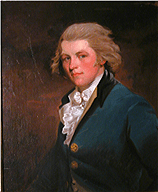
Now at Cranbrook House, Turner’s Lambeth Palace hangs near two works by his contemporaries, Sir Joshua Reynolds and George Romney. The three paintings, all purchased by George Booth, represent a turning point in the history of British art when the newly-established Royal Academy garnered unprecedented esteem for art as a profession.

Sir Joshua Reynolds, Portrait of Alexander Montgomerie, 10th Earl of Eglinton, circa 1766. Oil on canvas, 29 1/2 x 24 1/2 in. © Cranbrook Art Museum.
George Romney, Portrait of John Harvey, 1782-1784. Oil on canvas, 30 x 25 in. © Cranbrook Art Museum.

The training offered at the Royal Academy to young artists such as Turner, and annual summer exhibitions where Turner competed with John Constable for popular acclaim, shaped the emerging school of modern British art. At the same time, the creation of the Royal Academy imposed an institutional authority on aspiring artists, restricting its students to a single ideal style and a narrow range of acceptable subjects.  

Of the three British painters whose work George Booth collected (Sir Joshua Reynolds, George Romney, and J. M. W. Turner), Reynolds served as the first President of the Academy, Romney refused to join or exhibit there, and Turner taught, studied, and exhibited regularly, meeting sometimes with acclaim, sometimes with disgust, as his work gradually pushed the bounds of what was acceptable, in terms of subject matter and technique alike.

George Booth may well have had the complicated impact of the Royal Academy on British art in mind when establishing his own art academy here at Cranbrook. Certainly, his inclusion of a Turner in the community’s collection suggests that George Booth, at least, felt that Cranbrook students had something to learn from Turner’s life, his career, and his extraordinary artistic legacy – more widely celebrated now than he ever was in his own life. 

Mariam Hale, 2023-2025 Collections Fellow, Cranbrook Center for Collections and Research

Eds. Note: You can view Cranbrook’s Turner on guided tours of Cranbrook House through Cranbrook House & Gardens Auxiliary or on the Center’s Three Visions of Home tours.

Sixty Years of HUB Goes Live

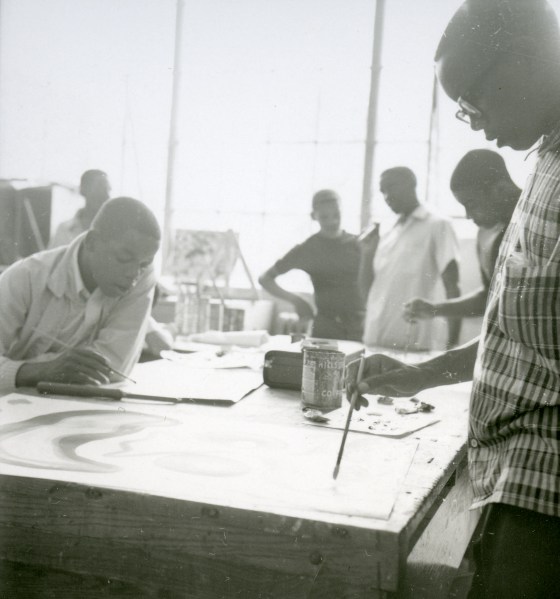
This week Cranbrook Archives launched Sixty Years of Horizons-Upward Bound, 1965-2025, a virtual exhibition of HUB’s history, told primarily through photographs. While the HUB program celebrates its sixtieth anniversary this year, we’ve partnered with Amy Snyder, daughter of HUB’s founder, Ben Snyder, to select images from each decade. Those from HUB’s first five years are now available, with new images from subsequent decades slated to be revealed on a monthly basis as the HUB digitization project continues.

Aerial view of HUB summer of 1970. Henry A. Leung, photographer. Courtesy of Cranbrook Archives.

A Collaborative Effort

Creating captions for the exhibition coincided with efforts to describe each of the 2,200 images scanned so far. While some photographs included detailed annotations, describing persons and subjects, many did not, requiring additional research.

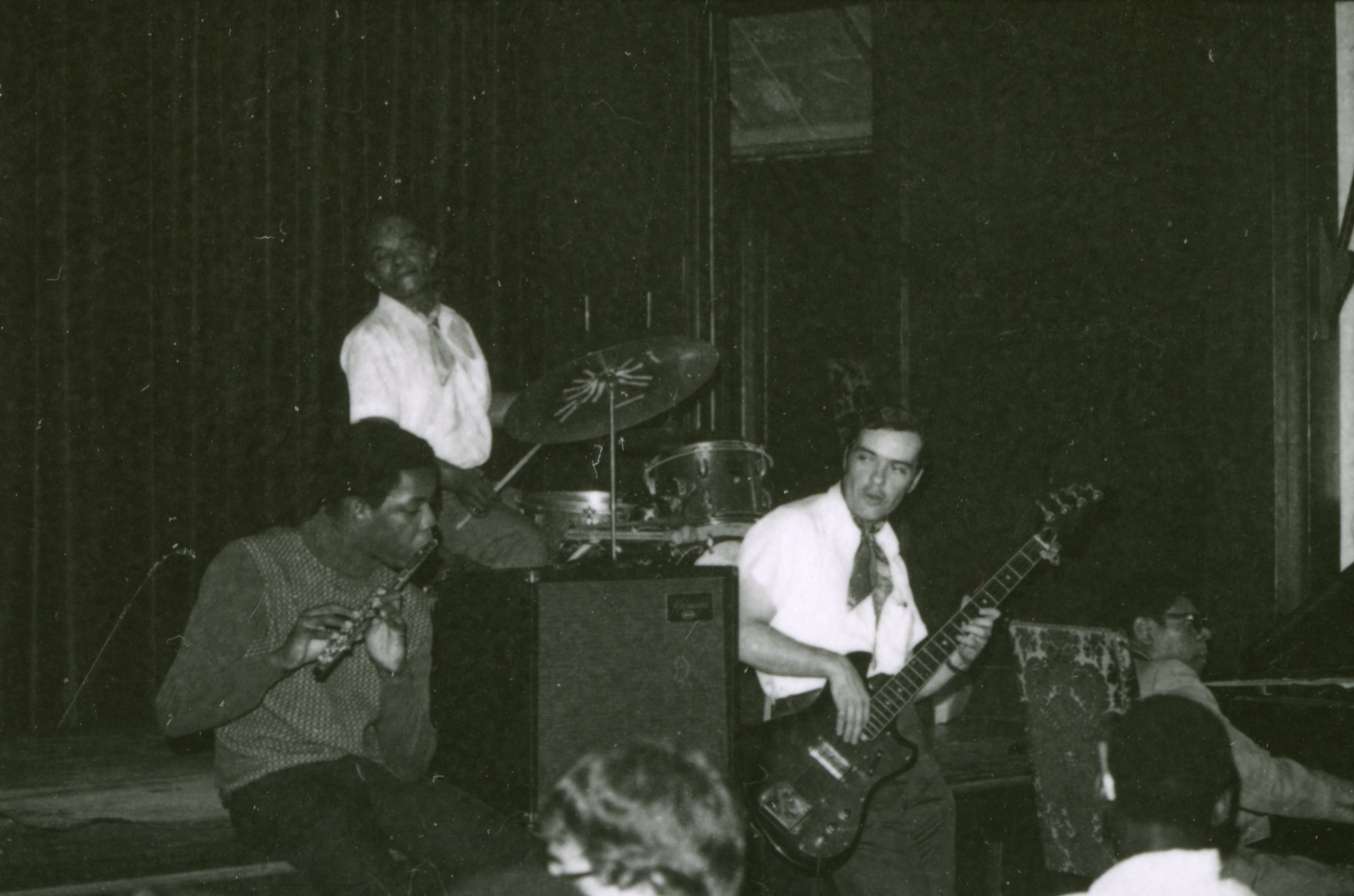
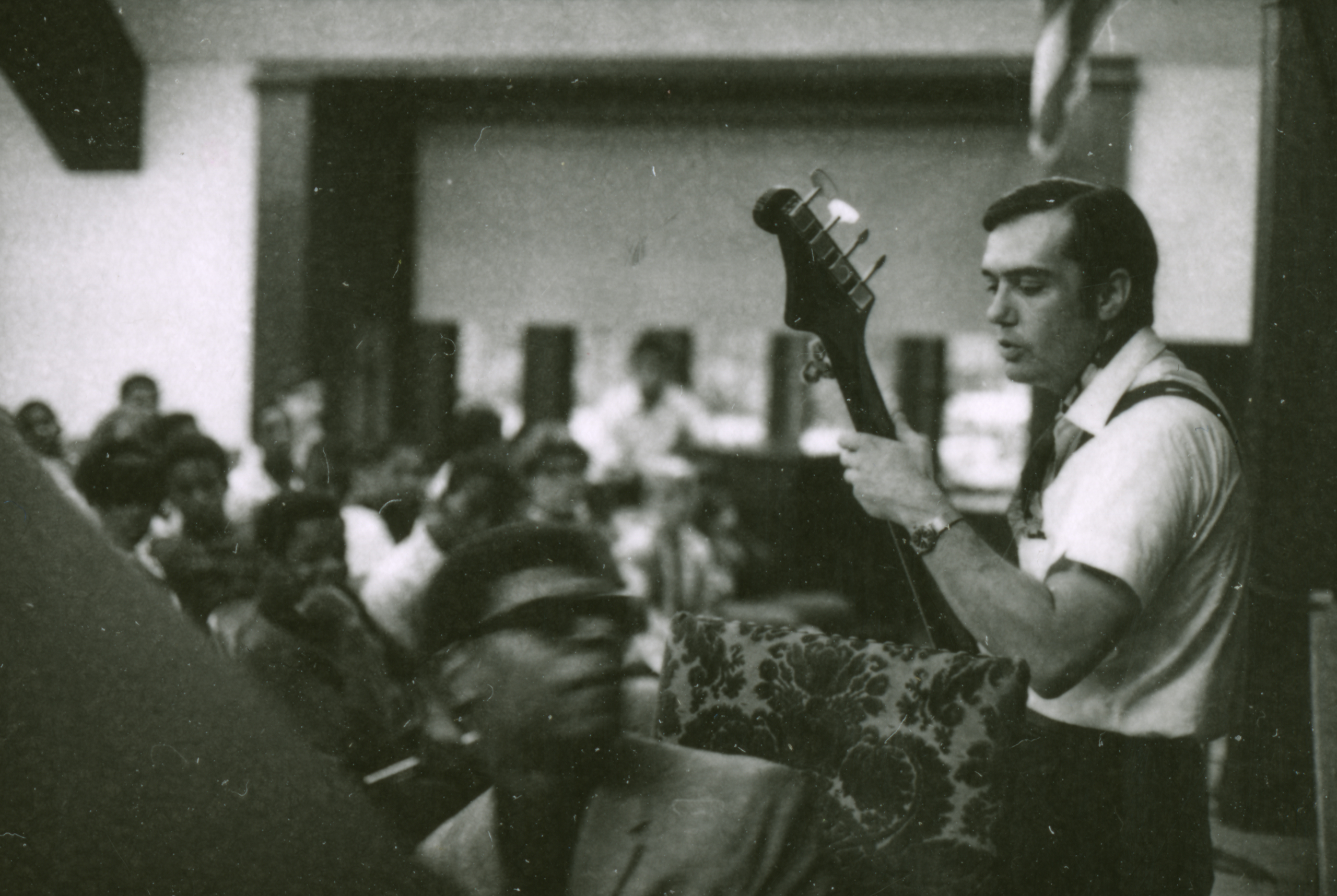
Images not yet identified or depicting unnamed activities have been fun and challenging. Cross-referencing photos with documents like class brochures, annual reports, and school rosters have helped with developing fuller descriptions. For instance, HUB’s annual reports detail various guests and artists that were invited to campus to inspire and entertain HUB students. But, they do not tell the full story. The following photographs feature an unnamed event and band that we hope to learn more about!

Guest band playing for HUB students in assembly hall, Summer 1969. Jack Kausch Photography. Courtesy of Cranbrook Archives.
Andre Boddie (HUB ’70) playing flute with band in assembly hall, Summer 1969. Jack Kausch Photography. Courtesy of Cranbrook Archives.

In addition to my research, HUB alumni have shared information in meetings, emails, and in-person visits, to help describe photographs.

For our studio sessions with Barry Roberts (HUB ’77), we prepared a workspace with enlarged photocopies of group images to annotate and class brochures and annual reports to cross-reference. It’s been a joy to witness how eyes light-up when alumni like Roberts remember people and places depicted in images. We are grateful for the stories they share because they essentially enrich the HUB collection with personal narrative.

Barry Roberts (HUB ’77) identifying HUB images at Thornlea Studio, February 19, 2025. Courtesy of Cranbrook Archives.

More From the 1960s

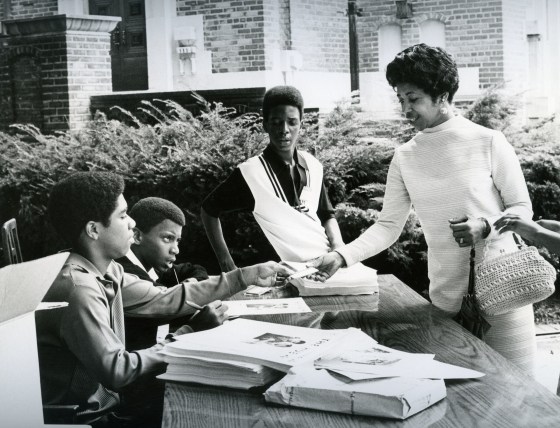
I have really enjoyed reviewing the program’s visual history. Since only a small number of images from the 1960s are featured in the exhibition, I thought I would share some others that really spoke to me.

It’s been exciting to finally see photographs for events and activities described in reports, like Theme Day, SoulFest, and other academic and extra-curricular subjects.

It’s also been interesting to see how HUB students engaged with various spaces across Cranbrook’s campus.

I especially enjoyed a small collection of images featuring art work and displays of writing, which were exhibited during Theme Day in 1969. William Washington, English teacher and Theme Day facilitator at the time, described the event’s focus as students and staff answering the question, “Where Is Love?” (HUB Annual Report, 1969). The following image features students’ responses to this prompt with creative writings entitled “What is this love that we now seek? Love is the language that every man speaks.”

Theme Day display featuring students from Sections 7 and 9 of Gregory S. Mims and Philip Young’s English course, August 17, 1969. Courtesy of Cranbrook Archives.

This fall, all of the images digitized in year two of the digitization project will be available online, but in the meantime check back each month to see those featured in the virtual exhibition!

Courtney Richardson, Project Archivist, Cranbrook Center for Collections and Research

HUB digitization is funded by a NHPRC Archival Projects Grant for projects that ensure online public discovery and use of historical records collections. The NHPRC was established by Congress in 1934 as a statutory body affiliated with the National Archives and Records Administration and chaired by the Archivist of the United States.

Create a website or blog at WordPress.com