The Little Brown House

Twenty-five miles northeast of Cranbrook lies Lakeville Lake, which was once the site of Cranbrook Institute of Science Botanist, Cecil Billington’s summer cottage, the Little Brown House. Documented in Billington’s Papers, which were recently donated to the Archives, the story of the house provides a fascinating glimpse of one of Cranbrook’s earliest supporters and staff members.

Detail of a Cecil Billington’s property on Lakeville Lake, Oakland County, Michigan. Courtesy of Cranbrook Archives

Cecil Billington was an integral part of early Cranbrook history, serving on almost all the founding institutions’ governing boards, as well as the Cranbrook Foundation Board of Trustees (now Cranbrook Educational Community Board of Trustees). He was also a long-time business associate of Cranbrook Founder, George G. Booth, working for him at the Detroit News from 1897-1947 and serving as Secretary of the Evening News Association for twenty-eight years.
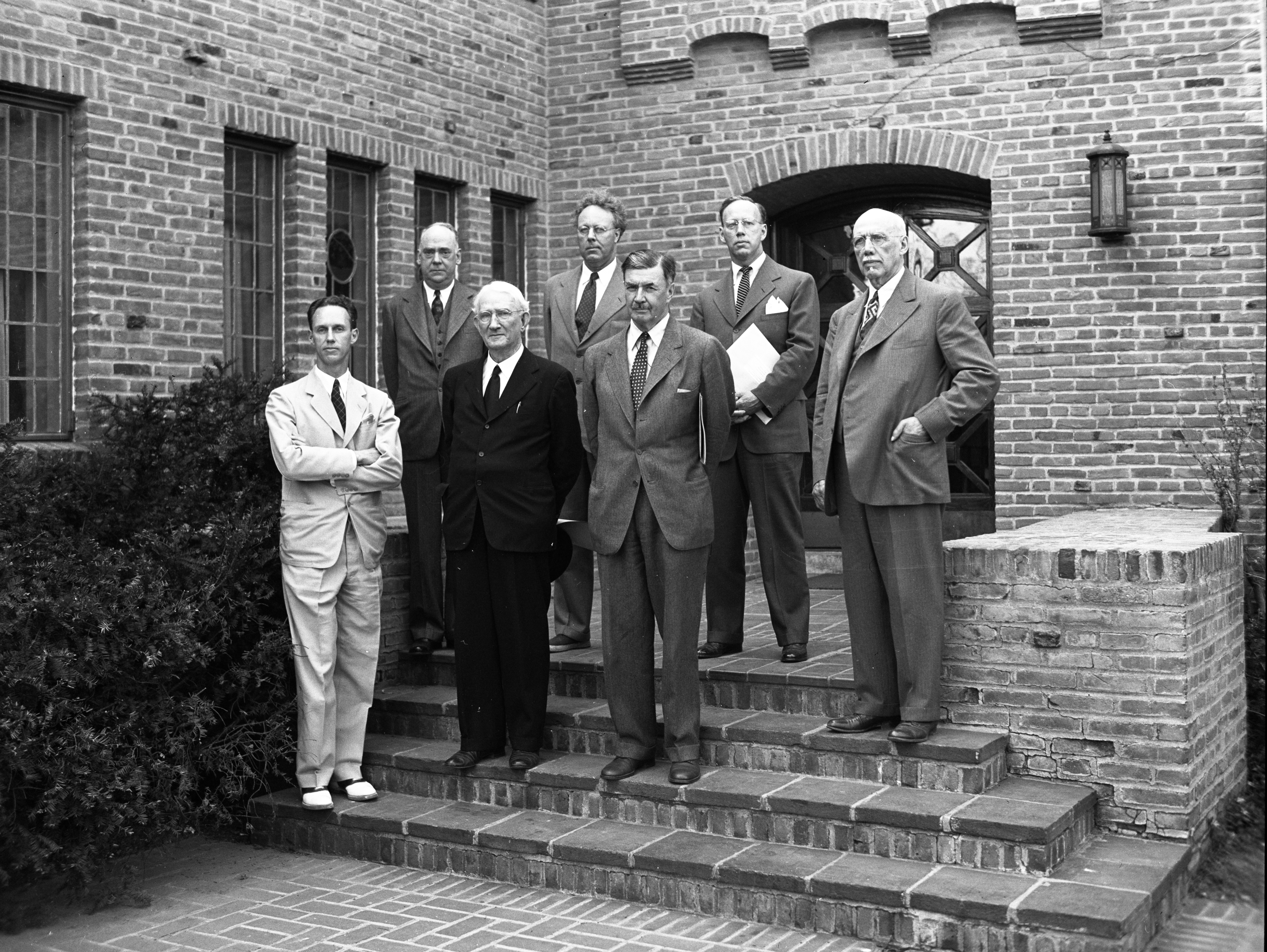
Cranbrook Foundation Board of Trustees, May 1942. Cecil Billington second from left. Courtesy of Cranbrook Archives.

Most affiliated with the Institute of Science, in both an administrative and scientific capacity, Cecil Billington headed up the Institute’s first department of botany. As an amateur botanist, he focused particularly on Oakland County, including his Lakeville property. The Institute published both of his books, Ferns of Michigan and Shrubs of Michigan, and was also the recipient of Billington’s principal collection of plant specimens.

Similar to the papers of Institute Director, Robert T. Hatt, Billington’s papers include field notebooks and other items used in gathering specimens and conducting research that are invaluable for understanding the focus of the Institute in its earliest decades. But it is one book in particular that illuminates the man behind the research and particularly captures my attention and imagination.

West view of the Little Brown House, circa 1930s. Courtesy of Cranbrook Archives.

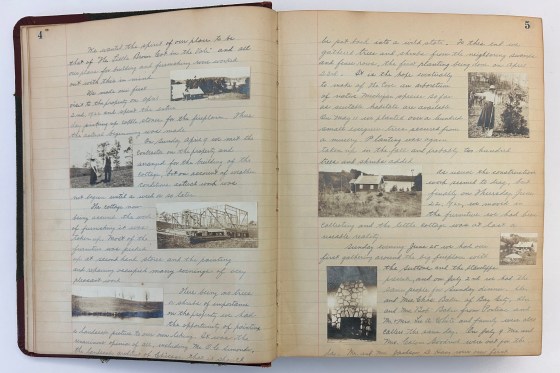
Log of the Little Brown House is part diary and part guest book, documenting sixteen years at The Cove, Cecil and wife Nina’s Lakeville property where they built their cottage. In it, Cecil records reminiscences of each year from 1922, the first year of ownership, to 1938 when the property was sold. His entries document land development and use, scientific study, and leisure activity. Interspersed with the diary entries are the signatures of the couple’s many visitors. Not surprisingly, quite a few of these are Cranbrook names: Lee A. White, Sanford Allen, Carl and Olga Milles, Robert and Marcelle Hatt, and various members of the Booth family, among others.
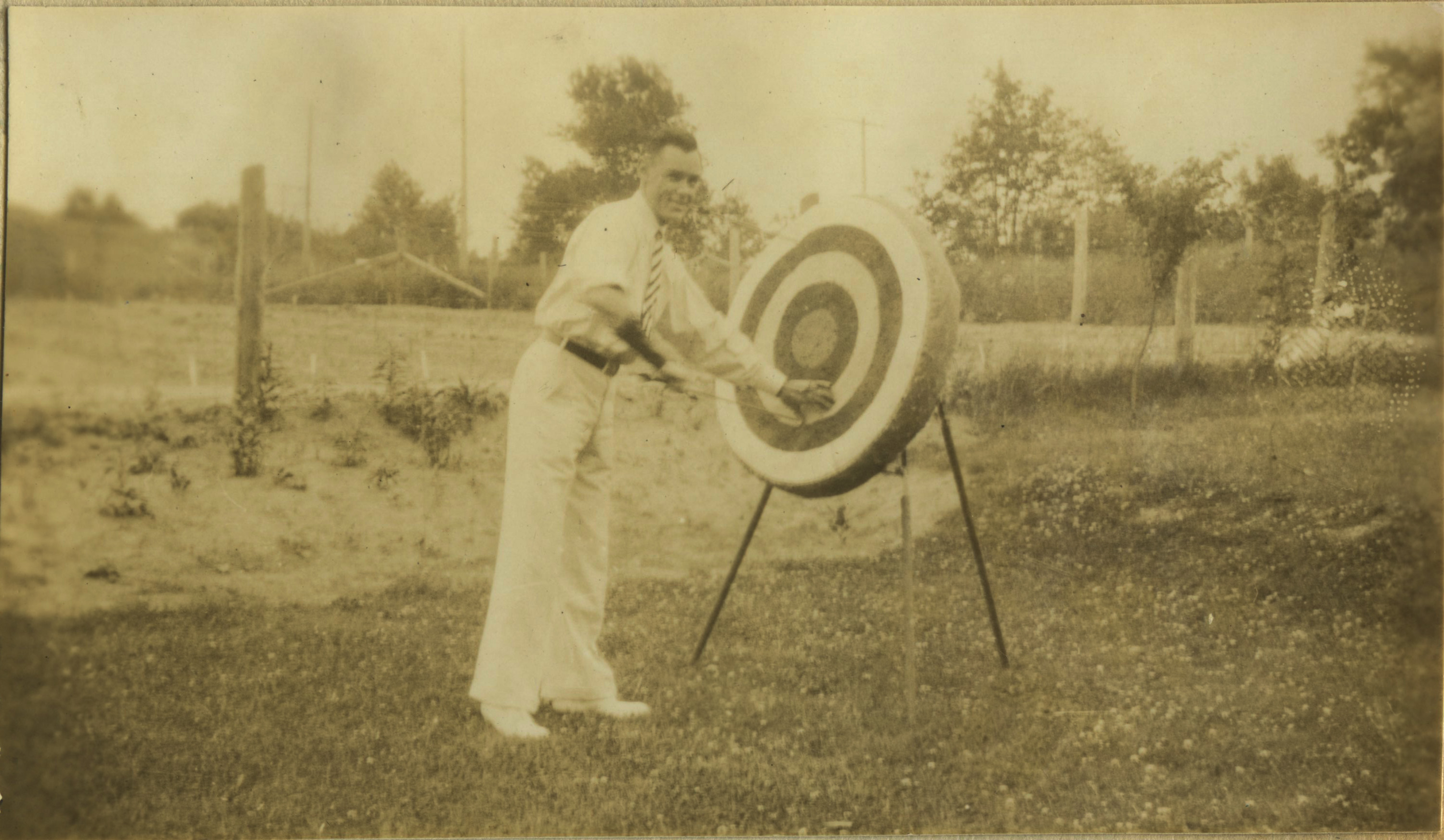
Little Brown House guest using the archery field. Courtesy of Cranbrook Archives.

The Billington’s desire to create a lake idyll that they could freely share with family and friends is recorded in the first pages of the logbook. In addition to building the cottage, over the years they created playfields consisting of archery, bowling on the green, croquet, horseshoes, an outdoor dining room, and a golf course! An entry by Lee A. White in October 1923 hints at the playfulness and freedom enjoyed by visitors: ““They that live by the sword shall perish by the sword.” In memory of the grievous wounding of our host in competition at archery.”  
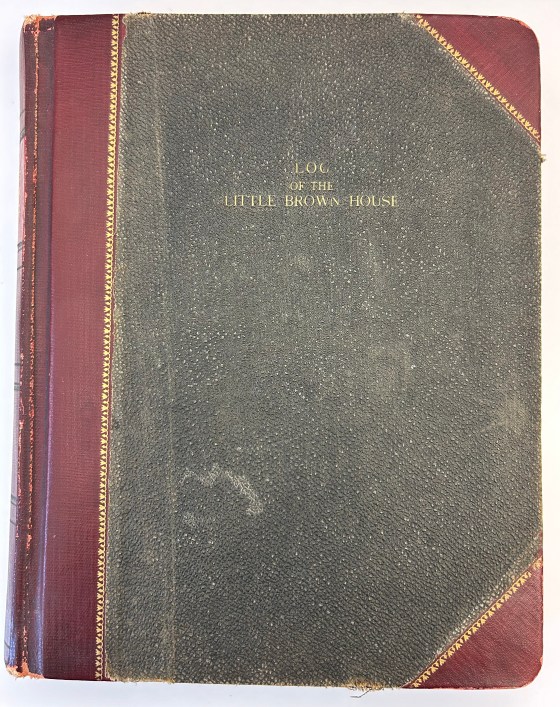
The written entries are illustrated throughout with photographs of the people, place, and things at the Little Brown House: a presentation of a trophy to the 1928 golf champion; the sunflowers planted for the chickadees and other birds; the building of an addition on the cottage.  Framing them all at the front and back of the book are several musings on the Little Brown House, published in the Detroit News and written by columnist Mrs. J. E. Leslie. It seems fitting to end this post with one such entry that may particularly resonate at this time of year:

Crimson woodbine along the line fence; woods brown and green burning with splashes of scarlet and yellow; farm gardens dry and bare—autumn and a drive to Little Brown House. Reaching out to enfold those of its world, is the great, lovely spirit of hospitality and friendship and sincerity that reaches the hearts of those who enter its door. That is the Little Brown House that is reached by a drive through the golden, mellow loveliness of an early autumn day.

Deborah Rice, Head Archivist, Cranbrook Center for Collections and Research
Allurements of Flinch

Allurements of Flinch by James Ball Naylor*

There’s people down to Clovertown
whose only end an’ aim
Is jest to set an’ fiddle with some dern
fool, silly game
They used to play at tid’lywinks an’
authors – an’ I guess,
They hankered after dominoes, an’
crokinole, an’ chess:
An’ as fer checkers – goodness me! –
they said you couldn’t find
A better thing to cultivate the morals
an’ the mind
But now – by gum, it makes me laugh
– they wouldn’t give a pinch
Of salt, fer’ all them former games:
The only thing is “Flinch”

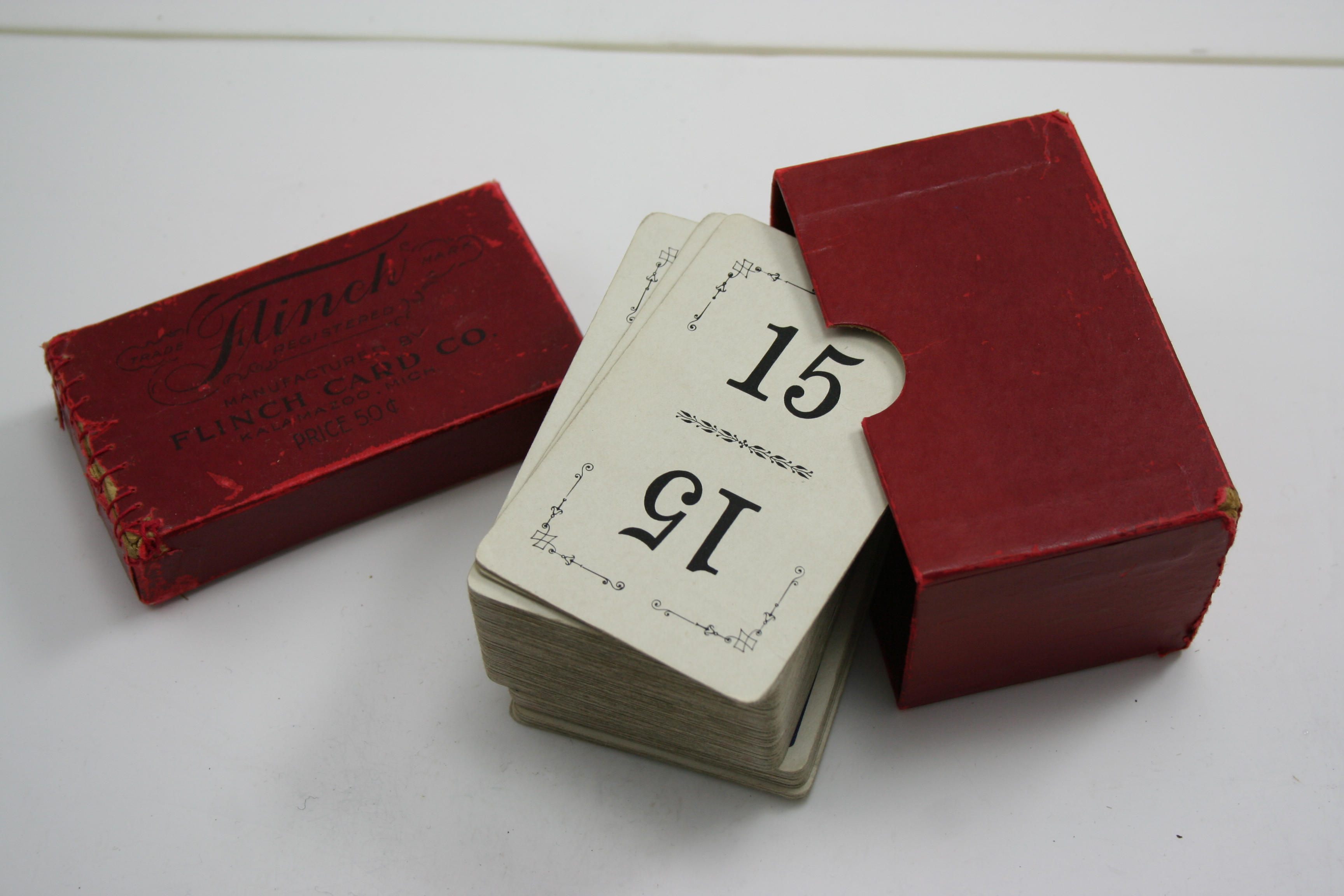
The Booths didn’t “give a pinch of salt” and had a number of copies of the game “Flinch.”  Henry Scripps Booth wrote, “The commonest social entertainment when we lived in Detroit was playing the card game of Flinch. It was also popular across Trumbull Avenue at the Scripp’s home. Later we also played it at Cranbrook.”

CECT277 (1).JPG

One of the Booth’s copies of the game Flinch (CECT 277)

Invented in 1901 by Arthur J. Patterson (1869-1948) of Kalamazoo, Michigan, “Flinch” is the card game that took America by storm in the early 1900’s. The object of the game is to stockpile and then get rid of all your cards.

According to the BoardGameGeek website,

Flinch is played with a deck of 150 cards numbered 1-15. Players can play cards in sequence (building up from 1 to 15) to piles formed in the center of the table. “1” cards must be played to start the piles, but others may be played or held at the player’s discretion. Cards may be played from several sources: a player’s hand (five cards to start), a player’s “game pile” (a stack of 10 cards of which only the top card is face up and playable), or a player’s “reserve piles” (whenever a player passes or completes a turn, they must add a card from their hand to their reserve piles – up to five reserve piles may be formed). Hands are continually replenished with new sets of five cards during the game. The object is to play all 10 cards from game pile to the center of the table.

– Leslie S. Mio, Associate Registrar

*”Allurements of Flinch,” Kalamazoo Gazette, 12 July 1903, page 14, column 4

A Portrait Comes Home to Cranbrook House

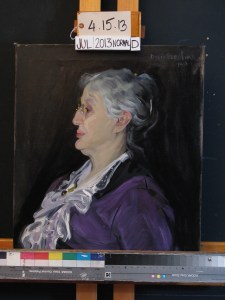
The portrait of Clara Gagnier Booth, mother of Cranbrook founder George Gough Booth, has been mounted in the Oak Room at Cranbrook House. This painting is on long-term loan to Cranbrook from the Saginaw Art Museum, which acquired the painting through a donation from Clara Booth’s grandson, John Lord Booth I.

Perelma_Image

Conservation in-progress, April 2013 by Kenneth B. Katz, Conservation and Museum Services.

After receiving conservation treatment and a new frame, this painting of Clara Booth will accompany that of her husband, Henry Wood Booth, as well as their son George, his wife Ellen Scripps Booth, and Ellen’s father James Edmund Scripps. Financial support from John Lord Booth II affords this opportunity to join the painting of the Booth family matriarch with those of her relatives at Cranbrook House.

The artwork was painted in 1918 by Russian-born artist Ossip Perelma, known particularly for his portraits of men of stature such as President Woodrow Wilson, King Albert I of Belgium, and several Russian and French political officials. Perelma also executed the stately portrait of Henry Wood Booth, currently on view in the Oak Room.

Demure in size and executed with soft and fluid brush strokes, Clara Booth’s portrait contrasts with that of her husband. While Henry is depicted in full length in an outdoor background, his wife is shown only by profile, with just the upper half of her torso included in the composition. The stylistic distinction between Clara’s portrait and that of her husband—and indeed many of Perelma’s other subjects—emphasizes the differing approach Perelma took to depicting a woman.

In the early twentieth century, even women of position, beauty, and culture were often removed from public view after their role as wife and mother was fulfilled, and their youth had faded. This portrait was painted when Clara Booth was 79, and it is notable that Perelma chose not to conceal his subject’s age. Indeed, the portrait is a rare and significant example of art providing legitimacy and prestige to a woman who remained elegant and strong as she reached an age when most women no longer had a public presence or were being immortalized by artists.

Both portraits, Clara Gagnier Booth and Henry Wood Booth, will be available for viewing when Cranbrook House opens for public tours on Sunday June 14th! For more information on the tours check out the Cranbrook House & Gardens Auxillary website.

Stefanie Dlugosz-Acton, Collections Fellow, Center for Collections and Research

Create a website or blog at WordPress.com