Twenty-five miles northeast of Cranbrook lies Lakeville Lake, which was once the site of Cranbrook Institute of Science Botanist, Cecil Billington’s summer cottage, the Little Brown House. Documented in Billington’s Papers, which were recently donated to the Archives, the story of the house provides a fascinating glimpse of one of Cranbrook’s earliest supporters and staff members.

Cecil Billington was an integral part of early Cranbrook history, serving on almost all the founding institutions’ governing boards, as well as the Cranbrook Foundation Board of Trustees (now Cranbrook Educational Community Board of Trustees). He was also a long-time business associate of Cranbrook Founder, George G. Booth, working for him at the Detroit News from 1897-1947 and serving as Secretary of the Evening News Association for twenty-eight years.
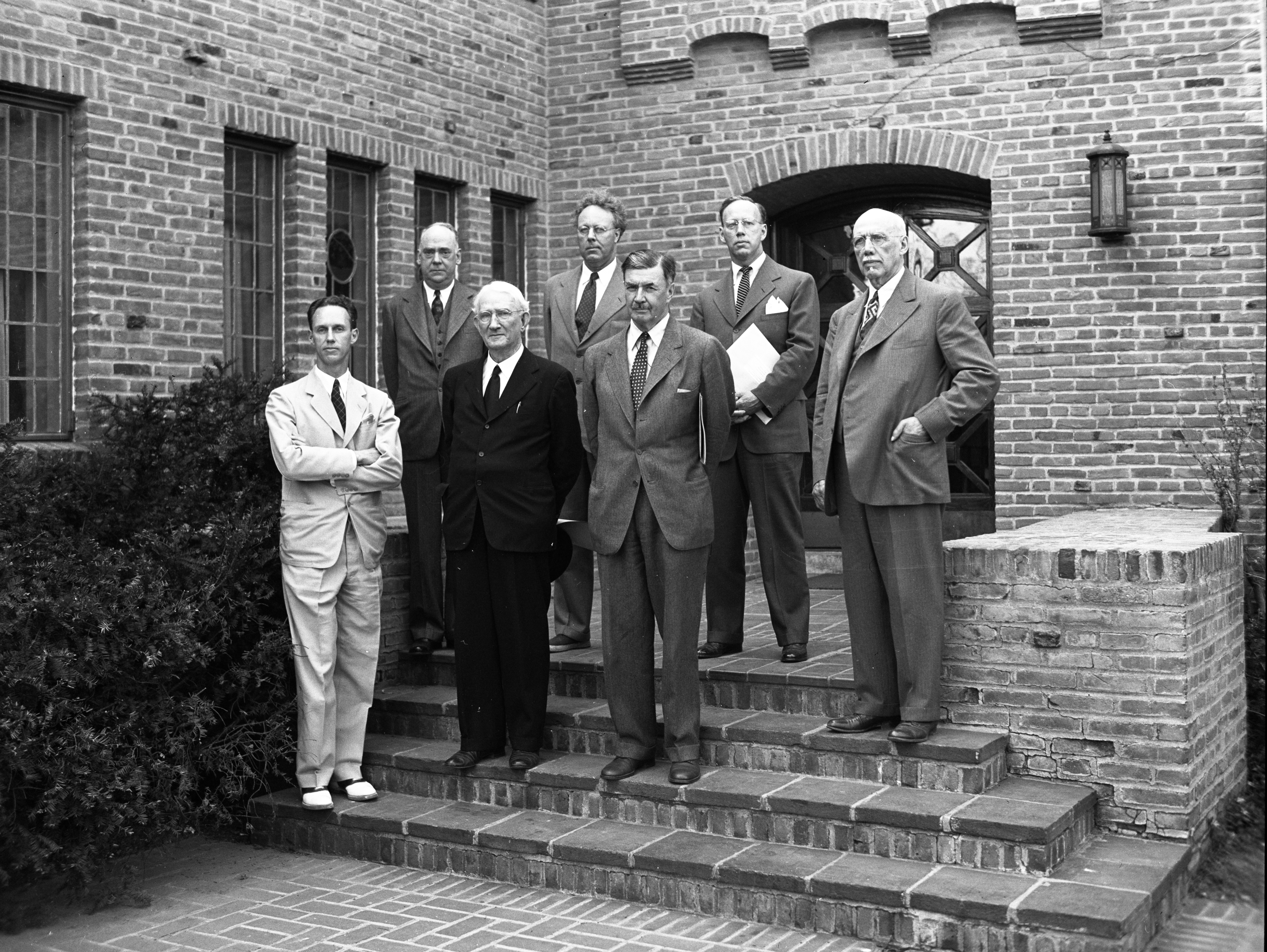
Most affiliated with the Institute of Science, in both an administrative and scientific capacity, Cecil Billington headed up the Institute’s first department of botany. As an amateur botanist, he focused particularly on Oakland County, including his Lakeville property. The Institute published both of his books, Ferns of Michigan and Shrubs of Michigan, and was also the recipient of Billington’s principal collection of plant specimens.
Similar to the papers of Institute Director, Robert T. Hatt, Billington’s papers include field notebooks and other items used in gathering specimens and conducting research that are invaluable for understanding the focus of the Institute in its earliest decades. But it is one book in particular that illuminates the man behind the research and particularly captures my attention and imagination.

Log of the Little Brown House is part diary and part guest book, documenting sixteen years at The Cove, Cecil and wife Nina’s Lakeville property where they built their cottage. In it, Cecil records reminiscences of each year from 1922, the first year of ownership, to 1938 when the property was sold. His entries document land development and use, scientific study, and leisure activity. Interspersed with the diary entries are the signatures of the couple’s many visitors. Not surprisingly, quite a few of these are Cranbrook names: Lee A. White, Sanford Allen, Carl and Olga Milles, Robert and Marcelle Hatt, and various members of the Booth family, among others.
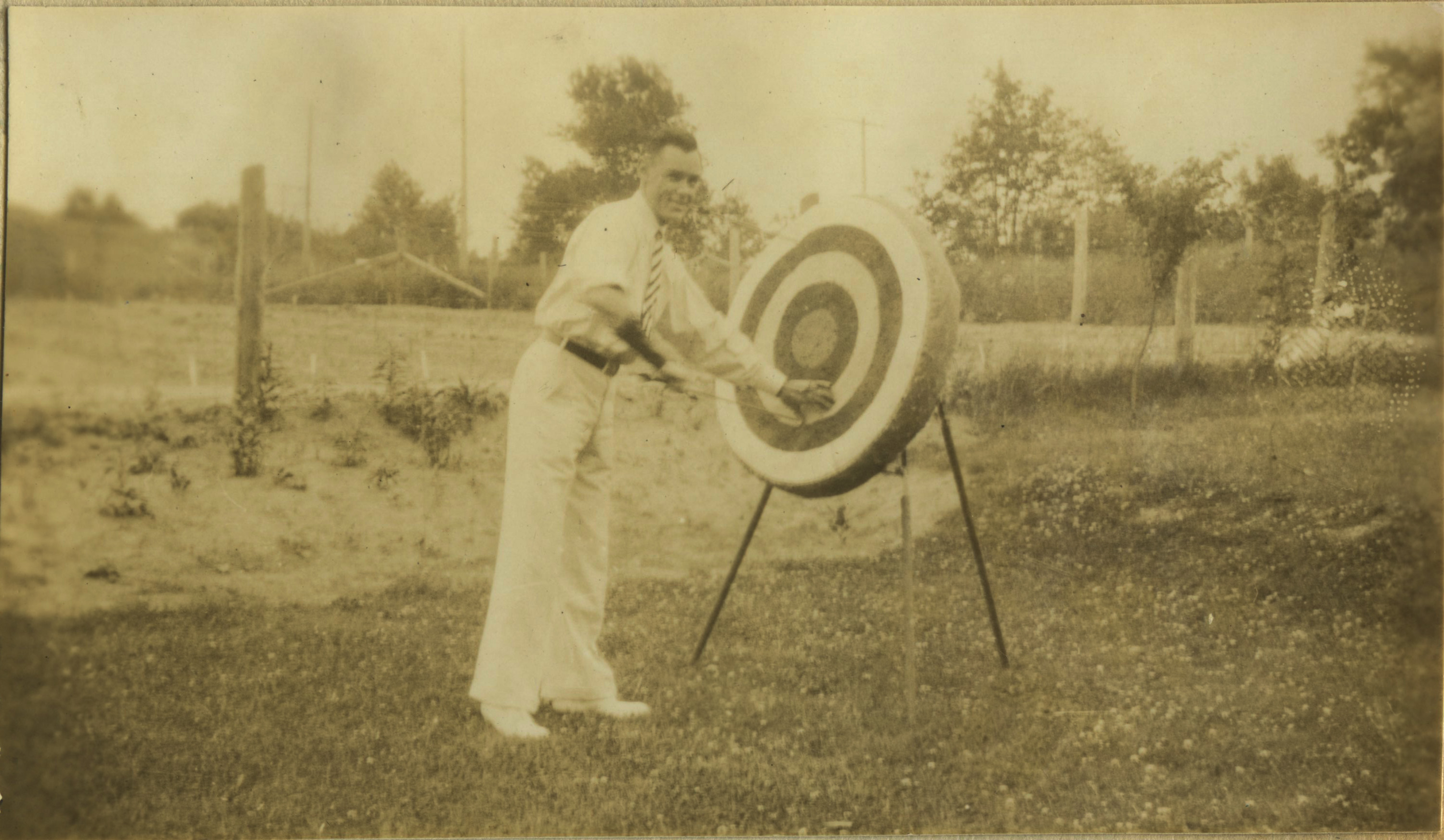
The Billington’s desire to create a lake idyll that they could freely share with family and friends is recorded in the first pages of the logbook. In addition to building the cottage, over the years they created playfields consisting of archery, bowling on the green, croquet, horseshoes, an outdoor dining room, and a golf course! An entry by Lee A. White in October 1923 hints at the playfulness and freedom enjoyed by visitors: ““They that live by the sword shall perish by the sword.” In memory of the grievous wounding of our host in competition at archery.”
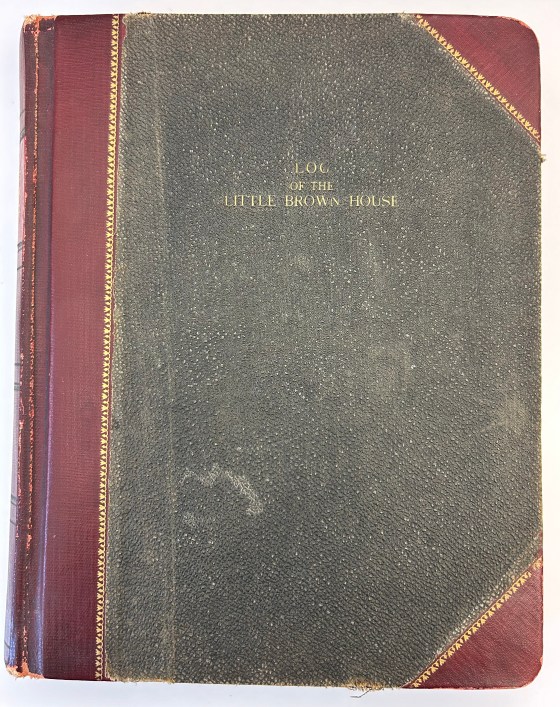

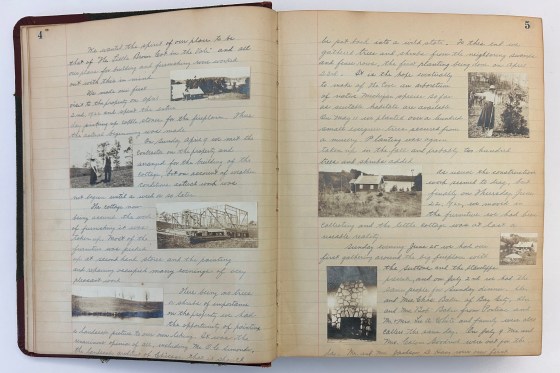
The written entries are illustrated throughout with photographs of the people, place, and things at the Little Brown House: a presentation of a trophy to the 1928 golf champion; the sunflowers planted for the chickadees and other birds; the building of an addition on the cottage. Framing them all at the front and back of the book are several musings on the Little Brown House, published in the Detroit News and written by columnist Mrs. J. E. Leslie. It seems fitting to end this post with one such entry that may particularly resonate at this time of year:
Crimson woodbine along the line fence; woods brown and green burning with splashes of scarlet and yellow; farm gardens dry and bare—autumn and a drive to Little Brown House. Reaching out to enfold those of its world, is the great, lovely spirit of hospitality and friendship and sincerity that reaches the hearts of those who enter its door. That is the Little Brown House that is reached by a drive through the golden, mellow loveliness of an early autumn day.
—Deborah Rice, Head Archivist, Cranbrook Center for Collections and Research
 Cranbrook Kitchen Sink