For many of us who grew up in Michigan, going up north during summer vacation was (and still is) something very special – a way to escape the hustle and bustle of city and suburban life and become one with the natural beauty it has to offer. Throughout the 20th century, Cranbrook scientists, artists, architects, students and faculty, as well as members of the Booth family, took advantage of the native woods, white sandy beaches, and waters of Lake Michigan.
Logo for Pinehurst Inn, Indian River, 1940. Cranbrook Archives.
Shelley Selim, Cranbrook Art Museum’s Ralph and Jeanne Graham Assistant Curator, curated the exhibition Designing Summer: Objects of Escape which features Michigan designers and companies who have contributed to summer innovations including tents, boats, and bicycles as well as a summer home designed by Florence Schust Knoll. In response to the opening of the exhibition on Saturday, June 20th, I opted to post a few highlights of Cranbrook’s ongoing relationship with northern Michigan.

Dudley Blakely painting at group site, Bois Blanc Island, 1938. Cranbrook Archives.
As early as 1929, staff and faculty from the Institute of Science traveled north to conduct studies of animal and plant life on the many islands in Lake Michigan – from Bois Blanc to the Manitous. Reports of these research trips were documented in photographs, field notes, and ultimately published in Institute of Science newsletters and bulletins.
During the 1940s and 1950s, Henry Scripps Booth took his family up north for several summers, often vacationing with friends. One of their favorite spots was Good Hart, where they stayed either at The Krude Kraft Lodge or the Old Trail Inn.
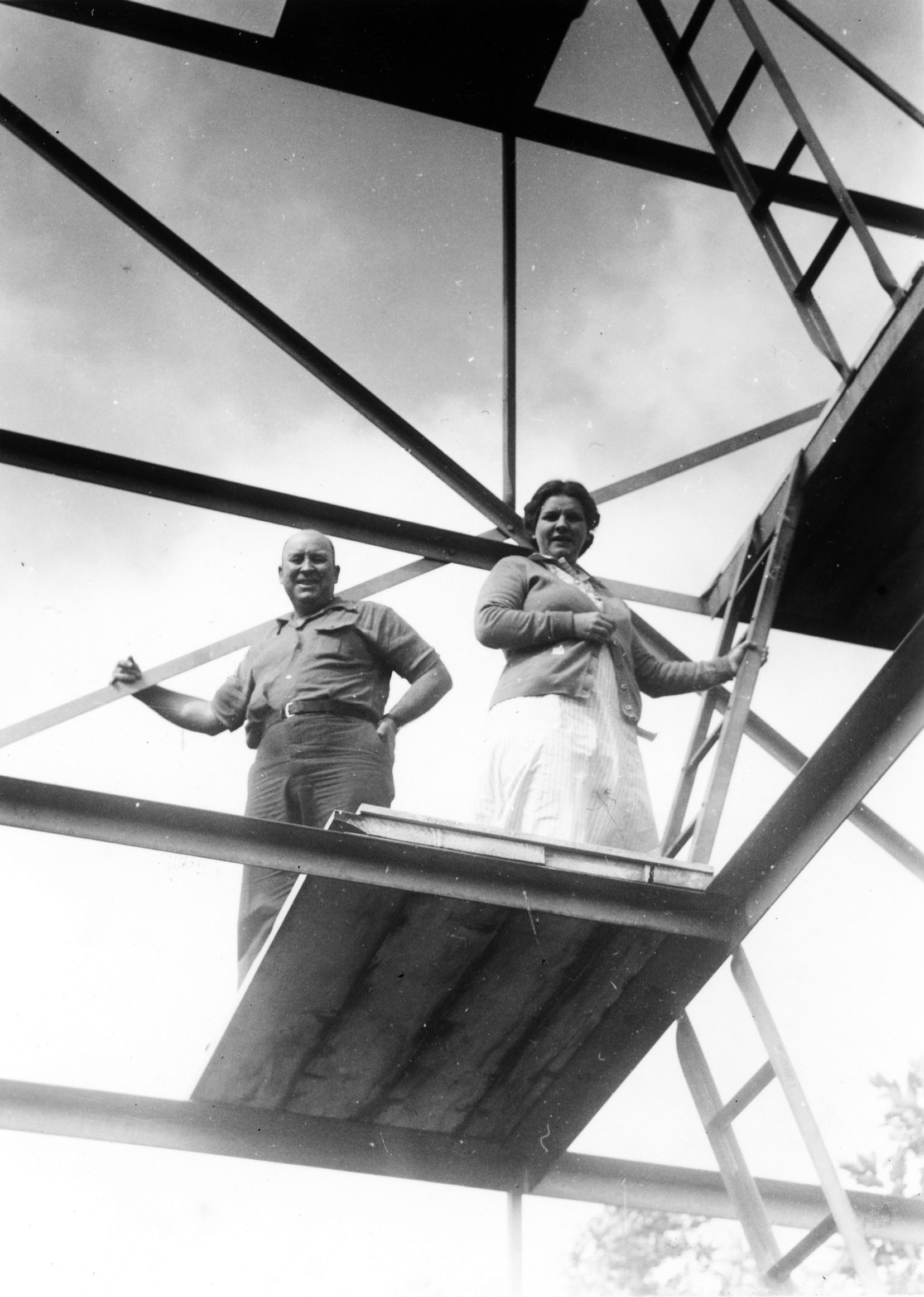
Carolyn Farr Booth and Chauncy Bliss on the Fire Tower at Good Hart, ca 1940. Cranbrook Archives.
Communities like Cross Village, Harbor Springs, and Glen Arbor have been inspirational for Cranbrook artists and architects for centuries. Former head of architecture, Robert Snyder, designed an A-Frame beach cottage for Wally Mitchell, while architecture student Harry Weese designed a trifecta of summer homes (two for the Weese family) at Glen Arbor. “Shack Tamarack” (named after the tamarack logs used in its construction) was built in 1936 and is still used by Weese descendants today. Harry followed that with “Cottage Two” in 1939, a one story house designed with his brother John, and the Pritchard House which spoke to the modern aesthetic Weese experienced as an architecture student at Cranbrook Academy of Art.
Robert F. Swanson and Pipsan Saarinen Swanson spent decades designing commissions up north including the ultra-modern MacDonald Building in Harbor Springs, the L’Arbre Croche Condominium development, and the family’s own summer cottage at Menonaqua (along with son, Bob). Check out Shelley’s blog about Pipsan’s Sol Air furniture which is featured in the Designing Summer exhibition.
While architect Tod Williams (Cranbrook School ‘61) served as project manager for Richard Meier’s Douglas House project also located in Harbor Springs, other Cranbrook-related projects up north include The Munising Design Strategy Matrix – a community design project managed by The Community Design Advisory Program (CDAP). Established in 1987 by Design Michigan, a non-profit, state outreach program housed at Cranbrook Academy of Art, CDAP provided tailored community design and revitalization services to the city of Munising.
And, in 2013, Peter Pless (CAA ‘02) lead a design collaboration between the Human Centered Design Program at Northern Michigan University and the Lloyd Flanders furniture company of Menominee, Michigan.
Thankfully, there is seemingly no end in sight to the inspiration and possibilities of art, architecture, science, and plain old fashioned relaxation one can find up north.
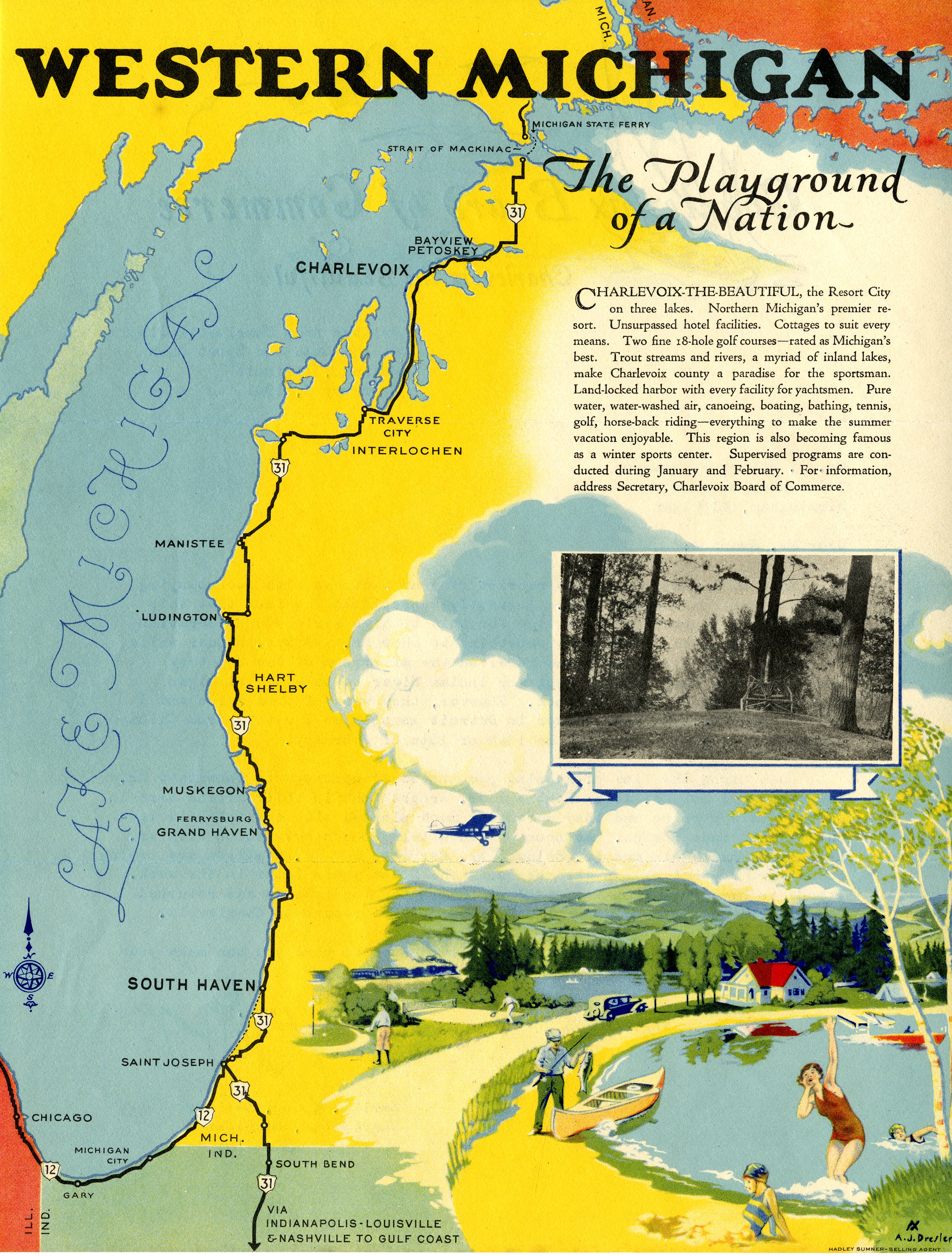
Promotional Literature, Charlevoix Chamber of Commerce, 1941. Cranbrook Archives.
– Leslie S. Edwards, Head Archivist

 Cranbrook Kitchen Sink