Cranbrook Up North

For many of us who grew up in Michigan, going up north during summer vacation was (and still is) something very special – a way to escape the hustle and bustle of city and suburban life and become one with the natural beauty it has to offer. Throughout the 20th century, Cranbrook scientists, artists, architects, students and faculty, as well as members of the Booth family, took advantage of the native woods, white sandy beaches, and waters of Lake Michigan.
Logo for Pinehurst Inn, Indian River, 1940. Cranbrook Archives

Logo for Pinehurst Inn, Indian River, 1940. Cranbrook Archives.

Shelley Selim, Cranbrook Art Museum’s Ralph and Jeanne Graham Assistant Curator, curated the exhibition Designing Summer: Objects of Escape which features Michigan designers and companies who have contributed to summer innovations including tents, boats, and bicycles as well as a summer home designed by Florence Schust Knoll. In response to the opening of the exhibition on Saturday, June 20th, I opted to post a few highlights of Cranbrook’s ongoing relationship with northern Michigan.

Dudley Blakely painting at group site, Bois Blanc Island, 1938. Cranbrook Archives.

Dudley Blakely painting at group site, Bois Blanc Island, 1938. Cranbrook Archives.

As early as 1929, staff and faculty from the Institute of Science traveled north to conduct studies of animal and plant life on the many islands in Lake Michigan – from Bois Blanc to the Manitous. Reports of these research trips were documented in photographs, field notes, and ultimately published in Institute of Science newsletters and bulletins.

During the 1940s and 1950s, Henry Scripps Booth took his family up north for several summers, often vacationing with friends. One of their favorite spots was Good Hart, where they stayed either at The Krude Kraft Lodge or the Old Trail Inn.
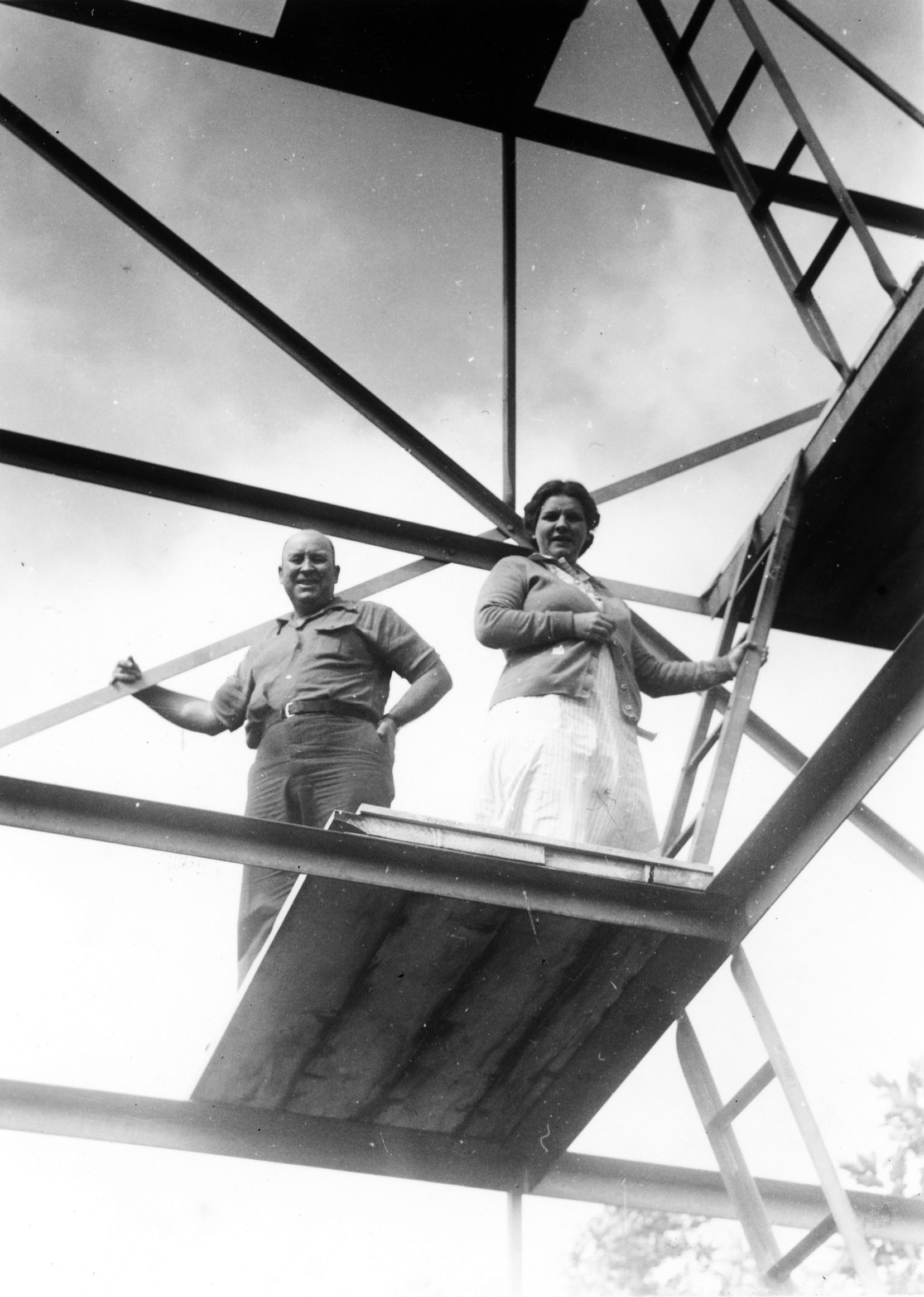
Carolyn Farr Booth and Chauncy Bliss on the Fire Tower at Good Hart, ca 1940. Cranbrook Archives.

Carolyn Farr Booth and Chauncy Bliss on the Fire Tower at Good Hart, ca 1940. Cranbrook Archives.

Communities like Cross Village, Harbor Springs, and Glen Arbor have been inspirational for Cranbrook artists and architects for centuries. Former head of architecture, Robert Snyder, designed an A-Frame beach cottage for Wally Mitchell, while architecture student Harry Weese designed a trifecta of summer homes (two for the Weese family) at Glen Arbor. “Shack Tamarack” (named after the tamarack logs used in its construction) was built in 1936 and is still used by Weese descendants today. Harry followed that with “Cottage Two” in 1939, a one story house designed with his brother John, and the Pritchard House which spoke to the modern aesthetic Weese experienced as an architecture student at Cranbrook Academy of Art.

Robert F. Swanson and Pipsan Saarinen Swanson spent decades designing commissions up north including the ultra-modern MacDonald Building in Harbor Springs, the L’Arbre Croche Condominium development, and the family’s own summer cottage at Menonaqua (along with son, Bob). Check out Shelley’s blog about Pipsan’s Sol Air furniture which is featured in the Designing Summer exhibition.

While architect Tod Williams (Cranbrook School ‘61) served as project manager for Richard Meier’s Douglas House project also located in Harbor Springs, other Cranbrook-related projects up north include The Munising Design Strategy Matrix – a community design project managed by The Community Design Advisory Program (CDAP). Established in 1987 by Design Michigan, a non-profit, state outreach program housed at Cranbrook Academy of Art, CDAP provided tailored community design and revitalization services to the city of Munising.

And, in 2013, Peter Pless (CAA ‘02) lead a design collaboration between the Human Centered Design Program at Northern Michigan University and the Lloyd Flanders furniture company of Menominee, Michigan.

Thankfully, there is seemingly no end in sight to the inspiration and possibilities of art, architecture, science, and plain old fashioned relaxation one can find up north.
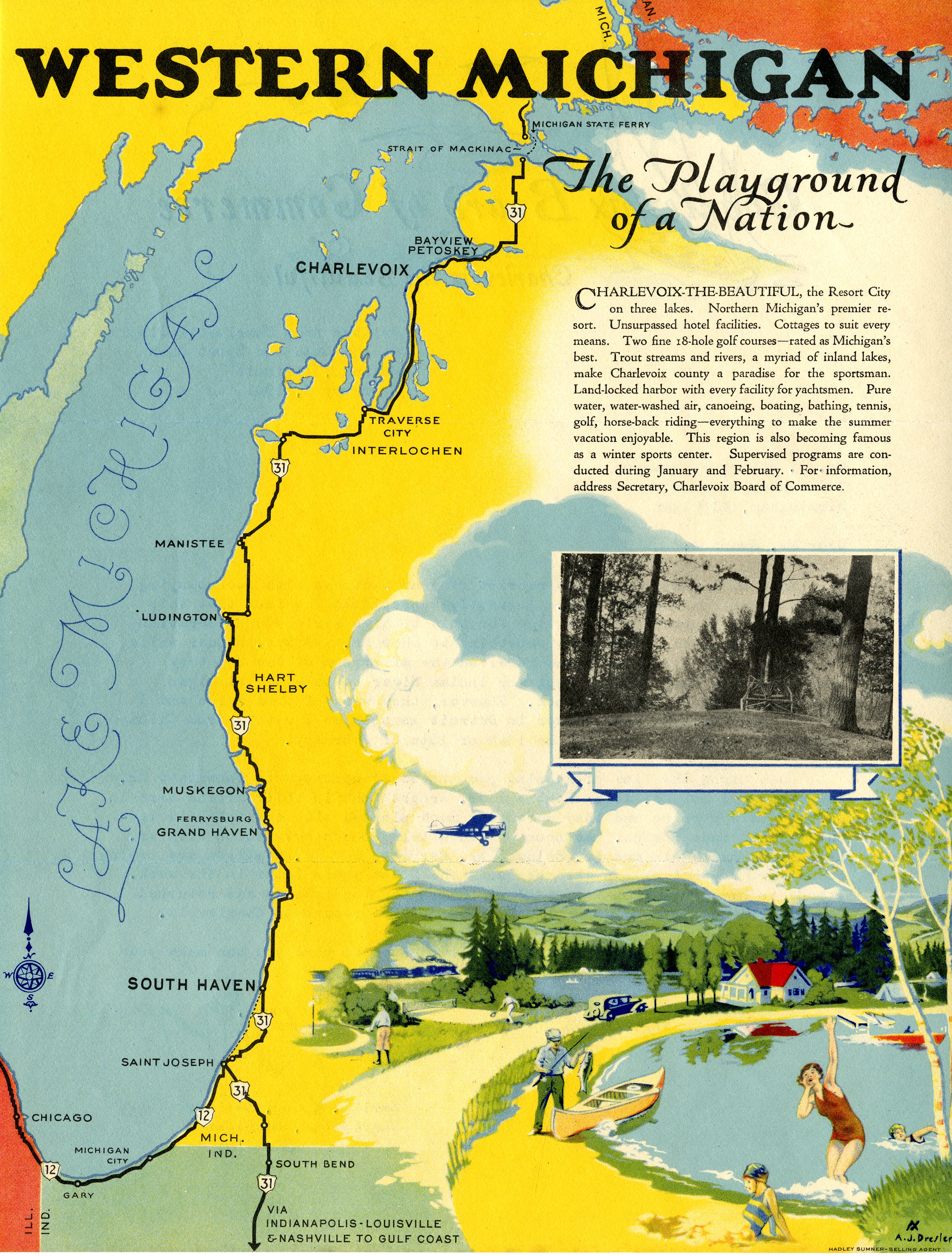
Promotional Literature, Charlevoix Chamber of Commerce, 1941. Cranbrook Archives.

Promotional Literature, Charlevoix Chamber of Commerce, 1941. Cranbrook Archives.

Leslie S. Edwards, Head Archivist

Photo Friday: Excavation at Greenwood Mound

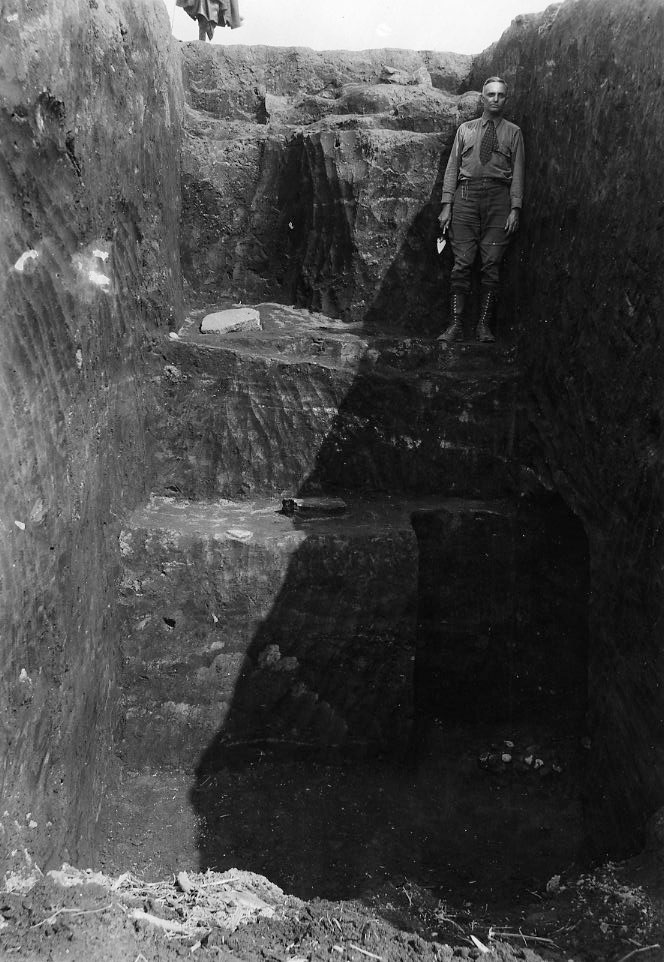
William Colburn, February 1932. Cranbrook Archives

William Colburn, February 1932. The William Colburn Papers, Cranbrook Archives.

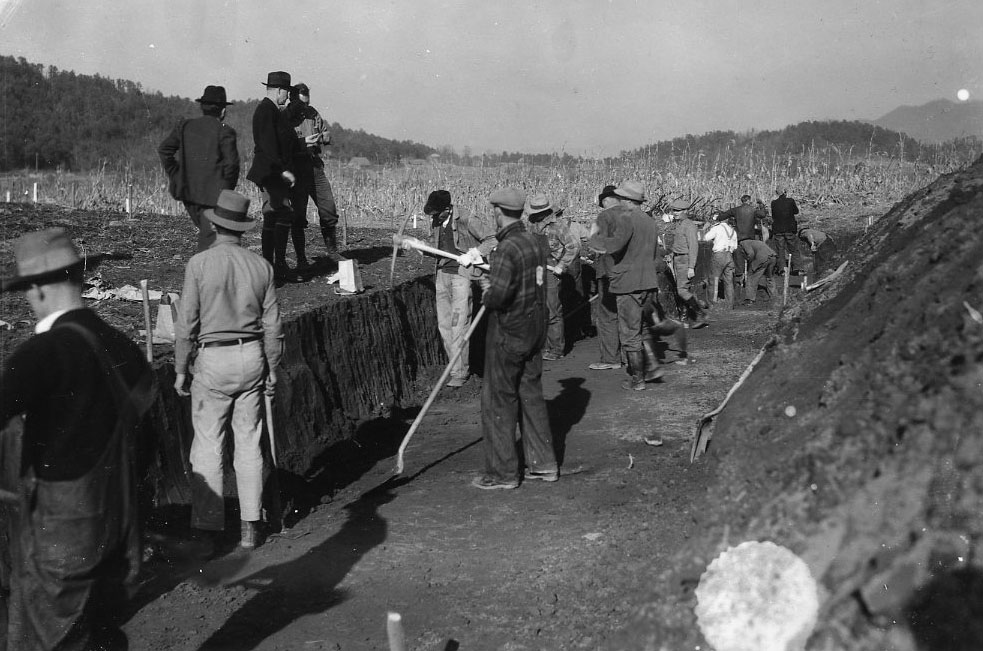
Team of men at dig. Cranbrook Archives.

Team of men at dig. The William Colburn Papers, Cranbrook Archives.

In honor of International Archaeology Day, today’s Photo Friday is a tribute to Archaeologist William Colburn (1882-1966). Colburn, a Detroit native, first visited Cranbrook Institute of Science in 1932. He spent a few weeks in December of the same year fixing display and lighting issues the Institute had in the “mineralogical room.” It came to his attention in 1933 that there were multiple collections of mineral specimens held by the Detroit Museum of Art (now the Detroit Institute of Art) that were not being displayed due to lack of space. Colburn secured an indefinite loan of these collections to the Institute, and spent the majority of the summer of 1933 cataloging and displaying them. Subsequently, Colburn accepted a position on the Institute’s Board of Trustees, a position he held from 1933-1944.

Colburns sketch of the bowling alley. Cranbrook Archives.

Colburn’s sketch of the bowling alley. The William Colburn Papers, Cranbrook Archives.

"Showing field rocks on bowling alley after cloudburst." Cranbrook Archives.

Taken after the rain, the arrangement of fieldstones can be seen. The William Colburn Papers, Cranbrook Archives.

Colburn is well-known for an excavation he led in February 1932 of the J.J. Greenwood Mound, a Cherokee civilization near Dillard, Georgia. Although he did not find any major burials or relics, Colburn’s team did come across some interesting finds. In his report, Colburn describes the discovery of a stone alignment that he interpreted as a Cherokee “bowling alley” (a Native American game). A formation of fieldstones was found with a smooth hard-baked clay runway. A rainstorm shortly after the discovery shifted the original arrangement of the stones. Thirty-two disk-shaped stones with rounded edges discovered at the sides of the “runway” were used for the game. One of the stones was found with a chip that had been carefully repaired by the Cherokee.

Colburn's drawing of the mound site. Cranbrook Archives.

Colburn’s drawing of the mound site. The William Colburn Papers, Cranbrook Archives.

Colburn made several innovations for which Cranbrook became known, including internally lit display cases and back-lighting mineral specimens. Colburn  sought out specimens, making numerous trips to the Upper Peninsula, and even the Eastern and Western parts of the country, in order to build the collections at the Institute. Through his many excavations Colburn obtained numerous mineral specimens for the Institute. In addition, he bequeathed a generous amount of specimens to the Institute.

Gina Tecos, Archivist

All Roads Lead to Cranbrook: A Fellow Says Goodbye

I began writing this blog post weeks ago but had to set it aside—because I became too sentimental to continue, but also because I was pulled into a discussion about an issue around 19th century chairs, Eliel Saarinen, and Cranbrook House (the exact details escape me). This, to me, is the perfect encapsulation of what the last two years have been: a whirlwind of emotional investment, intellectual engagement, and a work pace that proceeds at a quick clip as projects emerge from questions as diverse as “is this sandbox at Brookside a historic one?” (the answer is, “no”) to “how did those Cranbrook School chairs get all the way out to California, and what do we do with them now?” (the answer is, “we don’t know” and “return them into circulation after ensuring their condition and documentation”).

As the first full-term, resident Collections Fellow at the Cranbrook Center for Collections and Research, I have worked with an amazing staff of individuals to field these questions and countless more (the less said about the discussion regarding spray-painted vandalism on the posterior of a sculpture on campus, the better). I have also had the chance to both figuratively and literally reach across the aisle to collaborate with the staff of Cranbrook Art Museum and Cranbrook Institute of Science, as well as the amazing volunteers at Cranbrook House. For two years I have watched the seasons turn from my desk in the lower level of the art museum. I have made a place for myself in CAM’s gleaming new Collections Wing as well as the less glamorous (but perhaps more curious and mysterious) storage spaces that fill attics and basements across Cranbrook’s sprawling campus. I have learned this storied site’s history, engaging with its past through three exhibitions and countless house tours, lectures, and public programming. And now, unfortunately, it is time for me to say goodbye.

Here I am hard at work in the Cranbrook House attic, cataloging and photographing historic costume. This job was always a surprise! May 2014.

Here I am hard at work in the Cranbrook House attic, cataloging and photographing historic costumes. This job is always a surprise! May 2014.

Continue reading

Reel-to-Real: Archives and the Challenge of Obselete Technology

While new advancements in technology can certainly make remembering history easier, it is important not to forget what has already been done and make sure it is still accessible in the future. All organizations concerned with the preservation of culture must at some point address the problem of obsolete technology, archives chief among them.

The oral history collection at Cranbrook Archives holds fifteen recordings made on reel-to-reel magnetic audio tape that are in danger of being lost unless their content is migrated to another media source. The recordings were made between the 1950s and 1980s, with the oldest being a 1956 interview of Robert McMath, the solar astronomer who served as Cranbrook Institute of Science Board of Trustee from its founding in 1930 until 1962. Other interviews capture the wide breadth of life at Cranbrook and feature the voices of artists, craftsmen, administrative staff, teachers, and clergy, telling the story of Cranbrook’s history as it happened.

These are just a few of the reel-to-reel tapes from the collection. Justine Tobiasz/Cranbrook Archives

These are just a few of the reel-to-reel tapes from the collection. Justine Tobiasz/Cranbrook Archives

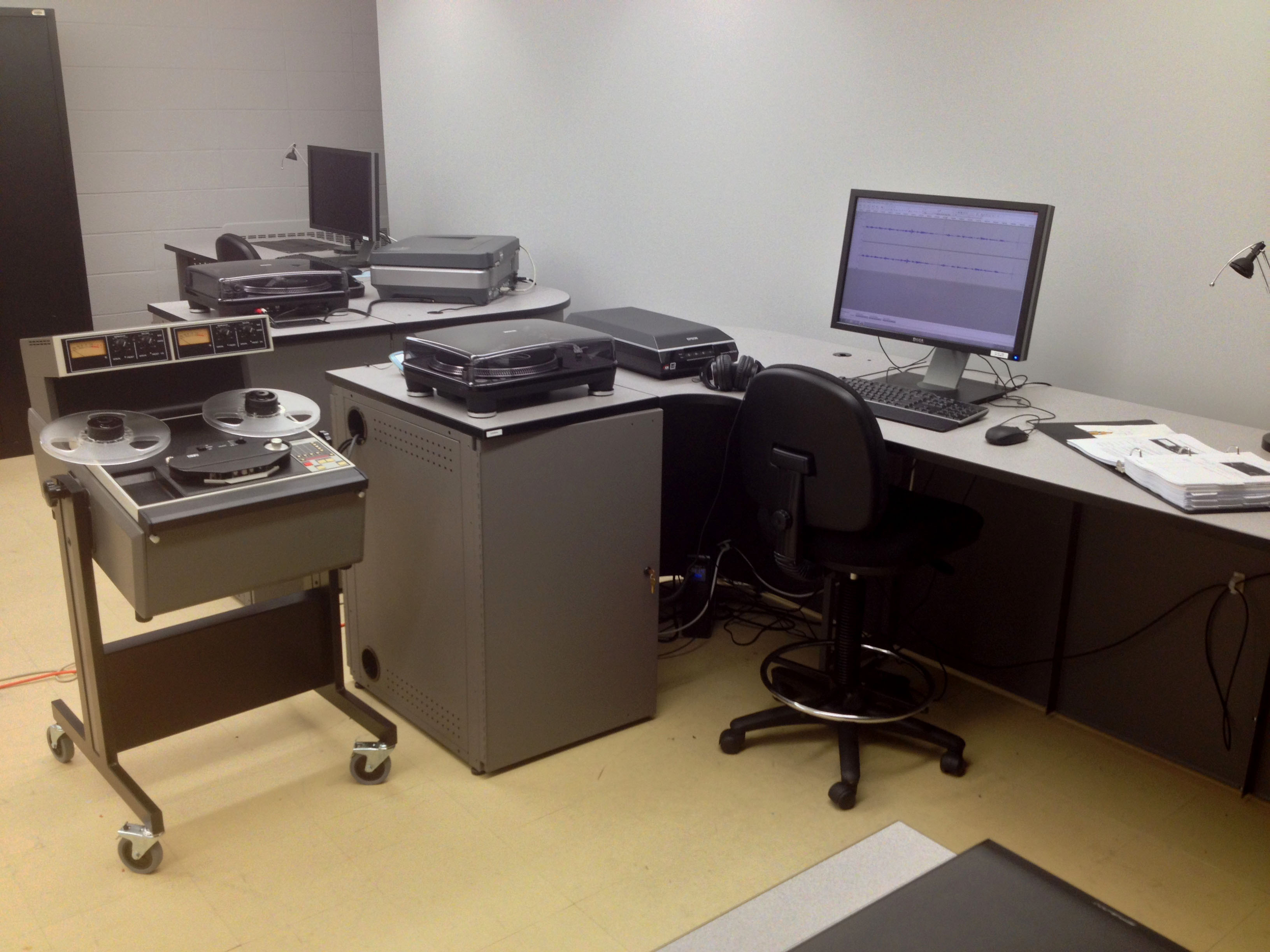
In partnership with Wayne State University’s Digital Media Projects Lab, we are now in the process of converting audio from the reels into digital files. The machine we’re using for this process is the Ampex ATR, which has been refurbished and modified with the record head removed to avoid accidental recording. The reels will continue to be preserved, but having another format ensures that these pieces of Cranbrook’s history will continue to live on.

Digital Media Projects Lab at Wayne State, complete with Ampex ATR.

Digital Media Projects Lab at Wayne State, complete with Ampex ATR. Image courtesy Wayne State University Digital Media Projects Lab.

Thank you to Wayne State for assisting us on this project, and stay tuned for future updates from the conversion process!

– Justine Tobiasz, Archives Assistant

Rocks That Teach: Cranbrook Institute of Science and the Sanilac Petroglyphs

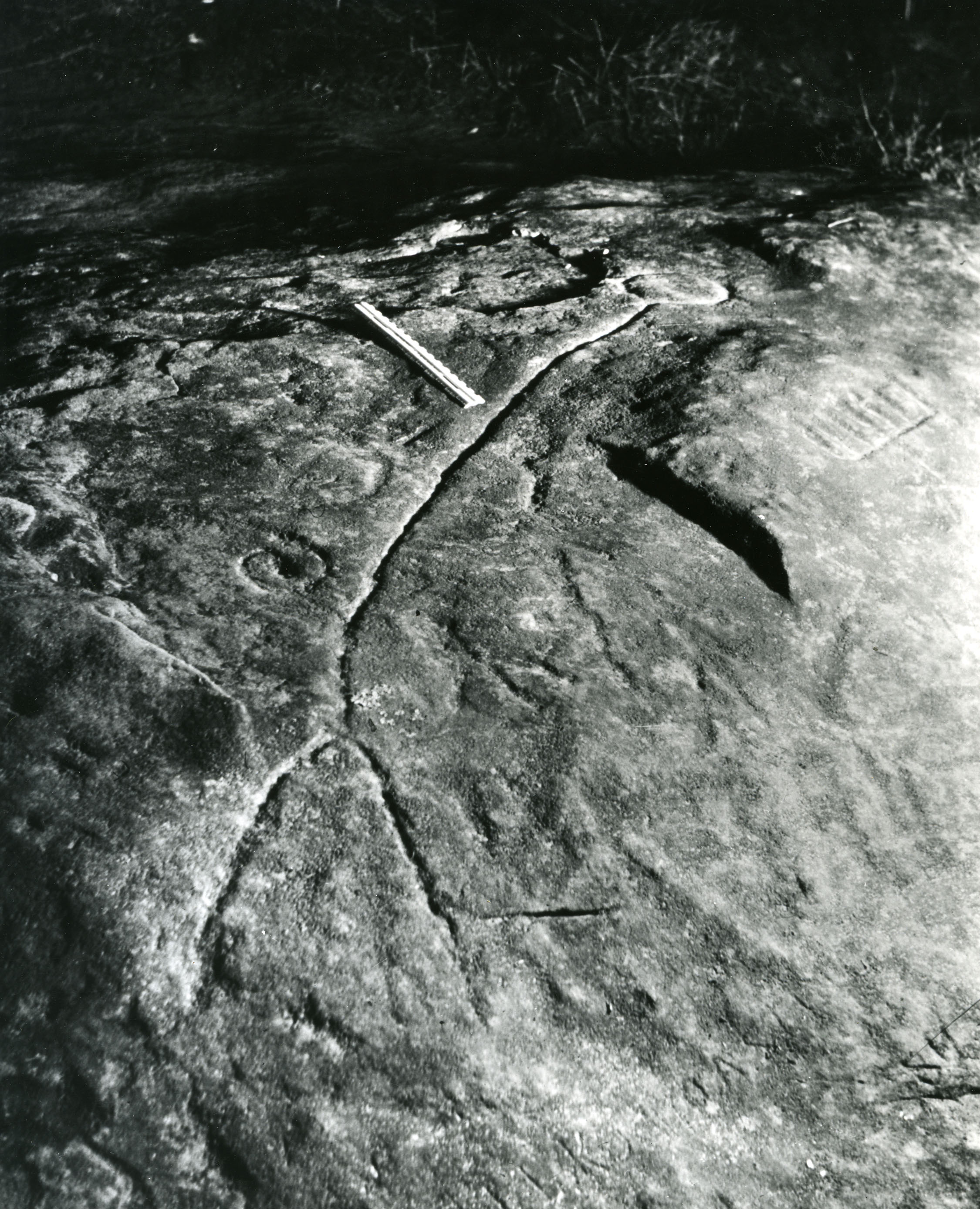
Some say there are no coincidences in life, and in my many years of genealogical and historical research, I have found that perhaps a better word for these types of experiences is serendipity.  Often I find myself researching a certain topic and “by chance” I run into an expert standing next to me in line at the grocery store.  The other day just such a happenstance occurred.  I was invited to a lunch and who should sit next to me but Stacy Tchorzynski, an Archaeologist for Michigan’s State Historic Preservation Office and Department of Natural Resources.  She asked me if the Cranbrook Archives had any materials on the Sanilac Petroglyphs and we launched into a discussion about the importance of documenting and preserving Michigan’s only known prehistoric rock carvings.  Located in an historic state park covering 240 acres, the petroglyphs, which were carved into very soft sandstone, have eroded over time and weather exposure.   In addition, 19th and 20th century vandalism and graffiti have further degraded the carvings.

SanilacPetroglyphs_01

Sanilac Petroglyphs, Cass City, MI, 1945. Cranbrook Archives.

Cranbrook has had a long interest in the petroglyphs—in the 1940s, the director of Cranbrook Institute of Science (Dr. Robert Hatt) worked with the DNR and University of Michigan’s Museum of Anthropology to develop a preservation plan for the rock carvings.  In fact, Hatt’s 1942 report even suggested that the site would make an “excellent State Park” and that the main group of petroglyphs should be fenced off.  In 1958, the Institute of Science published a monograph on the petroglyphs followed in 1965 by a collaborative meeting between the Institute, the Michigan Archeological Society, and the Sanilac County Historical Society.   This meeting resulted in the acquisition of the 80-acre site by the Michigan Archeological Society.

SanilacPetroglyphs_02

Cranbrook Institute of Science Educational Field Trip at the Sanilac Petroglyphs in Cass City, MI, circa 1968. Cranbrook Archives.

The site of the Sanilac Petroglyphs is also an important ceremonial site for the Anishinabek – the petroglyphs are very powerful places of learning and spirituality for them and are referred to as “rocks that teach.” 

Through the 1960s and 1970s, Cranbrook Institute of Science sponsored field trips to the site for its members.   Drawings of the petroglyphs, part of the collection of the Institute of Science, will soon be on display as part of the exhibition My Brain Is in My Inkstand: Drawing as Thinking and Process at the Cranbrook Art Museum.

~Leslie S. Edwards, Head Archivist

Photo Friday: Modern, Inside and Out

Image

Edwin O. George (left) of the Detroit Edison Company and others study a model of the Edison House. Harvey Croze/Cranbrook Archives.

Nestled into a hillside across from the Cranbrook Institute of Science is the Edison House, a low-profile modernist structure that blends in with its surroundings.  In 1965, however, that structure was a pretty big deal.  Conceived of as a partnership between the Institute of Science and the power company Detroit Edison, Edison House served as a spacious and elegant residence for visiting scientists and luminaries while also showcasing the cutting edge in electrical appliances at the time.   Detroit Edison’s influence was felt throughout the house, from heaters in the garage to help drivers warm up their cars on a cold winter’s day to an intercom system that could double as a microphone to pick up the sounds of wildlife outside.  Used primarily as temporary housing for scholars visiting CIS, Edison House became home to CIS director Daniel E. Appleman in the 1990s.  Appleman and his family left the house in 1998, and CIS has since used it for various administrative purposes.

-Shoshana Resnikoff, Collections Fellow

Create a website or blog at WordPress.com