On this, the last day of summer, I thought we’d look back at the Center’s second-annual Architecture Elective for the Horizons-Upward Bound Summer Component. It was a real highlight of my summer!
A grant from the Society for Architecture Historians enabled Nina Blomfield, the Center’s Collection Fellow, and me to co-teach the six-week elective. Each Monday and Wednesday morning from June 28 to August 2, we met in Gordon Hall of Science at Cranbrook with fifteen enthusiastic HUB students, grades 9 through 12. While we started most mornings in the classroom with our textbook or a slideshow of images, the real excitement came on class trips.
I mean, what better way to learn about excellent architecture than to study the buildings of Cranbrook?
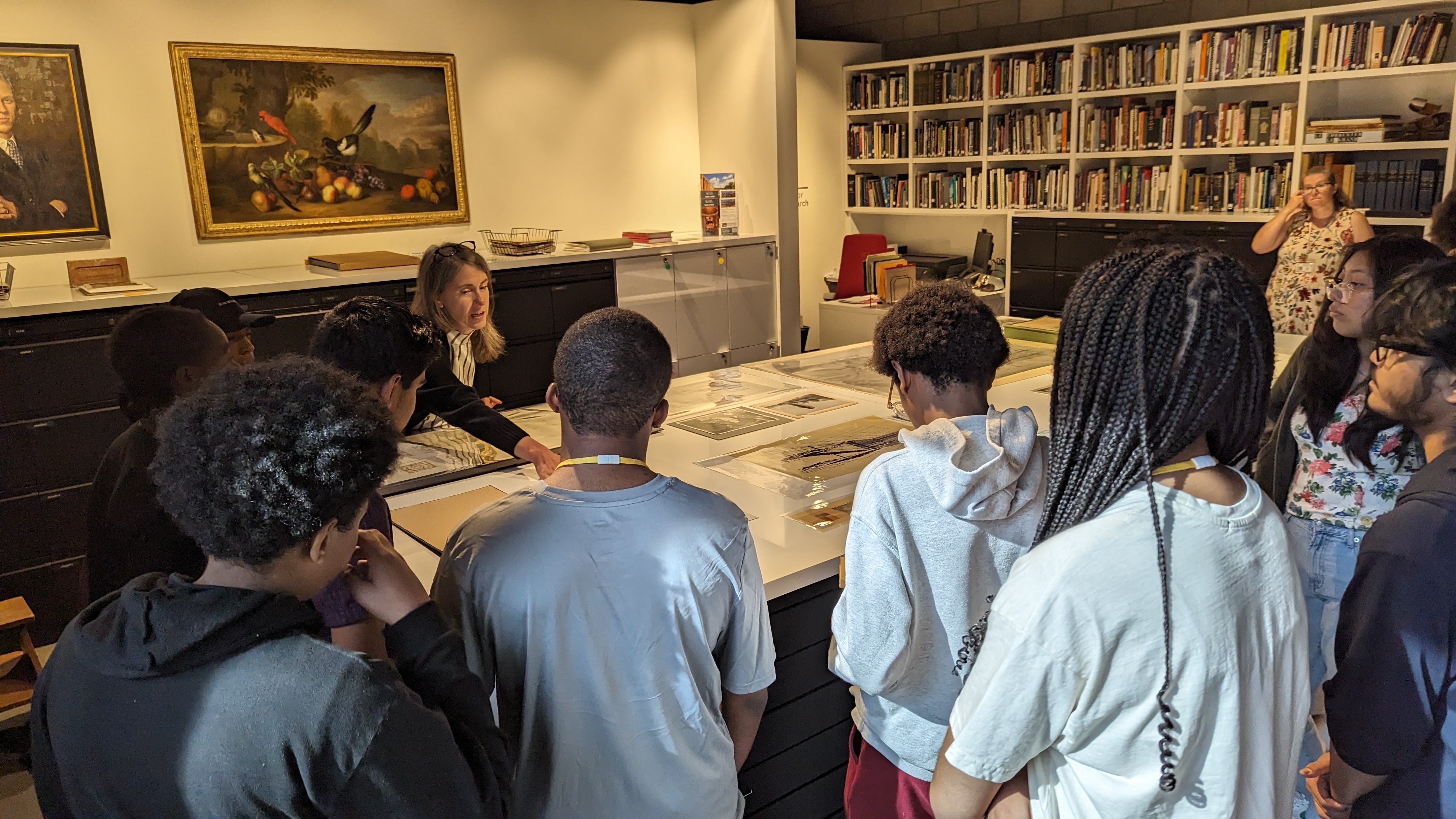
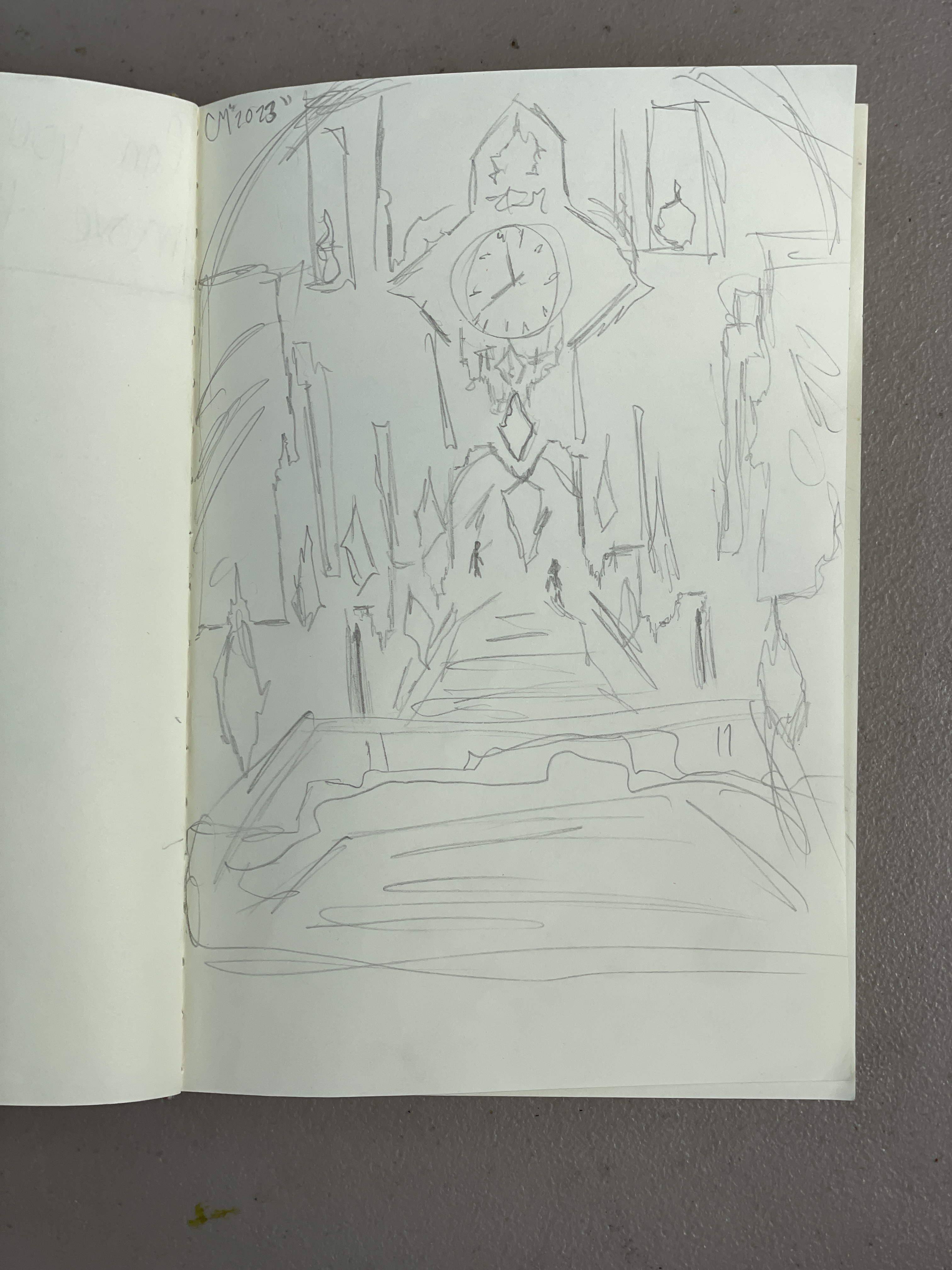
To orient ourselves, we started with a morning spent in Cranbrook Archives, studying original sketches, renderings, blueprints, photographs, and even fundraising literature about Cranbrook’s many architectural treasures. We saw the great diversity of how our buildings were imagined, represented, and constructed, and how an architect moves from a loose, gestural sketch to formal construction documents that communicate complex structural systems.


Then, we spent a class period each at Cranbrook House, Saarinen House, and the Frank Lloyd Wright-designed Smith House. In each location, students carried their sketchbooks and made notes and drawings about the architecture. I was especially impressed at the students’ analytical skills. In fact, while I usually love talking about the nitty-gritty specifics of Saarinen House, I found myself sitting much more quietly, asking students questions about what they noticed, liked, or disliked in each room. Listening to their observations and conversation helped me see each space anew.


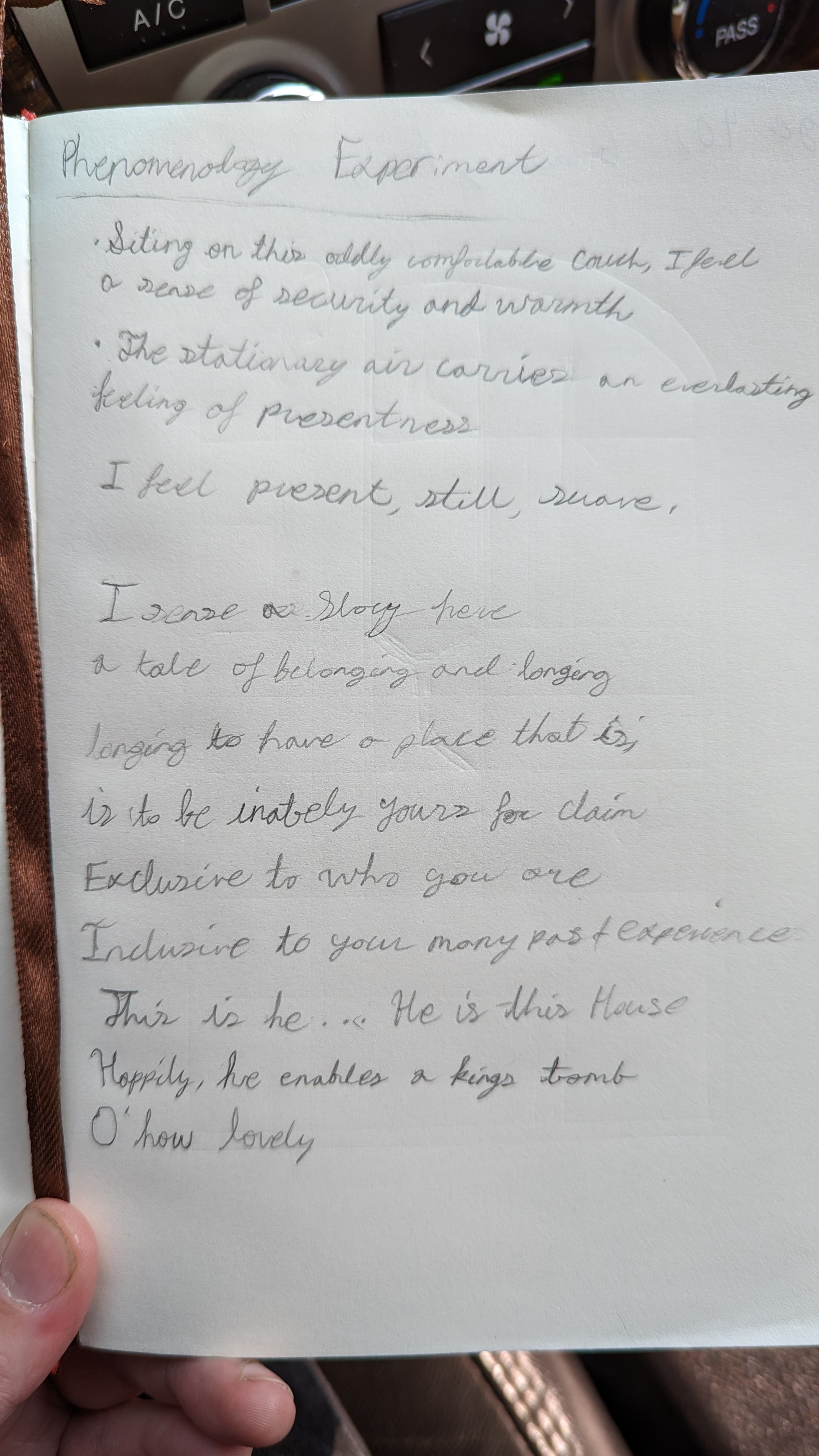
At Smith House, Nina led a phenomenology exercise, where, instead of telling the students the story of Frank Lloyd Wright and the Smiths, she simply asked each student to find a spot in the house to sit in quietly. Then, they wrote or sketched what they observed and sensed. Having such a tactile experience with the architecture and nature proved to be more memorable than a conventional tour.


Halfway through the course, I gave a lesson on architectural ornament (a passion of mine, and of Eliel Saarinen) and classical orders. This was followed by a spirited hunt through Cranbrook’s courtyards looking for Doric, Ionic, and Corinthian orders.

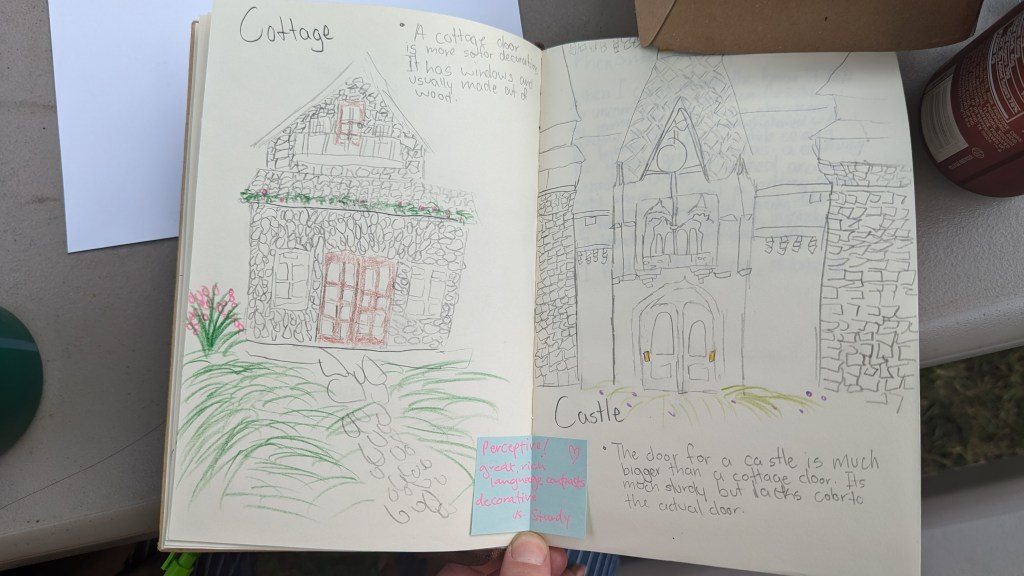
On most Wednesdays, we asked the students to complete an assignment in their sketchbook that week. After learning about architectural title blocks in the Archives, we made stickers to help label each assignment: “Doors: Real and Imagined,” “An Ideal Window with a View,” and so on. The sketching and design assignments aimed to promote close looking, observational skills, and imagination—they also helped me learn that most students ideal window would overlook the beach!

In our last three sessions, we worked as a class to learn about how an architect conceives of a building by developing a proposal for a “HUB Dormitory and Lounge” addition to Cranbrook School. We made lists of what worked (the bright windows) and what didn’t (the bathrooms) in the existing Cranbrook dorms, studied precedent images of recent dormitory projects in the real world, and then studied the site.
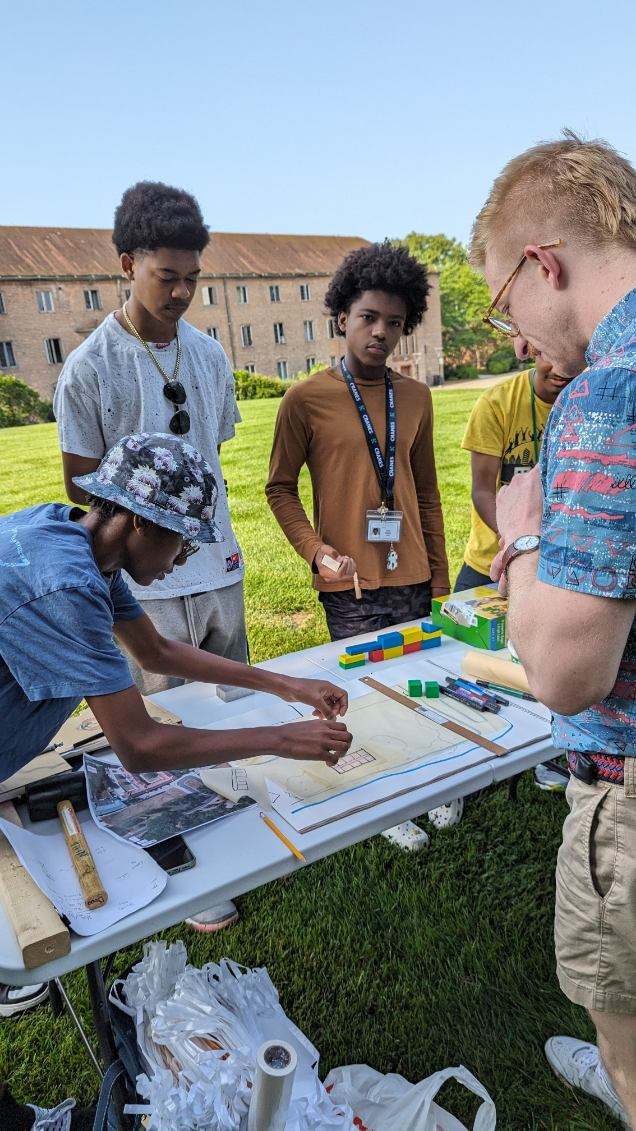


We learned to measure buildings with our bodies, and how to use flags and other tools to mark out a site before construction, and the many ways architects develop designs, including onionskin sketches, photomontages, and study models.
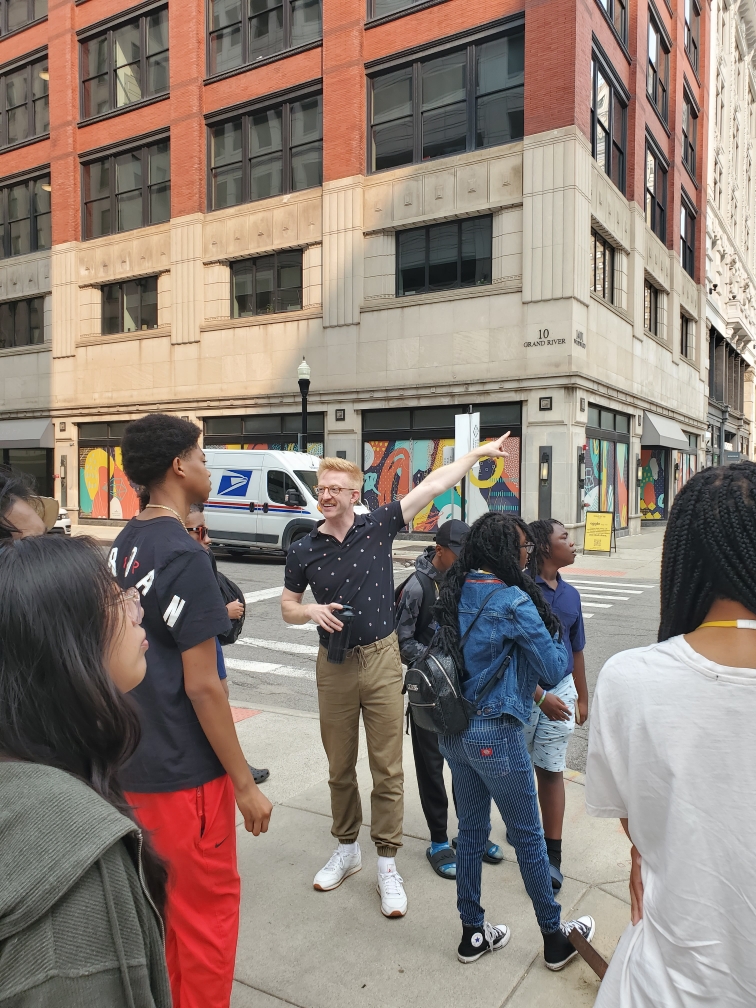

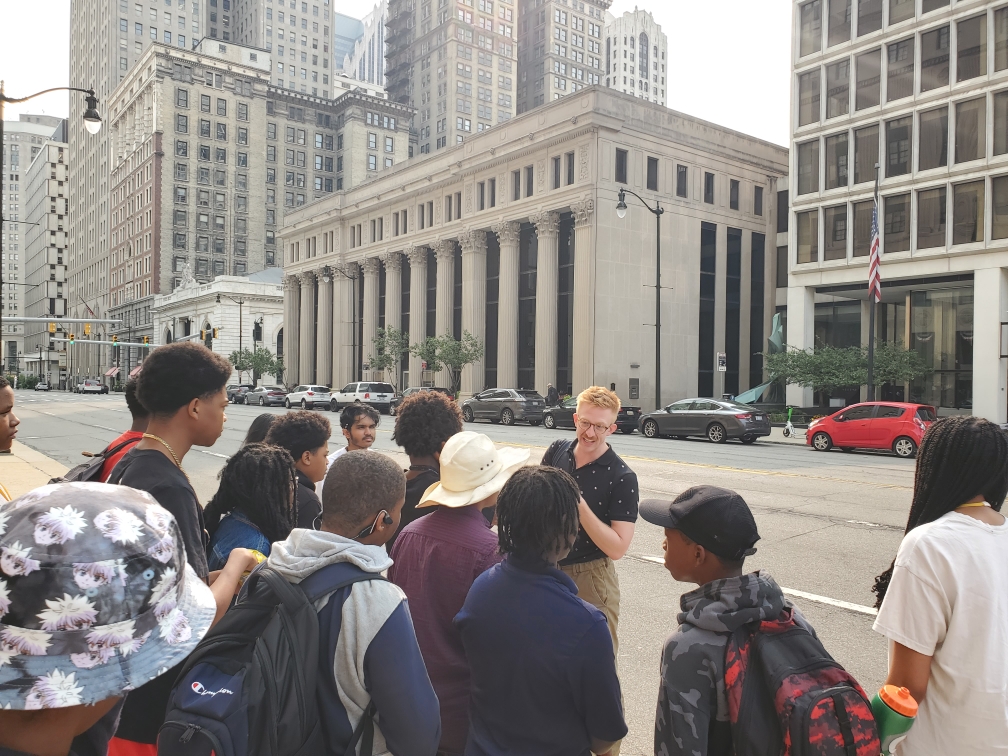
On our last day, Nina, Center Collections Interpreter Matt Horn, Center intern Clare Catallo, and I took the students for a full day (8am to 3pm!) field trip downtown. First, I led a walking tour of downtown Detroit—from the Foundation Hotel and Hart Plaza to the Federal Building, Penobscot Building, Capital Square, the Hudson Site, and so many Albert Kahn-designed mid-rise towers. Along the route, the students enthusiastically (and competitively) identified every Doric, Ionic, and Corinthian column. I was proud the lesson stuck.

Arriving at Woodward Avenue and Grand Circus Park, we boarded the People Mover for a monorail-eye view of the city. This was a highlight for everyone—especially moving through a building at Cobo Hall!

Disembarking at the Renaissance Center, we talked about urban mega-projects and urban renewal, before walking past The Spirit of Detroit to the Guardian Building to meet with architects at SmithGroup.


Rodrigo Manriquez, Principal and Cultural Studio Leader for SmithGroup, gave us a tour of the Art Deco landmark Guardian Building (designed by SmithGroup/Smith, Hinchman, and Grylls in 1929).

Upstairs in the SmithGroup offices, presentations from architects, designers, engineers, and the summer interns covered a dizzying array of special skills involved in a modern architectural firm, and I hope inspired our students to seek out many more opportunities in design.
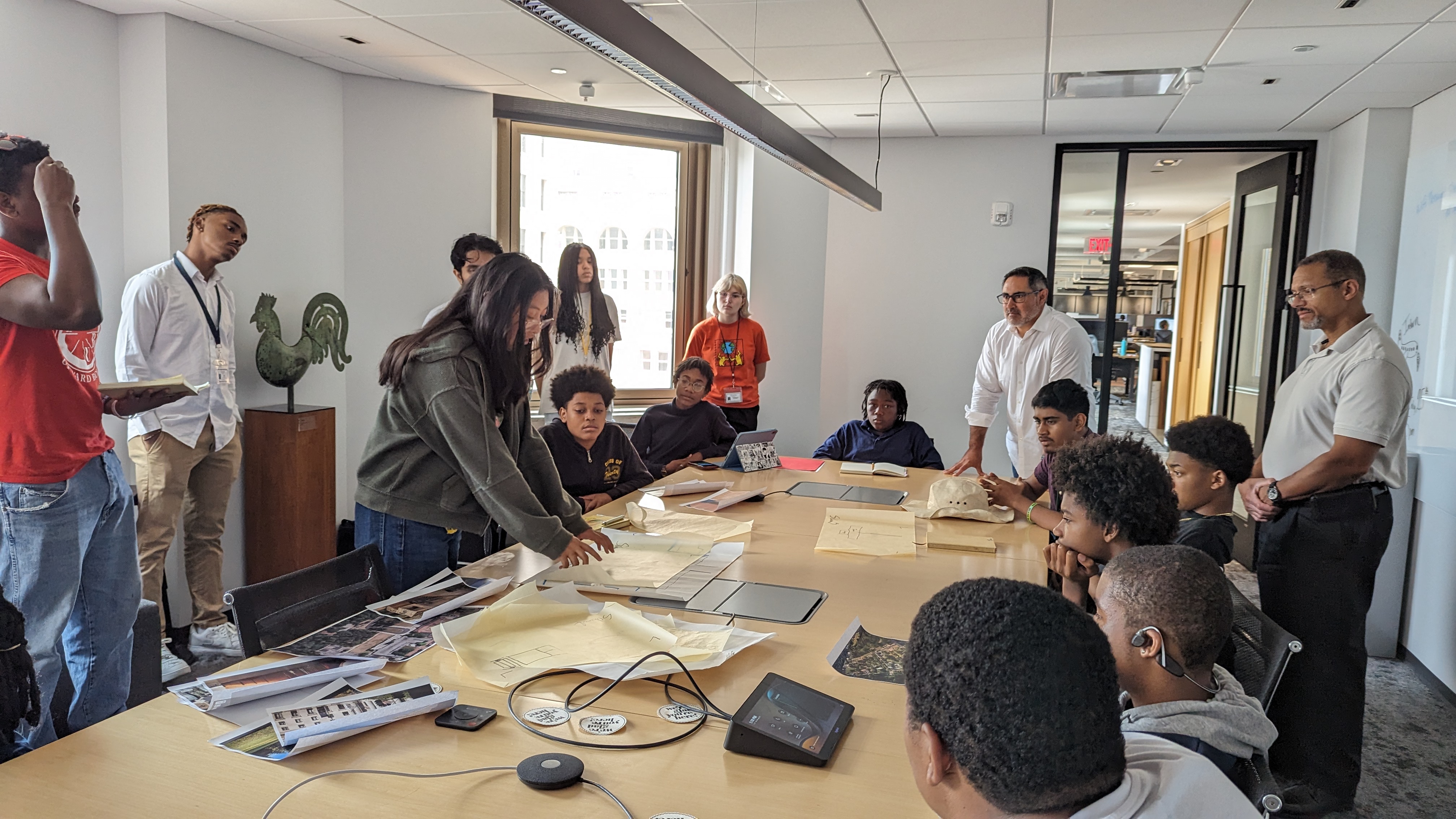


SmithGroup generously served a pizza lunch before reviewing our “HUB Dormitory and Lounge” ideas, and then, showed us to the top floor and the basement of the building!
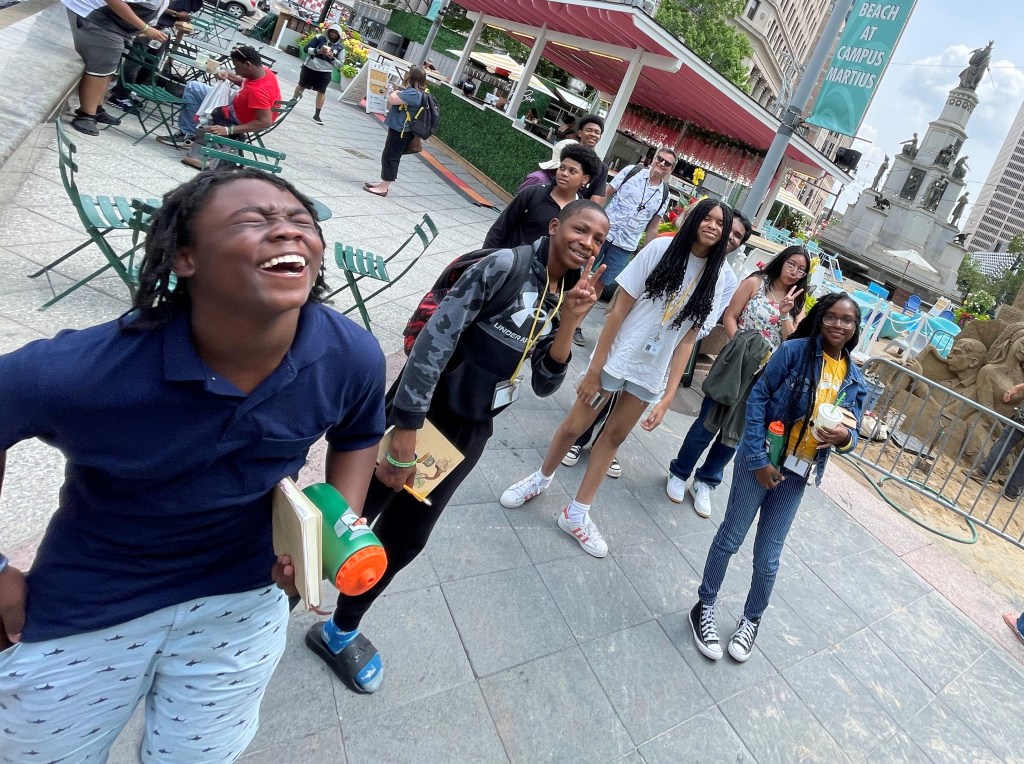
Finally, our magical summer of the Architecture Elective concluded with yet more food—Shake Shack burgers and milkshakes—in Campus Martius park. It was an excellent treat, made possible by the Society of Architecture Historians, for our hard-working architecture scholars.
I hope you enjoyed reading about the Center’s HUB Architecture Elective as much as we enjoyed leading it, and I’ll leave you with my same instructions to the class: keep your eyes open, there’s architecture everywhere!
—Kevin Adkisson, Curator, Cranbrook Center for Collections and Research

Discover more from Cranbrook Kitchen Sink
Subscribe to get the latest posts sent to your email.
 Cranbrook Kitchen Sink
A heartwarming and engaging glimpse into the Cranbrook Center’s Summer School Architecture Elective. The collaborative teaching approach between Kevin Adkisson and Nina Blomfield, supported by a grant from the Society for Architecture Historians, is commendable. It’s inspiring to see how the program not only educates young minds about architecture but also ignites their passion for it.
LikeLike