In recent years, new residential development along the small strip of Cranbrook Road between Lone Pine Road and Woodward Avenue has given Cranbrook a few new neighbors. One of Cranbrook’s first neighbors on the street, however, dates back one hundred years!
As George and Ellen Booth began developing their country estate in the mid-1920s into what we know today as Cranbrook Educational Community, a new house was completed just north of what would soon become Kingswood School for Girls.

Ralph Stone, president of the Detroit Trust Company, with which George Booth did business, purchased this land around 1923. He quickly commissioned Albert Kahn to design a country residence for the site, which Stone named “Stonelea.” This was just a few years after Kahn had completed additions to Cranbrook House.

The close neighbors shared some correspondence regarding their properties that provides a glimpse of both men’s personalities, and highlights their shared affability and elegance of prose. Their letters, part of the George Gough Booth Papers, begin a year before Ralph Stone and his wife Mary would finalize construction of their home in 1925. It seems they could not wait to spend a summer of leisure in Bloomfield Hills, away from the hustle and bustle of Detroit. The Stones sought to rent the Booth’s Brookside Cottage–an impossibility due to occupancy by Booth family members.
But perhaps the most interesting exchange takes place in 1926 when Ralph writes regarding the shocking lack of water needed to preserve his lawn and garden in a green state in the middle of July (not a problem in 2024!). He proposes to pump water from Cranbrook, but George’s reply a week later masterfully circumnavigates the issue:

In Ralph’s reply he acquiesces with good humor:
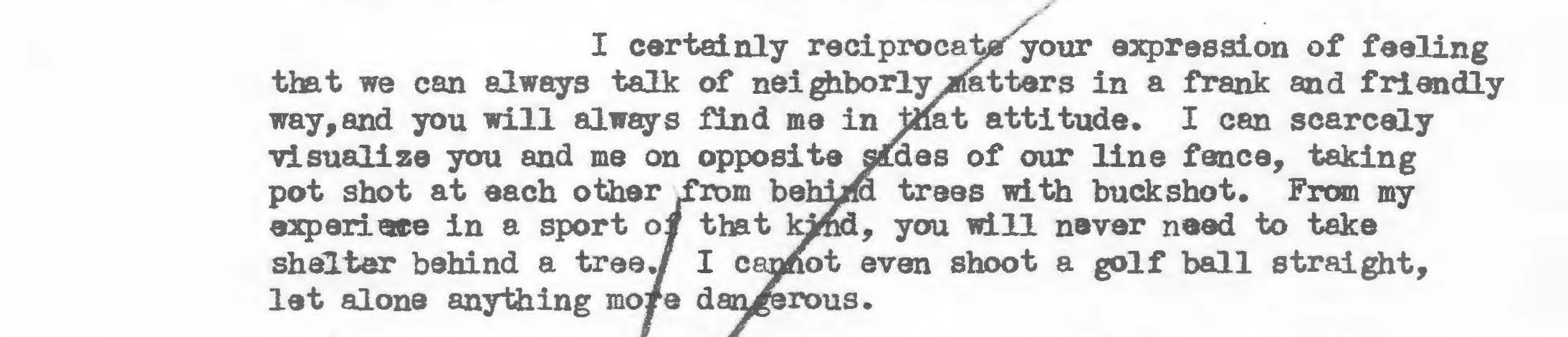
The sentiments expressed in these letters appear genuine as their families remained on neighborly terms. George and Ellen were occasional guests at Stonelea for dinner parties until the Stones sold their property in 1931.
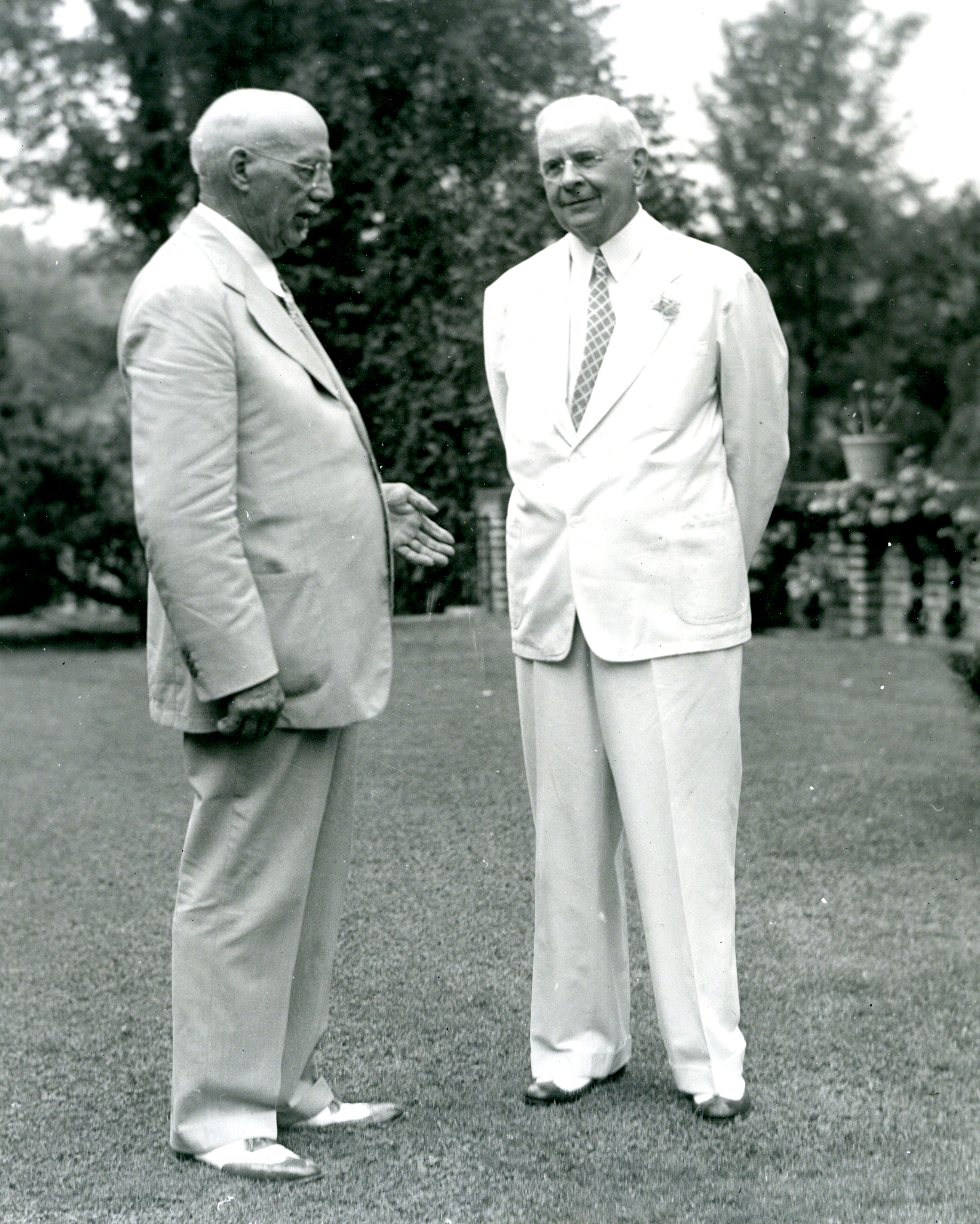
In fact, Ralph Stone proved to be much more than just a friendly neighbor of George Booth, continuing his connection to Cranbrook long after he had moved from the area. He was an early and steadfast supporter of Cranbrook, serving on various boards for over twenty-five years as a Cranbrook School Trustee (1928-1951), Kingswood School Trustee (1930-1951), Brookside School Trustee (1945-1951), Academy of Art Trustee (1941-1946), and Foundation Trustee (1940-1952).
Today, Stonelea is no longer just a neighbor: the property was acquired by Cranbrook Educational Community in 2003. In the coming years, Stonelea will become the future home of Cranbrook Center for Collections and Research!
Read the Ralph Stone letters in their entirety in the Archives’ Digital Collections, or, learn about a famous occupant of Stonelea: Anne Morrow Lindbergh: The Cranbrook Connection.
—Deborah Rice, Head Archivist, Cranbrook Center for Collections and Research
Discover more from Cranbrook Kitchen Sink
Subscribe to get the latest posts sent to your email.
 Cranbrook Kitchen Sink
very interesting, thank you,
LikeLike