Edison House: A Modern Icon

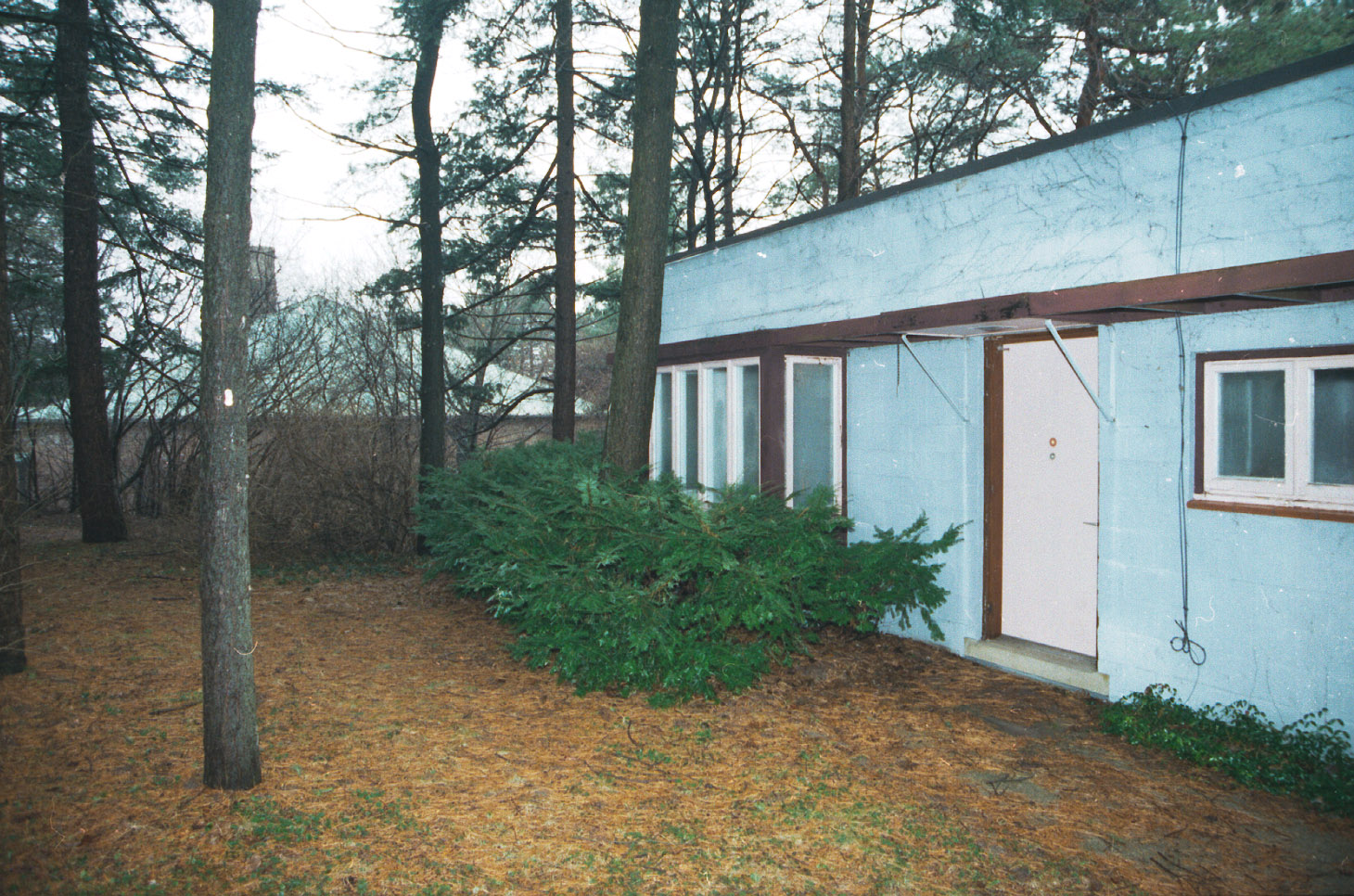
Approaching the Cranbrook Institute of Science (CIS), one easily overlooks the low-set modern structure built into the eastern hillside. Shaded by trees and obscured by a brick courtyard wall, Edison House assumes a low profile much like its Modernist predecessors.

The 1960’s was a decade where modern conveniences flourished. Electric appliances began appearing in households across the country which made the lives of working families easier and more efficient. Backed by CIS’s Chairman of the Board of Directors, James Beresford, Director Robert T. Hatt and Detroit Edison’s Edwin O. George began plans for an innovative, all-electric residence that would suit their needs equally. Cranbrook would house scientists as part of the Distinguished Scholar Program, while Detroit Edison would have a showcase for their newest and greatest electrical equipment. The architect, William P. Smith Jr., was commissioned by Detroit Edison, and construction began in 1965. National and local firms contributed products, services, time, and funding to complete the house. Once construction was completed Detroit Edison turned Edison House over to CIS in a dedication ceremony held on June 1, 1966.
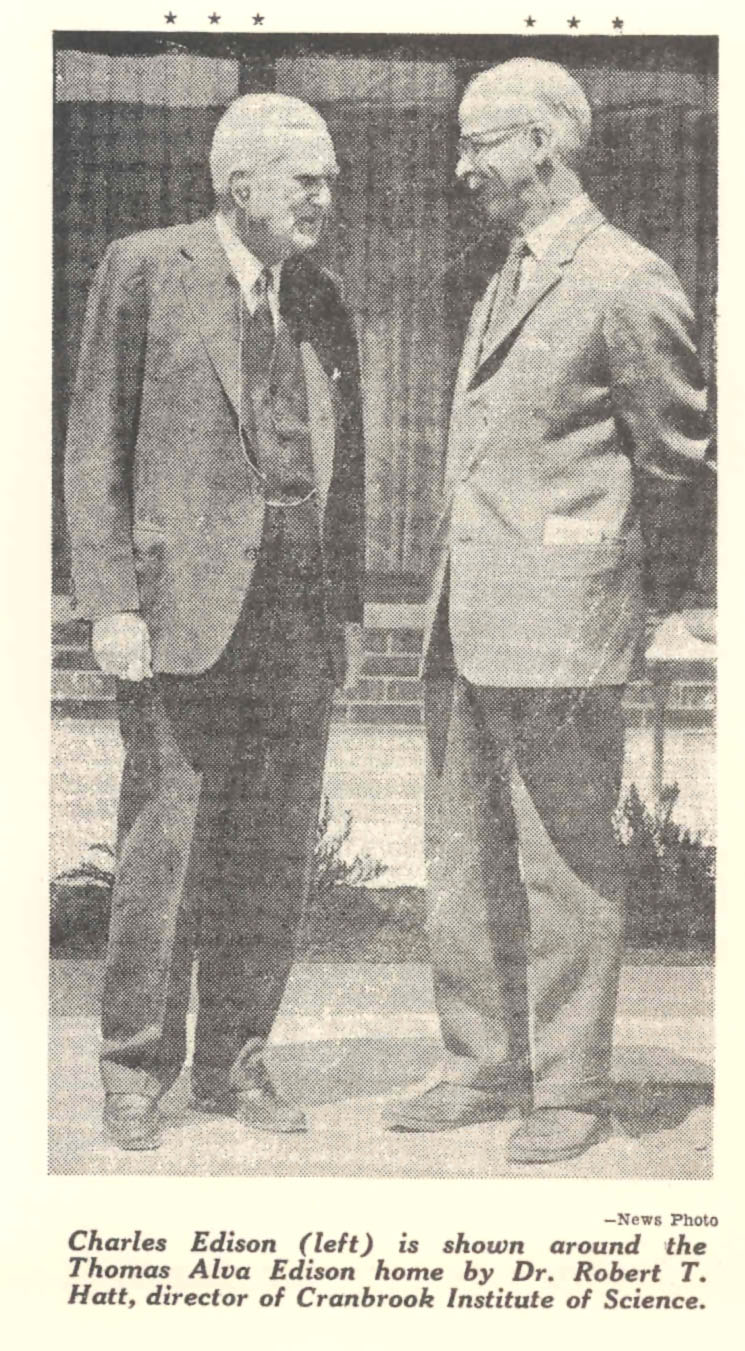
Thomas Edison's son, Charles Edison, visits Edison House Courtesy Detroit News, June 1966

Thomas Edison’s son, Charles Edison, visits Edison House
Courtesy Detroit News, June 1966

The finished product was a functionally efficient piece of art and an “outstanding demonstration of the application of science to everyday living.” Not only did it have the best and most innovative appliances, it was aesthetically advanced as well. The architectural style melds aspects of late Modernism and Art & Crafts. The broad eaves and natural material selection are reminiscent of the American Craftsman style home, while the clean-lines and mechanical innovations evolved from the Modernist International Style.

Also referred to as “Cranbrook’s New Idea Home,” a 1965 Detroit Free Press article described it as “organic contemporary in design.” Expansive windows run floor to ceiling which opened up the back face of the house to the surrounding natural landscape. Constructed of laminated redwood, extruded brick, and masonry, the home blends with its neighbors – the trees, grass and rocks. Broad overhanging eaves provide a feeling of shelter and enclosure. The natural backdrop contrasted with the interior’s modernist chrome and leather furnishings, and in true modernist style, linen drapes graced the windows in order to soften the hard surfaces. In addition to traditional living space, the open floor plan also accommodated conference rooms for faculty needs.
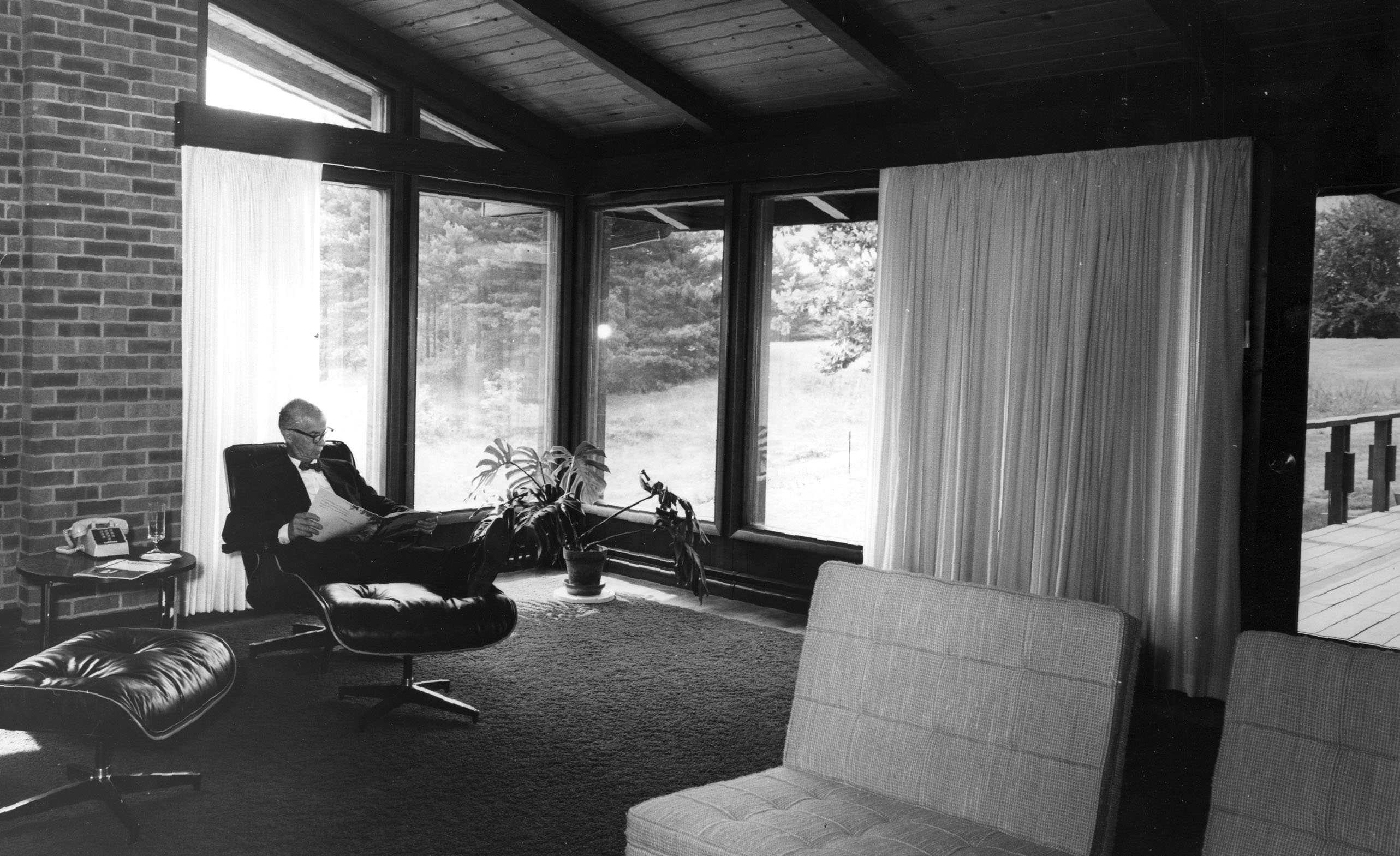
Dr. Robert Hatt in Edison House  living room, August 1966. Harvey Croze, photographer  Courtesy Cranbrook Archives

Dr. Robert Hatt in Edison House living room, August 1966. Harvey Croze, photographer. Courtesy Cranbrook Archives.

Every aspect of the 3,500 square foot house was intended to promote electronic living. Snow melting heating coils were laid under the pavement and built into the eaves and gutter system which trace the perimeter of the copper roof. Snow sensors were installed to automatically switch on the melting equipment. Electronically heated windows, state of the art at the time, line the lower-level family room. An invisible metallic coating spans the interior glass surface and is warmed by an electric current in order to remit just enough heat to reduce the cold.

The garage boasted automatic radio-operated door openers. In the master bedroom dressing room a sun lamp was mounted in the ceiling with a timer for automatic shut-off. A built-in toaster was installed adjacent to the breakfast table for easy access. The kitchen also held the control panel for the intercom system that reached every room in the house as well as the front door and terrace. Speakers on the terrace doubled as microphones so the residents could “pick up sounds of birds and other wildlife.”

After a summer as a demonstration house open to the public, Edison House was occupied by notable botanist and geneticist Karl Sax, the first Distinguished Scholar. Farrington Daniels, Denis L. Fox, and V. Elliott Smith followed. The last Edison House resident was mineralogist and CIS Director, Daniel E. Appleman, who was instrumental in the Earth Exhibit housed in the Institute’s 1996 addition designed by Steven Holl.

Over the past twenty years, Edison House has been used for a variety of purposes including office space for Events Planning and a staging area for IT infrastructure technicians. And although the once innovative electrical equipment is outdated and certainly not modern by contemporary standards, Edison House remains an icon of Michigan Modernist architecture. Edison House will celebrate its 60th anniversary in June 2016.

Originally authored by Stephanie White (2011); updated in July 2015
Corajoyce Rauss (1925-2015): A Cranbrook Legend

The Archives was saddened to learn this week of the passing of Corajoyce Nancy Lane, of Bloomfield Hills, who worked at Cranbrook for over five decades. Raised by parents who taught her that women didn’t, and shouldn’t, work, Corajoyce (who was headstrong even at a young age!) tried to convince her parents to let her get a job. Her first thought was airplane pilot, followed by truck driver so that she could drive across the country! Instead, at the age of 20, without her parents’ permission, she responded to an ad in the Birmingham Eccentric for a photographer’s assistant at the Cranbrook Foundation. Corajoyce was offered the job by staff photographer Harvey Croze, and finally received consent from her parents. The job only lasted two months, which she followed with a job working for Margaret Auger, then headmistress of Kingswood School. In 1948, Corajoyce married Robert Rauss (they honeymooned at a dude ranch in Colorado) and two years later, left Cranbrook to become a stay-at-home mom to her daughter.

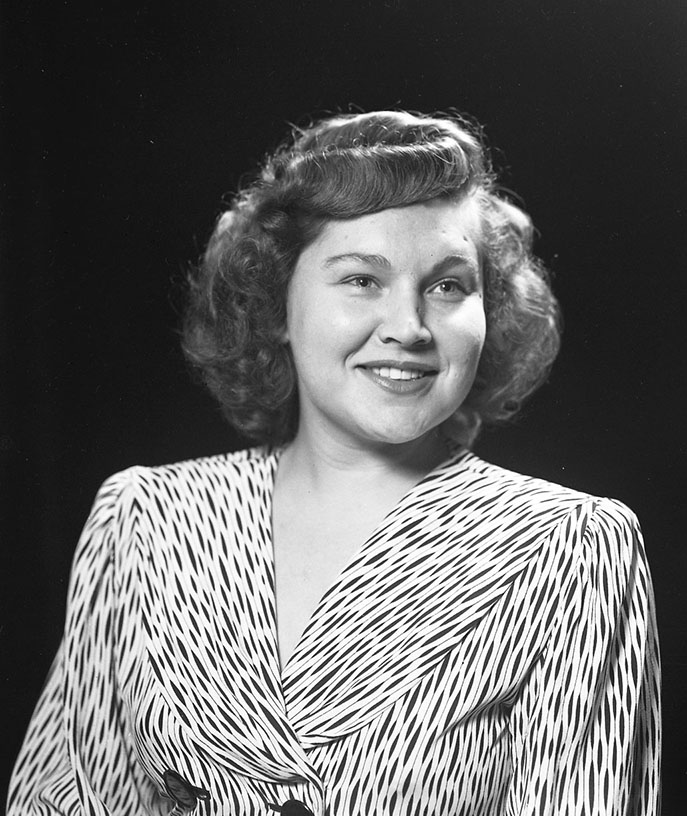
Corajoyce Rauss, Nov 1947.

Corajoyce Rauss, Nov 1947. Harvey Croze, photographer.

In 1961, Corajoyce returned to Cranbrook, this time securing a job as Henry Scripps Booth’s personal secretary. As she and Henry became lifelong friends, she was given more responsibility and became the manager of Henry’s personal estate. During her tenure at Cranbrook, Corajoyce met Carl Milles, Zoltan Sepeshy and Eliel Saarinen among others. George and Ellen Booth used to drop by Kingswood School, often unannounced, and Corajoyce also met visitors including Isaac Stern, Leonard Bernstein, and Princess Christina of Sweden.

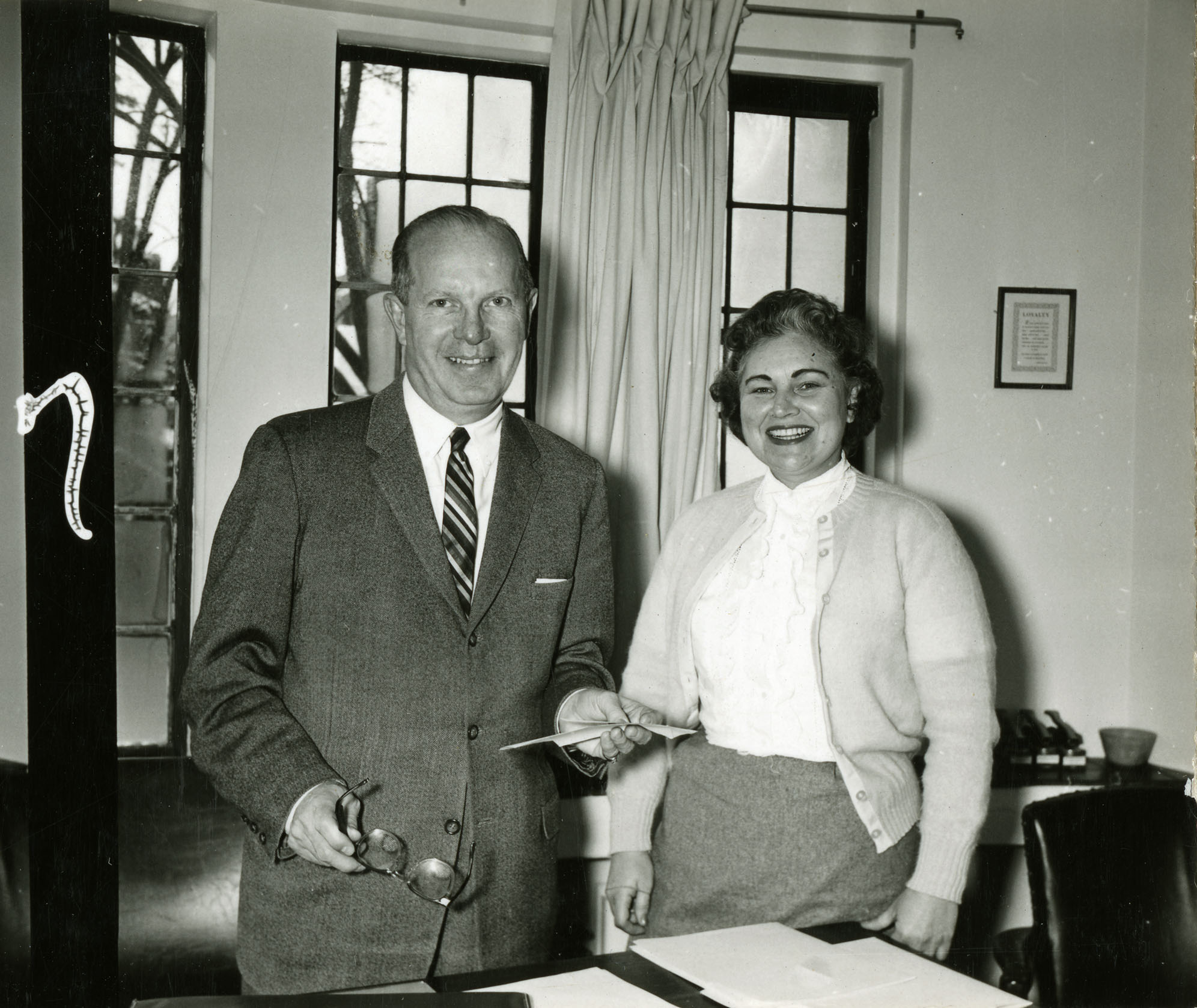
Arthur Witleff and Corajoyce Rauss, Jan 1962.

Arthur Wittliff and Corajoyce Rauss, Jan 1962. Harvey Croze, photographer.

Soon after Henry’s death in 1988, Corajoyce began work at the Cranbrook Archives as the part-time bookkeeper. She volunteered additional time and took on the task of organizing, with the help of a core of volunteers, the Booth family photographs, creating photo albums that are housed in the Archives today. She worked tirelessly on compiling The Cranbrook Booth Family of America genealogy which required copious amounts of correspondence with various Booth family members. Her hard work and dedication earned her Cranbrook’s President’s Award for Excellence in 1990. Corajoyce remained a fixture at Cranbrook Archives until her retirement in 2007. She was once quoted as saying that she “lived a Cinderella life.” While Cranbrook has lost a dedicated employee, her love of Cranbrook and the work she accomplished here lives on in the Archives.

Leslie S. Edwards, Head Archivist

Kaoka: Homeopathic Coffee?

Kaoka, the brainchild of Henry Wood Booth, came about after a doctor suggested that he quit drinking caffeine and gave Booth a recipe for “bran coffee.” Since Booth and his children all liked the beverage, he determined one night that it might make a good business venture. He experimented with various roasting pans– even one in the form of a coffee roaster which was a failure as “it nearly blew up with the generated steam.” Booth finally made one that roasted to his satisfaction and the family gathered together to name this new beverage and “Kaoka” was born. Wrappers were printed and family members made paper boxes to put in local grocery stores.

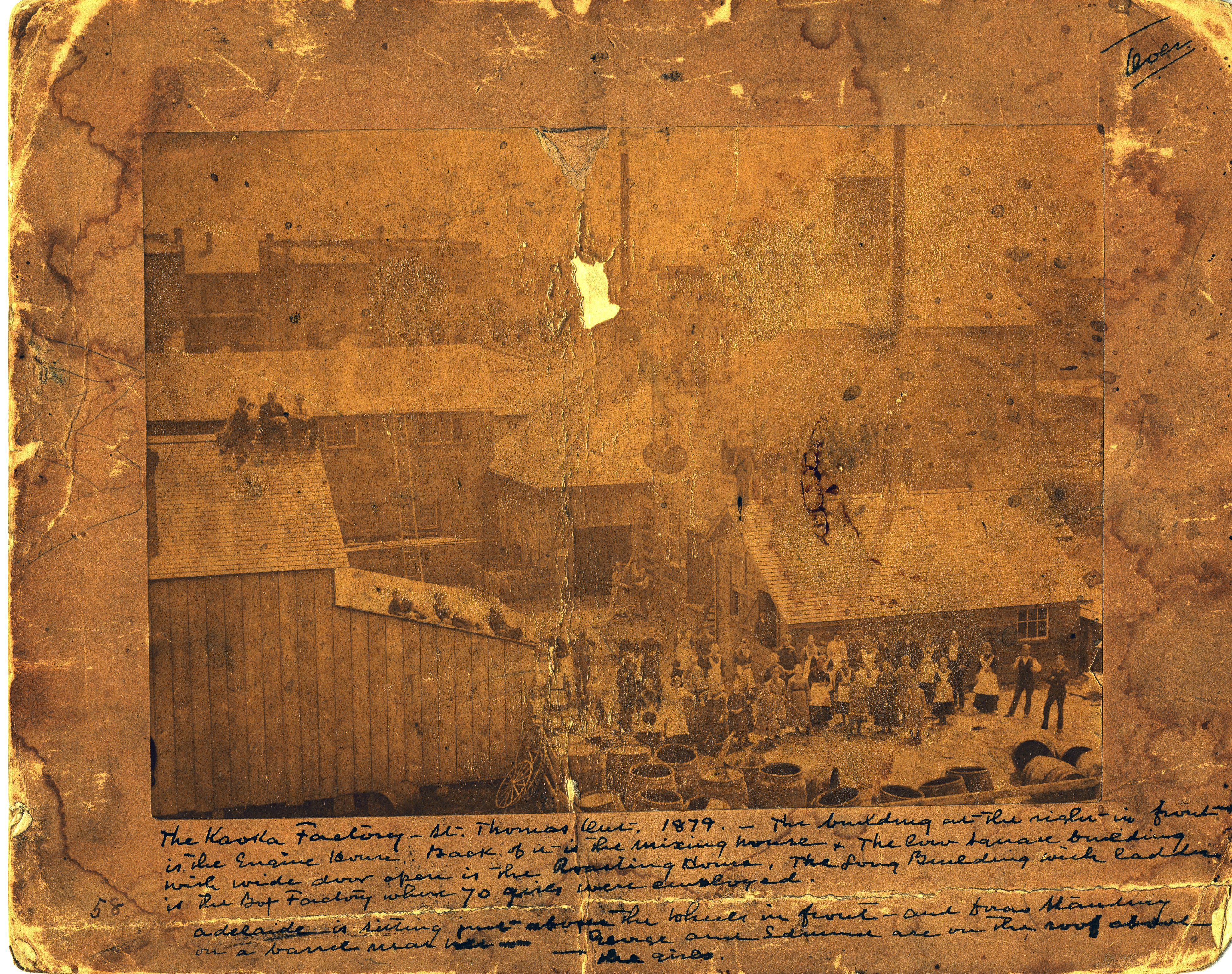
On June 10, 1879, a patent was issued to the Kaoka Manufacturing Company in St. Thomas, Ontario. Booth located a building and fitted it with a large steam engine and boiler and seven roasters which ran day and night. In addition to the male employees, seventy-five women were employed (to make boxes), and soon a joint stock company was formed. Booth was retained as the manager of the plant and also served as the public relations “salesman.” In November 1879, Booth set up a display at the First Annual Exhibition of the Agricultural and Industrial Exhibition Association of Toronto with a “kaoka coffee pot” and gave away free samples of the drink. A local newspaper reported that “kaoka was found to be palatable and quite fit – at least with a large number of people – to be used as a regular beverage.”

The Kaoka Factory, 1879. Henry Wood Booth Papers.

The Kaoka Manufacturing Company, 1879. Henry Wood Booth Papers.

In 1880, the company’s directors asked Booth to go to Detroit in order to establish the business in the United States. However, Booth made the decision (which he later deemed “unwise”) to strike out on his own and set up the American business for himself, and sold his interest in the Canadian venture. After several set-backs, and his money ran out, Henry Wood Booth got out of the Kaoka business and went to work for the United States Post Office. The Detroit venture was, however, what ultimately relocated the Booth family to Detroit. And, Henry Wood Booth was considered the originator of the commercial cereal beverage.

Sidebar: during the time the company was trying to set up the Detroit enterprise, two men who had worked at the Kaoka plant in St. Thomas went to Battle Creek and established the cereal drink under a new name!

Leslie S. Edwards, Head Archivist

Cranbrook Up North

For many of us who grew up in Michigan, going up north during summer vacation was (and still is) something very special – a way to escape the hustle and bustle of city and suburban life and become one with the natural beauty it has to offer. Throughout the 20th century, Cranbrook scientists, artists, architects, students and faculty, as well as members of the Booth family, took advantage of the native woods, white sandy beaches, and waters of Lake Michigan.

Logo for Pinehurst Inn, Indian River, 1940. Cranbrook Archives

Logo for Pinehurst Inn, Indian River, 1940. Cranbrook Archives.

Shelley Selim, Cranbrook Art Museum’s Ralph and Jeanne Graham Assistant Curator, curated the exhibition Designing Summer: Objects of Escape which features Michigan designers and companies who have contributed to summer innovations including tents, boats, and bicycles as well as a summer home designed by Florence Schust Knoll. In response to the opening of the exhibition on Saturday, June 20th, I opted to post a few highlights of Cranbrook’s ongoing relationship with northern Michigan.

Dudley Blakely painting at group site, Bois Blanc Island, 1938. Cranbrook Archives.

Dudley Blakely painting at group site, Bois Blanc Island, 1938. Cranbrook Archives.

As early as 1929, staff and faculty from the Institute of Science traveled north to conduct studies of animal and plant life on the many islands in Lake Michigan – from Bois Blanc to the Manitous. Reports of these research trips were documented in photographs, field notes, and ultimately published in Institute of Science newsletters and bulletins.

During the 1940s and 1950s, Henry Scripps Booth took his family up north for several summers, often vacationing with friends. One of their favorite spots was Good Hart, where they stayed either at The Krude Kraft Lodge or the Old Trail Inn.

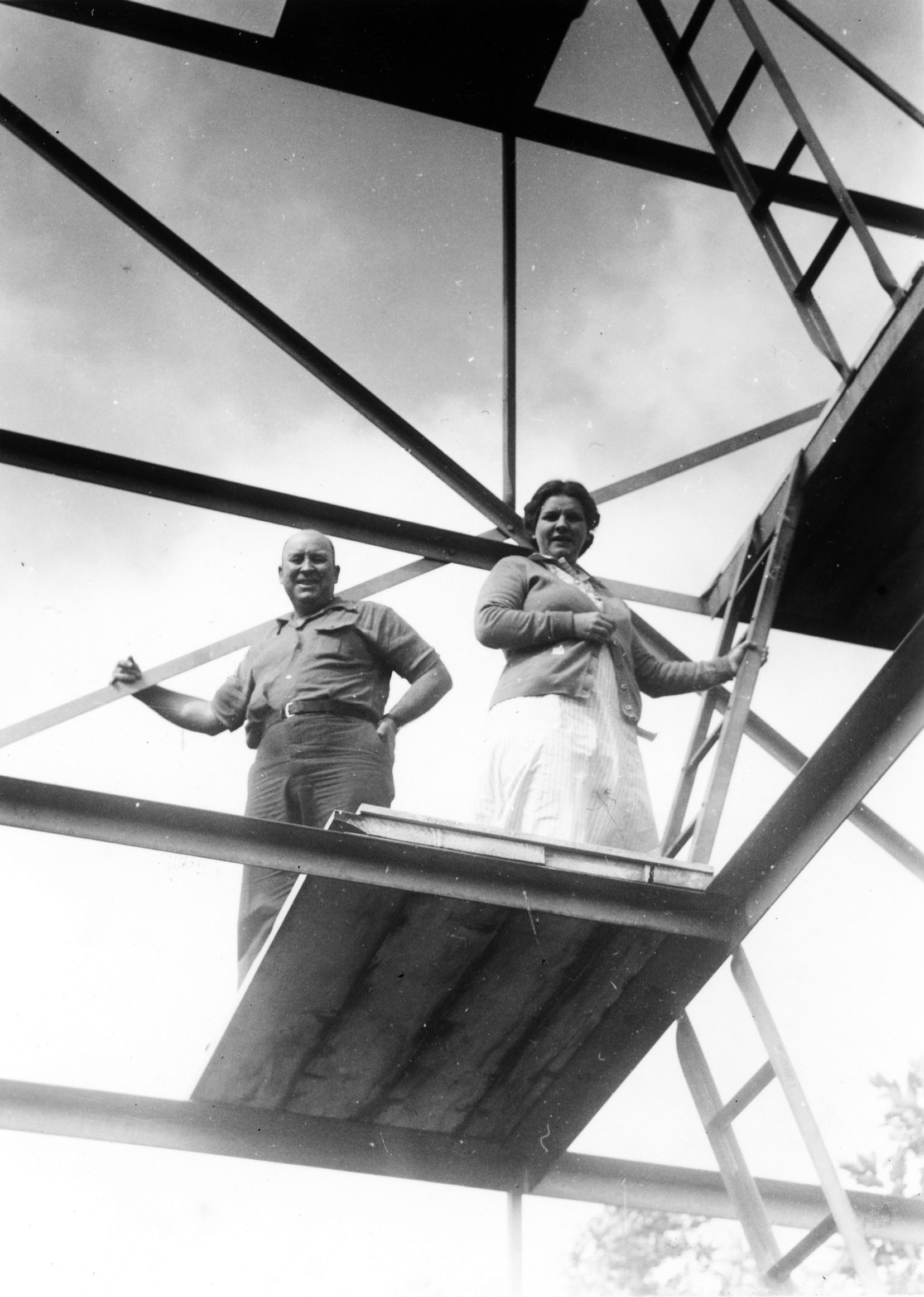
Carolyn Farr Booth and Chauncy Bliss on the Fire Tower at Good Hart, ca 1940. Cranbrook Archives.

Carolyn Farr Booth and Chauncy Bliss on the Fire Tower at Good Hart, ca 1940. Cranbrook Archives.

Communities like Cross Village, Harbor Springs, and Glen Arbor have been inspirational for Cranbrook artists and architects for centuries. Former head of architecture, Robert Snyder, designed an A-Frame beach cottage for Wally Mitchell, while architecture student Harry Weese designed a trifecta of summer homes (two for the Weese family) at Glen Arbor. “Shack Tamarack” (named after the tamarack logs used in its construction) was built in 1936 and is still used by Weese descendants today. Harry followed that with “Cottage Two” in 1939, a one story house designed with his brother John, and the Pritchard House which spoke to the modern aesthetic Weese experienced as an architecture student at Cranbrook Academy of Art.

Robert F. Swanson and Pipsan Saarinen Swanson spent decades designing commissions up north including the ultra-modern MacDonald Building in Harbor Springs, the L’Arbre Croche Condominium development, and the family’s own summer cottage at Menonaqua (along with son, Bob). Check out Shelley’s blog about Pipsan’s Sol Air furniture which is featured in the Designing Summer exhibition.

While architect Tod Williams (Cranbrook School ‘61) served as project manager for Richard Meier’s Douglas House project also located in Harbor Springs, other Cranbrook-related projects up north include The Munising Design Strategy Matrix – a community design project managed by The Community Design Advisory Program (CDAP). Established in 1987 by Design Michigan, a non-profit, state outreach program housed at Cranbrook Academy of Art, CDAP provided tailored community design and revitalization services to the city of Munising.

And, in 2013, Peter Pless (CAA ‘02) lead a design collaboration between the Human Centered Design Program at Northern Michigan University and the Lloyd Flanders furniture company of Menominee, Michigan.

Thankfully, there is seemingly no end in sight to the inspiration and possibilities of art, architecture, science, and plain old fashioned relaxation one can find up north.

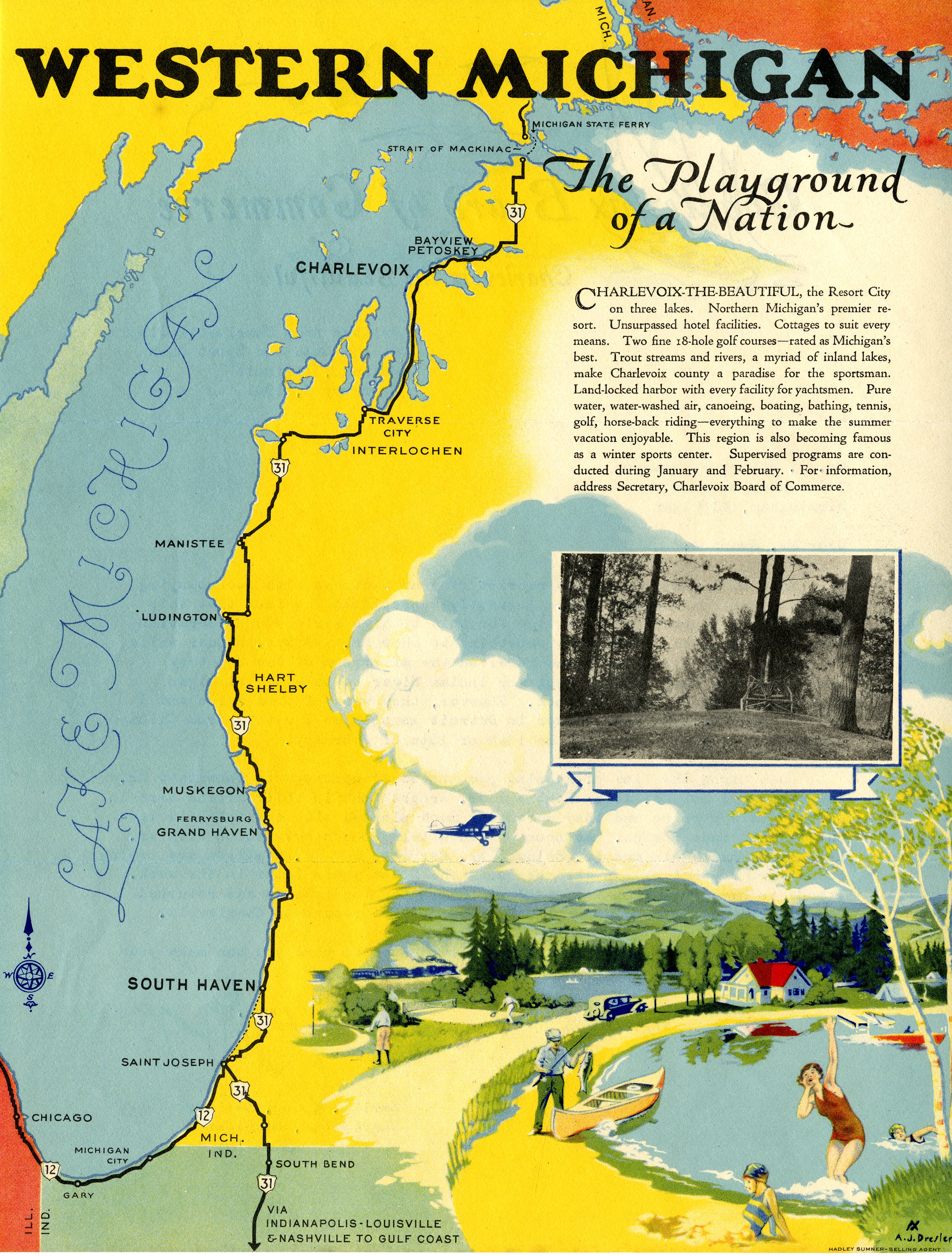
Promotional Literature, Charlevoix Chamber of Commerce, 1941. Cranbrook Archives.

Promotional Literature, Charlevoix Chamber of Commerce, 1941. Cranbrook Archives.

Leslie S. Edwards, Head Archivist

Swimming Was a Privilege: The By-Gone Days of Lake Jonah

Mention Lake Jonah to anyone who has been around Cranbrook since 1999, and the response will be immediate – bittersweet. Fond memories mixed with sadness that it is not used as a swimming hole any longer. Originally referred to as the “Milles Fountain Lake,” the man-made lake is also known as Jonah Lake or Jonah Pool. Funded by George Booth as a place for community members to swim during the summer months, Lake Jonah, built in 1933, became a gathering place – for Trustees and Directors and their families, Academy of Art students and faculty, Summer Theatre and Summer Institute campers, Horizons-Upward Bound students, and hundreds of Cranbrook-Kingswood day and boarding school students, who all loved to hang out in the natural setting.

George Booth originally intended for the lake to be a water feature at the end of Academy Way, but quickly realized that people would swim in it anyway, so he turned it into a swimming pool. When the water was first turned on, a large amount of seepage was discovered so waterproofing of the pool bottom began in July 1934.

Lining the bottom of Lake Jonah

Lining the bottom of Lake Jonah, Sep 1934. Richard G. Askew, photographer.

The cost of construction was just over $34,000. This included the liner, the drain, paving, and landscaping around the pool, designed by Detroit landscape architect, Edward Eichstaedt. The pools covered 54,375 square feet (or 1.248 acres) and held 3,082,830 gallons of water.

Swimming lessons Summer Institute

Swimming lessons, Summer Institute, Jul 1946. Harvey Croze, photographer.

Initially overseen by the Cranbrook Central Committee (a department of the Cranbrook Foundation), Lake Jonah gradually became too expensive and too risky for Cranbrook Educational Community to maintain. Swimmers snuck onto campus at all hours and swam in the pools without lifeguard supervision. After the summer of 1999, the decision was made to close Lake Jonah for swimming and thus ended decades of summer memories.

Leslie S. Edwards, Head Archivist

Faculty Housing is for the Birds

While working in our digital database recently, I came across an image of something called Chanticleer Cottage. The unusual name and image piqued my interest.

Chanticleer Cottage, 1998

Chanticleer Cottage, 1998. Courtesy Cranbrook Archives

Chanticleer Cottage started out as the “Chicken House,” built in 1945 on the site of the old toboggan slide at Cranbrook School. It was also known as the “Biological Lab,” “Experimental Building,” and “Animal House.” The structure was built to house chickens that accompanied Holland Sperry, the new head of Cranbrook School’s science department. The cost of the 20 x 30 foot building was just under $10,000. Sperry used the chickens to study genetics, and students in the science department completed experiments and conducted research on animals. The most famous resident of the “Chicken House” was Esmerelda, a single-comb White Leghorn who celebrated her 12th birthday (100 in human years) with a cake and candles.

Early cottage occupant Esmerelda celebrates her birthday

Early cottage occupant Esmerelda celebrates her birthday with student Ethan Golden. Pontiac Daily Press

Sperry retired in 1957. In 1958 the building was remodeled into a three bedroom house, at a recommended cost of $25,000 and turned into faculty housing. It was given the more elegant name of Chanticleer Cottage. The building was demolished in 1998 to make way for the Natatorium.

Cheri Y. Gay, Archivist


I Have a Crush on James Scripps Booth

After the second week of May, I readily began my Senior May Project, an intensive program that allows second semester seniors to explore a field of study for three weeks. Pulling open the imposing silver doors of the Cranbrook Archives on my first day, I had no idea what truly occurred on the other side. As I, with the fumbling hands of a novice, used fundamental archival tools such as finding aids, vertical and photo files, indexes, backlogs, and the digital image database over the course of the three weeks, I began to understand what an archivist does behind those argent doors.

Margaret Harney, CKU '15

Margaret Harney, CKU ’15

Honestly, it is a lot of filing. Archivists receive chaotic and often decaying papers, photographs, and other documents deemed worthy of being preserved, and they organize them into various categorizes and topics. Everything has a place, and that place is well recorded in differing indexes and inventories. As a person whose nickname as a child was “Messy Meg,” I inevitably struggled to learn the complex organizational system. Often, I would stand in a dim corner of the archives, afraid of disarranging the gray archival boxes like some omnipotent entropic force, or a two-year-old. Thus, in the second week when I was tasked with organizing three filing cabinets of photographs from Cranbrook Kingswood post-merger, I inwardly panicked. Once I removed the folders, I discovered that they were in complete disarray from the disinterested teenager who had supposedly organized the cabinets before me. While their quite arrogant lack of effort often made me want to pry my muscles from my bones, it also relieved my anxiety, for I knew no matter how badly I mismanaged the cabinets, it would never be nearly as appalling as it was prior.

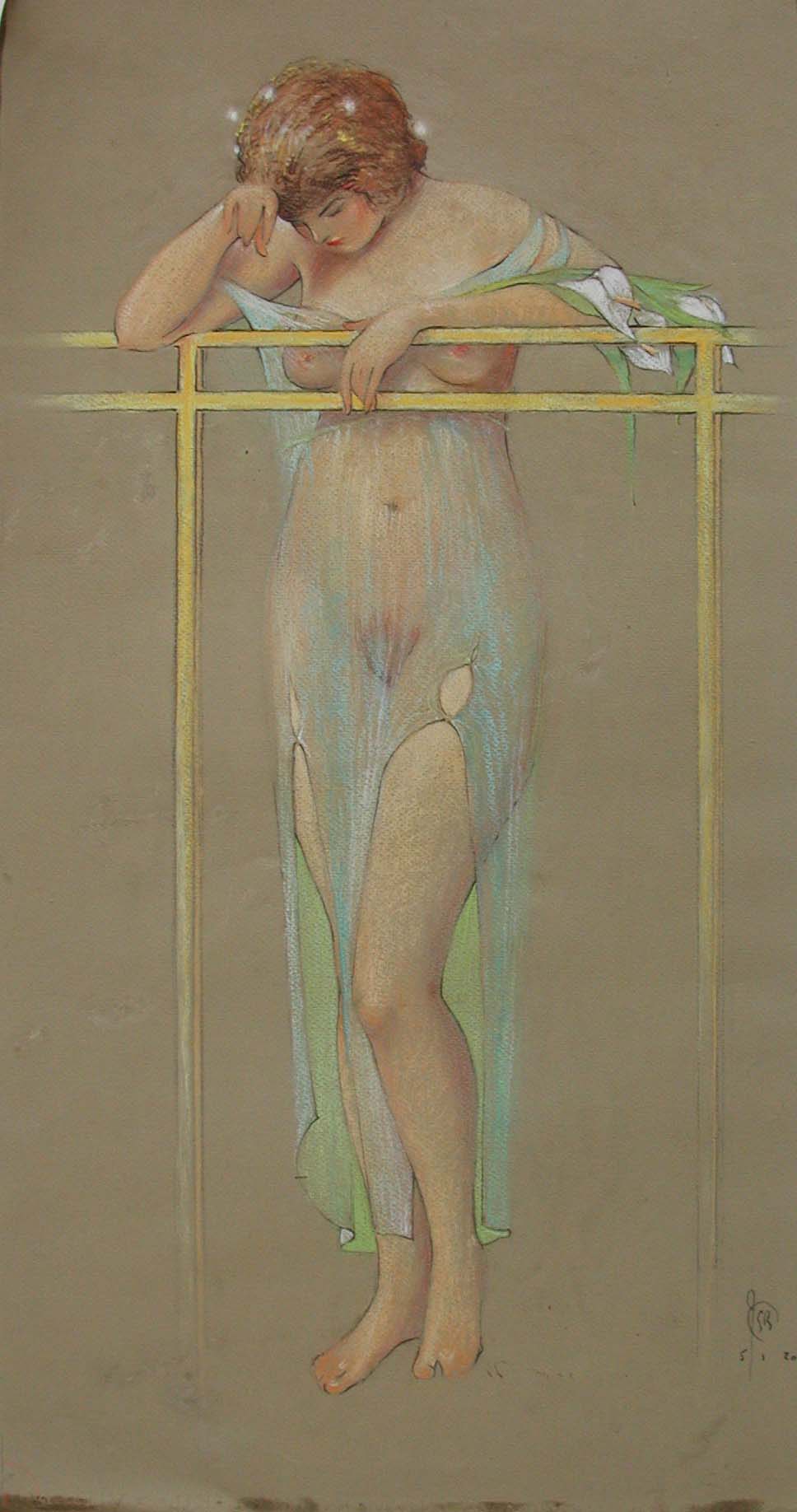
Study for Blessed Damozel, 1920.  James Scripps Booth

Study for Blessed Damozel, 1920. James Scripps Booth

After finishing the cabinets, I helped Ms. Edwards rummage for posters in the metallic archive vaults, and there in James Scripps Booth’s yellowing, rigid pastels, I discovered why an archivist undertakes all that grueling and mind-numbing filing. Beneath the waxy paper shielding the drawings, nude female figures innocently and exquisitely revealed themselves among impatient pastel strokes. While I was beguiled by the striking beauty of the sketches, I was equally as captivated by their ability to reveal the whims of Booth. Thus, not only the women, but Booth as well lay exposed. Such drawings and degenerating documents that archivists strive to preserve are like little vitrines displaying various aspects of the past. Each frame depicts a story and when all the frames combine, a larger impression is formed. Like an ink blot, this impression allows the viewer to decide what the greater story is. The ability to interpret the past for yourself is a rare and remarkable privilege, and that was the greatest gift my time in the archives gave me.

Cranbrook House, 1917.  James Scripps Booth

Cranbrook House, 1917. James Scripps Booth

Margaret Harney, CKU ’15

Cranbrook’s Tenuous Connection to “Crime of the Century”

Birdwatcher. It sounds so benign, doesn’t it? And difficult to reconcile with the infamous names of Leopold and Loeb, perpetrators of the “Crime of the Century” in 1924.

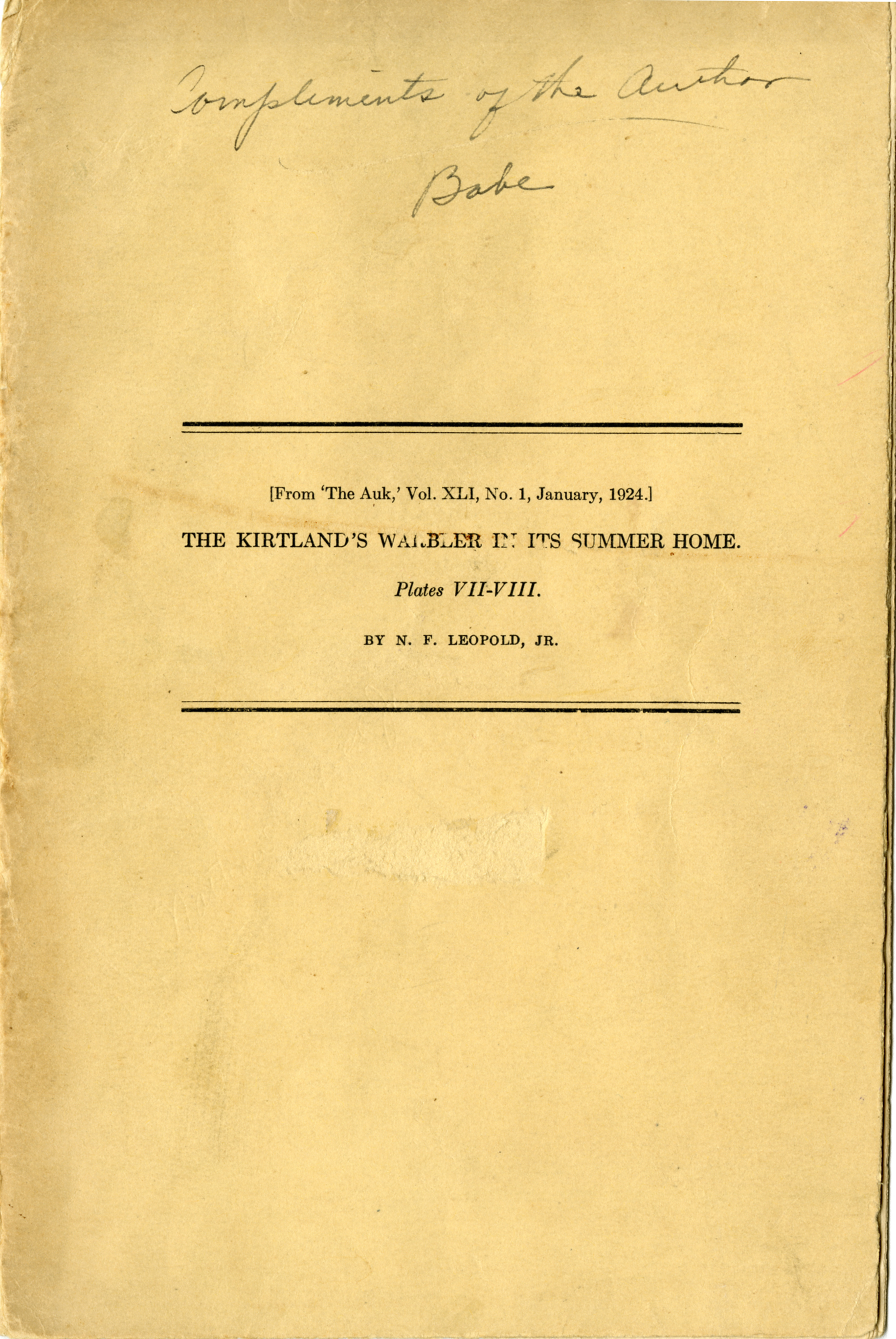
While refiling some material in the Cranbrook Institute of Science (CIS) Director’s Papers recently, I came across a folder labeled “Leopold, Nathan F., correspondence, 1924-1974.” Imagine my surprise—the name leapt out at me! Leopold was half of an infamous pair of murderers in the early 1920s. The correspondence file deals with Leopold’s experience as an amateur ornithologist. While a student at the University of Chicago he authored a monograph called “The Kirtland’s Warbler in its Summer Home,” published in the now defunct The Auk (Jan. 1924). The Kirtland’s warbler is considered a rare bird because in the summer, the only place in the world that it nests is a few counties in northern Michigan (upper and lower peninsulas), in Wisconsin and in Ontario.

Jan. 1924 issue of The Auk. Courtesy Cranbrook Archives

Jan. 1924 issue of The Auk. Courtesy Cranbrook Archives

Leopold’s explorations in ornithology were cut short when he followed his friend Richard Loeb’s challenge to commit a murder, to “see how it felt.” The two boys, from wealthy Chicago families, thought they could commit the perfect crime. On Loeb’s initiative they kidnapped the 14-year old son of a Chicago millionaire, murdered him and dumped the body. The pair were quickly apprehended and prosecuted, and faced the death penalty. Their rich parents were able to hire Clarence Darrow who won them life in prison.

Nathan Leopold was released in 1958, moving to Puerto Rico where he worked in medical research until his death in 1971. He contacted CIS director Dr. Robert Hatt in 1964 to see if the Institute was interested in receiving his diorama of a family of Kirtland’s warbler. “The birds were collected by me with a 16 gauge, double-barreled shotgun … in the late morning of June 20, 1923 … timed [for] the arrival in Oscoda of the only daily train south as would allow for preparing the birds for shipment to Chicago,” he explained in a letter to Hatt. Leopold chose Cranbrook, over the Smithsonian or the New York Museum of Natural History because “ … I believe that this typical Michigan bird should remain in Michigan …” He also donated correspondence with another birder, Douglas S. Middleton, started when he was in prison, and with a friend, Kate Friedman.

leopold postcard2

Postcard sent to Leopold friend upon finding Kirkland's warbler. Courtesy Cranbrook Archives

Postcard Leopold sent to friend upon finding Kirtland’s warbler. Courtesy Cranbrook Archives

In a book called Life Plus 99 Years, Leopold explained that he was already in prison by the time the taxidermist completed the exhibit of the warbler. However, the warden allowed the Leopold family chauffeur to drive the exhibit to the prison for Leopold to view.

The diorama was part of a CIS exhibit called One Does Not Live Alone, under a section called “Conflict,” in June 19, 1967.

– Cheri Y. Gay, Archivist

Modern Living

Yesterday I had the pleasure of attending the Michigan Historic Preservation Network’s annual conference in Midland where in each session, I heard references to Cranbrook-related art, architecture and/or design. Naturally, I had to investigate some of these referrals when I got in to the office today! (Curiosity killed the archivist.) One of the sessions I went to, Ideal/Idea Houses: Modern Living in the 1950s sparked my interest since all of the homes were built in the metro-Detroit area and many of them are still standing today.

What exactly was an Ideal/Idea House? In late 1940, the Walker Art Center in Minneapolis planned to exhibit a fully functional, completely furnished exhibition house called the Idea House in conjunction with an exhibition entitled “American Living.” The house was intended to showcase new ideas about home architecture and design. The exhibition opened in June 1941.

Fast forward to 1950 when the Builders Association of Detroit took this idea and turned it into an annual competition – first for practicing architects and by 1953, for Michigan architecture students. Originally called the Ideal Home, in 1956, the Builders Association changed the name to Idea Home. This was the same year that the winning entry of Academy of Art architecture student, George Zonars, was built and featured in the Detroit Builders Home Show held at the Michigan State fairground from February to April, 1956. Zonars turned over his preliminary drawings to the architectural firm of Palmquist & Wright, who prepared detailed working plans and specifications, and supervised the construction of the home.

Zonar's rendering of the 1956 Idea Home

Zonars’ rendering of the 1956 Idea Home. Royal Oak Daily Tribune.

Zonars’ Idea Home, like the ones that preceded his, was one of the earliest ranch-style homes in the area and accentuated modern outdoor living by featuring walls of glass windows and outdoor terraces. The exterior featured copper flashing and gutters, pierced brick screen walls, and a wide roof overhang. The interior was completely air-conditioned, had a built-in fire alarm system, and featured an “electronic precipitator” which filtered dust, pollen, bacteria, and germs from the air.

Exterior view of Idea Home

Exterior view of the large glass panel windows and the overhanging roof. Detroti Free Press.

Informality was stressed in the open floor plan of the interior which was decorated by Bette Wilson, assistant home furnishings coordinator for J. L. Hudson. The living room featured a mahogany plywood wall (stained with a walnut finish) and a copper fireplace and hearth. The color scheme was “soothing” with beige walls and carpet, accentuated by furniture in beige, green, rust and copper while accent cushions added splashes of bright turquoise and copper. The master bathroom featured wallpaper from Frank Lloyd Wright’s “Taliesin” line.

Snack Bar

The “snack bar” served as a room divider. The vinyl floor was turquoise with accent tiles in white and avocado. Detroit News.

The concept behind the Idea Home was to provide construction ideas and the use of new materials for builders, ideas for architects when designing future projects, and ideas for the “housewife” to decorate her current home. And perhaps the best part? Visitors to the home show could win the home by guessing the number of nails inside a large plastic model of the house! No idea who eventually won, but the house still exists at 29060 Lone Elm Lane in Southfield. I know what I’m doing this week-end. . .

Leslie S. Edwards, Head Archivist

Photo Friday: Academy of Art Graduation Day

Congratulations to the Cranbrook Academy of Art (CAA) students who graduate today! In honor of today’s festivities we are posting a photo of the cover of the program for the first Honors Convocation (29 May 1943). Although the Academy had been educating students for ten years, it was not until 1942 that it became independent and chartered by the State of Michigan as an institution of higher learning with power to grant degrees. The class of ’43 was the first class to receive an accredited degree. Henry Scripps Booth presented the candidates and degrees were conferred by Eliel Saarinen.

CAA Honors Convocation, 1943

Cranbrook Academy of Art Honors Convocation, 29 May 1943. Courtesy Cranbrook Archives.

Gina Tecos, Archivist

Create a website or blog at WordPress.com