
- Bob and Lee Bowen at the Stegosaurus Party. Steve Kendricks/Cranbrook Archives.
We post this photo with very little commentary, because what kind of explanation could possibly improve upon the title “stegosaurus party?” So enjoy it as it is!
We post this photo with very little commentary, because what kind of explanation could possibly improve upon the title “stegosaurus party?” So enjoy it as it is!
The other day I had the pleasure of taking a fantastic (albeit very cold!) field trip to view a mid-century modern home designed by Birmingham architect Robert Snyder. Snyder studied architecture at Cranbrook’s Academy of Art (1948-1950) and eventually took over as the Head of Architecture (1952-1965). The house, located on Walnut Lake in West Bloomfield and commissioned by Noel and Isabel Buckner, is slated for demolition any day. I learned about the house from Liz Buckner, who called to donate the original blueprints of the house to the Archives. Liz offered to give me a tour of the house and I enthusiastically accepted!
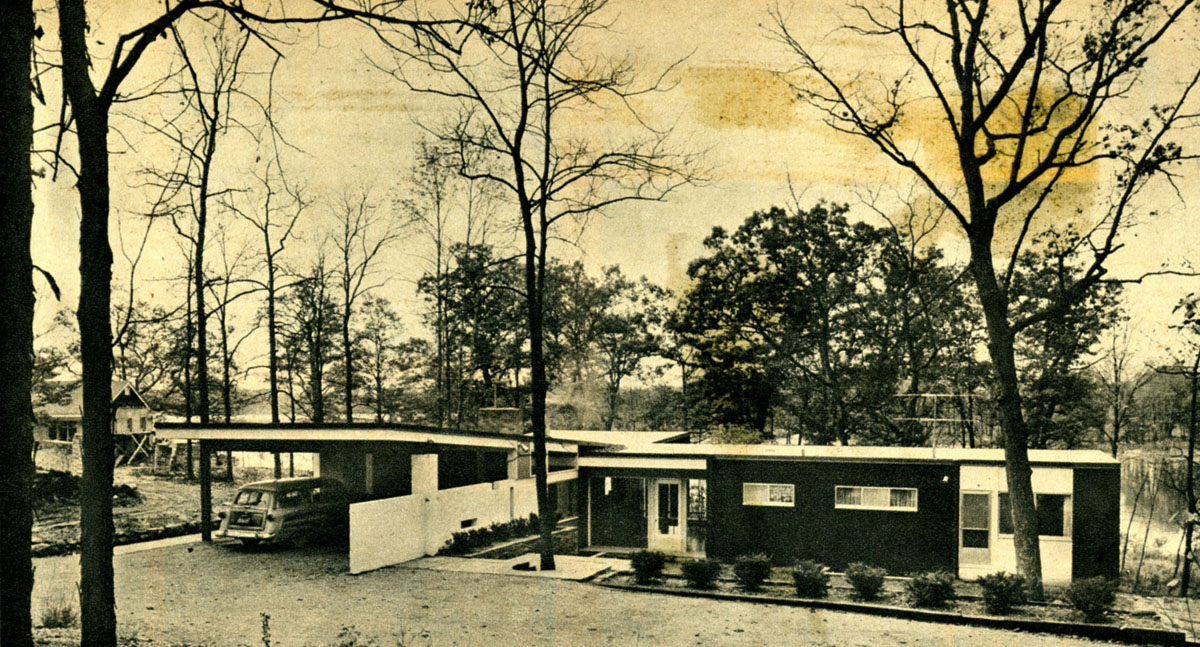
View of Buckner House from the drive above, circa 1955. Cranbrook Archives, Detroit Free Press/Ray Pillsbury.
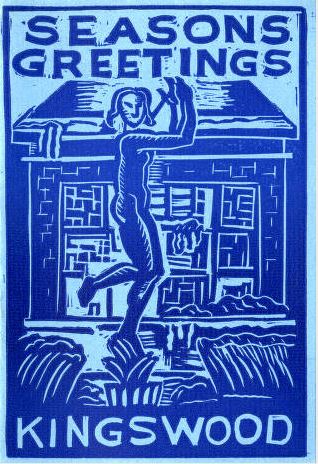
Kingswood Christmas Card, 1944. Cranbrook Archives.
As the holiday season swings into full gear, we thought we’d highlight one of our favorite historic Cranbrook traditions: the Kingswood School Christmas card. From 1944, this card features a woodblock print of Carl Milles’s Diana sculpture, one of the hallmarks of Kingswood’s campus. The Kingswood students who made it also managed to capture the movement and dynamic geometry of Eliel Saarinen’s remarkable leaded windows at Kingswood, a not-insignificant feat.
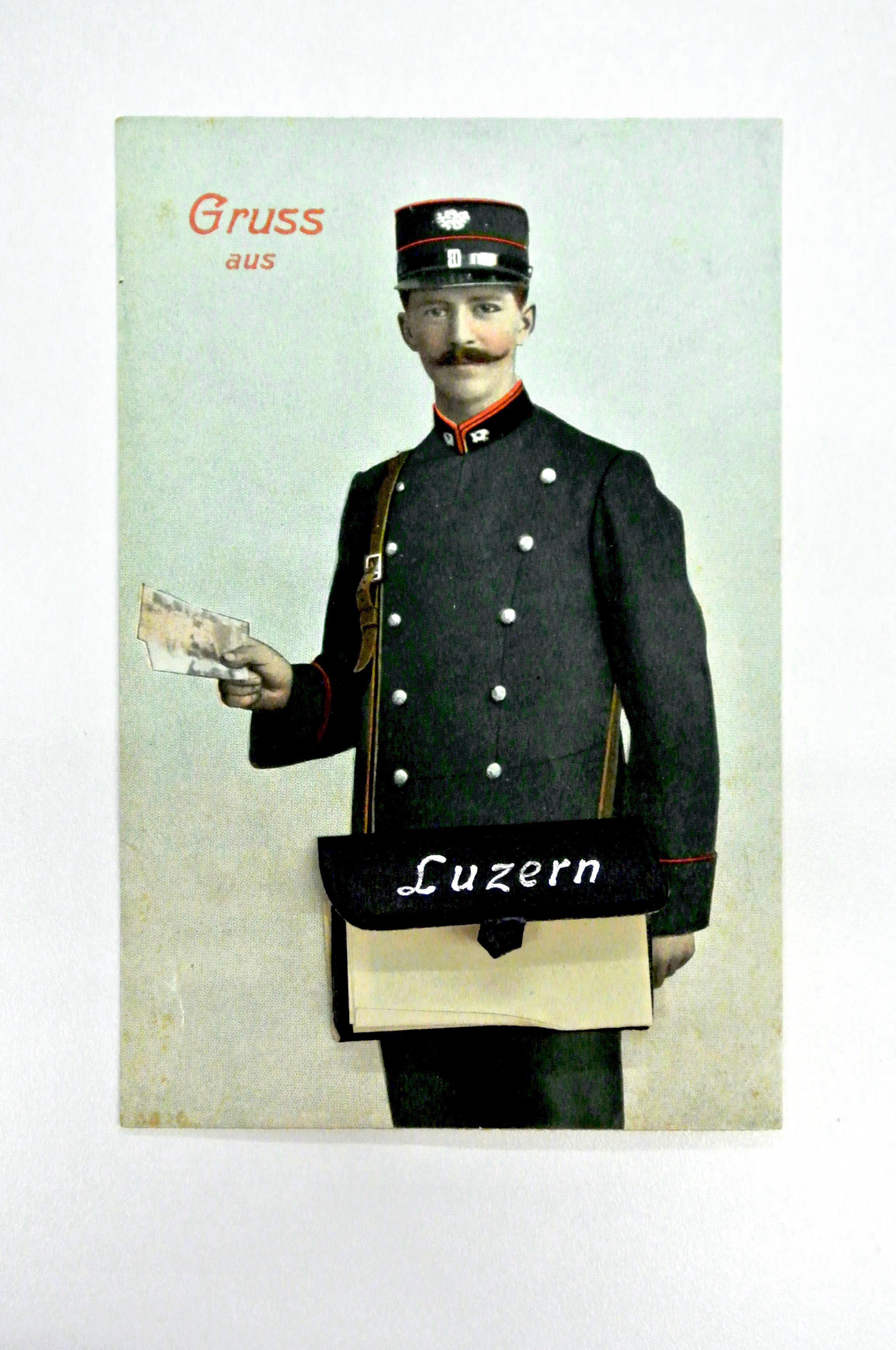
This postcard shows a Swiss postal worker with a small pouch. 1921, Cranbrook Archives
This week’s Friday photo is actually a postcard from the Virginia Kingswood Booth Vogel Papers. In 1921, Ralph Harmon Booth ─ one of the founders of the Detroit Institute of Arts and first president of the City of Detroit Arts Commission ─ traveled to Europe with his family. Booth’s son John (Virginia’s brother) collected postcards throughout the trip. “Gruss aus” translates to “Greetings from”, and was a popular souvenir travel postcard series printed in Germany with the chromo-lithography process.
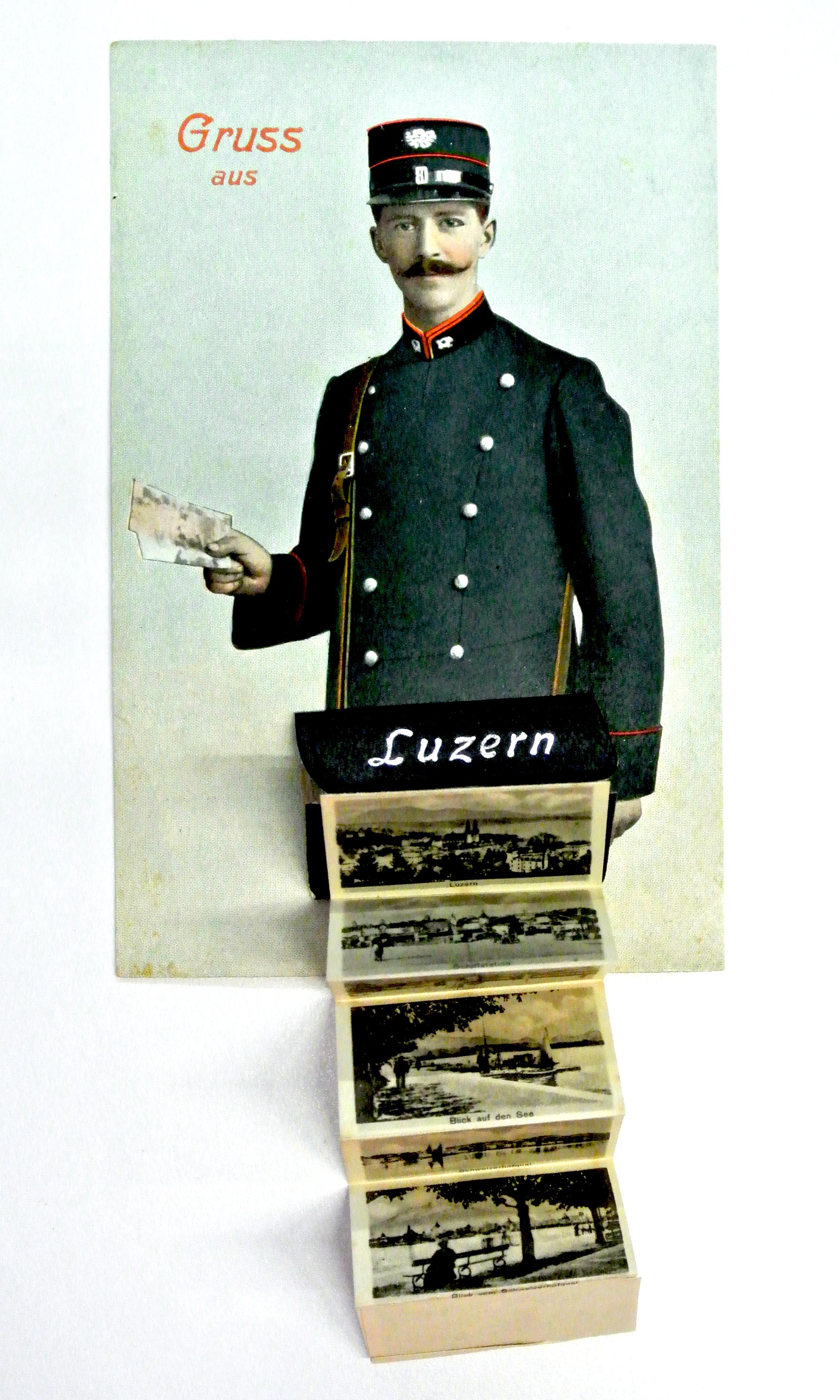
Open the pouch and voila! ─ the foldout shows scenes of Lucerne, Switzerland. 1921, Cranbrook Archives
In 1940, the Columbus, Kansas post office received an imposing addition: a giant slab of terra-cotta. Mounted on the wall, the bas-relief showed mail delivery in a rural community, the sort of neighborhood where the postman drops off the mail in a field of horses. Crafted by Waylande Gregory as part of a New Deal art project funded first through the Public Works of Art Project (PWAP) and then the U.S. Treasury Section of Fine Arts, the post office mural (titled R.F.D.) represents not only an example of Gregory’s large scale sculptural installations but also a period of time when the American government invested heavily in the idea that public art installed in everyday environments could bolster the American economy and elevate the national discourse.
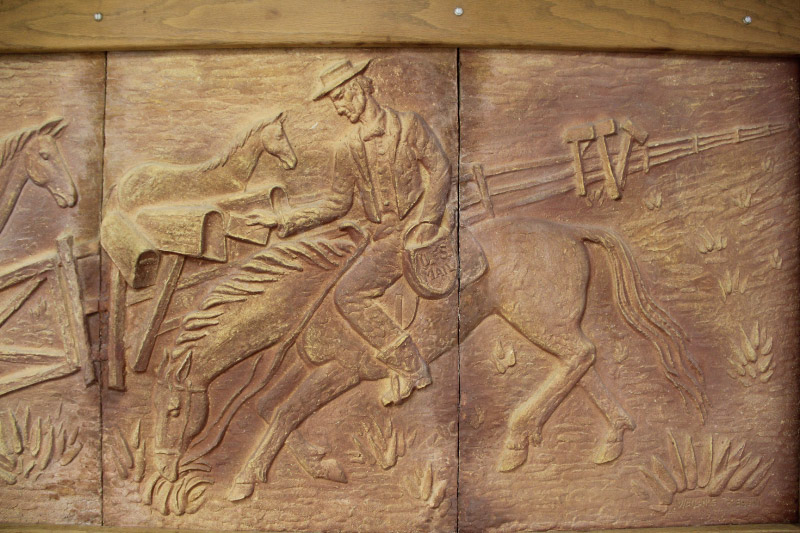
Waylande Gregory, R.F.D. (detail), Columbus, Kansas. Charles Swaney/Living New Deal Project, University of California, Berkeley

Dr. Robert Hatt cooking in Milles House. 1953, Cranbrook Archives.
Apologies if your stomach can’t take this photo – we just couldn’t resist! Cranbrook Institute of Science Director Dr. Robert Hatt is clearly cooking up a storm, with eel playing a central role in the evening’s meal. The photograph was taken in Milles House, which the Academy of Art leased to CIS in the 1950s as housing for their director.
Okay, I couldn’t resist! Today, while researching a query on sculptor Bernard “Tony” Rosenthal, I ran across this photo in our collection. When I showed it to one of our volunteers, Rita Faudman, she said (while laughing), “what can you do with THIS?” And my immediate reply was, “post it on the blog!”

©Wide World Photos. Councilman Harold Harby leaves no doubt about his opinion. Courtesy Bernard (Tony) Rosenthal Papers, Cranbrook Archives.
Currently on display, the exhibition A Driving Force: Cranbrook and the Car thoughtfully illustrates two key ways in which Cranbrook has been affiliated with the automotive industry throughout its history. James Scripps Booth was an avid artist and inventor, even taking apart, rebuilding and designing cars in the garage of Cranbrook House from an early age. Later on, the Academy of Art encouraged students to enter competitions which included designs for Packard Motor Car hood ornaments (1934) and exterior design, hood ornaments and trunk lid medallions (1950). Graduates were employed by the Big Three automakers in a variety of ways—working in the design studios building models for new cars, as part of Harley Earl’s “Damsels in Design,” and as textile designers for automotive interiors.
But Cranbrook’s relationship with the car goes beyond the realm of design. The Booth family’s list of cars includes a Winton (1904), a Christie (1904), a Cartercar (1907), two Pierce Arrows (one was a limousine), a Brush Runabout (1910), a Chalmers 40 (1910), a Lozier “Briarcliff” (1911) and a Detroit Electric (1921) which was driven by Henry Wood Booth at the age of 88.

Warren and Grace Booth with chauffeur in the Chalmers 40 in front of Cranbrook House. Circa 1910, Cranbrook Archives.
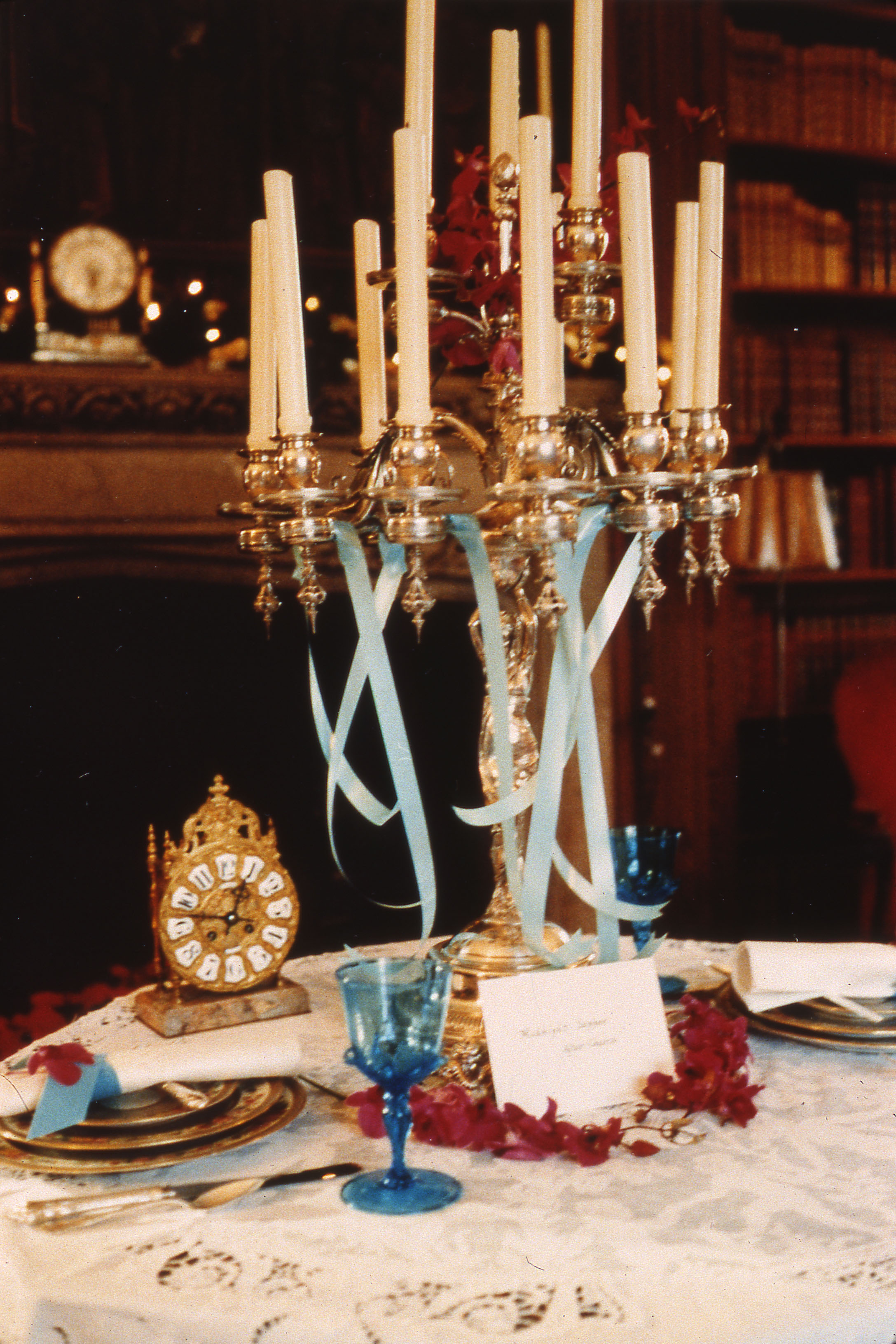
A 1988 Holiday Tables display features a candelabra and antique clock. 1988, Cranbrook Archives.
Since 1975, the Cranbrook House and Gardens Auxiliary has hosted their glamorous yearly fundraiser “Holiday Tables” in November. An invitation to local retailers and decorators to show off their holiday decorating chops, Holiday Tables also gives participants a new view into Cranbrook House. Filled for a brief time with contemporary and thematic design, visitors get to see what Cranbrook House looks like as a bustling house and pretend for a few short days that they live there. Here, an exhibitor from the 1988 Holiday Tables shows off a candelabra center piece on a table in the library.
 Cranbrook Kitchen Sink