A Century Ago: Travel to France with Messrs. Booth and Swanson

May 30, 2023, marks one hundred years since Henry S. Booth and J. Robert F. Swanson returned home from ten months of travel in Europe. Midway through their architecture studies at the University of Michigan, the friends and classmates set off on August 1, 1922 for a “Grand Tour” through Norway, Finland, Sweden, Denmark, Germany, Tunisia, Italy, France, and England to study and sketch European architecture.

In today’s post, I want to share moments from their journey through France, which is so beautifully documented by Henry’s letters and photographs, and by both of their sketches.
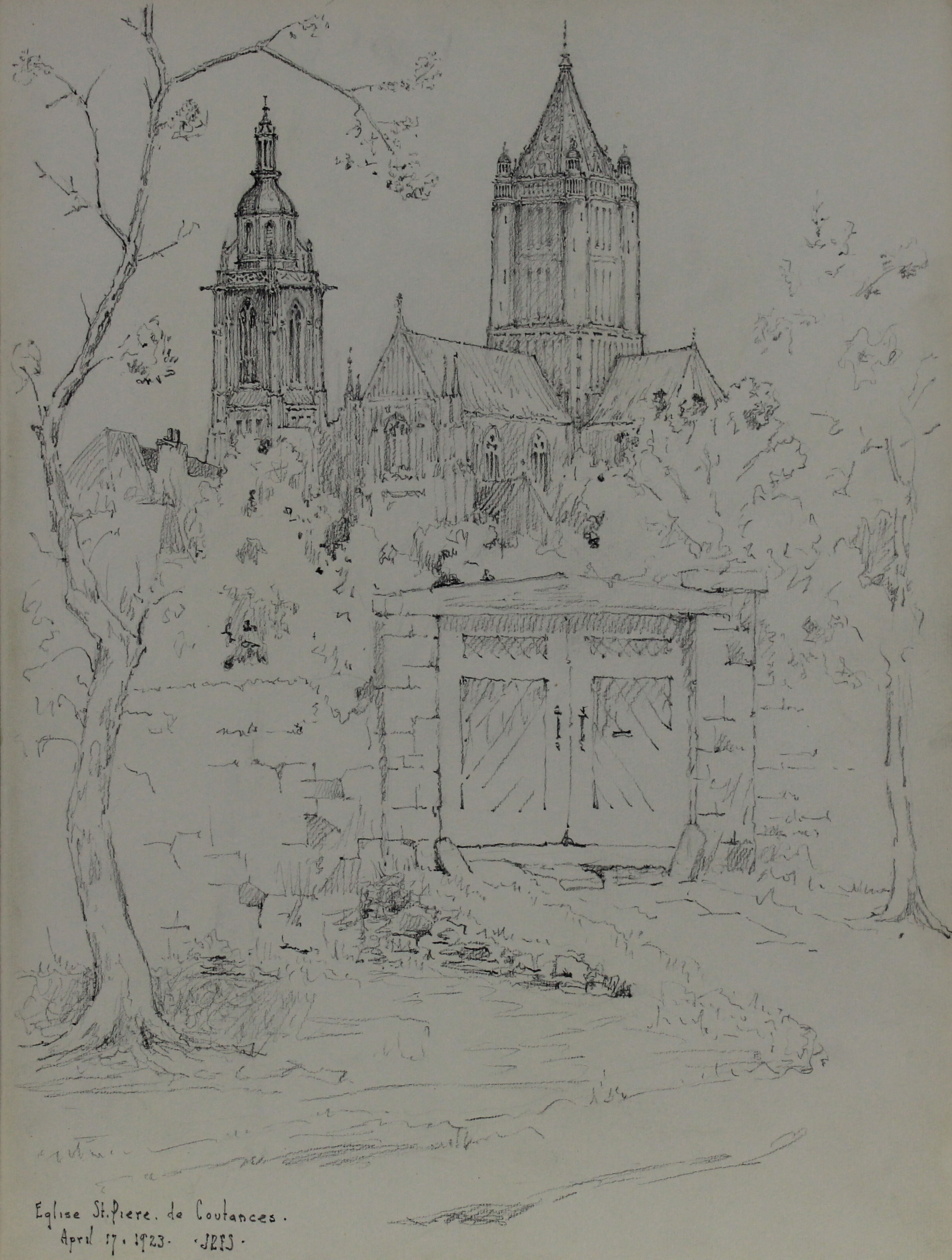
Eglise St. Pierre de Coutances, April 29, 1923, J. Robert F. Swanson. Courtesy of Cranbrook Art Museum.

Arriving in France in March 1923, Harry and Bob journeyed through Nice to Cannes, then through Lyon to the city of Bourges. Henry describes the scenery en route:

…mountains on the right and the “Cote d’Azure” on the other, flowers overhanging balustraded walls, old olives and tall but easily climbed palms, rocks and breaking waves, and then always the bluest of skies and sea to match, and dazzling sunlight–quite warm and ‘drowsy’.

At Bourges, they headed for the Cathedral, which they visited several times: at night by the light of gas lamps; in the afternoon sunlight; at dusk with a handful of worshippers on their knees; and then later that evening filled with the faithful.

Cathédrale St. Etiénne de Bourges, March 1923. Henry Scripps Booth, photographer. Courtesy of Cranbrook Archives.

It was an inspiring sight—the nave packed, and both the inner and outer aisles (for there are two) on the north side filled also, and not a few on the other side of the church. The light was dim all during the sermon, and when that was over, a quantity of candles were lighted almost instantaneously about the “Host,” and all the electric candles down the nave came on, so that suddenly this great cathedral was changed from a imaginative forrest in the night, to a great cathedral church ablaze with the lights associated with a feast.

But I thought more of other things than of the architecture that night. The preacher talked too fast for me to understand his French, but I knew what he should have been saying even if he wasn’t…, I looked at the great number of long black vails [sic] everywhere, noticed the lack of men of middle age, and saw many young fellows who are now “heads” of their father’s family standing by their veiled mother’s side.”

They stopped in Tours before taking in the Chateaux of the Loire: from Loche to Langais, Ussé, Villandry and Azey.

Continue reading
“A ship is safe in harbor, but that’s not what ships are built for.” — John A. Shedd

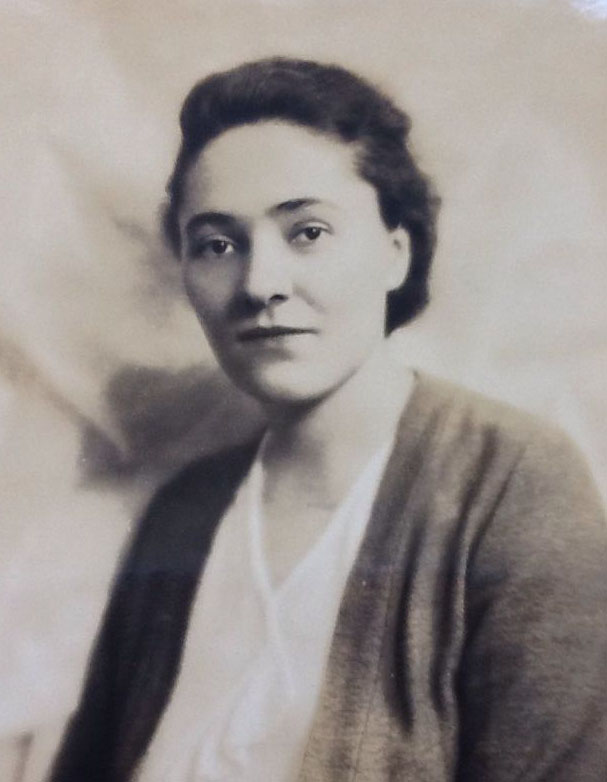
Marthe Le Loupp, 1930. Courtesy Cranbrook Archives.

Marthe Le Loupp, 1930. Courtesy Cranbrook Archives.

As the newest Cranbrook archivist it is my privilege to support our researcher’s investigations into the Cranbrook archival collections. On any given day we might review school yearbooks, catalog historic photographs, or learn about one of Cranbrook’s earliest scandals. After only two weeks, my husband has taken to assigning all credit for my cheerful and inquisitive demeanor to the adventuresome interactions I engage in at the archive. “You’re welcome!” is often my knee-jerk response.

Paths are a funny sort of thing—laid out to direct us, guide us, and ensure we don’t run astray. Life’s paths (kind of like research in an archives) often lead us to places we never imagined. This was the scenario in which Mademoiselle Marthe Le Loupp (1898-1987) found herself when she embarked on her return to Cranbrook from her annual trip back home (Plogoff, France) in 1939.

Marthe Le Loupp taught French language at Kingswood School Cranbrook from 1930-1956. As one of the original seven faculty members (classes were actually taught the first year in Brookside School), Le Loupp came to Cranbrook after completing three quarters of graduate study in French at the University of Chicago. A stern but well-liked teacher, Le Loupp led many Kingswood girls to excellence awards from the Michigan Chapter of the American Association of Teachers of French.

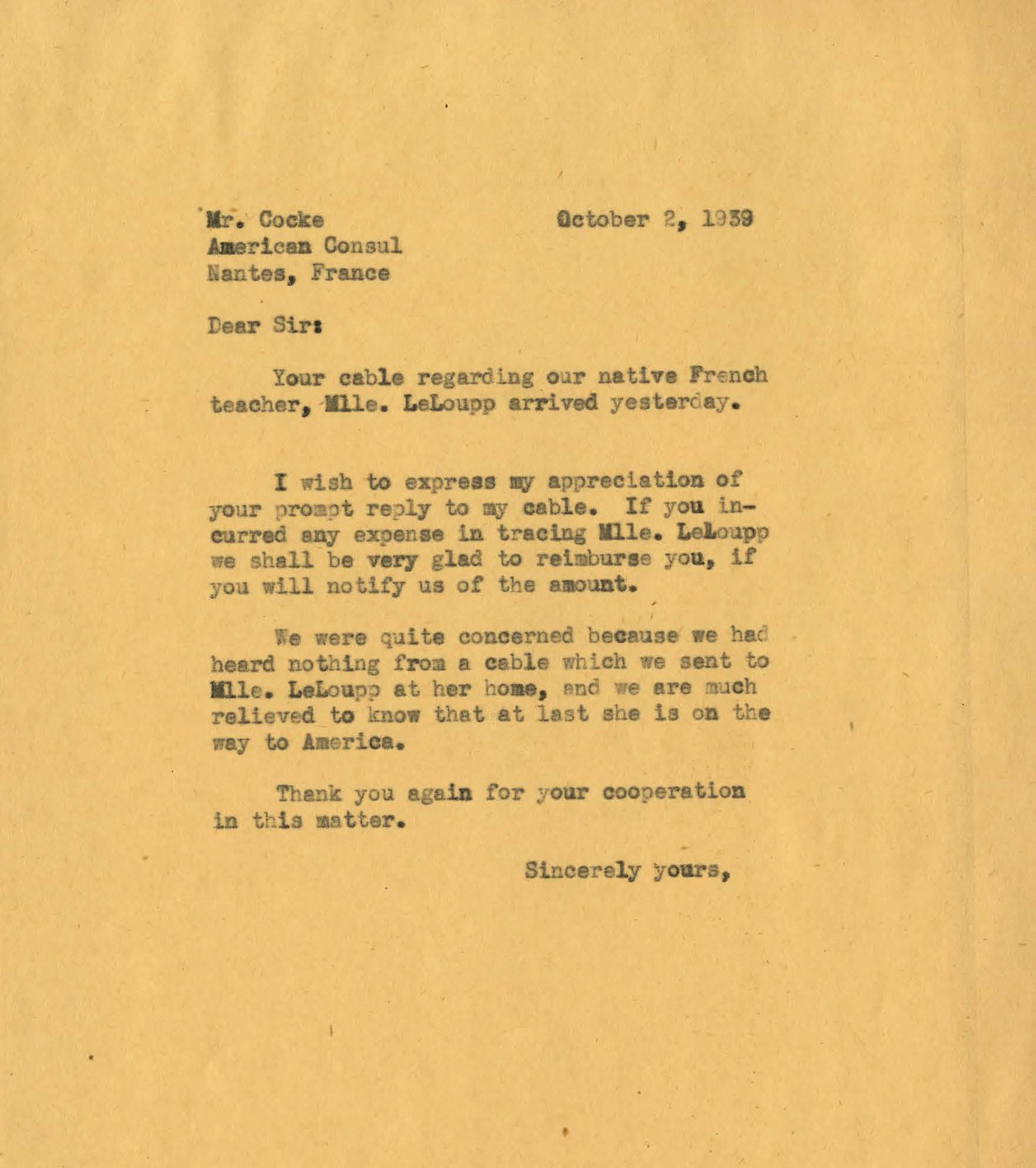
Le Loupp remained close with her family while living abroad and returned to France every summer. In 1939, Le Loupp’s return vessel, the SS Normandie, was reassigned under the WWII war effort and she was unable to return to Cranbrook for the start of the fall semester. Ultimately, she was able to secure passage via alternative methods.

Correspondence from Kingswood School to the American Consul, 1939. Courtesy Cranbrook Archives.

Correspondence from Kingswood School to the American Consul, 1939. Courtesy Cranbrook Archives.

When people think about WWII they don’t usually think about a French schoolteacher in Bloomfield Hills, Michigan, but in reality, maybe we all should think about the effects that war has on common folk. Our daily lives may seem unaffected, but this is not the truth now, as it was not the truth for Mlle Le Loupp and countless other teachers and staff at Cranbrook.

Le Loupp retired from Cranbrook in 1956 due to poor health. She lived the remainder of her years in Bénode, Finistère, France until her passing in 1987.

The opportunity to rediscover countless histories, such as this, is among the many honors of working in the archive here at Cranbrook. An honor I look forward to sharing with students and scholars in my daily work.

Belinda Krencicki, Associate Archivist

Create a website or blog at WordPress.com