Photo Friday: Folk Dancing

Harry Bertoia is served food by a costumed man at the Cranbrook Academy of Art folk dancing party. December, 1940. Cranbrook Archives.

Harry Bertoia is served food by a costumed man at the Cranbrook Academy of Art folk dancing party. December, 1940. Cranbrook Archives.

Cranbrook Academy of Art students may come to Michigan for their MFAs, but they seem to become masters of throwing great parties during their time here as well. One such shindig was the “Folk Dancing Party,” held in 1940 and shown here. Harry Bertoia, sculptor and furniture designer, sits in a suit while a costumed man serves him food. Lederhosen and hors d’oeuvres – a unique combination for a unique evening.

Shoshana Resnikoff, Collections Fellow

Photo Friday: Cranbrook’s Super Bowl

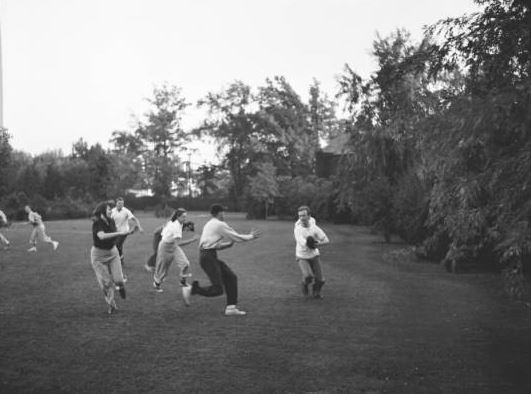
Ralph Rapson (left, holdign the football), plays football with fellow Cranbrook Academy of Art students. September, 1939. Richard P. Raseman/Cranbrook Archives

Ralph Rapson (right, holding the football), plays football with fellow Cranbrook Academy of Art students. September, 1939. Richard P. Raseman/Cranbrook Archives.

Okay, so “super bowl” might be overstating it. Still, this photo of Cranbrook Academy of Art students enjoying an afternoon game on campus should get you into an appropriately Cranbrook-y mood for the upcoming NFL Super Bowl. So far we’ve identified Ralph Rapson, noted mid-century architect and long-time head of the University of Minnesota School of Architecture, in the white shirt holding the football. If anyone identifies the other players, though, please let us know in the comments!

Photo Friday: Movie Magic

Cranbrook Academy of Art students participate in the filming of Jazz, CAA student Joe Munro's first experimental film. 1943, Cranbrook archives.

Cranbrook Academy of Art students participate in the filming of Jazz, Joe Munro’s first experimental film, 1943. Cranbrook archives.

Born and raised in Michigan, Joe Munro worked at Cranbrook as a photographer and teacher. Here he works on his first film, Jazz, gesticulating wildly at his actors while his crew, made up entirely of CAA students, looks on. Munro left Cranbrook shortly after this film was completed, joining the US military and serving in WWII as a wartime photographer.  With the end of the war he began a long career as a freelance photojournalist, working for LIFE, National Geographic, and Time Magazine. His archives are held by the Ohio Historical Society are definitely worth a look.

Not Quite Photo Friday: Hello from Norway*

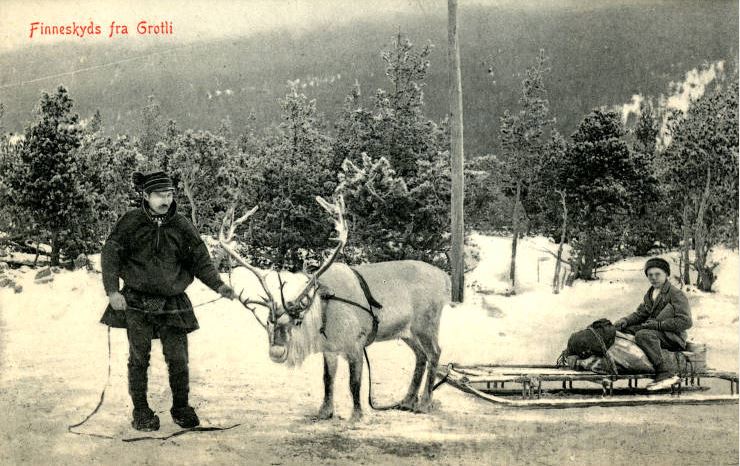
Finnish postcard, 1921. Sent from "Jack Booth," John Lord Booth. Virginia Kingswood Booth Vogel Papers, Cranbrook Archives.

Finnish postcard, 1921. Sent from John Lord Booth. Virginia Kingswood Booth Vogel Papers, Cranbrook Archives.

In honor of the Midwest’s own recently departed polar vortex, we thought we’d highlight we’d highlight a historic postcard from the Virginia Kingswood Booth Vogel Papers at Cranbrook Archives. It appears that these Norwegian citizens are liking the cold about as much as we liked our own winter storm. Honestly, though, they should be happier – at least they have a reindeer to keep them company. Stay warm, everyone!

*Ed. note: eagle-eyed readers may have noted that we accidentally wrote “Finland,” when clearly this postcard is from Norway. Our only excuse is that it is Friday and we have been completely confounded by all this snow. Apologies!

Photo Friday: Stegosaurus Party

Bob and Lee Bowen at the Stegosaurus Party. Steve Kendricks/Cranbrook Archives.

Bob and Lee Bowen at the Stegosaurus Party. Steve Kendricks/Cranbrook Archives.

We post this photo with very little commentary, because what kind of explanation could possibly improve upon the title “stegosaurus party?” So enjoy it as it is!

Not-a-Photo Friday: Season’s Greetings!

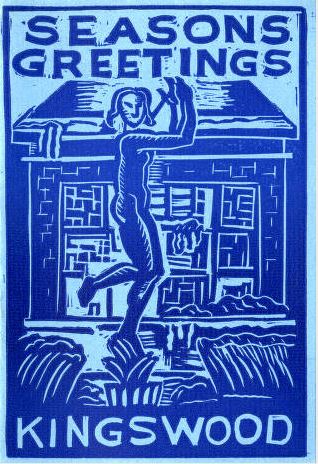
Kingswood Christmas Card, 1944. Cranbrook Archives.

Kingswood Christmas Card, 1944. Cranbrook Archives.

As the holiday season swings into full gear, we thought we’d highlight one of our favorite historic Cranbrook traditions: the Kingswood School Christmas card. From 1944, this card features a woodblock print of Carl Milles’s Diana sculpture, one of the hallmarks of Kingswood’s campus. The Kingswood students who made it also managed to capture the movement and dynamic geometry of Eliel Saarinen’s remarkable leaded windows at Kingswood, a not-insignificant feat.

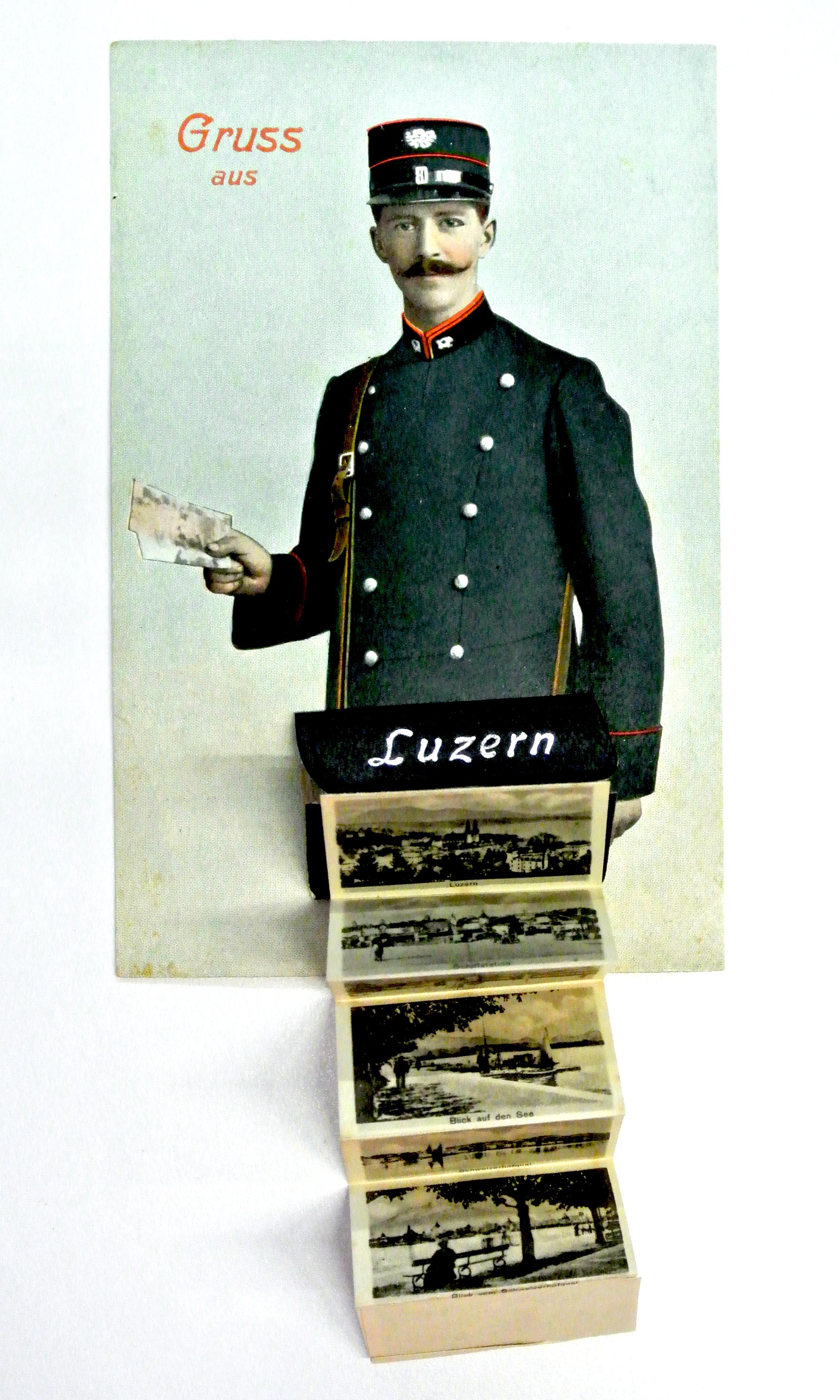
Gruss aus

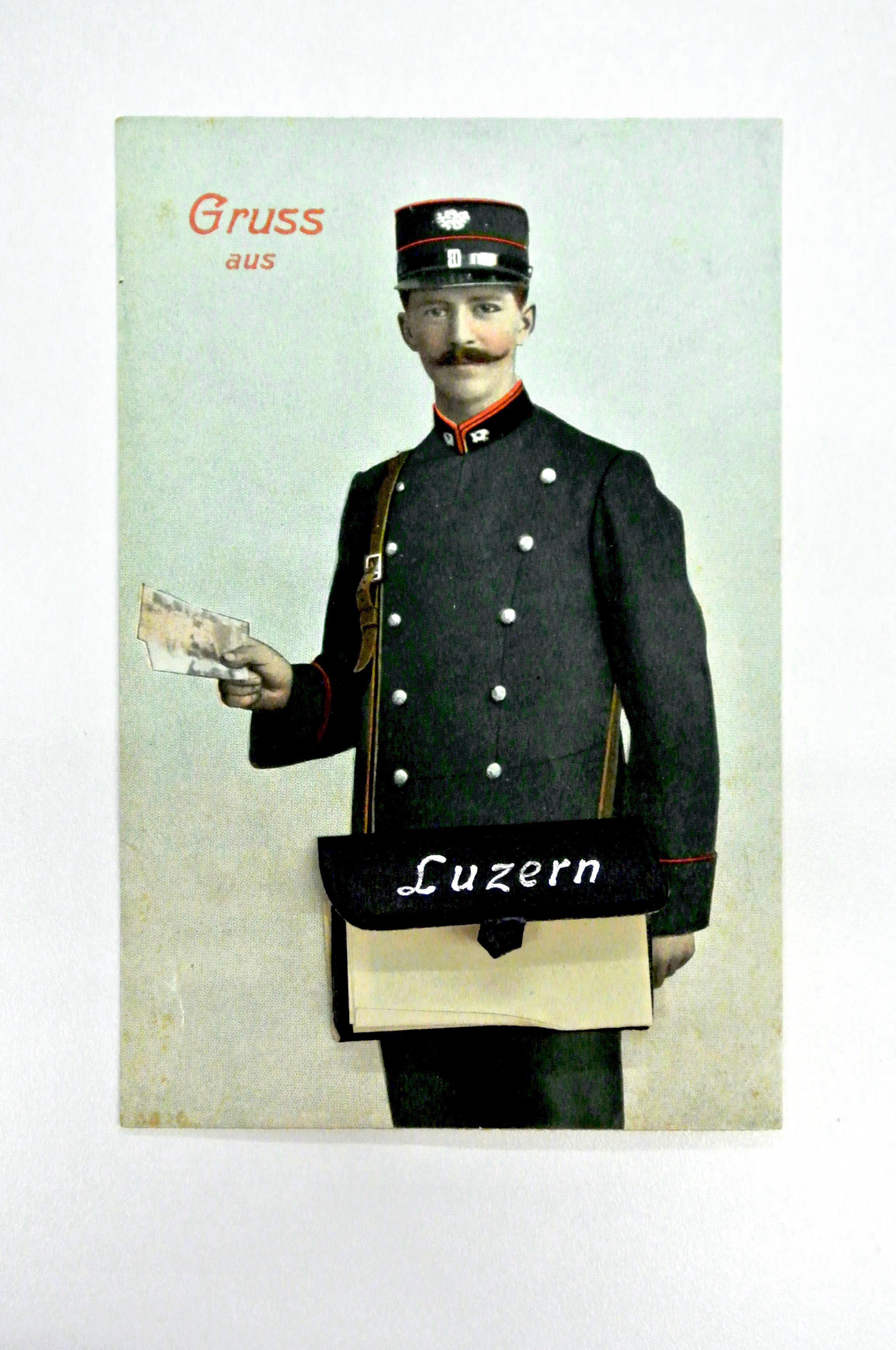
This postcard shows a Swiss postal worker with a small pouch. 1921, Cranbrook Archives

This postcard shows a Swiss postal worker with a small pouch. 1921, Cranbrook Archives

This week’s Friday photo is actually a postcard from the Virginia Kingswood Booth Vogel Papers.  In 1921, Ralph Harmon Booth ─ one of the founders of the Detroit Institute of Arts and first president of the City of Detroit Arts Commission ─ traveled to Europe with his family.  Booth’s son John (Virginia’s brother) collected postcards throughout the trip. “Gruss aus” translates to “Greetings from”, and was a popular souvenir travel postcard series printed in Germany with the chromo-lithography process.

Image

Open the pouch and voila! ─ the foldout shows scenes of Lucerne, Switzerland. 1921, Cranbrook Archives

Photo Friday: Ready for Dinner

Dr. Robert Hatt cooking in Milles House.  1953, Cranbrook Archives.

Dr. Robert Hatt cooking in Milles House. 1953, Cranbrook Archives.

Apologies if your stomach can’t take this photo – we just couldn’t resist! Cranbrook Institute of Science Director Dr. Robert Hatt is clearly cooking up a storm, with eel playing a central role in the evening’s meal.  The photograph was taken in Milles House, which the Academy of Art leased to CIS in the 1950s as housing for their director.

Photo Friday: Dinner at the Saarinens’

Loja Saarinen sets the table for guests.  Saarinen House, 1930-1940.  Cranbrook Archives.

Loja Saarinen sets the table for guests. Saarinen House, 1935-1940. Cranbrook Archives.

Loja and Eliel Saarinen were masterful entertainers.  That tradition continues every spring, when Cranbrook Art Museum opens up the house for tours.  Though the museum avoids serving food or drinks in the house (it is accessioned into the museum’s collection as a single historical object, after all), visitors get to experience the house as the Saarinens designed it between 1935 and 1940.  Every autumn the tour season ends and we pack up the house to hibernate for winter, opening it up again come spring.  To celebrate the closing of another great tour season (it finishes at the end of October, so get in while you can!), we wanted to showcase one of the most social environments in the house—the dining room.

Here, Loja Saarinen prepares the table for guests.  The round placemats were decorated by the Saarinen’s son, Eero Saarinen, when he was just a boy.  The table is at its smallest size—the outer rim of the table actually pulls out, allowing donut-shaped leaves to expand the table yet retain its circular shape. The swing door to the butler’s pantry is open, showing off the home’s state-of-the-art Frigidaire icebox.  Truly a modern home for a modern family!

Photo Friday: Spot the Schust

Kingswood graduation, class of 1934.  Cranbrook Archives.

Kingswood graduation, class of 1934. Cranbrook Archives.

Graduating from Kingswood required a very different sort of dress code in 1934.  Glamorous to modern eyes, these matching outfits were probably just as irritating to the senior girls as polyester caps and gowns are for Cranbrook seniors today.   Bonus: somewhere in this photo is a young Florence Schust.  Schust became better known as Florence Knoll after her marriage to Hans Knoll, and it was through her husband’s furniture company that she revolutionized modern interiors and furnishings.  Can you spot her?  The Center for Collections and Research staff votes for the serious-faced young woman in the front row, four in from the left.

Shoshana Resnikoff, Collections Fellow

Create a website or blog at WordPress.com