The Hopkin Club, or, What to Give the Maritime Artist Who Has Everything

What would you want for your 75th birthday? If you were painter Robert Hopkin, it would be an artists’ club named in your honor. The Hopkin Club, formed in 1907, had no rules, officers, or dues. The members wanted to get together occasionally, to talk about art or host artists visiting Detroit. Hopkin passed away in 1909, but the club continued. In 1913, The Hopkin Club established by-laws and was renamed the Scarab Club–the name it continues under today.
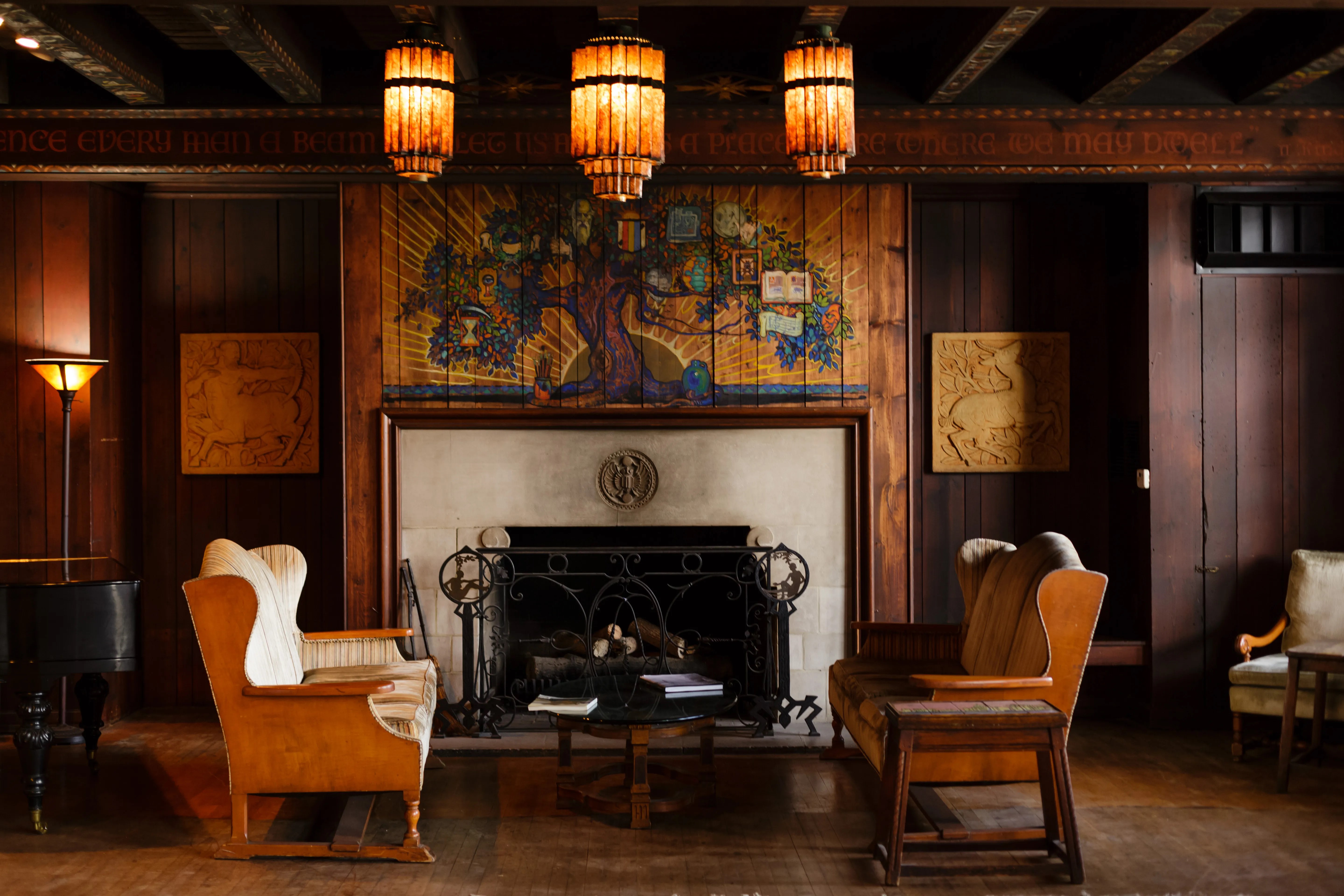
Scarab Club Room. Photography courtesy of Scarab Club. 

But who was the man the club was originally named after?

Robert Hopkin was a maritime/marine artist born in Glasgow, Scotland, in 1832. He learned to paint and draw from his father. The family emigrated to Detroit in 1842. His grandfather was a sea captain which drew Hopkin to work on the wharves in Detroit and inspired his art. Though chiefly known as a painter of marine scenes and seascapes, Hopkin made frequent trips throughout the American west from 1860 to 1885, painting murals for public buildings and drop curtains and scenery for theaters, including the Tabor Grand Opera House in Denver.
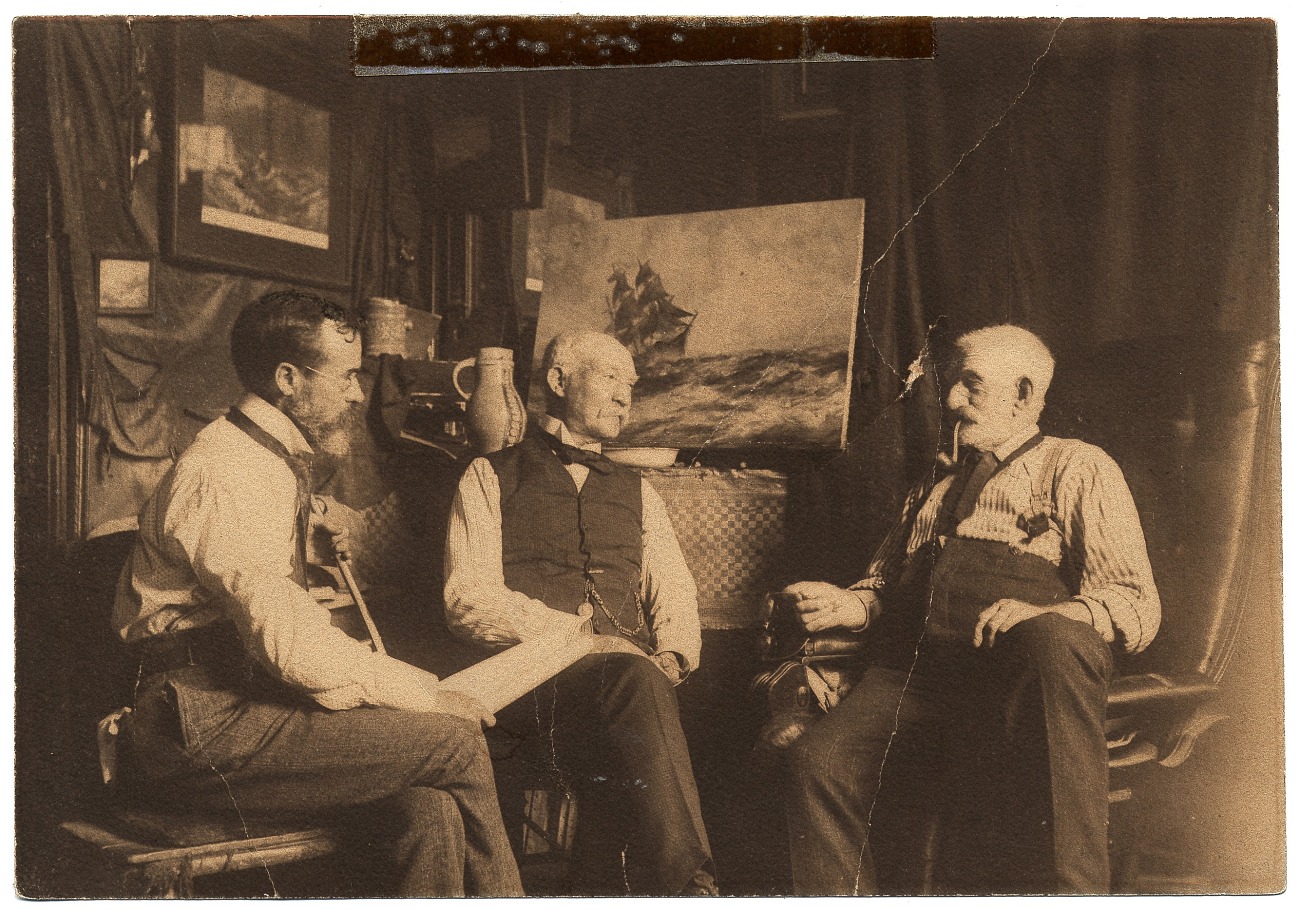
Robert Hopkin (right) and others in studio, ca. 1900. William H. Thomson papers, 1912-1950. Archives of American Art, Smithsonian Institution

In the latter half of the 19th century, Hopkins was considered the dean of Detroit artists; he decorated the interior (as well as the stage curtain) for the original Detroit Opera House (1868), painted murals in Detroit’s Fort Street Presbyterian and Ste. Anne’s churches, as well as the Cotton Exchange in New Orleans (1883). By April 1900, the Detroit Free Press wrote, “Many of the art lovers of this city possess one or more of [Hopkin’s] splendid marines, and they have been reproduced and published until everyone is familiar with his work.”

When Mr. Robert Hopkin’s Collection of Paintings opened at the Detroit Museum of Art in May 1901, “There was a large attendance of art-loving Detroiters” (Detroit Free Press, May 16, 1901).

Robert Hopkin (Scottish American, 1832 – 1909), Marine, Oil on Canvas. Cranbrook Center for Collections and Research.

George and Ellen Booth were no exception. Art lovers with many Detroit-based and self-taught artists in their growing collection, the first inventory of Cranbrook House in 1914 lists two Hopkin “Marine” paintings. The Booths gifted the larger of the two paintings to their daughter Grace Ellen Booth and her husband Harold L. Wallace. The painting returned to Cranbrook House about 1955, when Grace Booth Wallace’s collection was donated to the Cranbrook Foundation.
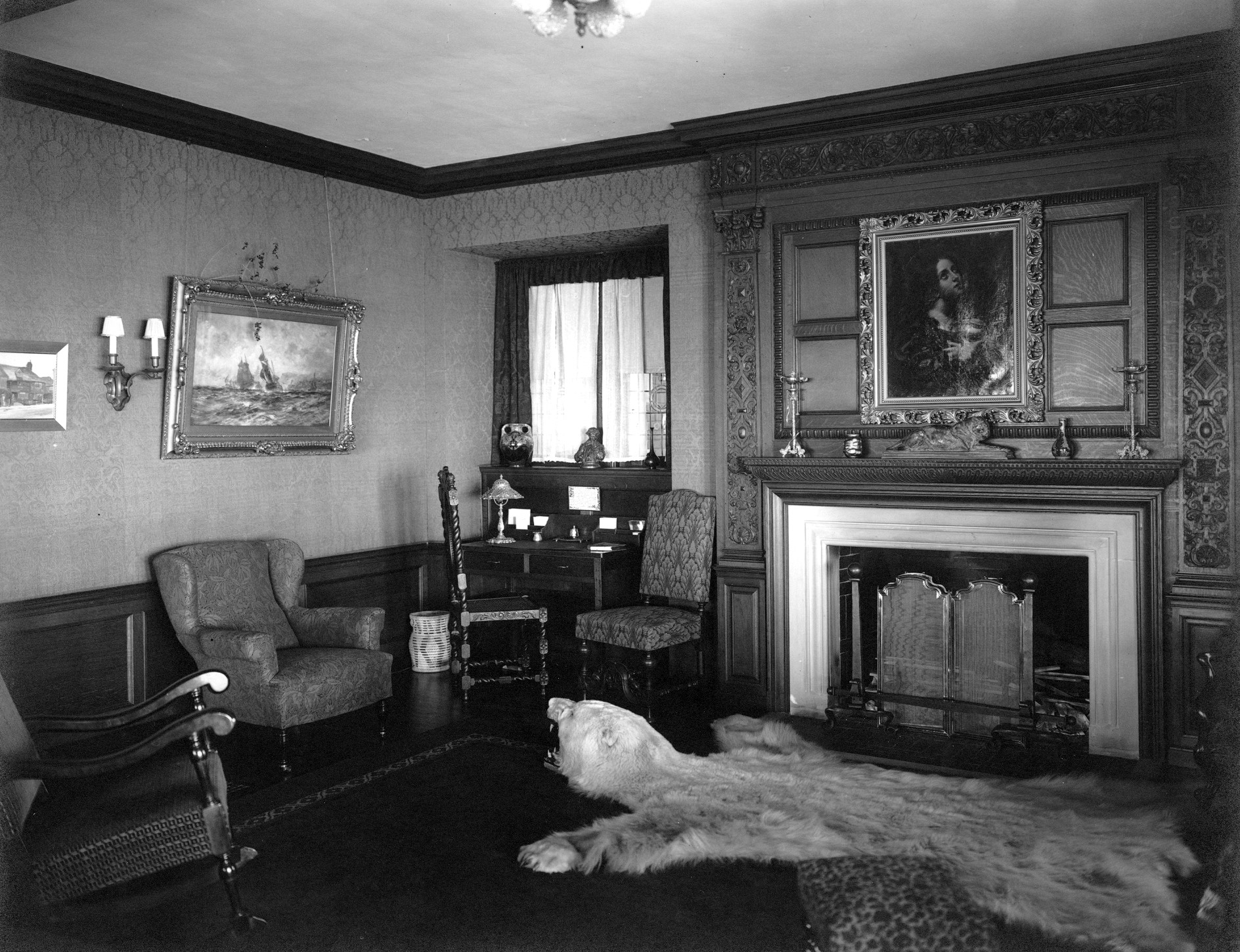
Cranbrook House Living Room, circa 1909, with Marine visible on the left. Cranbrook Archives, Cranbrook Center for Collections and Research.

The Detroit Historical Society has a copy of the Souvenir Catalogue of Mr. Robert Hopkin’s Collection of Paintings in its collection. The 85 exhibited paintings are listed, with several black and white images of them. “Price List” is written on the cover, and notes have been made indicating which have been sold and who purchased them. (Sadly, the name “Booth” does not appear.)

Another art-loving Detroiter was Merton E. Farr president of the American Shipbuilding Company and owner of a number of freighters on the Great Lakes. His daughter, Carolyn, married George and Ellen Booth’s youngest son, Henry.

The Hopkin painting in the Thornlea collection.
Cranbrook Center for Collections and Research.

In 1927, Farr gifted the couple a Hopkin “Marine.” The painting hung in Thornlea, home to Harry and Carol Booth, from 1927.

The painting’s official title is not noted. The Thornlea painting is interchangeably referred to as Homeward Bound, Schooner on a Stormy Sea, Sailing Ship at Sea, and Marine. However, the 1901 Hopkin exhibition catalog does not list any paintings with those titles.

Leslie Mio, Associate Registrar, Cranbrook Center for Collections and Research

If you would like to learn more about Robert Hopkin and the amazing club he inspired, join the Center for Edible Landscapes Dinner: An Evening at the Scarab Club in Detroit on Sunday, May 18th, 2025 from 5:00pm – 9:00pm.
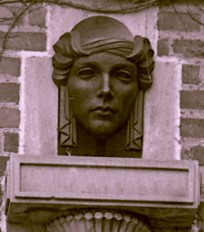
A Face Above Beauty

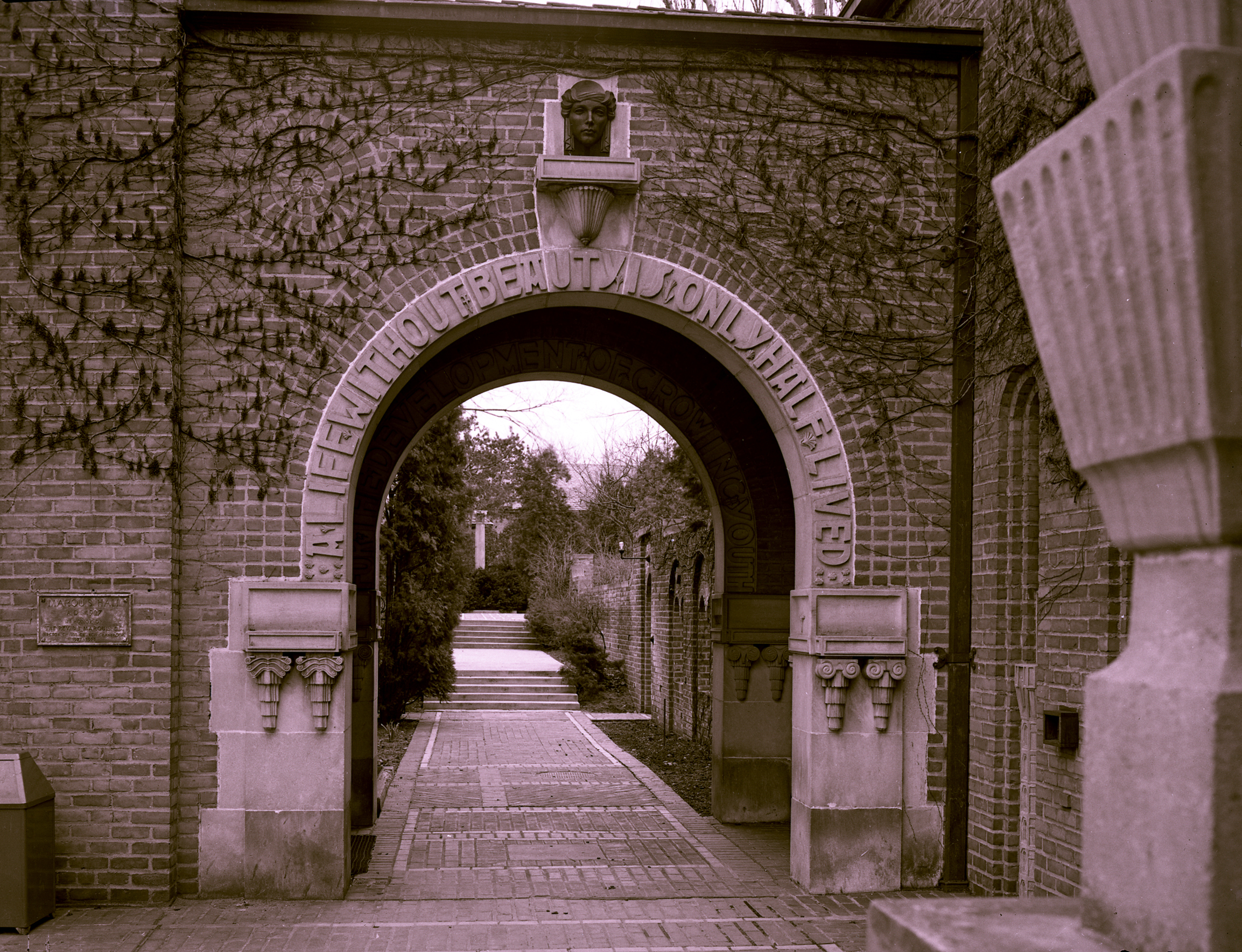
Sometimes we walk past something 100 times and see it but never really “notice” it. For me, it is the masque of “Art”  (left) in the Cranbrook School Quadrangle, near the dining hall. It is a woman’s face beautifully created by sculptress Elizabeth Palmer Bradfield, but, as always, there is more to the story.CR1588-2

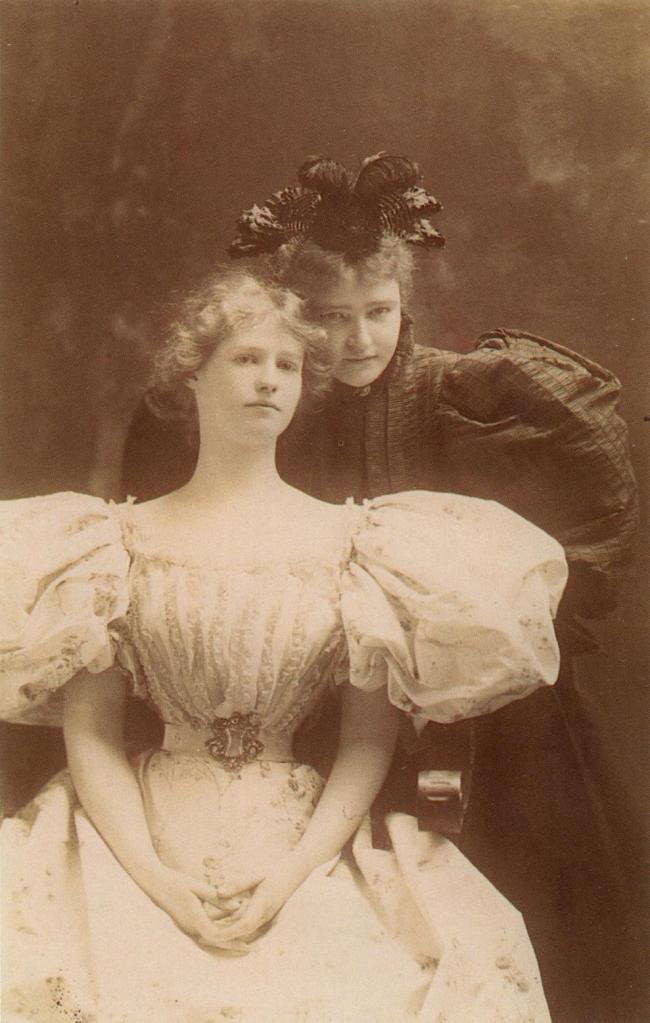
Elizabeth Virginia (Palmer) Bradfield (1875-1954) was born in Port Huron and grew up in Pontiac. Her grandfather was Charles Henry Palmer (railroad and mining developer who established the Pewabic mine in the Upper Peninsula). The Palmer family was well known in Pontiac and their house still exists on Huron Street. In the months before her wedding, Elizabeth traveled to Paris with her parents, where she studied sculpture at the Académie Julian in Paris. In 1896, she married Thomas P. Bradfield.

63541262_133164903264

Elizabeth Palmer Bradfield with her mother, Mrs. Charles H. Palmer, Jr. Source

Thomas and Elizabeth Bradfield lived in Grand Rapids, Michigan, until 1904. The Bradfields and their two children (Virginia Palmer Bradfield Ward and Thomas Palmer Bradfield) later settled in Pontiac, Michigan, where Bradfield lived until her death in 1954.

In 1914, Bradfield began exhibiting her work — first paintings, then sculpture — in the Scarab Club’s Annual Exhibition at the Detroit Museum of Arts, alongside such artists as Myron Barlow, Katherine McEwen, and James Scripps Booth. The Scarab Club honored her sculpture “Myra” with their first presentation of the annual Scarab-Hopkin Prize for Sculpture. She exhibited again in 1915, 1916, 1917, and 1921. In 1921, she won “Honorable Mention” for her bronze sculpture “Baby’s Head.”

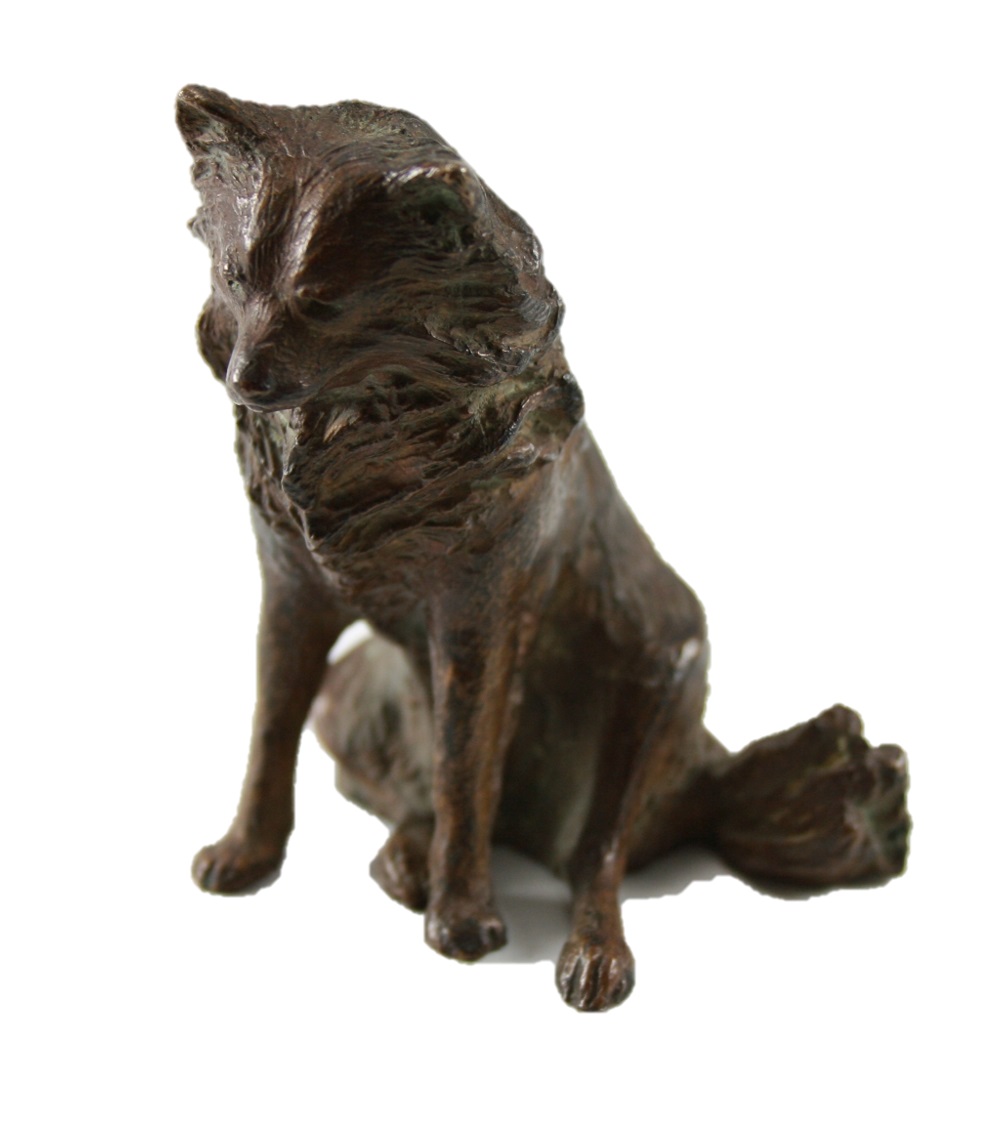
It is likely George Gough Booth met Bradfield at one of these exhibitions; correspondence between them began in 1926 when Booth purchased a small bronze of a dog from her.

Dog CEC 188

Dog, 1912, by Elizabeth Palmer Bradfield (CEC 188).

Booth then commissioned her to model “two large groups of Great Danes ready for plaster cast” to be displayed at Cranbrook School. These sculptures were to be approximately 6 feet high, by 2 feet wide, by 3 feet tall, but subject to Eliel Saarinen’s approval. Bradfield used the studio and architectural office, without expense to her. It is not known if Bradfield ever completed these large dogs, or if Saarinen negated the idea, but the sculptures were never realized in full scale. Milles’ “Running Dogs” probably replaced them on the Cranbrook Campus.

The masque of “Art” was purchased by Booth in October 1927. It was exhibited in two shows. One was in March 1929 – the annual exhibition of the Detroit Society of Women Painters. It was written up in the Detroit News, which said, “The masque has the imponderable quality we find in things of lasting beauty.”

It was then in the first Cranbrook Art Museum for several years before being installed over the “Beauty Arch” in Cranbrook School’s Quadrangle.

CR1588-2.jpg

The “Art” Masque, that “lasting beauty,” hangs over George Booth’s famous quote, “A life without beauty is only half lived” on the so-called “Beauty Arch” in Cranbrook School’s Quadrangle

Leslie S. Mio, Associate Registrar

Related links:

Clothing worn by Elizabeth Virginia (Palmer) Bradfield

Biographical information

Create a website or blog at WordPress.com