Muster the Peacocks!

While researching the step-backed Peacock Andirons at Saarinen House last spring, I enthusiastically mustered a muster of peacocks from across Cranbrook’s campus with the generous help of my colleagues.

“Muster” is the official label for a group of peacocks.

Unlike a gaggle of geese, a muster of peacocks lacks both onomatopoeia and alliteration and implies a level of formality and regimental order in direct conflict with the species’ behavior! That is…judging by the peacocks I’ve witnessed at historic homes and castles throughout Europe, including a visit to Scone Castle in Scotland where an earlier visitor captured these free-spirited troops. Whether iridescent blue or albino, their graceful necks and distinctive crests rise to magnificence when tail feathers are splayed to attract a peahen mate or intimidate predators.

Throughout the ages, blue aka Indian peafowl have symbolized beauty and prosperity and served as sources of artistic inspiration. A favored theme at Cranbrook, the peacock’s dramatic curvilinear lines are represented at each institution across the campus.

One can discover…

WORKS IN METAL:

The famed Peacock Gates designed by Finnish-American architect Eliel Saarinen and fabricated in wrought and cast iron by Oscar Bruno Bach, 1927, marking the former Lone Pine Road entrance to Cranbrook School for Boys:
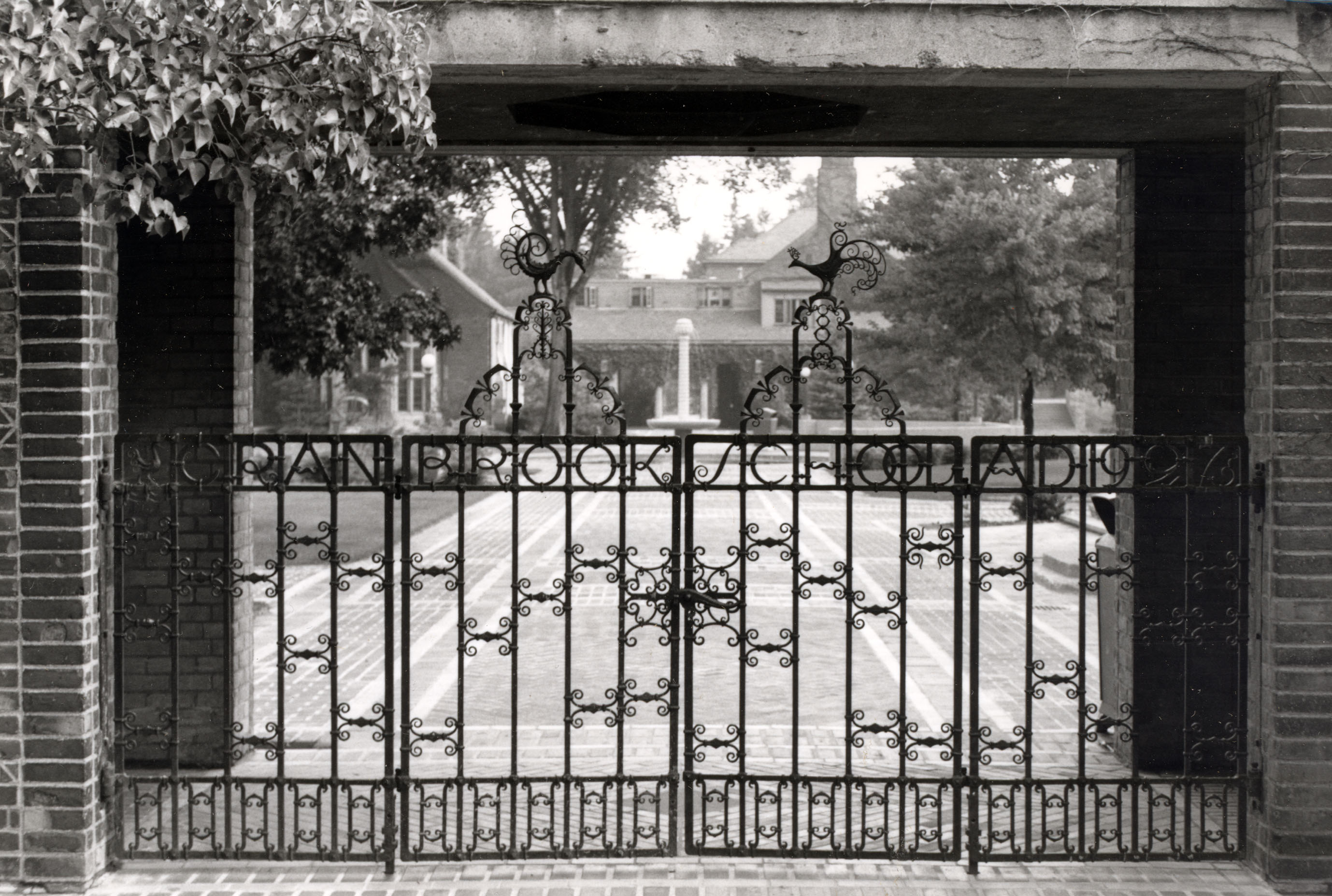
Peacock Gates at Cranbrook School circa 1980. Jeffrey Welch, photographer. Courtesy Cranbrook Archives.

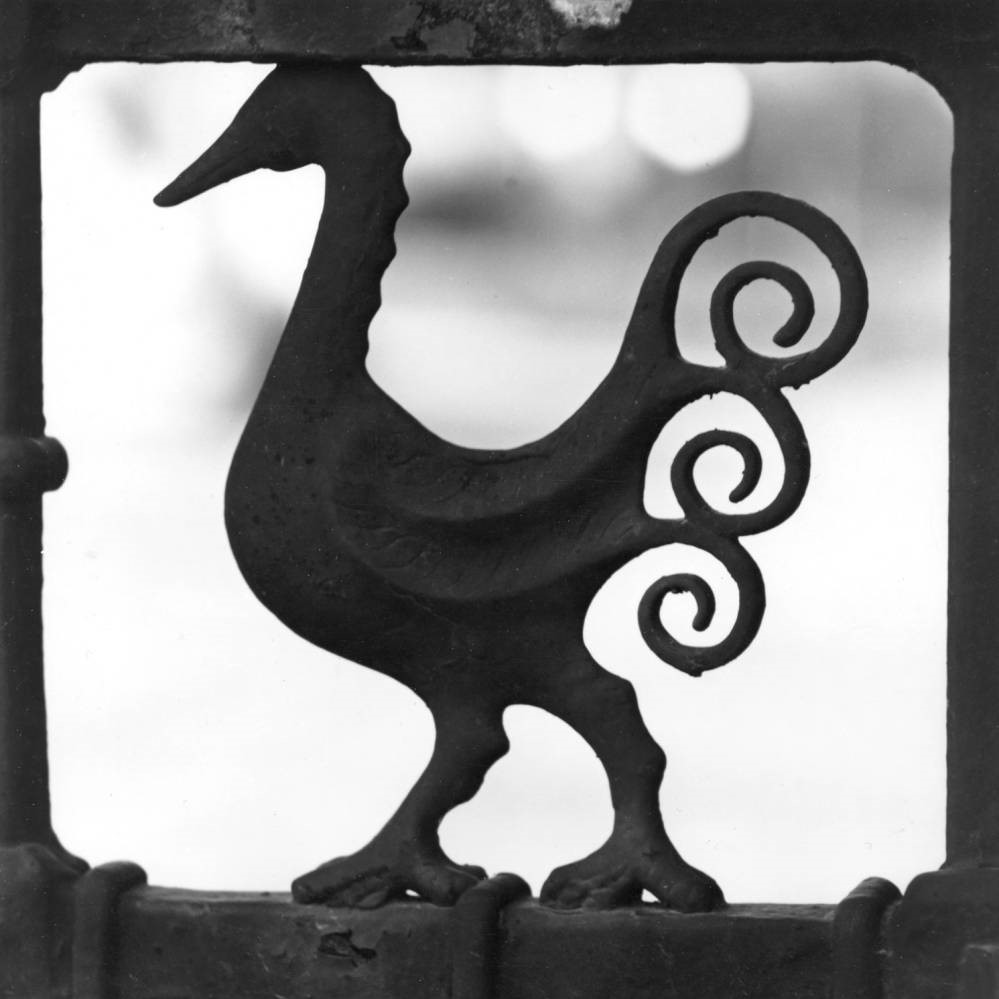
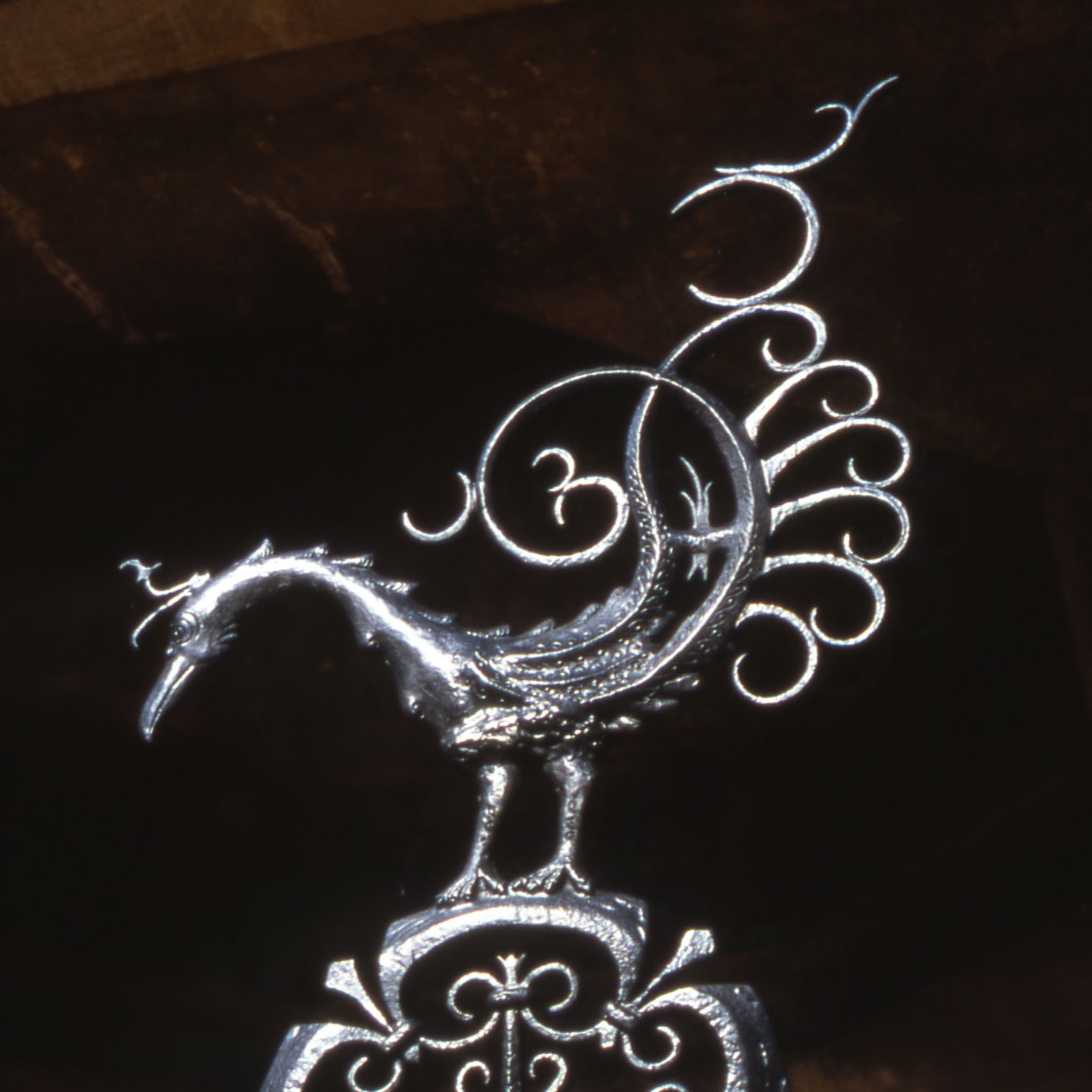
Details of the peacocks in cast iron:
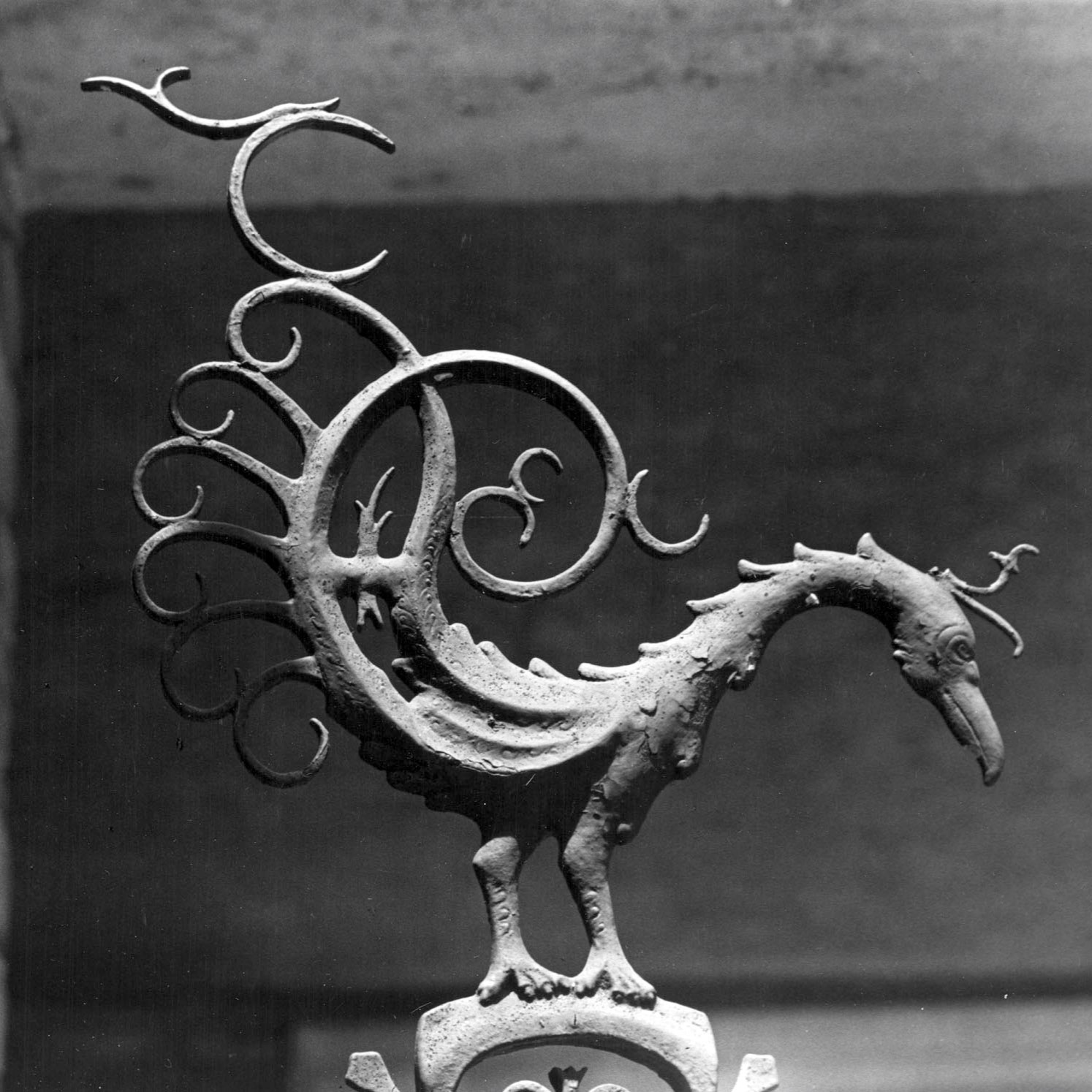
Detail of Cranbrook School Peacock Gate, circa 1935. Courtesy Cranbrook Archives.
Detail of Cranbrook School Peacock Gate, 2001. Balthazar Korab, photographer. Copyright Balthazar Korab | Cranbrook Archives.

Eliel Saarinen’s cast bronze Peacock Andirons, 1928-29, on view at Saarinen House. Collection of Cranbrook Art Museum. Produced by Sterling Bronze Company, New York, between 1928 and 1929, these cast bronze andirons were paid for by the Cranbrook Foundation and entered in the 1928-1930 Arts & Crafts Building ledger on pages 40-41—Date: 1-7-30; No.: 515; Name: Sterling Bronze Co; Remarks: 1 pair/ Andirons for Saarinen Res[idence]; Amount: $152.50 (the equivalent of $2,704 in 2024):
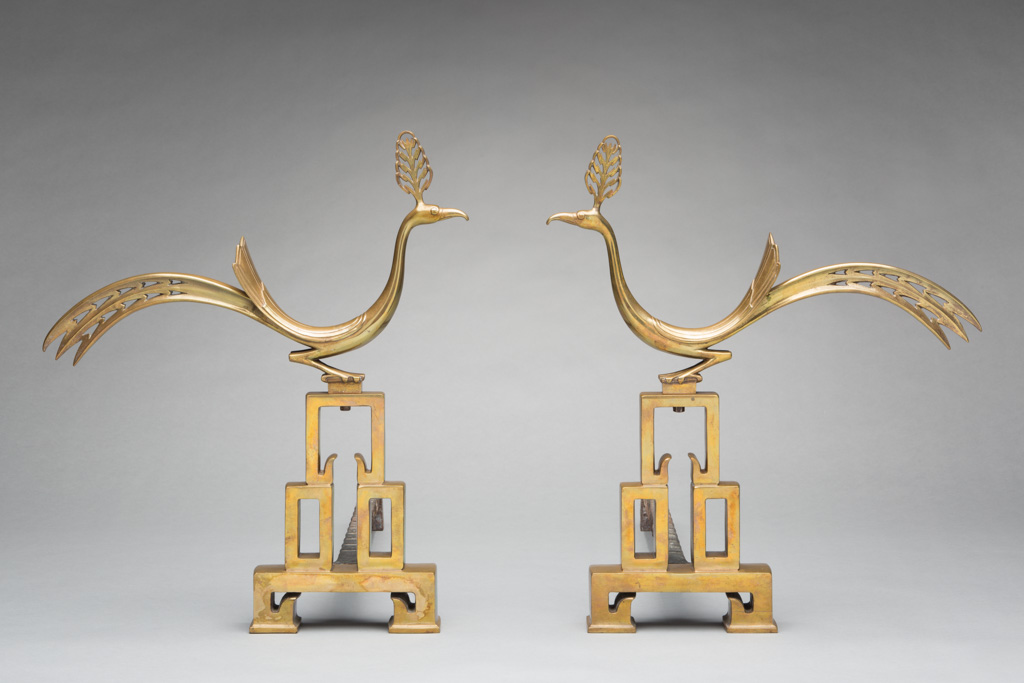
Robert Hensleigh, photographer. Courtesy Cranbrook Art Museum.
Continue reading

Immigrant Stories in the Archives

In the recent issue of the Archives of American Art Journal (Spring 2017), Daniel Harkett’s compelling essay about citizenship papers found in manuscript collections in the Archives of American Art really spoke to me. He wrote “for the many people in the American art world who fought to become US citizens, the donation of naturalization papers to the Archives surely represented an affirmation. Those documents say, “See, I belong here” – in this country, and in the histories the Archives can be used to tell. At the same time they speak of journeys taken, sometimes across vast geographical and cultural distances.”

This essay brought to my mind the many documents we have in our collections relative to immigration and citizenship. Take, for example, the citizenship papers of Cranbrook’s founder, George Booth, who on April 21, 1887 forever renounced allegiance to Queen Victoria and became an American citizen. The document itself, as Harkett pointed out, “marks of a document being carried in a pocket, unfolded, shown, scrutinized, refolded, and put away.” Tattered and torn, and held together with hardened scotch tape, it tells the story of an American citizen who was often asked to prove his citizenship by virtue of this document.

From the George Gough Booth Papers.

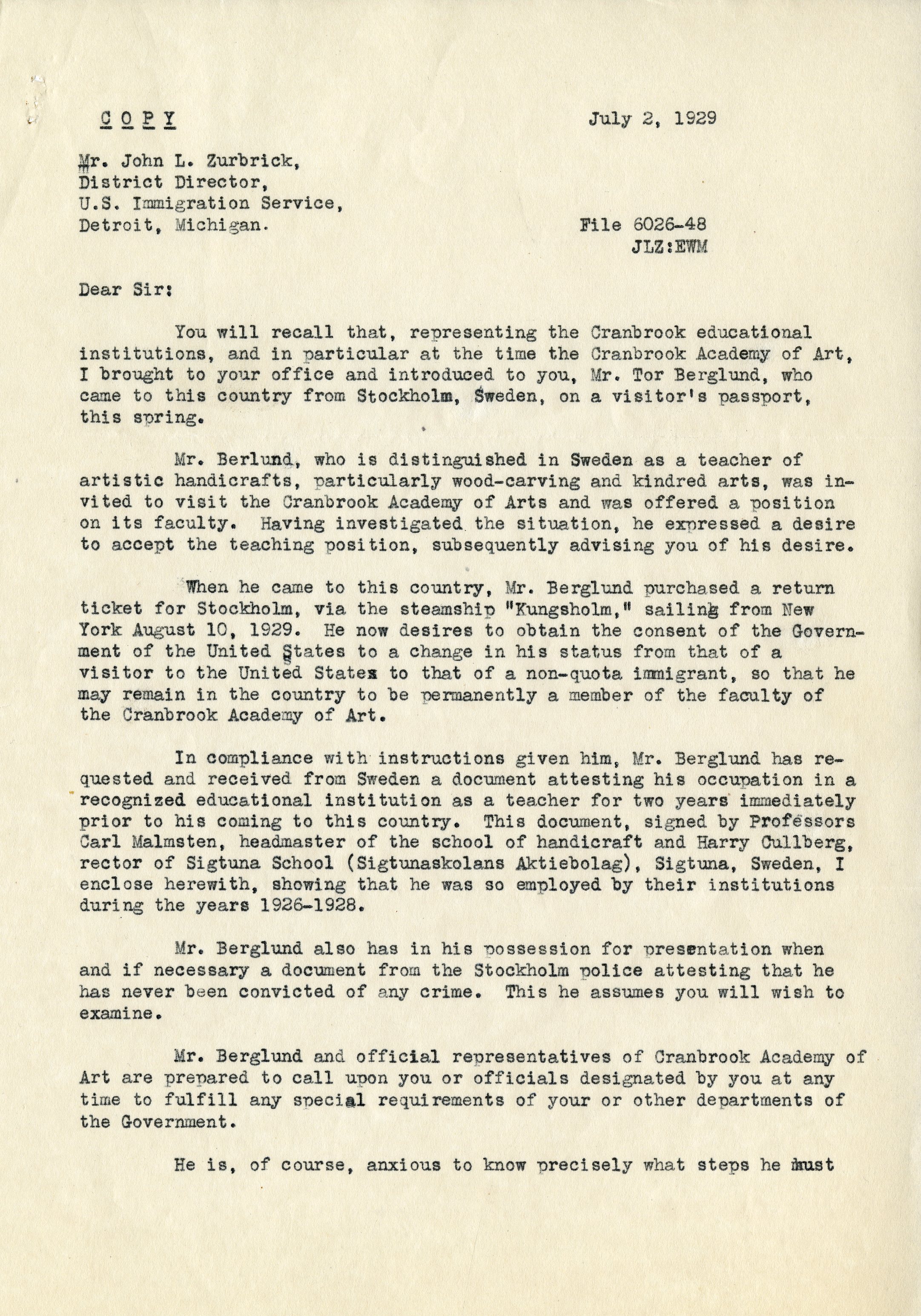
In addition to naturalization papers in our archives, we have other pertinent documents that help tell the immigration story of Cranbrook staff and faculty. The letter below speaks to the lengthy process by which the Cranbrook Foundation sought to assist Swedish cabinetmaker Tor Berglund with changing his immigration status from visitor to that of a “non-quota immigrant.” According to immigration laws at the time, Berglund was required to submit proof that he had been employed as a teacher for the two years prior to his employment at Cranbrook. Unfortunately he was denied, as he had worked for the cabinetmaker Carl Malmsten, not as a teacher, but as a cabinetmaker. Ultimately Berglund traveled to the U.S. Embassy in Windsor, Canada where he received a passport that allowed him to further his stay at Cranbrook.

From the Cranbrook Foundation Records.

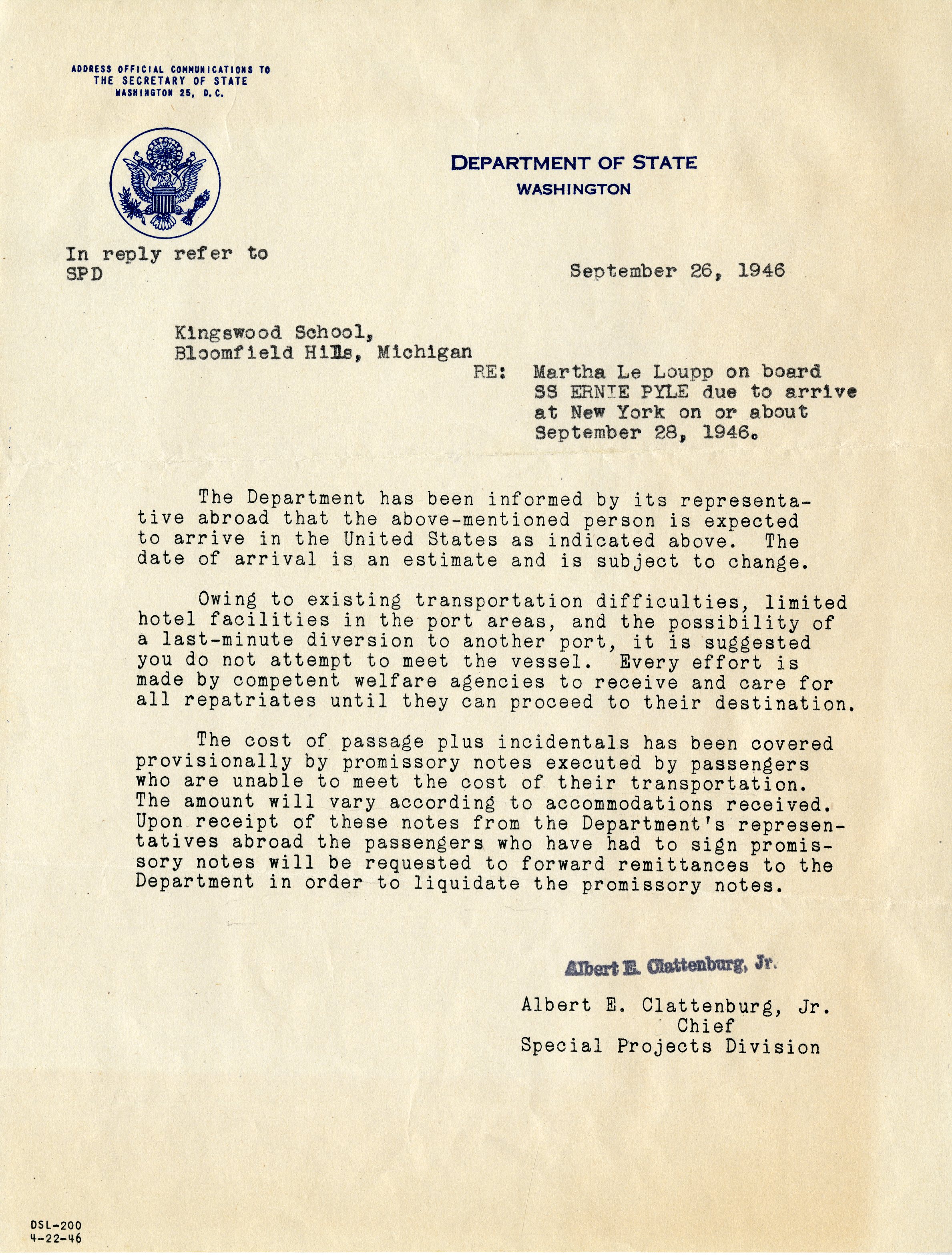
The third document relates to Kingswood School’s French teacher, Marthe Le Loupp. She had returned home to France for the summer months of 1946. Even though World War II was over, securing travel back to the United States was difficult at best. This letter from the State Department shows that the administration of Kingswood School had inquired about Le Loupp’s safe passage back to the U.S.

From the Kingswood School Records.

Genealogists and family historians are widely considered the biggest users of immigration records, including ship passenger lists, in tracing their family history. But historians and scholars also use these records to study a broad range of immigration themes and archives across the country hold countless immigration records in their collections or are devoted exclusively to immigration topics. Cranbrook’s immigrants have their own stories to tell, which can be discovered through documents in our own collections. As Harkett remarked, these documents “speak of journeys taken, sometimes across vast geographical and cultural distances.”

Leslie S. Edwards, Head Archivist

Create a website or blog at WordPress.com