Some years ago, former Cranbrook Archivist, Robbie Terman, posted a short blog post on one of the Titanic’s sister ships, RMS Olympic. In recent years, Cranbrook Archives has responded to numerous requests for images of the Olympic which are preserved in the first volume of Harry Scripps Booth’s Pleasures of Life albums.
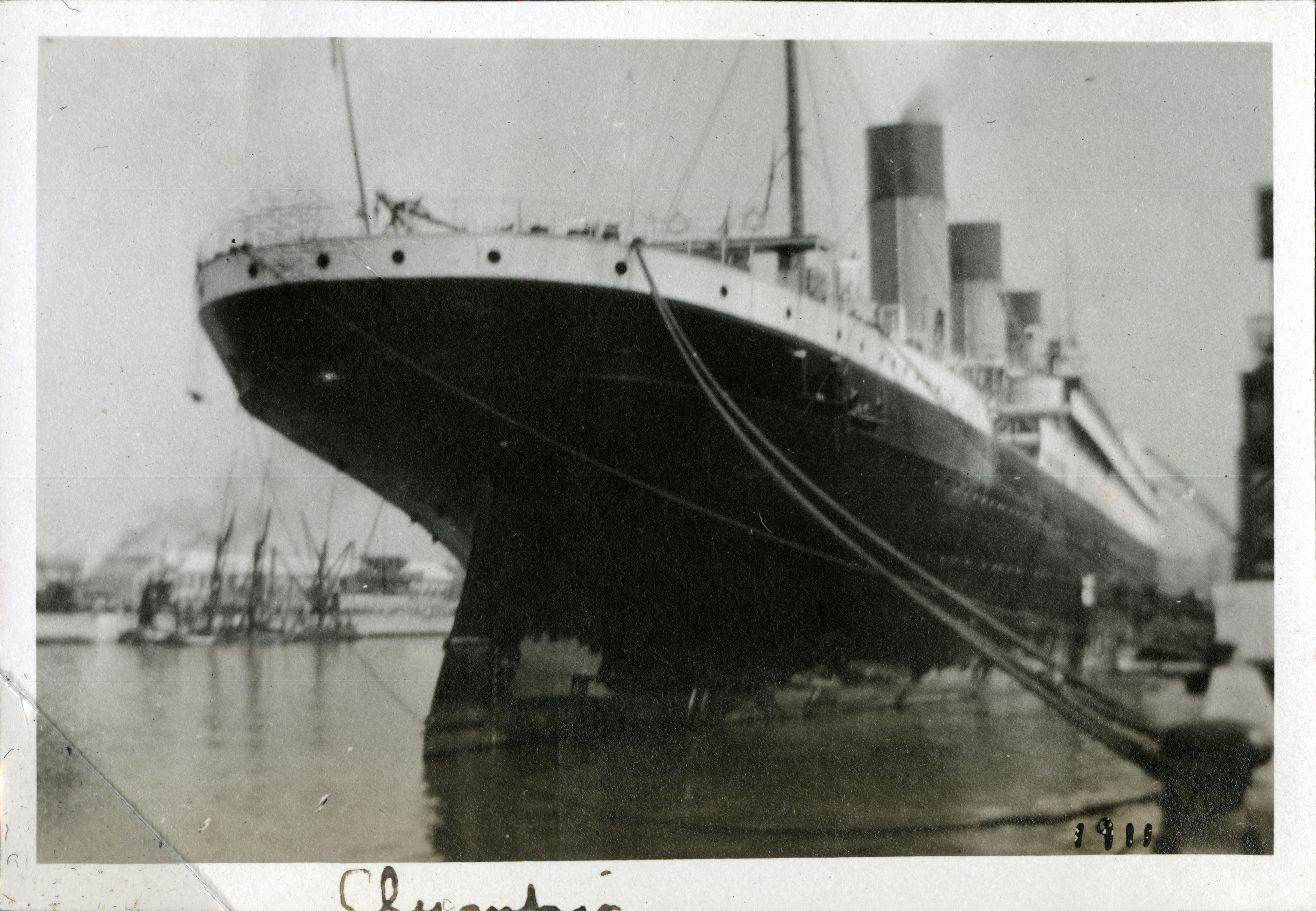
View of RMS Olympic before its first eastward crossing, June 28, 1911. [POL1.14.5]. Courtesy of Cranbrook Archives, Cranbrook Center for Collections and Research.
On June 28, 1911, the Booth family took the first eastward crossing of RMS Olympic from New York to Southampton, England. The family at that time was George and Ellen Booth; James Scripps and Jean McLaughlin Booth who had married the previous year; Grace, Warren, Henry, and Florence. They were joined by their Grand Rapids cousin, Esther Booth.
As I come from a maritime nation, these requests are particularly intriguing to me. I have wondered what other archives we have at Cranbrook to tell the story of transatlantic crossing and explain some of the images. George Gough Booth kept a record of the expenses in planning for the trip. These records tell us that he booked the steamship tickets with the Christian Leidich Travel Bureau in Detroit and he purchased Motor Union badges for himself and James.
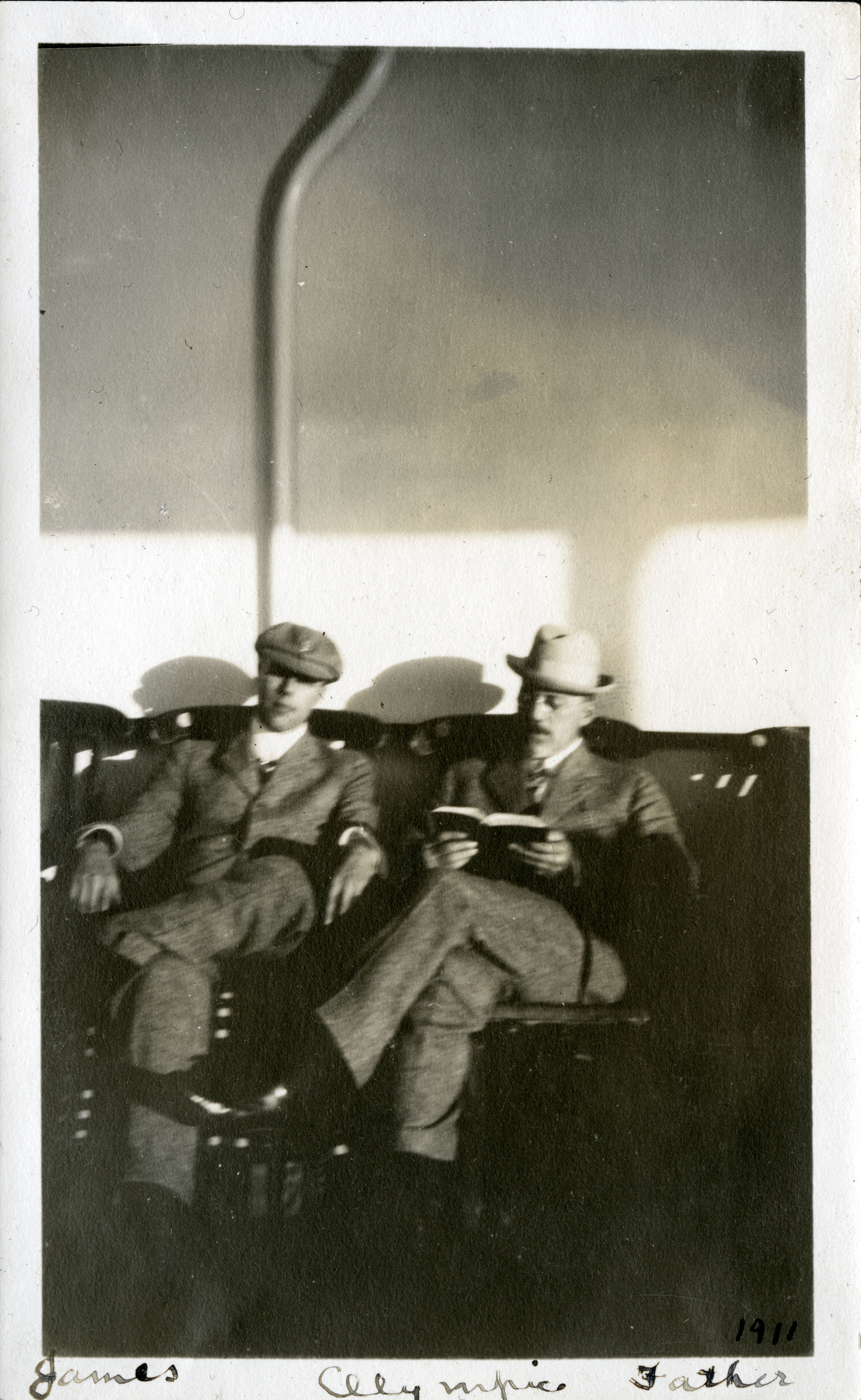
James Scripps Booth and George Gough Booth on the RMS Olympic, July 1911.[POL1.10.2] Courtesy of Cranbrook Archives, Cranbrook Center for Collections and Research.
As Henry recalls in his memoir after listing the family members who sailed,
“That wasn’t enough. Parks, the chauffeur, went; also The Pierce-Arrow, a 7-passenger touring car, and a Lozier Briarcliff, which accommodated four plus one in an airy seat on the left running board, designed for the chauffeur when the “master” took the wheel. That seat was a thrill for the young at heart.”
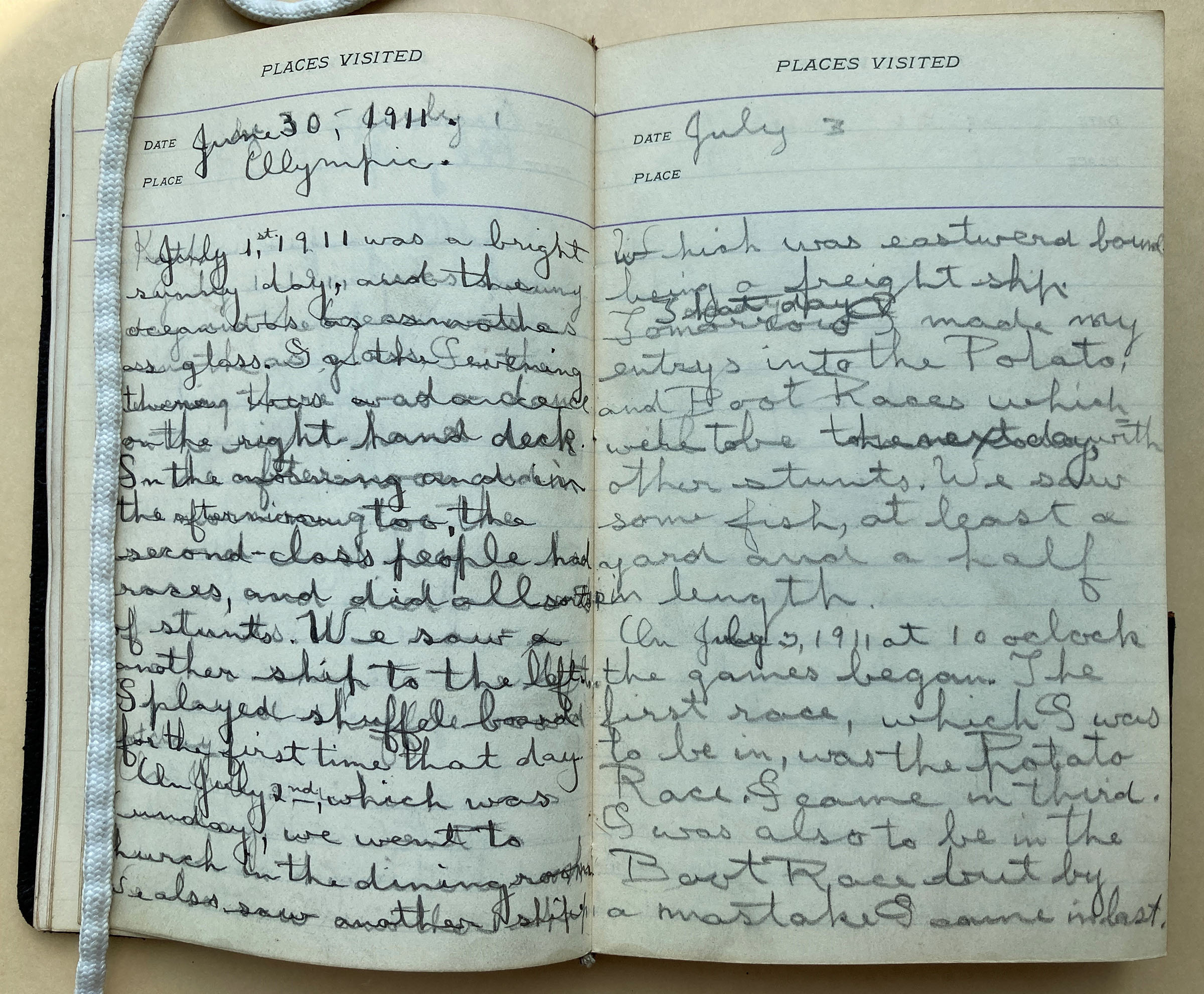
Then I came upon something quite wonderful—Henry’s journal of the sea crossing! He began the trip when he was just 14 years old, celebrating his 15th birthday in August during the vacation. As I read the entries, the images in the Pleasures of Life came alive. Here follows some moments from the journey in Henry’s words.
“Stayed at the Plaza. Esther’s trunk was lost. We found it later. On June 28, we went abord [sic] the great ship, “Olympic.” Henry Scripps Booth, June 27, 1911
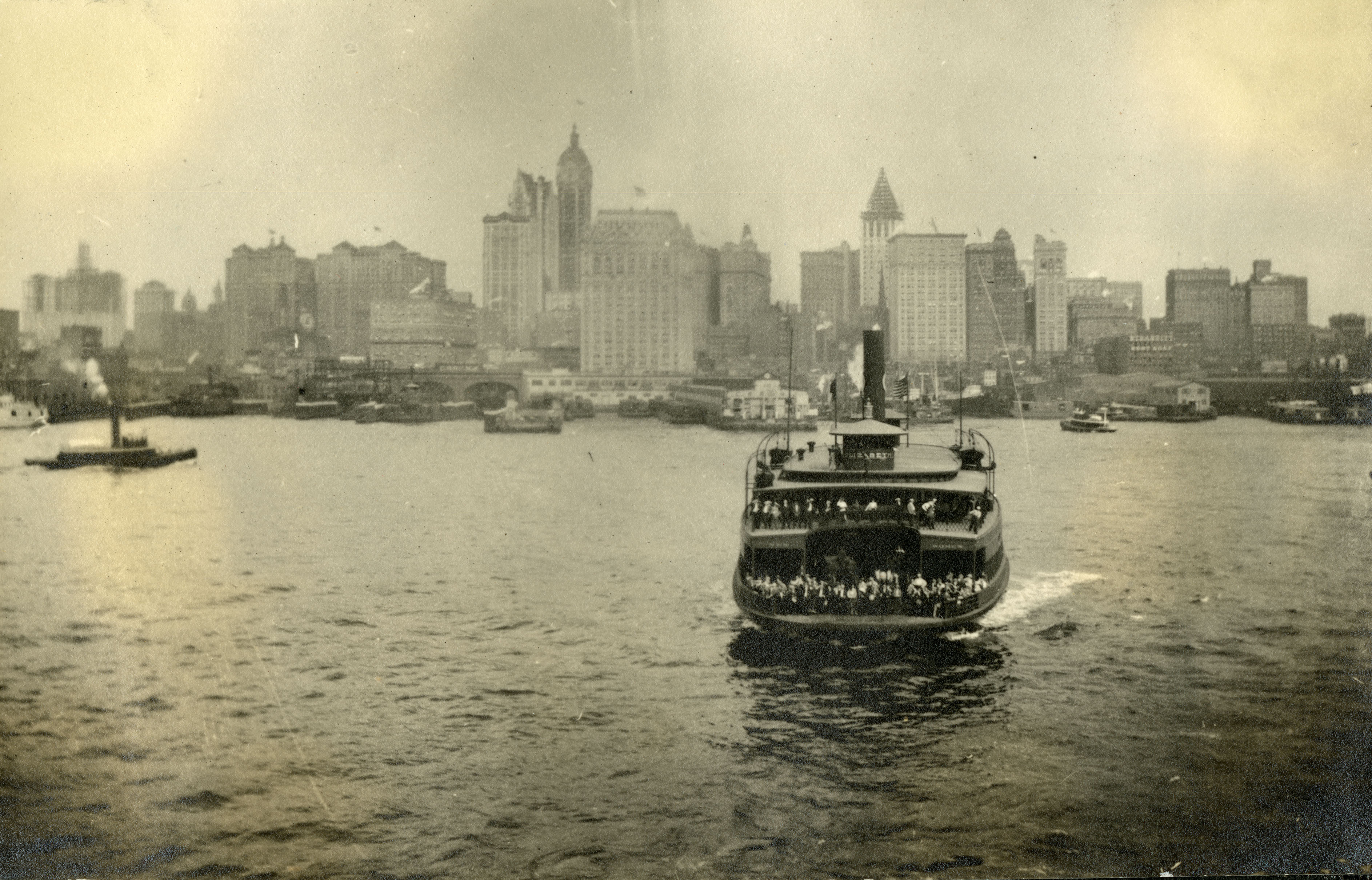
Leaving New York, June 28, 1911. Courtesy of Cranbrook Archives, Cranbrook Center for Collections and Research.
“On June 28, we went abord [sic] the great ship, “Olympic”. The Olympic is a fine ship. Florence was sick first night and day. It was somewhat rough on June 29th. I met a new friend but did not remember his name. In the morning, I could hardly stand, because of the new sensation. I was somewhat sick, but ate lots and I felt fine.” Henry Scripps Booth, June 28, 1911
“On June 30th the Campania was in view. I got acquainted with two girls, Constance Peabody and Katherine somebody.” Henry Scripps Booth, June 30th, 1911
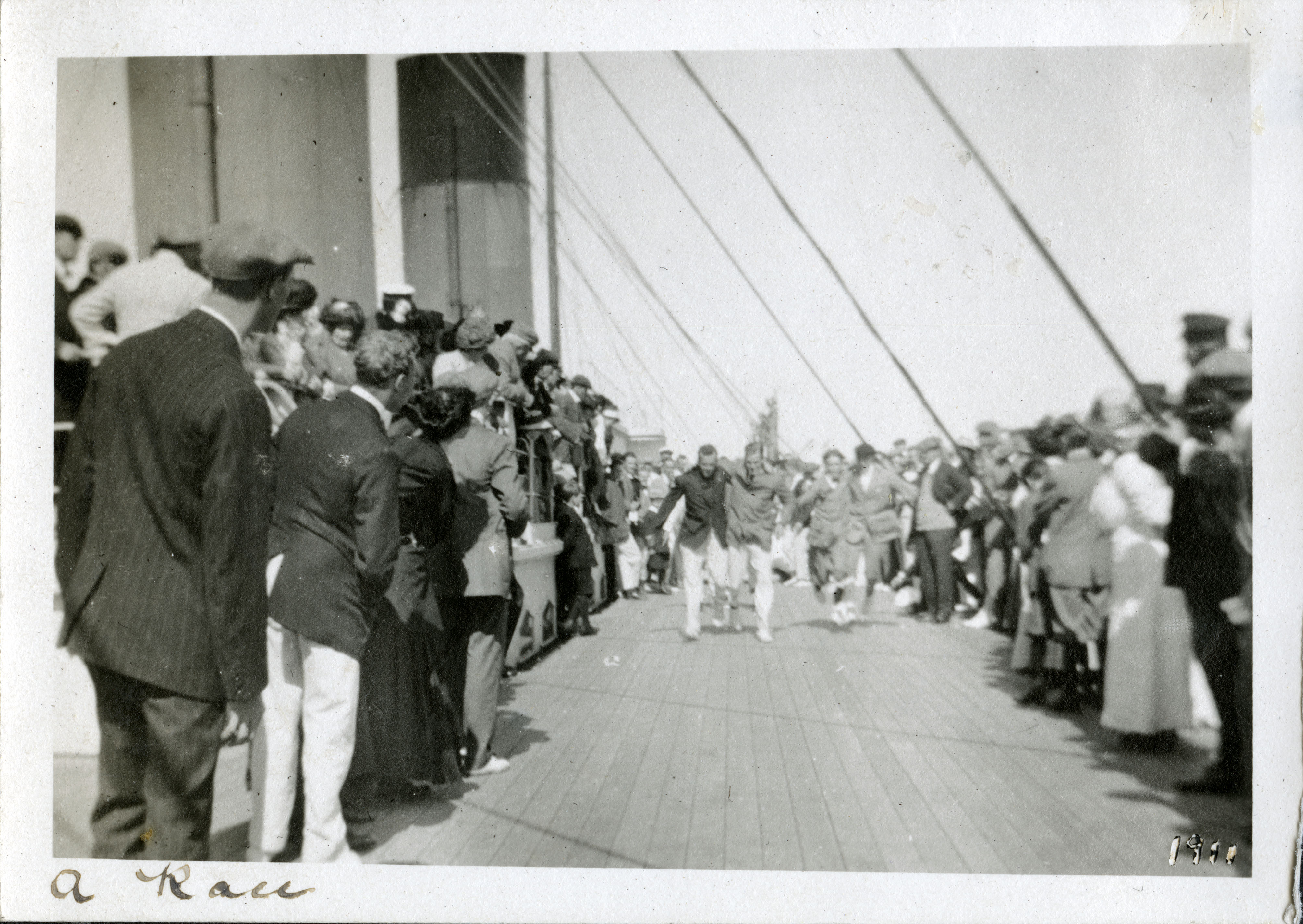
A race aboard the RMS Olympic on its first eastward crossing from New York to Southampton, July 1911. [POL1.11.4]. Courtesy of Cranbrook Archives, Cranbrook Center for Collections and Research.
“July 1st, 1911, was a bright sunny day, and the ocean was as smooth as glass. In the evening, there was a dance on the right hand deck. In the morning and in the afternoon too, the second-class people had races, and did all sorts of stunts. We saw another ship to the left. I played shuffleboard for the first time that day. On July 2nd, which was Sunday, we went to church in the dining room. We also saw another ship [July 3] which was eastwerd [sic] bound being a freight ship.” Henry Scripps Booth, July 1, 1911
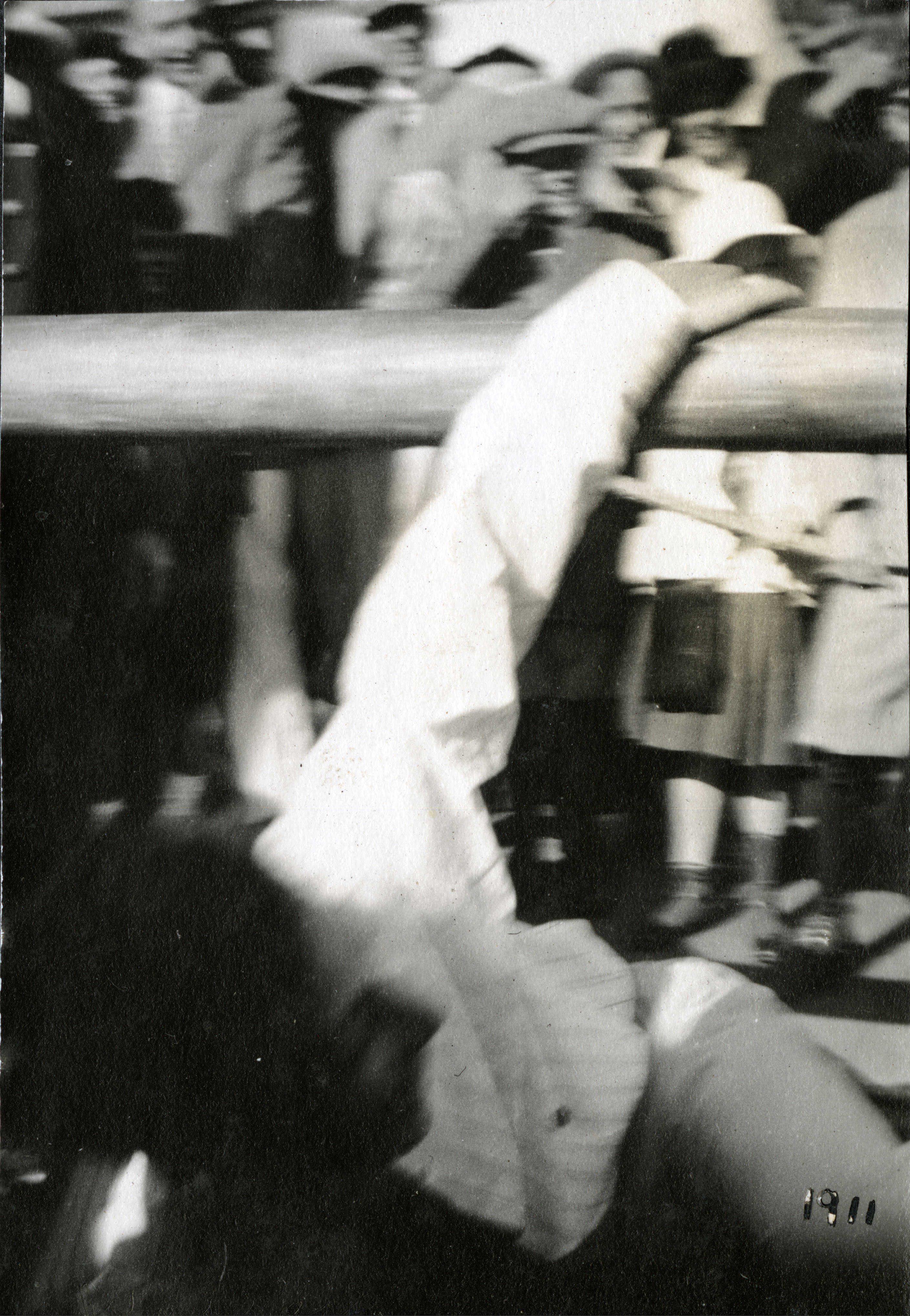
A race aboard the RMS Olympic on its first eastward crossing from New York to Southampton, July 1911. [POL1.12.5]. Courtesy of Cranbrook Archives, Cranbrook Center for Collections and Research.
“Tomorrow That day, I made my entrys [sic] into the Potato and Boot Races which were to be the next day with other stunts. We saw some fish, at least a yard and a half in length.
On July 3, 1911, at 10 o’clock the games began. The first race, which I was to be in, was the Potato Race. I came in third. I was also to be in the Boot Race but by a mistake, I came in last.
After other races came the Standing Broad Jump in which James sliped [sic].” Henry Scripps Booth, July 3, 1911
Warren Scripps Booth during a Spar Pillow Fight aboard the Steamship RMS Olympic, July 1911. [POL1.12.4]. Courtesy of Cranbrook Archives, Cranbrook Center for Collections and Research.
“James and Warren were both in the Spar Pillow Fight. In Warren’s case both fell off the bar at first but Warren was nocked [sic] off a second time. Warren did not win. James stayed on a number of times but was forced to give up. After dinner in the Reception Room the prizes were awarded. Also a dance on deck was given.” Henry Scripps Booth, July 3, 1911
Disembarking the RMS Olympic, July 5, 1911. [POL1.14.1]. Courtesy of Cranbrook Archives, Cranbrook Center for Collections and Research.
“Breakfast was served in the usual manner. After breakfast in the hall on the Sun Deck the band played the national cirs. Every body stood up. In the afternoon, at 4 o’clock we entered Plymouth Harbor. The mailtender got the mail and other boats got passengers off to land. We then started across the channel.” Henry Scripps Booth, July 4, 1911
“After getting off the steamer and having the officers make sure that we had no cigars or liquors with us, we took a cab to the hotel.” Henry Scripps Booth, July 5, 1911
Unloading the cars in France, August 1911. Courtesy of Cranbrook Archives, Cranbrook Center for Collections and Research.
As always, it is a great delight to share with scholars, colleagues, and those who are simply curious, these stories from the Archives. What is preserved in Cranbrook Archives help us to understand and enjoy not just Cranbrook, but any number of historic events from new perspectives.
There are more stories to tell about the family’s sojourn through England and France in 1911, which are both heartwarming and educational. But those tales must wait for another blog post–or for you to schedule a visit and come into the Archives Reading Room!
— Laura MacNewman, Associate Archivist, Cranbrook Archives, Cranbrook Center for Collections and Research
In 1759, British forces led by General James Wolfe defeated the French in a pivotal battle outside besieged Quebec. General Wolfe’s death from injuries sustained on the battlefield, just moments after victory was declared, made him a hero to the British public. The victory at Quebec turned the tide in the Seven Years War for the British, securing Britain’s rule of their new North American territories and paving the way for the eventual creation of Canada and the USA. But what does the Battle of Quebec have to do with Cranbrook?
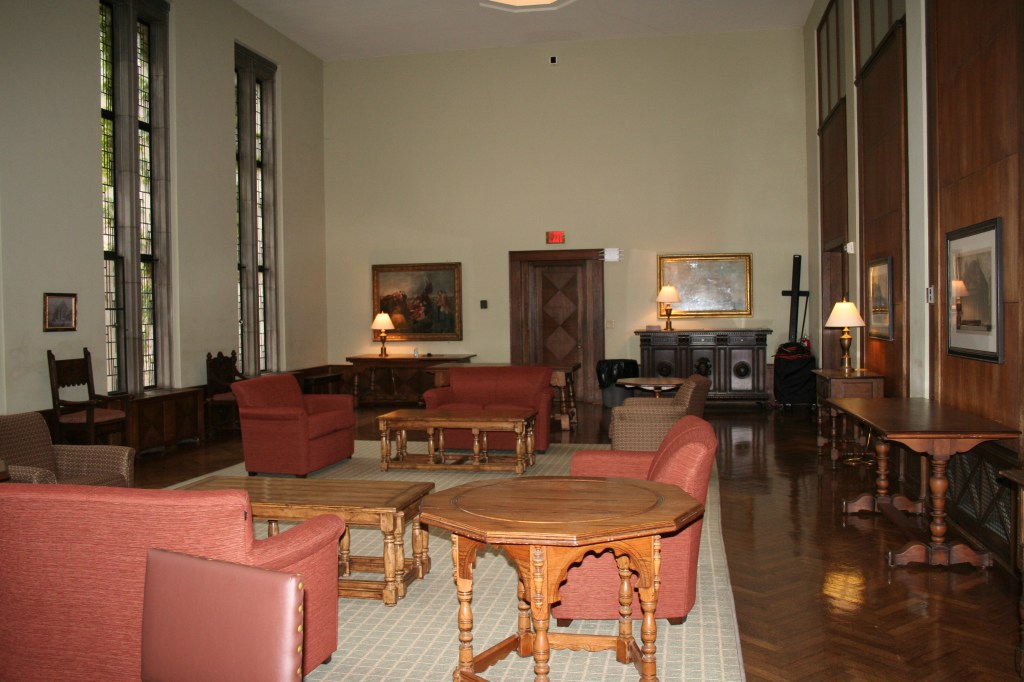
In October 1928, George Booth bought three paintings from a Boston gallery, including one depicting the battle, The Death of General Wolfe, attributed to Benjamin West. He gave all three paintings to Cranbrook School for Boys, where they still hang today, on the walls of Page Hall Commons. Cranbrook’s The Death of General Wolfe is a studio copy of a famous work depicting the end of the Battle of Quebec. The painting represents a turning point both in American history, and in the history of art.
The artist, Benjamin West, was born in Springfield, Pennsylvania, in 1732. Like many artists living in the North American colonies, he was acutely conscious of the shortage of opportunities for training and patronage on this side of the Atlantic. At 31, he left America for Europe, where he embarked on a study tour of Italy, before settling in England. There, he quickly established himself as an artist of skill and imagination. West attracted clients to his studio by deliberately playing up his background as an émigré from the still largely unknown North American continent, even claiming to have had his first lessons in painting from Native American artists. His talent and social charms quickly won him support from colleagues and patrons alike, but it was the triumph of The Death of General Wolfe that made him a national celebrity.
Self Portrait, Unknown 18th century artist, after Benjamin West, circa 1776. National Gallery of Art, Andrew W. Mellon Collection, Washington, D.C.
In 1771, twelve years after the Battle of Quebec, West exhibited a monumental canvas depicting Wolfe’s death on the battlefield at the Royal Academy of Art’s summer exhibition in London. At its debut, West’s painting was lambasted by critics for his then unconventional choice to portray all the subjects of his work in accurate, contemporary dress, rather than classical draperies. However, critical disputes were drowned by popular acclaim.
The painting’s dramatization of an already thrilling moment in recent British history captured the public’s sentiments, while fellow artists praised West’s dynamic composition, effective use of classic postures and gestures, and brilliant color. Joshua Reynolds, the first President of the Royal Academy, who had advised West against his choice to include contemporary dress, confessed that he had been wrong. West’s balance of realistic costumes and props with compositional techniques borrowed from the Italian Renaissance set a new standard for verisimilitude and expressiveness in British history painting.
The Death of General Wolfe, Benjamin West, 1770. National Gallery of Canada, Ottawa. Gift of the 2nd Duke of Westminster to the Canadian War Memorials, 1918; Transfer from the Canadian War Memorials, 1921.
At the center of the eight foot wide canvas, General Wolfe lies dying in the arms of his officers. From the far left, a messenger approaches bearing news of the French surrender, while in the background, windblown clouds and smoke open up to reveal a patch of blue sky, signaling the imminent arrival of good news. Though all accounts of the general’s death place just three men with him, West has ringed Wolfe with fellow soldiers, whose gestures direct our attention to the dying man, and express mingled grief and awe. Wolfe’s own pose echoes that of the dead Christ in the Virgin Mary’s lap in Michaelangelo’s Pieta (1499). His upturned face is illuminated by the sun breaking through the clouds. It is a profoundly unsubtle portrait of a patriotic martyr.
At the left of the group, two figures speak to the specifically North American character of the battlefield. The figure in the green coat, who points over his shoulder at the approaching messenger, is Sir William Johnson, an English immigrant to the North American colonies who established close personal relationships with the Mohawk, and was appointed by their leadership to represent their interests to the British government. Johnson’s negotiations were critical to the British alliance with four Iroquois peoples, who fought alongside the British against the French in the Seven Years War. The unknown Native American man who sits beside Johnson represents the Iroquois contribution to the British war effort. His pensive posture as he watches the dying general is based on two major art historical precedents; the “Belvedere Torso”, a fragment of Roman sculpture at the Vatican Museums in Rome, and Melancholia, an allegorical depiction of melancholy, by Albrecht Dürer. The pose reflects two of the many views of Native American people then current in British society – they were both recognized as valiant military allies, and romanticized as tragic representatives of a culture fated to disappear in the face of inevitable British conquest and the expansion of their colonized territories.
Melencolia I, Albrecht Dürer, 1514. Metropolitan Museum of Art, New York. Harris Brisbane Dick Fund, 1943.
The triumph of The Death of General Wolfe, like the real victory it depicts, is a watershed moment in history – that is, in the history of British historical subject art. Over the next hundred years, history painting would evolve from a genre reserved for the walls of palaces, and confined by the conventions royal aggrandizement and allegory, to a popular genre of narrative art, characterized by dual commitments to historical accuracy and psychological drama. Though West was not the first to introduce modern dress into historical scenes (nor even the first to portray the death of Wolfe in this manner), the extraordinary merits of his work turned the tide in favor of realism and emotionally driven narrative for the genre as a whole.
And When Did You Last See Your Father?, William Frederick Yeames, 1878. Walker Art Gallery, Liverpool. A fictionalized depiction of the interrogation of the young son of a Royalist sympathizer by a Parliamentarian, Yeames’s work epitomizes the 19th century turn towards envisioning history through the lens of individual experiences.
West went on to be appointed court historical painter under George III, and became the second president of the Royal Academy of Art, succeeding Joshua Reynolds in 1792. Though he never resettled in America, West lent his support to many young American artists visiting England, fostering the growth of American art up to the Revolution and beyond.
The Death of General Wolfe Comes to Cranbrook
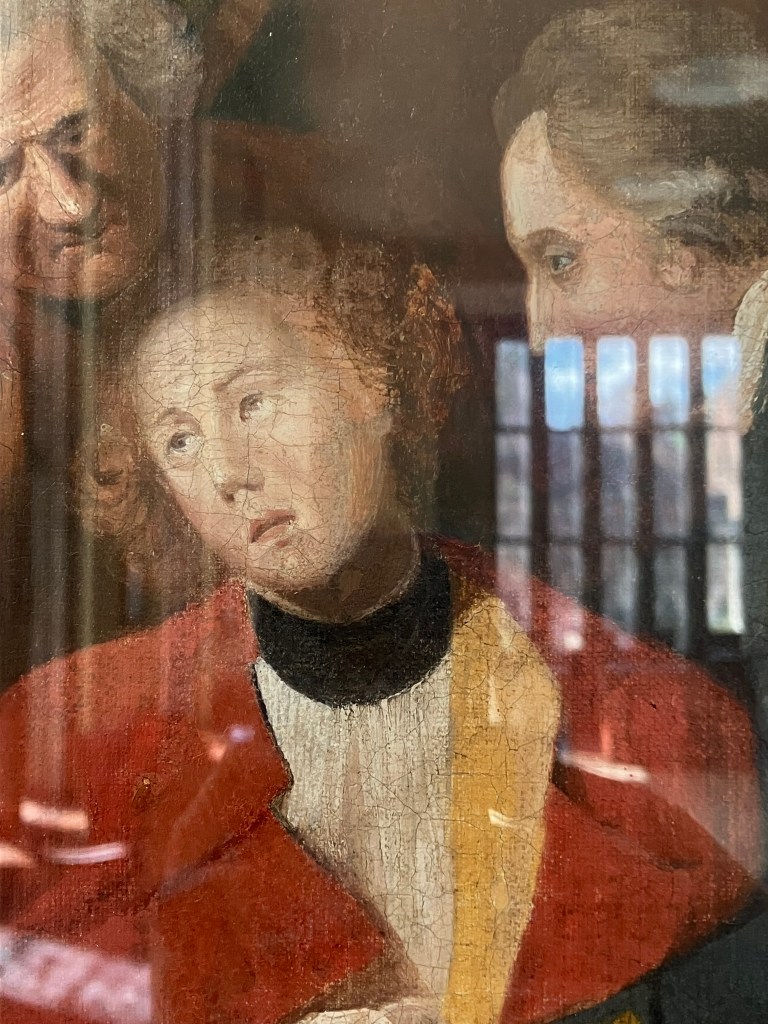
The version of The Death of General Wolfe at Cranbrook is one of at least seven copies of the painting produced in West’s lifetime. Several were painted by West himself, others by studio assistants. We do not know the exact provenance of this painting. The technique reveals it to be the work of a less experienced artist, perhaps a junior studio assistant. The painting lacks the exacting finish that characterized West’s work and was demanded of all artists at this period. In the original work, not a single brushstroke is visible, while in the Cranbrook copy, the artist has not learned to conceal the work of their brush.
The panel is about half as large as the original, slightly taller and narrower in its dimensions. To adapt the painting to a differently proportioned canvas, the artist was forced to compress the space between some of its figures. Many features of the battle in the background, such as press of boats along the river’s edge on the right of the canvas, were omitted altogether. A key figure, the messenger bearing news of victory, is crammed into the left-hand margin, and partially cut off by the frame. The missing details raise the possibility that this work was painted from a print, rather than from close study of the original or a copy by West himself.
Print of The Death of General Wolfe, William Boydell and Rowlands Woollett, after Benjamin West, 1 January 1776. National Maritime Museum, Greenwich, London.
George Booth paid the Vose Gallery $3,000 for this painting – twice as much as he paid for either of the other two paintings, and a remarkable price for a work that is almost certainly not from the artist’s own hand. (The other works were The Clipper Midnight, by Samuel Walters, and a portrait of Washington Irving by John Vanderlyn.) Why was it so important to the Booths that Cranbrook have some version of West’s masterpiece?
Six months before George Booth bought the painting, another version of The Death of General Wolfe was presented to the University of Michigan at Ann Arbor, by William L. Clements. Clements, a noted collector of American artifacts and documents, bought the painting to ornament the library of Americana that he had just given to the university, the William L. Clements library. The painting at Ann Arbor is a full-scale replica of the original work, painted by Benjamin West in 1775 for the Prince Regent of Waldeck, a region in Germany. The library, with its new painting in place, opened to the public in June of 1928, when visitors packed the rooms to see the collection. The Booths may well have been in attendance, and would certainly have been aware of the well-publicized gift. Perhaps it was Clements’s generosity that inspired George Booth to seek out a Death of General Wolfe for the Cranbrook campus as well.
The Death of General Wolfe, Benjamin West, 1776. William L. Clements Library. Courtesy of the University of Michigan.
By giving the painting to the school, George Booth probably hoped that it would add something to the students’ education there. In the most straightforward sense, the painting depicts a critical moment in the history of the United States, Canada, Great Britain, and the First Nations. It also represents a turning point in the history of art, and in the life of one artist in particular. Benjamin West rose from American obscurity to the highest eminence in British art, thanks to his talent, effort, and amiable personality, but it was this painting that secured him national recognition. Throughout his career, he sought to help younger artists to success, teaching many American artists in his own studio. General Wolfe was a hero of his own nation and time, but to an art lover and sometime pacifist like George Booth, Benjamin West may well have seemed like the true exemplar of a life well spent, and an ideal role model for the students of Cranbrook School.
— Mariam Hale, 2023-2025 Collections Fellow, Cranbrook Center for Collections and Research
Nothing at Cranbrook is just one thing. Every tree, garden, rock, and railing has a story–and often times, a name.
In 2022, with the help of an anonymous donor and our friends at RE-TREE, a Camperdown elm (Ulmus glabra ‘Camperdownii’) was transplanted from a local garden to the Meadow in Cranbrook House Gardens, where it joined another established Camperdown elm. Since RE-TREE names all of the trees they relocate, I decided our Camperdown elms needed names, too. I started to refer to the larger tree as Thistle and the smaller tree as Smike to honor the two youngest Booth children, who grew up primarily on the Cranbrook Estate.
Thistle and Smike, the Camperdown elms below the West Terrace, in the Meadow, in Cranbrook House Gardens. Photographed by Leslie Mio, July 2024.
In 1908, George and Ellen Booth and their children, James, Grace, Warren, Harry, and Florence, moved from their home on Trumbull Avenue in Detroit to their new home Cranbrook, in the “wilds” of Bloomfield Township. At the time of the move, James was twenty, only two years away from marriage; Grace was eighteen; and Warren, fourteen, was already in boarding school. Youngest siblings Harry (eleven) and Florence (six) pretty much had the run of the grounds, exploring every nook and cranny (pun intended).
As the family explored and improved their country estate, they also took to naming significant features: every pond, hill, tree, and drive would be christened with its own name. Some names stuck (Angley Woods), others changed (Glassenbury Lake became Kingswood Lake), and others have been forgotten.
From the beginning of Cranbrook’s history in 1904, place names at Cranbrook have evolved and changed. Once the Booths turned the original mill pond into a lake,…
Harry and Florence were no exception; they had pet names for each other. Harry, known as Thistle, received his nickname during an illness. He did not shave for days, and someone said kissing his cheek was like kissing a thistle. We don’t have a record of the origin of Florence’s nickname, but friends and family called her Smike her whole life.
Harry (Thistle) and Florence (Smike) Booth with Spot in 1912. Courtesy Cranbrook Archives, Cranbrook Center for Collections and Research.
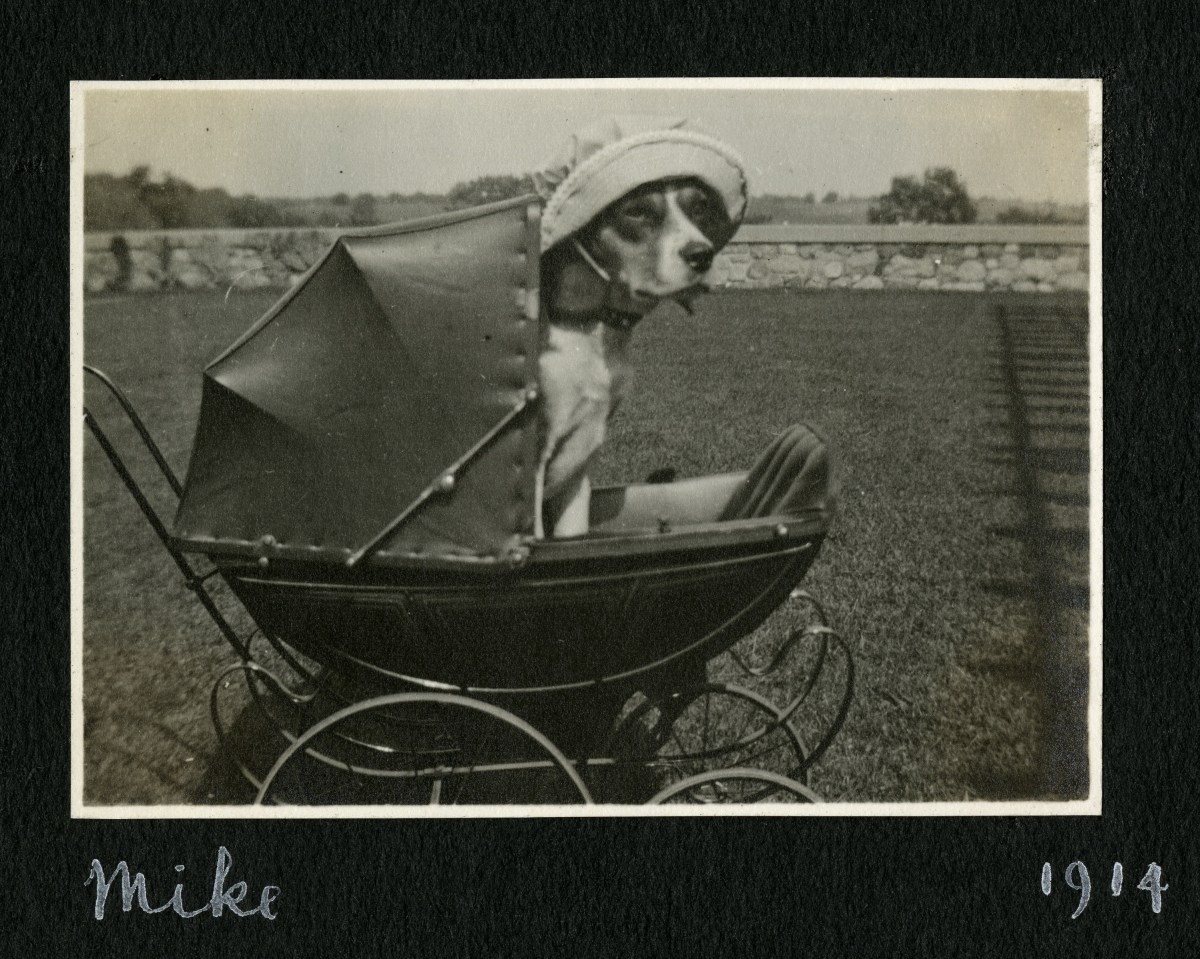
The Camperdown elms’ location below the West Terrace are also significant to Smike’s story. The Booths (especially Florence) loved animals. Family dogs Bud, Sandy, Spot, Prince, Larkspur, and Craig were well cared for and loved. The family beagle Mike was so beloved as to be made to wear a bonnet as he travelled around in a baby carriage!
The biggest canine event at Cranbrook came in 1914. As Harry Booth later wrote, “On June 20, 1914, the Booth family celebrated the 70th anniversary of the family’s landing on North America from England. After a picnic, everyone attended a dog show Florence Booth organized on the new West Terrace.”
The Bloomfield Hills Dog Show, June 20, 1914, on the West Terrace at Cranbrook House. Courtesy Cranbrook Archives, Cranbrook Center for Collections and Research.
Invitation to the Bloomfield Hills Dog Show, June 20, 1914, on the West Terrace at Cranbrook House. Courtesy Cranbrook Archives, Cranbrook Center for Collections and Research.
So, when I look at the two Camperdown elms below the West Terrace–one slightly bigger than the other–I think of all the stories the grounds of Cranbrook hold, and of the happy days Thistle and Smike spent growing, adventuring, and imagining around campus.
Perhaps you’ll agree with my names for the trees, and next time you are strolling in the Meadow at Cranbrook House Gardens, just below the West Terrace, say hello to Thistle and Smike.
– Leslie Mio, Associate Registrar, Cranbrook Center for Collections and Research
Ed. note: Special thanks to Paul Nelson, one of the arborists for Cranbrook House and Gardens Auxiliary. He has been a champion for Thistle and Smike, making sure they are trimmed, watered, fertilized, and kept looking their best.








 Cranbrook Kitchen Sink