July 5th, 2025, marks one hundred years since the groundbreaking for Christ Church Cranbrook. As we mark this milestone in Cranbrook’s history, I believe it is important to reflect on George Gough Booth’s long discernment of this generous gift to the community.
From the beginning, there were always places of worship at Cranbrook. The story that leads us through these spaces to the establishment of Christ Church Cranbrook is especially meaningful to me.

After George and Ellen Booth purchased ‘The Farm’ in January 1904, his father, Henry Wood Booth, was the first family member to live on the country estate. The elder Booth stayed for the month of May with Frank Brose, the farmer, and his family. On May 15, 1904, the first worship service at Cranbrook took place under a tent, on the site upon which the Altar of Atonement now sits, with Henry as lay preacher. He continued in this ministry, also offering Sunday School, at the same spot until 1909. This was the first act of service offered to the Bloomfield Hills community at Cranbrook.

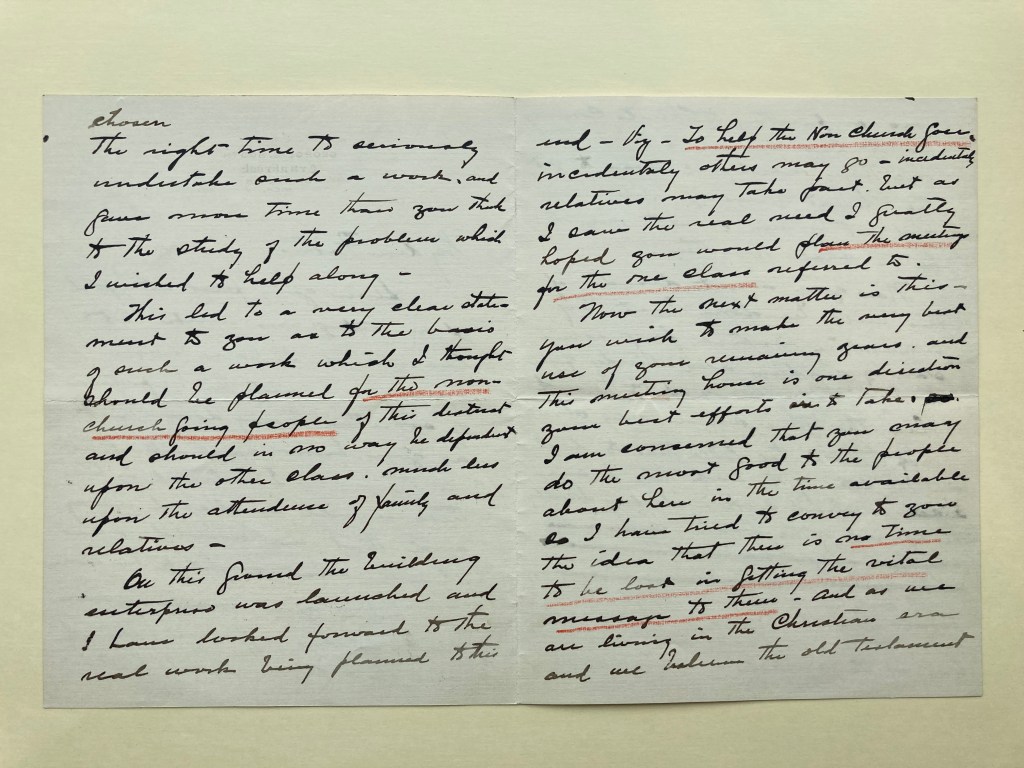


Letter from George Gough Booth to Henry Wood Booth, August 24, 1918. Courtesy of Cranbrook Archives, Cranbrook Center for Collections and Research.
In 1914, George and Ellen considered building a chapel at the site on which the Kingswood flagpole now sits, but the project was rejected, most likely due to the outbreak of World War I. As the war ended, a permanent place of worship and Sunday School was established with the building of the Meeting House.
The letter, above, preserves the dignity with which George writes of the Meeting House “building enterprise” to honor and give freedom to his father’s calling to share the Christ message with the non-church goers in the district. From this letter, we can learn and understand why George built the Meeting House for worship and Bible study through his father’s ministry.


Decoration of the Meeting House by Katherine McEwen, 1918. Laura MacNewman, photographer.
In the letter from George to his father, we also learn that he is prudent in observing the religious character of Bloomfield residents. During the years in which the Meeting House was used for religious services (1918-1926), Mr. Booth would reflect on the visiting clergy and service attendees (both of which came from diverse denominations), from which he would eventually discern the denomination of “Cranbrook church.”
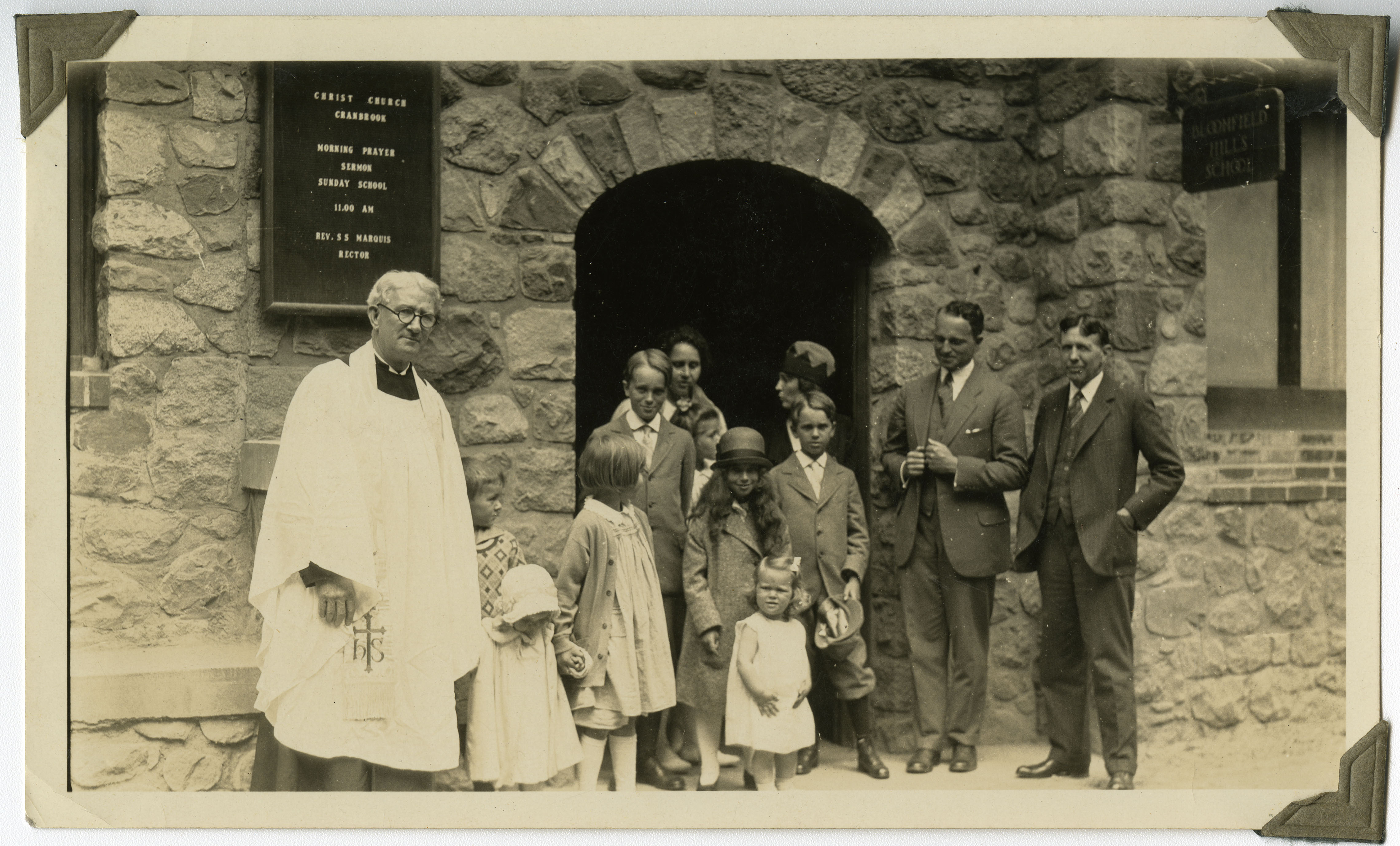
Florence Booth’s former governess, Geraldine Tritton, took on the role of Sunday School teacher at the Meeting House. She also taught six young children in the Oak Room of Cranbrook House, an endeavor which eventually transferred to the Meeting House–a precursor to our contemporary Cranbrook Schools.
A year after the ‘Bloomfield Hills School’ opened in 1922, Mr. Booth wrote to Rev. Dr. Marquis to seek his consideration and counsel in the matter of building a larger church and school complex. They had discussed the matter some months before at Dr. Marquis’ home, but now Mr. Booth was decided in it, and he asked Dr. Marquis if he might think of him, “as the center of such a project.”
Years before, Booth and Marquis had had a “heated debate” at the door of Detroit’s Episcopal Cathedral Church of St. Paul in 1912, subsequent to a sermon on the newspaper industry. However, it was through the years of visiting clergy at the Meeting House that Mr. Booth really came to know Dr. Marquis.

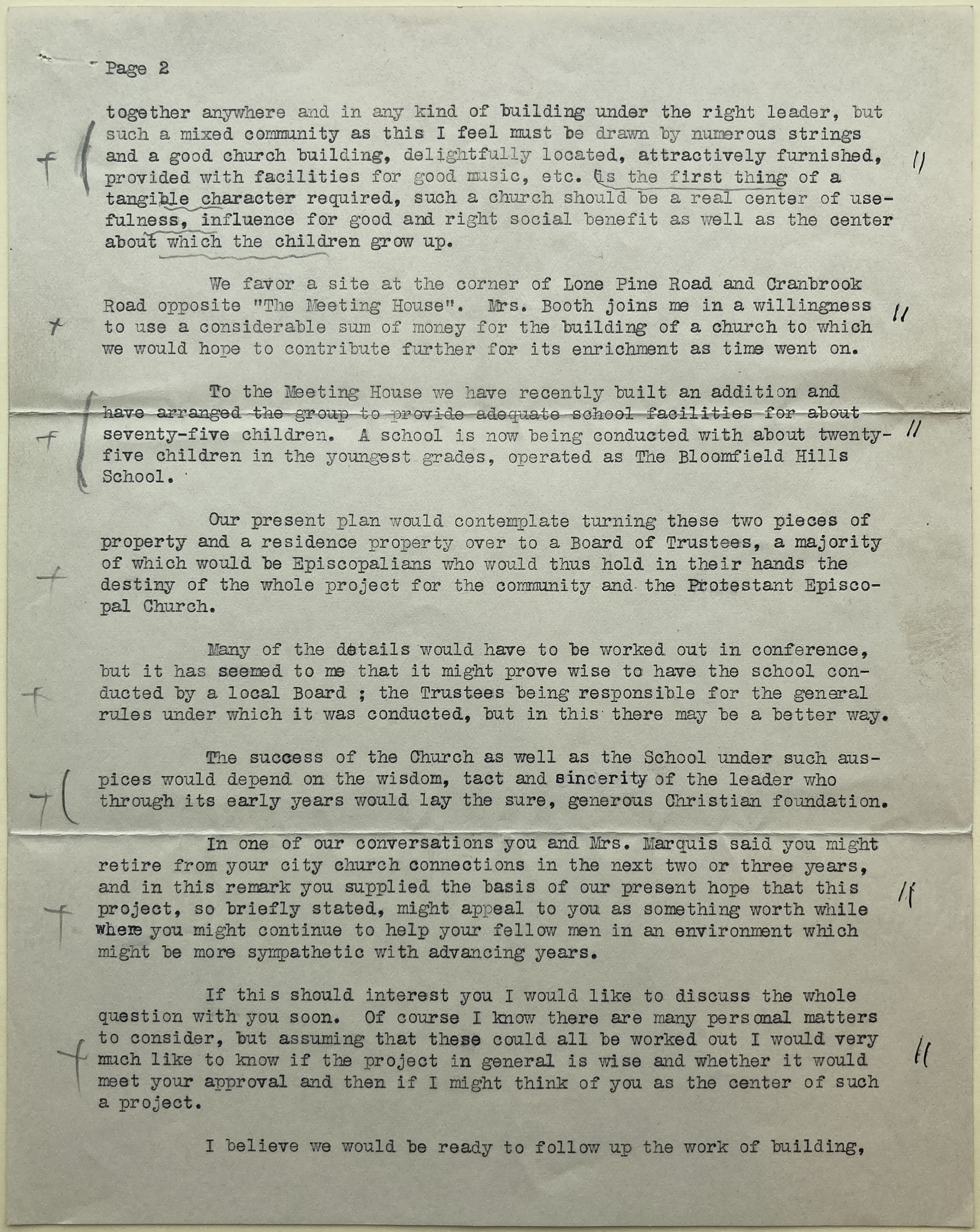
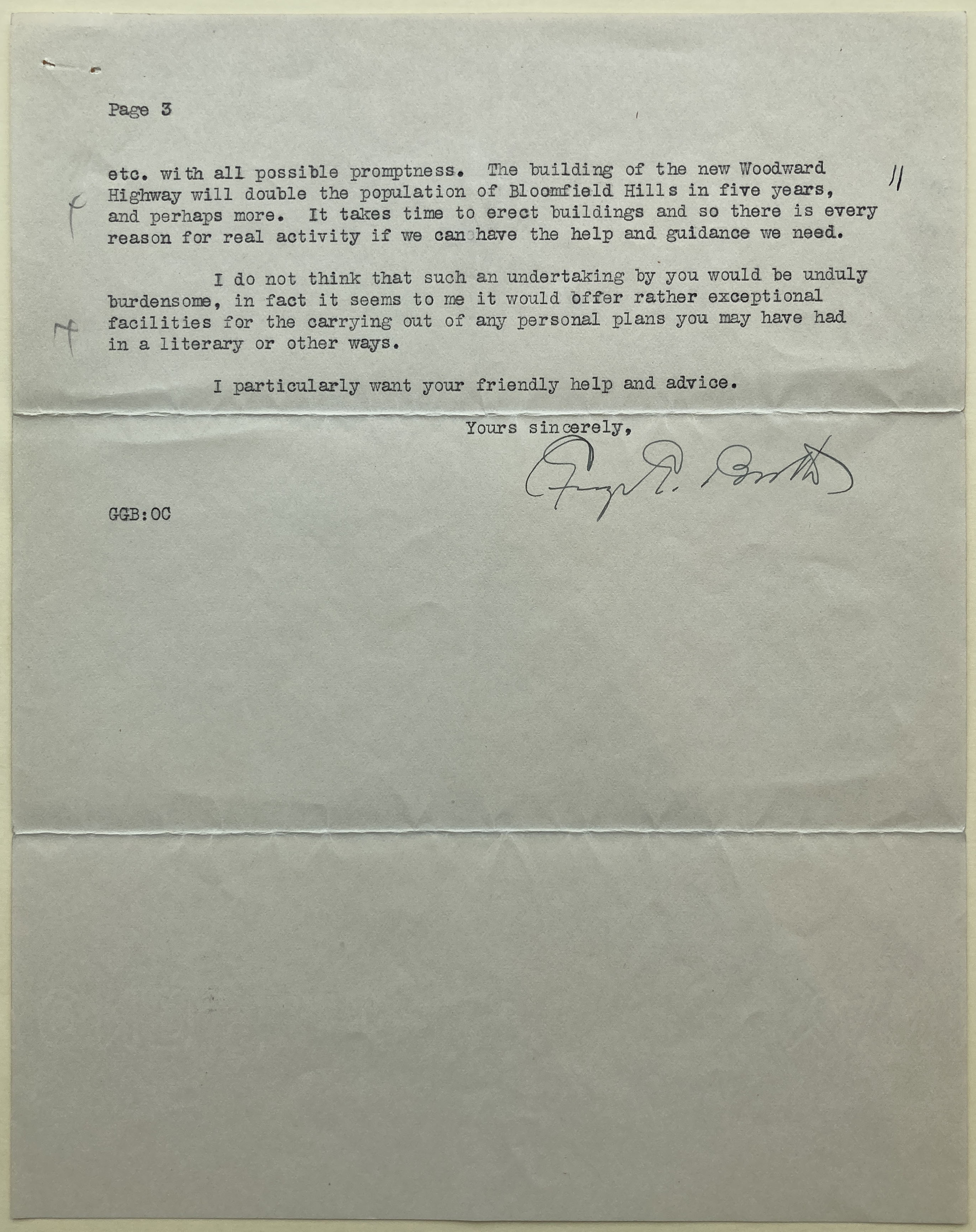
The October 1923 letter from Booth to Marquis reiterates the problem of the “mixed character of the population” which had engaged Booth’s discernment prior to establishing an Episcopal Church. It is one of many letters which document his trust in Marquis’ wisdom as a clergyman teaching the way of Christian life. At that time, the Booth family and others in the district traveled to Pontiac or Birmingham to attend church, having none in Bloomfield. There was a growing need for a church here.
The Rt. Rev. Herman Page, Bishop of the Protestant Episcopal Church, made the first steps in the establishment of the Christ Church Mission with the appointment of Rev. Dr. Marquis as Missionary-in-Charge on November 29, 1924. He had also appointed the Architectural Committee (George G. Booth, Rev. Dr. Marquis, and Henry S. Booth) and the Finance Committee (Clarence H. Booth, Frank L. Bromley, Robert C. Hargreaves, Gustavus D. Pope and Harry L. Wallace). The Finance Committee deliberately included non-Episcopalians, such as Mr. Booth’s Baptist cousin Clarence, which established the open stance of Christ Church as an Episcopal Church that welcomes all denominations and all faiths.
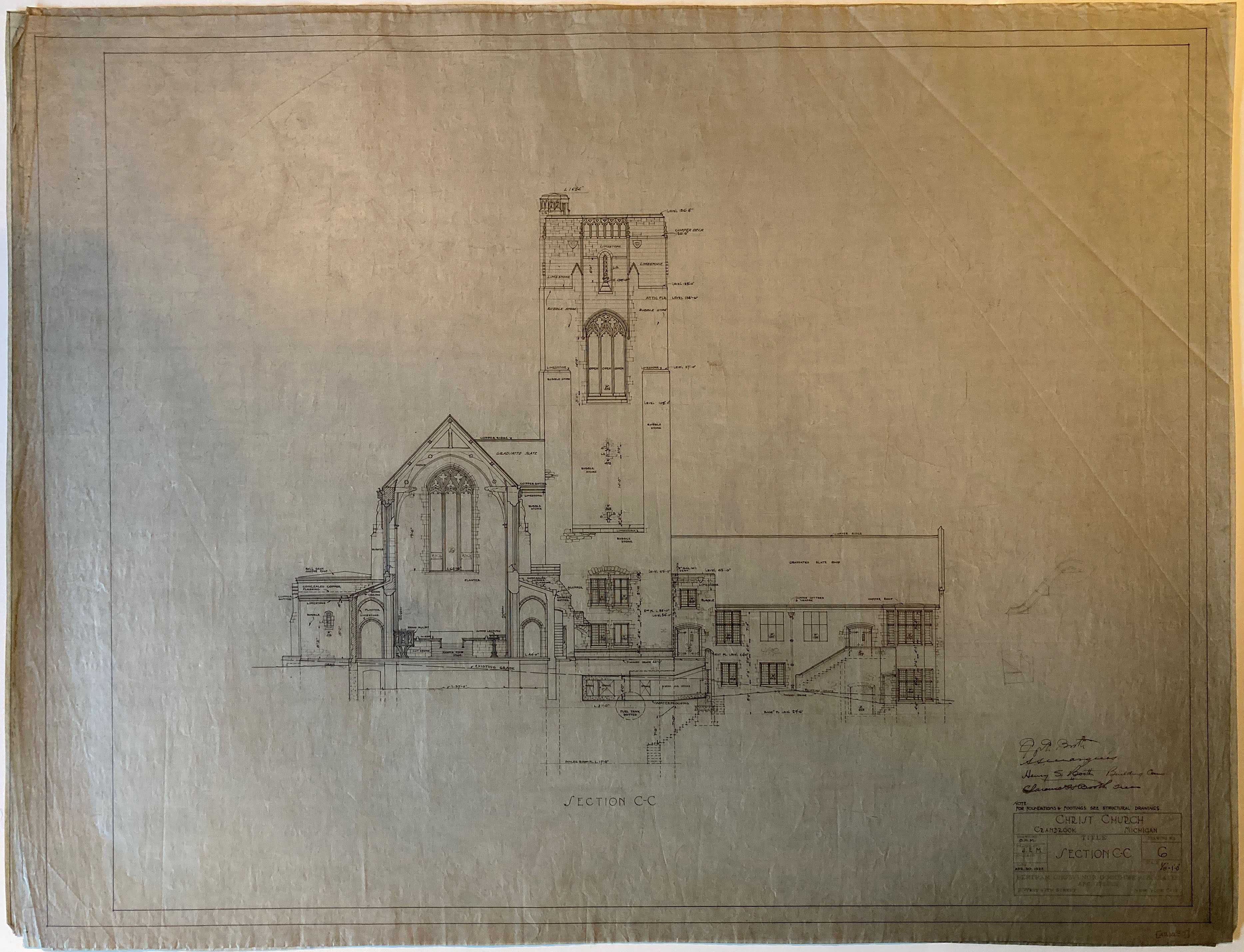
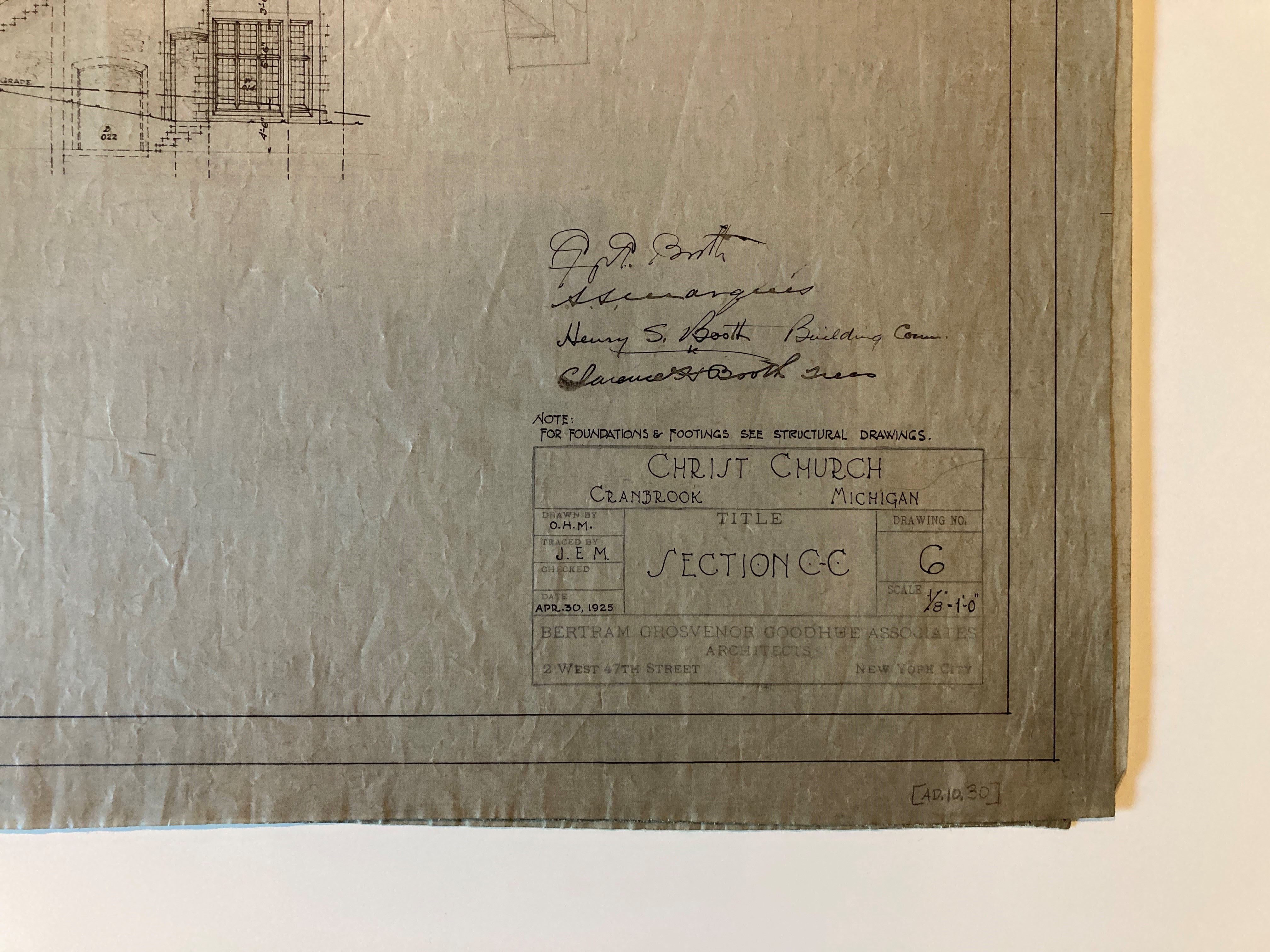

On May 18, 1925, the Finance Committee studied the plans for the church and also discussed the plans for the Boys School. The Committee carried a motion that “a careful study of the Boys School from an architectural as well as the practical operation of such schools was to be undertaken by Rev. S.S. Marquis and Mr. Harry Booth.” The minutes of the Committee also record that,
It is the expectation that Christ Church, Cranbrook, is the beginning only of a large educational development… The ultimate development of Christ Church, Cranbrook, and the schools to be allied with it lies in the future, but it is not too much to expect that these institutions will be of great benefit to the community, and their influence for good far reaching.
Christ Church Cranbrook was officially underway.
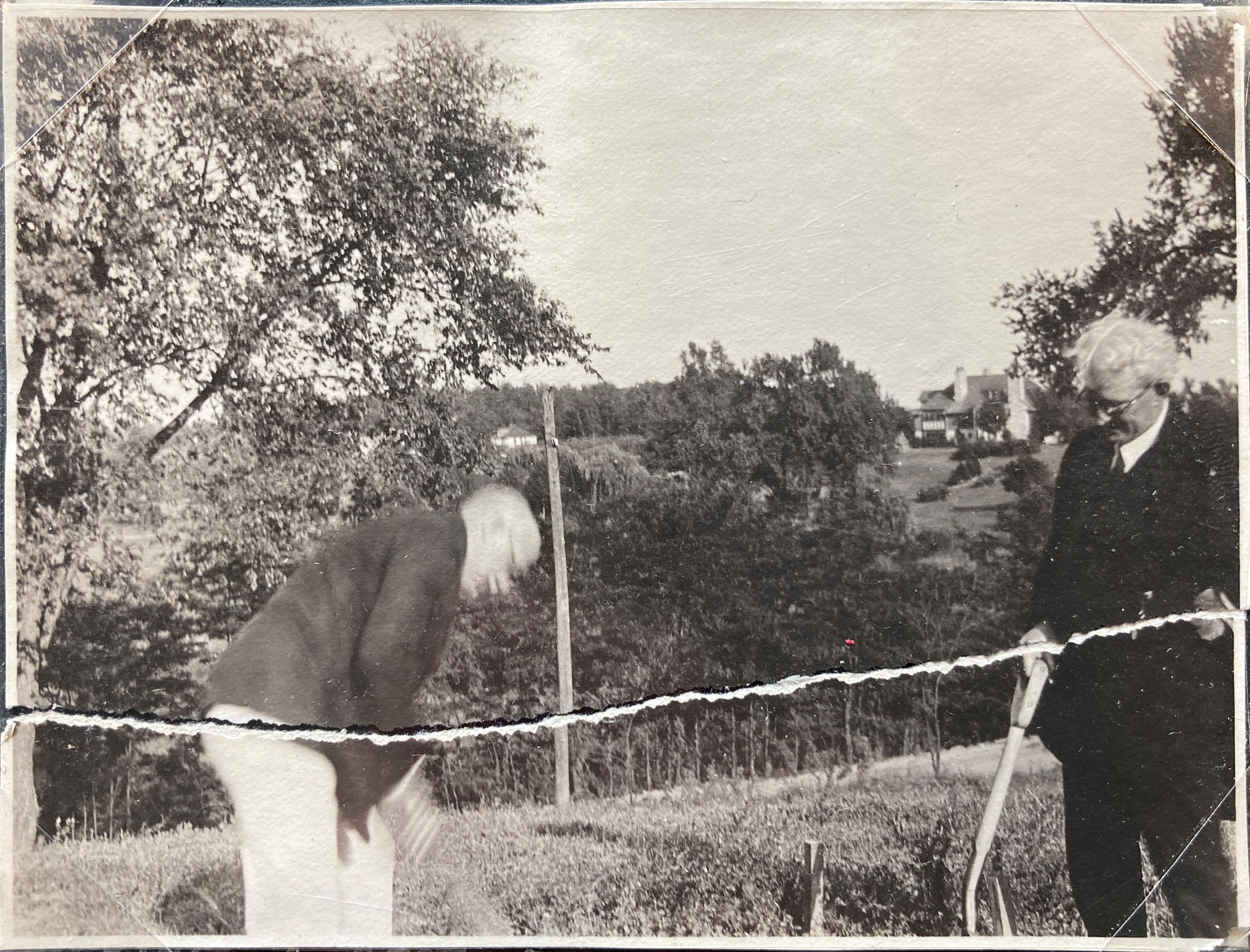
The Groundbreaking took place during the afternoon of Sunday, July 5, 1925, with about seventy five persons present. Following a mission service in the Meeting House, the congregation walked to the brow of the hill on the church site (Henry Scripps Booth later suggested it was about where the tower now stands) and they broke ground. He recalled that, “the earth was so hard it was impossible to put in a spade,” so his father used a pick for about ten minutes before Dr. Marquis managed to remove a spade full of earth. Mr. and Mrs. Booth followed as did others, including Gustavus Pope.
Among those present were the Booth children and their spouses, Clarence and Clara Booth, Charles Henry Booth, Kate and Frank Bromley, Mary (Soper) and Gus Pope, the Glancy family, Mrs. John T. Shaw and her children, Amy L. and Walter Morley, William T. Barbour, J. Robert F. Swanson, Julia Klingensmith and her sister, and Euphemia F. Thompson. Henry Scripps Booth recalled that Dr. Marquis collected a bottle of soil from the groundbreaking which he used in preaching to the children.
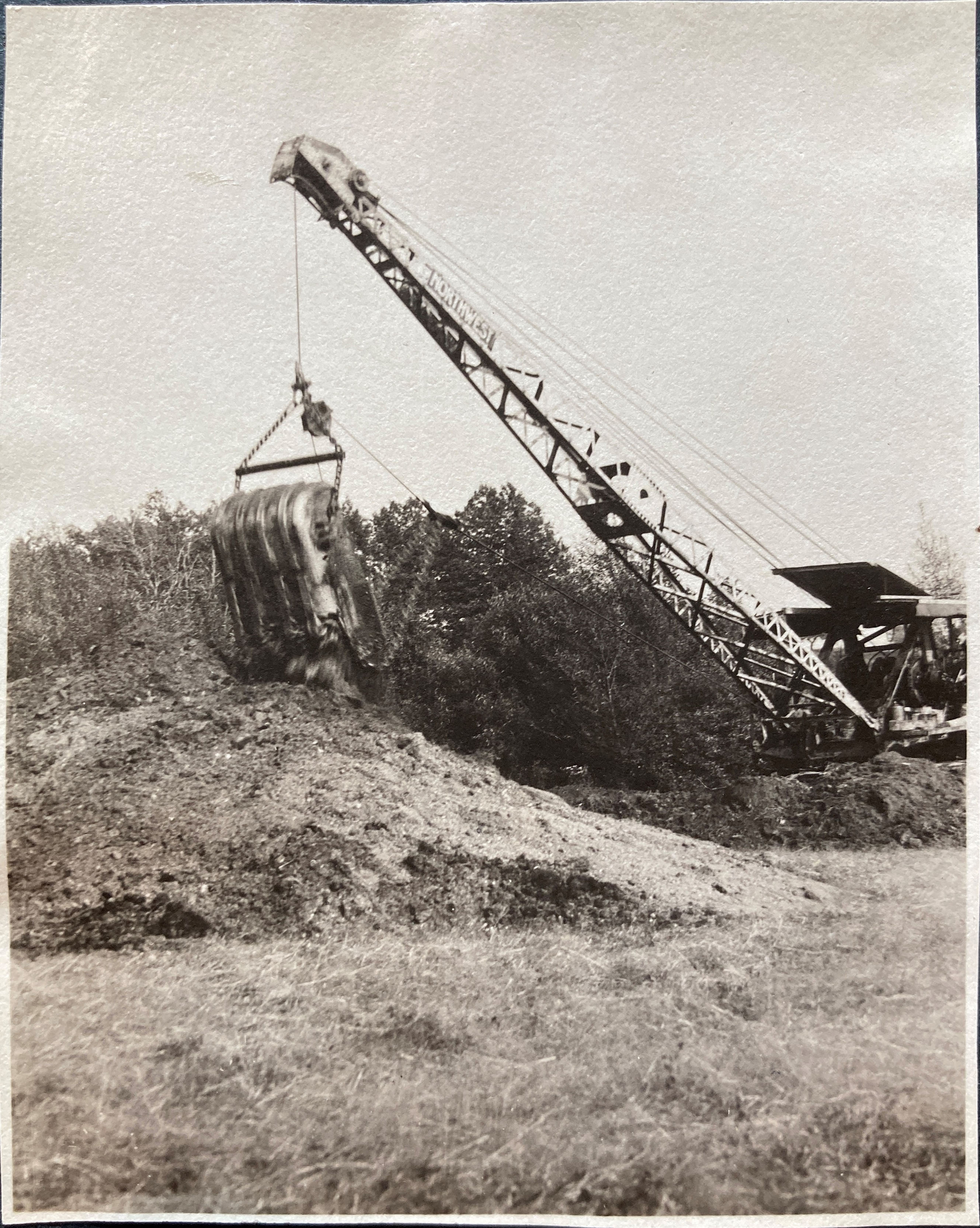
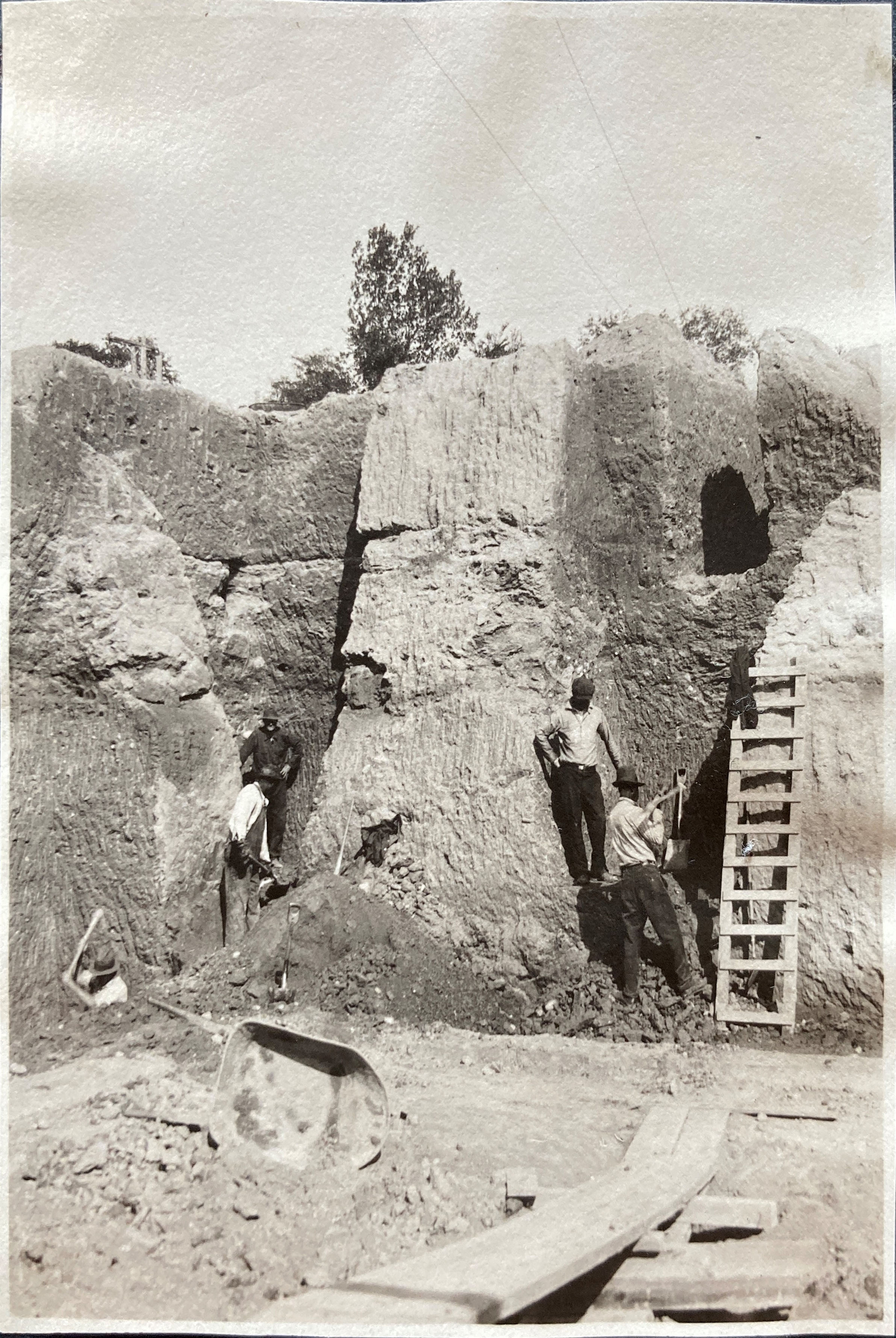
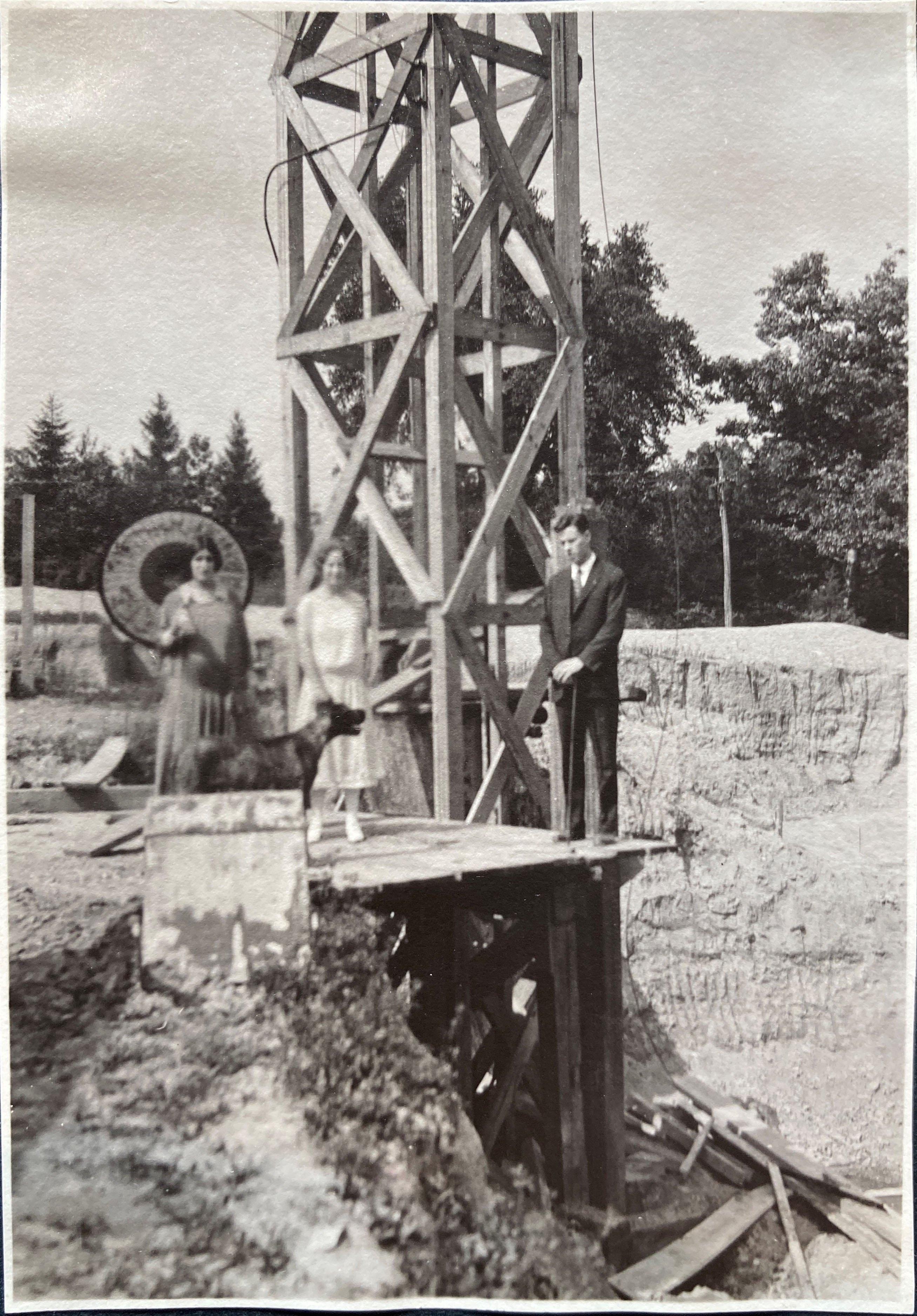
Excavation began soon after on July 13, 1925, and work continued at a brisk pace so that on April 4, 1926, the first service took place in the incomplete church to celebrate Easter Sunday.
Over the next three years, there will be many more centennial milestones to mark in the building of Christ Church and the wider story of Cranbrook’s transformation from a country estate into a bustling group of institutions.
Laura MacNewman, Associate Archivist
Cranbrook Center for Collections and Research
Discover more from Cranbrook Kitchen Sink
Subscribe to get the latest posts sent to your email.
 Cranbrook Kitchen Sink