New Center Logo & A Fond Farewell

The Cranbrook Center for Collections and Research has officially launched our new logo! What follows is a description of where each of the letters comes from in the history of Cranbrook or the location on the campus!

The (first) C in Cranbrook is from the logo George Gough Booth created for the Cranbrook Press in 1901, three years before he and his wife Ellen established their estate in Bloomfield Hills.

IMG_0361

The Cranbrook Press (1900-1902) was founded by George Booth in the attic of the Detroit Evening News Building.  Booth emulated the work of William Morris and his Kelmscott Press, not just in design but also in the level of hand-craftsmanship.

Continue reading

A Portrait Comes Home to Cranbrook House

The portrait of Clara Gagnier Booth, mother of Cranbrook founder George Gough Booth, has been mounted in the Oak Room at Cranbrook House. This painting is on long-term loan to Cranbrook from the Saginaw Art Museum, which acquired the painting through a donation from Clara Booth’s grandson, John Lord Booth I.
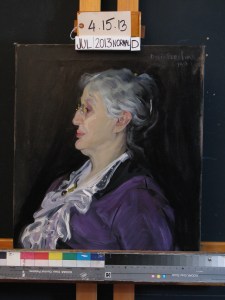
Perelma_Image

Conservation in-progress, April 2013 by Kenneth B. Katz, Conservation and Museum Services.

After receiving conservation treatment and a new frame, this painting of Clara Booth will accompany that of her husband, Henry Wood Booth, as well as their son George, his wife Ellen Scripps Booth, and Ellen’s father James Edmund Scripps. Financial support from John Lord Booth II affords this opportunity to join the painting of the Booth family matriarch with those of her relatives at Cranbrook House.

The artwork was painted in 1918 by Russian-born artist Ossip Perelma, known particularly for his portraits of men of stature such as President Woodrow Wilson, King Albert I of Belgium, and several Russian and French political officials. Perelma also executed the stately portrait of Henry Wood Booth, currently on view in the Oak Room.

Demure in size and executed with soft and fluid brush strokes, Clara Booth’s portrait contrasts with that of her husband. While Henry is depicted in full length in an outdoor background, his wife is shown only by profile, with just the upper half of her torso included in the composition. The stylistic distinction between Clara’s portrait and that of her husband—and indeed many of Perelma’s other subjects—emphasizes the differing approach Perelma took to depicting a woman.

In the early twentieth century, even women of position, beauty, and culture were often removed from public view after their role as wife and mother was fulfilled, and their youth had faded. This portrait was painted when Clara Booth was 79, and it is notable that Perelma chose not to conceal his subject’s age. Indeed, the portrait is a rare and significant example of art providing legitimacy and prestige to a woman who remained elegant and strong as she reached an age when most women no longer had a public presence or were being immortalized by artists.

Both portraits, Clara Gagnier Booth and Henry Wood Booth, will be available for viewing when Cranbrook House opens for public tours on Sunday June 14th! For more information on the tours check out the Cranbrook House & Gardens Auxillary website.

Stefanie Dlugosz-Acton, Collections Fellow, Center for Collections and Research
Happy Earth Day!

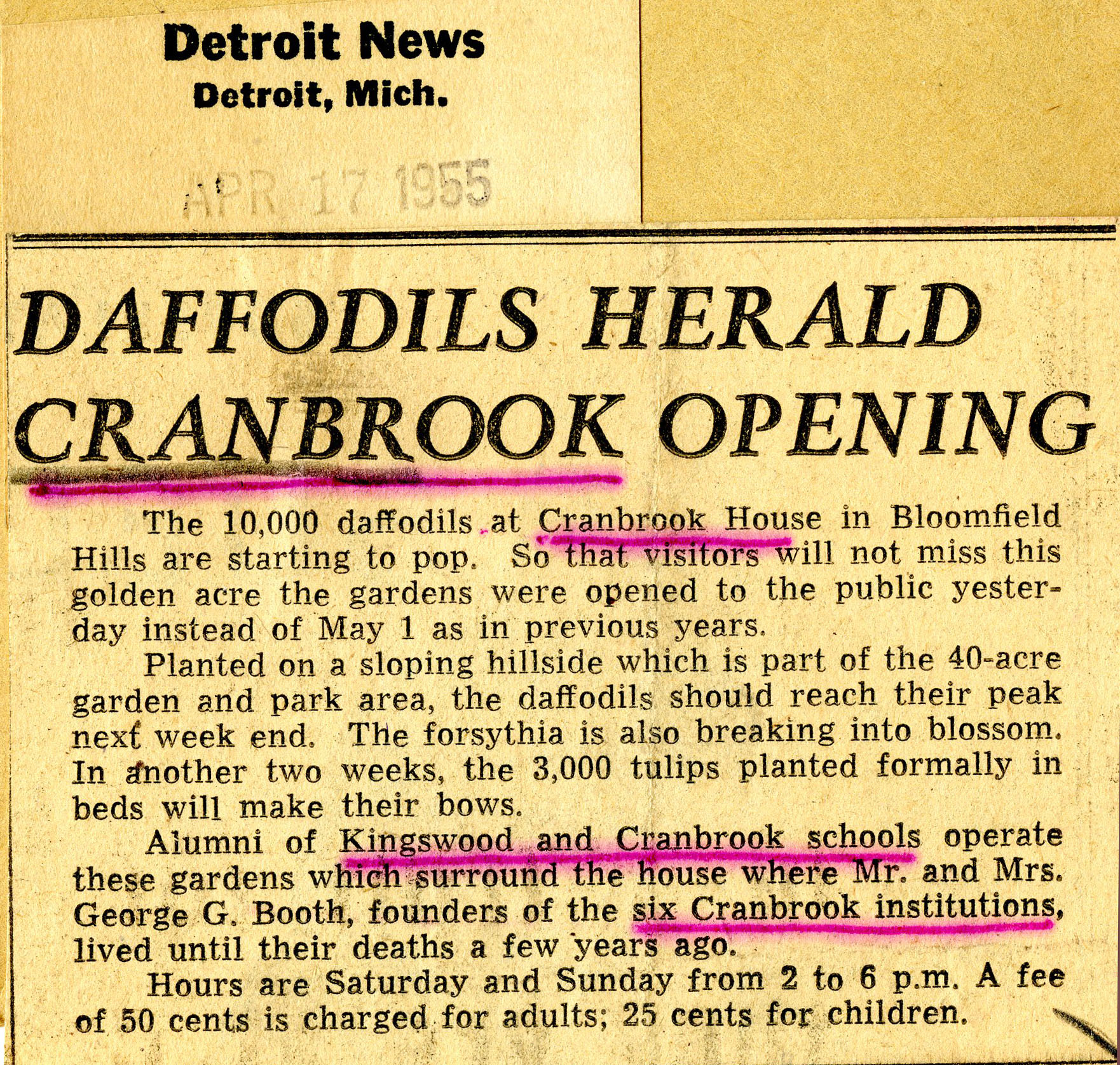
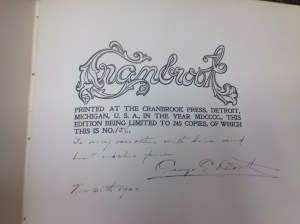
Even though Cranbrook experienced a few snow flurries today, the campus daffodils are also in bloom. It reminds me of what was known as “Daffodil Hill.” In 1953, in anticipation of Cranbrook’s Golden Jubilee celebration (the 50th anniversary of the year the Booths purchased the original 175 acres), Henry Scripps Booth led an effort to raise funds to plant daffodils at Cranbrook House.

The Cranbrook Foundation Daffodil Fund was established and enough money was raised to plant 10,000 daffodils in the fall. By 1955, visitors were flocking to the campus just to see them.

Birmingham Eccentric newsclipping, 1953

News clipping, The Birmingham Eccentric, 1953. Cranbrook Archives.

Detroit News, 1955

News clipping, The Detroit News, 1955. Cranbrook Archives.

Middle School girls planting daffodils for Earth Day, 1990

Middle School girls planting daffodils for Earth Day, 1990. Cranbrook Archives.

Daffodil Hill, 1985

Originally known as “Golden Glade,” the area soon became known as Daffodil Hill, Spring 1985. Ralph Mize, photographer. Cranbrook Archives.

Leslie S. Edwards, Head Archivist

Illumination!

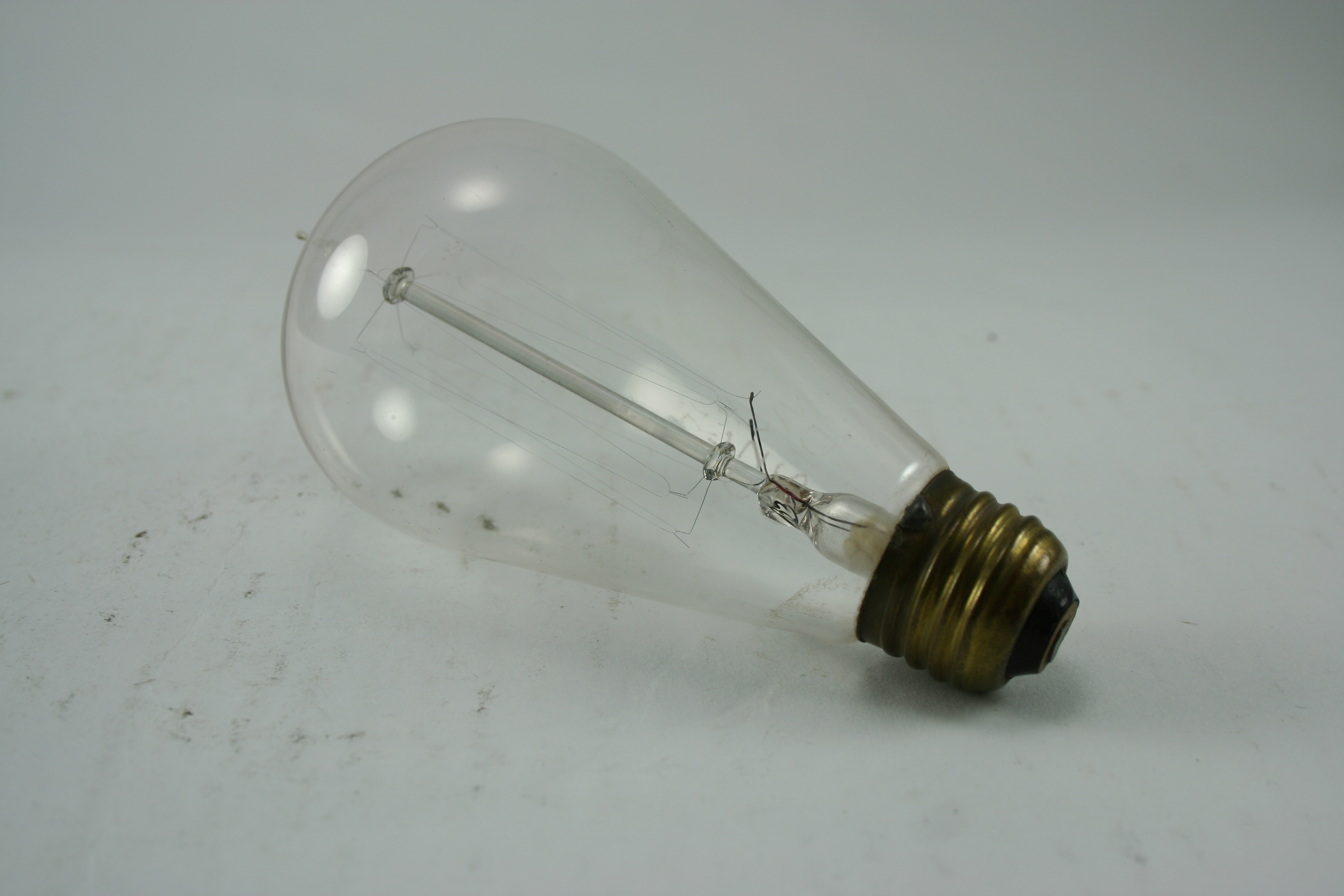
Glass etched Edison bulb from 1920, found in Cranbrook House.

Glass-etched Edison bulb from 1920, Cranbrook Cultural Properties Collection..

While browsing the historical writings of Henry Scripps Booth recently, I came upon the answer to a question that Collections Fellow, Stefanie Dlugosz, had posed late last year. As she prepared the Center for Collections and Research’s Holiday Tables exhibit (“Illuminate the Seasons” was the theme), which highlighted the early use of electricity in Cranbrook House, Stefanie had wondered what the source of electricity was, in 1908, for a relatively isolated place like Cranbrook. Efforts by several people could not turn up an answer. Until now.

“Although Caldwell’s electric fixtures had been installed about December 1, we still had to use candles and oil lamps for light because the private Edison line being installed from Highland Park to Cranbrook House was incomplete.”  This was recorded during the 1980’s in Henry’s unpublished History (which relates the history of Cranbrook Educational Community and the Booth family between 1800 and 1987).

As the bill from Albert Kahn shows, George G. Booth spent $1863.48, around $49,000 in today’s dollars, on lighting fixtures in Cranbrook House. The order is itemized, room by room, on seven pages of legal-sized paper, in Booth’s papers.

Albert Kahn’s bill to George Booth for Cranbrook House lighting fixtures provided by Edward.F. Caldwell Co.  Papers of George and Ellen Booth 14:23

George Gough Booth Papers, courtesy Cranbrook Archives.

Read the original blog for more information on the Caldwell lighting fixtures at Cranbrook House.

— Cheri Gay, Archivist

Lighting Up Cranbrook House: Edward F. Caldwell & Co.

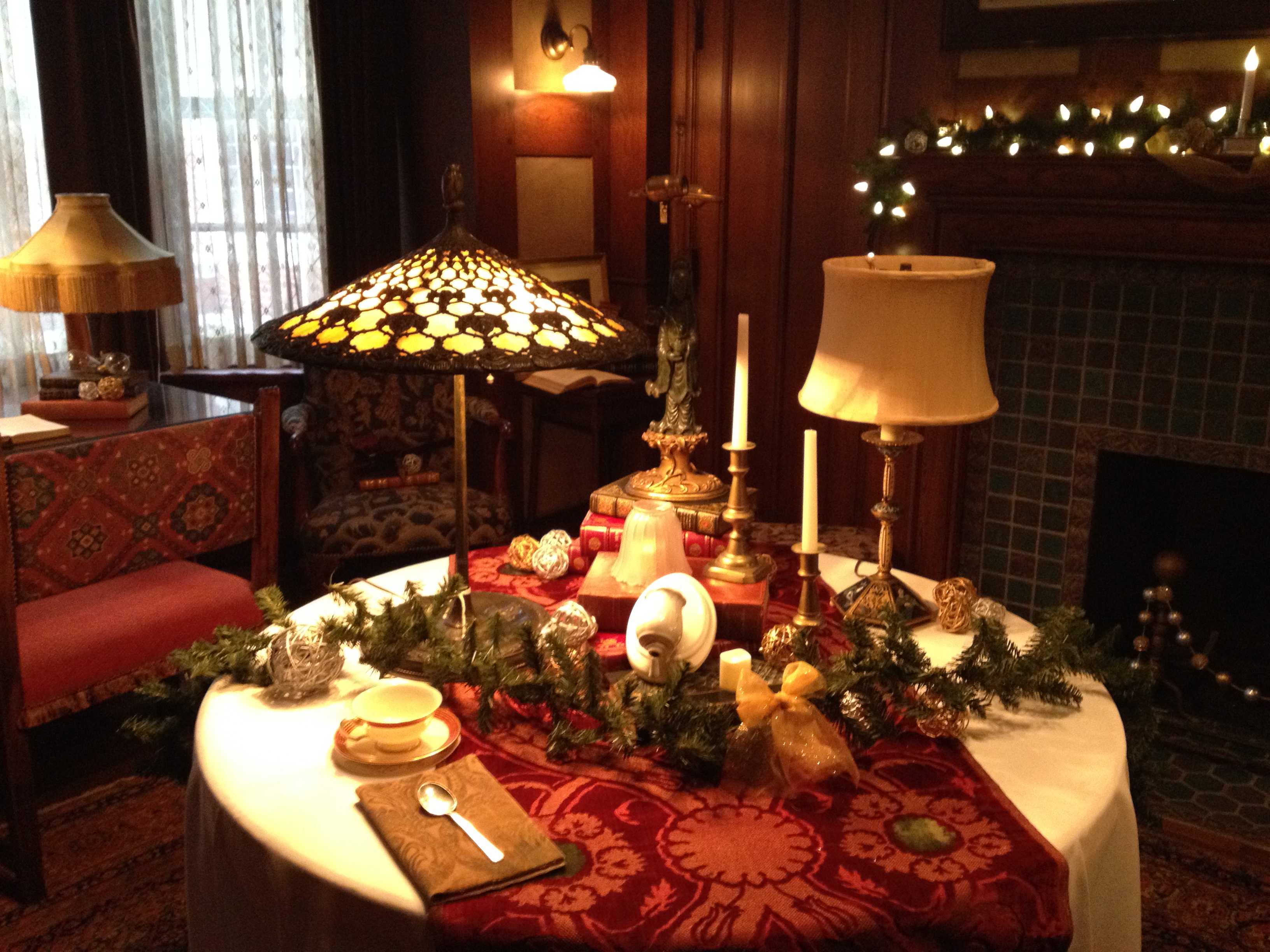
HT_2014_1

Holiday Tables, 2014. Stefanie Dlugosz, photographer.

This past weekend the Center for Collections and Research put on a display for Holiday Tables at Cranbrook House, organized by the Cranbrook House and Gardens Auxiliary.  Associate Registrar Gretchen Sawatzki and I put together a display highlighting the electric lighting original to the home, focused on lamps and lighting by the Edward F. Caldwell & Company.

Cranbrook House was designed and built in 1908, and George Gough Booth always had the intention of having electric lighting throughout the home. Within the city of Detroit there had been an interest in electricity, and by 1906 there were two power plants on the Detroit River owned and operated by the Detroit Edison Company. However, with Cranbrook House being roughly 20 miles to downtown Detroit, this was an achievement. The Booth’s interest in innovation propelled them to always be ahead of their time by investing in the newly available widespread utility for their home.

HT_2014_2

Holiday Tables, 2014. Stefanie Dlugosz, photographer.

HT_2014_3

Holiday Tables, 2014. Stefanie Dlugosz, photographer.

In the first half of the twentieth century Edward F. Caldwell & Company was America’s premier design and manufacturer for electric light fixtures. The New York firm founded in 1895 created designed and works with several prominent clients at the time including the Frick, Morgan, and Carnegie families. Much of their work was done in tandem with architectural commissions, and therefore clients like Booth were able to provide input and alter details to customize their lighting choices. Booth provided his own ideas about a few pieces for the home, but overall selected most of the pieces directly from their catalogues. During the construction and design of Cranbrook House, George G. Booth was actively involved in conversations with Albert Kahn, the architect, and many of the vendors providing goods and products for the home. Booth was enthusiastically involved in providing input on the design elements of the home, and the lighting was no different. Many of the Edward F. Caldwell & Co. catalogues can be found online through the Cooper-Hewitt Museum Library, Smithsonian Institution Libraries

Stefanie Dlugosz, Collections Fellow, Center for Collections and Research
 

All Roads Lead to Cranbrook: A Fellow Says Goodbye

I began writing this blog post weeks ago but had to set it aside—because I became too sentimental to continue, but also because I was pulled into a discussion about an issue around 19th century chairs, Eliel Saarinen, and Cranbrook House (the exact details escape me). This, to me, is the perfect encapsulation of what the last two years have been: a whirlwind of emotional investment, intellectual engagement, and a work pace that proceeds at a quick clip as projects emerge from questions as diverse as “is this sandbox at Brookside a historic one?” (the answer is, “no”) to “how did those Cranbrook School chairs get all the way out to California, and what do we do with them now?” (the answer is, “we don’t know” and “return them into circulation after ensuring their condition and documentation”).

As the first full-term, resident Collections Fellow at the Cranbrook Center for Collections and Research, I have worked with an amazing staff of individuals to field these questions and countless more (the less said about the discussion regarding spray-painted vandalism on the posterior of a sculpture on campus, the better). I have also had the chance to both figuratively and literally reach across the aisle to collaborate with the staff of Cranbrook Art Museum and Cranbrook Institute of Science, as well as the amazing volunteers at Cranbrook House. For two years I have watched the seasons turn from my desk in the lower level of the art museum. I have made a place for myself in CAM’s gleaming new Collections Wing as well as the less glamorous (but perhaps more curious and mysterious) storage spaces that fill attics and basements across Cranbrook’s sprawling campus. I have learned this storied site’s history, engaging with its past through three exhibitions and countless house tours, lectures, and public programming. And now, unfortunately, it is time for me to say goodbye.

Here I am hard at work in the Cranbrook House attic, cataloging and photographing historic costume. This job was always a surprise! May 2014.

Here I am hard at work in the Cranbrook House attic, cataloging and photographing historic costumes. This job is always a surprise! May 2014.

Continue reading

Photo Friday: Who’s That Man?

It’s Arthur Nevill Kirk! Wooed by George Booth, the famed silversmith arrived at Cranbrook in 1927 to head the metals department at the Academy of Art. Kirk also taught at the Art School of the Detroit Society of Arts and Crafts and Cranbrook School for Boys. His specialty was the design and execution of ecclesiastical silver, of which Cranbrook still has many pieces in its collection.  During the Great Depression, lack of funds curtailed the use of precious metals and the department closed in 1933. Kirk went on the help establish the Artisans’ Guild, and organized the metal department at Wayne State University in Detroit, where he taught until his retirement in 1957.

~Robbie Terman, archivist

Arthur Nevill Kirk. Cranbrook Archives.

Arthur Nevill Kirk at work. Cranbrook Archives

Cranbrook and the Car, Part 1: The Aristocrat of Small Cars

In its 100-year history, Cranbrook has been known for producing artists, designers, scholars, athletes, and leaders.  But cars?  An upcoming exhibition mounted by the Center for Collections and Research (that’s us!) at the Cranbrook Art Museum will explore the relationship between Cranbrook and the automobile industry. Called A Driving Force: Cranbrook and the Car, it will highlight the history of Cranbrook through the lens of the automobile, detailing the ways that members of Cranbrook’s community have innovated and influenced the auto industry for the past 100 years.  You can learn more about the exhibition at Cranbrook Art Museum’s website here.

As we prepare to open A Driving Force: Cranbrook and the Car on June 12, we’ll be writing up occasional posts about the exhibition, highlighting bits and pieces of our research and providing glimpses into the down-and-dirty world of museum exhibiting.   And we’re going to kick it all off with the story of James Scripps Booth and the Scripps-Booth Company.

James Scripps Booth (behind the wheel) with brother Warren Scripps Booth in a Scripps-Booth 4-cylinder Model C at Tower Garage at Cranbrook House. Their father George Gough Booth stands next to the car, partially hidden by the windshield.  Circa 1917, Cranbrook Archives.

James Scripps Booth (behind the wheel) with brother Warren Scripps Booth in a Scripps-Booth 4-cylinder Model C at Tower Garage at Cranbrook House. Their father George Gough Booth stands next to the car, partially hidden by the windshield. Circa 1917, Cranbrook Archives.

Continue reading

Create a website or blog at WordPress.com