Currently off-site doing research at the Archives of American Art in Washington, DC, Cranbrook Art Museum’s Jeanne and Ralph Graham Collections Fellow Shelley Selim has been making her way through the Harry Bertoia papers there. She stumbled upon this delightful tidbit today:

A September, 1942, letter from artist and designer Bertoia to his fiance Brigitta Valentiner captures the awkwardness of eating on Cranbrook’s campus as an instructor at the Academy of Art: “We still go over to the boys’ school to eat. Excellent food is served with an overdose of etiquette which for me is hard to swallow.”

Harry Bertoia, 1942. Richard Askew/Cranbrook Archives.

Harry Bertoia, who began studying at the Cranbrook Academy of Art in 1937 and was enlisted as the head of the Metalsmithing Department by 1938, might have felt an extra level of discomfort at the dining experience at Cranbrook School—only 24 years old when he began his tenure as an instructor, he likely looked the same age as many of the high school students.

The formality captured in Bertoia’s letter is not overstated, however. Film footage of Cranbrook School in the 1930s shows a formalized dining experience that would be unrecognizable to today’s students, with uniformed maids delivering hot dishes to the young boys who line up at their tables in coats and ties, waiting to sit in unison.  The film is featured in the Center’s current exhibition Cranbrook Goes to the Movies, on view now at Cranbrook Art Museum.

Shelley’s Bertoia research, meanwhile, has proven productive, feeding into an exciting project that Cranbrook Art Museum is cooking up in honor of the 100th anniversary of Harry Bertoia’s birth in 2015. We can’t say more right now, but watch the CAM website as this project develops over the new few months. And, just because we love it, enjoy a photo of Harry Bertoia and Brigitta Valentiner at Cranbrook Academy of Art’s themed “Come as a Song” party in 1942! We featured it as a Photo Friday a while ago, but it is just too good to not post again.

"Come as a Song" party, 1942.  Cranbrook Archives.

“Come as a Song” party; Harry Bertoia and fiance Brigitta Valentiner speak with an unidentified man in a playing card costume, 1942. Cranbrook Archives.

Shoshana Resnikoff, Collections Fellow, and Shelley Selim, Jeanne and Ralph Graham Collections Fellow, Cranbrook Art Museum

Photo Friday: Cranbrook’s World Cup

Cranbrook student John Vining Ogden (left) competes for the ball in a match against the opposing team from Nichols, a rival school, 1960. Cranbrook Archives/Harvey Croze.

Cranbrook student John Vining Ogden (left) competes for the ball in a match against the opposing team from Nichols, a rival school, 1960. Cranbrook Archives/Harvey Croze.

As we prepare for the final round of World Cup soccer (Germany vs. Argentina, this Sunday), we’re looking back on Cranbrook’s own soccer history. Here, Cranbrook student John Vining Ogden tries to get one step ahead of a rival player as they vie for control of the ball. We’re especially taken with the Nichols’ players’ uniforms: with their striped jerseys, they look like a team made up entirely of referees!

Photo Friday: Pleasures of Life

Close-up of page 104 of Pleasures of Life, Volume 2. Cranbrook Archives.

Close-up of page 104 of Pleasures of Life, volume 2. Cranbrook Archives.

For this week’s Photo Friday, we’re showcasing an image from Henry Scripps Booth’s epic photographic undertaking, Pleasures of Life. A series of photographic albums documenting his life from 1911 to 1940, Pleasures of Life follows Booth through experiences at Cranbrook, boarding school in Asheville, NC, and travels domestic and international.

This photograph, found on page 104of Pleasures of Life, volume 2, features a “Mrs. Scranton and Mrs. Brixton” dressed in angels’ wings and halos and labeled “Cranbrook’s guardian angels.” Taken during a nativity theatrical performance at Cranbrook’s Greek Theatre in 1916, the photo provides visual documentation for what are likely the same wings as those that appear in the Center’s newest exhibition,Cranbrook Goes to the Movies: Films and Their Objects, 1925-1975, now open at Cranbrook Art Museum.

Wings, circa 1916, featured in the exhibition Cranbrook Goes to the Movies.

Wings, circa 1916, featured in the exhibition Cranbrook Goes to the Movies.

Evening Post: Summer Exhibitions Are Almost Here!

Posting on a Thursday night is a rare activity for this blog, but it’s worth staying late in the office to help install the upcoming shows. Cranbrook Art Museum will kick off its summer exhibition season this Saturday with six all new exhibitions. Two of those are Center for Collections and Research projects, and we are so excited to show them off!

Two selections of ephemera from the exhibition highlight the variety of documents that fall under this important archival category. Cranbrook Archives.

We’ve already highlighted one exhibition on the blog, but it is worth mentioning again. Officially opened on April 22, Cranbrook Archives’ Ephemera: Fragments from Cranbrook’s Social Life went into hibernation with the rest of the museum during the changeover from the Academy of Art Graduate Degree Show in May. Re-opening along with the rest of the galleries, it presents an exciting opportunity to explore Cranbrook’s diverse history through the campus’ ephemera – the paper material (fliers, invitations, notices, tickets, etc.) that populate our daily life yet are so often discarded rather than saved. Called “the transient evidence of everyday life,” ephemera collections are ripe for exploration, which is what the Archives will be doing as it launches this first show in a series of exhibitions that mine the Archives’ rich collection of ephemera.

Films and objects come together in Cranbrook Goes to the Movies. Left: Tea urn and tray, Eliel Saarinen, 1934 (or earlier). Right: Still from Cranbrook Academy of Art Experimental Films, circa 1941. Cranbrook Art Museum/Cranbrook Archives.

The second Center exhibition opening at Cranbrook Art Museum on Saturday, June 21 features an under-explored medium in Cranbrook’s history: film. Cranbrook Goes to the Movies: Films and Their Objects, 1925-1975 takes Cranbrook Archives’ incredible collection of historic film as its jumping off point, using footage from multiple time periods and many distinct parts of Cranbrook’s community to provide a fresh look into the past. Incorporating objects that appear in films and remain within Cranbrook’s various collections, the show reunites the ephemeral with the physical to activate the historic film and provide context to objects that are still considered some of Cranbrook’s greatest treasures.

On loan to the exhibition from Cranbrook Institute of Science, this stuffed duck finds many of his friends in a 1960s film that details the attractions of the early Institute.  Shoshana Resnikoff/Cranbrook Center for Collections and Research

On loan to the exhibition from Cranbrook Institute of Science, this stuffed duck finds many of his friends in a 1960s film that details the attractions of the early Institute. Shoshana Resnikoff/Cranbrook Center for Collections and Research

We can’t show you the completed gallery, but enjoy this sneak peek into the installation. And be sure to visit Cranbrook Art Museum on opening weekend! Besides these two shows, CAM will be opening four other exhibitions that are sure to impress – Paul Evans: Crossing Boundaries and Crafting Modernism, Warhol on Vinyl: The Record Covers, 1949-1987+, Modern/Moderna:Amie Siegel and Terence Gower, and Culture Breakers: The Living Structures of Ken Isaacs. Also exciting is Sunday’s PNC Family Fun Celebration day, featuring live music, silk screening activities, and tours of the exhibitions!

Alright, enough blogging – back to putting the finishing touches on our shows!


Reel-to-Real: Archives and the Challenge of Obselete Technology

While new advancements in technology can certainly make remembering history easier, it is important not to forget what has already been done and make sure it is still accessible in the future. All organizations concerned with the preservation of culture must at some point address the problem of obsolete technology, archives chief among them.

The oral history collection at Cranbrook Archives holds fifteen recordings made on reel-to-reel magnetic audio tape that are in danger of being lost unless their content is migrated to another media source. The recordings were made between the 1950s and 1980s, with the oldest being a 1956 interview of Robert McMath, the solar astronomer who served as Cranbrook Institute of Science Board of Trustee from its founding in 1930 until 1962. Other interviews capture the wide breadth of life at Cranbrook and feature the voices of artists, craftsmen, administrative staff, teachers, and clergy, telling the story of Cranbrook’s history as it happened.

These are just a few of the reel-to-reel tapes from the collection. Justine Tobiasz/Cranbrook Archives

These are just a few of the reel-to-reel tapes from the collection. Justine Tobiasz/Cranbrook Archives

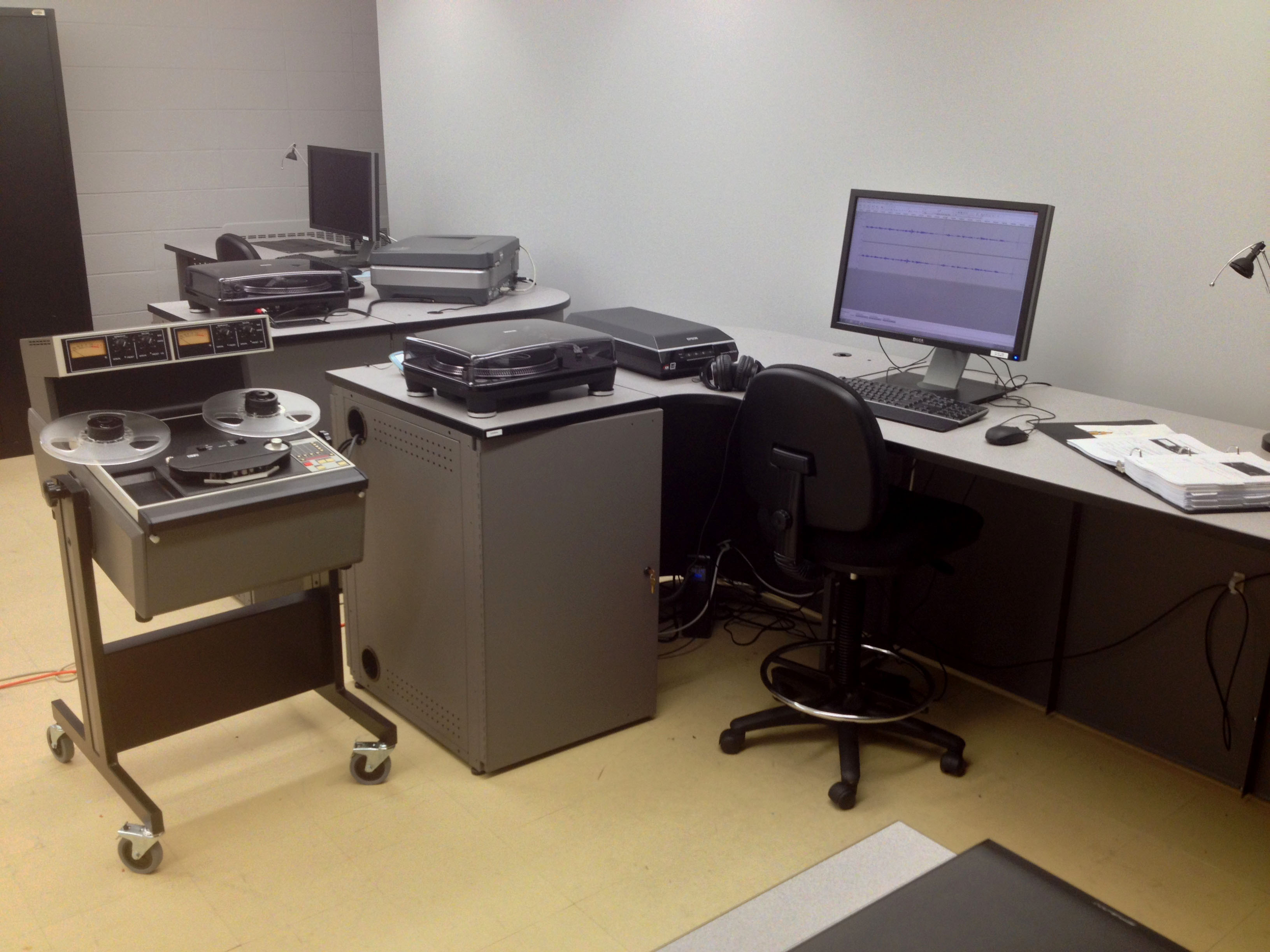
In partnership with Wayne State University’s Digital Media Projects Lab, we are now in the process of converting audio from the reels into digital files. The machine we’re using for this process is the Ampex ATR, which has been refurbished and modified with the record head removed to avoid accidental recording. The reels will continue to be preserved, but having another format ensures that these pieces of Cranbrook’s history will continue to live on.

Digital Media Projects Lab at Wayne State, complete with Ampex ATR.

Digital Media Projects Lab at Wayne State, complete with Ampex ATR. Image courtesy Wayne State University Digital Media Projects Lab.

Thank you to Wayne State for assisting us on this project, and stay tuned for future updates from the conversion process!

– Justine Tobiasz, Archives Assistant

Dinosaurs and Doodles

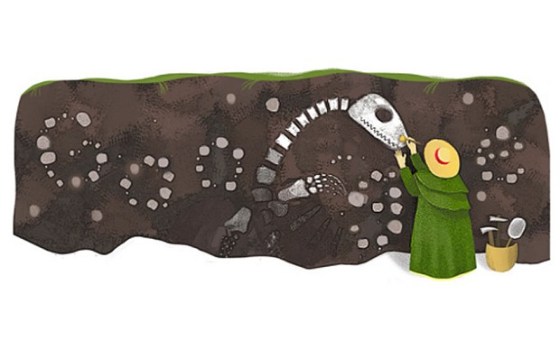
Google Doodle honoring Mary Anning's 215th birthday. Google.com.

Google Doodle honoring Mary Anning’s 215th birthday. Google.com.

If you find yourself on Google’s homepage today, you will likely run into a Google Doodle featuring a little-known 19th century Englishwoman named Mary Anning. Born in 1799, Anning was barred by her gender and social class from access to Britain’s community of leading scientists and palaeontologists, yet nonetheless she slowly became known in scientific circles throughout Europe and the United States. Anning’s discoveries include the first icthyosaur to come to scientific attention in England, as well as a partial skeleton of an unknown marine reptile that would later earn the title of plesiosaurus. The Google Doodle celebrates her 215th birthday and helps to give Anning the credit and attention that she so richly deserves, even centuries after her death.

There aren’t many connections between a 19th century female English palaeontologist and Cranbrook, but the timing of her 215th birthday is an ideal opportunity to mention Cranbrook Institute of Science’s current special exhibition Dinosaurs – The Lost World. Featuring more than fifty full-scale dinosaur skeletons and skeleton casts, Dinosaurs tells a story of prehistoric life that would not have been possible without the contributions of early amateur palaeontologists like Mary Anning. The exhibition closes on June 29, so be sure to visit and get a glimpse into the world that Mary and her colleagues discovered!


Photo Friday: Brookside at Play

Brookside students enjoy the Cranbrook fire engine, 1936. Richard G. Askew/Cranbrook Archives.

Brookside students enjoy the Cranbrook fire engine, 1936. Richard G. Askew/Cranbrook Archives.

Brookside students know how to multitask—while enjoying playtime, they’re also learning the ins and outs of fire safety.  This photo, taken in 1936, shows Brookside students enjoying playtime on the Cranbrook fire engine. Especially endearing are the rubber galoshes; whether the children are wearing them to fight a fire or jump in puddles, they’re prepared for anything.

Photo Friday: En Plein Air(tarium)*

Students sketch the partially-completed McMath Planetarium at CIS. June, 1955. Harvey Croze/Cranbrook Archives.

Students sketch the partially completed McMath Planetarium at CIS. June, 1955. Harvey Croze/Cranbrook Archives.

As the McMath Planetarium went up at the Cranbrook Institute of Science over the course of the summer of 1955, students took the opportunity to work on their outdoor sketching. Here a young woman captures the newly constructed dome still clad in scaffolding. Note the sign to the left of the planetarium: it reads “Michigan’s First Public Planetarium.”

* “En plein air” is an expression that refers to the practice of painting outdoors – or “in the open air” – which was popularized by Impressionist painters, many of whom made the use of natural light a hallmark of their work. We apologize for the corny “en plein air”/”planetarium” joke, but we just couldn’t resist.

Photo Friday: Art by Degrees

Young women take in the Annual Exhibition of Student Work at the Cranbrook Art Museum. The central painting is Untitled (1957) by student Frank Okada. June 1957. Harvey Croze/Cranbrook Archives.

Visitors take in the Annual Exhibition of Student Work at Cranbrook Art Museum. The central painting is Untitled (1957) by student Frank Okada. June 1957. Harvey Croze/Cranbrook Archives.

It’s that time of year again—the Graduate Degree Exhibition is up and running at Cranbrook Art Museum! Staged in some form or another since 1940, the Graduate Degree Exhibition is a celebration of work produced by Cranbrook’s graduating class of MFA students. This photograph from 1957’s Annual Exhibition of Student Work (an earlier name for the Graduate Degree Exhibition) shows a painting by Academy of Art graduate Frank Okada that might be familiar to eagle-eyed museum visitors—it was featured in the 2013 exhibition What to Paint and Why: Modern Painters at Cranbrook, 1936-1974.

For more information about the 2014 Graduate Degree Exhibition, check out Cranbrook Art Museum’s website. And be sure to check out the show while you still can—it closes May 11!

Photo Friday: Learning by Living and Observing

BS1930s001

Brookside School, ca 1928. The photograph was taken by Arnold Studio, a local Birmingham studio who took most of the early photographs of Brookside School. Cranbrook Archives.

In the 1930s, Brookside School children spent part of their time applying what they learned in the classroom to conditions from real life. Here, children were learning by “living and observing” the daily routines at a pretend store. The “Greenfield Sausage” package on the front of the table was from Hammond Standish & Company meat packing business of Detroit. The company was founded by George H. Hammond, who built Detroit’s first skyscraper—the “Hammond Building.” Hammond also patented the first refrigerated boxcar, and by the mid-1880s, Hammond Standish & Company was using 800 refrigerated boxcars to deliver meat to the Atlantic seaboard each week.

Gina Tecos, Archivist

Create a website or blog at WordPress.com