Photography: The Art of Our Time

croze003

Cranbrook Archives/ Mary Ann Lutowski Papers.

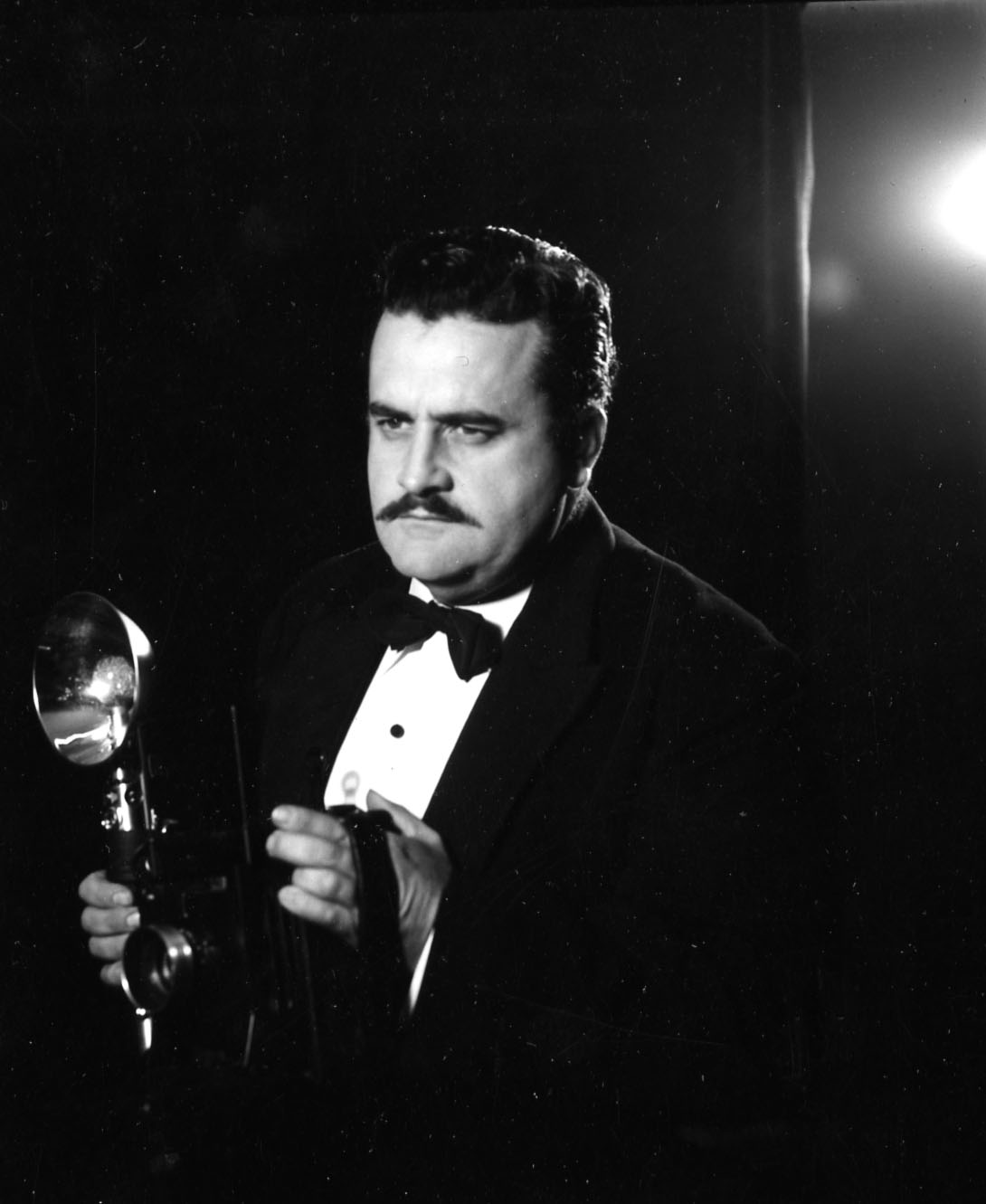
Most people at Cranbrook have heard of Harvey Croze (1904-1973).  From 1944-1970 he served as the primary photographer for the Cranbrook Foundation.  During his tenure here, he produced thousands of photographs, ranging from sculpture and architecture to photographs of school athletics, parties, dances, and any number of other events.  He was particularly beloved by the Cranbrook Kingswood students for his jovial personality and sense of fun. He even wrote a song called the “Cranbrook Waltz” in 1953.

croze1

Cranbrook Archives/ Mary Ann Lutowski Papers.

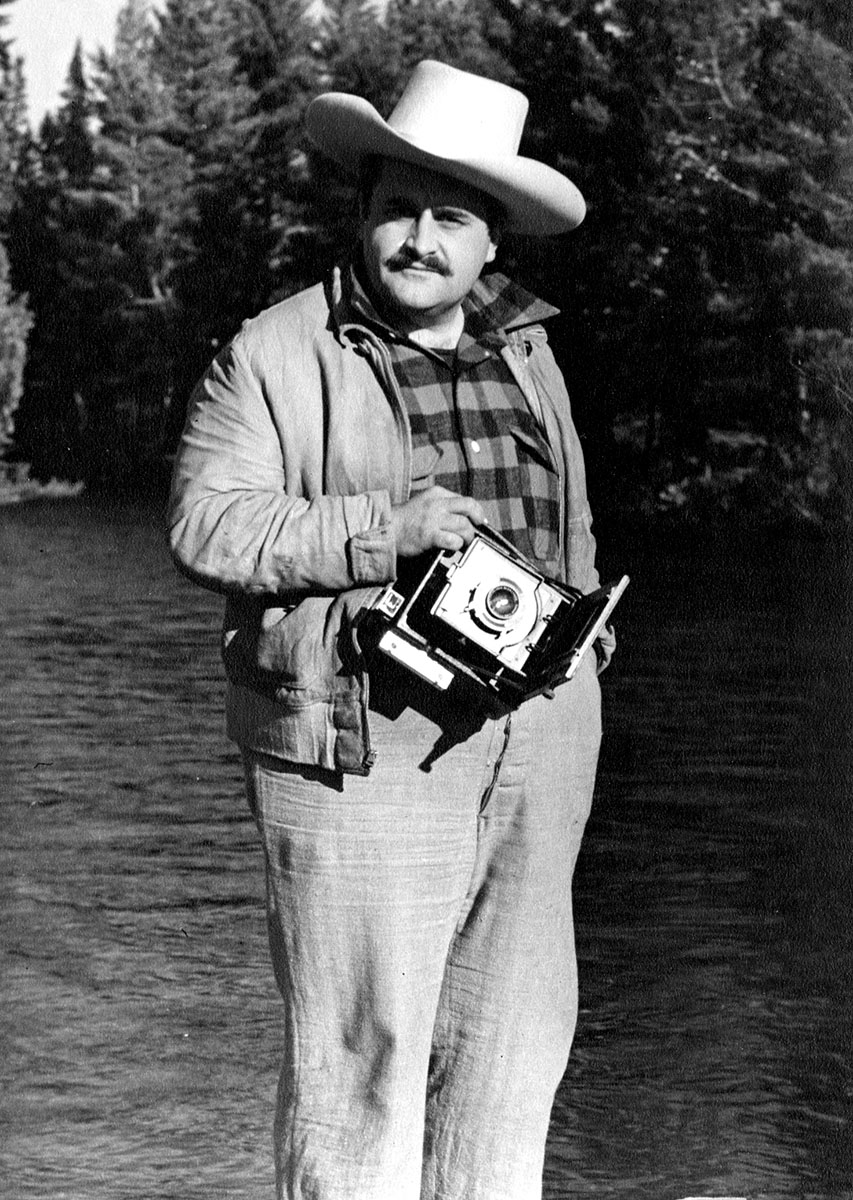
Croze was born in Houghton, Michigan.  Short and stocky, he sported a big, black mustache and a Leica camera.  A former long distance swimmer who tried out for the 1938 Olympic team (but did not make the cut), Croze was a painter, actor, and Dominican Republic sugar plantation supervisor before photography became his profession.  He studied modern design and photography with Nicholas Haz, took a photography course with Laszlo Moholy-Nagy at the Chicago Institute of Art, and studied photographic techniques with Ansel Adams in Colorado.  He acquired his photo processing skills when he worked as an apprentice in the darkrooms of Chrysler and General Motors.  And, he served on the executive committee of the Auxiliary War Photographer Service where he shot publicity photographs for the Red Cross and the service men at the USO centers during World War II.
croze002

Cranbrook Archives/ Mary Ann Lutowski Papers.

The third of the Cranbrook Foundation staff photographers, Croze was hired in Dec 1943 as photographer and operating manager of the Cranbrook Photo department.  Located in the basement of the Academy of Art Administration Building, the department provided a convenient service to the institutions and in order to provide photographs for press releases, the photo department was available 24 hours/7 days a week.  Not only did Croze take photographs and process them with his assistant Agnes LaGrone, he also taught photography to Academy of Art students and ran his own photography business on the side, primarily catering to Cranbrook-related artists.   During his 27 years at Cranbrook, Croze photographed many well-known celebrities including Carl Sandburg, Frank Lloyd Wright, Basil Rathbone, and General MacArthur.

5496-18

Cranbrook Photo Department, 1940. Richard G. Askew, photographer.


Croze was also nationally recognized for his photographs and exhibited at the Detroit Historical Museum, the Flint Institute of Arts, and the Smithsonian as well as numerous one-man shows here at Cranbrook.   In 1945, he won fourth prize in the San Francisco International Color Slide Salon and in 1960 was awarded a prize in the U.S. Camera magazine photo contest.

In June 1970, Croze’s impending retirement as well as financial deficits of the department led the Cranbrook Foundation to close the photography department. The photographic files were transferred to the Cranbrook Archives where they remain today.

Leslie E. Edwards, Head Archivist


Object in Focus: “The Spirit of Nursing” Monument

Army-Navy Nurse Memorial

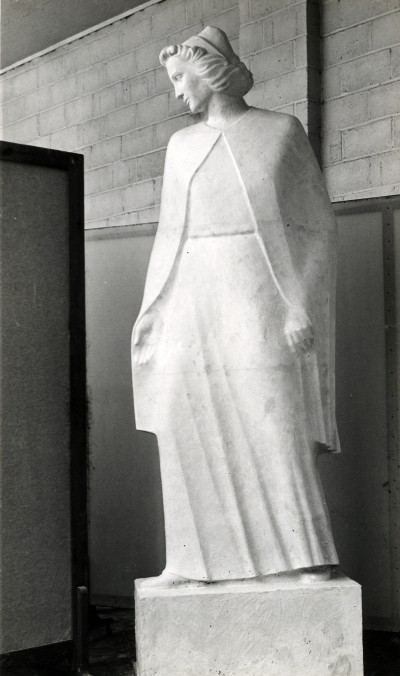
The Army-Navy Nurse Memorial, 1938. Cranbrook Archives.

Although there are many connections to Veteran’s Day within the Cranbrook community, the story I would like to share today is about a woman who left behind a Hollywood movie and stage career to serve her country. Frances Rich (1910-2007)  enlisted in the United States Naval Reserve during World War II and left a lasting legacy for all who visit Arlington National Cemetery.

The daughter of silent film star Irene Rich and the adopted daughter of naval officer Charles Rich, Frances was born in Spokane, WA in 1910. She received her bachelor’s degree in English Literature from Smith College in 1931. Between the years of 1932-1933, Rich appeared in six Hollywood films and one Broadway play. During this time she also became very interested in sculpture and started taking drawing, fresco painting, and clay carving classes in Paris, Rome, and Boston.

While in Paris, Rich met the sculptress Malvina Hoffman (1885-1966) and studied with her for two years. Upon returning to the United States, she continued to hone her craft at the School of the Museum of Fine Arts in Boston. Between 1937-1940 she studied sculpture with Carl Milles at Cranbrook Academy of Art, whom she worked with for 18 years.

In 1942, Rich enlisted in the U.S. Naval Reserve as a Lieutenant Jr. Grade. She served as the Special Assistant to Mildred McAfee (1900-1994), director of WAVES (Women Accepted for Voluntary Emergency Service). Prior to her enlistment, and while a student at Cranbrook, Rich sculpted the Army-Navy Nurse Memorial (1938). One of her best-known works, the 10-foot high statue was made from Tennessee marble and commemorated nurses who died during military service. The statue resides at Arlington National Cemetery and is often referred to as the “Spirit of Nursing” monument.

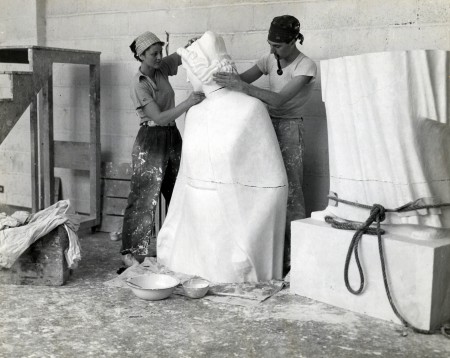
Frances Rich working on sculpture

Frances Rich working on the Army-Navy Nurse Memorial at Cranbrook, 1938. Cranbrook Archives.

Today, along with all of the men and women who have bravely served our country, we salute Frances Rich.

Gina Tecos, Archivist

Happy Belated Birthday to Our Founder!

September 24th marked the 150th birthday of Cranbrook’s founder, George Gough Booth. Born in Toronto, Mr. Booth had an early interest in art and architecture. In 1881 his family moved to Detroit and he put his artistic talents to work by purchasing half of an interest in an ornamental ironworks firm. The business was successful and used many of Booth’s product designs.

George Gough Booth, ca 1876.  W. E. Lindop, photographer.  Cranbrook Archives

George Gough Booth, ca 1876. W. E. Lindop, photographer. Cranbrook Archives

In 1887 Booth married Ellen Warren Scripps, daughter of Detroit News founder James Scripps. The following year he sold his share in the ironworks business and joined the News staff as its business manager. The News blossomed under Booth’s direction, becoming one of the leading metropolitan dailies in the nation. In 1906, Booth became president of the newspaper, succeeding his father-in-law.

In 1904 George and Ellen Booth purchased a run-down 174 acre farm in Bloomfield Hills and named it Cranbrook after Booth’s ancestral town in England. Booth called upon his long-time friend, and noted Detroit architect, Albert Kahn, to prepare working drawings for the building of Cranbrook House. Kahn responded with an English Arts and Crafts inspired design the Booths moved into their new home in 1908.

In 1922, believing their country estate could serve a larger public purpose, the Booths shifted their focus toward building the six institutions at Cranbrook: Brookside School, Christ Church Cranbrook, Cranbrook School (for boys), Cranbrook Academy of Art, Cranbrook Institute of Science, and Kingswood School (for girls). George Booth was a visionary, and with his wife Ellen, set new standards for generosity, leaving us a legacy we are proud to be a part of. Happy belated birthday George!

“We were unwilling to go through life with our aims centered mainly in the pursuit of wealth and with a devotion wholly to the ordinary opportunities for social satisfaction.  We were not willing to leave all of the more enduring joys for our children or the joy of work in so good a cause entirely to our friends after we had passed on; rather did we wish, in our day, to do what we could and give tangible expression now to our other accomplishments by adventures into a still more enduring phase of life.  We wished to see our dreams come true while we were, to the best of our ability, helping to carry on the work of creation.”  (George Gough Booth, Address at Founders Day, October 28, 1927)

Gina Tecos, Archivist

Photo Friday: Arthur Nevill Kirk on Facebook

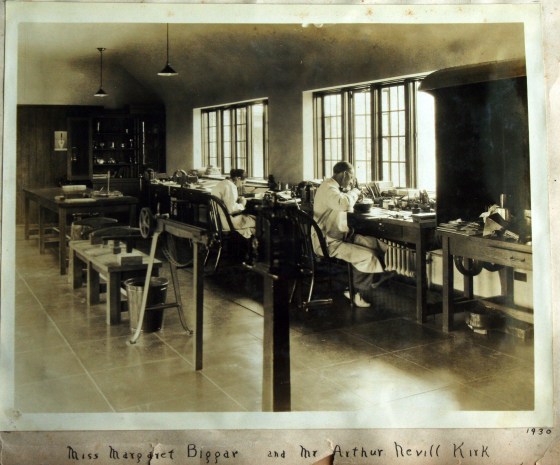
Famed metalsmith Arthur Nevill Kirk and apprentice Margaret Elleanor Biggar work in the metalsmithing studio at the Cranbrook Academy of Art, 1930. Cranbrook Archives.

Famed silversmith Arthur Nevill Kirk and apprentice Margaret Elleanor Biggar work in the metalsmithing studio at the Cranbrook Arts and Crafts Studios, 1930. Cranbrook Archives.

In this scrapbook page from 1930, “Miss Margaret Biggar” and “Mr. Arthur Nevill Kirk” are found working in the metalsmithing studios at the arts and crafts studios, the predecessor to the Cranbrook Academy of Art. An English-born silversmith, Arthur Nevill Kirk came to Cranbrook in 1927 at the urging of George Booth, who contracted him to produce silver designs for Christ Church Cranbrook. Kirk eventually taught silversmithing at the Cranbrook Arts and Crafts Studios before going on to found the Metals department at Wayne State, where he worked until 1957.

We at the Kitchen Sink are excited to use this post as an opportunity to promote not just the amazing history of Arthur Nevill Kirk but also highlight a new edition to the Cranbrook social media landscape – Cranbrook Archives’ Facebook page! As the beating heart of the Center for Collections and Research and the repository for all things historical at Cranbrook, the Archives uses Facebook to promote its extensive holdings, provide a portal through which researchers can access information about the collection, and give casual readers a daily glimpse into the fascinating history of the community through posts like yesterday’s, which featured this very photo. Check out their Facebookpage and learn more about this incredible resource!


Evening Post: Summer Exhibitions Are Almost Here!

Posting on a Thursday night is a rare activity for this blog, but it’s worth staying late in the office to help install the upcoming shows. Cranbrook Art Museum will kick off its summer exhibition season this Saturday with six all new exhibitions. Two of those are Center for Collections and Research projects, and we are so excited to show them off!

Two selections of ephemera from the exhibition highlight the variety of documents that fall under this important archival category. Cranbrook Archives.

We’ve already highlighted one exhibition on the blog, but it is worth mentioning again. Officially opened on April 22, Cranbrook Archives’ Ephemera: Fragments from Cranbrook’s Social Life went into hibernation with the rest of the museum during the changeover from the Academy of Art Graduate Degree Show in May. Re-opening along with the rest of the galleries, it presents an exciting opportunity to explore Cranbrook’s diverse history through the campus’ ephemera – the paper material (fliers, invitations, notices, tickets, etc.) that populate our daily life yet are so often discarded rather than saved. Called “the transient evidence of everyday life,” ephemera collections are ripe for exploration, which is what the Archives will be doing as it launches this first show in a series of exhibitions that mine the Archives’ rich collection of ephemera.

Films and objects come together in Cranbrook Goes to the Movies. Left: Tea urn and tray, Eliel Saarinen, 1934 (or earlier). Right: Still from Cranbrook Academy of Art Experimental Films, circa 1941. Cranbrook Art Museum/Cranbrook Archives.

The second Center exhibition opening at Cranbrook Art Museum on Saturday, June 21 features an under-explored medium in Cranbrook’s history: film. Cranbrook Goes to the Movies: Films and Their Objects, 1925-1975 takes Cranbrook Archives’ incredible collection of historic film as its jumping off point, using footage from multiple time periods and many distinct parts of Cranbrook’s community to provide a fresh look into the past. Incorporating objects that appear in films and remain within Cranbrook’s various collections, the show reunites the ephemeral with the physical to activate the historic film and provide context to objects that are still considered some of Cranbrook’s greatest treasures.

On loan to the exhibition from Cranbrook Institute of Science, this stuffed duck finds many of his friends in a 1960s film that details the attractions of the early Institute.  Shoshana Resnikoff/Cranbrook Center for Collections and Research

On loan to the exhibition from Cranbrook Institute of Science, this stuffed duck finds many of his friends in a 1960s film that details the attractions of the early Institute. Shoshana Resnikoff/Cranbrook Center for Collections and Research

We can’t show you the completed gallery, but enjoy this sneak peek into the installation. And be sure to visit Cranbrook Art Museum on opening weekend! Besides these two shows, CAM will be opening four other exhibitions that are sure to impress – Paul Evans: Crossing Boundaries and Crafting Modernism, Warhol on Vinyl: The Record Covers, 1949-1987+, Modern/Moderna:Amie Siegel and Terence Gower, and Culture Breakers: The Living Structures of Ken Isaacs. Also exciting is Sunday’s PNC Family Fun Celebration day, featuring live music, silk screening activities, and tours of the exhibitions!

Alright, enough blogging – back to putting the finishing touches on our shows!


Photo Friday: Poly Mer and the Emulsions

Doug "Do" Huston (MFA Printmaking, 1975) holds his Poodle Bass guitar, while Chuck Baughman (MFA Printmaking, 1975) is armed with a saxaphone. Lorraine Wild (BFA Design 1975) wears the blue dress. Image courtesy of Steve Milanowski.

Doug “Dog” Huston (MFA Printmaking, 1975) holds his Poodle Bass guitar, while Chuck Baughman (MFA Printmaking, 1975) is armed with a saxephone. Lorraine Wild (BFA Design 1975) wears the blue dress. Image courtesy of Steve Milanowski.

Spring has finally arrived, and with it comes the urge to stay outdoors, enjoy the great weather, and maybe even celebrate with a little music! In 1974, CAA students Doug Huston and Chuck Baughman (both MFA Printmaking, 1975) joined up with Lorraine Wild (BFA Design, 1975) and others to form the band Poly Mer and the Emulsions. As you enjoy our newfound sun (and revel in a landscape finally free of snow), take a moment to consider what sort of sounds might come from a poodle bass guitar, featured here in the arms of the appropriately nicknamed “Dog” Huston.

Photo Friday: Cage at Cranbrook

Limited edition postcard featuring CAA student Jim Poole wearing a Cage Bag as a mask on Cranbrook's campus, 1974. Courtesy Stephen Milanowski.

Limited edition postcard featuring CAA student Jim Poole wearing a Cage Bag as a mask on Cranbrook’s campus, 1974. Courtesy Stephen Milanowski.

In 1974, artist-composer John Cage traveled to Cranbrook for the opening of the museum exhibition Music-Mushrooms-Manuscripts. His visit prompted an incredible spate of creative production among CAA students, including this postcard. Part of a limited edition set created as part of Cage’s visit, the card features CAA student Jim Poole wearing a “Cage Bag” as a mask. The Cage bags (paper bags featuring silk-screened images of John Cage’s face) were made to be used in a performance of Cage’s compositions held on campus.

If this all seems confusing, don’t worry – you can get some clarity on this amazing, confusing, and exciting time period by visiting Cranbrook Art Museum on Sunday, March 23. Shelley Selim, the 2013-2015 Jeanne and Ralph Graham Fellow, will be lecturing on John Cage’s visit to Cranbrook as well as discussing Mushroom Book and Sounds of Venice, two Cage works currently on display in the Cranbrook Art Museum exhibition My Brain Is in My Inkstand: Drawing as Thinking and Process. The lecture starts at 4 pm, and immediately following will be a performance of Sounds of Venice by Detroit musician and composer Joel Peterson (check out his amazing gallery/restaurant/performance space Trinosophes, across from Eastern Market). For more information, check out Cranbrook Art Museum’s website. You can also read more about the Cage visit in Shelley’s amazing blog entry, hosted hereon our sister blog Cranbrook Sightings. And if you haven’t yet seen My Brain Is in My Inkstand, be sure to catch it soon–the exhibition closes on March 30!

Dear Diary: Women in Their Own Words

“When women tell their life stories in their own words, a distinct enthusiasm, engagement and affirmation emerges . . . these are the stories in which women are the central actors, even if their stories are camouflaged by modesty and disclaimers.” So writes Judy Nolte Lensink in Perspectives on Women’s Archives. One of the most common ways in which women tell their life stories is through their personal diaries. The stories can range from day-to-day events, personal reflections, or comments about the world at large. Nearly every archive has diaries in its collection, and ours is no exception. Below are a few examples of the range of journals found in the Cranbrook Archives.

Harriet Messinger Scripps, circa 1872. Cranbrook Archives.

Harriet Messinger Scripps, circa 1872. Cranbrook Archives.

Continue reading

Photo Friday: Folk Dancing

Harry Bertoia is served food by a costumed man at the Cranbrook Academy of Art folk dancing party. December, 1940. Cranbrook Archives.

Harry Bertoia is served food by a costumed man at the Cranbrook Academy of Art folk dancing party. December, 1940. Cranbrook Archives.

Cranbrook Academy of Art students may come to Michigan for their MFAs, but they seem to become masters of throwing great parties during their time here as well. One such shindig was the “Folk Dancing Party,” held in 1940 and shown here. Harry Bertoia, sculptor and furniture designer, sits in a suit while a costumed man serves him food. Lederhosen and hors d’oeuvres – a unique combination for a unique evening.

Shoshana Resnikoff, Collections Fellow

Art in the Time of War: Cranbrook’s Monuments Men

Monuments Men, opening today in theaters, chronicles the efforts of men and women in the US military to protect and preserve Europe’s artistic and cultural patrimony during World War II. Directed by George Clooney, the film has brought to national attention the work of these non-traditional soldiers, arts and cultural professionals who recognized that while the world was tangled in a struggle that engulfed countries and cost thousands of lives, the art and artifacts prized for centuries by those communities were equally at risk.

With the renewed attention to the work of the Monuments, Fine Arts, and Archives Section (MFAA)—nicknamed the “Monuments Men”—has come the realization at museums across the country that many of their early directors and curators were active members of the MFAA during World War II.  At Cranbrook we’ve uncovered the stories of two Monuments Men who played a role in our own history.

Robert S. Davis at Cranbrook, 1942. Cranbrook Archives.

Richard S. Davis at Cranbrook, 1942. Cranbrook Archives.

Continue reading

Create a website or blog at WordPress.com