Photo Friday: Cranbrook Academy of Art Graduate Degree Show

Remembering Svea Kline: Artist and Teacher

As we continue to celebrate the women of Cranbrook during Women’s History Month, our Friday post is dedicated to sculptor and teacher, Svea Kline (1902-1989). Born in Karlskrona, Sweden, Kline came to Chicago in 1928 with her twin sister. Following her mother’s advice to find a “practical profession,” Kline studied physiotherapy at Northwestern University for two years and practiced with a physician. She also took art classes at the Art Institute of Chicago during this time.

In 1940, Kline came to Cranbrook Academy of Art to attend the summer session, which she also did the following year. In 1942 she received a scholarship award that provided her residence at the Academy during the academic year during which she won first prize in a student competition. From 1942-46 she studied sculpture with Carl Milles and ceramics with Maija Grotell. She became a lifelong friend of Milles, and often lectured about the sculptor and his work.

1990-21190

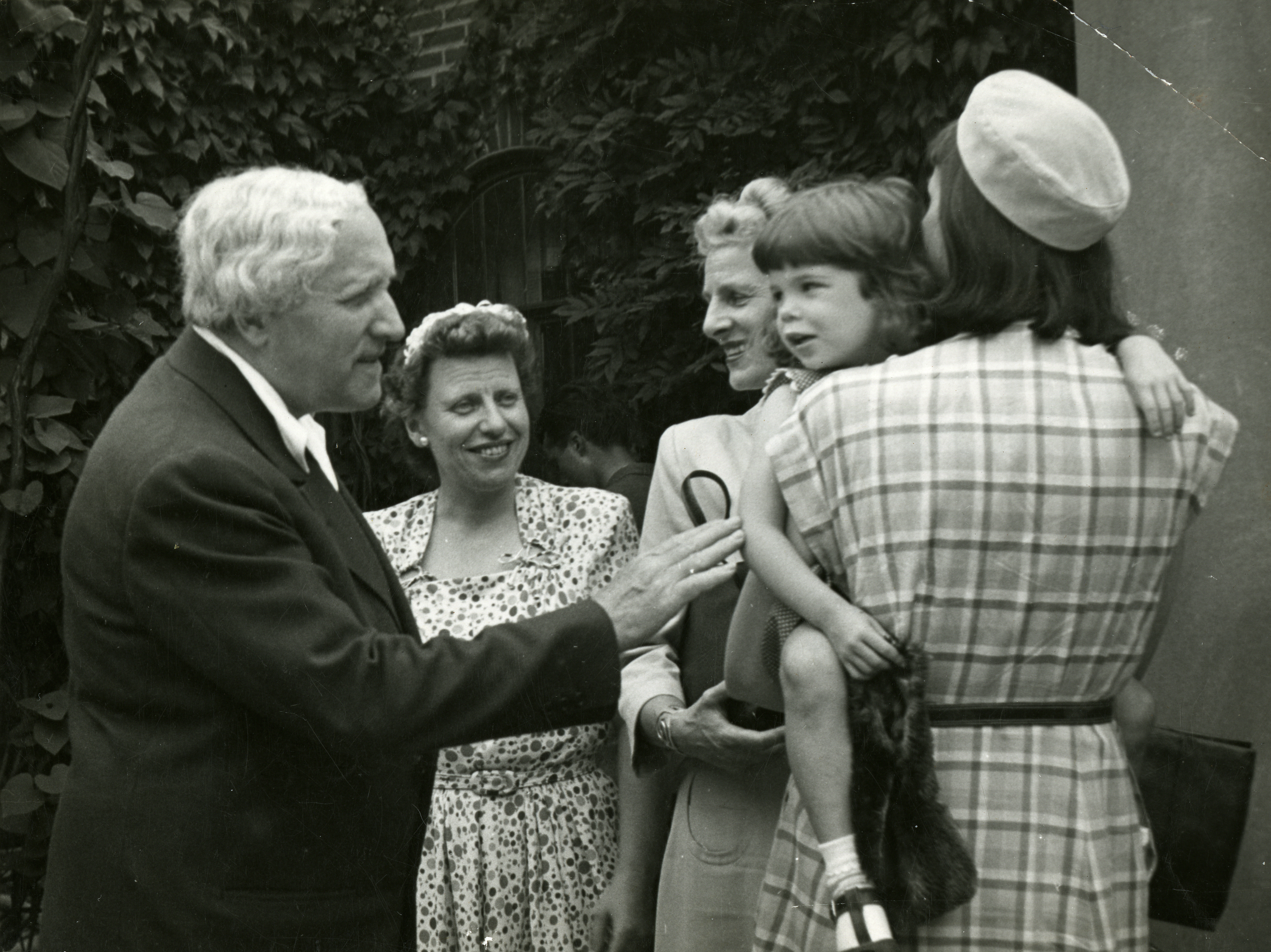
Carl Milles, Svea Kline, Mabel Deardon, and Mary Woolf (holding Dinah Mitchell) in Millesgarden, ca 1944. Cranbrook Archives.

In 1943, Kline started the Sculpture Department at the Flint Institute of Arts, and began teaching there part-time. From 1950 she taught there full-time and also at the Saginaw Museum of Art. Kline also taught at what was then the Bloomfield Art Association and Haystack School for the Arts in Maine, worked as Milles’ assistant from 1949-50, and was one of the founders of the Sculptors Guild of Michigan. Founded in 1952 as the Terra Cotta Sculptors, the group “provided an umbrella for women to prove their validity as artists to the community and to provide support and inspiration to each other.” (Men were invited to join in 1977.)

S1944_35

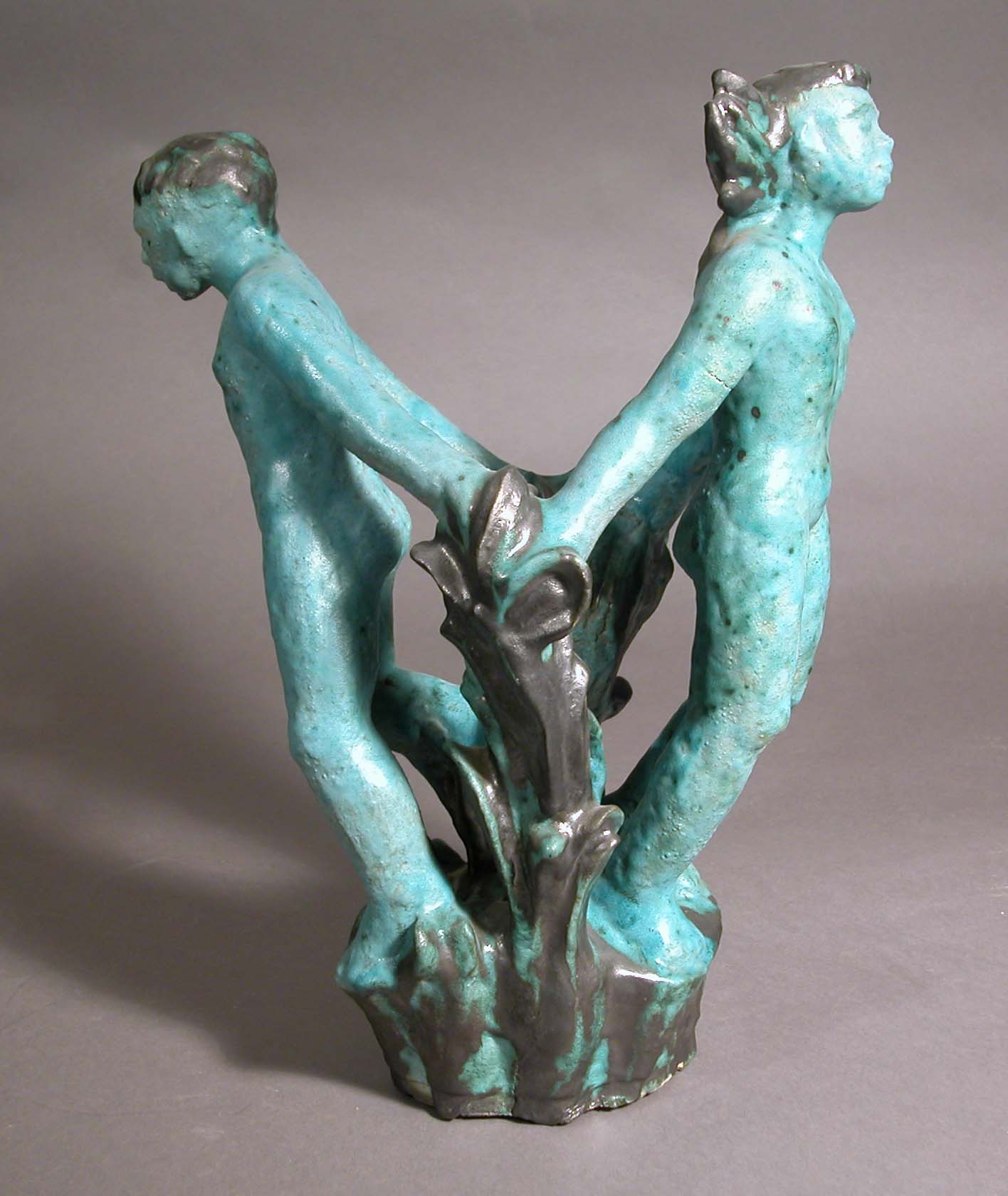
Fountain Piece, 1944. Cranbrook Art Museum.

As a sculptor, Kline worked in metal, bronze, wood, ceramic and glass. Her innovative work with glass was considered “ahead of her time.” She molded glass, fused glass, painted on glass, and embedded pieces of colored glass into a background layer of glass—a process she called “gemaux.” In Michigan her works are displayed at the Berkley Public Library, Flint Public Library, Genesee Merchants Bank and Trust, Detroit Broach Company, Koebel Diamond Tool Company, Michigan Credit Union League, and the First Baptist Church of Royal Oak.

In a December 1983 interview in the Birmingham Eccentric, Kline fondly remembered her days at Cranbrook. “I thought it was just heaven on earth—so well-kept, so many interesting people from all over the world. There was a marvelous spirit.” She also recalled with pleasure the great artists with whom she was associated—Eliel Saarinen, Carl Milles, Maija Grotell, and Harry Bertoia. Coincidentally, we have an image (displayed below) of Kline wearing a brooch designed by Harry Bertoia. In honor of the Cranbrook Art Museum’s exhibition of Harry Bertoia’s jewelry (which opens tonight), we are featuring a photograph of Kline wearing a Bertoia brooch.
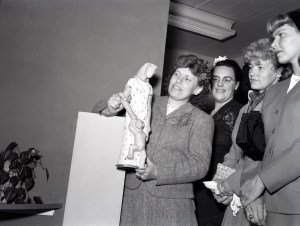
AA-87

Svea Kline, Marguerite Kimball, Lillian Holm, and Joy Griffin West at the opening night of the student exhibition, May 1944. Cranbrook Archives.

Gina Tecos, Archivist

Object in Focus: Viktor Schreckengost Correspondence

Viktor Schreckengost letter, 1938

Saarinen Family Papers, Cranbrook Archives

While doing research for the Cranbrook Archives’ upcoming exhibition Ephemera: The Stories that Letterhead Tells, I discovered a beautiful example of bold, colorful letterhead from 1938. The letterhead, designed by Viktor Schreckengost, was clearly influenced by the Bauhaus designs of the 1920s and 1930s which featured asymmetrical compositions and expressive typography. The content of the letter is of course also very interesting. A response to textile designer Loja Saarinen’s request to purchase the ceramic sculpture “Young Pegasus,” the letter shows a mutual respect between the two artists. The sculpture, which Schreckengost sold to Loja Saarinen, lived for many years in Saarinen House, and is now in the permanent collection of Cranbrook Art Museum.

As the saying goes, “curiosity killed the cat,” and as I knew nothing about Schreckengost, I set out to see what I could discover about him. Turns out that Schreckengost, who spent the majority of his life in Cleveland Heights, Ohio, was not only an industrial designer (think streamlined pedal cars and the Sears Spaceline bicycle), but was also a painter and ceramicist. The son of a commercial potter, Schreckengost dabbled in clay sculpture as a child, and went on to design mid-century modern dinnerware for American Limoges and Salem China. Perhaps his best-known ceramic work is the Jazz Bowl (1930-1931) that he created at Cowan Pottery in Rocky River, Ohio, for a commission from Eleanor Roosevelt.

Viktor Schreckengost letter, 1948

Cranbrook Art Museum Exhibition records, Cranbrook Archives

In 1948, then curator of Cranbrook Art Museum, Esther Sperry, was in the process of planning the Academy of Art’s Second Biennial Ceramics and Textile Exhibition and reached out to Schreckengost. The exhibition records yielded two more very interesting letterhead from Schreckengost. With simplified typography, the first reflects Schreckengost’s response to post-war graphic design and the promotion of “less is more” concept, while the second illustrates how Schreckengost constantly experimented with type and design elements. Both 1948 letters show his conscious effort to utilize negative space as an active element.

Viktor Schreckengost letter, 1948

Cranbrook Art Museum Exhibition records, Cranbrook Archives

The bottom line is that for me, these three objects in our collection are fascinating – in their design, in their content and how they, as cultural artifacts, reflect the changing world of design through their rich visual vocabulary.

Leslie S. Edwards, Head Archivist

Currently off-site doing research at the Archives of American Art in Washington, DC, Cranbrook Art Museum’s Jeanne and Ralph Graham Collections Fellow Shelley Selim has been making her way through the Harry Bertoia papers there. She stumbled upon this delightful tidbit today:

A September, 1942, letter from artist and designer Bertoia to his fiance Brigitta Valentiner captures the awkwardness of eating on Cranbrook’s campus as an instructor at the Academy of Art: “We still go over to the boys’ school to eat. Excellent food is served with an overdose of etiquette which for me is hard to swallow.”

Harry Bertoia, 1942. Richard Askew/Cranbrook Archives.

Harry Bertoia, who began studying at the Cranbrook Academy of Art in 1937 and was enlisted as the head of the Metalsmithing Department by 1938, might have felt an extra level of discomfort at the dining experience at Cranbrook School—only 24 years old when he began his tenure as an instructor, he likely looked the same age as many of the high school students.

The formality captured in Bertoia’s letter is not overstated, however. Film footage of Cranbrook School in the 1930s shows a formalized dining experience that would be unrecognizable to today’s students, with uniformed maids delivering hot dishes to the young boys who line up at their tables in coats and ties, waiting to sit in unison.  The film is featured in the Center’s current exhibition Cranbrook Goes to the Movies, on view now at Cranbrook Art Museum.

Shelley’s Bertoia research, meanwhile, has proven productive, feeding into an exciting project that Cranbrook Art Museum is cooking up in honor of the 100th anniversary of Harry Bertoia’s birth in 2015. We can’t say more right now, but watch the CAM website as this project develops over the new few months. And, just because we love it, enjoy a photo of Harry Bertoia and Brigitta Valentiner at Cranbrook Academy of Art’s themed “Come as a Song” party in 1942! We featured it as a Photo Friday a while ago, but it is just too good to not post again.

"Come as a Song" party, 1942.  Cranbrook Archives.

“Come as a Song” party; Harry Bertoia and fiance Brigitta Valentiner speak with an unidentified man in a playing card costume, 1942. Cranbrook Archives.

Shoshana Resnikoff, Collections Fellow, and Shelley Selim, Jeanne and Ralph Graham Collections Fellow, Cranbrook Art Museum

Evening Post: Summer Exhibitions Are Almost Here!

Posting on a Thursday night is a rare activity for this blog, but it’s worth staying late in the office to help install the upcoming shows. Cranbrook Art Museum will kick off its summer exhibition season this Saturday with six all new exhibitions. Two of those are Center for Collections and Research projects, and we are so excited to show them off!

Two selections of ephemera from the exhibition highlight the variety of documents that fall under this important archival category. Cranbrook Archives.

We’ve already highlighted one exhibition on the blog, but it is worth mentioning again. Officially opened on April 22, Cranbrook Archives’ Ephemera: Fragments from Cranbrook’s Social Life went into hibernation with the rest of the museum during the changeover from the Academy of Art Graduate Degree Show in May. Re-opening along with the rest of the galleries, it presents an exciting opportunity to explore Cranbrook’s diverse history through the campus’ ephemera – the paper material (fliers, invitations, notices, tickets, etc.) that populate our daily life yet are so often discarded rather than saved. Called “the transient evidence of everyday life,” ephemera collections are ripe for exploration, which is what the Archives will be doing as it launches this first show in a series of exhibitions that mine the Archives’ rich collection of ephemera.

Films and objects come together in Cranbrook Goes to the Movies. Left: Tea urn and tray, Eliel Saarinen, 1934 (or earlier). Right: Still from Cranbrook Academy of Art Experimental Films, circa 1941. Cranbrook Art Museum/Cranbrook Archives.

The second Center exhibition opening at Cranbrook Art Museum on Saturday, June 21 features an under-explored medium in Cranbrook’s history: film. Cranbrook Goes to the Movies: Films and Their Objects, 1925-1975 takes Cranbrook Archives’ incredible collection of historic film as its jumping off point, using footage from multiple time periods and many distinct parts of Cranbrook’s community to provide a fresh look into the past. Incorporating objects that appear in films and remain within Cranbrook’s various collections, the show reunites the ephemeral with the physical to activate the historic film and provide context to objects that are still considered some of Cranbrook’s greatest treasures.

On loan to the exhibition from Cranbrook Institute of Science, this stuffed duck finds many of his friends in a 1960s film that details the attractions of the early Institute.  Shoshana Resnikoff/Cranbrook Center for Collections and Research

On loan to the exhibition from Cranbrook Institute of Science, this stuffed duck finds many of his friends in a 1960s film that details the attractions of the early Institute. Shoshana Resnikoff/Cranbrook Center for Collections and Research

We can’t show you the completed gallery, but enjoy this sneak peek into the installation. And be sure to visit Cranbrook Art Museum on opening weekend! Besides these two shows, CAM will be opening four other exhibitions that are sure to impress – Paul Evans: Crossing Boundaries and Crafting Modernism, Warhol on Vinyl: The Record Covers, 1949-1987+, Modern/Moderna:Amie Siegel and Terence Gower, and Culture Breakers: The Living Structures of Ken Isaacs. Also exciting is Sunday’s PNC Family Fun Celebration day, featuring live music, silk screening activities, and tours of the exhibitions!

Alright, enough blogging – back to putting the finishing touches on our shows!


Photo Friday: Art by Degrees

Young women take in the Annual Exhibition of Student Work at the Cranbrook Art Museum. The central painting is Untitled (1957) by student Frank Okada. June 1957. Harvey Croze/Cranbrook Archives.

Visitors take in the Annual Exhibition of Student Work at Cranbrook Art Museum. The central painting is Untitled (1957) by student Frank Okada. June 1957. Harvey Croze/Cranbrook Archives.

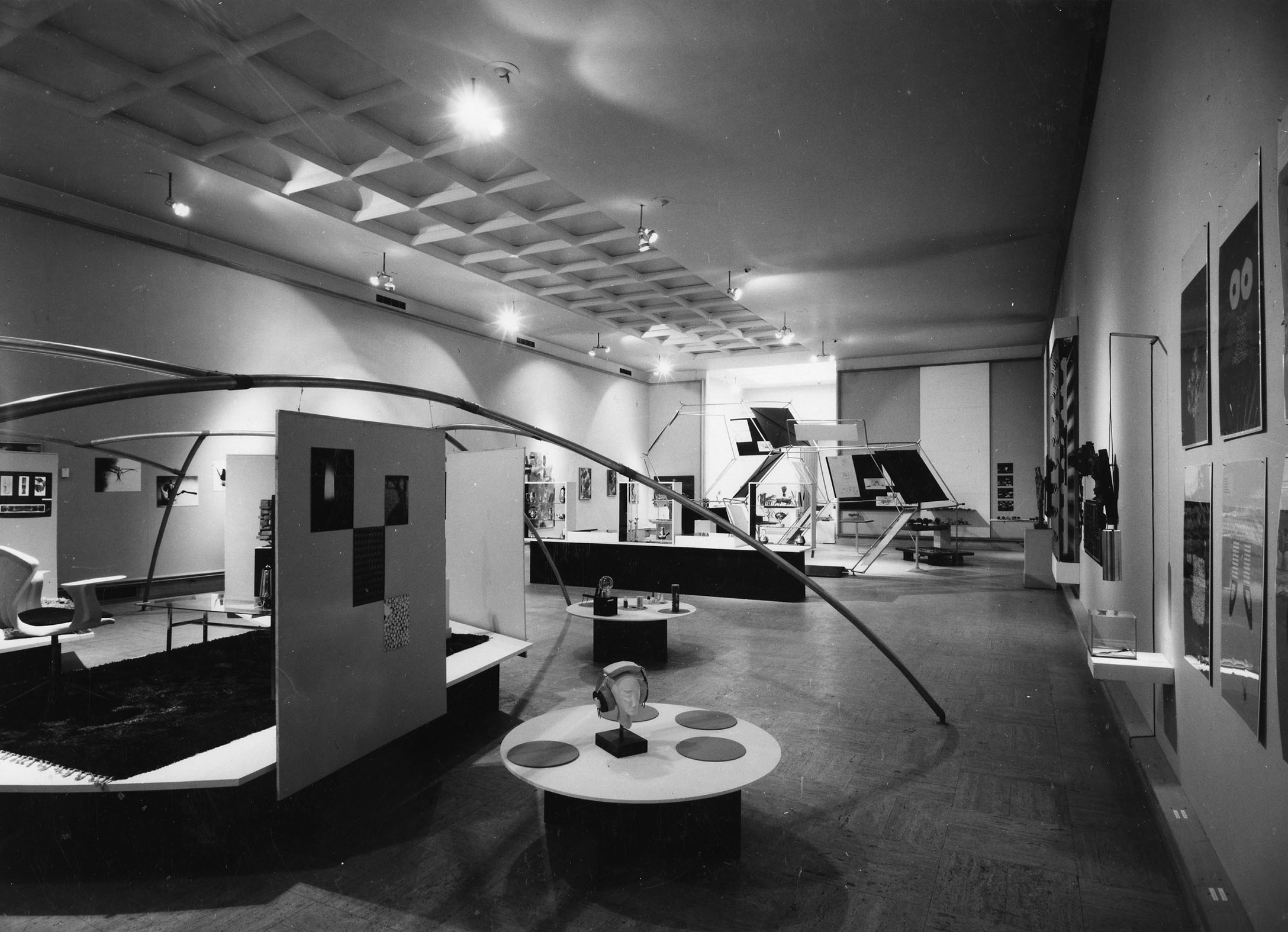
It’s that time of year again—the Graduate Degree Exhibition is up and running at Cranbrook Art Museum! Staged in some form or another since 1940, the Graduate Degree Exhibition is a celebration of work produced by Cranbrook’s graduating class of MFA students. This photograph from 1957’s Annual Exhibition of Student Work (an earlier name for the Graduate Degree Exhibition) shows a painting by Academy of Art graduate Frank Okada that might be familiar to eagle-eyed museum visitors—it was featured in the 2013 exhibition What to Paint and Why: Modern Painters at Cranbrook, 1936-1974.

For more information about the 2014 Graduate Degree Exhibition, check out Cranbrook Art Museum’s website. And be sure to check out the show while you still can—it closes May 11!

Photo Friday: Cage at Cranbrook

Limited edition postcard featuring CAA student Jim Poole wearing a Cage Bag as a mask on Cranbrook's campus, 1974. Courtesy Stephen Milanowski.

Limited edition postcard featuring CAA student Jim Poole wearing a Cage Bag as a mask on Cranbrook’s campus, 1974. Courtesy Stephen Milanowski.

In 1974, artist-composer John Cage traveled to Cranbrook for the opening of the museum exhibition Music-Mushrooms-Manuscripts. His visit prompted an incredible spate of creative production among CAA students, including this postcard. Part of a limited edition set created as part of Cage’s visit, the card features CAA student Jim Poole wearing a “Cage Bag” as a mask. The Cage bags (paper bags featuring silk-screened images of John Cage’s face) were made to be used in a performance of Cage’s compositions held on campus.

If this all seems confusing, don’t worry – you can get some clarity on this amazing, confusing, and exciting time period by visiting Cranbrook Art Museum on Sunday, March 23. Shelley Selim, the 2013-2015 Jeanne and Ralph Graham Fellow, will be lecturing on John Cage’s visit to Cranbrook as well as discussing Mushroom Book and Sounds of Venice, two Cage works currently on display in the Cranbrook Art Museum exhibition My Brain Is in My Inkstand: Drawing as Thinking and Process. The lecture starts at 4 pm, and immediately following will be a performance of Sounds of Venice by Detroit musician and composer Joel Peterson (check out his amazing gallery/restaurant/performance space Trinosophes, across from Eastern Market). For more information, check out Cranbrook Art Museum’s website. You can also read more about the Cage visit in Shelley’s amazing blog entry, hosted hereon our sister blog Cranbrook Sightings. And if you haven’t yet seen My Brain Is in My Inkstand, be sure to catch it soon–the exhibition closes on March 30!

Art in the Time of War: Cranbrook’s Monuments Men

Monuments Men, opening today in theaters, chronicles the efforts of men and women in the US military to protect and preserve Europe’s artistic and cultural patrimony during World War II. Directed by George Clooney, the film has brought to national attention the work of these non-traditional soldiers, arts and cultural professionals who recognized that while the world was tangled in a struggle that engulfed countries and cost thousands of lives, the art and artifacts prized for centuries by those communities were equally at risk.

With the renewed attention to the work of the Monuments, Fine Arts, and Archives Section (MFAA)—nicknamed the “Monuments Men”—has come the realization at museums across the country that many of their early directors and curators were active members of the MFAA during World War II.  At Cranbrook we’ve uncovered the stories of two Monuments Men who played a role in our own history.

Robert S. Davis at Cranbrook, 1942. Cranbrook Archives.

Richard S. Davis at Cranbrook, 1942. Cranbrook Archives.

Continue reading

Happy Birthday, Raymond Loewy!

Anyone who did a search on Google today probably saw the sketched-out train engine that forms the word “Google” on the homepage.  Honoring the 120th birthday of pioneering American designer Raymond Loewy, the Google doodle pays homage to Loewy’s trademark streamlined look.  While we can’t claim Raymond Loewy as a Cranbrook designer, we took his birthday as an opportunity to identify what sort of material and ephemera we have connected to this design powerhouse. Continue reading

“In the Twenty-Ninth Century Mode”: Crandemonium Returns

The theme of the first Crandemonium Ball was the Court of Crandemonium. It prompted this newspaper article declaring that the party was in the "twenty ninth century mode." 1934, Cranbrook Archives.

The theme of the first Crandemonium Ball was the Court of Crandemonium. It prompted this newspaper article declaring that the party was in the “twenty ninth century mode.” 1934, Cranbrook Archives.

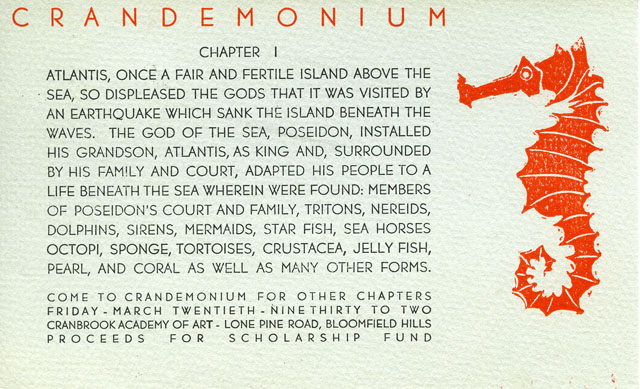
Since we already upset tradition by posting a “Photo Thursday,” we thought we’d skip today’s Photo Friday and instead focus on a subject near and dear to our hearts—Crandemonium!  A costume ball thrown at various intervals during the Saarinens’ tenure at the Cranbrook Academy of Art, Crandemonium was a no-holds-barred party.  From the painted backdrops to the fantastical mythology, Crandemonium had it all.  Academy of Art students were essential to the party, competing to design the interiors and often appearing in the most outlandish costumes of all. This year the Museum Committee has resurrected the beloved Crandemonium party for their yearly fundraiser, happening this Saturday at the Cranbrook Art Museum.  Just in time, enjoy the Crandemonium ephemera from the past!

An intriguing invitation to 1936's Atlantis-themed Crandemonium, this card featured the first part of the story of Atlantis. The invitee would presumably learn the remaining chapters upon attending the party. 1936, Cranbrook Archives.

An intriguing invitation to 1936’s Atlantis-themed Crandemonium, this card featured the first part of the story of Atlantis. The invitee would presumably learn the remaining chapters upon attending the party. 1936, Cranbrook Archives.

The 1936 Atlantis Crandemonium theme led to some amazing promotional material. 1936, Cranbrook Archives.

The 1936 Atlantis Crandemonium theme led to some amazing promotional material. 1936, Cranbrook Archives.


Create a website or blog at WordPress.com