Cranbrook Archives is pleased to announce that the Carl and Annetta Wonnberger Papers are open for research. The collection contains biographical materials documenting their early life and education, a large series of personal correspondence between Carl and Annetta during their courtship, materials relating to Carl’s tenure as teacher and administrator at Cranbrook School, their involvement in establishing and directing the Cranbrook Theater School, as well as Carl’s involvement in outside organizations.

Carl and Annetta Wonnberger were fixtures at Cranbrook for well over half a century, raising two daughters on campus (Jo Anne and Nancy, Kingswood ’48 and ’53 respectively) and making significant contributions to Cranbrook School (Carl even wrote their fight song!) and community theater arts. They both received Cranbrook’s highest honor, the Founders’ Award, and Annetta had a day (July 17) named after her by the City of Bloomfield Hills.
They arrived at Cranbrook in September 1929 when Carl took the position of English teacher at Cranbrook School. The following year, Carl became the Head of the English Department, a position which he held until 1967 when he retired from Cranbrook and became Professor of English Language and Literature at Eastern Michigan University.

Annetta helped Carl start Ergasterion (Cranbrook School’s drama club) in 1931. She created costumes, built and painted sets, applied make up, and played female roles in all boys’ productions. Annetta was also one of the founders, with Henry Scripps Booth and Brookside Schools Headmistress Jessie Winter, of St. Dunstan’s Theatre in 1932.

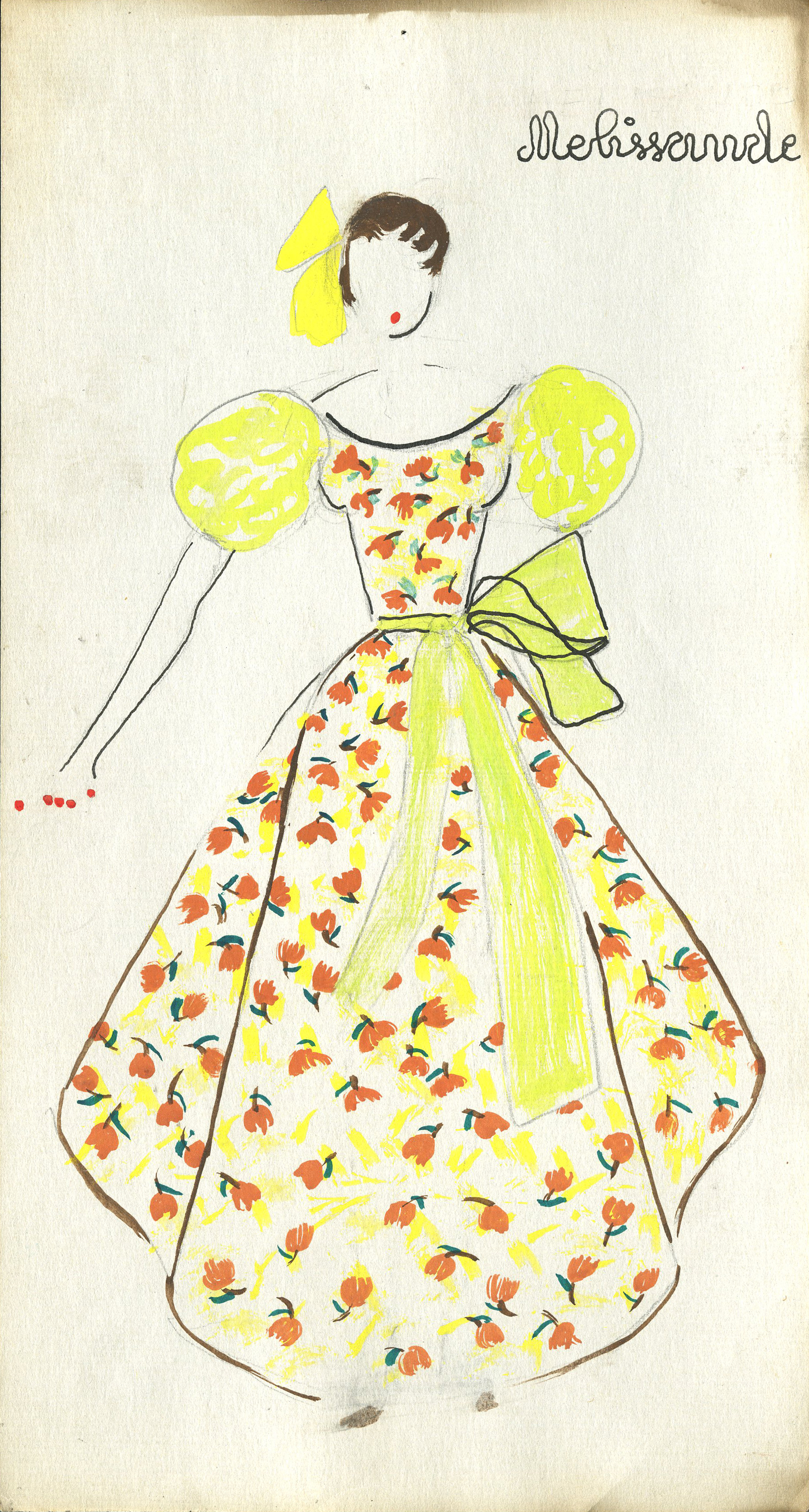
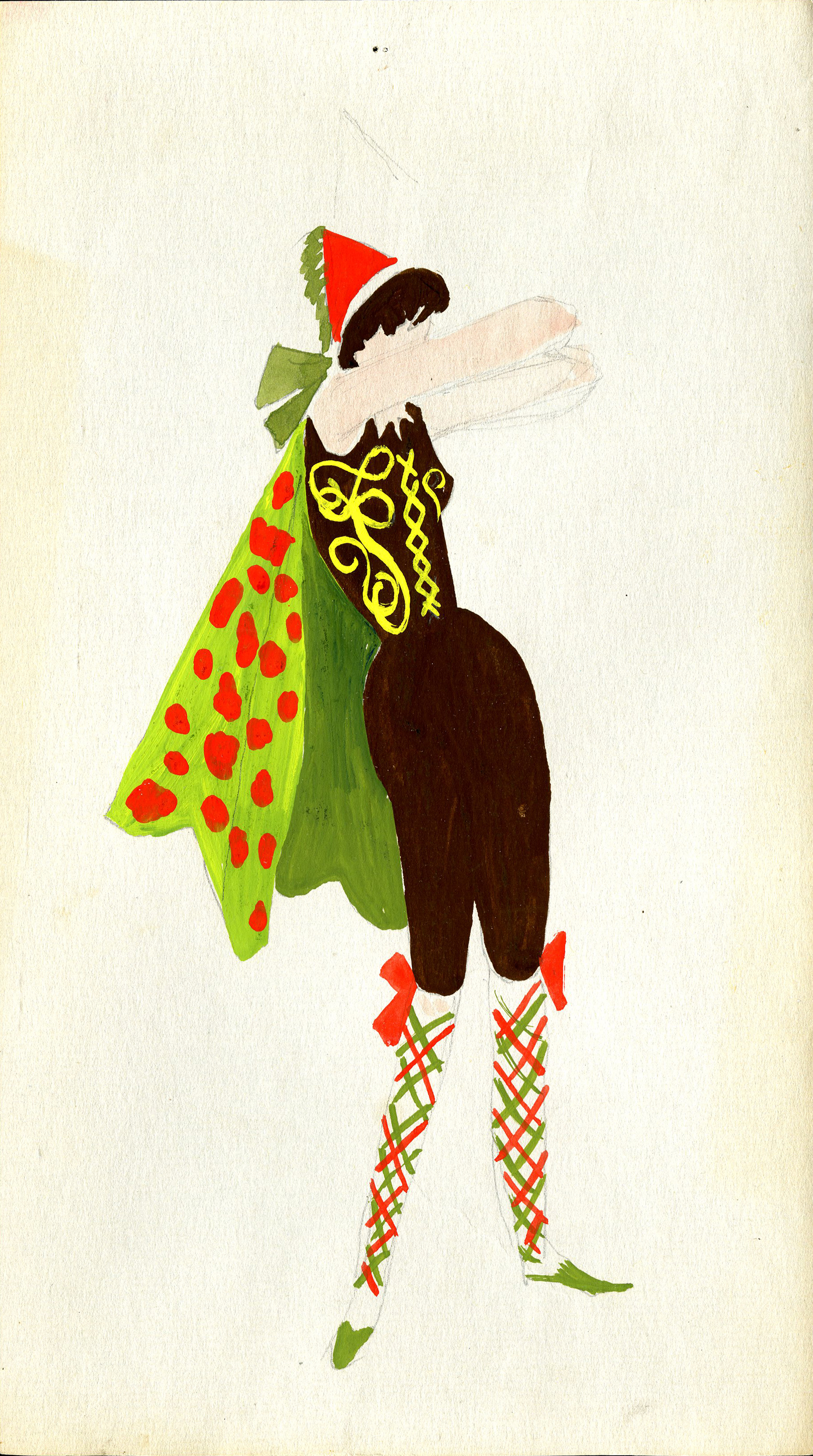
Together they founded Cranbrook Theatre School (CTS) in 1942 with the first season held in the Greek Theater. The mission of the school was to provide a full liberal education through theater training including voice and diction, phonetics and language, development and control of the body, literature, history, philosophy, design, and technical science. Carl and Annetta taught theatrical training so as to provide experience in teamwork, good sportsmanship, and dialog. They celebrated theatrical training as a wonderful developer of personality.

The bulk of the Wonnberger Papers relates to their involvement with Cranbrook Theatre School, comprising administrative materials as well as many scripts, announcements, and performance programs.

Theater performances, themselves, are well documented by audio-visual formats including photographs, slides, and motion picture film. This collection provides a rich study of a fascinating facet of Cranbrook’s performing arts legacy, and a theater program that is still going strong today.
–Laura MacNewman, Associate Archivist, Cranbrook Center for Collections and Research
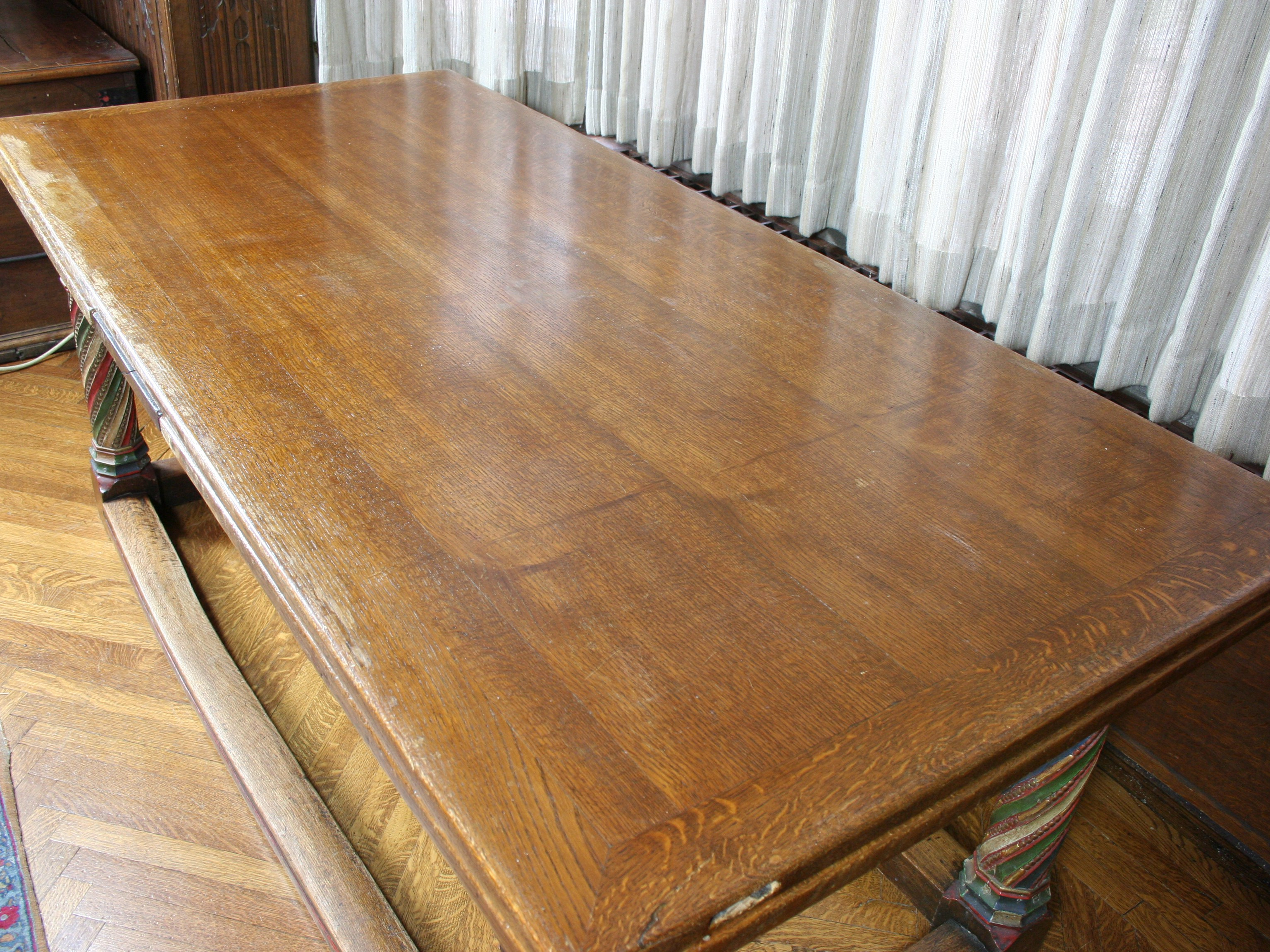 Purchased by George G. Booth, before 1949, for use in Cranbrook House, the Refectory Table (CEC 37) in the Cranbrook House Oak Room has a plain 76 inch by 35-1/2 inch rectangular top, with two extendable tops of 31-1/2 inches each.
 The extension mechanism works by removing the top wood leaf, pulling out each side of tabletop – these are supported by bars under the table top that pull out – removing the center section, then placing the top leaf in the center.
 The frieze runs all around the table and features a grapevine interspersed at regular intervals with Medieval-style figures: mermaids, men, women, and animals.
 The figures carry banners and staffs, are sitting on benches, and, in the case of the mermaid, holding a fish.
 The frieze background is painted red; the grapevine and grapes are brown with black and the leaves are green with gold detailing; the figures and animals are mostly tan with gold and the mermaids are gold as well. The lower edge molding of the frieze is painted with diagonal lines of green, gold, and red.
 Each of the four carved and painted legs is decorated with a different linear design of stripes, twisted around the trunk, with hexagonal base and top.
 Metal stars are attached to the base and top of each leg. The legs are painted blue, green, red, and tan, all with gold detailing.
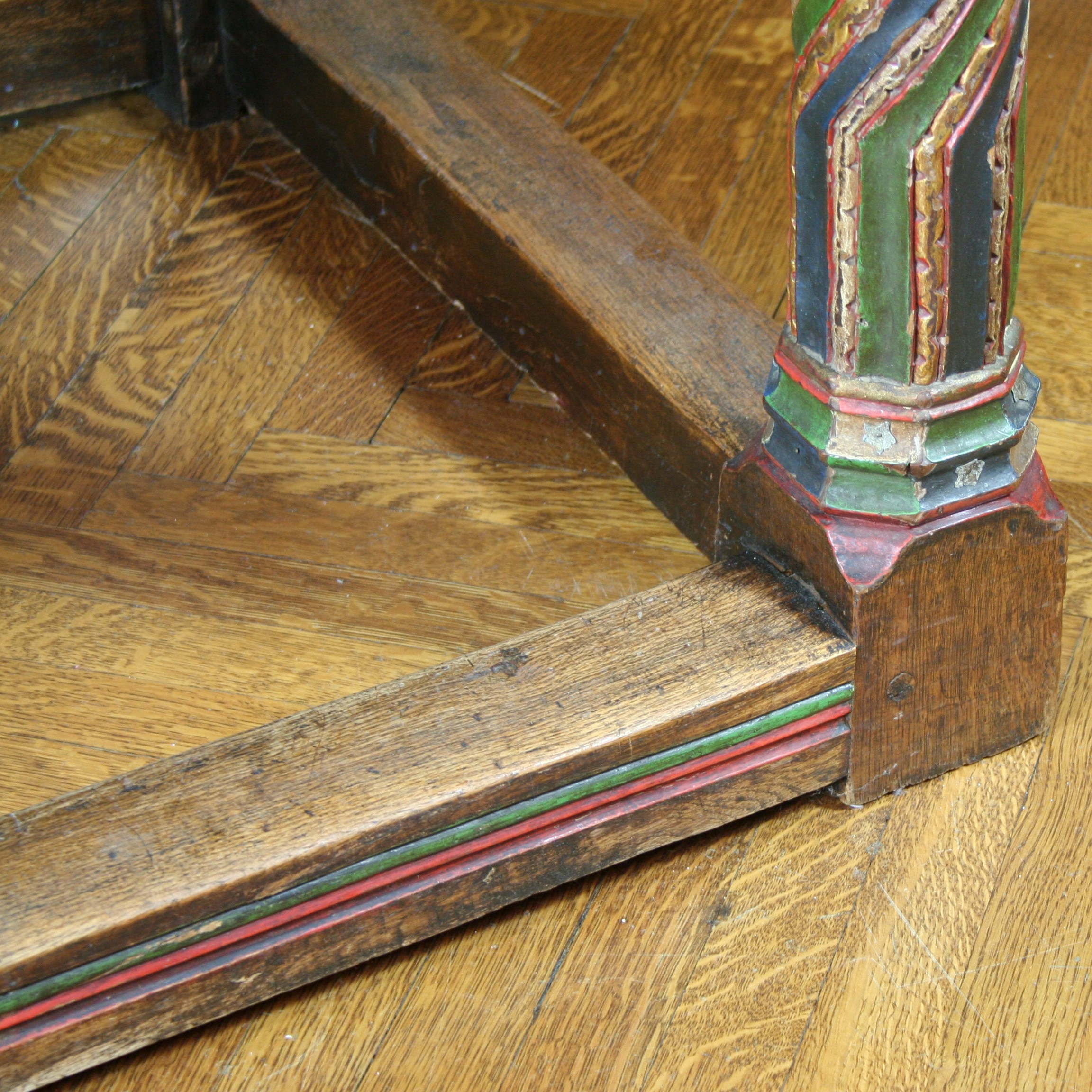 The outer side of each stretcher has carved lines painted red and green.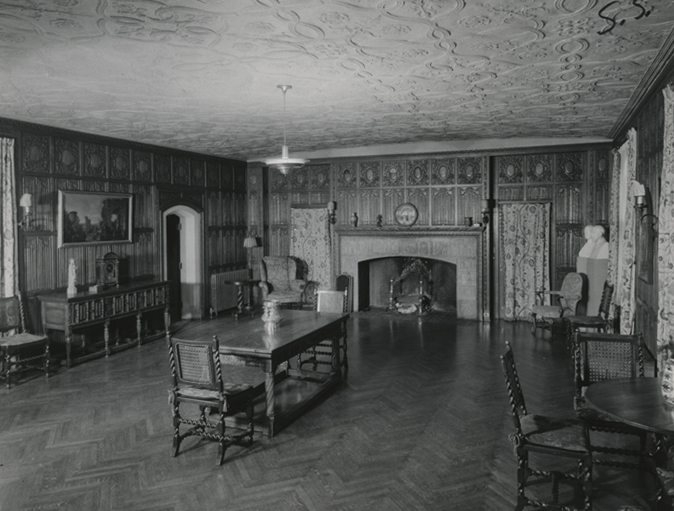


 Cranbrook Kitchen Sink