From the Archives

Things have been happening in the Archives behind the scenes this past Winter. As we transition into Spring (I think?), I thought I’d share just a couple of new developments that we are all very excited about.

At the end of February, the Center welcomed Associate Archivist Xavi Danto. Xavi comes to Cranbrook Archives with five years of experience in a variety of academic and cultural heritage settings. Among other things, they have worked with web archives at the Lincoln Center for the Performing Arts, born-digital art for Rhizome at the New Museum, and architecture faculty papers at Pratt Institute Archives. A Visual and Critical Studies graduate of the Art Institute of Chicago, Xavi received their MS in Library and Information Science with an Advanced Certificate in Archives from Pratt Institute in 2025.
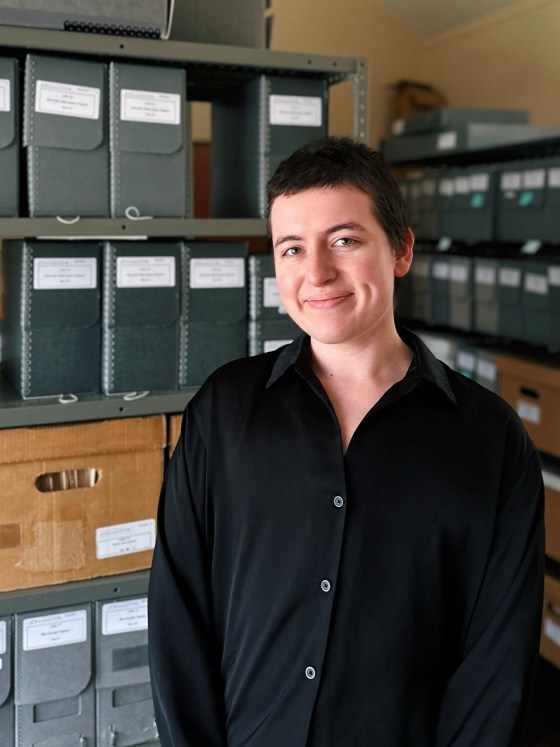
Xavi brings a personal passion for all things Cranbrook and an impressive enthusiasm for archival work that has already proven invaluable in their short time here. So far, they’ve been busy assisting with the preservation of both physical and digital materials, implementing new digital preservation tools, and diving into the arrangement and description of their first institutional records collection. Join us in welcoming Xavi and look forward to hearing from them on the blog soon!

I’m also pleased to announce the launch of the Cranbrook Archives Janice and Barry King Visiting Scholars Fellowship. An annual award for qualified researchers, whose work will benefit from utilizing our collections in person, stipends are now available to offset travel costs associated with one-to-two-week visits. We invite interested artists and scholars with projects leading to publication, lecture, film, public performance, or exhibition to learn more and apply through the Center’s website.

Lastly, we’ve added new materials to our collection finding aids, like the Clifford Bateman and Joy Griffin West Papers, and digital collections, like this fabulous photo of Melvyn and Sara Smith on the unfinished terrace of their Frank Lloyd Wright home. Be sure to check both sites regularly for the latest additions!
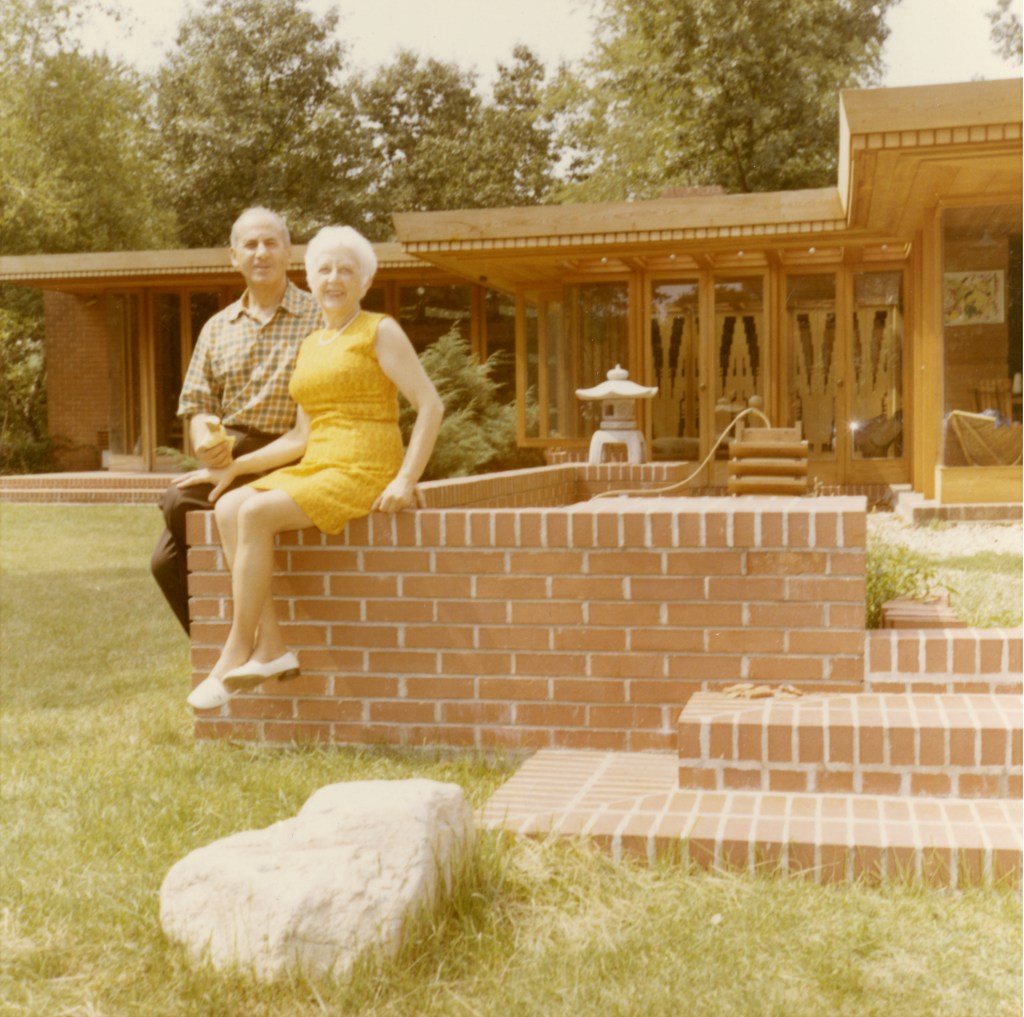
Circa 1970. Courtesy of Cranbrook Archives.

Deborah Rice, Head Archivist, Cranbrook Center for Collections and Research

Cranbrook Institute of Science Films Digitized

Cranbrook Archives is pleased to announce the preservation and digitization of eight Institute of Science early education films. Made possible through generous funding by the National Film Preservation Foundation (NFPF), these silent films were sent to a professional film lab where they were inspected and expertly cleaned, repaired, copied onto archival safe film stock, and scanned. Previously inaccessible to users due to their fragility, a combined ninety-four minutes (2,450 feet) of footage can now be viewed digitally.

Opening credits from Emergence of the Periodical Cicada at Cranbrook, 1936. Courtesy of Cranbrook Archives.

In a post exactly one year ago, I first mentioned the Institute’s early forays into the burgeoning educational film market of the 1930s. Using 16mm film technology (the amateur version of Hollywood motion picture film), Institute staff documented scientific field research, captured the work of exhibition preparators, and recorded educational programs. Many of these films were shown regularly to museum patrons and were often accompanied by lectures.

With the exception of one 1955 film, the NFPF grant films were all created between 1935 and 1938. Six of the films collectively display a range of astronomical, botanical, zoological, ornithological, and marine ecological research efforts. In addition to Emergence of the Periodical Cicada at Cranbrook, finished titles include Solar Prominences, featuring telescopic footage of solar flares, and Birds in Summer, which tells the story of newly born birds. Untitled films show the behavior of adult birds, deer, and coral reef life.

Birds in Summer, 1935. An Institute scientist can be seen banding a young blue heron. Courtesy of Cranbrook Archives.

While these snapshots in time may no longer be useful as originally intended – to educate the public on their present natural world – they do have the potential to inform current and future research on conservation or climate change. For example, a film on coral reef life, with its unique early underwater footage, offers the opportunity for comparing current conditions with those documented by Institute scientists three generations ago.

Untitled film with underwater footage of a coral reef, circa 1955. Courtesy of Cranbrook Archives.

The remaining two films demonstrate curatorial and membership activities. In one, staff are seen in the Institute library; painting scenes for exhibit backdrops and gathering botanical specimens in a forested setting; and making plaster molds of specimens in an Institute workroom. In another, Institute Junior Members and staff take a field trip to a local quarry to collect rocks and minerals.

Untitled film showing exhibition preparator, Dudley Blakely, painting a display case backdrop, 1936. Courtesy of Cranbrook Archives.

The Institute of Science film project marks the beginning of a concerted effort to digitize the Archives’ audiovisual collections. Due to their age, complex chemical/mechanical makeup, and obsolescent playback equipment (who still owns a VCR?), audio and video recordings capturing the sights and sounds of Cranbrook’s past are some of our most at-risk materials. I hope to share more stories of success in the near future!

Deborah Rice, Head Archivist, Cranbrook Center for Collections and Research

Create a website or blog at WordPress.com