Dispatch from the Archives: Documenting Liggett

Part of the job of an archivist is to network with colleagues and provide guidance when neighboring organizations or institutions are looking to establish a new archive.  As luck would have it, two weeks ago I had the pleasure of visiting the University Liggett School in Grosse Pointe Woods to look at their archives, and work with the two stellar Sara(h)s: Sara Day Brewer and Sarah Gaines.  Both women—also current parents at the school—are working to preserve the heritage of the school.

Image

Liggett School ephemera noting architect Albert Kahn’s entrance to the school, 1942. The Liggett School Collection, Courtesy University Liggett School Archives.

Continue reading

Art in the Time of War: Cranbrook’s Monuments Men

Monuments Men, opening today in theaters, chronicles the efforts of men and women in the US military to protect and preserve Europe’s artistic and cultural patrimony during World War II. Directed by George Clooney, the film has brought to national attention the work of these non-traditional soldiers, arts and cultural professionals who recognized that while the world was tangled in a struggle that engulfed countries and cost thousands of lives, the art and artifacts prized for centuries by those communities were equally at risk.

With the renewed attention to the work of the Monuments, Fine Arts, and Archives Section (MFAA)—nicknamed the “Monuments Men”—has come the realization at museums across the country that many of their early directors and curators were active members of the MFAA during World War II.  At Cranbrook we’ve uncovered the stories of two Monuments Men who played a role in our own history.

Robert S. Davis at Cranbrook, 1942. Cranbrook Archives.

Richard S. Davis at Cranbrook, 1942. Cranbrook Archives.

Continue reading

Touchdown in Bloomfield Hills: The Detroit Lions Come to Cranbrook

As Superbowl season engulfs America and the Detroit Lions’ seemingly endless search for a new head coach comes to a close, we at Cranbrook look fondly back at the days when the Lions were a seasonal presence here on campus.  You might be forgiven for not immediately associating a 100+ year-old arts and education campus with pro football, but get ready to be schooled: the Lions used Cranbrook’s bucolic campus as their training ground for a number of years.

Detroit Lions players and coaching staff arrive at Cranbrook School for training camp. Pontiac Press, date unknown.

Detroit Lions players and coaching staff arrive at Cranbrook School for training camp. Pontiac Press, date unknown.

Continue reading

Photo Friday: Stegosaurus Party

Bob and Lee Bowen at the Stegosaurus Party. Steve Kendricks/Cranbrook Archives.

Bob and Lee Bowen at the Stegosaurus Party. Steve Kendricks/Cranbrook Archives.

We post this photo with very little commentary, because what kind of explanation could possibly improve upon the title “stegosaurus party?” So enjoy it as it is!

Walls Can Talk: Robert Snyder, the Buckner Residence, and the Mid-Century Home

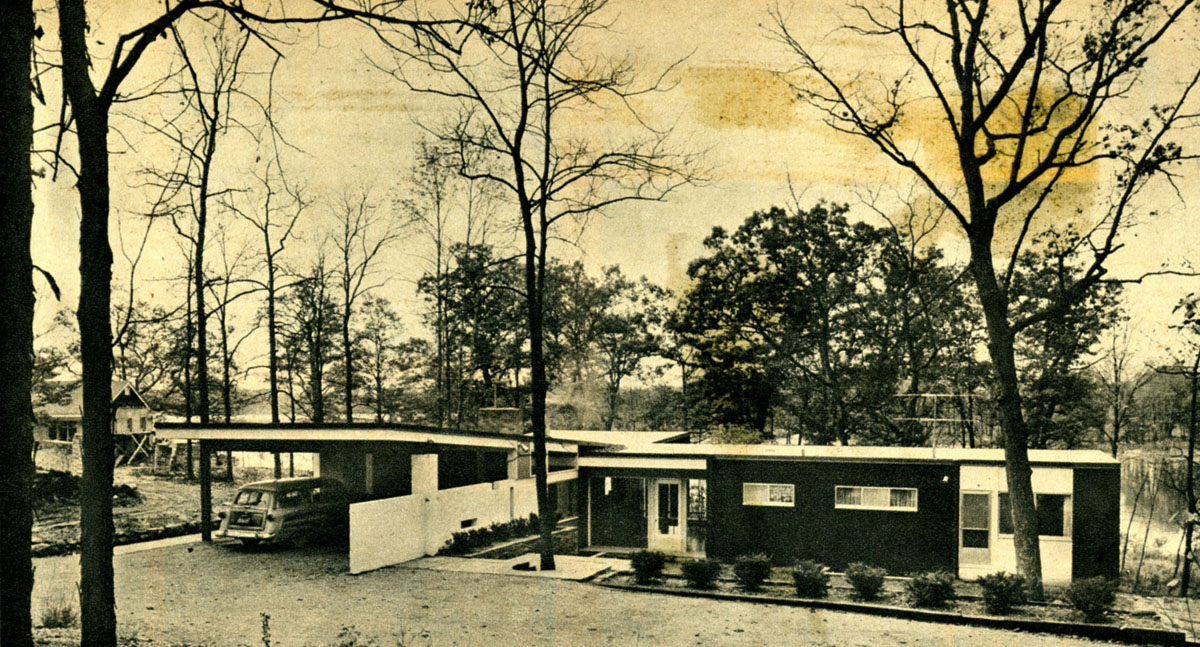
The other day I had the pleasure of taking a fantastic (albeit very cold!) field trip to view a mid-century modern home designed by Birmingham architect Robert Snyder.  Snyder studied architecture at Cranbrook’s Academy of Art (1948-1950) and eventually took over as the Head of Architecture (1952-1965). The house, located on Walnut Lake in West Bloomfield and commissioned by Noel and Isabel Buckner, is slated for demolition any day.  I learned about the house from Liz Buckner, who called to donate the original blueprints of the house to the Archives.  Liz offered to give me a tour of the house and I enthusiastically accepted!

View of Buckner House from the drive above, circa 1955. Courtesy Liz Buckner. Detroit Free Press/Ray Pillsbury.

View of Buckner House from the drive above, circa 1955. Cranbrook Archives, Detroit Free Press/Ray Pillsbury.

Continue reading

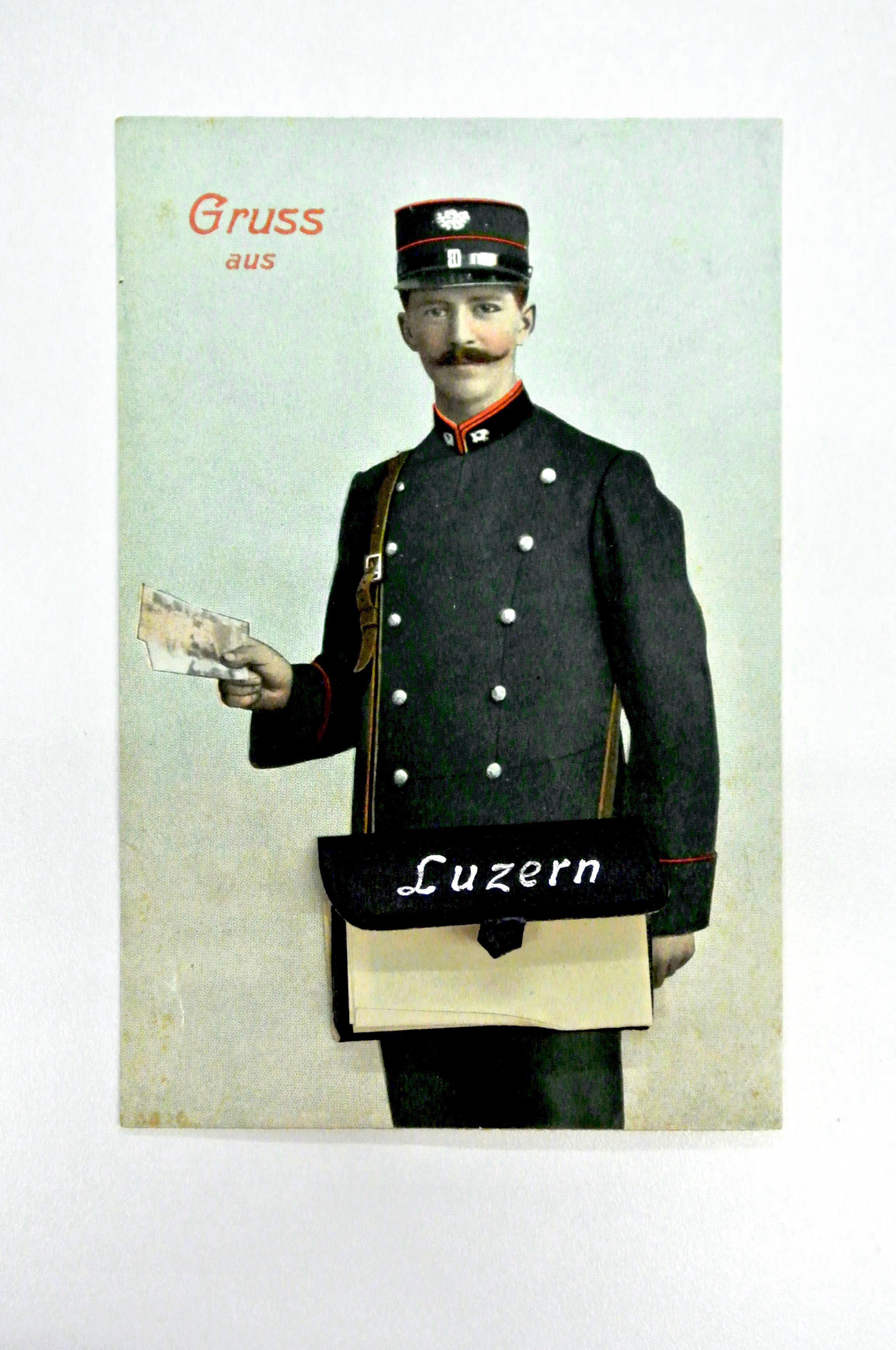
Gruss aus

This postcard shows a Swiss postal worker with a small pouch. 1921, Cranbrook Archives

This postcard shows a Swiss postal worker with a small pouch. 1921, Cranbrook Archives

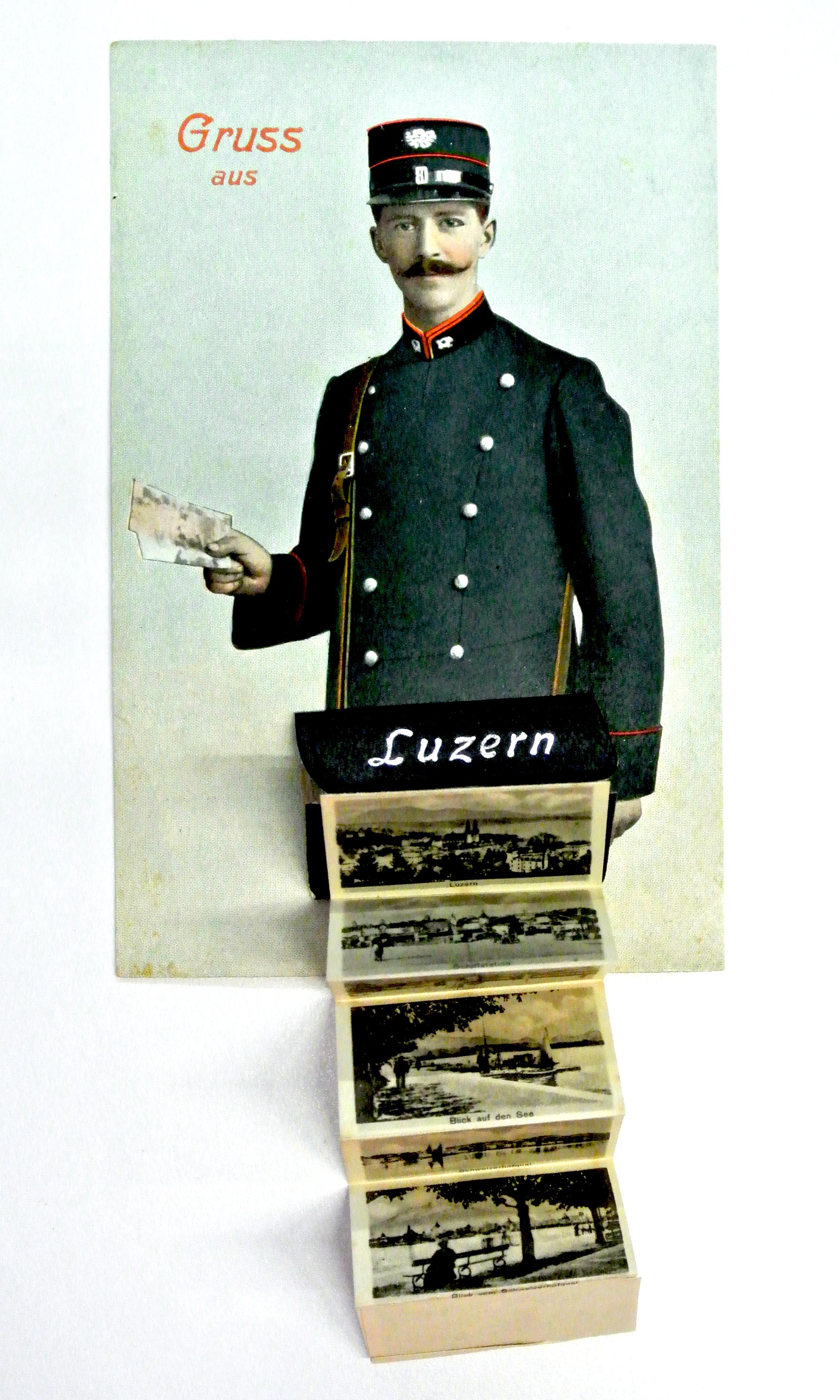
This week’s Friday photo is actually a postcard from the Virginia Kingswood Booth Vogel Papers.  In 1921, Ralph Harmon Booth ─ one of the founders of the Detroit Institute of Arts and first president of the City of Detroit Arts Commission ─ traveled to Europe with his family.  Booth’s son John (Virginia’s brother) collected postcards throughout the trip. “Gruss aus” translates to “Greetings from”, and was a popular souvenir travel postcard series printed in Germany with the chromo-lithography process.

Image

Open the pouch and voila! ─ the foldout shows scenes of Lucerne, Switzerland. 1921, Cranbrook Archives

Dispatch from the Archives: “The Councilman Doesn’t Like it”

Okay, I couldn’t resist! Today, while researching a query on sculptor Bernard “Tony” Rosenthal, I ran across this photo in our collection. When I showed it to one of our volunteers, Rita Faudman, she said (while laughing), “what can you do with THIS?” And my immediate reply was, “post it on the blog!”

©Wide World Photos.  Councilman Harold Harby leaves no doubt about his opinion.  Courtesy Bernard (Tony) Rosenthal Papers, Cranbrook Archives.

©Wide World Photos. Councilman Harold Harby leaves no doubt about his opinion. Courtesy Bernard (Tony) Rosenthal Papers, Cranbrook Archives.

Continue reading

Cranbrook and the Car: A Different Look

Currently on display, the exhibition A Driving Force: Cranbrook and the Car thoughtfully illustrates two key ways in which Cranbrook has been affiliated with the automotive industry throughout its history.  James Scripps Booth was an avid artist and inventor, even taking apart, rebuilding and designing cars in the garage of Cranbrook House from an early age.  Later on, the Academy of Art encouraged students to enter competitions which included designs for Packard Motor Car hood ornaments (1934) and exterior design, hood ornaments and trunk lid medallions (1950).  Graduates were employed by the Big Three automakers in a variety of ways—working in the design studios building models for new cars, as part of Harley Earl’s “Damsels in Design,” and as textile designers for automotive interiors.

But Cranbrook’s relationship with the car goes beyond the realm of design.  The Booth family’s list of cars includes a Winton (1904), a Christie (1904), a Cartercar (1907), two Pierce Arrows (one was a limousine), a Brush Runabout (1910), a Chalmers 40 (1910), a Lozier “Briarcliff” (1911) and a Detroit Electric (1921) which was driven by Henry Wood Booth at the age of 88.
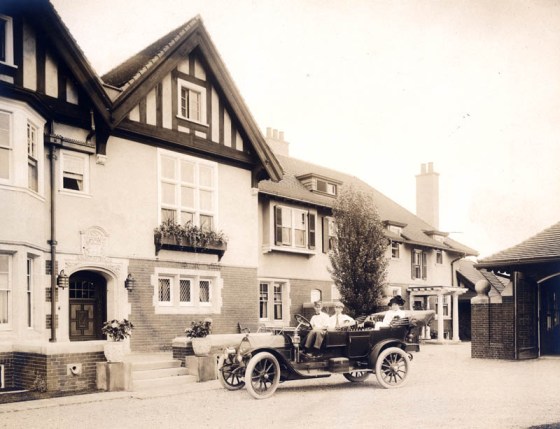
Warren and Grace Booth with chauffeur in the Chalmers 40 in front of Cranbrook House. Circa 1910, Cranbrook Archives.

Warren and Grace Booth with chauffeur in the Chalmers 40 in front of Cranbrook House. Circa 1910, Cranbrook Archives.

Continue reading

Dispatch for the Archives: the Joys of Processing

Although we live in an age of technology, databases, and the digital representation of collections, one of the most interesting and rewarding jobs for an archivist (at least this one!) is still the processing of a collection.  What does this encompass? It is the way in which an archivist takes the paper records of an individual, group, or institution and sifts through them, weeding out duplicates, sorting, organizing, and  rehousing in acid-free folders and boxes, all to make it accessible for you, the user!.  To some this may seem a tedious task (and it certainly can be depending on the nature of the collection) but the rewards are usually worth it.  Finding that one gem that tells a new story, or that group of documents that sheds new light on an old story—this is the stuff archivists dream of!

I am currently processing the Swanson Associates Records that document the partnership between architect J. Robert F. Swanson and interior designer and textile artist Pipsan Saarinen Swanson.  Right now I am looking at the project files that relate to the firm’s architectural commissions from 1926 to 1977.  So, as a sneak preview (the collection is not yet open for research), here a couple of interesting discoveries:


Continue reading

Architecture in Detail

It’s always a great day when a new discovery is made. Yesterday Craig, one of our campus architects and project managers, asked me if I knew anything about a pixie-like relief that is located on a Mankato stone column at Kingswood School.  I remember seeing a photo of it years ago but never had reason to look into its origin until now.  As luck would have it, I was able to use my super-sleuthing skills to locate the original drawing of the figure by none other than Eliel Saarinen!  The full-scale detail drawing illustrates the whimsical quality of the figure and even shows the level of intended relief–note the red lines across the figure.  Breen Stone and Marble Company of Kasota, Minnesota was awarded the contract for the stonework at Kingswood School.

IMG_1310

Detail of stone column, Kingswood School. Rendered by Eliel Saarinen, March 1931.

~Leslie S. Edwards, Head Archivist

Create a website or blog at WordPress.com