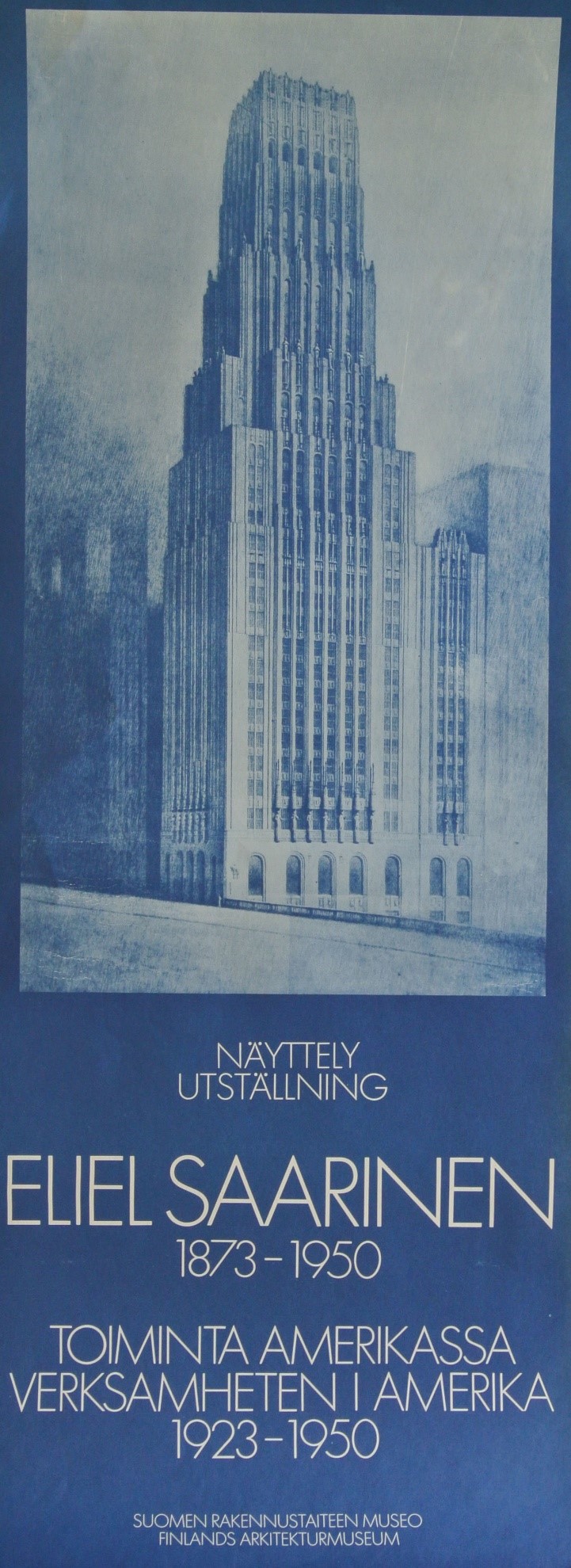
Holiday Inspiration

Last week a researcher came to look for holiday inspiration in the Archives. As I was putting the materials away, I came across this lovely card by Academy of Art student, Alice Warren. The card piqued my interest and I did a little digging to learn more.

Holiday card from Alice Warren to Margueritte Kimball, 1947. Margueritte Kimball Papers, Courtesy Cranbrook Archives.

Holiday card from Alice Warren to Margueritte Kimball, 1947. Margueritte Kimball Papers, Courtesy Cranbrook Archives.

Inside design of holiday card from Alice Warren, 1947.

Inside design of holiday card from Alice Warren, 1947.

Warren, born in 1921, came to Cranbrook to study architecture with Eliel Saarinen in 1943-44. Warren’s father (Don) was a genetics professor, and her mother (Mira) assisted him with his lab work. In 1920 Don Warren, with Mira’s assistance, published three scientific papers about his genetic research of the fruit fly. Professor Warren went on to become a pioneer in poultry genetics, earning several awards and distinction in this field.

Alice Warren, like her parents, was a trailblazer. In 1942 she graduated from the University of Illinois with a B.S. in Architecture. In May 1943, she wrote to Henry Scripps Booth expressing her desire to come to Cranbrook for a summer session to “further [her studies] under Eliel Saarinen.” She received a letter of acceptance in June.

While at Cranbrook, Warren studied Architecture and City Planning. As part of a team (Annette Kite, painter and Eliza Miller, sculptor), her work was entered in the 1944 Rome Collaborative – an annual competition conducted by the Alumni Association of the American Academy in Rome. She later worked for Saarinen, Saarinen and Associates. Warren also met her husband, Fred Dockstader, while studying at the Academy. Dr. Dockstader taught history at Cranbrook School from 1943-52, and designed ethnological exhibits at Cranbrook Institute of Science in 1951-52.

Alice Warren working on her city planning model for Plymouth, MI, 1944. Photographer, Harvey Croze. Courtesy Cranbrook Archives.

Alice Warren working on her city planning model for Plymouth, MI, 1944. Photographer, Harvey Croze. Courtesy Cranbrook Archives.

Warren and Dockstader married on Christmas day, 1951. Dockstader was an anthropologist, art professor, and a noted authority on American Indian art. The couple worked together on several publications and also at the Museum of the American Indian in New York, where Alice was a staff architect, and Fred was the museum director from 1960-1975.

Gina Tecos, Archivist

Author’s Note: While researching Alice Warren Dockstader, I came across the finding aid for the Frederick Dockstader Collection at the Arizona Archives. One of the content notes describes holiday cards designed by Alice and Fred that incorporate their interest in Kachinas. You can see one of these on the Cranbrook Archives Facebook page!
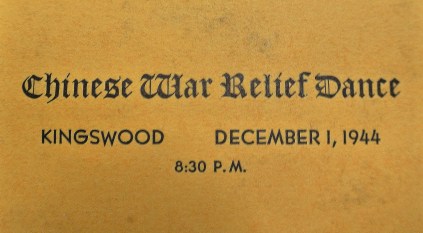
Making Wartime History Come Alive

Last spring I gave a presentation about Cranbrook during World War II to the 8th grade history classes at the Girls Middle School. So, when our blogmaster asked for a post this week about WWII, I thought I would share that experience. After working in the archives for more than 14 years, I knew we had a myriad of materials relevant to WWII and I was excited to share these stories with the 8th grade girls. I was hopeful that it would help make a part of history more real to them. I began by asking each class (there were four that day!) how many thought Cranbrook was affected in ANY way by the war? Throughout the day, maybe 8 of the nearly 60 girls raised their hands. While I was surprised, I was also excited to enlighten them.

dsc_0299

Other ways in which the Cranbrook community supported war relief efforts included the British Children Refugee program, the Finnish War Relief Fund, and the Red Cross and Victory Book Drives

Cranbrook’s war-related activities were far-reaching – from Cranbrook School boys practicing military drills on the football field to Academy of Art ceramicist Maija Grotell who collected sweaters and unraveled them to repurpose into balls of yarn that she sent to families in Finland. War Bond drives were held at each of the school campuses, the Booth family closed off the west wing of Cranbrook House to conserve fuel due to rationing, and a previous blog post highlights one of Cranbrook’s own Monuments Men.  The 8th grade girls were particularly amused by the photograph of the Red Cross class which was held at Kingswood School, and that girls their same ages had collected waste fat from the school dining hall. There were a lot of “EWW!s”

cswar1

Cranbrook School Scrapbook, April 1942

I told the girls about the war memorial plaque which hangs at the base of Hoey tower and lists the names of all 678 Cranbrook School alumni who served in the war, including the 37 who lost their lives. We talked about the Cranbrook Committee on Civilian Defense and the air raid sirens/drills on campus, and how students from both Cranbrook and Kingswood Schools entertained the troops at Selfridge Air Force Base.

siren

Cranbrook had air raid sirens in numerous locations across campus.

At the end of each class, I asked the girls again how many thought Cranbrook was affected by World War II, and nearly all of them raised their hands. It was gratifying to be able to share primary source documents from our collections to help bring history out of the textbook and onto the campus. I’m looking forward to teaching again this school year!

Leslie S. Edwards, Head Archivist


Photo Friday: Feasting Together

The Center hopes you and your loved ones had a fantastic Thanksgiving, and that you were able to have a great meal together like these Cranbrook students back in 1935!

2791

Cranbrook School for Boys Dining Hall. Photographer, Dick G. Askew, June 1935.

Kevin Adkisson, Collections Fellow

Contemporary Jazz Finds Its Way to Cranbrook

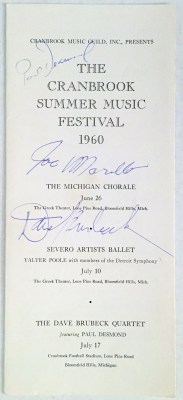
For more than 60 years, the Cranbrook Music Guild has been providing chamber music to Oakland County residents. The Guild, started by a group of music lovers in 1951, wanted to promote and provide chamber music on the beautiful grounds of Cranbrook. Consequently, the first Cranbrook Festival was held during the summer that year. While the early years focused on presenting classical music, including performances by the Julliard String Quartet and the Detroit Symphony Wind Quartet, by 1959 the Guild members were looking to expand the roster and even included ballet in the summer program.

img_5384

Encouraged by the response during the 1959 season, the summer of 1960 featured the Michigan Chorale (a 100-mixed voice ensemble), the Severo Ballet accompanied by the DSO, and even a jazz concert in order to “present the best in all fields of art.” The first two performances were, as usual, held at the Greek Theatre. The third of the season was the Dave Brubeck Quartet. One Rochester [Michigan] News reporter called it “the Guild’s boldest experiment” to date. In anticipation of a capacity crowd, the performance was held at the football stadium at Cranbrook School instead of the Greek Theatre, which is a smaller venue.

Dave Brubeck Quartet, Cranbrook School, July 14, 1960. Harvey Croze, photographer. Copyright Cranbrook Archives.

Dave Brubeck Quartet, Cranbrook School, July 14, 1960. Harvey Croze, photographer. Copyright Cranbrook Archives.

In 1960, the members of The Dave Brubeck Quartet were Dave Brubeck (piano), Paul Desmond (alto saxophone), Joe Morello (drums), and Eugene Wright (double bass). The concert at Cranbrook was held on Sunday afternoon, July 14th at 4:30 pm. While the Guild was hopeful for a full house of 2,000, more than 1,100 people actually attended, still beating the Guild’s previous attendance record of 775.

Cranbrook Music Guild Records. Courtesy Cranbrook Archives.

Cranbrook Music Guild Records. Courtesy Cranbrook Archives.

While I was not able to find any notes or articles about what the Quartet played at Cranbrook, it is highly likely that they played at least a few songs from their album, “Time Out,” which was recorded in 1959. Most of you will recognize the song “Take Five” from the album, which became one of their most popular. It is fun to imagine sitting outside at the stadium (now known as Thompson Oval) listening to this “new jazz.”

Leslie S. Edwards, Head Archivist

Editor’s Note: Thanks to Chris Morton for bringing this event to our attention!


Summer Break in the Archives

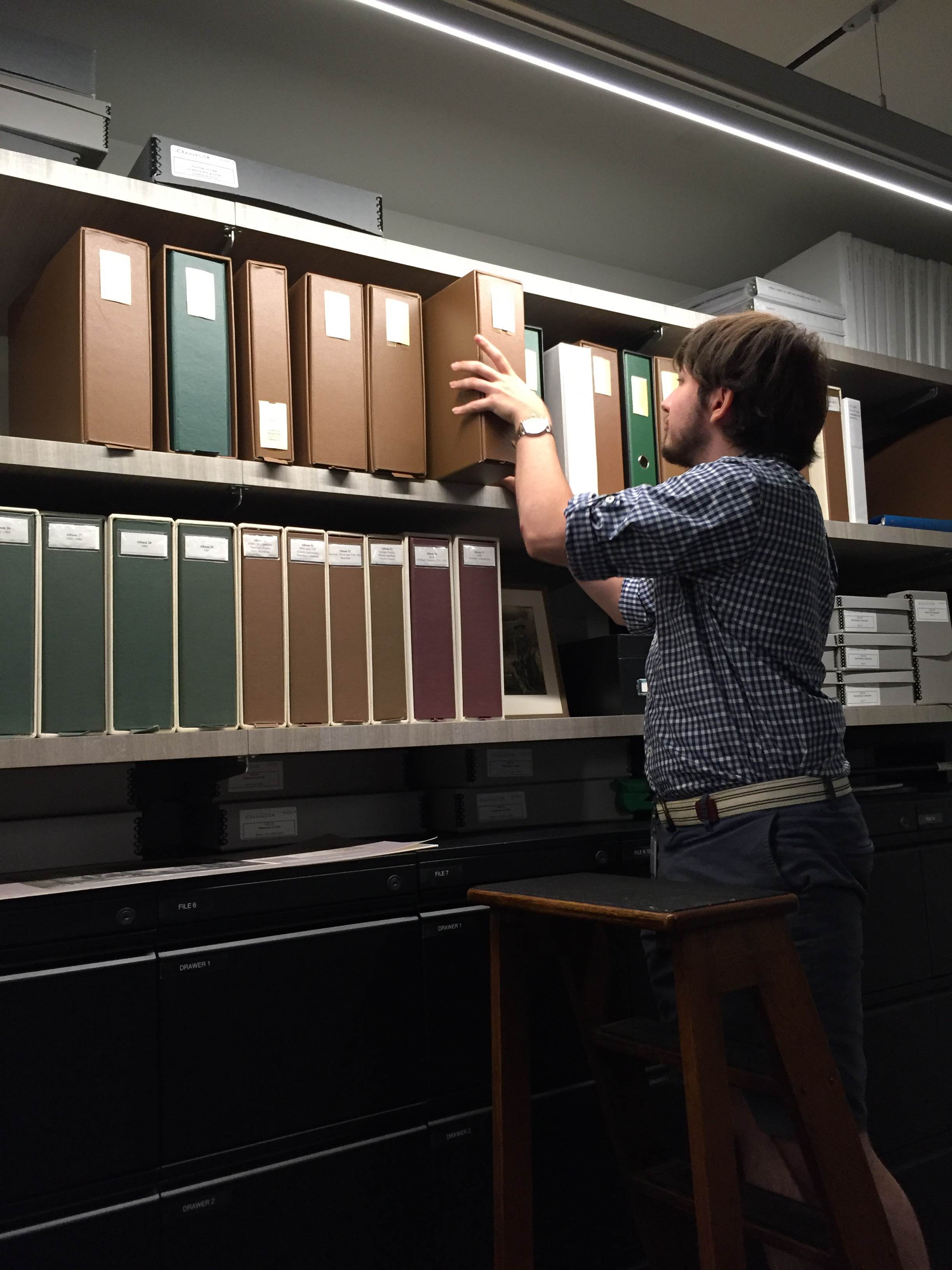
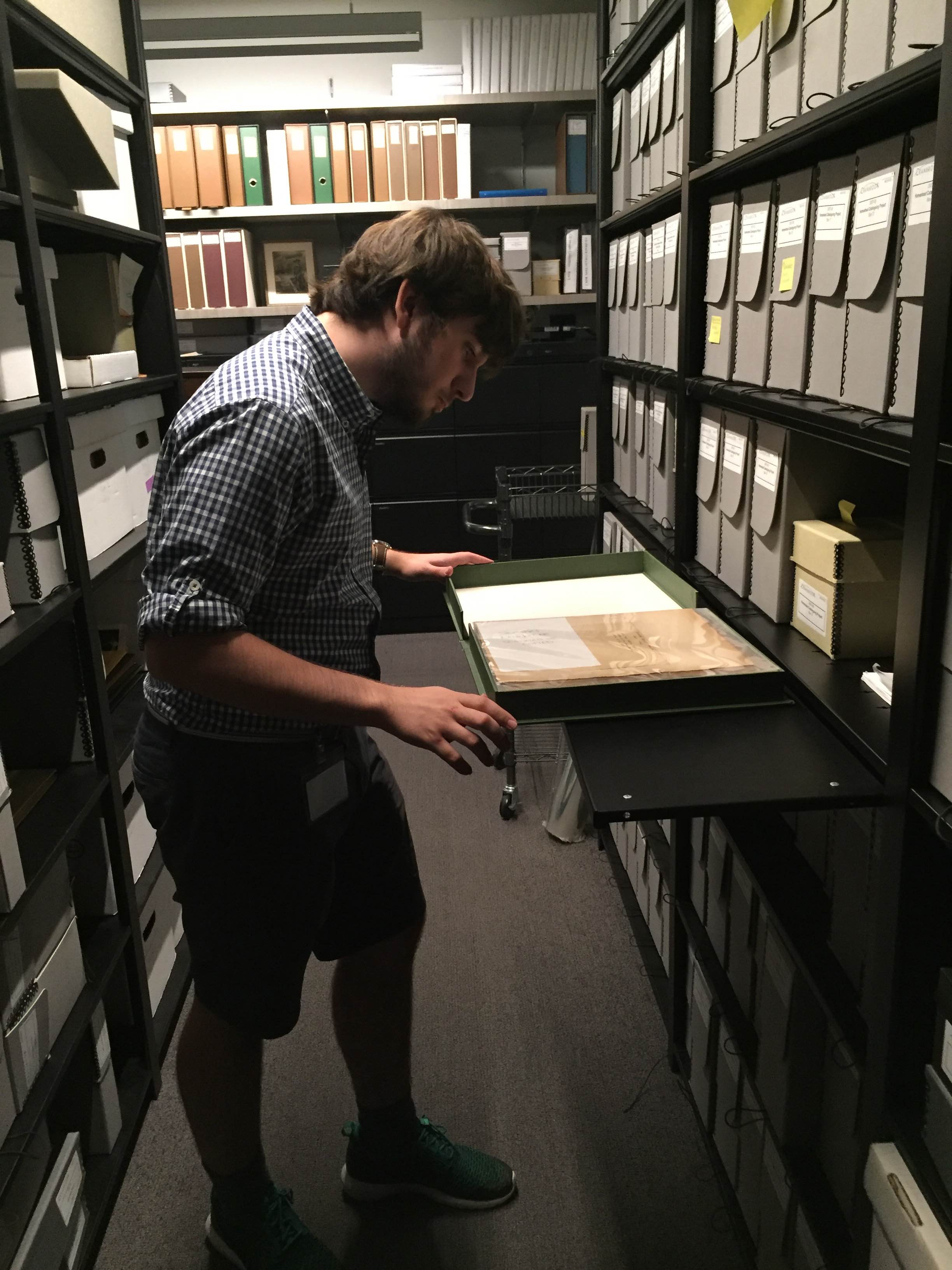
Giuliano working with the slide collections.

Giuliano working with the slide collections.

Reviewing primary source material in the Archives.


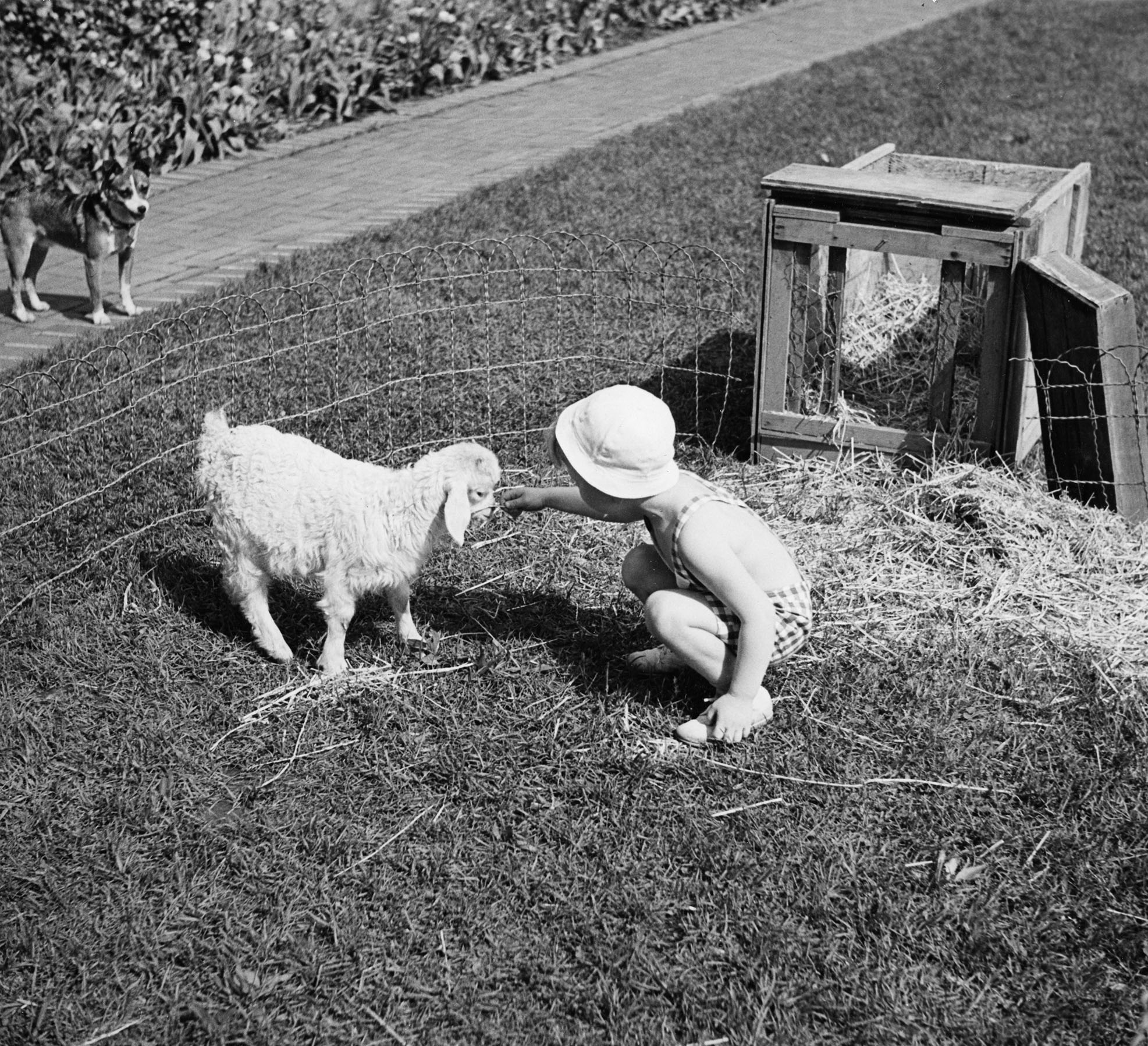
Volunteering in the Archives was a great experience! As a Cranbrook grad, it was really interesting seeing how things used to be at my old school. It was especially fun seeing photos from familiar events like the fifth grade December Program, taken decades before my own class’ production. There were also of course some less familiar things, like pictures of Brookside students at the Art with goats. Personally I think Cranbrook should consider bringing that back, but maybe that’s just because I’m a fan of goats. That was one of several things I enjoyed seeing, as were photos of Amelia Earhart and even… my dad’s yearbook! All in all, it made for a great three weeks. My thanks to all the great people I worked with!

Brookside School pet show, 1936.

Brookside School pet show, 1936.

Giuliano Stefanutti, CKU ’15

Editor’s Note: We are very grateful for the work Giuliano completed when he was here. He processed slide collections, sorted historic photographs, and inventoried a large audio-visual collection. We wish him well as he heads back to college!


From the Outside Looking In

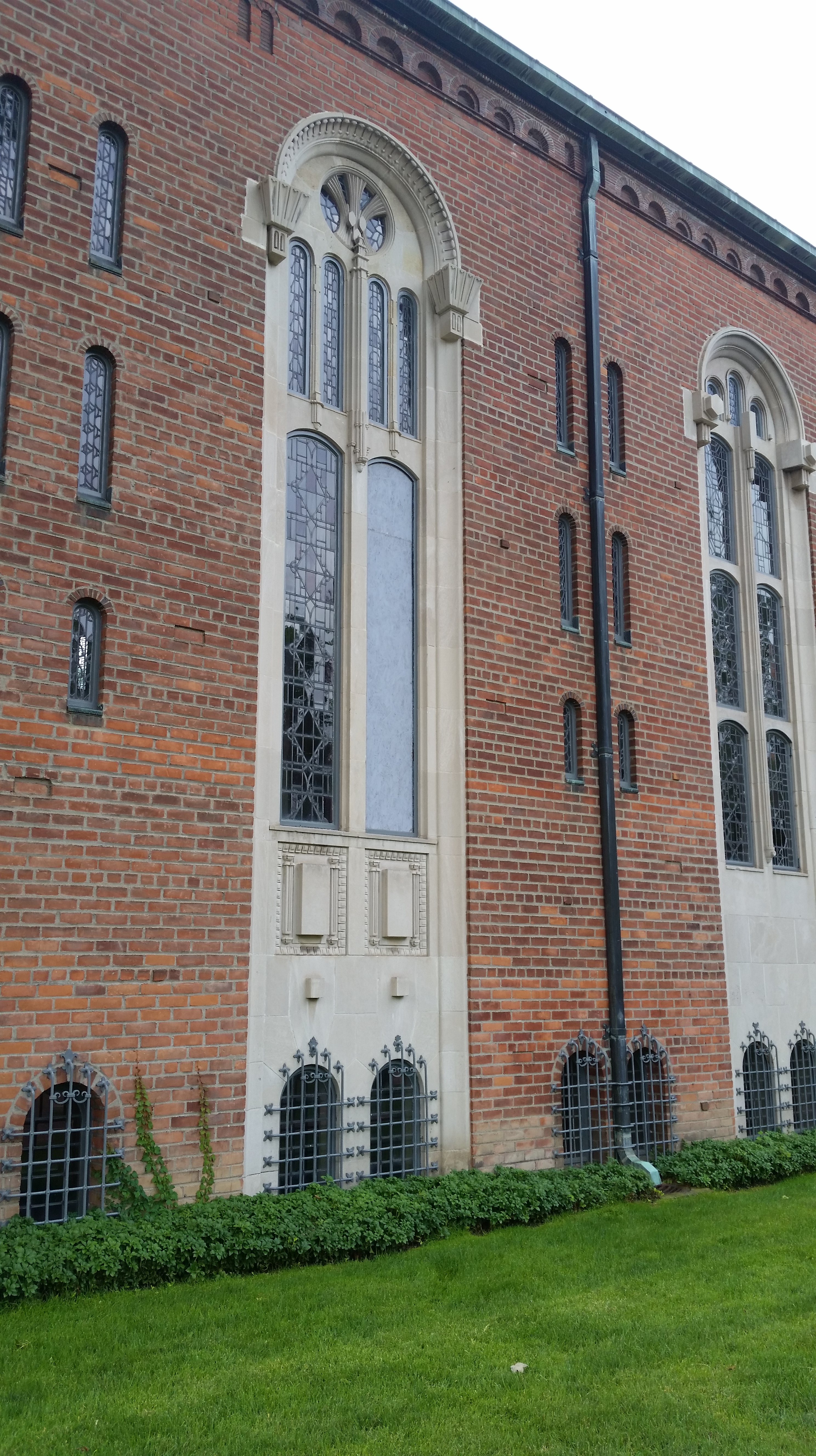
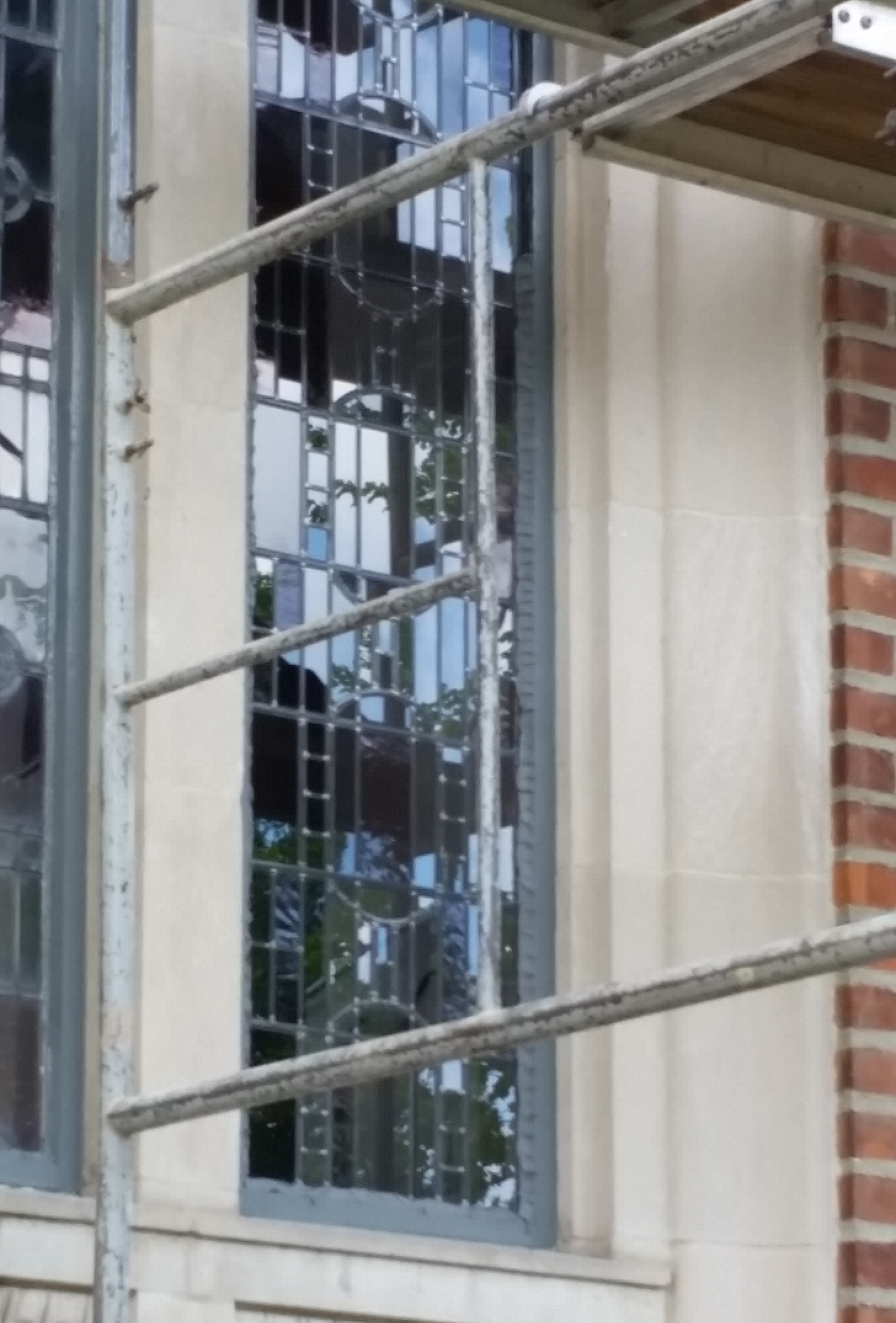
In the fall of 2015, one of the leaded glass windows in the Cranbrook Dining Hall was damaged. The window, one of many designed by Eliel Saarinen in 1927, is known as a lancet – a tall, narrow window, usually with a point at the top. The extent of the damage required that the window be removed and restored offsite by Thompson Art Glass in Brighton, Michigan. Yesterday, the window was returned and reinstalled.

The window, ready for reinstallation.

The window, ready for reinstallation.

Glaziers from Thompson Art Glass reinstalling the window.

Glaziers from Thompson Art Glass reinstalling the window.

An interior view of Charlie from Thompson Art Glass puttying the window. Photo by Giuliano N. Stefanutti, CKU '15.

An interior view of Charlie from Thompson Art Glass putting in the window. Photo by Giuliano N. Stefanutti, CKU ’15.

A putty knife and a steady hand completed the finish work.

A putty knife and a steady hand completed the finish work.

Watching Matt and Charlie from Thompson Art Glass work on the glazing made me think of all the craftspeople, artisans, and contractors who worked hard to create Cranbrook. You can find some of their stories archived on The Kitchen Sink.

Leslie Mio, Assistant Registrar

Out From the Shadows #2: Colonel Edwin S. George

Many years ago, when I worked at the Oakland County Pioneer and Historical Society, I came across a man named Edwin S. George in reference to his home, “Cedarholm,” which he built in 1923 in Bloomfield Hills, and is now a part of Kirk in the Hills Presbyterian Church.

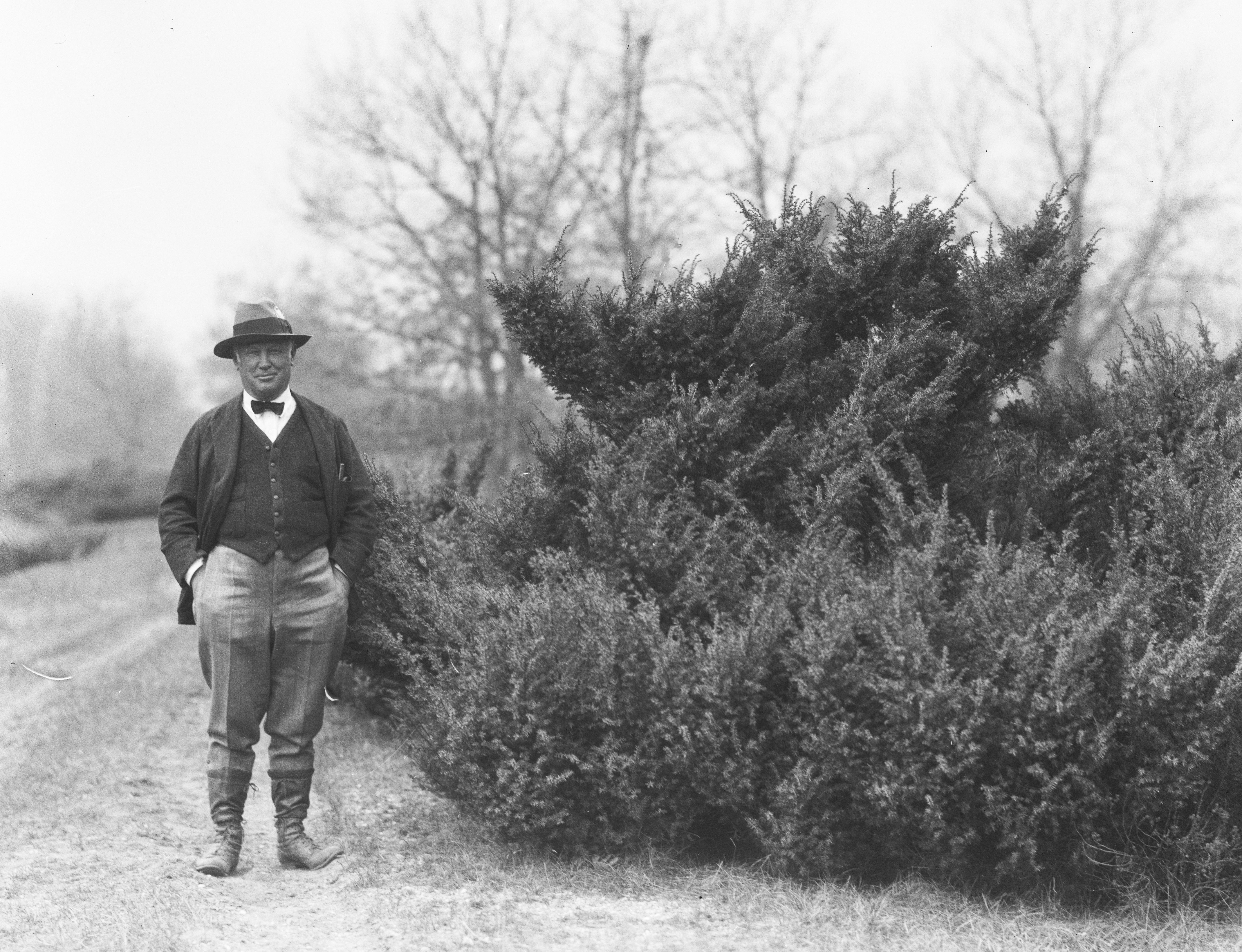
What many people do not realize is the colonel’s long-standing connection to Cranbrook. Recently, while searching for photographs for a researcher, I stumbled upon the negative of a stocky, kind-looking man standing by a grove of trees. Fortunately, early Cranbrook photographers kept great records and I was able to look up the subject on the index of negatives in the archives, and it is indeed a photo of Colonel George.

Colonel Edwin S. George, Apr 1930. W. Bryant Tyrell, photographer.

Colonel Edwin S. George, Apr 1930. W. Bryant Tyrell, photographer.

Much can be read about the Colonel’s acumen as an influential Detroit businessman and philanthropist, and there is no doubt that he and George Booth knew one another in Detroit. However, once they both moved to Bloomfield Hills, the relationship grew. The colonel organized the Bloomfield Hills Country Club of which Booth was a founding member, and both men were members of the Bloomfield Open Hunt Club. In 1912, Colonel George became one of the stockholders in the Bloomfield Hills Seminary (the pre-cursor to Brookside School) established by George Booth, and in 1926, the two men worked together to bring a post-office to the then Village of Bloomfield Hills.

Cranbrook School students with Colonel George (seated), The Edwin George Reserve, Sep 1930. W. Bryant Tyrell, photographer.

Cranbrook School students with Colonel George (seated), The Edwin George Reserve, Sep 1930. W. Bryant Tyrell, photographer.

But certainly the most important contribution Colonel George made to Cranbrook was through the Institute of Science. In 1930, the colonel became a member of the Institute’s first Board of Trustees, a position he held until just before his death in 1950. That same year, he donated 1,250 acres of land near Pinckney, Michigan to the University of Michigan to be used not as a public park, but as an educational resource for University of Michigan students, scout troops, and Cranbrook School students. Known as “The Edwin George Reserve,” it featured hiking trails, streams and a small lake, stables, outbuildings, a gate lodge, and even an airstrip. Colonel George also stocked the reserve with wildlife including deer brought from Michigan’s Upper Peninsula and antelope from Alberta, Canada. The colonel wanted the boys to have “an appreciation of the truer values of life as expressed by the truth in Nature,” and provided a place for them to do so.

So, while we have no direct proof that Booth and the colonel discussed the virtues of nature as education, it sure seems to me that they had a lot more in common than we previously thought!

Leslie S. Edwards, Head Archivist

Photo Friday: Coming to Light

The Institute of Science photograph collection (1929-1995) is a treasure trove of fascinating images, taken by various Institute of Science staff during the course of their field research. Many of them document places that have become popular northern Michigan summer vacation destinations.

Thunder Bay Island Lighthouse, Jul 1929. W. Bryant Tyrrell, photographer. Courtesy Cranbrook Archives.

Thunder Bay Island Lighthouse, Jul 1929. W. Bryant Tyrrell, photographer. Courtesy Cranbrook Archives.

This photo was taken by naturalist W. Bryant Tyrrell who was employed by the Cranbrook Foundation in 1929 as the director of the first natural history museum, then housed in what is now known as the Academy of Art Administration building. Tyrrell worked with Brookside School students, taking them on nature walks around campus and teaching them how to build bird houses. He also taught general nature study to Cranbrook School students. Tyrrell’s field work, primarily in Michigan, led to the formation of several Institute of Science collections from which he was able to prepare exhibitions.

The W. Bryant Tyrrell Photograph Collection can be found at the Washington D.C. Community Archives. For a history of the Thunder Bay Lighthouse, see: http://www.terrypepper.com/lights/huron/thunder/

Leslie S. Edwards, Head Archivist

Photo Friday: Aim High and Go Forth to Serve!

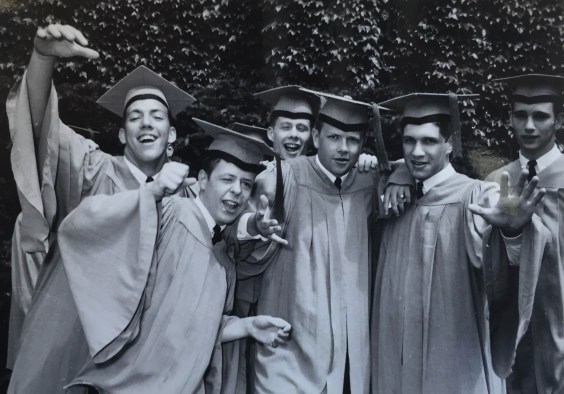
Congratulations Cranbrook Kingswood Seniors!  The following was printed in the 1931 The Crane as part of a farewell editorial to the senior class from Cranbrook School student Mark Beltaire ’33:

“The world is the only fitting arena for your triumphs, and we, who expect to follow say ‘Be brave, be honorable, and above all, be sincere!’ “

13308480_2088253607980586_2660547594468063864_o

Kingswood School Commencement, 1983. Richard Hirneisen, photographer.


IMG_9992

Cranbrook School Commencement, 1963. Harvey Croze, photographer.


It’s a New Collection!

The Archives to Launch Our Poster Collection Online!

Over the coming summer, Cranbrook Archives will release a brand new collection into its online digital database! While building our digital archive is a perpetual process, we are working steadily to upload images and manuscripts so that you, our remote users, can browse and search through our collections no matter where you live. This summer we will be celebrating a new addition: the Cranbrook Poster Collection!

Over the past eight months, my colleague, Laura MacNewman, and I collaborated to upload this collection for online access. The posters date back to the early 1900s with topics covering the scope of the entire Cranbrook Educational Community, emphasizing exhibitions from the Academy of Art and the Institute of Science, and theatrical performances from Cranbrook Kingswood Schools, St. Dunstan’s Guild, and the Summer Theatre.

Cranbrook Institute of Science poster, n.d. Courtesy Cranbrook Archives.

Cranbrook Institute of Science poster, n.d. Courtesy Cranbrook Archives.

We created nineteen different series for the Poster Collection based on locations or departments on campus. We identified nearly 500 unique posters in our collection, and each one was given a distinct identifying number. Once the unique identifiers were established, we merged all the various poster inventories  into one master inventory spreadsheet, and arranged them in chronological order by series.

The next step was sorting through the physical posters folder by folder in order to take a reference photograph of each one for the database, record their dimensions, and describe them  in the master inventory spreadsheet. This was the longest stage of the process, lasting several weeks. After the data was entered into the spreadsheet, we renamed the individual images to match the posters’ unique identifiers in order to match the photograph.

Exhibition poster, 1973. Courtesy Cranbrook Archives.

Exhibition poster, 1973. Courtesy Cranbrook Archives.

While every step has been a learning process, my favorite part was working in Thornlea Studio and physically handling the poster collection for measurements and photographs. Laura and I were able to take a previously unorganized collection and make it discoverable online, which was rewarding and gave me a sense of accomplishment. I loved the huge diversity of the posters, too. Not only were they historically valuable, they were also aesthetically stunning. I can’t wait for the collection to be released for everyone to enjoy!

Danae Dracht, Archives Assistant

Editor’s Note: Thank you Danae and Laura for your hard work on this project! Congratulations also to Danae who recently graduated from Wayne State University’s School of Library Science! We wish you all the best as you embark on the next journey of your archival career.

Create a website or blog at WordPress.com