Going Green: LED Lightbulbs at our Historic Houses

Since it’s St. Patrick’s Day, I thought I’d talk about one way the Cranbrook Center for Collections and Research is going green.IMG_7957In January 2014, there was a crisis among fans of incandescent light bulbs when the Energy Independence and Security Act of 2007 went into effect, banning the manufacture of incandescent 40- and 60- watt light bulbs. Some house museums were in a tizzy, and many purchased large stocks of incandescent bulbs to use in their historic fixtures with exposed bulbs—no one wants to see a distracting, spiraling fluorescent light bulb in a period room!

The feared depletion of our national stock of pretty light bulbs didn’t happen (there were lots of loopholes and legal challenges), but one intent of the ban—to force the lighting industry to make more efficient bulbs—was realized. Impossible just a few years ago, today there are energy efficient LED light bulbs that are completely satisfactory for use in exposed-bulb situations. After decades of using incandescent lighting, the Center has switched Saarinen House and parts of Cranbrook House over to LED.

LED, or light-emitting diode, bulbs are most praised for their energy savings, but being such an aesthetically minded place as Cranbrook, we have a few more concerns than the utility bill for our lighting:
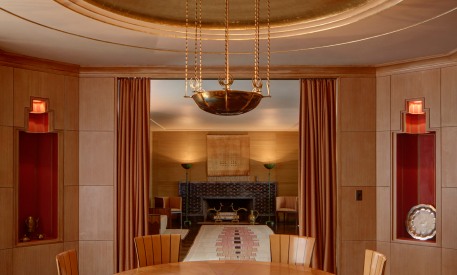
Cranbrook_SaarinenHouse_9-9-15-0173-dc1_cropped

Maintaining the visual warmth of Saarinen House was vital; we wouldn’t have gone LED if it altered the aesthetic. Jim Haefner, photographer.

First is the color. When I told a coworker I was about to change the lightbulbs in George Booth’s Office in Cranbrook House to LED light bulbs, she was crestfallen. “They’re so blue and cold!” she lamented, something a lot of people fear with LED. It’s true, early LEDs were very blue and a far cry from the incandescent bulbs most people are used to (and prefer). But technology has changed, and now we have a range of light warmth to choose from. The spectrum of warmth is measured in kelvins, and incandescent bulbs are around 2400 K, while fluorescent tubes are 5000 K, and sunlight is 7000 K and up. We’ve chosen 2550 K bulbs for Cranbrook. As far as wattage goes, the lighting industry labels LEDs with their watt equivalents to incandescent, as that’s what we know. I used 25-watt incandescent equivalent bulbs in the office that actually use just 4 watts of power (and last, supposedly, 13+ years).
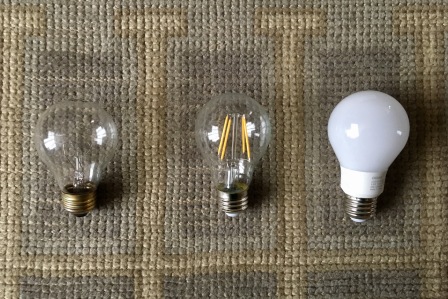
 

FullSizeRender

From left: Incandescent bulb removed from Saarinen House fixtures; clear-style LED bulb used in exposed fixtures; LED bulb used in covered fixtures.

The next concern revolved around the look of the bulbs. You may be familiar with the energy efficient compact fluorescent bulb (CFLs) that have a spiral-type bulb—I don’t think anyone would want those in a chandelier. Even earlier LEDs were bulkier than standard incandescent bulbs because of the need for large conductors within the bulb to reduce heat gain—usually in the form a large white base between the glass and the screw threads. Today, you can buy a LED bulb in practically any shape or style with an internal conductor. The main difference between the LEDs we chose and the incandescent bulbs: when the bulb is off, the LED is a visible golden strip instead of a tiny metal filament, so you see a small yellow marking in the center of the bulb.


Beyond aesthetics and energy savings, there is the cost of the bulb itself. LEDs are getting constantly cheaper, but there’s a fairly big difference between the cheapest LEDs and the prettiest ones. Here at Cranbrook, when a bulb is not visible (for example, hidden by a solid lampshade), we’ve used cheaper LEDs in the same temperature and wattage as the fully clear bulbs we put in chandeliers and exposed fixtures. Either way, the energy savings should offset the costs within just a few years!
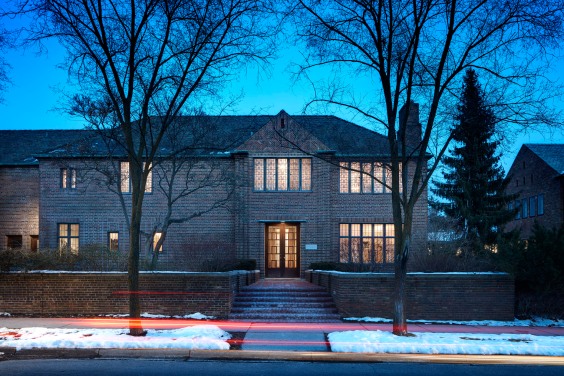
SaarinenHouse_2-6-17 0049-dc2

Saarinen House aglow with LED bulbs inside and out, February 2017. Jim Haefner, photographer.

By switching to LED, we’re doing our part to help realize Cranbrook’s dedication to the environment laid out in the Cranbrook Educational Community’s most recent Strategic Plan; it states that “we commit to the well-being of future generations through our actions and behaviors.” Energy conservation is one simple way we’ve done this!

Kevin Adkisson, Center Collections Fellow

Special thanks to Assistant Registrar Leslie S. Mio for leading the LED Lightbulb conversion.

House of the Poet

In 1995 a project was initiated to create a living monument to honor Cranbrook’s dedication to poetic imagination. The project, House of the Poet, was to be built on the ridge overlooking Lake Jonah and would honor works of imagination in art, sciences, and letters. Architect and educator, John Hejduk (1929-2000), was commissioned to develop plans for the building.

Hejduk largely abstained from conventional practice, but is known for his drawings that were combined into poetic and often highly personal narratives. Despite completing relatively few buildings, Hejduk is considered one of the most influential architects and theorists of the twentieth century. In an essay about Hejduk, architect Andreas Angelidakis states, “His drawings and writings, his essential approach to architecture, continue to function as a blueprint for a practice without clients, commissions, or even realization. What he built was a world of images and words.”

Exterior drawing, House of the Poet. Courtesy Cranbrook Archives.

Exterior drawing, House of the Poet. Courtesy Cranbrook Archives.

Hejduk designed a house built on stilts that included a bedroom, bath, living room, dining room, and kitchen. The plan was to create a space where “esteemed visitors” to the campus could stay. The exterior consisted of stucco in green, red, blue, and gunmetal, with a zinc roof.

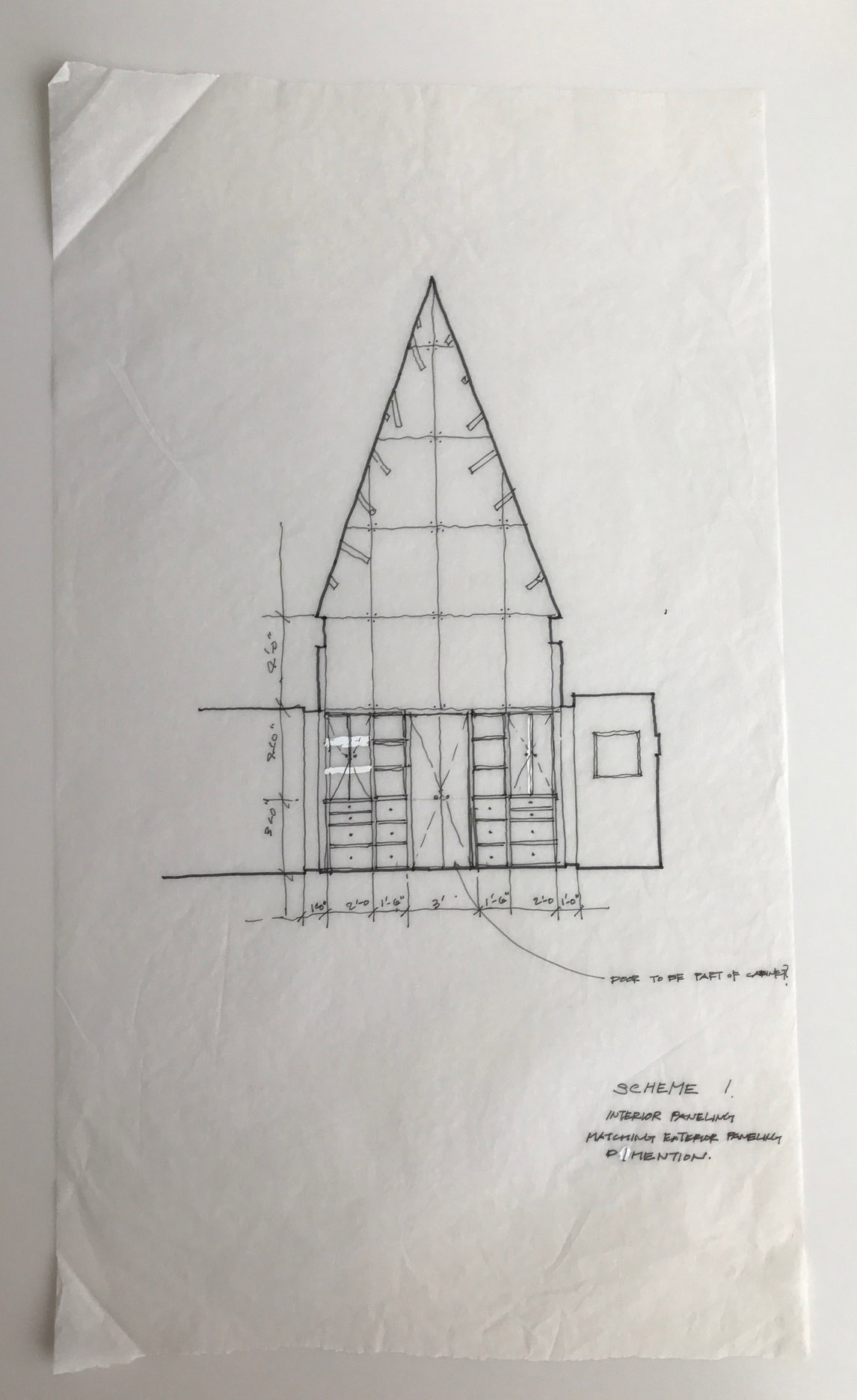
Sketch of Scheme 1: interior paneling.

Sketch of Scheme 1: interior paneling.

In the fall of 1995, architects Dan Hoffman and Jennifer Lee of the Cranbrook Architecture Office (CAO) worked towards the project’s completion. Faculty and students from the Academy of Art’s Department of Architecture would provide the majority of the labor for the construction of the building, continuing the tradition of the integration of arts and crafts in the original buildings on campus. The CAO created extensive cost estimations and budgets, and thoroughly researched available materials for the construction of the house.

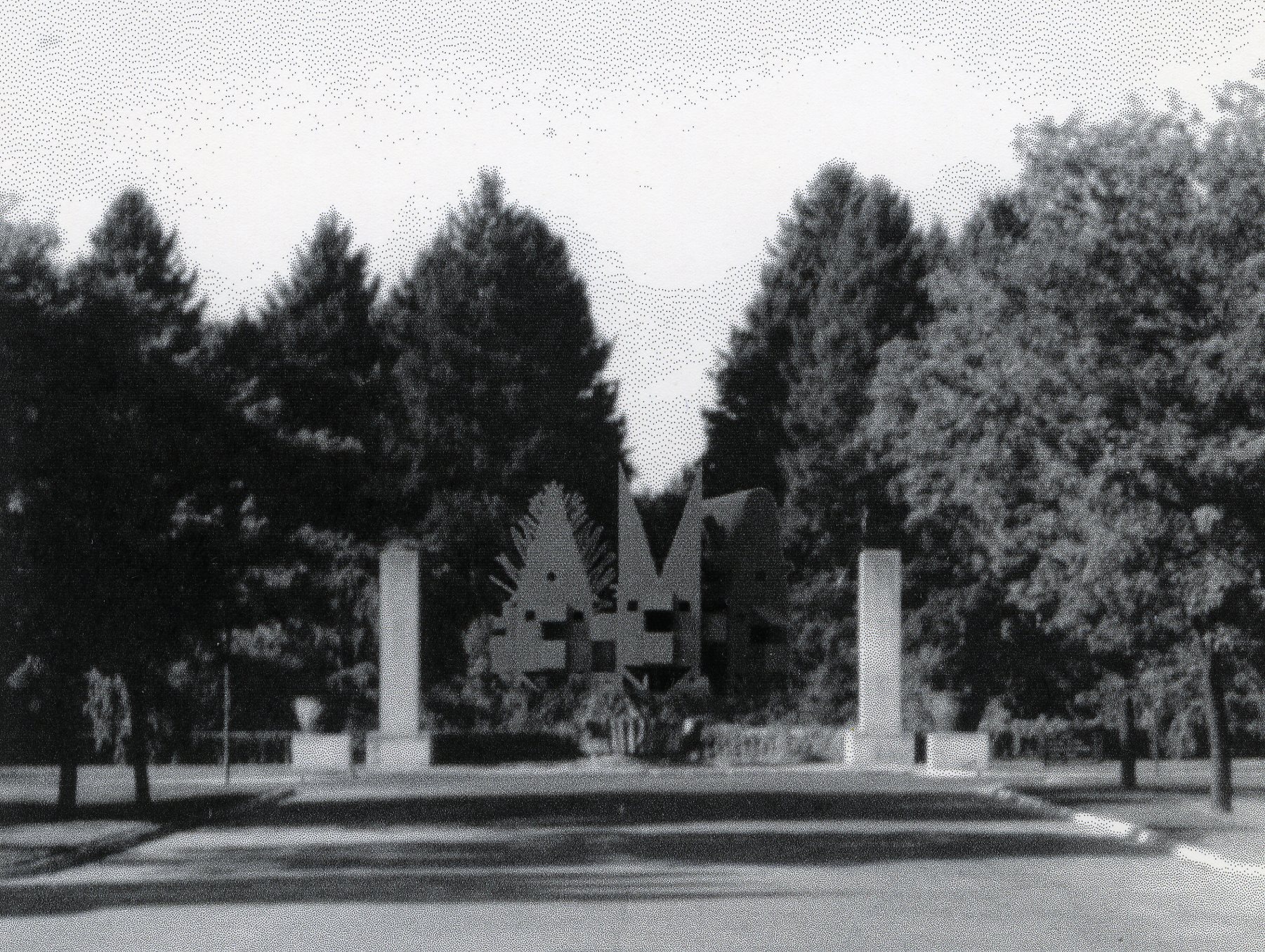
Digital model of the House of the Poet - view from Academy Way with the sculpture of Jonah and Whale in the foreground.

Digital model of the House of the Poet – view from Academy Way with the sculpture of Jonah and the Whale in the foreground.

Project correspondence indicated plans to complete the building in time to coincide with a 1997 exhibition at Cranbrook Art Museum honoring the work of John Hejduk. The project seemed set to move forward, however, due to lack of sufficient funding, was canceled.

Gina Tecos, Archivist

Special thanks to Rebecca Kallen (CKU ‘08) who contributed to the research of this blog.

Craft in Time: Oscar Bach and the Cranbrook School Dining Hall Clock

For nearly ninety years, diners in the Cranbrook School dining hall have marveled at the clock that hangs high above the fireplace. Designed and fabricated by New York metalsmith Oscar Bruno Bach, the clock is a tribute to George Booth’s beloved Arts and Crafts Movement. Each hour is represented by an art or craft, ranging from metalworkers to woodworkers.

Cranbrook School Dining Hall, 1928. Peter A. Nyholm, photographer.

Cranbrook School Dining Hall, 1928. Peter A. Nyholm, photographer.

Oscar Bruno Bach (1884-1957), who was born in Germany, came to the United States in 1913 and established a metal design studio with his brother in New York City. As they built up their reputation and the business grew, Bach exhibited his work through The Architectural League of New York and at the Metropolitan Museum of Art, among others. His work graces numerous churches, industrial buildings, and residences primarily in New York but also in the Midwest. His first known work in Michigan was ornamental metalwork for the Blessed Sacrament Cathedral in Detroit (1915).

Bach was known for incorporating a variety of metals and metal techniques in his work. Cranbrook’s clock (1926) is made of four concentric iron rings with a center element (two male figures at an anvil) of repoussé brass surrounded by three brass “flame” rings. Each of the twelve figures representing arts, crafts, and trades are also made of brass, surrounded by floral elements made of iron. Copper was used for the rivets and for the small fleur-de-lis elements on the outer rim. Finally, the hour and minute hands are made of aluminum with brass rivets.

Detail of the center panel, 2001. The clock was restored courtesy Cranbrook Class of 2000.

Detail of the center panel, 2001. The clock was restored courtesy Cranbrook Class of 2000.

The clock however was not Bach’s first contribution to Cranbrook. In 1919, he fabricated lead “conductors” for the exterior of the east and west wings of Cranbrook House. George Booth also acquired a smoking stand (1922) and two table lamps (1929) for Cranbrook House, and commissioned Bach to fabricate Cranbrook School’s Peacock Gates (after Eliel Saarinen’s drawings) and the Treasury Door (1928) at Christ Church Cranbrook. Other local commissions include The Detroit Players Club (1925), Moulton Manor (1926), the estate of William Scripps (Ellen Booth’s brother) in Lake Orion, and the First National Bank (1927) in Ann Arbor.

One of the four Oscar Bach “conductors” at Cranbrook House, 2004. Mira Burack, photographer.

One of the four Oscar Bach “conductors” at Cranbrook House, 2004. Mira Burack, photographer.

One of the most interesting discoveries I made in writing this post was that the clock used similar elements as doors Bach designed for the new wing of the Toledo Art Museum (1925). They both feature arts and crafts figures – a potter, sculptor, glassblower, draughtsman, metal worker, and bookbinder. In January 1926, Bach received the “Medal of Honor in Design and Craftsmanship in Native Industrial Art” from the Architectural League for his design for the doors so it’s no wonder that he incorporated some of the same elements in the Cranbrook School dining hall clock. I may be a bit partial, but I think our clock is even more magnificent than the doors and I imagine you will too!

Leslie S. Edwards, Head Archivist


Advertising Your Business (Before Facebook)

Cranbrook Archives has an interesting selection of trade catalogs from the early 1930s to the 1990s. While the purpose of these publications was to promote and display a manufacturer’s products, I’m struck by the art and design work that went into creating them. As secondary resources, there is so much to learn about the decisions Cranbrook was making at the time these catalogs were in use. They are also important artifacts of American business and manufacturing.

We have several collections that contain trade catalogs here at the Archives. These publications represent building and landscape products for use in construction projects on campus, tennis courts, art supplies, household items, furniture, and farming equipment – to name a few. Check out a few of the catalogs from the Cranbrook Architectural Office Records below.

Russell-Built Museum Cases literature, ca 1939.

Russell-Built museum case literature, ca 1939.

The Allis-Chalmers company explains why mechanization is the key to multiplying your efforts on the farm, ca 1942.

The Allis-Chalmers company explains why mechanization is the key to multiplying your efforts on the farm, ca 1942.

Zonolite plaster by Vermiculite purports to be insulating, crack-resistant, and fire-safe, ca 1951.

Zonolite plaster by Vermiculite purports to be insulating, crack-resistant, and fire-safe, ca 1951.

If you’re interested in looking at more trade literature, check out the collections at the Smithsonian, the Henry Ford, and the University of California at Santa Barbara.

Gina Tecos, Archivist


Contemporary Jazz Finds Its Way to Cranbrook

For more than 60 years, the Cranbrook Music Guild has been providing chamber music to Oakland County residents. The Guild, started by a group of music lovers in 1951, wanted to promote and provide chamber music on the beautiful grounds of Cranbrook. Consequently, the first Cranbrook Festival was held during the summer that year. While the early years focused on presenting classical music, including performances by the Julliard String Quartet and the Detroit Symphony Wind Quartet, by 1959 the Guild members were looking to expand the roster and even included ballet in the summer program.

img_5384

Encouraged by the response during the 1959 season, the summer of 1960 featured the Michigan Chorale (a 100-mixed voice ensemble), the Severo Ballet accompanied by the DSO, and even a jazz concert in order to “present the best in all fields of art.” The first two performances were, as usual, held at the Greek Theatre. The third of the season was the Dave Brubeck Quartet. One Rochester [Michigan] News reporter called it “the Guild’s boldest experiment” to date. In anticipation of a capacity crowd, the performance was held at the football stadium at Cranbrook School instead of the Greek Theatre, which is a smaller venue.

Dave Brubeck Quartet, Cranbrook School, July 14, 1960. Harvey Croze, photographer. Copyright Cranbrook Archives.

Dave Brubeck Quartet, Cranbrook School, July 14, 1960. Harvey Croze, photographer. Copyright Cranbrook Archives.

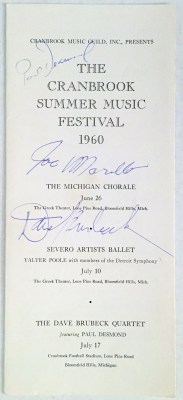
In 1960, the members of The Dave Brubeck Quartet were Dave Brubeck (piano), Paul Desmond (alto saxophone), Joe Morello (drums), and Eugene Wright (double bass). The concert at Cranbrook was held on Sunday afternoon, July 14th at 4:30 pm. While the Guild was hopeful for a full house of 2,000, more than 1,100 people actually attended, still beating the Guild’s previous attendance record of 775.

Cranbrook Music Guild Records. Courtesy Cranbrook Archives.

Cranbrook Music Guild Records. Courtesy Cranbrook Archives.

While I was not able to find any notes or articles about what the Quartet played at Cranbrook, it is highly likely that they played at least a few songs from their album, “Time Out,” which was recorded in 1959. Most of you will recognize the song “Take Five” from the album, which became one of their most popular. It is fun to imagine sitting outside at the stadium (now known as Thompson Oval) listening to this “new jazz.”

Leslie S. Edwards, Head Archivist

Editor’s Note: Thanks to Chris Morton for bringing this event to our attention!


Upcoming Day Away: Albert Kahn and the University of Michigan

Henry Scripps Booth, photographer. Pleasures of Life, Vol. IV. Courtesy Cranbrook Archives.

Henry Scripps Booth, photographer. Pleasures of Life, Vol. IV. Courtesy Cranbrook Archives.

In this 1919 photo taken by Henry Scripps Booth of his two friends and architecture classmates Fred Morse and Martin Lexen, they’re all hanging out (and almost off of!) the roof of the University of Michigan’s brand new General Library by architect Albert Kahn. I found this snapshot in volume four of Booth’s Pleasures of Life series, which has lots of great images of the Booths at Cranbrook and of his friends at the university (where Henry studied from 1918- 1924). The building they’re sitting on here, known as the Harlan Hatcher Graduate Library since 1971, figures prominently in the Center for Collections and Research’s next Day Away trip on October 28!

Henry Scripps Booth’s Scrapbook Album, Courtesy Cranbrook Archives.

Dedication of the new (Hatcher) library building, 1920. Henry Scripps Booth’s Scrapbook Album, Courtesy Cranbrook Archives.

While we won’t be quite so daring as to dangle our feet off the roof, you are invited to join the Center as we explore Albert Kahn’s architecture at University of Michigan. Best known for his industrial architecture in and around Detroit (and of course Cranbrook House), this tour will introduce you to his academic buildings. The day includes morning lectures followed by in-depth tours of five Kahn structures (including rarely accessible spaces like the carillon in Burton Memorial Tower), all interspersed with narrated walks and drives.

I should mention, though, that the Day Away won’t just be about touring. We’ll stop for a delicious lunch at Taste Kitchen, an acclaimed new restaurant by owner and chef Danny Van. It came highly recommended by friends of the Center, and we’re very happy Van has designed a three course meal, with optional drink pairings, just for us.

Henry Scripps Booth, photographer. Pleasures of Life, Vol. IV. Courtesy Cranbrook Archives.

Henry Scripps Booth, photographer. Pleasures of Life, Vol. IV. Courtesy Cranbrook Archives.

In this photo, we see Booth’s friend Fred’s “long, lankey and lean” body around a street sign—with assistance from the bottom-half of another Cranbrook luminary and friend of Henry, J. Robert F. Swanson.* The photo shows the two goofing around on a road outside of Ann Arbor. For this post’s purposes, I’ll imagine they’re on the very route we’ll be taking from Cranbrook to Ann Arbor on October 28! There shouldn’t be any dangerous curves on our trip, though it’s guaranteed to be informative, delicious, and fun. Call and get your tickets today!

*Did you know Booth and Swanson met studying architecture at U of M, where they also encountered a certain visiting professor, Eliel Saarinen?

-Kevin Adkisson, Collections Fellow, Cranbrook Center for Collections and Research

Vitrolite: Better than Marble

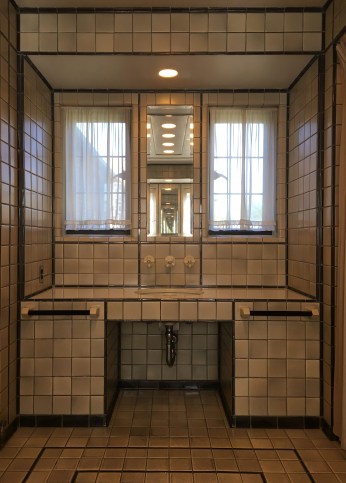
At Saarinen House, the 1930 home of Eliel and Loja Saarinen at Cranbrook, the master bath is one of the best rooms in the house.

img_1580The bathroom is symmetrical, with his and hers sinks on either end of the room. The tile is off-the-shelf, not custom made for Saarinen, but deployed in an utterly unique way. In this post, I want to look specifically at the material of the countertops, Vitrolite glass.
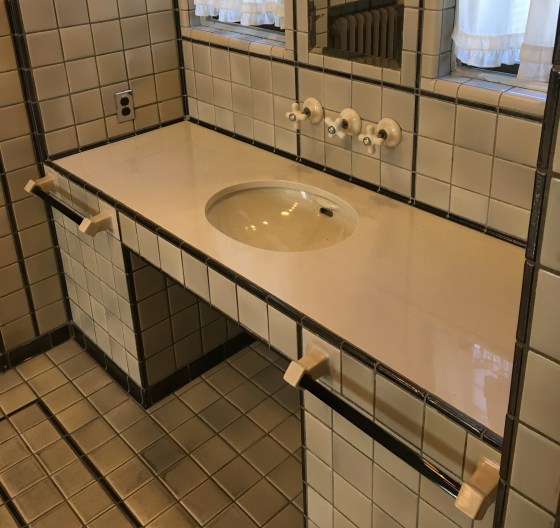
Pigmented structural glass was developed at the start of the 20th century, and its first uses were in hospital, laboratory, and industrial food environments where its qualities of cleanliness, imperviousness, strength, and durability could be exploited. From institutional uses, structural glass took the next logical step into other places where sanitation mattered: bars, restaurants and restrooms.


vitrolitec1922

Vitrolite trade catalog, c. 1922, Courtesy of the Hagley Library Digital Archives

The first structural glass came out in 1900, Sani Onyx by the Marietta Manufacturing Company, but it was under the brand name Vitrolite that structural glass achieved its greatest success. Vitrolite was manufactured from 1908 to 1947, first by the Vitrolite Company, and after 1935, by the Libby-Owen-Ford Company (both out of Toledo, Ohio).

At first, structural glass was manufactured only in black or white, colors befitting its promotion as an alternative to marble (Pittsburgh Plate Glass’ Vitrolite rival was called Carrara Glass, after Carrara marble, and Vitrolite’s sometime slogan was “Vitrolite: Better Than Marble.”) In its 1922 promotional material “Vitrolite Sanitary Tables and Counters,” the company claims that the products “delightfully cool, bright surface is just the place to serve palatable drinks and dainties. It keeps clean— nothing stains it and it just wears and wears.”

img_1585The sanitation and durability arguments likely appealed to Eliel Saarinen as he specified white Vitrolite for the master bathroom, but he was probably also drawn to its aesthetic potential: a single, seamless, and uniform surface for the countertop. It offsets the grid of the bathroom tile beautifully, providing a place to rest both your toothbrush and your eye.img_1590

caorecordsinvoice092

Correspondence concerning Saarinen House Vitrolite bathrooms, from our Archives

Installed by the plumbing contractor Robert Purcell, the sink bowls are vitreous china set beneath the Vitrolite counter. It’s likely that the oval for the sink basin was cut out of the Vitrolite by hand by Purcell’s team, and if you look at the result, it’s not a perfect oval—this isn’t your machined Corian countertop! In a house (and on a campus) where craftspeople are often celebrated, it’s neat that the bathroom counter’s utterly modern material still reflects the hand of the maker.


na6220_l69_tc_f_p69

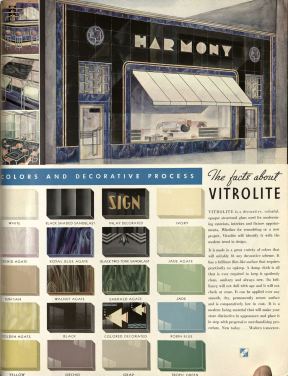
Colors of Vitrolite from 1936, published in “52 Designs to Modernize Main Street with Glass,” Libbey-Owens-Ford Glass Co., Courtesy of the Winterthur Library, Printed Book and Periodical Collection

Once Vitrolite bcame available in an array of colors and patterns, its aesthetic potential boomed. After its purchase by Libby-Owen-Ford in 1935, the glass was heavily marketed towards architects for its use in building facades, particularly for remodeling storefronts. In many design competitions and promotional literature, Vitrolite was sold as a way of “Modernizing Main Street,” a quick way to freshen up old buildings. Its these flashy, Art Deco facades that stand out in structural glass history, but it’s nice to remember its humbler, utilitarian beginnings.

 
One final note on the Saarinen House countertops: where are the faucets?! Look inside the sink, the water came out of the small bump at the top of the bowl itself. I hope they had great water pressure.


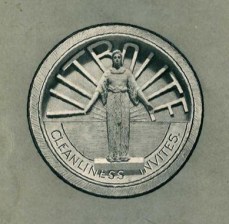
cleanliness-invites-vitrolite

Back cover of “Vitrolite Sanitary Tables and Counters,” c. 1922

-Kevin Adkisson, Collections Fellow, Cranbrook Center for Collections and Research


Photo Friday: Good Things Come To Those Who Wait

In October 2014, archivist Cheri Gay, wrote a blog on the pet cemetery at Thornlea Studio and the love the Booth family had for their animals.

In the blog, Cheri states, “When Henry was growing up, the Booth family had beagles, Prince and Mike, and a great dane, Ginger. Mike, according to Henry, ‘… loved having a fuss made over him, one time going so far as being pushed around in a doll carriage while wearing a canvas hat.’ Oh to have a photograph of that!”

On this Photo Friday, the Cranbrook Kitchen Sink is proud to present:

Mike the beagle, being pushed in a doll stroller... wearing a canvas hat!

Mike the beagle, being pushed around in a doll carriage… while wearing a canvas hat!

Leslie S. Mio, Assistant Registrar

From the Outside Looking In

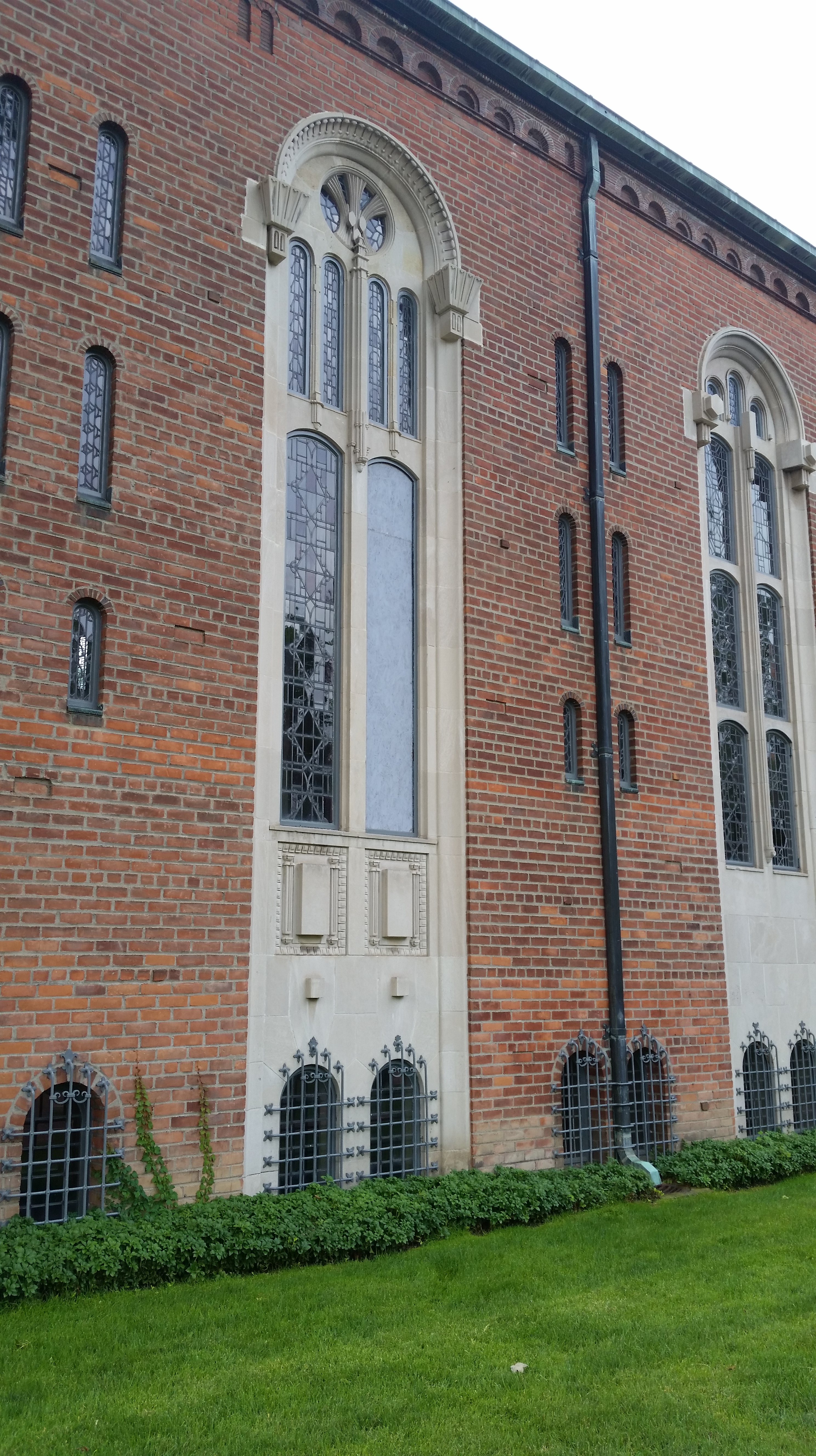
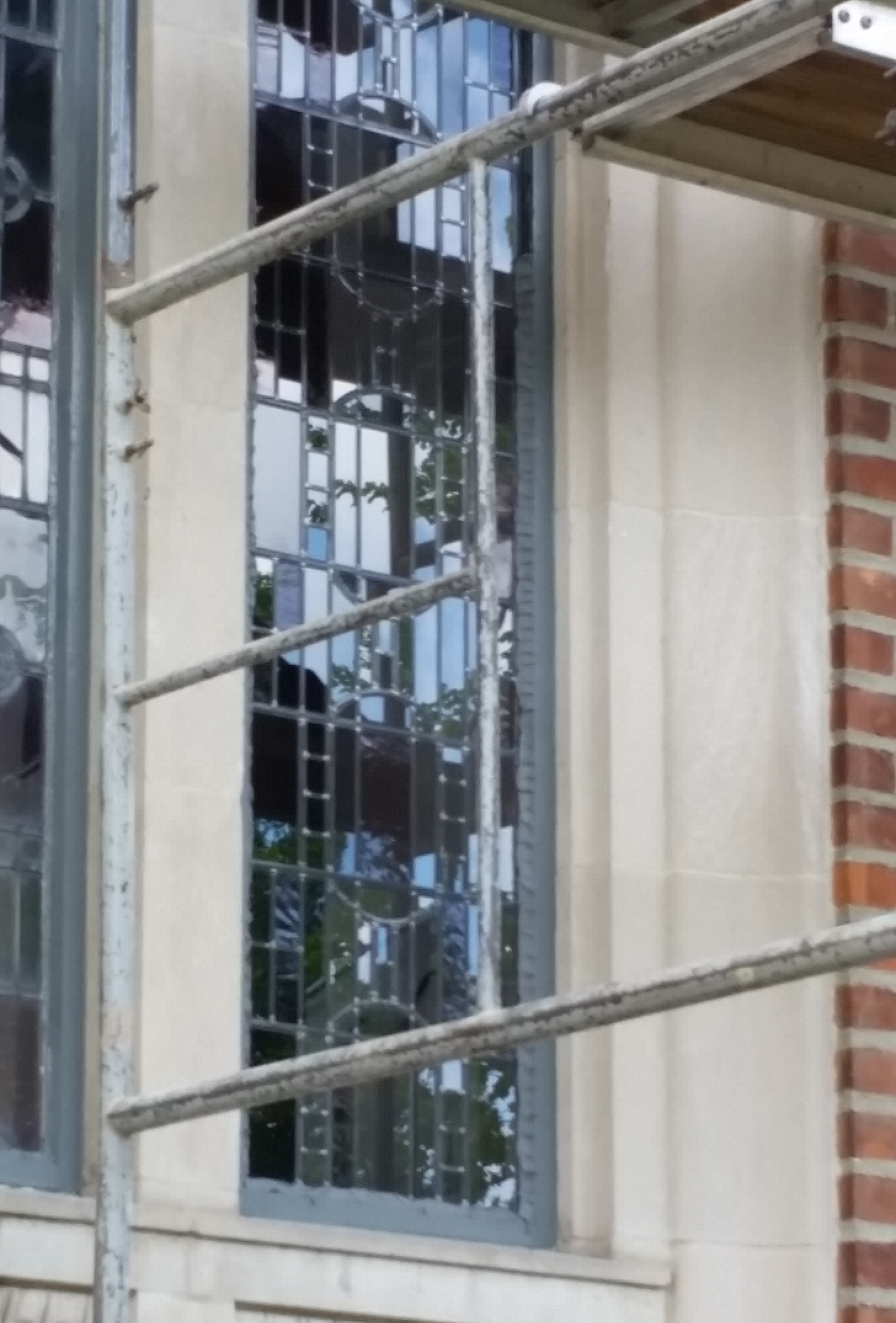
In the fall of 2015, one of the leaded glass windows in the Cranbrook Dining Hall was damaged. The window, one of many designed by Eliel Saarinen in 1927, is known as a lancet – a tall, narrow window, usually with a point at the top. The extent of the damage required that the window be removed and restored offsite by Thompson Art Glass in Brighton, Michigan. Yesterday, the window was returned and reinstalled.

The window, ready for reinstallation.

The window, ready for reinstallation.

Glaziers from Thompson Art Glass reinstalling the window.

Glaziers from Thompson Art Glass reinstalling the window.

An interior view of Charlie from Thompson Art Glass puttying the window. Photo by Giuliano N. Stefanutti, CKU '15.

An interior view of Charlie from Thompson Art Glass putting in the window. Photo by Giuliano N. Stefanutti, CKU ’15.

A putty knife and a steady hand completed the finish work.

A putty knife and a steady hand completed the finish work.

Watching Matt and Charlie from Thompson Art Glass work on the glazing made me think of all the craftspeople, artisans, and contractors who worked hard to create Cranbrook. You can find some of their stories archived on The Kitchen Sink.

Leslie Mio, Assistant Registrar

Transcontinental Threads: Maja Andersson Wirde

One of my favorite parts of my job as an archivist is assisting researchers with locating materials in our collections. Often times a scholar will visit here with a set plan for their research project, and pre-conceived ideas about what they might find here or how the materials in our collections will support their thinking. One of my personal pleasures is when the researcher finds something new or surprising in our collections that changes their course of action. This is exciting on many levels – for them as well as for me!

In August 2015, Swedish author Marie Andersson visited Cranbrook to study the work of the Swedish weaver Maja Andersson Wirde (no relation) in preparation for a monograph on the life and work of Wirde at the request of Wirde’s family. Wirde (1873-1952), an accomplished weaver and textile designer, was asked by Loja Saarinen to come to Cranbrook in 1929 and oversee the operation of Studio Loja Saarinen which was established to design and produce all of the textiles for Kingswood School Cranbrook. As many researchers before her, Marie Andersson found her visit to Cranbrook Archives to be a revelation, and she recently wrote to me that “the Cranbrook chapter became an important part of the book, much more than I thought before I visited you.”

Maja Andersson Wirde (standing) with Loja Saarinen, Studio Loja Saarinen, ca 1930. Detroit News photograph, Courtesy Cranbrook Archives.

Maja Andersson Wirde (standing) with Loja Saarinen, Studio Loja Saarinen, ca 1930. Detroit News photograph, Courtesy Cranbrook Archives.

Prior to coming to Cranbrook, Maja Andersson Wirde had been employed by Handarbetes Vänner (The Friends of Handicraft) in Stockholm from 1907-1929. Her textile designs were represented in international exhibitions including Stockholm (1909 and 1930), Malmo (1914), Gothenburg (1923), and Paris (1925). However, according to Marie Andersson, Wirde’s “time spent at Cranbrook must be looked upon as the most important period” in Wirde’s life as an artist, and she created some of her most significant work while here.

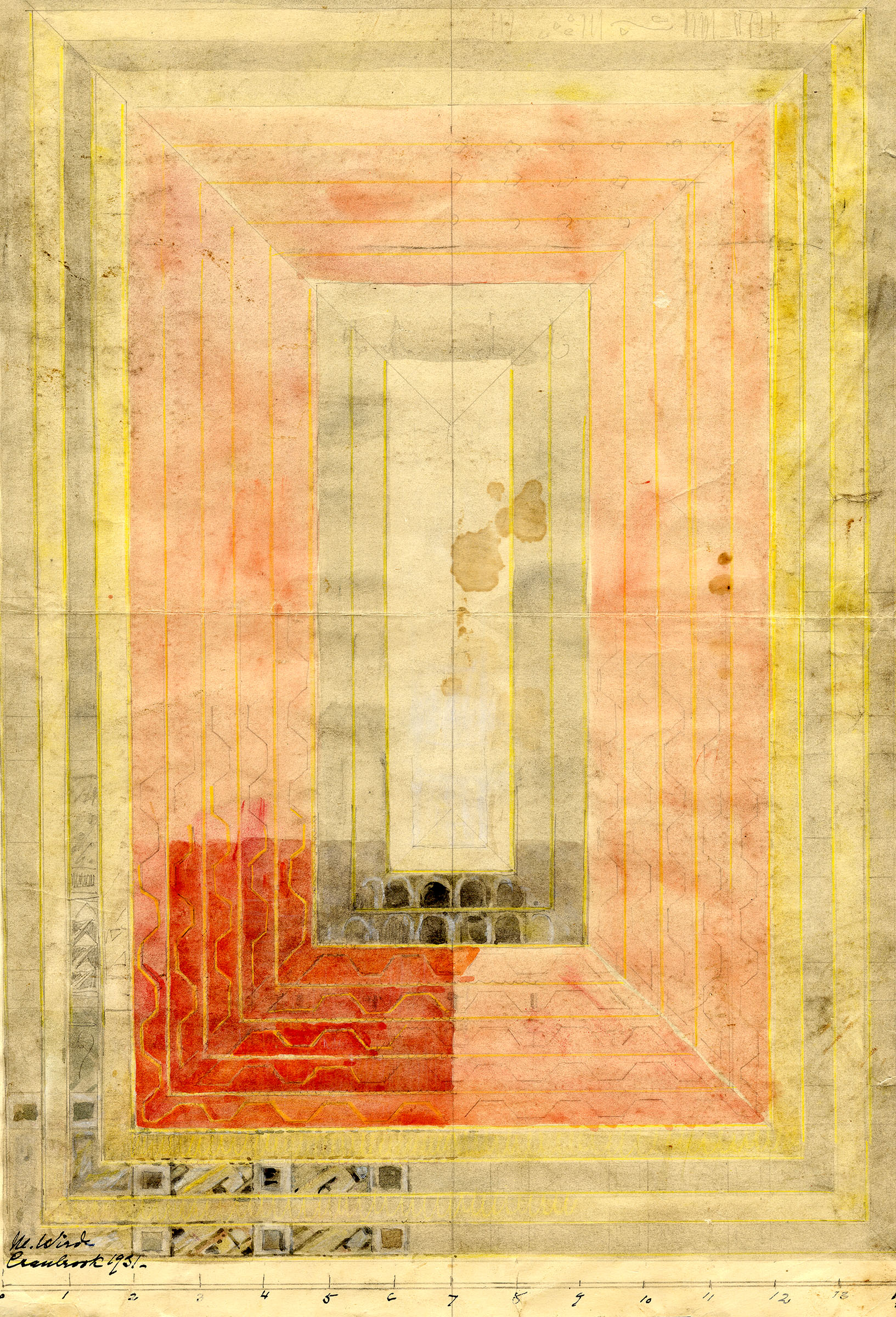
So, what did Marie discover at Cranbrook Archives? Comparing photographs and documents from our collections with images of watercolor sketches from museums and archives in Sweden, Marie and I spent two days of “fantastic co-operation” in order to uncover the extent of Wirde’s contribution to the history of textiles at Cranbrook, particularly Kingswood School.

Watercolour sketch by Maja Wirde (1873-1952), Collection of Smålands Museum, Växjö, Sweden.

Watercolour sketch by Maja Wirde (1873-1952), Collection of Smålands Museum, Växjö, Sweden.

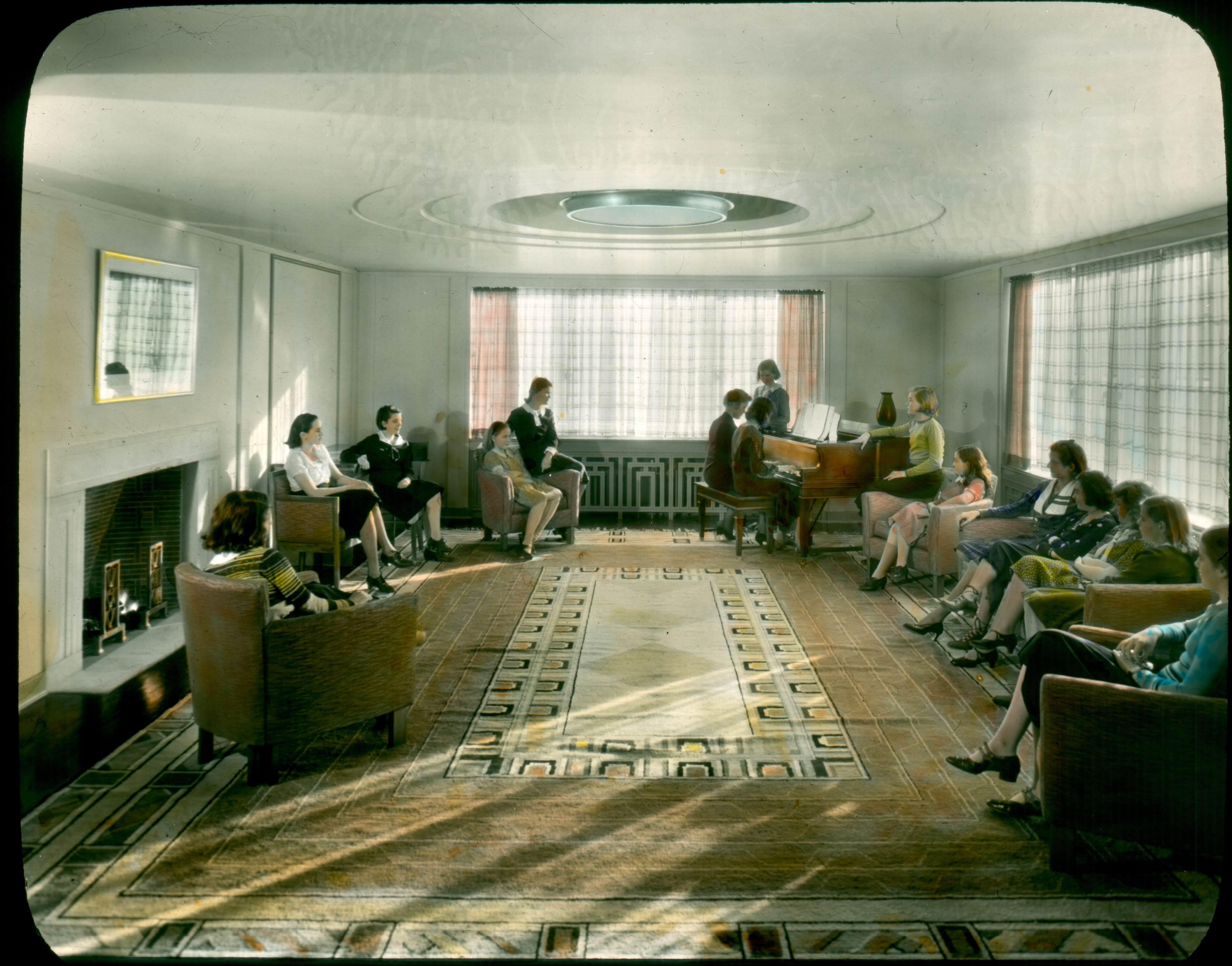
The rug for Reception Room III (Rose Lounge) in situ, Kingswood School, 1932. George Hance, photographer, Courtesy Cranbrook Archives.

The rug for Reception Room III (Rose Lounge) in situ, Kingswood School, 1932. George Hance, photographer, Courtesy Cranbrook Archives.

Prior to Marie’s visit, Wirde was known for her work as the shop supervisor at Studio Loja Saarinen, the weaving instructor at Kingswood School, and for her designs for several rugs and textiles for Kingswood School, including the fabric for the dining hall chairs and most notably, the large rug for the Green Lobby. However, Loja Saarinen was given credit for the rest. Now, Cranbrook can tell a more inclusive story – for we discovered that it was Maja Andersson Wirde who designed the majority of the textiles for Kingswood School – eleven rugs for lobby/reception halls, all of the curtains and rugs for the dormitory rooms, as well as curtains for the dining hall, study hall, and library! In addition, she designed rugs for the Academy of Art, Saarinen House, and George Booth’s Cranbrook Foundation Office.

While the book, “Trådar ur ett liv: textilkonstnären Maja Andersson Wirde” was published pirmarily in Swedish, there is a translation of the chapter on Cranbrook in the back, and the book features numerous images from Cranbrook Archives. We are so excited to be able to tell a more comprehensive story not only about the objects in our care, but also a key individual in our rich history.

Leslie S. Edwards, Head Archivist


Create a website or blog at WordPress.com