Happy Belated Birthday to Our Founder!

September 24th marked the 150th birthday of Cranbrook’s founder, George Gough Booth. Born in Toronto, Mr. Booth had an early interest in art and architecture. In 1881 his family moved to Detroit and he put his artistic talents to work by purchasing half of an interest in an ornamental ironworks firm. The business was successful and used many of Booth’s product designs.

George Gough Booth, ca 1876.  W. E. Lindop, photographer.  Cranbrook Archives

George Gough Booth, ca 1876. W. E. Lindop, photographer. Cranbrook Archives

In 1887 Booth married Ellen Warren Scripps, daughter of Detroit News founder James Scripps. The following year he sold his share in the ironworks business and joined the News staff as its business manager. The News blossomed under Booth’s direction, becoming one of the leading metropolitan dailies in the nation. In 1906, Booth became president of the newspaper, succeeding his father-in-law.

In 1904 George and Ellen Booth purchased a run-down 174 acre farm in Bloomfield Hills and named it Cranbrook after Booth’s ancestral town in England. Booth called upon his long-time friend, and noted Detroit architect, Albert Kahn, to prepare working drawings for the building of Cranbrook House. Kahn responded with an English Arts and Crafts inspired design the Booths moved into their new home in 1908.

In 1922, believing their country estate could serve a larger public purpose, the Booths shifted their focus toward building the six institutions at Cranbrook: Brookside School, Christ Church Cranbrook, Cranbrook School (for boys), Cranbrook Academy of Art, Cranbrook Institute of Science, and Kingswood School (for girls). George Booth was a visionary, and with his wife Ellen, set new standards for generosity, leaving us a legacy we are proud to be a part of. Happy belated birthday George!

“We were unwilling to go through life with our aims centered mainly in the pursuit of wealth and with a devotion wholly to the ordinary opportunities for social satisfaction.  We were not willing to leave all of the more enduring joys for our children or the joy of work in so good a cause entirely to our friends after we had passed on; rather did we wish, in our day, to do what we could and give tangible expression now to our other accomplishments by adventures into a still more enduring phase of life.  We wished to see our dreams come true while we were, to the best of our ability, helping to carry on the work of creation.”  (George Gough Booth, Address at Founders Day, October 28, 1927)

Gina Tecos, Archivist

Photo Friday: Back to School in 1912

Stock certificate for the Bloomfield Hills Seminary issued in 1912/Courtesy Cranbrook Archives.

Stock certificate for the Bloomfield Hills Seminary issued in 1912. Cranbrook Archives.

In early June of 1912 a small group of Bloomfield Hills residents assembled at the home of William T. Barbour (president of Detroit Stove Works) to discuss the formation of a small local private school. After general discussion, it was moved by George Gough Booth to establish a corporation with capital of $5,000.00 in order to establish the school. According to meeting minutes, the objectives were to “give the young people of Bloomfield Hills, and those from nearby towns, the opportunity to study in the country; to offer a course of study that will fit them for life as well as for college.” With these objectives in place, the Bloomfield Hills Seminary was incorporated in August.

Often referred to as the precursor to Brookside School, the Seminary was located on five acres at the corner of Woodward Avenue and Lone Pine, in a historic house built in 1820 by Ezra Parke. Booth, who had purchased the property in 1910, offered use of the house and added a five-class-room addition with the caveat that the property would revert back to him should the school ever close.

Mary Eade, who had been the principal of the Detroit Seminary for Girls, became the principal and taught grammar and upper level courses, including History of Art. Elizabeth K. Seward (granddaughter of William Henry Seward of the Alaska purchase fame) taught intermediate classes including French, and Winifred Eastman was responsible for the elementary age children. The coeducational day school used the Montessori method of instruction.

In 1916, the trustees voted to change the name of the school to the Bloomfield Hills School. At its peak, there were eight teachers and fifty-one students enrolled. Due in part to the resignation of Mary Eade (who resigned to do war work) and the construction of new schools in Birmingham and Pontiac, the school closed in 1918 after six years. The property reverted back to Booth who purchased all of the stock certificates back from the trustees, and later became known as the Lone Pine Inn and Tea House, but that’s another story!

Leslie S. Edwards, Head Archivist and, Gina Tecos, Archivist

Fashioning Architecture

In 1931, attendees at the Beaux-Arts Ball in New York came dressed to impress. An annual party thrown by the Society of Beaux-Arts Architects, the ball featured a different theme each year. 1931’s theme of “Fete Moderne — a Fantasie [sic] in Flame and Silver” was inspired by the New York skyline and the iconic skyscrapers that had recently come to define it. Fully committing to the theme, many guests came dressed as famous New York buildings. In this photo William Van Alen holds center court as the Chrysler Building (of which he was the architect) while other personified buildings crowd around him.

William Van Alen as the Chrysler Building, with other masquerading architects around him. On the far right is Joseph Freelander as the Museum of the City of New York.  Source: NY Times/untappedcities.com.

William Van Alen as the Chrysler Building, with other masquerading architects around him. On the far right is Joseph Freelander as the Museum of the City of New York. Source: NY Times/untappedcities.com.


Continue reading

Architecture in Detail

It’s always a great day when a new discovery is made. Yesterday Craig, one of our campus architects and project managers, asked me if I knew anything about a pixie-like relief that is located on a Mankato stone column at Kingswood School.  I remember seeing a photo of it years ago but never had reason to look into its origin until now.  As luck would have it, I was able to use my super-sleuthing skills to locate the original drawing of the figure by none other than Eliel Saarinen!  The full-scale detail drawing illustrates the whimsical quality of the figure and even shows the level of intended relief–note the red lines across the figure.  Breen Stone and Marble Company of Kasota, Minnesota was awarded the contract for the stonework at Kingswood School.

IMG_1310

Detail of stone column, Kingswood School. Rendered by Eliel Saarinen, March 1931.

~Leslie S. Edwards, Head Archivist

Five Things in Four Years: A Cranbrook Goodbye*

I’m not a hugely sentimental person, but I am a nostalgic one (I swear, there’s a difference). As I leave Cranbrook after four years here to embark on the next phase of my career, I can’t help but think about all the different places on campus I will miss. Here are my top five:

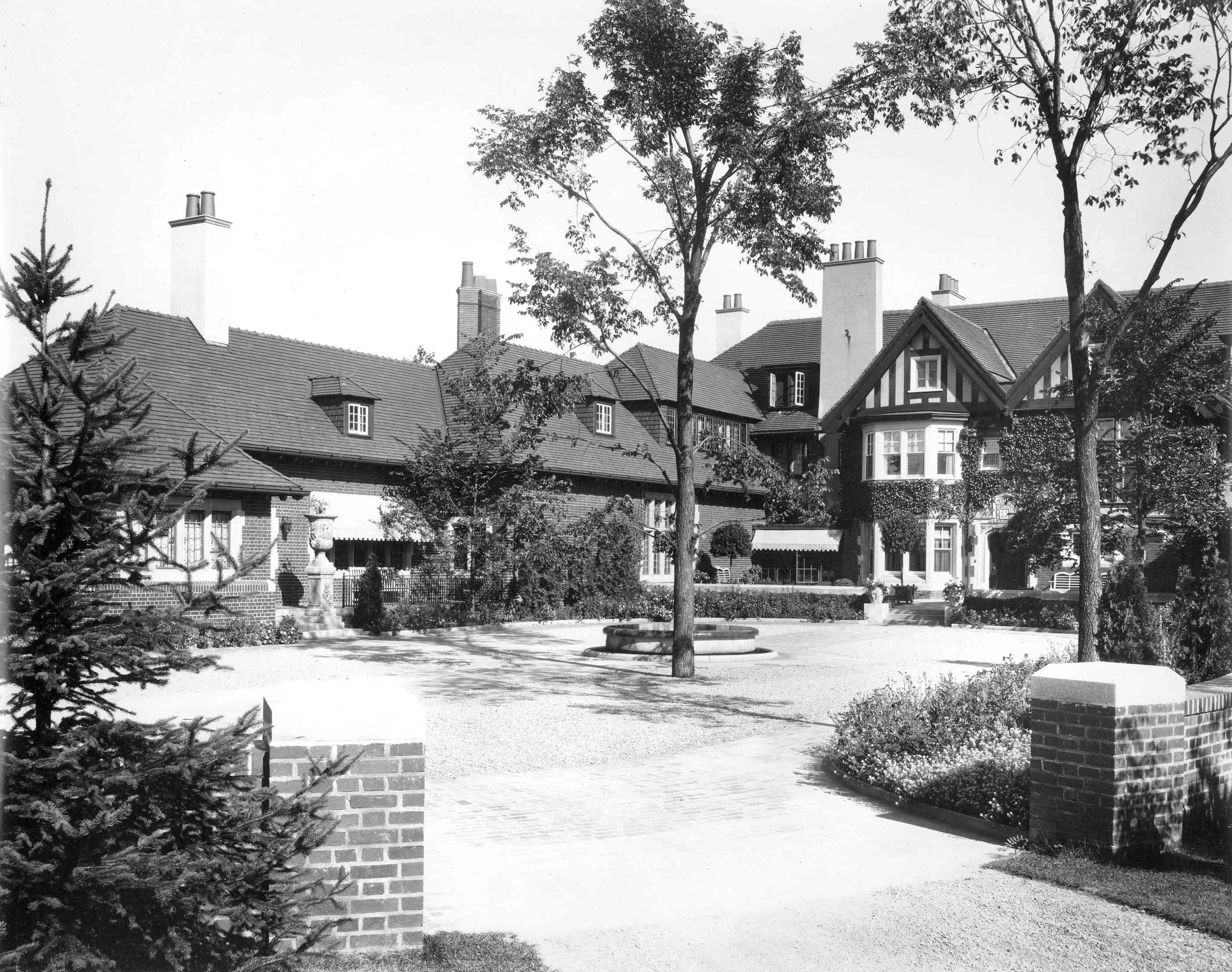
Cranbrook House, 1925.  Cranbrook Archives.

Cranbrook House, 1925. Cranbrook Archives.

Continue reading

Cartoons and Crusades: Booth, Herter, and the Making of a Tapestry

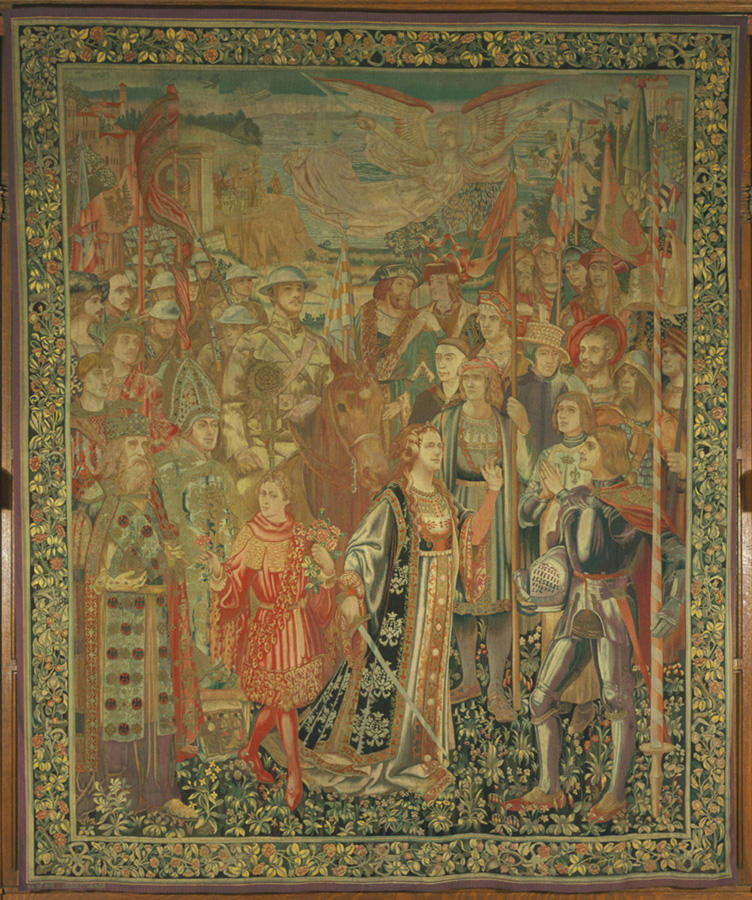
If you’ve ever visited the Cranbrook House library, you’ve probably noticed The Great Crusade, a large tapestry hanging on the south wall.  Many people associate tapestries with medieval times, when they were used to keep drafty castles warm in winter.  Woven wall hangings were also popular as decorations, especially as a sign of wealth since the extensive labor and pricy materials made tapestries more expensive to produce than paintings.  While most of the tapestries that adorn Cranbrook House are fifteenth-century Flemish, The Great Crusade is a toddler; though it utilizes a historic technique, it was designed and produced in the early twentieth century.

Herter Looms, The Great Crusade, 1920.  Cranbrook Art Museum.

Herter Looms, The Great Crusade, 1920. Cranbrook Art Museum.

Continue reading

Booth House + Scripps Land = Library

The Detroit connections of James E. Scripps and George G. Booth are well-documented: Scripps as founder of the Detroit News and founding member of what is today the Detroit Institute of Arts, and Booth as a founder of the Detroit Society of Arts and Crafts.  Less known, perhaps, is a venture near the end of Scripps’s life that helped create the Scripps Branch of the Detroit Public Library at Trumbull and Myrtle. The library was actually George Booth’s former home, renovated to accommodate library services. It stood in Scripps Park though a different library (the Frederick Douglass branch) sits there now.

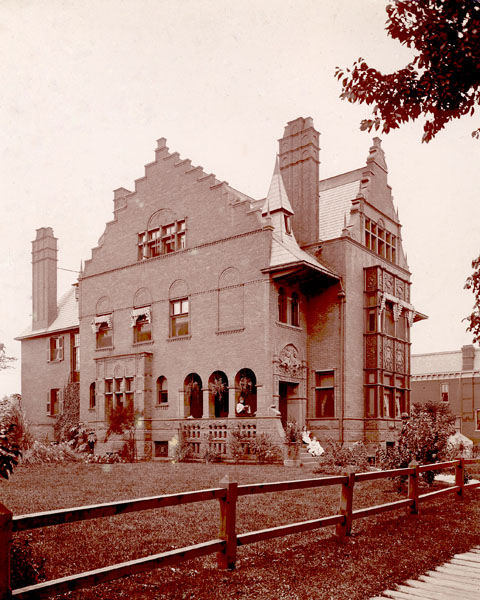
Here’s the story. When George Gough Booth and Ellen Warren Scripps married in 1887, James Scripps built a house for them, designed by Mason & Rice, across the street from his own on Trumbull Ave. Fast forward to 1905. James Scripps donated 15 lots of property, on Grand River between Trumbull and Commonwealth, to the city of Detroit as a site for a park and branch library. He included $50,000 to be used for city beautification.

Booth Family Home, 605 Trumbull Avenue, 1898

Booth Family Home, 605 Trumbull Avenue, 1898

The Library Commission, on which Scripps served for five years, was already thinking of putting a branch in this area (no doubt influenced by Scripps), so the city gave the Commission the land. Now things get more confusing. Upon the death of James Scripps in 1906, the estate purchased the George Booth home (located next door to Scripps’s donated property; by this time the Booths had moved to Cranbrook) and included that in the gift. So the Library Commission didn’t have to build a new branch and used the $14,000 designated for that purpose to renovate Booth’s house as a library.

Scripps Park

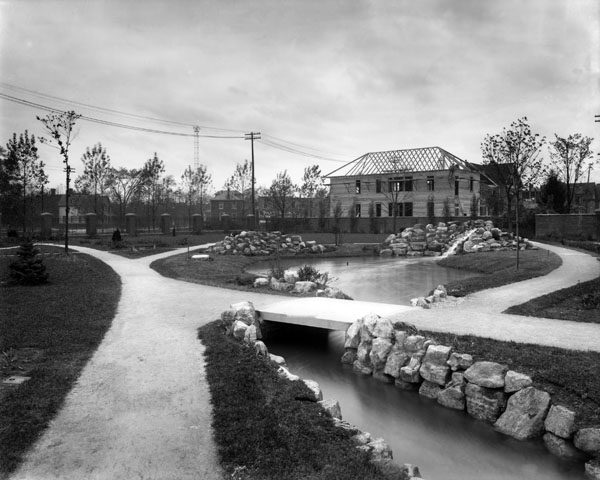
Early landscape, Scripps Park, ca 1908

In fulfilling Scripps’s intent for a park, Booth hired H.J. Corfield, landscape gardener who designed the basic landscape for Booth’s Cranbrook estate.  Booth wrote to Corfield “I feel quite sure that we can carry through a nice piece of work and will be able to pay the foundation for a small park of unusual attractiveness in this city.”  Corfield transformed land that was “little better than a city dump …  into one of the prettiest parks in the city of Detroit.”

Entrance to Scripps Park

Entrance to Scripps Park

The former Booth home was almost doubled in size and opened on July 3, 1909 as Scripps Branch Library.

There’s another interesting twist to the story. In 1898, James Scripps added an 800-ton octagonal chapter house, modeled after the one in Westminster Abbey, to his own home on Trumbull across the street from the Booth’s. It contained his book and art collection. In 1927, James’s son, William E. Scripps, made a gift of the tower to the Library, along with its collections, it was moved across the street and attached to the Scripps Branch Library!

The sad ending is that the branch closed in 1959, and was demolished in 1966. The Gothic tower was razed sometime later, after a valiant attempt to save structure, by George Booth’s youngest son, Henry Scripps Booth, failed.

~Cheri Gay, Archivist

Guernsey Cows and George Booth

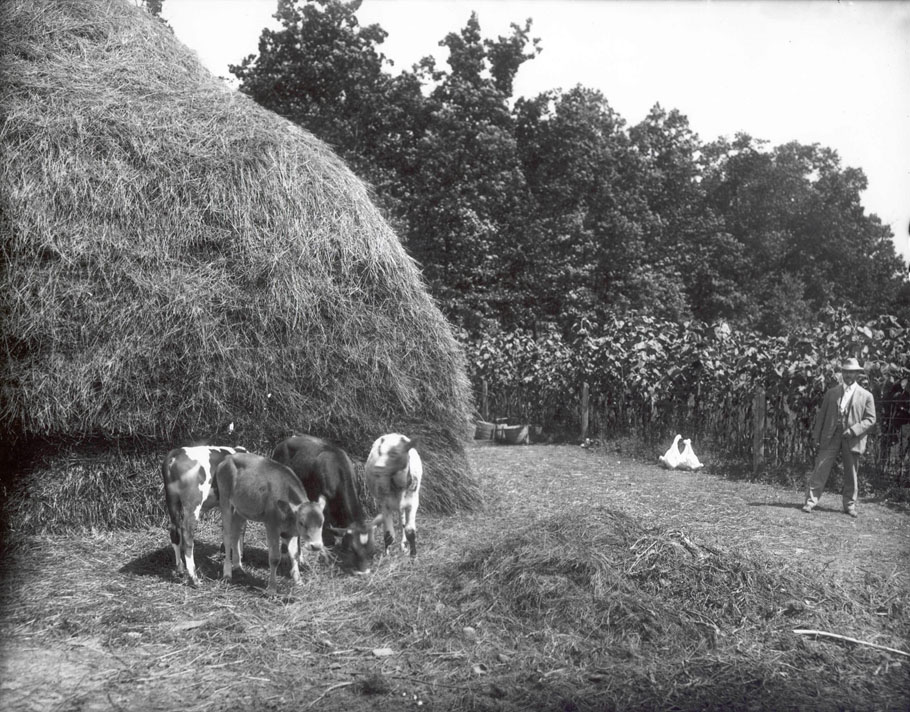
When most people hear the word “Cranbrook,” they think of Eliel Saarinen, modernist design, art and science, or private education.  Some even think of our sister schools in England, British Columbia or Australia.  But how many people think of farm animals named “Daisy Lovelace” or “Nellie of Cranbrook?”  When the Booths purchased the old Alexander farm in 1904, one could see rolling farmland covered with hay fields and orchards.  Indeed, George Booth soon became a gentleman farmer.

George Booth (right)

George Booth (right)

In fact, Cranbrook boasted TWO working farms, originally called Farm Group #1 and #2, situated on the grounds of what are now the campuses of Kingswood School and Cranbrook School respectively. Farm Group #1 (1904) was designed no, not by Saarinen, but by that other architect, Albert Kahn! – one of Kahn’s earliest commissions for George Booth. Farm Group #2 (1917) was designed by Canadian architect Marcus Burrowes and his partner Dalton Wells, recommended to Booth by Kahn who was getting mighty busy with his industrial projects. When the footprint for Cranbrook School for Boys was developed, George Booth asked Eliel Saarinen to follow the plan for Farm Group #2. Today’s Hoey Hall is on the site of the old silo. The only remaining evidence of the farm buildings is the orignal farmhouse designed by Burrowes and Wells.

~Leslie S. Edwards, Head Archivist

Worker Bees and Spider Webs: Preparing Saarinen House

Walking through Saarinen House during the historic house tour season (May 1st – October 31st) visitors expect to see a few things; perfection in architecture, intricacies in woven textiles, beautiful leaded glass, and ingeniously designed furnishings. What visitors miss during the off-season is the buzzing of many “worker bees” laboring over the house’s care. As the Associate Registrar for the Center for Collections and Research, however, I am commissioned with task of caring for the house and preparing it for the public tour season.

Exterior plaque, Saarinen House.  Considered part of the Cranbrook Art Museum, Saarinen House operates as a historic house open to tours from May to October.   The house is interpreted to the 1930s, when the Saarinen family first built and inhabited the home.  Copyright Cranbrook Art Museum/Balthazar Korab.

Exterior plaque, Saarinen House. The house is open from tours between May and October and is interpreted to the period in the 1930s when Eliel and Loja Saarinen built and furnished their home. © Cranbrook Art Museum/Balthazar Korab.

Continue reading

Create a website or blog at WordPress.com