Do you love sharing great stories? Are you the person who says “Did you know…?” at parties? When you discover something wonderful, do you instantly need to share it with friends? Do you love art, architecture, and design, and, have you ever mused to yourself, “‘Life without beauty is only half lived,’ and I want to be fully living!“?
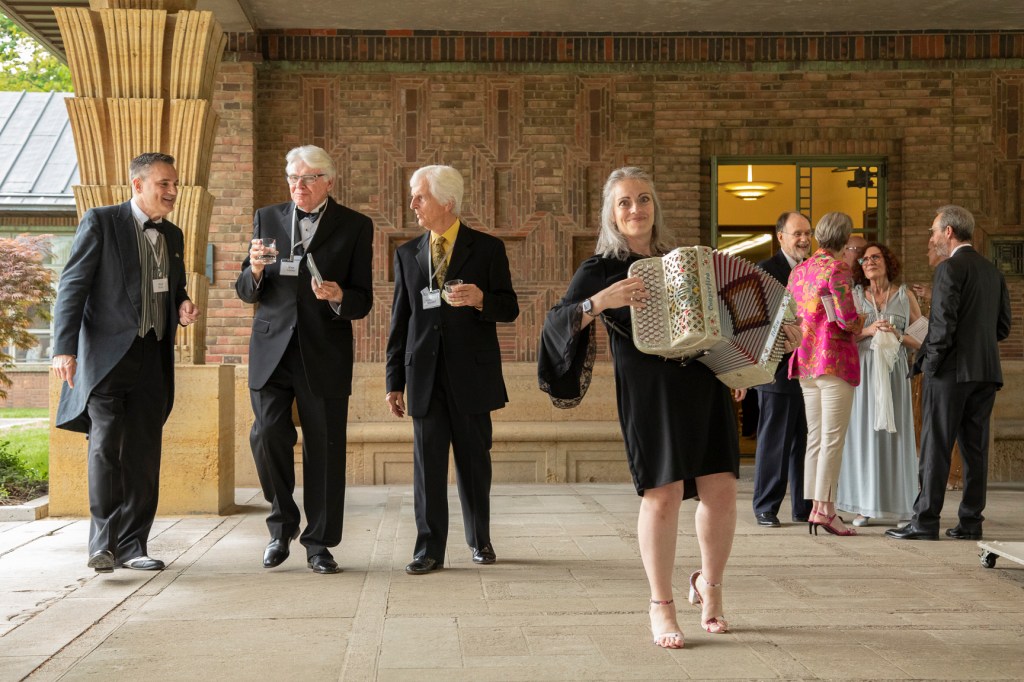
Collections Interpreter Diane VanderBeke Mager welcoming guests to the Center’s gala fundraiser, A House Party at Cranbrook Celebrating Loja Saarinen, May 2022. Collections Interpreters are storytellers, teachers, hosts, and style icons! Photography by PD Rearick.
If you answered “yes!” to any of the above, the Cranbrook Center for Collections and Research has a place for you on our Collections Interpreter team! As tourism to Detroit grows—and with Cranbrook recently earning a three-star Michelin Guide rating—we are looking for more great storytellers to help us share the magic of Cranbrook’s art, architecture, and design. Read on to learn more, or go ahead and sign up for a Collections Interpreter information session with me (curator Kevin Adkisson) here!
Kevin Adkisson, then the Center Collections Fellow, learning the joy of teaching during a Summer Camp tour of Saarinen House, June 2017. Photography by Cranbrook Art Museum.
Each year from May to November, Collections Interpreters (CIs) lead public and private tours through Cranbrook’s architectural gems. Regularly scheduled public tours focus on two of our historic houses.
First is Saarinen House, the jewel-box Art Deco home of architect Eliel Saarinen and textile designer Loja Saarinen, filled with furniture, fabrics, and works of art made at Cranbrook to the Saarinen family’s own design. As you walk with visitors past the dancing fountains and verdant grounds, tours of Saarinen House also touch on the history of Cranbrook Academy of Art.
Just a short drive away, CI’s lead tours of the Frank Lloyd Wright-designed Smith House, a 1950 Usonian treasure tucked into the neighborhood. Built for two Detroit public school teachers, it is a masterpiece of modesty—proving that great architecture is not just for the wealthy. Tours talk about Wright’s architecture and its quirks, share the story of how the Smiths’ manifested their remarkable dream, and highlight objects of your choosing from the inspiring (and vast) collection of midcentury studio craft.
Collections Interpreter Lynette Mayman shares one of many tumultuous tales around cooking and dining with Sara Smith, October 2017. Photography by Kevin Adkisson.
Collections Interpreters also lead monthly Japanese Garden Tours, helping guests explore one of North America’s oldest Japanese-style gardens, and the Three Visions of Home Tour. A fascinating look at three famed architects ways of shaping home, this tour connects Cranbrook’s founders’ Albert Kahn-designed home, Saarinen House, and Smith House. The CI’s also help guide and share stories during other Center Behind-the-Scenes Tours or special events.
At A House Party Celebrating Loja Saarinen, Collections Interpreter Matt Horn shares stories of weaving at Kingswood School with Ken Gross and Academy Director Emeritus Gerhardt Knodel, while being serenaded from the accordion of Brookside music teacher Rosalia Schultz, May 2022. Photography by PD Rearick.
CIs may also help lead tours for Cranbrook Schools classes; Academy of Art students, artists-in-residence, and visiting artists; Horizons-Upward Bound scholars; and student groups of all ages and interests.
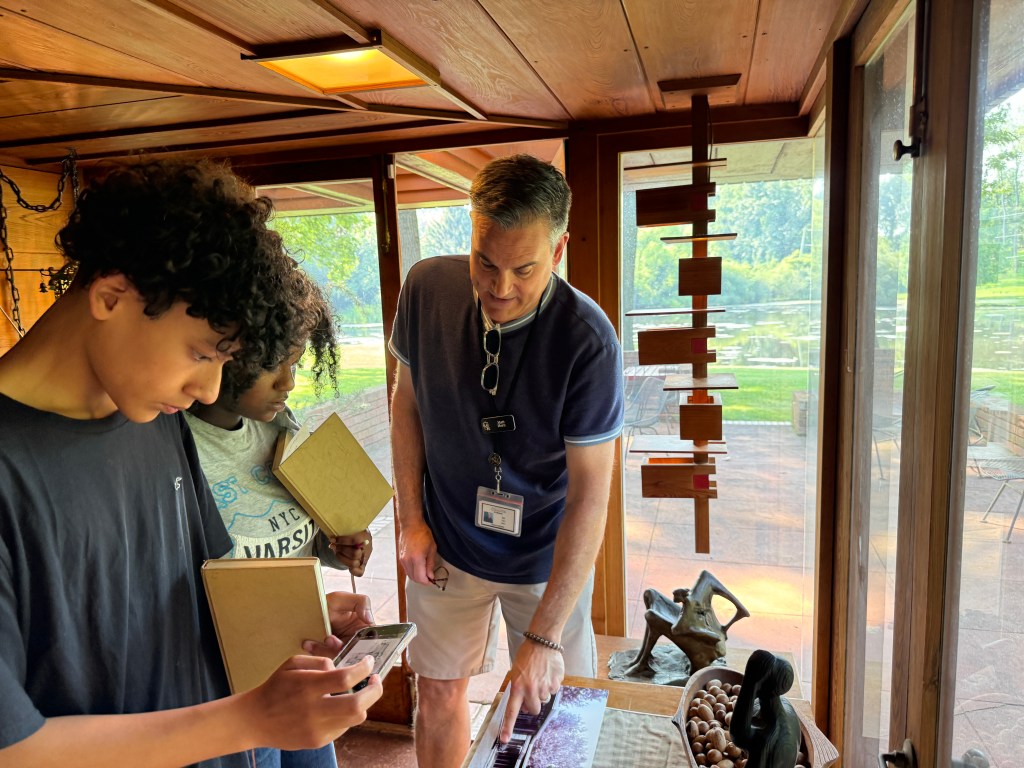
Matt Horn taught elementary music before retiring and joining the Center as a Collections Interpreter. Here, he teaches our summer Horizons-Upward Bound architecture elective in Smith House, July 2024. Photography by Kevin Adkisson.
You might be wondering: who comes to Cranbrook? People from Birmingham, Baltimore, Bangkok—and just about everywhere in between. As a Collections Interpreter, you help to welcome them all. It’s easy when your setting is Cranbrook, a place The New York Times Magazine famously called “the most enchanted and enchanting setting in America.”
No two tours—and no two visitors—are ever the same. It’s exciting!
While researching the step-backed Peacock Andirons at Saarinen House last spring, I enthusiastically mustered a muster of peacocks from across Cranbrook’s campus with the generous help of my colleagues.
“Muster” is the official label for a group of peacocks.
Unlike a gaggle of geese, a muster of peacocks lacks both onomatopoeia and alliteration and implies a level of formality and regimental order in direct conflict with the species’ behavior! That is…judging by the peacocks I’ve witnessed at historic homes and castles throughout Europe, including a visit to Scone Castle in Scotland where an earlier visitor captured these free-spirited troops. Whether iridescent blue or albino, their graceful necks and distinctive crests rise to magnificence when tail feathers are splayed to attract a peahen mate or intimidate predators.
Throughout the ages, blue aka Indian peafowl have symbolized beauty and prosperity and served as sources of artistic inspiration. A favored theme at Cranbrook, the peacock’s dramatic curvilinear lines are represented at each institution across the campus.
One can discover…
WORKS IN METAL:
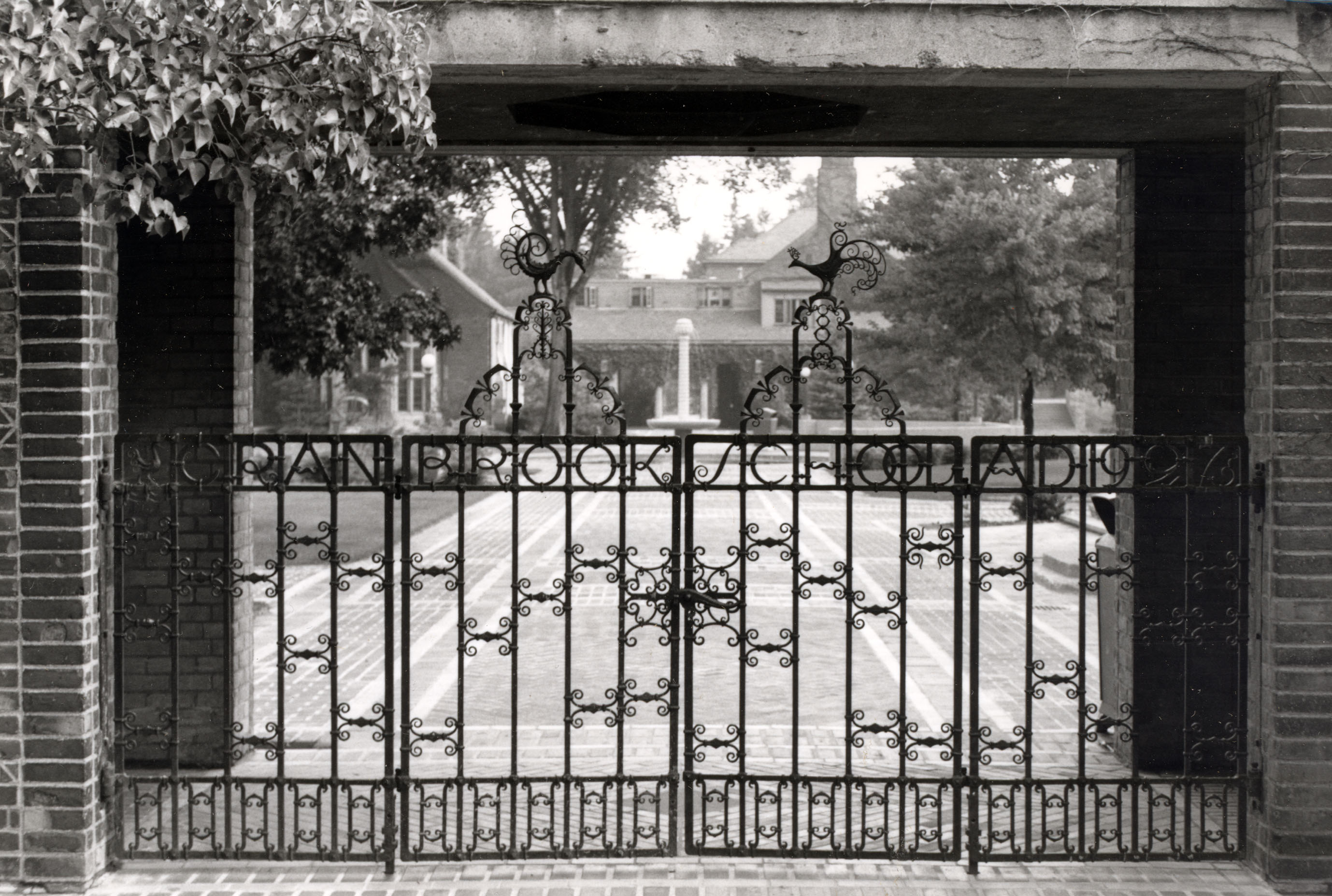
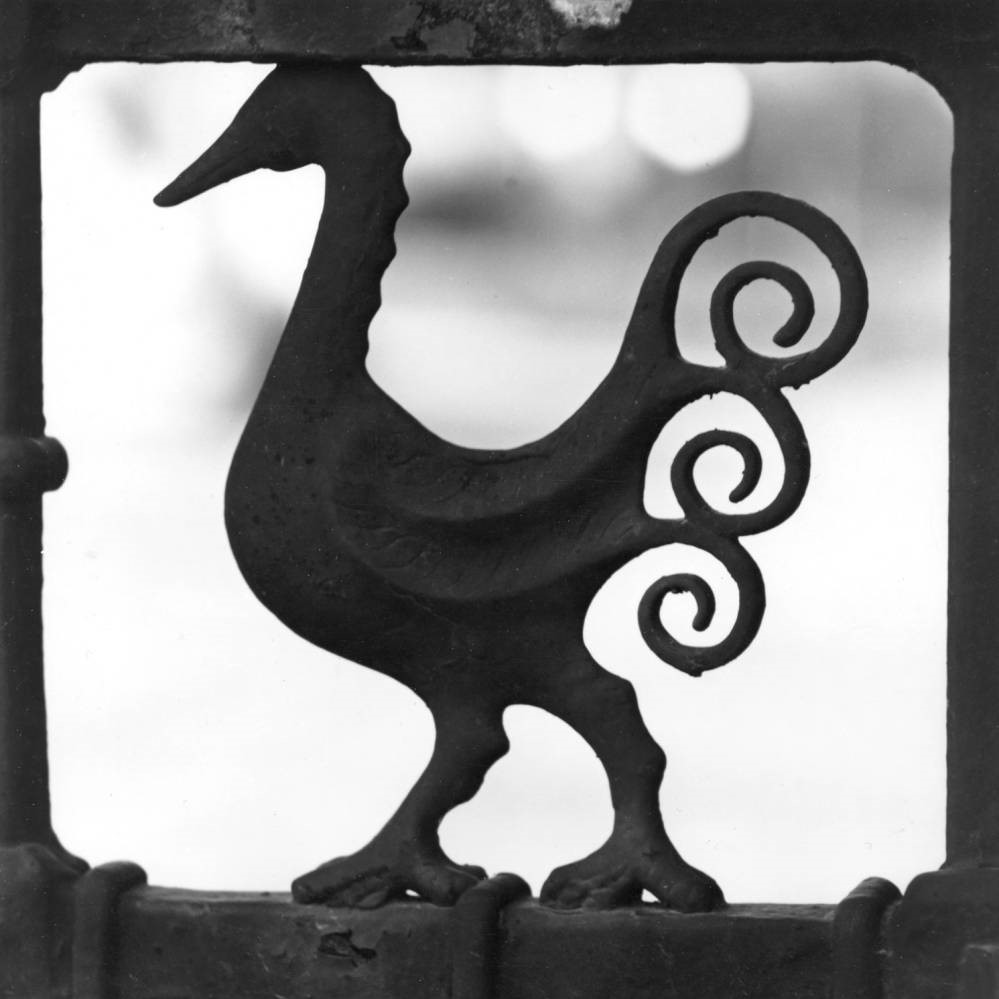
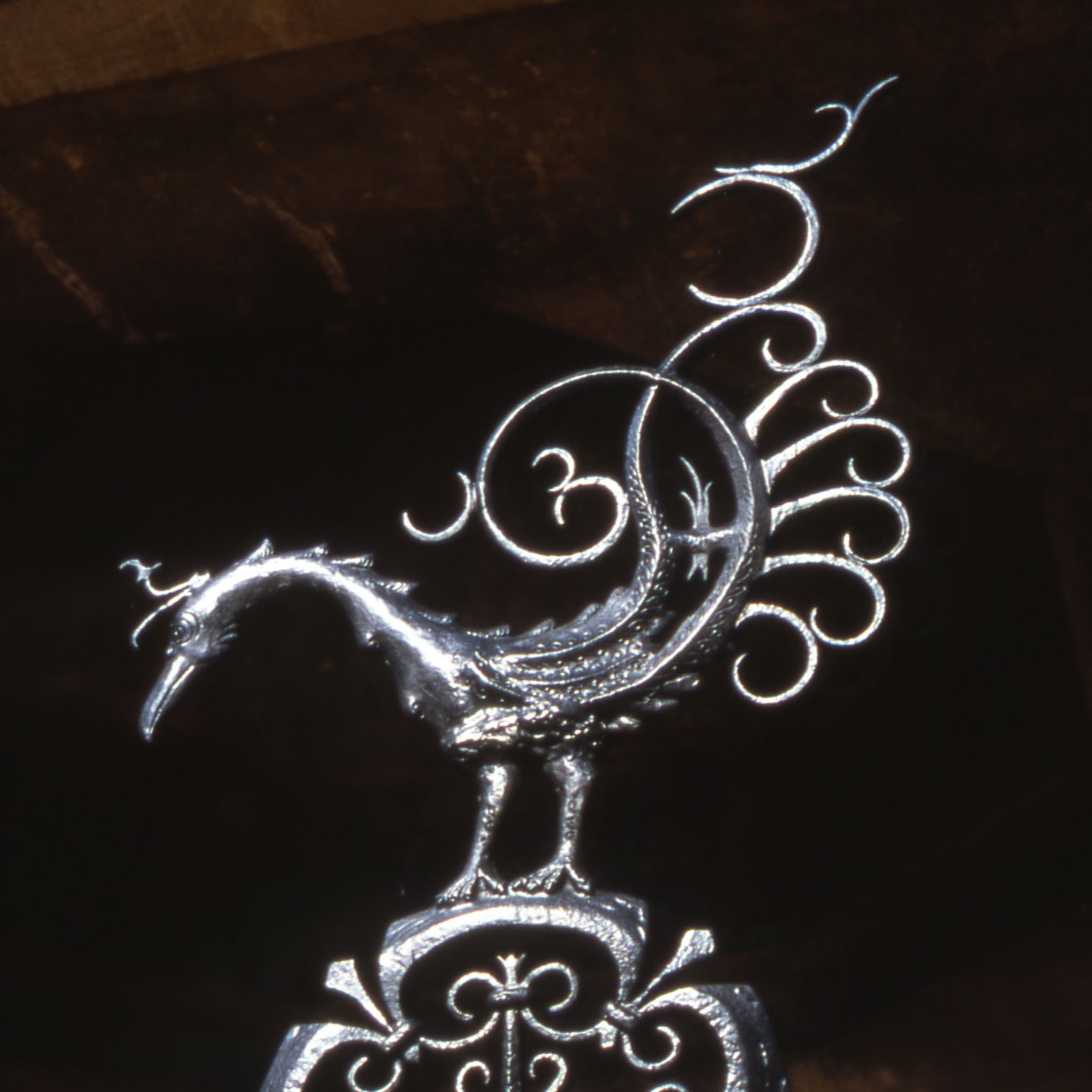
• The famed Peacock Gates designed by Finnish-American architect Eliel Saarinen and fabricated in wrought and cast iron by Oscar Bruno Bach, 1927, marking the former Lone Pine Road entrance to Cranbrook School for Boys:
Peacock Gates at Cranbrook School circa 1980. Jeffrey Welch, photographer. Courtesy Cranbrook Archives.
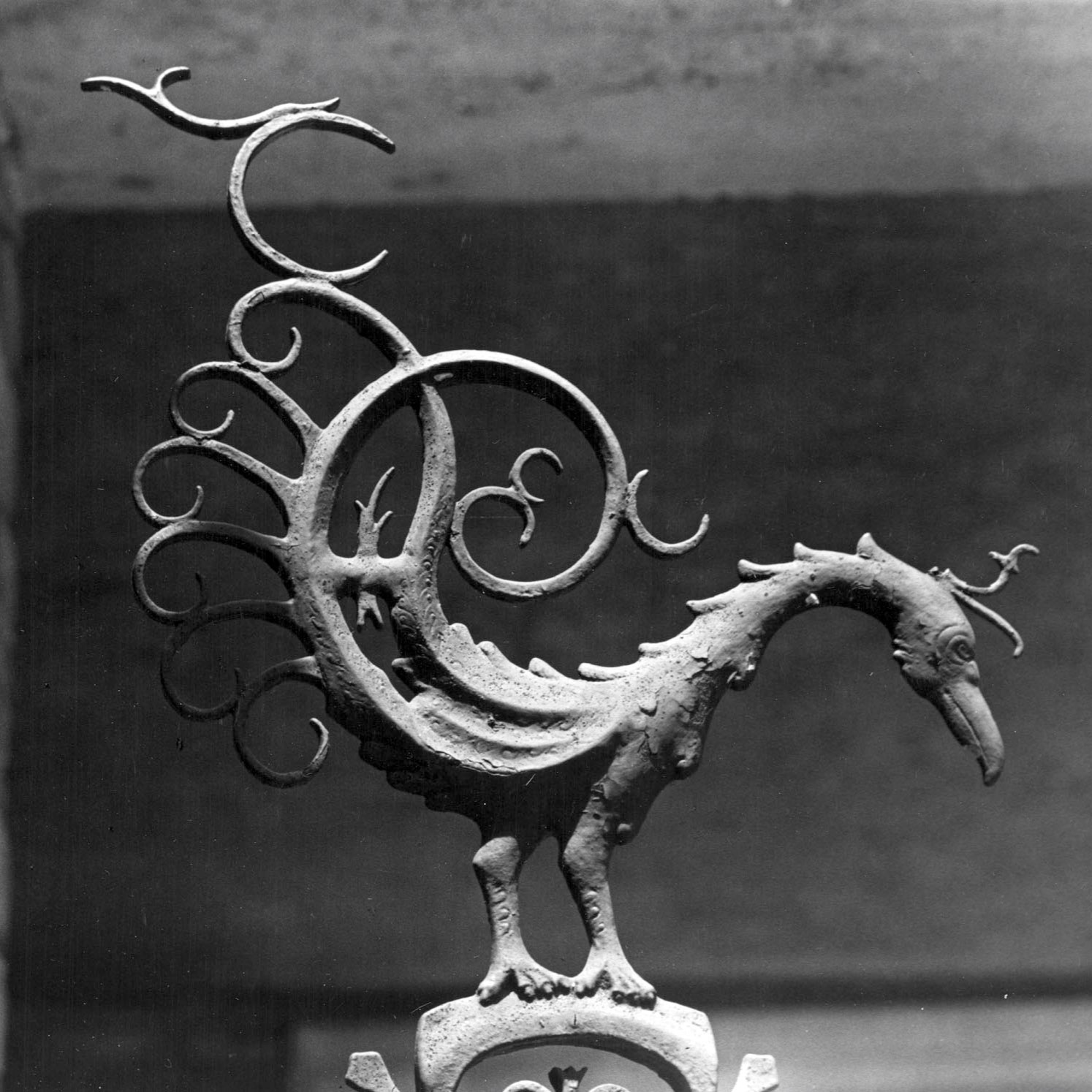
Details of the peacocks in cast iron:
Detail of Cranbrook School Peacock Gate, circa 1935. Courtesy Cranbrook Archives.
Detail of Cranbrook School Peacock Gate, circa 1935. Courtesy Cranbrook Archives.
Detail of Cranbrook School Peacock Gate, 2001. Balthazar Korab, photographer. Copyright Balthazar Korab | Cranbrook Archives.
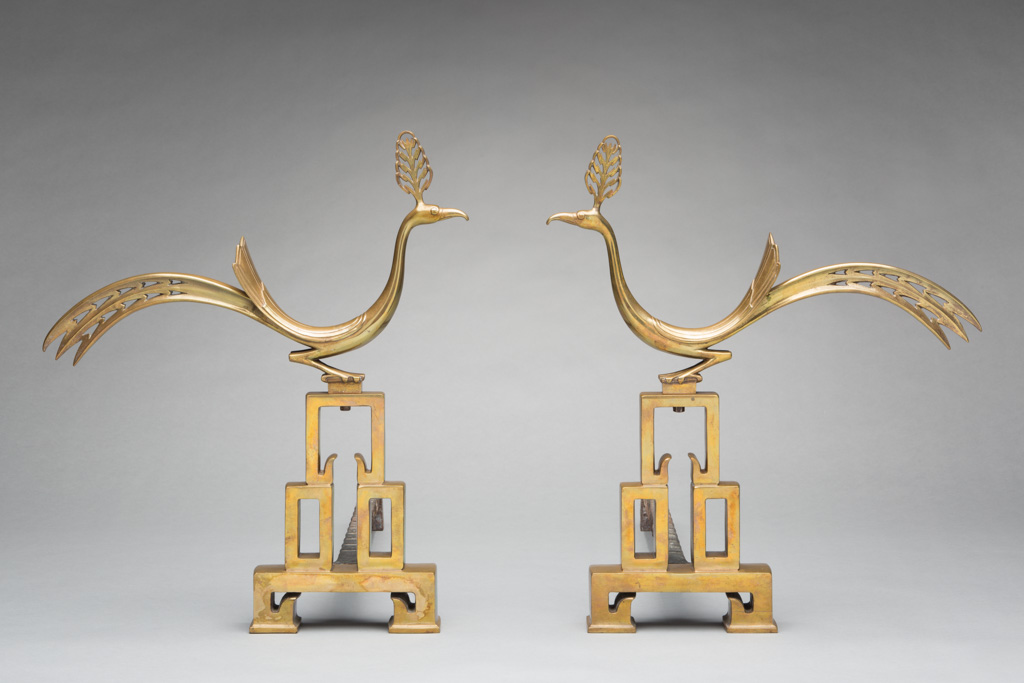
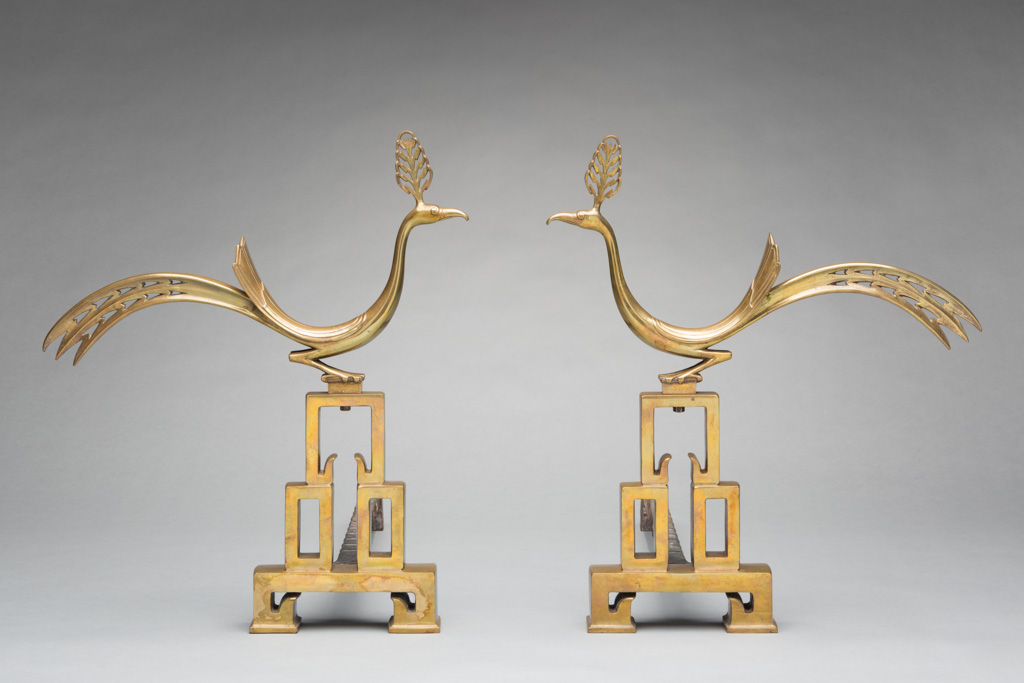
• Eliel Saarinen’s cast bronze Peacock Andirons, 1928-29, on view at Saarinen House. Collection of Cranbrook Art Museum. Produced by Sterling Bronze Company, New York, between 1928 and 1929, these cast bronze andirons were paid for by the Cranbrook Foundation and entered in the 1928-1930 Arts & Crafts Building ledger on pages 40-41—Date: 1-7-30; No.: 515; Name: Sterling Bronze Co; Remarks: 1 pair/ Andirons for Saarinen Res[idence]; Amount: $152.50 (the equivalent of $2,704 in 2024):
Robert Hensleigh, photographer. Courtesy Cranbrook Art Museum.
From the moment I entered Saarinen House twenty-seven years ago to give my first public tour, to my upcoming presentation for the Kingswood Middle School for Girls Explore Cranbrook students, I remain . . . simply enthralled. No more so than by the vibrant Peacock Andirons gracing the living room hearth.
Eliel Saarinen’s cast bronze Peacock Andirons, 1928-29. Each 21-1/4” W x 22-3/8” H x 27-1/4” D. Collection of Cranbrook Art Museum, CAM1985.2 a-b. Robert Hensleigh, photographer.
Designed by Finnish-American architect Eliel Saarinen and produced by Sterling Bronze Company, New York between 1928 and 1929, these cast bronze andirons were paid for by the Cranbrook Foundation and entered in the 1928-1930 Arts & Crafts Building ledger on pages 40-41 (third line from the bottom)—Date: 1-7-30; No.: 515; Name: Sterling Bronze Co; Remarks: 1 pair/ Andirons for Saarinen Res[idence]; Amount: $152.50 (the equivalent of $2,631.50 in 2023).
Arts & Crafts Building ledger, 1928-30. Laura MacNewman, photographer, 2023. Cranbrook Archives.
The pair of birds are fabulous. Ready and alert, they face each other, ankles bent, balanced upon splayed toes.
Each year, the Center staff does spring cleaning around the Cranbrook Community’s campus.
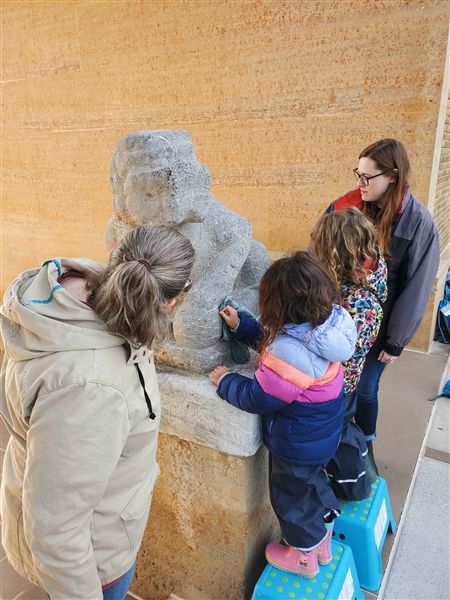
To kick off our spring cleaning this year, in collaboration with Meghan Morrow from Cranbrook Art Museum, Brookside’s Vlasic Early Childhood Center Pre K, JK, and multi-age classes helped us “awaken” the outdoor sculptures, covered for the winter, with a good-morning song. They helped remove the covers, check for any new cracks, and wipe and polish the sculptures.
Friends from the ECC help polish Marshall M. Fredericks’ TheThinker . . .
. . . and the ChineseLion at Cranbrook Art Museum. Both images are courtesy Cranbrook Schools.
We then needed to get the fountains and sculptures ready for our House Party fundraiser on May 20 (sorry, already sold out). Utilizing Graffiti Solutions’ “Elephant Snot,” we worked with Cranbrook House and Gardens Auxiliary volunteers to clean the Fountain on West Terrace and Mario Korbel’s Harmony.
Cranbrook House and Gardens Auxiliary volunteers Helen Maiman, Bruce Kasl, Cheryl Becker, and Joyce Harding assist me in cleaning the Fountain on West Terrace at Cranbrook House. Auxiliary volunteer Nancy Kulish, photographer.
Joyce and I giving Harmony her spring mani-pedi. Nina Blomfield, photographer.
Nina gives Harmony a quick rinse. Leslie Mio, photographer.
Below are the results. This was just one day after the cleaning, and, typically, the sculptures look better and better as the weeks go on.
Look for an upcoming post about our ECC friends working with the Elephant Snot to clean more stonework in the garden!
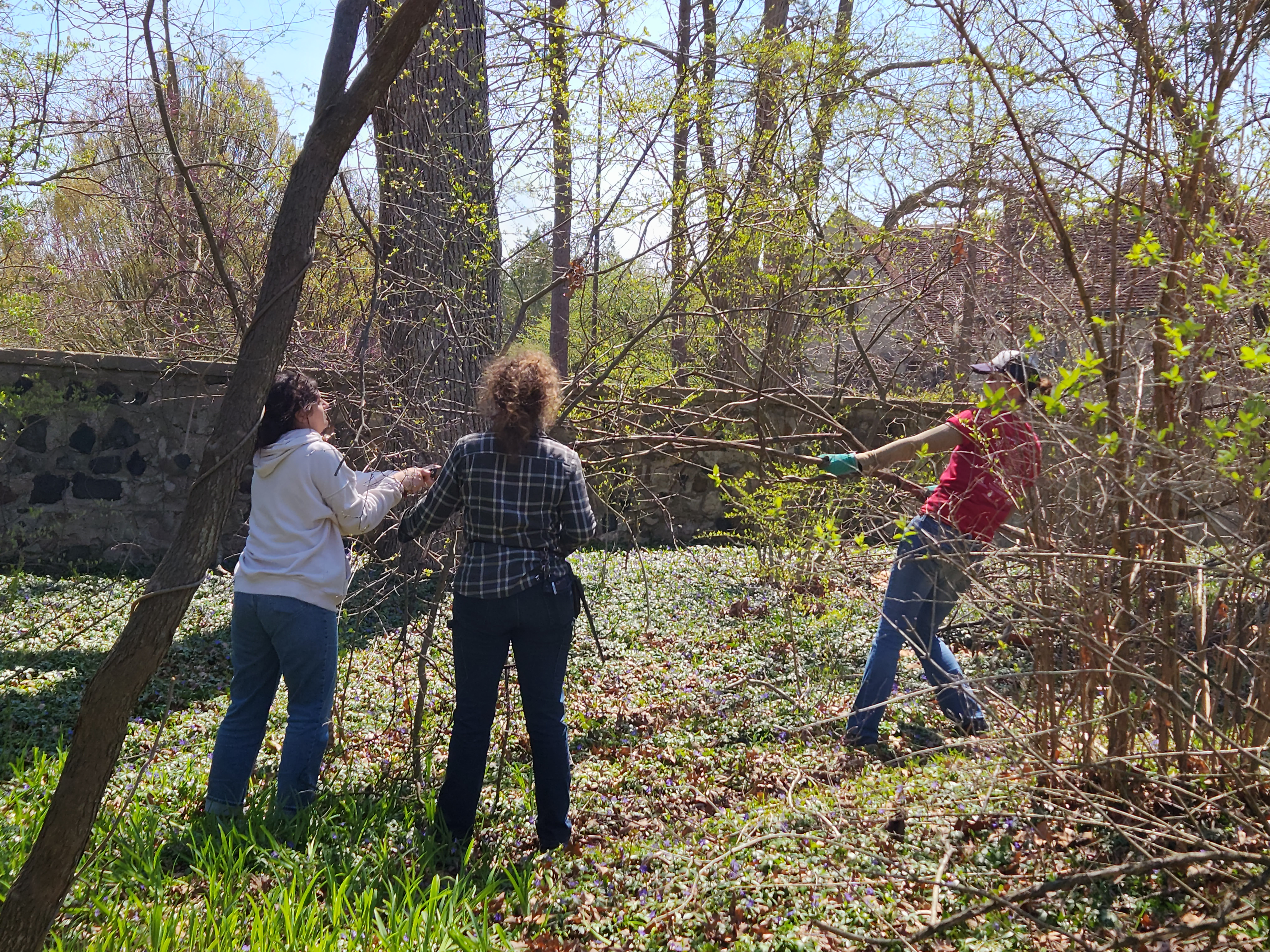
The spring also means a new season of work in the Japanese Garden. Pulling vines, before the poison ivy blooms, was a fun, end-of-the-day task for our volunteers this week.
Volunteers Lindsay Shimon and Melinda Krajniak assist Master Gardener Emily Fronckowiak with invasive vines around the Japanese Garden. Leslie Mio, photographer.
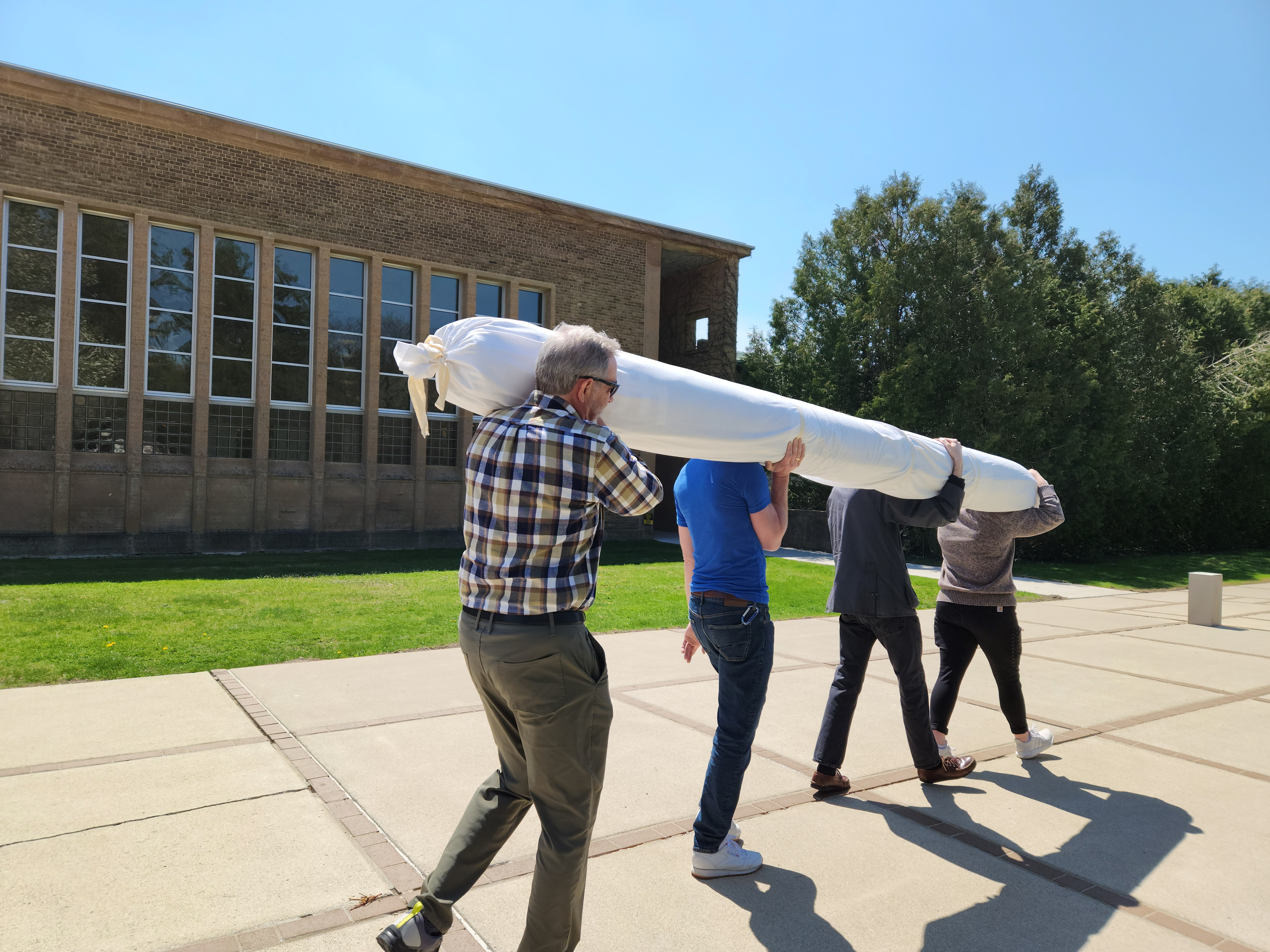
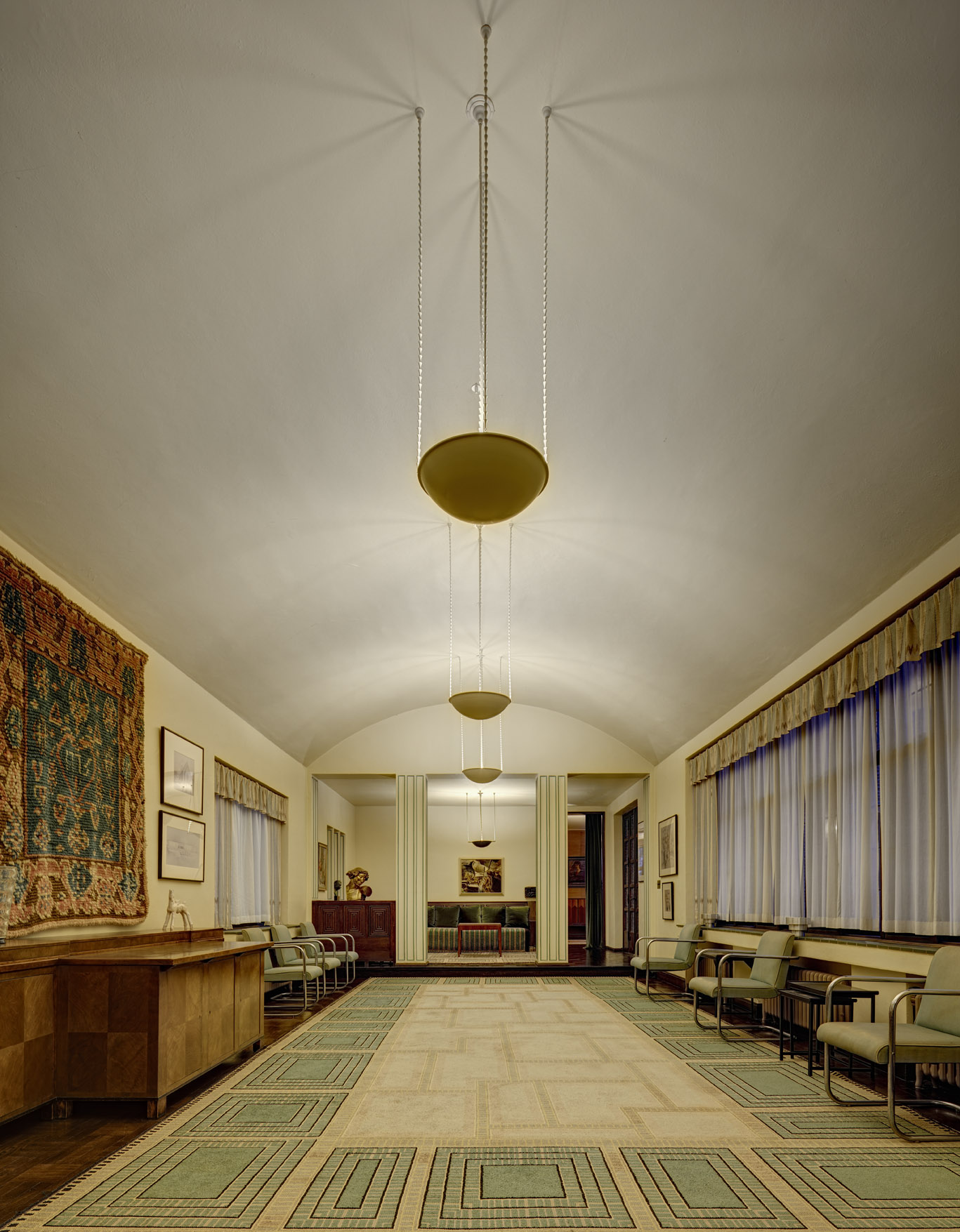
Not to be outdone, Saarinen House wanted to be part of spring cleaning as well. On location in the Art Museum vault for a photoshoot this past winter, the Saarinen House Studio rug was carried back to the house and reinstalled. As Greg Wittkopp, Center Director, said, “The room does look less Gesamtkunstwerk-ish without it.”
“I’m ready for my close-up, Mr. [Haefner].” The Saarinen House Studio rug gets the star treatment from photographer James Haefner as Center volunteer Jessica Majeski looks on. Kevin Adkisson, photographer.
Center staff and volunteers move the Studio rug back to Saarinen House. Leslie Mio, photographer.
Gesamtkunstwerk! James Haefner, photographer.
The best part about our spring cleaning is showing off the results. Come see Harmony in the Cranbrook House gardens on a warm day.
The Center’s 2023 Tour season is also beginning. In addition to our Saarinen House and Smith House tours, new tours have been added:
Japanese Garden Tours – Center staff-guided tours of the Japanese Garden have been added to the public tour calendar on one Sunday a month at 1:30pm, May through October.
Three Visions of Home tours – Join Cranbrook Center for Collections and Research as we take you inside three remarkable homes from across the twentieth century. There’s no tour quite like it, with a look into the distinct visions for American life from three internationally significant architects: Albert Kahn, Eliel Saarinen, and Frank Lloyd Wright. Your expert guide will take you through the architecture and innovations of each home, while also sharing the stories of the families who built and lived in these special places.
We hope to see you on campus this season!
– Leslie Mio, Associate Registrar, Cranbrook Center for Collections and Resarch
Ms. Rice warned me that the first week of my Senior May Project would be hectic and slightly crazy, and it definitely was, but in the best possible way! Being a lifer at Cranbrook, I have learned a lot about our amazing campus over the years, but nothing could have prepared me for the intensely interesting and extremely entertaining Senior May opportunity I have encountered at the Center for Collections and Research.
Riya Batra on set in Saarinen House for the Susan Saarinen interview. Photo by Nina Blomfield.
I joined the department in the week prior to A House Party, the Center’s annual fundraiser, this year honoring Loja Saarinen. Within minutes I was fully immersed into the event preparation. From unboxing the beautifully printed mugs to sitting in on engaging interviews, I was able to experience and assist in a variety of tasks that made me feel like I was actually contributing, even though my contribution was likely quite small in the grand scheme of things.
Riya as Susan Saarinen’s camera stand-in. Photo by Nina Blomfield.
One moment I will never forget was driving Susan Saarinen back to her hotel, after her interview for the film, and seeing an actual dress created by her cherished grandmother Loja. Where else in the world would I ever get to experience something like this?
Leslie Mio packs up the dress by Loja Saarinen. Photo by Riya Batra.
In 2021, the home of Loja Saarinen at Cranbrook Academy of Art, which she shared with her husband Eliel, was designated as a site in the Historic Artists’ Homes & Studios program. As the team at the Center were going through the process of researching Loja, the too-often-overlooked designer of textiles, gardens, and clothing, we were constantly reminded that the rugs created by Loja and her professional weaving studio, Studio Loja Saarinen, were poorly documented in our records.
Studio Loja Saarinen made rugs, window treatments, wall hangings, upholstery fabrics, and more at Cranbrook between 1928 and 1942. Many of the Studio’s largest rugs were made for Kingswood School for Girls between 1930 and 1932. Because of the fragility of the rugs, and through natural wear-and-tear, almost all of the original Studio Loja Saarinen rugs were put in storage at Cranbrook Art Museum in the 1970s and 1980s.
Loja Saarinen, circa 1934. Courtesy Cranbrook Archives.
We have excellent archival records about the operation of the studio, including records of yarn orders and charts of the time spent weaving rugs (it was a lot!). But the rugs are very large, and often, we only had black-and-white photographs of the rugs on the floor in the 1930s. Color photographs were limited to poorly distorted slides, or photographs of portions of the rugs taken on early digital cameras while the rugs were half-rolled-up in storage.
We had almost no ‘born digital’ high-resolution photographs of Loja’s work–these are the best kind of photographs for sharing her work in slides, online, or in print. The lack of excellent, high quality images limited not only how we at Cranbrook understood and shared Loja’s legacy, but also made it difficult for students or scholars researching Loja Saarinen to get a complete sense of her artistic output.
This winter, as the Center prepares for our next fundraiser, A House Party at Cranbrook Celebrating Loja Saarinen on May 21, 2022, it has become mission-critical to get better documentation of Studio Loja Saarinen’s rugs.
Enter in our latest project!
Jim Haefner and his assistant set up the camera in Cranbrook Art Museum’s Vault. Photographer Kevin Adkisson, Courtesy of Cranbrook Center for Collections and Research.Jim Haefner checking his image of Kingswood School Rug No. 31, Reception Hall Rug, Auditorium Lobby Rug. Photographer Leslie Mio, Courtesy of Cranbrook Center for Collections and Research.Kingswood School Rug No. 31, Reception Hall Rug, Auditorium Lobby Rug. Photographer Kevin Adkisson, Courtesy of Cranbrook Center for Collections and Research.
On January 7, 2022, photographer James Haefner and his assistant Erik Henderson, with the help of Center Curator Kevin Adkisson, Center Associate Registrar Leslie Mio, Cranbrook Art Museum Registrar Corey Gross, Cranbrook Art Museum Head Preparator Jon Geiger, and Jon’s installation crew embarked on a very ambitious project: documenting all the Studio Loja Saarinen rugs in the Cranbrook collections.
First, we had to take the several-hundred-pound rugs down from racks where they are stored, rolled. Then, we covered the floor in clean plastic drop cloths. With a camera bolted via a vise-grip to the ceiling of the Cranbrook Art Museum Collections Wing, and controlled via computer from a remote workstation, we unrolled, photographed, and rerolled over forty works of Studio Loja Saarinen’s functional art.
Kingswood School Rug No. 3, 1928-1929; Studio Loja Saarinen (maker), Loja Saarinen (designer); Linen warp, wool weft; 66½ x 49 inches (168.9 x 124.5 centimeters); Cultural Properties Collection, Kingswood School for Girls. Photographer James Haefner.Curator Kevin Adkisson and his attention to detail. Photographer Leslie Mio, Courtesy of Cranbrook Center for Collections and Research.Maker’s label on Kingswood School Rug No. 3, 1928-1929; Studio Loja Saarinen (maker), Loja Saarinen (designer); Linen warp, wool weft; 66½ x 49 inches (168.9 x 124.5 centimeters); Cultural Properties Collection, Kingswood School for Girls.
No detail went undocumented, from weaver’s signatures knotted into the face of a rug, to maker’s labels written and sewn on by Loja herself.
Below is just a fraction of the forty-plus pieces photographed:
Kingswood School Rug No. 31, Reception Hall Rug, Auditorium Lobby Rug, 1931; Studio Loja Saarinen (maker), Loja Saarinen (designer); Wool pile, wool weft, linen warp; 312 x 144 inches (792.5 x 365.8 centimeters); Cultural Properties Collection, Kingswood School for Girls. Photographer James Haefner.Detail of Kingswood School Rug Number 28, Library Rug, 1931; Studio Loja Saarinen (maker), Maja Andersson Wirde (designer); Wool pile, wool weft, linen warp; 243½ x 96 inches (618.5 x 243.8 centimeters); Cultural Properties Collection, Kingswood School for Girls. Photographer James Haefner.Detail of Kingswood School Blue Rug for Reception Room I, 1931; Studio Loja Saarinen (maker), Maja Andersson Wirde (designer); Wool pile, wool weft, linen warp; 183 x 142½ inches (464.8 x 362 centimeters); Cultural Properties Collection, Kingswood School for Girls. Photographer James Haefner.Rug with Animal Motif, 1932; Studio Loja Saarinen (maker), Maja Andersson Wirde (designer); Linen warp, wool weft, wool file; plain weave with four picks of weft between each row of knots; 151½ x 108 inches (384.8 x 274.3 centimeters); Collection of Cranbrook Art Museum. Photographer James Haefner.Detail of Kingswood School Rug No 29 – Rooftops, 1931; Studio Loja Saarinen (maker), Maja Andersson Wirde (designer); Wool pile, wool weft, linen warp; 85 x 137½ inches (215.9 x 349.3 centimeters); Cultural Properties Collection, Kingswood School for Girls. Photographer James Haefner.Rug, 1932; Studio Loja Saarinen (maker), Maja Andersson Wirde (designer); Wool and linen; 119 x 98 inches (302.3 x 248.9 centimeters) including fringe; Collection of Cranbrook Art Museum. Photographer James Haefner.Detail of Rug with Tree Motif, 1930; Studio Loja Saarinen (maker), Maja Andersson Wirde (designer), Lillian Holm (weaver), Lilly Bjerken (weaver); Wool and linen; 131 x 54½ inches (332.7 x 138.4 centimeters); Collection of Cranbrook Art Museum. Photographer James Haefner.Detail of Studio Loja Saarinen Rug No. 2, 1929; Studio Loja Saarinen (maker), Loja Saarinen (designer/weaver), Eliel Saarinen (designer), Walborg Nordquist Smalley (weaver); Cotton warp; wool pile; plain weave with ten picks of weft between each row of knots; 110½ x 39 inches (280.7 x 99.1 centimeters); Collection of Cranbrook Art Museum. Photographer James Haefner.Tree of Life Tapestry, circa 1933; Loja Saarinen (designer/weaver); Linen and wool; 60½ x 54 inches (153.7 x 137.2 centimeters); Collection of Cranbrook Art Museum. Photographer James Haefner.
It was a joy to unroll and see these pieces up close after knowing many of them for years through black-and-white images. While even these photographs do not do justice to seeing their beauty in person, having such high-resolution photography of Studio Loja Saarinen’s rugs means that future scholars and fans of Loja Saarinen will be able to have a richer understanding of her, and Cranbrook’s, remarkable legacy.
For even more Loja Saarinen, join the Center in person or online on May 21, 2022 for A House Party at Cranbrook Celebrating Loja Saarinen. We’ll be premiering a new, thirty-minute documentary about Loja, produced by the Center, at the event–you don’t want to miss it!
– Leslie S. Mio, Associate Registrar, and Kevin Adkisson, Curator, Cranbrook Center for Collections and Research
In Part I of this post, we explored Cranbrook’s love of the book, from its origins with founders George and Ellen Booth, to the existing special collections at the Archives and Academy of Art. I invite you now to learn of the many rare, valuable, and historical tomes whose existence may be unknown to most or simply overlooked in collections at the Schools, Institute of Science, and two historic homes cared for by the Center for Collections and Research: Saarinen House and Smith House.
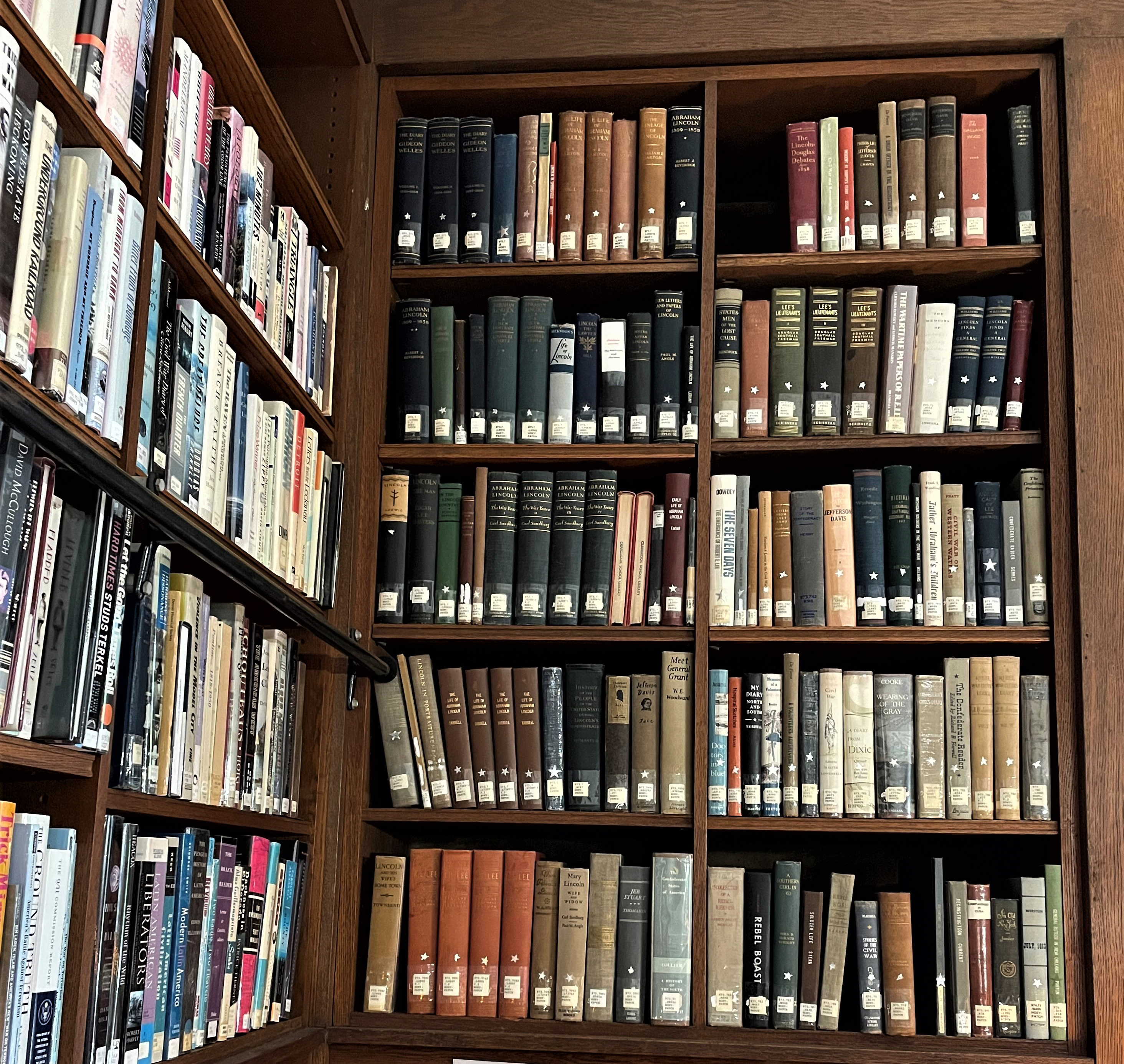
Hoey Patch Collection at the Cranbrook School Library. Courtesy of Kate Covintree, Cranbrook Kingswood Upper Schools.
Like the Academy of Art, although not at all on the same scale, books from George and Ellen’s Cranbrook House Library were dispersed to the Cranbrook Schools Libraries, now comprised of five separate spaces. Following the Booth’s example, Cranbrook School Headmaster Harry D. Hoey (1950-1964) and Latin teacher George Patch (1928-1944, Emeritus 1944-1950) donated 120 books from their personal libraries to the School’s library in the 1950s, forming one of several special collections. Known as the Hoey Patch Collection, all of the volumes focus on an aspect of Abraham Lincoln or the American Civil War.
He Knew Lincoln, a fictionalized account written by Ida Tarbell, a progressive journalist, and published in 1907. The book’s custodial history is documented with correspondence from the author, written directly on the inside of the book. Courtesy of Kate Covintree, Cranbrook Kingswood Upper Schools.
Highlights include a First edition of The Life of Abraham Lincoln, the first full-scale biography of the President. Written by newspaper editor J.G. Holland, it was published shortly after Lincoln’s assassination in 1865. Also included is a first edition, two-volume set of the Personal Memoirs of U.S. Grant. Ulysses S. Grant penned his autobiography shortly before his death in 1885 as a means of financial support for his family. It was published with the support of his friend Mark Twain by the Charles L. Webster Company (owned by Twain’s nephew).
Across Cranbrook’s campus are eleven different spaces, including the Archives, that house book collections – some 110,000 physical items. Several of these spaces are typical school or academic research libraries, where students, faculty, and staff can check out the majority of these books. As a library and information science professional, I champion the importance of these lending libraries and the egalitarian access to information they provide.
In this post, however, I’d like to focus on Cranbrook’s non-circulating book collections – those rare, historic, or valuable tomes that, in many cases, hide in plain sight in public areas. With help from colleagues at the Academy of Art, Schools, Institute of Science, and Center for Collections and Research, I’ll highlight some of these gems that promise to delight the bibliophile, art appreciator, historian, or simply the Cranbrook curious.
Cranbrook’s special book collections are carefully preserved as both informational and evidential artifacts, and many are housed within cultural heritage areas. Valued not only for research purposes, they also serve as historical objects which help individually or collectively to tell the Cranbrook story.
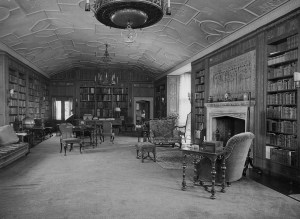
South end view of the newly completed Cranbrook House Library, 1920. John Wallace Gillies, photographer. Courtesy of Cranbrook Archives.
The origin of book collecting at Cranbrook actually predates any of the current collection spaces and begins with Cranbrook founders George and Ellen Booth. George, in particular, was an enthusiastic collector, and started acquiring volumes in 1900, commissioning purchases of William Morris works and other fine books in London. As George explained, “I am not a millionaire and cannot pay the big prices now prevailing in New York.” His strategy allowed him to accumulate 1,000 books by 1916, effectively seeding the Cranbrook House Library Collection when construction of the library wing was completed four years later.
Here at Cranbrook, the flowers are blooming, the pollen is swirling, and the fountains are flowing. That can only mean one thing: Tour Season is here!
With our reimagined, in-person 2021 Tour Season, we invite you to book your tour of Saarinen House or the Frank Lloyd Wright-designed Smith House today. Tours through these two distinguished landmarks will resume tomorrow, May 1, 2021, and continue through Thanksgiving.
Tours are now being offered of Smith House every weekend, taking place each Friday, Saturday, and Sunday at 1:00 pm and Saturday at 11:00 am. Saarinen House tours take place each Friday, Saturday, and Sunday at 3:00pm.
Of course, we’re taking lots of steps to ensure guest and staff safety, including shrinking tours to just six guests, requiring masks, and redesigning the route to ensure physical distancing between households. (You can read more about our safety policies on the tour website.)
Flying Teacups, 2021, Neva Gruver, CAA Metalsmithing 2021. Photography by Eric Perry, courtesy Cranbrook Center for Collections and Research.
In addition to more tours and smaller group sizes, there’s also new art to see on your visit! As you may recall, in the spring, seventy-five Cranbrook Academy of Art students and artists-in-residence participated in the Center’s fourth intervention of new, site-specific work in our historic houses. The theme, Speculative Histories, encouraged the artists to produce objects and interventions that embrace, enlighten, uncover, or imagine histories for the Cranbrook, Saarinen, and Smith houses.
Atelier Primavera (Stressed), 2021, Cooper Siegel, CAA Ceramics 2022. Photography by Eric Perry, courtesy Cranbrook Center for Collections and Research.
We are excited to continue to feature artwork from ten Cranbrook Academy of Art students and one artist-in-residence during the 2021 Tour Season. (To see all the art displayed during Speculative Histories, you can always visit the virtual exhibition on the Center’s website)
Peony Bush, Claire Thibodeau, Ceramics 2022. Photography by Eric Perry, courtesy Cranbrook Center for Collections and Research.
Kevin and I have been busy cleaning the houses and getting everything set for a new tour season. We can’t wait for you to join the Center in experiencing these magical homes!
– Leslie S. Mio, Associate Registrar, Cranbrook Center for Collections and Research
Not once, but twice, Cranbrook has pulled out the figurative red carpet and with appropriate fanfare welcomed Swedish royalty to its campus. Anyone who knows and loves Cranbrook might not be all that surprised by this revelation. After all, Cranbrook is a very special place—the home of dozens of sculptures by Sweden’s celebrated sculptor Carl Milles, who lived and worked at Cranbrook for twenty years, as well as many tapestries woven by Loja Saarinen’s renowned Swedish weavers. But the larger Detroit community has also boasted a significant Swedish cultural presence.
While most Michiganders might be familiar with the role that Swedish immigrantsplayed in Michigan’s Upper Peninsula mining and lumber industries, Swedes also played major roles in Detroit’s development, from the auto industry to the fine and performing arts. Not least of all were the contributions made by Milles, including his sculpture The Hand of God, which has stood in front of the city’s Frank Murphy Hall of Justice since 1970. The founding in 1963 of the Detroit Swedish Councilby Charles J. Koebel (who, decades earlier, had commissioned Eliel Saarinen to design his family home in Grosse Pointe Farms), saw a concerted effort to promote Swedish culture in the area. It was likely the unique combination of Cranbrook’s artistic works and Detroit’s vibrant Swedish community that attracted visits from Sweden’s royal family on two separate occasions.
Program for the day’s activities. Courtesy of Cranbrook Archives.
So it was that on October 26, 1972, Princess Christina of Sweden set foot on Cranbrook grounds as part of her two-week tour of the States. And sixteen years later, her brother and his wife, King Carl XVI Gustaf and Queen Silvia, followed suit on April 18, 1988. Both visits focused largely on Carl Milles’ Cranbrook legacy, directly involved the Academy of Art and Art Museum, and were the result of collaborations between Cranbrook and the Detroit Swedish Council. Yet each visit had its own unique activities and sense of purpose.












 Cranbrook Kitchen Sink