Photo Friday: Reporting the News in Style

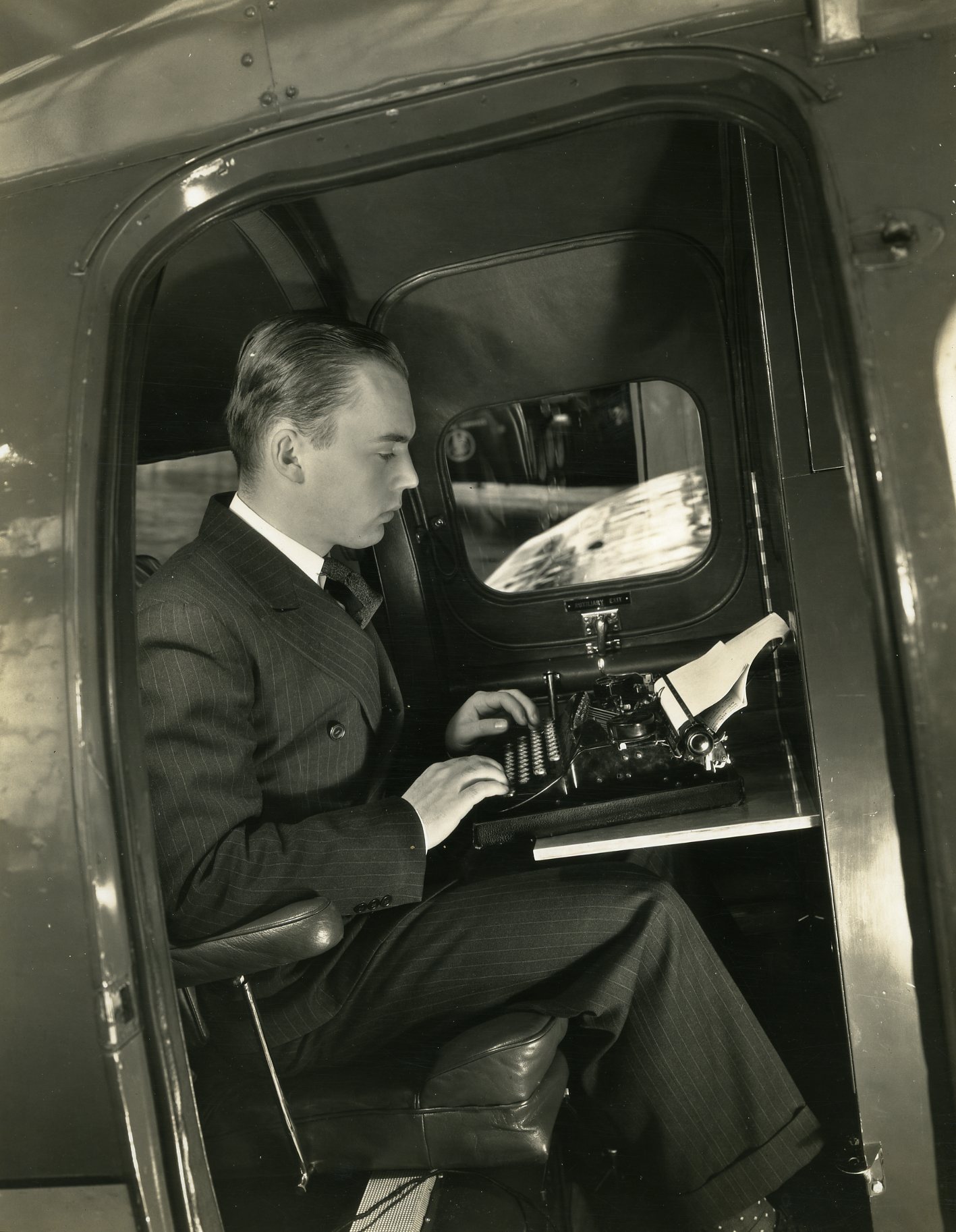
Archivists never know what we might run across during the course of our daily work, which is, of course, part of the allure of the job! Today it was a photo of W Stoddard White (1913-1972) from the Lee A White Papers. (No typo – neither man used a period after his initial!)  Lee White (Stoddard’s father) was a personal friend and confidante of George Booth’s from the Detroit News. White followed Booth to Cranbrook once Cranbrook School was opened and was on the Board of Directors, later becoming head of the public relations department for the community. Clearly Stoddard followed in his father’s footsteps, becoming a news reporter after his graduation from UM in 1935. (Interestingly, while at UM, he was in Sigma Chi along with Edgar Guest Jr.)

Stoddard White, Detroit News Employee, Oct 1935. Courtesy Cranbrook Archives, Lee A White Papers.

Stoddard White, Detroit News Employee, Oct 1935. Courtesy Cranbrook Archives, Lee A White Papers.

This photo caught my attention because of the content – what a great image of young Stoddard, as a Detroit News reporter, seated at his typewriter in what was likely the Detroit News Lockheed Vega airplane. Just one more reason I love my job!

Leslie S. Edwards, Head Archivist

Bouquets of Sharpened Pencils

It’s that magical time of year again, daylight is a little bit shorter and parents begin to try and return their kids to a bedtime schedule –it’s back to school time. For some, this is a glorious time of year – a new beginning, the changing leaves as Fall ushers in. September always reminds me of a line from the movie, “You’ve Got Mail.” Joe Fox says to Kathleen Kelly in a chat room, “Don’t you love New York in the Fall? It makes me want to buy school supplies. I would send you a bouquet of newly-sharpened pencils if I knew your name and address.”

Here at The Archives we often receive email and calls from alumni. I recently received an inquiry from a Kingswood alum who shared some amazing stories with me and also piqued my interest in student organizations here at Cranbrook.

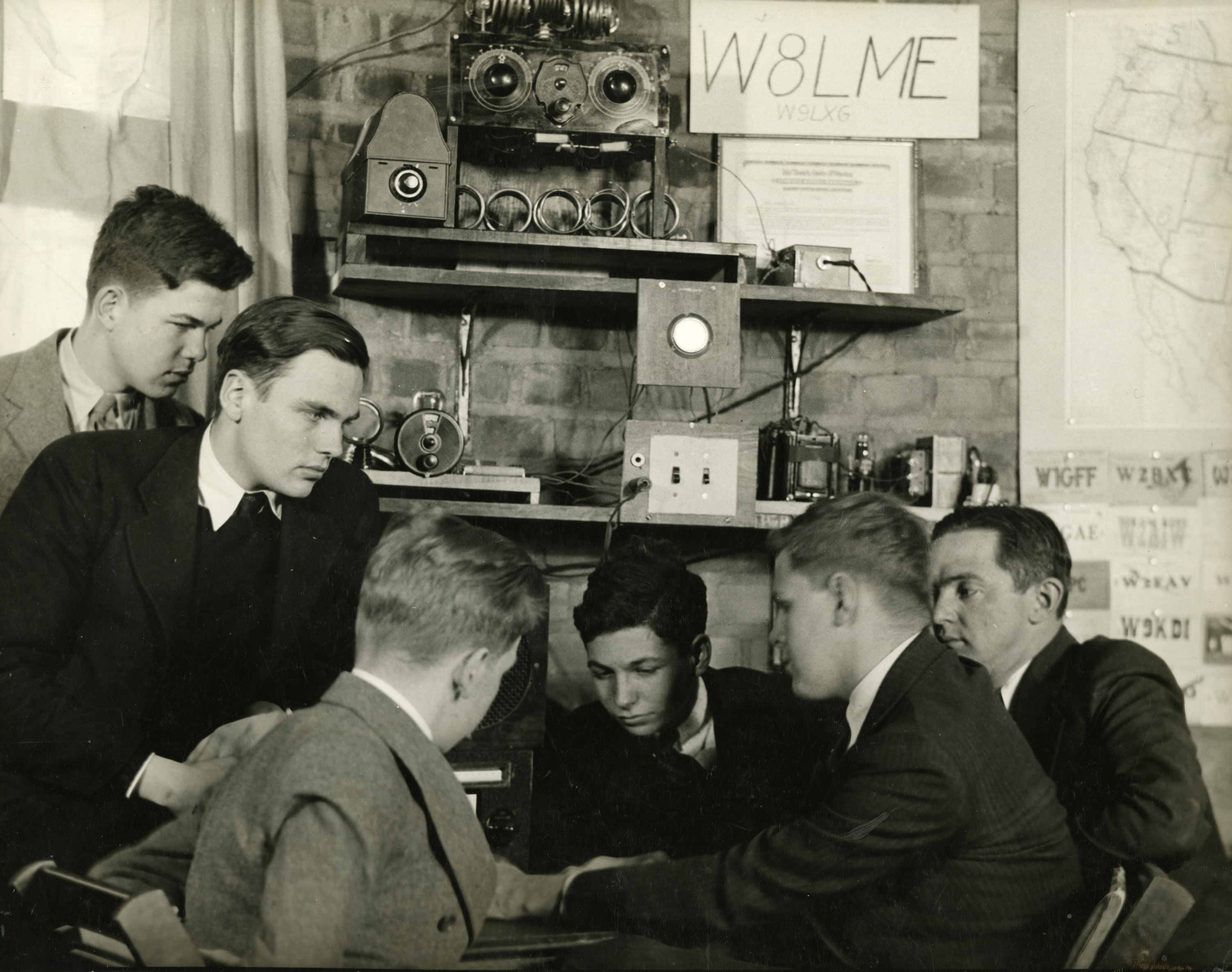
From the first days at Cranbrook and Kingswood schools, clubs and organizations were an integral part of student life. In addition to student newspapers, literary publications, and government—students participated in riding clubs, glee club, bridge club, and the stamp club. In 1938, the Areopagus club saw its membership swell. According to The Brook, students could be found “arguing over some minor question that momentarily assumed importance.”

Cranbrook School Radio Club, 1935. Photographer, Richard G. Askew.

Cranbrook School Radio Club, 1935. Photographer, Richard G. Askew.

Several of the earliest clubs and organizations still exist at Cranbrook schools today, including the Radio Club and Ergasterion—an organization representing theatre productions. Other clubs continue to unite alumni, such as “The Trifling Monographs of Birmingham, Michigan,” which had its first meeting in September 1971. The five founding members were Susan Rice (a 5th grade teacher at Brookside School); Lucy Chase Williams, then a Kingswood junior; John Gerard, then a Cranbrook junior; and Michael A. Cooper and Dion Kerr, Cranbrook sophomores.

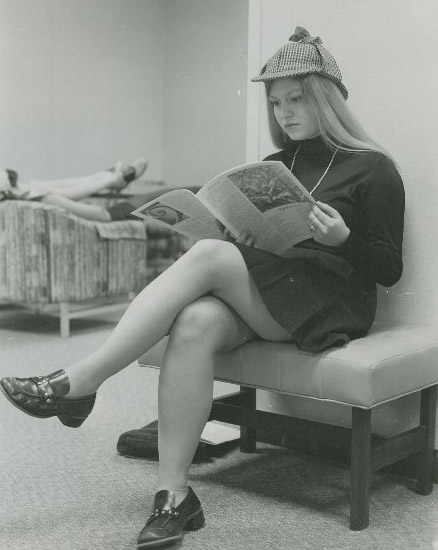
The club was a scion of the Baker Street Irregulars (BSI)—an organization of Sherlock Holmes enthusiasts founded in New York in 1932. The BSI is considered the preeminent Sherlockian group in the U.S. and has published the Baker Street Journal since 1946. A local member of the BSI was a mentor to The Trifling Monographs (TTM) and regularly quizzed the members. The group took several field trips and in 1972 traveled to Canada to see the Windsor Light Opera production of the musical, “Baker Street.” In 1973, when Williams matriculated to Yale, the TTM became a corresponding scion, and remains so to this day.

KS student Lucy Chase Williams, head of the TTM, reads an issue of the Clarion in the Kingswood School Common Room, 1973. Photograph courtesy of Lucy Chase Williams.

KS student Lucy Chase Williams, head of the TTM, reads an issue of The Clarion in the Kingswood School Common Room, 1973. Photograph courtesy of Lucy Chase Williams.

As students head back to school after the Labor Day weekend, they will have much to look forward to above and beyond their studies. Today the upper school boasts nearly 40 clubs and organizations, including Anime, Beekeeping, Wilderness Expedition, Chamber Music, and Random Acts of Kindness.

Gina Tecos, Archivist

First Impressions; or Pride and Appreciation

As the newest staff member at the Cranbrook Center for Collections and Research, I am on a HUGE learning curve.  I knew, taking this position, that Cranbrook had a deep and rich history, and a long association with famous artists, designers, and architects.  However, my first days here were spent touring campus, witnessing just what those associations created.

My first impressions of the cultural properties I will be working with are “Wow! What?! Cool.”  I hope in the coming months to be able to share some of those moments on the Kitchen Sink, but here are my first three:

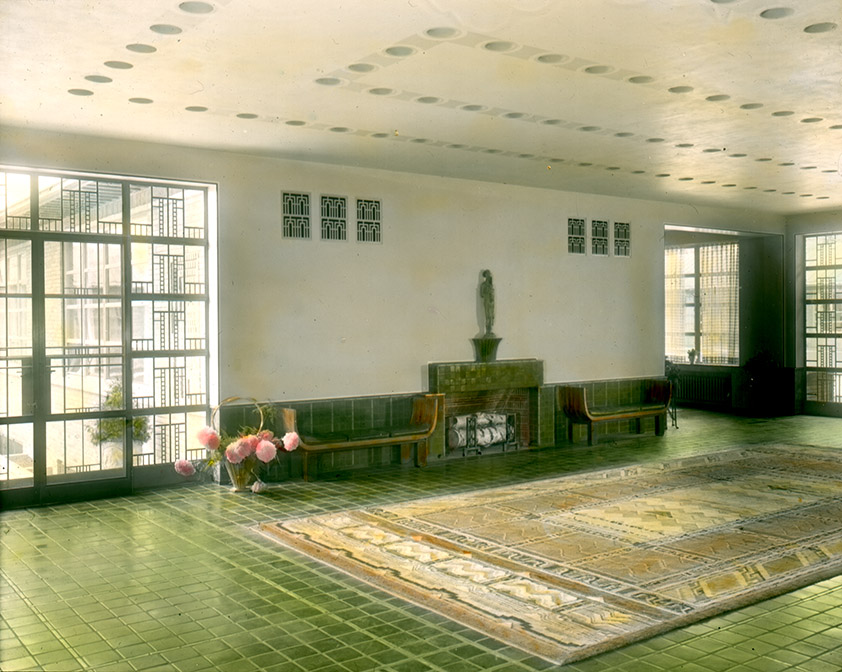
Wow: Green Lobby, Kingswood School.

Kingswood School Green Lobby, photographer George W. Hance, 1932. Cranbrook Archives.

Kingswood School Green Lobby, photographer George W. Hance, 1932. Cranbrook Archives.

What: The 319-acre campus was designated a National Historic Landmark on June 29, 1989 for its significant architecture and design – 319-acres full of cultural properties!

Cool: Thornlea – and I get to explore all the rooms.

Leslie S. Mio, Assistant Registrar, Cranbrook Center for Collections and Research

Historical Menus Reveal Cultural Past

The Henry Scripps Booth Collection of Menus is a fascinating glimpse into another era and the travel exploits of the leisure class. The Cranbrook Archives has digitized a portion of the collection, mainly menu covers, that can be viewed in our digital database. Menus are wonderful cultural documents that reveal economic, dietary, artistic, sometimes geographic and even literary information about an era.

Many of the menu covers have artistic renderings, some of them signed. The 1952 menu for the farewell dinner on the Queen Elizabeth has a reproduction of a painting of the ship, with the name “C.F. Hopkinson” visible in the lower right corner.

Farewell Dinner Menu for R.M.S. Queen Elizabeth Courtesy Cranbrook Archives

Farewell Dinner Menu for R.M.S. Queen Elizabeth.
Courtesy Henry Scripps Booth Menu Collection, Cranbrook Archives

Doing a Google search, I found Hopkinson’s name in a blog post, written by the archivist in charge of the Cunard Archives (imagine what a fascinating archive that must be) in the Special Collections & Archives at the University of Liverpool Library. The blog cited C.F. Hopkinson in a discussion about land-based Cunard employees who served during World War I. The Cunard Line Staff Magazine was the source for this information, and the blog emphasized the importance of staff magazines in an archival collection, as company records rarely contain information about individual employees. The little information they presented on C.F. Hopkinson confirmed that he was an artist, even though employed as an accountant by Cunard. Moreover, the blog post elicited a response and additional information from C.F. Hopkinson’s daughter.

Charles Francis Hopkinson completeing bust of Samuel Cunard Courtesy Cunard Archiv, Special Collections and Archives at the University of Liverpool

Charles Francis Hopkinson working on bust of Samuel Cunard.
Courtesy Cunard Archive, Special Collections and Archives at the University of Liverpool

While there’s nothing earthshaking about the tidbit of information I found, it’s always fun to have a bit of serendipity in one’s work and to be reminded of what a small world we live in–and of the power of blogs!

– Cheri Y. Gay, Archvist

Football Friday

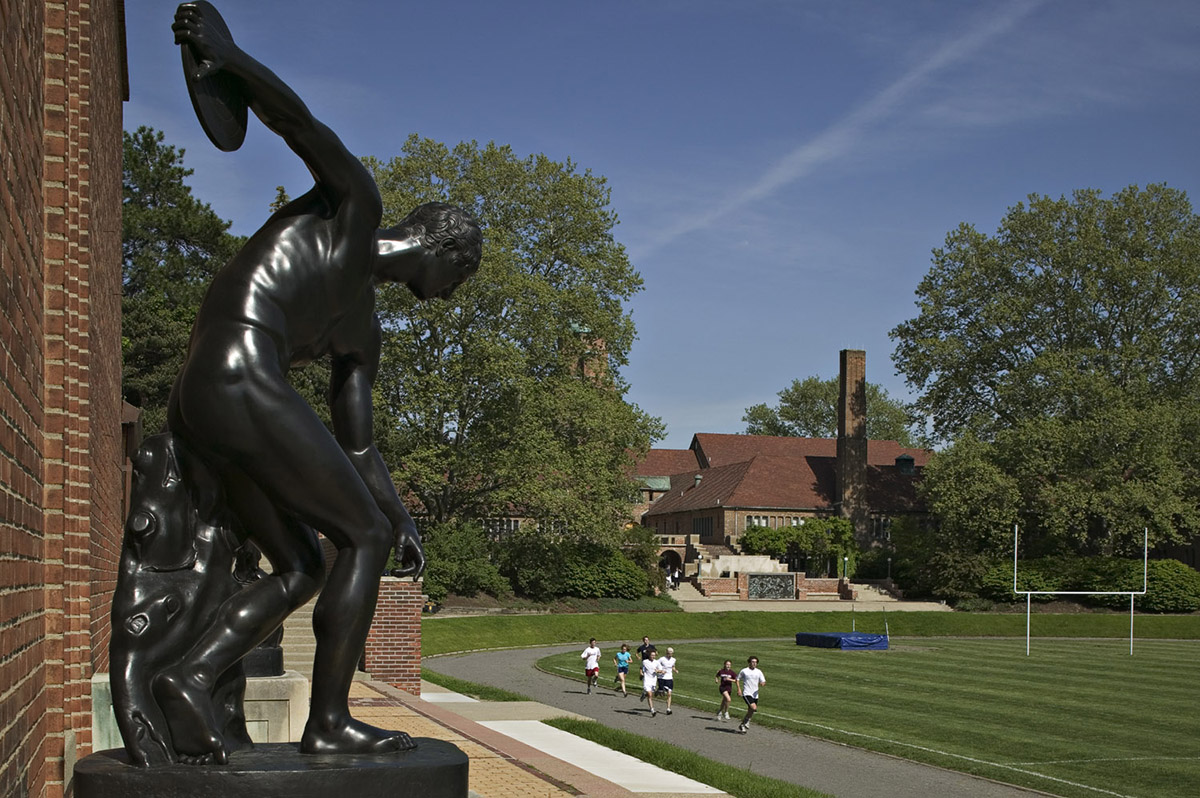
The campus is getting ready to welcome students back to school in a couple of weeks. However, many athletic teams, including the Crane football team, have already started practicing and even had a pre-season scrimmage yesterday at the Thompson Oval. Many people might not know that the Detroit Lions held their Training Camp on the Cranbrook campus from 1934-1941 and from 1957-1974.

Newspaper article from 7 Aug 1960.

Article from the Detroit News, 7 Aug 1960.

Note for Sports Fans: the Cranes’ first league game is against Cabrini High School on September 3rd.  The Lions play their first regular season game on September 13th.

A view of the Cranbrook School Athletic field. Photographer Taro Yamasaki, Cranbrook Archives.

A view of the Cranbrook School Athletic field. Photographer Taro Yamasaki, Cranbrook Archives.

Gina Tecos, Archivist

Can You Say Lobster Roll?

It feels as though summer is winding down and this week is the final session of Cranbrook Art Museum Summer Camp. We enjoyed a visit from students earlier in the week who were part of the “Costumes and Characters” session. While pulling materials to show the students, we came across this photo of Ralph Russell Calder (1894-1969), an architect and friend of Henry Scripps Booth. He is in a lobster costume made by Loja Saarinen for a “May Party” in 1926.

1926

From the Henry Scripps and Carolyn Farr Booth Papers, Cranbrook Archives.

Calder, born in 1894, was a veteran of World War I and an accomplished musician. He graduated in 1923 from the University of Michigan College of Architecture (he and Henry were classmates). In 1924, he studied in England, France, and Italy as the winner of the George G. Booth Traveling Fellowship in Architecture.

Calder Card007

A card from Ralph Calder & Associates, Inc. with a 1924 sketch by Ralph Calder during his travels in Europe on the Booth Traveling Fellowship.

In 1925, Calder worked for several months as part of U of M’s Near East Research Expedition in Tunisia. The research and objects obtained from this expedition are the basis of the collection at the Francis W. Kelsey Museum of Archaeology at U of M. Calder joined the Cranbrook Architectural Office in 1926 and remained there until staff was reduced due to the economic depression. In 1937, he joined the firm of William G. Malcomson and Maurice E. Hammond where he stayed until 1945, when he started his own firm, Ralph Calder and Associates, in Detroit.

Calder worked on the following buildings on the Cranbrook campus: the main academic building (Hoey Hall) at Cranbrook School, Thornlea, and Thornlea Studio. In addition, he was the architect for buildings at Michigan State University, Michigan Technological University, Hope College, Northern Michigan University, Hillsdale College, Wayne State University, Ferris State University, Western Michigan University, and Lake Superior State University. He enjoyed music as a hobby and was the organist and choirmaster for St. Paul’s Episcopal Cathedral in Detroit in the 1940s.

Gina Tecos, Archivist

Logical Design: Using Primary Sources

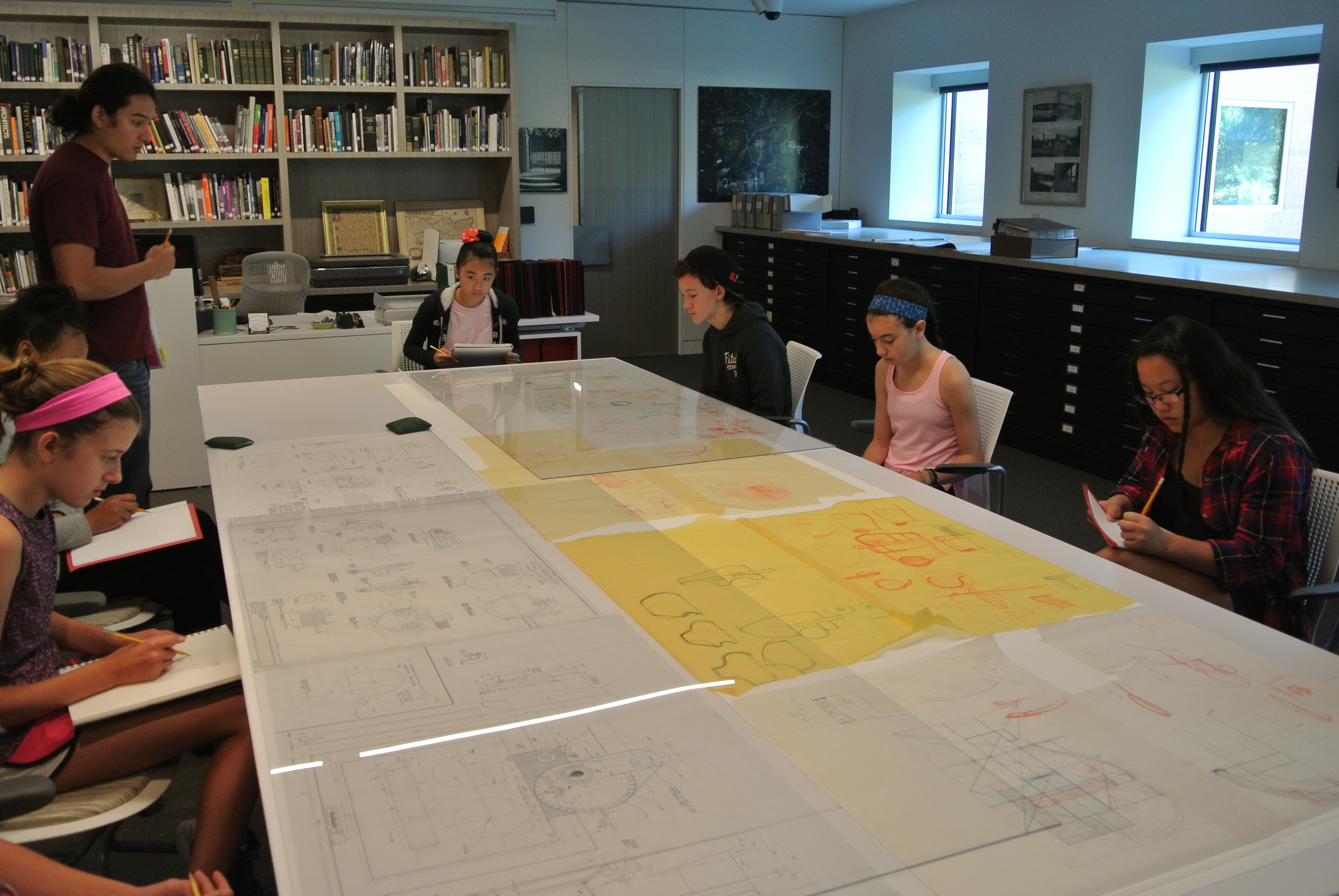
As summer camps are winding down, we wanted to share how campers used the collections in the Archives this week. Earlier in the week, my daughter, who is attending Cranbrook Art Museum’s camp session “Problem Solving by Design,” told me of the industrial design concepts they were learning. I immediately thought of the collection of Design Logic, Inc. Records that we have in the Archives, which contain beautiful color transparencies of 3D projects designed in the 1980s by David Gresham and Martin Thayer. (See Cheri Gay’s post.)

Studying the design drawings for the View Master and the Projector, Aug 2015.

Studying the design drawings for the View Master and the Projector, Aug 2015.

The next morning, I spoke with Kanoa, the camp instructor and a 2015 grad of the Academy of Art, and he agreed the photos would be great to show the kids. We coupled them with a copy of the exhibition catalog Cranbrook Design: The New Discourse, which featured several prototypes by Design Logic, as well as by other designers, many of whom studied under Kathy and Michael McCoy here at Cranbrook in the 1980s. The following day, I took the kids to the Art Museum vault to actually look at some of the objects. Kanoa had them do several sketches from different angles, all the while talking about various design concepts. Then the following day of course I had to show them some of Gresham and Thayer’s own design drawings which are also a part of the collection in the Archives. The kids were able to view conceptual sketches through finished drawings that were then sent to the manufacturer.

Sketching objects in the Cranbrook Art Museum vault, Aug 2015.

Sketching objects in the Cranbrook Art Museum vault, Aug 2015.

All in all, I hope it was a great experience for the kids. It certainly was fun for me to be able to enrich their camp experience with primary source materials from Cranbrook Archives.

Leslie S. Edwards, Head Archivist

Edison House: A Modern Icon

Approaching the Cranbrook Institute of Science (CIS), one easily overlooks the low-set modern structure built into the eastern hillside. Shaded by trees and obscured by a brick courtyard wall, Edison House assumes a low profile much like its Modernist predecessors.

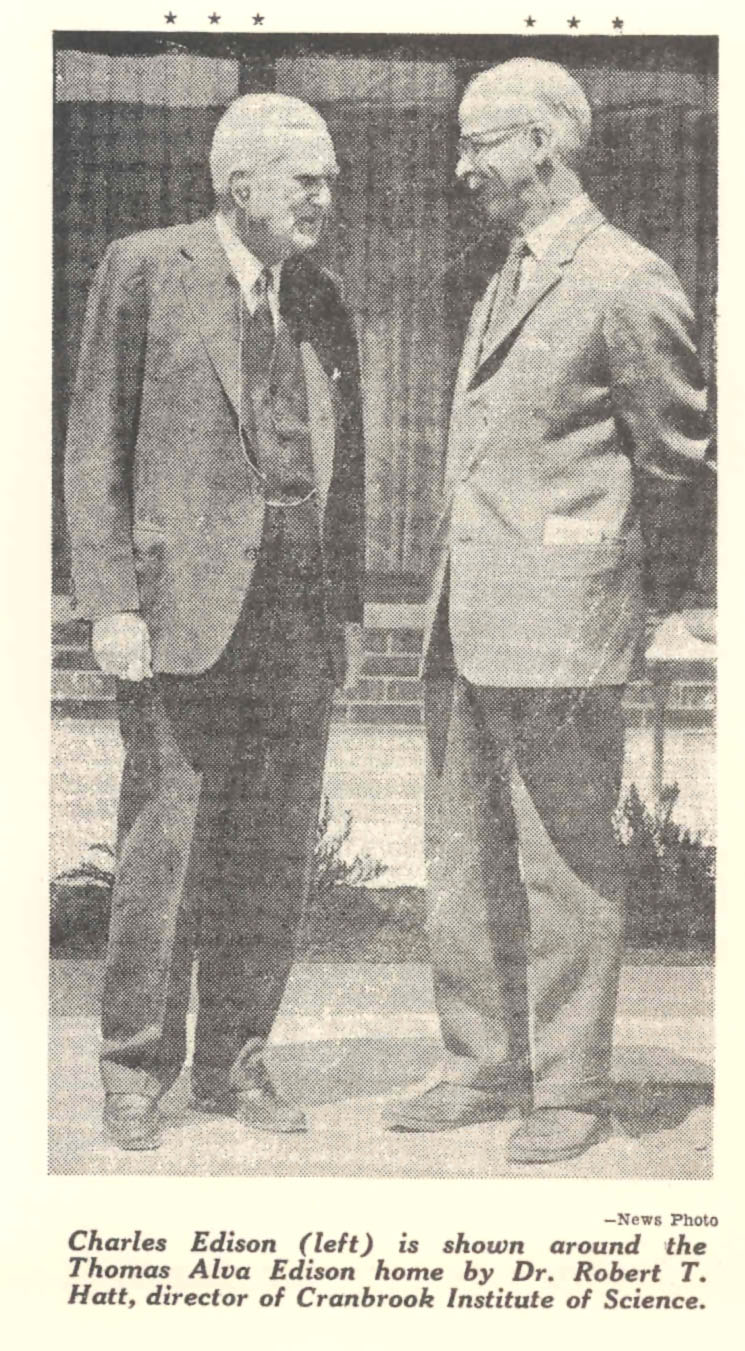
The 1960’s was a decade where modern conveniences flourished. Electric appliances began appearing in households across the country which made the lives of working families easier and more efficient. Backed by CIS’s Chairman of the Board of Directors, James Beresford, Director Robert T. Hatt and Detroit Edison’s Edwin O. George began plans for an innovative, all-electric residence that would suit their needs equally. Cranbrook would house scientists as part of the Distinguished Scholar Program, while Detroit Edison would have a showcase for their newest and greatest electrical equipment. The architect, William P. Smith Jr., was commissioned by Detroit Edison, and construction began in 1965. National and local firms contributed products, services, time, and funding to complete the house. Once construction was completed Detroit Edison turned Edison House over to CIS in a dedication ceremony held on June 1, 1966.

Thomas Edison's son, Charles Edison, visits Edison House Courtesy Detroit News, June 1966

Thomas Edison’s son, Charles Edison, visits Edison House
Courtesy Detroit News, June 1966

The finished product was a functionally efficient piece of art and an “outstanding demonstration of the application of science to everyday living.” Not only did it have the best and most innovative appliances, it was aesthetically advanced as well. The architectural style melds aspects of late Modernism and Art & Crafts. The broad eaves and natural material selection are reminiscent of the American Craftsman style home, while the clean-lines and mechanical innovations evolved from the Modernist International Style.

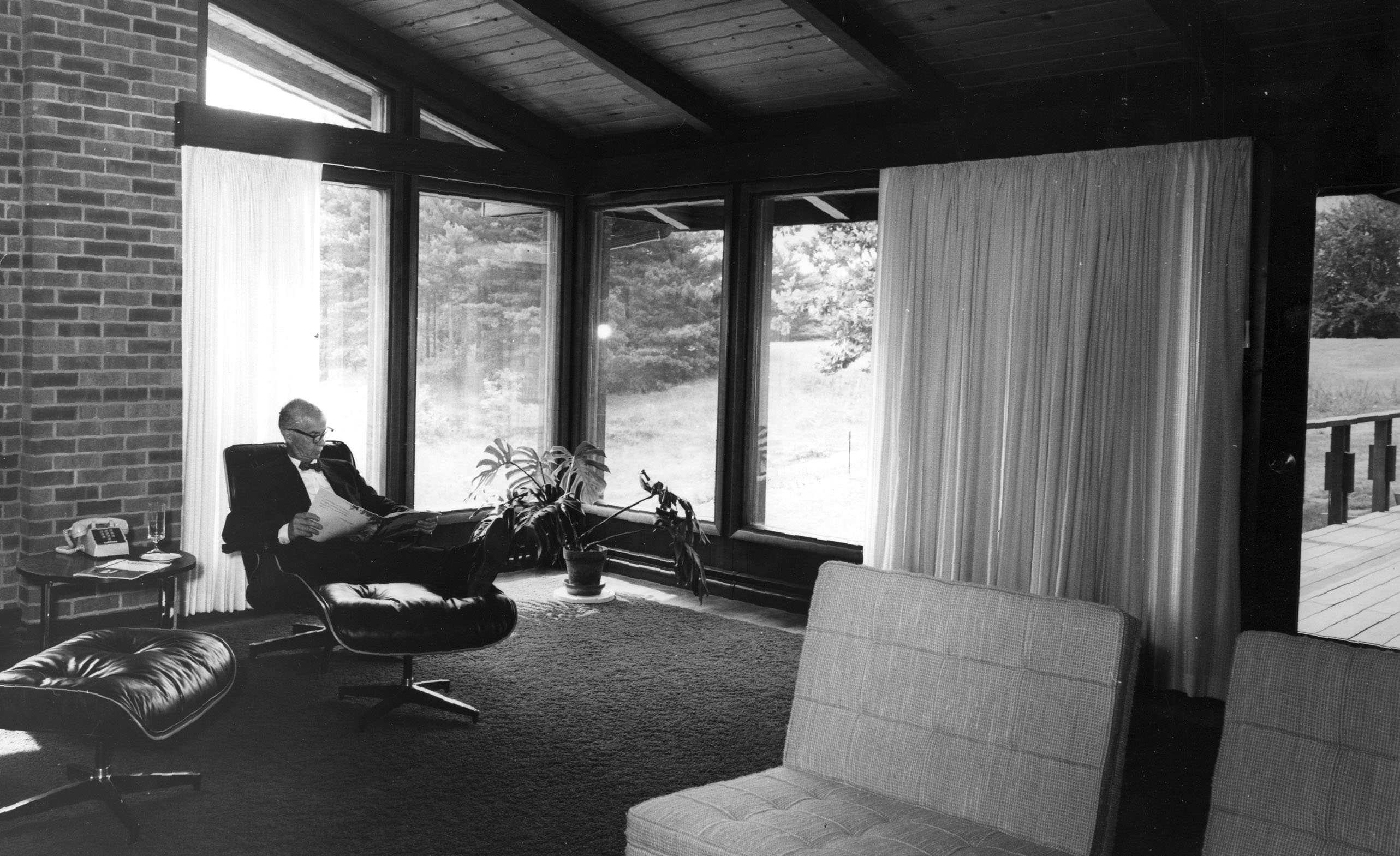
Also referred to as “Cranbrook’s New Idea Home,” a 1965 Detroit Free Press article described it as “organic contemporary in design.” Expansive windows run floor to ceiling which opened up the back face of the house to the surrounding natural landscape. Constructed of laminated redwood, extruded brick, and masonry, the home blends with its neighbors – the trees, grass and rocks. Broad overhanging eaves provide a feeling of shelter and enclosure. The natural backdrop contrasted with the interior’s modernist chrome and leather furnishings, and in true modernist style, linen drapes graced the windows in order to soften the hard surfaces. In addition to traditional living space, the open floor plan also accommodated conference rooms for faculty needs.

Dr. Robert Hatt in Edison House  living room, August 1966. Harvey Croze, photographer  Courtesy Cranbrook Archives

Dr. Robert Hatt in Edison House living room, August 1966. Harvey Croze, photographer. Courtesy Cranbrook Archives.

Every aspect of the 3,500 square foot house was intended to promote electronic living. Snow melting heating coils were laid under the pavement and built into the eaves and gutter system which trace the perimeter of the copper roof. Snow sensors were installed to automatically switch on the melting equipment. Electronically heated windows, state of the art at the time, line the lower-level family room. An invisible metallic coating spans the interior glass surface and is warmed by an electric current in order to remit just enough heat to reduce the cold.

The garage boasted automatic radio-operated door openers. In the master bedroom dressing room a sun lamp was mounted in the ceiling with a timer for automatic shut-off. A built-in toaster was installed adjacent to the breakfast table for easy access. The kitchen also held the control panel for the intercom system that reached every room in the house as well as the front door and terrace. Speakers on the terrace doubled as microphones so the residents could “pick up sounds of birds and other wildlife.”

After a summer as a demonstration house open to the public, Edison House was occupied by notable botanist and geneticist Karl Sax, the first Distinguished Scholar. Farrington Daniels, Denis L. Fox, and V. Elliott Smith followed. The last Edison House resident was mineralogist and CIS Director, Daniel E. Appleman, who was instrumental in the Earth Exhibit housed in the Institute’s 1996 addition designed by Steven Holl.

Over the past twenty years, Edison House has been used for a variety of purposes including office space for Events Planning and a staging area for IT infrastructure technicians. And although the once innovative electrical equipment is outdated and certainly not modern by contemporary standards, Edison House remains an icon of Michigan Modernist architecture. Edison House will celebrate its 60th anniversary in June 2016.

Originally authored by Stephanie White (2011); updated in July 2015
Hugh Ferriss: Visionary Illustrator

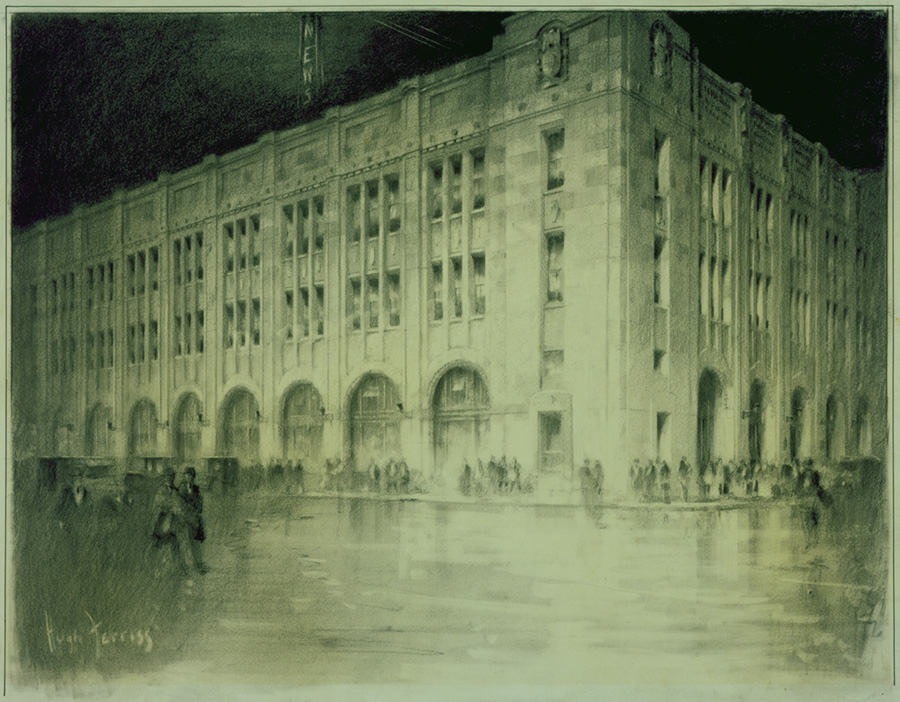
I came across Hugh Ferriss’s book The Metropolis of Tomorrow while assisting Judy Dyki, Director of the Cranbrook Academy of Art Library, in curating an exhibit of some of our rare and special collection books for the Bloomfield Township Public Library.  Ferriss (1889-1962) was a degreed architect, but he was most sought after for his architectural renderings of buildings. He developed an idiosyncratic style, often depicting buildings at night, seemingly enveloped in a kind of mist, with streetlights and the rays of the moon serving as illumination. I find Ferriss’s work intriguing because his drawings were so different from the typical architectural renderings of the 1920s to 1950s. The gothic yet futurist sensibility displayed in his work has influenced contemporary filmmakers like Tim Burton and Christopher Nolan. Ferriss has several connections to Cranbrook, the first being the drawing of the Detroit News Building that is in the collection of the Cranbrook Art Museum.

Hugh Ferriss in his studio, ca ? Photographer Stadler. Courtesy Creative Commons.

Hugh Ferriss in his studio, ca 1925. Photo by Stadler, New York. Courtesy Creative Commons.

The history of the Detroit News Building drawing is an interesting one. The J.L. Hudson Company, in honor of the company’s 46th anniversary and the opening of the new Detroit Institute of Arts building in 1927, commissioned Hugh Ferriss to create a series of architectural renderings of Detroit buildings, both extant and proposed, that contributed to Detroit’s rapidly changing skyline.  Twenty-two of these drawings where exhibited in the windows of Hudson’s downtown store in August 1927. Among these were two renderings of Eliel Saarinen’s proposed plan for a new Detroit Civic Center complex.  Also included was this drawing of the Detroit News Building. The Detroit News building, which opened in 1917, was commissioned by George Gough Booth, and designed by architect Albert Kahn.

Drawing of the Detroit News Building. Courtesy Cranbrook Art Museum (CAM1955.400)

Drawing of the Detroit News Building. Courtesy Cranbrook Art Museum. (CAM1955.400)

Booth, president of the Detroit News (and Cranbrook’s founder) purchased the drawing of the Detroit News Building directly from J.L. Hudson’s in October 1927 for the Academy of Art collections. (Accessions Book No. 1, Cranbrook Academy of Art).  To coinicide with the exhibition, J.L. Hudson Co. published a commemorative booklet entitled For a Greater Detroit, which contained Ferriss’s drawings and included editorials by various community leaders that discussed Detroit’s future. A copy of this booklet can be found in the Edsel Ford Office Papers at the Benson Ford Research Center. Ferriss’s drawing was transferred from the Academy of Art to the Art Museum in 1955, and is considered one of the museum’s “One Hundred Treasures”.

Stay tuned for a forthcoming blog post about Hugh Ferriss’s further connections to Cranbrook

Mary Beth Kreiner, Librarian, Cranbrook Academy of Art Library

Editor’s note: For additional information about the work of Hugh Ferriss, check out the Avery Architectural and Fine Arts Library at Columbia University.

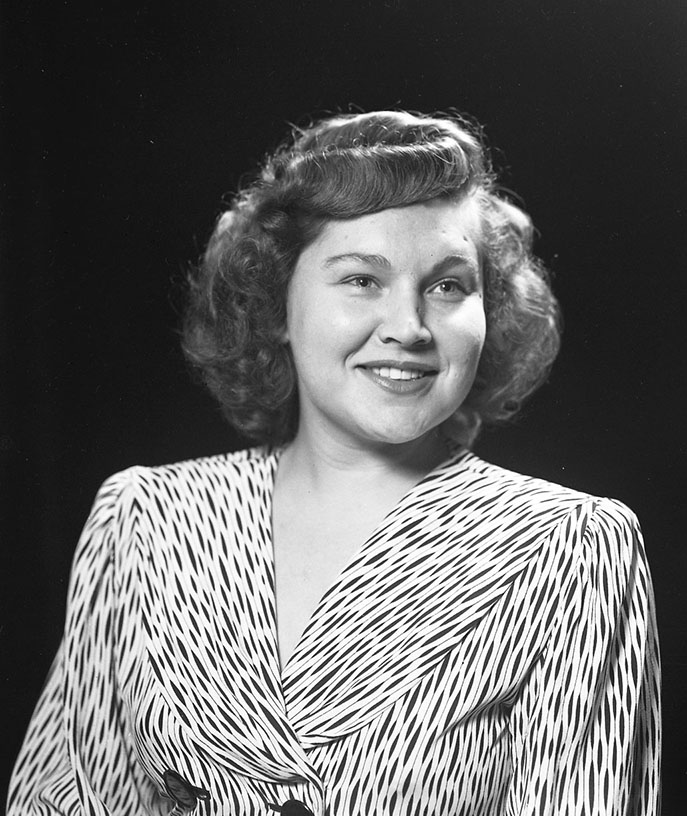
Corajoyce Rauss (1925-2015): A Cranbrook Legend

The Archives was saddened to learn this week of the passing of Corajoyce Nancy Lane, of Bloomfield Hills, who worked at Cranbrook for over five decades. Raised by parents who taught her that women didn’t, and shouldn’t, work, Corajoyce (who was headstrong even at a young age!) tried to convince her parents to let her get a job. Her first thought was airplane pilot, followed by truck driver so that she could drive across the country! Instead, at the age of 20, without her parents’ permission, she responded to an ad in the Birmingham Eccentric for a photographer’s assistant at the Cranbrook Foundation. Corajoyce was offered the job by staff photographer Harvey Croze, and finally received consent from her parents. The job only lasted two months, which she followed with a job working for Margaret Auger, then headmistress of Kingswood School. In 1948, Corajoyce married Robert Rauss (they honeymooned at a dude ranch in Colorado) and two years later, left Cranbrook to become a stay-at-home mom to her daughter.

Corajoyce Rauss, Nov 1947.

Corajoyce Rauss, Nov 1947. Harvey Croze, photographer.

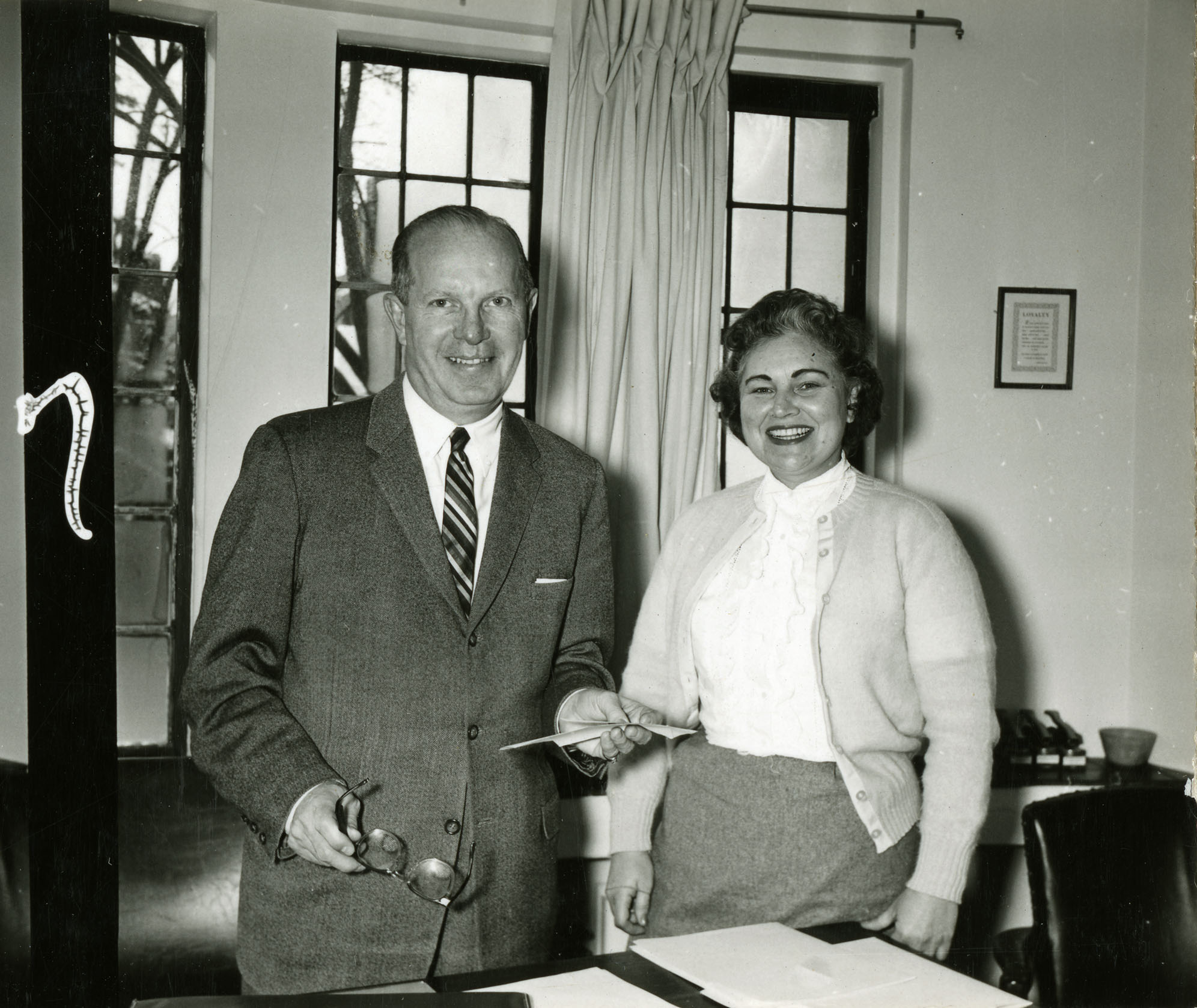
In 1961, Corajoyce returned to Cranbrook, this time securing a job as Henry Scripps Booth’s personal secretary. As she and Henry became lifelong friends, she was given more responsibility and became the manager of Henry’s personal estate. During her tenure at Cranbrook, Corajoyce met Carl Milles, Zoltan Sepeshy and Eliel Saarinen among others. George and Ellen Booth used to drop by Kingswood School, often unannounced, and Corajoyce also met visitors including Isaac Stern, Leonard Bernstein, and Princess Christina of Sweden.

Arthur Witleff and Corajoyce Rauss, Jan 1962.

Arthur Wittliff and Corajoyce Rauss, Jan 1962. Harvey Croze, photographer.

Soon after Henry’s death in 1988, Corajoyce began work at the Cranbrook Archives as the part-time bookkeeper. She volunteered additional time and took on the task of organizing, with the help of a core of volunteers, the Booth family photographs, creating photo albums that are housed in the Archives today. She worked tirelessly on compiling The Cranbrook Booth Family of America genealogy which required copious amounts of correspondence with various Booth family members. Her hard work and dedication earned her Cranbrook’s President’s Award for Excellence in 1990. Corajoyce remained a fixture at Cranbrook Archives until her retirement in 2007. She was once quoted as saying that she “lived a Cinderella life.” While Cranbrook has lost a dedicated employee, her love of Cranbrook and the work she accomplished here lives on in the Archives.

Leslie S. Edwards, Head Archivist

Create a website or blog at WordPress.com