Celebrating a Farr-Booth Centennial

With thousands of years of recorded history to draw from, every day of the year has some distinction as an anniversary. Today, the 27th of September, is the 958th anniversary of the day William, Duke of Normandy, set sail to conquer England, the 560th anniversary of the birth of Cosimo de’ Medici, founder of the de facto ruling family of Renaissance Florence, and the 100th anniversary of the wedding of Henry Scripps Booth to Carolyn Elizabeth Farr. Here at Cranbrook, it is this last anniversary that holds top billing on our calendars. 

Carolyn Elizabeth Farr, on her wedding day. Courtesy of Cranbrook Archives, Cranbrook Center for Collections and Research.
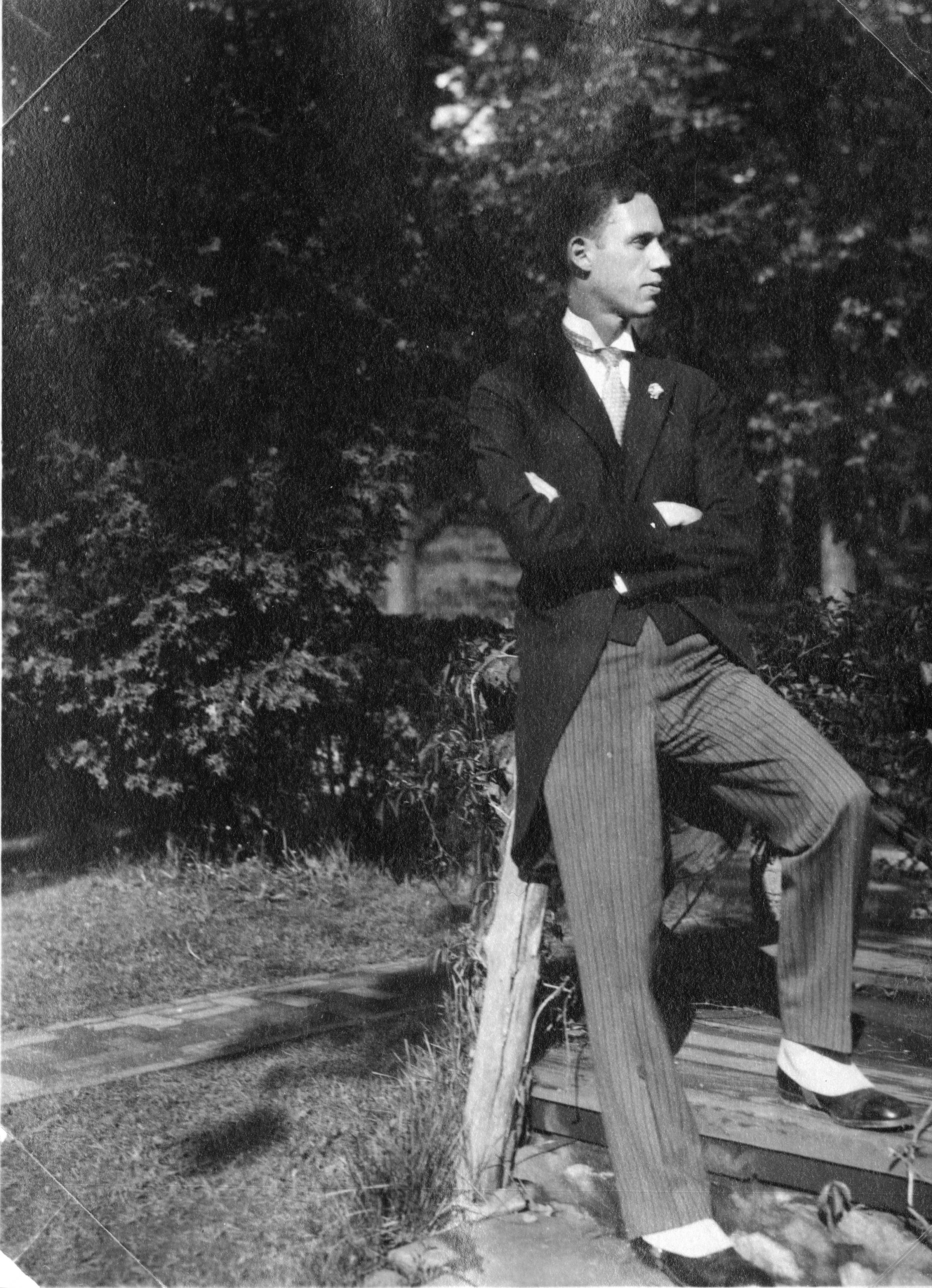
Henry Scripps Booth, on his wedding day. He later joked that it was the last time that he would ever wear a waistcoat. Courtesy of Cranbrook Archives, Cranbrook Center for Collections and Research.

Henry Booth, youngest son of Cranbrook’s founders, George and Ellen Booth, and Carolyn Farr, daughter of shipbuilding magnate Merton Elmer Farr and Emma Rothe, first announced their engagement on June 29th, 1925. Neither of them believed in long engagements, it appears, as they were married just three months later, at the First Congregational Church in Detroit. The wedding had some competition for most memorable event of the year for Carolyn Farr. On August 30th, while on her way home from a shopping trip to New York City to complete her trousseau, Carolyn’s train crashed into the back of another train which had made an accidental stop on the westbound line near Syracuse.  

Clipping from Buffalo Courier, August 31, 1924, page 56

Fortunately, no one was killed in the crash. Some members of a Boy Scouts troop riding at the back of the rear train actually slept through the collision and had to be shaken awake by their bemused troop leaders. Though she escaped serious injury, the crash left Carolyn with cuts on her nose and mouth, which may have still been painful on her wedding day, though they are invisible in her wedding photos.

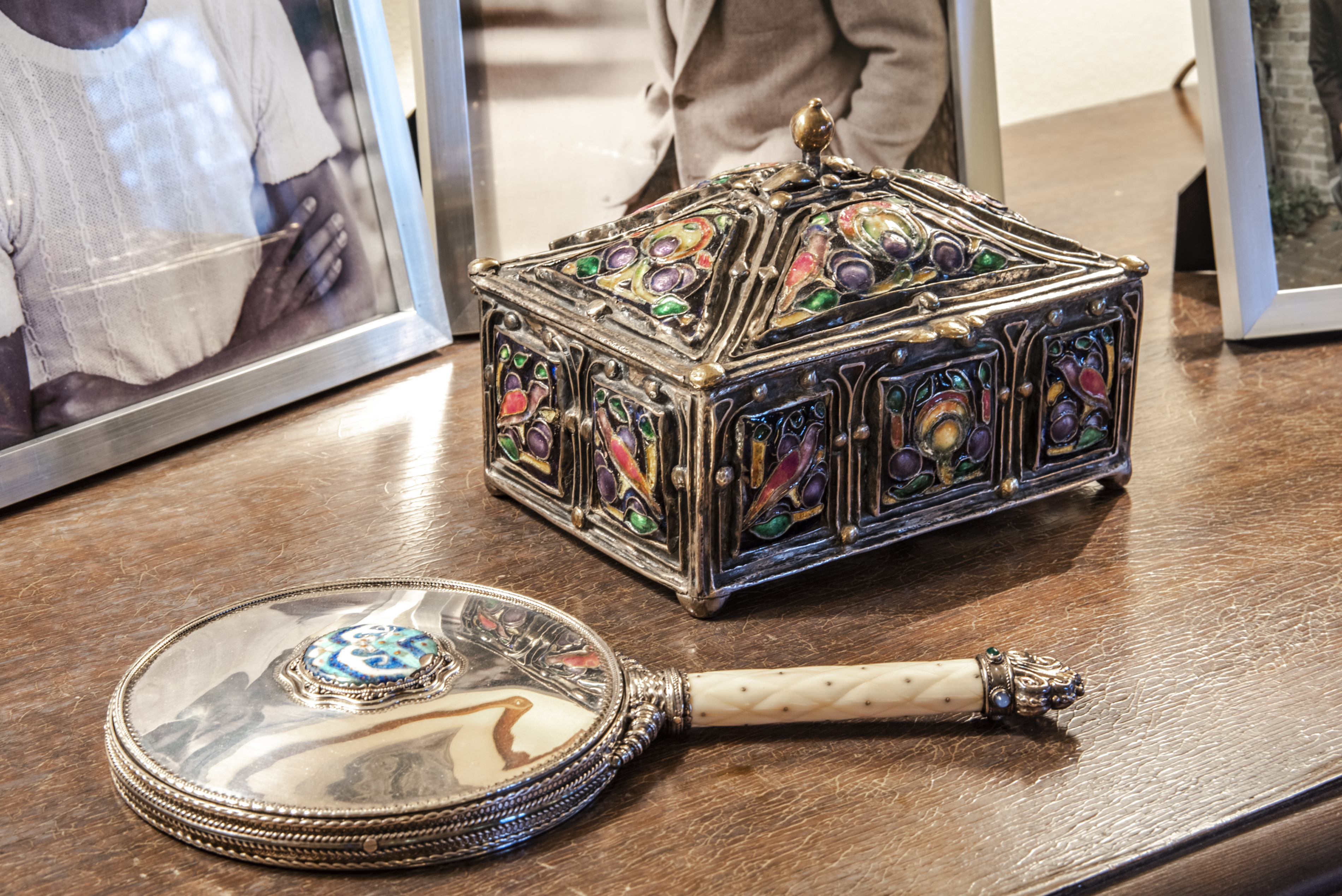
Both of Henry’s sisters were married at Cranbrook House itself, Grace Booth in the living room and Florence Booth in the library. Although Henry was not married at Cranbrook, the wedding was still very much a Cranbrook event in one way, because it featured an Arts and Crafts artwork. The ring was carried down the aisle by Carolyn’s nephew, Henry Gerhauser, in a silver and enamel box made by the noted Boston-based artist Elizabeth Copeland.  

Carolyn Farr and ring bearer Henry Gerhauser holding the Copeland box. Detroit Free Press, October 5th, 1924.
Enameled silver casket, Elizabeth E. Copeland, circa 1922. Courtesy of Cranbrook Center for Collections and Research.

Enameling, like tapestry weaving and illumination, was a medieval art form revived by the Arts and Crafts movement in England in the nineteenth century. In the twentieth century, enameling evolved out of the medievalist styles that characterized its revival to become a primary medium of both Art Nouveau and Art Deco decorative art and jewelry.

Elizabeth Copeland was the foremost enamel artist of the American Arts and Crafts movement. Born in Revere, Massachusetts in 1866, she did not begin her artistic training until she was in her early thirties. Like many women artists, she was expected to balance her own work with domestic labor. Copeland had to commute daily to attend the Cowles Art School in Boston, and she studied her design patterns while carrying out household chores. So great was her talent, however, that within just a few years her enamels and silver work were already enjoying critical acclaim, including a feature in Craftsman magazine in 1903. Her work is now in many museum collections, including the Metropolitan Museum of Art, the Art Institute of Chicago, and the Museum of Fine Arts, Boston

As an artist, Copeland embraced the Arts and Crafts movement’s ideals. Eschewing a machine-like precision in her work, her silver work proudly exhibits subtle variations and inconsistencies that distinguish them as truly hand-crafted objects. Her enamel work embraces the fluidity of the medium, allowing different colors to flow into one another within each metal embrasure shaped to contain the liquid medium. Unlike most women artists of her time, Copeland was able to support herself independently through the sale of her work, during a career of more than three decades. She exhibited her work at many venues, including the Detroit Society of Arts and Crafts, where Henry Scripps Booth purchased the silver box that would hold the ring for his wedding, two years later.  

Henry Scripps Booth with his first child, Stephen Farr Booth, in Brookside Cottage, February 17th, 1925. Note the Copeland box on the mantelpiece. Courtesy of Cranbrook Archives, Cranbrook Center for Collections and Research.
The Copeland Box in Thornlea with a hand mirror by Arthur Nevill Kirk. Photography by Tryst Red, 2021. Courtesy of Cranbrook Center for Collections and Research.

After the wedding, the new couple moved into Brookside Cottage, the little stone house just west of Kingswood School, where they lived for two years until Thornlea House was completed. The Copeland box became a fixture of their new home, where they lived together from 1927 until Carolyn’s death in 1984. During her lifetime, the ring box spent many years on a table in Carolyn’s own bedroom, as a memento of a milestone occasion which we are celebrating again, one hundred years down the line.

Mariam Hale, 2023-2025 Collections Fellow, Cranbrook Center for Collections and Research

Photo Friday: Greetings from Thornlea

The holiday season is upon us once again, and hopefully you and yours had a wonderful and safe Thanksgiving celebration.

Holiday gatherings were important to Cranbrook founders’ son, Henry Scripps Booth and his wife Carolyn, as evidenced by this card given to Henry by Carolyn in 1971. Although one of few Thanksgiving cards, it is an example of the many greeting cards included in the Henry Scripps and Carolyn Farr Booth Papers. Among those the couple gave to each other are cards which send greetings to family and friends from their home, Thornlea.

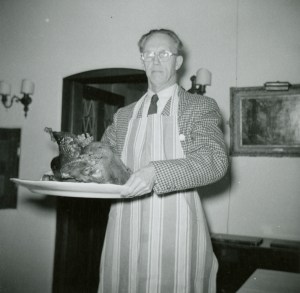
As we look forward to the holidays ahead, I leave you with the photo below, showing patriarch Henry Booth at his home, Thornlea, bringing in the turkey for what surely was a fabulous Christmas feast!

Henry Scripps Booth at Thornlea House, December 25, 1956. Courtesy of Cranbrook Archives.

Similar items from the Archives will be on display during the Center’s upcoming Behind-The-Scenes-Tour, The Treasures of Thornlea House, taking place next week. As of this writing, a few tickets are still available for Thursday, December 2nd – we hope you can join us!

Deborah Rice, Head Archivist, Cranbrook Center for Collections and Research

A Picture Tells a Thousand Words

Family was central to the Booths, and Henry Scripps Booth and Carolyn Farr Booth immortalized themselves and their children in portraiture.

Carolyn Farr Booth, 1950, by John Koch. Cultural Properties Collection, Thornlea. Cranbrook Center for Collections and Research. Bequest of Henry Scripps Booth and Carolyn Farr Booth to Cranbrook Educational Community.

Carolyn Farr Booth (1902-1984), who married Henry Scripps Booth (1897-1988) in 1924, was a devoted mother and grandmother who served as a volunteer leader within the metro-Detroit community. Henry Scripps Booth commissioned this portrait in 1950 from artist John Koch .

Henry Scripps Booth, 1961, by John Koch. Cranbrook Center for Collections and Research. Bequest of Henry Scripps Booth and Carolyn Farr Booth to Cranbrook Educational Community.

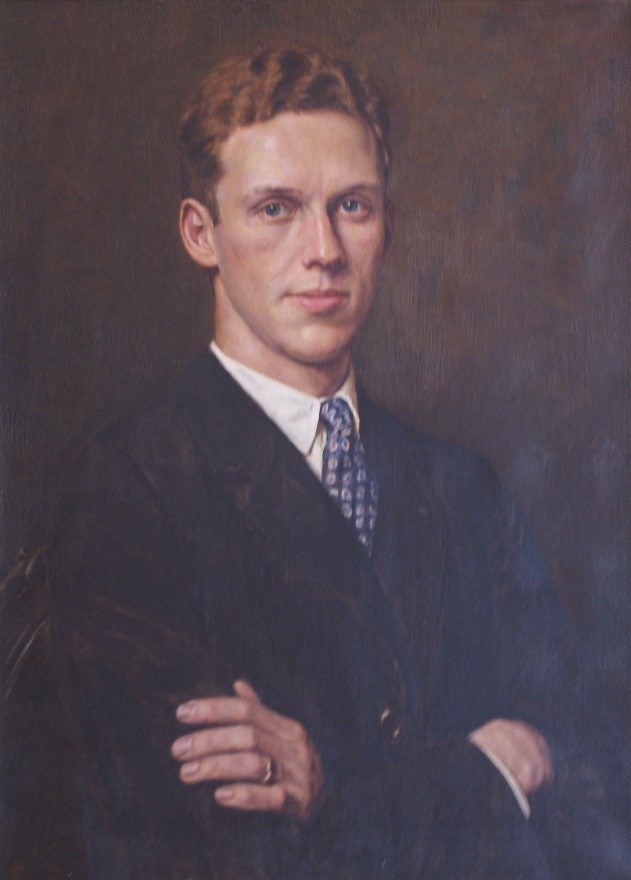
In 1961, Henry Scripps Booth commissioned this portrait of himself, again from Koch. In addition to these portraits, Koch depicted Henry and Carolyn’s daughters Melinda and Martha.

Artist John Koch (pronounced “coke”) was one of the key painters of the American Realist movement in the mid-20th century. His early art training was minimal. In the summers of 1927 and 1928, he painted and studied in the artists’ colony at Provincetown, Massachusetts, where he was influenced by the work and theory of Charles Hawthorne. Otherwise, Koch was largely a self-taught painter. In 1928, he went to Paris, where he stayed for four years painting on his own, never under a teacher. “The Louvre was my master,” Koch once said. Koch counted among his sitters not only the Booths, but also Princess Margaret, sister of Queen Elizabeth II.

Henry Scripps Booth, 1922, by Ludwig Kühn. Cranbrook Center for Collections and Research. Bequest of Henry Scripps Booth and Carolyn Farr Booth to Cranbrook Educational Community.

Henry Booth’s pose in his Koch portrait mirrors an earlier portrait from 1922 by Professor Ludwig Kühn. Booth had this portrait painted in 1922 while on his 1922-1923 Grand Tour in Europe with University of Michigan classmate J. Robert F. Swanson. The cost was $100. Henry assembled photographs of the portrait being painted in his scrapbook, Pleasures of Life #5, in Cranbrook Archives.

Professor Ludwig Kühn was especially known for his lithographs and etchings. In Germany, the title of professor is awarded as an honorary title to people who do not necessarily hold a teaching professorship; Kühn received the title in 1900.

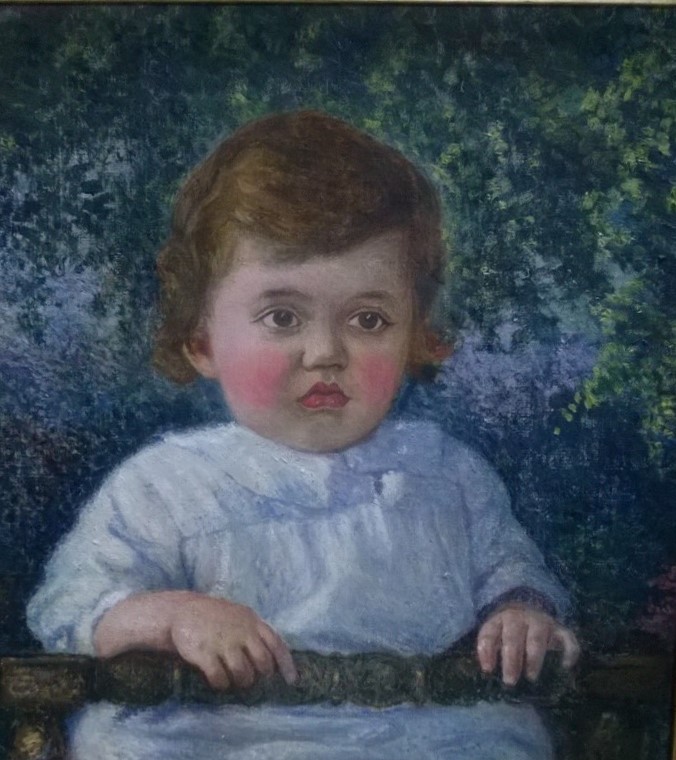
David Gagnier Booth, 1928, by Charles Benell. Cranbrook Center for Collections and Research. Gift of David Gagnier Booth and Frances Poling Booth.
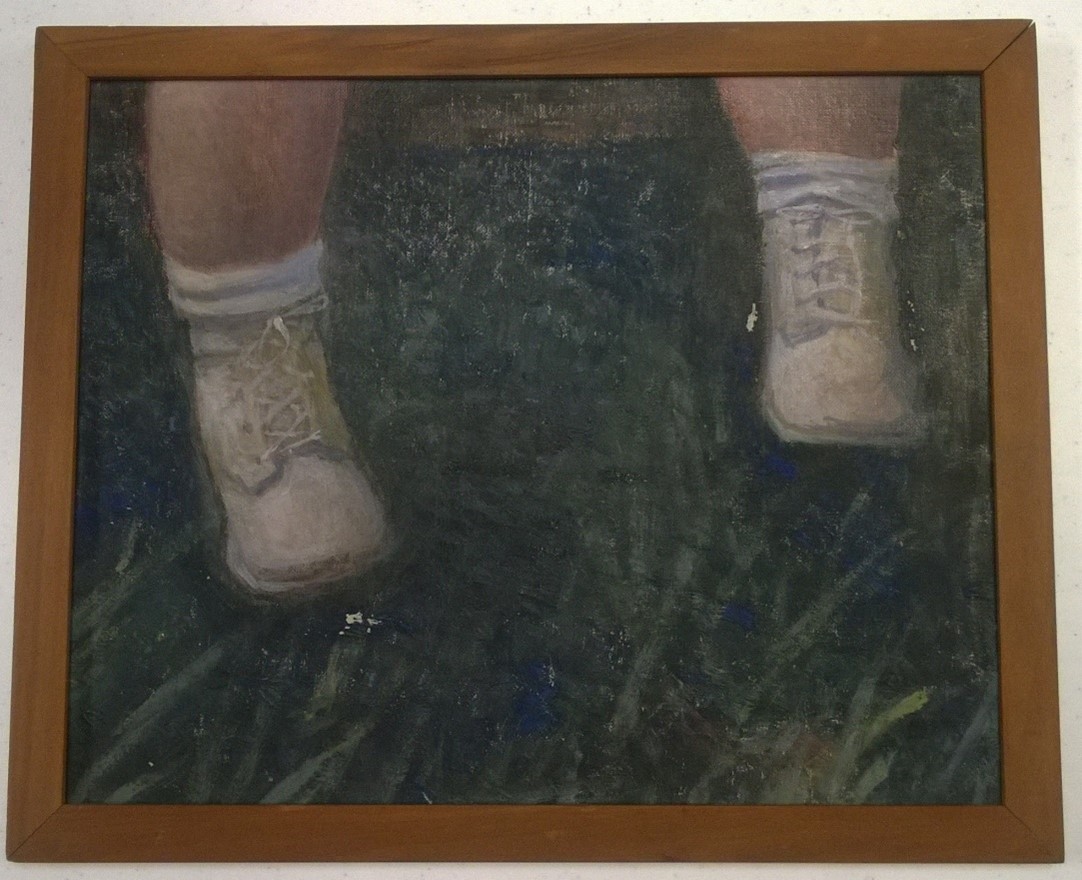
Feet from David Gagnier Booth, 1928, by Charles Benell. Cranbrook Center for Collections and Research. Gift of David Gagnier Booth and Frances Poling Booth.

And, for one more portrait: David Gagnier Booth (1927-2020), one of the sons of Henry and Carolyn. According to David, and corroborated by one of Henry’s photo albums, the family did not like the portrait of young David painted in 1928. The painting was subsequently cut into three pieces: David’s face and upper body, David’s feet, and some irises. Henry displayed David’s feet in Thornlea Studio. We don’t know what happened to the irises (if you know their whereabouts, please reach out!)

Charles Benell, the Russian artist who painted the portrait of David Booth, lived in Detroit in the late 1920s and early 1930s. He was a long-time friend of painter Ossip Perelma, who painted portraits of other Booth family members. Benell attended the École des Beaux-Arts and studied under  Fernand Cormon, a French painter and teacher, who was also the teacher of Van Gogh.

Do you want more great stories about the Booth family portraits, and more? Come along as we open the doors to Thornlea, the home of Henry Scripps Booth and Carolyn Farr Booth for more than sixty years, for rare Behind-the-Scenes tours! Thornlea is full of architectural charm and artistic inspiration.

Led by the Center’s Curator, Kevin Adkisson, and featuring new research Kevin and I did over the past two years, the tour will explore the architecture of the home, examine its collection of fine and decorative arts, and reveal stories and photographs from the Booth family’s long life in the home. Used for a variety of purposes today, and rarely opened for public tours, the house will be specially staged for this event.

BEHIND-THE-SCENES TOUR

THE TREASURES OF THORNLEA HOUSE

Tuesday, November 30th, 2021
10:00am-11:30 am | 12:30pm – 2:00pm | 6:00pm – 7:30pm

Leslie S. Mio, Associate Registrar, Cranbrook Center for Collections and Research

Cranbrook Gets the Royal Treatment

Not once, but twice, Cranbrook has pulled out the figurative red carpet and with appropriate fanfare welcomed Swedish royalty to its campus. Anyone who knows and loves Cranbrook might not be all that surprised by this revelation. After all, Cranbrook is a very special place—the home of dozens of sculptures by Sweden’s celebrated sculptor Carl Milles, who lived and worked at Cranbrook for twenty years, as well as many tapestries woven by Loja Saarinen’s renowned Swedish weavers. But the larger Detroit community has also boasted a significant Swedish cultural presence.

While most Michiganders might be familiar with the role that Swedish immigrants played in Michigan’s Upper Peninsula mining and lumber industries, Swedes also played major roles in Detroit’s development, from the auto industry to the fine and performing arts. Not least of all were the contributions made by Milles, including his sculpture The Hand of God, which has stood in front of the city’s Frank Murphy Hall of Justice since 1970. The founding in 1963 of the Detroit Swedish Council by Charles J. Koebel (who, decades earlier, had commissioned Eliel Saarinen to design his family home in Grosse Pointe Farms), saw a concerted effort to promote Swedish culture in the area. It was likely the unique combination of Cranbrook’s artistic works and Detroit’s vibrant Swedish community that attracted visits from Sweden’s royal family on two separate occasions.

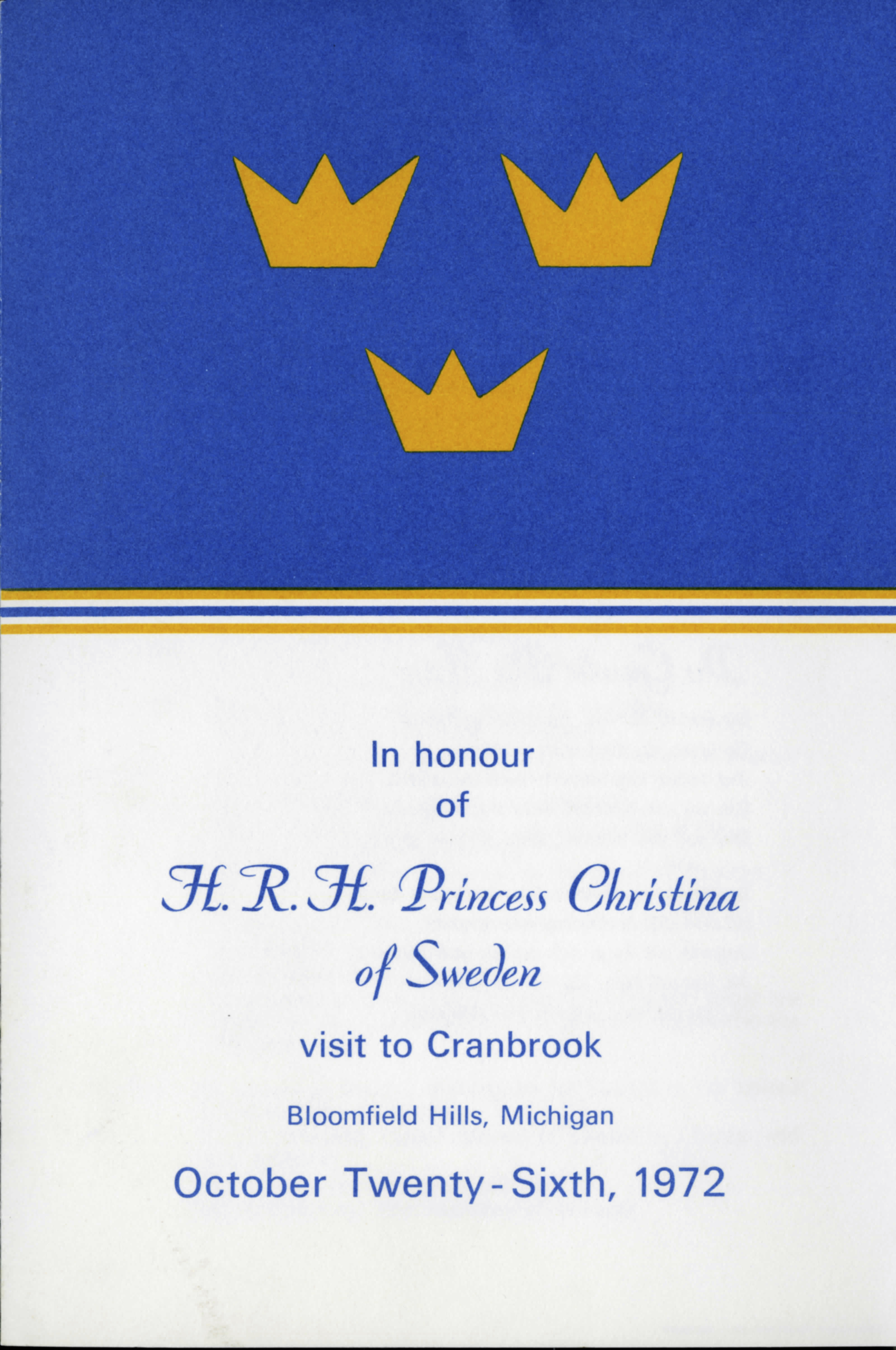
Program for the day’s activities. Courtesy of Cranbrook Archives.

So it was that on October 26, 1972, Princess Christina of Sweden set foot on Cranbrook grounds as part of her two-week tour of the States. And sixteen years later, her brother and his wife, King Carl XVI Gustaf and Queen Silvia, followed suit on April 18, 1988. Both visits focused largely on Carl Milles’ Cranbrook legacy, directly involved the Academy of Art and Art Museum, and were the result of collaborations between Cranbrook and the Detroit Swedish Council. Yet each visit had its own unique activities and sense of purpose.

Continue reading

History Detective: Light Fixture Edition

Did you ever watch the show History Detectives on PBS? I loved the show; it is all about uncovering the story of an object.

As Associate Registrar for the Center, I am working with our Director Gregory Wittkopp and our Associate Curator Kevin Adkisson on an ambitious project. We are reviewing all fourteen of our cultural properties collections (over 9,000 objects), reviewing the data already on file and adding as much additional information about each object as we can. How do we do this, when the people who created, collected, or purchased the objects are no longer here? It requires being something of a history detective!

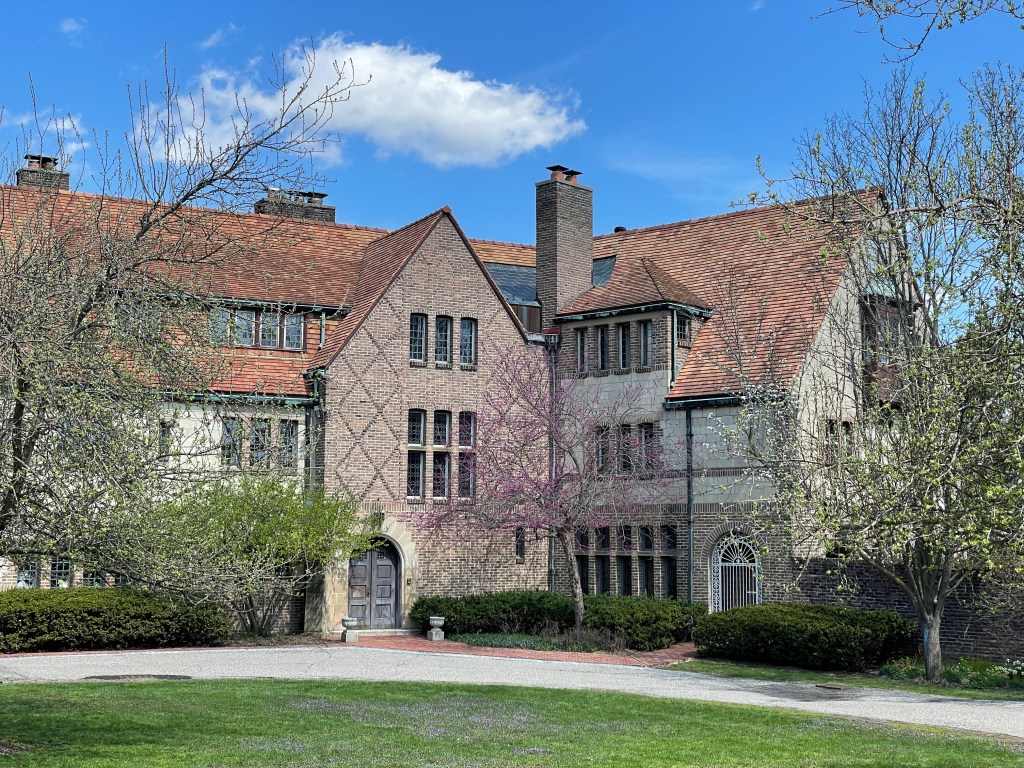
The collection we are currently working on is the Cultural Properties Collection at Thornlea. Thornlea was the home of George and Ellen Booth’s youngest son, Henry Scripps Booth, and his wife, Carolyn Farr Booth, from 1926 to 1988. It is filled with antiques, artwork, furnishings, and personal objects. In Cranbrook Archives, there are multiple helpful records about the home’s collections: insurance inventories, an index card file of objects created and maintained by Henry, and receipts for items purchased.

Light fixture over front door at Thornlea.

The one object I wanted to feature today is the unique light fixture over the front door to Thornlea. This custom and distinctive iron and glass fixture is important to the architectural character of the house, but I knew next to nothing about it. It appeared in early images of the house, so I knew it had been a part of the house from the earliest years, perhaps since the house was built.

Henry Scripps Booth peaks out the front door of Thornlea, circa 1935. Courtesy Cranbrook Archives.

To learn more about the fixture, I first looked at the insurance inventories and Henry’s index card file. Nothing there.

Next, I looked at the receipts under “Electrical” in the Henry Scripps and Carolyn Farr Booth Papers in Archives. Eureka!

Continue reading

Thornlea’s “Guardian Angel”

I would like to introduce you to the “guardian angel” of Thornlea, the home of Henry Scripps Booth and Carolyn Farr Booth. She is a flying winged spirit guardian, sometimes called a cradle guardian or spiritchaser, made in Bali, Indonesia.

Spirit guardian in the entrance hall of Thornlea House.

Spirit guardians have been used in Balinese temples and homes to ward off evil spirits for centuries. Typically, they are hung in a high location, looking down towards a door or window. 

Thornlea’s “Guardian Angel” flies high above visitors to the home, 2019. Photo by PD Rearick, CAA ‘10

Thornlea’s guardian hangs high above the entrance hall to the house, gazing down on all who enter. The guardian is in the form of Dewi Sri, who, in Balinese mythology, is the goddess of rice, fertility, a successful harvest, and family prosperity and harmony.  

Archival records point to Henry Scripps Booth purchasing the guardian in San Francisco, not in Bali, between 1978 and 1988 (Ed. note: per HSB’s grandson Charlie’s recollections in the comments below, the guardian was bought about 1984). 

In June 2020, our Associate Curator Kevin Adkisson took visitors on a virtual tour of Thornlea House. Here is a clip featuring Dewi Sri:

Cranbrook Center for Collections and Research’s Facebook Live at Five: Tour Thornlea House, June 17, 2020,

The next time you visit Thornlea, make sure to look up and say “om swastiastu” to Dewi Sri and ask her for prosperity and harmony for your family!

Leslie S. Mio, Associate Registrar, Cranbrook Center for Collections and Research

Playing our Part

As performance venues prepare to reopen in Michigan today, I thought it timely to take a look at the storied history of a group that’s nearly as old as Cranbrook itself: St. Dunstan’s Theatre Guild of Cranbrook. With ties to Cranbrook’s founding family, staff, and the physical Cranbrook campus, combined with its enduring cultural role in the surrounding community, this nearly ninety-year-old institution has a rich history. Allow me to share with you a few fascinating details from its early years.

View of St. Dunstan’s Playhouse from Lone Pine Road looking east. Balthazar Korab, photographer. Copyright Korab and Cranbrook Archives.

“The worst thing about it, it’s named for a saint. But don’t think it’s holy, ‘cause it certainly ain’t.”

Sheldon Noble, an early and active Guild member

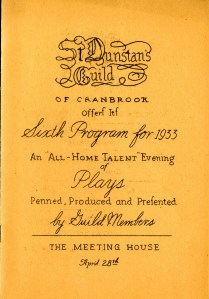
The Theatre Guild was indeed named after St. Dunstan, Archbishop of Canterbury in the ninth century and patron saint of the arts. As St. Dunstan lived in Kent, England, from where Cranbrook founder George Booth’s family hailed, the Guild’s name was fittingly suggested by his son and founding member, Henry Scripps Booth. Shortly after the Guild began in 1932, members were writing and producing their own one-act plays. In an April 1933 letter announcing an informal evening  of a “Home Talent programme,” for the 100 Guild members and their guests, Jessie Winter, Guild Secretary and Brookside School Headmistress, implores them to “Be kind, be understanding, be generous . . . give the actors and authors the warm reception which such offerings warrant.” One such author was Henry Scripps Booth. Billed as Thistle, his play, Sedative Bed, was one of four being performed that April 28th evening at Brookside School for just $1. It was the tail end of the Great Depression, after all!

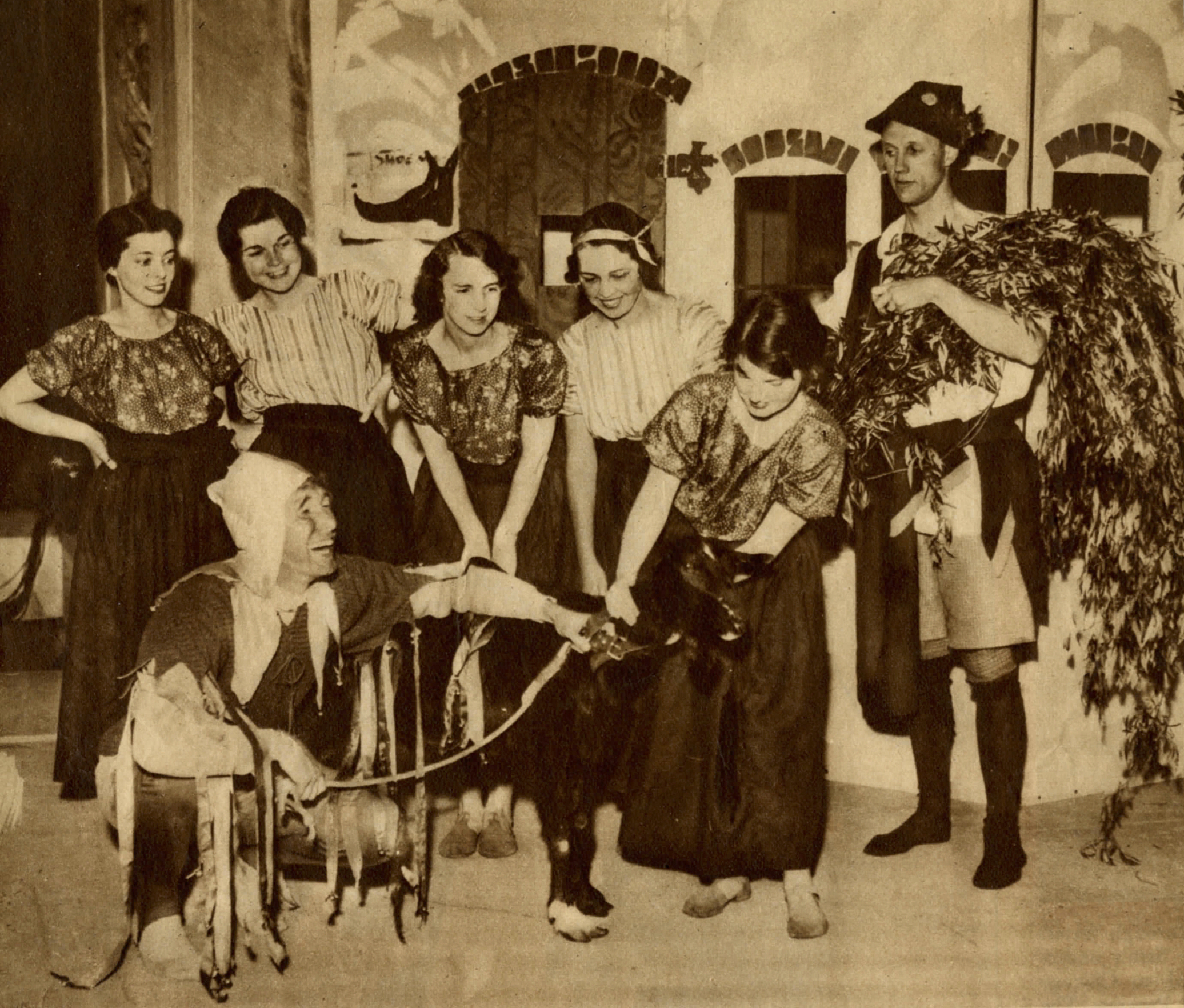
The first public performance of St. Dunstan’s Theatre Guild took place at the Greek Theatre with The King and the Commoner. Taking supporting roles were the likes of Annetta Wonnberger (Cranbrook Summer Theater School), Pipsan Saarinen Swanson (daughter of Cranbrook architect Eliel Saarinen), and Henry Scripps Booth, among others.

A scene from The King and the Commoner. Henry Booth on right. Detroit newspaper rotogravure clipping. Courtesy of Cranbrook Archives, Cranbrook Center for Collections and Research.

The cast and crew of the 1940 production of The Last of Mrs. Cheyney again reads like a who’s who of Cranbrook, including Harry Hoey (Cranbrook School Headmaster), Templin Licklider (Cranbrook School Faculty), Dorothy Sepeshy (wife of Cranbrook Academy of Art President, Zoltan Sepeshy), Rachel Raseman (wife of Richard Raseman, Cranbrook Academy of Art Executive Secretary and Vice President), the aforementioned Annetta Wonnberger, and various members of the Booth Family. Henry Scripps Booth, part of the Guild’s Scenic Design Committee, and his wife Carolyn, the production’s stage manager, created the sets.

Continue reading

Green Book, Don Shirley, and Henry Booth: Because There’s Always a Cranbrook Connection

It was the morning after New Year’s Day. No sooner had I reached my office and turned on my computer than I saw that I had just missed a call from long-time Cranbrook friend and Kingswood graduate, Jeanne Graham. Always eager to speak with Jeanne, I immediately returned her call. Jeanne, who had not even taken time to leave me a message, already was in the processing of dialing the Center’s archivists. She had a question and was eager for an answer.

Like Jeanne, one of the movies that I saw over the holidays (one of the best, I might add) was Green Book. Masterly cast with Mahershala Ali as the legendary African-American classical and jazz pianist Don Shirley and Viggo Mortensen as the Italian-American bouncer-cum-driver and bodyguard “Tony Lip” Vallelonga, the film tells the story of a road trip (a concert tour) through the Jim Crow South of the early 1960s and the unlikely friendship that develops along the way. While I was watching the movie, Cranbrook was the furthest thing from mind; while Jeanne was watching the movie, she could not get Cranbrook out of her mind. “Was it my imagination or did I attend a concert by Don Shirley in Kingswood Auditorium while I was a student at Cranbrook in the 1950s?” Jeanne asked.

Admittedly stumped, I did what any good director would do—I consulted my knowledgeable staff. Within minutes, tantalizing facts were speeding their way to me from Associate Archivist Laura MacNewman: articles in the Clarion and the Crane, Kingswood’s and Cranbrook’s student newspapers; a concert announcement in the Birmingham Eccentric; links to nineteen Kingswood negatives; and references to thirteen letters sent between Shirley and his agents and Henry Scripps Booth, the youngest son of Cranbrook’s founders. Finally, Laura calmly announced that she had found black and white photographs of Shirley swimming and riding a bike at Henry’s and his wife Carolyn’s home near Cranbrook, Thornlea. I, meanwhile, yelled out in excitement!

Who knew? Well actually, there are a few people that did know. Before I could even begin to sift through the materials in Cranbrook Archives, I received a call from Carolyn Scripps, Henry and Carolyn Booth’s granddaughter. Carolyn also had seen Green Book and wanted to make sure that I knew about the story of her progressive grandfather and Shirley.

Scene One. Shirley did, in fact, perform in Kingswood Auditorium on Wednesday, March 2, 1955 (and yes, it was while Jeanne Graham was a student). Shirley, who was twenty-seven years old at the time, was accompanied by bassist Richard Davis. They performed nine songs that evening, many of which the two musicians recorded on Shirley’s 1955 album Tonal Expressions, including one of my favorites, “No Two People Have Ever Been So in Love.” What does a rendition by Shirley of a popular song like “No Two People” sound like? In the words of Henry Booth: “While the concert was labeled ‘Jazz,’ the music was a subtle rendering of the contemporary, having a classical quality which should appeal to the devotees of classical music—that is if they will condescend to listen.” Five days after this classically inspired, popular jazz concert, Henry wrote his first letter to Shirley (at least the first one that survives in Cranbrook Archives). With regards from his wife Carolyn and their daughter Melinda (Carolyn Scripps’s aunt), Henry invited the pianist to consider a second performance at Cranbrook sponsored by the nascent Cranbrook Music Guild.

The Clarion, March 11, 1955. Collection of Cranbrook Archives.

Scene Two. While it took numerous letters from Henry to both Shirley and his agent—and some convincing of the Music Guild members who Henry described to Shirley as not very “’Jazz’ minded”—the pianist and bassist returned to Cranbrook in December. Thanks to clippings from the Birmingham Eccentric and the Crane, we know the concert took place on Saturday, December 3, 1955, and, like the first concert, it took place at Kingswood. And thanks to a page in the Thornlea Guest Book, now in the collection of Jeffrey Booth (Henry and Carolyn’s grandson), we also know that Henry and Carolyn hosted an Afterglow for the musicians that evening in their home on Cranbrook Road.
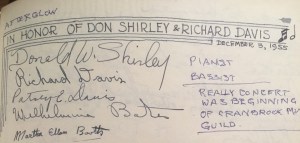
Thornlea Guest Book, Detail of Guest List for December 3, 1955. Collection of Jeffrey Booth.

Scene Three. Henry Booth was a documentarian. Included in the Henry Scripps Booth and Carolyn Farr Booth Papers, which are preserved—and accessible—in the Cranbrook Archives, are a series of photo albums that chronicle and illustrate Henry’s and Carolyn’s lives. The 1956 album includes seven black and white photographs of Shirley. While they were processed in July, another entry in the Thornlea Guest Book more precisely places both Shirley and Richard Davis at Cranbrook on June 20, 1956. Three of the photographs were taken by Henry at a night club, presumably Baker’s Keyboard Lounge in Detroit where the Don Shirley Duo performed no less than twelve times that June. One shows Shirley on stage, while the other two show Carolyn and Melinda Booth in the audience, including a photograph of Carolyn and Shirley sitting together at a table. The other four show Shirley relaxing at Thornlea—sitting in a wicker chair, swimming in the pool, riding a bike in the courtyard, and posing with the Booth’s youngest child, Melinda’s sister Martha (Carolyn Scripps’s mother). Henry, ever the Cranbrook publicist, dutifully followed up the visit by sending to Shirley “a selection of Cranbrook catalogs and booklets.”

Scene Four. There is where it gets interesting. While Green Book has Shirley and Tony Vallelonga departing from Shirley’s Carnegie Hall apartment and beginning their 1962 concert tour with a stop in Pittsburgh before immediately heading south, the actual route also brought them to Detroit. During the road trip, Vallelonga wrote letters to his wife Dolores. In an excerpt from one of the letters, published on Cinemabuzz.com, Vallelonga wrote:

Dr. Shirley decided to stop off in Detroit for a day to visit some people he knows, you remember I told you he knows people wherever he goes and he knows all big people (millionaires). We went over some guy’s house, I’m sorry I meant a mansion, it was really a castle. His name was Henry Booth, he lives in a place called Mich Hills, it’s like Riverdale Yonkers, but the place makes Riverdale look like the Bowery. Dolores, I never saw such beautiful and fabulous homes in all my life.

I’m guessing this visit to “Mich Hills” took place in April 1962. In a letter dated April 25, Henry wrote to Shirley, referencing a visit that took place “a week or so ago.” Eager for another concert at Cranbrook, Henry proposes that the Music Guild bring the Don Shirley Trio to Cranbrook that summer for a week of concerts in the Greek Theatre. But he also references “Carol’s original idea” (Henry referred to Carolyn as Carol): she wanted Shirley to be their guest at Thornlea on August 11, which would have been Henry’s sixty-fifth birthday. In his letter Henry was emphatic: “This is a definite date — put it down please!” In the only letter in the Archives from Shirley to Booth, Shirley references their telephone conversation and offers a very business-like reply to the concert requests: “Although our usual contract fee for an evening concert by the Trio is $2500.00, we would be delighted, for various reasons, to play at Cranbrook during the evening of 12 August 1962 for a special all-inclusive fee of $1250.00.” Alas, even the comprehensive records of Cranbrook Archives contain no evidence that the summer concerts or birthday party guest appearance transpired.

Letter from Don Shirley to Henry Booth, Summer 1962. Collection of Cranbrook Archives, Henry Scripps Booth and Carolyn Farr Booth Papers (Box 40: Folder 9).

Final Scene. In April 1986, as Henry Booth approached his eighty-ninth birthday (he would live to be ninety), Henry reached out to Shirley one more time. Reminiscing about the first concerts in Kingswood Auditorium, one of which Jeanne Graham attended, Henry wrote hopefully about one more concert:

I hope a concert by you can be arranged for next fall or winter, although a summer concert in Cranbrook’s Greek Theatre would be a fine location except for having a good, well-tuned piano at your disposal rather than rain or a shower! Will you put me in touch with your agent? Please do! Meanwhile a big hug for Don Shirley.

The trail in the Archives ends with Shirley sending Henry a flyer of his upcoming concert in Carnegie Hall (where Shirley still lived in an apartment). At the very bottom the pianist simply drew an arrow pointing to the contact for his agent noting, “It’s all here.”

It is, indeed, all preserved here in the Cranbrook Archives. Because there will always be a Cranbrook connection that needs to be researched and a Cranbrook story that needs to be shared.

Gregory WittkoppDirector
Cranbrook Center for Collections and Research


Christmas in San Remo

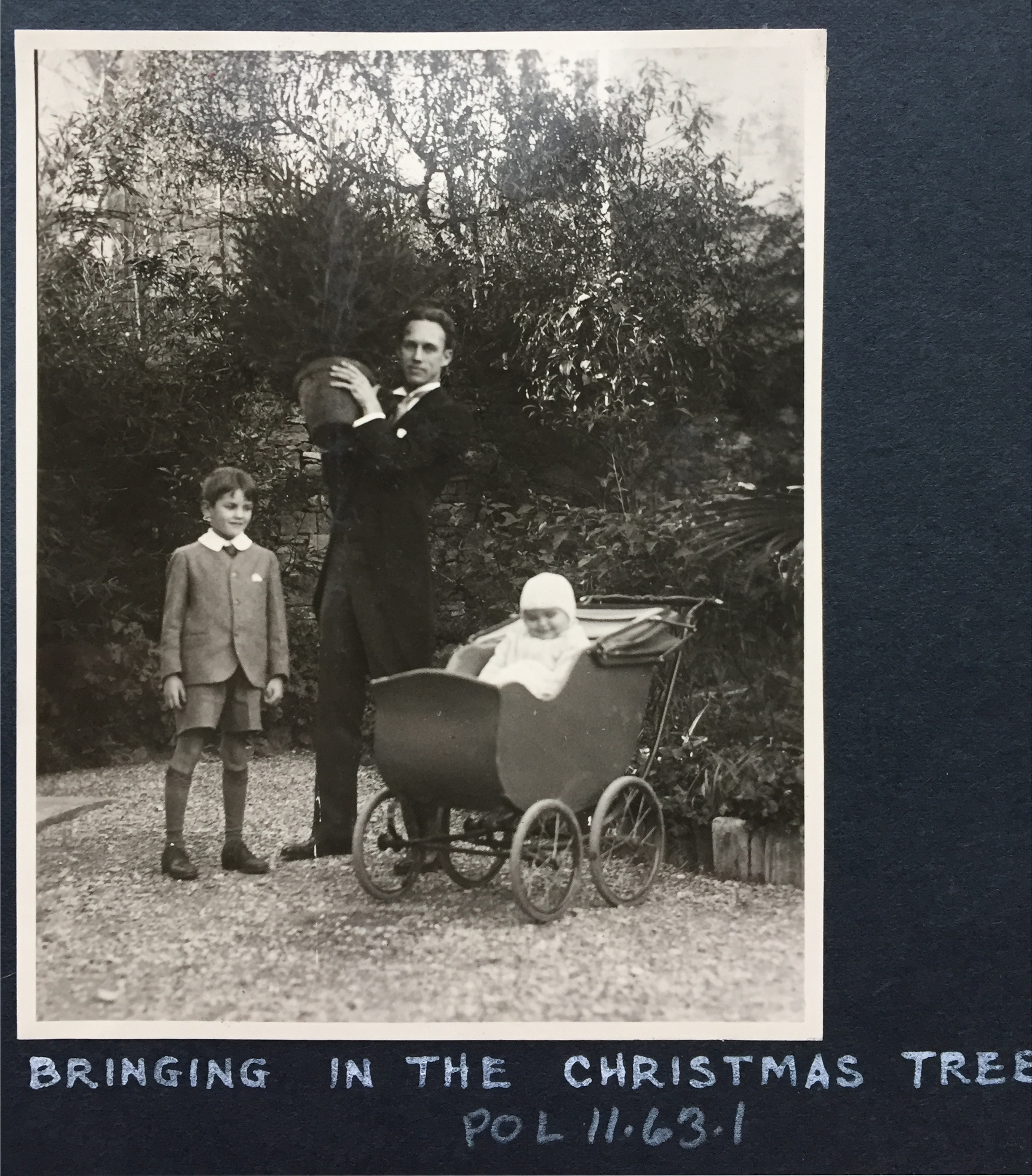
Henry and Carolyn Booth spent the Christmas of 1933 at the Villa Eveline in San Remo, Italy with their children Stephen (8), David (6) and Cynthia (10 months). In Henry’s letters home he writes about the traditions he and Carolyn tried to maintain while spending Christmas away from home. He also writes about the “rustle of palm trees” in their garden and the crowds of people gathering at the churches on St. Stephen’s Day – a national holiday in Italy.

Henry Scripps Booth carrying the Christmas tree with Stephen and Cynthia (in stroller), 1933.

In one of Henry’s letters to his parents, he writes, “greetings from our Christmas tree and it’s real candles, to yours of the electric bulbs.” He later describes the event of Christmas night as lighting the candles and sparklers on the tree, “I never expected to see that kind of illumination again, and probably the children never will in future.”

Holiday wishes from Henry Scripps Booth to his parents, Ellen and George Gough Booth, 1933.

The photos sent home are both formal and candid – very much like posed photos captured on photo cards today, as well as informal images of families and friends enjoying time together at the holidays. My favorite shows a very happy Cynthia following Christmas dinner!

Cynthia and Carolyn Booth, Dec 1933.

Gina Tecos, Archivist


The Littlest Rebel

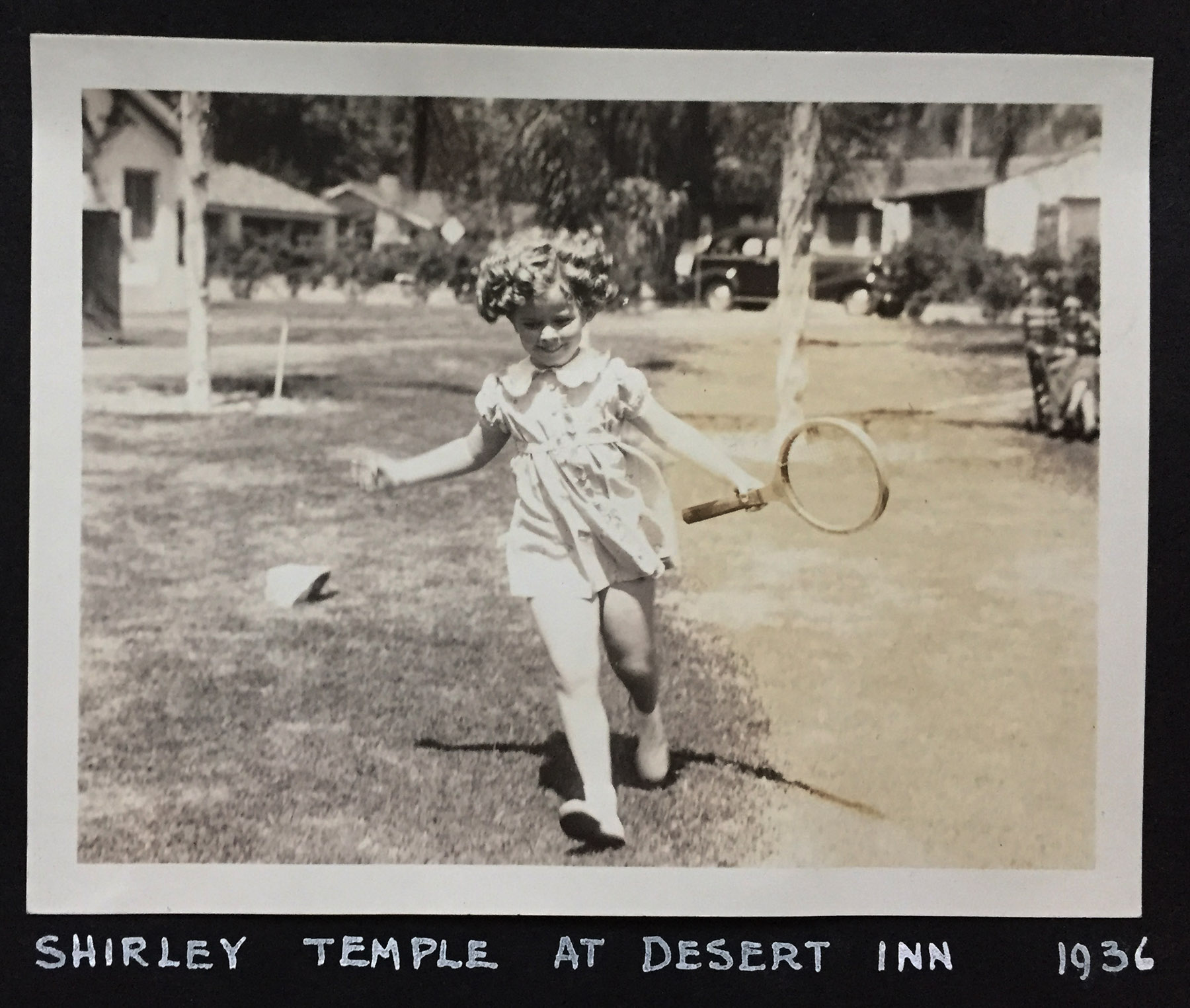
In March 1936, Henry Scripps Booth traveled to California to meet up with his parents who had been wintering out west. Henry spent three weeks at The Desert Inn in Palm Springs where he went for walks, painted, and wrote many letters home to his wife, Carolyn. The following letter from him describes the famous people he saw while there.

“Desert Inn pepped up yesterday. There were three hundred fifty extra for lunch out-of-doors . . . Monte Montaigne (I believe that’s his name) entertained the people with trick roping acts and riding his trick horse, but I knew nothing about that until it was all over. I did see the horse in his private trailer parked in the grounds, however.

“But the guest of guests is none other than little Miss Shirley Temple who has come here with her mother and a mother’s friend to spend a couple of weeks.”

IMG_6919

Letterhead, March 1936. Henry Scripps Booth and Carolyn Farr Booth Papers, Courtesy Cranbrook Archives.

Temple and her family were frequent visitors to The Desert Inn, often around the Easter holiday. In 1936, the Temples stayed there after Shirley had completed filming “Captain January” and “Poor Little Rich Girl.”

“The new King of bally old England could hardly cause the other guests to take more notice. A waitress called my attention to her last night at dinner, sitting at right angles to me only two tables away. Everybody was craning his neck to have a look at her, and those who left the room first all sat by the door so they could see her make her exit. When she came out and walked over by the office, most everyone suddenly had business over there too. Monte Montaigne and his wife and baby were there, and as the Temples talked to them, the crowd became fictitiously interested in the baby also. It is the same story where ever Shirley is.

2

Henry Scripps Booth, photographer. Courtesy Cranbrook Archives

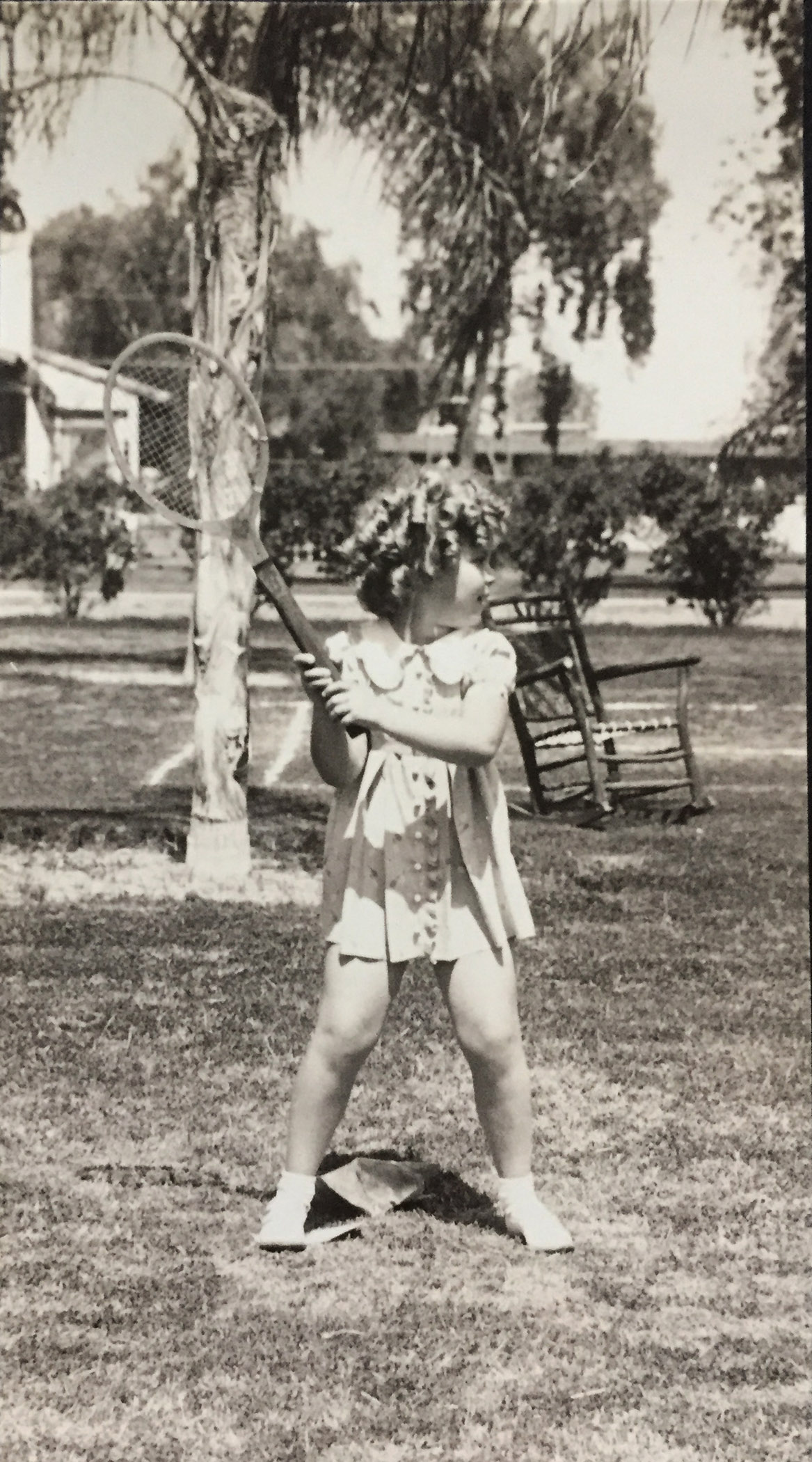
“This morning she was out trying to bat tennis balls one of her bodyguards was batting to her. A few other children were in on the play. The gallery consisted of at least six people nearby and a lot of others (like Myself) in the distance. Later when she was throwing a ball to a dog, people were talking movies and generally going ga-ga over her. When I came back from the pool where I had been painting this afternoon, I did see her without spectators, but of course with the guard who in reality is her playmate, and another guard in uniform. The two of them had a lot of dried peas and were shooting them with a sling-shot just like the Littlest Rebel.

3

Henry Scripps Booth, photographer. Courtesy Cranbrook Archives

“She is not pretty, but certainly is cute. Her hair is curls all over of sort of a deep taffey [sic] color. She is very blond with pink cheeks. She screws up her face when she talks, has a twinkle in her dark eyes, and sort of minces around in her usual movie manner. She is very well behaved, sitting at the table and eating her dinner as good little girls should, and generally taking the attention she gets with good grace. Both nights she has taken a doll to dinner; last night a girl doll, tonight an Indian chief with a feathered headdress. She has a pink coat more or less like Cynthia’s [Henry’s daughter], but short as the French would have it so her bare legs are seen pretty much all the way up. She played around today in sort of drab slacks with a jacket to match. Their cottage is by the pool so I will see a good deal of her.”

1

The pool at The Desert Inn, 1936. Henry Scripps Booth, photographer. Courtesy Cranbrook Archives

NOTE: In December 1937, Nellie Coffman, owner of The Desert Inn, dedicated the bungalow to Shirley Temple. Held in front of family, hotel visitors, and the press, the ceremony featured nine year old Shirley who christened the bungalow not with a bottle of champagne, but with a bottle of milk.

Leslie S. Edwards, Head Archivist

Create a website or blog at WordPress.com