Photo Friday: Posters Tell a Story

The Cranbrook Archives exhibition, Designs of the Times: 100 Years of Posters at Cranbrook, opens this weekend. The exhibition documents events and performances that have enhanced and enriched the Cranbrook community for more than a century. The image below is just one of many that will be on display through March 20th, 2016.

yeoman

Performing Arts poster, 1955

This poster, signed “M.W.” was  designed by Michael Justin Wentworth (Cranbrook School ’56). In addition to designing posters, Wentworth was the art editor for both the Brook and the Crane, and designed the sets for the Ergasterion productions and the scenery for the bi-annual Operettas. He received his MA and MFA from University of Michigan, and his PhD from Harvard where he wrote his dissertation on the artist James Tissot, a lifelong interest.

The posters in the exhibition represent all areas of campus – we hope you come check it out!

Gina Tecos, Archivist

A Man of Many Words

At Cranbrook, the legacy of Samuel Simspon Marquis is clearly visible. A trusted advisor to George Booth, Dr. Marquis oversaw the completion of Christ Church Cranbrook and became the first Rector when the parish was officially established in 1927. He was also instrumental in the founding of the Cranbrook School for Boys and was a Trustee of the school from 1926-1939. On 23 May 1940, Marquis Hall was dedicated in his honor.

Prior to his arrival at Cranbrook, Dr. Marquis was invited by Henry Ford to head the Sociological Department at Ford Motor Company. Marquis remained in this position for five years and accompanied Ford on the ill-fated “Peace Ship” to Europe in 1915. In 1923 Marquis published Henry Ford: An Interpretation, one of the first works written by an employee close to Ford. Marquis’ work with Ford is well-documented in our collection here at Cranbrook and at the Benson Ford Research Center.

When the Fairies Go To Church

Unpublished poem by Samuel S. Marquis, Samuel Simpson Marquis Papers, Cranbrook Archives.

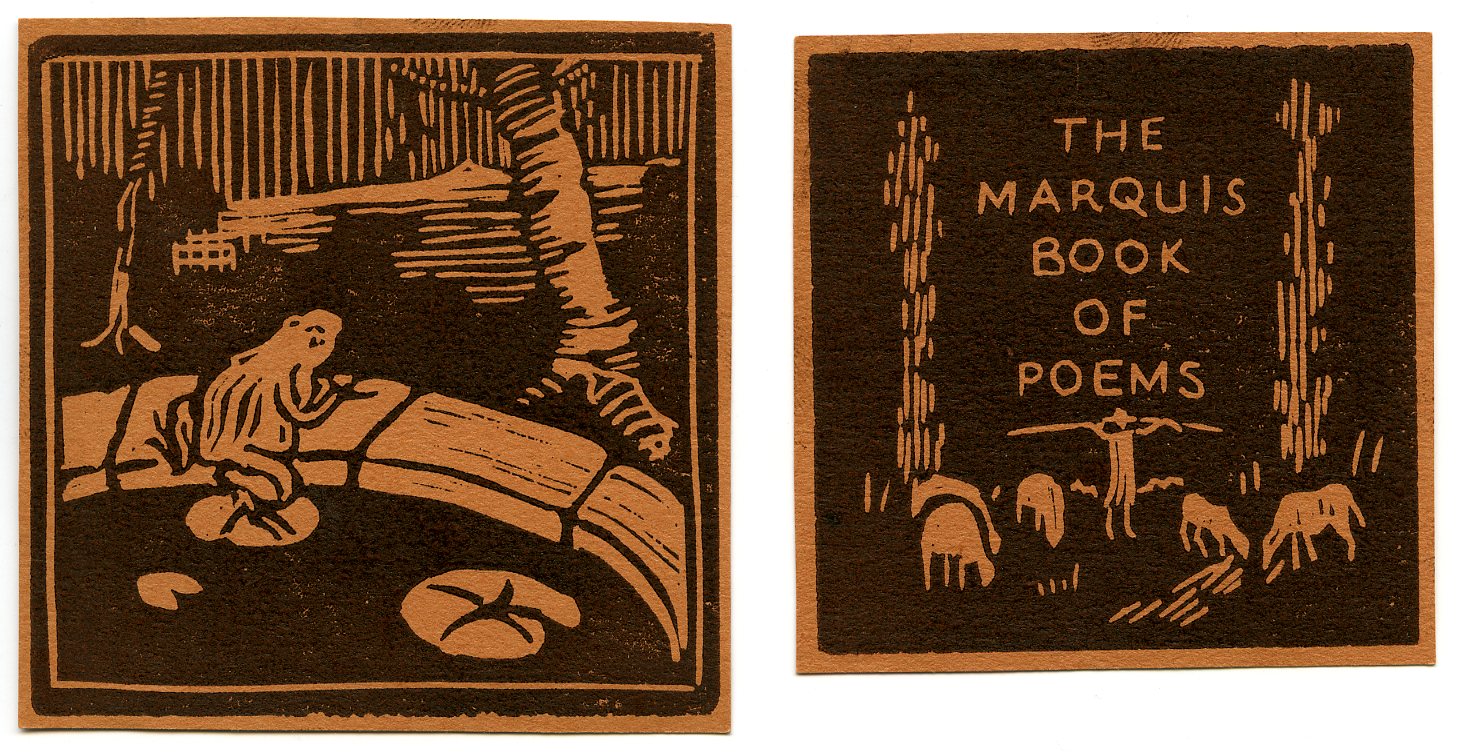
While doing research here at Cranbrook, I discovered that Marquis was also a prolific writer. He wrote not only about religious topics, but about history, the political climate of the day, and even poetry. Below are samples of the book plates for the unpublished Marquis Book of Poems. Enjoy!

Marquis Book of Poetry

Cover and interior plates from The Marquis Book of Poems, Samuel Simpson Marquis Papers, Cranbrook Archives.

Gina Tecos, Archivist

Happy Belated Birthday to Our Founder!

September 24th marked the 150th birthday of Cranbrook’s founder, George Gough Booth. Born in Toronto, Mr. Booth had an early interest in art and architecture. In 1881 his family moved to Detroit and he put his artistic talents to work by purchasing half of an interest in an ornamental ironworks firm. The business was successful and used many of Booth’s product designs.

George Gough Booth, ca 1876.  W. E. Lindop, photographer.  Cranbrook Archives

George Gough Booth, ca 1876. W. E. Lindop, photographer. Cranbrook Archives

In 1887 Booth married Ellen Warren Scripps, daughter of Detroit News founder James Scripps. The following year he sold his share in the ironworks business and joined the News staff as its business manager. The News blossomed under Booth’s direction, becoming one of the leading metropolitan dailies in the nation. In 1906, Booth became president of the newspaper, succeeding his father-in-law.

In 1904 George and Ellen Booth purchased a run-down 174 acre farm in Bloomfield Hills and named it Cranbrook after Booth’s ancestral town in England. Booth called upon his long-time friend, and noted Detroit architect, Albert Kahn, to prepare working drawings for the building of Cranbrook House. Kahn responded with an English Arts and Crafts inspired design the Booths moved into their new home in 1908.

In 1922, believing their country estate could serve a larger public purpose, the Booths shifted their focus toward building the six institutions at Cranbrook: Brookside School, Christ Church Cranbrook, Cranbrook School (for boys), Cranbrook Academy of Art, Cranbrook Institute of Science, and Kingswood School (for girls). George Booth was a visionary, and with his wife Ellen, set new standards for generosity, leaving us a legacy we are proud to be a part of. Happy belated birthday George!

“We were unwilling to go through life with our aims centered mainly in the pursuit of wealth and with a devotion wholly to the ordinary opportunities for social satisfaction.  We were not willing to leave all of the more enduring joys for our children or the joy of work in so good a cause entirely to our friends after we had passed on; rather did we wish, in our day, to do what we could and give tangible expression now to our other accomplishments by adventures into a still more enduring phase of life.  We wished to see our dreams come true while we were, to the best of our ability, helping to carry on the work of creation.”  (George Gough Booth, Address at Founders Day, October 28, 1927)

Gina Tecos, Archivist

Photo Friday: Arthur Nevill Kirk on Facebook

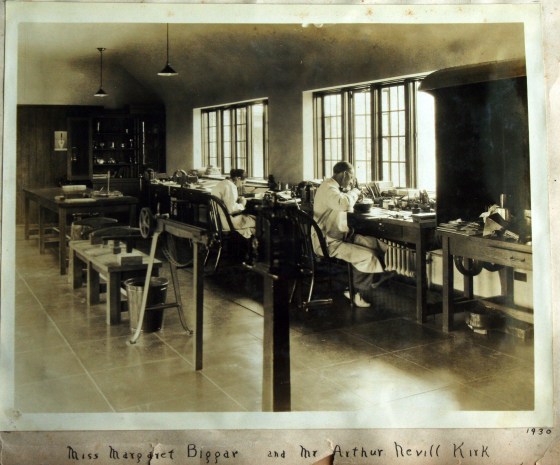
Famed metalsmith Arthur Nevill Kirk and apprentice Margaret Elleanor Biggar work in the metalsmithing studio at the Cranbrook Academy of Art, 1930. Cranbrook Archives.

Famed silversmith Arthur Nevill Kirk and apprentice Margaret Elleanor Biggar work in the metalsmithing studio at the Cranbrook Arts and Crafts Studios, 1930. Cranbrook Archives.

In this scrapbook page from 1930, “Miss Margaret Biggar” and “Mr. Arthur Nevill Kirk” are found working in the metalsmithing studios at the arts and crafts studios, the predecessor to the Cranbrook Academy of Art. An English-born silversmith, Arthur Nevill Kirk came to Cranbrook in 1927 at the urging of George Booth, who contracted him to produce silver designs for Christ Church Cranbrook. Kirk eventually taught silversmithing at the Cranbrook Arts and Crafts Studios before going on to found the Metals department at Wayne State, where he worked until 1957.

We at the Kitchen Sink are excited to use this post as an opportunity to promote not just the amazing history of Arthur Nevill Kirk but also highlight a new edition to the Cranbrook social media landscape – Cranbrook Archives’ Facebook page! As the beating heart of the Center for Collections and Research and the repository for all things historical at Cranbrook, the Archives uses Facebook to promote its extensive holdings, provide a portal through which researchers can access information about the collection, and give casual readers a daily glimpse into the fascinating history of the community through posts like yesterday’s, which featured this very photo. Check out their Facebookpage and learn more about this incredible resource!


Five Things in Four Years: A Cranbrook Goodbye*

I’m not a hugely sentimental person, but I am a nostalgic one (I swear, there’s a difference). As I leave Cranbrook after four years here to embark on the next phase of my career, I can’t help but think about all the different places on campus I will miss. Here are my top five:

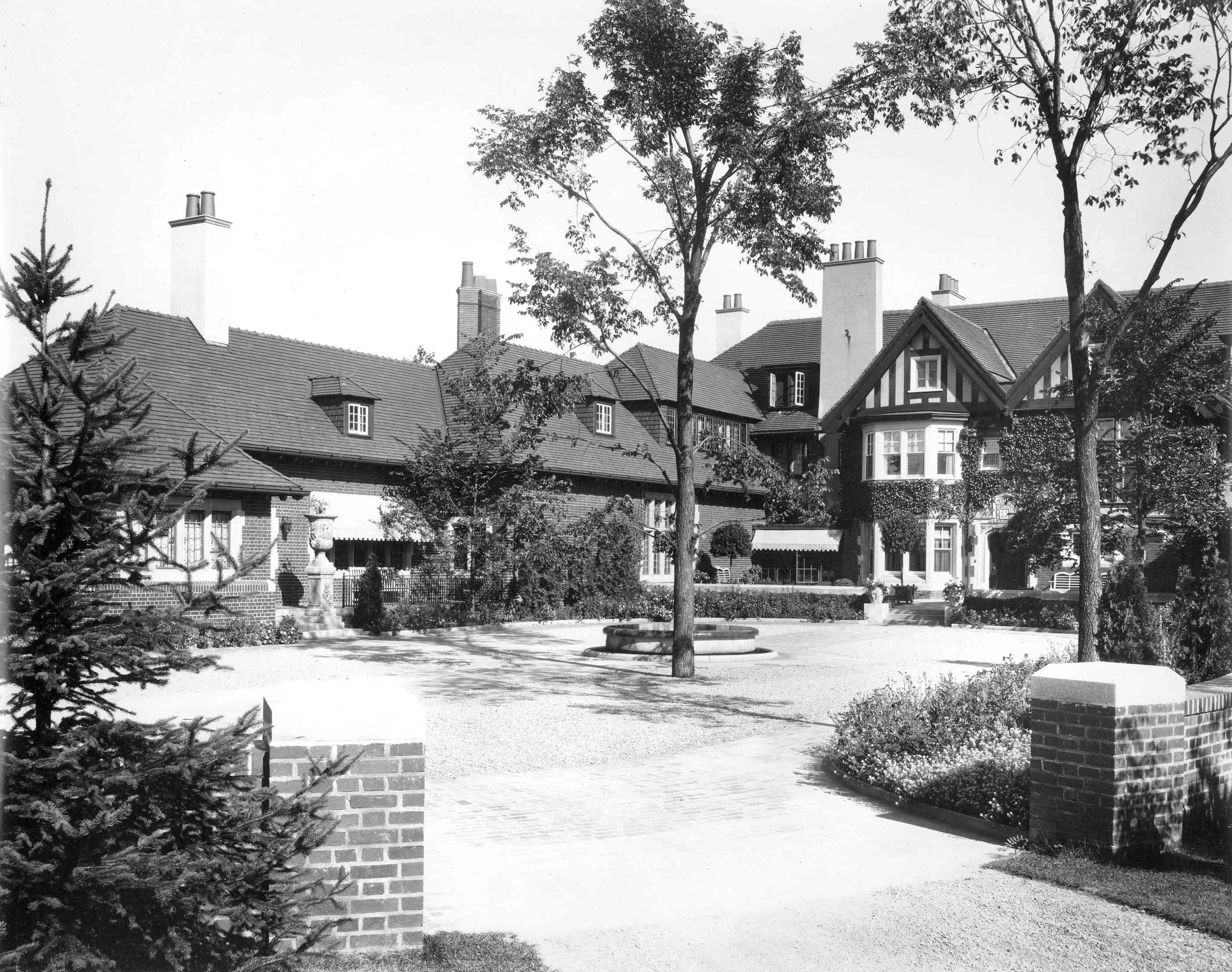
Cranbrook House, 1925.  Cranbrook Archives.

Cranbrook House, 1925. Cranbrook Archives.

Continue reading

Photo Friday: Cranbrook’s Contractor

Wermuth House, Fort Wayne, Indiana.  Designed by Eliel and Eero Saarinen, 1941. Cranbrook Archives.

Wermuth House, Fort Wayne, Indiana. Designed by Eliel and Eero Saarinen, 1941. Cranbrook Archives.

This distinctly modern house was designed by the architecture firm Saarinen, Swanson & Saarinen for a man whose introduction to Cranbrook happened in a somewhat old-fashioned way—the construction of Christ Church Cranbrook, George Booth’s ecclesiastical ode to the British Arts and Crafts Movement.

In 1923, Albert Charles (A.C.) Wermuth was contracted by the architect Bertram Goodhue to oversee construction of the Trinity English Lutheran Church in Fort Wayne, Indiana.  Goodhue was so impressed with his construction work that he contracted with Wermuth again for the upcoming Christ Church Cranbrook commission in 1924.  Goodhue died before construction on the church could begin in 1925, but the firm Goodhue & Associates retained Wermuth as general contractor for the project.

When Christ Church Cranbrook was completed in 1927, the Booths immediately snatched up A.C. Wermuth for more Cranbrook projects—the building of the Cranbrook School campus and an addition to Brookside.  Thus began a decades-long professional relationship between Wermuth and Cranbrook, with Wermuth serving as general contractor for Kingswood, the Cranbrook Academy of Art, and the Cranbrook Institute of Science.  Wermuth also did private work for the Booth children as they built their own homes in the area.  Eliel and Eero Saarinen used Wermuth for their non-Cranbrook projects as well; he served as contractor on the First Christian Church in Columbus, Indiana, as well as on other Saarinen buildings.

With professional connections like these, it seems only fitting that Wermuth turned to the Saarinens when it was time for him to build his own house in Fort Wayne. While the Wermuth House, which was completed in 1941, was built under the names of both Eliel and Eero, the design of the house speaks a bit more to the son than the father.  A Saarinen, Swanson, & Saarinen project, however, Wermuth ended up with a home for his family that expressed many of the same modernist ideals that he himself helped bring to life as the general contractor for Cranbrook.

Shoshana Resnikoff, Collections Fellow, and Robbie Terman, Archivist

Create a website or blog at WordPress.com