Photo Friday: Cranbrook’s Super Bowl

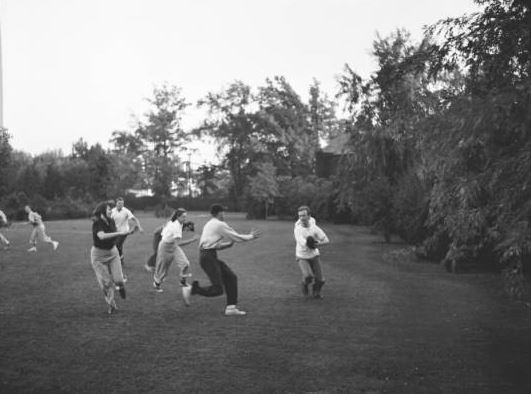
Ralph Rapson (left, holdign the football), plays football with fellow Cranbrook Academy of Art students. September, 1939. Richard P. Raseman/Cranbrook Archives

Ralph Rapson (right, holding the football), plays football with fellow Cranbrook Academy of Art students. September, 1939. Richard P. Raseman/Cranbrook Archives.

Okay, so “super bowl” might be overstating it. Still, this photo of Cranbrook Academy of Art students enjoying an afternoon game on campus should get you into an appropriately Cranbrook-y mood for the upcoming NFL Super Bowl. So far we’ve identified Ralph Rapson, noted mid-century architect and long-time head of the University of Minnesota School of Architecture, in the white shirt holding the football. If anyone identifies the other players, though, please let us know in the comments!

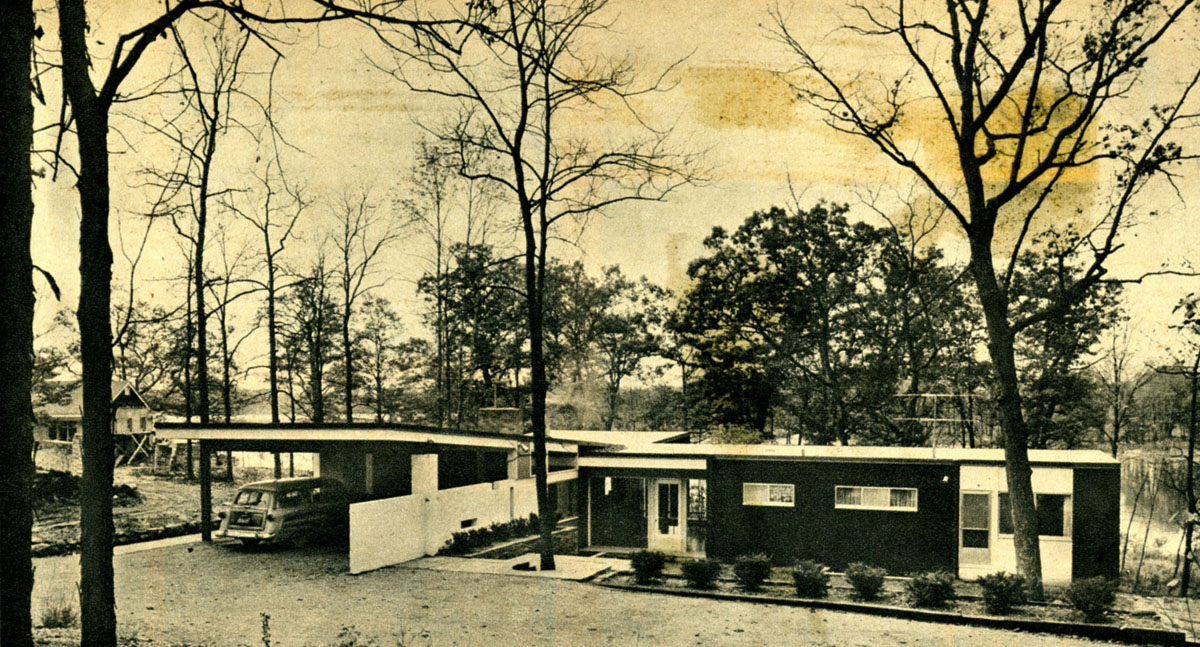
Photo Friday: Movie Magic

Cranbrook Academy of Art students participate in the filming of Jazz, CAA student Joe Munro's first experimental film. 1943, Cranbrook archives.

Cranbrook Academy of Art students participate in the filming of Jazz, Joe Munro’s first experimental film, 1943. Cranbrook archives.

Born and raised in Michigan, Joe Munro worked at Cranbrook as a photographer and teacher. Here he works on his first film, Jazz, gesticulating wildly at his actors while his crew, made up entirely of CAA students, looks on. Munro left Cranbrook shortly after this film was completed, joining the US military and serving in WWII as a wartime photographer.  With the end of the war he began a long career as a freelance photojournalist, working for LIFE, National Geographic, and Time Magazine. His archives are held by the Ohio Historical Society are definitely worth a look.

Walls Can Talk: Robert Snyder, the Buckner Residence, and the Mid-Century Home

The other day I had the pleasure of taking a fantastic (albeit very cold!) field trip to view a mid-century modern home designed by Birmingham architect Robert Snyder.  Snyder studied architecture at Cranbrook’s Academy of Art (1948-1950) and eventually took over as the Head of Architecture (1952-1965). The house, located on Walnut Lake in West Bloomfield and commissioned by Noel and Isabel Buckner, is slated for demolition any day.  I learned about the house from Liz Buckner, who called to donate the original blueprints of the house to the Archives.  Liz offered to give me a tour of the house and I enthusiastically accepted!

View of Buckner House from the drive above, circa 1955. Courtesy Liz Buckner. Detroit Free Press/Ray Pillsbury.

View of Buckner House from the drive above, circa 1955. Cranbrook Archives, Detroit Free Press/Ray Pillsbury.

Continue reading

“Neither Snow Nor Rain”: Cranbrook and the New Deal Post Office Murals

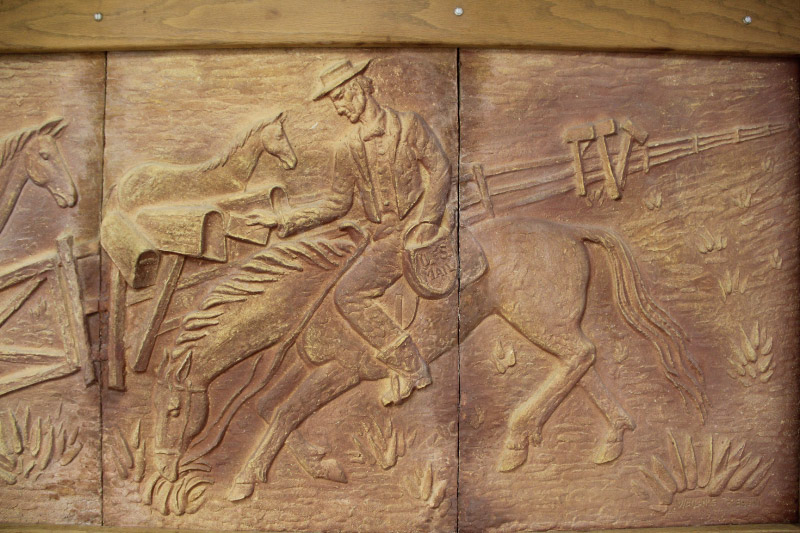
In 1940, the Columbus, Kansas post office received an imposing addition: a giant slab of terra-cotta.  Mounted on the wall, the bas-relief showed mail delivery in a rural community, the sort of neighborhood where the postman drops off the mail in a field of horses.  Crafted by Waylande Gregory as part of a New Deal art project funded first through the Public Works of Art Project (PWAP) and then the U.S. Treasury Section of Fine Arts, the post office mural (titled R.F.D.) represents not only an example of Gregory’s large scale sculptural installations but also a period of time when the American government invested heavily in the idea that public art installed in everyday environments could bolster the American economy and elevate the national discourse.

Waylande Gregory, R.F.D. (detail), Columbus, Kansas.  Charles Swaney/Living New Deal Project, University of California, Berkeley

Waylande Gregory, R.F.D. (detail), Columbus, Kansas. Charles Swaney/Living New Deal Project, University of California, Berkeley

Continue reading

“In the Twenty-Ninth Century Mode”: Crandemonium Returns

The theme of the first Crandemonium Ball was the Court of Crandemonium. It prompted this newspaper article declaring that the party was in the "twenty ninth century mode." 1934, Cranbrook Archives.

The theme of the first Crandemonium Ball was the Court of Crandemonium. It prompted this newspaper article declaring that the party was in the “twenty ninth century mode.” 1934, Cranbrook Archives.

Since we already upset tradition by posting a “Photo Thursday,” we thought we’d skip today’s Photo Friday and instead focus on a subject near and dear to our hearts—Crandemonium!  A costume ball thrown at various intervals during the Saarinens’ tenure at the Cranbrook Academy of Art, Crandemonium was a no-holds-barred party.  From the painted backdrops to the fantastical mythology, Crandemonium had it all.  Academy of Art students were essential to the party, competing to design the interiors and often appearing in the most outlandish costumes of all. This year the Museum Committee has resurrected the beloved Crandemonium party for their yearly fundraiser, happening this Saturday at the Cranbrook Art Museum.  Just in time, enjoy the Crandemonium ephemera from the past!

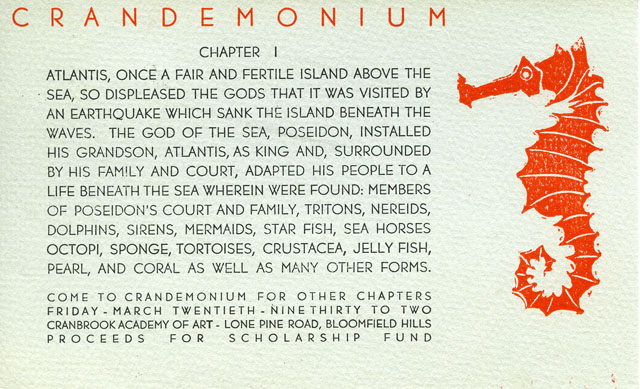
An intriguing invitation to 1936's Atlantis-themed Crandemonium, this card featured the first part of the story of Atlantis. The invitee would presumably learn the remaining chapters upon attending the party. 1936, Cranbrook Archives.

An intriguing invitation to 1936’s Atlantis-themed Crandemonium, this card featured the first part of the story of Atlantis. The invitee would presumably learn the remaining chapters upon attending the party. 1936, Cranbrook Archives.

The 1936 Atlantis Crandemonium theme led to some amazing promotional material. 1936, Cranbrook Archives.

The 1936 Atlantis Crandemonium theme led to some amazing promotional material. 1936, Cranbrook Archives.


Photo Friday: Design of Radio Cabinets

In the early days at Cranbrook Academy of Art, students were encouraged to submit entries to a myriad of design and architecture competitions.  Sponsored by museums, magazines, colleges and industry, competitions were a way for fledgling designers to make a name for themselves.  Winning entries could catapult a designer or architect into the national arena.  In 1939, the “Design of Radio Cabinets” was sponsored by the Radio and Television Department of the General Electric Company through Interior Design and Decoration.  Designs were submitted in two categories: a table model and a console model.  The only design requirement was that a “dial or tuning control treatment” be incorporated in the design.

Entry for "Design of Radio Cabinets" competition.

Entry for “Design of Radio Cabinets” competition, 1939. Cranbrook Archives.

This entry was submitted by the team of Edward Elliott and Ted Luderowski, both architecture students studying under Eliel Saarinen.

Photo Friday: Come as a Song Party

It has been a crazy few weeks at the Cranbrook Center for Collections and Research  – we mounted our two exhibitions at the Cranbrook Art Museum and helped CAM celebrate the opening of the summer museum season with the blockbuster Michigan Modern show.   What that means now is that we’ve all got celebratory parties and vacation on the brain, and what better way to celebrate a museum success than with evidence of the parties of the past?

"Come as a Song" party, 1942.  Cranbrook Archives.

“Come as a Song” party, 1942. Cranbrook Archives.

This photo, taken in March of 1942, captures Harry Bertoia (far right) and Brigitta Valentiner (middle) with an unidentified student (left, and conveniently marked by a Joker card costume).   These three costumed young people are attending the “Come as a Song” party, one of the many themed get-togethers hosted at the Academy in the mid-century period.

Harry Bertoia, of course, went on to become a sculptor and furniture designer.  Two years after this photo was taken, Harry and Brigitta Valentiner, dressed here as a young maid, married.  A Detroit native and a published author, Valentiner was the daughter of Wilhelm Valentiner, the Detroit Institute of Art’s legendary director from 1924 to 1945.

A Cranbrook Proposal

Cranbrook Academy of Art stationary has witnessed some very interesting correspondences,  but we’ve yet to see anything more adorable than this: Charles Eames’ 1941 marriage proposal to Ray Kaiser, delivered on CAA letterhead.  Charles and Ray met at Cranbrook, of course, and moved from Michigan to Los Angeles after their marriage.  We can’t take credit for the object or the article about it – that goes to the Library of Congress and Maria Popova at brainpickings.org respectively.  Still, there is something lovely about seeing a bit of Cranbrook play a role in this legendary design – and romantic – partnership.

Charles Eames' marriage proposal to Ray Kaiser, via Cranbrook Academy of Art stationary.  1941.  Library of Congress, via Brainpickings

Charles Eames’ marriage proposal to Ray Kaiser, by way of Cranbrook Academy of Art stationary. 1941. Library of Congress, via Brain Pickings

Continue reading

Kitchen Sink Caption Contest: What is Bud West Thinking?

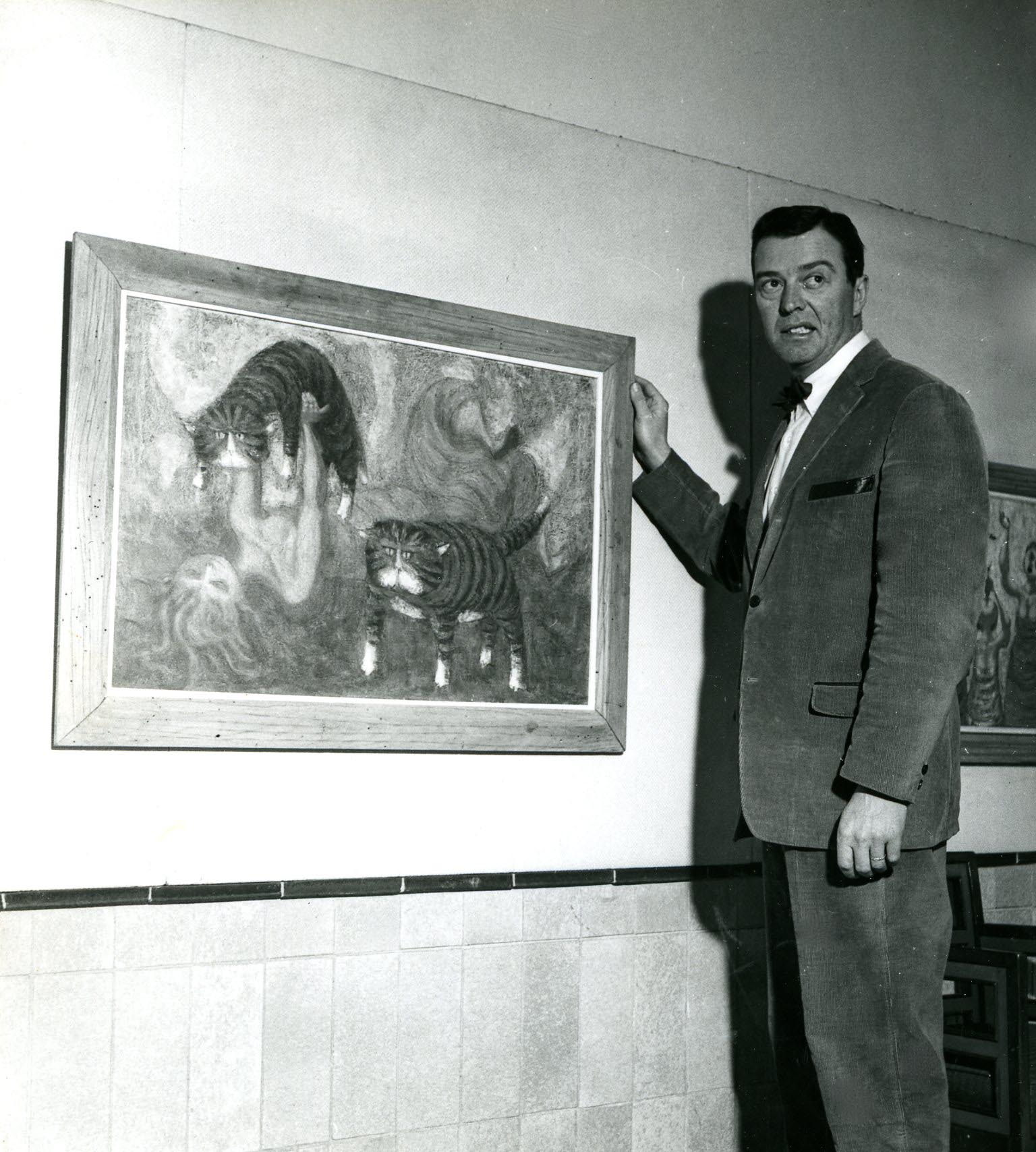
Welcome to the first ever Kitchen Sink caption contest!  This historic photograph features Bud West, a Cranbrook Academy of Art graduate and painting instructor at Kingswood, viewing an exhibition of David Berger’s work mounted at Kingswood in 1957.   As historians, we would never dare to presume what he’s thinking – which just means that we need you to do it for us!  Leave us your entries in the comments, and the winning caption (chosen by an extraordinarily scientific system of “whatever makes us laugh the most”) might just make it into a future Photo Friday post!*

And if you’re interested in painting at Cranbrook in the mid-century period, be sure to visit Cranbrook Art Museum to see the upcoming exhibition What to Paint and Why: Modern Painters at Cranbrook, 1936-1974Curated by Chad Alligood, the art museum’s 2012-2013 Jeanne and Ralph Graham Collections Fellow, the exhibition opens June 14.

Bud West

* Be sure to include a name (real or fake) that we can use to identify your entry!

Photo Friday: Maija and Nelly

Maija Grotell and Nelly Beveridge at work on the base of a fountain, 1940.

Maija Grotell and Nelly Beveridge at work on the base of a fountain, 1940. Richard P. Raseman, Historical Photograph Collection, Cranbrook Archives.

Finnish-born ceramicist Maija Grotell served as the head of the Ceramics Department at the Cranbrook Academy of Art from 1938 to 1966.  Here, she works on the base of a fountain with student Nelly Beveridge.  Beveridge played many roles on campus, serving as a companion and nurse to George and Ellen Booth in their later years even as she completed her studies at the Academy.

Create a website or blog at WordPress.com