Evening Post: Summer Exhibitions Are Almost Here!

Posting on a Thursday night is a rare activity for this blog, but it’s worth staying late in the office to help install the upcoming shows. Cranbrook Art Museum will kick off its summer exhibition season this Saturday with six all new exhibitions. Two of those are Center for Collections and Research projects, and we are so excited to show them off!

Two selections of ephemera from the exhibition highlight the variety of documents that fall under this important archival category. Cranbrook Archives.

We’ve already highlighted one exhibition on the blog, but it is worth mentioning again. Officially opened on April 22, Cranbrook Archives’ Ephemera: Fragments from Cranbrook’s Social Life went into hibernation with the rest of the museum during the changeover from the Academy of Art Graduate Degree Show in May. Re-opening along with the rest of the galleries, it presents an exciting opportunity to explore Cranbrook’s diverse history through the campus’ ephemera – the paper material (fliers, invitations, notices, tickets, etc.) that populate our daily life yet are so often discarded rather than saved. Called “the transient evidence of everyday life,” ephemera collections are ripe for exploration, which is what the Archives will be doing as it launches this first show in a series of exhibitions that mine the Archives’ rich collection of ephemera.

Films and objects come together in Cranbrook Goes to the Movies. Left: Tea urn and tray, Eliel Saarinen, 1934 (or earlier). Right: Still from Cranbrook Academy of Art Experimental Films, circa 1941. Cranbrook Art Museum/Cranbrook Archives.

The second Center exhibition opening at Cranbrook Art Museum on Saturday, June 21 features an under-explored medium in Cranbrook’s history: film. Cranbrook Goes to the Movies: Films and Their Objects, 1925-1975 takes Cranbrook Archives’ incredible collection of historic film as its jumping off point, using footage from multiple time periods and many distinct parts of Cranbrook’s community to provide a fresh look into the past. Incorporating objects that appear in films and remain within Cranbrook’s various collections, the show reunites the ephemeral with the physical to activate the historic film and provide context to objects that are still considered some of Cranbrook’s greatest treasures.

On loan to the exhibition from Cranbrook Institute of Science, this stuffed duck finds many of his friends in a 1960s film that details the attractions of the early Institute.  Shoshana Resnikoff/Cranbrook Center for Collections and Research

On loan to the exhibition from Cranbrook Institute of Science, this stuffed duck finds many of his friends in a 1960s film that details the attractions of the early Institute. Shoshana Resnikoff/Cranbrook Center for Collections and Research

We can’t show you the completed gallery, but enjoy this sneak peek into the installation. And be sure to visit Cranbrook Art Museum on opening weekend! Besides these two shows, CAM will be opening four other exhibitions that are sure to impress – Paul Evans: Crossing Boundaries and Crafting Modernism, Warhol on Vinyl: The Record Covers, 1949-1987+, Modern/Moderna:Amie Siegel and Terence Gower, and Culture Breakers: The Living Structures of Ken Isaacs. Also exciting is Sunday’s PNC Family Fun Celebration day, featuring live music, silk screening activities, and tours of the exhibitions!

Alright, enough blogging – back to putting the finishing touches on our shows!


Photo Friday: Art by Degrees

Young women take in the Annual Exhibition of Student Work at the Cranbrook Art Museum. The central painting is Untitled (1957) by student Frank Okada. June 1957. Harvey Croze/Cranbrook Archives.

Visitors take in the Annual Exhibition of Student Work at Cranbrook Art Museum. The central painting is Untitled (1957) by student Frank Okada. June 1957. Harvey Croze/Cranbrook Archives.

It’s that time of year again—the Graduate Degree Exhibition is up and running at Cranbrook Art Museum! Staged in some form or another since 1940, the Graduate Degree Exhibition is a celebration of work produced by Cranbrook’s graduating class of MFA students. This photograph from 1957’s Annual Exhibition of Student Work (an earlier name for the Graduate Degree Exhibition) shows a painting by Academy of Art graduate Frank Okada that might be familiar to eagle-eyed museum visitors—it was featured in the 2013 exhibition What to Paint and Why: Modern Painters at Cranbrook, 1936-1974.

For more information about the 2014 Graduate Degree Exhibition, check out Cranbrook Art Museum’s website. And be sure to check out the show while you still can—it closes May 11!

Photo Friday: Learning by Living and Observing

BS1930s001

Brookside School, ca 1928. The photograph was taken by Arnold Studio, a local Birmingham studio who took most of the early photographs of Brookside School. Cranbrook Archives.

In the 1930s, Brookside School children spent part of their time applying what they learned in the classroom to conditions from real life. Here, children were learning by “living and observing” the daily routines at a pretend store. The “Greenfield Sausage” package on the front of the table was from Hammond Standish & Company meat packing business of Detroit. The company was founded by George H. Hammond, who built Detroit’s first skyscraper—the “Hammond Building.” Hammond also patented the first refrigerated boxcar, and by the mid-1880s, Hammond Standish & Company was using 800 refrigerated boxcars to deliver meat to the Atlantic seaboard each week.

Gina Tecos, Archivist

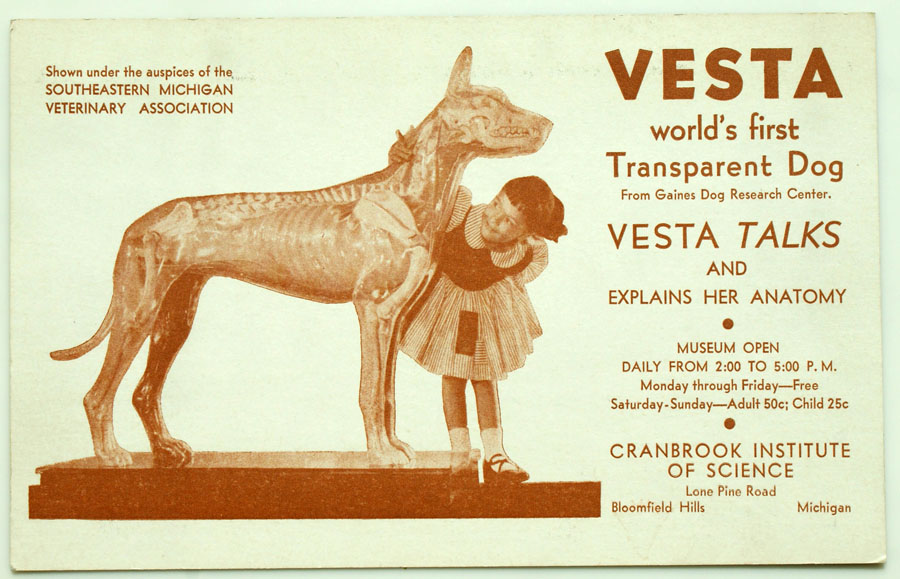
The Transparent Dog Talks

Vesta, the transparent dog

Exhibition Card, Cranbrook Institute of Science Records, 1955. Cranbrook Archives.

While preparing for an exhibition, it is inevitable that we stumble upon cool, unusual objects in our collection. I love the discovery of the unique stories associated with them.  This image announces an Institute of Science exhibition that featured Vesta, the talking dog.  Vesta (named after the Roman goddess and guardian of the home) was a transparent plastic model created in 1954 for the Gaines Dog Research Center by the Deutsches Museum in Germany. Vesta was then flown to Cleveland, where a team of experts installed an intricate sound system which enabled her to tell interesting facts about herself as parts of her anatomy lit up.   She was part of an educational and scientific traveling exhibition to help dog owners better understand their pets. Continue reading

Dear Diary: Women in Their Own Words

“When women tell their life stories in their own words, a distinct enthusiasm, engagement and affirmation emerges . . . these are the stories in which women are the central actors, even if their stories are camouflaged by modesty and disclaimers.” So writes Judy Nolte Lensink in Perspectives on Women’s Archives. One of the most common ways in which women tell their life stories is through their personal diaries. The stories can range from day-to-day events, personal reflections, or comments about the world at large. Nearly every archive has diaries in its collection, and ours is no exception. Below are a few examples of the range of journals found in the Cranbrook Archives.

Harriet Messinger Scripps, circa 1872. Cranbrook Archives.

Harriet Messinger Scripps, circa 1872. Cranbrook Archives.

Continue reading

Illuminating Lives: Documenting Women in the Cranbrook Archives

In the publication Perspectives on Women’s Archives, recently released by The Society of American Archivists , editors Tanya Zanish-Belcher and Anke Voss begin their introduction with the following : “the history of women’s archives and the collecting of women’s records reflect the larger cultural and societal developments occurring in American history over the past few centuries.” This poses the question—how do we at Cranbrook document the lives of the women who worked and studied here? What can we do to actively collect the papers and records that will illuminate the lives of these women? How have their experiences contributed to our community and to the world at large?

Currently, the Cranbrook Archives has a small percentage of collections donated by women or their families that speak to these issues, including the collections of Cranbrook artists and the papers of former CEC president Lillian Bauder. However, the bulk of women’s history can be found in our institutional records. I would like to spotlight three unsung women in this blog: Helen McIlroy, Pearl Peterson, and Marjorie Bingham.

Helen McIlroy at her desk at Cranbrook House, 1950. Cranbrook Archives.

Helen McIlroy at her desk at Cranbrook House, 1950. Cranbrook Archives.

Continue reading

Dispatch from the Archives: Documenting Liggett

Part of the job of an archivist is to network with colleagues and provide guidance when neighboring organizations or institutions are looking to establish a new archive.  As luck would have it, two weeks ago I had the pleasure of visiting the University Liggett School in Grosse Pointe Woods to look at their archives, and work with the two stellar Sara(h)s: Sara Day Brewer and Sarah Gaines.  Both women—also current parents at the school—are working to preserve the heritage of the school.

Image

Liggett School ephemera noting architect Albert Kahn’s entrance to the school, 1942. The Liggett School Collection, Courtesy University Liggett School Archives.

Continue reading

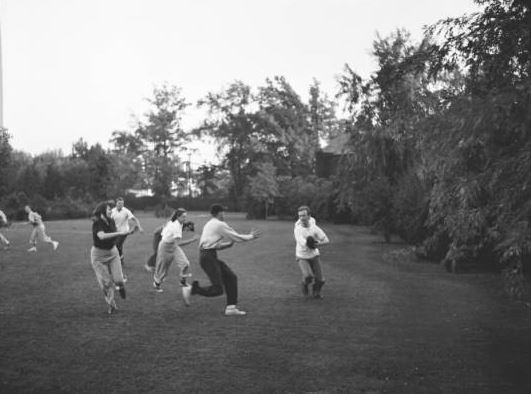
Photo Friday: Cranbrook’s Super Bowl

Ralph Rapson (left, holdign the football), plays football with fellow Cranbrook Academy of Art students. September, 1939. Richard P. Raseman/Cranbrook Archives

Ralph Rapson (right, holding the football), plays football with fellow Cranbrook Academy of Art students. September, 1939. Richard P. Raseman/Cranbrook Archives.

Okay, so “super bowl” might be overstating it. Still, this photo of Cranbrook Academy of Art students enjoying an afternoon game on campus should get you into an appropriately Cranbrook-y mood for the upcoming NFL Super Bowl. So far we’ve identified Ralph Rapson, noted mid-century architect and long-time head of the University of Minnesota School of Architecture, in the white shirt holding the football. If anyone identifies the other players, though, please let us know in the comments!

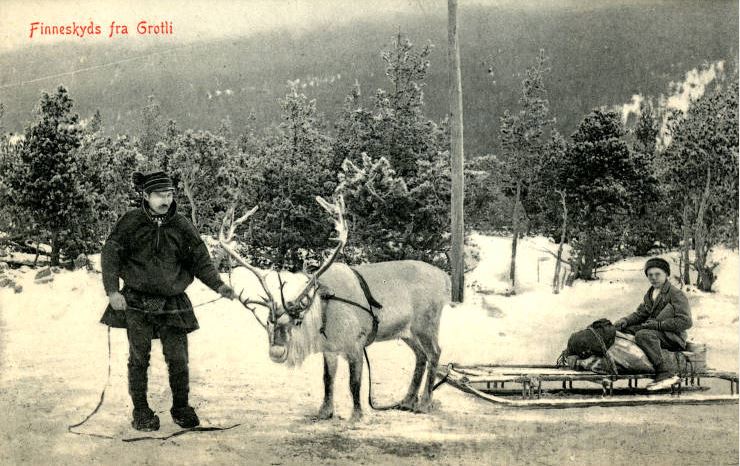
Not Quite Photo Friday: Hello from Norway*

Finnish postcard, 1921. Sent from "Jack Booth," John Lord Booth. Virginia Kingswood Booth Vogel Papers, Cranbrook Archives.

Finnish postcard, 1921. Sent from John Lord Booth. Virginia Kingswood Booth Vogel Papers, Cranbrook Archives.

In honor of the Midwest’s own recently departed polar vortex, we thought we’d highlight we’d highlight a historic postcard from the Virginia Kingswood Booth Vogel Papers at Cranbrook Archives. It appears that these Norwegian citizens are liking the cold about as much as we liked our own winter storm. Honestly, though, they should be happier – at least they have a reindeer to keep them company. Stay warm, everyone!

*Ed. note: eagle-eyed readers may have noted that we accidentally wrote “Finland,” when clearly this postcard is from Norway. Our only excuse is that it is Friday and we have been completely confounded by all this snow. Apologies!

Dispatch from the Archives: “The Councilman Doesn’t Like it”

Okay, I couldn’t resist! Today, while researching a query on sculptor Bernard “Tony” Rosenthal, I ran across this photo in our collection. When I showed it to one of our volunteers, Rita Faudman, she said (while laughing), “what can you do with THIS?” And my immediate reply was, “post it on the blog!”

©Wide World Photos.  Councilman Harold Harby leaves no doubt about his opinion.  Courtesy Bernard (Tony) Rosenthal Papers, Cranbrook Archives.

©Wide World Photos. Councilman Harold Harby leaves no doubt about his opinion. Courtesy Bernard (Tony) Rosenthal Papers, Cranbrook Archives.

Continue reading

Create a website or blog at WordPress.com