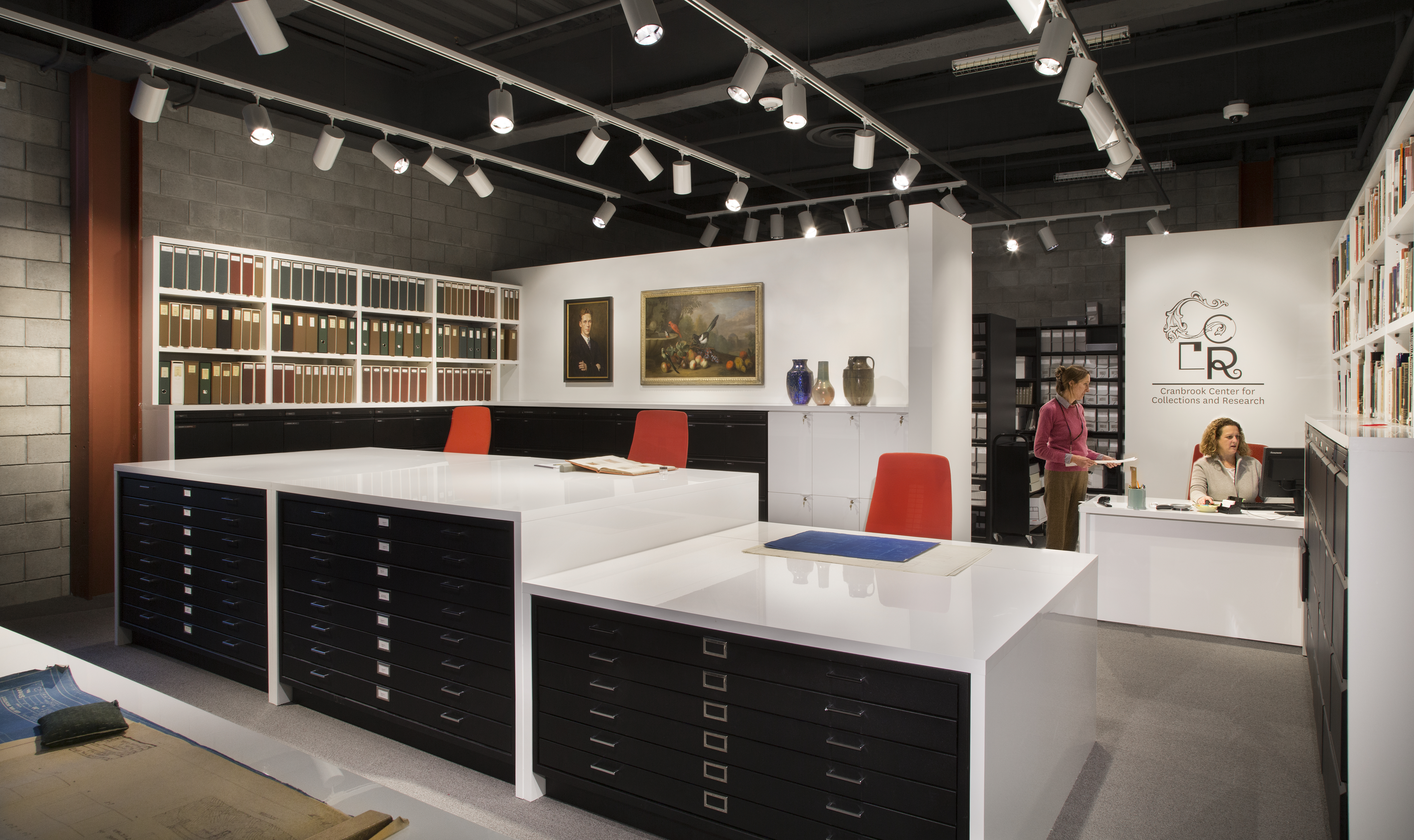
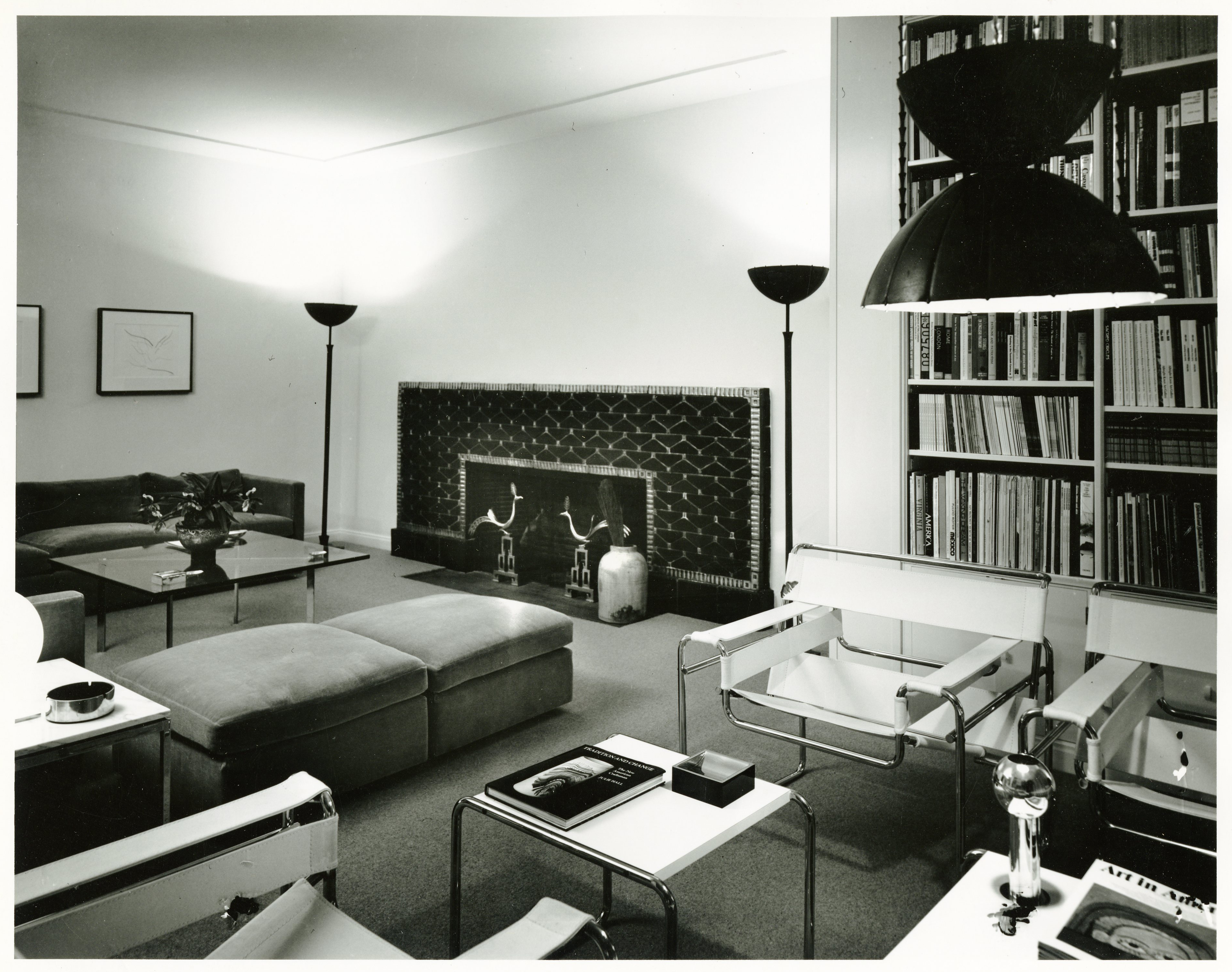
Sixty Years of HUB Goes Live

This week Cranbrook Archives launched Sixty Years of Horizons-Upward Bound, 1965-2025, a virtual exhibition of HUB’s history, told primarily through photographs. While the HUB program celebrates its sixtieth anniversary this year, we’ve partnered with Amy Snyder, daughter of HUB’s founder, Ben Snyder, to select images from each decade. Those from HUB’s first five years are now available, with new images from subsequent decades slated to be revealed on a monthly basis as the HUB digitization project continues.

Aerial view of HUB summer of 1970. Henry A. Leung, photographer. Courtesy of Cranbrook Archives.

A Collaborative Effort

Creating captions for the exhibition coincided with efforts to describe each of the 2,200 images scanned so far. While some photographs included detailed annotations, describing persons and subjects, many did not, requiring additional research.

Images not yet identified or depicting unnamed activities have been fun and challenging. Cross-referencing photos with documents like class brochures, annual reports, and school rosters have helped with developing fuller descriptions. For instance, HUB’s annual reports detail various guests and artists that were invited to campus to inspire and entertain HUB students. But, they do not tell the full story. The following photographs feature an unnamed event and band that we hope to learn more about!
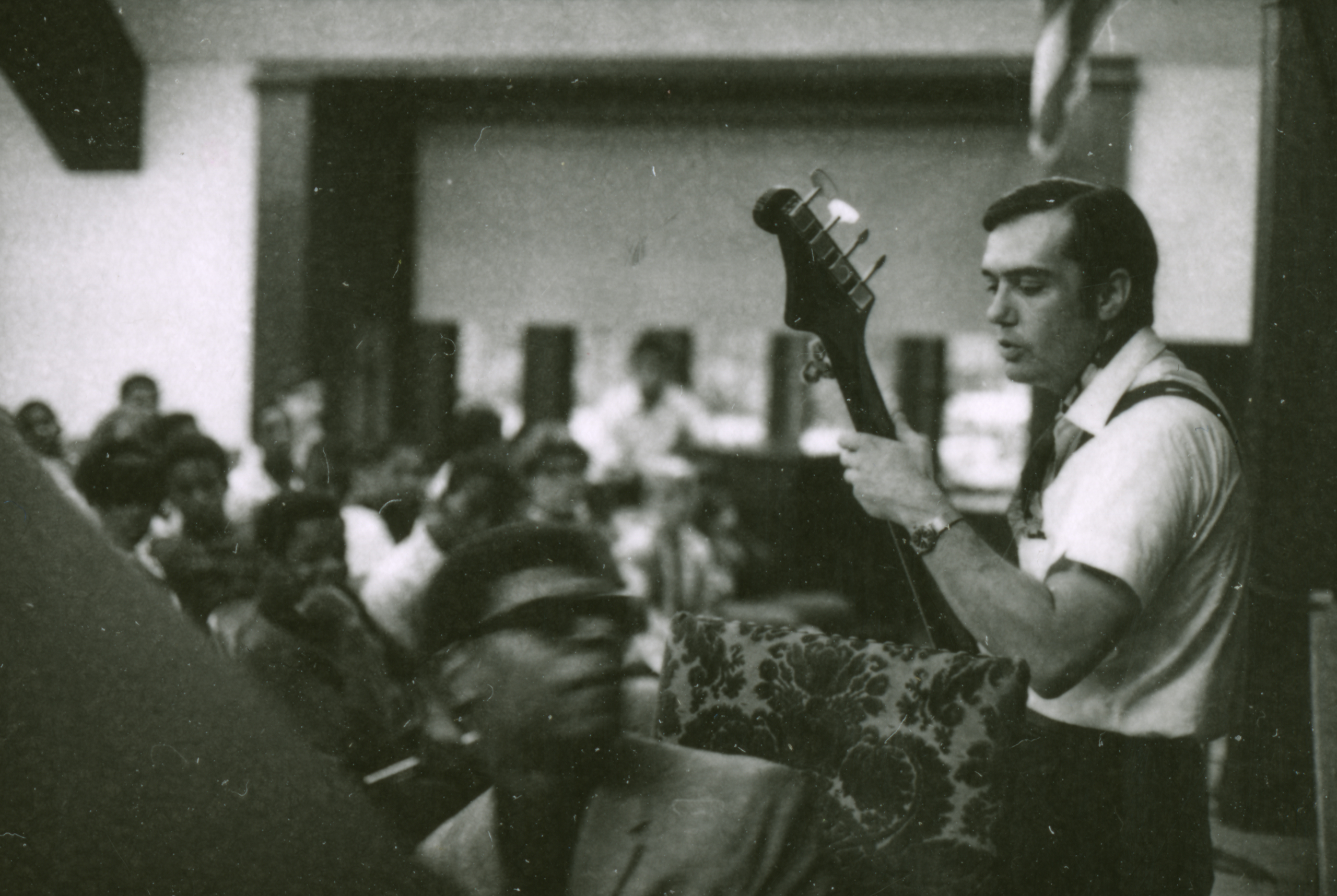
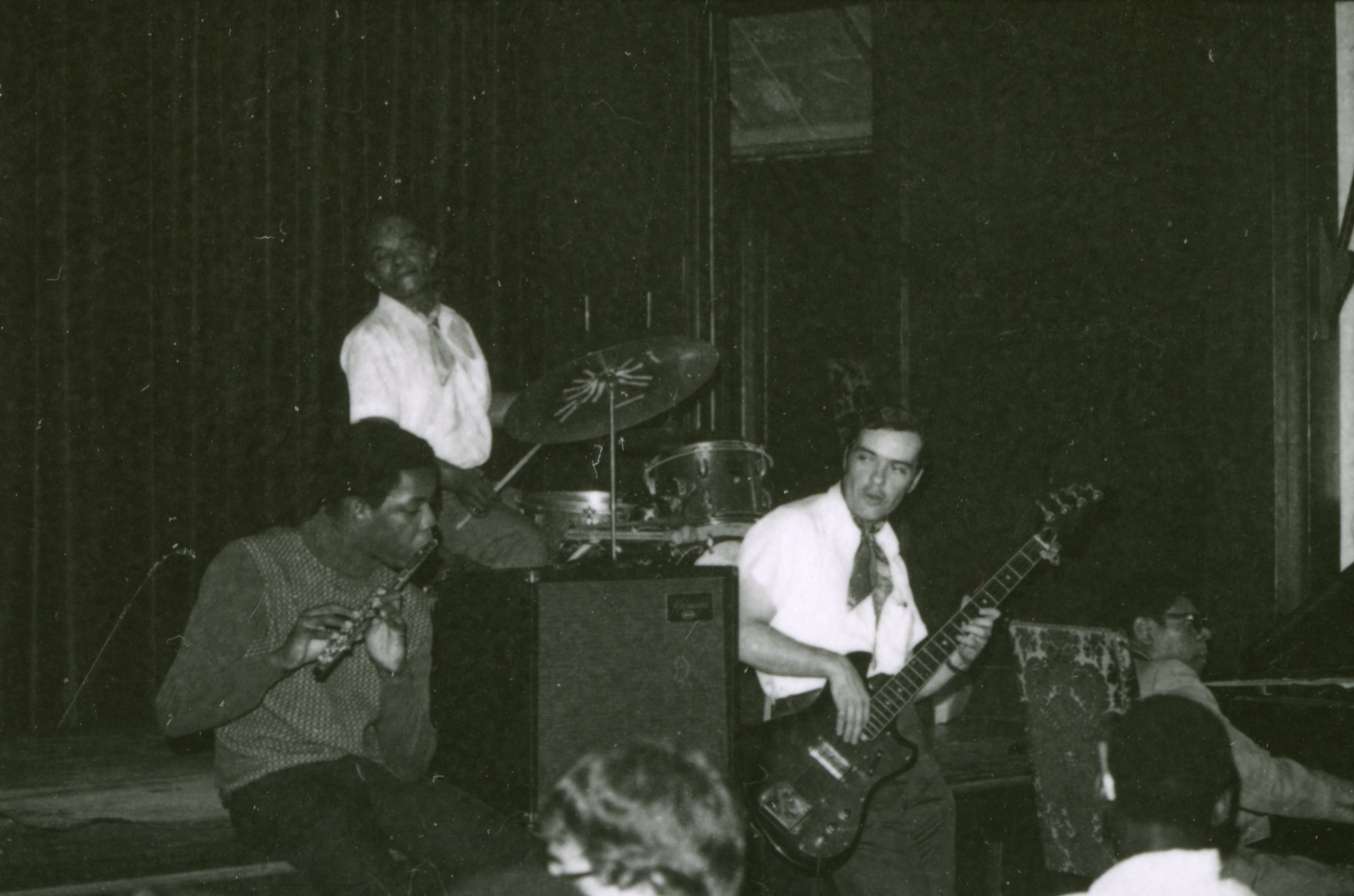
Guest band playing for HUB students in assembly hall, Summer 1969. Jack Kausch Photography. Courtesy of Cranbrook Archives.
Andre Boddie (HUB ’70) playing flute with band in assembly hall, Summer 1969. Jack Kausch Photography. Courtesy of Cranbrook Archives.

In addition to my research, HUB alumni have shared information in meetings, emails, and in-person visits, to help describe photographs.

For our studio sessions with Barry Roberts (HUB ’77), we prepared a workspace with enlarged photocopies of group images to annotate and class brochures and annual reports to cross-reference. It’s been a joy to witness how eyes light-up when alumni like Roberts remember people and places depicted in images. We are grateful for the stories they share because they essentially enrich the HUB collection with personal narrative.

Barry Roberts (HUB ’77) identifying HUB images at Thornlea Studio, February 19, 2025. Courtesy of Cranbrook Archives.

More From the 1960s

I have really enjoyed reviewing the program’s visual history. Since only a small number of images from the 1960s are featured in the exhibition, I thought I would share some others that really spoke to me.

It’s been exciting to finally see photographs for events and activities described in reports, like Theme Day, SoulFest, and other academic and extra-curricular subjects.
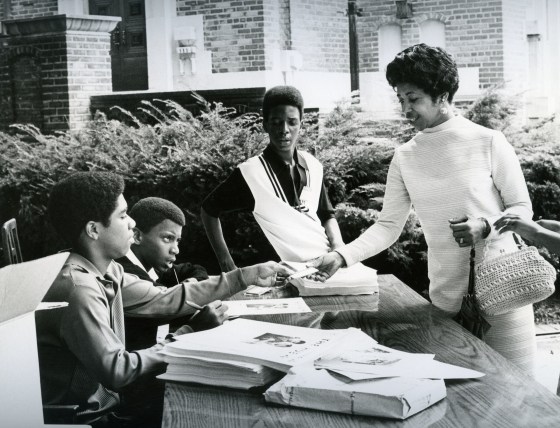
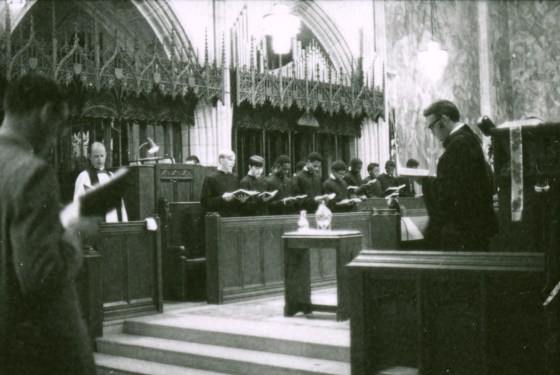
It’s also been interesting to see how HUB students engaged with various spaces across Cranbrook’s campus.

I especially enjoyed a small collection of images featuring art work and displays of writing, which were exhibited during Theme Day in 1969. William Washington, English teacher and Theme Day facilitator at the time, described the event’s focus as students and staff answering the question, “Where Is Love?” (HUB Annual Report, 1969). The following image features students’ responses to this prompt with creative writings entitled “What is this love that we now seek? Love is the language that every man speaks.”

Theme Day display featuring students from Sections 7 and 9 of Gregory S. Mims and Philip Young’s English course, August 17, 1969. Courtesy of Cranbrook Archives.

This fall, all of the images digitized in year two of the digitization project will be available online, but in the meantime check back each month to see those featured in the virtual exhibition!

Courtney Richardson, Project Archivist, Cranbrook Center for Collections and Research

HUB digitization is funded by a NHPRC Archival Projects Grant for projects that ensure online public discovery and use of historical records collections. The NHPRC was established by Congress in 1934 as a statutory body affiliated with the National Archives and Records Administration and chaired by the Archivist of the United States.

Digitizing HUB’s Visual History

Year two of the Horizons-Upward Bound (HUB) digitization project has begun. This phase involves digitizing photographs, including images taken by local photographer Jack Kausch

student holding camera with teacher
HUB student with teacher, William Moran, during a class activity, 1966. Courtesy of Cranbrook Archives.

The first year of the project was dedicated to digitizing publications and documents, which amounted to over 32,600 pages of student and administrative material! Digitization of student films was also completed offsite, totaling 57 minutes of footage. Entering the second year of this project, I am very excited to continue working with HUB’s history as it was documented through photography.

scanner with various photographs laying on top
Part of digitization workspace with flatbed scanner and various photographic materials. Courtesy of Cranbrook Archives.

HUB photographs include approximately 2.5 boxes (2.9 linear feet) of photographs in the form of prints, slides, and negative film created from 1965 to 1997. HUB students, faculty, staff, and extended community are featured across class and group portraits, within academic and extra-curricular settings, and during many events such as graduations, award ceremonies, fundraisers, and symposiums.

aerial student class photo
Aerial view of HUB’s class of 1979. Courtesy of Cranbrook Archives.
student group photo
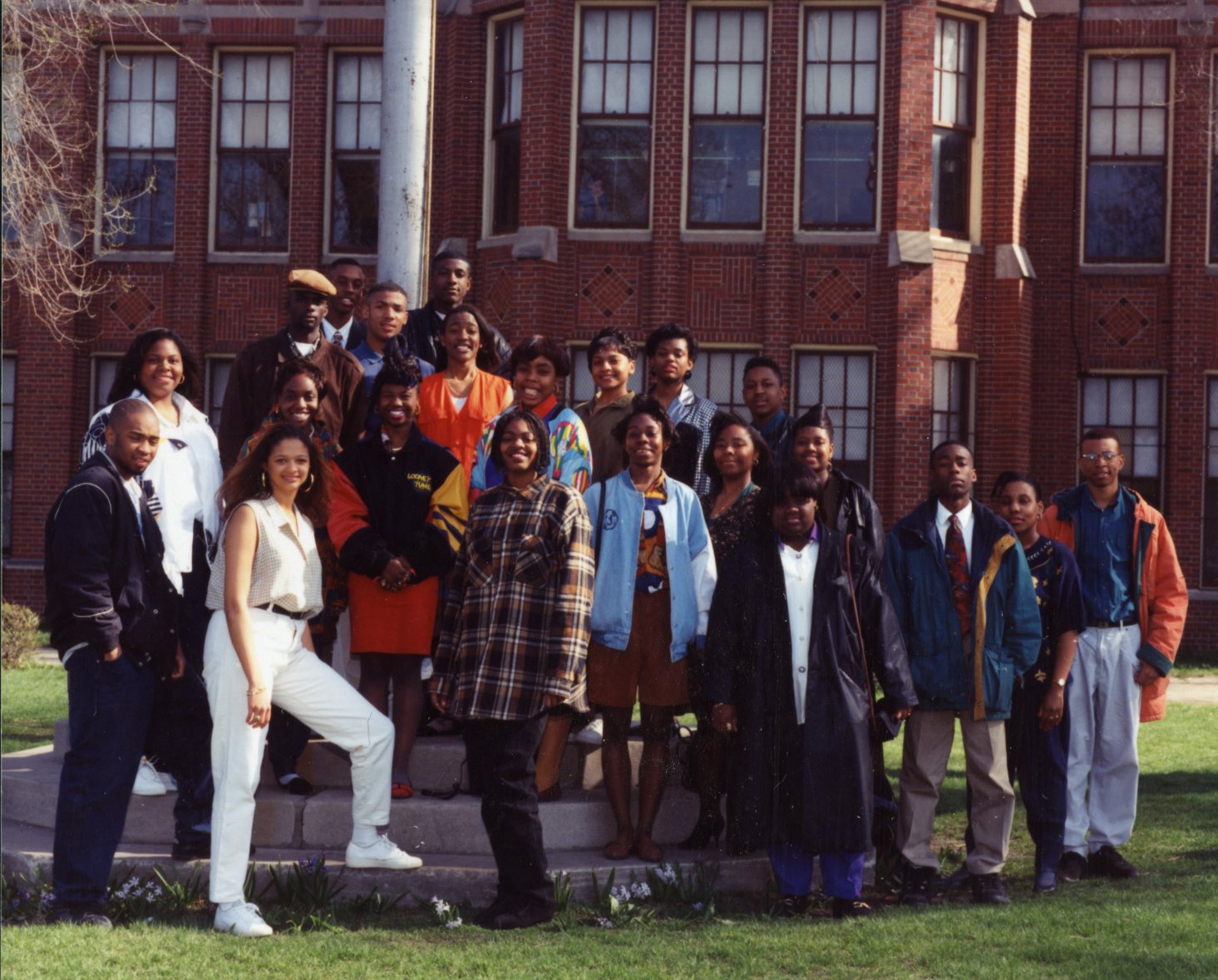
Group image of HUB’s 1994 students. Courtesy of Cranbrook Archives.

Similar to the first phase of the project, photo digitization began in-house at the Archives in Summer 2024. Two hard-working HUB student volunteers scanned 10% of the photographs.

Grayscale photo with students and Mayor Dennis Archer
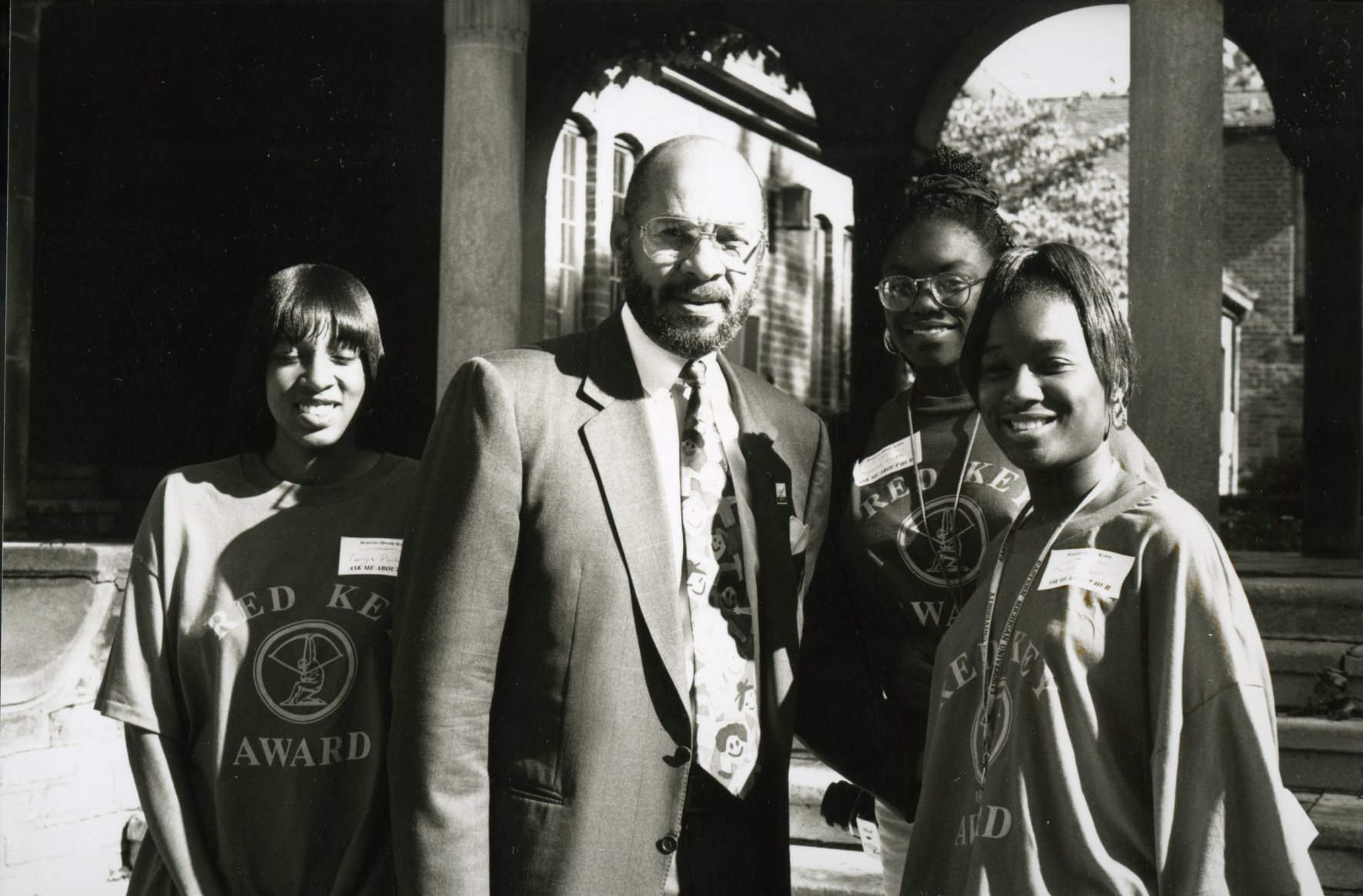
HUB Red Key students with Mayor Dennis Archer, 1995. Courtesy of Cranbrook Archives.

I am continuing the students’ work by adding description to the files they created and digitizing the remaining photographs. I will also write descriptions and keywords for these items and transfer the digital files to our digital collections website, where they will be made public at the end of the project.

photograph of dancers at event
Dancers during HUB fundraising event, Soulfest II, 1974. Jack Kausch Photography. Courtesy of Cranbrook Archives.
grayscale photo of teacher with students
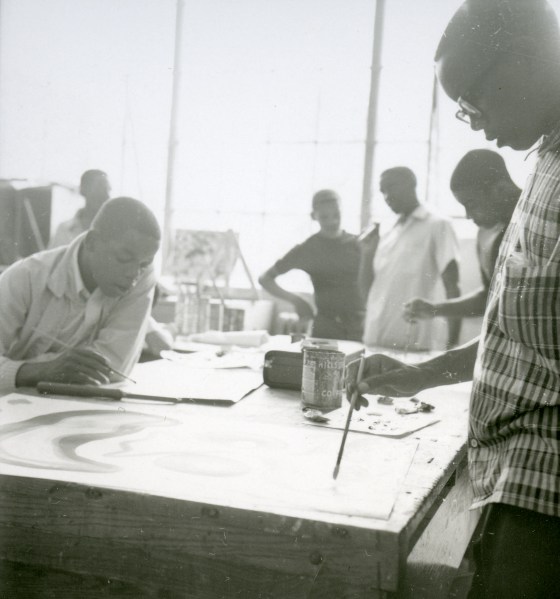
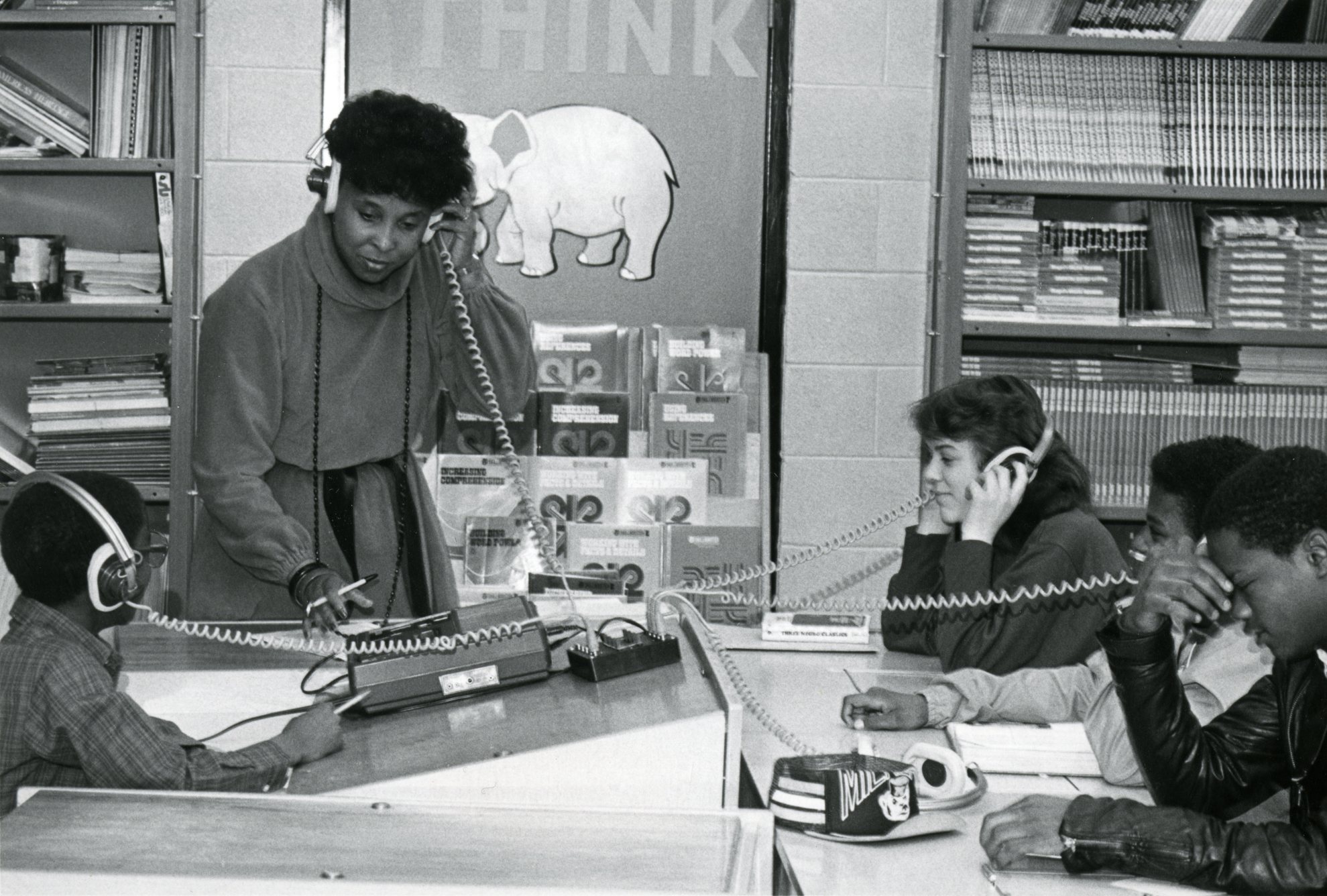
HUB students with teacher, Velma McCann Rodgers, during an in-class activity, 1986. Courtesy of Cranbrook Archives.

I look forward to sharing more findings as I continue to review and digitize HUB’s photographs! 

Courtney Richardson, Project Archivist, Cranbrook Center for Collections and Research

HUB digitization is funded by a NHPRC Archival Projects Grant for projects that ensure online public discovery and use of historical records collections. The NHPRC was established by Congress in 1934 as a statutory body affiliated with the National Archives and Records Administration and chaired by the Archivist of the United States.

Revealing Horizons-Upward Bound History

Cranbrook Archives is excited to announce the launch of a historical digitization project, made possible by a generous two-year grant from the National Historical Publications & Records Commissions (NHPRC). The Archival Projects grant “supports projects that promote access to America’s historical records to encourage understanding of our democracy, history, and culture.” One of 21 awardees in 2023, alongside the Amistad Research Center, NYU, and others, we have begun full digitization of Cranbrook Schools’ Horizons-Upward Bound Program (HUB) records in an effort to facilitate discovery and use of material that documents one of the nation’s oldest and largest college access programs. The new online collection promises to elevate the visibility of HUB’s important story, and by extension, experiences of under-represented youth, primarily African American, in the U.S. educational system.

Cover of Horizons-Upward Bound’s first annual report, 1965. Courtesy of Cranbrook Archives.

HUB historical materials include approximately 18 boxes (20.4 linear feet) of material relaying HUB’s history from its founding in 1965 through the year 2000. Material includes paper, news, photo, and film media primarily generated by HUB administration and HUB students. During the first year of the grant we are focused on digitizing all paper material. The second year will be devoted to digitizing photography and film, including images taken by local photographer Jack Kausch.

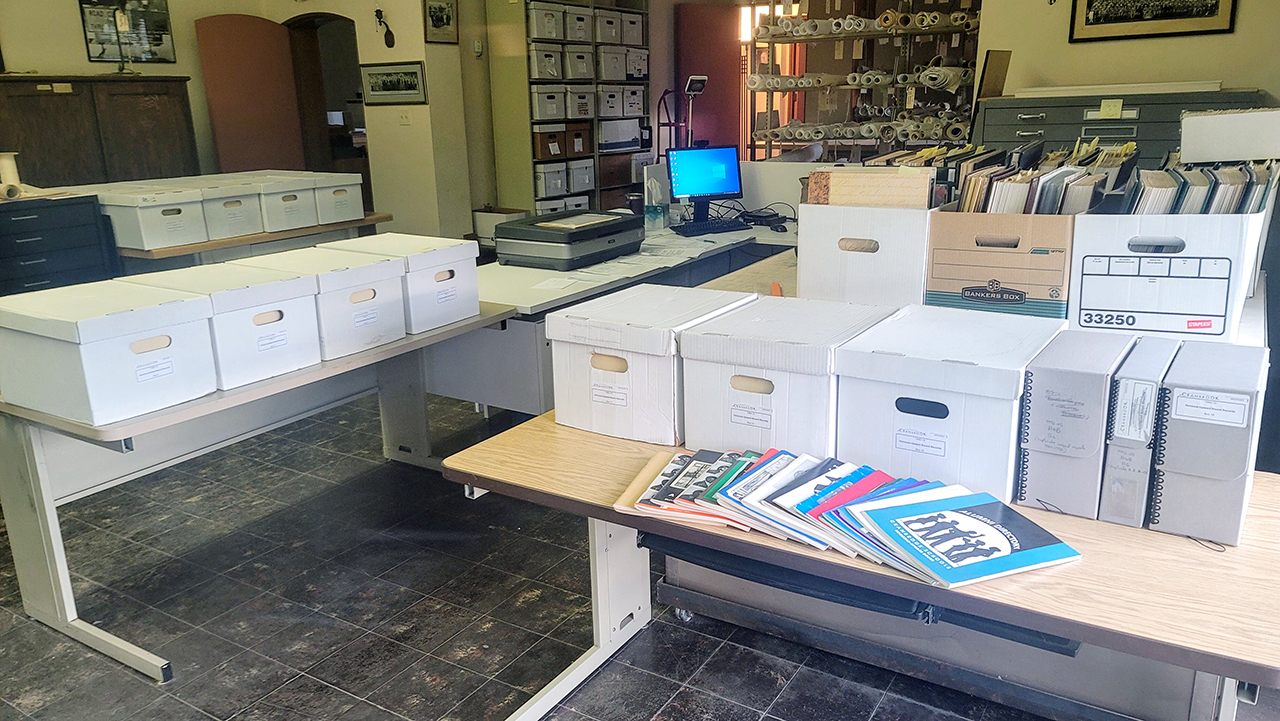
Photo of Archives workspace inside Thornlea Studio. Desks covered with archival boxes and material.
Digitization workstation where paper records are currently being scanned.

What we’ve done so far…

Digitization began in-house at the Archives in Summer 2023, with two HUB student volunteers who scanned a selection of newsletters and annual reports and drafted initial keyword/descriptions of the material. Later that Fall, I was hired to dedicate full-time attention to the project for the duration of the grant period. I continued the students’ work by first conducting quality control of the scanned material and digitizing the remaining publications in the collection. So far, I have digitized and quality checked over 7,500 pages of paper material. Currently, I am writing descriptions and creating keywords for these items and transferring the digital files to our online collections website, where they will be made public at the end of the project.

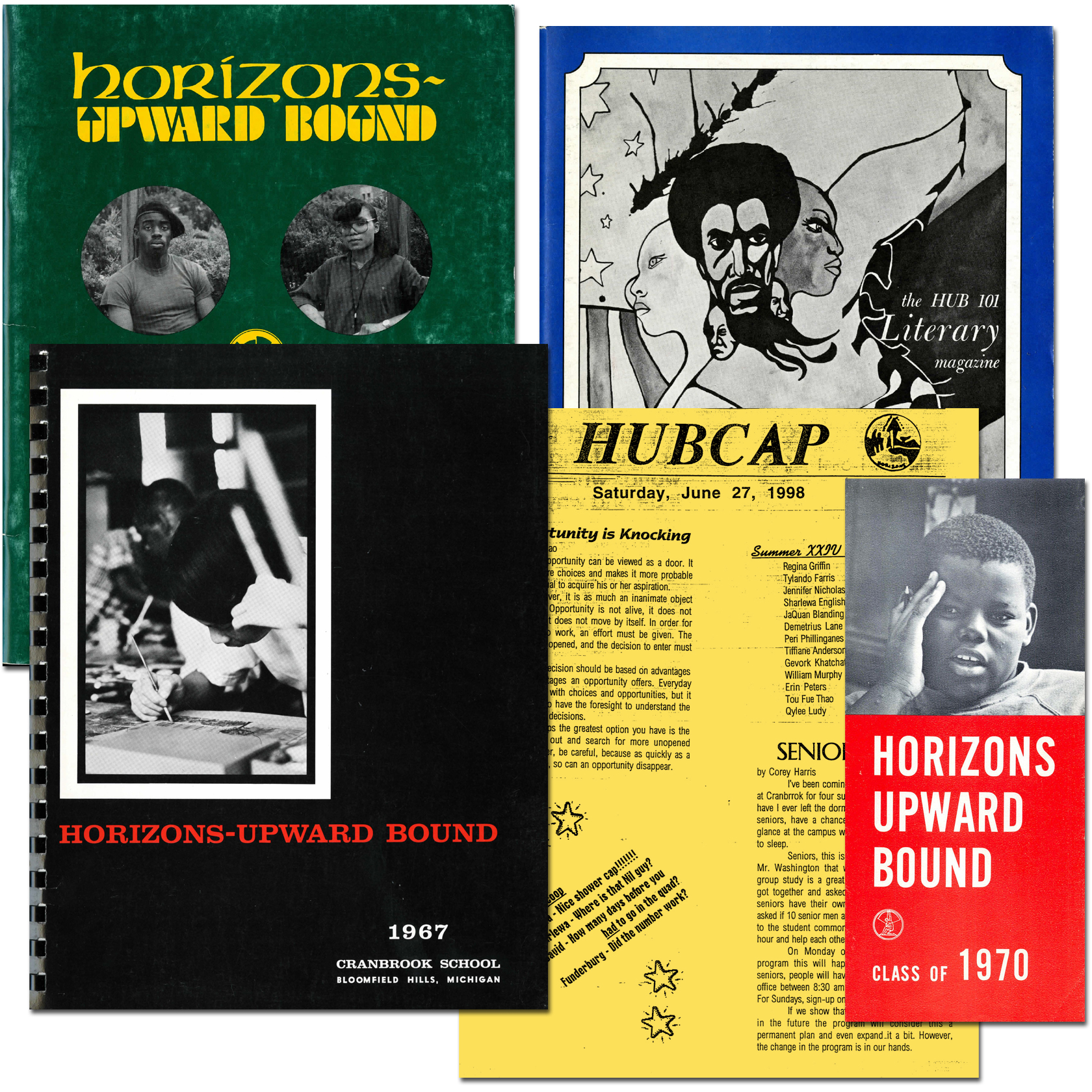
Collage of HUB paper publication covers. Primarily green, black, yellow, and red.
Selection of Horizons-Upward Bound publications spanning from the 1960s to 1990s, including annual reports, literary magazines, brochures, and newsletters. Courtesy of Cranbrook Archives.

More to come!

In honor of HUB’s founder and first director, Ben Snyder (1965-1989), we hope for this digitization project to help realize the desire he expressed for HUB’s records in his 1977-1978 Annual Report:

Annual Report cover, featuring HUB’s first cohort to include young women, 1977-1978. Courtesy of Cranbrook Archives.

“One hopes that these annual entries will, at some point in the future, be useful to the educational historian or, in a narrower sense, to someone reviewing the Cranbrook scene as it relates to community involvement. Should that time come in say the next century, the task would be far happier if the nation had in the meantime eliminated the need for compensatory education.”

–Ben Snyder (pg. 34)

Initially self-described as “An Experimental Enrichment Program,” in conjunction with representatives from Detroit Public Schools and Oakland County Schools, HUB was the only program of its kind at its inception. The artifacts and stories found within its historical collection have great potential to inform and inspire continued community-building and educational programming that span across metro Detroit and the nation. We hope you will share in our excitement about this project and we look forward to sharing more updates about the Horizons-Upward Bound collection!

– Courtney Richardson, Project Archivist, Cranbrook Center for Collections and Research

Editor’s Note: The NHPRC was established by Congress in 1934 as a statutory body affiliated with the National Archives and Records Administration. Chaired by the Archivist of the United States, it is composed of representatives of the three branches of the Federal Government and professional associations of archivists, historians, documentary editors, and records administrators.

A Summer Education at Brookside

Summer school. Those two words usually make most children cringe—who wants to spend their summer vacation studying and attending classes? Sheer morbid curiosity made me explore further a few folders in Brookside School Records, a collection just opened for research last month. What I found was not the usual story.

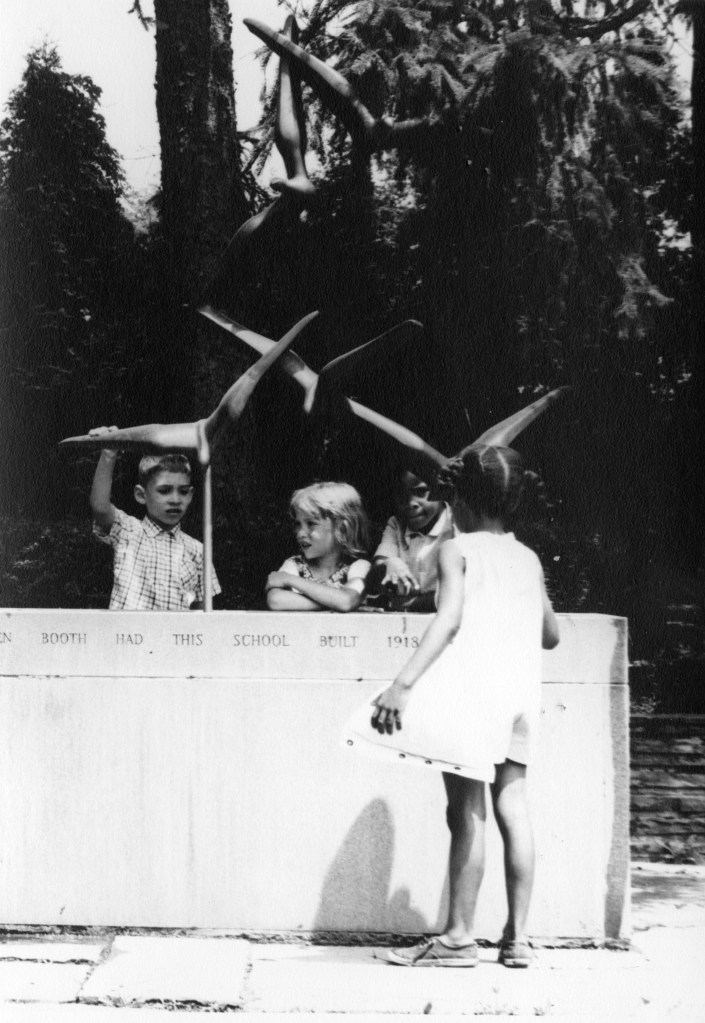
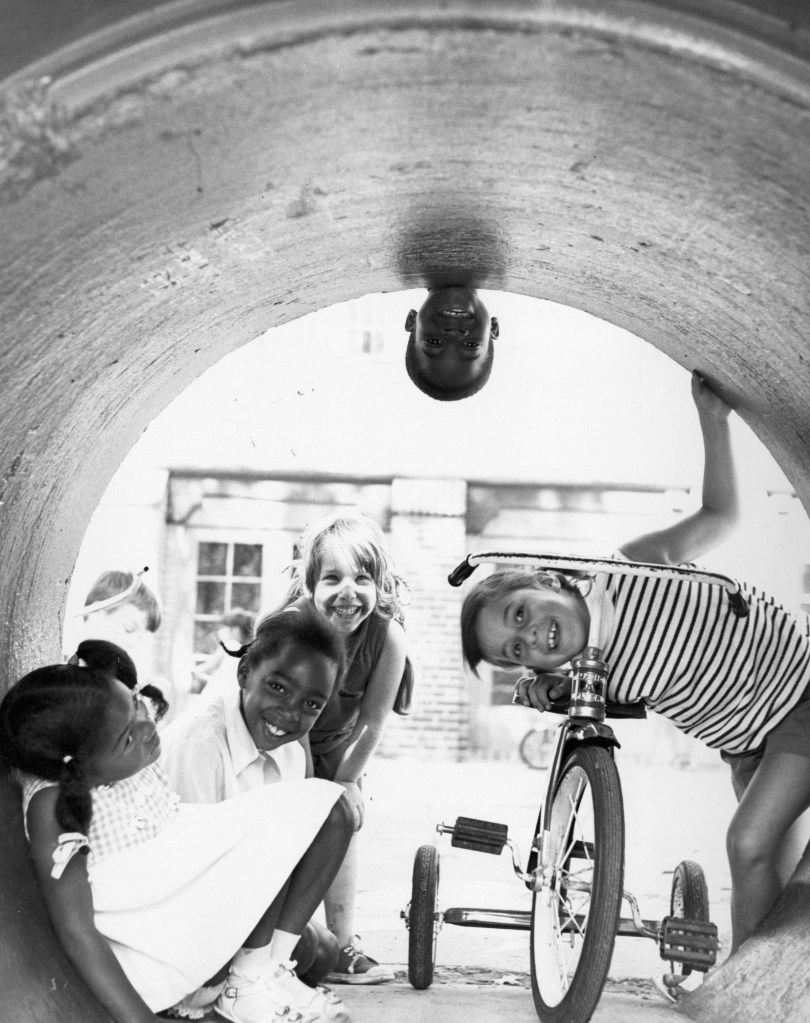
The Brookside summer school program, AWAKE, had a different purpose than remedial education for elementary students. Developed in 1968 by Pontiac Elementary Principal Jim Hawkins and Brookside Headmaster John P. Denio, it was designed to promote harmony and understanding amongst young children who might not otherwise share life experiences due to racial, social, and economic segregation.

AWAKE followed on the heels of the “long hot summer” of 1967, which saw civil unrest in Detroit and cities across Michigan, including Pontiac, due to long-standing racial inequalities for Black Americans. Instituted in 1968, AWAKE’s purpose was to “bring together young children in essentially two segregated school areas,” in some ways foreshadowing the desegregation of Pontiac and Detroit schools in the early 1970s.

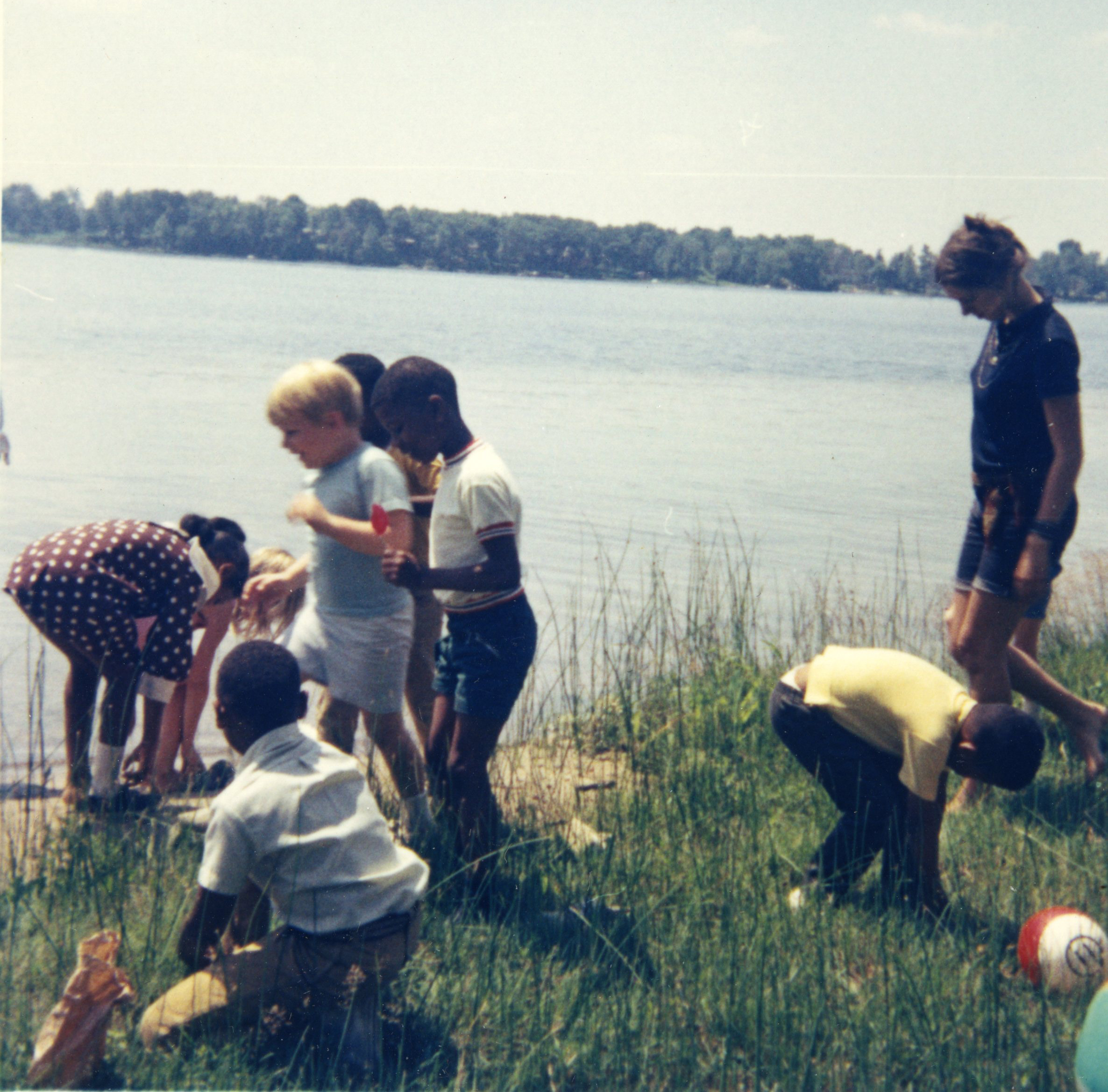
Roughly fifty children split their time equally between the Bloomfield Hills and Pontiac schools for five mornings a week, over a four-week period in July and August. Co-sponsored by Cranbrook’s Brookside School and Pontiac Public Schools’ Bethune and Whittier Elementary Schools, the program included art projects, field trips, swimming, reading, and other enrichment activities for kindergarten-age children in both communities. Directed at young children because of their natural receptiveness at that age, Denio believed that,

With AWAKE, children four through six, through work and play activities and through simple, open contact with each other may perhaps develop the knowledge and understanding necessary to reinforce their acceptance of each other as human beings.

Governed by a Board comprised of community members and Pontiac Public School administrators and teachers, the program was self-sustained through tuition fees (waived in cases of need), financial contributions, and community support. Christ Church Cranbrook, for example, played a significant role through both donations and parishioners’ participation in the program. Familiar Cranbrook names, such as Cranbrook School teacher and Horizons-Upward Bound founder, Ben Snyder, and his wife Margot were also regular advocates of the program.

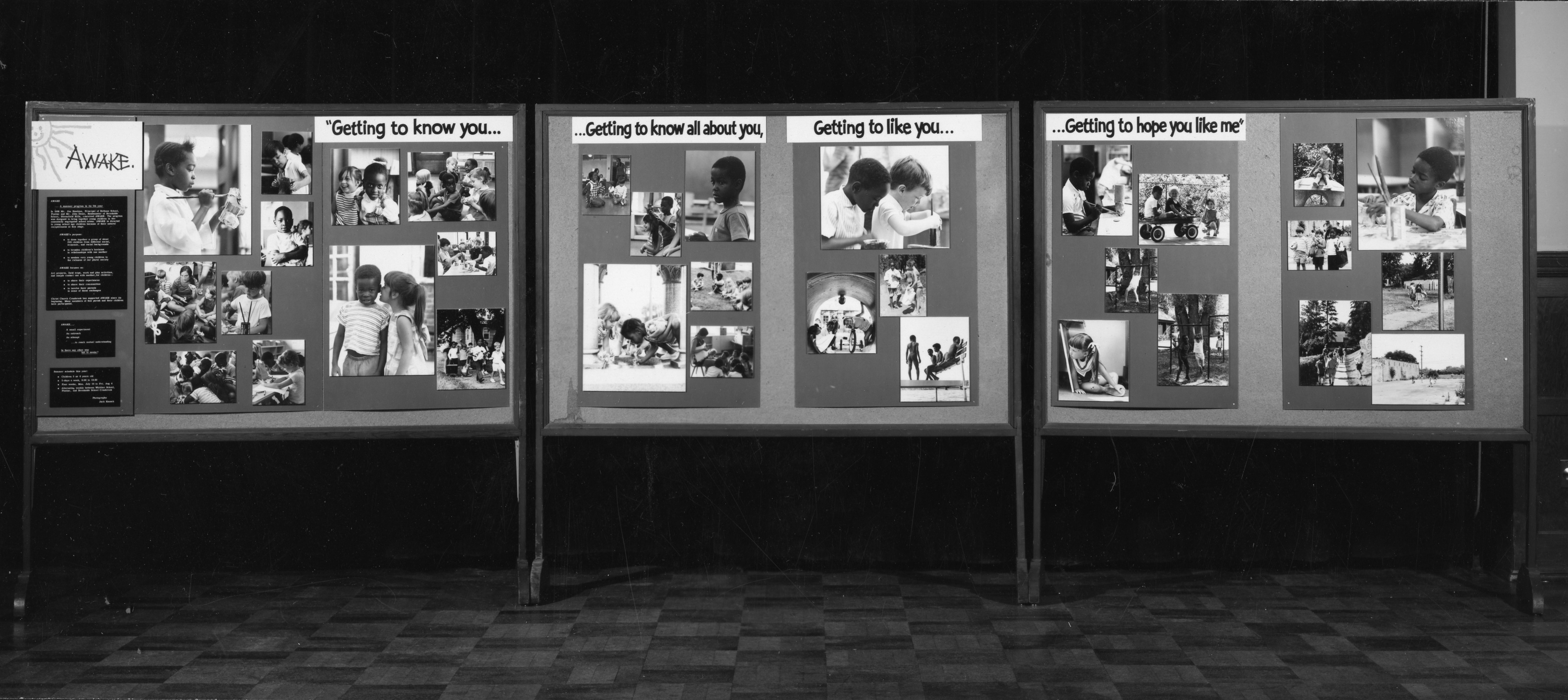
Borrowing lyrics from Rogers and Hammerstein and with photographs by Jack Kausch, poster displays sum up AWAKE’s ethos: “Getting to know you … Getting to know all about you … Getting to like you … Getting to hope you like me.” Courtesy of Cranbrook Archives.

A grass roots experiment in creative problem-solving of the urban crisis faced by cities across the country, AWAKE only lasted for five years (1968-1972). Because of its short duration, the effectiveness of the program was never fully appreciated, despite a 1969 study conducted by a University of Michigan Ph.D. student in education and social sciences and regular solicitation of teacher and parent feedback. Ultimately, rising costs and a lack of grant money; shortages of staff; and dwindling enrollment, undoubtedly due in part to the integration of Pontiac schools and the unsettling atmosphere of anti-busing protests, prohibited the continuation of the program.  

Deborah Rice, Head Archivist, Cranbrook Center for Collections and Research

Photographer Jack Kausch and Cranbrook

In many of the posts we put up on Facebook or on the Kitchen Sink, the credit line “Photographer Jack Kausch” appears. Since he took so many iconic images of Cranbrook’s people and places in the second half of the twentieth century, I’d like to introduce you to Jack Kausch himself.

Jack Kausch at work developing photographs while at Cranbrook School, The Brook 1947. Courtesy Cranbrook Archives, Cranbrook Center for Collections and Research.

John William (Jack) Kausch was born in 1929, in Queens, New York. His family moved to Detroit shortly after he was born. Jack’s interest in photography began at age eight, when his mother gave him a camera and dark room set. He earned a scholarship to attend Cranbrook School for Boys, graduating in 1947. While a student at Cranbrook, he became a photographer for The Crane student newspaper and The Brook yearbook.

Jack Kausch’s Senior entry in The Brook, 1947. Courtesy Cranbrook Archives, Cranbrook Center for Collections and Research.

Jack went on to attend the University of Michigan. The Korean War interrupted his studies, and he joined the Air National Guard. Stationed on a base in New England, he serviced radar equipment and handled the base’s photography lab. When the war ended, the G.I. bill enabled him to return to the University of Michigan. He helped his mother run a construction firm while he attended night school, earning a bachelor’s degree in Physics in 1956.

In September 1957, Jack married Elizabeth (Betsy) Drake. He then took a job with General Motors Photographic in 1960, where he worked for the next seventeen years. During this time, he returned to the University of Michigan to earn a Master’s in Business Administration. He opened Jack Kausch Photography in 1976 in Birmingham, Michigan. It was around this time he returned to Cranbrook to again take photographs for various Cranbrook publications and events.

Shortly after his death in 2002, Jack was posthumously awarded the 2001-2002 Birmingham Bloomfield Cultural Arts Award’s Lifetime Achievement Award. In 2009, an exhibit about his life and work, Jack Kausch, A Photographer’s Retrospective, was presented by the Birmingham Museum.

I thought I would share some of my favorite Kausch photographs of Cranbrook’s people and places:

Continue reading

Photo Friday: Thornlea Studio

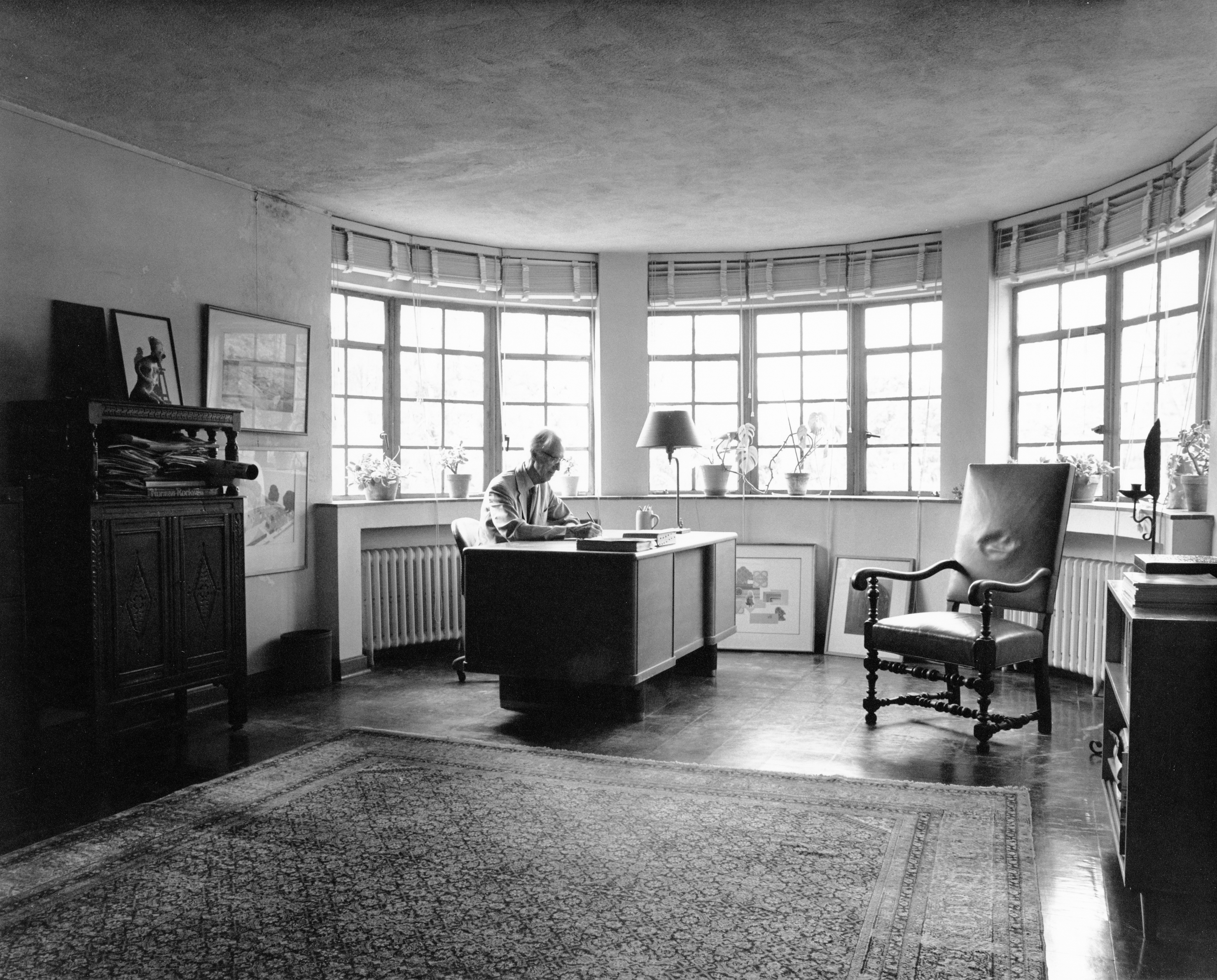
In this moody photograph by Jack Kausch, we see Henry Scripps Booth with his plants, prints, antiques, and drawings in the Thornlea Studio alcove.

Thornlea Studio Kausch 1981

Henry Scripps Booth at his desk in the Thornlea Studio alcove. October 1981. Courtesy Cranbrook Archives/Jack Kausch Photographic Collection.

Henry designed Thornlea Studio as a working retreat behind his house, Thornlea, off Cranbrook Road. Completed to his own designs in 1937, here Henry worked on architectural projects for himself, for Cranbrook (like redesigning the Art Museum bathrooms and building the Cranbrook House gatehouse), and for friends and clients. He also used the studio as a place to write and read next to the cozy fireplace or beautiful expanses of windows.

Thornlea Studio Askew 1940

Henry built this studio in 1937; in 1988 it was converted into the home of the Cranbrook Archives. Richard G. Askew, photographer, 1940. Copyright Cranbrook Archives.

After Henry’s death in 1988, the studio was converted into a home for the Cranbrook Archives. The Archives were begun in part through Henry’s efforts sifting and organizing the Booth family papers and ephemera held at Cranbrook House. Relocated from the (very wet) basement and (very hot) attic of Cranbrook House, the Archives and its professional staff moved into Thornlea Studio. The most significant change to the building involved converting the Studio garage into a vault, with the reading room occupying the first floor drafting room and the alcove and offices on the second floor.

In 2012, the Archives offices, Reading Room, and certain parts of the collections were moved into the lower level of Cranbrook Art Museum. This summer, with the help of former Art Museum Preparator Mark Baker and Cranbrook Capital Projects, we moved again, into the Collections Wing.

Gina and Laura in Reading Room Sept 11 18

The new Archives Reading Room in the Cranbrook Art Museum Collections Wing. PD Rearick, photographer, 2018. Courtesy of the Cranbrook Center for Collections and Research.

In our beautiful new Archives Reading Room, we’ve hung a 1922 portrait of Henry Booth to commemorate his efforts to create and steward Cranbrook Archives. To visit our new Reading Room, see treasures from the Archives, and hear new research from five patrons of the Archives, come to our Open Archives event this Sunday from 1 to 5pm (short talks begin at 3pm). More information is available on our website.

Register online or at the door for this free event, and join us Sunday to celebrate Cranbrook Archives and see the new Reading Room!

Kevin Adkisson, Collections Fellow, 2016-2019, Cranbrook Center for Collections and Research

Editors Note: The Archives is also excited to announce new hours! We will be open on Tuesday to Friday 11 to 5pm and the second Saturday of each month, 11 to 5pm.

Saarinen/Slade House

When incoming Academy President Roy Slade arrived at Cranbrook in July 1977, the President’s House (known, off and on, as Saarinen House) was in need of a refresher. Three other families had lived in and changed the aesthetic of the house following Eliel Saarinen’s death in 1950, and the house was a far cry from Saarinen’s design intent. Slade worked with designers Jean Faulkner and Carl Magnusson (then Director of Graphics and Showroom Design at Knoll) to rework the house into something befitting the new President of the Academy.

SH Living_Norman McGrath_American Society of Magazine Photographers_78-02-8

Saarinen House, February 8, 1978. Norman McGrath, photographer. Courtesy of Cranbrook Archives.

The original Saarinen-designed furniture had been spread throughout the campus and Museum, and in the redesign much of it was returned for use in the house. But instead of restoring rooms to their 1930s appearance (that would happen a decade or so later), the house was kept as a blend of old and new. “Gibraltar Ash” off-white wool wall-to-wall carpeting by Jack Lenor Larsen stretched between the foyer, living room, dining room, and library, making the main room of the house feel like one continuous open space. Furnishings and art pieces by Cranbrook (and Cranbrook-adjacent) artists and designers from many decades–not just the 1930s–were blended together into a comfortable, deliberately eclectic look. The 1977 interiors of the house were featured in local papers and even included, with text by Paul Goldberger, in Living Well: The New York Times Book of Home Design and Decoration (1981).

It’s interesting in these photos by Jack Kausch how well the space works, but how alien Saarinen’s furniture seems to be! Particularly in the dining room–the holly wood table and brass fixture are decontextualized by the foreign whiteness of the walls, ceiling, and floor. The next restoration, completed in 1994, brought back Saarinen’s rich color scheme and variety of materials–including the gilded ceiling.

If you’d like to learn more about the later lives of Saarinen House, Roy Slade’s tenure as President of the Academy, and other fascinating Cranbrook Academy of Art stories, come out to visit my exhibition, Saarinen House: Presidents/Residents, 1946-1994, opening later this month.

The exhibition features archival material and works by each former resident: painter Zoltan Sepeshy, who directed the Academy from 1946 to 1966 and moved into the house in late 1951 following the death of Eliel Saarinen; architect Glen Paulsen, who led the Academy from 1966 to 1970 and expanded Cranbrook’s campus with late-Modern additions; Wallace Mitchell, a Detroit native whose career at Cranbrook developed from student to painting instructor, then director of the Art Museum and finally president; and painter and educator Roy Slade, who led the Academy and its Museum from 1977 to 1994. Slade initiated the restoration of Saarinen House in the late 1970s and encouraged and supported Greg Wittkopp (then a curator at the Art Museum) in the transformation of this early modern, Art Deco design treasure into a public house museum in 1994.

The free Opening Reception will take place Sunday, April 29, 2018, from 1pm-5pm (in conjunction with Open Studios) and the exhibition will be included on all tours of Saarinen House through November. Learn more on our website.

– Kevin Adkisson, Collections Fellow, Cranbrook Center for Collections and Research


Create a website or blog at WordPress.com