For many years, one of Brookside School’s highly anticipated end-of-year traditions was the Faculty/Sixth Grade Softball game. Every June, faculty and sixth graders would meet on the sandlot at Hedgegate, the faculty residence, to play against each other in friendly rivalry. It was a special day when students could play their favorite pastime with their teachers.
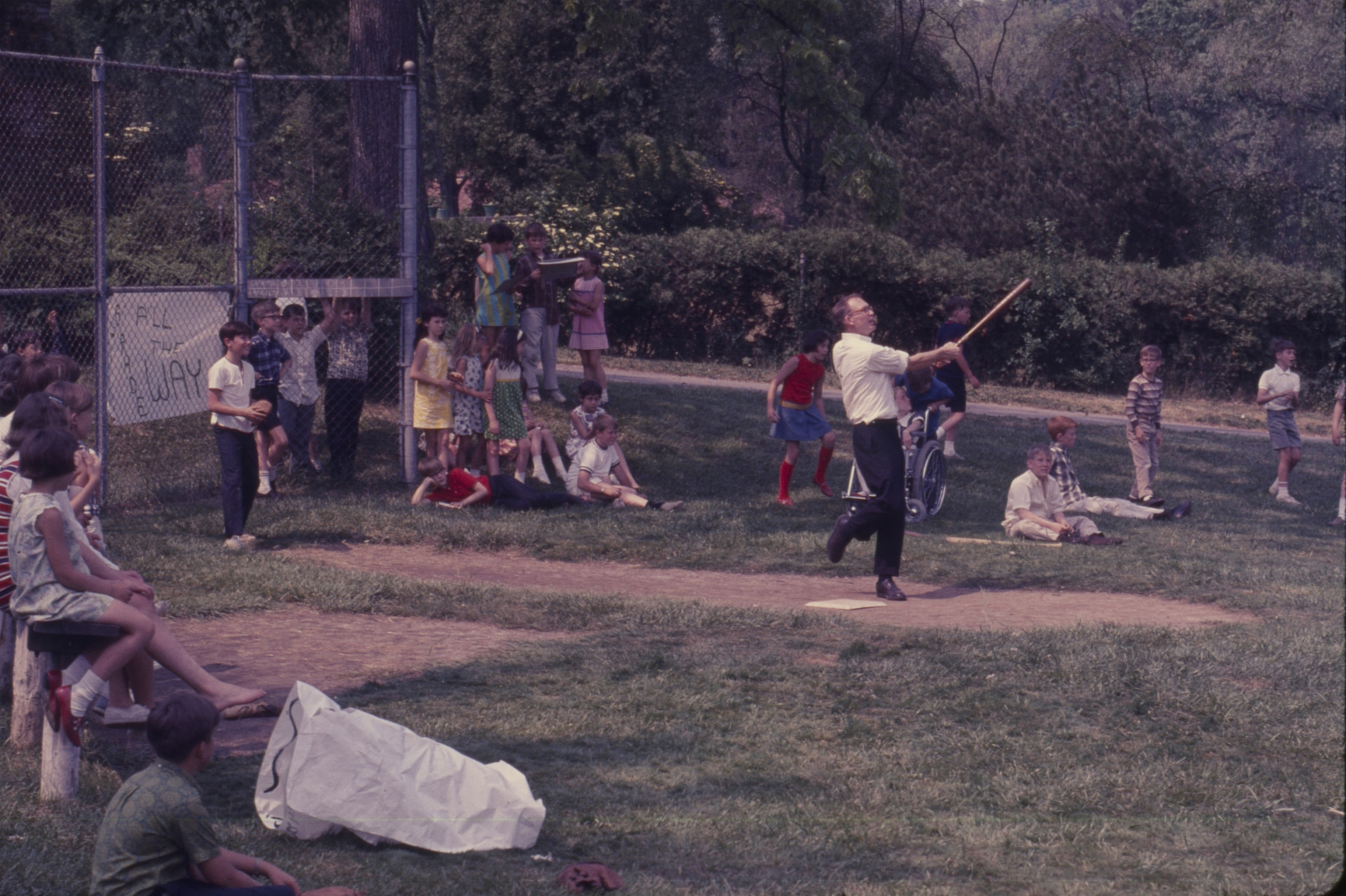
Brookside School Headmaster, Jock Denio, at bat, June 1967. Courtesy of Cranbrook Archives
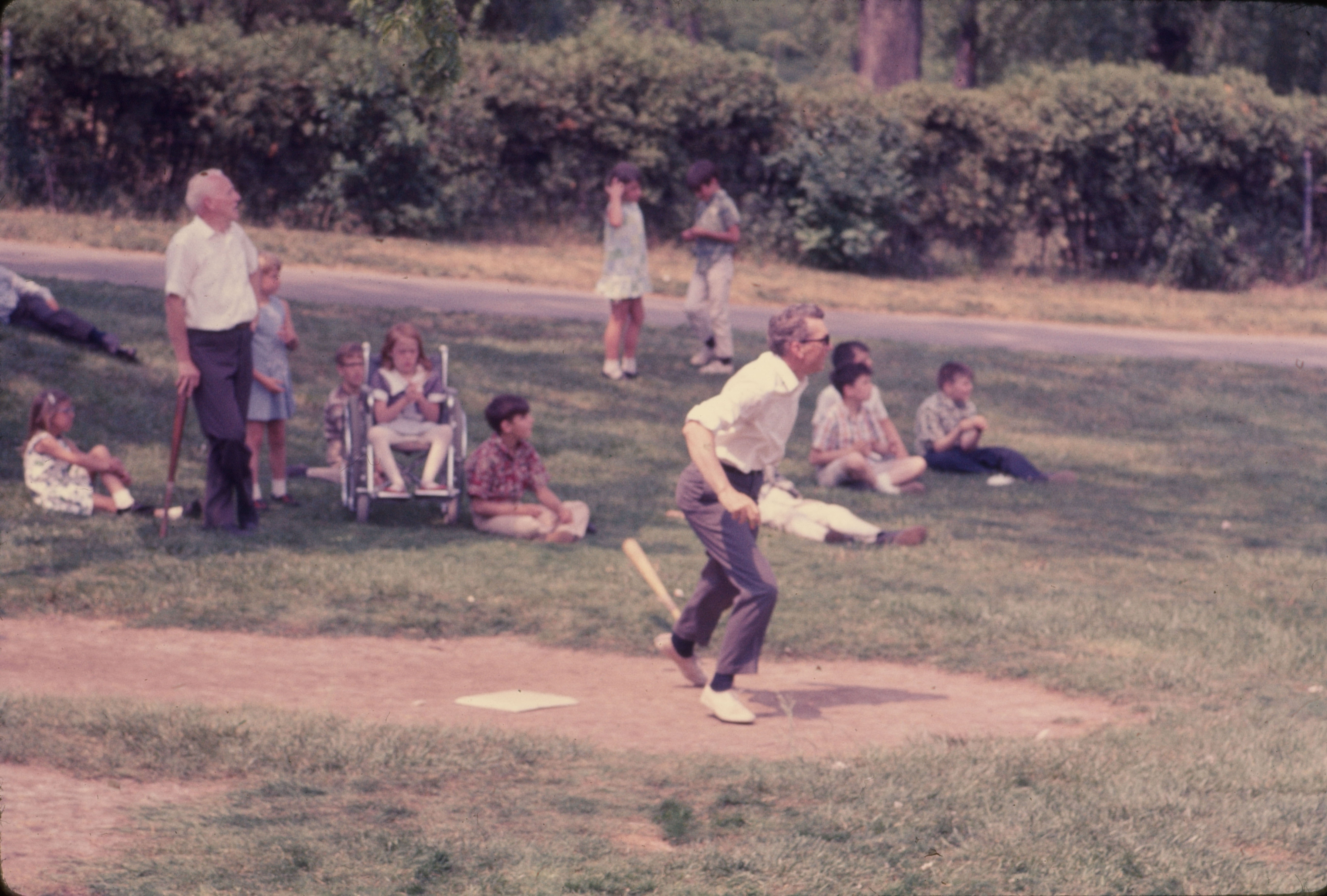
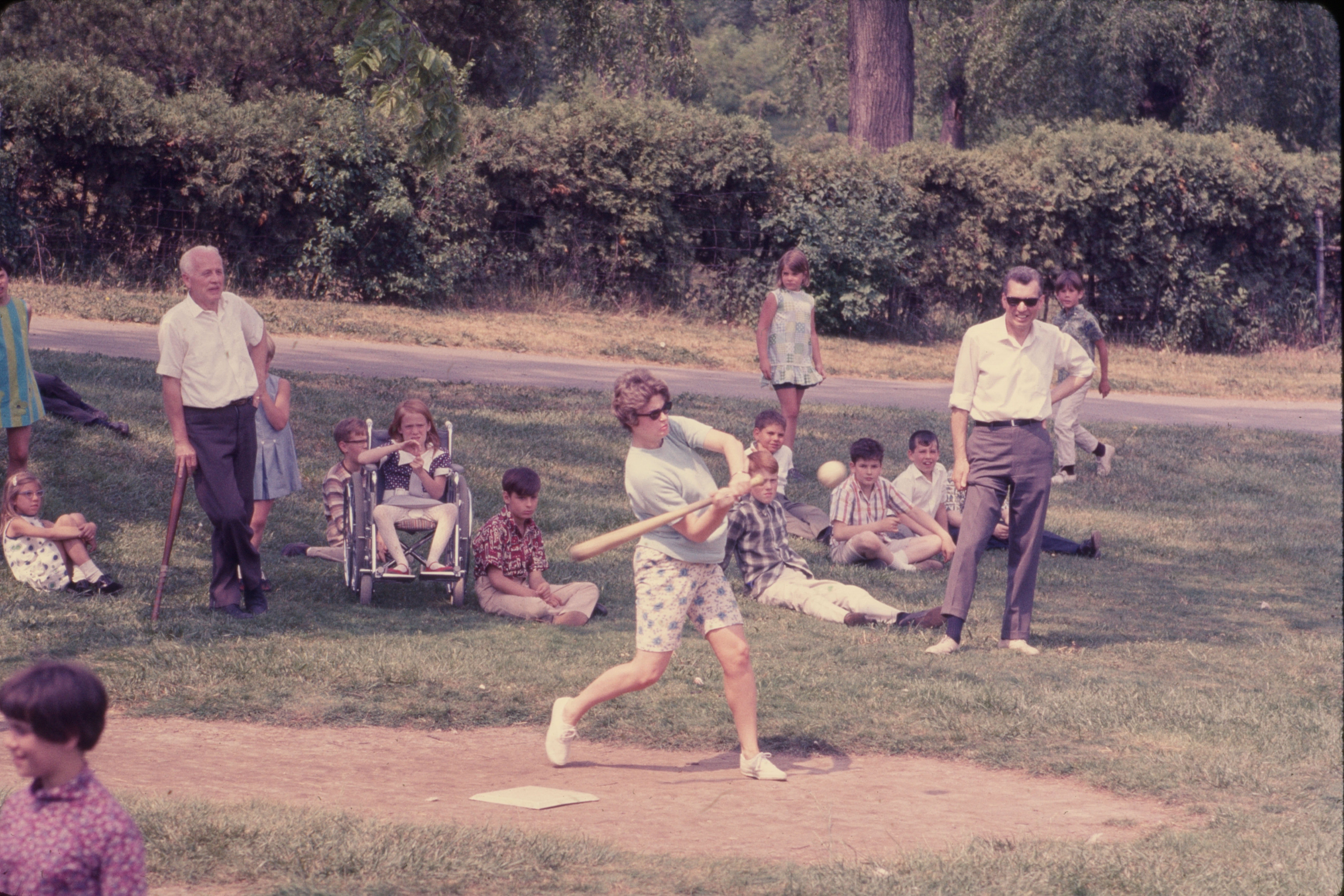
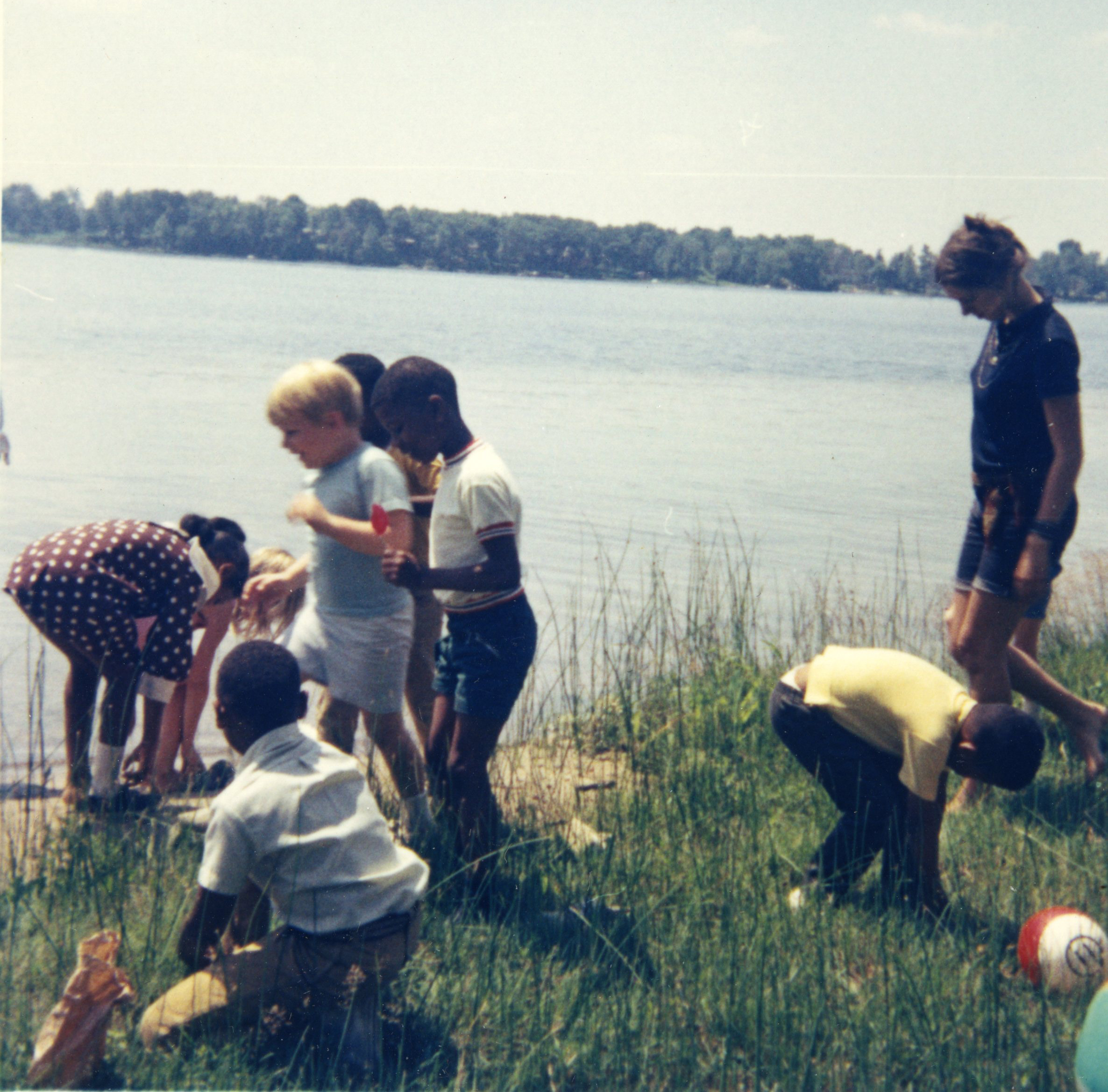
We recently received an addition to the James Carmel Papers from his son, which includes slides capturing the June 1967 softball game. The colorful images convey the camaraderie and joy of the event, with both faculty and students enthralled by the gameplay.
Brookside School students watch the softball game, June 1967Carolyn Tower and Paul Gerhardt, June 1967Louis Beer, June 1967Carolyn Tower at bat, with Paul Gerhardt, Louis Beer, and Brookside students looking on, June 1967. All images Courtesy of Cranbrook Archives
The sixth graders were up against Jock Denio, Brookside’s long-serving Headmaster; Carolyn Tower, music teacher; Louis Beer, third-grade teacher; and Paul Gerhardt, social studies teacher and director of testing and records.
In my work “fielding” research inquiries, I find that there is always a heartfelt nostalgia and tenderness in the memories and stories evoked by Brookside, a Cranbrook institution so deeply cherished by its alumni and former staff.
— Laura MacNewman, Associate Archivist Cranbrook Center for Collections and Research
Summer school. Those two words usually make most children cringe—who wants to spend their summer vacation studying and attending classes? Sheer morbid curiosity made me explore further a few folders in Brookside School Records, a collection just opened for research last month. What I found was not the usual story.
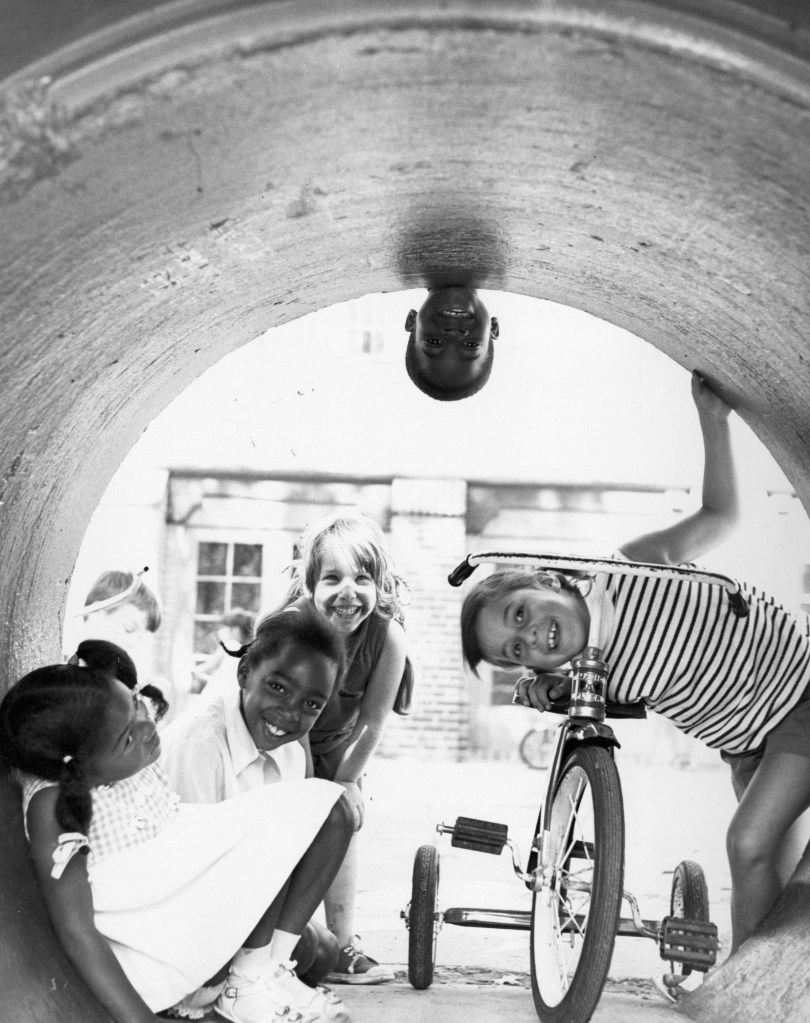
The Brookside summer school program, AWAKE, had a different purpose than remedial education for elementary students. Developed in 1968 by Pontiac Elementary Principal Jim Hawkins and Brookside Headmaster John P. Denio, it was designed to promote harmony and understanding amongst young children who might not otherwise share life experiences due to racial, social, and economic segregation.
AWAKE followed on the heels of the “long hot summer” of 1967, which saw civil unrest in Detroit and cities across Michigan, including Pontiac, due to long-standing racial inequalities for Black Americans. Instituted in 1968, AWAKE’s purpose was to “bring together young children in essentially two segregated school areas,” in some ways foreshadowing the desegregation of Pontiac and Detroit schools in the early 1970s.
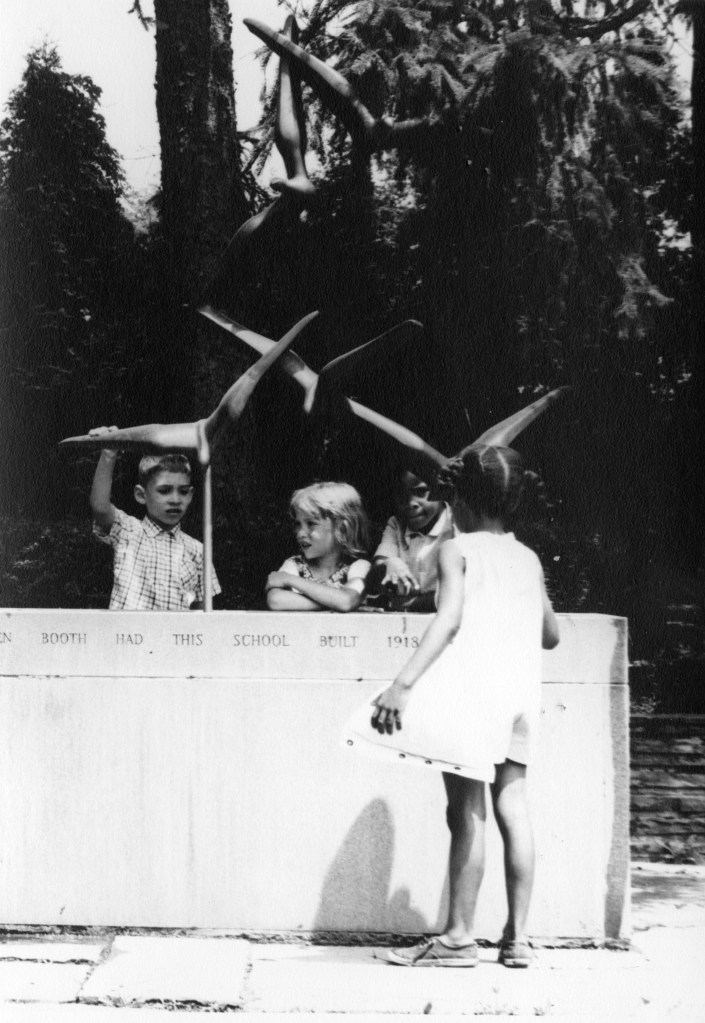
On the playgrounds of Brookside School and Bethune Elementary, circa 1968. Jack Kausch, photographer. Courtesy of Cranbrook Archives.
Roughly fifty children split their time equally between the Bloomfield Hills and Pontiac schools for five mornings a week, over a four-week period in July and August. Co-sponsored by Cranbrook’s Brookside School and Pontiac Public Schools’ Bethune and Whittier Elementary Schools, the program included art projects, field trips, swimming, reading, and other enrichment activities for kindergarten-age children in both communities. Directed at young children because of their natural receptiveness at that age, Denio believed that,
With AWAKE, children four through six, through work and play activities and through simple, open contact with each other may perhaps develop the knowledge and understanding necessary to reinforce their acceptance of each other as human beings.
Governed by a Board comprised of community members and Pontiac Public School administrators and teachers, the program was self-sustained through tuition fees (waived in cases of need), financial contributions, and community support. Christ Church Cranbrook, for example, played a significant role through both donations and parishioners’ participation in the program. Familiar Cranbrook names, such as Cranbrook School teacher and Horizons-Upward Bound founder, Ben Snyder, and his wife Margot were also regular advocates of the program.
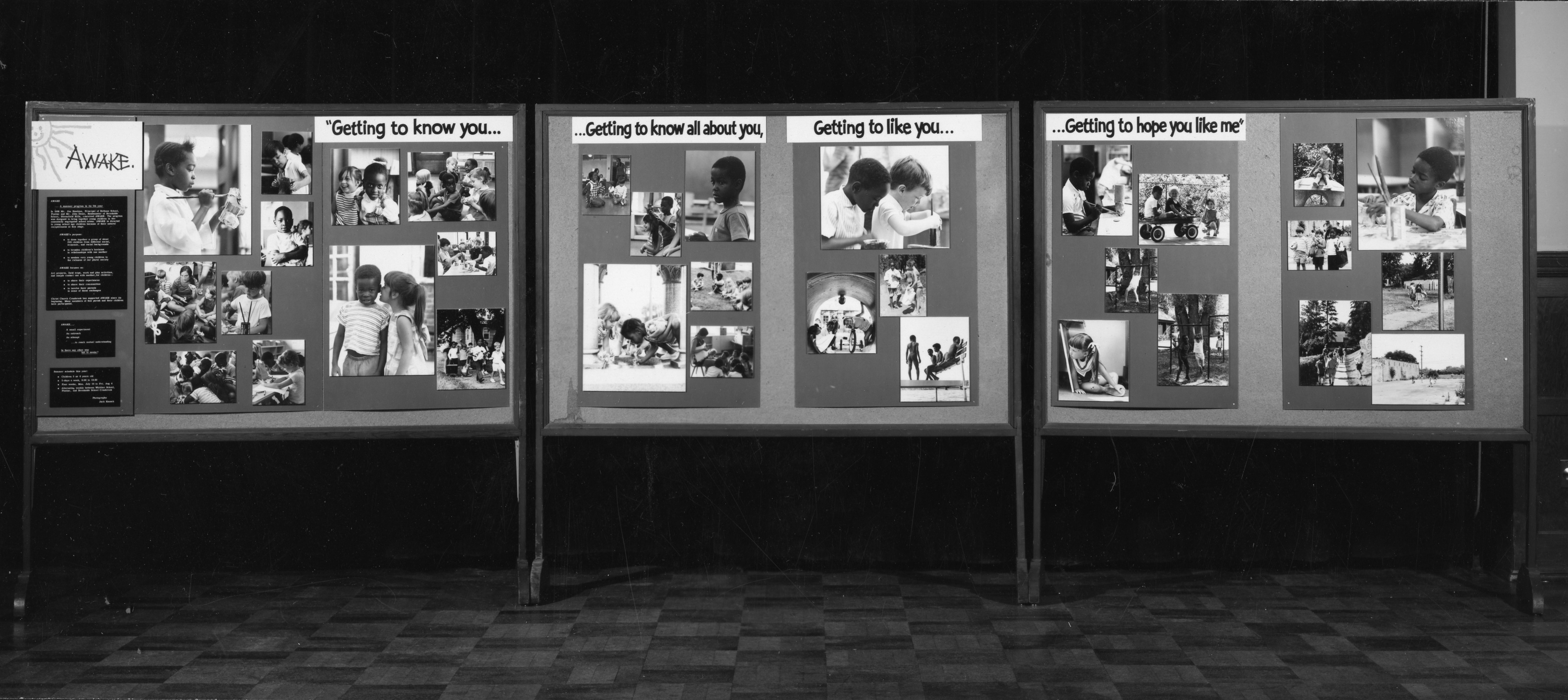
Borrowing lyrics from Rogers and Hammerstein and with photographs by Jack Kausch, poster displays sum up AWAKE’s ethos: “Getting to know you … Getting to know all about you … Getting to like you … Getting to hope you like me.” Courtesy of Cranbrook Archives.
A grass roots experiment in creative problem-solving of the urban crisis faced by cities across the country, AWAKE only lasted for five years (1968-1972). Because of its short duration, the effectiveness of the program was never fully appreciated, despite a 1969 study conducted by a University of Michigan Ph.D. student in education and social sciences and regular solicitation of teacher and parent feedback. Ultimately, rising costs and a lack of grant money; shortages of staff; and dwindling enrollment, undoubtedly due in part to the integration of Pontiac schools and the unsettling atmosphere of anti-busing protests, prohibited the continuation of the program.
—Deborah Rice, Head Archivist, Cranbrook Center for Collections and Research





 Cranbrook Kitchen Sink