Particular Architects, Elusive Materials: Headaches in Green and Red

I recently found myself at Joann Fabrics five minutes before the store closed, desperately selecting supplies for a project that was, of course, best completed that night. My delay was self-inflicted, but it got me thinking about times when much larger projects have been strained by access to supplies.

Specifically, both Eliel Saarinen and Frank Lloyd Wright created buildings with strong creative vision. Their architecture demanded specific, and sometimes hard to source, materials. Let’s look at two examples and decide if the headaches my favorite architects caused their suppliers and contractors/builders were worth the final product!

Example 1: Eliel Saarinen and Pewabic Pottery Tiles

Eliel Saarinen, Kingswood School for Girls Main Entrance Lobby (Green Lobby) plan, section, elevation, and reflected ceiling plan, c. 1930-1931. Ink, colored pencil, and pencil on tracing paper. Approx. 28½ inches x53 inches. Cranbrook Art Museum 1982.35. Photography by P.D. Rearick, Courtesy Cranbrook Center for Collections and Research.

When Eliel Saarinen specified thousands of hand-molded, hand-glazed, and hand-fired Pewabic Pottery tiles for use at Kingswood School for Girls, his contractor pushed back. Pewabic was less a tile factory than an artists’ workshop. As supplier of Kingswood’s industrially produced tile for bathrooms and basements, a concerned Mr. Burt of the Detroit Mantel and Tile Company wrote to the contractor, Charles Wermuth & Son:

We are doubtful as to [Pewabic Pottery] being able to manufacture the amount of tile as selected for this job. We raised this question during the course of selections but [Pewabic cofounder and artist] Mrs. Stratton advises that she will be able to produce this tile without any hold-up. We have advised her that any hold-up or delays caused from her material will be charged back to her.

We are writing you this letter merely as a protection against delays beyond our control.

Cranbrook Architectural Office, Box 26 Folder 11. Cranbrook Archives.

Saarinen wasn’t wrong to select Pewabic Pottery for Kingswood—it’s stunning and perfect in every way—but Burt wasn’t wrong about issues of production. It does appear that delays in the tile making caused delays in construction, raising blood pressure on both ends of Woodward Avenue.

As the first day of classes at Kingswood drew nearer, truck drivers from Cranbrook made near-daily trips to the pottery for small batches of tiles. I imagine the kiln-fresh mini-masterpieces still warm to the touch!

Did the delay in tile delivery keep Kingswood from opening on time? No. An outbreak of polio in metro Detroit meant all schools were closed by state health officials. But Wermuth used the extra time to finish the building—all Pewabic tiles were well-set and grouted for classes to begin September 21, 1931.

Eliel Saarinen and Mary Chase Perry Stratton’s 1931 masterpiece, the Green Lobby Stair. The headache of contractor Charles Wermuth and Son was worth the stress. Photography by James Haefner, 2018. Courtesy Cranbrook Center for Collections and Research.

Example 2: Frank Lloyd Wright and “The Wood Eternal”

In February 1949, Melvyn Maxwell Smith was ready to start building his long-awaited dream: a wood and brick Usonian house designed by Frank Lloyd Wright. With enough money squirreled away to begin construction, Smithy was ready to order materials. Including 14,000 linear feet of clear, old-growth, 16’ x 1’ x 2” boards of Tidewater Red Cypress wood.
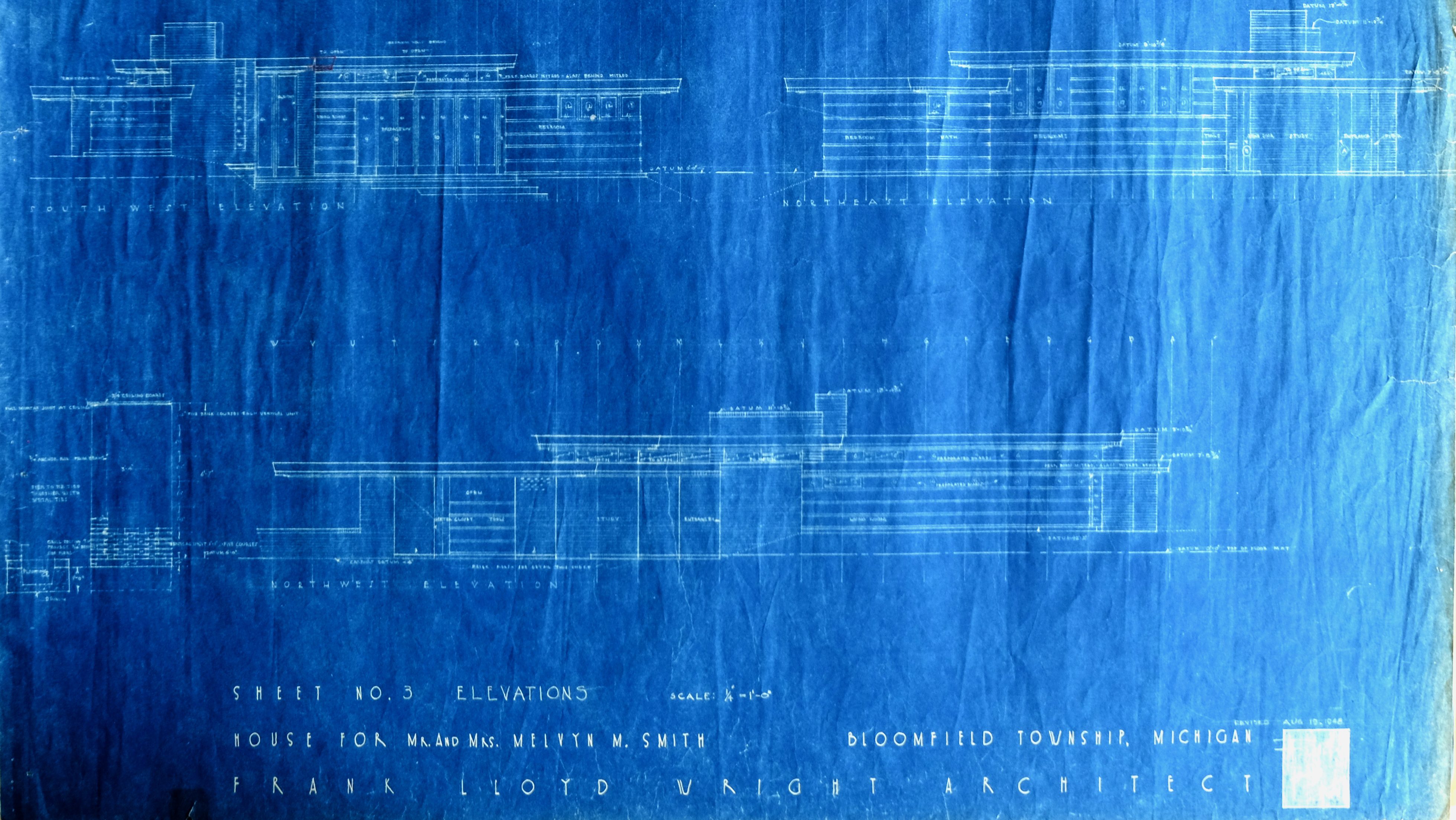
Frank Lloyd Wright, detail of House for Mr. and Mrs. Melvyn M. Smith elevation, August 1948. Blueprint. Courtesy Cranbrook Archives.

Wright had built in Cypress since at least 1914, with his first all-Cypress design, the Wiley House, coming off the drafting board in 1932. The iconic Usonian houses of the 30s and 40s are mostly built of this swamp-grown, super strong, rot-resistant golden wood.

Cypress proved to be perfect for Wright’s organic architecture. And by 1949, Cypress was incredibly hard to find.

Smithy wrote to many different lumberyards with his needed material list. Those closest to the swamps where Cypress grows—lumberyards in South Carolina and Louisiana—were unable to furnish the volume of wood needed. Lumber yards in the Midwest simply stated they did not carry Cypress. Chicago-based Hilgard Lumber Company wrote, “We duly received your inquiry…on a carload of Tidewater Red Cypress (clear grade) but clear grade in this species is extremely scarce.”

In February 1949, Fleishel Lumber Company of St. Louis (who had been forwarded Smithy’s large request) agreed to fulfill the order. Smithy simply needed to let the yard know when he wanted the wood delivered. Or at least, that was the idea.
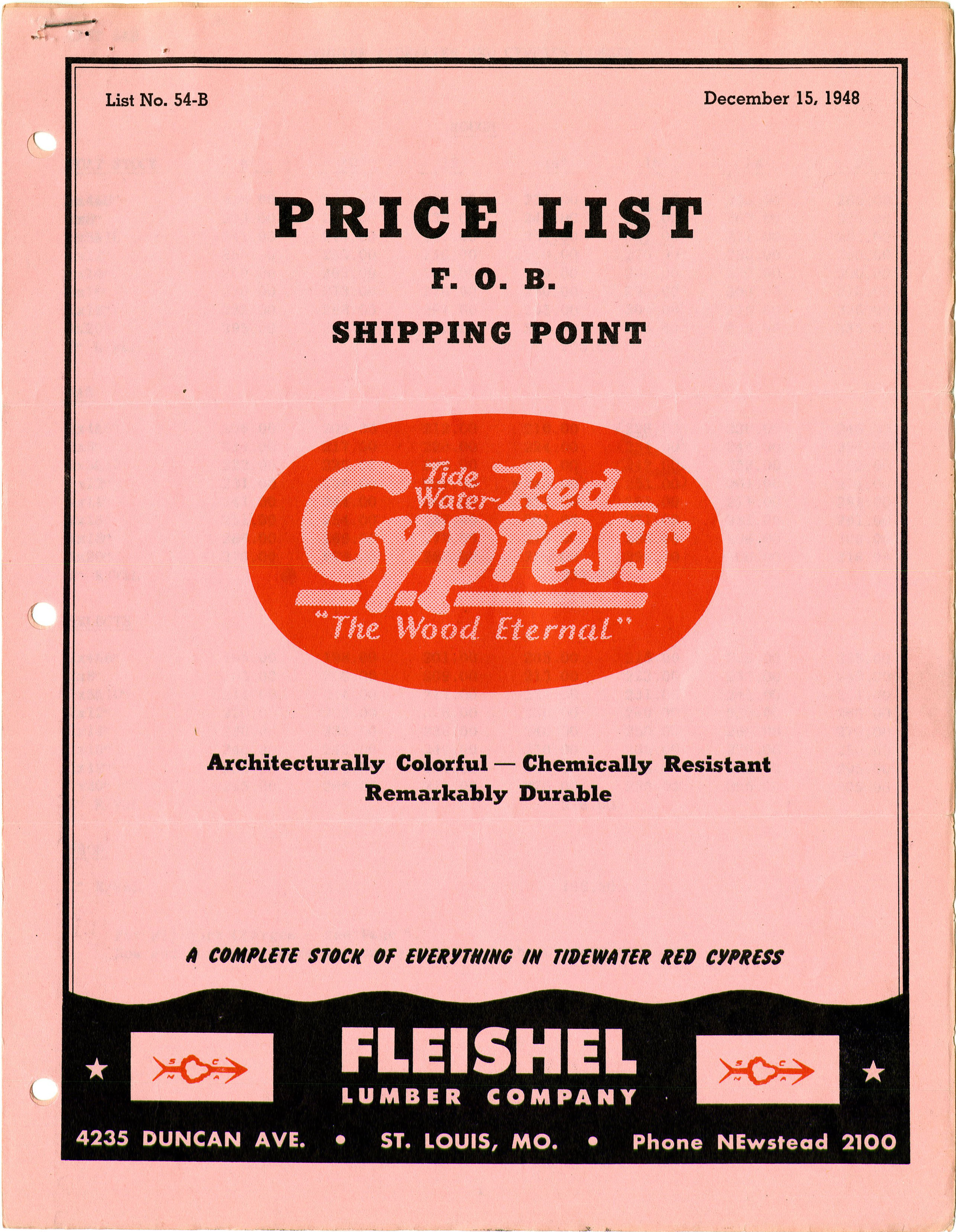
Every month, Smith wrote, called, or telegrammed Fleishel, asking for his order. And every month, the lumber yard replied: we don’t have it all, but we have some. As time ticked by and Smithy’s house waited to take shape, Fleishel offered up concessions. Instead of kiln dried, would Smithy accept natural dried Cypress? No. Recycled or swamp-preserved? No. Smaller boards, but more boards? No.

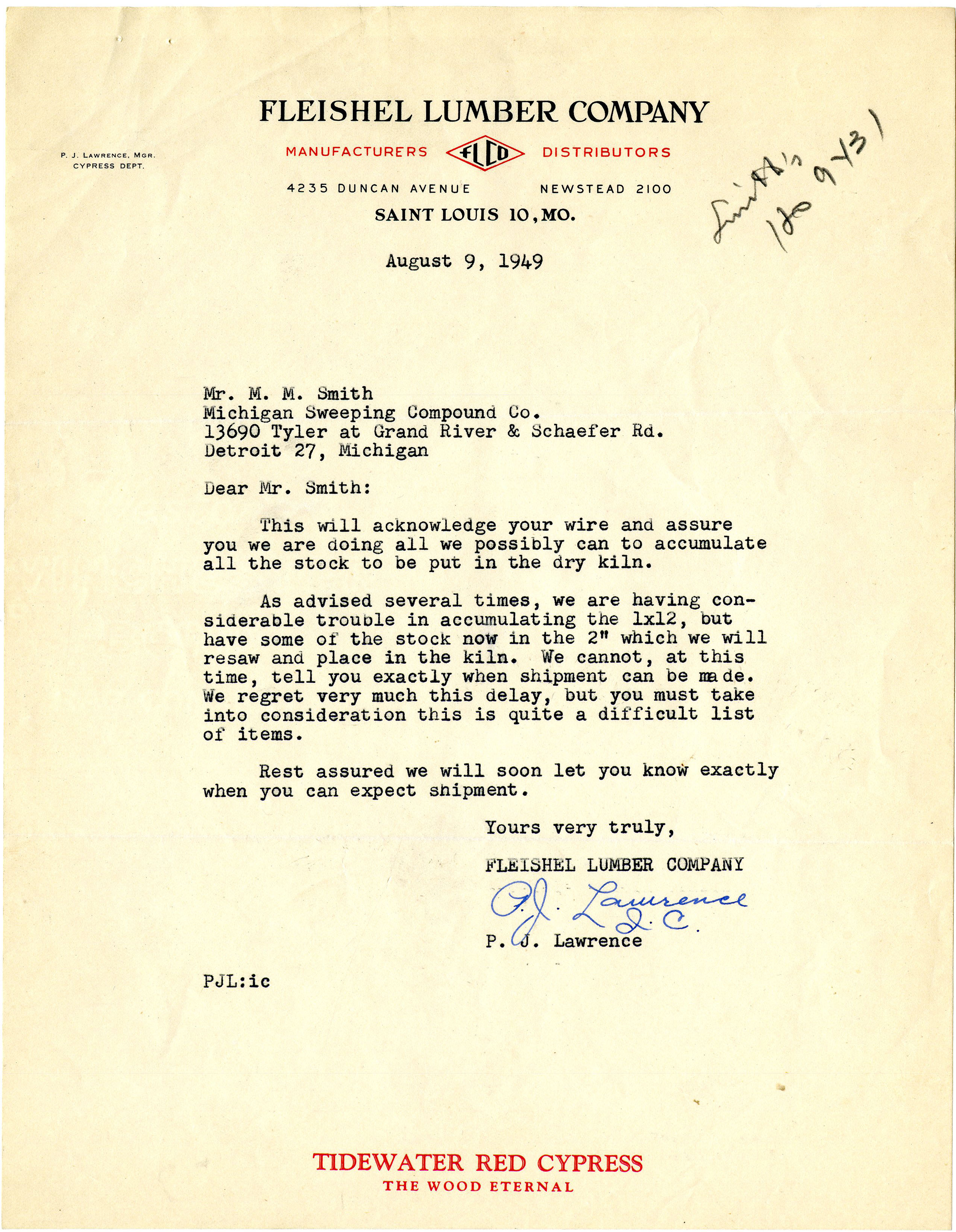
Smithy needed what Wright specified: long, wide boards. By August 9, 1949, things were looking up, even if Fleishel’s salesman sounds a bit annoyed:

…We are doing all we possibly can to accumulate all the stock to be put in the dry kiln.

As advised several times, we are having considerable trouble in accumulating the 1×12…We cannot, at this time, tell you exactly when shipment can be made. We regret very much this delay, but you must take into consideration this is quite a difficult list of items.

Smithy’s goal of having the lumber on hand during the Summer holiday, when he could be on-site every day, did not happen. His first day teaching his Cody High English class that year? September 5.

Finally, on September 23, 1949, Fleishel Lumber packed a railroad car full of 14,000 linear feet of clear, kiln-dried Cypress and sent it toward Bloomfield Hills. Just seven months and a few days after it was ordered.
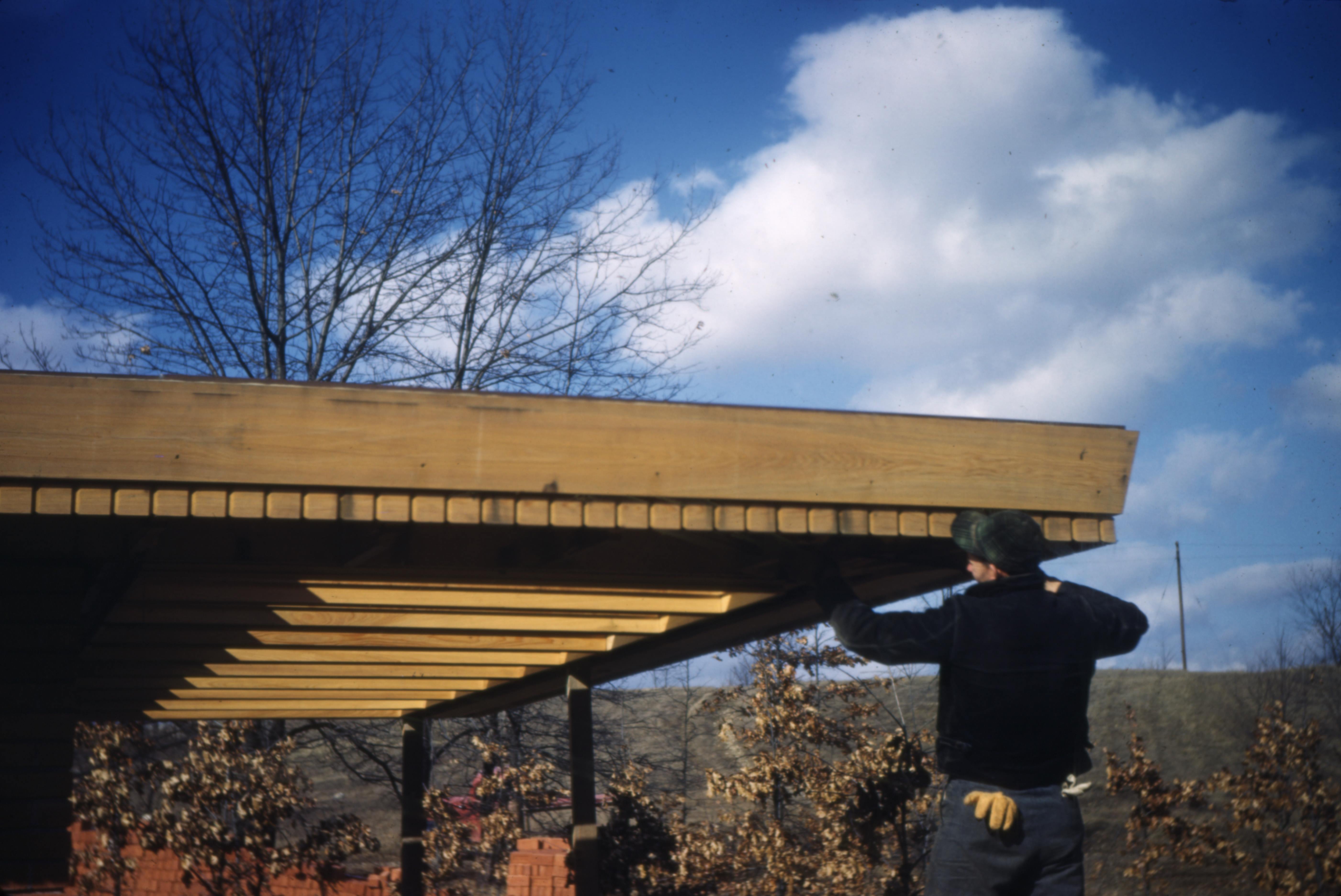
Work continues on Cypress boards of Smith House, winter 1949-1950. Courtesy Cranbrook Archives.

About seven months later, Melvyn and Sara Smith had a Cypress house! When it was completed in May 1950, the Smith House became Frank Lloyd Wright’s last entirely Cypress-built project.

Tidewater Red Cypress with Detroit Common Brick defines the Frank Lloyd Wright-designed Smith House, 1950. Courtesy Cranbrook Archives.

So, did being particular about materials pay off for Mr. Wright and Mr. Saarinen? I think the Smiths and thousands of Cranbrook students would agree: absolutely.

Kevin Adkisson, Curator, Cranbrook Center for Collections and Research

Note: Oh, and if you want old-growth Cypress today? The current owner of the Frank Lloyd Wright Willey House, Steve Sikora, described the purchasing of Cypress wood in the 2010s as operating among “an assortment of hucksters, charlatans, and petty criminals, or in industry parlance, ‘wood brokers.’” Head on over to The Whirling Arrow blog to read a lot more about Cypress and Wright!
Step-back with a Peacock

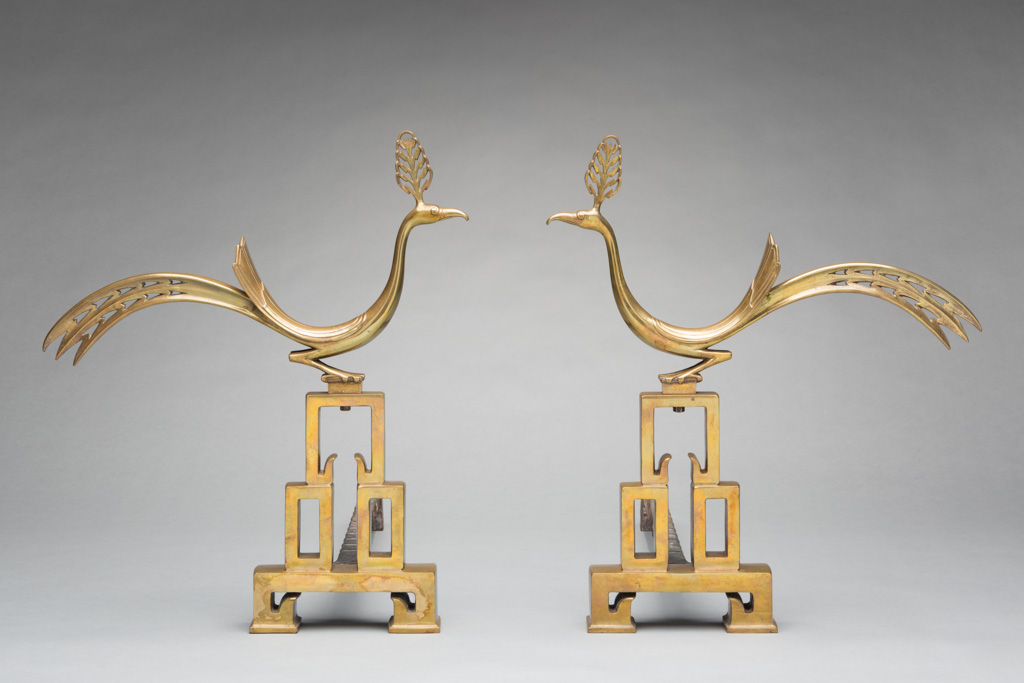
From the moment I entered Saarinen House twenty-seven years ago to give my first public tour, to my upcoming presentation for the Kingswood Middle School for Girls Explore Cranbrook students, I remain . . . simply enthralled. No more so than by the vibrant Peacock Andirons gracing the living room hearth.

Eliel Saarinen’s cast bronze Peacock Andirons, 1928-29. Each 21-1/4” W x 22-3/8” H x 27-1/4” D. Collection of Cranbrook Art Museum, CAM1985.2 a-b. Robert Hensleigh, photographer.

Designed by Finnish-American architect Eliel Saarinen and produced by Sterling Bronze Company, New York between 1928 and 1929, these cast bronze andirons were paid for by the Cranbrook Foundation and entered in the 1928-1930 Arts & Crafts Building ledger on pages 40-41 (third line from the bottom)—Date: 1-7-30; No.: 515; Name: Sterling Bronze Co; Remarks: 1 pair/ Andirons for Saarinen Res[idence]; Amount: $152.50 (the equivalent of $2,631.50 in 2023).

Arts & Crafts Building ledger, 1928-30. Laura MacNewman, photographer, 2023. Cranbrook Archives.

The pair of birds are fabulous. Ready and alert, they face each other, ankles bent, balanced upon splayed toes.

Continue reading

Christ Church Cranbrook Baptistry

To the north of the narthex at Christ Church Cranbrook stands the Baptistry, where infants are christened with the pouring of water over the head.

Holy Baptism is full initiation by water and the Holy Spirit into Christ’s Body the Church. – The Book of Common Prayer

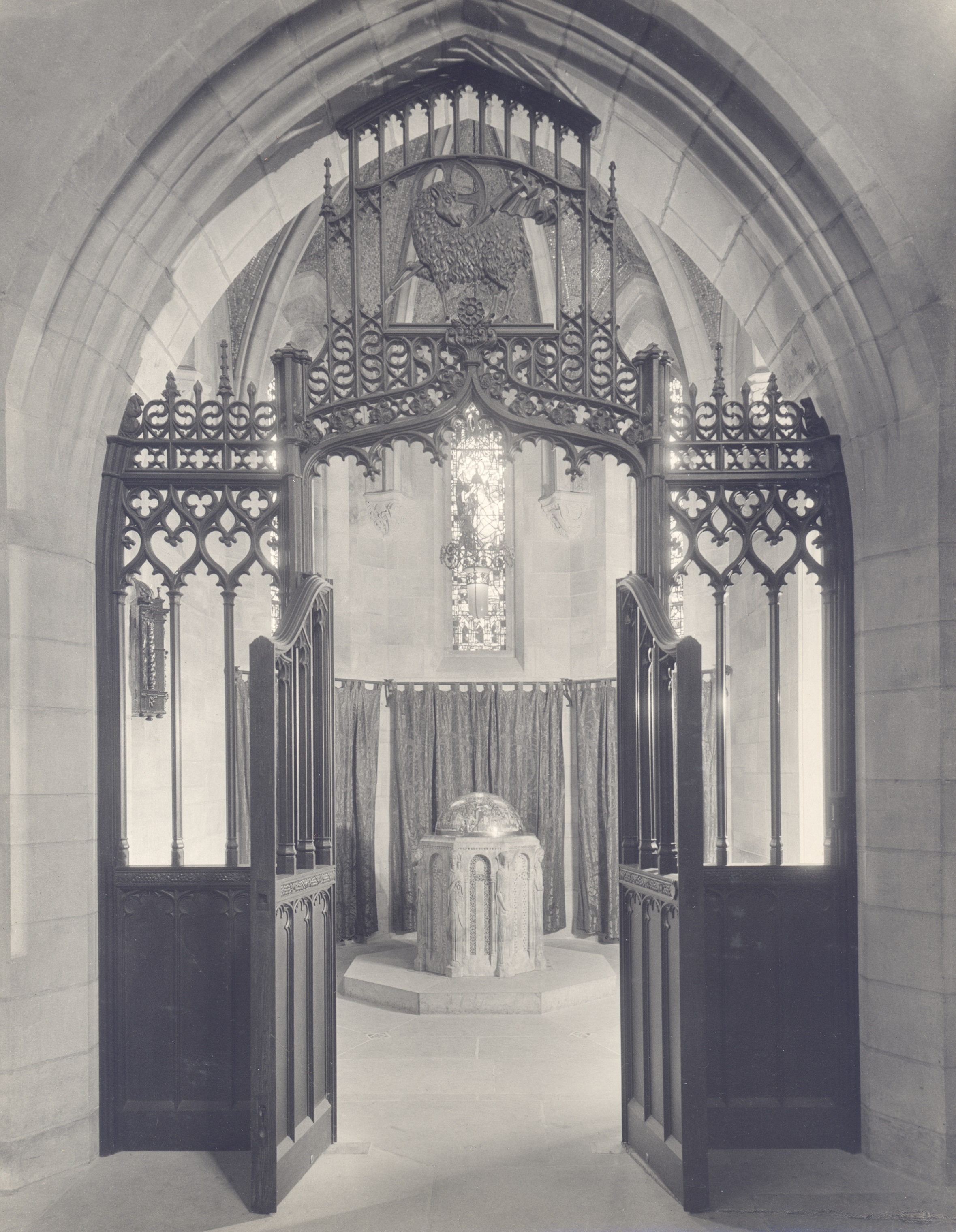
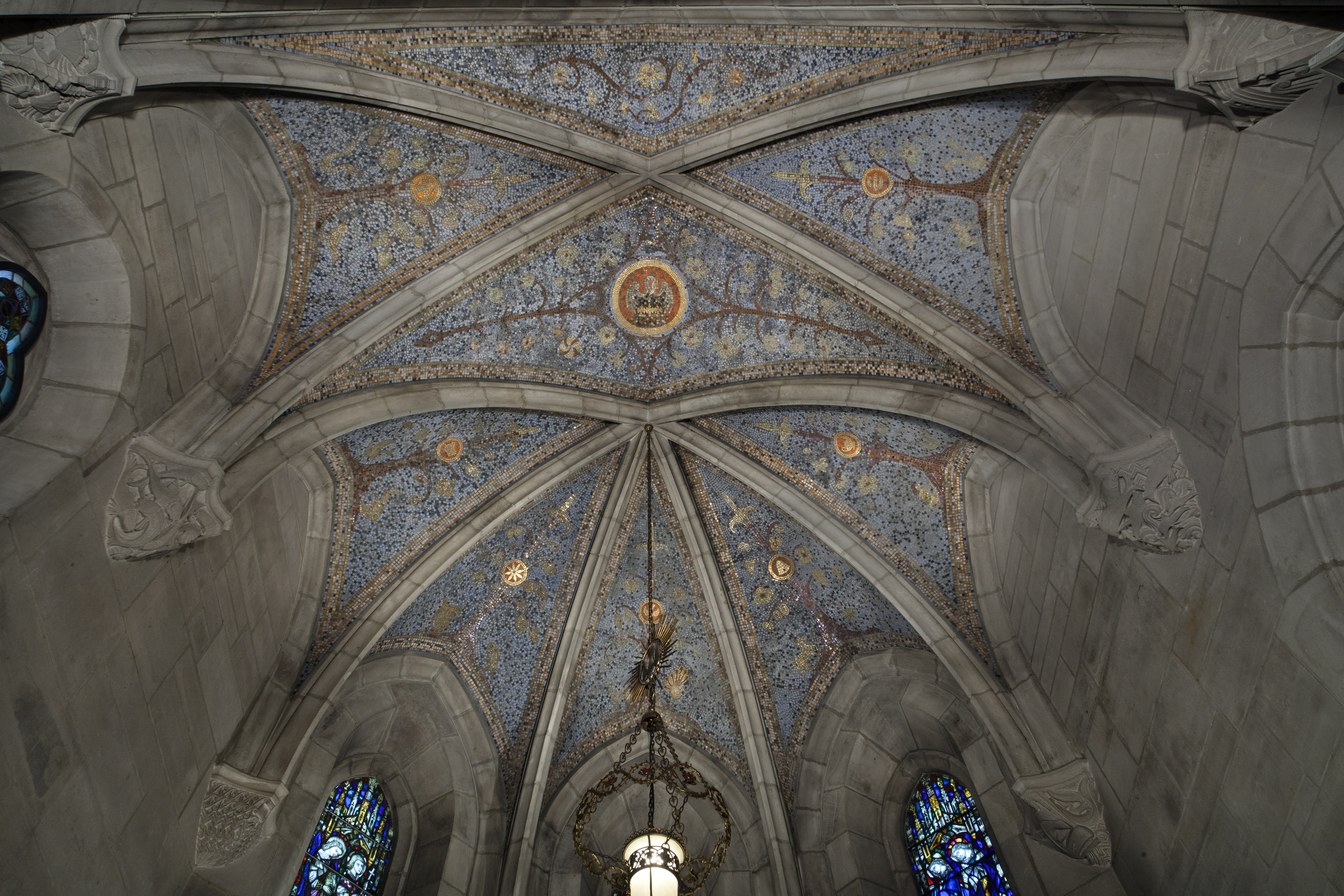
The whole Baptistry is a work of art, featuring an ornate wooden screen topped by the Lamb of God, a baptismal font with an ornate cloisonné cover that sits upon an exquisitely carved base, and a beautiful mosaic ceiling.

1992-16 Christ Church Baptistry

Christ Church Cranbrook, Baptismal Font, 1928. Peter A. Nyholm, photographer. Courtesy of Cranbrook Archives, Oscar H. Murray Photograph Collection.

Today, I want to focus on the ceiling by Mary Chase Perry Stratton and her Pewabic Pottery.

As George G. Booth was constructing Christ Church, he looked for the best craftspeople. In a 1926 letter to Bertram Grosvenor Goodhue Associates, architects of the church, Booth states, “I should be pleased if we are able to have a piece of Pewabic work in the Church and have thought the most suitable location would be the vault of the Baptistry”

After a seven-year rift with his old friend Mary Chase Perry Stratton over not allowing her creative license on projects at Cranbrook House, Booth offered an olive branch by giving Stratton the artistic freedom to create the Baptistry ceiling in 1926. This included the mosaic’s material and size, and how to incorporate the symbols of the seven gifts of the Holy Spirit into the work.

Baptistry ceiling

Christ Church Cranbrook, Baptistry Ceiling, 2015. P.D. Rearick, photographer. Copyright Cranbrook Center for Collections and Research.

The gifts of the Holy Spirit, which the initiant receives at baptism, are represented as follows: Wisdom is a Beehive (also a favorite symbol of the Booth family), Understanding is a Lamp, Counsel is the Star, Fortitude is an Oak, Piety is a Cross, Knowledge is a Book, and Godly Fear (Peace) is a Dove.

Baptistry ceiling 3

Christ Church Cranbrook, detail of Baptistry Ceiling, 2015. P.D. Rearick, photographer. Copyright Cranbrook Center for Collections and Research.

As former Cranbrook Center Collections Fellow Stephanie Kae Dlugosz-Acton wrote in the publication from her exhibition, Simple Forms, Stunning Glazes: “These symbols are centered on treetops resembling fleurs-de-lis. At the base of each of these saplings, a sea of blue tiles of varying shades surround two different animals, usually one mammal and one bird. All of the small tesserae tiles have the signature iridescence of Pewabic and create a glittering effect that shifts as one moves through the intimate and reverent space.”

Baptistry ceiling 2

Christ Church Cranbrook, detail of Baptistry Ceiling, 2015. P.D. Rearick, photographer. Copyright Cranbrook Center for Collections and Research.

What a wonderful gift to all families who share a Christening in this Baptistry, and to all the visitors to Christ Church Cranbrook.

Leslie S. Mio, Associate Registrar

A Treasure Hunt in the Archives

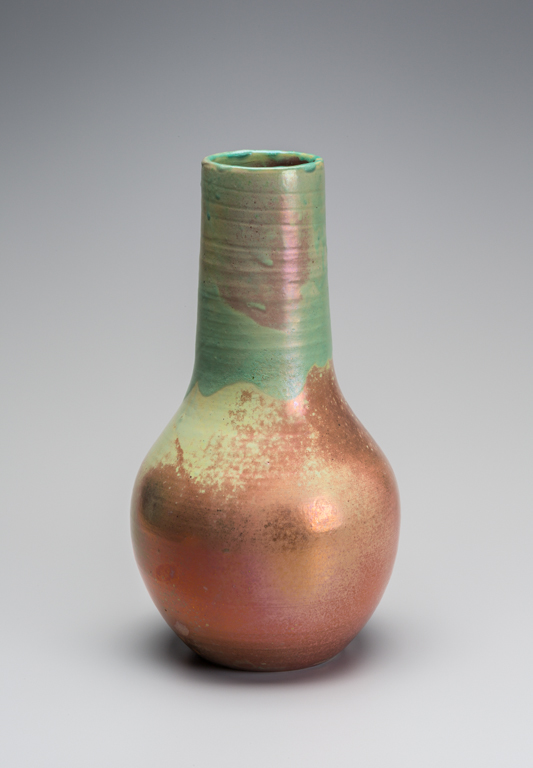
I have had the pleasure of spending much of my time over the last year going through the Cranbrook Archives in search of information about Pewabic Pottery.  This is in preparation for the upcoming exhibition Simple Forms, Stunning Glazes: The Gerald W. McNeely Pewabic Pottery Collection opening December 12. Through the Archives’ amazing resources, including inventories, architectural drawings, correspondence, receipts, historic photographs, and even meeting notes from the founding of Cranbrook School, one of the most awesome discoveries was regarding one of the Pewabic Pottery vases in our collection.

Cranbrook Educational Community Collection, CEC 276 Photographers: Tim Thayer and R. H. Hensleigh

Cranbrook Educational Community Collection, CEC 276
Photographers: Tim Thayer and R. H. Hensleigh

Through inventories we can trace the placement of this vase from during its life in Cranbrook House. It was located in the Living Room in 1921, and by 1933 had been relocated to the Sunset Room. In 1937, George Booth notes the work by its size and a brief description, “14 inch vase- luster- Pewabic.” Cranbrook has 15 Pewabic works purchased during Booth’s lifetime which now reside between the collections of the Art Museum and the Cranbrook Educational Community. While I am still working to place the pieces of the puzzle together to see if we can do this for other work, it may not be possible as some of the receipts and notations are much more cryptic including only “Pewabic Vase” with no dimensions, or description.

It’s treasure hunts like these that make the Archives such a great place to spend my time as you never know what you might find and where it will take you!

Stefanie Dlugosz-Acton, Collections Fellow, Center for Collections and Research

First Impressions; or Pride and Appreciation

As the newest staff member at the Cranbrook Center for Collections and Research, I am on a HUGE learning curve.  I knew, taking this position, that Cranbrook had a deep and rich history, and a long association with famous artists, designers, and architects.  However, my first days here were spent touring campus, witnessing just what those associations created.

My first impressions of the cultural properties I will be working with are “Wow! What?! Cool.”  I hope in the coming months to be able to share some of those moments on the Kitchen Sink, but here are my first three:

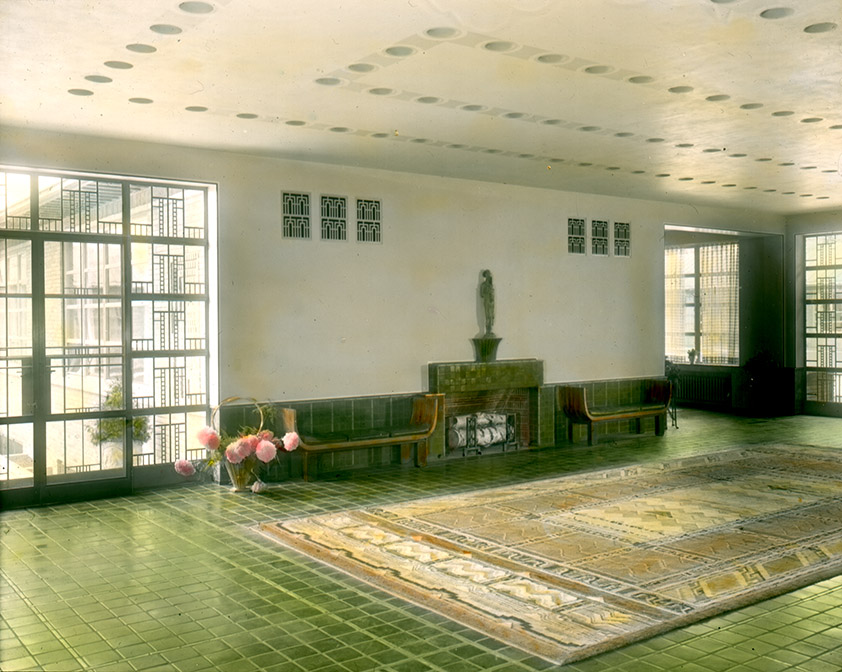
Wow: Green Lobby, Kingswood School.

Kingswood School Green Lobby, photographer George W. Hance, 1932. Cranbrook Archives.

Kingswood School Green Lobby, photographer George W. Hance, 1932. Cranbrook Archives.

What: The 319-acre campus was designated a National Historic Landmark on June 29, 1989 for its significant architecture and design – 319-acres full of cultural properties!

Cool: Thornlea – and I get to explore all the rooms.

Leslie S. Mio, Assistant Registrar, Cranbrook Center for Collections and Research

Create a website or blog at WordPress.com