Photo Friday: Family Life at Thornlea

Henry Scripps Booth designed his home near Cranbrook just north of the Meeting House and Brookside School (another building on which he served as architect) in a thorny meadow. He called it “Thornlea” after its hardscrabble site. Built from 1925-1926, the house and its grounds hosted over sixty years of family gatherings, large and small. As is evidenced in Henry’s photograph albums, he, his wife Carolyn, and their five children celebrated holidays and entertained friends often. Equally represented are images of everyday life, such as this one:

Henry Scripps Booth can be seen soaking up the rays alongside the pool at Thornlea House in the summer of 1964. To his right are son David and grandson Miles. 

Henry Scripps Booth can be seen soaking up the rays alongside the pool at Thornlea House in the summer of 1964. To his right are son David and grandson Miles. Courtesy Cranbrook Archives, Henry Scripps Booth Papers.

With just ten official days left of summer, let’s take a moment to bask in similar memories of long hot sunny days.

See Thornlea for yourself and help us make new memories at the house on Saturday, September 21st, when you join us for A House Party at Cranbrook. Thornlea will be open for tours, live jazz at the piano, and cocktails on the patio prior to the evening’s live auction and dinner at Cranbrook House. Join us and support Cranbrook Archives and the Center for Collections and Research at our annual fundraiser, tickets and sponsorship opportunities are still available!


Deborah Rice, Head Archivist

The Day Cranbrook Went Bananas

You probably know Cranbrook Kingswood Upper School has a football team, and you might remember that the Detroit Lions held training camps here in the 1970s, but did you also know that Cranbrook Academy of Art is an undefeated intercollegiate football team?

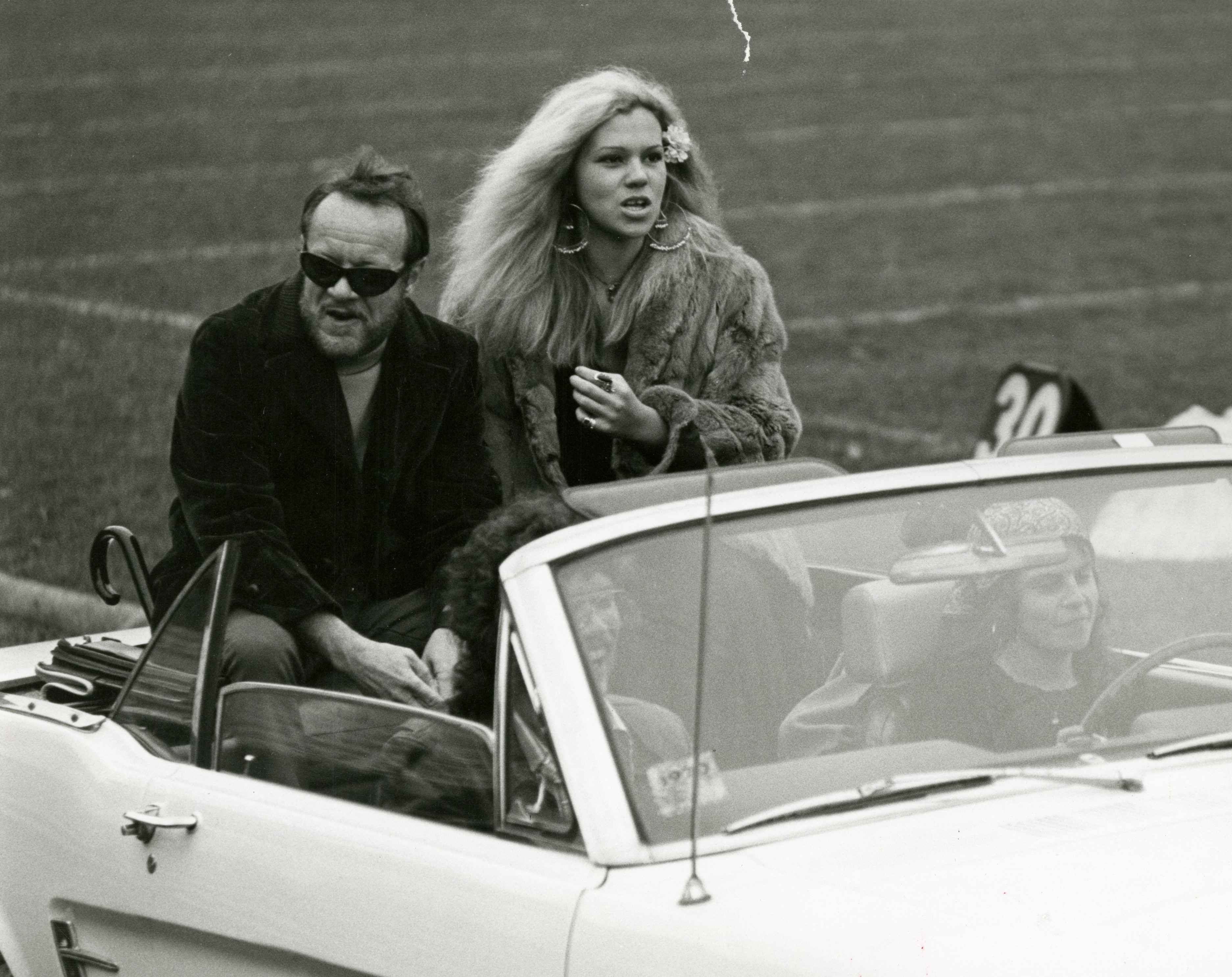
Homecoming Queen Barbara Tiso takes a convertible ride around the field with Academy President Wallace Mitchell.

Homecoming Queen Barbara Tiso takes a convertible ride around the field with Academy President Wallace Mitchell. Cranbrook Archives.

As The Cranbrook Magazine reported in the Winter 1971 issue, “Before winter zeroed in [the Academy] had a rousing football weekend similar in events, at least, to those at large universities that specialize in such things.” There was a bonfire pep rally, organized cheering sections, a Homecoming Queen, the game itself with a halftime show from both schools, and a victory banquet.

Sculpture head Michael Hall regarded the weekend as a conceptual art project, and said “as spectacle, pageant, formation and participation football is a direct parallel to art forms as disparate as the Baroque Mass and Alan Kaprow’s ‘Soapsuds Event’.”

The idea for a game began after conversations between Hall and a colleague at the School of the Art Institute of Chicago. The students at both schools accepted the challenge, and Cranbrook’s bucolic suburban setting (replete with Thompson Oval) seemed the idea location.

The game of flag football was covered by newspapers in Detroit and Chicago, with radio DJ’s in Detroit billing the game on Cranbrook School’s field as a season highlight. Cranbrook’s seventy-six male students were augmented with faculty and Nick Vettraino, groundskeeper. After an extensive (minor) injury list, only twenty players made the roster. I’ll let the Magazine coverage of the game speak for itself:

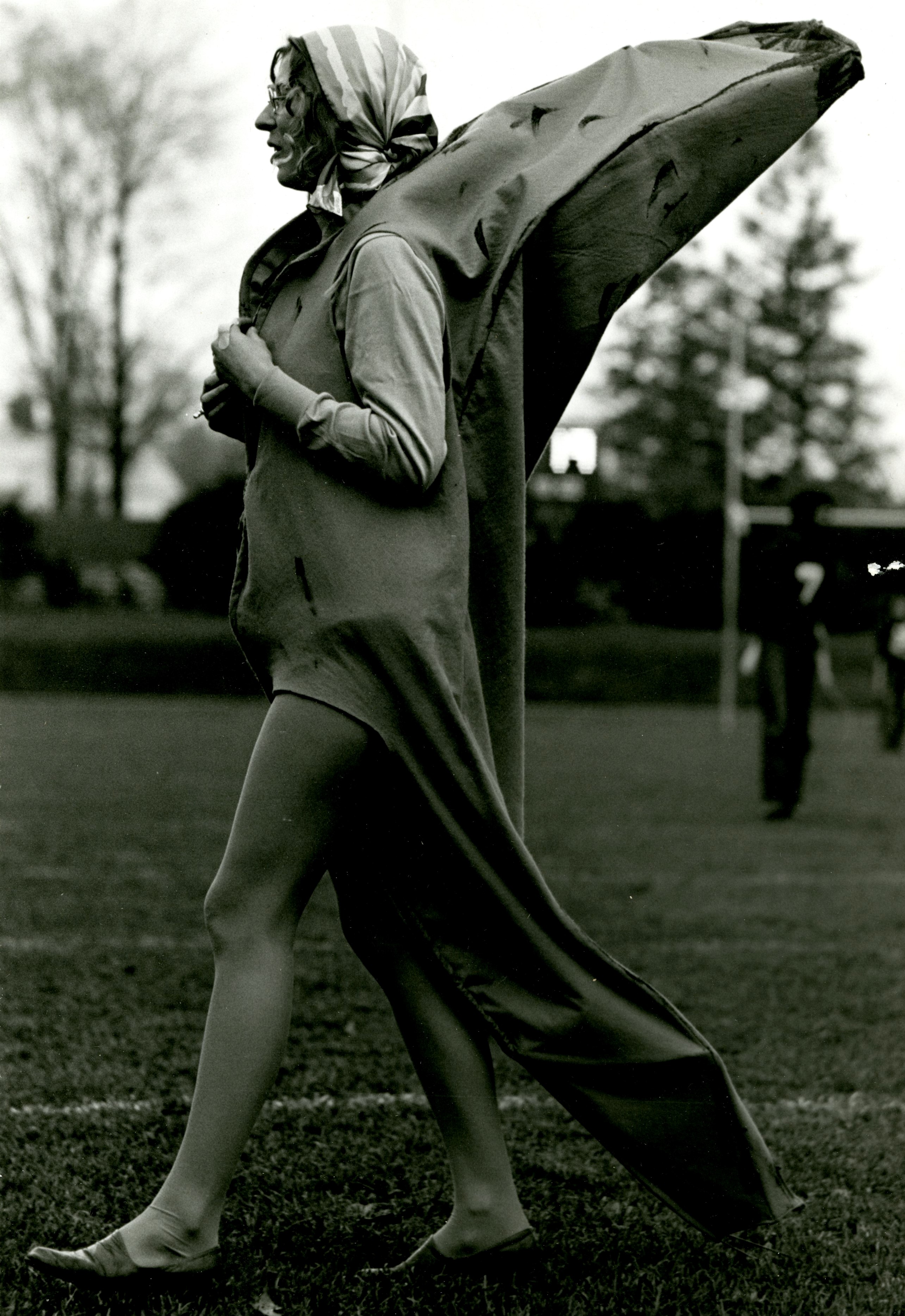
Emma Kay Szabados was a big hit as the Academy's mascot banana.

Emma Kay Szabados was a big hit as the Academy’s mascot banana. It is unclear why we were the bananas. Cranbrook Archives.

“Hog Butchers and Bananas were noticeably self-conscious when they trotted onto the field. But as the game progressed and the crowd of 300 cheered vociferously, players and spectators alike were caught up in the spirit of true athletic competition.

Cranbrook grabbed an early lead on the swift running of Nick Vettraino and the spectacular pass catching of Dick Ewen. But the Hog Butchers kept fighting back.

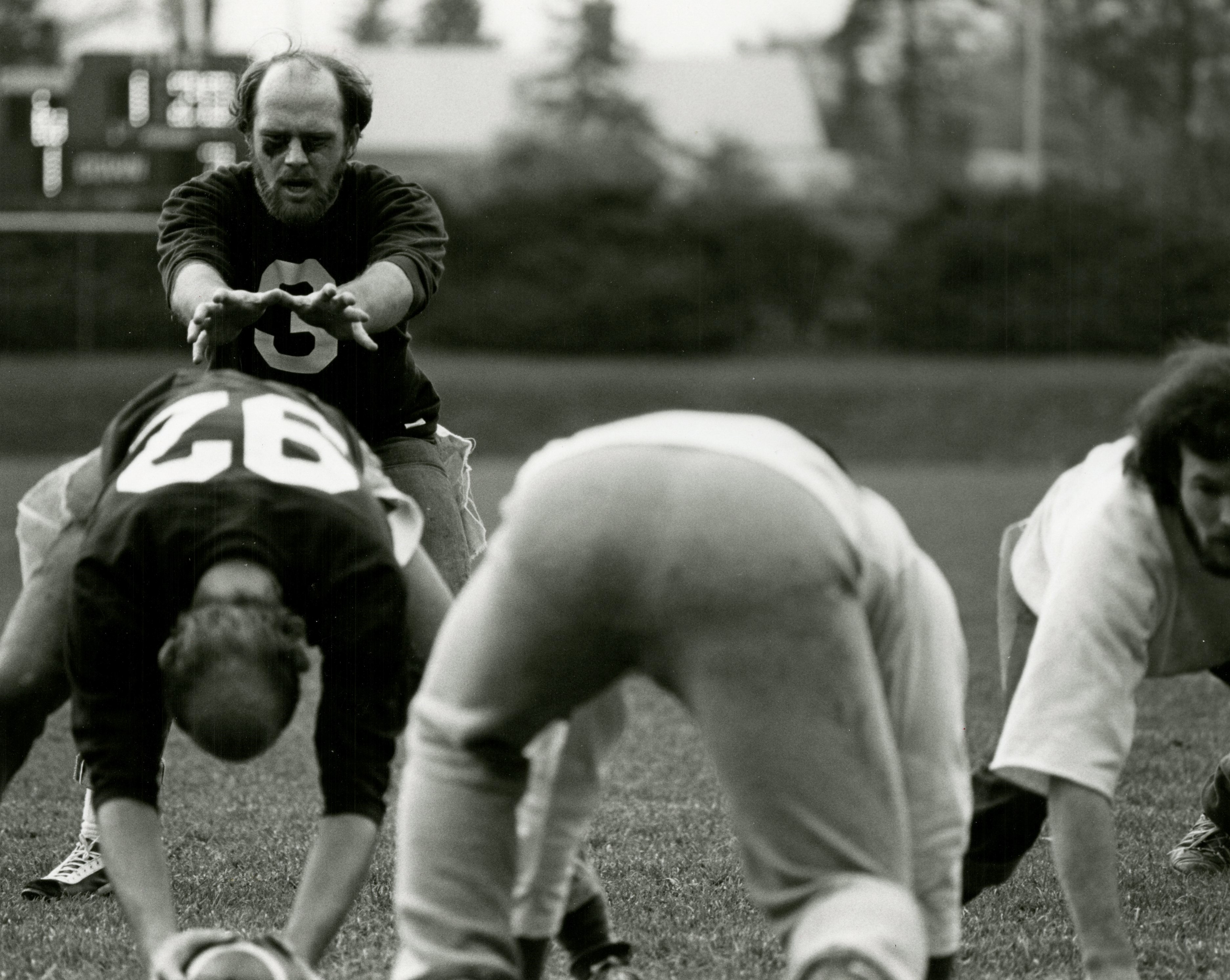
Quarterback George Sorrels used a “flexible formation from the pro set,” allegedly adapted from Detroit Lions plays by Coach Mel Baker. Cranbrook Archives.

“Cranbrook grabbed an early lead on the swift running of Nick Vettraino and the spectacular pass catching of Dick Ewen. But the Hog Butchers kept fighting back.

the pro-Bananas crowd flocked onto the field and hoisted heroes onto their shoulders.

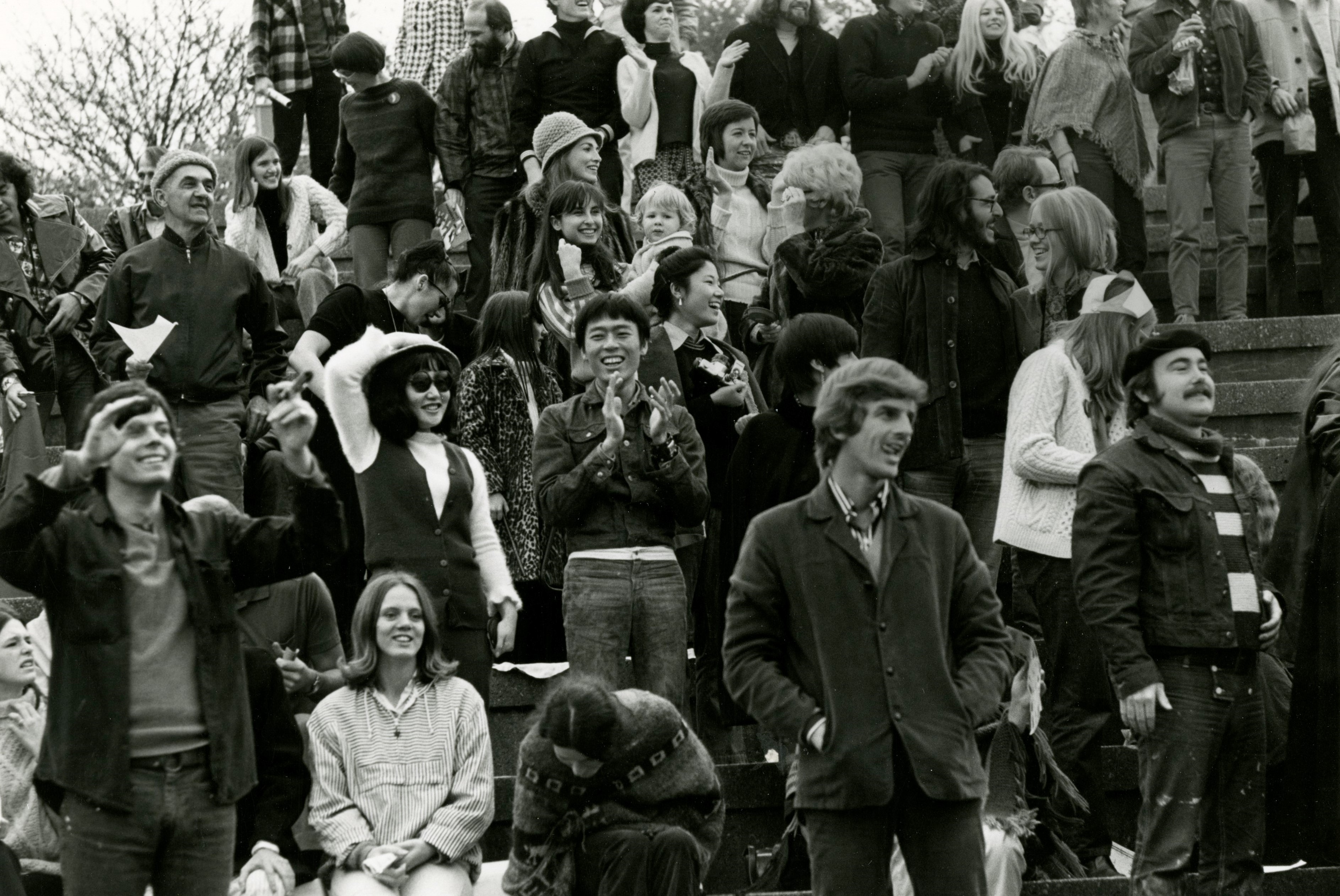
The crowd going wild as Cranbrook marches on to victory. Notice Gerhardt Knodel, Artist-in-Residence of the Fiber department (and future Director of Cranbrook Academy of Art) in the foreground. Cranbrook Archives.


“As darkness descended Cranbrook led 27-25 with time left for just one play. Chicago tried a field goal that would bring victory. The kick failed, and the pro-Bananas crowd flocked onto the field and hoisted heroes onto their shoulders.

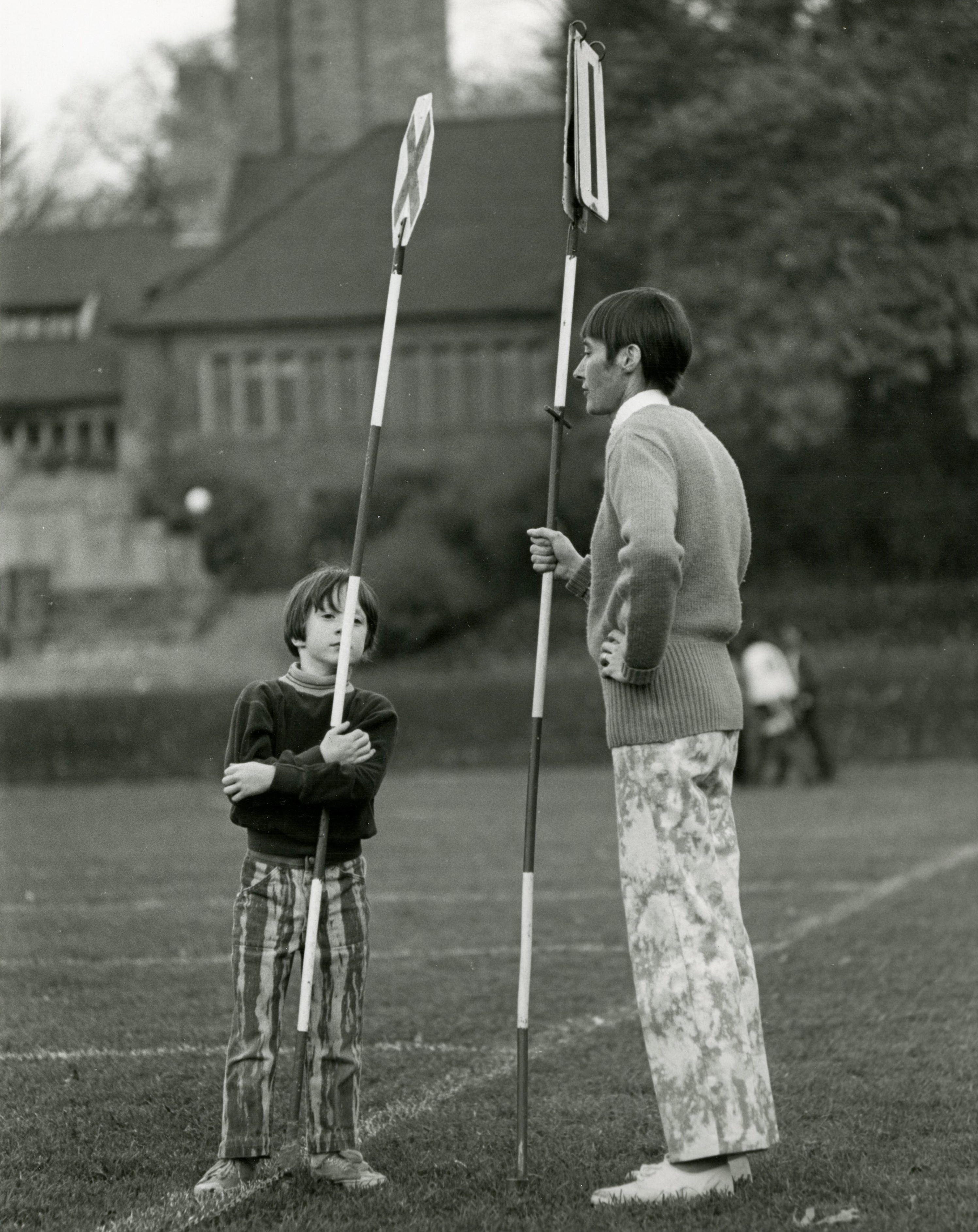
Patrick and Mary Mitchell, son and wife of Academy President Wallace Mitchell, manned the sideline markers.

Patrick and Mary Mitchell, son and wife of Academy President Wallace Mitchell, manned the sideline markers. Cranbrook Archives.

“Art or not, it was a helluva weekend. And after it was all over the campus was permeated with a camaraderie never seen before in Academy history.”

As the Upper School kicks off its season against U of D Jesuit tonight, I’d like to wish everyone a happy football season (Go Cranes!) and welcome Schools and Academy students back to campus. Perhaps we will see a rematch of the Bananas and the Hog Butchers on the gridiron soon? If so, there’s a new press box from which to call the game. I volunteer to provide color commentary!

Kevin Adkisson, Curatorial Associate

Photo Friday: Garnett’s Orange Grove

Florida, it seems, has always been a tourist destination. In 1911, Henry Wood Booth, Clara Gagnier Booth, and their granddaughter Grace Ellen Booth visited a tourist attraction known as Dr. Garnett’s Orange Grove in St. Augustine, Florida. It was the novelty of picking oranges in “rural” St. Augustine that attracted visitors. Dr. Garnett was ready to capture a memory of your visit, installing a photography studio in his orange grove. Lewis W. Blair was the onsite photographer at Garnett’s from 1910 to 1912.

From left: Grace Ellen Booth, Henry Wood Booth, Clara Gagnier Booth picking oranges at Garnett's Orange Grove in St. Augustine, Florida, 1911. Photo by Lewis W. Blair.

From left: Grace Ellen Booth, Henry Wood Booth, Clara Gagnier Booth picking oranges at Garnett’s Orange Grove in St. Augustine, Florida, 1911. Photo by Lewis W. Blair. Courtesy Cranbrook Archives.

This postcard was mailed to George and Ellen Booth March 14, 1911. The note read, “Just had lunch Mch 14. Grace, Gail, Ma and I went by boat this AM to north shore. Fran just learned that James is coming. We are all well today. Temp 68 – 83. H.W.B.”

Leslie S. Mio, Associate Registrar

The A-maize-ing Frank Lloyd Wright

Frank Lloyd Wright, architect of the Smith House, called it his “little gem.” Many of his apprentices considered it one of the best examples of Wright’s Usonian style. So it should come as no surprise that he liked to stop by and see the Smiths when he was in Detroit.

On a visit in 1953, a luncheon was organized by Mary Palmer, Elizabeth Affleck, and Sara Smith. The Smith House was to be the site of the event. Sara Smith recalled the event in her biography, Building a Dream: The Sara Smith Story by Kathryn Watterson.

“‘Mary called me and Elizabeth Affleck and we decided to have a luncheon at my house,’ Sara says. ‘I had just been to the store and I had bought a whole lot of corn on the cob and much more fish than I could possibly use in a week.'”

The luncheon also consisted of lamb and some salads, but it was Sara’s corn that was a hit. “‘[Wright] said that one of his favorite foods was corn on the cob, and he helped himself and came over here to the built-in lounge.'”

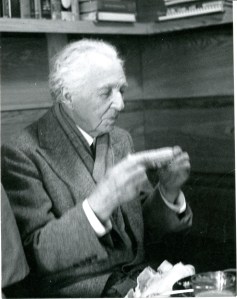
Frank Lloyd Wright lunches on corn-on-the-cob at Smith House.

Frank Lloyd Wright lunches on corn on the cob at Smith House in 1953. Courtesy Cranbrook Archives, Smith Family Papers.

The funny thing was, of all the people at the house for the luncheon, no one was sitting with Wright. “‘Frank Lloyd Wright was sitting toward the end of the lounge alone and no one came near him. No one was talking to him. Then he said, ‘Isn’t anyone going to sit with me?””

“‘So some people moved in. But they didn’t stay. They would go over and say a word or two and walk away. People just don’t seem to want to go up to a genius or a great person. I don’t know whether it’s fear of something else.'”

Sara Smith in her kitchen, August 19, 1976. Photo by Joyce Seid.

Sara Smith in her kitchen, August 19, 1976. Photo by Joyce Seid. Courtesy Cranbrook Archives, Smith Family Papers.

“‘At the time, I was in the kitchen taking care of the dishes and the thought came to me, ‘Sara, you’re doing a Mary-Martha.’ In the bible story, Martha was the one who was always staying in the kitchen mumbling and grumbling because Mary didn’t help her. Well, there I was in the kitchen pulling a Mary-Martha, and the thought came, ‘What are you doing in the kitchen? Get in there and talk to that man.’ So I did.””

Sara and Wright discussed a number of things, including shadows and how Wright used them to best position a house to take advantage of the sun’s energy. “‘It was very interesting,’ she says, ‘and I was so grateful that I had gone over to sit with him. While we were talking, I asked him, ‘Mr. Wright, what do you consider to be your greatest design you ever made?’ His replay was ‘Why, the next one.'”

Leslie S. Mio, Associate Registrar

Note: Public tours of Smith House are offered from May through November. For information about private and group tours, please contact the Center at 248.645.3307 or visit us online.

Welcome Deborah Rice, New Head Archivist!

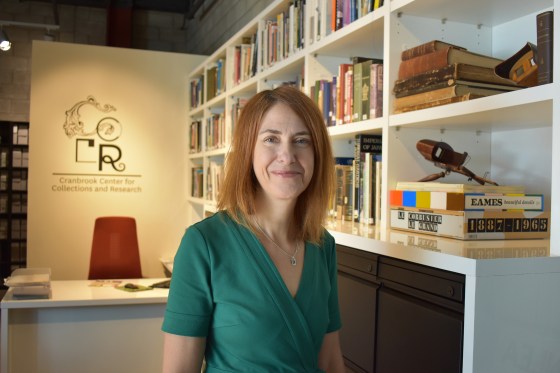
I am quite thrilled to announce that we have an outstanding new Head Archivist (and future Kitchen Sink blogger), Deborah Rice. Let me take this opportunity to introduce her to the readers of the Kitchen Sink Blog.

Deborah has over seventeen years of experience as a professional archivist. For the past fifteen years, she has been working in Detroit at Wayne State University with the Walter P. Reuther Library, Archives of Labor and Urban Affairs.  At Wayne she not only served as a Collection Archivist, Technical Services Archivist, and Audiovisual Archivist, but also the Interim Assistant Director—all of which are invaluable experience for her work here at Cranbrook. Prior to her work at Wayne, she was the Archivist for the Detroit Institute of Arts Research Library & Archives.

Deborah holds a BA in Art History from the University of Michigan and an MLIS degree (Master of Library and Information Services) and Archives Administration Certificate from Wayne State University. Equally important is what you will find to be her warm and engaging personality, and her sincere desire to engage audiences and help us make Cranbrook Archives a welcoming environment for our on-campus visitors and a digitally accessible resource for an even broader public worldwide.

In her first weeks here, Deborah has been off to a running start learning about Cranbrook history, getting a lay of the land and our extensive archival holdings, meeting with a potential donor in Lansing, and helping Cranbrook staff and our many outside researchers in our endless stream of research requests.

While there will be many opportunities to meet Deborah later this fall, her first official public event will be the Center’s gala fundraiser on Saturday, September 21: “A House Party at Cranbrook: History in the Making.”  The event, which focuses this year on the nearly 80-year journey of Cranbrook Archives, will include tours of three campus locations that have been, are, and hopefully will be important to the Archives future.  These include the current Reading Room where Deborah will be sharing with you some of the Archives’ hidden treasures.

We are grateful that Deborah made the decision to take the same journey that our founders made in 1904, traveling up Woodward Avenue from Detroit to Bloomfield Hills.  You can look forward to new blog posts from her very soon!

Greg Wittkopp, Director, Cranbrook Center for Collections and Research

High Island Mystery

In the Cranbrook Archives Digital Collections, there are images labeled “Cranbrook Institute of Science: House of David Colony. ” I always wondered what they were all about and finally investigated. It all starts with a little island four miles west of Beaver Island in Lake Michigan: High Island.

According to the Michigan Department of Natural Resources, “[High] island has an array of Michigan shoreline features and associated ecosystems that support a number of rare, threatened and endangered plant and bird species.” These include the endangered piping plover and the tern.

Robert T. Hatt (Cranbrook Institute of Science Director), Josselyn Van Tyne (University of Michigan / Cranbrook Institute of Science Trustee), and Ralph E. Morrill (University of Michigan) were on High Island on June 23, 1938, conducting bird and animal surveys. While there, they encountered the remnants of a once-thriving settlement. Hatt must have found it curious because he captured these images:

In a nutshell, High Island was home to a timber-cutting and potato farm operation run in 1912-1927 by the House of David, a religious sect based in Benton Harbor, Michigan. High Island was also home to several families of Odawa fishermen. Since 1940, the island has been uninhabited.

I checked Robert T. Hatt’s “Island life: a study of the land vertebrates of the islands of eastern Lake Michigan” (Bulletin No. 27, Cranbrook Institute of Science, 1948) which details the extensive study of the animals and birds of the island, but also remarks on the island’s history:

High Island is said to have been settled by the Mormons at the time Strang’s colony flourished on adjacent Beaver Island. More recently (1912-1928), the House of David . . . established a colony . . . here and developed the agricultural and forest resources. Most of the dwelling date from this period. At the time of our visit there were three Indian families in residence, and the men operated a commercial fishing boat. A Roman Catholic chapel was on the island and was in good condition, with the alter decorated . . .

Another interesting, and unexpected, find in Cranbrook Archives!

Leslie S. Mio, Associate Registrar

Note: The House of David has a storied history, one better written by others:

Michigan ’s Siberia: The House of David on High Island” by Clare E. Adkin Jr.

The Last Days of the House of David” by Adam Langer

The House of David by Christopher Siriano

A Sculpture So Nice They Named it Twice

One of my many duties here at the Center for Collections and Research is to maintain the sculptures on the campus. This can mean finding conservators to repair works, contractors to clean them, or, in some cases, clean them myself. Recently, I was working on a sculpture in the gardens at Cranbrook House. I had seen the sculpture before but wondered about its backstory. Turns out it was a tale of two names.

The sculpture is Mario Korbel’s statue Atalanta, the Greek goddess of the hunt, travel, and adventure. It was commissioned by George Gough Booth in 1927 for one of the gardens at Cranbrook House, part of a series of work Korbel completed for the Booth house and gardens — including Dawn and Harmony in the gardens and Andante and Nocturne in the house.

Letter from Mario Korbel to George G. Booth, referencing both his works Atalanta and Andante. George Gough Booth Papers, Cranbrook Archives.

July 12, 1927 letter from Mario Korbel to George G. Booth, referencing both his works Atalanta and Andante. George Gough Booth Papers, Cranbrook Archives.

Booth, admiring the beauty of the clear, white marble of Atalanta, transferred the work into the collection of the Art Museum. It was part of the original art museum exhibition in 1930.

CISB509L.jpg

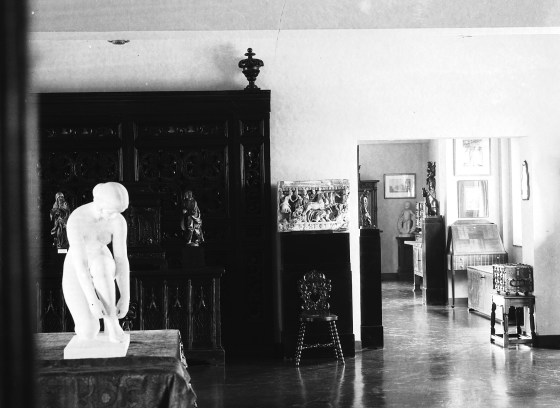
Atalanta (left) in the first Art Museum exhibition in 1930. Courtesy Cranbrook Archives.

Later, Booth wrote: “We have finally concluded that the figure will make a very important and striking center art element in connection with the new School for Girls at Cranbrook.” When the Kingswood dormitory was built, the sculpture was transferred to Kingswood and installed on the terrace.

Atalanta.jpg

Atalanta (right) adorns the terrace at the Kingswood School for Girls dormitory in this undated photo. Courtesy Cranbrook Archives.

In 1969, the sculpture was vandalized and smashed into many pieces (no one was ever implicated in the crime–or at least, their name isn’t in my file!). Those pieces were put back together, but when Atalanta was finally repaired, she was not as pristine. Henry Scripps Booth decided to rename her Ecolo. He also wrote a verse to explain the new name:

Ecolo, Goddess of Earth 

Who is this sweet maid who stoops protectively to save the earth from man’s pernicious tread? 

It is the blithe spirit of Ecology by whom all life and natural things are fed.

CEC472 (2).jpg

Ecolo in her new home in the Herb Garden at Cranbrook House.

Ecolo, or the sculpture-formerly-known-as-Atalanta, now greets visitors in the Herb Garden at Cranbrook House.

– Leslie S. Mio, Associate Registrar

Milles: “Please do not knock”

A research request put me in search of Carl Milles this week. In the process of research, I noticed again a short letter written by Milles to Richard Raseman, Executive Secretary and Vice President of the Cranbrook Academy of Art from 1932-1943, which demonstrates a wonderful sense of humor:

Milles letter 1981-05 24-23

Letter from Carl Milles to Richard Rasemen, September 12, 1938: “Richard, Please Print in your shop following, [Please do not enter without knocking/please do not knock]. Big letter, thick bristol paper. I need 6 such prints. Carl.” Cranbrook Foundation Records, Copyright Cranbrook Archives.

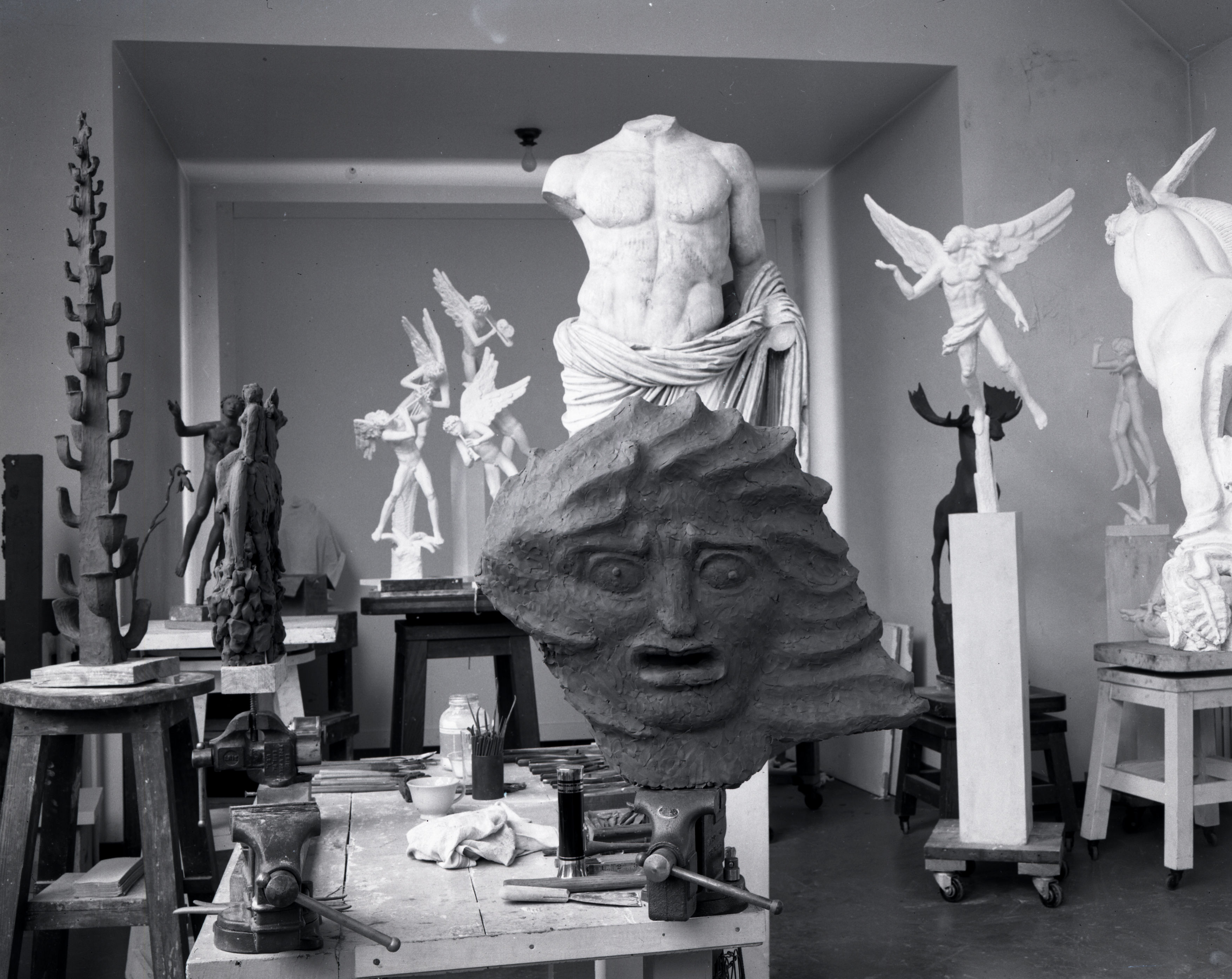
While Cranbrook Archives does not have a discrete collection of Milles’ papers, there are many letters written by him to his friends and colleagues within several collections. For those minds that become curious to know more about Milles (who served as Head of the Department of Sculpture from 1931 to 1951), we have a subject guide to help in finding his handwritten treasures hiding within our collections. Milles’ letters show a great sensitivity to the recipient of his writing and his descriptions of the ups and downs of circumstance reveal a man of great warmth and fortitude.

COM3286-1

View of various sculptures in side Carl Milles’ studio at Cranbrook Academy of Art, c. 1940. Harvey Croze, photographer. Copyright Cranbrook Archives.

I am often inclined to read the letters of an artist or historical figure alongside a study of their work in the world–what a person writes and how they write it provides a wonderful glimpse into a person, and enhances an understanding of the context of their work and deeds.

Cranbrook has many offerings for things to do this summer–through the Center for Collections and Research, Cranbrook House and Gardens, Cranbrook Art Museum, and the Institute of Science. There is something for everyone, and while you are here you can use this guide to walk and view the Milles sculptures on the Academy’s campus.

– Laura MacNewman, Associate Archivist

New Discoveries in Old Collections

Today, the Archives is pleased to announce the completion of a photographic negative rehousing project funded by the Fred A. and Barbara M. Erb Family Foundation. The first part of this grant-funded project ran from March 2017 through February 2018, when thousands of negatives were rehoused by Veronica Wood and Kaitlin Sharra Eraqi. The success of this first part allowed us to extend the grant project, and from November 2018 through June 2019 Veronica rehoused many more negatives. We are grateful to Veronica for her many hours of hard work and, as of today, over 20,000 Cranbrook School negatives have been rehoused.

Alongside this effort, we are thankful for the work of our steadfast volunteers—Lois Harsh, Judy Pardonnet, and Ellen Vanderkolk—who have been rehousing other collections. These have included the Portrait series, the Institute of Science series by Harvey Croze, Kingswood School, St, Dunstan’s Theater, the Summer Theater, the Cranbrook Community/Foundation negatives, and the Pleasures of Life. We also currently have two new volunteers, Aya and Brandon, who have completed rehousing of some smaller collections, including Marianne Strengell, Swanson Associates, and Carol Waldeck.

Why all of this rehousing? Many of the photographic negatives are made of acetate cellulose or nitrate cellulose, both of which have a plastic base which deteriorates over time. Cranbrook employed a professional photographer from 1933 to 1970, and their images were maintained by the Cranbrook Press Office before they were transferred to Cranbrook Archives. Here, they have been stored in their original plain paper envelopes or, more detrimentally, in plastic sleeves. As they age, we must stabilize the negatives for future generations by rehousing them in acid-free paper envelopes.
CR3182-2

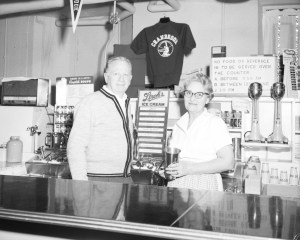
Mr. and Mrs. Price at the Cranbrook School Store, April 1963. Photographer, Harvey Croze, neg.CR3182-2. Copyright Cranbrook Archives.

The twofold goal of any archive is preservation and access of its holdings, and to this effect, much is achieved through arrangement and description—how the materials are stored, in what order, and how they are described. While the primary goal of the rehousing project was to address the physical preservation needs of our photographic negatives, it has also been advantageous for their intellectual control. As we work through thousands of negatives, photographs have been found alongside their negatives, as well as ephemera such as Summer Theatre playbills. These discoveries have helped us to enhance the descriptive metadata (the who, what, when and where) for the negatives. More detailed descriptions will help us, and our researchers, know what exactly is available within Cranbrook Archives.

The numbering system for Cranbrook photographs was developed by Richard G. Askew, Cranbrook photographer from 1933-1941. There were several short-term photographers until Harvey Croze became the photographer from 1943-1970. Each collection has its own index, which records the negative number given to each photograph, the content of the photograph, when it was taken, and by whom. However, sometimes the content field may only record an event without giving any details of who is in the photograph.

An unexpected outcome of the Erb Foundation negative rehousing project has been to enhance the metadata in the indexes, whether by seeing the photographs with the negatives and being able to identify the people or places, or by cross-referencing with the collections to establish the context of the content. By adding in more information to the metadata in this way, the usefulness of the negative collection is improved and the relationships between collections are also strengthened. I would like to share with you some examples of these discoveries that will help us to know more about the people, places, and things of Cranbrook.

The following are examples of images that were recorded by only their event name. Now, the index contains the names of the individuals and objects, enabling us to better utilize the negatives:
FD84

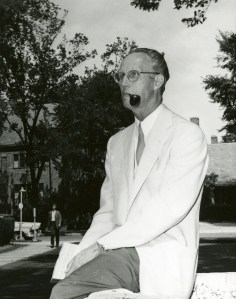
Henry Scripps Booth photographed during an Editors visit to Cranbrook, 1958. Photographer, Harvey Croze, neg. FD84-22. Copyright Cranbrook Archives.
CC201

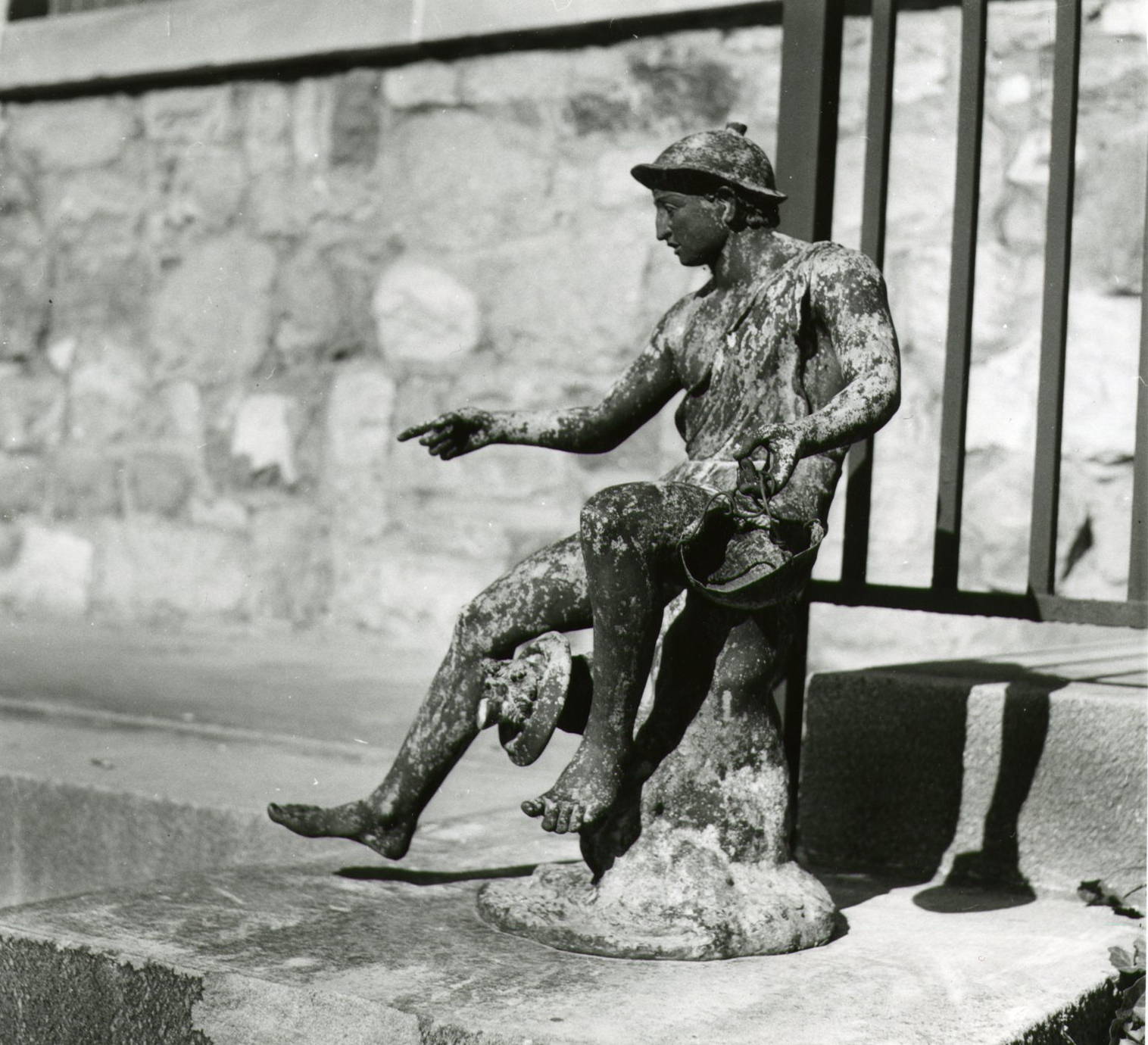
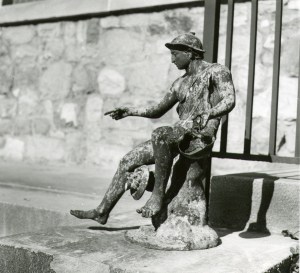
“Formal Garden Opening” 1951. Unknown (Roman Warrior) by Unknown (Italian).
Bequest of George Gough Booth and Ellen Scripps Booth to the Cranbrook Foundation. Photographer, Harvey Croze, neg. CC201. Copyright Cranbrook Archives.

As another example, before our negative rehousing project, a researcher looking into Lillian Holm would have been highly unlikely to discover this picture of her. The image was previously indexed only as “Founders’ Day 1965”:
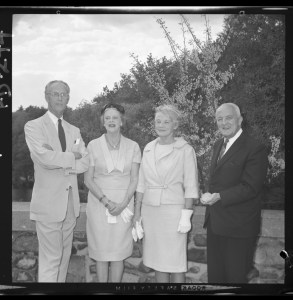
FD244-85

Henry Scripps Booth, Josephine Hodges Waldo, Lillian Holm and Carl G. Wonnberger on Founders’ Day 1965. Photographer, Harvey Croze, neg. FD244-85. Copyright Cranbrook Archives.

Another interesting find was a series of photographs for which the index simply noted “Jack Speohr, Cranbrook School alumnus.” Wanting to know more, I looked up Speohr in the Cranbrook Institute of Science newsletter index. I learned Jack Spoehr, who graduated from Cranbrook School in 1949, and went on to study ethnological studies at Harvard. In 1950, he visited a remote part of Mexico called Cuauhtémoc, which about 75 miles southwest of Chihuahua City, where he studied the native peoples there, the Darámuli, (also called Tarahumara), who often crafted violins both for trade and for use in religious ceremonies. A short article, ‘A Visit to the Tarahumaras,’ about his observations there, is published in the Cranbrook Institute of Science Newsletter, Vol. 21 No.1, of September 1951. The first photograph, below, shows a member of the Darámuli just as Spoehr describes on page 3 of his article.

CC277-9

A member of the Darámuli (Tarahumaras). Photographer, Jack Spoehr, neg. CC277-9. Courtesy Cranbrook Archives.

CC277-13P

A member of the Darámuli (Tarahumaras) crafting a violin. Photographer, Jack Spoehr, neg. CC277-13. Courtesy Cranbrook Archives.

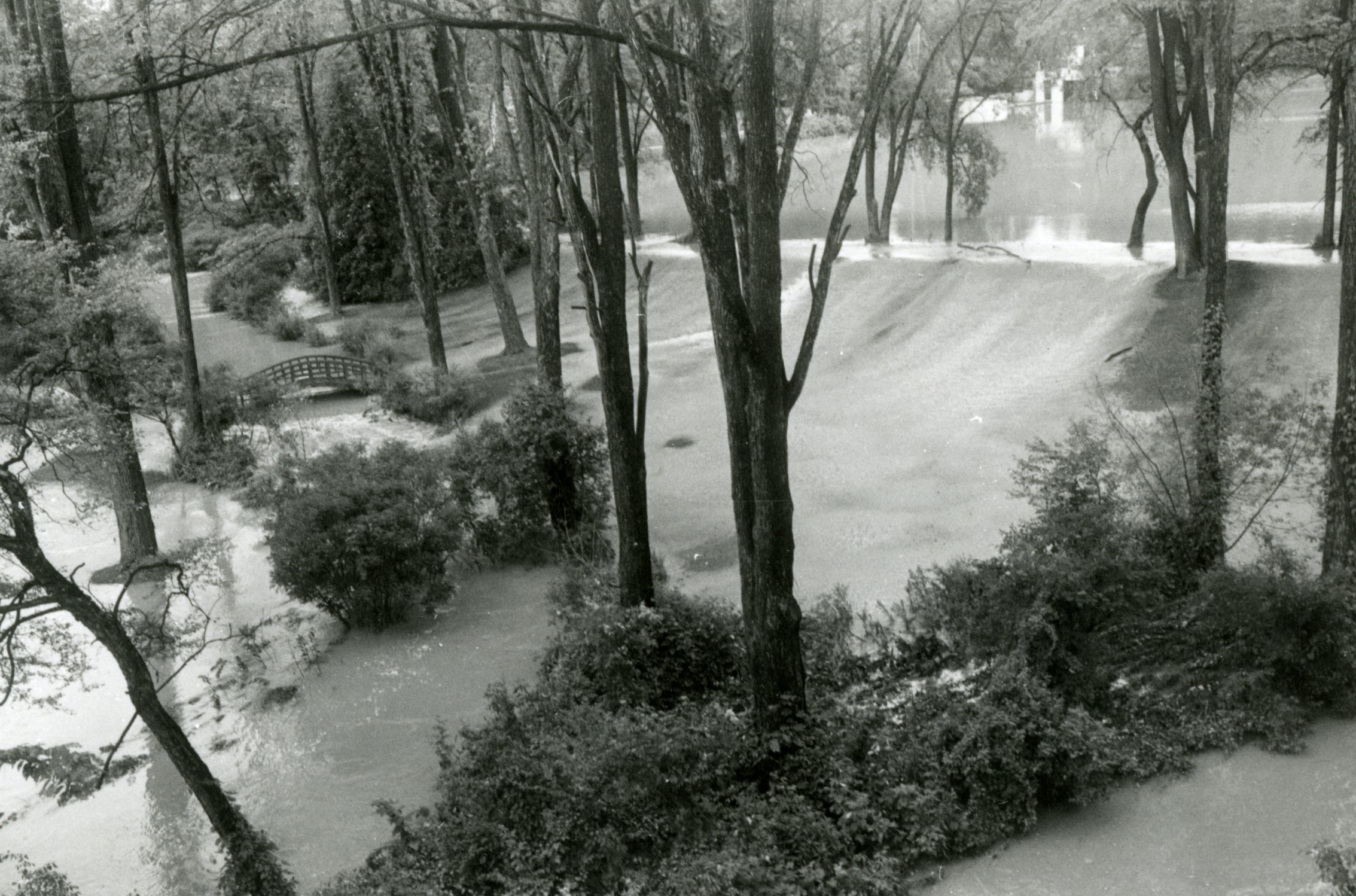
For those who have not been delighted by the weather recently, you will see that it was much worse in June of 1969, when there were floods at Brookside and Kingswood:

FD290-29

View of the old Meeting House during flooding at Brookside, June 1969. Photographer, Harvey Croze, neg. FD290-12. Copyright Cranbrook Archives.

FD290-22

View of the Japanese Garden bridge during flooding at Kingswood, June 1969. Photographer, Harvey Croze, neg. FD290-12. Copyright Cranbrook Archives.

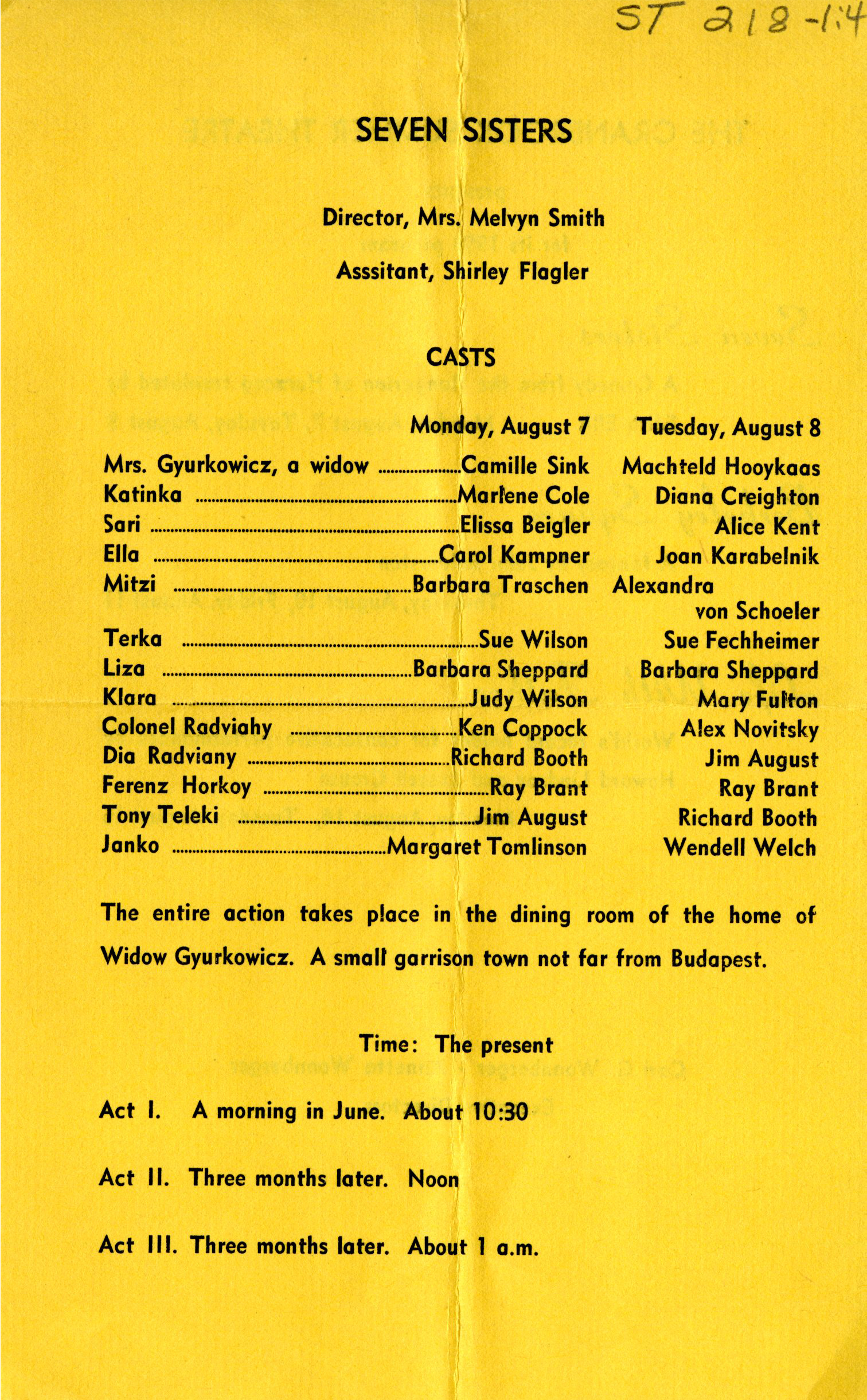
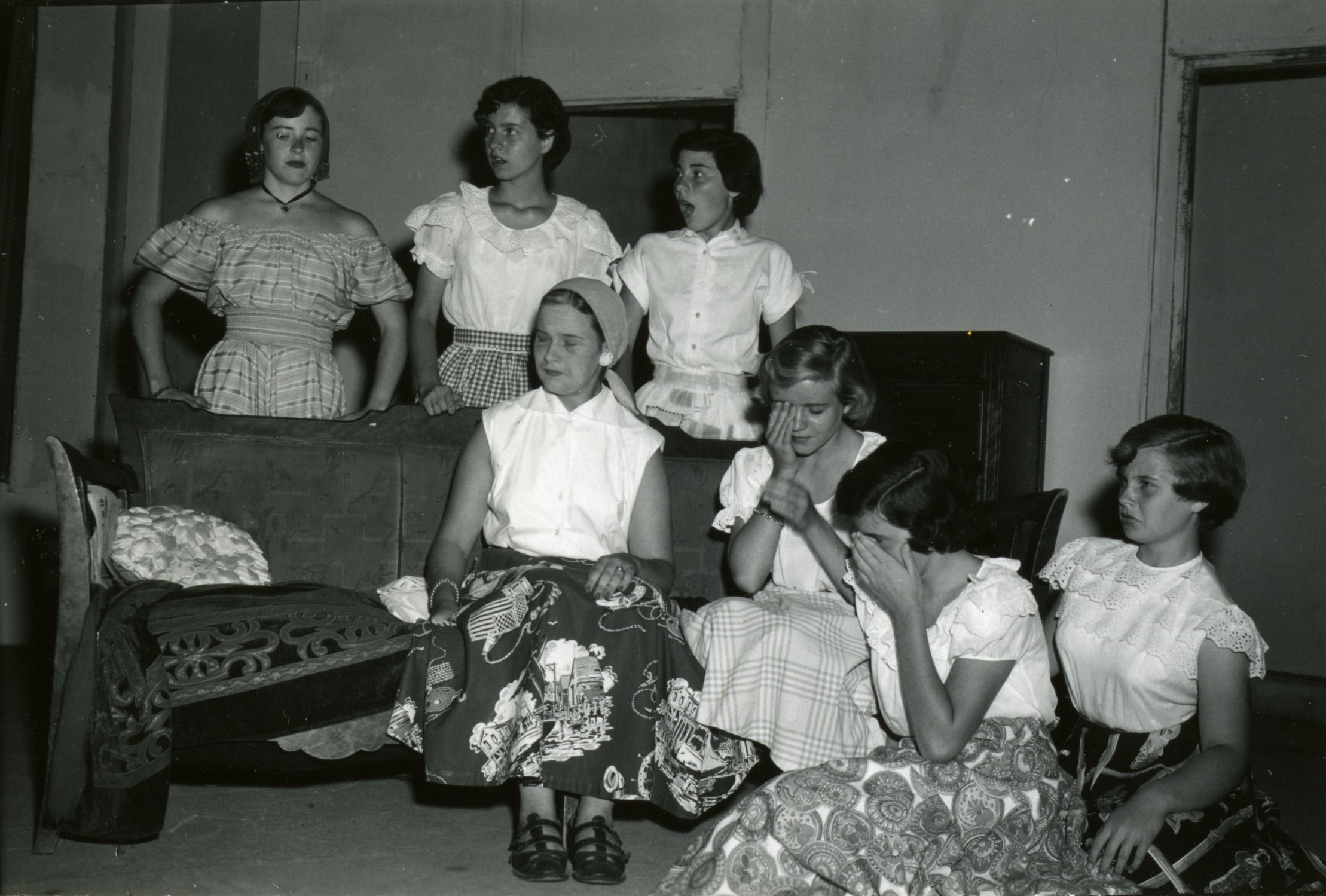
Filed among the negatives, we have found numerous playbills from both the Summer Theatre series and the Ergasterion performances in the Cranbrook School series. These relate to their respective manuscript collections as well as the poster collection, which was completely digitized in 2015. It is interesting to see Sara Smith as Director of some of the plays as the Smith House Records are currently being processed and will be open for research later this year.

Seven Sisters Flyer

The playbill for the Summer Theatre performance of Seven Sisters, 1950. Copyright Cranbrook Archives.

ST218

Seven Sisters Dress Rehearsal, 1950. Photographer, Harvey Croze, neg. #ST218-3. Copyright Cranbrook Archives.

We are very pleased to have made these new connections across existing collections within Cranbrook Archives, and are grateful to the Erb Family Foundation for enabling us to better preserve these important images.

– Laura MacNewman, Associate Archivist

In the Archives: My Senior May Experience

I went into my Senior May Project hoping to find the “secrets” of Cranbrook. On the second or third day, Mr. Adkisson asked Desai, another Senior May student, and me why we chose the Archives. I said because I wanted to learn more—and because I thought it would be easy. What I meant to say is that I thought it would be low stress. Even though I didn’t uncover any “secrets,” I learned a lot about the history of Cranbrook Schools and had a very enjoyable (and low stress) Senior May experience.

IMG_5707

Aya Miller, CKU ’19, at work in the Archives Reading Room. Photo Kevin Adkisson.

My project was primarily scanning copies of The Cranbrook Kingswood Crane-Clarion to create a database of The Crane and moving the archival files to different shelving units. Along the way, I helped out with other Archives related tasks that came up. These included transferring larger files to and from Thornlea Studio, preparing displays for small tour groups, and picking out photos that could be used on the Center for Collections and Research Facebook page.

One of the high points of my experience was a task we did on the first day. Laura MacNewman, my supervisor, Mr. Adkisson, Desai, and I went to Christ Church Cranbrook in search of a friar within the Women’s Window. The friar was an insignia from the designer and glassmaker who constructed the window. We took a very narrow staircase, hidden in the wall, up to the bottom of the window. The area was so small that Mr. Adkisson could barely walk over with his tripod to take the picture. While we were up there, they turned the lights out in the main sanctuary. The daylight filtered in through the stained-glass window and gave the church a faint pink tint. I was awe struck; it was simply stunning. I felt like I was in a picture from National Geographic. That view and many other small things I learned helped make my time in the Archives memorable.

IMG_8952

A view from the Women’s Window at Christ Church Cranbrook. Photo by Aya Miller, CKU ’19.

As for scanning, I learned a lot about stories that were covered in the past. In the March 2006 issue of the Crane-Clarion there was a two-page article called “The Problem of ‘Self-Segregation’ at Cranbrook.” The article covered how minorities often group together and how white students don’t notice that the majority of their friends, as well as the majority of the school, is white. It takes editors that find these issues important to bring them to the forefront. Although for many it may be an uncomfortable subject, it is a necessary one to discuss.

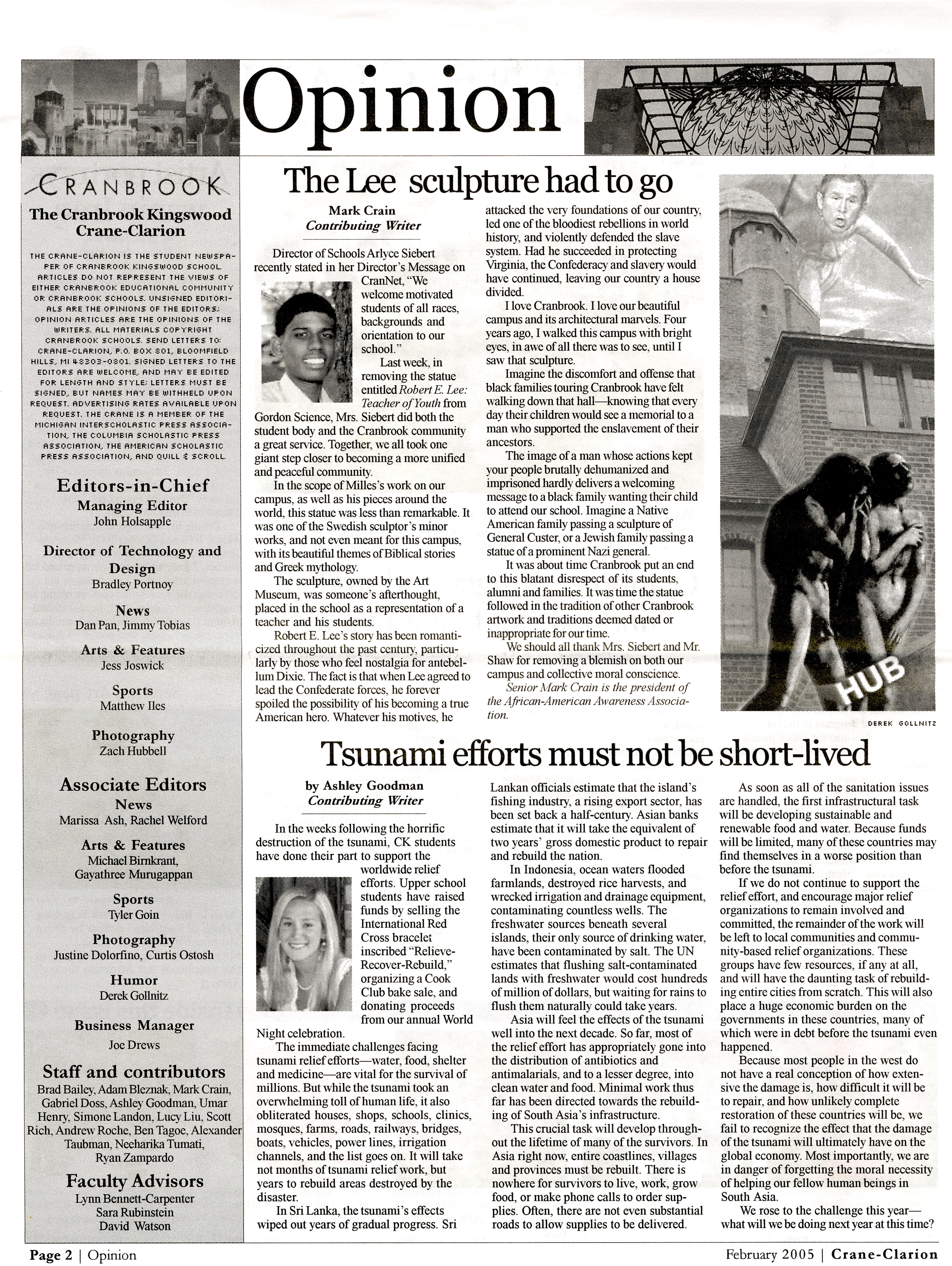
I also read interesting articles about the removal of a Robert E. Lee statue that used to stand in Gordon Hall of Science. In reading the articles, I was surprised that the students had many contrasting opinions. Some people quoted were against the statue’s removal because they saw Lee as an American hero in terms of his post-War accomplishments and his fight for states’ rights in the Civil War. In the end, the faculty choose to remove it because Lee’s role as a leading general in support of slavery during the Civil War was offensive to many students and families. The coverage opened my eyes to different opinions and reaffirmed my belief that there are always many sides and opinions to a situation.

No. 3, February 2004, Opinion, Pg.2

Opinion section of The Cranbrook Kingswood Crane-Clarion, February 2005. Courtesy of Cranbrook Archives.

To put it simply, Senior May was great. The Archives was a relaxing and enjoyable place to work for the last three weeks of my Senior Year. I’m proud that I was able to help and make a difference, even if it was a small one. In fact, I enjoyed it so much that I’ll be staying on throughout the summer to continue working as a volunteer. I’d like to thank those who work at the Center for Collections and Research as well as my supervisor, Laura MacNewman, for welcoming and hosting me.

Aya Miller, Cranbrook Kingswood Upper School 2019

Editor’s Note: The Senior May Project is a school-sponsored activity that encourages Cranbrook Kingswood Upper School seniors to acquire work experience in a field they are considering as a college major, a potential profession, and/or as a personal interest.

Aya Miller is a native of Kalamazoo, Michigan, and has been a boarding student at Cranbrook since 2015. Aya will be enrolling at Western Michigan University in Kalamazoo this fall. The Center thanks her for her tireless efforts scanning important documents about Cranbrook’s history, and her volunteering to continue with us this summer. We know she will be a success as she embarks on the next phase of her education!


Create a website or blog at WordPress.com