The Story of a Sweater: 1930-1953

As fall fast approaches and the nights are cooler, all Michiganders are pulling out their jackets and sweaters. Cranbrook School for Boys (as it was once known) had, over the years a variety of sweaters made for the boys to wear, particularly if they were involved in athletics. Although Cranbrook Archives primary collects manuscript collections and institutional records, sometimes we are lucky enough to acquire objects that relate to our past, particularly that of the schools. The Cranbrook Sweater is one such object.
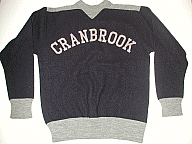
First featured in a team photo for the 1930-31 basketball team, it was a signature uniform for the basketball team photo for the next 22 years. Throughout Cranbrook School’s sports history, athletes on the basketball team, golf team, wrestling team, hockey team, football team, and baseball team all wore the sweater.  Beginning in the 1934-35 season, members of the golf team wore the sweater.

As time passed, the sweater gained increasing momentum in its popularity and peaked among the athletes in the 1940s. However, aside from the basketball team and golf team photos (where the sweater was worn by the entire team), most of the other team photos show only one or two members wearing the sweater for the team photo.  This could be due to the fact that the sweater is made of 100% wool!

Gradually, the sweater lost popularity and by the end of the 1953 school year, it faded out altogether. We are lucky to be caretakers of such a great piece of history, and the type of object that current school students love to see on their visits to the Archives.

Donald Leighton (far left in the photo below) is shown wearing the sweater in our collection.
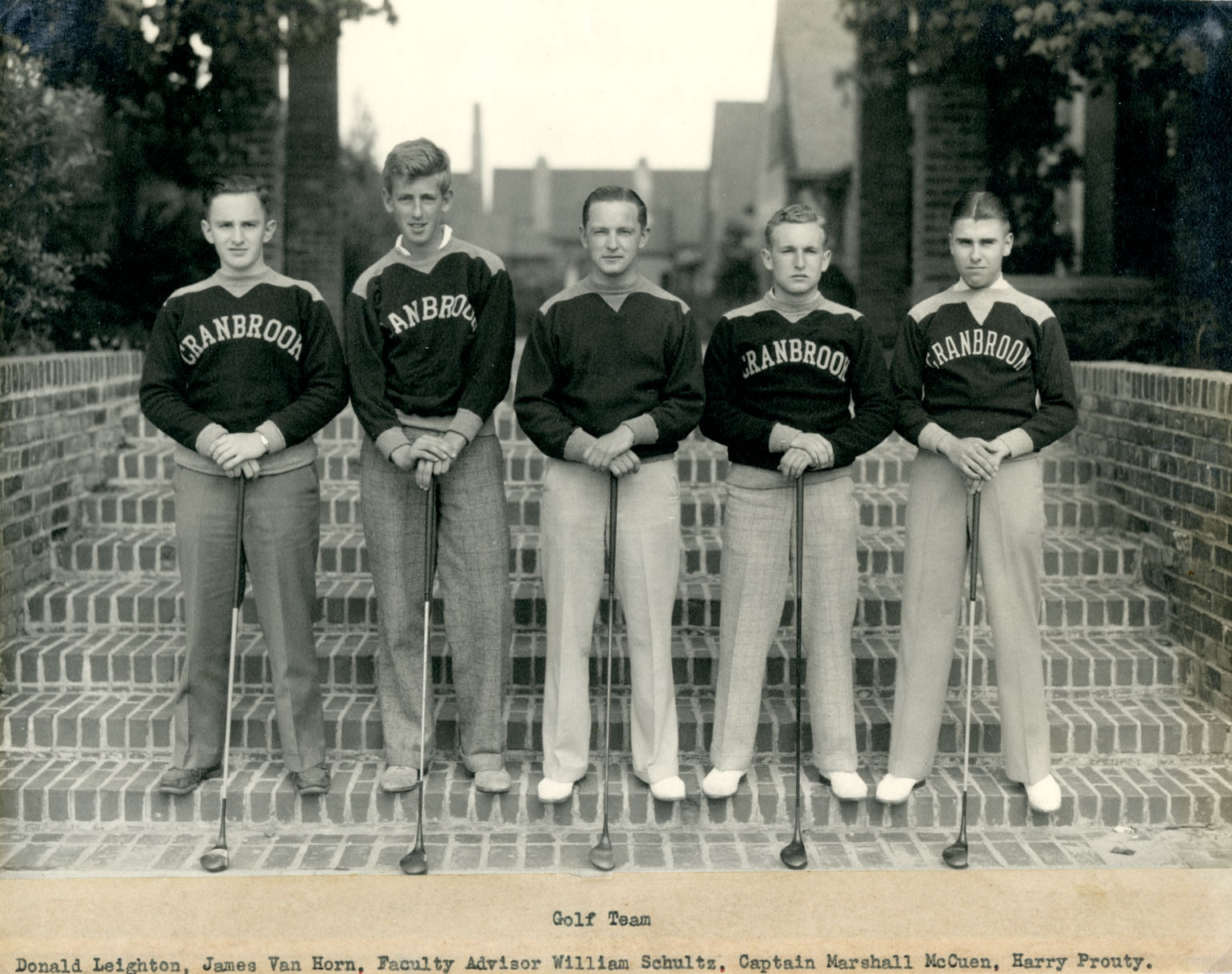
Golf team 1935-36.

Golf team 1935-36.

Leslie S. Edwards, Head Archivist

Welcoming Our Two Archives Assistants!

Prior to volunteering at Cranbrook Archives, I had been studying history and had become aware of the importance of primary sources for historiography, and the value of preserving heritage for the wider community. I began volunteering in 2012 which helped me decide to pursue a career in archives, and I began studying for the MA Archive Administration with Aberystwyth University in Wales (distance learning) in 2013. As part of a university assignment, I processed the HUB (Horizons-Upward Bound) Records, and am currently researching George Gough Booth’s interest in tapestries, which he purchased and commissioned for Cranbrook institutions and family members. I am interested in Booth’s involvement in the Arts and Crafts Movement, and the way in which the movement used medieval themes and techniques as a response to the social experience of the time. The Edgewater Looms, Herter Looms, and Morris & Co. tapestries are an ideal focus for exploring these ideas. I am looking forward to learning more about scanning/digitisation/digital preservation/cataloguing. The university modules emphasize access as the flip-side of preservation. I tend to have the latter foremost in my mind, so it will be great to see how the archive is used.

Laura MacNewman, Archives Assistant

Correspondence, George Gough Booth Papers, box 16, folder 11.

Correspondence, George Gough Booth Papers, box 16, folder 11.

As a graduate student mid-way through the Library and Information Science master’s program at Wayne State University, I’ve been given a healthy dose of libraries, archives, and the world of information over the past year. My interest in archives administration began while I was volunteering at the Cranbrook Archives last fall (2014). Here, I was introduced to the process of digitizing manuscripts, taking inventory of donated artist materials, and sifting through photographic negatives for future digital preservation and storage. I’ve also been working on the Cranbrook Archives’ Oral History Project. Much of my work at Cranbrook corresponds to my studies at Wayne State. In fact, this past week Head Archivist Leslie Edwards spoke about Cranbrook Archives’ oral history project in my oral histories course. As a new employee, I am keen to expand the number of digital images available online, help preserve the negative photograph collection, and understand what it really means to be an archivist.

Danae Dracht, Archives Assistant

From left: Carleton McClain, Henry S. Booth and Margaret Russell interviewing former Cranbrook School Headmaster, Harry Hoey at his home, 1964.

From left: Carleton McClain, Henry S. Booth and Margaret Russell interviewing former Cranbrook School Headmaster, Harry Hoey at his home, 1964.

Both Laura and Danae are working for us as part-time Archives Assistants, an entry-level archival position for graduate students. They will be working on a variety of projects during the coming year while gaining experience to propel them in their careers. Look for future blog posts from them in the upcoming months!

Friday in the Reading Room

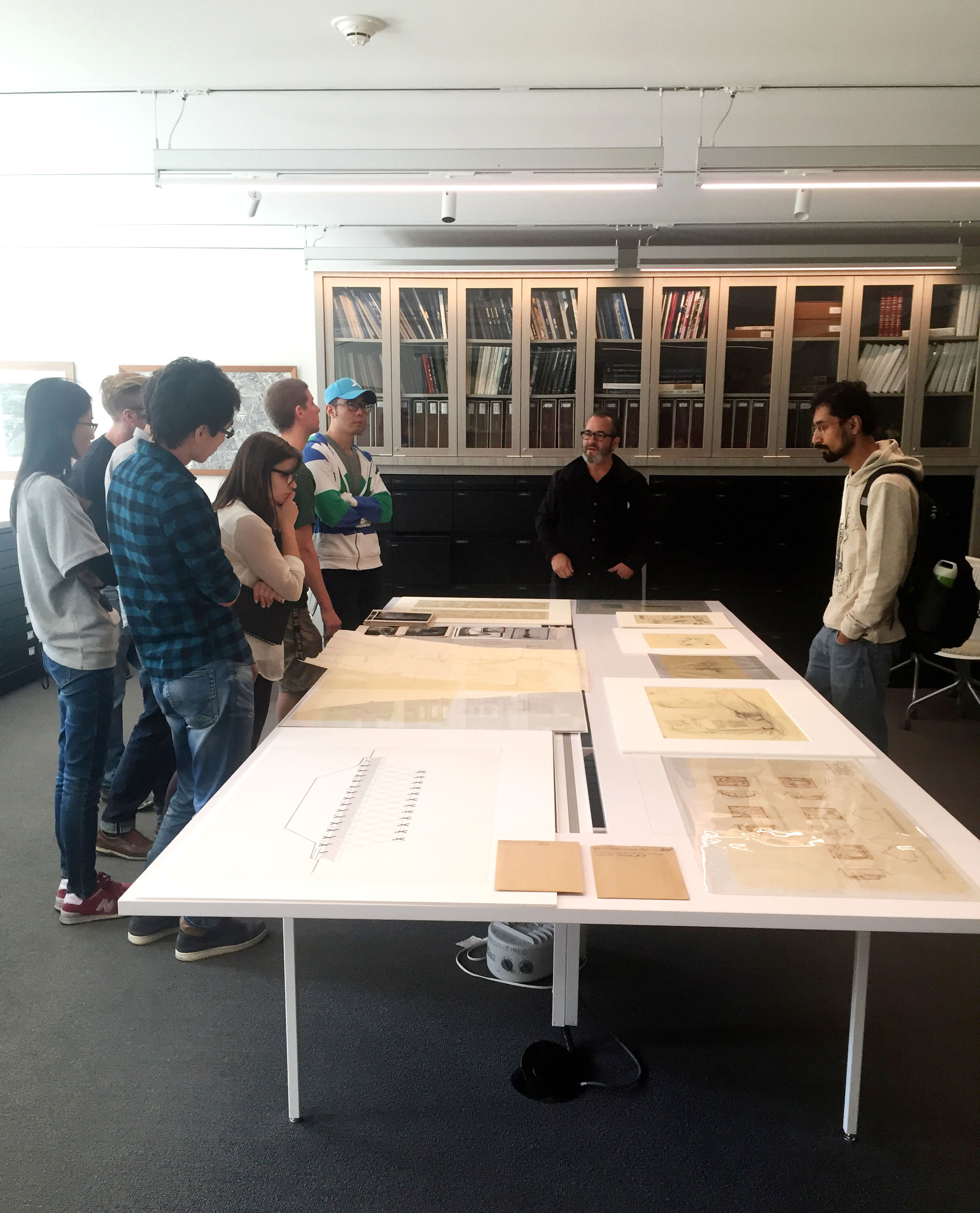
As part of outreach and education here in the Archives, today we hosted graduate students who are taking a course called, “Modern Michigan” at the A. Alfred Taubman College of Architecture and Urban Planning at the University of Michigan. The course covers the work of various architects between 1900-1960 and throughout the semester the class visits landmark sites in the area, including the GM Tech Center, the Packard Plant, Herman Miller, and Cranbrook (among others). We pulled a variety of architectural drawings and sketches from our collection for the students to view and ask questions. As a relatively new member of the Archives staff, I find these visits very rewarding. The students and instructors bring new perspectives and additional information that adds a new dimension to my knowledge of our collections.

University of Michigan graduate students from the School of Architecture and Urban Planning look at drawings in the reading room.

University of Michigan graduate students from the School of Architecture and Urban Planning look at drawings in the reading room.

Gina Tecos, Archivist

Alphabet Soup

This morning I was looking for an image from our collection to relate to the Cranbrook Art Museum’s newest exhibition “Read Image, See Text” to post on our Facebook page. I would hazard a guess to say that most, if not all, archivists love books almost as much as historic documents.  Though archives usually do not seek to collect books, and certainly are not lending libraries, books can often comprise part of a collection. So my search for a single image led me to think about the range of books we have in our collection.

The first was written by William O. Stevens, nearly 25 years before he became the first headmaster of Cranbrook School.  After receiving his doctorate at Yale, Stevens taught English at the U.S. Naval Academy for 21 years. The book, which satirized early 20th century Annapolis using twenty-six limericks and illustrations, became an instant success. Find out why it also became controversial.

William O. Stevens, An Annapolis Alphabet: Pictures and Limericks (Baltimore: The Lord Baltimore Press, 1906).

William O. Stevens, An Annapolis Alphabet: Pictures and Limericks (Baltimore: The Lord Baltimore Press, 1906).

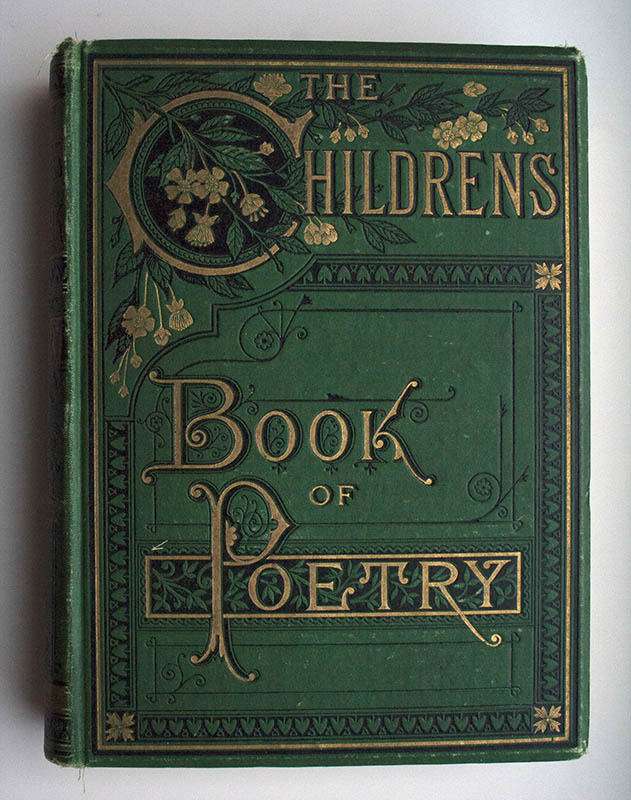
The first edition poetry book below illustrates beautiful text and the tooled binding of the times. It is inscribed: “Ellen W. Scripps, a Christmas present from her Father [James E. Scripps], Detroit 1879.” The editor of the compilation, Henry T. Coates joined the publishing firm of Davis & Porter in 1966; Davis retired the following year and the company became Porter & Coates which became famous for creating Home and Garden magazine and publishing the Horatio Alger Junior titles.

Henry T. Coates (ed.), The Children’s Book of Poetry: carefully selected from the works of the best and most popular writers for children. (Philadelphia: Porter & Coates, 1879).

Henry T. Coates (ed.), The Children’s Book of Poetry: carefully selected from the works of the best and most popular writers for children. (Philadelphia: Porter & Coates, 1879).

Gustaf Strengell, the father of Cranbrook’s textile designer Marianne Strengell, composed and designed this handwritten analysis of the Swedish poet’s writings as part of his graduate thesis. Franz Michael Franzén’s (1772-1847) work expressed the romantic conception of nature as both idyllic and divine, and was influential in the development of Finnish poetry.

Gustaf Strengell., Franzén. (Helsinki, unpublished, 1898)

Gustaf Strengell, Franzén. (Helsinki, unpublished, 1898)

For a really great blog post about related collections, see: Graphic Arts Collection, Rare Books and Special Collections, Princeton University.

Leslie S. Edwards, Head Archivist
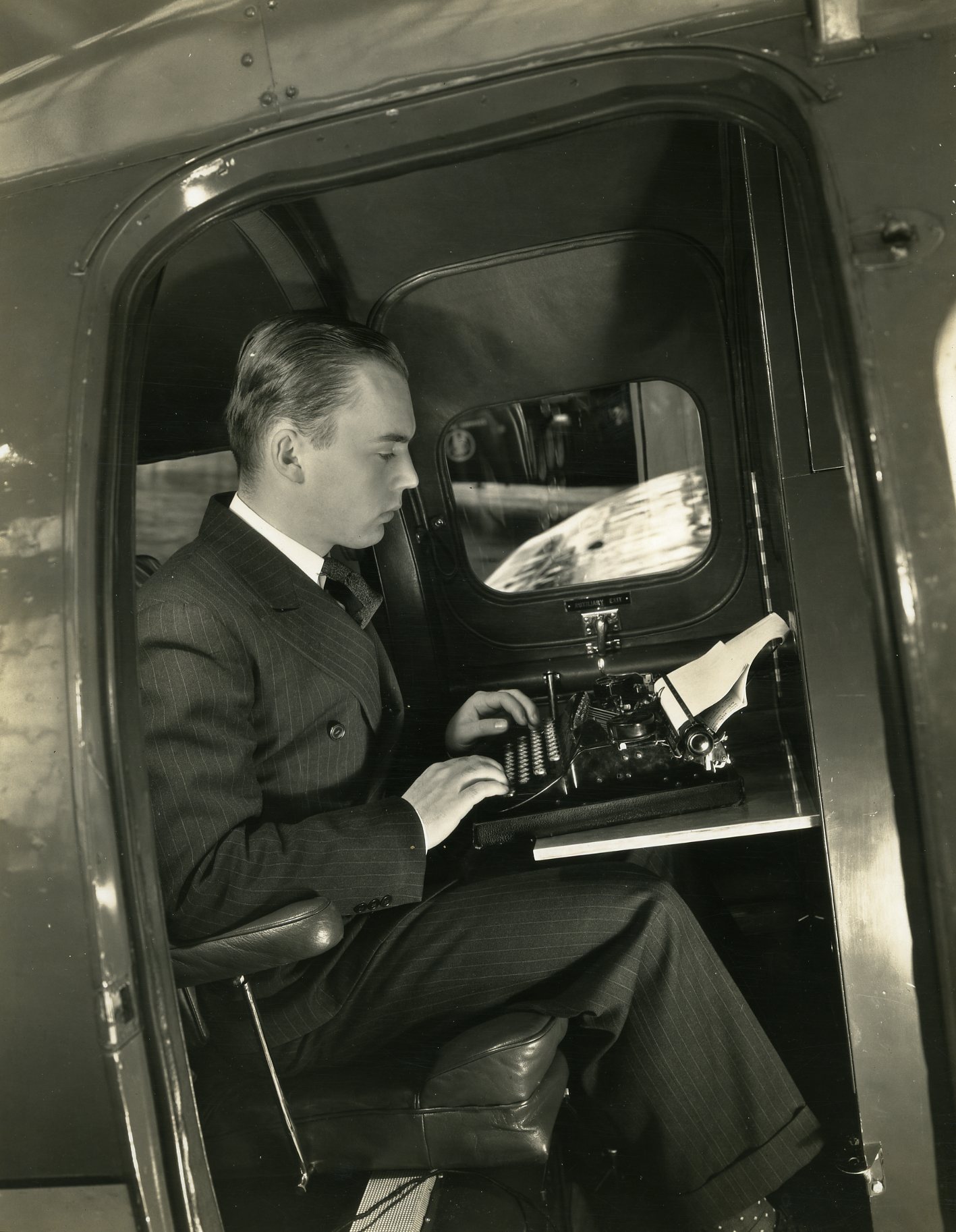
Photo Friday: Reporting the News in Style

Archivists never know what we might run across during the course of our daily work, which is, of course, part of the allure of the job! Today it was a photo of W Stoddard White (1913-1972) from the Lee A White Papers. (No typo – neither man used a period after his initial!)  Lee White (Stoddard’s father) was a personal friend and confidante of George Booth’s from the Detroit News. White followed Booth to Cranbrook once Cranbrook School was opened and was on the Board of Directors, later becoming head of the public relations department for the community. Clearly Stoddard followed in his father’s footsteps, becoming a news reporter after his graduation from UM in 1935. (Interestingly, while at UM, he was in Sigma Chi along with Edgar Guest Jr.)

Stoddard White, Detroit News Employee, Oct 1935. Courtesy Cranbrook Archives, Lee A White Papers.

Stoddard White, Detroit News Employee, Oct 1935. Courtesy Cranbrook Archives, Lee A White Papers.

This photo caught my attention because of the content – what a great image of young Stoddard, as a Detroit News reporter, seated at his typewriter in what was likely the Detroit News Lockheed Vega airplane. Just one more reason I love my job!

Leslie S. Edwards, Head Archivist
Bouquets of Sharpened Pencils

It’s that magical time of year again, daylight is a little bit shorter and parents begin to try and return their kids to a bedtime schedule –it’s back to school time. For some, this is a glorious time of year – a new beginning, the changing leaves as Fall ushers in. September always reminds me of a line from the movie, “You’ve Got Mail.” Joe Fox says to Kathleen Kelly in a chat room, “Don’t you love New York in the Fall? It makes me want to buy school supplies. I would send you a bouquet of newly-sharpened pencils if I knew your name and address.”

Here at The Archives we often receive email and calls from alumni. I recently received an inquiry from a Kingswood alum who shared some amazing stories with me and also piqued my interest in student organizations here at Cranbrook.

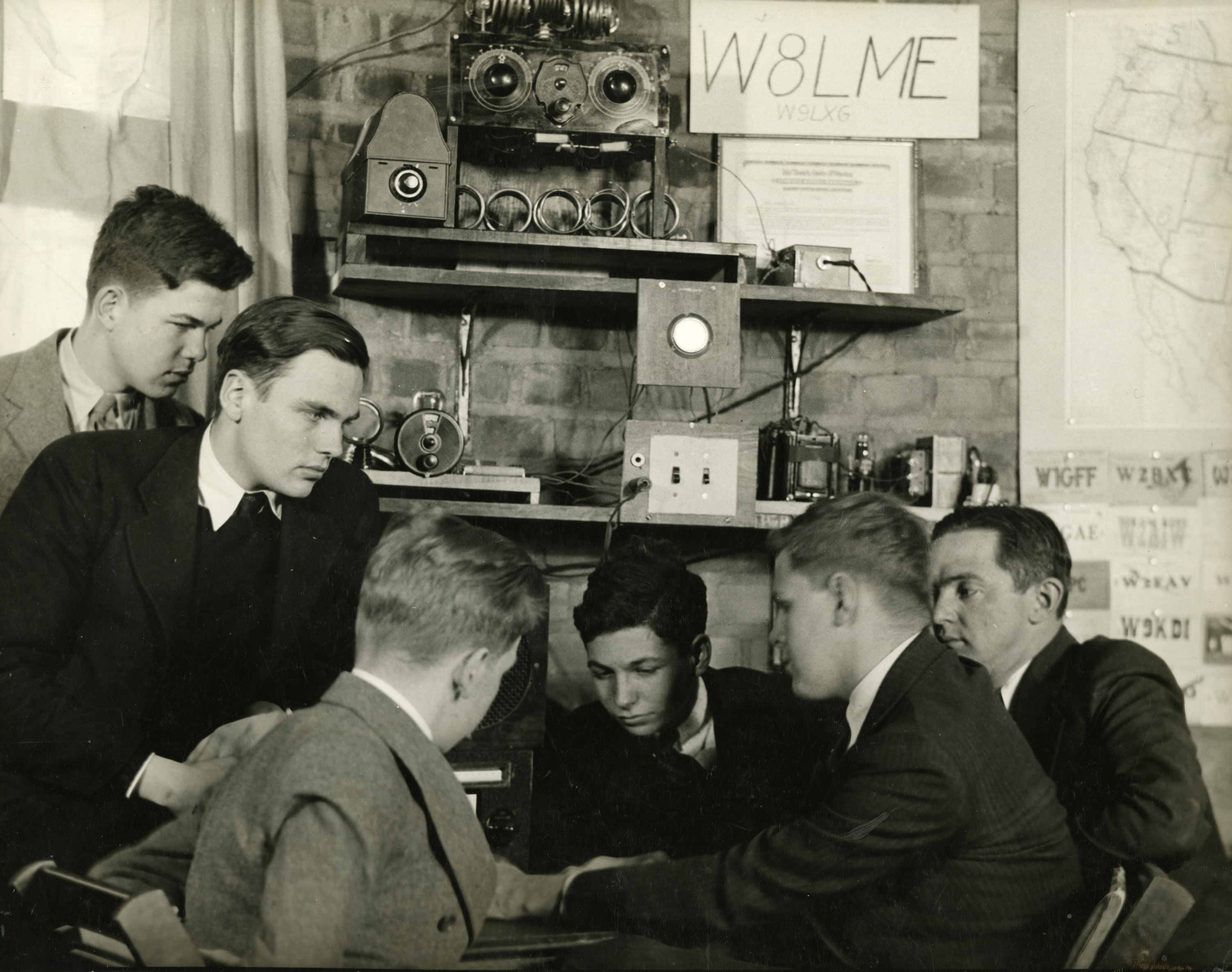
From the first days at Cranbrook and Kingswood schools, clubs and organizations were an integral part of student life. In addition to student newspapers, literary publications, and government—students participated in riding clubs, glee club, bridge club, and the stamp club. In 1938, the Areopagus club saw its membership swell. According to The Brook, students could be found “arguing over some minor question that momentarily assumed importance.”

Cranbrook School Radio Club, 1935. Photographer, Richard G. Askew.

Cranbrook School Radio Club, 1935. Photographer, Richard G. Askew.

Several of the earliest clubs and organizations still exist at Cranbrook schools today, including the Radio Club and Ergasterion—an organization representing theatre productions. Other clubs continue to unite alumni, such as “The Trifling Monographs of Birmingham, Michigan,” which had its first meeting in September 1971. The five founding members were Susan Rice (a 5th grade teacher at Brookside School); Lucy Chase Williams, then a Kingswood junior; John Gerard, then a Cranbrook junior; and Michael A. Cooper and Dion Kerr, Cranbrook sophomores.

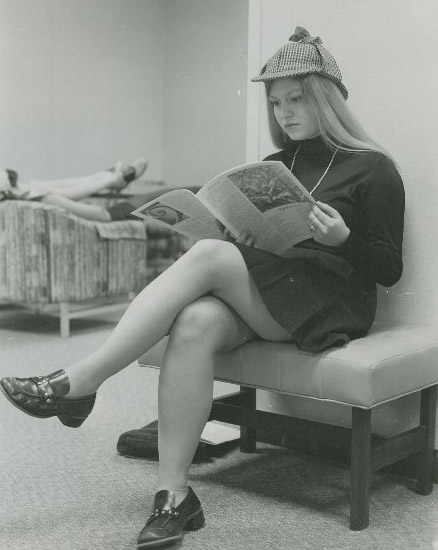
The club was a scion of the Baker Street Irregulars (BSI)—an organization of Sherlock Holmes enthusiasts founded in New York in 1932. The BSI is considered the preeminent Sherlockian group in the U.S. and has published the Baker Street Journal since 1946. A local member of the BSI was a mentor to The Trifling Monographs (TTM) and regularly quizzed the members. The group took several field trips and in 1972 traveled to Canada to see the Windsor Light Opera production of the musical, “Baker Street.” In 1973, when Williams matriculated to Yale, the TTM became a corresponding scion, and remains so to this day.

KS student Lucy Chase Williams, head of the TTM, reads an issue of the Clarion in the Kingswood School Common Room, 1973. Photograph courtesy of Lucy Chase Williams.

KS student Lucy Chase Williams, head of the TTM, reads an issue of The Clarion in the Kingswood School Common Room, 1973. Photograph courtesy of Lucy Chase Williams.

As students head back to school after the Labor Day weekend, they will have much to look forward to above and beyond their studies. Today the upper school boasts nearly 40 clubs and organizations, including Anime, Beekeeping, Wilderness Expedition, Chamber Music, and Random Acts of Kindness.

Gina Tecos, Archivist

Historical Menus Reveal Cultural Past

The Henry Scripps Booth Collection of Menus is a fascinating glimpse into another era and the travel exploits of the leisure class. The Cranbrook Archives has digitized a portion of the collection, mainly menu covers, that can be viewed in our digital database. Menus are wonderful cultural documents that reveal economic, dietary, artistic, sometimes geographic and even literary information about an era.

Many of the menu covers have artistic renderings, some of them signed. The 1952 menu for the farewell dinner on the Queen Elizabeth has a reproduction of a painting of the ship, with the name “C.F. Hopkinson” visible in the lower right corner.

Farewell Dinner Menu for R.M.S. Queen Elizabeth Courtesy Cranbrook Archives

Farewell Dinner Menu for R.M.S. Queen Elizabeth.
Courtesy Henry Scripps Booth Menu Collection, Cranbrook Archives

Doing a Google search, I found Hopkinson’s name in a blog post, written by the archivist in charge of the Cunard Archives (imagine what a fascinating archive that must be) in the Special Collections & Archives at the University of Liverpool Library. The blog cited C.F. Hopkinson in a discussion about land-based Cunard employees who served during World War I. The Cunard Line Staff Magazine was the source for this information, and the blog emphasized the importance of staff magazines in an archival collection, as company records rarely contain information about individual employees. The little information they presented on C.F. Hopkinson confirmed that he was an artist, even though employed as an accountant by Cunard. Moreover, the blog post elicited a response and additional information from C.F. Hopkinson’s daughter.

Charles Francis Hopkinson completeing bust of Samuel Cunard Courtesy Cunard Archiv, Special Collections and Archives at the University of Liverpool

Charles Francis Hopkinson working on bust of Samuel Cunard.
Courtesy Cunard Archive, Special Collections and Archives at the University of Liverpool

While there’s nothing earthshaking about the tidbit of information I found, it’s always fun to have a bit of serendipity in one’s work and to be reminded of what a small world we live in–and of the power of blogs!

– Cheri Y. Gay, Archvist

Football Friday

The campus is getting ready to welcome students back to school in a couple of weeks. However, many athletic teams, including the Crane football team, have already started practicing and even had a pre-season scrimmage yesterday at the Thompson Oval. Many people might not know that the Detroit Lions held their Training Camp on the Cranbrook campus from 1934-1941 and from 1957-1974.

Newspaper article from 7 Aug 1960.

Article from the Detroit News, 7 Aug 1960.

Note for Sports Fans: the Cranes’ first league game is against Cabrini High School on September 3rd.  The Lions play their first regular season game on September 13th.

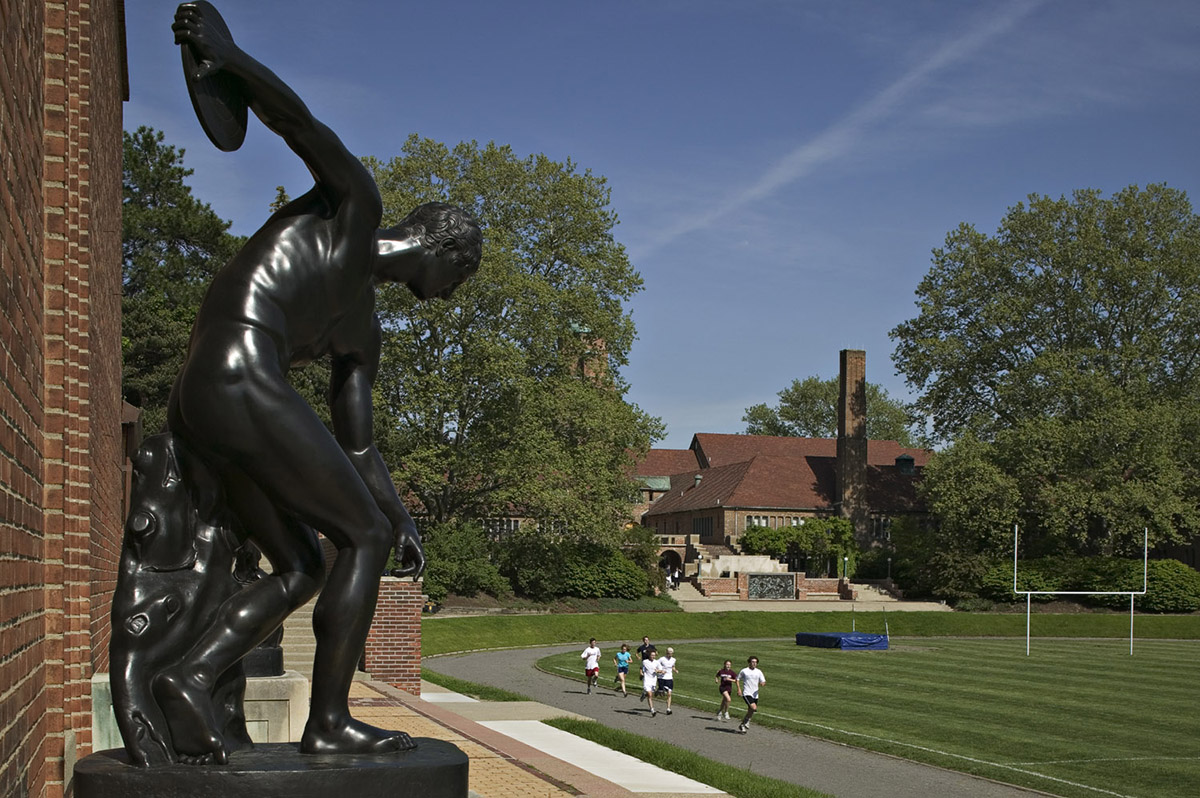
A view of the Cranbrook School Athletic field. Photographer Taro Yamasaki, Cranbrook Archives.

A view of the Cranbrook School Athletic field. Photographer Taro Yamasaki, Cranbrook Archives.

Gina Tecos, Archivist

Can You Say Lobster Roll?

It feels as though summer is winding down and this week is the final session of Cranbrook Art Museum Summer Camp. We enjoyed a visit from students earlier in the week who were part of the “Costumes and Characters” session. While pulling materials to show the students, we came across this photo of Ralph Russell Calder (1894-1969), an architect and friend of Henry Scripps Booth. He is in a lobster costume made by Loja Saarinen for a “May Party” in 1926.

1926

From the Henry Scripps and Carolyn Farr Booth Papers, Cranbrook Archives.

Calder, born in 1894, was a veteran of World War I and an accomplished musician. He graduated in 1923 from the University of Michigan College of Architecture (he and Henry were classmates). In 1924, he studied in England, France, and Italy as the winner of the George G. Booth Traveling Fellowship in Architecture.

Calder Card007

A card from Ralph Calder & Associates, Inc. with a 1924 sketch by Ralph Calder during his travels in Europe on the Booth Traveling Fellowship.

In 1925, Calder worked for several months as part of U of M’s Near East Research Expedition in Tunisia. The research and objects obtained from this expedition are the basis of the collection at the Francis W. Kelsey Museum of Archaeology at U of M. Calder joined the Cranbrook Architectural Office in 1926 and remained there until staff was reduced due to the economic depression. In 1937, he joined the firm of William G. Malcomson and Maurice E. Hammond where he stayed until 1945, when he started his own firm, Ralph Calder and Associates, in Detroit.

Calder worked on the following buildings on the Cranbrook campus: the main academic building (Hoey Hall) at Cranbrook School, Thornlea, and Thornlea Studio. In addition, he was the architect for buildings at Michigan State University, Michigan Technological University, Hope College, Northern Michigan University, Hillsdale College, Wayne State University, Ferris State University, Western Michigan University, and Lake Superior State University. He enjoyed music as a hobby and was the organist and choirmaster for St. Paul’s Episcopal Cathedral in Detroit in the 1940s.

Gina Tecos, Archivist

Logical Design: Using Primary Sources

As summer camps are winding down, we wanted to share how campers used the collections in the Archives this week. Earlier in the week, my daughter, who is attending Cranbrook Art Museum’s camp session “Problem Solving by Design,” told me of the industrial design concepts they were learning. I immediately thought of the collection of Design Logic, Inc. Records that we have in the Archives, which contain beautiful color transparencies of 3D projects designed in the 1980s by David Gresham and Martin Thayer. (See Cheri Gay’s post.)

Studying the design drawings for the View Master and the Projector, Aug 2015.

Studying the design drawings for the View Master and the Projector, Aug 2015.

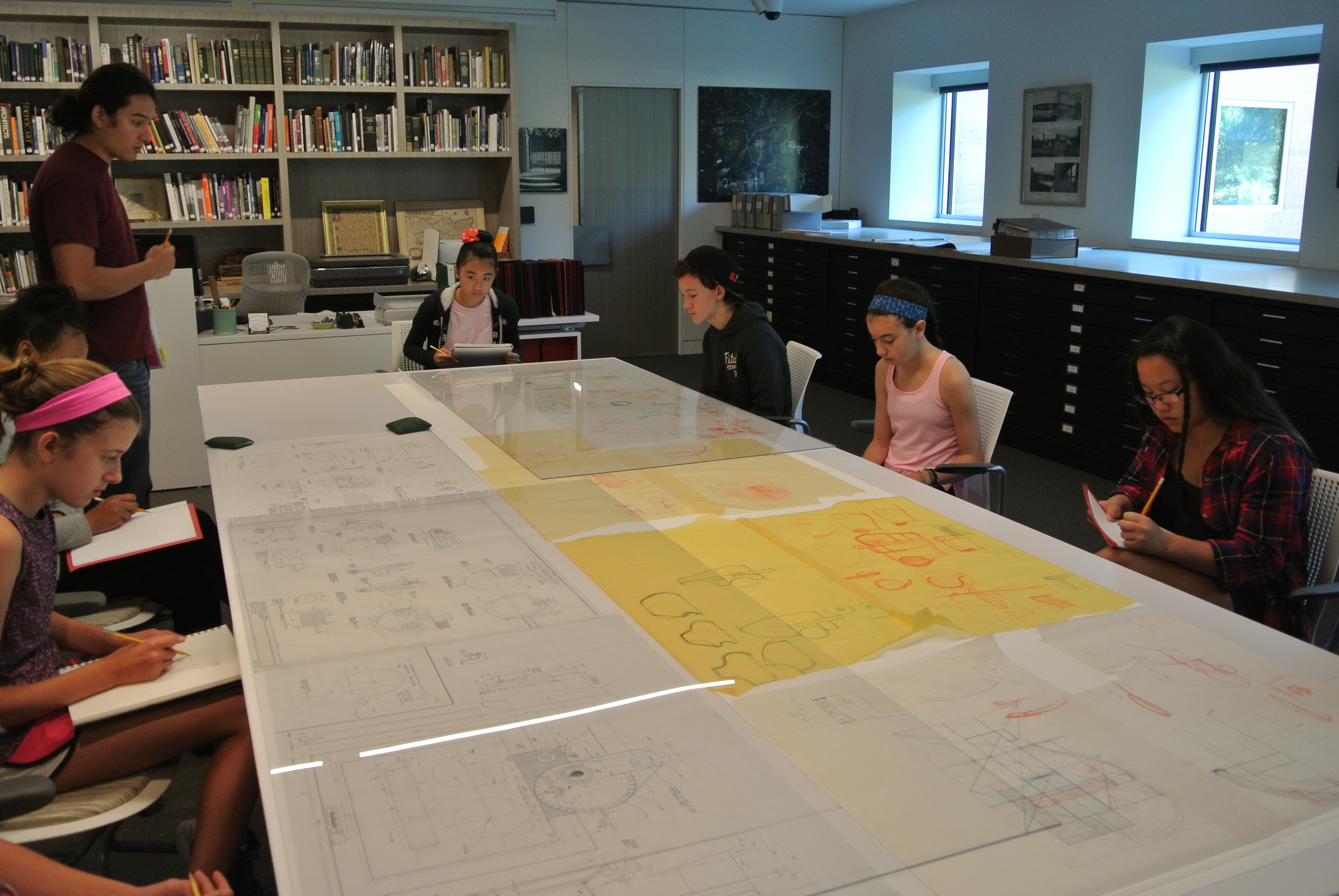
The next morning, I spoke with Kanoa, the camp instructor and a 2015 grad of the Academy of Art, and he agreed the photos would be great to show the kids. We coupled them with a copy of the exhibition catalog Cranbrook Design: The New Discourse, which featured several prototypes by Design Logic, as well as by other designers, many of whom studied under Kathy and Michael McCoy here at Cranbrook in the 1980s. The following day, I took the kids to the Art Museum vault to actually look at some of the objects. Kanoa had them do several sketches from different angles, all the while talking about various design concepts. Then the following day of course I had to show them some of Gresham and Thayer’s own design drawings which are also a part of the collection in the Archives. The kids were able to view conceptual sketches through finished drawings that were then sent to the manufacturer.

Sketching objects in the Cranbrook Art Museum vault, Aug 2015.

Sketching objects in the Cranbrook Art Museum vault, Aug 2015.

All in all, I hope it was a great experience for the kids. It certainly was fun for me to be able to enrich their camp experience with primary source materials from Cranbrook Archives.

Leslie S. Edwards, Head Archivist
Create a website or blog at WordPress.com