The Annex, the Attic, and My Senior May Adventures

Each May, the Center is honored to host outstanding seniors from Cranbrook Kingswood Upper School for a three-week immersive internship.
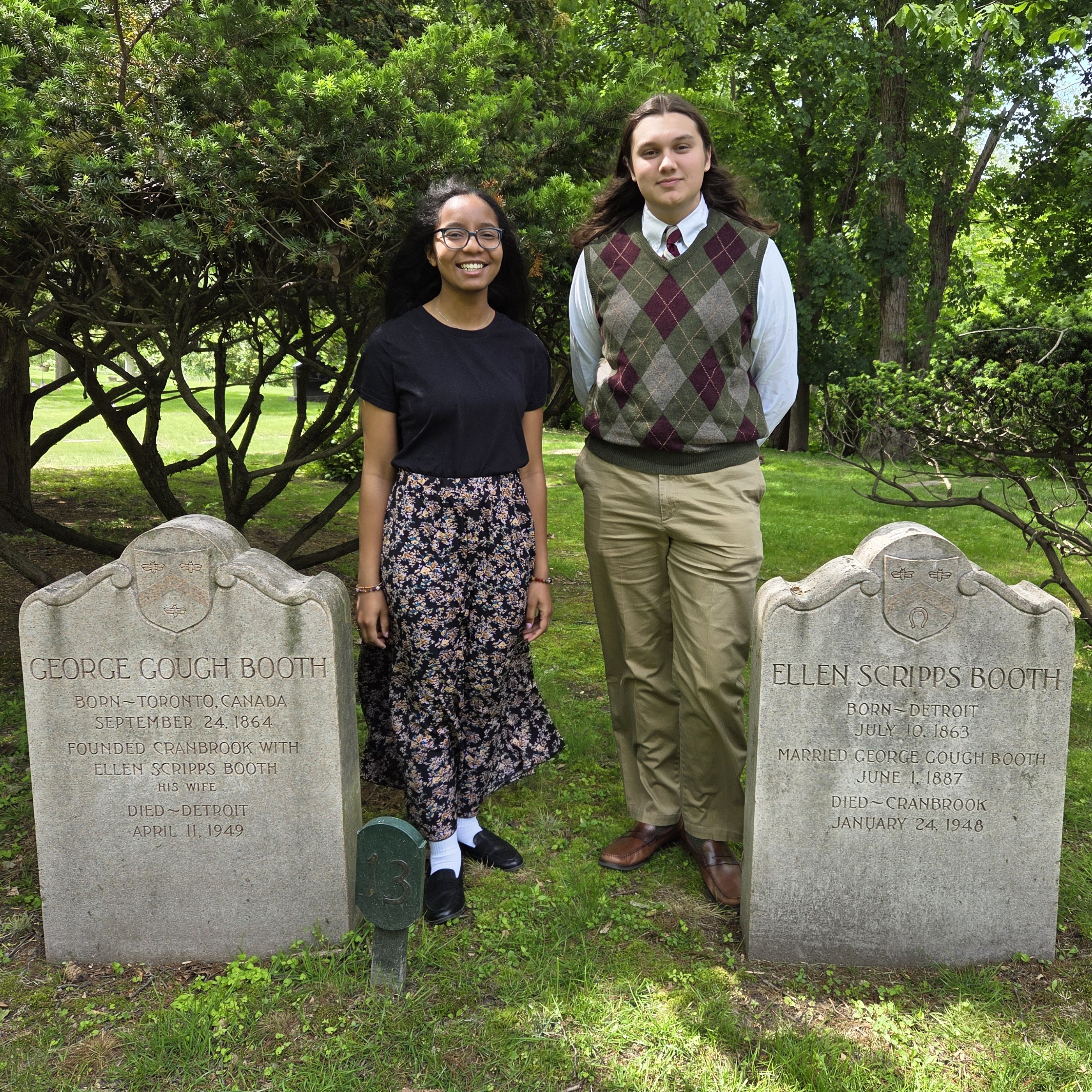
Kamilah Moore and Joel Kwiatkowski, 2025 Senior May interns, visit George and Ellen Booth at Greenwood Cemetery, Birmingham. Photography by Leslie Mio.

This year two seniors, Kamilah Moore and Joel Kwiatkowski, worked with the Center and Archives staff, including writing blogs! Hear from Joel today and look out for Kamilah’s post next week.
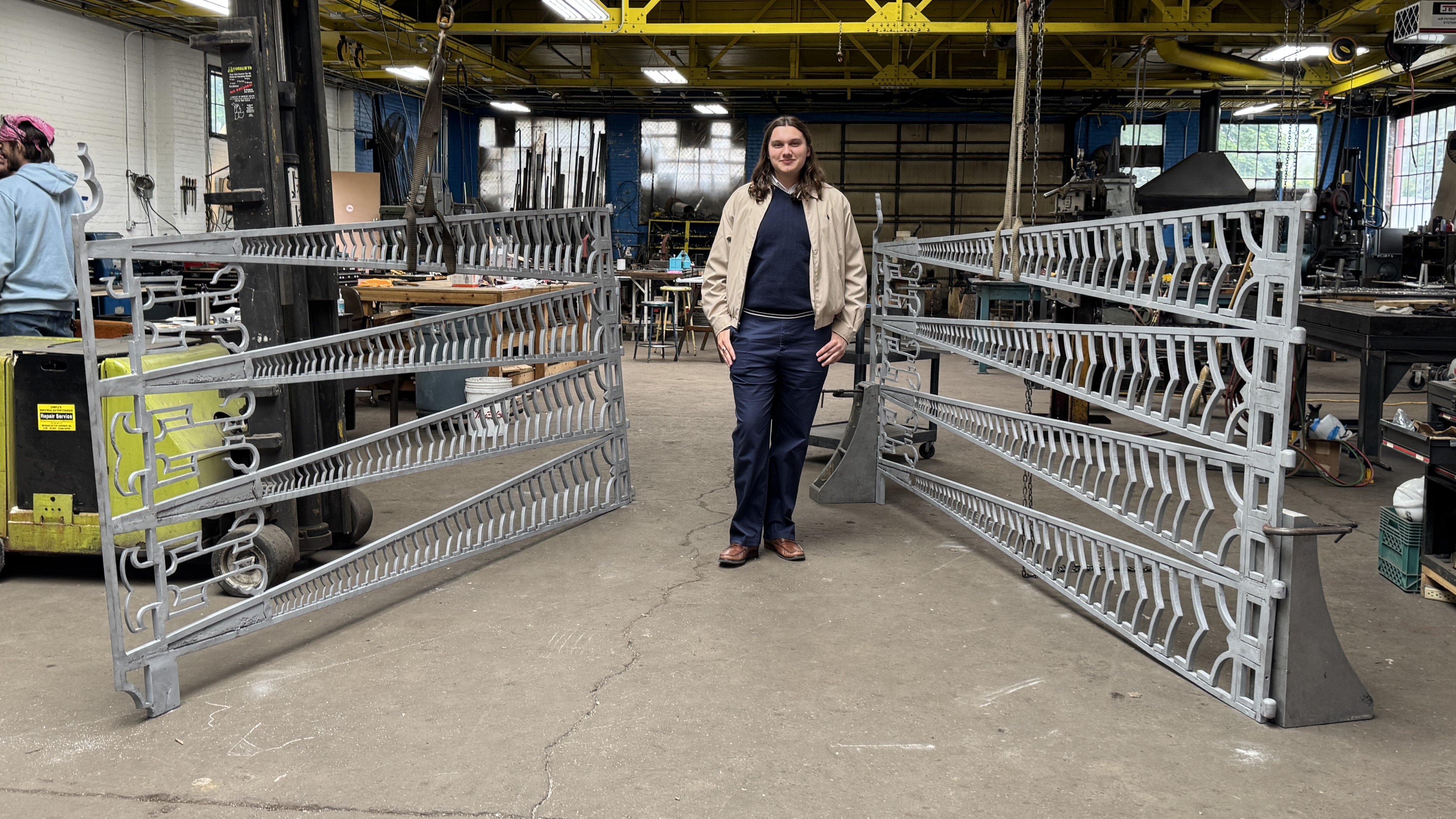
Checking in on the Eliel Saarinen-designed Kingswood main gate at Smith Shop in Highland Park, May 2025. Photography by Kevin Adkisson.

Cranbrook Center for Collections and Research is a name that invokes the image of some grand museum or hall, with many sterile prep rooms and rows upon rows of file cabinets. Now don’t get me wrong, there are plenty of file cabinets, but the Annex is far from grand. Instead, the rather humble staff apartment-turned-offices are befitting the lovely people there.

The Center’s Annex, next door to Cranbrook House, is situated above the House & Garden Auxiliary offices, up a set of winding stairs that require me to duck in a few places. But up there you will find a quaint little kitchen (complete with a toaster oven and healthy snack collection), a few offices, and closets and cabinets dotted with curiosities.
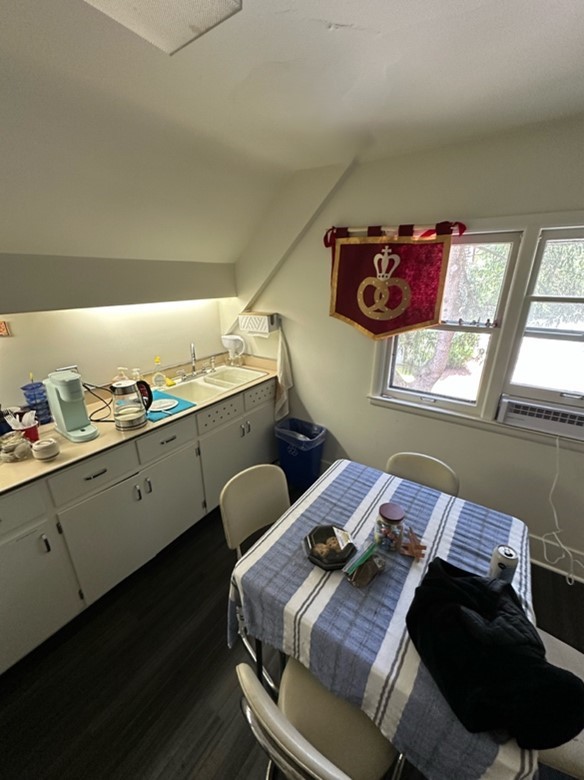
The quaint kitchenette of the Annex, compete with decommissioned Cranbrook Institute of Science Library chairs, May 2025. Photography by the Author.

It was this atmosphere, over many chatty lunches, that I got to know Leslie Mio, the Associate Registrar, and Mariam Hale, the 2023-2025 Center Collections Fellow. It was a pleasure to find two individuals who cared so greatly for history and conservation, and we bonded over our shared love of museums and particular historical eras.

But, let it be known that work at the collections isn’t all comfortable work behind a desk or searching a filing cabinet. This illusion, if I ever had it, was quickly broken on my first full day of the internship. Our task? Moving five solid wood cabinets from the rooms of retirement-age nuns across the building to be used to store Cranbrook’s lacy dresses and costumes.

Briarbank, a neighboring estate to Booth’s land, was converted into a place for sisters to stay once they needed a bit more care later in life. But, at some point, the demand for a place such as that ran dry, and Cranbrook bought the campus. And now, in that spirit, I was near horizontal in my penny loafers, shoving a giant wardrobe into place across some very tasteful carpet.

Mariam and I defy the friction of decades old carpet, May 2025. Photography by Leslie Mio.

In the coming days, the purpose of these heavy cabinets would be realized, as we began the true overarching theme of my time at the Center: moving a seemingly infinite number of objects from the hot attic of Cranbrook House to the comparatively “less hot” and climate-controlled storage area at Briarbank. Paintings, prints, textiles, rugs, hats, and racks of clothing and costumes were deftly maneuvered through the halls and offices of Cranbrook House (or, alternatively, very carefully down the narrowest, steepest, stairwell known to mankind).

Each day packing and moving Cultural Properties in the attic was sure to bring new surprises. Everything from a fur hat belonging to George Booth to paper parasols, or entire handwoven rugs the size of a small house. While these days meant a bit of manual labor, they never ceased to bring me joy, as the wonderful folk of the Center doled out tidbits of Cranbrook’s story connected to each unearthed gem.

The fabulous hat in a box marked “G.G.B.” — the box is possibly a later acquisition by Henry S. Booth — May 2025. Photography by the Author.

Now those familiar with the Center may be wondering: “Now wait just a minute. Where is my favorite curator? Where is the delightful presence of the steward of Saarinen House?” Well, fear not good reader, for while Kevin may not have been at every boxing and unboxing, Kevin joined Kamilah and me on many excursions outside the Samuel-Yellin-forged gates of Cranbrook. For those unacquainted, Kevin Adkisson is Curator of the Center, the veritable fountain of all knowledge concerning Cranbrook, and legend in his own time among students.

My first trip with Kevin came when we were tasked with heading to Detroit to give a tour of Holy Redeemer Church to a group of 8th graders from the Catholic school next door. I thought that getting middle schoolers excited about Corinthian columns would be impossible, but Kevin’s energy and skill made it look easy.

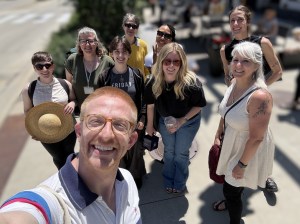
Kevin and I had fun teaching Holy Redeemer 8th graders about architecture. Photography by Holy Redeemer.

Afterword, we headed to visit the master ironworkers at Smith Shop, where the Eliel Saarinen-designed Kingswood main gate is being repaired and restored. I stood back and observed while Kevin, Cranbrook Capital Projects Director Jean-Claude Azar, and Amy Weiks and Gabriel Craig (co-owners of Smith Shop) debated the ins and outs of the gate’s making and breaking.
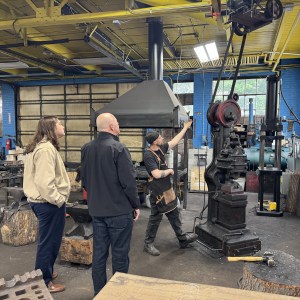
I enjoy a tour of the facilities of Smith Shop with Cranbrook Capital Projects Director Jean-Claude Azar and Smith Shop co-owner Gabriel Craig in Highland Park, May 2025. Photography by Kevin Adkisson.

Across my three week Senior May, I also took trips to the paint store to debate shades of grey, the frame shop to mount an object, Ken Katz’s painting conservation studio, and even Birmingham’s historic cemetery. On each of these trips, I gained insight into the multifaceted work of the Center for Collections and Research, including care and handling, teaching, conservation, and cataloging.

I cannot fully capture in a blog what a delight it was to be in the presence of such knowledgeable individuals. For every question about Cranbrook’s history, each member of staff was sure to add in their own expertise, citing obscure letters and photographs, adding a beautiful familiarity to their responses and giving color to the story of Cranbrook.

Of course, I would be remiss to leave out some of the other folks who make the Center function, like Greg, Jody, Amy, and Jess. These are the people who drive the work, managing, fundraising, and promoting the vision of Collections and ensuring the continued progress of the Center’s goals.

Even interns have meetings, Kamilah and I sat in on one of the Center’s weekly staff meetings. Photography by Kevin Adkisson.

On my last day, I had the privilege of working with Jess Webster, Development Coordinator, who also helps run the Center’s social media. With Kamilah, I researched, drafted, workshopped, and delivered a script for an Instagram Reel commemorating the 150th birthday of Carl Milles., During my time working out ideas for the video (and even this blog), I gained a new appreciation for the way in which Cranbrook is viewed from the outside.
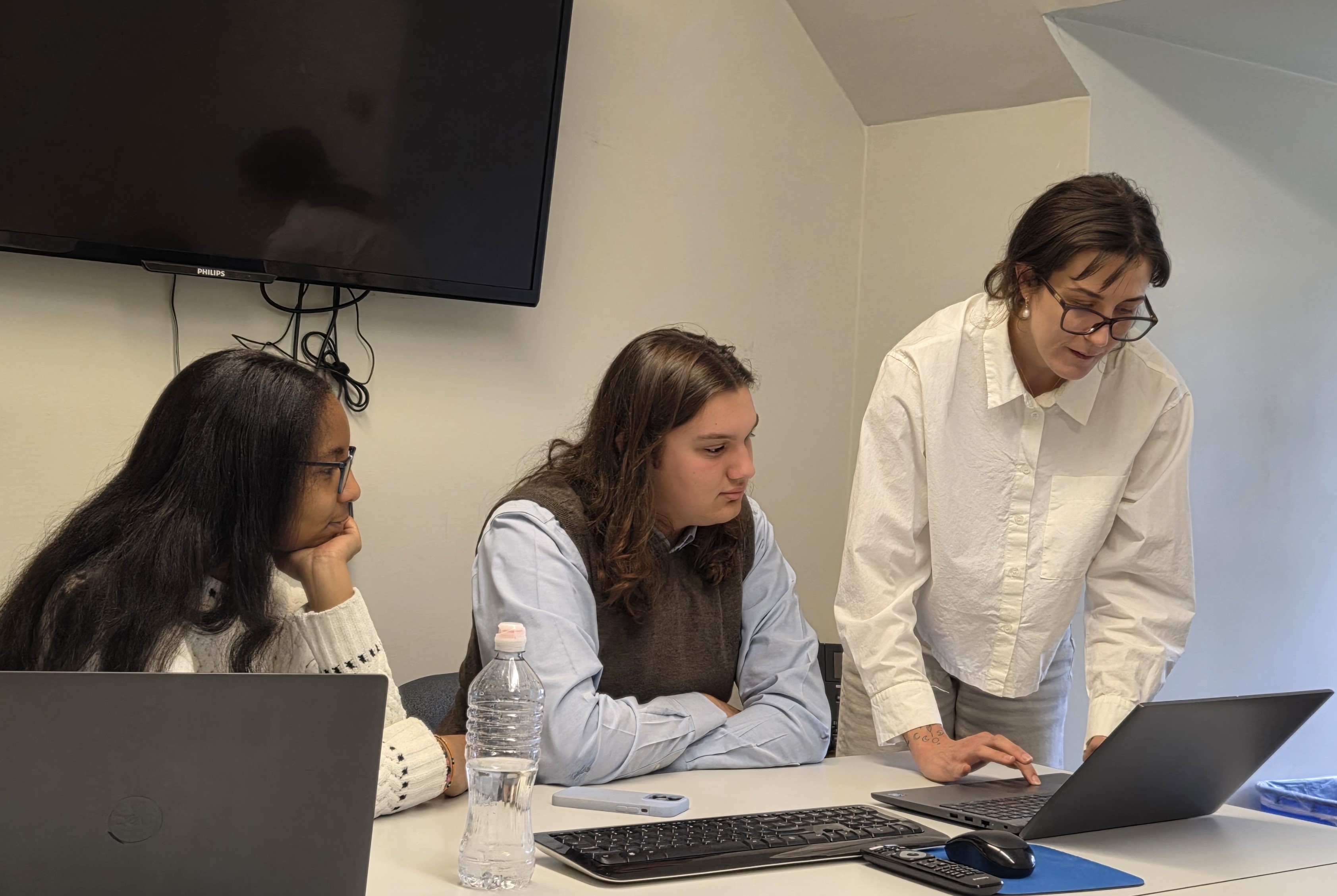
Kamilah and I workshopping our reel for Carl Milles’s 150th birthday with Jess, May 2025. Photography by Leslie Mio.

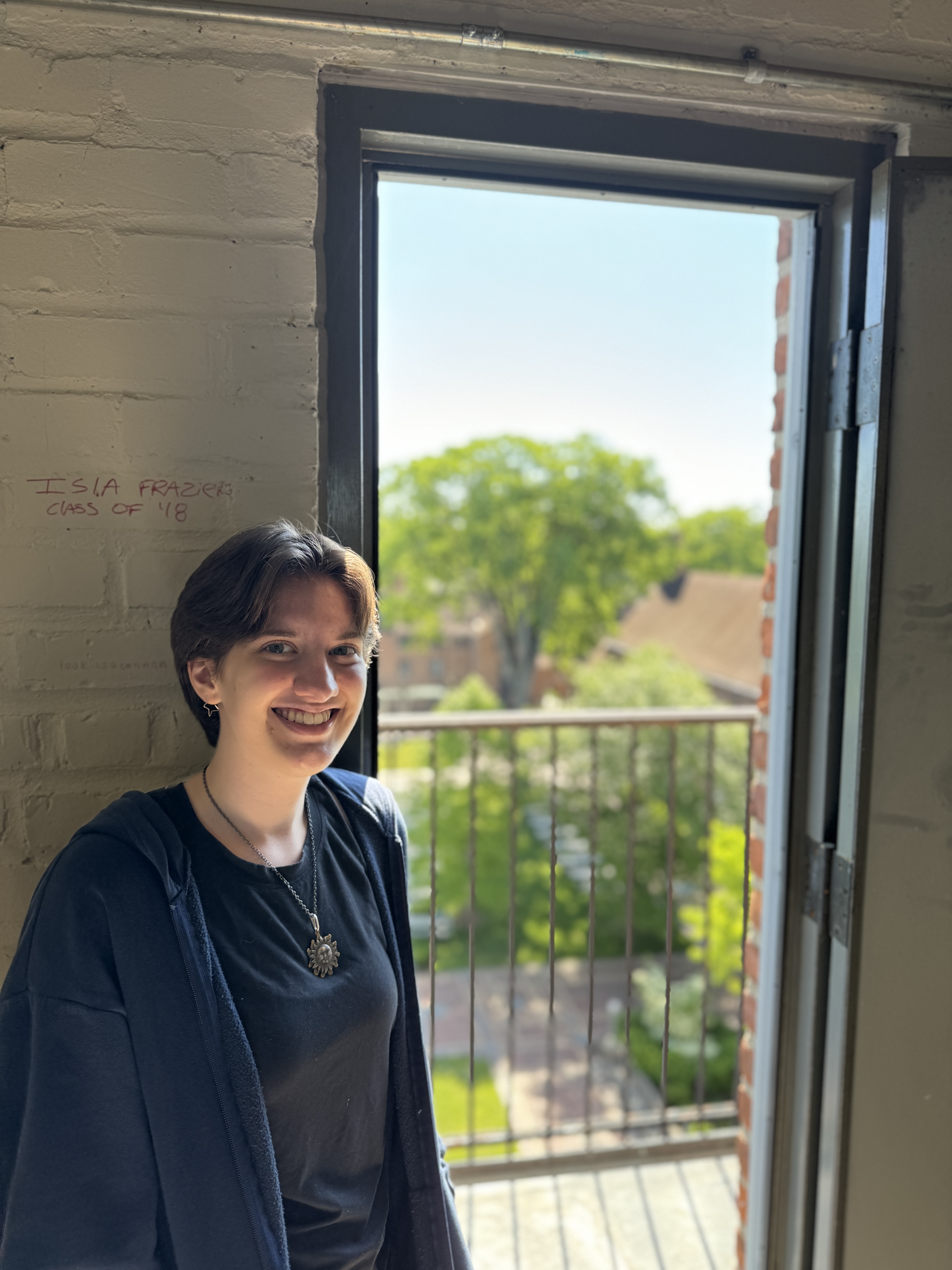
For me, as a student at Cranbrook, my view is that of someone on the inside, who has the privilege to walk by art on campus each and every day (admittedly at times without a second thought). But getting to see the behind-the-scenes of Cranbrook’s beautiful historic campus has given me an appreciation that feels wholly unique amongst my peers.

If you’ve read this blog, I urge you to take a moment to appreciate all that goes on caring for a 100-plus-year-old campus to live on to this day and serve its many students and visitors. From calls, texts, emails, and meetings, the Center is busy planning, filing, caring, and protecting the legacy of Cranbrook. The work is never done.

Yet despite the challenges, the Center rises to the task, willing to give their all to something they passionately care for. It would be hard not to be inspired.
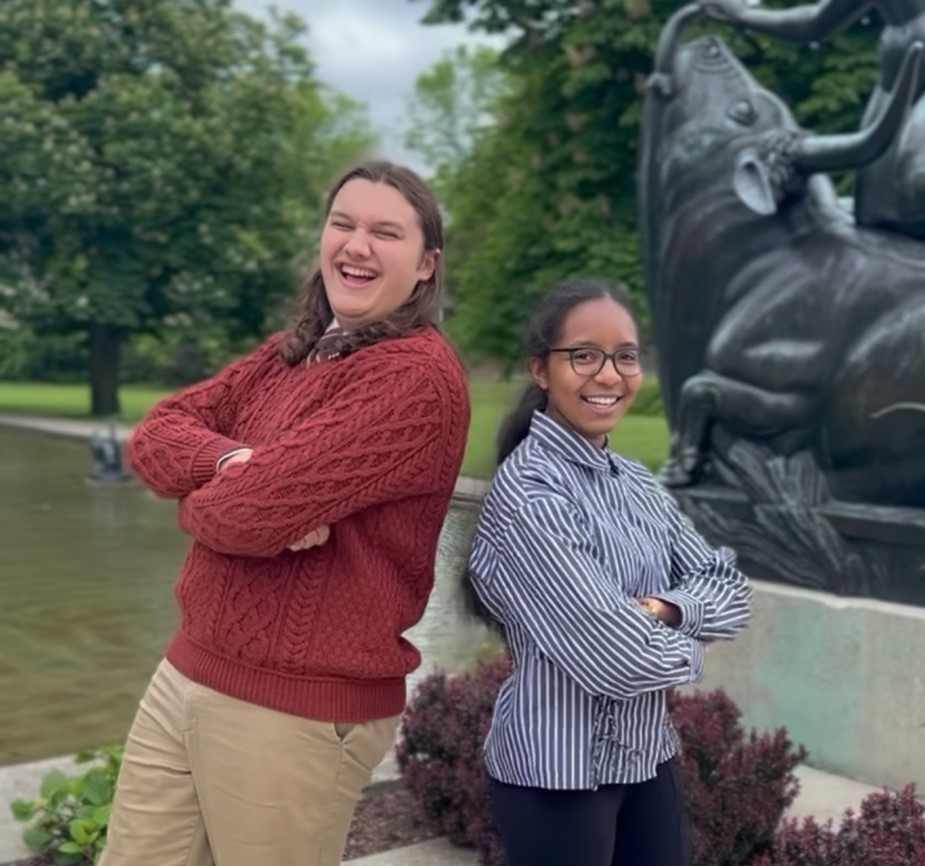
Kamilah and I make a video for Carl Milles’s 150th birthday, May 2025. Photography by Jessica Webster.

This internship has truly been a dream-come-true, and I am grateful to Mariam, Leslie, and Kevin for their warm welcome and tutelage.

Joel Kwiatkowski, Cranbrook Kingswood Upper School Class of 2025 and Cranbrook Center for Collections and Research 2025 Senior May

Editor’s NoteThe Senior May Project is a school-sponsored activity that encourages Cranbrook Kingswood Upper School seniors to acquire work experience in a field they are considering as a college major, a potential profession, and/or as a personal interest.

Joel Kwiatkowski graduated from Cranbrook in June 2025 and will be attending the University of California San Diego in the fall to pursue a degree in Molecular and Cellular Biology. Joel first came to Cranbrook Schools in sixth grade, and has since gained a passion for the institution’s rich history of influential artists and personalities. 

Calling All Storytellers! Become a Cranbrook Center Collections Interpreter

Do you love sharing great stories? Are you the person who says “Did you know…?” at parties? When you discover something wonderful, do you instantly need to share it with friends? Do you love art, architecture, and design, and, have you ever mused to yourself, “Life without beauty is only half lived,’ and I want to be fully living!“?

Collections Interpreter Diane VanderBeke Mager welcoming guests to the Center’s gala fundraiser, A House Party at Cranbrook Celebrating Loja Saarinen, May 2022. Collections Interpreters are storytellers, teachers, hosts, and style icons! Photography by PD Rearick.

If you answered “yes!” to any of the above, the Cranbrook Center for Collections and Research has a place for you on our Collections Interpreter team! As tourism to Detroit grows—and with Cranbrook recently earning a three-star Michelin Guide rating—we are looking for more great storytellers to help us share the magic of Cranbrook’s art, architecture, and design. Read on to learn more, or go ahead and sign up for a Collections Interpreter information session with me (curator Kevin Adkisson) here!

Kevin Adkisson, then the Center Collections Fellow, learning the joy of teaching during a Summer Camp tour of Saarinen House, June 2017. Photography by Cranbrook Art Museum.

Each year from May to November, Collections Interpreters (CIs) lead public and private tours through Cranbrook’s architectural gems. Regularly scheduled public tours focus on two of our historic houses.

First is Saarinen House, the jewel-box Art Deco home of architect Eliel Saarinen and textile designer Loja Saarinen, filled with furniture, fabrics, and works of art made at Cranbrook to the Saarinen family’s own design. As you walk with visitors past the dancing fountains and verdant grounds, tours of Saarinen House also touch on the history of Cranbrook Academy of Art.

Just a short drive away, CI’s lead tours of the Frank Lloyd Wright-designed Smith House, a 1950 Usonian treasure tucked into the neighborhood. Built for two Detroit public school teachers, it is a masterpiece of modesty—proving that great architecture is not just for the wealthy. Tours talk about Wright’s architecture and its quirks, share the story of how the Smiths’ manifested their remarkable dream, and highlight objects of your choosing from the inspiring (and vast) collection of midcentury studio craft.

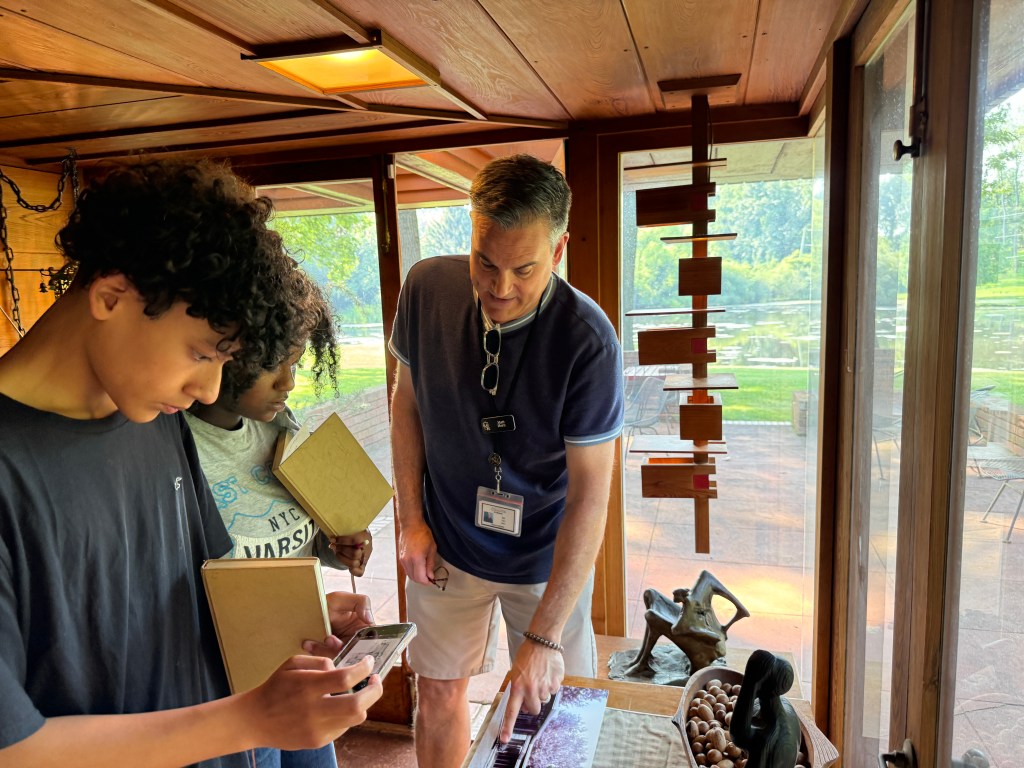
Collections Interpreter Lynette Mayman shares one of many tumultuous tales around cooking and dining with Sara Smith, October 2017. Photography by Kevin Adkisson.

Collections Interpreters also lead monthly Japanese Garden Tours, helping guests explore one of North America’s oldest Japanese-style gardens, and the Three Visions of Home Tour. A fascinating look at three famed architects ways of shaping home, this tour connects Cranbrook’s founders’ Albert Kahn-designed home, Saarinen House, and Smith House. The CI’s also help guide and share stories during other Center Behind-the-Scenes Tours or special events.

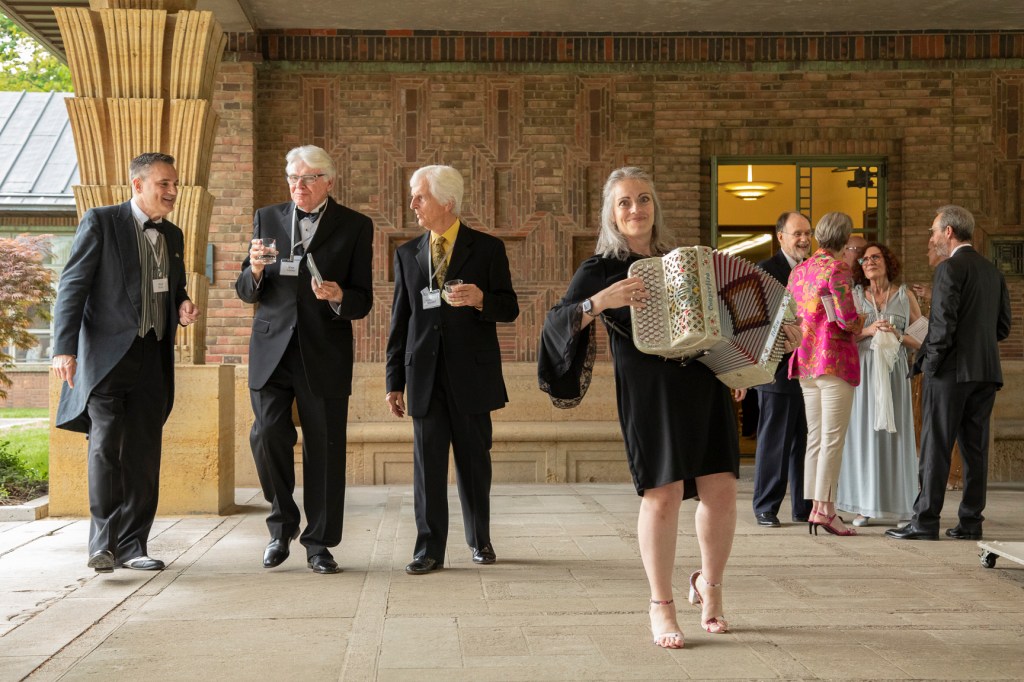
At A House Party Celebrating Loja Saarinen, Collections Interpreter Matt Horn shares stories of weaving at Kingswood School with Ken Gross and Academy Director Emeritus Gerhardt Knodel, while being serenaded from the accordion of Brookside music teacher Rosalia Schultz, May 2022. Photography by PD Rearick.

CIs may also help lead tours for Cranbrook Schools classes; Academy of Art students, artists-in-residence, and visiting artists; Horizons-Upward Bound scholars; and student groups of all ages and interests.

Matt Horn taught elementary music before retiring and joining the Center as a Collections Interpreter. Here, he teaches our summer Horizons-Upward Bound architecture elective in Smith House, July 2024. Photography by Kevin Adkisson.

You might be wondering: who comes to Cranbrook? People from Birmingham, Baltimore, Bangkok—and just about everywhere in between. As a Collections Interpreter, you help to welcome them all. It’s easy when your setting is Cranbrook, a place The New York Times Magazine famously called “the most enchanted and enchanting setting in America.”

No two tours—and no two visitors—are ever the same. It’s exciting!

Continue reading

The Hopkin Club, or, What to Give the Maritime Artist Who Has Everything

What would you want for your 75th birthday? If you were painter Robert Hopkin, it would be an artists’ club named in your honor. The Hopkin Club, formed in 1907, had no rules, officers, or dues. The members wanted to get together occasionally, to talk about art or host artists visiting Detroit. Hopkin passed away in 1909, but the club continued. In 1913, The Hopkin Club established by-laws and was renamed the Scarab Club–the name it continues under today.

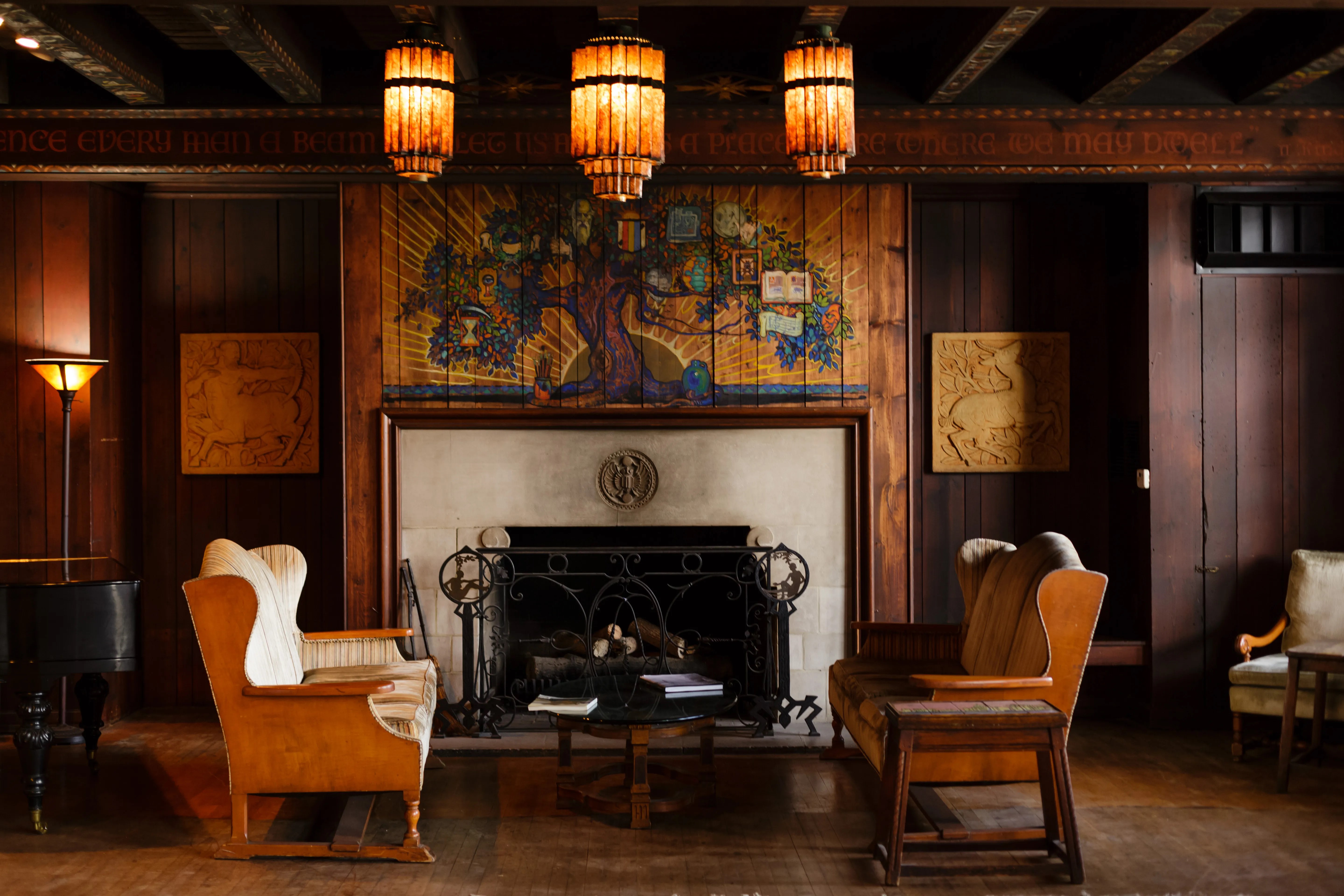
Scarab Club Room. Photography courtesy of Scarab Club. 

But who was the man the club was originally named after?

Robert Hopkin was a maritime/marine artist born in Glasgow, Scotland, in 1832. He learned to paint and draw from his father. The family emigrated to Detroit in 1842. His grandfather was a sea captain which drew Hopkin to work on the wharves in Detroit and inspired his art. Though chiefly known as a painter of marine scenes and seascapes, Hopkin made frequent trips throughout the American west from 1860 to 1885, painting murals for public buildings and drop curtains and scenery for theaters, including the Tabor Grand Opera House in Denver.

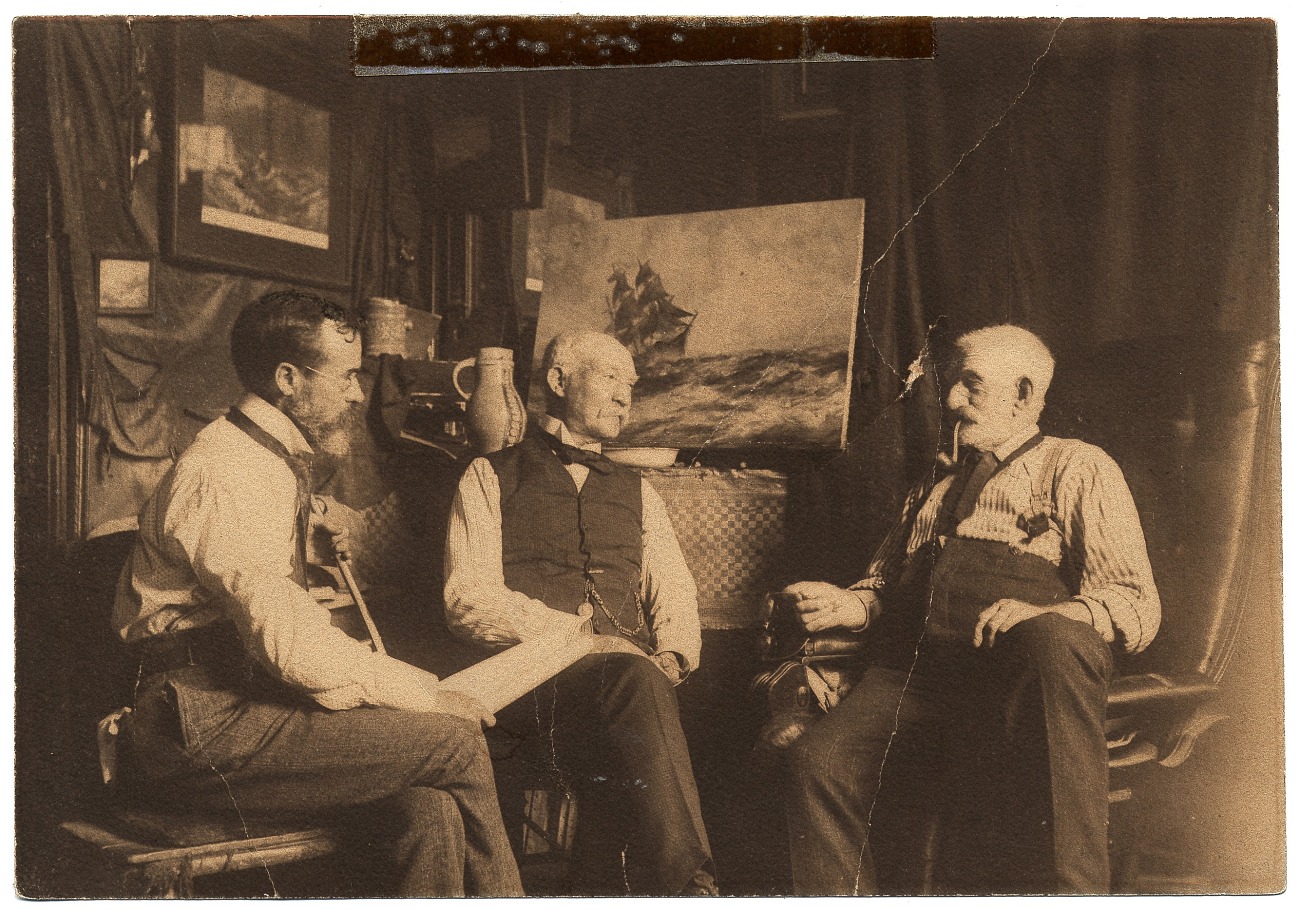
Robert Hopkin (right) and others in studio, ca. 1900. William H. Thomson papers, 1912-1950. Archives of American Art, Smithsonian Institution

In the latter half of the 19th century, Hopkins was considered the dean of Detroit artists; he decorated the interior (as well as the stage curtain) for the original Detroit Opera House (1868), painted murals in Detroit’s Fort Street Presbyterian and Ste. Anne’s churches, as well as the Cotton Exchange in New Orleans (1883). By April 1900, the Detroit Free Press wrote, “Many of the art lovers of this city possess one or more of [Hopkin’s] splendid marines, and they have been reproduced and published until everyone is familiar with his work.”

When Mr. Robert Hopkin’s Collection of Paintings opened at the Detroit Museum of Art in May 1901, “There was a large attendance of art-loving Detroiters” (Detroit Free Press, May 16, 1901).

Robert Hopkin (Scottish American, 1832 – 1909), Marine, Oil on Canvas. Cranbrook Center for Collections and Research.

George and Ellen Booth were no exception. Art lovers with many Detroit-based and self-taught artists in their growing collection, the first inventory of Cranbrook House in 1914 lists two Hopkin “Marine” paintings. The Booths gifted the larger of the two paintings to their daughter Grace Ellen Booth and her husband Harold L. Wallace. The painting returned to Cranbrook House about 1955, when Grace Booth Wallace’s collection was donated to the Cranbrook Foundation.

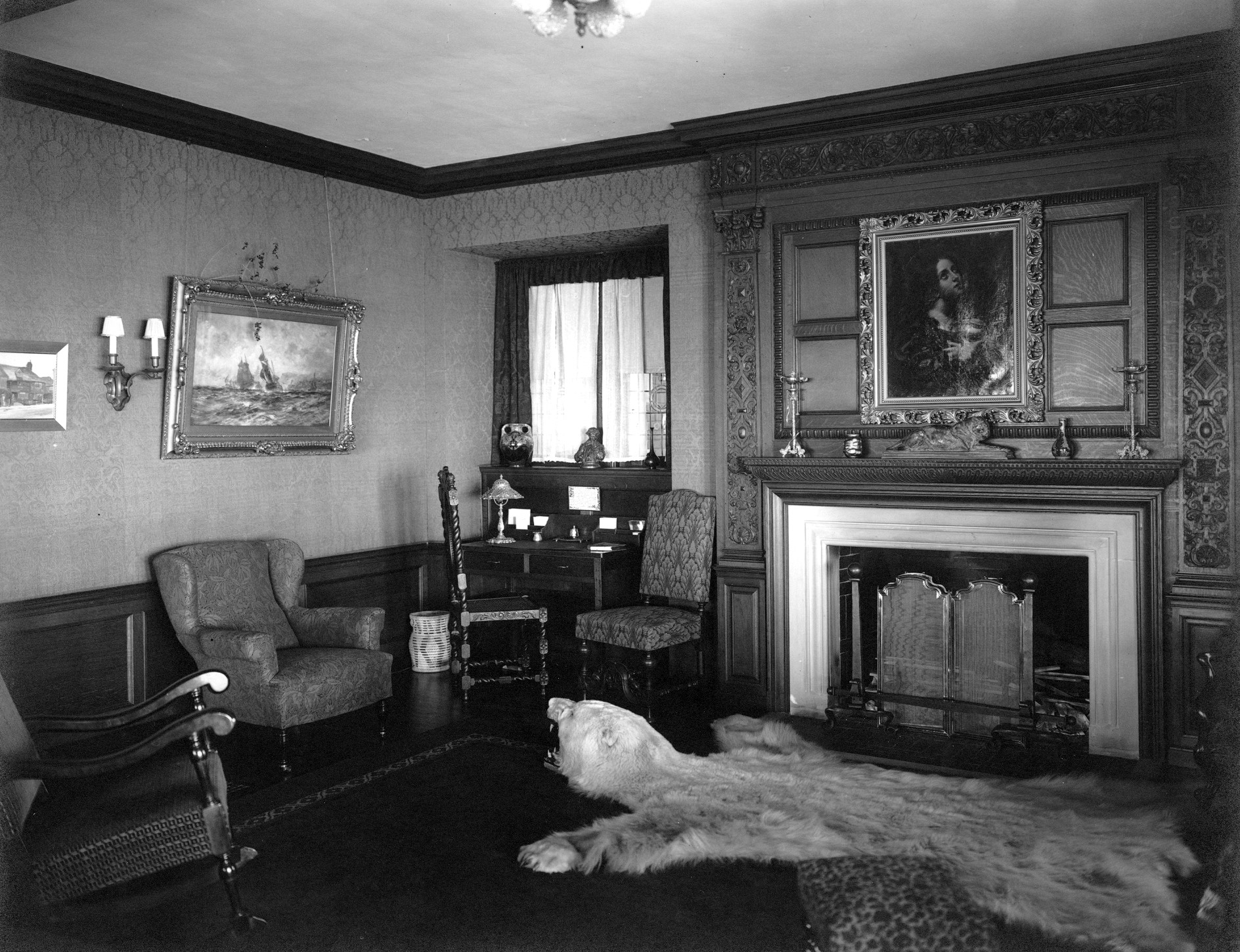
Cranbrook House Living Room, circa 1909, with Marine visible on the left. Cranbrook Archives, Cranbrook Center for Collections and Research.

The Detroit Historical Society has a copy of the Souvenir Catalogue of Mr. Robert Hopkin’s Collection of Paintings in its collection. The 85 exhibited paintings are listed, with several black and white images of them. “Price List” is written on the cover, and notes have been made indicating which have been sold and who purchased them. (Sadly, the name “Booth” does not appear.)

Another art-loving Detroiter was Merton E. Farr president of the American Shipbuilding Company and owner of a number of freighters on the Great Lakes. His daughter, Carolyn, married George and Ellen Booth’s youngest son, Henry.

The Hopkin painting in the Thornlea collection.
Cranbrook Center for Collections and Research.

In 1927, Farr gifted the couple a Hopkin “Marine.” The painting hung in Thornlea, home to Harry and Carol Booth, from 1927.

The painting’s official title is not noted. The Thornlea painting is interchangeably referred to as Homeward Bound, Schooner on a Stormy Sea, Sailing Ship at Sea, and Marine. However, the 1901 Hopkin exhibition catalog does not list any paintings with those titles.

Leslie Mio, Associate Registrar, Cranbrook Center for Collections and Research

If you would like to learn more about Robert Hopkin and the amazing club he inspired, join the Center for Edible Landscapes Dinner: An Evening at the Scarab Club in Detroit on Sunday, May 18th, 2025 from 5:00pm – 9:00pm.

Surprising Transparency: W. & J. Sloane’s Stained Glass

When you take the time to look, the windows of Cranbrook House are surprisingly varied. Some are leaded casement windows straight out of an Elizabethan manor house, others are modern sash windows, fitted with plate glass. A few rooms in the house enjoy a special distinction – their windows are fitted with inset panels of stained glass.

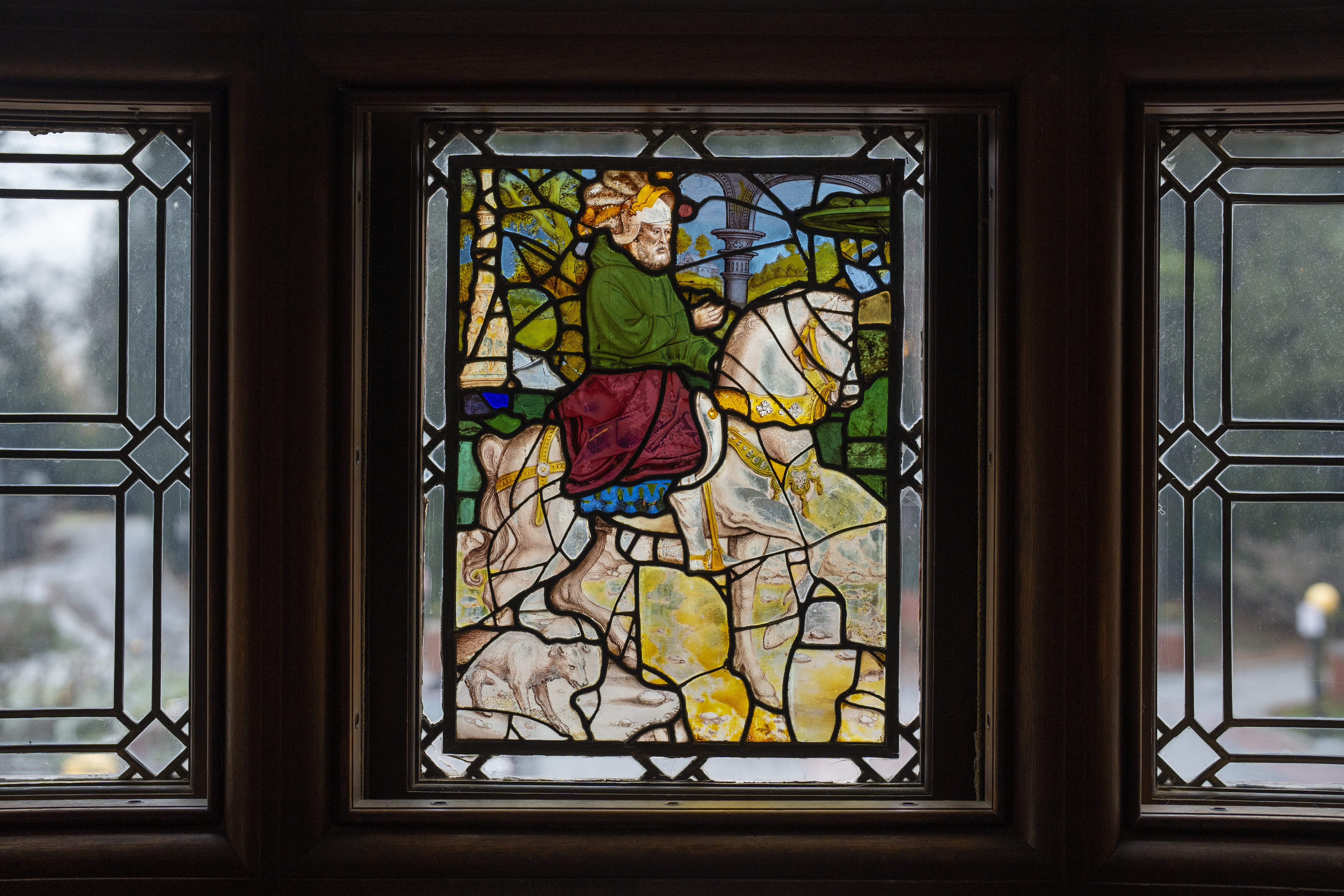
Horse and Rider Panel, Flemish, circa 1525. Photographed by Eric Perry. © Cranbrook Center for Collections and Research.

These stained-glass panels were a later addition to Cranbrook House. When first completed in 1908, the windows were all clear glass. It was only while pondering extending the house, in the latter half of the 1910s, that George Booth began purchasing stained-glass panels for his home. The most prominent stained-glass work in Cranbrook House is the 16th-century Flemish panel, depicting a man on horseback, placed in the main window over the staircase in the Reception Hall.

It was not part of the original design for the window, but added in 1922. That panel, and several others scattered throughout the house, were purchased from Thomas & Drake, an English firm specializing in historic glass.  

Heraldic Panel of the City of Bern, Swiss, 1675-1700. Photographed by Sophie Russell-Jeffrey. © Cranbrook Center for Collections and Research.

Others, like the heraldic roundel in the library’s east window, were purchased by the Booths in Lucerne, Switzerland. There was some debate as to their final destination. George Booth wrote, in a letter to his son Henry, in March 1922:  

They do not make an imposing collection but I think they are good and that everyone will like them – I did think I would let the [Detroit] museum [of Art] buy them at cost if they wished to begin to accumulate some historical glass, but your mother and Florence say no – they are to be put into the windows at Cranbrook but we will see. 

(George Gough Booth to Henry Scripps Booth, 26 March 1922. Cranbrook Archives, George Gough Booth Papers.) 

In the event, Ellen and Florence won out, and at least a few of the Swiss purchases made their way into the windows of Cranbrook House. 

Continue reading

Cranbrook, a Home Away from Home: My Senior May Experience

Each May, the Center is honored to host an outstanding senior from Cranbrook Kingswood Upper School for a three-week immersive internship.

The Center’s 2024 “Senior May” Sav Hayward writes about their time working with the Center team.

I hit the ground at my Senior May running. The very first day, I had to help prepare for the Center’s annual House Party gala. This year it was held at Thornlea House which needed a lot of TLC before the event on Saturday. During my first week, I worked all over the house to help prepare it. Things like vacuuming (Ed. note: No one, in the history of the universe, was as excited as Sav about vacuuming), wiping windows, sorting cupboards, cutting ribbons, crafting decorations, and going to Cranbrook Archives to help move items from the collection for displays. Once everything was completed the final product was extremely satisfying, and I heard many wonderful things about the night. I had to decline my invitation to the House Party in favor of my Senior Prom.

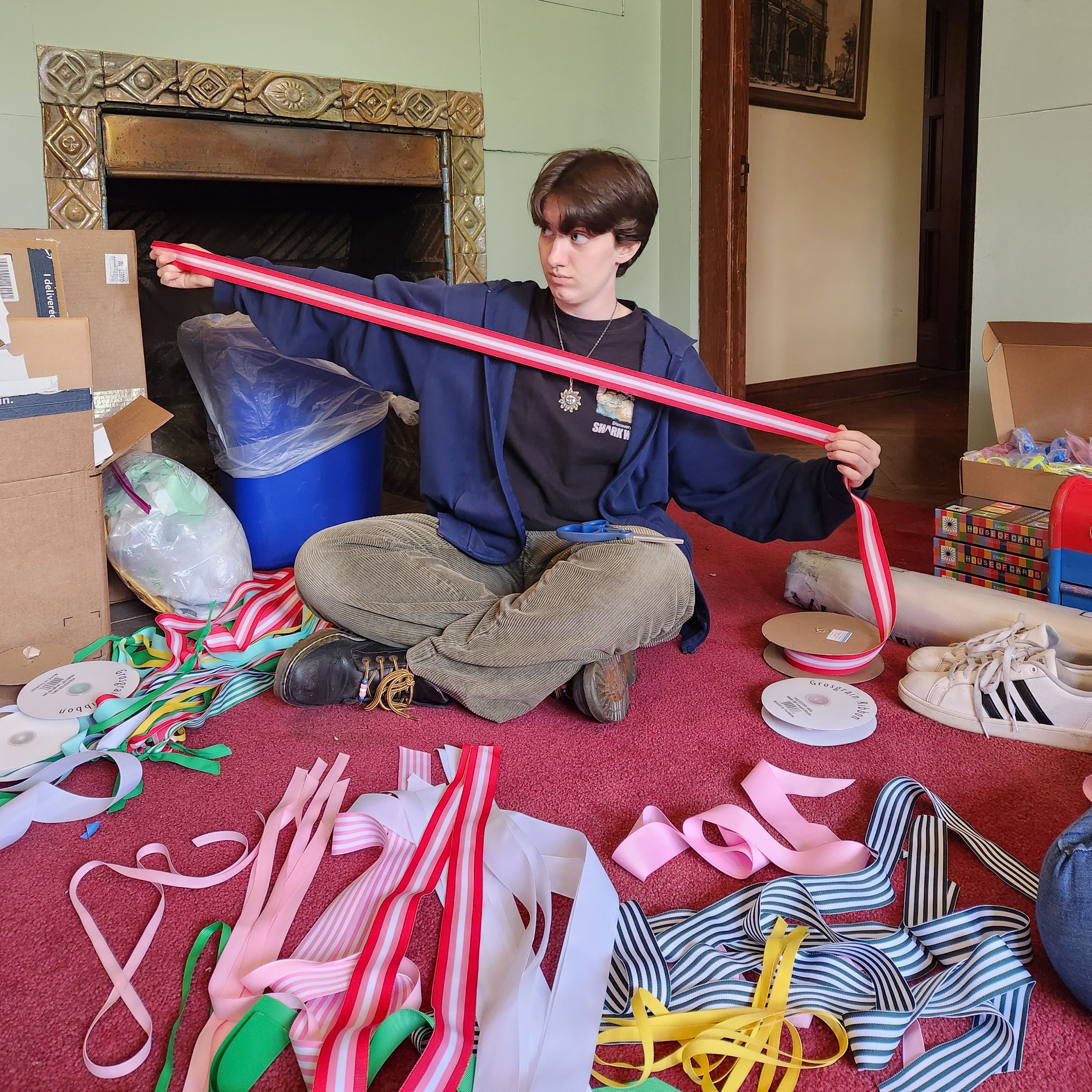
Cutting ribbon to create bunting for the House Party. Photograph by Leslie Mio, May 2024.

The following two weeks, I never had the same task twice in a row. Some of my favorite days consisted of working in the Archives with Deborah Rice and Laura MacNewman, helping around in the Annex offices with the Center’s Registrar, Leslie Mio, and going on random little trips.

In the Archives, I helped organize and re-box some items we got out for the House Party. There was a very relaxed environment there, and it was cool seeing all the documentation Cranbrook has about our history.

The following day I helped Kevin and Leslie take the painting A Hunter of Taos by Oscar Edmund Berninghaus from the Cranbrook Kingswood Middle School for Boys and drive it to a conservation studio in Detroit. When we were finishing our visit, the conservator, Ken Katz, told us to go upstairs and check out the exhibit being set up at the Metropolitan Museum of Design Detroit (MM-O-DD). There we met some cool people, including the Founder/Executive BOD President Leslie Ann Pilling and Chuck Duquet of Collected Detroit, who took us downstairs and showed us artwork stored there.

Standing around looking at the framing studio. Photograph by Kevin Adkisson, May 2024.

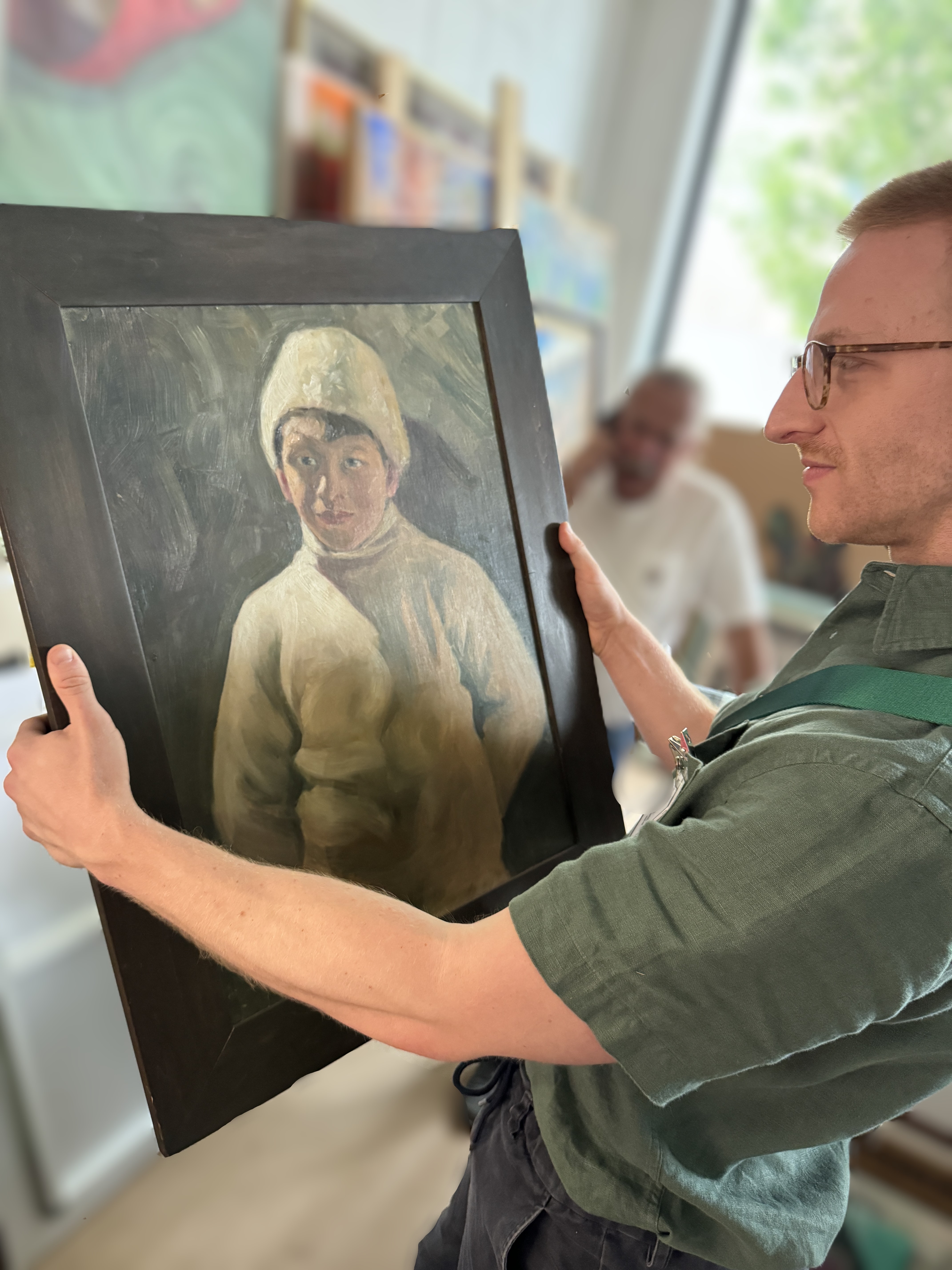
While looking around I saw pieces by many Cranbrook Artists, including some that had been loaned to Cranbrook Art Museum’s recent exhibition LeRoy Foster: Solo Show. I also saw an amazing painting of Eero Saarinen as a boy, painted in Finland by his father (and architect of Cranbrook) Eliel Saarinen.

Kevin admires Eliel Saarinen’s painting of his son Eero at Collected Detroit. Photograph by Leslie Mio, May 2024.

Ever since I started going to Cranbrook, I have dreamed of going up into the old astronomy tower at Hoey Hall. I was able to achieve this dream thanks to Kevin. He was working with photographer James Haefner to document the tower after some recent cleaning. Luckily, I was invited to join Kevin and see how the entire photshoot process worked. I helped do some tasks, like dusting, carrying equipment cases, and bringing water up to the ridiculously hot rooms.

Standing next to the upper door in the Cranbrook Campus tower. Photograph by Kevin Adkisson, May 2024.

On the last day of Senior May, I joined Leslie and Kevin on a trip to Hagopian World of Rugs in Birmingham. We met with architect Erinn Rooks of Cranbrook Capital Projects to pick out colors for a reproduction rug. Suzanne Hagopian, Executive Vice President, brought out a test sample made a while back to see if the colors matched the original and if it was what we were looking for.

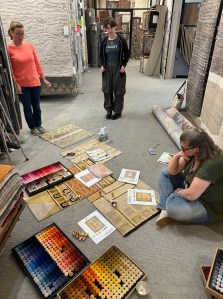
When we looked at the sample, we realized that the colors were lacking, so we all sat around and debated over small tufts of colorful yarn samples. What was nice was that these color samples were neatly lined up in multiple boxes. After a while, we finally decided on more vibrant colors compared to the sample, but this was to help make the carpet pop. Ed. note: Sav’s knowledge of color theory and use of technology to compare color tones greatly assisted in this project.

Erinn, Leslie, and I examine carpet and color samples. Photograph by Kevin Adkisson, May 2024.
Kevin and I take a “magic carpet ride” while looking at yarn samples. Photograph by Leslie Mio, May 2024.

I will always remember this Senior May and how fun it was. The people I met during this time are amazing and I will miss seeing them every day. While some of my classmates went off campus for their Senior May, doing mine on Cranbrook’s entire campus felt like I was a part of one large family. I have never felt more connected to Cranbrook, its history, and its legacy.

Sav Hayward, Cranbrook Kingswood Upper School Class of 2024 and Cranbrook Center for Collections and Research 2024 Senior May

Editor’s Note: Sav Hayward is a member of the CKU Class of 2024 and a proud resident of Lansing, Michigan. In Fall 2024, Sav will continue their education at the College for Creative Studies in Detroit, where they will study Interior Design. CCS is the modern iteration of the Detroit Society of Arts and Crafts, co-founded by George G. Booth in 1906. Sav is hoping to land a paper route for the Detroit News to complete the Booth trifecta.

Another day, another lunch break. The Center feeds its Senior Mays well – Sav was treated to lunches at some of the staff’s favorite local eats, including Panera, 29º 41º Mediterranean Street Food, Green Dot Stables, and Paris Baguette Café (pictured here on their last day with us). Photograph by Kevin Adkisson, May 2024.

A Donkey for Christmas: Brighty Comes to Cranbrook

George G. Booth’s “Old Country Office” at Cranbrook House. Photograph by Kevin Adkisson.

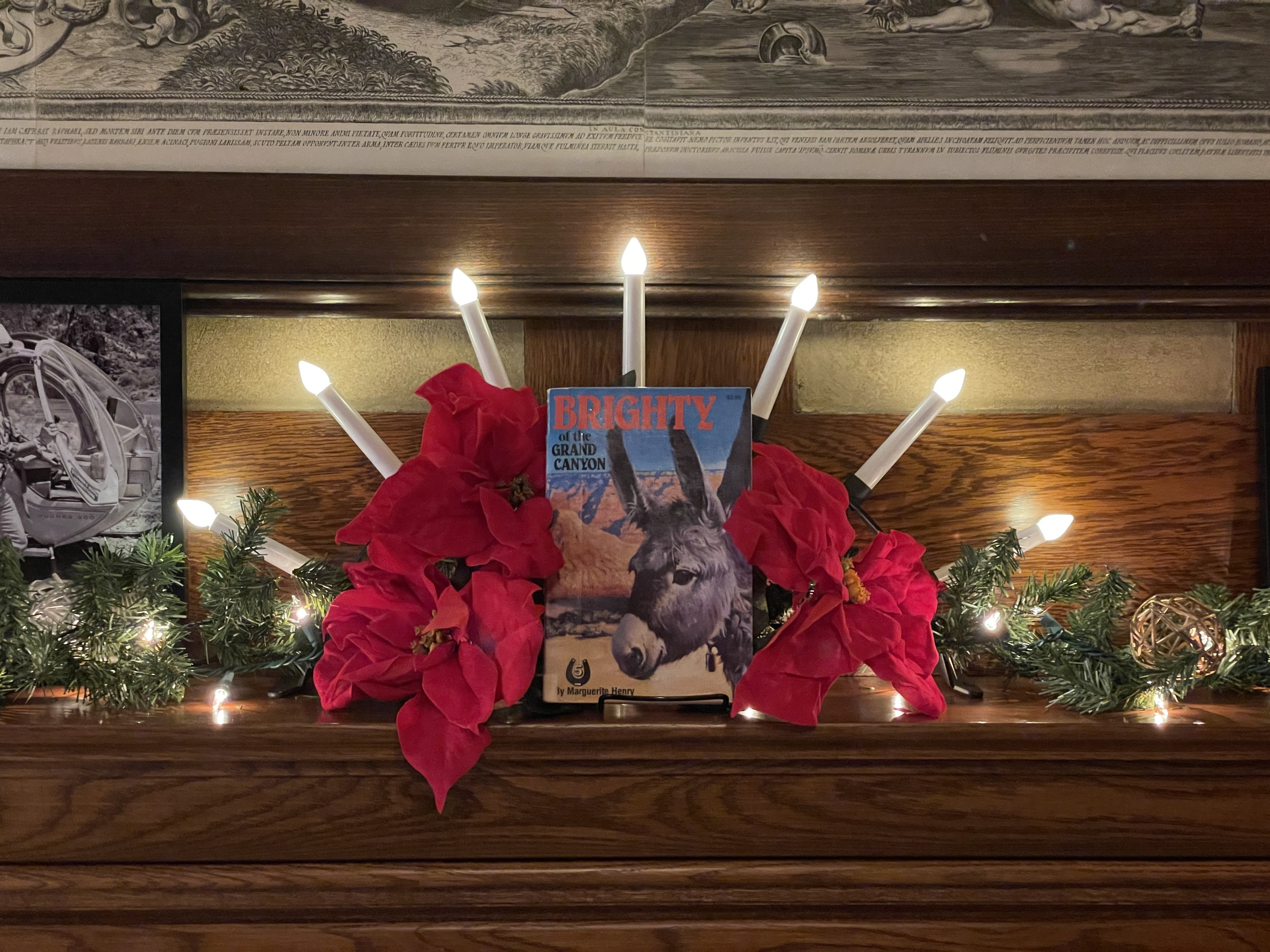
Every year at Christmas, the Center for Collections and Research decorates George Booth’s office in Cranbrook House with a special display. This year, our Christmas display is all about Brighty of the Grand Canyon, a movie produced by Stephen Booth, a grandson of Cranbrook’s cofounders. Brighty was a real donkey who inspired first a children’s novel, then a feature film.

In the late 1800s, there were hundreds of half-wild donkeys in the Grand Canyon, brought there by prospectors and then lost or abandoned. Brighty was one of them. 

Photograph by Kevin Adkisson.

Brighty lived in the Grand Canyon from 1892 to 1922. In the winter, he roamed the warm depths of the canyon. A sociable animal, he liked the company of prospectors, hunters, and hikers, but if anyone loaded a heavy pack on his back he would soon make his escape. Every summer, he returned to the North Rim to stay with the McKee family who rented cabins to tourists. He would carry water, give children rides, and visit each cabin in turn for attention and treats—his favorite food was flapjacks and honey.

In 1953, the author Marguerite Henry learned about Brighty, and immediately decided to base her next novel on him. In search of more stories about the adventurous donkey, she travelled to the Grand Canyon herself, where she interviewed locals who had known him, hiked in the canyon, and even sampled the creek water and tasted the plants that Brighty would have eaten! She adopted her own donkey, Jiggs, to learn from him how the real Brighty might have behaved. In Brighty of the Grand Canyon, a free-spirited donkey helps solve a murder mystery and protects his human friends from a dangerous bandit.

This is the 1963 edition of the novel, the same year that the Booths bought a copy to read on their family road trip. Photograph by Kevin Adkisson.

Stephen Booth and his wife Betty bought a copy of the book to read to their children, Douglas, Charles, and George. They all loved the story, especially Stephen, who had his own film production company, and decided to make a movie about Brighty. 

Filming began in 1965, with Marguerite Henry’s own pet donkey, Jiggs, starring as Brighty. Filmed on location at the Grand Canyon and in the Dixie National Forest in Utah, the actors and crew spent weeks living in the canyon. A tiny helicopter and an airplane with a camera mounted on the front were used for aerial shots, and for flying special visitors, like Stephen’s parents, Henry and Carolyn Booth, down into the canyon. 

Norman Foster, the film’s director, reviews the script with Jiggs the Donkey. Stephen Farr Booth Papers, Cranbrook Archives

The movie premiered on November 22, 1966, just down the road in Birmingham, doubling as a fundraiser for Kingswood School for Girls. As the star of the movie, Jiggs himself came along to the premiere. Afterward, he participated in the Festival of Gifts at Christ Church Cranbrook, an annual Christmas tradition that began in 1928 and continues today. 

From left to right: Betty Booth, Stephen Booth, Marguerite Henry, and Jiggs greet children at the film’s premiere. Stephen Farr Booth Papers, Cranbrook Archives.

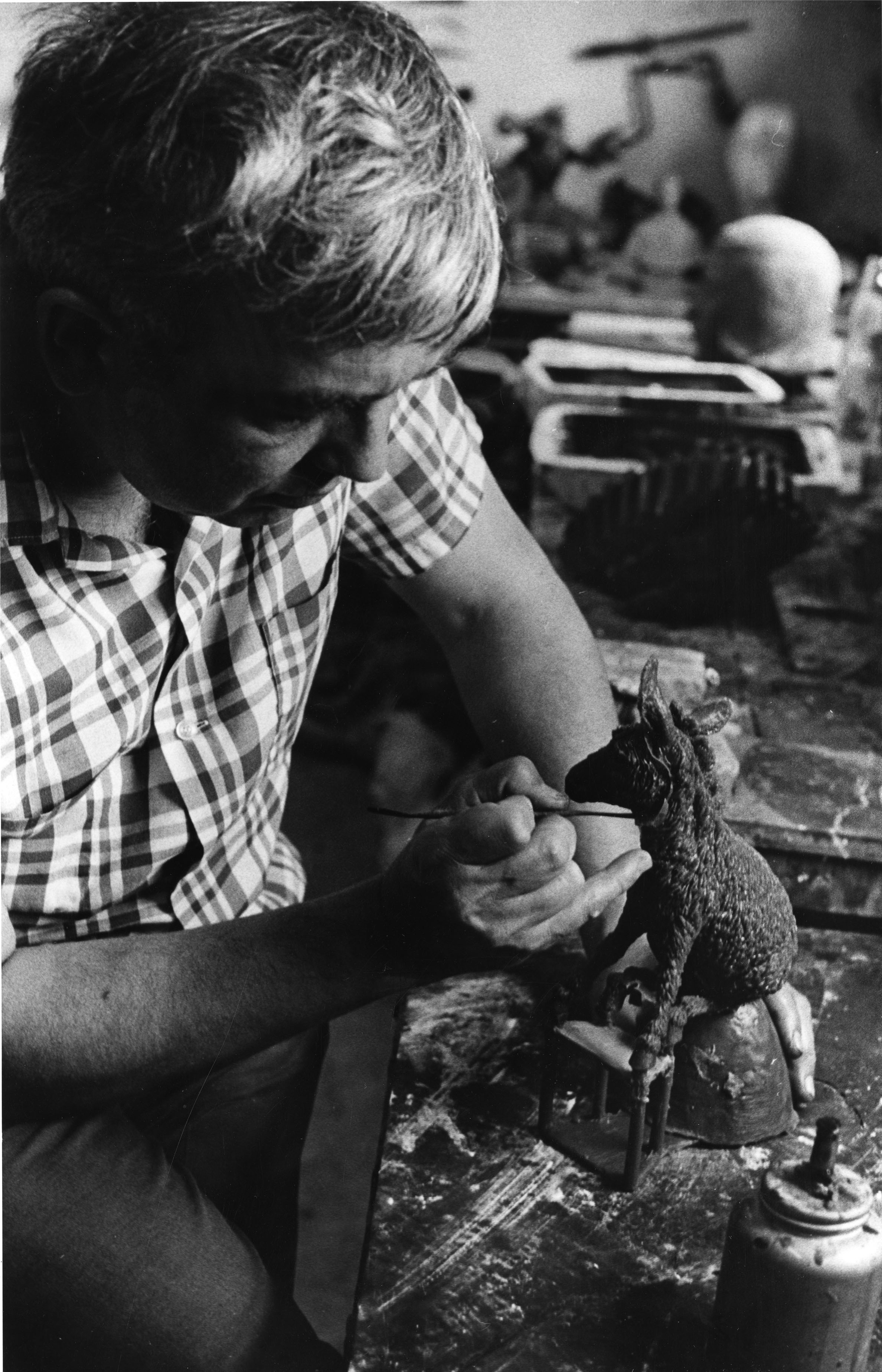
While Brighty was visiting Bloomfield Hills, he also posed for a series of sculptures by Peter Jepsen. They were modelled here at Cranbrook, on the second floor of Thornlea Studio. We still have one of the sixty Brighty figurines that Stephen Booth had made to give as presents to people who had helped in the making of the movie. Our Brighty was given to Stephen’s parents, Henry and Carolyn, to thank them for their support.

Photograph by Kevin Adkisson.
Peter Jepsen at work on Brighty in Thornlea Studio. Stephen Farr Booth Papers, Cranbrook Archives.

Stephen also commissioned Jepsen to make a life-size sculpture of Brighty. In 1968, Stephen gave that version to the Park Rangers at the Grand Canyon as a Christmas present. You can still see Jepsen’s Brighty at the visitor’s lodge on the North Rim of the Canyon, close to where the real Brighty spent his summers, more than a hundred years ago.

Peter Jepsen poses with his sculpture at the lodge on the North Rim of the Grand Canyon. Stephen Farr Booth Papers, Cranbrook Archives.

Mariam Hale, Collections Fellow, Cranbrook Center for Collections and Research

Ed. Note (July 17, 2025): It appears the Dragon Bravo wildfire has severly damaged the original Brighty statue at the the lodge on the North Rim of the Grand Canyon. https://www.facebook.com/share/p/1CDkSfoutX/

Please know that the Cranbrook Center for Collections and Research will do everything it can to support efforts to restore or replace Brighty,

Clare in the Kitchen: Summer Research at Smith House

Have you ever wondered what it would be like to cook in a kitchen designed by Frank Lloyd Wright? As the summer intern for the Center, I got a taste of the experience. 

Clare in the Smith House workspace, August 2023. Photograph by Nina Blomfield.

My name is Clare Catallo and I am a 2020 graduate of Cranbrook Schools and a rising senior at Kalamazoo College. I am a history major and I am hoping to have a career in museum curation. As a Schools student, I had the opportunity to tour Cranbrook House, Saarinen House, and Smith House and learn about the designers and art movements that are intertwined with the legacy of the campus. It sparked my interest in design history and material culture, and I am very grateful to have spent the past two summers interning with the Center. 

Last year, I helped clean the exterior of the Frank Lloyd Wright-designed Smith House, inventory the books in Melvyn and Sara Smith’s collection, and do genealogical research. This summer, I have been researching the histories of household objects and conducting object photography at Smith House, as well as assisting with the Cranbrook Horizons-Upward Bound Architecture elective course. In August, I assisted the Center team with preparations for “At Home with the Smiths,” an immersive evening program held at the Frank Lloyd Wright-designed Smith House. Preparing for this event has brought my two summers here together as we work to emulate Melvyn and Sara Smith’s 1970s house parties.

Cookbooks from Melvyn and Sara Smith’s collection. Photograph by Nina Blomfield.

The cookbooks found at Smith House provide a glimpse into the family’s lifestyle and the home cooking trends of the 1960s and 1970s. Many of the Smiths’ cookbooks present an image of a modern, working woman who has more to do with her time than spend hours in the kitchen. World War II had made families rearrange their menus and ideas about food, due to rationing and shortages which continued even through to the postwar years. Menus became less formal, and fewer families had maids to cook for them.

These national trends align with Frank Lloyd Wright’s kitchen design, meant to function as a utilitarian, servantless workspace. Combined with the growing numbers of women in the workplace in the 1960s and 1970s, the demand for quick and easy recipes rose. This trend is reflected in the Smiths’ cookbooks like the excellently-titled Dinner Against the Clock (Quick, Sumptuous Meals With the Look and Taste of Infinite Leisure), and The Keep it Short and Simple Cookbook, the latter of which is dedicated to “every homemaker,” whether “housewife, career girl, or bachelor”. These recipes use few ingredients, many of which are ready-made, require a small number of utensils, and demand little time. 

Continue reading

What Can a Tea Kettle Teach Us? A Tale of Two Cranbrooks

The Center has made a new film! As part of our recent gala fundraiser, A House Party at Two Cranbrooks, we worked with Elkhorn Entertainment & Media to produce a short documentary about the Booth family’s connections between England and Michigan. Today, we are excited to share the film with the wider world! Watch the film below, or here.

A Tale of Two Cranbrooks

Now that you’ve seen the new documentary, I thought I’d invite you “behind-the-scenes” into how A Tale of Two Cranbrooks came together.

Cinematographer Josh Samson and producer Vince Chavez film the Booth-made tea kettle in Cranbrook House. April 6, 2023. Photograph by Nina Blomfield.

As with all Center projects, I started work on the film in Cranbrook Archives. The Booth family records are extensive, and with our archivists Deborah Rice and Laura MacNewman, I spent several afternoons consulting documents (letters, photographs, manuscripts, scrapbooks, etc.) assembled by many generations of Booths to learn the family story. Henry Wood Booth’s handwritten The Annals of Cranbrook were especially helpful.

Detail of a postcard of Cranbrook, Kent with handwritten notes by Henry Wood Booth, from The Annals of Cranbrook manuscript, 1914. Cranbrook Archives.

Then, through the support of Bobbi and Stephen Polk and Ryan Polk, I travelled to England! I visited Cranbrook, Kent, spending time at Cranbrook Museum and Archives and at Cranbrook School. (You can watch a walking history tour I did in Cranbrook, Kent, here and learn more about the Booth family and my trip to England in my virtual lecture, Uncovering Cranbrook: Two Pilgrimages to Kentish Cranbrook.)

Continue reading

Celebrating and Preserving Cranbrook’s History: My Senior May Experience

My three weeks at the Center for Collections and Research have been an exhaustive tour of all the activities and responsibilities of maintaining Cranbrook’s history. From getting ready for the annual House Party, scanning historical documents, and cleaning the Smith House in preparation for summer, being a member of this community requires one to wear many hats to preserve its history.

Scrubbing the Frank Lloyd Wright Smith House in Bloomfield Township. Photo by Leslie Mio.

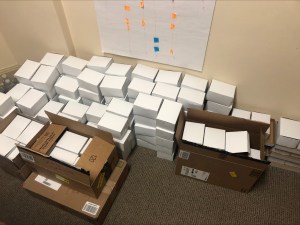
During my first week with the Center, I entered into the great anticipation of the annual House Party fundraiser. With this year’s theme involving Cranbrook’s influences from England, many of my projects involved making Cranbrook House a better fit for this theme. As favors for the guests, I assembled nearly 300 pastry boxes to fill with scones and other iconic English treats like tea and marmalade.

My collection of pastry boxes from my week at Cranbrook House. Photo by Grace Quinn.

Following the party, I helped scan many folders of documents from the Archives on George G. Booth and his involvement with the Detroit Arts and Crafts Society and with renowned architect Albert Kahn. Although I knew very little about the Arts and Crafts movements, I came to a much stronger understanding of how the Booths focused much of their wealth and influence on buying and displaying handcrafted goods.

These were not just shows of wealth but were a way of honoring the artisans who built this campus and saying, without words, that a quality place like this will withstand much more than inhuman, mass-produced art and furniture. Even though this notion is not new, rising technological advances seem to only make cheapness and speed priorities in design, rather than beauty or emotional value. The art of patience and supporting artists is a refreshing notion compared to the on-demand nature of online shopping and rampant consumerism.

While scanning documents from the George G. Booth Papers was my main Archives project, I also got to work with architectural drawings of Glen Paulsen from the 1950s. Photo by Deborah Rice.

When reflecting on what I had learned during this internship, I realized that before this I had never given much thought to how this campus came to fruition. I knew that some famous architects built it, but as I scanned archival documents and helped maintain Cranbrook’s houses, I can now fully realize the cultural influence Cranbrook has had in Detroit’s history.

Cranbrook’s inspiration stretches across borders and countries; it has a prominent space in contemporary architecture and in the earlier Arts and Crafts Movement. Cranbrook’s exercises in art and design are on display to inspire others to emphasize detail, quality, and creative talent in designing schools and creating diverse communities.

—Grace Quinn, Cranbrook Kingswood Upper School 2023

Editor’s Note: The Senior May Project is a school-sponsored activity that encourages Cranbrook Kingswood Upper School seniors to acquire work experience in a field they are considering as a college major, a potential profession, and/or as a personal interest.

Grace’s efforts in making A House Party at Two Cranbrooks a success, her can-do attitude, and her flexibility in tackling projects large and small were much appreciated by the Center staff. We wish her luck as she heads to the Rochester Institute of Technology’s College of Art and Design in the fall!

Step-back with a Peacock

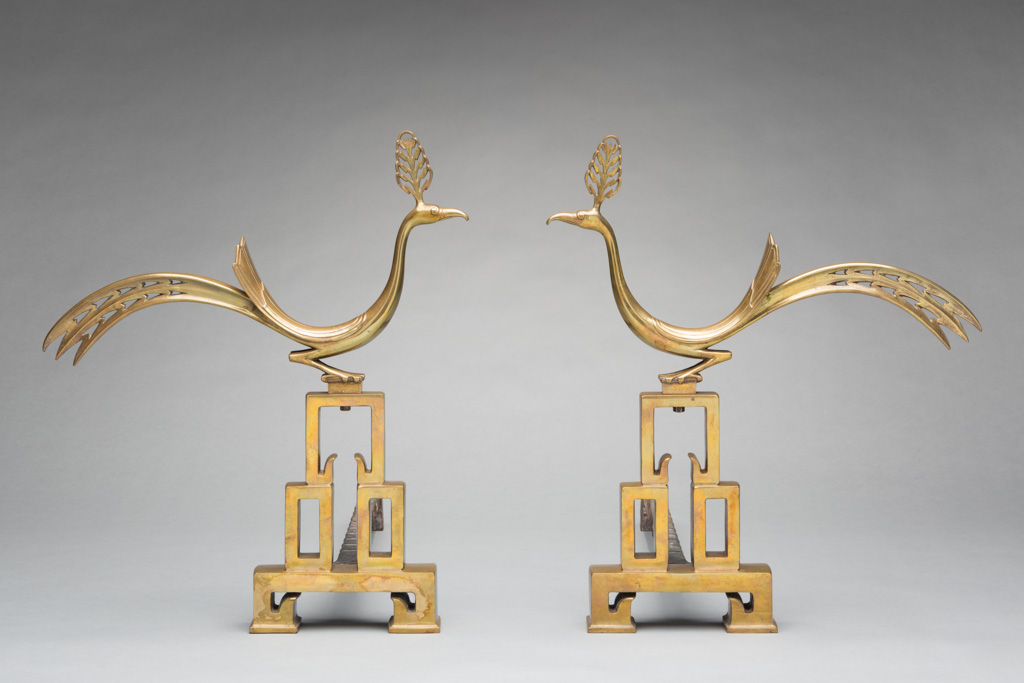
From the moment I entered Saarinen House twenty-seven years ago to give my first public tour, to my upcoming presentation for the Kingswood Middle School for Girls Explore Cranbrook students, I remain . . . simply enthralled. No more so than by the vibrant Peacock Andirons gracing the living room hearth.

Eliel Saarinen’s cast bronze Peacock Andirons, 1928-29. Each 21-1/4” W x 22-3/8” H x 27-1/4” D. Collection of Cranbrook Art Museum, CAM1985.2 a-b. Robert Hensleigh, photographer.

Designed by Finnish-American architect Eliel Saarinen and produced by Sterling Bronze Company, New York between 1928 and 1929, these cast bronze andirons were paid for by the Cranbrook Foundation and entered in the 1928-1930 Arts & Crafts Building ledger on pages 40-41 (third line from the bottom)—Date: 1-7-30; No.: 515; Name: Sterling Bronze Co; Remarks: 1 pair/ Andirons for Saarinen Res[idence]; Amount: $152.50 (the equivalent of $2,631.50 in 2023).

Arts & Crafts Building ledger, 1928-30. Laura MacNewman, photographer, 2023. Cranbrook Archives.

The pair of birds are fabulous. Ready and alert, they face each other, ankles bent, balanced upon splayed toes.
Continue reading

Create a website or blog at WordPress.com