House of the Poet

In 1995 a project was initiated to create a living monument to honor Cranbrook’s dedication to poetic imagination. The project, House of the Poet, was to be built on the ridge overlooking Lake Jonah and would honor works of imagination in art, sciences, and letters. Architect and educator, John Hejduk (1929-2000), was commissioned to develop plans for the building.

Hejduk largely abstained from conventional practice, but is known for his drawings that were combined into poetic and often highly personal narratives. Despite completing relatively few buildings, Hejduk is considered one of the most influential architects and theorists of the twentieth century. In an essay about Hejduk, architect Andreas Angelidakis states, “His drawings and writings, his essential approach to architecture, continue to function as a blueprint for a practice without clients, commissions, or even realization. What he built was a world of images and words.”

Exterior drawing, House of the Poet. Courtesy Cranbrook Archives.

Exterior drawing, House of the Poet. Courtesy Cranbrook Archives.

Hejduk designed a house built on stilts that included a bedroom, bath, living room, dining room, and kitchen. The plan was to create a space where “esteemed visitors” to the campus could stay. The exterior consisted of stucco in green, red, blue, and gunmetal, with a zinc roof.
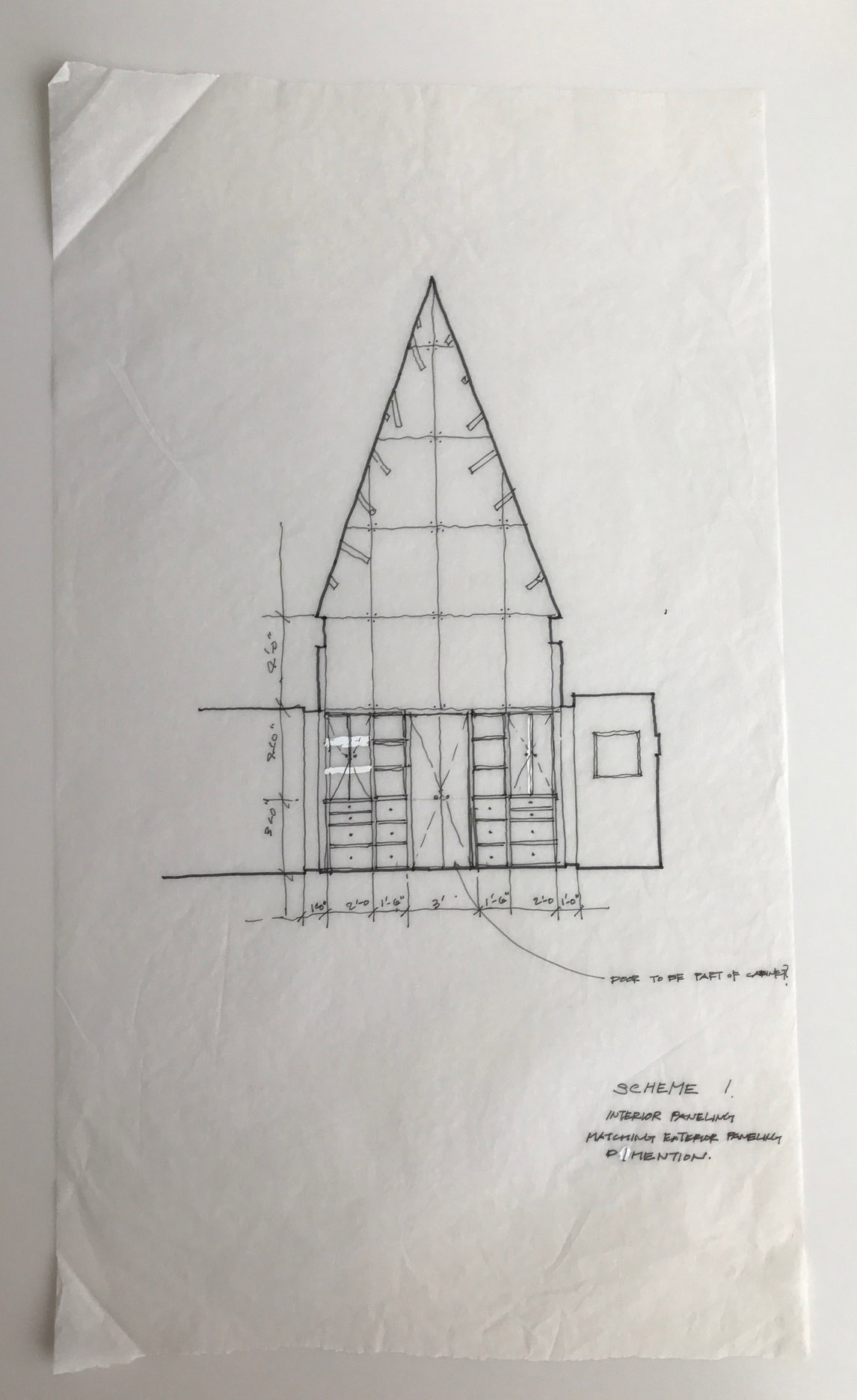
Sketch of Scheme 1: interior paneling.

Sketch of Scheme 1: interior paneling.

In the fall of 1995, architects Dan Hoffman and Jennifer Lee of the Cranbrook Architecture Office (CAO) worked towards the project’s completion. Faculty and students from the Academy of Art’s Department of Architecture would provide the majority of the labor for the construction of the building, continuing the tradition of the integration of arts and crafts in the original buildings on campus. The CAO created extensive cost estimations and budgets, and thoroughly researched available materials for the construction of the house.
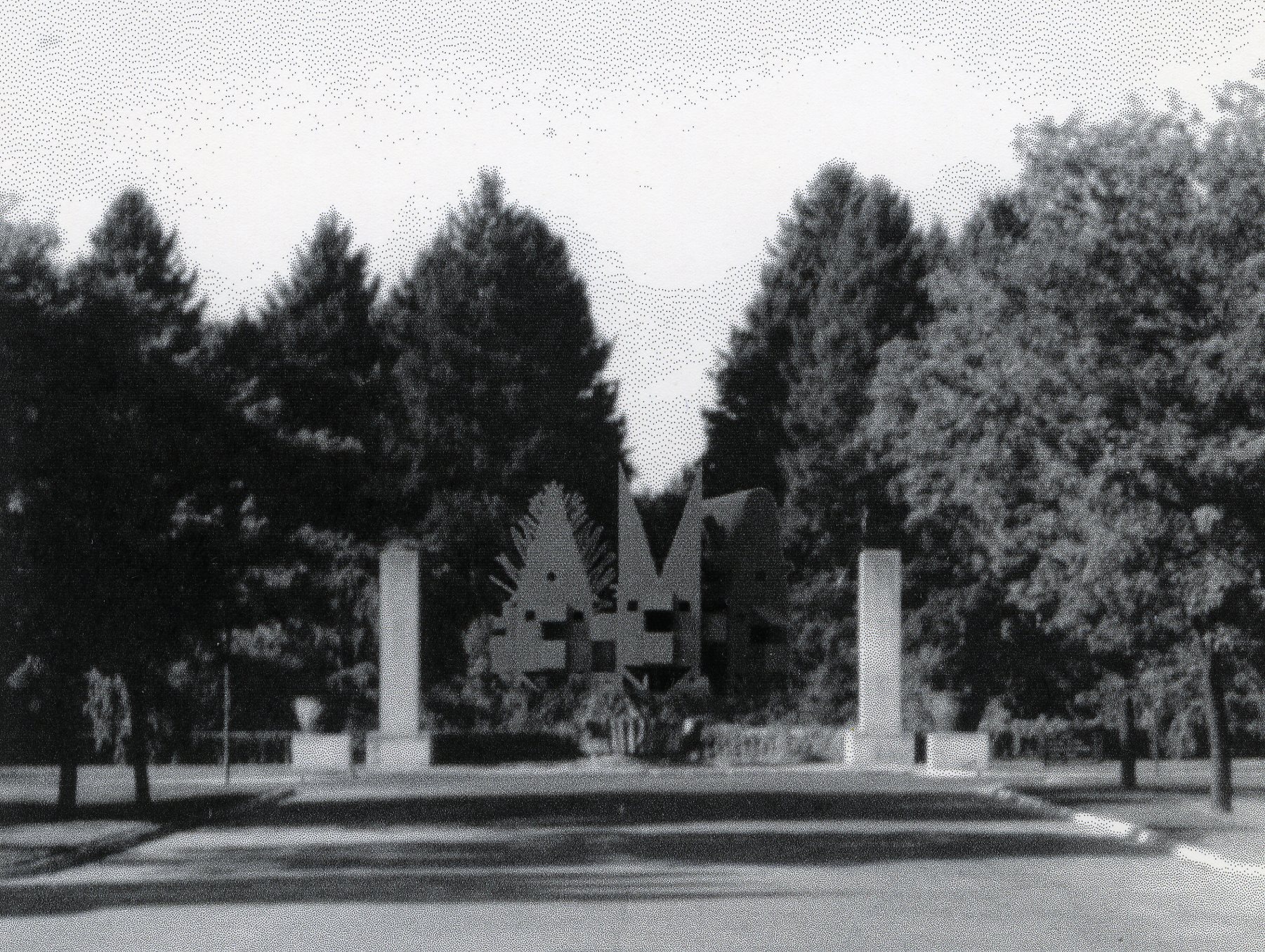
Digital model of the House of the Poet - view from Academy Way with the sculpture of Jonah and Whale in the foreground.

Digital model of the House of the Poet – view from Academy Way with the sculpture of Jonah and the Whale in the foreground.

Project correspondence indicated plans to complete the building in time to coincide with a 1997 exhibition at Cranbrook Art Museum honoring the work of John Hejduk. The project seemed set to move forward, however, due to lack of sufficient funding, was canceled.

Gina Tecos, Archivist

Special thanks to Rebecca Kallen (CKU ‘08) who contributed to the research of this blog.

Holiday Inspiration

Last week a researcher came to look for holiday inspiration in the Archives. As I was putting the materials away, I came across this lovely card by Academy of Art student, Alice Warren. The card piqued my interest and I did a little digging to learn more.

Holiday card from Alice Warren to Margueritte Kimball, 1947. Margueritte Kimball Papers, Courtesy Cranbrook Archives.

Holiday card from Alice Warren to Margueritte Kimball, 1947. Margueritte Kimball Papers, Courtesy Cranbrook Archives.

Inside design of holiday card from Alice Warren, 1947.

Inside design of holiday card from Alice Warren, 1947.

Warren, born in 1921, came to Cranbrook to study architecture with Eliel Saarinen in 1943-44. Warren’s father (Don) was a genetics professor, and her mother (Mira) assisted him with his lab work. In 1920 Don Warren, with Mira’s assistance, published three scientific papers about his genetic research of the fruit fly. Professor Warren went on to become a pioneer in poultry genetics, earning several awards and distinction in this field.

Alice Warren, like her parents, was a trailblazer. In 1942 she graduated from the University of Illinois with a B.S. in Architecture. In May 1943, she wrote to Henry Scripps Booth expressing her desire to come to Cranbrook for a summer session to “further [her studies] under Eliel Saarinen.” She received a letter of acceptance in June.

While at Cranbrook, Warren studied Architecture and City Planning. As part of a team (Annette Kite, painter and Eliza Miller, sculptor), her work was entered in the 1944 Rome Collaborative – an annual competition conducted by the Alumni Association of the American Academy in Rome. She later worked for Saarinen, Saarinen and Associates. Warren also met her husband, Fred Dockstader, while studying at the Academy. Dr. Dockstader taught history at Cranbrook School from 1943-52, and designed ethnological exhibits at Cranbrook Institute of Science in 1951-52.

Alice Warren working on her city planning model for Plymouth, MI, 1944. Photographer, Harvey Croze. Courtesy Cranbrook Archives.

Alice Warren working on her city planning model for Plymouth, MI, 1944. Photographer, Harvey Croze. Courtesy Cranbrook Archives.

Warren and Dockstader married on Christmas day, 1951. Dockstader was an anthropologist, art professor, and a noted authority on American Indian art. The couple worked together on several publications and also at the Museum of the American Indian in New York, where Alice was a staff architect, and Fred was the museum director from 1960-1975.

Gina Tecos, Archivist

Author’s Note: While researching Alice Warren Dockstader, I came across the finding aid for the Frederick Dockstader Collection at the Arizona Archives. One of the content notes describes holiday cards designed by Alice and Fred that incorporate their interest in Kachinas. You can see one of these on the Cranbrook Archives Facebook page!

Experimental Jazz at Cranbrook

Last week’s post about jazz legend, Dave Brubeck, led to water cooler discussions and Facebook murmurings about additional jazz collaborations here at Cranbrook. Thanks to an inquiry on Facebook I discovered the great story of Yusef Lateef’s Cranbrook connection.

Lateef was born in Chattanooga, Tennessee in 1920, but grew up in Detroit. After graduating from high school he began playing professionally in swing bands at the age of 18. In 1949, he was invited to tour with Dizzy Gillespie and his orchestra. A year later, he returned to Detroit to begin his studies in composition and flute at Wayne State University. He eventually received his undergraduate and graduate degrees from the Manhattan School of Music and his Ph.D. in Music Education at the University of Massachusetts at Amherst. Lateef’s main instruments were the tenor sax and flute, though he played many other traditional and non-traditional instruments.

In the late 1950s, Lateef was invited to perform at Cranbrook by members of the Academy of Art Student Council. The Council thought it would be worthwhile for art students to learn something about another form of artistic expression – in this case, jazz. In April 1958, Lateef performed in the galleries at the Academy of Art. Seating  capacity was limited and patrons sat on pillows on the floor.

Promotional material for the jazz concert, April 9, 1958. Courtesy Cranbrook Archives.

Promotional material for the jazz concert, April 9, 1958. Courtesy Cranbrook Archives.

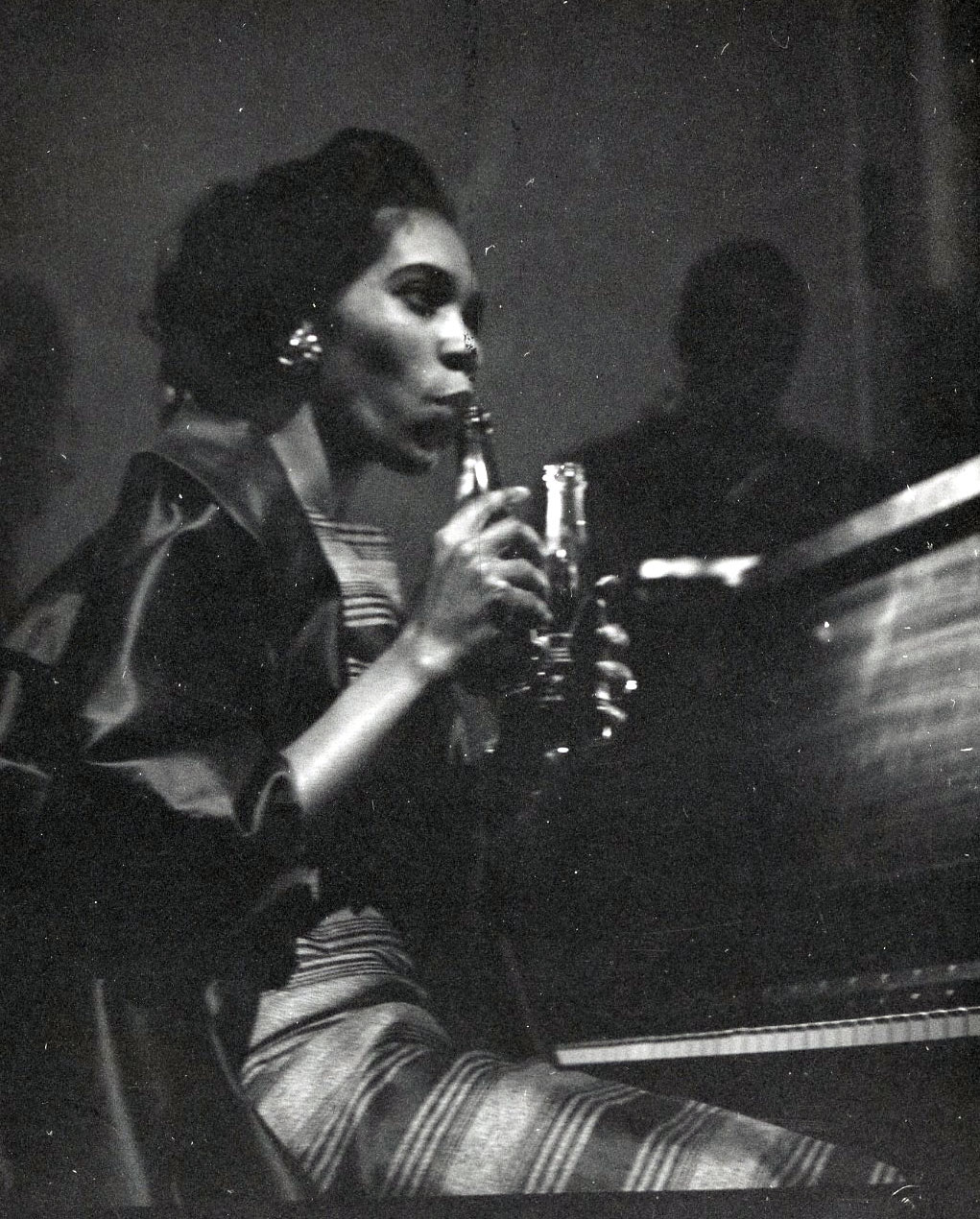
It turned out the students and Lateef were of one mind about the value of exchange between the arts, and agreed that the concerts should be held in the galleries, rather than an auditorium. Lateef had a reputation for experimental sounds, and the audience was treated to a concert that included non-traditional instruments, such as an inflated balloon and a 7-Up bottle.

Pianist, Terry Pollard, plays the 7-Up bottle. Harvey Croze, photographer. Courtesy Cranbrook Archives.

Pianist, Terry Pollard, plays the 7-Up bottle. Harvey Croze, photographer. Courtesy Cranbrook Archives.

One of the great treats of this collaboration was a recording from that night! The LP, “Yusef Lateef at Cranbrook,” includes the following pieces: Morning, Brazil, Let Every Soul Say Amen, and Woody ‘N’ You. In 1988 Lateef received a Grammy award for Best New Age album and in 2010, he received the Jazz Master Fellow award from the National Endowment of the Arts. When Lateef passed away in 2013, he had recorded more than 75 albums.

Yusef Lateef and his band perform in the CAA galleries. Harvey Croze, photographer. Courtesy Cranbrook Archives.

Yusef Lateef and his band perform in the CAA galleries. Harvey Croze, photographer. Courtesy Cranbrook Archives.

Gina Tecos, Archivist


Photo Friday: Europa and the Bull

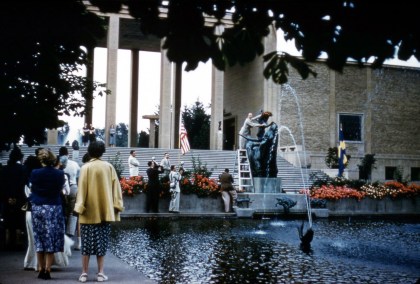
The year 1975 marked the centennial of the birth of Swedish sculptor, Carl Milles. In honor of this event, the Swedish Council Detroit held a reception at Cranbrook Art Museum on June 12, 1975. Those in attendance included the Swedish Counsel General, Karl Henrick Andersson, and Count Wilhelm Wachtmeister, Swedish Ambassador to the United States (1974-1989).

The Swedish Council Detroit places a wreath atop Milles' sculpture, Europa and the Bull. Henry Scripps Booth is holding the ladder and Cranbrook photographer, Harvey Croze, is in the foreground, to the left of the ladder. Courtesy Cranbrook Archives.

The Swedish Council Detroit places a wreath atop Milles’ sculpture, Europa and the Bull. Henry Scripps Booth is holding the ladder and Cranbrook photographer, Harvey Croze, is in the foreground, to the left of the ladder. Courtesy Cranbrook Archives.

In conjunction with the Jenny Lind Club of Detroit, they presented the Academy of Art with $1500 in support of the Carl and Olga Milles Scholarship Fund (which is still in existence today). It was part of $75,000 raised by Cranbrook as part of a Ford Foundation matching grant.

Dedicated to the preservation of Swedish cultural heritage, the Jenny Lind Club also participated in Cranbrook’s celebration of Carl Milles’s 75th birthday in 1945. The first vice-president at that time was Ingrid Koebel. The Koebel House, located in Grosse Pointe, was designed by J. Robert F. Swanson with interior decorations by Pipsan Saarinen Swanson.

Leslie S. Edwards, Head Archivist

Automobiles and Art?

Did you know that Ford Motor Company supported and encouraged the artistic activities of its employees, sponsored traveling art exhibitions, and published contemporary American art in its company magazines? I had no idea until I found a couple of copies of Ford Times magazine and a Lincoln-Mercury Times in one of our collections.

“Fish,” Big Spring, Michigan. Lincoln-Mercury Times, May-June 1956. Painting by Bill Moss. Moss was a graduate of the Academy of Art and painted over 300 works for Ford Times from 1949-1958.

“Fish,” Big Spring, Michigan. Lincoln-Mercury Times, May-June 1956. Painting by Bill Moss. Moss was a graduate of the Academy of Art and painted over 300 works for Ford Times from 1949-1958.

Much of the auto company’s support and use of artworks began under Arthur Townsend Lougee, who served as the Executive Editor and Art Director of Ford Times magazine, as well as the Lincoln-Mercury Times, from 1946-1961. During his tenure, Lougee commissioned thousands of articles on America and Americana, which were illustrated with watercolors by regional Ford artists who, for the most part, painted local motifs. Ford’s policy was to leave the subject matter up to the discretion of the artist.

steele-ban

“Lake Superior’s Eastern Shore.” Lincoln-Mercury Times, May-June 1956. Painting by Robert Bannister

A small company magazine at 4 x 6 inches, each issue of the monthly Ford Times consisted of several stories about vacation destination spots and those of historical interest, as well as promotional information about contemporary Ford products. Watercolor paintings first appeared as cover art in the June 1946 issue, and on the interior in September 1947.

steele-snw

“Fruita,” Bryce Canyon National Park. Ford Times, Sep 1959. Painting by V. Douglas Snow.

Lougee also assembled the Ford Times Collection of American Art, a collection of over 7,000 of the paintings commissioned for the Ford publications. Nearly 700 American painters were represented in the collection. The Ford Times art exhibition program was established in 1954 and made available to schools and universities, libraries, and art organizations across the country. Exhibitions included American Byways (1953), Artists and Fishermen (1955), Faculty Artists (1962), Variety No. 8 (1962), and Travel in Mexico (1969). Under the auspices of the United States Information Agency, international exhibitions traveled to countries in Asia, Africa, Europe, and the Middle East as a way of promoting good will and friendship among nations.

steele

Lincoln-Mercury Times, May-June 1956

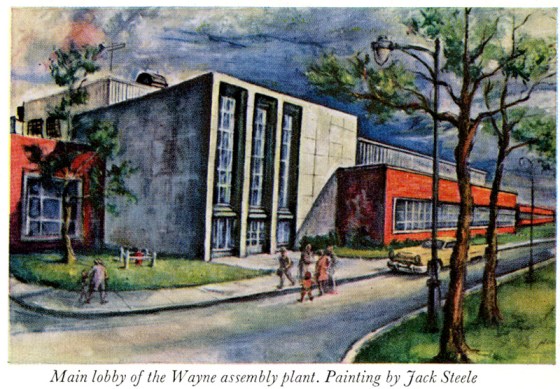
Thanks to the collection of Jack Keijo Steele, a Cranbrook Academy of Art alum, clay modeler in the Ford Styling Office, and lifelong painter, we are able to tell this interesting story of Ford’s contributions to art in this country.

Leslie S. Edwards, Head Archivist


Paris Calls: Cranbrook and Marcel Duchamp

Occasionally we post blogs that we hope will illustrate and educate about the work that we do here, both as archivists and registrars. One of my greatest pleasures is answering interesting research queries, so I thought I would share one from today.

I received a phone call from Paul B. Franklin, an independent art historian and one of the world’s experts on Marcel Duchamp. Born in Detroit, he received his doctorate from Harvard where his dissertation was on Duchamp. He now lives in Paris, where he edits the journal “Étant donné Marcel Duchamp.”

Exhibition card, 1959

Exhibition Announcement Card, 1959. Courtesy Cranbrook Archives.

Today, Paul was seeking clarification about the exhibition “Art and the Found Object” (which was held here at Cranbrook in April 1959 in what was then known as the Galleries of Cranbrook Academy of Art) for his catalogue essay in conjunction with the upcoming exhibition “”Marcel Duchamp: Porte-bouteilles” to be held in Paris in the fall.

News clipping, Detroit News, 9 Apr 1959. Courtesy Cranbrook Archives.

News clipping, Detroit News, 9 Apr 1959. Courtesy Cranbrook Archives.

In an email exchange with Paul, he told me the Paris exhibition “is centered on the version of “Bottle Rack” that Duchamp exhibited in “Art and the Found Object” and which Robert Rauschenberg purchased for a mere three dollars.” (Rauschenberg’s work “Odalisque/Odalisk” was also in the exhibition.) “Duchamp signed his readymade for Rauschenberg in March 1960, and Rauschenberg retained possession of it his entire life.”

What a great story! And the fact that we had materials in the collections of Cranbrook Archives to add to the story is even better. Thanks, Paul, for allowing me to share this story with our readers.

Leslie S. Edwards, Head Archivist

Nunsense

Over the past few years, I have listened to researchers in the Archives and visitors to the museum describe works of art as divine or heavenly, but I don’t remember those words used to describe the artist. Until now. Did you know that during the 1950s-1960s there were several artists who studied at the Academy of Art who were also members of a divine order? Admittedly, I have not had much interaction with nuns in my lifetime, but I have a keen fascination (cue: “The hills are alive with the sound of music..”).

Sister Mary James Ann Walsh, BVM (Order of the Blessed Virgin Mary) was one of several nuns to study at the Academy where she received her MFA in painting in 1955. In 1953, Sister Mary was the First Prize Winner of the 9th Annual Iowa Water Color Show for her piece, “Ecce Homo.” That painting is now part of the Sioux City Art Center’s permanent collection. In addition to her Cranbrook degree, Sister Mary studied at the State University of Iowa and the University of Colorado. In 1959 she became head of the Clark College department of Art in Dubuque, Iowa.

Sisters at work in the metal shop, 1954. Courtesy Cranbrook Archives.

Sisters at work in the metal shop, 1954. Courtesy Cranbrook Archives.

The photo above shows Sister Mary Grace Esther Mehren, BVM, and Sister Mary Barbara Cerny at work in the metal shop in 1954. We are still looking for information about Sister Mary Barbara, but according to the Chicago Tribune (15 Jun 1958), Sister Mary Grace Esther was appointed to oversee construction of an eleven-story Scholasticate on the campus of Mundelein College. The building houses lecture halls, classrooms, a dining hall, and a chapel.

Another CAA alum (Metalsmithing ’49), Sister Helene O’Connor, O.P. (Dominican Order of Preachers), founded Studio Angelico in 1935, at Siena Heights University in Adrian, Michigan. Studio Angelico, the art department at Siena Heights, was named for the 15th century Dominican painter, Fra Angelico. Sister Helene chaired the art department, taught classes, and directed community workshops. An accomplished sculptor, ceramicist, weaver, and muralist – her work has been exhibited at the Portland Museum of Art, the Detroit Institute of Arts and the Metropolitan Museum of Art.

Sister Marie Gertrude's, "Mother Hen," Bay City Times, 27 Sep 1964.

Sister Marie Gertrude’s, “Mother Hen,” Bay City Times, 27 Sep 1964.

Also of the Dominican order, Sister Marie Gertrude Lohman, O.P., received her MFA in Sculpture from the Academy in 1966. Several of Sister Marie Gertrude’s sculptures display in Illinois, including a statue of St. Catherine of Siena at the Queen of Heaven Cemetery in Chicago and a statue of St. Albert the Great in the student courtyard at St. Rose Priory. Sister Marie Gertrude studied in Schifanoia, Italy, and her work has been exhibited in Chicago and Dubuque. In 1964, her work, “Mother Hen,” was displayed at the Studio 23 space at the Arts Center in Bay City, MI.

This research has only deepened my fascination of the divine sisterhood. I wonder what drew the sisters to Cranbrook? There were several other nun-students at CAA – I look forward to learning more about their contributions to Cranbrook and the art world.

Gina Tecos, Archivist

Out From the Shadows #1: Myrtle Hall

While most everyone equates the names Saarinen, Knoll, and Eames with Cranbrook, there are hundreds, if not thousands, of people who have contributed to the community whose stories have never been told. We archivists thought it would be interesting to tell some of their stories here.

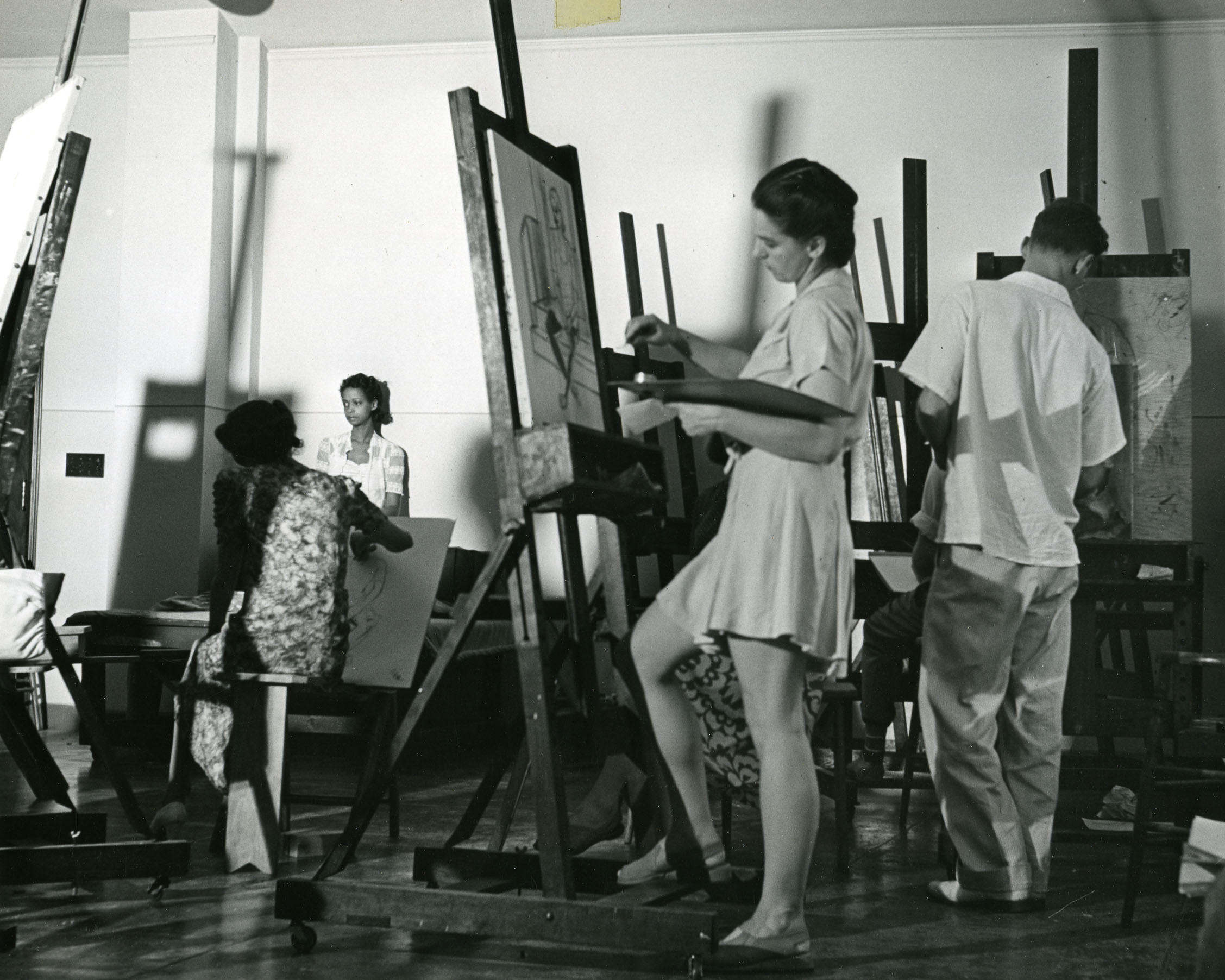
The first is Myrtle Hall. She was not an alumna, faculty, or staff at any of the Cranbrook institutions, however, she did work at the Academy of Art as a model for drawing and painting students in the late 1930s and early 1940s. Not much is known about the models – there are no employee files for them, and their names are not listed in reports or meeting minutes. Fortunately however, I did uncover evidence that a line-item, established in the budget for the Academy of Art’s 1934-1935 academic year, specifically provided funding for the life models for the drawing and painting classes (taught by Wally Mitchell.) Models worked twenty-one hours per week.

Painting and drawing class, summer 1940.

Painting and drawing class, summer 1940.

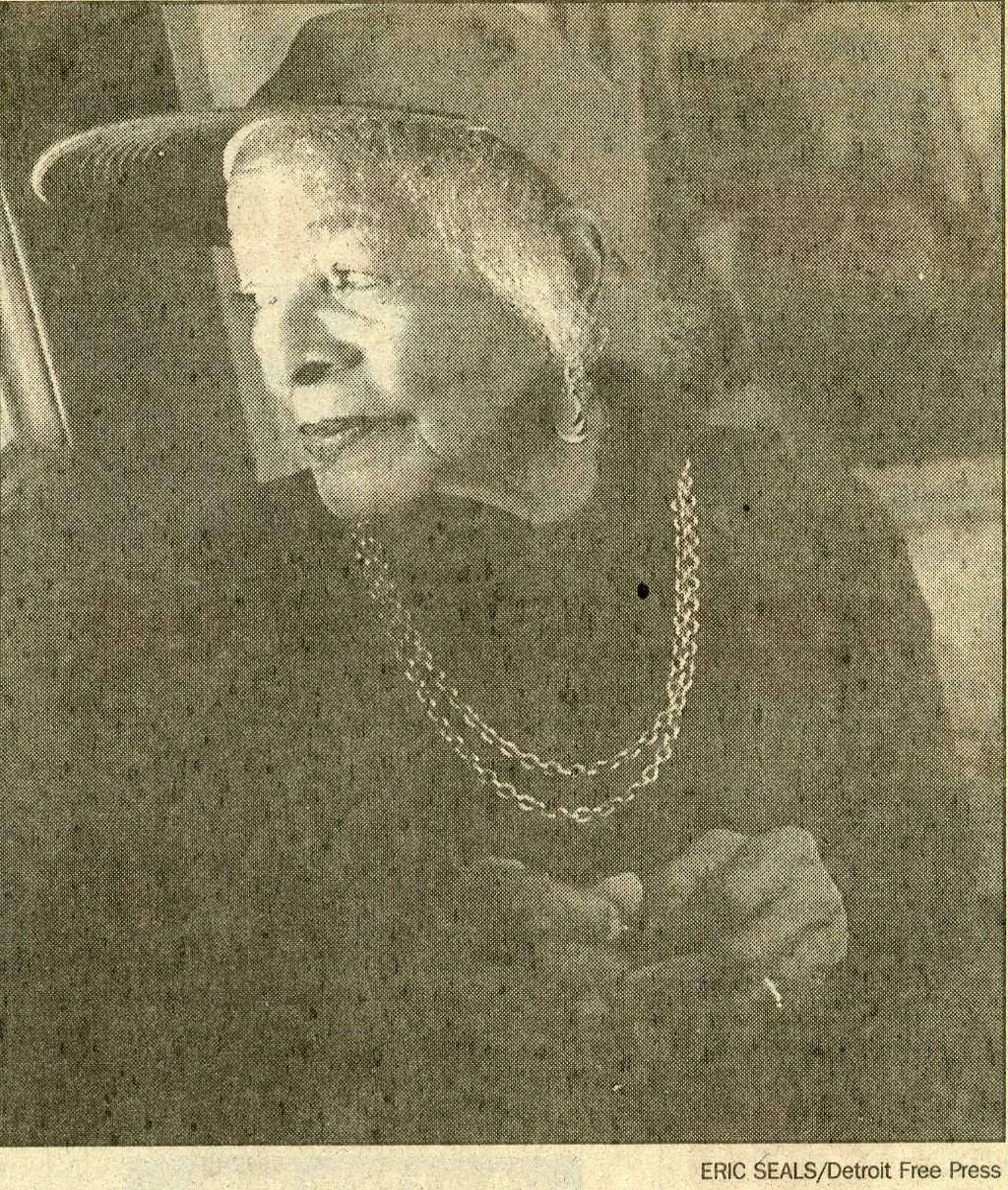
By her own admission, Myrtle was the “first black model at Cranbrook” and for that matter, the first black model in the Detroit area including at the Meinzinger School of Art. In addition to modeling, Myrtle was also an artist herself and a member of Detroit’s Pen and Palette Club, which was formed in 1925 by the Detroit Urban League to help young artists exhibit their works. In 1935, Myrtle received an award for one of her paintings at the club’s Ninth Annual Exhibition. She also studied for a time at the Society of Arts and Crafts, exhibited at the Detroit Artists Market, and was one of the founding members of the Extended Arts Gallery (1958). During the 1940s, Myrtle abandoned painting and became an accomplished ceramicist. She had her own pottery studio (which she designed herself) on Erskine Street in Detroit. The studio was filled with antiques, paintings and sculpture by Michigan artists, as well as her own ceramics and of course her kiln and glazes. In a 1963 interview, she stated “I can’t stand things that are useless” and her oven-to-table casseroles, salad bowls, drinking mugs, and lamp bases reflected just that.

Myrtle Hall, Detroit Free Press, Mar 1994.

Myrtle Hall, Detroit Free Press, Mar 1994.

A 1994 article in the Detroit Free Press also tells the story of Myrtle Hall as a quiet but effective activist. She stood up for civil rights when she saw injustice, and was instrumental in affecting a change in Meinzinger Art School’s discrimination of African American students after World War II. Myrtle Hall is quoted as saying “I didn’t just model, I noticed things.”

Leslie S. Edwards, Head Archivist

Editor’s Note: We do not have any biographical information on Myrtle, but if you know anything about her, please let us know!

Transcontinental Threads: Maja Andersson Wirde

One of my favorite parts of my job as an archivist is assisting researchers with locating materials in our collections. Often times a scholar will visit here with a set plan for their research project, and pre-conceived ideas about what they might find here or how the materials in our collections will support their thinking. One of my personal pleasures is when the researcher finds something new or surprising in our collections that changes their course of action. This is exciting on many levels – for them as well as for me!

In August 2015, Swedish author Marie Andersson visited Cranbrook to study the work of the Swedish weaver Maja Andersson Wirde (no relation) in preparation for a monograph on the life and work of Wirde at the request of Wirde’s family. Wirde (1873-1952), an accomplished weaver and textile designer, was asked by Loja Saarinen to come to Cranbrook in 1929 and oversee the operation of Studio Loja Saarinen which was established to design and produce all of the textiles for Kingswood School Cranbrook. As many researchers before her, Marie Andersson found her visit to Cranbrook Archives to be a revelation, and she recently wrote to me that “the Cranbrook chapter became an important part of the book, much more than I thought before I visited you.”

Maja Andersson Wirde (standing) with Loja Saarinen, Studio Loja Saarinen, ca 1930. Detroit News photograph, Courtesy Cranbrook Archives.

Maja Andersson Wirde (standing) with Loja Saarinen, Studio Loja Saarinen, ca 1930. Detroit News photograph, Courtesy Cranbrook Archives.

Prior to coming to Cranbrook, Maja Andersson Wirde had been employed by Handarbetes Vänner (The Friends of Handicraft) in Stockholm from 1907-1929. Her textile designs were represented in international exhibitions including Stockholm (1909 and 1930), Malmo (1914), Gothenburg (1923), and Paris (1925). However, according to Marie Andersson, Wirde’s “time spent at Cranbrook must be looked upon as the most important period” in Wirde’s life as an artist, and she created some of her most significant work while here.

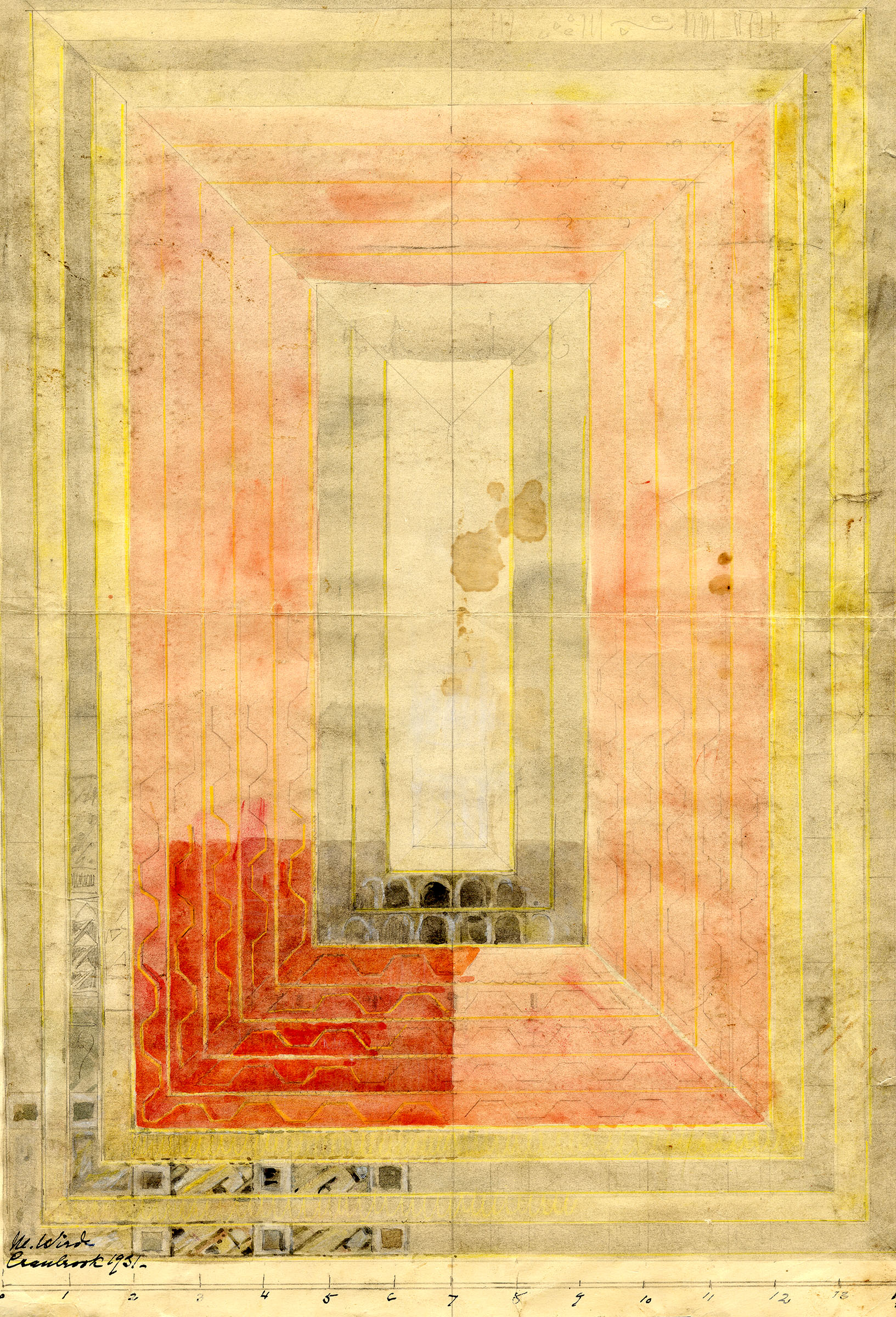
So, what did Marie discover at Cranbrook Archives? Comparing photographs and documents from our collections with images of watercolor sketches from museums and archives in Sweden, Marie and I spent two days of “fantastic co-operation” in order to uncover the extent of Wirde’s contribution to the history of textiles at Cranbrook, particularly Kingswood School.

Watercolour sketch by Maja Wirde (1873-1952), Collection of Smålands Museum, Växjö, Sweden.

Watercolour sketch by Maja Wirde (1873-1952), Collection of Smålands Museum, Växjö, Sweden.

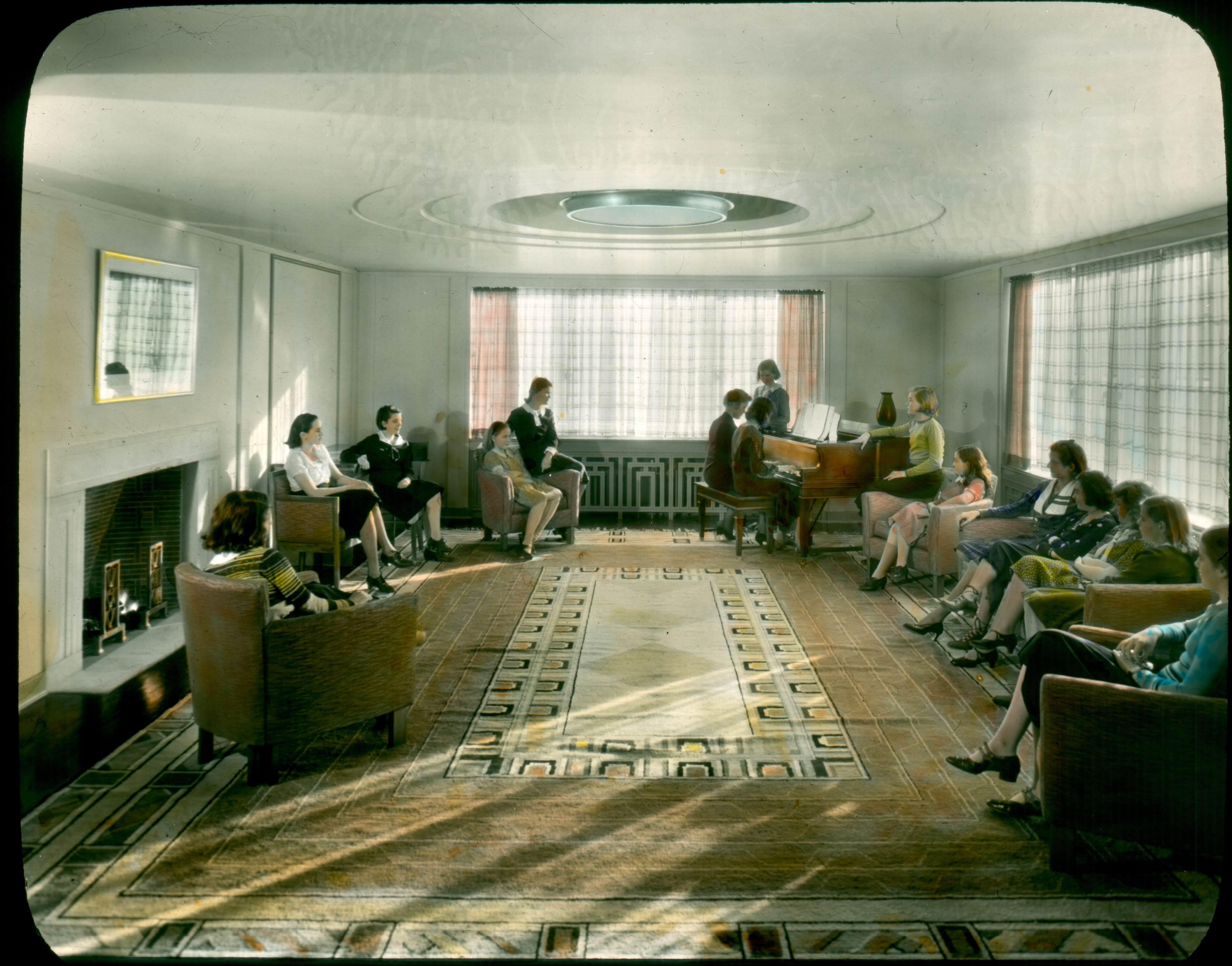
The rug for Reception Room III (Rose Lounge) in situ, Kingswood School, 1932. George Hance, photographer, Courtesy Cranbrook Archives.

The rug for Reception Room III (Rose Lounge) in situ, Kingswood School, 1932. George Hance, photographer, Courtesy Cranbrook Archives.

Prior to Marie’s visit, Wirde was known for her work as the shop supervisor at Studio Loja Saarinen, the weaving instructor at Kingswood School, and for her designs for several rugs and textiles for Kingswood School, including the fabric for the dining hall chairs and most notably, the large rug for the Green Lobby. However, Loja Saarinen was given credit for the rest. Now, Cranbrook can tell a more inclusive story – for we discovered that it was Maja Andersson Wirde who designed the majority of the textiles for Kingswood School – eleven rugs for lobby/reception halls, all of the curtains and rugs for the dormitory rooms, as well as curtains for the dining hall, study hall, and library! In addition, she designed rugs for the Academy of Art, Saarinen House, and George Booth’s Cranbrook Foundation Office.

While the book, “Trådar ur ett liv: textilkonstnären Maja Andersson Wirde” was published pirmarily in Swedish, there is a translation of the chapter on Cranbrook in the back, and the book features numerous images from Cranbrook Archives. We are so excited to be able to tell a more comprehensive story not only about the objects in our care, but also a key individual in our rich history.

Leslie S. Edwards, Head Archivist


It’s a New Collection!

The Archives to Launch Our Poster Collection Online!

Over the coming summer, Cranbrook Archives will release a brand new collection into its online digital database! While building our digital archive is a perpetual process, we are working steadily to upload images and manuscripts so that you, our remote users, can browse and search through our collections no matter where you live. This summer we will be celebrating a new addition: the Cranbrook Poster Collection!

Over the past eight months, my colleague, Laura MacNewman, and I collaborated to upload this collection for online access. The posters date back to the early 1900s with topics covering the scope of the entire Cranbrook Educational Community, emphasizing exhibitions from the Academy of Art and the Institute of Science, and theatrical performances from Cranbrook Kingswood Schools, St. Dunstan’s Guild, and the Summer Theatre.

Cranbrook Institute of Science poster, n.d. Courtesy Cranbrook Archives.

Cranbrook Institute of Science poster, n.d. Courtesy Cranbrook Archives.

We created nineteen different series for the Poster Collection based on locations or departments on campus. We identified nearly 500 unique posters in our collection, and each one was given a distinct identifying number. Once the unique identifiers were established, we merged all the various poster inventories  into one master inventory spreadsheet, and arranged them in chronological order by series.

The next step was sorting through the physical posters folder by folder in order to take a reference photograph of each one for the database, record their dimensions, and describe them  in the master inventory spreadsheet. This was the longest stage of the process, lasting several weeks. After the data was entered into the spreadsheet, we renamed the individual images to match the posters’ unique identifiers in order to match the photograph.

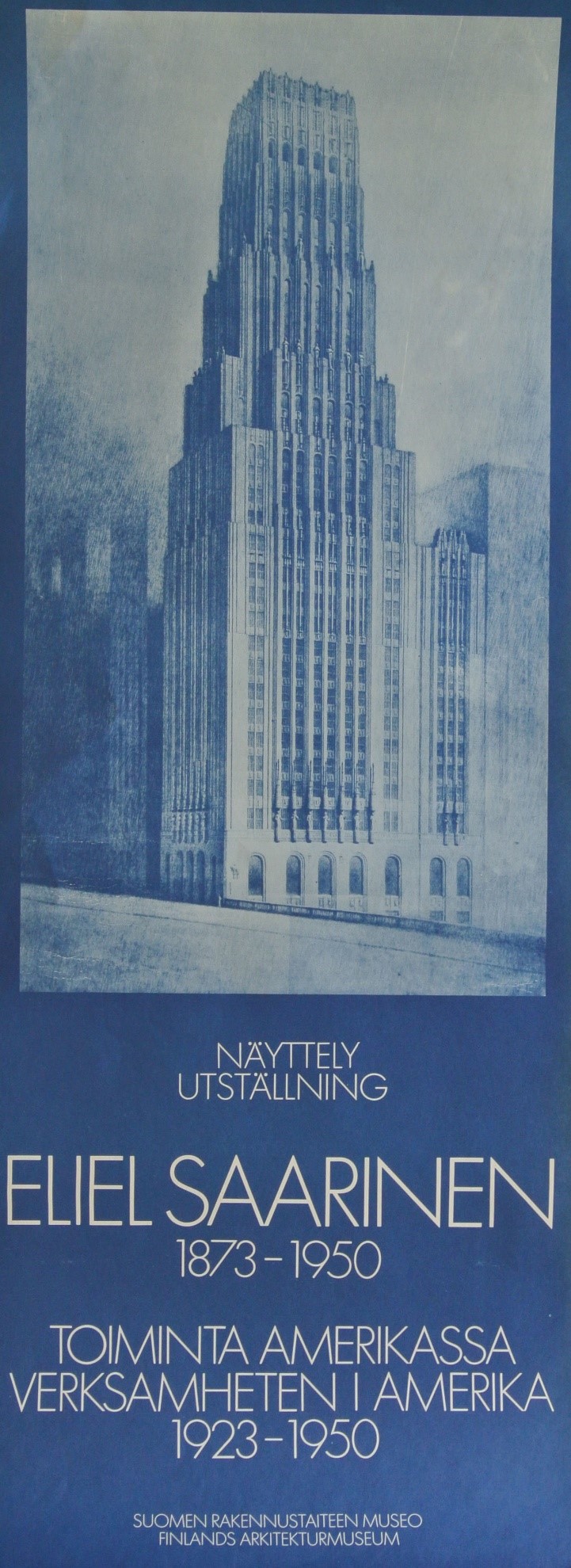
Exhibition poster, 1973. Courtesy Cranbrook Archives.

Exhibition poster, 1973. Courtesy Cranbrook Archives.

While every step has been a learning process, my favorite part was working in Thornlea Studio and physically handling the poster collection for measurements and photographs. Laura and I were able to take a previously unorganized collection and make it discoverable online, which was rewarding and gave me a sense of accomplishment. I loved the huge diversity of the posters, too. Not only were they historically valuable, they were also aesthetically stunning. I can’t wait for the collection to be released for everyone to enjoy!

Danae Dracht, Archives Assistant

Editor’s Note: Thank you Danae and Laura for your hard work on this project! Congratulations also to Danae who recently graduated from Wayne State University’s School of Library Science! We wish you all the best as you embark on the next journey of your archival career.

Create a website or blog at WordPress.com