Cranbrook Alumni Court: Phase 1 Ends, Phase 2 Begins!

In my previous post related to the Alumni Court restoration project, we had recently finished the masonry restoration of the vertical walls and were preparing the upper level walkway for concrete installation.  Now, it is safe to say Phase 1 has been completed and is looking just as beautiful as when the courtyard was originally constructed in 1927.

Over the past 6 months, we have been busy finishing up Phase 1 and completing activities such as: pouring the upper level concrete walkway; installing all flat paving (including brick, fieldstone, and red slate); and replacing limestone columns and bases. We also restored three windows and the interior plaster work damaged by water infiltrating the building over the years.

It was very exciting to see how the contractor replaced the columns and their bases. Before any demolition could begin, the brick arches were supported by heavy duty scaffolding with an I-beam and custom-made wooden forms fitted directly into each arch. With this configuration, the contractor was able to ever-so-slightly raise each arch so that there was enough room to remove the column capitals, the columns, and finally the column bases.  At that point, the new bases could be installed, followed by new columns, and the existing column capitals.

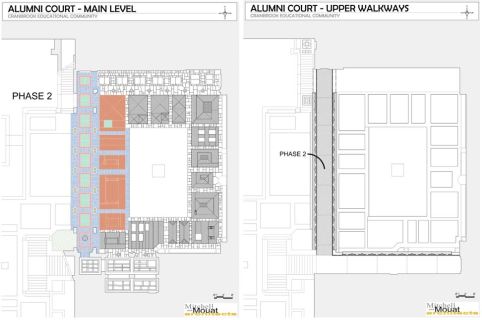
Throughout the Spring, we will be continuing with Phase 2 which includes restoring the upper level walkway running north/south, columns/arches running north/south, paving work directly below the walkway, and the remaining paving within the courtyard.

Phase 2 Alumni Court

Left: Plan of Phase 2 activity (in color) at the Alumni Court. Phase 1 is at right (grey). Right: Upper level of Phase Two, walkway replacement. Courtesy of Cranbrook Capital Projects.

Stay tuned for a progress report on Phase 2. As always, many thanks to the contractors and architects who work so hard on these projects.

Ryan Pfeifer, Project Manager II, Cranbrook Capital Projects

Editor’s Note: The four new columns have the alumni names carved into them, and the originals (which had severely degraded and were illegible) will be stored safely elsewhere on campus.

A Hunter of Taos

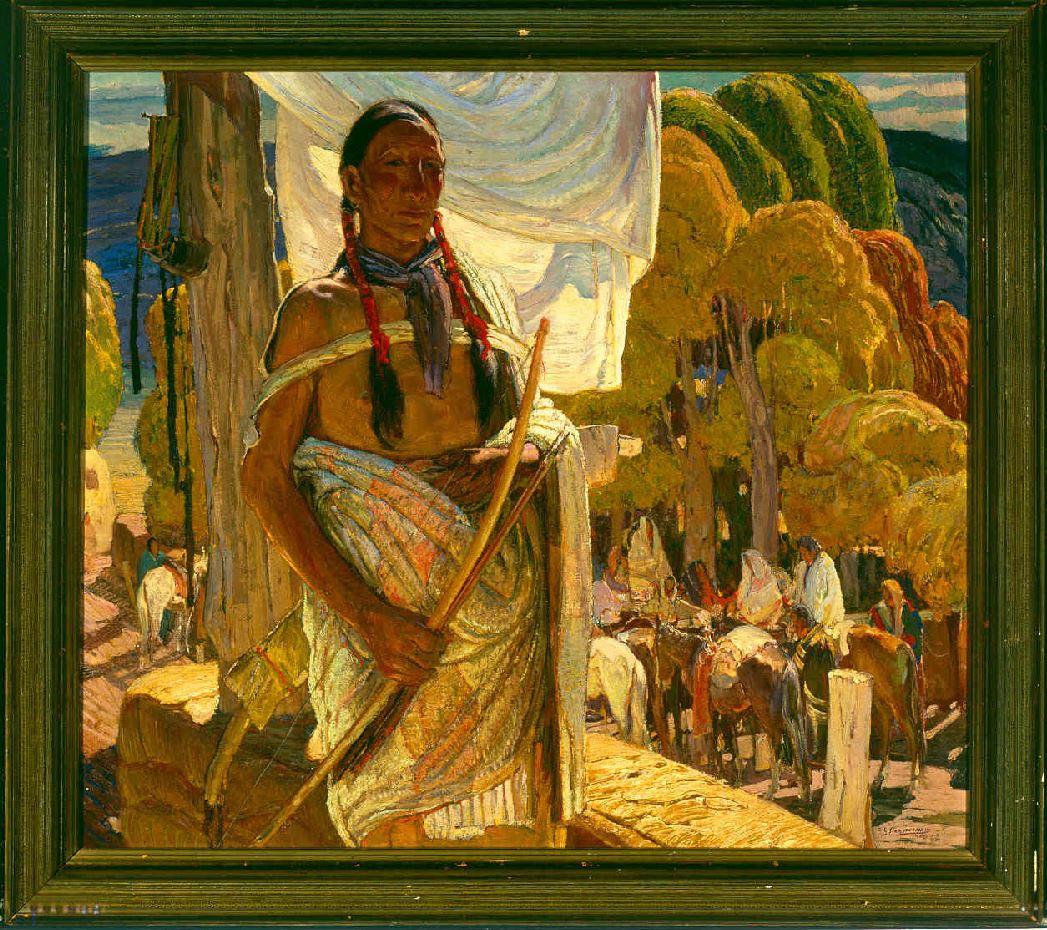
Earlier this week, as part of our regularly scheduled inventory and evaluation of cultural properties, I took a specialist from Sotheby’s New York to see a painting a bit off the beaten track of Cranbrook’s usual spots to find art. Hanging in the Cranbrook Kingswood Middle School for Boys, A Hunter of Taos is an incredible work by the American painter Oscar Edmund Berninghaus.

A Hunter of Taos

A Hunter of Taos, 1926
Oscar Edmund Berninghaus, American, 1874-1952
Oil on canvas, 34 x 39 in.
Gift of Henry S. Booth to the Cranbrook School

The painting shows a male American Indian proudly standing with a bow and arrows, while horses and riders pass behind through a rocky landscape and trees aglow in warm sunlight. The trees are made up of swirling golds, ochres, and greens, their abstraction complimenting the almost impressionistic rendering of the figures immediately below. The central hunter, however, is rendered clearly, with his face set immediately in front of a draped white fabric and his gaze looking back at the viewer. The scale of the painting, about three-feet square, is impressive. But why is it here in the Boys Middle School, or even at Cranbrook?

First, let’s step back a bit further to the artist himself: Oscar Edmund Berninghaus (1874-1952). A native of St. Louis, he began his career as a commercial lithographer, draftsman, and illustrator. He explored painting as a fine art through classes at Washington University and at the St. Louis School of Fine Arts, where in 1899 the twenty-five year-old was awarded a month’s long paid journey westward by the Denver and Rio Grande Railroad. On this trip, Berninghaus was introduced to beauty and culture of the American Southwest, particularly Taos, New Mexico.

The Taos Pueblo, in north central New Mexico, is one of the oldest continuously inhabited places in North America, with the Pueblo people settling there over one-thousand years ago. It became a popular spot for artists in the late-1890s, and by 1910, Berninghaus was making annual pilgrimages between Taos and St. Louis. In the winter he would work on his lithography and commercial mural work to finance summers at Taos. There, he painted Native Americans, their horses, scenes of daily life, and the landscape. In 1915 he became a founding member of the Taos Society of Artists, composed of European-Americans who came to Taos to paint American Indian subjects. Berninghaus claimed he was “infected with the Taos germ” and was “fascinated by the people, the Indians and Mexicans, the adobe architecture, the sagebrush, the mountains; they all inspired me as a subject matter.”

In 1925, Berninghaus relocated permanently to Taos. He painted landscapes, animals, and scenes of daily life in the pueblo and village. In A Hunter of Taos, the model was Santiago Bernal, a Pueblo farm laborer and frequent model for Berninghaus. In a letter to a newspaper in 1927, Berninghaus wrote, “I think the colony in Taos is doing much for American Art. From it I think will come a distinctive art, something definitely American–and I do not mean that such will be the case because the American Indian and his environment are the subjects. But the canvases that come from Taos are as definitely American as anything can be. We have had French, Dutch, Italian, German art. Now we must have American art. I feel that from Taos will come that art” (as quoted in Pioneer Artists of Taos, p. 98).

Our painting, considered one of the artist’s finest, was first exhibited at New York’s National Academy of Design in its 1926 Winter Exhibition. The work won the Second Altman Prize, one of several awards given out by the Academy of Design. On June 6, 1927, Henry Booth purchased the painting from the artist.

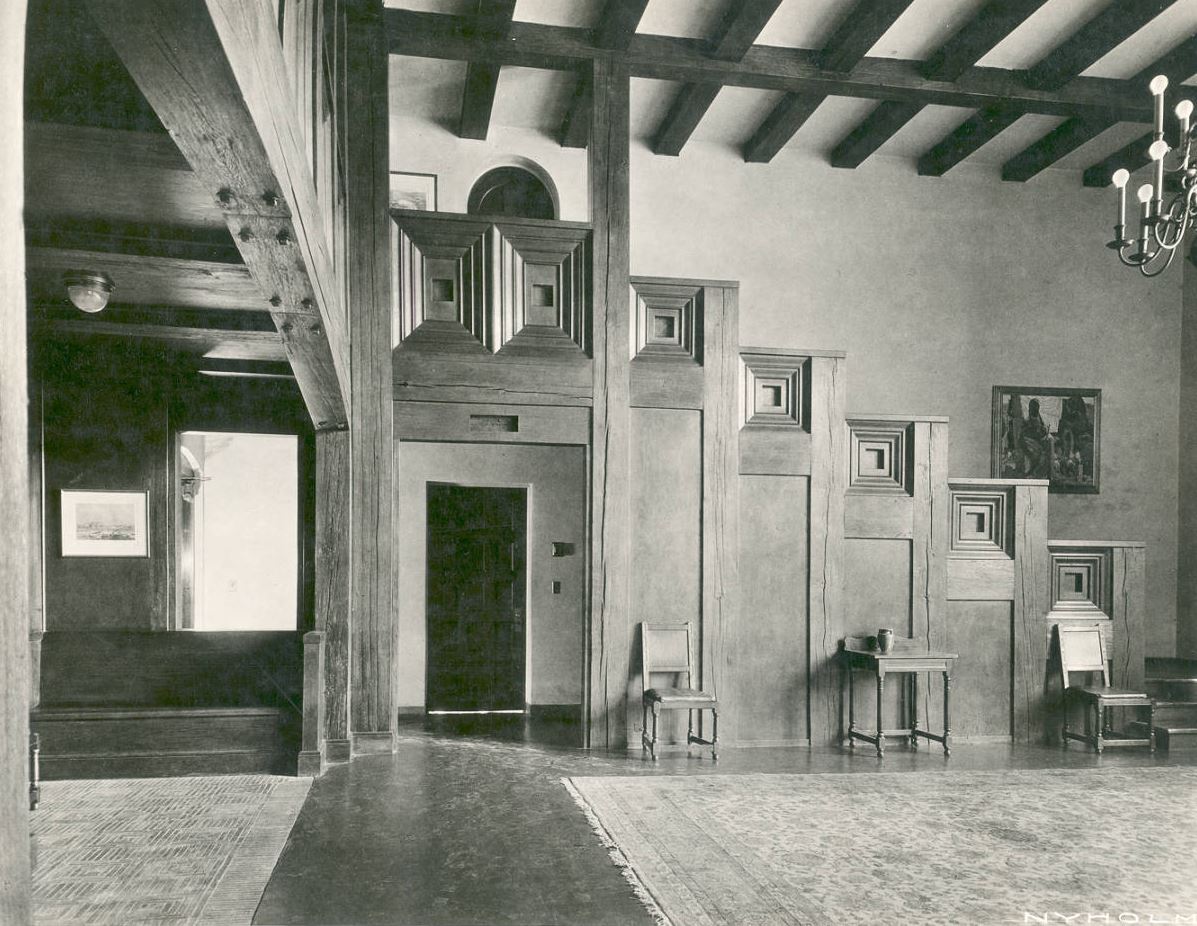
North Lobby with Taos Painting

View of A Hunter of Taos in the North Lobby, Hoey Hall, Cranbrook School. 1928. Peter A. Nyholm, Photographer. Cranbrook Archives.

After Booth purchased the work, the painting hung in the north lobby of Hoey Hall for the opening of Cranbrook School for Boys in September of 1927. Henry formally presented the painting to Cranbrook School on October 18, 1927. In the last half of the century, the painting was moved to the new Cranbrook Kingswood Middle School for Boys, where it hangs in a small lobby for administrative offices. Examining the painting Tuesday, we saw it is in excellent condition, and I appreciated that it’s in a spot where many young men and their parents have a chance to sit and appreciate it. It’s one of the great assets of Cranbrook that the campus is sprinkled with great art in all of our buildings—I think it’s a big part of what makes this place so magical.

– Kevin Adkisson, Collections Fellow, Cranbrook Center for Collections and Research

NB: If you want to learn about another Cranbrook connection to the Southwest and the Pueblo people, revisit this excellent post on Amelia Elizabeth White and her gift of Native American art and artifacts to the Cranbrook Institute of Science in 1937.

Evolution of a Rink

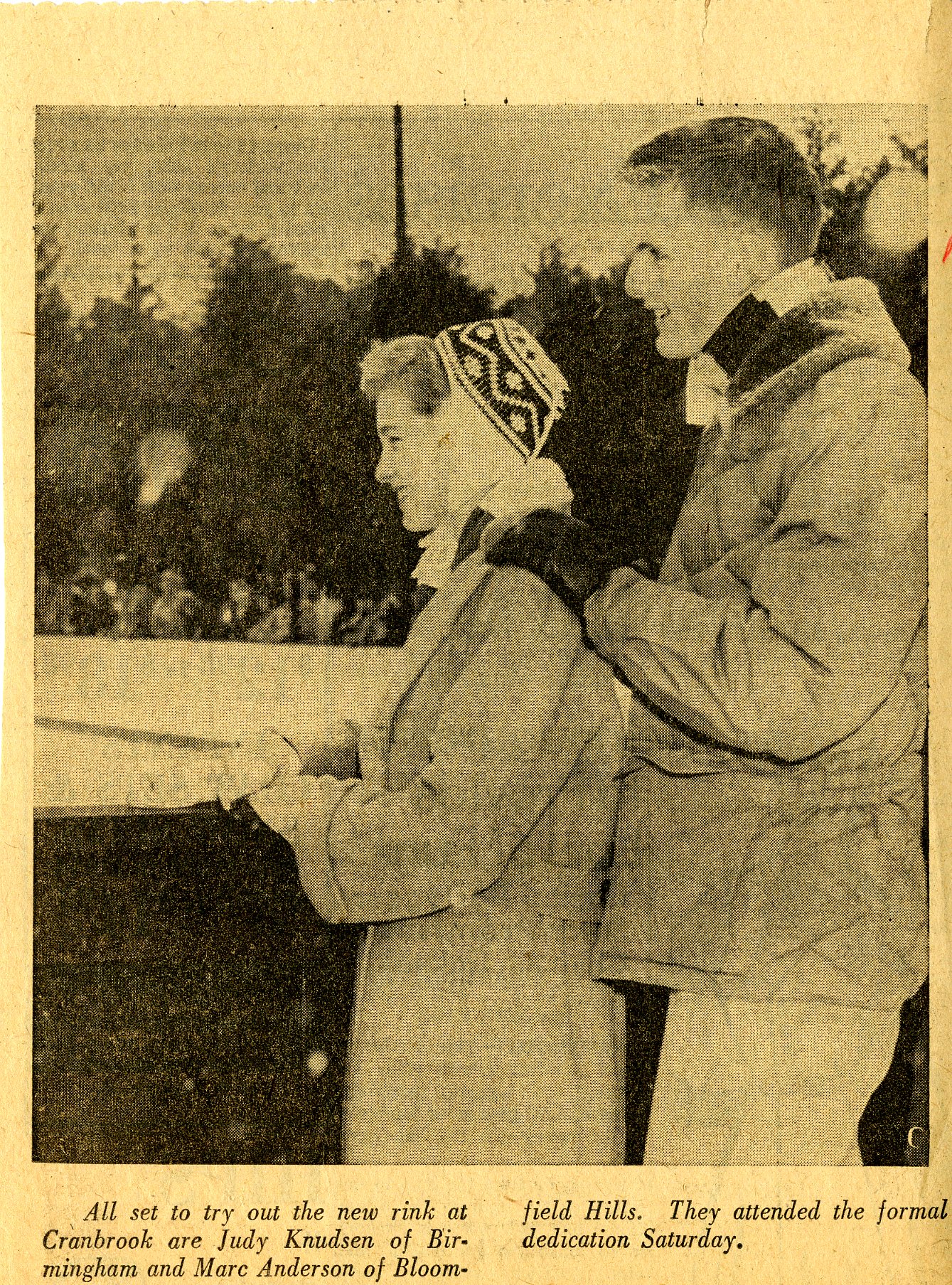
Sixty years ago Cranbrook School headmaster, Harry Hoey, spoke to a group bundled in their warmest winter clothes at the formal dedication of the new outside skating rink at Cranbrook. The rink was unveiled on January 12th, 1957, at an estimated cost of $104,000. The new “artificial” rink, built on the site of the original natural ice surface, was constructed because there was a constant risk that the natural ice would not sustain a hockey season due to unreliable weather.

Hockey player on the “natural” ice rink, 1940. Photographer Richard G. Askew. Copyright Cranbrook Archives.

The new rink was built to hockey specifications (85 x 190 ft.) and was refrigerated by two over-sized compressors designed to operate in adverse weather conditions. Artificial rinks were a relatively new phenomenon in the 1950s and Cranbrook researched the project for several years before proceeding. The planning team looked at rinks around the country, including Dartmouth, Cornell, and Williams College.

Skaters at the artificial rink dedication. The Pontiac Press, 14 Jan 1957.

The rink was open six months out of the year and accommodated Cranbrook School ice hockey teams and students, as well as the outlying communities for day and night skating. From 1957-1982 the Cranbrook Skating Club oversaw all operations of the rink. During this time the club held Board of Directors meetings, generated correspondence for the raising of funds for daily operations, and supervised various program schedules, benefits, and employees of the skating rink.

By the 1970s the rink was showing wear and the Varsity, Junior Varsity, and middle school teams were forced to buy ice time at neighboring rinks for practice and games. A committee was formed and students, faculty, and friends staged a skate-a-thon and worked with then-Cranbrook president, Arthur Kiendl, to raise money.

The original plan was to build a new enclosed facility for winter skating and summer tennis, but the price was too high, so committee members and Cranbrook administrators decided to complete the work in phases. The first step – cement work for the rink surface and spectators’ section, new boards, and new piping – was completed with a gift by Grace Booth Wallace and her family in 1978. The final phases of the project – which included total enclosure of the arena – were completed in 1979.

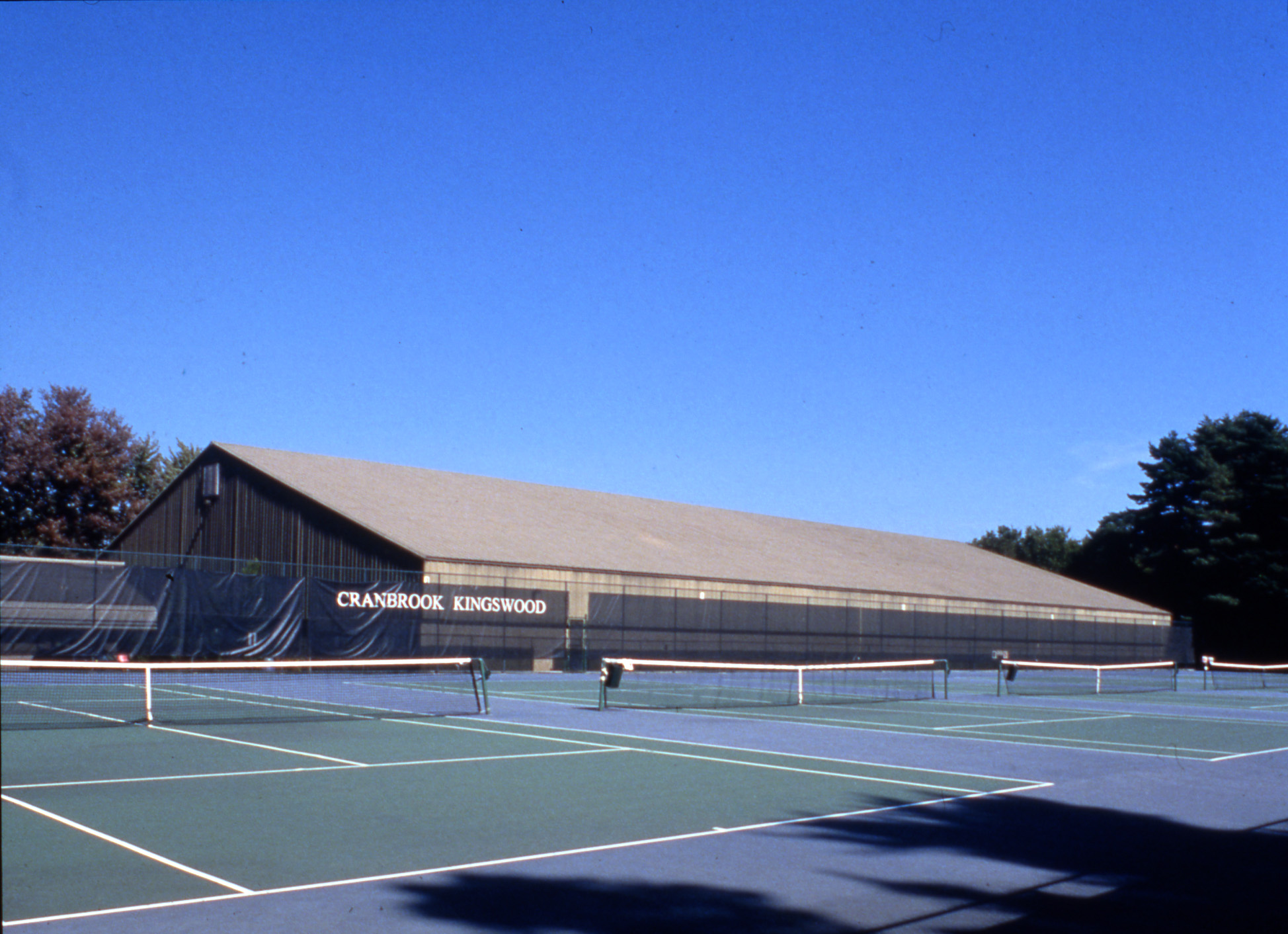
A view of Wallace Ice Arena with the tennis courts in the foreground. Photographer Balthazar Korab, Oct 2000.

Today Cranbrook athletes, students, faculty, and the public enjoy the state-of-the art Wallace Ice Arena.

Gina Tecos, Archivist

Kitchen Sink Back to School Edition: Cranbrook’s Own Elizabeth Bennett

Although the legacy of Kingswood School English teacher, Elizabeth Bennett* (1904-1983) does not involve Mr. Fitzwilliam Darcy, it is certainly the story of a woman who inspired and captivated multiple generations of students. Bennett started teaching at Kingswood in 1936 after completing her A.B. from Oberlin College and her A.M. from Radcliffe College. Prior to accepting the position at Kingswood, Bennett taught at the Hartridge School for Girls (Plainfield, NJ) and traveled in Europe and South Africa.

Portrait of Elizabeth Bennett, 1959. Photographer, Harvey Croze.

Bennett was born in New York City to William and Mary Umstead Bennett. Her father was a lawyer and a member of the New York state senate and her mother was a professor emeritus who taught pianoforte at Oberlin College. As a student at Oberlin, Bennett was an officer of the Women’s League – described in the campus yearbook as an organization for women to govern themselves and administer their affairs. She was later a member of the League of Women Voters and the American Civil Liberties Union (ACLU).

During her more than thirty years at Kingswood, Bennett taught English, History, Bible, and Creative Writing. Although she was a tough critic, she was known to be fair, and gained great admiration from both students and fellow teachers. In an anthology of memories, Elizabeth Bennett: A Word Portrait (1983), one former student states: “who could ever forget Elizabeth Bennett, who never raised her voice or lowered her standards for our work; who like Michelangelo, helped us chip out the readers and writers buried within us; who gave us all the charge of language? The light in her room did not all come through the windows or from the ceiling” (Carolyn Faulkner Peck, ’52).

Bennett with students, ca 1963.

Bennett or “Benny” as she was known by friends, was beloved not only by her students, but by her fellow teachers at Kingswood. During her summers off she regularly corresponded with Kingswood headmistress, Margaret Augur, and later Marion Goodale. Fellow faculty member, Gertrude M. White said of Benny, “Elizabeth Bennett: an unfashionable woman, a private woman, with unfathomable riches of mind and character and personality. Kingswood was lucky in her. We who knew her were lucky. Simply by being what she was, she enriched her world and ours.”

Summer correspondence from Bennett to Augur, 1948. Courtesy Cranbrook Archives.

Inspired by Bennett and her passion for writing, several former students established the Bennett Fund in 1984 to honor a faculty member who is distinguished as a nurturer of writing and writers. In the Fall, the award recipient reads from recent works at the annual “Elizabeth Bennett Reading.” This year, the event takes place on Tuesday, September 19th at 6:30 PM in the Cranbrook School Library Reading Room.

With a new school year right around the corner, I enjoyed learning about this beloved teacher whose legacy lives on here at Cranbrook.

Gina Tecos, Archivist

*Editor’s Note: It should be noted that the spelling of Elizabeth Bennett’s name varies from the fictional character in Jane Austen’s novel, Pride and Prejudice.

The Swans of Cranbrook

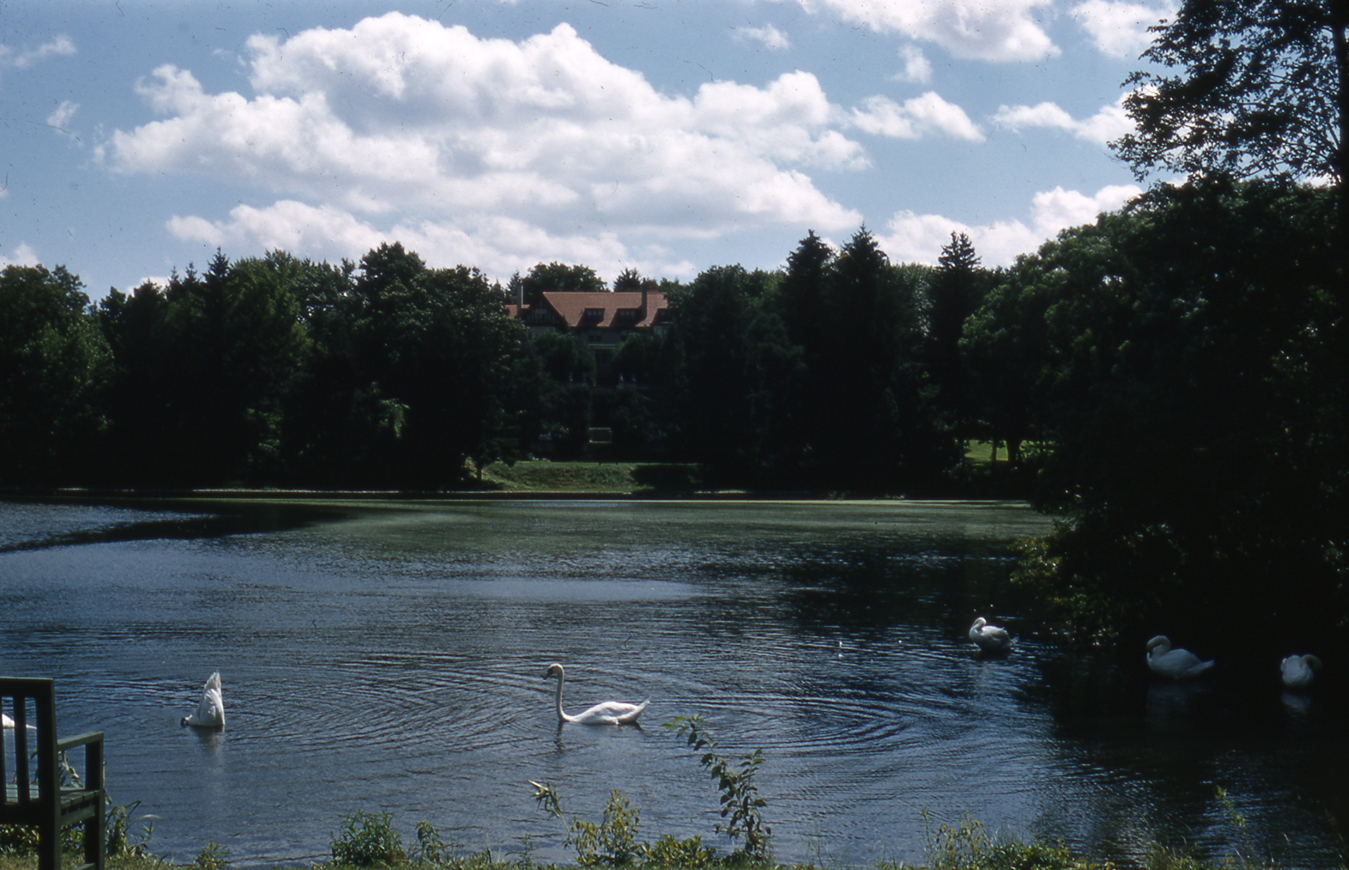
For many decades, Kingswood Lake was graced with the elegant beauty of imported mute swans. Mute swans (which have orange beaks and a distinctive nob on their forehead) are not native to Michigan or even North America. Around 1870, mute swans were imported from Europe to the U.S. to adorn city parks, zoos, and large estates. In 1919, the first pair of mute swans was introduced to Michigan in Charlevoix County and by 2010, there were more than 15,500 mute swans throughout the state.

While white swans are visible in Cranbrook photographs as early as 1931, we do not know if these were imported European mute swans. The first pair appears to have arrived at Cranbrook in the early 1950s, and by 1955, a news article described eight new arrivals as a “majestic flotilla of white swans.” They joined the “old-timers” who were less than pleased with the newcomers, and in fact, spent a good deal of time hissing at them with outstretched necks.

Swans on Kingswood Lake, 1953. Courtesy Cranbrook Archives.

Mute swans (which are not really mute) feed primarily on water plants, and can eat up to eight pounds a day! This large appetite for aquatic vegetation can reduce wetlands for native wildlife species. Since swans must have open water at all times in order to survive, Cranbrook Foundation staff either had to open up ice for them, or provide a waterfowl shed for safety. The shed was equipped with a deep bed of straw and a large tub of water.

Waterfowl Shed, 1999. Courtesy Cranbrook Archives.

While swans are highly intelligent, they can sometimes attack people–especially those who come close to their nesting habitats. At Cranbrook, there are no reports of swans endangering people, but there are reports of swan endangerment. Several times over the years, swans, especially the  cygnets, were killed by dogs on campus. In 1974, Robert Bowen (then director of the Institute of Science) appealed to Cranbrook to help minimize the risks to swans and allow the parent birds to raise their young as unencumbered as possible. This meant making sure that the swans had a clear path to the middle of the lake in order to escape from predators.

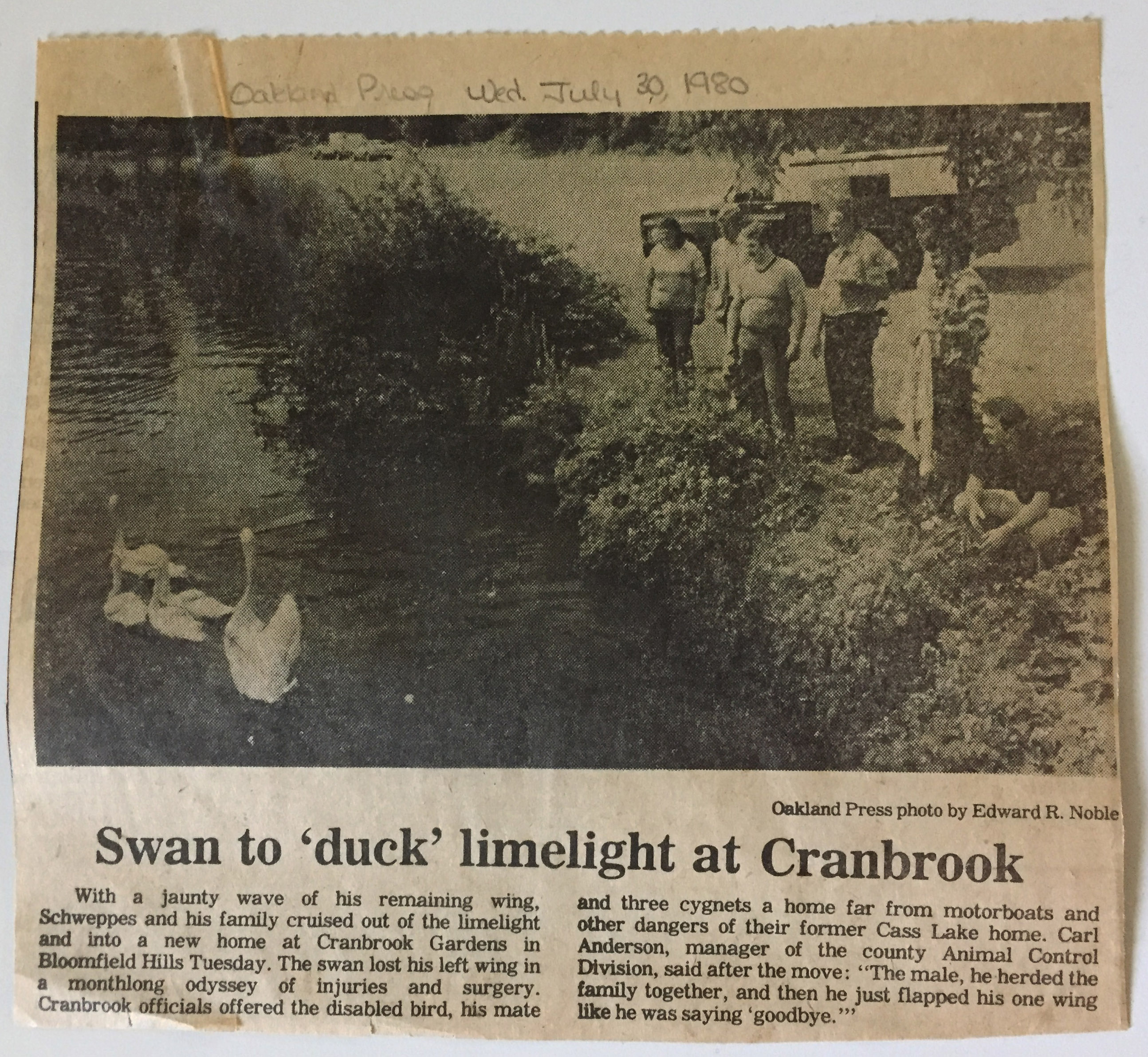
Swan to ‘duck’ limelight at Cranbrook. Oakland Press, Jul 20, 1980.

While it is not known exactly when mute swans were first introduced at Cranbrook, nor when the last pair was purchased, we can say with certainty that they share in our storied history and continued to survive at Cranbrook for more than forty years.

Leslie S. Edwards, Head Archivist


Hidden in Plain Sight at Brookside

BS1_2017_det

The Cranbrook 50th Anniversary Rug (BS 1), 1973. Cultural Properties Collection, Brookside School.

In honor of the Cranbrook Kingswood Alumni Association’s Reunion Weekend, I thought I would share the story behind The Cranbrook 50th Anniversary Rug.

In 1973, New York designer Rhoda Sablow (1926-2013) was commissioned to design a rug for the Cranbrook 50th Anniversary Auction. The idea for the rug came from Mrs. Arthur Kiendl, wife of the first President of the Cranbrook Educational Community.

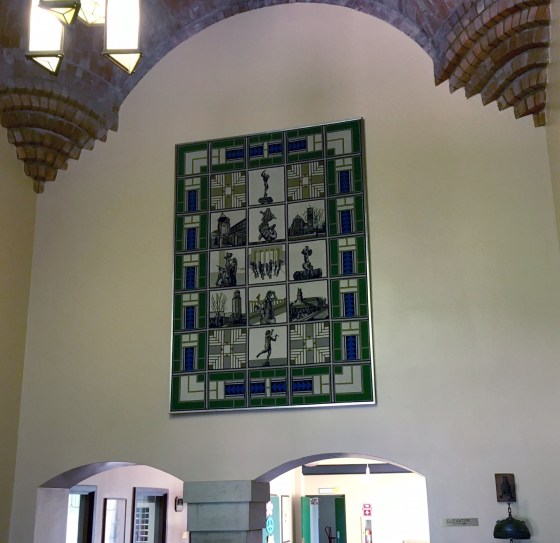
The border and geometric squares are reminiscent of Eliel Saarinen’s designs and surround depictions of various Cranbrook buildings and sculptures. The buildings are Christ Church, Kingswood, Cranbrook School, and Brookside. The sculptures are Orpheus, Jonah and the Whale, Europa and the Bull, Orpheus Fountain, Triton with Shell, Siren with Fishes, and Diana.

The rug was needlepointed by Cranbrook Schools parents: Mrs. Iain Anderson, Mrs. Richard Darragh, Mrs. Micheal Davis, Mrs. Fritz Fiesselmann, Mrs. Walter Flannery, Mrs. Robert Flint, Mrs. Mounir Guindi, Mrs. Wilfred Hemmer, Mrs. Charles Himelhoch, Mrs. James Holmes, Mrs. Lee Iacocca, Mrs. Arthur Kiendl, Mrs. George Kilbourne, Mrs. Jamse Lowell, Mrs. James May, Mrs. David Mott, Mrs. John McCue,  Mrs. Richard Pearce, Mrs. Donald Pendray, Mrs. J. Pierson Smith, Mrs. Edwin Spence, Mrs. Wright Tisdale, and Mrs. James Williams.

ESB and Elizabeth Wallace 1919file HSB15.27.1

Ellen Scripps Booth with granddaughter Elizabeth Wallace at Cranbrook House, circa 1919. Copyright Cranbrook Archives.

Elizabeth Wallace McLean bought the needlepoint rug at an auction during the three-day celebration of the founding of Cranbrook schools. Mrs. McLean, the granddaughter of Cranbrook founders George and Ellen Booth, immediately donated the tapestry back to the school in honor of its golden anniversary. Elizabeth was in the original class of seven who attended Brookside School, so it is appropriate that the rug now hangs inside the main entrance of Brookside.

– Leslie S. Mio, Associate Registrar, Cranbrook Center for Collections and Research


BS1_2017

The Cranbrook 50th Anniversary Rug (BS 1), 1973, on display in the Brookside Main Entrance. Cultural Properties Collection, Brookside School.

Indiana Jones and the Search for the Pergola Picture: My Senior May Experience

Growing up so close to the Henry Ford Museum, or watching my family’s favorite go-to movie, Raiders of the Lost Ark, I knew that I was interested in history from an early age. Yet, I never stopped to think about Cranbrook’s own fascinating and world-renowned past. To me, this community was just “home”, and the only history I thought of was of my family’s connection with the school. Nevertheless, for my Senior May project, I wanted to learn more about the inter-workings of the educational community as a whole. With this in mind, I chose to intern at the Cranbrook Center for Collections and Research and the Archives for my last senior assignment.

Elizabeth Fairman, CKU ’17

The purpose of Cranbrook’s Senior May project is to give soon-to-be Upper School graduates a taste of a “real world” job for the month of May in their field of interest.  Initially, I assumed I would be either in Art Museum storage moving art pieces or doing research on the computer every day, but I could not have been more wrong.

Over the course of my three weeks, I had behind-the-scenes tours of Cranbrook’s many historic landmarks, firsthand looks at restorations, handling and moving donated art pieces, and countless hours of both digital and primary source research. I met many people who are tasked with adding to and preserving this living historical landmark, no small task given the expansive campus. My perspective of the community, initially as the place of my education and a source of livelihood for my family, was altered, and I began to see it as an operational historical site.

In short, I had a very full, albeit whirlwind experience of almost everything that being an archivist or registrar entails.

Organizing original Kingswood School silverware in Heaven.

My favorite experiences were the tours of campus. Although I have attended this school for 14 years, very rarely did my classes study the history of Cranbrook or take field trips to different buildings on campus besides Cranbrook Institute of Science. In fact, I had only visited Saarinen House and Thornlea once before Senior May, just three weeks before I am set to graduate. My supervisor, Mrs. Mio, added another element of the visits, a look at them through the eyes of a registrar who is tasked with upkeep and restoration of historic sites. Through tasks such as cataloging Booth dinner plates at Cranbrook House, identifying historic bookbinding tools used at the Academy of Art, and even checking mouse traps at Thornlea, I developed a deeper appreciation for the amount of work it takes to showcase the history of this community, as well as a chance to see rooms or storage out of the public’s eye.

Clothing collection at Cranbrook House storage.

Another aspect I enjoyed was the research itself, like searching through “the stacks”, where many of the important archival files are kept. It is a place where you can find both important and unexpected things. For instance, one afternoon while searching for photos and records of the Cranbrook House Pergola for Ms. Edwards, I came across security reports from the 1960’s detailing the dangers of “hippie types” on campus. I was also able to piece together more of the history of Cranbrook firsthand through organizing and filing other primary sources created by prominent figures in the Community’s past.

Elizabeth Fairman, CKU ’17

Editor’s Note: Elizabeth Fairman is a “lifer” at Cranbrook, having attended school here since Kindergarten. In addition to that, her father Andy is the upper school baseball coach and physical education teacher at Brookside School. Both of Elizabeth’s grandmothers (Sue Tower and Marilyn Sutton) taught school at Brookside for many years. We thank Elizabeth for her exemplary work ethic and positive attitude and wish her the best of luck in her new adventure at Bates College in Maine.

Portrait of the Vettraino family children. From left: Dominick, Sam, John, Concetta (Connie), Rose, Annette.

Portrait of the Vettraino family children. From left: Dominick, Sam, John, Concetta (Connie), Rose, Annette.

Cranbrook Archives is excited to announce a new online collection of material that highlights the contributions of the Vettraino family at Cranbrook. The collection includes a sampling of photographs and documents of the family, as well as other Italian immigrants who worked on campus clearing the land and building roads and stone walls; maintaining the landscape; and working in the Cranbrook Fire and Police Departments.

Michael (Mike) Vettraino came to Cranbrook in 1905 to work with one of George Booth’s first landscape architects, H.J. Corfield. Mike served Cranbrook for more than 50 years and received the Founders Medal in 1955. For more than 110 years, his children and grandchildren have continued to honor his legacy, serving the Cranbrook community not only as grounds-keepers, but in many other areas of the campus. We are pleased to be able to share their amazing legacy.

Cranbrook Archives Staff

Tree Falls on Shoe Falls: A Story of Restoration

This week’s post is from a new guest contributor, Ryan Pfeifer. Ryan works with Cranbrook’s Capital Projects Office, and we hope to feature more of his (and Capital Projects) work to preserve our historic campus in the future! -Ed.

Nestled in the forest between the Greek Theatre and Triton Pools sits an overlook known as Shoe Falls.* While researching original drawings at Cranbrook Archives, I discovered that the pond, waterfall, and overlook were designed in 1941 by Cranbrook’s civil engineer, John Buckberrough, and constructed in 1943.

During a storm in mid-November 2016, a large tree fell onto the railing, fatally cracking two railing caps and dislodging seven balusters. Cranbrook’s Capital Projects Office was tasked with managing the restoration of this historic site on campus.

The first step in the restoration process was to carefully remove the stones and set them aside. This way, the grounds crew could remove the fallen tree. The cracked limestone railing caps were digitally measured and new pieces were ordered from a local stone fabricator, who purchases new limestone from Indiana. The baluster stones were reused but meticulously cleaned of old mortar, dirt and other debris. To make sure the railing replacement was to the highest quality possible, holes were drilled in the bottom slab and stainless steel pins were inserted. The pins were epoxied into place which permanently attaches them to the bottom slab and creates an anchor point for the baluster. A small bed of mortar was placed around the pin and the balusters were set on top of the mortar. Each baluster was leveled vertically and horizontally to ensure the stone caps would sit perfectly level.

The same procedure, with the epoxied pins and mortar, was performed on top of each baluster so the railing cap would be tied to the supporting elements below. Finally, the caps were set into place, again keeping a close eye on leveling and placement so everything was put back seamlessly. Come spring, the site will be fully restored by planting grass seed. Many thanks to the contractor and crew for an outstanding historic restoration project!

*The small pond which feeds the waterfall was initially named Shoe Lake and the waterfall did not have a specific name, however, over the years, the name Shoe Falls has been adopted for this entire area.

Ryan Pfeifer, Project Manager II, Cranbrook Capital Projects

Balthazar Korab and his Island of Serenity

A great portion of the time I’ve spent as an archivist at Cranbrook has focused on our photo collections. It would be impossible for me to choose a favorite photo, but I definitely find that one photographer in particular always comes to mind when I get a photo request or when I conjure up an image of campus.

Born in Budapest, Hungary, architect and photographer Balthazar Korab (1926-2013) documented life and work here at Cranbrook for several decades. His iconic images continue to be some of our most requested.

Korab at work at Eero Saarinen and Associates, 1957. Courtesy Cranbrook Archives.

Korab at work at Eero Saarinen and Associates, 1957. Courtesy Cranbrook Archives.

Korab studied architecture at the Polytechnicum Jozsef Nador in Budapest until he felt the necessity to escape his country’s communist regime in 1949. He opted for France, where he continued his education at the École des Beaux Arts in Paris, and received his degree in architecture there in 1954. During this time, Korab worked throughout Europe as a journeyman with notable architects, including Le Corbusier.

In 1955 he came to the United States and was hired by Eero Saarinen to work at Eero Saarinen and Associates (ESA). While Korab was worked there, he saw how Saarinen built models of his designs. Korab volunteered to use his knowledge of photography to develop techniques for dramatic photos of the models. This took him off the drawing board and he soon began to get assignments from other architects. What followed was an illustrious career photographing the works of many of the most significant architects world-wide, including: Ludwig Mies van der Rohe, Gunner Birkerts, Minoru Yamasaki, Frank Lloyd Wright, and many others.

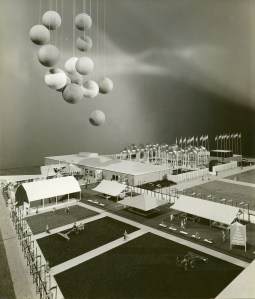
Yamasaki's model of the U.S. Pavilion at the World Agricultural Fair, India. Photograph by Balthazar Korab, ca 1959.

Yamasaki’s model of the U.S. Pavilion at the World Agricultural Fair, India. Photograph by Balthazar Korab, ca 1959.

Korab was introduced to Cranbrook during his time at ESA. In an interview for the Observer and Eccentric in June 1995, he said: “Arriving from a war-torn Europe, I soon was involved with Eero Saarinen’s GM Tech Center, a marvel of the dynamic, brash, wining face of America. It left me in awe and admiration. But my love went for the other Saarinen marvel, a then-middle-aged beauty, Cranbrook. It became a place of refuge and comfort, a source of nutrients for my severed roots to take hold in this strange soil. Its radiant aura was my inspiration.”

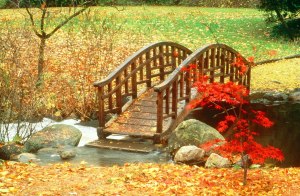
Oriental Garden bridge, Fall 1980. Copyright Balthazar Korab/Cranbrook Archives.

“Oriental Garden” bridge, Fall 1980. Copyright Balthazar Korab/Cranbrook Archives.

In the early 1980’s Korab was hired as one of several contract photographers here at Cranbrook. Over the next three decades, his images provided breath-taking panoramas, as well as minute details of the grounds, art, and architecture of this campus. The beauty of his work cannot be over-stated.

Gina Tecos, Archivist

Editor’s Note: In an July 1998 article in ambassador magazine, Korab referred to Cranbrook Educational Community as his “island of serenity.”

Create a website or blog at WordPress.com