Photo Friday: The Art of Richard Thomas

While researching an archival query this past week I discovered yet more hidden gems in our collection—the work of metalsmith Richard Thomas (1917-1988). Thomas held several positions at Cranbrook, including Head of the Metalsmithing Department, Dean of Students, Registrar, and Administrative Assistant to the President. The Archives has a small collection which documents many of Thomas’ private commissions.

One of the key works he created for Cranbrook was the Ceremonial Mace (1978) at the request of the Cranbrook Educational Community. Traditionally, the Christian processional cross had been carried at Cranbrook and Kingswood Upper School graduation ceremonies, but by the 1970s, upper school students objected to the fact that the cross did not accurately reflect the religious beliefs of the diverse student body. In 1973 and 1974, Kingswood head, Wilfred Hemmer, moved the cross from the front of the processional to the rear, then in 1975 agreed to remove it from the ceremony altogether.

Cranbrook Mace

Photo courtesy Cranbrook Art Museum.

After Hemmer’s resignation in early 1976, acting head Christopher Corkery reinstated the processional cross and a student protest ensued. Letters to the editor were written to both upper school newspapers and four Kingswood seniors refused to attend the Kingswood commencement. By May, ten percent of the student body threatened to boycott the ceremony.

Thomas’ design of the Cranbrook Mace incorporates symbols of four major religions: the Christian cross, the Star of David, the Crescent of Islam, and the symbol of Yin and Yang which represents the Eastern philosophies of China, Japan, India and Indonesia. The seals of the Cranbrook institutions are also a part of the design of the mace, which is made of rosewood, ivory, steel, sterling silver and gold.  The Cranbrook Mace is still used in graduation ceremonies to this day.
Richard Thomas sketch

Sketch from the Richard Thomas Papers, Cranbrook Archives.

In 1981, Thomas was awarded the Cranbrook’s Founders Medal. His design and fabrication of liturgical objects can be seen in more than ninety churches, synagogues, and temples across the country. He designed the Cranbrook Foundation’s silver punch bowl, the Saarinen Medal, and the commemorative medal for the Academy of Art’s fiftieth anniversary.

Gina Tecos, Archivist and Leslie S. Edwards, Head Archivist
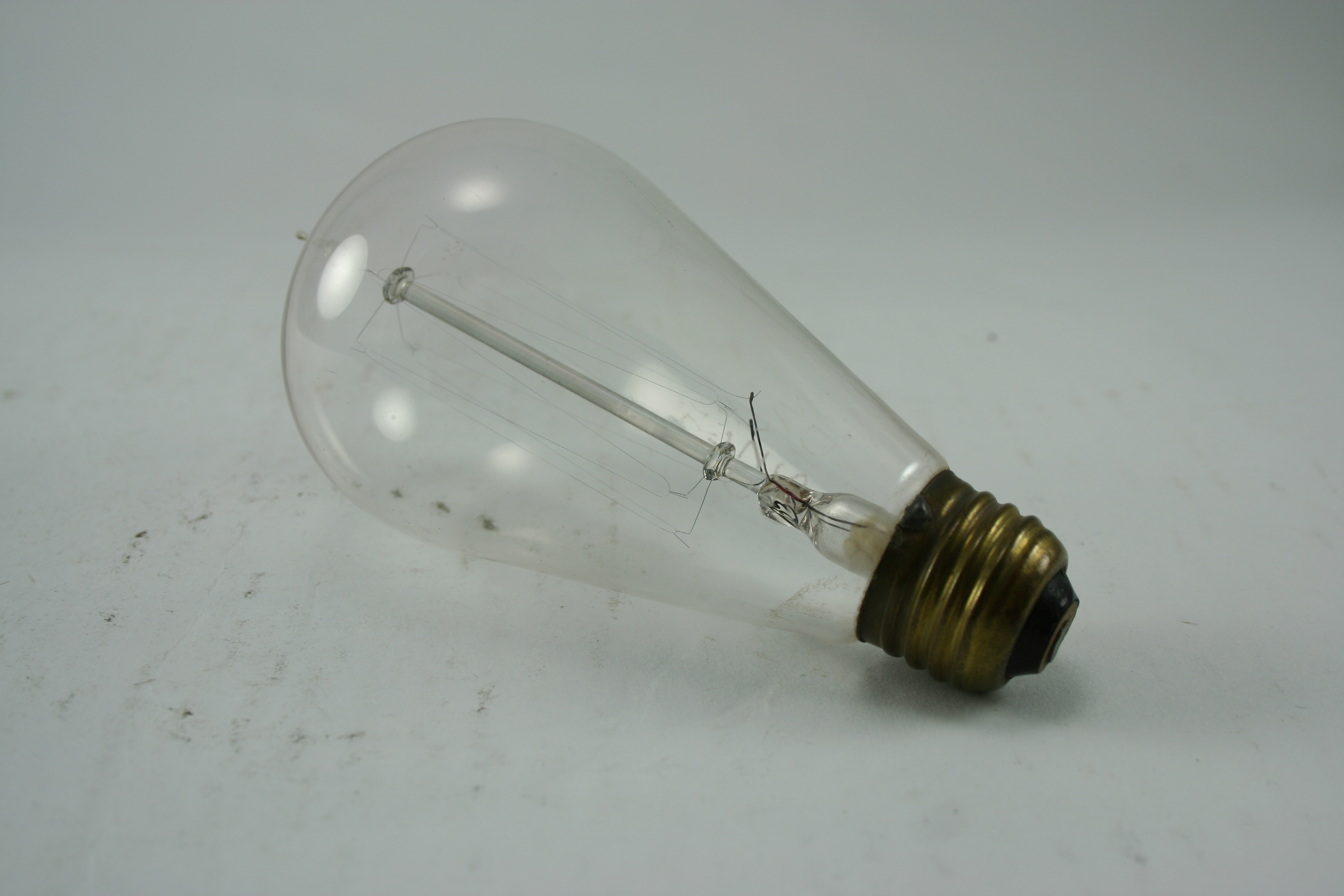
Illumination!

Glass etched Edison bulb from 1920, found in Cranbrook House.

Glass-etched Edison bulb from 1920, Cranbrook Cultural Properties Collection..

While browsing the historical writings of Henry Scripps Booth recently, I came upon the answer to a question that Collections Fellow, Stefanie Dlugosz, had posed late last year. As she prepared the Center for Collections and Research’s Holiday Tables exhibit (“Illuminate the Seasons” was the theme), which highlighted the early use of electricity in Cranbrook House, Stefanie had wondered what the source of electricity was, in 1908, for a relatively isolated place like Cranbrook. Efforts by several people could not turn up an answer. Until now.

“Although Caldwell’s electric fixtures had been installed about December 1, we still had to use candles and oil lamps for light because the private Edison line being installed from Highland Park to Cranbrook House was incomplete.”  This was recorded during the 1980’s in Henry’s unpublished History (which relates the history of Cranbrook Educational Community and the Booth family between 1800 and 1987).

As the bill from Albert Kahn shows, George G. Booth spent $1863.48, around $49,000 in today’s dollars, on lighting fixtures in Cranbrook House. The order is itemized, room by room, on seven pages of legal-sized paper, in Booth’s papers.

Albert Kahn’s bill to George Booth for Cranbrook House lighting fixtures provided by Edward.F. Caldwell Co.  Papers of George and Ellen Booth 14:23

George Gough Booth Papers, courtesy Cranbrook Archives.

Read the original blog for more information on the Caldwell lighting fixtures at Cranbrook House.

— Cheri Gay, Archivist

Photo Friday: Spectacular Strikeouts

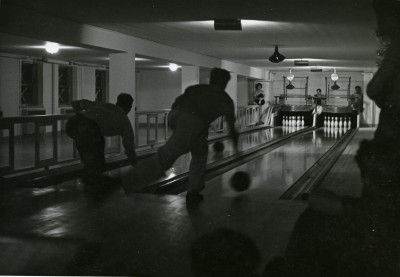
bowling alley_ CAA_1

Academy of Art students bowling. Courtesy Cranbrook Archives.

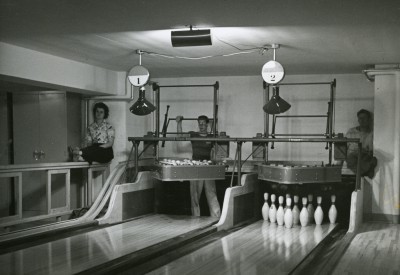
Academy of Art students waiting to reset pins. Courtesy Cranbrook Archives.

Today’s photos show Academy of Art students having some fun bowling! Bowling was popular on Cranbrook’s campus with alleys in both Cranbrook School for Boys and Kingswood School for Girls.  Kingswood School, which had the earliest alleys on campus, still uses their bowling alleys as part of the physical education curriculum.

The Academy of Art bowling lanes were located in the basement of the Art Museum and were for Academy of Art student and faculty use.  These lanes  did not have  mechanical pinsetters and therefore had to be manually set. In 1944 the lanes were removed from the Art Museum to allow for more storage for artworks, and relocated to the lower level of the Academic Building at Cranbrook School (now called Hoey Hall) under the study hall.

Stefanie Kae Dlugosz, Collections Fellow, Center for Collections and Research

A Love for Teaching: Cranbrook’s “Bird Man”

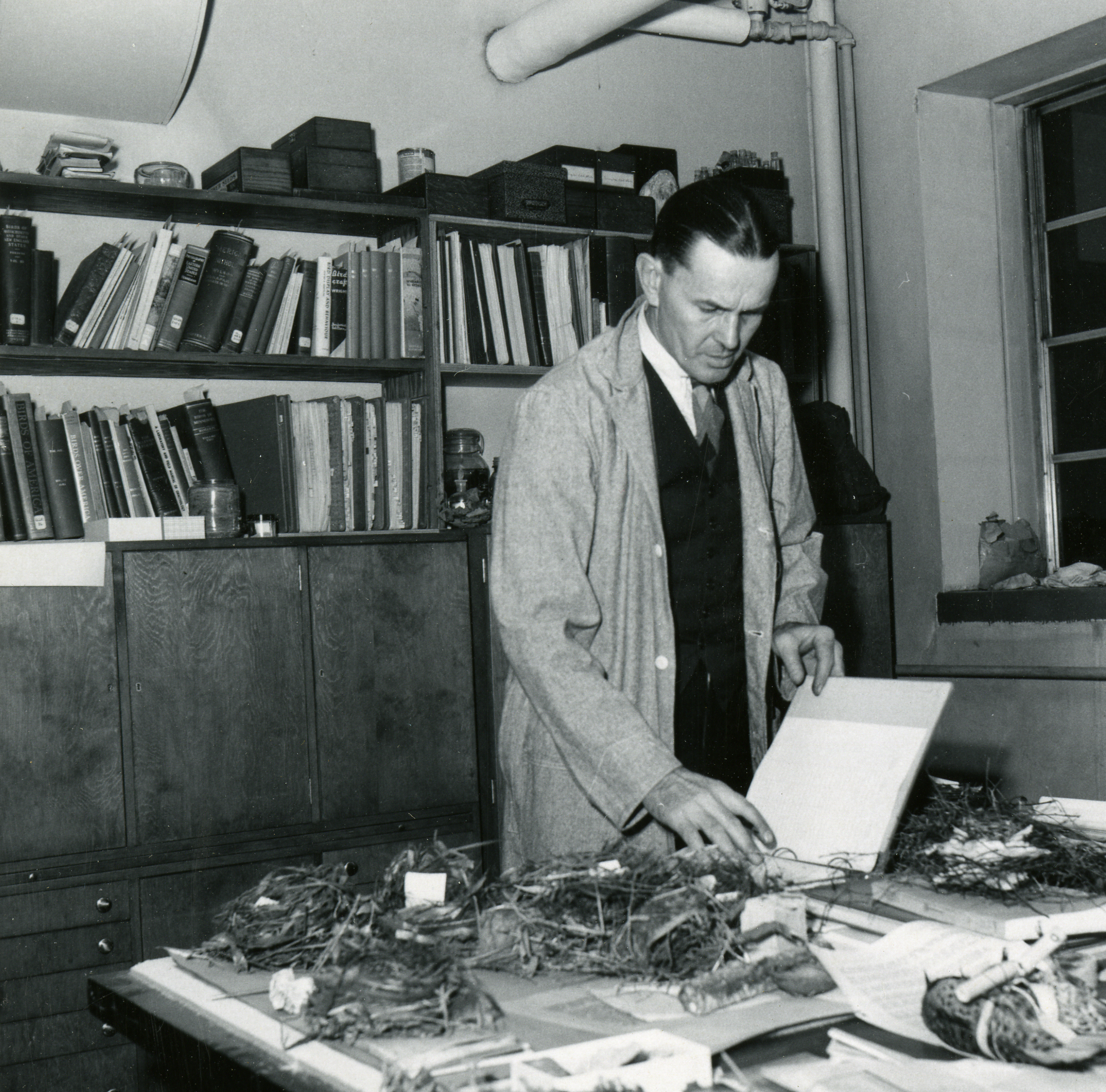
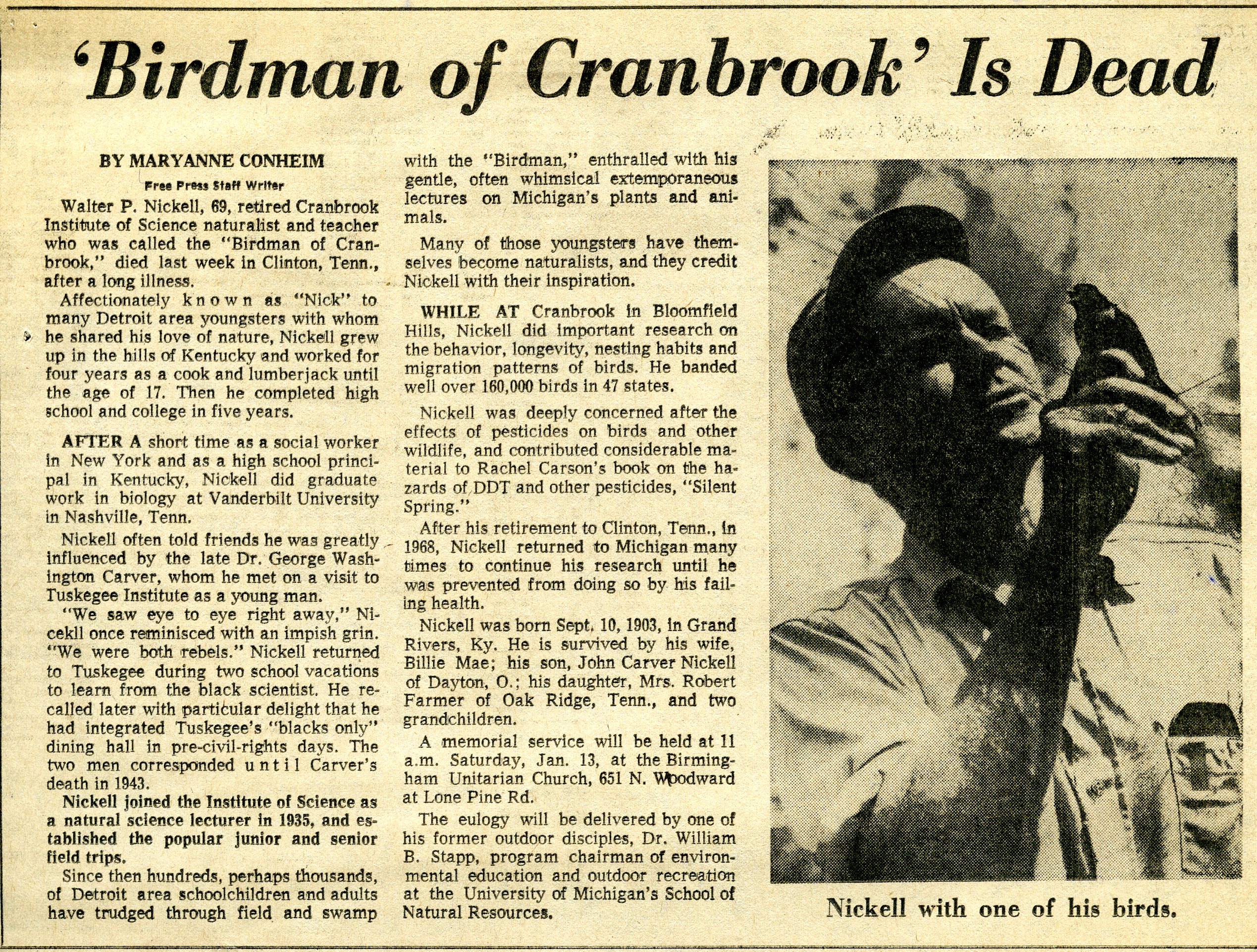
On a cold January day, it’s nice to think about the grandeur of Spring – warmer days, flowers blooming, and birds chirping. There are several places in the Archives we could look for signs of Spring, but today we remember Cranbrook Institute of Science (CIS) naturalist and ornithologist, Walter P. Nickell (1903-1973).

Born in 1903, Nickell worked at CIS for 33 years. During this time he banded over 160,000 birds in the contiguous United States, Mexico, Canada, and British Honduras. He also recorded notes on more than 50,000 nests – primarily in Michigan. In 1964 Central Michigan University awarded Nickell an honorary Doctor of Laws degree and in 1968 Nickell was awarded Cranbrook’s Founders Medal.

Bird Nest Studies, 1951

Bird Nest Studies, 1951.

In addition to developing numerous exhibitions at CIS and publishing more than 130 scientific articles, Nickell is well-known for his enthusiasm for teaching. During his tenure at CIS he lectured on natural science at local schools and colleges, including the University of Michigan. He also led junior and adult groups on numerous natural science expeditions.

Student fossil exhibition

Students on a fossil exhibition, 1956.

In a 1959 address delivered by Nickell at the Mid-Winter Science Teachers Institute of the Metropolitan Detroit Science Club, he said: “We must seek ways by which education can be made an adventure, a dramatic procedure, a thrilling experience with most of the elements which have always impelled the discoverers, the explorers, the inventors and the researchers.”

Detroit Free Press, 13 Jan 1973

Detroit Free Press, 13 Jan 1973.

Gina Tecos, Archivist

Meeting House Inaugurated


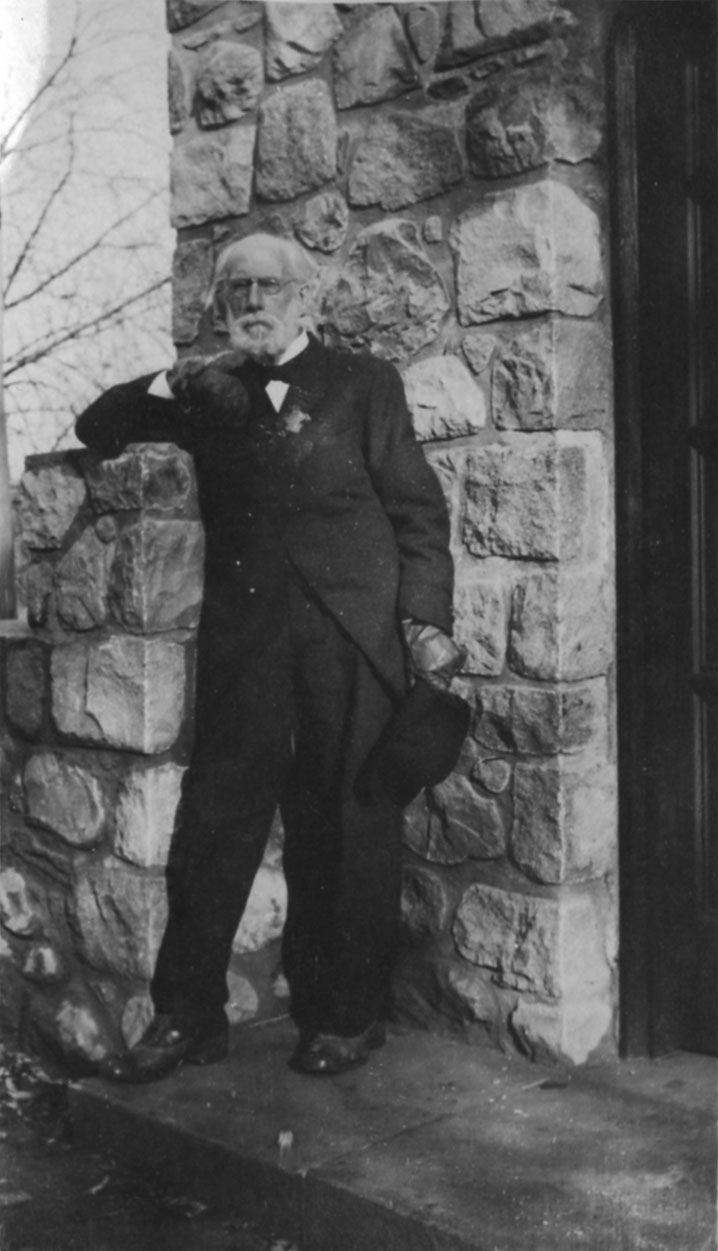
Henry Wood Booth outside the Meeting House (now Brookside School)

Henry Wood Booth outside the Meeting House (now Brookside School).

On January 5, 1919, Henry Wood Booth (HWB), father of George Gough Booth (GGB), “opened the Meeting House for divine worship,” according to the historical notes of Henry Scripps Booth (HSB). HWB, who would turn 82 on January 21st, conducted a vesper service and continued to officiate for six months. The Meeting House, designed by GGB and HSB, was the foundation for what later became Brookside School.

Cheri Gay, Archivist

John Cunningham and the Cranbrook School Mosaics

One of Cranbrook School’s earliest art teachers, John Cunningham (1904-2004), was a man of many talents. Born in New Jersey to a literary and artistic family, Cunningham attended a Manhattan prep school but spent summers working on ships that sailed the globe. After receiving both his undergraduate and graduate degrees in art from the University of California,  he studied painting with Hans Hoffman in Munich, and sculpture and painting with André Lhote in Paris.

Cunningham landed back in New York during the depression where he picked up odd jobs painting murals in the Catskills and set design for the Philadelphia Symphony Orchestra before he landed a position as the Head of the Fine Arts Department at Cranbrook School for Boys in 1931. By December, Cunningham had created a large transparency in imitation of a stained glass window. It was placed in the Cranbrook School dining hall during the Christmas pageant and was illuminated from behind with floodlights.

Cranbrook School Art Instructor, John Cunningham

John Cunningham in the Club Room, 1933 Richard G. Askew, photographer.

Wildly popular with the students and the faculty, Cunningham formed an Art Club. One of the major projects of the club students was to transform an unfinished room (now home to the Robotics Club) under the Senior Study Hall into a “very elaborate club room.” The highlight of the room was a series of hand-set glass mosaics by Cunningham that represented great men of antiquity. (Originally, his plan was to have one wall of panels representing ancient figures and a second wall which featured more modern figures including Sun Yat Sen, Ghandi and Lenin. This was never realized.) Additional changes to the room included the addition of a fireplace and ceiling stencils created by the boys that portrayed the history of transportation.

Cunningham was also known for the work of his students – particularly wood sculptures created by the Lower School boys. These were featured in an exhibition at the Kalamazoo Art Institute in 1932, and were so well received that additional museums across the state featured the exhibition as well before being displayed in the 1933 Century of Progress Exposition in Chicago.

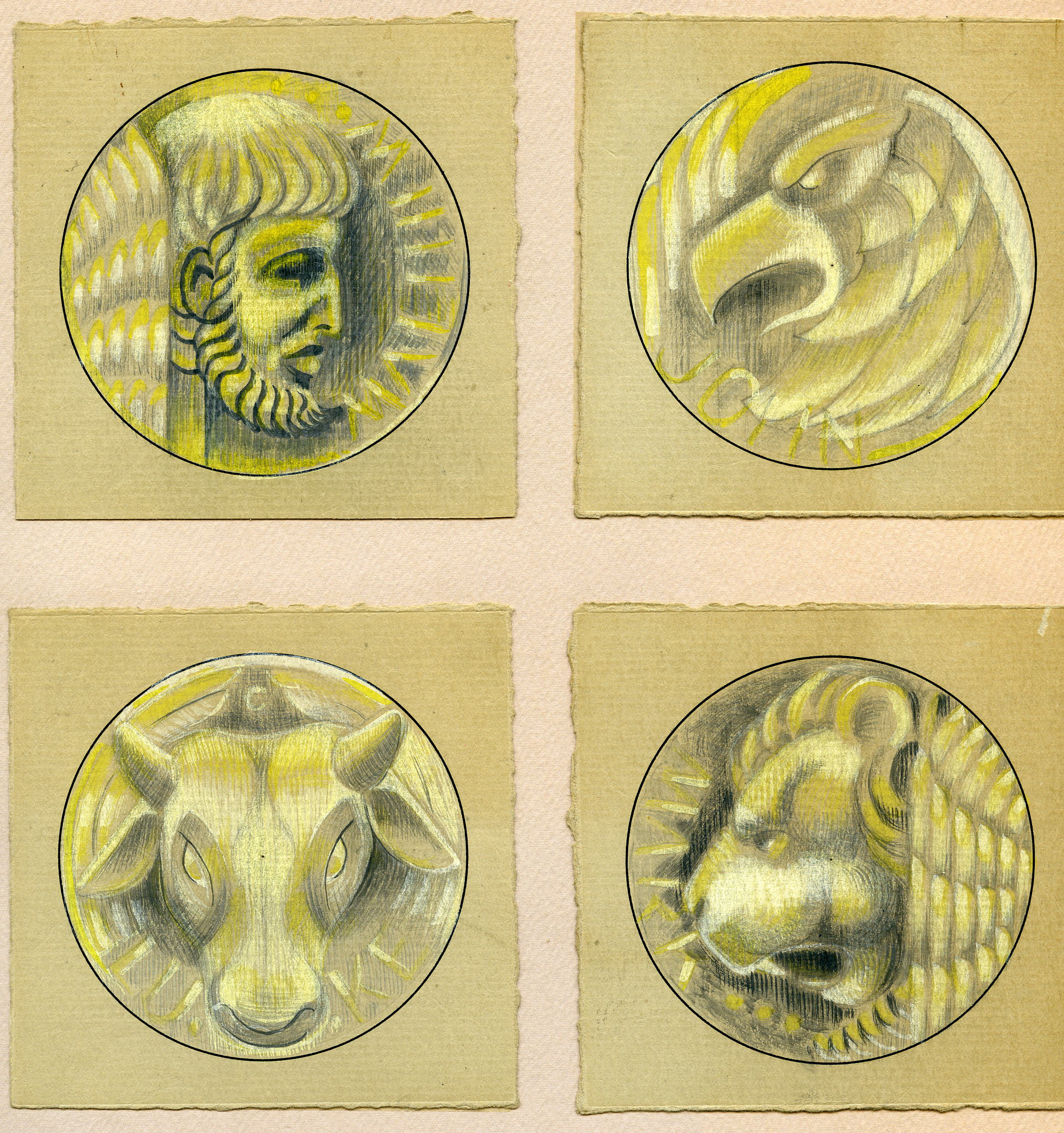
Mosaic detail by John Cunningham

Mosaic detail by John Cunningham, 2015. Leslie S. Edwards, photographer.
The mosaic, which features Imhotep, Buddha, Christ, and Francis of Assissi remains today. The door no longer exists and the painted beams have been covered by a drop ceiling.

While it is not clear exactly why Cunningham left Cranbrook, his view of modern art did not mesh with that of headmaster William O. Stevens. The Cranbrook School paper The Crane reported that Cunningham was leaving to pursue work in Czechoslovakia. At the end of the 1932-1933 school year (during the time of the national Bank Holiday), Cunningham resigned. He and his wife ultimately returned to California where they purchased the Carmel Art Institute where Cunningham taught until it closed in 1992.

~ Leslie S. Edwards, Head Archivist
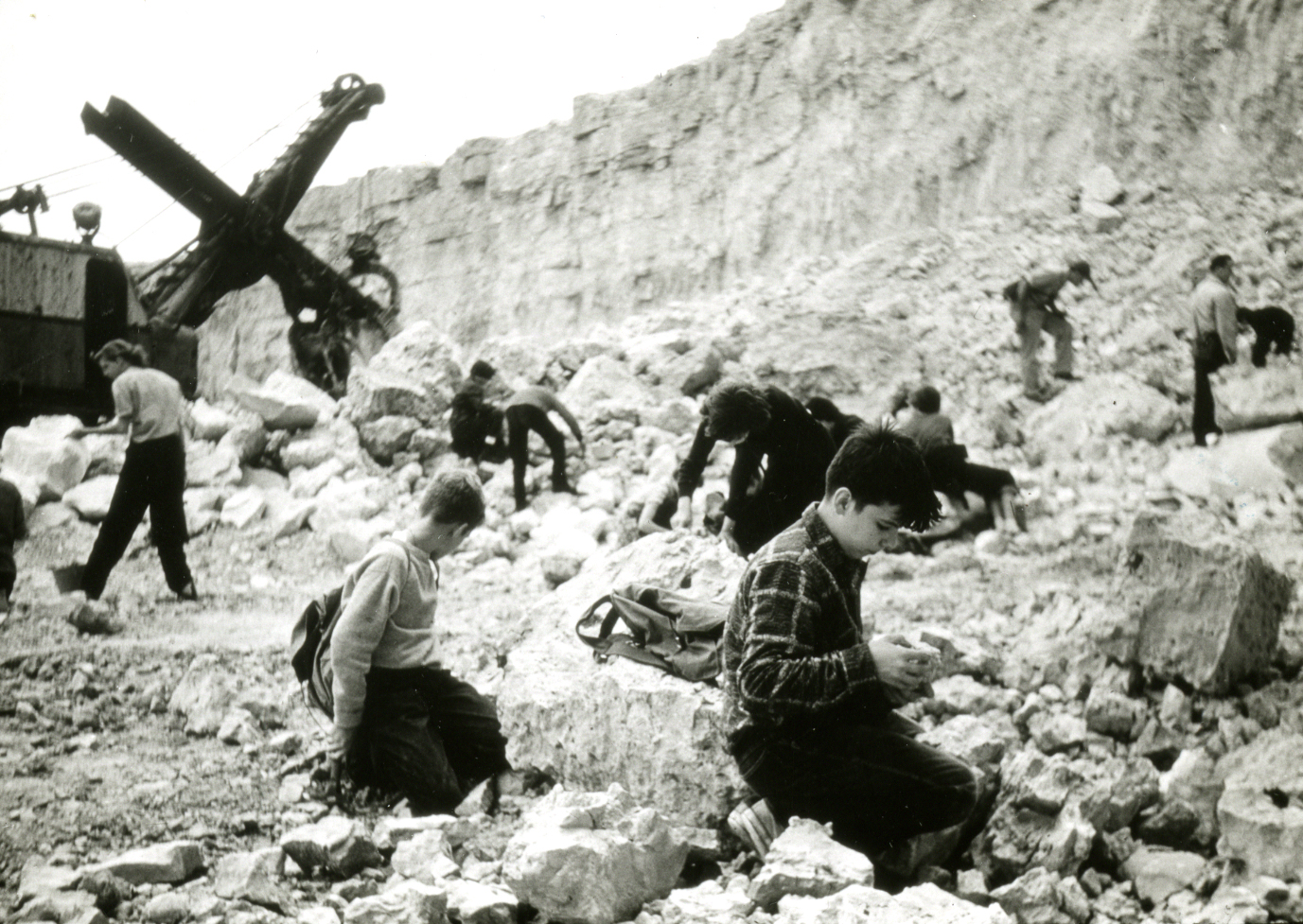
Photo Friday: The Great Outdoors

Photo Friday12_26_14

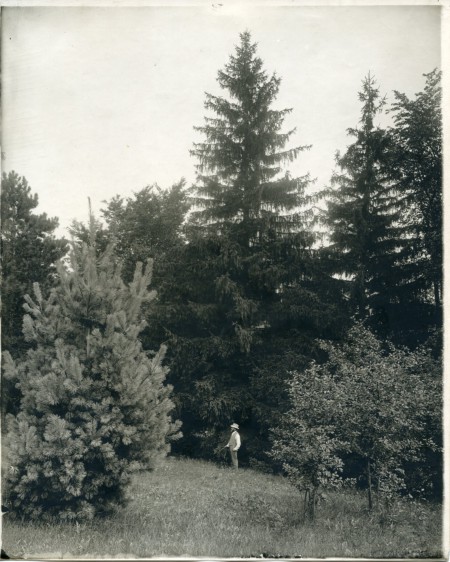
George G. Booth by Kingswood school area. c. 1906. Courtesy Cranbrook Archives.

Since it has yet to snow and cover the campus with glistening white, I though it best to show the beauty of the greenery and foliage all over this campus. Enjoy the end of the year and holidays with this photo of George G. Booth in the midst of the nature of Cranbrook! We will see you next year!

– Stefanie Kae Dlugosz, Collections Fellow, Center for Collections and Research

A Fond Farewell

Farewell Gretchen

Gretchen in front of the North Gates before they head off to conservation.

As the end of the year approaches, it is with a heavy heart that the Center for Collections and Research is saying a fond farewell to our Associate Registrar Gretchen Sawatzki. After 2 years of working hard at Cranbrook cataloging and restoring cultural properties all over the campus, organizing the restoration of the North Gates, contributing to the blog, maintaining objects, coordinating loans, and much much more, Gretchen will be leaving Michigan. She has taken a position in California and will be driving out west in the new year! We couldn’t be happier for her and her new opportunity but she will be greatly missed here at the Center for Collections and Research, as well as at all over the Cranbrook Campus.

Please feel free to leave comments and well wishes to Gretchen as she begins this new chapter!

Stefanie Kae Dlugosz, Collections Fellow, Center for Collections and Research

Highlighting Access: The Edward and Ruth Adler Schnee Papers

RuthBiopage

Recently the staff of the Cranbrook Archives announced the online addition of The Edward and Ruth Adler Schnee Papers which was  donated to the Archives in 2010.  While the website is not a biography of Ruth or Eddie’s life, it is a tribute to the work they created as evidenced by the materials in the collection. 

Archives Assistant Justine Tobiasz designed the web pages “drawing from Schnee’s designs and sketches.” She was inspired by, and wanted to pay tribute to, Schnee’s use of color  when creating the site about the collection.  Moving forward I hope that we can find ways to create sites for other collections. I think it’s a good way for us to use the incredible materials we have to convey a ‘whole picture’ view of our mind-blowing collections.” 

Working within the constraints of our web portal was very challenging – it did not allow free reign, and Justine had to find ways to display the content exactly how the staff wanted it to be.  All of the Archives staff worked collaboratively to create the content, digitize the images and post them up on CONTENTdm (our digital asset management system), and find external links to populate the design created by Justine.

Check out this addition and let us know what you think!

Stefanie Dlugosz, Collections Fellow, Center for Collections and Research & Justine Tobiasz, Archives Assistant

Icing on the Cake

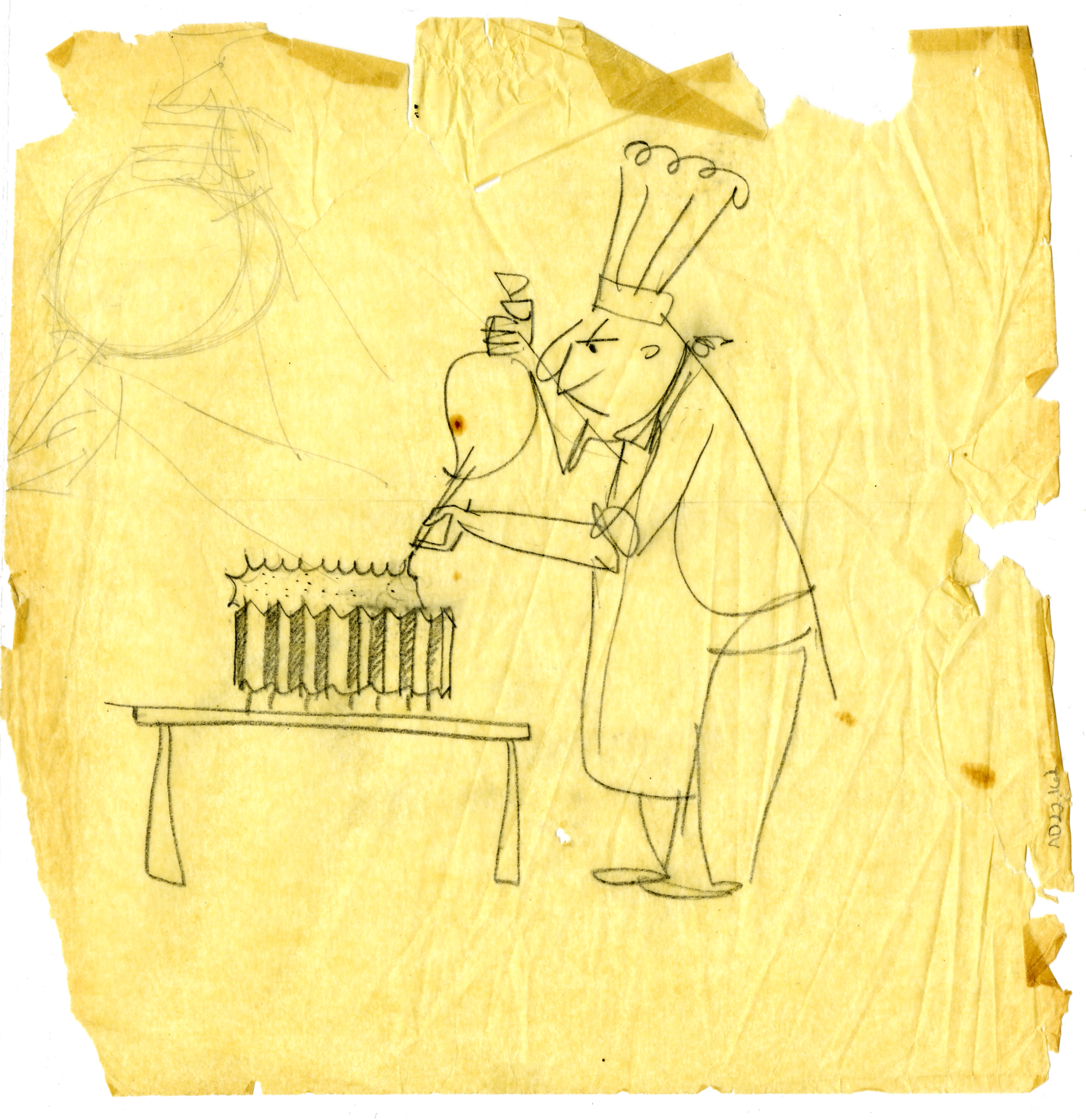
Claude de Forest cartoon

Claude de Forest Collection of Eero Saarinen and Associates Material (1995-68), Courtesy Cranbrook Archives.

It’s the holiday season. And, I don’t know about you, but for me, one of the best aspects of the holidays is the food. I love preparing a big holiday feast and the comforting aromas of spiced cider, or cookies and pies baking in the oven. Perhaps that is why the drawing featured in today’s Kitchen Sink appealed to me. While researching an archival inquiry, I came across this wonderful cartoon of a baker icing a cake by Claude de Forest (1931-2013).

Born in 1931 in Basel, Switzerland, de Forest descended from a long line of architects. This led him to pursue a BA in Architecture from the University of Manitoba and a Masters degree in Architecture from the Massachusetts Institute of Technology. After completing his studies at MIT, de Forest worked as a cartoonist and junior designer for Eero Saarinen and Associates from 1956-1958. Significant projects include the Ingalls Hockey Rink at Yale University, the IBM Research Center, the TWA Terminal at JFK, and the University of Chicago Law School. The “cake” in this photo is actually a model of the Chicago Law School.

In 1960 de Forest began teaching in the Faculty of Architecture at the University of Manitoba. He retired as a full professor in the Department of Environmental Studies in 1994. De Forest’s talents extended beyond design and teaching—he was also an activist and dedicated a significant amount of time and research to disability issues and responsible design. In 2007 he received the Lifetime Achievement Winnipeg Accessibility Award for community leadership in Universal Design.

Additional works in our collection related to Claude de Forest can be viewed here.

Gina Tecos, Archivist

Create a website or blog at WordPress.com