Photo Friday: Maija and Nelly

Maija Grotell and Nelly Beveridge at work on the base of a fountain, 1940.

Maija Grotell and Nelly Beveridge at work on the base of a fountain, 1940. Richard P. Raseman, Historical Photograph Collection, Cranbrook Archives.

Finnish-born ceramicist Maija Grotell served as the head of the Ceramics Department at the Cranbrook Academy of Art from 1938 to 1966.  Here, she works on the base of a fountain with student Nelly Beveridge.  Beveridge played many roles on campus, serving as a companion and nurse to George and Ellen Booth in their later years even as she completed her studies at the Academy.

Cranbrook and the Car, Part 2: The Rocket Arrives

Putting together an automobile exhibition without a car is like making a custard without using eggs: you can use other ingredients as replacements, but you’ll have a hard time achieving that perfectly smooth texture without them.    At the heart of any show about the automobile industry is the car itself.

It was with this thought in mind that I arrived at the Cranbrook Art Museum at 7:45 AM yesterday morning, eagerly awaiting the arrival of a truck that was carrying the eggs for my custard – a 1914 Scripps-Booth Rocket Cyclecar.

The Rocket arrives!  May 9, 2013.

The Rocket arrives! May 9, 2013.

Continue reading

Photo Friday: Swimming in Lake Jonah, 1953

Image

Lake Jonah, 1953. Cranbrook Archives.

With the start of May, spring has finally arrived at Cranbrook.  Flowers bloom, warm breezes sweep through the hills, and the various campus lakes look more and more inviting with each passing day.  Swimming in Lake Jonah is strictly forbidden, of course, but once upon a time the lake functioned as the campus swimming pool.  Here, students at the 1953 Cranbrook Academy of Art Summer Institute learn to swim in Lake Jonah, while in the background other students contemplate the possibility of canoeing.

Credit Where Credit’s Due

My favorite thing about being an archivist is that sometimes a seemingly simply question turns into a new discovery.  This happened recently when I was researching the artist of a ceramic vase located in Cranbrook House, a historic house on Cranbrook’s campus and the home of Cranbrook founders George and Ellen Booth.    Finding the answer should have been a simple task: open the object file, locate artist’s name.  A two-minute job.

Two-minutes turned into a two-week journey.

The mysterious vase in question, currently living at Cranbrook House.

The mysterious vase in question, currently living at Cranbrook House.

Continue reading

Photo Friday: Planning a Planetarium

Workmen spray down the McMath Planetarium dome, which is under construction. 1955. Cranbrook Archives.

Workmen spray down the McMath Planetarium dome while under construction at the Cranbrook Institute of Science.  1955. Cranbrook Archives.

The workmen who built the McMath Planetarium at the Cranbrook Institute of Science in the 1950s must have been circus performers as well as skilled craftsmen.  Here they balance on plywood platforms, managing a high-pressure hose as they perch above the nearly-completed dome.   The planetarium, which opened in 1955, has now been expanded into the Acheson Planetarium and includes research resources as well as visitor viewing opportunities.


Worker Bees and Spider Webs: Preparing Saarinen House

Walking through Saarinen House during the historic house tour season (May 1st – October 31st) visitors expect to see a few things; perfection in architecture, intricacies in woven textiles, beautiful leaded glass, and ingeniously designed furnishings. What visitors miss during the off-season is the buzzing of many “worker bees” laboring over the house’s care. As the Associate Registrar for the Center for Collections and Research, however, I am commissioned with task of caring for the house and preparing it for the public tour season.

Exterior plaque, Saarinen House.  Considered part of the Cranbrook Art Museum, Saarinen House operates as a historic house open to tours from May to October.   The house is interpreted to the 1930s, when the Saarinen family first built and inhabited the home.  Copyright Cranbrook Art Museum/Balthazar Korab.

Exterior plaque, Saarinen House. The house is open from tours between May and October and is interpreted to the period in the 1930s when Eliel and Loja Saarinen built and furnished their home. © Cranbrook Art Museum/Balthazar Korab.

Continue reading

Photo Friday: The Other Cranbrook

Coppersmith's shop, Cranbrook, England.  July, 1901.  Henry Wood Booth Papers, Cranbrook Archives.

Coppersmith’s shop, Cranbrook, England. July, 1901. Henry Wood Booth Papers, Cranbrook Archives.

In 1901, Henry Wood Booth, Cranbrook founder George Gough Booth’s father, took this photograph of the shop in Cranbrook, Kent, where his own father had worked as a coppersmith before moving to Canada with his young family.   A handwritten note on the back of the photograph, which is held in the Henry Wood Booth Papers at the Cranbrook Archives, explains that the copper tea kettle hanging from the door was made by Henry’s grandfather (the original George Booth), who also made his trade as a coppersmith.  Three generations (and a whole lot of people named Booth) later, George Booth’s great-great-grandson George Gough Booth would build an entire campus around the idea of promoting the applied arts, naming it “Cranbrook” in honor of this town and community.

Dispatch from the Archives: All Things Modernism

Mid-century Modernism has taken over my life!  I eat, sleep, and even dream Modernism these days.  In my role as Head Archivist, I wear many hats – the most recent being to assist the Michigan Modern curatorial team by locating all the cool “stuff” in our Archives related to the upcoming exhibition, which will be opening at the Cranbrook Art Museum on June 14, 2013.  This includes photographs, of course, but the most fun for me is finding correspondence, articles, and ephemera that when put together create a mosaic of a time or place. Continue reading

Photo Friday: Graduate Degree Exhibition

walter hickey thesis

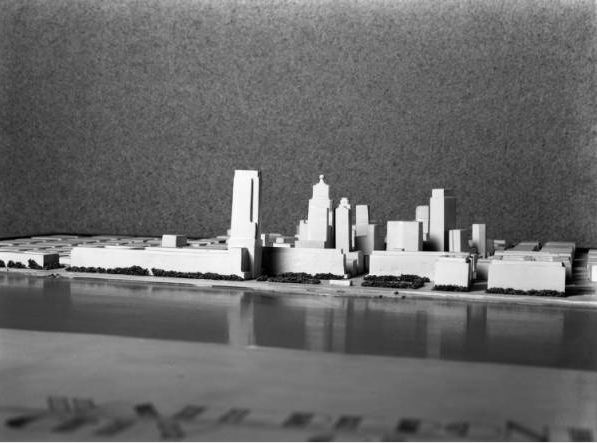
Cranbrook Academy of Art student Walter Hickey’s model for a proposed development for the Detroit waterfront, 1935. Cranbrook Archives.

You know it’s April at the Cranbrook Art Museum when the building is overrun by graduate students from the Academy of Art, frantically putting together their final projects for the Graduate Degree Exhibition.  While the degree show (opening this year on April 22 and running until May 12) is a longtime tradition at Cranbrook (staged in some iteration since 1940!),  graduate theses date back to 1943— the first year the Academy was accredited as a degree-granting institution.   In 1935 Walter Hickey created this model as part of a larger project to redesign the Detroit waterfront helmed by Cranbrook Academy of Art director and famed architect Eliel Saarinen.

Cranbrook and the Car, Part 1: The Aristocrat of Small Cars

In its 100-year history, Cranbrook has been known for producing artists, designers, scholars, athletes, and leaders.  But cars?  An upcoming exhibition mounted by the Center for Collections and Research (that’s us!) at the Cranbrook Art Museum will explore the relationship between Cranbrook and the automobile industry. Called A Driving Force: Cranbrook and the Car, it will highlight the history of Cranbrook through the lens of the automobile, detailing the ways that members of Cranbrook’s community have innovated and influenced the auto industry for the past 100 years.  You can learn more about the exhibition at Cranbrook Art Museum’s website here.

As we prepare to open A Driving Force: Cranbrook and the Car on June 12, we’ll be writing up occasional posts about the exhibition, highlighting bits and pieces of our research and providing glimpses into the down-and-dirty world of museum exhibiting.   And we’re going to kick it all off with the story of James Scripps Booth and the Scripps-Booth Company.
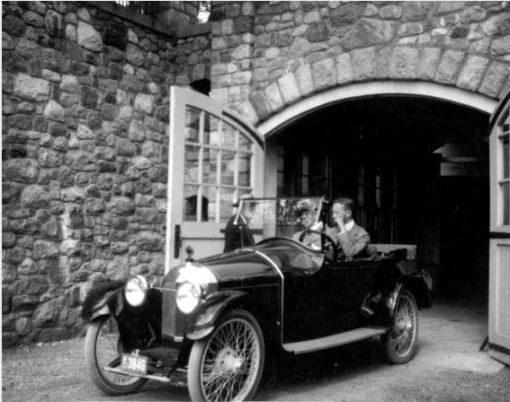
James Scripps Booth (behind the wheel) with brother Warren Scripps Booth in a Scripps-Booth 4-cylinder Model C at Tower Garage at Cranbrook House. Their father George Gough Booth stands next to the car, partially hidden by the windshield.  Circa 1917, Cranbrook Archives.

James Scripps Booth (behind the wheel) with brother Warren Scripps Booth in a Scripps-Booth 4-cylinder Model C at Tower Garage at Cranbrook House. Their father George Gough Booth stands next to the car, partially hidden by the windshield. Circa 1917, Cranbrook Archives.

Continue reading

Create a website or blog at WordPress.com