Celebrating a Farr-Booth Centennial

With thousands of years of recorded history to draw from, every day of the year has some distinction as an anniversary. Today, the 27th of September, is the 958th anniversary of the day William, Duke of Normandy, set sail to conquer England, the 560th anniversary of the birth of Cosimo de’ Medici, founder of the de facto ruling family of Renaissance Florence, and the 100th anniversary of the wedding of Henry Scripps Booth to Carolyn Elizabeth Farr. Here at Cranbrook, it is this last anniversary that holds top billing on our calendars. 

Carolyn Elizabeth Farr, on her wedding day. Courtesy of Cranbrook Archives, Cranbrook Center for Collections and Research.
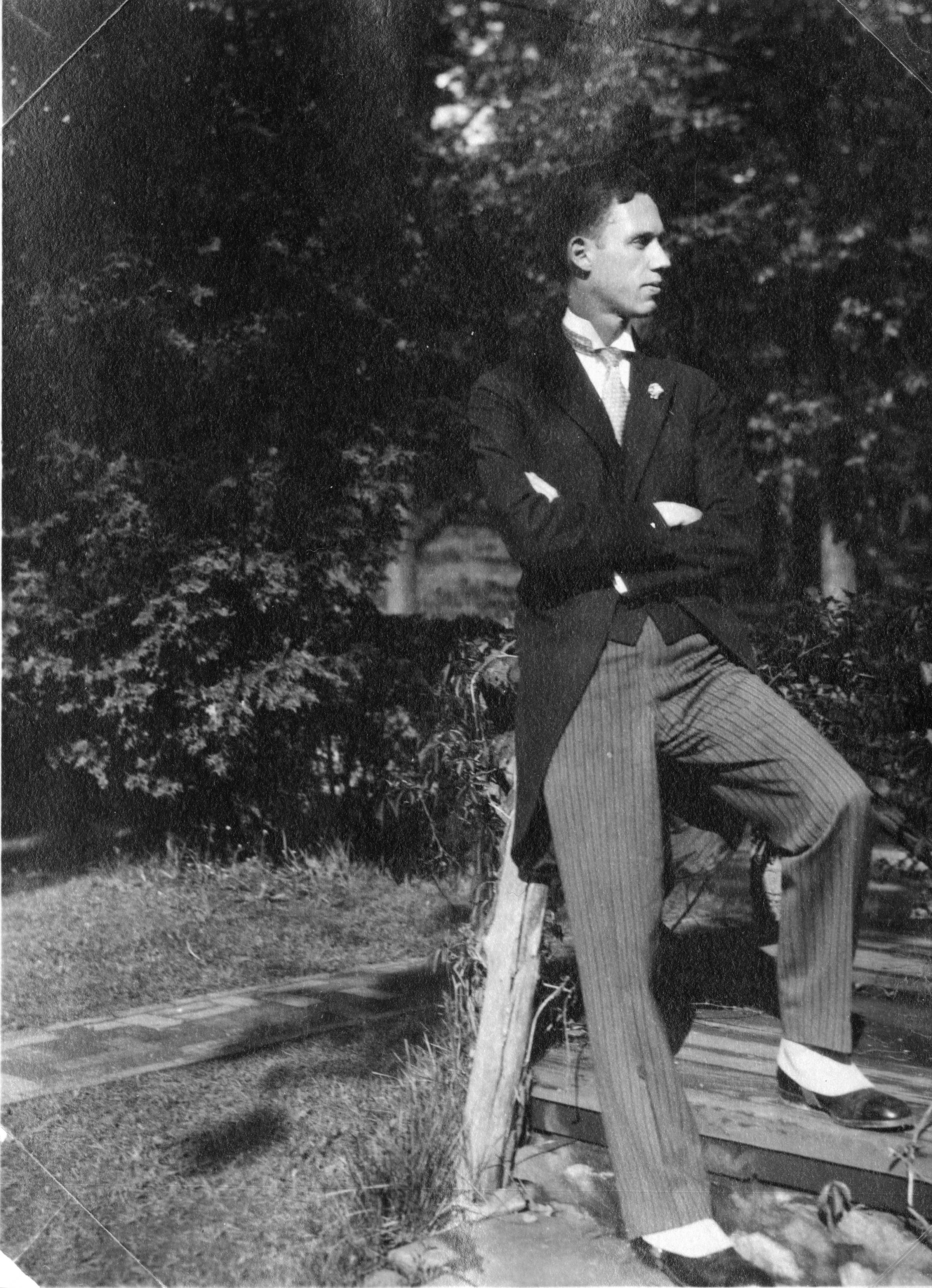
Henry Scripps Booth, on his wedding day. He later joked that it was the last time that he would ever wear a waistcoat. Courtesy of Cranbrook Archives, Cranbrook Center for Collections and Research.

Henry Booth, youngest son of Cranbrook’s founders, George and Ellen Booth, and Carolyn Farr, daughter of shipbuilding magnate Merton Elmer Farr and Emma Rothe, first announced their engagement on June 29th, 1925. Neither of them believed in long engagements, it appears, as they were married just three months later, at the First Congregational Church in Detroit. The wedding had some competition for most memorable event of the year for Carolyn Farr. On August 30th, while on her way home from a shopping trip to New York City to complete her trousseau, Carolyn’s train crashed into the back of another train which had made an accidental stop on the westbound line near Syracuse.  
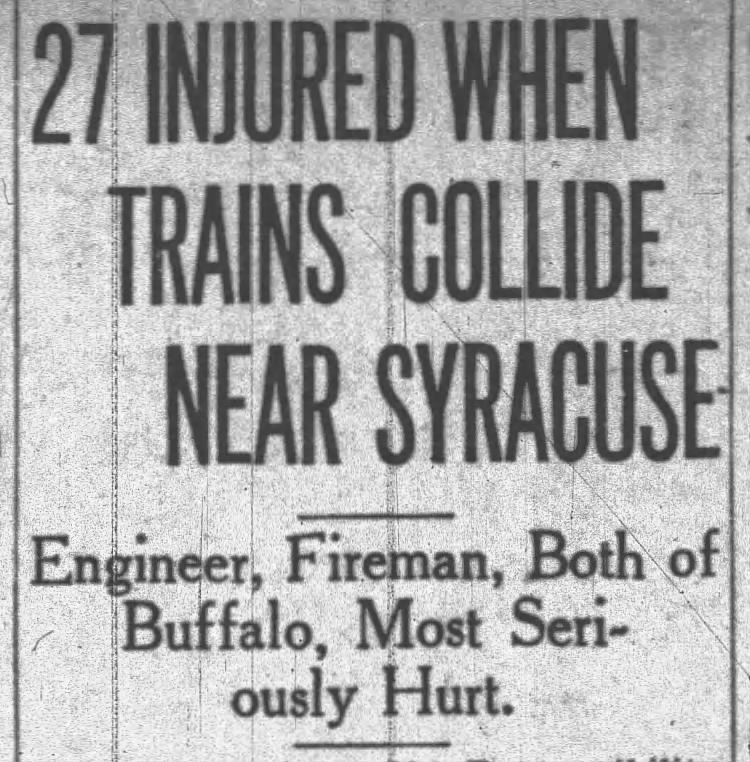
Clipping from Buffalo Courier, August 31, 1924, page 56

Fortunately, no one was killed in the crash. Some members of a Boy Scouts troop riding at the back of the rear train actually slept through the collision and had to be shaken awake by their bemused troop leaders. Though she escaped serious injury, the crash left Carolyn with cuts on her nose and mouth, which may have still been painful on her wedding day, though they are invisible in her wedding photos.

Both of Henry’s sisters were married at Cranbrook House itself, Grace Booth in the living room and Florence Booth in the library. Although Henry was not married at Cranbrook, the wedding was still very much a Cranbrook event in one way, because it featured an Arts and Crafts artwork. The ring was carried down the aisle by Carolyn’s nephew, Henry Gerhauser, in a silver and enamel box made by the noted Boston-based artist Elizabeth Copeland.  

Carolyn Farr and ring bearer Henry Gerhauser holding the Copeland box. Detroit Free Press, October 5th, 1924.
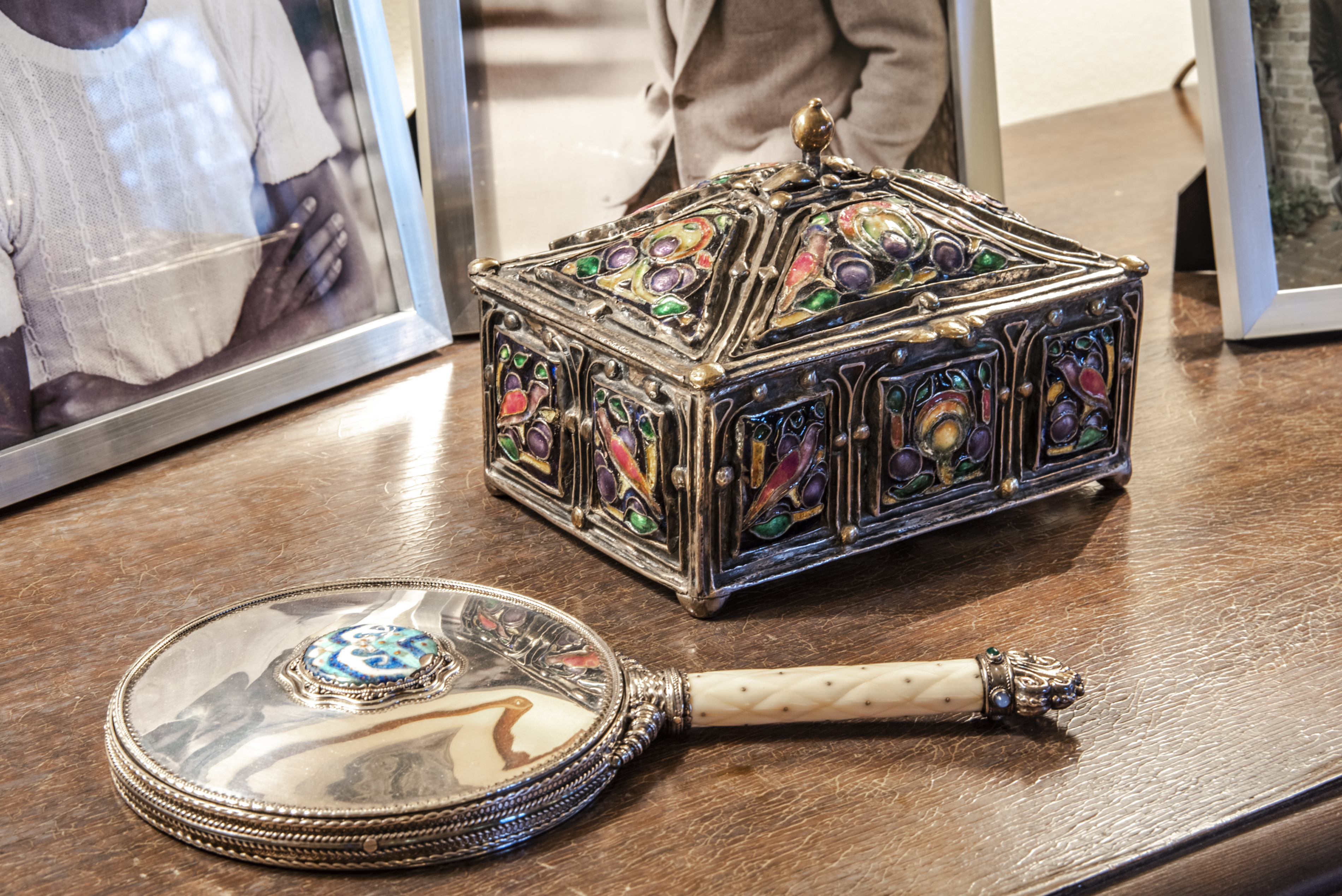
Enameled silver casket, Elizabeth E. Copeland, circa 1922. Courtesy of Cranbrook Center for Collections and Research.

Enameling, like tapestry weaving and illumination, was a medieval art form revived by the Arts and Crafts movement in England in the nineteenth century. In the twentieth century, enameling evolved out of the medievalist styles that characterized its revival to become a primary medium of both Art Nouveau and Art Deco decorative art and jewelry.

Elizabeth Copeland was the foremost enamel artist of the American Arts and Crafts movement. Born in Revere, Massachusetts in 1866, she did not begin her artistic training until she was in her early thirties. Like many women artists, she was expected to balance her own work with domestic labor. Copeland had to commute daily to attend the Cowles Art School in Boston, and she studied her design patterns while carrying out household chores. So great was her talent, however, that within just a few years her enamels and silver work were already enjoying critical acclaim, including a feature in Craftsman magazine in 1903. Her work is now in many museum collections, including the Metropolitan Museum of Art, the Art Institute of Chicago, and the Museum of Fine Arts, Boston

As an artist, Copeland embraced the Arts and Crafts movement’s ideals. Eschewing a machine-like precision in her work, her silver work proudly exhibits subtle variations and inconsistencies that distinguish them as truly hand-crafted objects. Her enamel work embraces the fluidity of the medium, allowing different colors to flow into one another within each metal embrasure shaped to contain the liquid medium. Unlike most women artists of her time, Copeland was able to support herself independently through the sale of her work, during a career of more than three decades. She exhibited her work at many venues, including the Detroit Society of Arts and Crafts, where Henry Scripps Booth purchased the silver box that would hold the ring for his wedding, two years later.  

Henry Scripps Booth with his first child, Stephen Farr Booth, in Brookside Cottage, February 17th, 1925. Note the Copeland box on the mantelpiece. Courtesy of Cranbrook Archives, Cranbrook Center for Collections and Research.
The Copeland Box in Thornlea with a hand mirror by Arthur Nevill Kirk. Photography by Tryst Red, 2021. Courtesy of Cranbrook Center for Collections and Research.

After the wedding, the new couple moved into Brookside Cottage, the little stone house just west of Kingswood School, where they lived for two years until Thornlea House was completed. The Copeland box became a fixture of their new home, where they lived together from 1927 until Carolyn’s death in 1984. During her lifetime, the ring box spent many years on a table in Carolyn’s own bedroom, as a memento of a milestone occasion which we are celebrating again, one hundred years down the line.

Mariam Hale, 2023-2025 Collections Fellow, Cranbrook Center for Collections and Research

George Booth as Decorator

From 1908 to 1919, the room we now call the Old Country Office was George Booth’s personal workspace in Cranbrook House, where he carried on managing his newspapers and met with the many farm employees, contractors, and artists involved in the operation and transformation of the estate. A side door leads directly into the entry vestibule, allowing outdoor workmen to come inside without tracking mud onto the hall carpeting.

George Booth’s tastes shaped the whole of Cranbrook House, but here in his own office we see a concentrated expression of his personal preferences in interior design. Yet, because it was also the space where George interacted with employees and colleagues, the office speaks not only to what George liked, but also to how he wished to be perceived.

George Booth’s office, photographed in 1910. Cranbrook Archives.

The office’s dark tones and simple, solid materials reflect the serious and businesslike side of George’s personality. The exposed timbers, wood paneling, and prominent fireplace all demonstrate George’s enthusiasm for historic English homes, and his pride in his own English heritage. Its furnishings – books, prints, and statuary – speak to his desire, despite his working-class background and his position as a newspaper manager, to be seen primarily as a sophisticated art lover. 

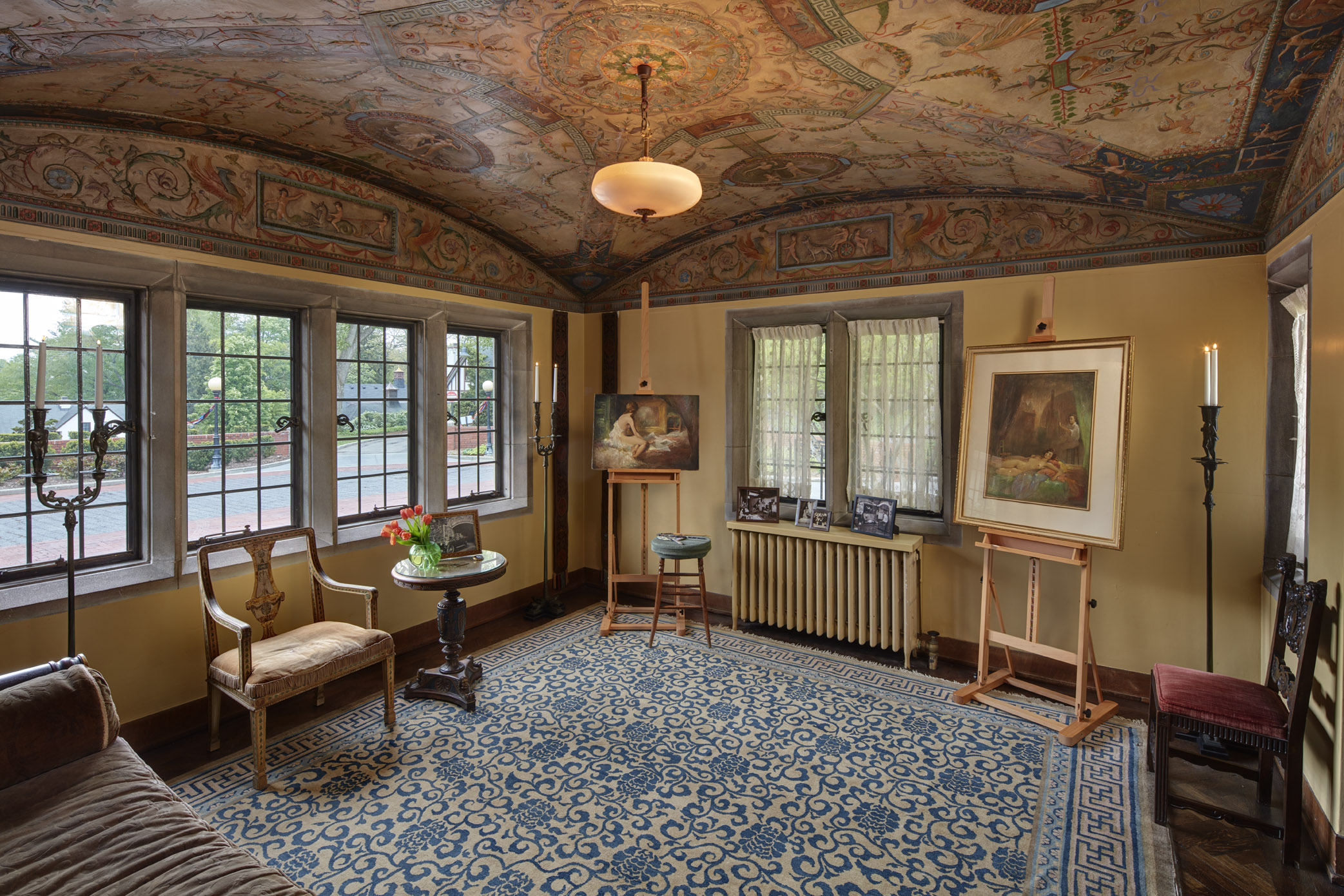
How different an impression of George’s personality we might form from the exuberant colors and rich textures of the Still Room! That space, wholly set aside for private relaxation, with its rainbow ceiling, walls hung with gold fabric, and violet velvet sofa (sadly faded now), reveals George’s inner aesthete. Yet both rooms, the luxurious Still Room and the somber office, tell us something about his character – specifically, how highly he valued the arts.  

The Still Room at Cranbrook House, Summer 2023. Photograph by Jim Haefner.

In England in the 19th-century, a new school of thought about domestic design arose, which argued that the houses we live in do not just shelter us – they also shape us, emotionally, morally, and intellectually. Having a beautiful home with well-made furnishings could elevate the spirit, encourage thoughtfulness. Collectively, a community that dwelt surrounded by art would be a better society than one that lived without it. This ideal was embraced by the Arts and Crafts movement from its early days, and taken up by the Booths.  

The mantelpiece in George’s Old Country Office, Cranbrook House. Photograph by Daniel Smith, CAA Architecture ’21.

George Booth once wrote, “A life without beauty is only half lived.” In his office, we can see how important it was to him to always be within reach of some great work of art or craftsmanship, even in the most ordinary moments of daily life. This same principle shaped the greater Cranbrook campus, for the benefit of all its community members.  

— Mariam Hale, 2023-2025 Collections Fellow, Cranbrook Center for Collections and Research
A New Kiwi at Cranbrook

Since joining the Cranbrook Center for Collections and Research in late July as the new Collections Fellow, I’ve been busy exploring. These last weeks have been spent learning the Cranbrook story, taking long walks through the beautiful grounds, and getting to know Melvyn Maxwell and Sara Stein Smith, whose Frank Lloyd Wright-designed home will be the primary focus of my two-year fellowship.

Nina Blomfield with Eleen Auvil, Bird [Kiwi], c.1960s, in the Cranbrook Art Museum Collections Vault. Photograph by Kevin Adkisson, September 2021.

While there is much that is new and exciting to discover, I have been surprised to meet some familiar figures around campus.

I am originally from Auckland, New Zealand, but I come to Cranbrook directly from Bryn Mawr College, near Philadelphia, Pennsylvania, where I’ve been a graduate student in History of Art since 2015. This historically women’s college and the six institutions founded by George and Ellen Booth have much more in common than one might first imagine.

Like Cranbrook, Bryn Mawr College was conceived as a total work of art: an aesthetic environment that would foster learning and mold young scholars into thoughtful and productive members of society. Major transformations of the College campus were undertaken in the first decades of the twentieth century, just as the Booths began building their vision for Cranbrook. Both institutions were founded on a deep engagement with the Arts and Crafts Movement and a shared belief that art and education were intrinsically entwined.

Christ Church Cranbrook under construction, 1927. Photograph by Oscar H. Murray. Courtesy of Cranbrook Archives, Oscar H. Murray Photograph Collection.

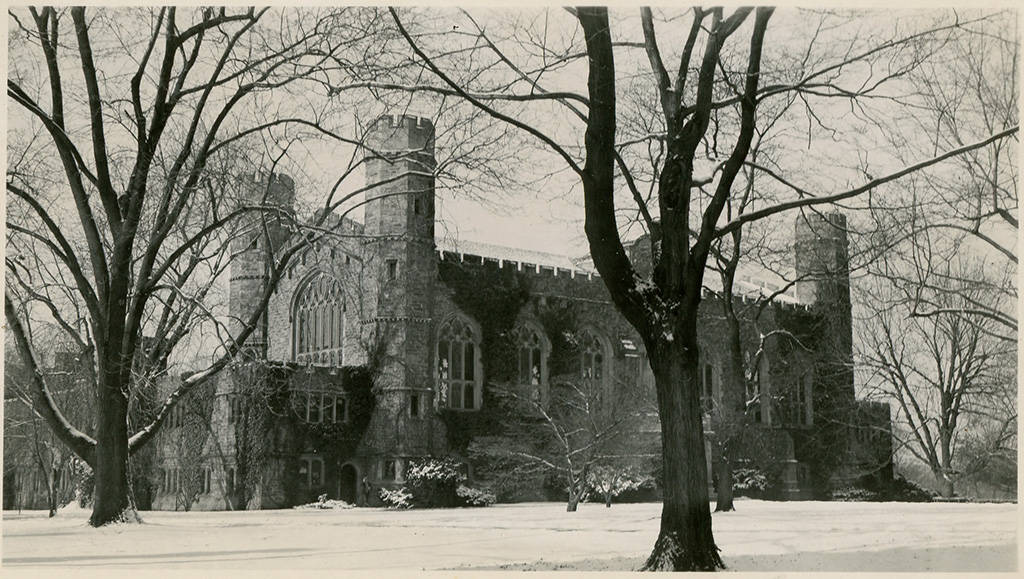
Driving along Lone Pine Road, the architecture of Cranbrook forms a first point of connection between Bloomfield Hills and Bryn Mawr. The stone exterior and ornate windows of Christ Church Cranbrook transport the viewer to the same Gothic past that architects Cope & Stewardson imagined for their Collegiate Gothic Great Hall at Bryn Mawr.

Old Library Great Hall, completed 1907. Undated photograph, Bryn Mawr College Photo Archives, Bryn Mawr College Special Collections.

Further into campus, the organization of Cranbrook into quadrangles and cloisters, the use of hand-hewn materials, and the style of ornament make direct references to historical models. Through their architecture, both Cranbrook and Bryn Mawr, very new American institutions, ground themselves in the traditions of medieval and early modern Western Europe.

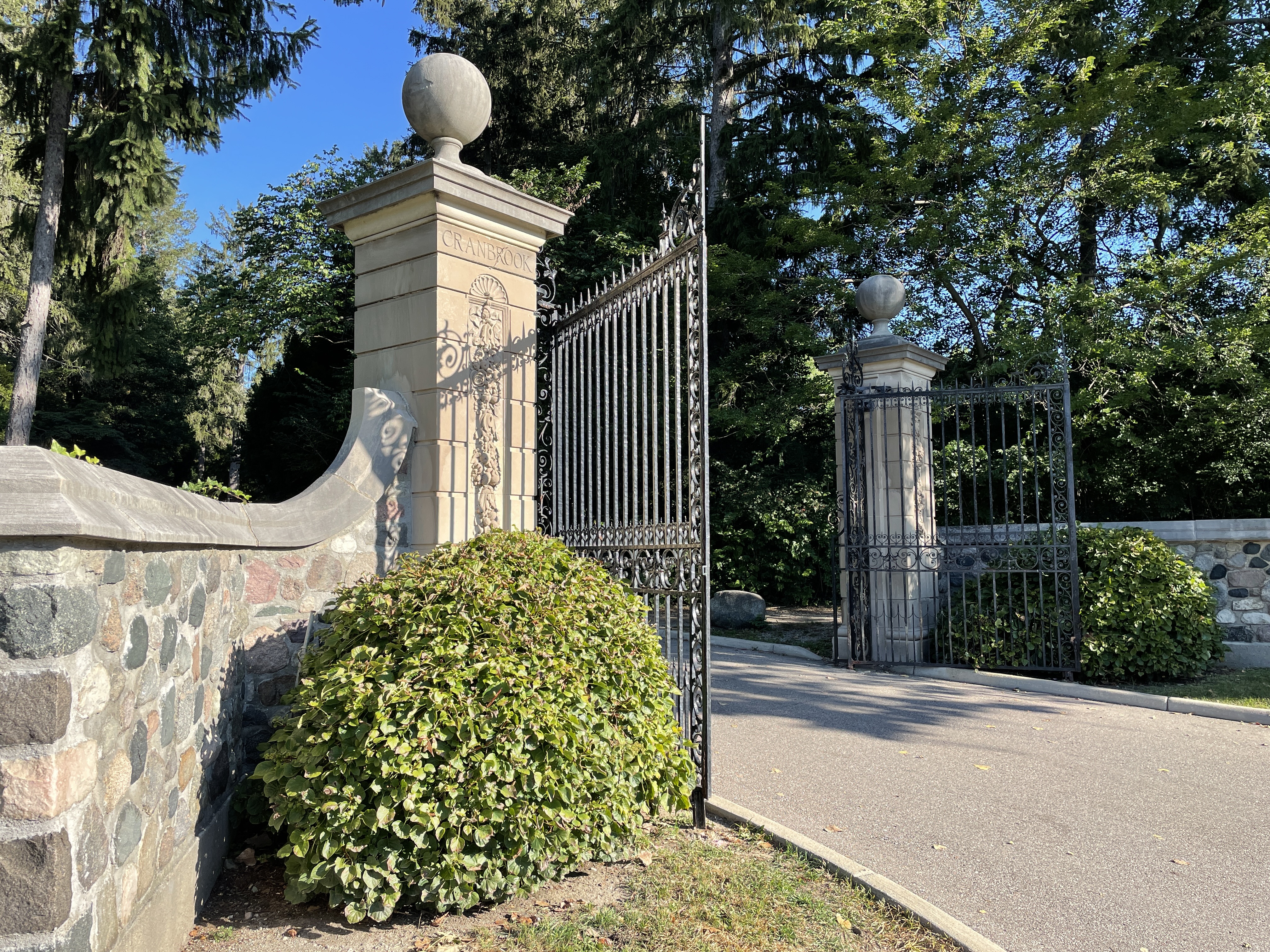
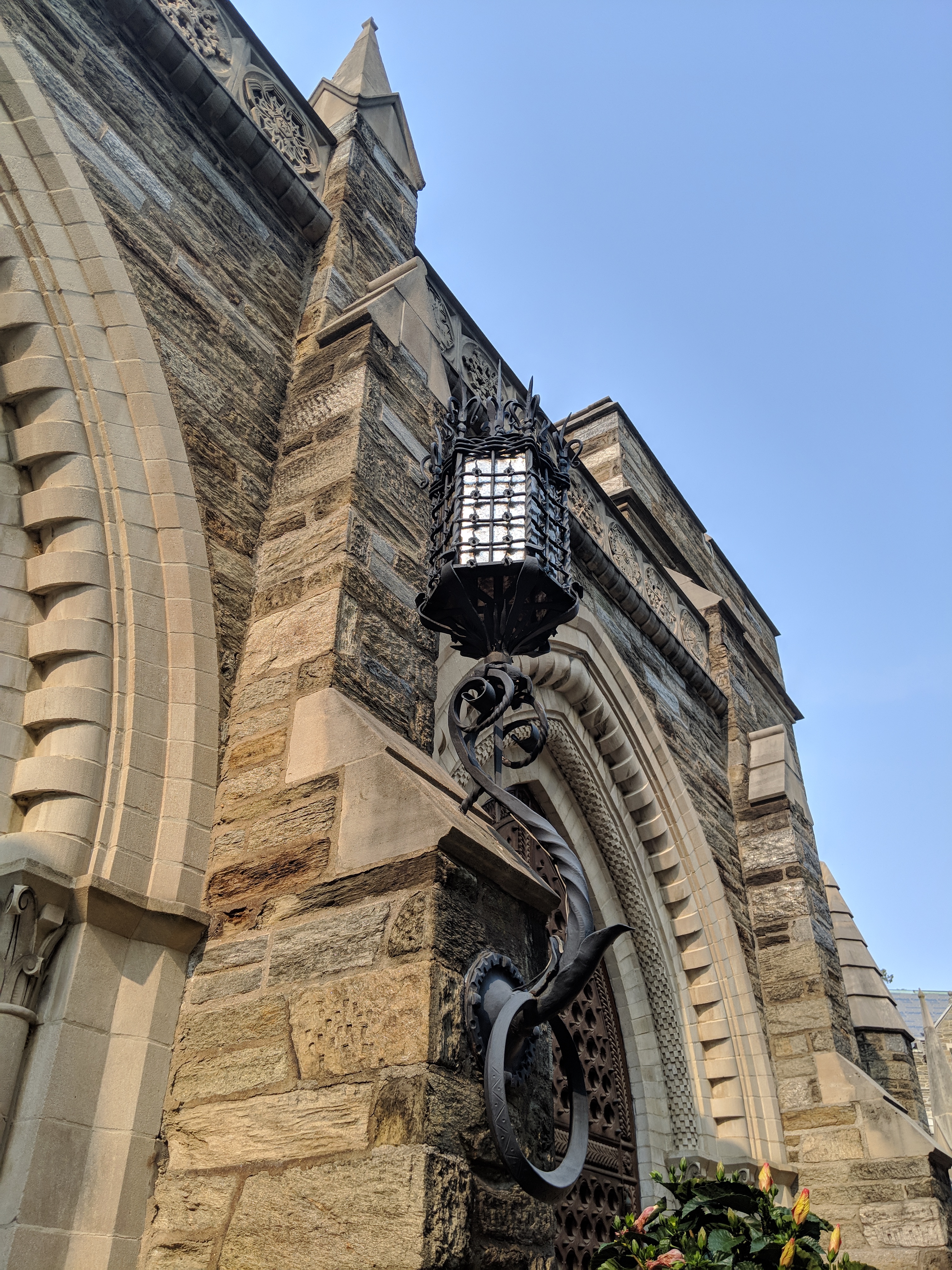
At Cranbrook House, the monumental entrance gates seemed even more welcoming when I learned they were fabricated under the direction of celebrated ironworker Samuel Yellin, whose stunning lanterns and wrought iron door handles were a highlight of my daily commute past Goodhart Hall at Bryn Mawr.

George Gough Booth and Samuel Yellin, Cranbrook entrance gates, 1917. Photograph by Kevin Adkisson, September 2021.
Samuel Yellin, lantern, c.1927-1929. Goodhart Hall, Bryn Mawr College, Pennsylvania. Photograph by Nina Blomfield, August 2019.

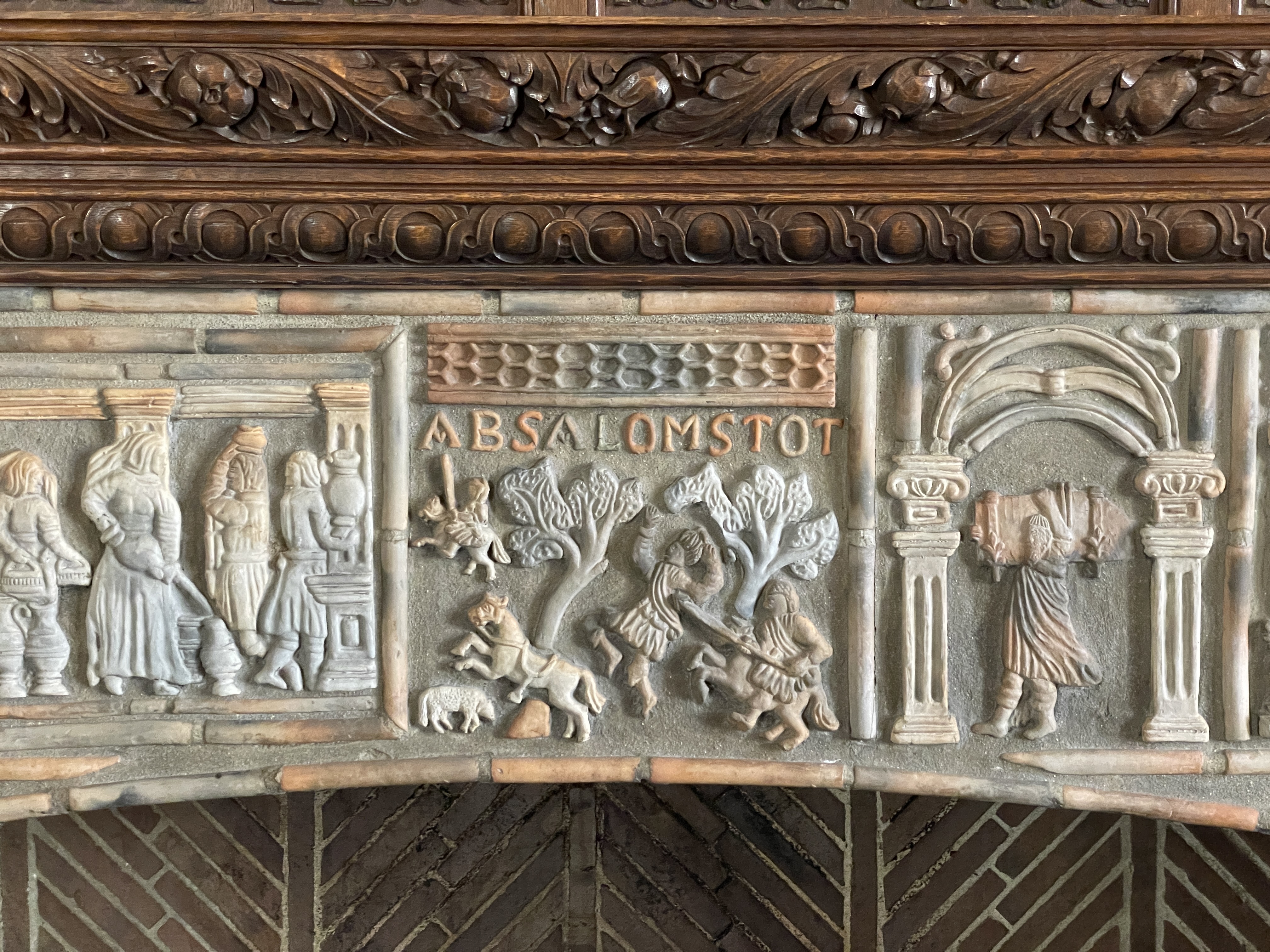
Inside Cranbrook House, there are even more connections. Attending a meeting in the Oak Room, I was astonished to be seated in front of a beautiful fireplace surround designed by Henry Mercer of the Moravian Pottery and Tile Works.

Moravian Pottery & Tile Works, “Bible in Tile” fireplace detail, c. 1920. Oak Room, Cranbrook House. Photograph by Kevin Adkisson, September 2021.

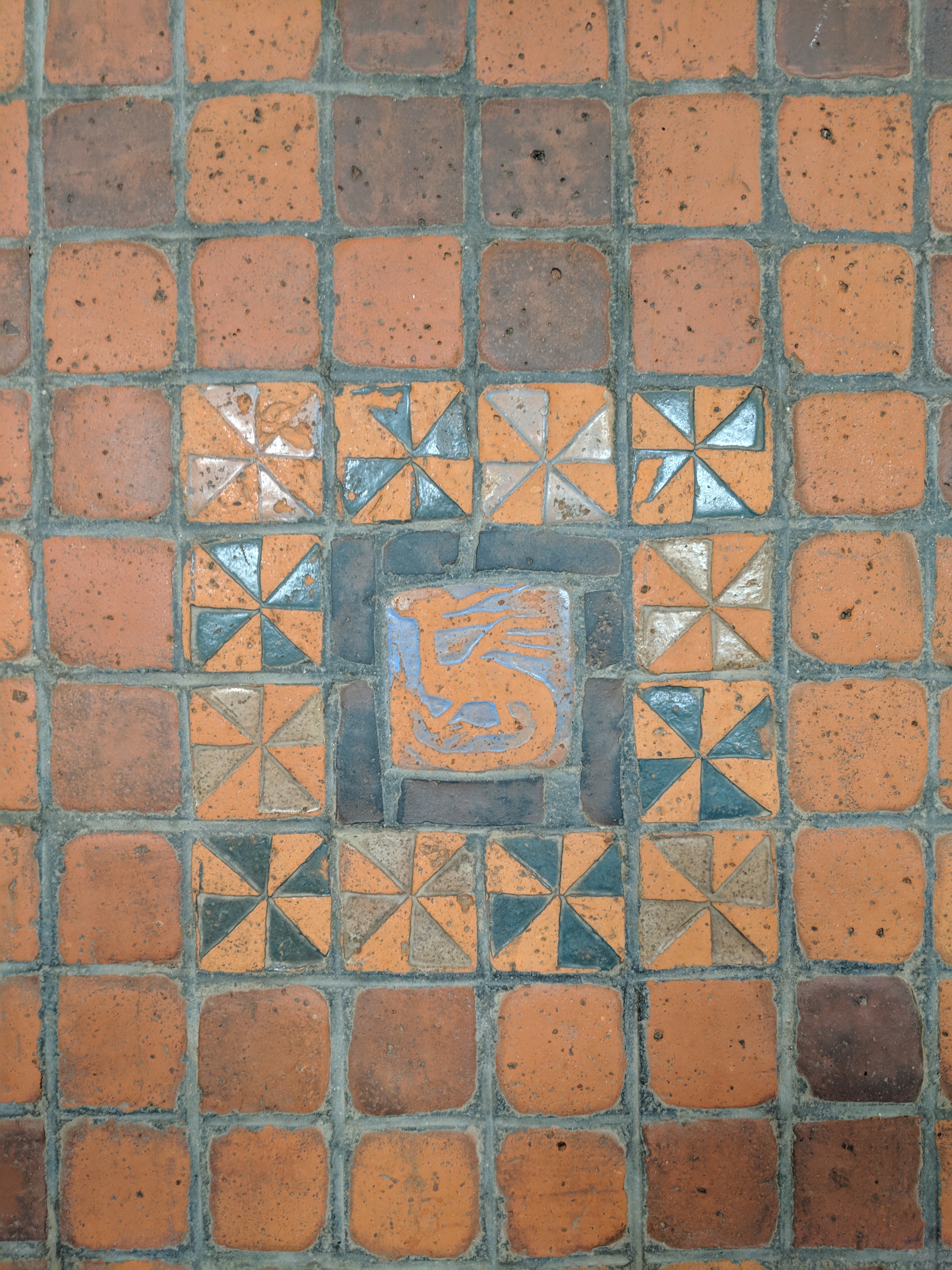
Bryn Mawr is located close to Moravian’s headquarters in Doylestown, Pennsylvania, and each of the College’s buildings is home to Mercer tiles arranged in a unique pattern. The little dragons in the photograph are adapted from fourteenth-century wyverns and recall the Welsh origins of Bryn Mawr’s name. The figurative tiles are sprinkled throughout the Old Library halls, where they often go unnoticed by busy students rushing between classes.

Moravian Pottery & Tile Works, floor tiles, c.1905-6. Old Library Vestibule, Bryn Mawr College, PA. Photograph by Nina Blomfield, August 2019.

Given the historical associations of these institutions with the Arts & Crafts, the artistic affinities between Cranbrook and my adopted home of Bryn Mawr are not wholly unexpected. But I was less prepared to be welcomed to Cranbrook by not one, but two compatriots from much farther afield!

Walking into Cranbrook Institute of Science for the first time, I was greeted by an adorable Apteryx haastii, the Great Spotted Kiwi, displayed in the ornithology case near the museum entrance. This fuzzy flightless bird is endemic to New Zealand and has become a moniker both for the country’s citizens and its most famous fruit. The Institute’s specimen has rare leucistic or dilute-colored plumage and entered the collection sometime in the 1950s.

Great Spotted Kiwi. Cranbrook Institute of Science. Photograph by Kevin Adkisson, September 2021.

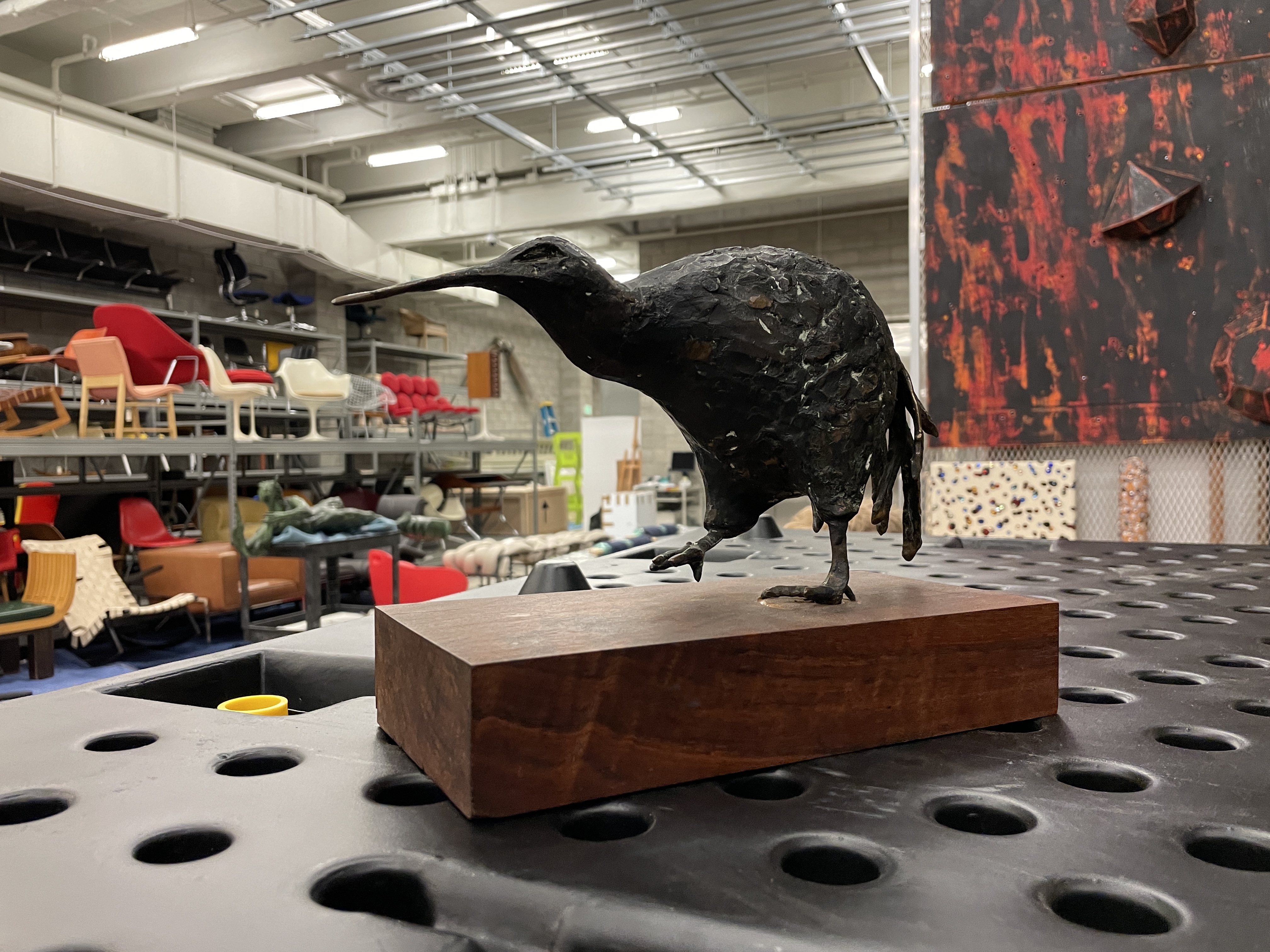
Then, on my first visit to Cranbrook Art Museum I encountered another wee kiwi: a small bronze sculpture by Eleen Auvil, a 1961 graduate of the Academy’s Fiber department. Though dwarfed by the other Cranbrook creatures in the menagerie gallery of With Eyes Opened: Cranbrook Academy of Art Since 1932, Auvil’s tender modeling of the little bird instantly caught my eye.

Eleen Auvil, Bird, c.1960s. Photograph by Kevin Adkisson, September 2021.

As the Institute and the Museum both have their own kiwis, it is exciting that now the Center has one too!

I have enjoyed my first few weeks exploring, living, and working at Cranbrook. Even though this is my first time living in the Midwest, the connections between Cranbrook and my past homes—Bryn Mawr and New Zealand—have made me feel so welcome here. I look forward to making many more discoveries and to sharing them with you on the Cranbrook Kitchen Sink blog in the near future.

—Nina Blomfield, The Decorative Arts Trust Marie Zimmermann Collections Fellow for the Cranbrook Center for Collections and Research, 2021-2023

Welcoming Our Two Archives Assistants!

Prior to volunteering at Cranbrook Archives, I had been studying history and had become aware of the importance of primary sources for historiography, and the value of preserving heritage for the wider community. I began volunteering in 2012 which helped me decide to pursue a career in archives, and I began studying for the MA Archive Administration with Aberystwyth University in Wales (distance learning) in 2013. As part of a university assignment, I processed the HUB (Horizons-Upward Bound) Records, and am currently researching George Gough Booth’s interest in tapestries, which he purchased and commissioned for Cranbrook institutions and family members. I am interested in Booth’s involvement in the Arts and Crafts Movement, and the way in which the movement used medieval themes and techniques as a response to the social experience of the time. The Edgewater Looms, Herter Looms, and Morris & Co. tapestries are an ideal focus for exploring these ideas. I am looking forward to learning more about scanning/digitisation/digital preservation/cataloguing. The university modules emphasize access as the flip-side of preservation. I tend to have the latter foremost in my mind, so it will be great to see how the archive is used.

Laura MacNewman, Archives Assistant

Correspondence, George Gough Booth Papers, box 16, folder 11.

Correspondence, George Gough Booth Papers, box 16, folder 11.

As a graduate student mid-way through the Library and Information Science master’s program at Wayne State University, I’ve been given a healthy dose of libraries, archives, and the world of information over the past year. My interest in archives administration began while I was volunteering at the Cranbrook Archives last fall (2014). Here, I was introduced to the process of digitizing manuscripts, taking inventory of donated artist materials, and sifting through photographic negatives for future digital preservation and storage. I’ve also been working on the Cranbrook Archives’ Oral History Project. Much of my work at Cranbrook corresponds to my studies at Wayne State. In fact, this past week Head Archivist Leslie Edwards spoke about Cranbrook Archives’ oral history project in my oral histories course. As a new employee, I am keen to expand the number of digital images available online, help preserve the negative photograph collection, and understand what it really means to be an archivist.

Danae Dracht, Archives Assistant

From left: Carleton McClain, Henry S. Booth and Margaret Russell interviewing former Cranbrook School Headmaster, Harry Hoey at his home, 1964.

From left: Carleton McClain, Henry S. Booth and Margaret Russell interviewing former Cranbrook School Headmaster, Harry Hoey at his home, 1964.

Both Laura and Danae are working for us as part-time Archives Assistants, an entry-level archival position for graduate students. They will be working on a variety of projects during the coming year while gaining experience to propel them in their careers. Look for future blog posts from them in the upcoming months!

Create a website or blog at WordPress.com