Modern Living

Yesterday I had the pleasure of attending the Michigan Historic Preservation Network’s annual conference in Midland where in each session, I heard references to Cranbrook-related art, architecture and/or design. Naturally, I had to investigate some of these referrals when I got in to the office today! (Curiosity killed the archivist.) One of the sessions I went to, Ideal/Idea Houses: Modern Living in the 1950s sparked my interest since all of the homes were built in the metro-Detroit area and many of them are still standing today.

What exactly was an Ideal/Idea House? In late 1940, the Walker Art Center in Minneapolis planned to exhibit a fully functional, completely furnished exhibition house called the Idea House in conjunction with an exhibition entitled “American Living.” The house was intended to showcase new ideas about home architecture and design. The exhibition opened in June 1941.

Fast forward to 1950 when the Builders Association of Detroit took this idea and turned it into an annual competition – first for practicing architects and by 1953, for Michigan architecture students. Originally called the Ideal Home, in 1956, the Builders Association changed the name to Idea Home. This was the same year that the winning entry of Academy of Art architecture student, George Zonars, was built and featured in the Detroit Builders Home Show held at the Michigan State fairground from February to April, 1956. Zonars turned over his preliminary drawings to the architectural firm of Palmquist & Wright, who prepared detailed working plans and specifications, and supervised the construction of the home.

Zonar's rendering of the 1956 Idea Home

Zonars’ rendering of the 1956 Idea Home. Royal Oak Daily Tribune.

Zonars’ Idea Home, like the ones that preceded his, was one of the earliest ranch-style homes in the area and accentuated modern outdoor living by featuring walls of glass windows and outdoor terraces. The exterior featured copper flashing and gutters, pierced brick screen walls, and a wide roof overhang. The interior was completely air-conditioned, had a built-in fire alarm system, and featured an “electronic precipitator” which filtered dust, pollen, bacteria, and germs from the air.

Exterior view of Idea Home

Exterior view of the large glass panel windows and the overhanging roof. Detroti Free Press.

Informality was stressed in the open floor plan of the interior which was decorated by Bette Wilson, assistant home furnishings coordinator for J. L. Hudson. The living room featured a mahogany plywood wall (stained with a walnut finish) and a copper fireplace and hearth. The color scheme was “soothing” with beige walls and carpet, accentuated by furniture in beige, green, rust and copper while accent cushions added splashes of bright turquoise and copper. The master bathroom featured wallpaper from Frank Lloyd Wright’s “Taliesin” line.

Snack Bar

The “snack bar” served as a room divider. The vinyl floor was turquoise with accent tiles in white and avocado. Detroit News.

The concept behind the Idea Home was to provide construction ideas and the use of new materials for builders, ideas for architects when designing future projects, and ideas for the “housewife” to decorate her current home. And perhaps the best part? Visitors to the home show could win the home by guessing the number of nails inside a large plastic model of the house! No idea who eventually won, but the house still exists at 29060 Lone Elm Lane in Southfield. I know what I’m doing this week-end. . .

Leslie S. Edwards, Head Archivist
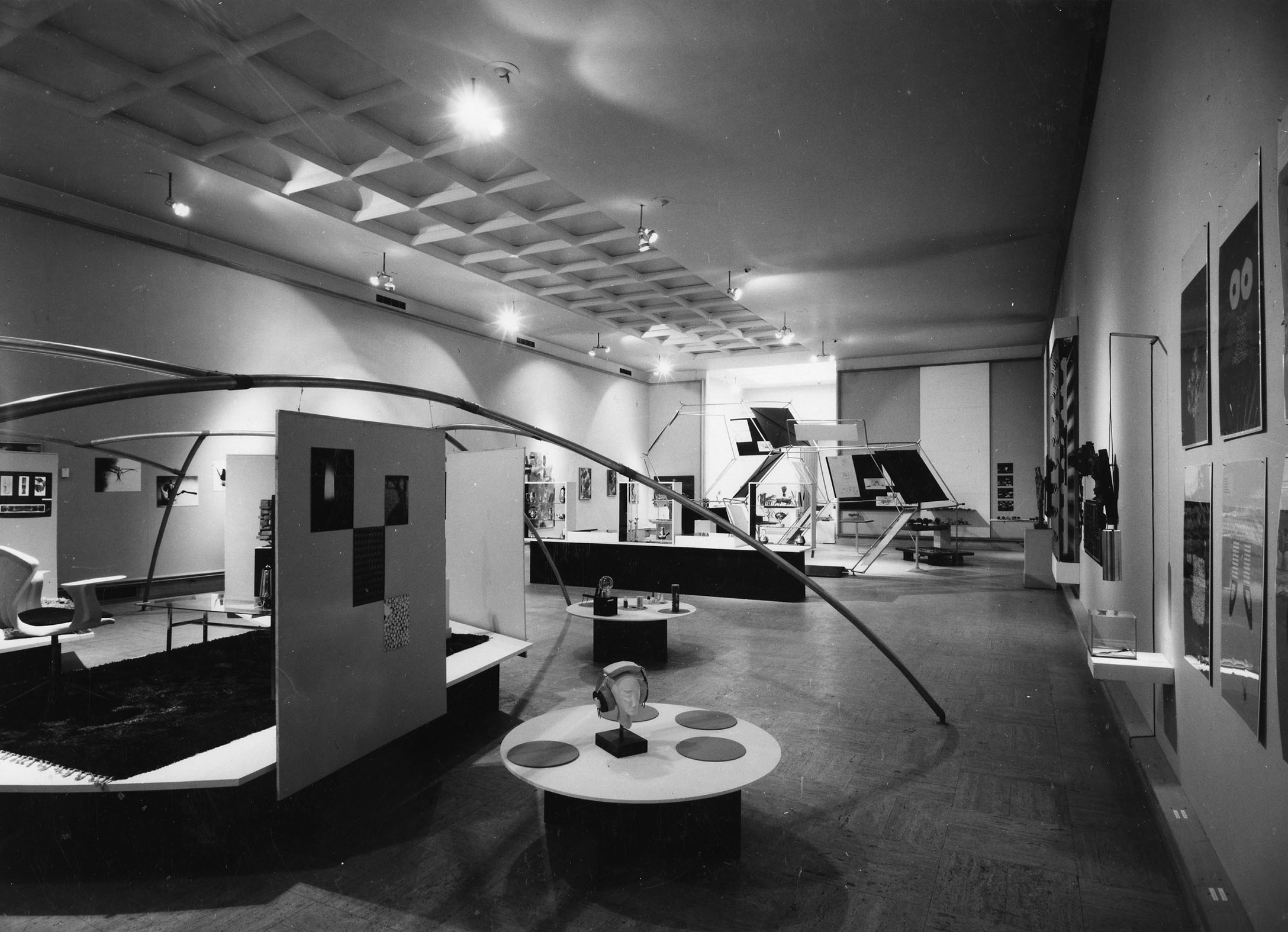
Photo Friday: Academy of Art Graduation Day

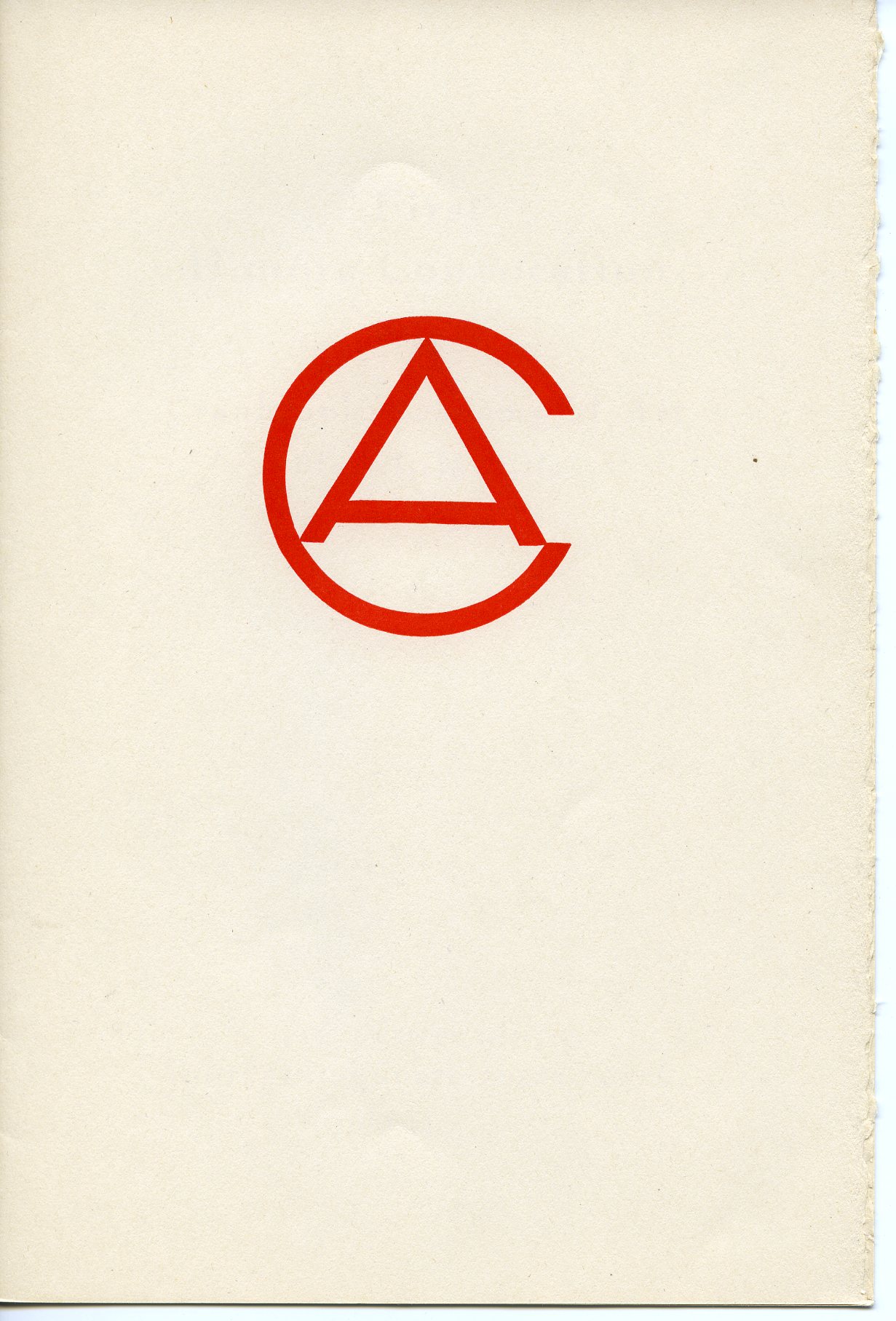
Congratulations to the Cranbrook Academy of Art (CAA) students who graduate today! In honor of today’s festivities we are posting a photo of the cover of the program for the first Honors Convocation (29 May 1943). Although the Academy had been educating students for ten years, it was not until 1942 that it became independent and chartered by the State of Michigan as an institution of higher learning with power to grant degrees. The class of ’43 was the first class to receive an accredited degree. Henry Scripps Booth presented the candidates and degrees were conferred by Eliel Saarinen.

CAA Honors Convocation, 1943

Cranbrook Academy of Art Honors Convocation, 29 May 1943. Courtesy Cranbrook Archives.

Gina Tecos, Archivist

Frank Lloyd Wright & Cranbrook

With the strong lineage of Modern masters here at Cranbrook, it is no surprise that Frank Lloyd Wright has some relationship to the campus and its history. As a renowned architect, Wright had many projects all over Michigan from Kalamazoo, Okemos, Benton Harbor, Ann Arbor, Detroit, and Bloomfield Hills. Many of these homes came out of his “Usonian Architecture.”

FLW ext rear daylight-dc2

Photograph by James Haefner ©

The term Usonian means “of the United States,” and was used by Wright to emphasize his architecture as uniquely American, specifically the American Midwest.  The Usonian style was Wright’s solution to the rise of suburbia where people moved outside of cities. This was his solution to what he deemed “the small house problem,” a direct response to post war needs and the growing necessity of affordable and comfortable homes.

FLW ext front dusk-dc2

Photograph by James Haefner ©

Partnering with The Towbes Foundation, Cranbrook Center for Collections and Research will be providing tours of one of Wright’s Usonian homes in Bloomfield Hills, the Melvin Maxwell and Sara Stein Smith House. Known as “My Haven” by the owners, Wright called the house, “my little gem.” Designed in 1946 and completed in 1950 the home is a great example in Wright’s oeuvre of a Usonian home.

Another of Wrights’ Usonian homes within Bloomfield Hills can also be connected to Cranbrook.   Commissioned by Gregor S. Affleck, a chemical engineer who invented an automotive fast-drying paint, the Affleck House was completed in 1941. Affleck’s son, Gregor Porter Affleck, attended Cranbrook Academy of Art and studied Architecture with Eliel Saarinen from 1944-1945. In 1978, the Affleck children donated the house to Lawrence Technological University.

FLW073

Courtesy Cranbrook Archives, Cranbrook Foundation Records.

Saarinen and Wright were colleagues who supported each other in the field of Architecture, at least as much as two established architects with considerable egos could get along. Wright visited Cranbrook at least three times, for lectures in 1935, 1936 and 1937. All were sold out to standing room only.

The Melvin Maxwell and Sara Stein Smith House will be open for tours May – October on one Friday and one Sunday of each month. For more information on the tours, please visit our website.

Stefanie Dlugosz-Acton,  Collections Fellow, Center for Collections and Research

Photo Friday: Cranbrook Academy of Art Graduate Degree Show

Anne Morrow Lindbergh: The Cranbrook Connection

The Archives has in its collection photographs of a sculpture modeled by Anne Morrow Lindbergh. How did Lindbergh come to study at Cranbrook? In April 1942, Charles Lindbergh, at the invitation of Henry Ford, came to metro-Detroit as a technical consultant to assist with retrofitting the Willow Run plant from auto manufacturing to bomber production. In July, the Lindberghs moved to Bloomfield Hills and signed a one-year lease for a furnished home then owned by Kathleen Belknap. Originally known as “Stonelea,” the home, designed by Albert Kahn in 1923, is located at the corner of Cranbrook Road and Woodward Avenue and is now known as Lyon House. The Lindberghs were quickly welcomed to the neighborhood by Carolyn Farr Booth (wife of Henry Scripps Booth). During the summer of 1943, Anne enrolled at the Cranbrook Academy of Art where she studied modeling and sculpture with sculptor Janet DeCoux, and art history with Ernst Scheyer. Since Charles was away much of the time, Anne asked Janet and her partner, Eliza Miller, to move in with her to help raise her four children. Thus began a friendship among the three women that lasted until the end of Mrs. Lindbergh’s life. (Approximately fifty letters, 1944-1952, from Anne Morrow Lindbergh to DeCoux can be found in the Janet De Coux Papers at the Smithsonian’s Archives of American Art.)

Anne Morrow Lindbergh

Anne Morrow Lindbergh, 1943. Cranbrook Archives.

At the Academy, Anne was treated not as the wife of a celebrity or even as a grieving mother, but as any other student. In her diaries (published in “War Within and Without”) Anne wrote of the freedom she experienced at Cranbrook “where people take me on faith.” Work in the studio, exhibitions at the Art Museum, and parties with music and conversation about art, books, and writing allowed Anne the freedom to “give my true self as I have never done in a group of people before.” She developed social courage and friendships with Janet and Eliza, Carl and Olga Milles, Ernst Scheyer, and neighbors like Kate Thompson Bromley. Her work as a sculptor taught her to see the world through a different lens – she learned how to sketch the human figure and transpose her ideas into her sculpture and it both surprised and excited her that she could actually see beauty in a sculpture, especially one made of her own hands. She was inspired by the natural beauty of Cranbrook, cross-country skiing on the grounds, and writing in her brown trailer in the woods. (Anne wrote her novella “The Steep Ascent” while at Cranbrook.) She relished the time with her children, and often walked them down the hill to Brookside School. Dinners with the Saarinens were exhilarating where they talked of “cities of the future.”

AnneLindbergh021

Anne Morrow Lindbergh picnicking at the Greek Theatre at Cranbrook, Jun 1944. Copyright The Detroit News.

In August 1943, Kathleen Belknap decided to sell the home, then known as Belwood, and the Lindberghs moved into a home at 411 Goodhue Road, behind Christ Church Cranbrook, for the next year. The two years spent at Cranbrook forever changed Anne spiritually. She discovered self-confidence, and that people liked her for who she was. After the Lindberghs returned to the east coast in 1944, Anne missed her Cranbrook friends and the life she had discovered here and wrote that she felt “only half alive since I left Cranbrook.” The Lindbergh family continued to return to the Detroit area to visit Charles’ mother Evangeline at her Grosse Pointe residence until she passed away in 1954. In January 1974, at the request of the Class of 1974, Kingswood School headmaster Wilfred Hemmer invited Anne to be the school’s forty-fourth commencement speaker.

Leslie S. Edwards, Head Archivist

Remembering Svea Kline: Artist and Teacher

As we continue to celebrate the women of Cranbrook during Women’s History Month, our Friday post is dedicated to sculptor and teacher, Svea Kline (1902-1989). Born in Karlskrona, Sweden, Kline came to Chicago in 1928 with her twin sister. Following her mother’s advice to find a “practical profession,” Kline studied physiotherapy at Northwestern University for two years and practiced with a physician. She also took art classes at the Art Institute of Chicago during this time.

In 1940, Kline came to Cranbrook Academy of Art to attend the summer session, which she also did the following year. In 1942 she received a scholarship award that provided her residence at the Academy during the academic year during which she won first prize in a student competition. From 1942-46 she studied sculpture with Carl Milles and ceramics with Maija Grotell. She became a lifelong friend of Milles, and often lectured about the sculptor and his work.

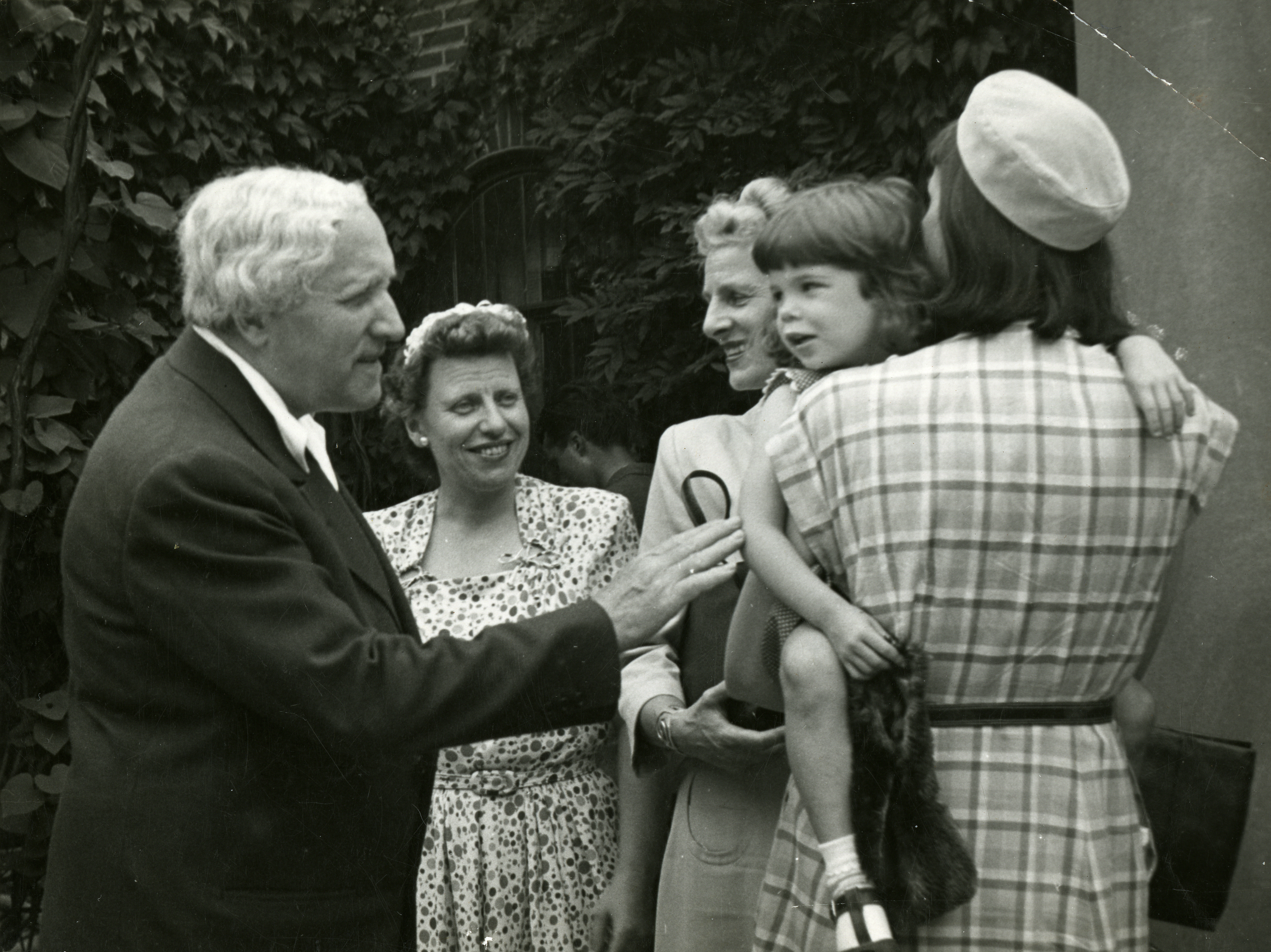
1990-21190

Carl Milles, Svea Kline, Mabel Deardon, and Mary Woolf (holding Dinah Mitchell) in Millesgarden, ca 1944. Cranbrook Archives.

In 1943, Kline started the Sculpture Department at the Flint Institute of Arts, and began teaching there part-time. From 1950 she taught there full-time and also at the Saginaw Museum of Art. Kline also taught at what was then the Bloomfield Art Association and Haystack School for the Arts in Maine, worked as Milles’ assistant from 1949-50, and was one of the founders of the Sculptors Guild of Michigan. Founded in 1952 as the Terra Cotta Sculptors, the group “provided an umbrella for women to prove their validity as artists to the community and to provide support and inspiration to each other.” (Men were invited to join in 1977.)

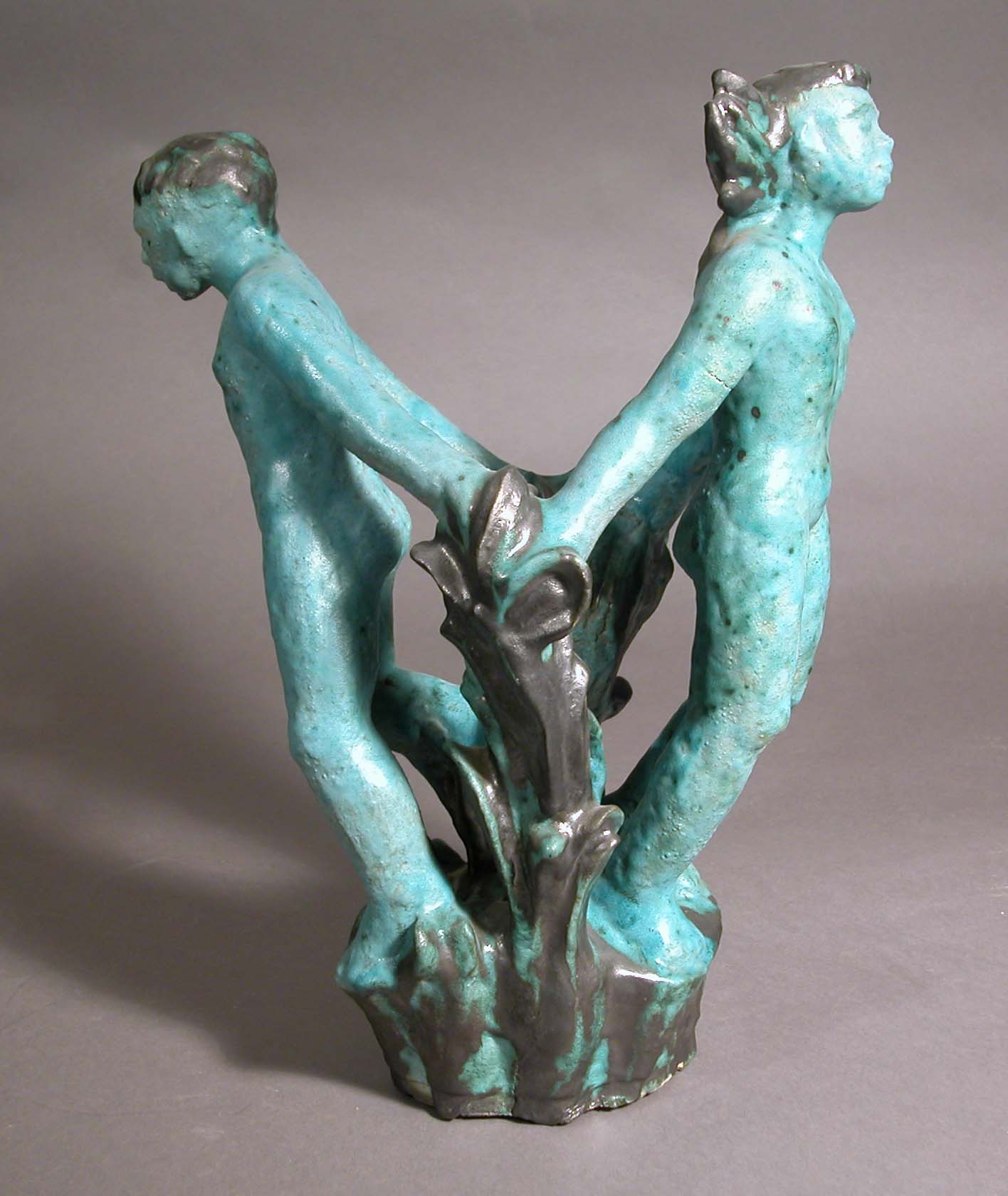
S1944_35

Fountain Piece, 1944. Cranbrook Art Museum.

As a sculptor, Kline worked in metal, bronze, wood, ceramic and glass. Her innovative work with glass was considered “ahead of her time.” She molded glass, fused glass, painted on glass, and embedded pieces of colored glass into a background layer of glass—a process she called “gemaux.” In Michigan her works are displayed at the Berkley Public Library, Flint Public Library, Genesee Merchants Bank and Trust, Detroit Broach Company, Koebel Diamond Tool Company, Michigan Credit Union League, and the First Baptist Church of Royal Oak.

In a December 1983 interview in the Birmingham Eccentric, Kline fondly remembered her days at Cranbrook. “I thought it was just heaven on earth—so well-kept, so many interesting people from all over the world. There was a marvelous spirit.” She also recalled with pleasure the great artists with whom she was associated—Eliel Saarinen, Carl Milles, Maija Grotell, and Harry Bertoia. Coincidentally, we have an image (displayed below) of Kline wearing a brooch designed by Harry Bertoia. In honor of the Cranbrook Art Museum’s exhibition of Harry Bertoia’s jewelry (which opens tonight), we are featuring a photograph of Kline wearing a Bertoia brooch.

AA-87

Svea Kline, Marguerite Kimball, Lillian Holm, and Joy Griffin West at the opening night of the student exhibition, May 1944. Cranbrook Archives.

Gina Tecos, Archivist

Confessions of a Book Nerd

I have a confession to make. The smell of library books, an afternoon at an independent book store, re-reading a favorite novel – these are my ultimate indulgences. I could spend hours reading book blogs, listening to author interviews, or pouring over book-related tchotchkes on Etsy. I am a book nerd. My (nearly) one year as an Archivist at Cranbrook has been heaven. I discover something new every time I have the opportunity to walk into George Booth’s personal library at Cranbrook House. I find profound satisfaction in creating a catalog record for a new book or discussing MARC records with colleagues.

One of my favorite collections at Cranbrook is the Cranbrook Press and Photo Department Records. While working on a Cranbrook Press request recently, I came across the work of the bookbinder, Jean Eschmann (1896-1961), hired by George Booth in 1929. Eschmann was hired to set up the bookbinding workshop in the Arts and Crafts Studios at Cranbrook, where he remained until 1933 when desperate financial times forced the closure of the studio.

Jean Eschmann binding, Cranbrook Archives

English Fairy Tales, tooled leather. ca 1931. Cranbrook Archives.

Educated in Zurich, Eschmann traveled and studied in Austria, France and Switzerland. He came to the United States with his family in 1919. He was a member of the Society of Arts and Crafts in Boston and studied with Mary C. Sears. In 1929 George Booth hired Eschmann to create handmade bindings for the Art library and for his own personal library. Eschmann also taught bookbinding and hand-tooling classes to the community.

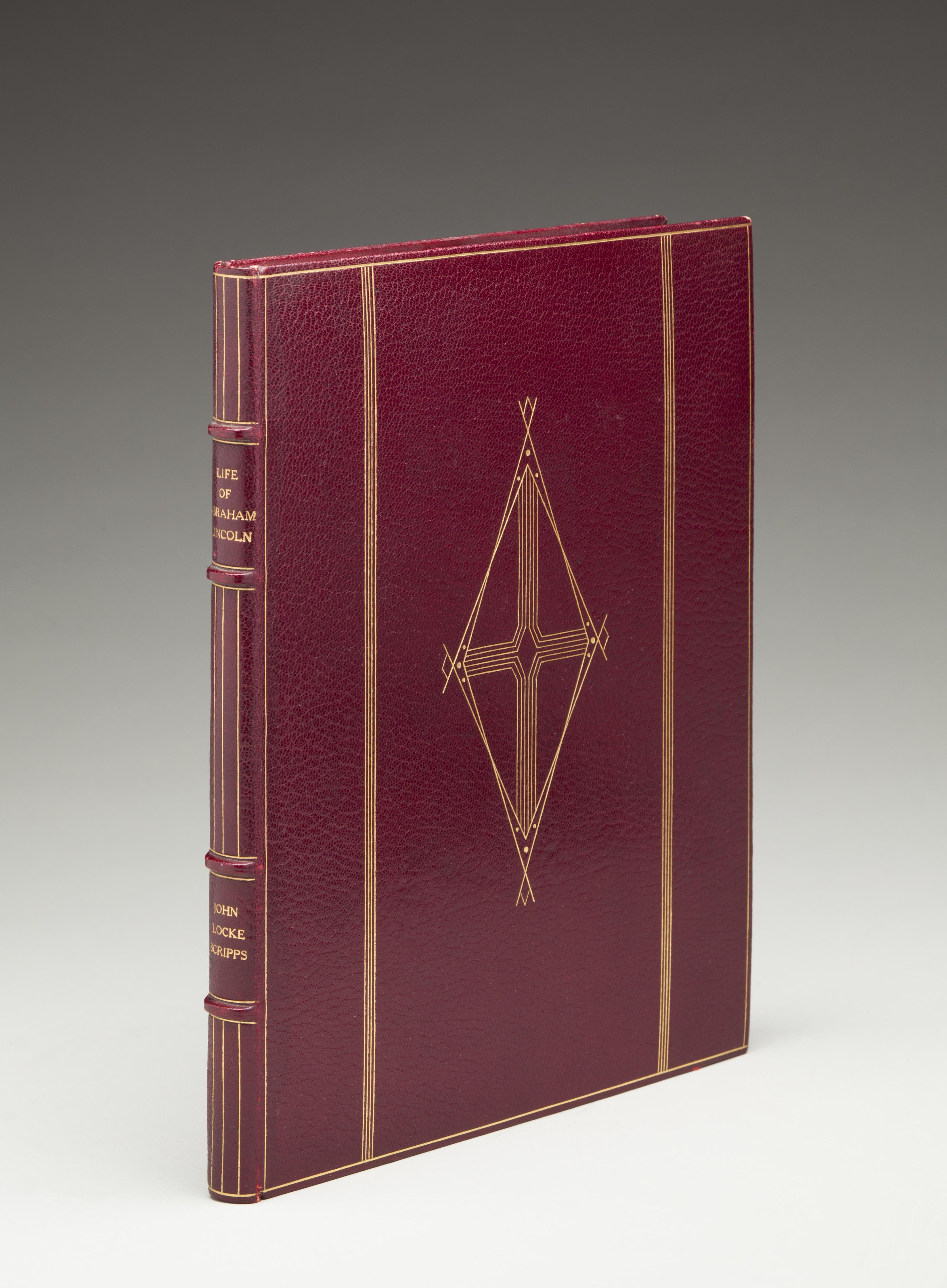
211044-145

The First Published Life of Abraham Lincoln, tooled leather. ca 1931. Cranbrook Archives.

Eschmann’s work has been exhibited at various museums in the United States, as well as at the Book Workers Guild in New York. His bindings were included at the World Fair in Paris in 1937 and at the Golden Gate Exposition in San Francisco in 1939. In 1945 Eschmann received the emblem for Meritorious Service from the Civilian Awards Committee of the Surgeon General’s Office for his work in restoring thousands of rare books at the Army Medical Library during World War II.

Evidence of Eschmann’s beautiful leather and tooling work can be seen in several examples in the rare book collections here in the Archives, and also in the Academy of Art library. I hope you enjoy the examples in this post. They definitely make this book nerd swoon!

Gina Tecos, Archivist

Photo Friday: The Art of Richard Thomas

While researching an archival query this past week I discovered yet more hidden gems in our collection—the work of metalsmith Richard Thomas (1917-1988). Thomas held several positions at Cranbrook, including Head of the Metalsmithing Department, Dean of Students, Registrar, and Administrative Assistant to the President. The Archives has a small collection which documents many of Thomas’ private commissions.

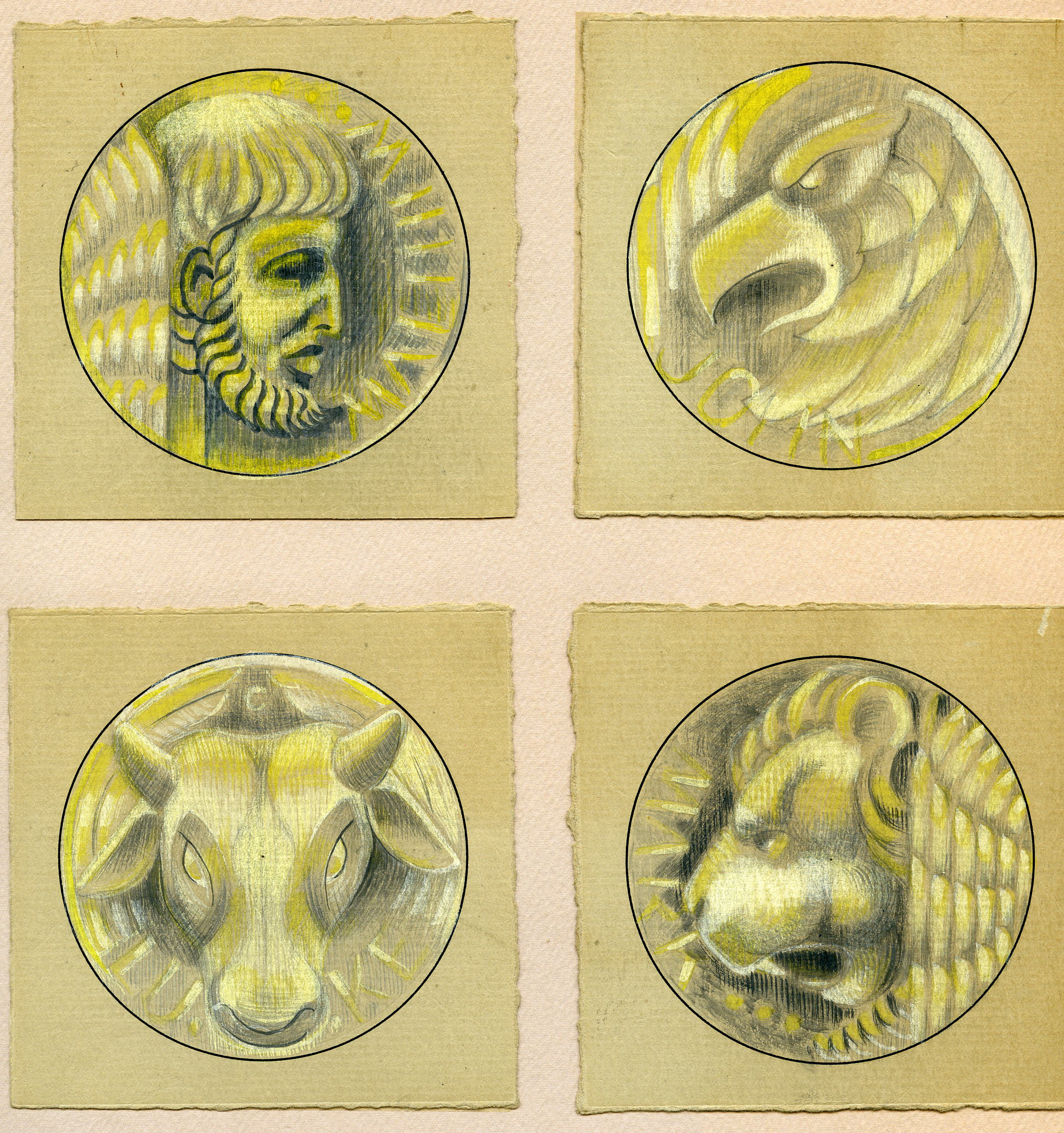
One of the key works he created for Cranbrook was the Ceremonial Mace (1978) at the request of the Cranbrook Educational Community. Traditionally, the Christian processional cross had been carried at Cranbrook and Kingswood Upper School graduation ceremonies, but by the 1970s, upper school students objected to the fact that the cross did not accurately reflect the religious beliefs of the diverse student body. In 1973 and 1974, Kingswood head, Wilfred Hemmer, moved the cross from the front of the processional to the rear, then in 1975 agreed to remove it from the ceremony altogether.

Cranbrook Mace

Photo courtesy Cranbrook Art Museum.

After Hemmer’s resignation in early 1976, acting head Christopher Corkery reinstated the processional cross and a student protest ensued. Letters to the editor were written to both upper school newspapers and four Kingswood seniors refused to attend the Kingswood commencement. By May, ten percent of the student body threatened to boycott the ceremony.

Thomas’ design of the Cranbrook Mace incorporates symbols of four major religions: the Christian cross, the Star of David, the Crescent of Islam, and the symbol of Yin and Yang which represents the Eastern philosophies of China, Japan, India and Indonesia. The seals of the Cranbrook institutions are also a part of the design of the mace, which is made of rosewood, ivory, steel, sterling silver and gold.  The Cranbrook Mace is still used in graduation ceremonies to this day.

Richard Thomas sketch

Sketch from the Richard Thomas Papers, Cranbrook Archives.

In 1981, Thomas was awarded the Cranbrook’s Founders Medal. His design and fabrication of liturgical objects can be seen in more than ninety churches, synagogues, and temples across the country. He designed the Cranbrook Foundation’s silver punch bowl, the Saarinen Medal, and the commemorative medal for the Academy of Art’s fiftieth anniversary.

Gina Tecos, Archivist and Leslie S. Edwards, Head Archivist

Christmas card, 1941. Benjamin Baldwin Papers (2006-02), Courtesy Cranbrook Archives

2006-02

Wedding photo, 1941. Benjamin Baldwin Papers (2006-02), Courtesy Cranbrook Archives

Today we are celebrating Ray Eames’ birthday a few days early. In honor of her birthday, which is December 15th, we selected a few photos from our collections. Ray Kaiser studied weaving and design at Cranbrook Academy of Art in the fall of 1940, where she met her future husband, Charles Eames.

Stefanie Kae Dlugosz, Collections Fellow  & Gina Tecos, Archivist, Center for Collections and Research

Form Follows Emotion

View-Master 3D Viewer by Design Logic

View-Master 3D Viewer by Design Logic

This is one of the more successful products created by Design Logic, a product design company whose records I’m currently processing. This View-Master 3D Viewer was a new take on an old, familiar product, and reflected the company’s philosophy that every product has both a technical and emotional element. This new version, created in 1985, featured “push-button technology,” and larger image magnification to make it more technologically competitive with other toys of the era, while maintaining the overall look of its predecessor. Time magazine named it one of the best designs of the year.

Design Logic was founded in 1985 by Cranbrook Art Academy graduate David Gresham, and Martin Thayer, a Royal College of Art graduate; the two worked together at ITT Corporation. Operating out of Chicago, the mission of the company was to “create designs that are functional, beautiful, profitable and based on a distinctively American perspective.” The company is no longer in business.

Once the processing of the Design Logic records is complete, a finding aid will be posted on our web site and more images of their creative, unusual products will be in our digital database, so keep an eye out!

– Cheri Gay, Archivist

Create a website or blog at WordPress.com