Naturalist & Photographer Walter E. Hastings

Often times in collections we discover materials that are unexpected, rare, or just plain fabulous.  The following images are all of the above.  Several years ago, when processing a set of negatives from the Institute of Science, I was pleasantly surprised to discover a set of photographic images of Native Americans, primarily Odawa/Ottawa from Leelanau County in northern Michigan.  They were taken by Walter E. Hastings (1887-1965) between 1928-1933.  Hastings was a naturalist, photographer, and lecturer, and was Michigan’s first conservation film-maker.

Capture

From “He Knows All About Michigan’s Birds,” Detroit Free Press, 12 March 1922

Hastings’s interest in nature began as a child when his mother put together a collection of stones, shells, and Native American artifacts for him with the hope that he might become a naturalist. Clearly, it worked!  His interest in photography began in 1918 when he received an inexpensive camera for Christmas from his boy scout troop. From 1921-1932, Hastings worked for the University of Michigan Museum as the “Custodian of Birds’ Eggs.”  In that capacity, he served as a collections manager, enlarging and arranging the collection, and took numerous photographs which documented the nesting habits of Michigan birds.  Employed as the photographer for the Michigan Department of Conservation from 1926-1951, Hastings was a pioneer of wildlife and conservation photography.

CISC3261

Johnny Willow Bird, age 3 yrs.  Taken at St. Ignace, Michigan, Oct 1933.  Courtesy Cranbrook Archives.


CISC0078

Native American Campsite, Horton’s Bay, Michigan, Jul 1933.  Courtesy Cranbrook Archives.


The Institute of Science has several Odawa/Ottawa and Chippewa objects, collected and donated by Hastings, from the same geographical region where the photographs were taken. It is likely that the photographs were donated to the Institute of Science along with the artifacts. The Institute of Science photograph collection was later transferred to Cranbrook Archives. The Walter E. Hastings collection is located at the Archives of Michigan (MS 88-27).

~ Leslie S. Edwards, Head Archivist
A Love for Teaching: Cranbrook’s “Bird Man”

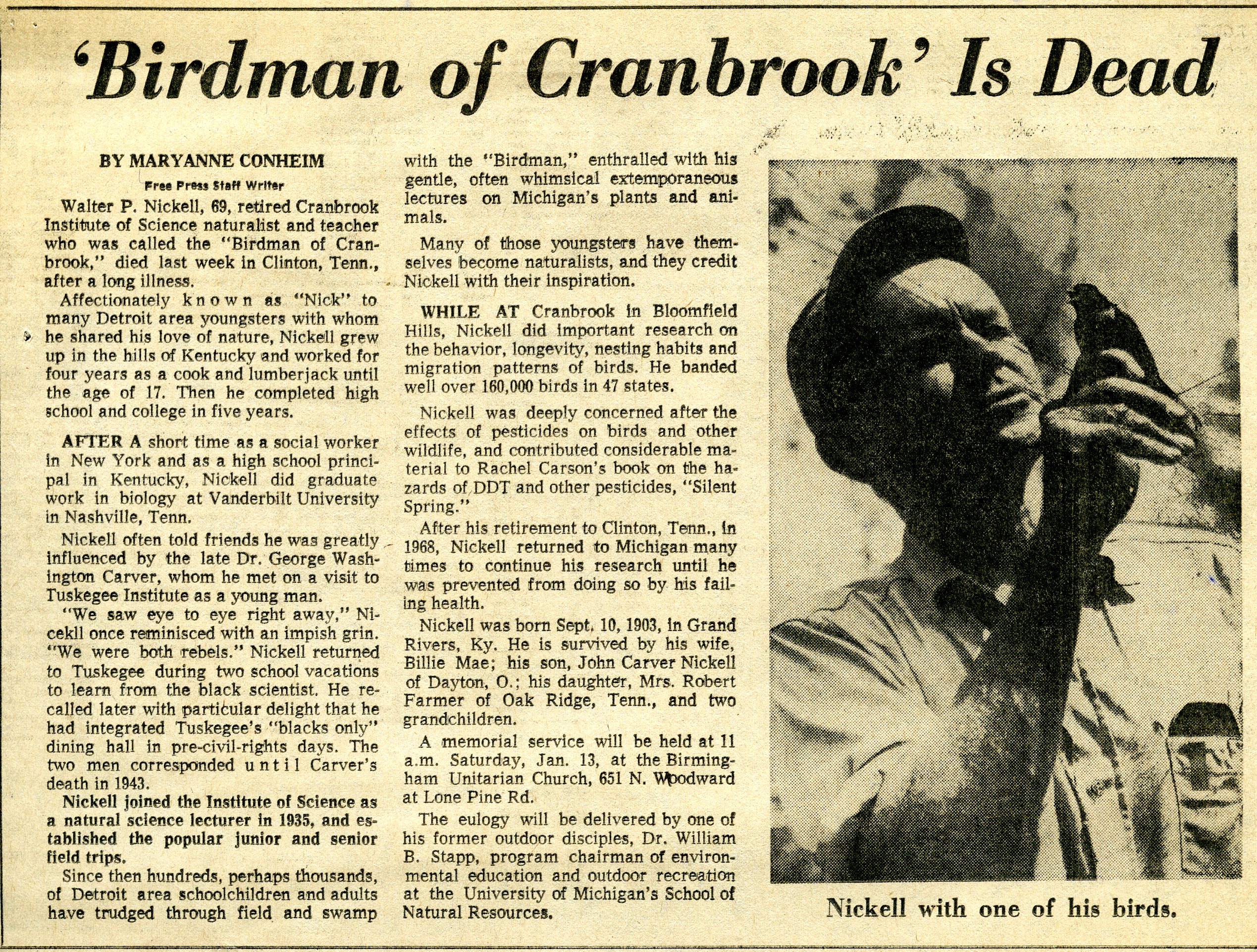
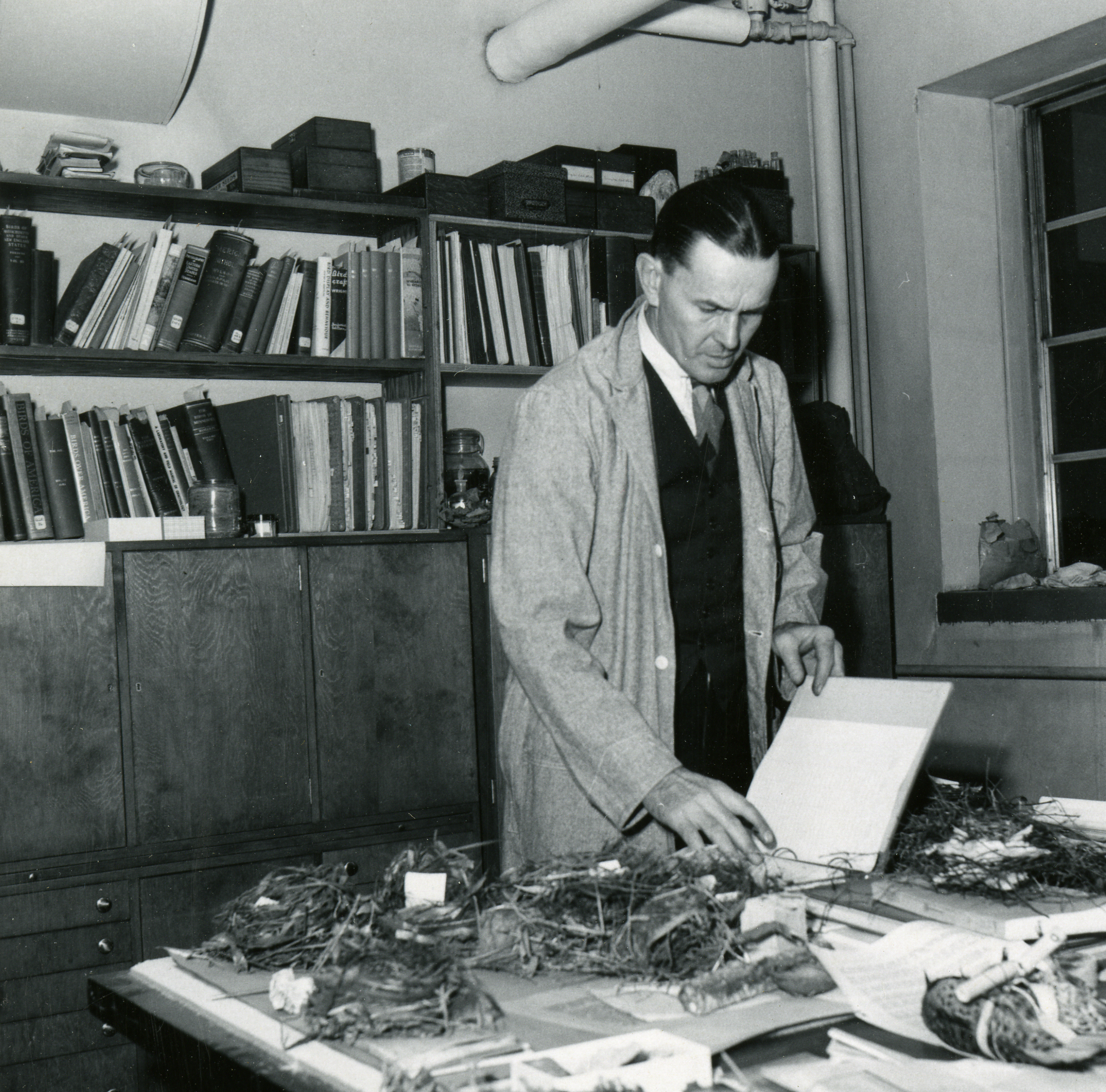
On a cold January day, it’s nice to think about the grandeur of Spring – warmer days, flowers blooming, and birds chirping. There are several places in the Archives we could look for signs of Spring, but today we remember Cranbrook Institute of Science (CIS) naturalist and ornithologist, Walter P. Nickell (1903-1973).

Born in 1903, Nickell worked at CIS for 33 years. During this time he banded over 160,000 birds in the contiguous United States, Mexico, Canada, and British Honduras. He also recorded notes on more than 50,000 nests – primarily in Michigan. In 1964 Central Michigan University awarded Nickell an honorary Doctor of Laws degree and in 1968 Nickell was awarded Cranbrook’s Founders Medal.

Bird Nest Studies, 1951

Bird Nest Studies, 1951.

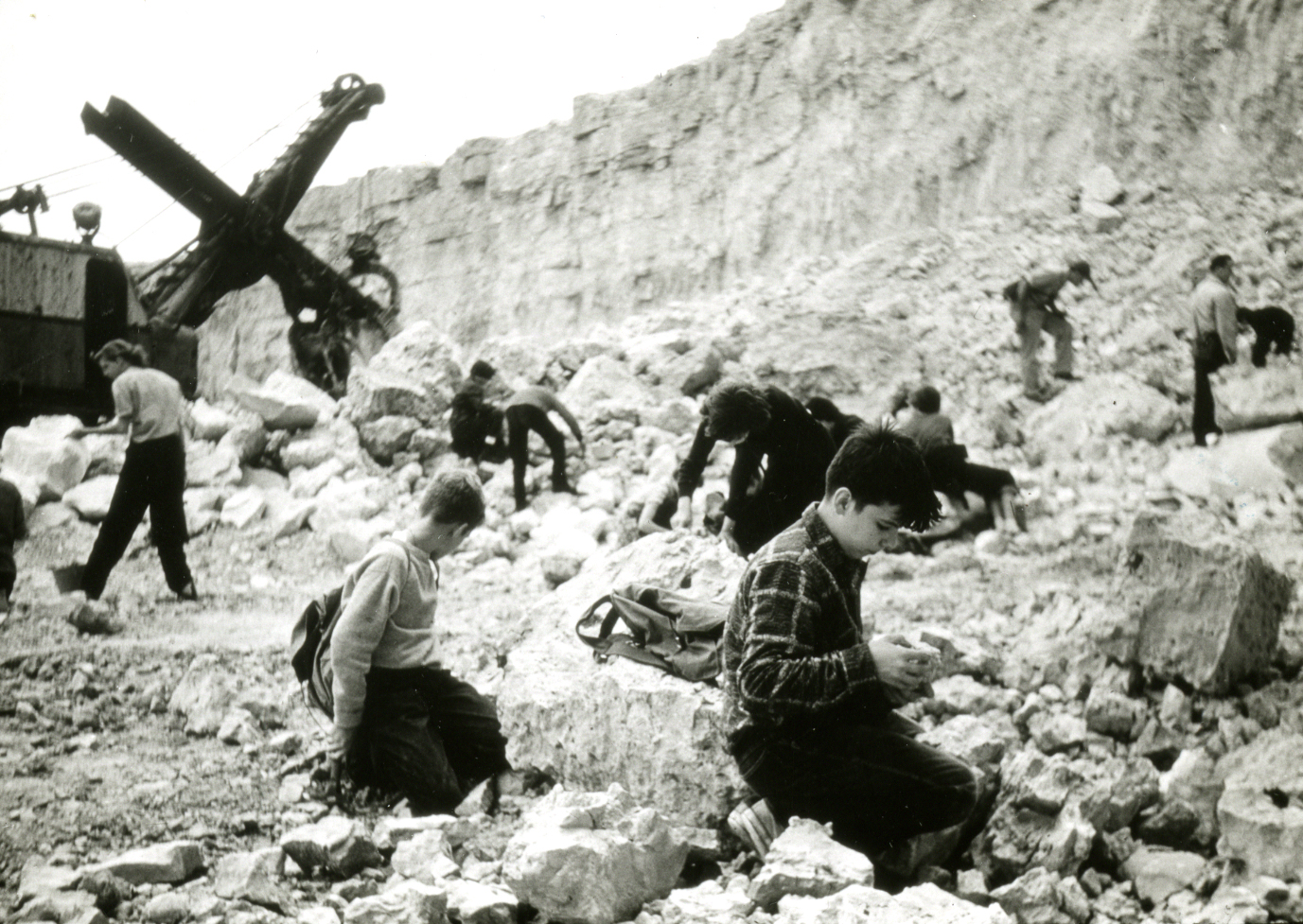
In addition to developing numerous exhibitions at CIS and publishing more than 130 scientific articles, Nickell is well-known for his enthusiasm for teaching. During his tenure at CIS he lectured on natural science at local schools and colleges, including the University of Michigan. He also led junior and adult groups on numerous natural science expeditions.

Student fossil exhibition

Students on a fossil exhibition, 1956.

In a 1959 address delivered by Nickell at the Mid-Winter Science Teachers Institute of the Metropolitan Detroit Science Club, he said: “We must seek ways by which education can be made an adventure, a dramatic procedure, a thrilling experience with most of the elements which have always impelled the discoverers, the explorers, the inventors and the researchers.”

Detroit Free Press, 13 Jan 1973

Detroit Free Press, 13 Jan 1973.

Gina Tecos, Archivist

Lost and Found in a Sea of Cranbrook History

Ye Triumphe Ship

Ye Triumphe Ship, CEC 1918.1

Every day at the Center for Collections and Research brings new adventures and discoveries. During a visit to one of the storage spaces on Cranbrook’s campus, I stumbled upon a curious object, which inspired me to research it and its past. Like most things around here, the object has a great lineage throughout the campus with connections to George Booth, the Detroit Society of Arts and Crafts, and Cranbrook School.

The Ye Triumphe model ship was crafted by Henry Brundage Culver (1869-1946), and although it is a model, it is a large one: about 40 inches long and 32 inches high. George Gough Booth purchased the Ye Triumphe in September 1918 from the Detroit Society of Arts and Crafts. The model, which was advertised in the Detroit Sunday News, had been on display in the window of the Detroit Society of Arts and Crafts shop during that same year.

Henry Brundage Culver worked as an attorney and also served as secretary for The Ship Model Society in New York. He participated in building ship models, and contributed to scholarship on the art of model-making. He produced several publications including Contemporary Scale Models of Vessels of the Seventeenth Century (1926) and The Book of Old Ships: Something of their Evolution and Romance (1924). In the introduction to Contemporary Scale Models Culver compares the art of ship-model building to that of painting.

The finest examples of these miniature vessels are, in the eyes of those best fitted to judge productions of the highest artistic quality, appealing in general composition, line, mass and technical execution, to the aesthetic susceptibilities of those, who have eyes to see, in a no less degree than do the best examples of pictorial art.”

­—Henry B. Culver, Contemporary Scale Models of Vessels of the Seventeenth Century, New York: Payson and Clarke Ltd.1926, pg.ix.

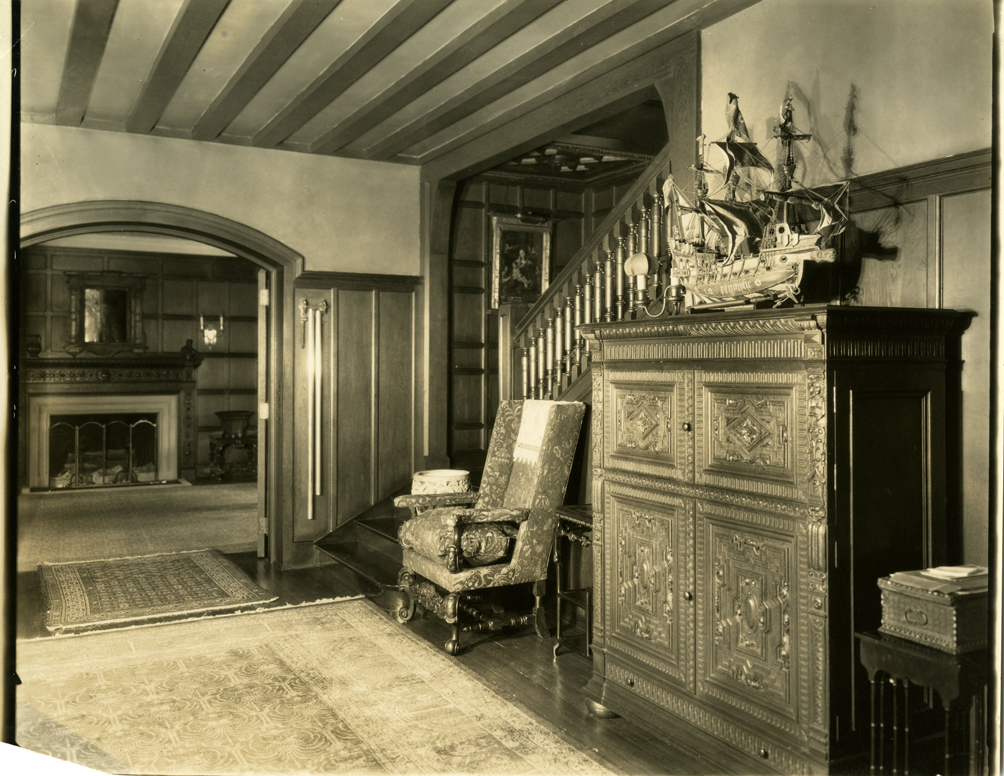
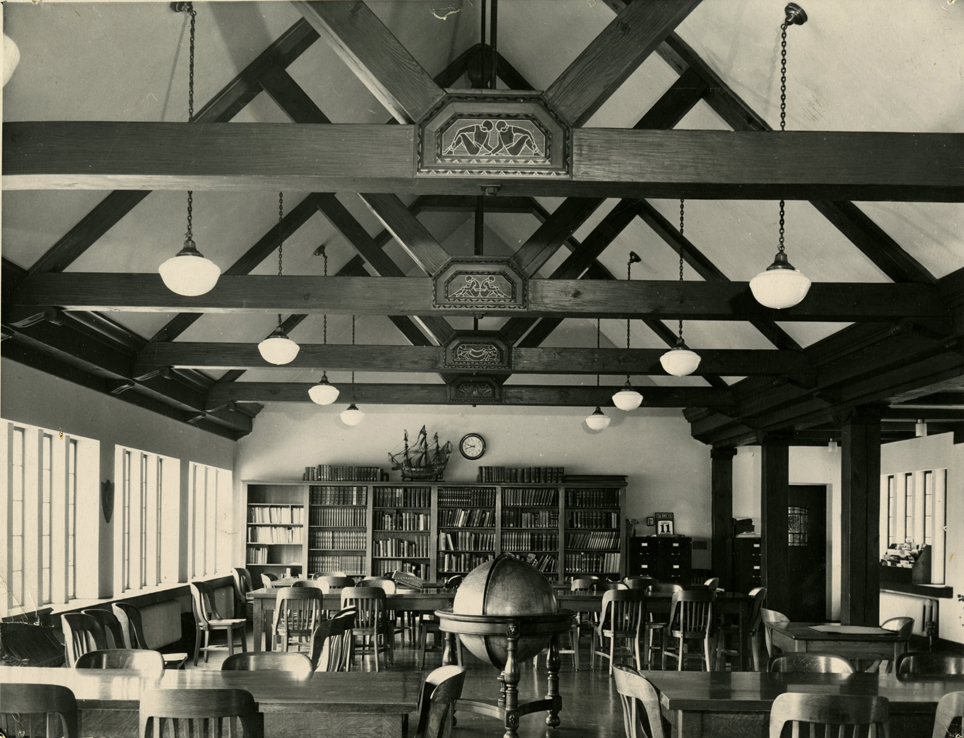
Originally, the ship was placed in the reception hall of Cranbrook House, and was later loaned by Booth for display in the library at Cranbrook School for Boys. Each of the photographs show the ship on display and its presence throughout Cranbrook.

CH_entrance hall_Ship_Blogpost

Cranbrook House reception hall, ca. 1920. Cranbrook Archives

CS_Library_Ship_Blogpost

Cranbrook School for Boys, Library interior, ca. 1945. Cranbrook Archives.

The Ye Triumphe will be returning to view at the Cranbrook Art Museum’s upcoming exhibition The Cranbrook Hall of Wonders: Artworks, Objects, and Natural Curiosities opening November 23rd, 2014. Come and check out the Ye Triumphe and many other fabulous objects from across the Cranbrook campus including works from the Center for Collections and Research, Cranbrook Art Museum, and the Cranbrook Institute of Science!

—Stefanie Kae Dlugosz, Center for Collections and Research, Collections Fellow

Happy Belated Birthday to Our Founder!

September 24th marked the 150th birthday of Cranbrook’s founder, George Gough Booth. Born in Toronto, Mr. Booth had an early interest in art and architecture. In 1881 his family moved to Detroit and he put his artistic talents to work by purchasing half of an interest in an ornamental ironworks firm. The business was successful and used many of Booth’s product designs.

George Gough Booth, ca 1876.  W. E. Lindop, photographer.  Cranbrook Archives

George Gough Booth, ca 1876. W. E. Lindop, photographer. Cranbrook Archives

In 1887 Booth married Ellen Warren Scripps, daughter of Detroit News founder James Scripps. The following year he sold his share in the ironworks business and joined the News staff as its business manager. The News blossomed under Booth’s direction, becoming one of the leading metropolitan dailies in the nation. In 1906, Booth became president of the newspaper, succeeding his father-in-law.

In 1904 George and Ellen Booth purchased a run-down 174 acre farm in Bloomfield Hills and named it Cranbrook after Booth’s ancestral town in England. Booth called upon his long-time friend, and noted Detroit architect, Albert Kahn, to prepare working drawings for the building of Cranbrook House. Kahn responded with an English Arts and Crafts inspired design the Booths moved into their new home in 1908.

In 1922, believing their country estate could serve a larger public purpose, the Booths shifted their focus toward building the six institutions at Cranbrook: Brookside School, Christ Church Cranbrook, Cranbrook School (for boys), Cranbrook Academy of Art, Cranbrook Institute of Science, and Kingswood School (for girls). George Booth was a visionary, and with his wife Ellen, set new standards for generosity, leaving us a legacy we are proud to be a part of. Happy belated birthday George!

“We were unwilling to go through life with our aims centered mainly in the pursuit of wealth and with a devotion wholly to the ordinary opportunities for social satisfaction.  We were not willing to leave all of the more enduring joys for our children or the joy of work in so good a cause entirely to our friends after we had passed on; rather did we wish, in our day, to do what we could and give tangible expression now to our other accomplishments by adventures into a still more enduring phase of life.  We wished to see our dreams come true while we were, to the best of our ability, helping to carry on the work of creation.”  (George Gough Booth, Address at Founders Day, October 28, 1927)

Gina Tecos, Archivist

Photo Friday: Seeing the Unseen

Dr. Harold Edgerton

Dr. Harold E. Edgerton giving a lecture at Cranbrook Institute of Science, Jan 1950. Cranbrook Archives.

A Fellow of the American Academy of Arts and Sciences, who was awarded the National Medal of Science, and won an Oscar  – the subject of today’s Photo Friday has quite the list of accomplishments! Dr. Harold E. Edgerton gave a lecture at Cranbrook Institute of Science in 1950 called “Seeing the Unseen”. Edgerton advanced the development of strobes – using them to freeze objects in motion to capture on film. Utilizing short duration electronic flash, Edgerton developed techniques for photographing athletic events, bullets, and drops and splashes. Many of his photographs were published in Time magazine.  In 1937, one of Edgerton’s milk-drop photographs was included in the first photography exhibition at the Museum of Modern Art.

In 1952, the National Geographic Society invited Edgerton to join Jacques Cousteau on an underwater exploration. Edgerton built underwater cameras and flashes for Cousteau, and also developed sonar technology that enabled him to search for the ancient Greek city of Helike (submerged around 373 B.C.) and locate an H-bomb off the coast of Spain.

Gina Tecos, Archivist


Dinosaurs and Doodles

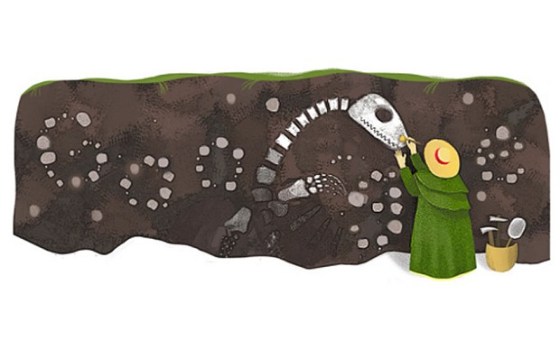
Google Doodle honoring Mary Anning's 215th birthday. Google.com.

Google Doodle honoring Mary Anning’s 215th birthday. Google.com.

If you find yourself on Google’s homepage today, you will likely run into a Google Doodle featuring a little-known 19th century Englishwoman named Mary Anning. Born in 1799, Anning was barred by her gender and social class from access to Britain’s community of leading scientists and palaeontologists, yet nonetheless she slowly became known in scientific circles throughout Europe and the United States. Anning’s discoveries include the first icthyosaur to come to scientific attention in England, as well as a partial skeleton of an unknown marine reptile that would later earn the title of plesiosaurus. The Google Doodle celebrates her 215th birthday and helps to give Anning the credit and attention that she so richly deserves, even centuries after her death.

There aren’t many connections between a 19th century female English palaeontologist and Cranbrook, but the timing of her 215th birthday is an ideal opportunity to mention Cranbrook Institute of Science’s current special exhibition Dinosaurs – The Lost World. Featuring more than fifty full-scale dinosaur skeletons and skeleton casts, Dinosaurs tells a story of prehistoric life that would not have been possible without the contributions of early amateur palaeontologists like Mary Anning. The exhibition closes on June 29, so be sure to visit and get a glimpse into the world that Mary and her colleagues discovered!


Photo Friday: En Plein Air(tarium)*

Students sketch the partially-completed McMath Planetarium at CIS. June, 1955. Harvey Croze/Cranbrook Archives.

Students sketch the partially completed McMath Planetarium at CIS. June, 1955. Harvey Croze/Cranbrook Archives.

As the McMath Planetarium went up at the Cranbrook Institute of Science over the course of the summer of 1955, students took the opportunity to work on their outdoor sketching. Here a young woman captures the newly constructed dome still clad in scaffolding. Note the sign to the left of the planetarium: it reads “Michigan’s First Public Planetarium.”

* “En plein air” is an expression that refers to the practice of painting outdoors – or “in the open air” – which was popularized by Impressionist painters, many of whom made the use of natural light a hallmark of their work. We apologize for the corny “en plein air”/”planetarium” joke, but we just couldn’t resist.

The Transparent Dog Talks

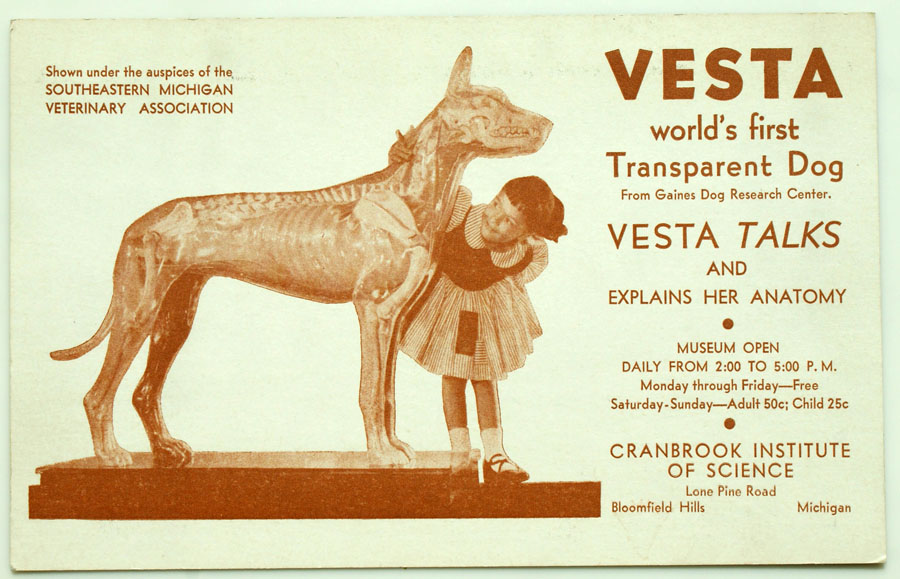
Vesta, the transparent dog

Exhibition Card, Cranbrook Institute of Science Records, 1955. Cranbrook Archives.

While preparing for an exhibition, it is inevitable that we stumble upon cool, unusual objects in our collection. I love the discovery of the unique stories associated with them.  This image announces an Institute of Science exhibition that featured Vesta, the talking dog.  Vesta (named after the Roman goddess and guardian of the home) was a transparent plastic model created in 1954 for the Gaines Dog Research Center by the Deutsches Museum in Germany. Vesta was then flown to Cleveland, where a team of experts installed an intricate sound system which enabled her to tell interesting facts about herself as parts of her anatomy lit up.   She was part of an educational and scientific traveling exhibition to help dog owners better understand their pets. Continue reading

Illuminating Lives: Documenting Women in the Cranbrook Archives

In the publication Perspectives on Women’s Archives, recently released by The Society of American Archivists , editors Tanya Zanish-Belcher and Anke Voss begin their introduction with the following : “the history of women’s archives and the collecting of women’s records reflect the larger cultural and societal developments occurring in American history over the past few centuries.” This poses the question—how do we at Cranbrook document the lives of the women who worked and studied here? What can we do to actively collect the papers and records that will illuminate the lives of these women? How have their experiences contributed to our community and to the world at large?

Currently, the Cranbrook Archives has a small percentage of collections donated by women or their families that speak to these issues, including the collections of Cranbrook artists and the papers of former CEC president Lillian Bauder. However, the bulk of women’s history can be found in our institutional records. I would like to spotlight three unsung women in this blog: Helen McIlroy, Pearl Peterson, and Marjorie Bingham.

Helen McIlroy at her desk at Cranbrook House, 1950. Cranbrook Archives.

Helen McIlroy at her desk at Cranbrook House, 1950. Cranbrook Archives.

Continue reading

Photo Friday: Ready for Dinner

Dr. Robert Hatt cooking in Milles House.  1953, Cranbrook Archives.

Dr. Robert Hatt cooking in Milles House. 1953, Cranbrook Archives.

Apologies if your stomach can’t take this photo – we just couldn’t resist! Cranbrook Institute of Science Director Dr. Robert Hatt is clearly cooking up a storm, with eel playing a central role in the evening’s meal.  The photograph was taken in Milles House, which the Academy of Art leased to CIS in the 1950s as housing for their director.

Create a website or blog at WordPress.com