Clifford West Papers Come to Cranbrook

Cranbrook Archives is excited to announce the acquisition of the Clifford B. West and Joy Griffin West Papers. Since the boxes arrived this past summer, I have been inventorying their contents in preparation for making them accessible to the public for research. Completing this work involves continually unravelling the many interesting facets of Clifford and Joy’s stories to be brought to light through the collection. Among many other things, are their experiences at Cranbrook in the mid-twentieth century.

Joy Griffin and Clifford West in front of Carl Milles’ sculpture on the north wall of the Academy of Art library, 1941. Harvey Croze, photographer. Courtesy of Cranbrook Archives.

Clifford and Joy attended the Academy of Art at the tail end of its golden age, meeting and marrying in 1941. At that time, Carl Milles, Eliel Saarinen, Loja Saarinen, and Eero Saarinen taught and worked on campus. Clifford earned his MFA in painting under Zoltan Sepeshy and Joy took ceramics classes from Maija Grotell. Fellow students included Lily Swann Saarinen and Harry Bertoia, among others.

Bertoia and West: Three Decades

It was with Harry Bertoia, sculptor and designer, that Clifford enjoyed a lifelong friendship, serving as best man at his 1943 wedding to Brigitta Valentiner (fellow Academy student and daughter of Wilhelm Valentiner, Director of the Detroit Institute of Arts). While living in different parts of the country after graduation (or different countries all together), the two artists maintained close ties, both personally and professionally, evidenced by correspondence and other materials found in the Wests’ papers. Of particular note is the original 16mm film Clifford made in 1965, titled Harry Bertoia’s Sculpture, featuring a soundtrack by Bertoia.

Harry Bertoia in his studio, circa 1976. Clifford West, photographer. Courtesy of Cranbrook Archives.

Another fascinating connection is Clifford’s involvement with a few 1976-1977 exhibitions of Bertoia’s sculptures in Norway. Bertoia’s work, including his sound sculptures, had been introduced to the Norwegian art scene in the late 1960s through Bente Torjusen, an educator at the Munch Museum who assisted Clifford on his 1968 film about artist Edvard Munch and later became his third wife. An accomplished filmmaker and photographer by the late 1970s, Clifford photographed the Bertoia exhibitions and designed the accompanying catalogs. In true Cranbrook fashion, Clifford’s artistic talents were not limited to just one medium.

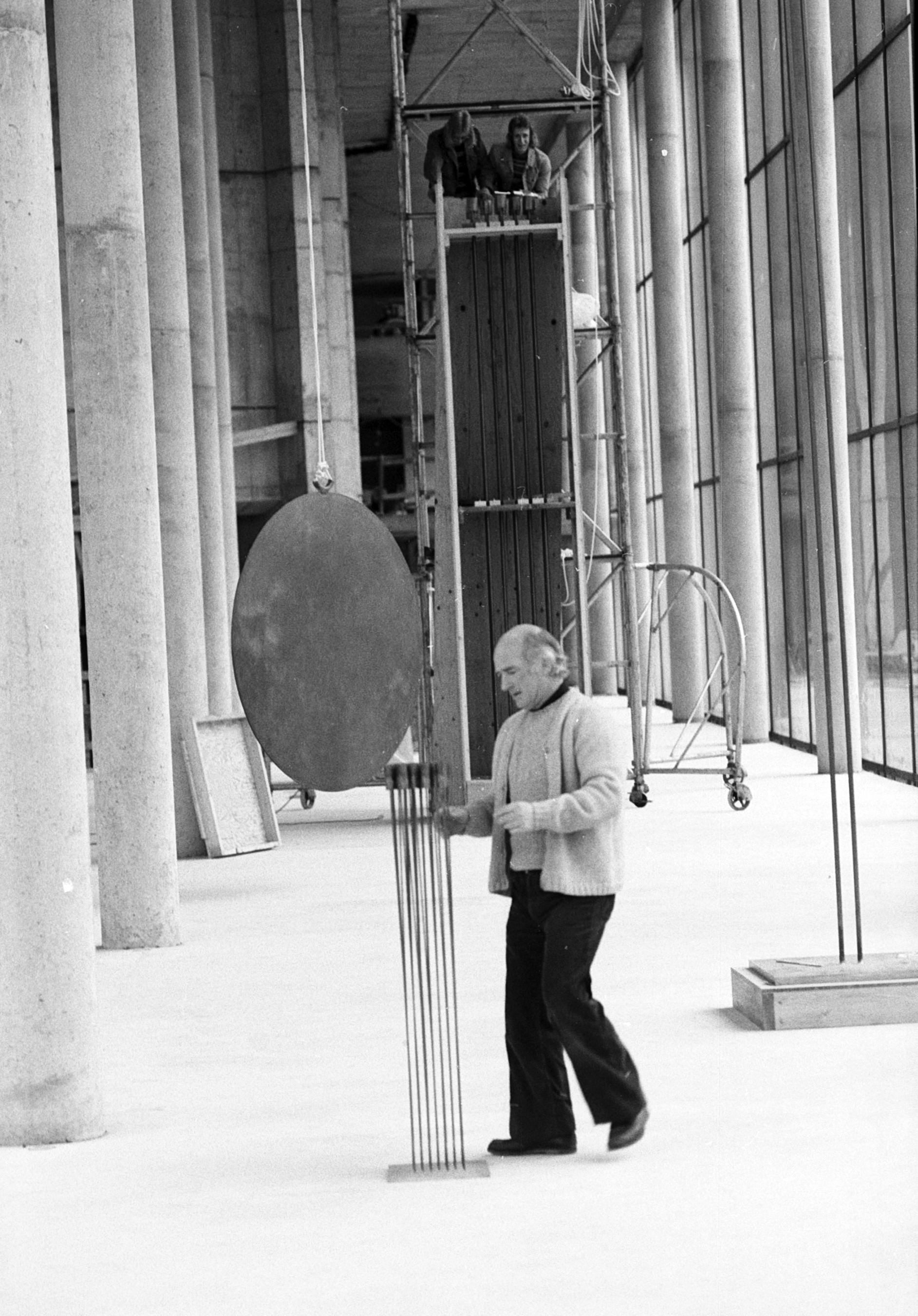
Poster for The Sculpture of Harry Bertoia exhibition at the Grieg Music Festival, Bergen, Norway, 1976. Clifford West, photographer and designer. Courtesy of Cranbrook Archives.

The exhibitions would be the last collaborations between Clifford West and Harry Bertoia, as Bertoia would succumb to lung cancer one year later. Fifty years on, Cranbrook Art Museum will celebrate Harry Bertoia in an upcoming exhibition, opening summer of 2027. Bertoia’s work was last featured at Cranbrook in the 2015 exhibition, Bent, Cast, and Forged: The Jewelry of Harry Bertoia, which marked the centennial of his birth and the first exhibition devoted to his jewelry designs (see the full catalog here).

I look forward to uncovering and sharing more about Clifford and Joy’s remarkable lives. Stay tuned!

Deborah Rice, Head Archivist, Cranbrook Center for Collections and Research

Related announcement from the Harry Bertoia Foundation:

The Harry Bertoia Catalogue Raisonné is announcing a call for works from the Cranbrook community to more fully develop the publication’s coverage of the artist’s early jewelry practice, a currently under-described area of the artist’s oeuvre.

Present owners of jewelry believed to be by Bertoia are invited to contact the Harry Bertoia Foundation and Harry Bertoia Catalogue Raisonné by sending an email to: catalogue@harrybertoia.org, and submitting an owner questionnaire, available on our website. Museums, art galleries, and other institutions that are in possession of works by the artist are also invited to submit relevant data and photographic documentation. All information will be treated with discretion and held in strictest confidence.
HUB Student Films

Films titles like Farewell My Summer Love, The Nightmare, and Dormitory of the Dead were recently rediscovered while working on the Horizons-Upward Bound (HUB) digitization project. The 8mm film reels were unmarked, but cross-referencing with film festival entry packets and faculty reports in the HUB Records, along with viewing the first few frames of each reel, revealed their origin.

Produced in 1984 by HUB summer students in John Prusak’s class, these films had been submitted to The Michigan Student Film and Video Festival, held at Friends Auditorium, Detroit, MI in 1985.

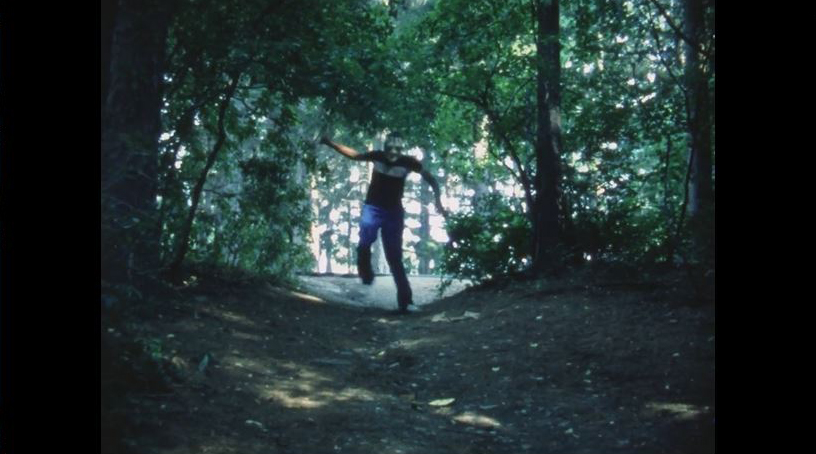
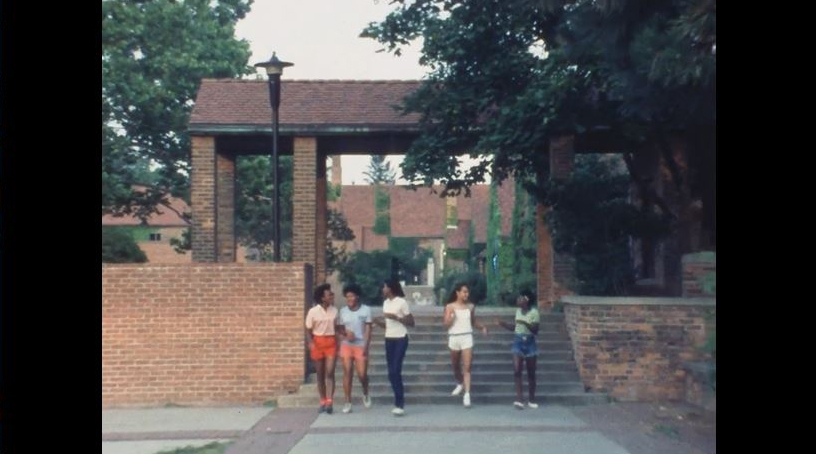
Opening scene from The Nightmare, 1984.
Courtesy of Cranbrook Archives.

Top section of film evaluation sheet for the Michigan Student Film and Video Festival, 1985. Courtesy of Cranbrook Archives.

Digitizing film for today

When applying for the grant that is allowing digitization of the HUB Records only one student film, The Great Dictator, from William H. Moran’s 1969 summer class, had been labeled and identified. So it was indeed a nice surprise to find that there were more! Along with the 1969 film and a fifth film, Together, produced in John Geoghegan’s Advanced Film Class 1972 summer class, the 1984 films were sent to a lab for digitization.

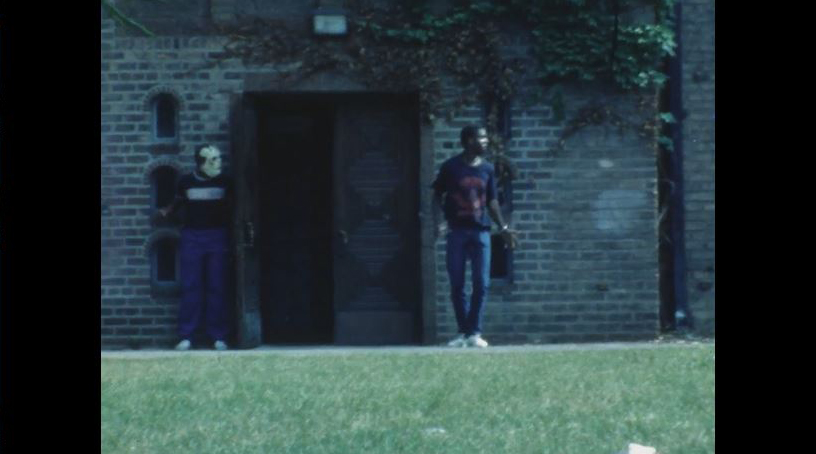
Scene from Farewell My Summer Love, 1984. Courtesy of Cranbrook Archives.

Viewing the digitized films helped further identify the students involved and corroborate the information listed on the entry forms. With this information in hand, we have eagerly begun sharing this newly accessible resource with the HUB community.

Head archivist, Deborah Rice, screens two films during Cranbrook Schools Reunion Weekend June 2024. Courtesy of Cranbrook Archives.

Future Discoveries

The summer film elective class was offered sporadically throughout HUB’s history beginning in 1969. It is yet unknown how many films have been produced over the years. Other titles listed in the 1985 festival entries alone include six films: Money, Spectrum, Street People, That’s Life Kid (It’s Gonna Be Lonely II), The Mix, and Class of 86 – Memories. Together, the films are invaluable documentation of the student perspective.

Please reach out to archives@cranbrook.edu with any information about the films mentioned above or other HUB student films. We’d love to know more!

Courtney Richardson, Project Archivist and Deborah Rice, Head Archivist, Cranbrook Center for Collections and Research

HUB digitization is funded by a NHPRC Archival Projects Grant for projects that ensure online public discovery and use of historical records collections. The NHPRC was established by Congress in 1934 as a statutory body affiliated with the National Archives and Records Administration and chaired by the Archivist of the United States.

A New Collection: The Carl and Annetta Wonnberger Papers

Cranbrook Archives is pleased to announce that the Carl and Annetta Wonnberger Papers are open for research. The collection contains biographical materials documenting their early life and education, a large series of personal correspondence between Carl and Annetta during their courtship, materials relating to Carl’s tenure as teacher and administrator at Cranbrook School, their involvement in establishing and directing the Cranbrook Theater School, as well as Carl’s involvement in outside organizations.

Performance Poster, 1950. Courtesy of Cranbrook Archives.

Carl and Annetta Wonnberger were fixtures at Cranbrook for well over half a century, raising two daughters on campus (Jo Anne and Nancy, Kingswood ’48 and ’53 respectively) and making significant contributions to Cranbrook School (Carl even wrote their fight song!) and community theater arts. They both received Cranbrook’s highest honor, the Founders’ Award, and Annetta had a day (July 17) named after her by the City of Bloomfield Hills.

They arrived at Cranbrook in September 1929 when Carl took the position of English teacher at Cranbrook School. The following year, Carl became the Head of the English Department, a position which he held until 1967 when he retired from Cranbrook and became Professor of English Language and Literature at Eastern Michigan University.

Carl and Annetta Wonnberger with Eva Le Gallienne and Joe Schildkraut. 1945. Harvey Croze, photographer.

Annetta helped Carl start Ergasterion (Cranbrook School’s drama club) in 1931. She created costumes, built and painted sets, applied make up, and played female roles in all boys’ productions. Annetta was also one of the founders, with Henry Scripps Booth and Brookside Schools Headmistress Jessie Winter, of St. Dunstan’s Theatre in 1932.

Together they founded Cranbrook Theatre School (CTS) in 1942 with the first season held in the Greek Theater. The mission of the school was to provide a full liberal education through theater training including voice and diction, phonetics and language, development and control of the body, literature, history, philosophy, design, and technical science. Carl and Annetta taught theatrical training so as to provide experience in teamwork, good sportsmanship, and dialog. They celebrated theatrical training as a wonderful developer of personality.

Carl and Annetta Wonnberger Papers (1991-14). Box 19 Folder 10. Courtesy of Cranbrook Archives.

The bulk of the Wonnberger Papers relates to their involvement with Cranbrook Theatre School, comprising administrative materials as well as many scripts, announcements, and performance programs.

Alice Shaw, head director, discusses a staging problem with Carl Wonnberger. July 24, 1953. Harvey Croze, photographer. Courtesy of Cranbrook Archives.

Theater performances, themselves, are well documented by audio-visual formats including photographs, slides, and motion picture film. This collection provides a rich study of a fascinating facet of Cranbrook’s performing arts legacy, and a theater program that is still going strong today.

Laura MacNewman, Associate Archivist, Cranbrook Center for Collections and Research

The Skyline is a Promise

Cranbrook Archives houses an impressive collection of motion picture films, many of which offer depictions of student life at Cranbrook Schools. These films uniquely capture what it was actually ‘like’ to be on campus at a given moment in time, and potentially present perspectives not captured in official written documentation. One such film, The Skyline is a Promise, from the Horizons-Upward Bound Records, is an excellent example.

1992-15002

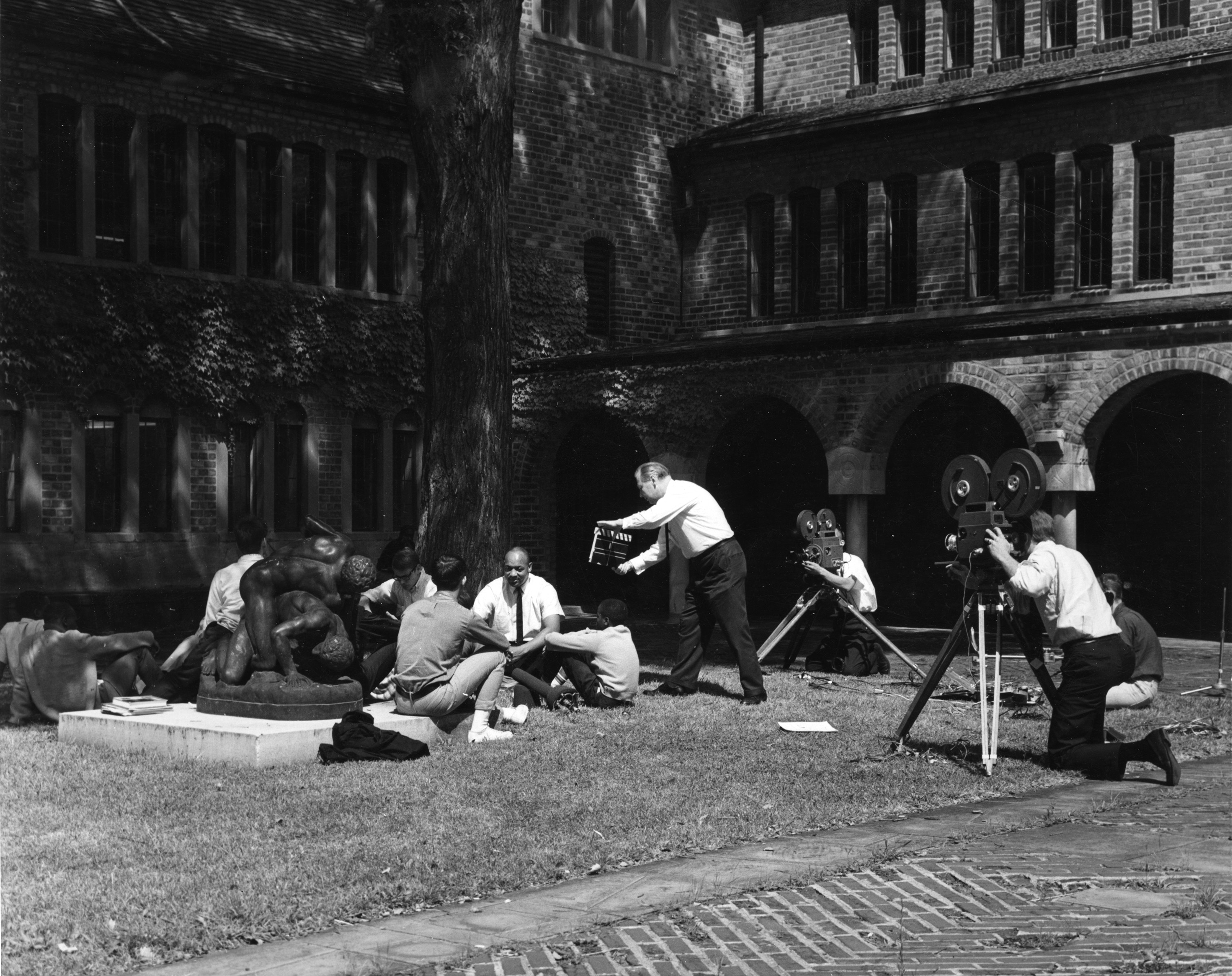
Filming on Cranbrook School campus, 1966. Copyright Cranbrook Archives.

The Horizons-Upward Bound (HUB) program, then in its 2nd year, was self-described as “An Experimental Enrichment Program.” In conjunction with representatives from Detroit Public Schools and Oakland County Schools, the program’s objective was to provide low-income Detroit area high school students with opportunities for future success in academics and in life. The creation of Cranbrook School teacher, Ben Snyder, who served as its director for twenty-four years, HUB was the only program of its kind at that time.

Skyline was produced, directed, and filmed by Wayne State University Audio-Visual Productions during the summer of 1966, and was intended both as a promotional piece and an educational aid. The 16-minute short film captured every aspect of the program. Raymond Maloney, a HUB English instructor from Cranbrook School, wrote of the experience in the 1966 Annual Report: “At times, the dining hall, classrooms or dormitories took on all the aspects of a movie set complete with eighty-eight willing actors.” Students not only were eager participants in front of the camera but also learned about what was involved behind the camera, thanks to one of the film’s producers.

1992-15001

Wayne State University film crew, 1966. Copyright Cranbrook Archives.

Funding for the film was provided by an anonymous donor, supplemented by funds from the program’s Ford Foundation grant. According to a May 25, 1966 letter, the script was written by George H. Bouwman, Director of Development, Horace Mann School, Bronx, NY. The soundtrack was a mix of guitar music, sound effects, and voice-overs from both the narrator and student interviews, also conducted by the film crew. The film’s title was taken from The Wanderer of Liverpool by John Masefield, Poet Laureate of the United Kingdom (1930-1967):

Go forth to seek: the quarry never found

Is still a fever to the questing hound

The skyline is a promise, not a bound.

Beginning in the Summer of 1967, the film was circulated for a $5 rental fee throughout the U.S. (with accompanying report) to other independent schools considering establishing a similar program. Made at the suggestion of the National Association of Independent Schools, it was shown in its first year at 36 member schools in 18 states, 6 school conferences across the country, and 14 other organizations including the Education Departments of Wayne State University and the University of Michigan.

That same summer saw a watershed moment in Detroit history: civil unrest with profound ramifications for the city’s inhabitants, which included sixty Horizon students and their families. A full page in HUB’s 1967 Annual Report expresses appreciation to those who particularly helped navigate the complexities of the situation, including Detroit educators, clergy, business leaders, and local figures, such as Detroit Tigers player Al Kaline. Cranbrook would continue to have ties to Detroit institutions through its HUB program, like the relationship it formed with New Detroit in 1968. This summer, HUB will celebrate its 55th anniversary, remaining an important link between Cranbrook and its Metro Detroit neighbors.

Fifty-four years later, Skyline transcends its original intent and gives us a window into the experiences of a specific group of students at Cranbrook during a tumultuous time in our region’s history. The film, like many others in the Archives, is currently undergoing review for reformatting to digital media for access and preservation of the originals, so that their stories are not lost to future generations.

Deborah Rice, Head Archivist

Photo Friday: Movie Magic

Cranbrook Academy of Art students participate in the filming of Jazz, CAA student Joe Munro's first experimental film. 1943, Cranbrook archives.

Cranbrook Academy of Art students participate in the filming of Jazz, Joe Munro’s first experimental film, 1943. Cranbrook archives.

Born and raised in Michigan, Joe Munro worked at Cranbrook as a photographer and teacher. Here he works on his first film, Jazz, gesticulating wildly at his actors while his crew, made up entirely of CAA students, looks on. Munro left Cranbrook shortly after this film was completed, joining the US military and serving in WWII as a wartime photographer.  With the end of the war he began a long career as a freelance photojournalist, working for LIFE, National Geographic, and Time Magazine. His archives are held by the Ohio Historical Society are definitely worth a look.

Create a website or blog at WordPress.com