Flora Leslie, Brookside’s Dietician and Food Director

With the Thanksgiving holiday almost upon us, it is time to begin planning and preparing one of the essential parts of any celebration: food. It seems timely, then, to highlight Flora Leslie, Brookside’s long-serving dietician and food director. I would like to introduce her to you in her own voice, recalling a memory of some precarious pumpkin pies:

Floral Leslie interview with Mark Coir, Archivist (OH1990.09.28), November 5, 1987.
Courtesy of Cranbrook Archives.

Hearing this story in Flora’s voice brings the memory to life in a different way than simply reading it in written form. Cranbrook Archives’ Oral History Collection holds recordings of many voices that add dynamism and richness to their stories. Flora Leslie’s interview describes her life at Cranbrook and her experience of its people and places in the mid-twentieth century.
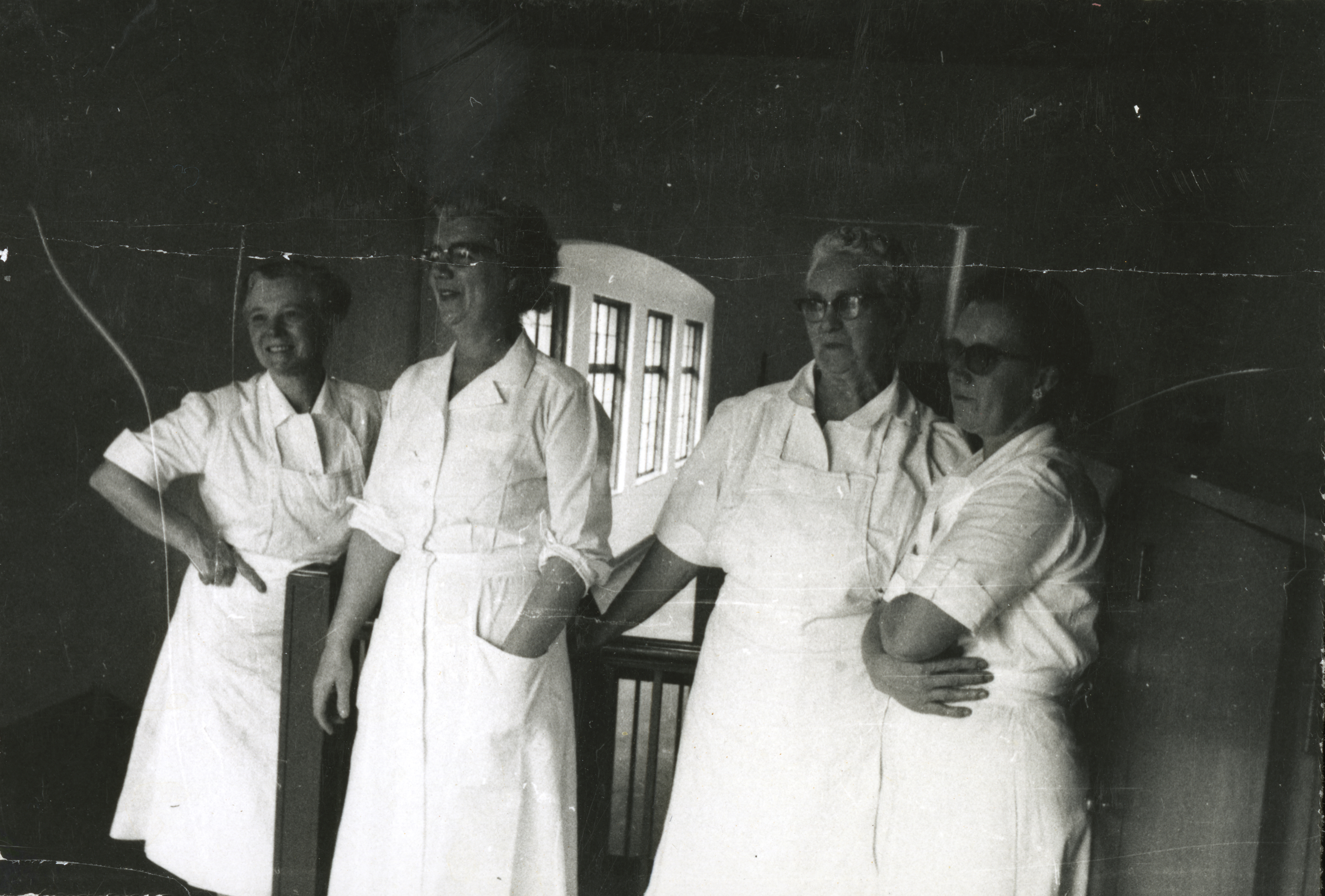
Flora Leslie (second from left) with cooking staff at Brookside School. Courtesy of Cranbrook Archives.

Born Flora MacFarlane in Alexandria, Scotland, in 1906, she made her way to the United States alone in December 1930. Journeying by ship on a very stormy sea, the passengers were required to stay below deck where they got to know each other more than they would have had they been able to wander on deck. Having worked in a photographer’s office in Scotland, Flora initially sought the same occupation in America.

But a fellow passenger Flora met aboard the ship told her that if she had no luck finding work, to contact her for employment. It is thus that Flora began to work for the Ward family in Pontiac, a family whose children were students at Cranbrook.

In 1932, Flora started working at Cranbrook, initially at Kingswood School. Flora married George Leslie in 1934, a landscaper and gardener, and later a superintendent of buildings at Cranbrook.

After several invitations from Jessie Winter, Headmistress of Brookside School, Flora became the dietician and food director at Brookside School, a position she held from 1934-1975. The position came with an apartment, and though at first Flora preferred to stay at Kingswood, which she describes as “light and bright and lovely,” Winter asked Flora and George back to Brookside one further time and had arranged the apartment beautifully. Most importantly, there was a brand-new Frigidaire refrigerator, a novelty in those days. As Flora recalled, seeing this small luxury she told the headmistress, “We’ll come!” The apartment was in the part of Brookside known as the ‘Ram’s House’ and had previously been occupied by Jessie Winter and by J. Robert F. Swanson.
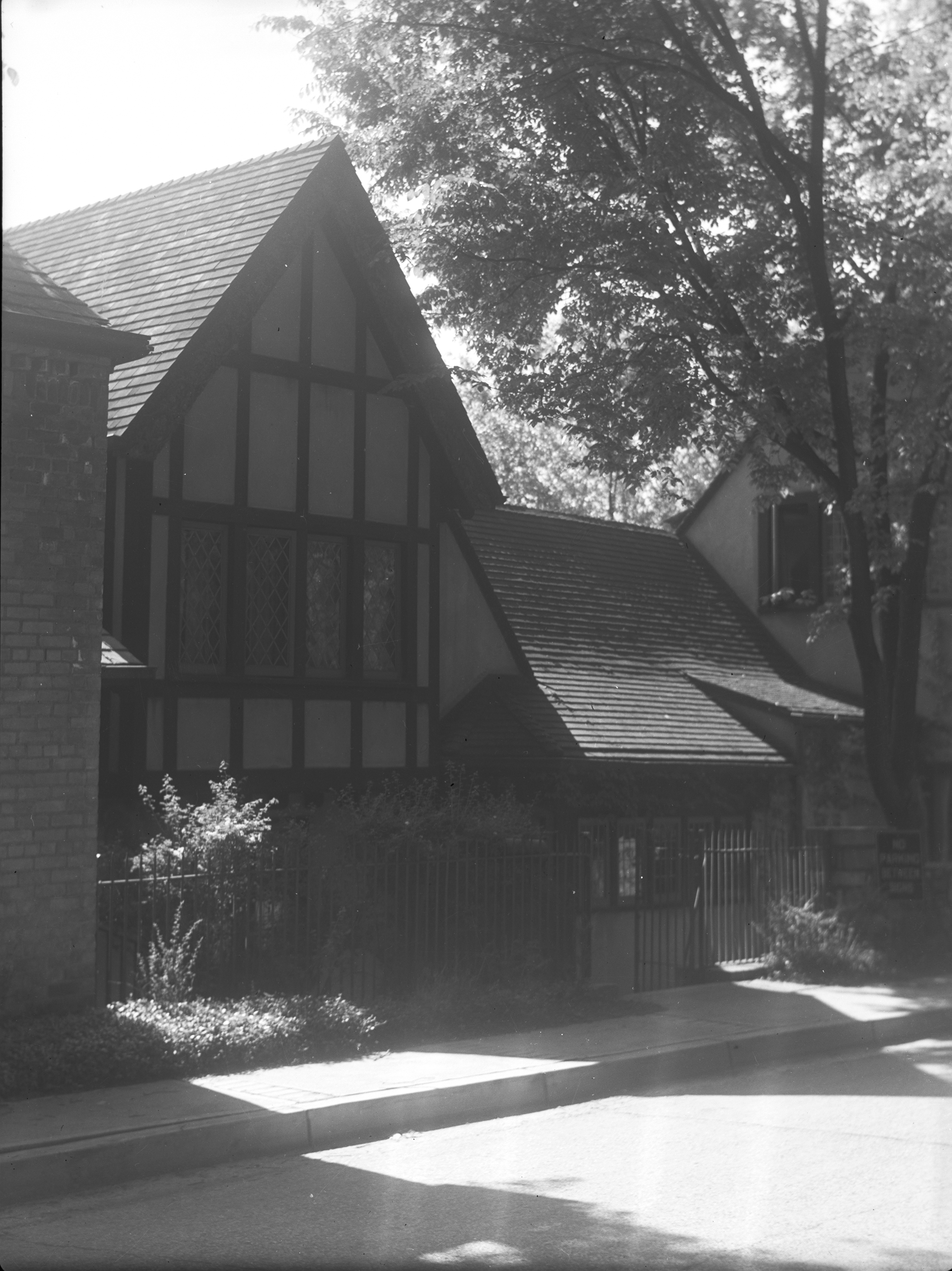
View of the front of George and Flora Leslie’s apartment, known as the Ram’s House, circa 1935-1938. Courtesy of Cranbrook Archives.

During the war years, when food was in short supply, George and Flora Leslie kept Brookside stocked with vegetables—he grew them and she canned them.
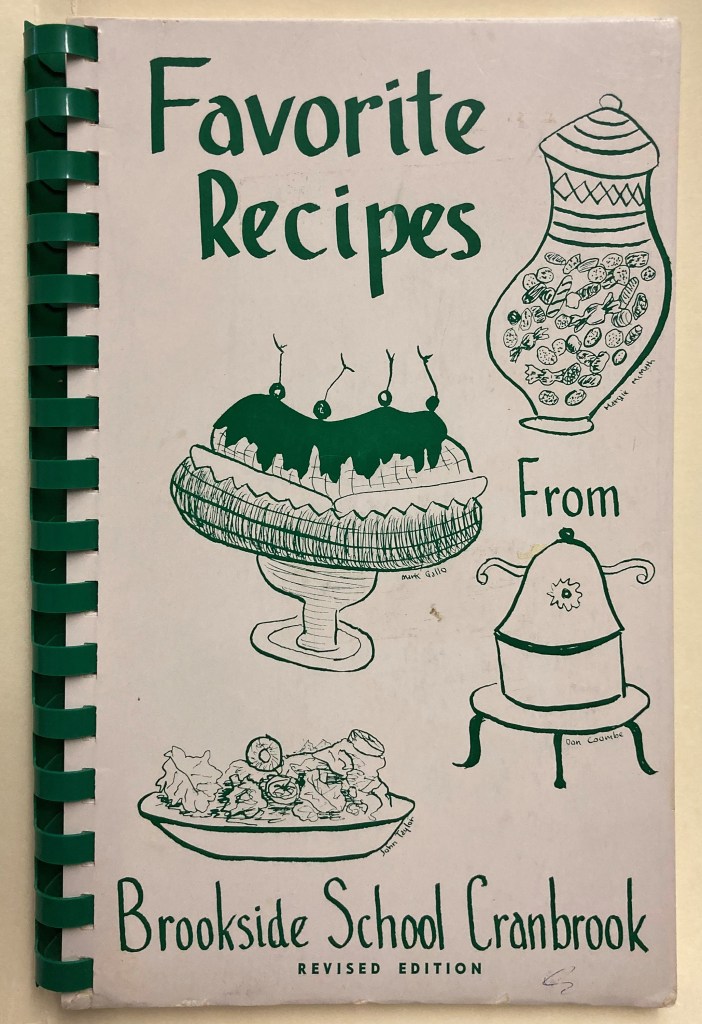
After feeding generations of students, Flora published many of her favorite and original recipes in the Brookside cookbook, Favorite Recipes, which are still enjoyed by alumni far and wide. Perhaps you might like to try one of Flora’s original recipes this Thanksgiving, or a dessert recipe from one of the faculty families?

Laura MacNewman, Associate Archivist, Cranbrook Center for Collections and Research

One Competition, Many Designs: Ralph Rapson and the Jefferson National Expansion Memorial

Of the 5,000 plus architectural drawings in Cranbrook Archives, one of my favorite series is the work of Ralph Rapson. His drawings convey a seemingly endless stream of unique inspiration, and his letters to his friends and colleagues are always wonderfully lively and convivial. Rapson’s work covers diverse projects including residences, embassies, businesses, and competitions.

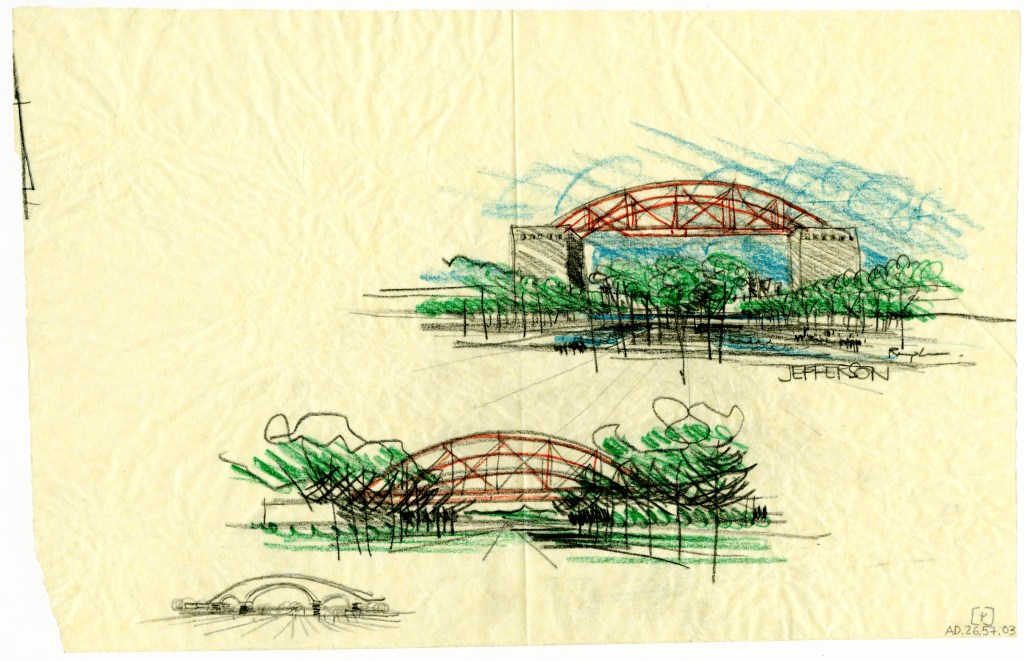
Today, I want to share some examples from just one architectural competition to showcase this creativity: Rapson’s studies for his entry into the Jefferson National Expansion Memorial competition.

Ralph Rapson’s preliminary study for a submission to the Jefferson National Expansion Memorial competition in 1948. This is very similar to his final submission.

A decade before the Memorial competition, Rapson had been invited to study architecture and urban planning at Cranbrook Academy of Art by Eliel Saarinen. Saarinen had been much impressed by Rapson’s submission to the George G. Booth Traveling Fellowship at the University of Michigan in 1938. After studying at the Academy between 1938 and 1940, Rapson collaborated on various projects with Saarinen and his associates before moving to teaching positions in Chicago during the early 1940s and at MIT in 1946.

Ralph Rapson, January 1943. Cranbrook Archives

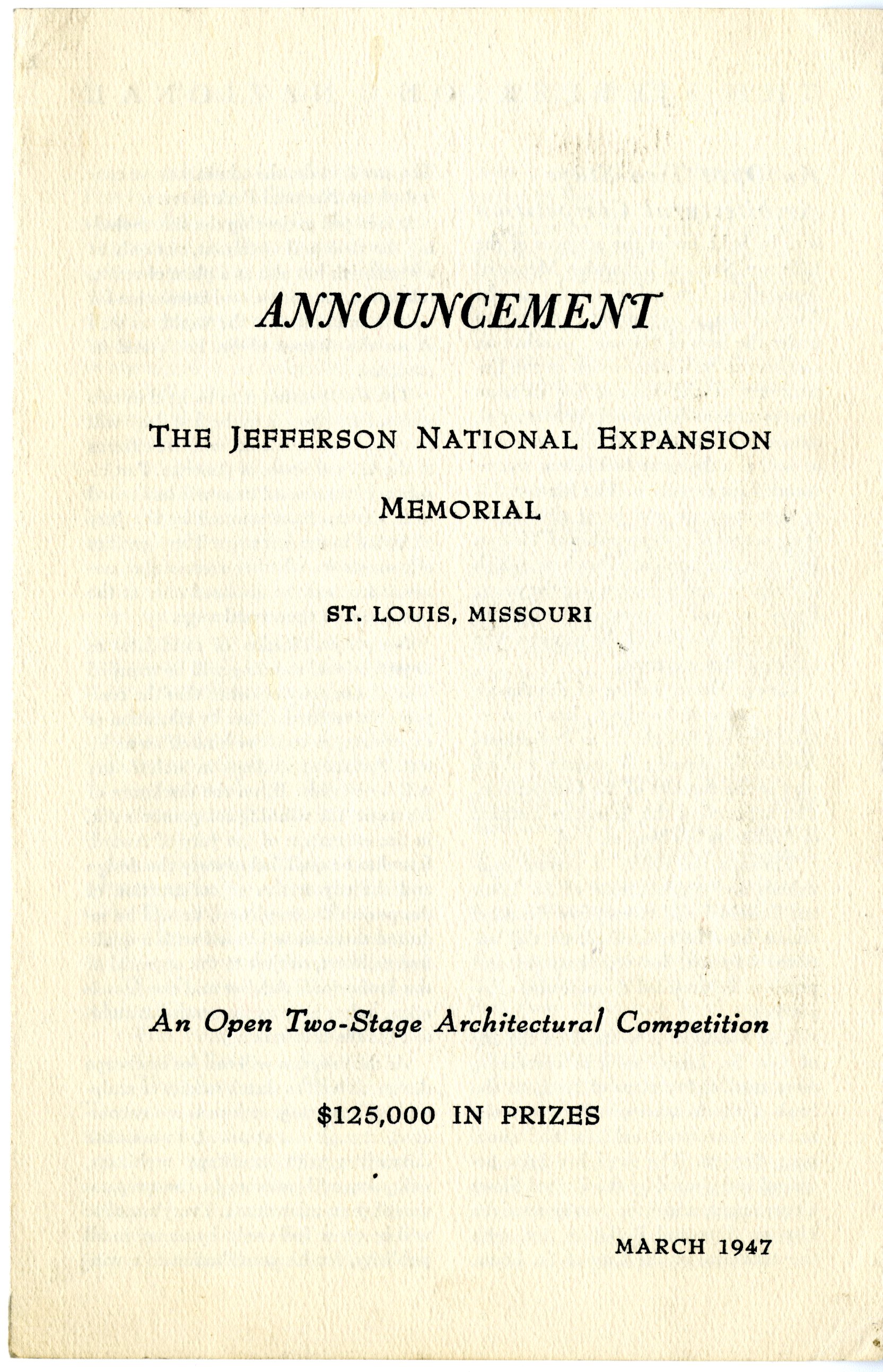
In March 1947, the Jefferson National Expansion Memorial Association announced an ‘Open Two-Stage Competition’ to design and execute a memorial located in St. Louis, Missouri. The first stage of the competition was open to all architects who were citizens of the United States and the second stage was limited to five competitors as selected by the jury in the first stage.

The competition brief was distributed to some 1,100 architects and students around the country. 172 entries were received by the September 1, 1947 deadline. Cranbrook Archives.

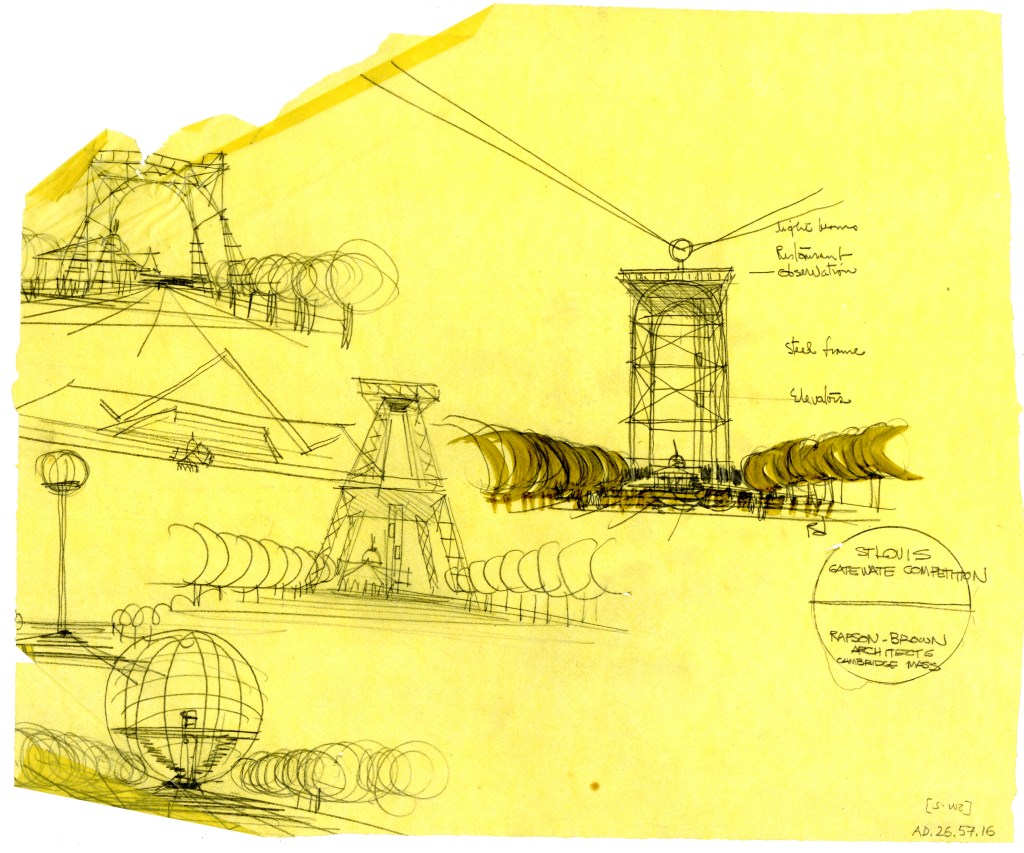
In the architectural drawing set for Rapson’s submission, there are nineteen conceptual studies. These have recently been digitized and added to the Ralph Rapson Projects in our Digital Collections online. Below is a selection of his studies that show the diversity and breadth of Rapson’s creative vision:

It is interesting to see Rapson work out his ideas in ink and colored pencil about what shape, materials, and structure might best serve as a memorial to Jefferson’s Louisiana Purchase and America’s westward expansion.

In addition to Rapson, Cranbrook alumni and faculty including Charles and Ray Eames, Harry Weese, Gyo Obata, and both Eliel and Eero Saarinen submitted designs. Of course, it was Eero’s monumental stainless steel arch that won the competition and remains an iconic landmark to this day.

There is much to see and learn from Rapson’s drawings for just this one project. As we hold sets of drawings for another 87 of his projects, stay tuned to the Kitchen Sink—there is so much more to see and say about Ralph Rapson.

Laura MacNewmanAssociate Archivist, Cranbrook Center for Collections and Research

Eds. Note: On Tuesday, October 27, 2020, Associate Curator Kevin Adkisson will deliver our next Uncovering Cranbrook virtual lecture. This month’s lecture, Eero Saarinen and Yale University: Education and Architecture, will examine the younger Saarinen’s time at Yale as both a student of architecture and designer of three important campus buildings. Tickets are available now for the 10:00am and 7:00pm EDT lectures.

All’s well that ends well

This is a story about a wonderful discovery and a trial of patience. A few years ago, I processed the F. Shirley Prouty Collection on Johannes Kirchmayer, which documents the life and work of her great uncle and contains many years of meticulous research. It was a wonderful collection to work with, and a trove of information on architects and craftsmen of the American gothic revival.

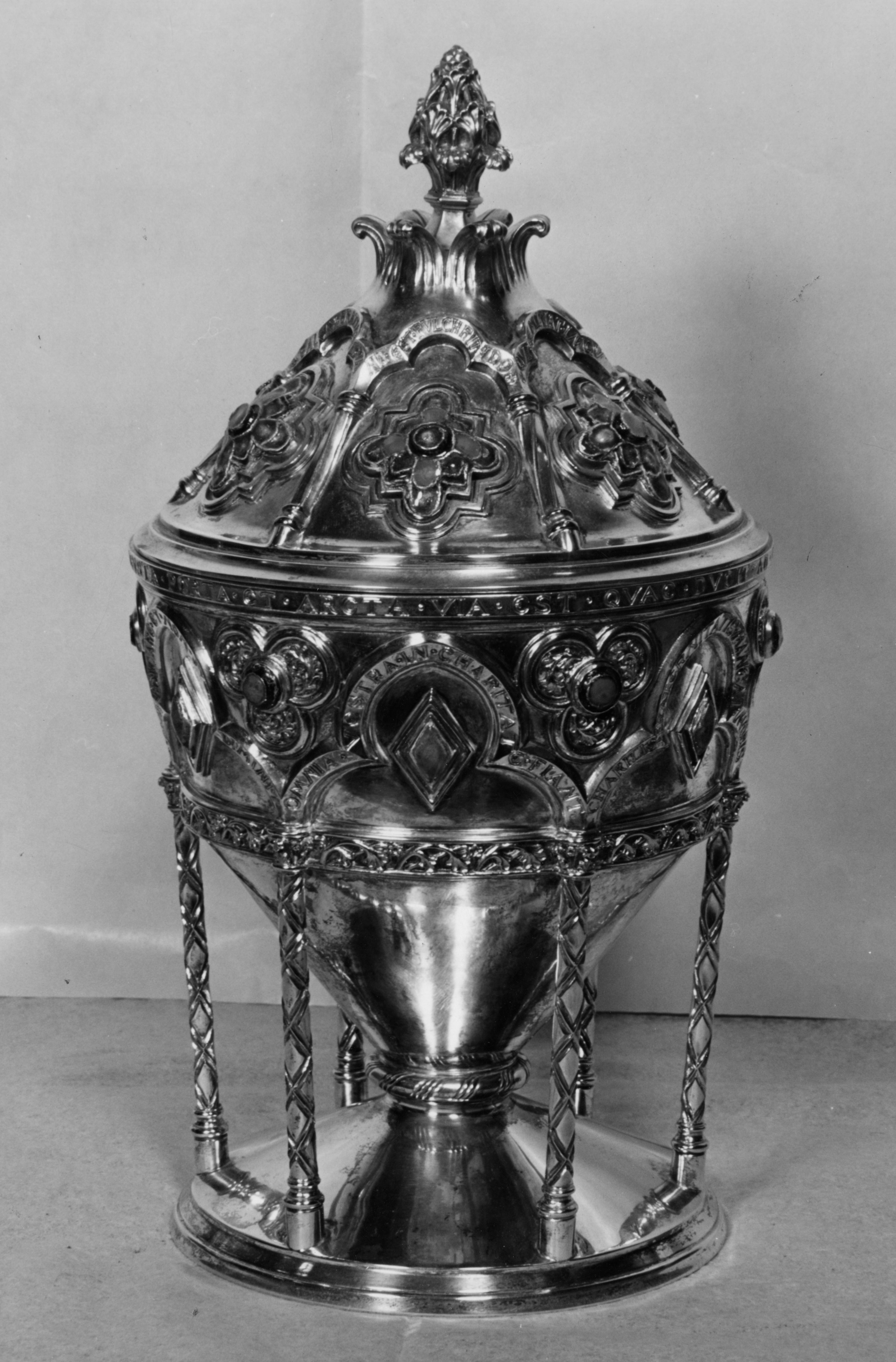
Two of the most outstanding of these are architect Ralph Adams Cram and woodcarver Johannes Kirchmayer, who worked together on many projects. This week I made a wonderful new discovery of another product of their hearts, minds, and hands: a silver and gilt portable font initially commissioned as a gift for the Detroit Museum of Art (now the Detroit Institute of Arts) by George Booth. Cram designed it and Kirchmayer created the sculpture models and chasings for it; then, the piece was executed by silversmith James T. Woolley and decorated by enamellist Elizabeth Copeland.

Silver gilt font completed in 1920 for Detroit Museum of Art. Ralph Adams Cram, Johannes Kirchmayer, James T. Woolley, and Elizabeth Copeland. Cranbrook Archives.

In February 1918, Cram designed the font, which George Booth hoped to have ready for display at the General Convention of the Episcopal Church, to be held in Detroit for the first time in October of 1919.

The making of the font did not follow the anticipated timeline, but rather than a story of delay and disappointment, it becomes a story of patience and its reward.

During the spring, Booth visited Boston and left the Cram blueprint with Woolley. On May 1st, he enquired to know Woolley’s interest in executing the design and an estimate of cost, to which Woolley replied positively, quoting $450 excluding the enamel parts. Giving the commission to Woolley, Booth advised him to confer with Cram or his assistant, Mr. Cleveland, and that Copeland will complete the enameling work.

Continue reading

Tool of the Trade

Light, temperature, and humidity can all harm a museum’s objects and artifacts. In a previous blog, I talked about what damage light can do and how we are combating that at the Frank Lloyd Wright Smith House. The battle for consistent temperature and humidity in the house is another issue.

Frank Lloyd Wright Smith House, 2012. Photo by James Haefner.

In October 2018, we had a Conservation Assessment done at Smith House by ICA – Art Conservation. According to ICA,

Temperature can affect a collection in . . . significant ways. Elevated temperatures have the capacity to increase the rate of deterioration . . . [and] temperature affects relative humidity.

Relative humidity is the ratio of the amount of water vapor in a particular volume of air relative to the maximum amount of water vapor this same volume of air can hold at the same temperature.

As relative humidity fluctuates, the environment and the materials within it will seek equilibrium with one another . . . Within a museum or historic structure, the collection objects and building materials will act like a sponge to these fluctuations, which can cause irreversible mechanical damage.

In the museum community, it is recommended that the relative humidity be kept as stable as possible and the temperature as low as practicable. A relative humidity (RH) range between 55% to 35% is thought to be best for general conditions. However, it is the stability of the relative humidity that is more significant than the actual value. Temperatures below 72˚F and above 32˚F are considered acceptable when the relative humidity is controlled.

So, what was the Center to do? Equipment for monitoring (data loggers) was purchased. We started regular environmental monitoring throughout Smith House. Logs were created to record the environment ranges for temperature and relative humidity for the spaces.

Data loggers are devices equipped with sensors and a microprocessor to monitor and record data such as temperature and relative humidity. We chose Lascar’s EL-USB-2. This standalone data logger measures more than 16,000 readings and features a USB drive so data can be downloaded directly to a computer.

Data logger used to monitor temperature and humidity in Smith House.

However, it is not always practical to carry a laptop around Smith House to download the data or remove the data loggers to download on my office PC. Instead, I use the EL-DataPad. It allows the configuration and download of temperature and humidity data loggers on the spot.

Data pad with attached data logger.

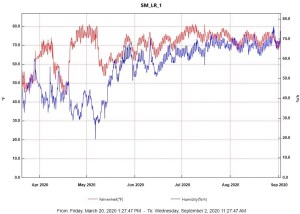
In the Smith House, the temperature and humidity is recorded every 30 minutes. I log this data and graph it, to see trends or issues in the house.

Graph of Smith House Living Room temperature and humidity readings from March to September 2020.

How will this documentation help conservation of objects in Smith House? The data will be useful for establishing achievable set points and ranges for the house environment. It will also be helpful for writing grants to help fund equipment or materials for further environmental management.

Leslie S. Mio, Associate Registrar, Cranbrook Center for Collections and Research
Clean as a Whistle

In the past, we have discussed how we cover our stone sculptures on campus to protect them in the winter. But what about the many bronze sculptures? Europe and the Bull? Persephone? The Centaurs?

These pieces are more robust and able to withstand what winter throws at them, but they still need some love each year.

Each spring since 1987, the Community has brought in Venus Bronze Works to recondition the bronzes across the campus. Venus Bronze Works is a member of the American Institute for Conservation of Historic and Artistic Works, which means all the cleaning they do is in accordance with AIC’s Code of Ethics and Guidelines for Practice.

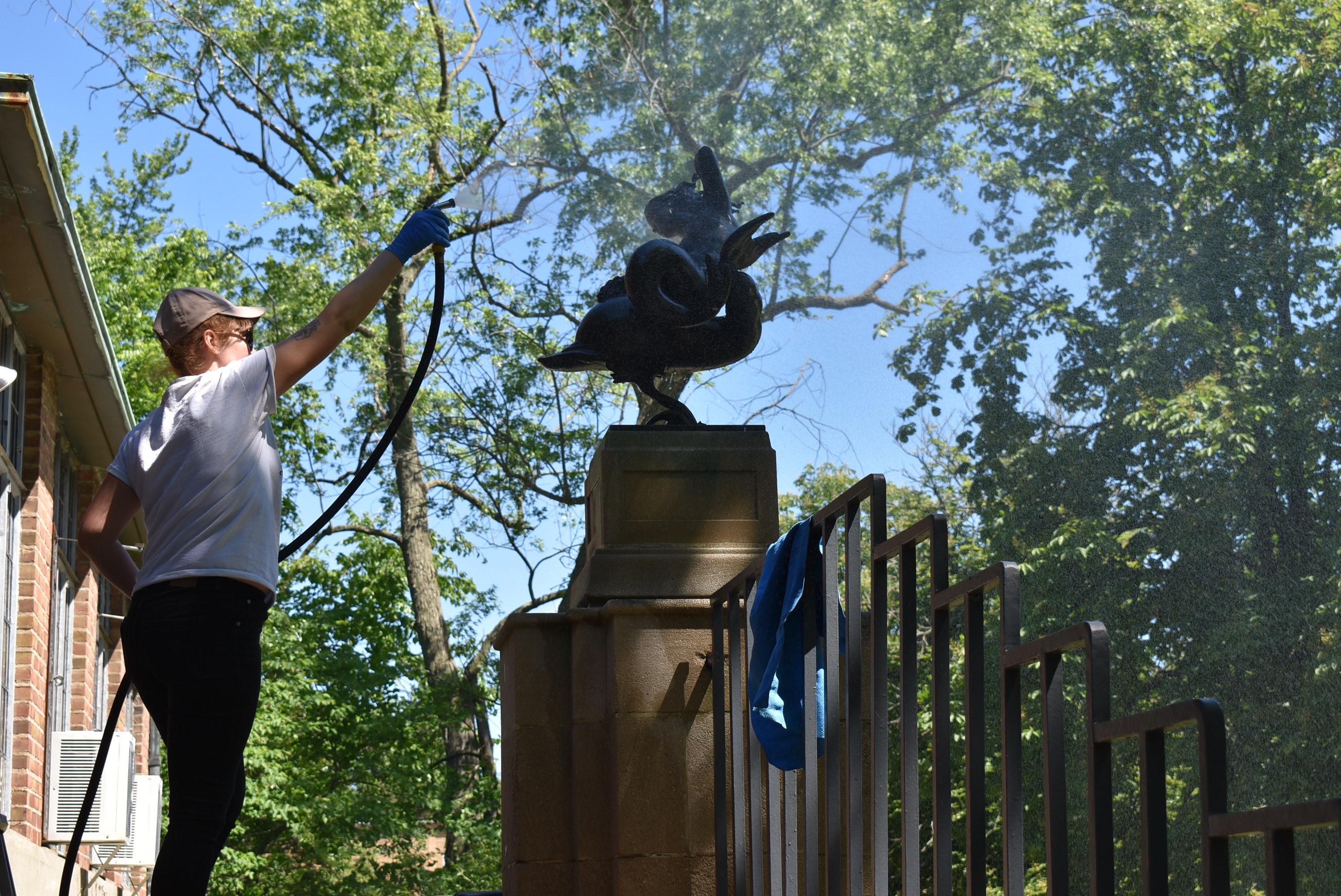
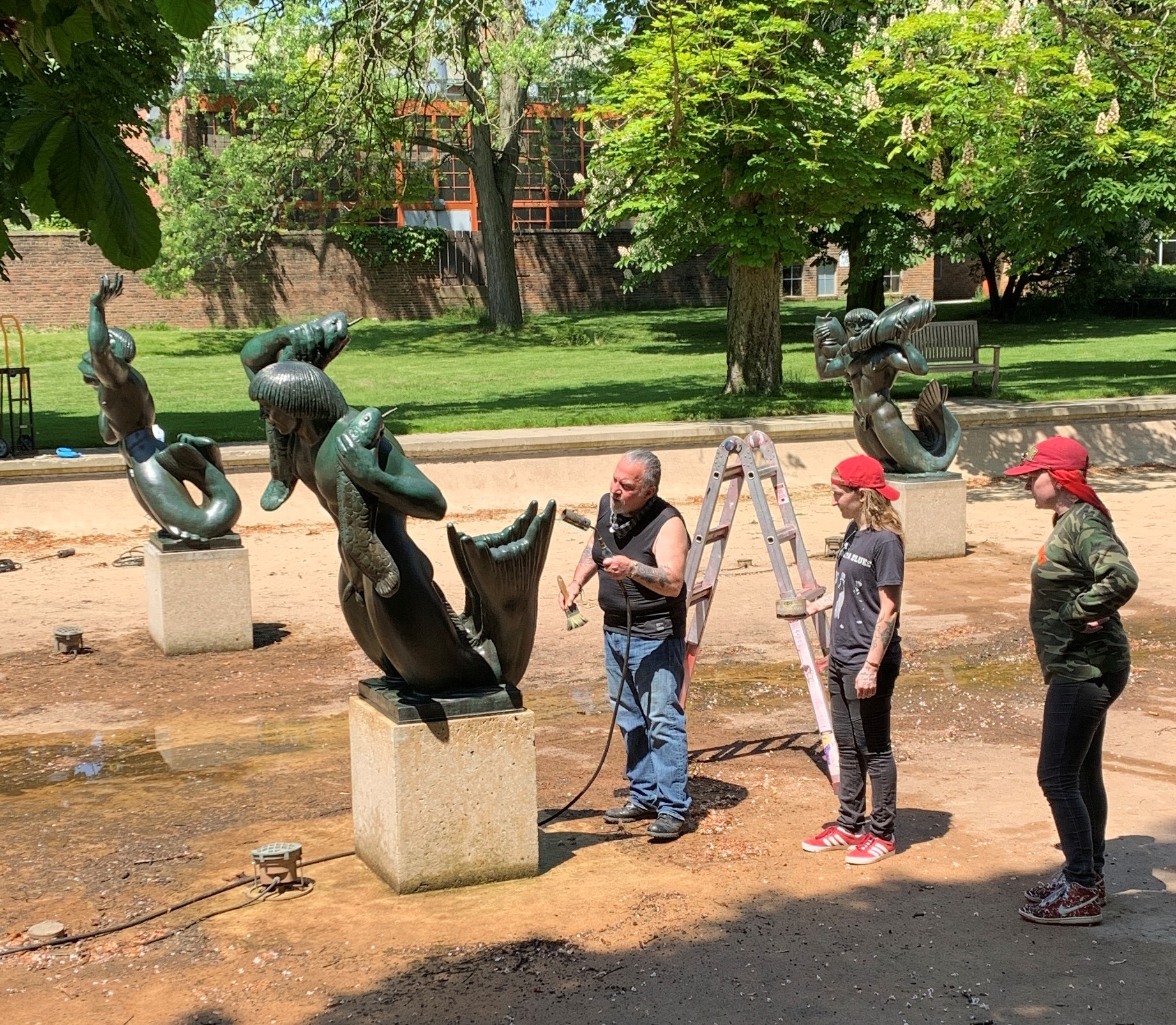
All sculptures are inspected and cleaned by dusting them off with compressed air or wet down and washed with a mild detergent, sponges, soft bristle brushes, and fine cotton pads.

Terra Gillis of Venus Bronze Works gives Carl Milles’s Sunglitter (also know as Naiad and Dolphin, CAM 2002.1) a quick shower, 2020. Photo by Kevin Adkisson.
Harlow Toland of Venus Bronze Works gives one of Carl Milles’s Running Deer (CAM 1934.30) a good scrub, 2020. Photo by Kevin Adkisson.

When the works are dried, one or two thin coats of wax are applied and the sculptures are buffed. This wax can be applied directly from the container or applied to a hot surface (by heating the sculpture with a propane-fed torch).

Giorgio Gikas, founder of Venus Bronze Works, holds the torch while his assistants Harlow Toland and Sara Myefski help prepare Triton with Fishes in the Triton Pools at Cranbrook Art Museum to receive a hot wax treatment, 2020. Photo by Kevin Adkisson.

This wax acts as a barrier to the air and humidity on the bronze surface and prevents damaging oxidization or corrosion from developing. When deciding how each individual work is cleaned, we look back to the artist’s intent for each sculpture (was it meant to be patinated green? dark bronze? polished? gilded?) and treat it accordingly.

Venus Bronze Works cleans and waxes all the Milles sculptures at the Cranbrook Art Museum and Cranbrook Academy of Art and the Cranbrook Institute of Science. They also work on such sculptures as Brookside’s Birds in Flight; Kingswood’s Dancing Girls and Diana; Cranbrook House and Gardens’ Fortuna delle Tartaruga (Turtle Fountain); and Cranbrook School’s athletic sculptures. Check out a recent Instagram post about the athletic sculptures below:

We are excited to start welcoming visitors back to our campus this summer, so you can all see the beautiful sculpture in their freshened-up glory.

Leslie S. Mio, Associate Registrar, Cranbrook Center for Collections and Research
Inside the Booth Library

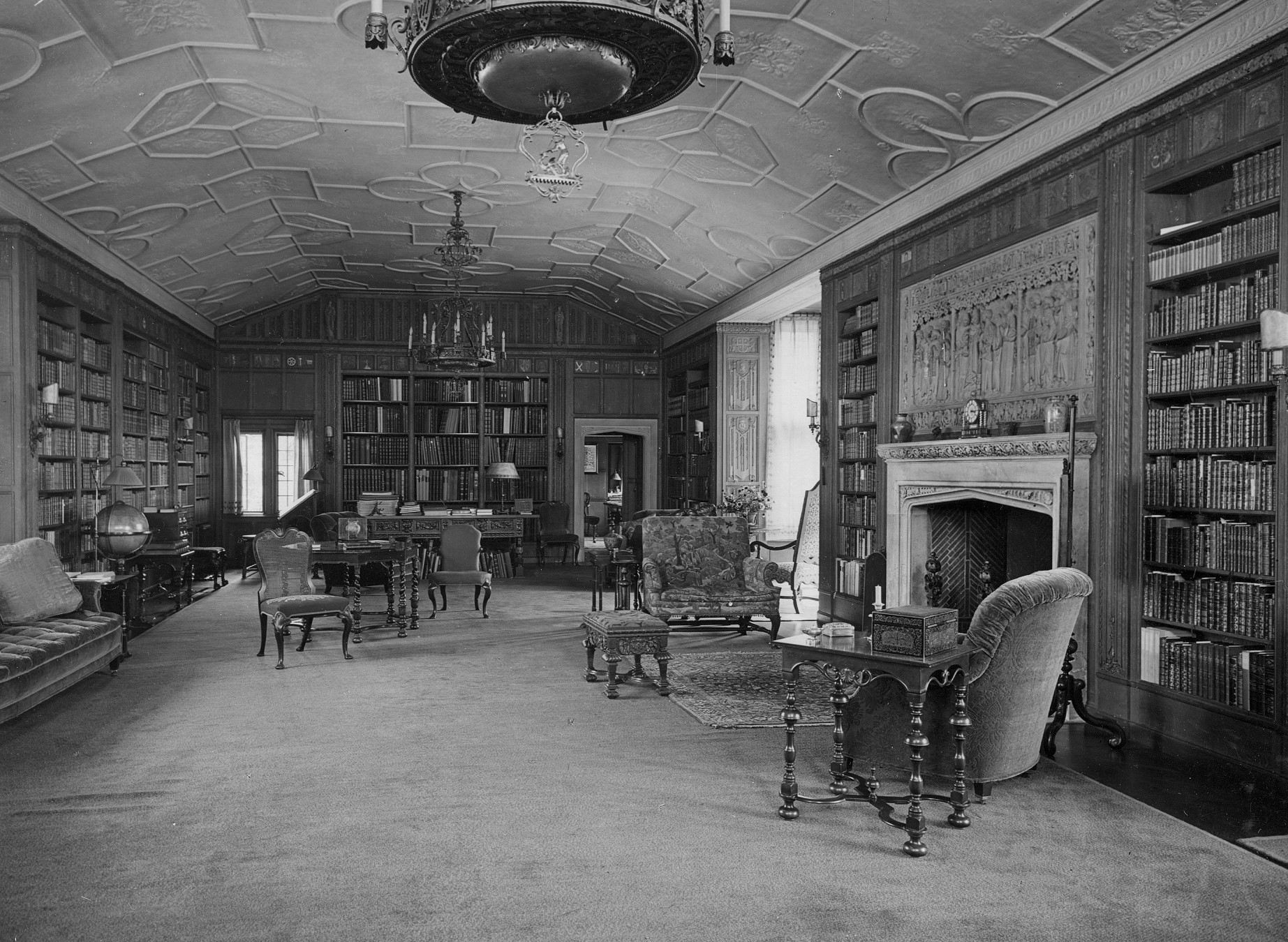
For all of us who are confined to quarters and find ourselves condemned to read from our own library, let me invite you into George and Ellen Booth’s ample domain. Those of you who know Cranbrook House, the Booths’ Albert Kahn mansion, will have visited the library or attended events there. Perhaps your attention was more taken up by the Herter tapestry or the Kirchmeyer overmantel than by what is on the actual shelves, but art aside, let’s look at the books.

George Booth may well have had a jobber buying books for him to fill those shelves, and he certainly would have been aware of the 1909 Collier’s Harvard Classics, consisting of all the books Harvard President Charles Eliot deemed essential background reading for an educated man of substance.

Cranbrook House library, 1920.

View of the south end of the Cranbrook House library, 1920. Photo by John Wallace Gillies. Courtesy Cranbrook Archives.

So, books to impress and accessorize, yes, but now we need to read: we want to be lost in a book that takes us away from this turbulent world. What’s on offer? We will skip Dante’s Inferno, however much we may feel it appropriate, and pick some things at random which you can read either through your e-reader or your library access to Hoopla! and which may do the trick.

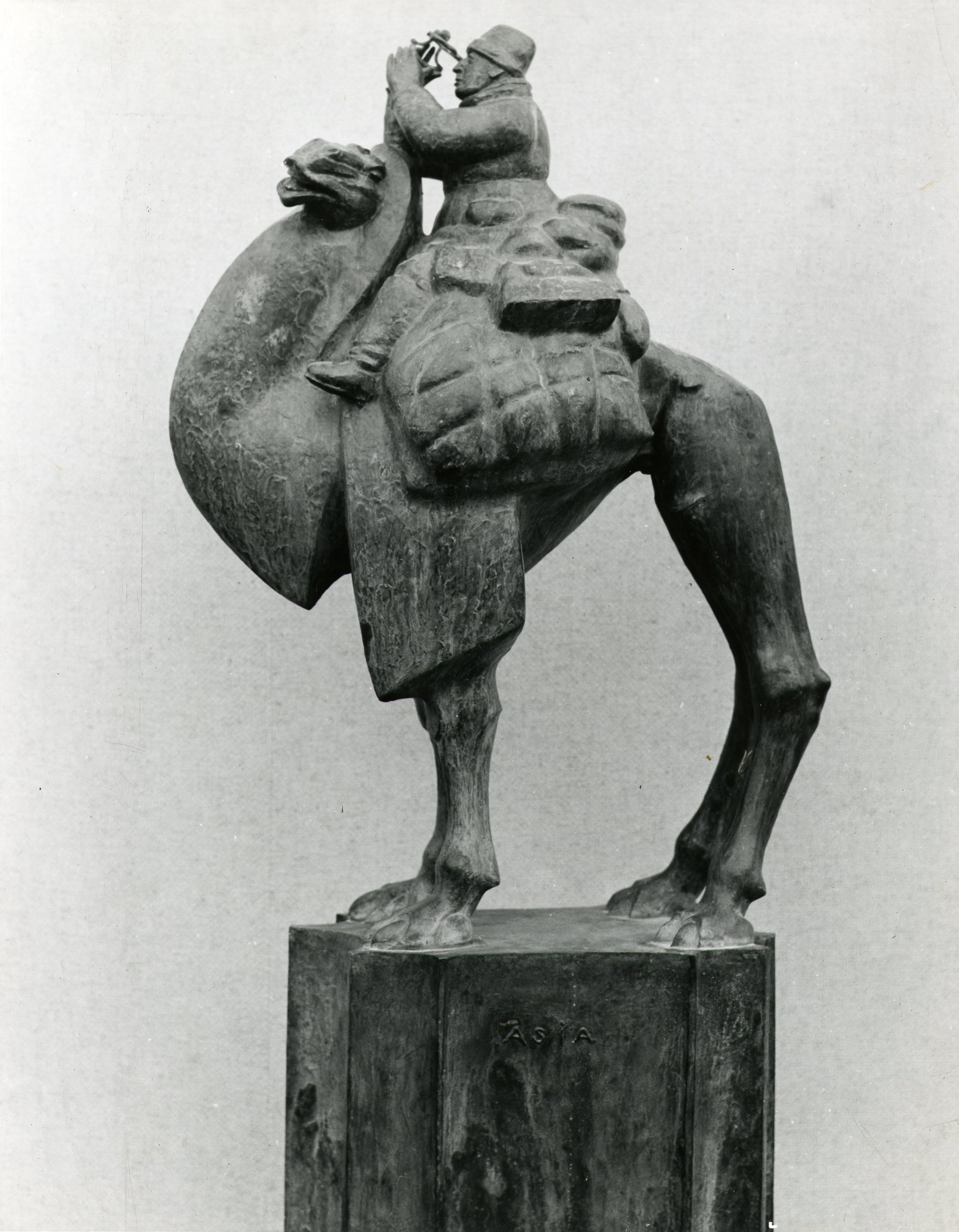
Nonfiction: Sven Hedin’s Through Asia. Remember Sven Hedin from Carl Milles’s sculpture at the Institute of Science?

Carl Milles's "Sven Hedin" sculpture, which sits beside the reflecting pool at the Cranbrook Institute of Science.

Carl Milles’s “Sven Hedin” (1932), which sits beside the reflecting pool at the Cranbrook Institute of Science. Courtesy Cranbrook Archives.

Hedin was a Swedish explorer of Central Asia in the 1920s. His accounts are absorbing and illustrated copiously by Hedin himself. Read Hedlin here.

Who doesn’t love the memoirs of a spy? Here comes Bruce Lockhart’s best-selling Memoirs of a British Agent, his 1932 account of diplomatic shenanigans in Moscow, trying to keep Russia in the war against Germany in 1918. This was the book to be reading in 1933. Purchase Lockhart here.

British Agent from Booth Library

Memoirs of a British Agent in the Booth Library, 11th Printing, 1933. Courtesy of Cranbrook Center for Collections and Research.

This next one is really quite a story and a book I knew nothing about. On the Booth shelves it is called A German Prince and His Victim, but in Google Play you will find it as Memoirs of a Young Greek Lady. This is no novel but the autobiographical account of a 14-year-old girl and her abduction by Prince Ernest of Saxe-Coburg. The Coburgs, though minor princelings in theory, ended up marrying into all the royal families of Europe including Russia. This good duke was the philandering father of Queen Victoria’s Albert, and not at all of the same character. If you have watched the PBS series, Victoria, you will remember that the brothers Ernest and Albert were embarrassed that their father was their father. The writing is histrionic, to say the least, but the story is riveting, the duke dreadful, the girl tenacious: the forerunner to reports you will find in newspapers today. I have to say I was mesmerized by this story and gobbled it up. Read the memoirs here.

Ernst_I,_Duke_of_Saxe-Coburg_and_Gotha_-_Dawe_1818-19

Portrait of Ernest I, Duke of Saxe-Coburg-Gotha, by George Dawe, 1819.  Courtesy of The Royal Collection.

And novels: I was glad to see that the Booths have a copy of Thackeray’s Vanity Fair.  I am told there is a great TV serialization of this comédie humaine, but the book contains everything you will ever need to know about human nature, told with humor and restraint. The writers of the TV serialization of Sanditon, the would-be adaptation of the Jane Austen tale, have certainly borrowed from this novel. Read Thackeray here.

Vanity Fair from Booth Library

Vanity Fair title page in the Booth Library, from The Works of William Makepeace Thackeray Vol. I, 1878. Courtesy of Cranbrook Center for Collections and Research.

If you have never read these books, you should; the stories are magnificent and the nineteenth century novelistic version of the action movie, and quite possibly the archetype of swashbuckling in movies or anywhere else: The Three Musketeers series by Alexandre Dumas. They are a great read for young adults too. Read Dumas here.

One of the twenty-one illustrations of "The Three Musketeers" by A. J. Lalauze in the Collection of the Cranbrook Art Museum (CAM 1955.360.15).

One of the twenty-one illustrations of “The Three Musketeers” by A. J. Lalauze in the Collection of the Cranbrook Art Museum (CAM 1955.360.15).

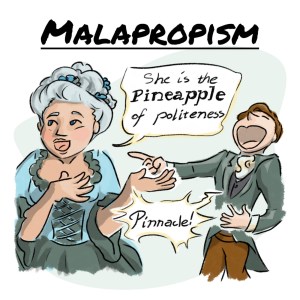
Family time. Try reading Sheridan’s The Rivals out loud. It’s a challenge but very funny. This play has the great Mrs. Malaprop who manages to misuse words in a most perplexing fashion. Your reading out loud will improve immeasurably, and you may even find that some of the expressions find their way in your life. Read Sheridan here.

Malapropism from GRE Word of the Day

A malapropism courtesy of GRE Word of the Day.

There are lots of great reads in the Booth library, whether intentionally collected or not.  We are just scratching the surface here!

Just a note: the books remaining on the library shelves today represent only a portion of the Booth collection, many of the more notable volumes being housed in the Academy of Art Library or Cranbrook Archives.

If you want to know what happened to the “victim” of the German prince after the period in question, reply in the comments and we can fill you in.

–Lynette Mayman, Collections Interpreter

Editor’s Note: Happy National Library Week, everyone!

Of Provenance and Harmony

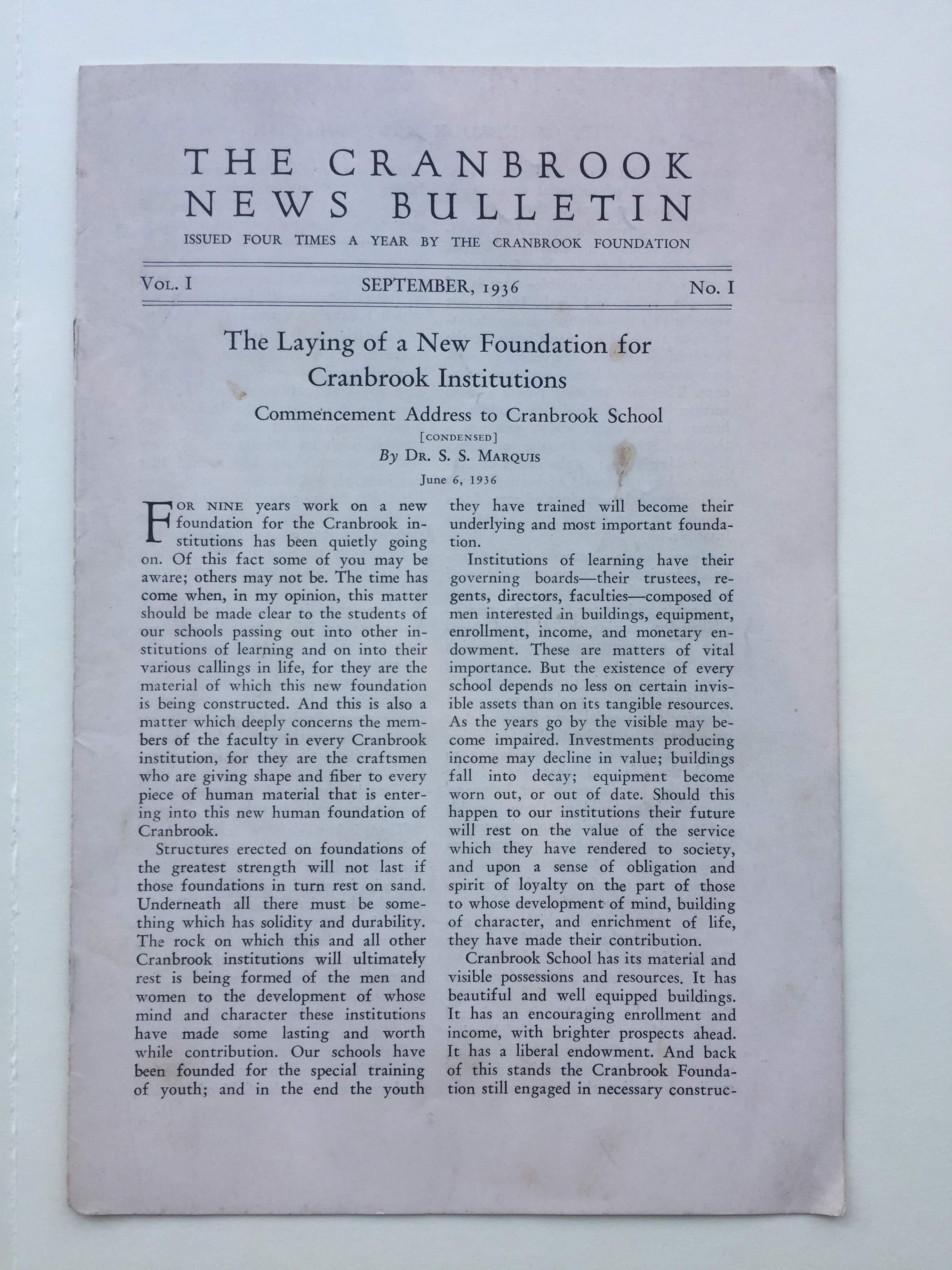
This is a story about the mistaken attribution of a quote, as told through the lens of archival provenance, that further deepened my own understanding and appreciation of the Cranbrook story. A researcher, referring to Cranbrook’s founder George Booth, once asked, “How did he do it? All of this! How do you motivate the finest artisans and craftsmen to come and help build a center for art and education?” It is a marvelous question, and surely one in which each inquirer may draw a different conclusion. When I get similar questions about how Cranbrook came to be, I always turn first to the words of George G. Booth himself, whether they be formalized in a trust document or business letter, crafted for a speech, or in the informal fluidity of a personal letter. Booth always acknowledged, in both his words and artistic compositions, the contributions of many, both contemporaneous and historic, in the building of Cranbrook . The image below shows a document included in the folders containing ‘Talks, 1902-1942’ in the Biographical series of the George G. Booth Papers. At some point during their administrative or archival custody, the talks were enumerated and this one is identified as number 21 with a circa date of 1936. Naturally, I have wondered exactly when and where he gave this talk.

1981-01 1-20 001

The Laying of a New Foundation for Cranbrook Institutions, a document included among the talks of George Gough Booth. Cranbrook Archives.

In my work at Cranbrook Archives, I have observed many times that the answers we find depend upon the phrasing or precision of the questions we ask. I have also learned to remain attentive to questions when I think I have exhausted the search, as oftentimes I have found an answer when I am no longer looking for it. I recently quoted from this talk to emphasize the trajectory from vision and ideal, through words, drawings, and activity to a tangible object or building:

“… the Cranbrook Foundation, dealing with things material and visible, rests in turn upon another foundation made up of things invisible – that is, of thought, vision, and ideals… No product of human hands exists which was not a thought before it became a thing.”

Shortly thereafter, I was researching two reference requests that took me into the Cranbrook series of the Samuel Simpson Marquis Papers, wherein I discovered the original version of the talk with pencil edits to truncate it for publication in The Cranbrook News Bulletin, September 1936. It was identified as a Commencement Address to Cranbrook School by Dr. S. S. Marquis on June 6, 1936. Along with it was a typescript version, the same as the one in Booth’s papers, and a letter from the Executive Secretary of the Cranbrook Foundation, William A. Frayer, which tells us that Marquis had encouraged Frayer to digest the talk for its publication.

1983-07 2-13 004

The Cranbrook News Bulletin, Vol. I, No. I, September 1936. Cranbrook Archives.

Although I had found my quote in a talk among those of George Booth, given to the Archives as part of his papers, here was definitive proof that it was actually part of an address given by Marquis! This discovery highlights the important, but sometimes misleading, concept of provenance of an archival collection, and how archivists continually refine understanding of their collections, even long after they are opened to researchers. In an archival setting, provenance relates to the administrative origin of a collection and ensures that the collection remains intact so that the records accumulated by one person or office are not intermingled with those of another. From an archival standpoint, the talk still belongs in Booth’s Papers, but will now be understood as something he collected rather than created. The principle of provenance dictates that it shall remain there, albeit with a note to advise future archivists and researchers of its authorship. We cannot know for certain how and when and by whose hand it came to be in his papers, but this new knowledge simply adds another layer to the relationship between Booth and Marquis, and the harmony of their thinking.

#1983-07.31

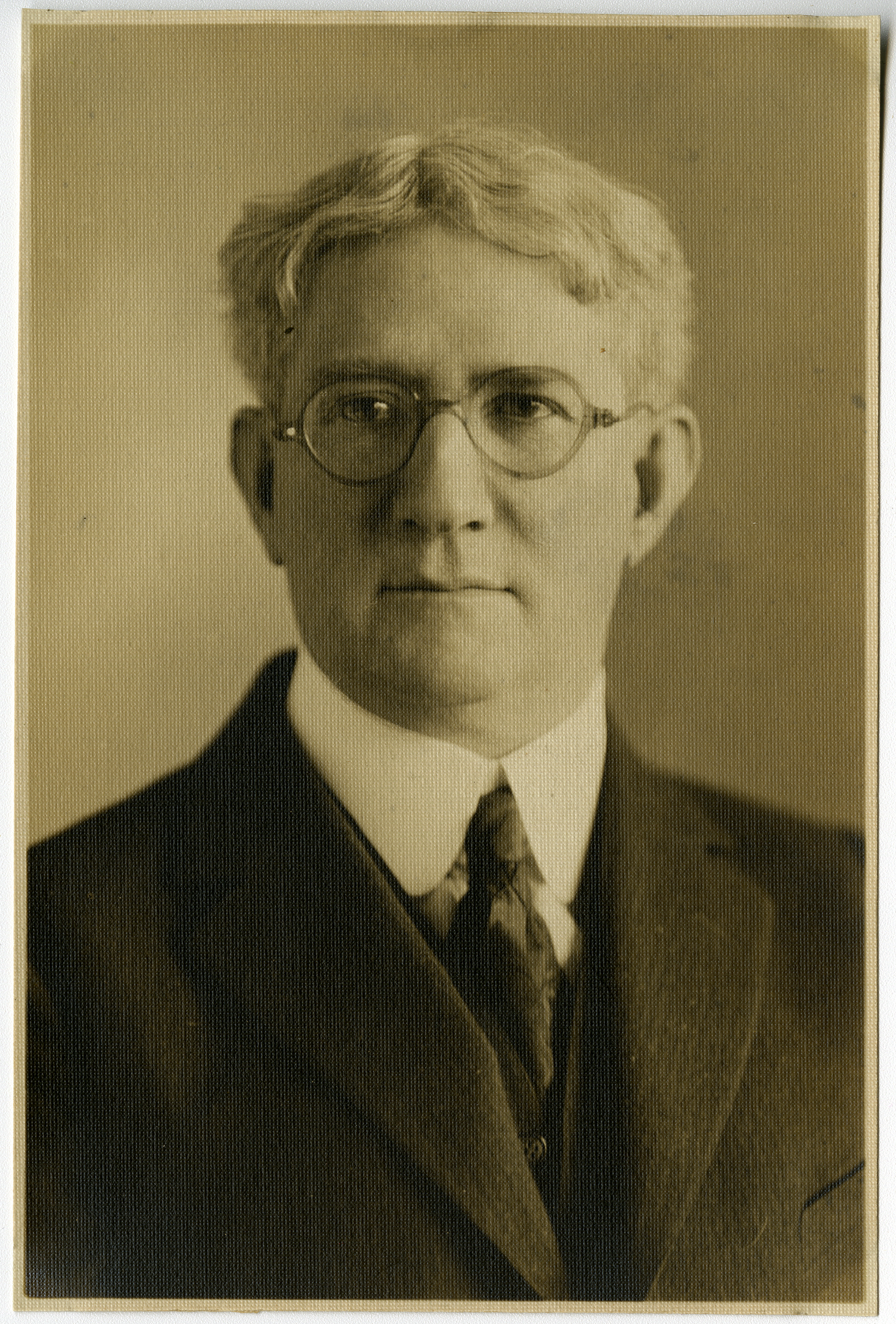
Rev. Dr. Samuel Simpson Marquis, circa 1906-1915. Cranbrook Archives.

Booth had first met Marquis as the Dean of St. Paul’s Cathedral and subsequently as visiting clergy when missionary services were conducted by Henry Wood Booth in the Meeting House (1918-1923). In October 1923, when the Meeting House began to be used for Bloomfield Hills School (later Brookside School Cranbrook), it was to Marquis that Booth turned with the idea of building a church and school. Moving to Bloomfield Hills the following year, Marquis remained part of the Cranbrook story as rector, teacher, trustee, and friend until his death in 1948.

Laura MacNewman, Associate Archivist


Welcome Nichole Manlove, Archives Assistant!

Nicole Full Size

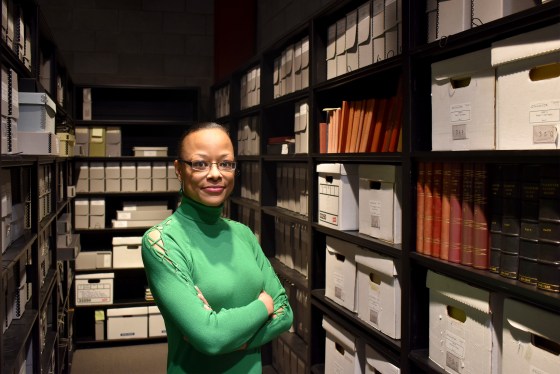
Cranbrook Archives welcomes our newest team member, Nichole Manlove, in the role of Archives Assistant. Nichole received her undergraduate degree in Advertising from Michigan State University and a Master of Library and Information Science degree and Graduate Certificate in Archival Administration  from Wayne State University. Prior to Cranbrook, Nichole most recently worked as a Project Archivist at the Bentley Historical Library, University of Michigan, where she helped preserve, arrange, describe, and make accessible a wide range of archival collections. Nichole has also held several interesting internships and volunteer positions with the Charles H. Wright Museum of African American History, the Detroit Institute of Arts Research Library and Archives, and the Detroit Historical Society Collections Resource Center.

From costume design sketches, 19th century correspondence, and papers of civil rights leaders to broadcast video recordings, student scrapbooks, and architectural drawings of major area firms, Nichole has pretty much seen it all. This wealth of experience will be invaluable in her role at Cranbrook Archives, where she’ll be assisting with the care, management, and discovery of our collections. Nichole is quickly absorbing Cranbrook’s history and our Archives operations in her first few weeks. She’s already deep into arranging and describing a complex collection, and is also working on populating our new collection management system to greatly improve patron access. We are happy to have her and look forward to great things!

Deborah Rice, Head Archivist

Carter for President

Recently, I discovered a few objects that had belonged to Melvyn or Sara Smith, the builders of our Frank Lloyd Wright Smith House. They were from 1976 — the year of the United States Bicentennial and a presidential election.

I discovered that the Smiths were supporters of soon-to-be President Jimmy Carter. Since we just had our presidential primary here in Michigan, I thought they were appropriate to share. 

So, why were the Smiths such big supporters of Carter? They were supporters of the Democratic Party in general.

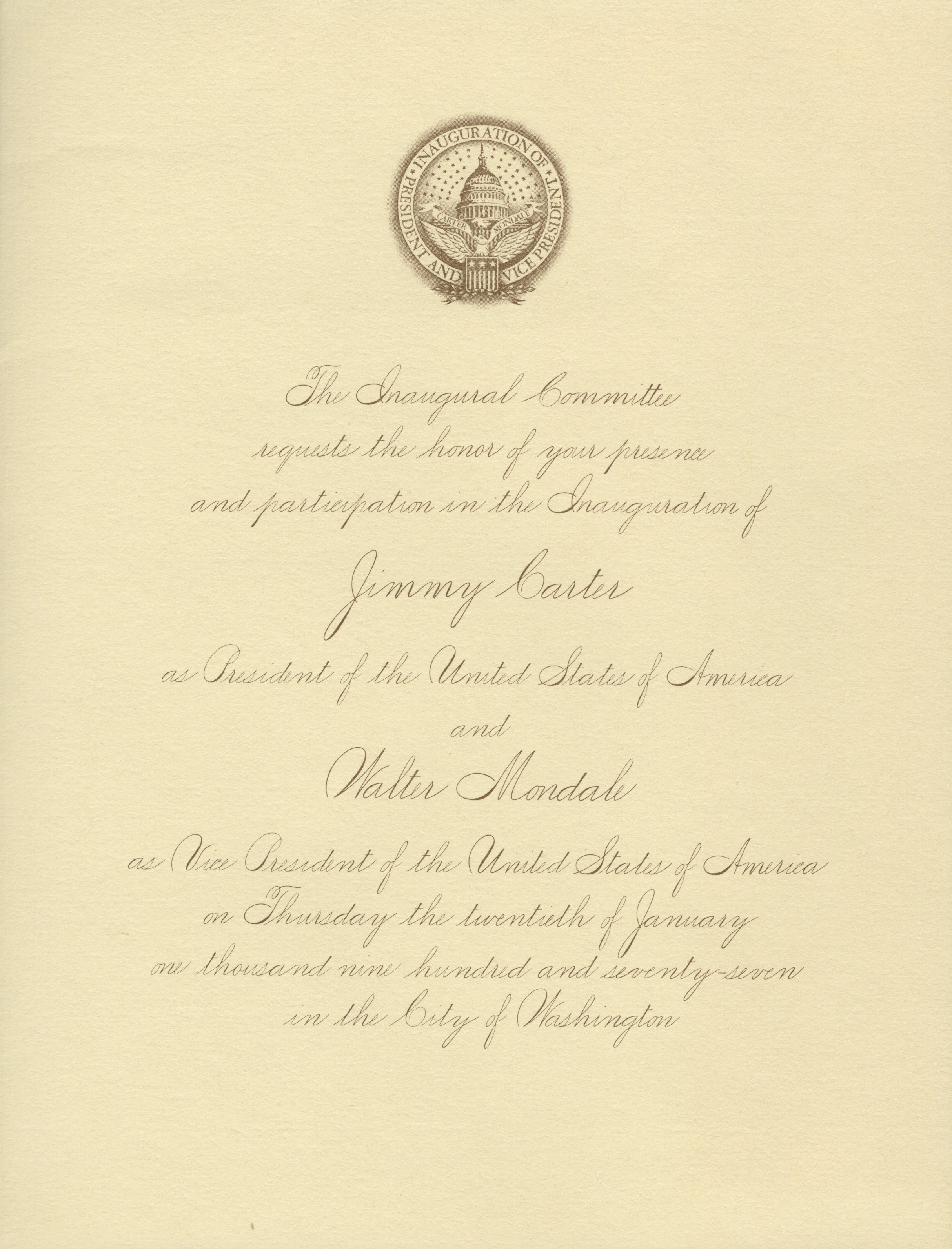
Their son Robert Smith was the National Director of Youth Affairs for the Democratic Party in the 1970s. Melvyn and Sara held fundraisers at their home for Democratic candidates. Melvyn was a member of The President’s Club of the Democratic Party. And the Smiths attended the Inauguration of Jimmy Carter in 1977.

Melvyn and Sara Smith's invitation to the Inauguration of President Jimmy Carter and Walter Mondale, January 20, 1977. Melvyn Maxwell and Sara Evelyn Smith Papers, Cranbrook Archives.

Melvyn and Sara Smith’s invitation to the Inauguration of President Jimmy Carter and Vice President Walter Mondale, January 20, 1977. Melvyn Maxwell and Sara Evelyn Smith Papers, Cranbrook Archives.

Leslie S. Mio, Associate Registrar

Discovering the University of Michigan in the collections of Cranbrook Archives

In October, the University of Michigan Osher Lifelong Learning group visited Cranbrook for a lecture, luncheon, and tours of our historic houses, the Art Museum, and Cranbrook Archives. In gathering materials related to the university, I found that my growing archival display began to tell a wonderful story of the early relationship between the Booth family and the University of Michigan, predominantly between 1918 and 1924. The story begins with the friendship of George Booth and Emil Lorch.

Born in Detroit in 1870, Lorch had studied at MIT and Paris, before graduating Master of Arts at Harvard in 1903. In 1906, he arrived at the University of Michigan to establish the School of Architecture, which remained a unit of the School of Engineering until 1931. The correspondence between Booth and Lorch covers a manifold of topics over many years.
 

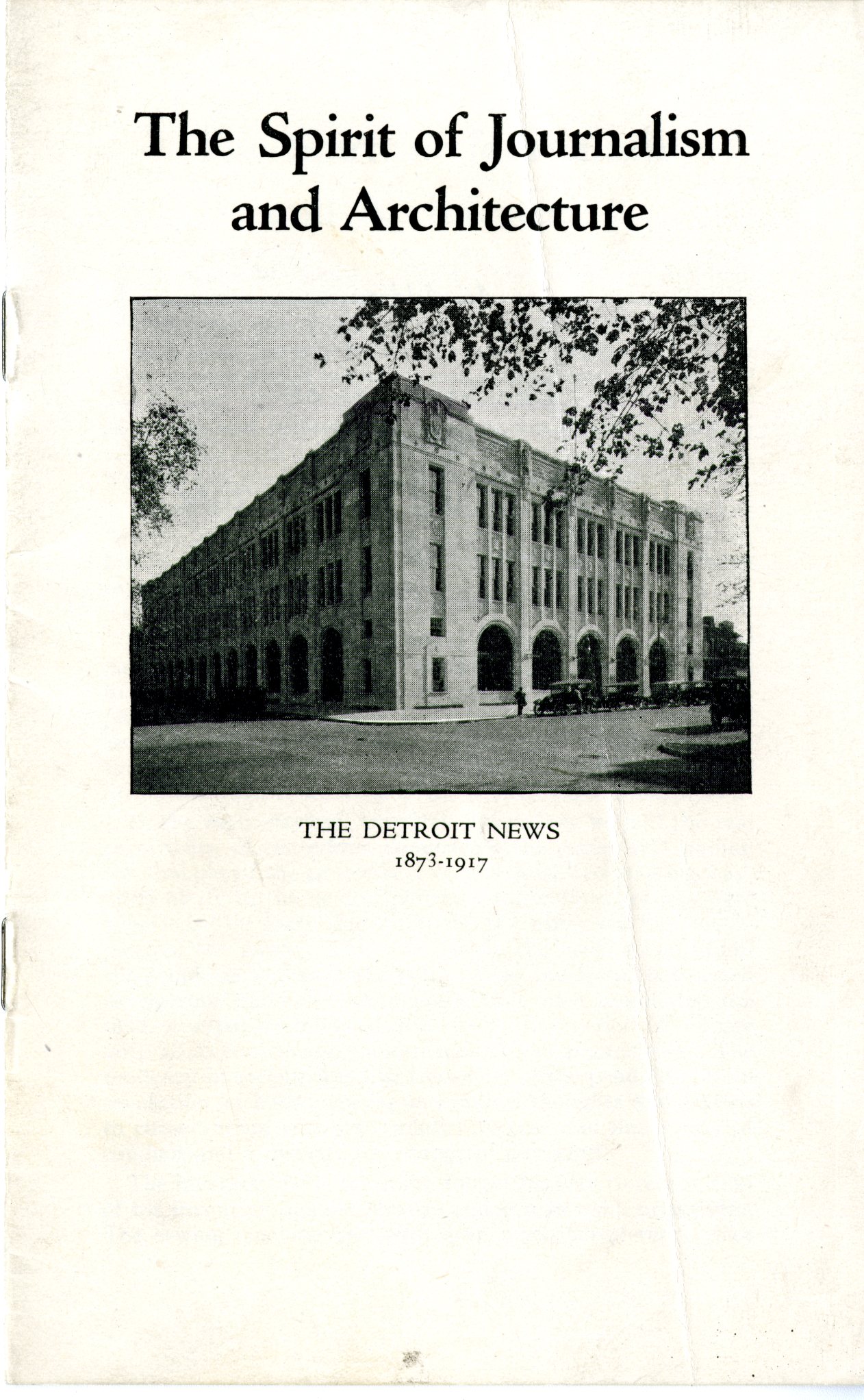
On January 11, 1918, George Booth gave an address to the students of the departments of Journalism and Architecture at the university, entitled The Spirit of Journalism and Architecture which focused on the development of the Detroit News business and the new News building, which had been recently completed.

1981-01 1-19

Program for an address, The Spirit of Journalism and Architecture, delivered by George Booth at the University of Michigan, January 11, 1918. Copyright Cranbrook Archives.

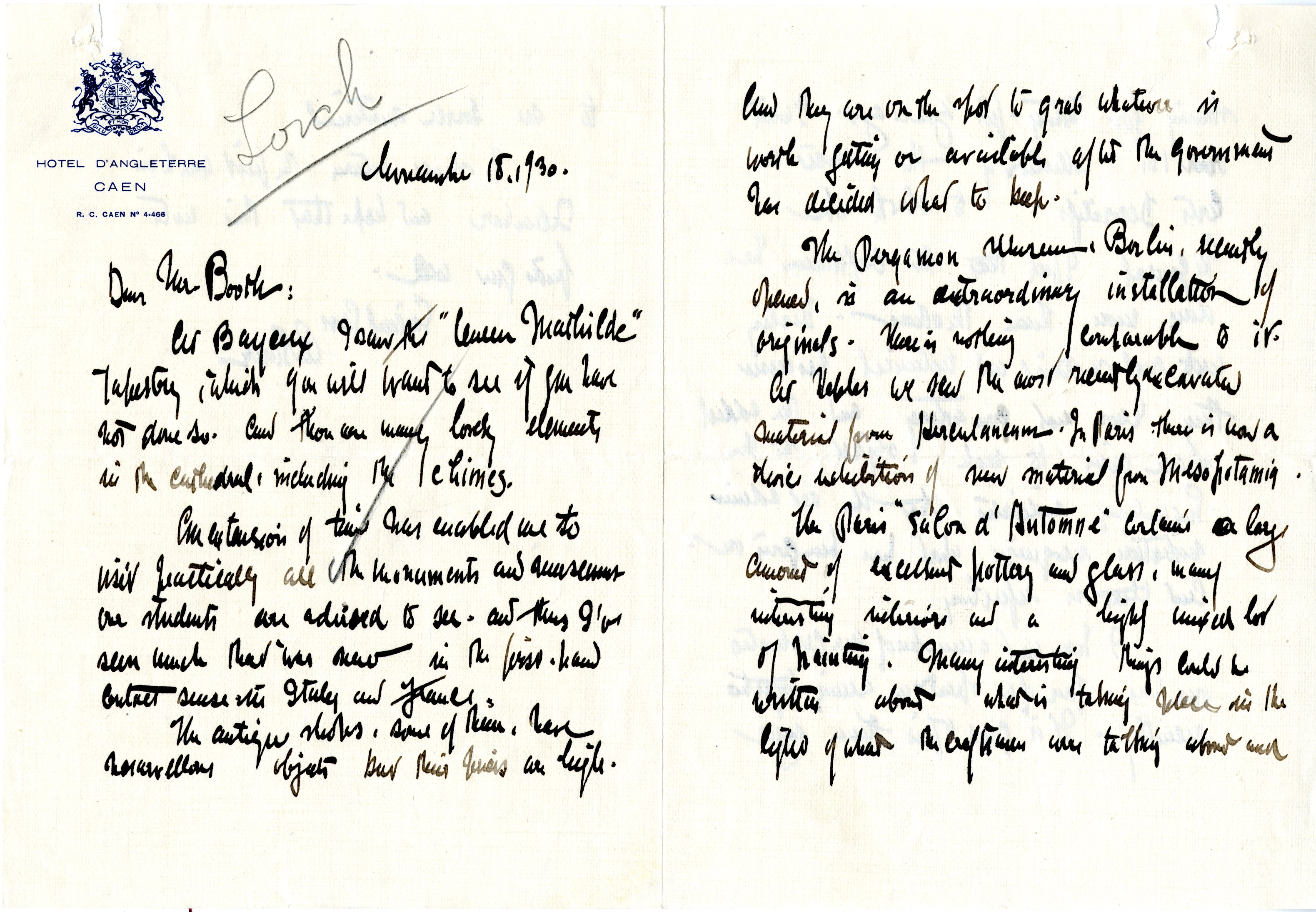
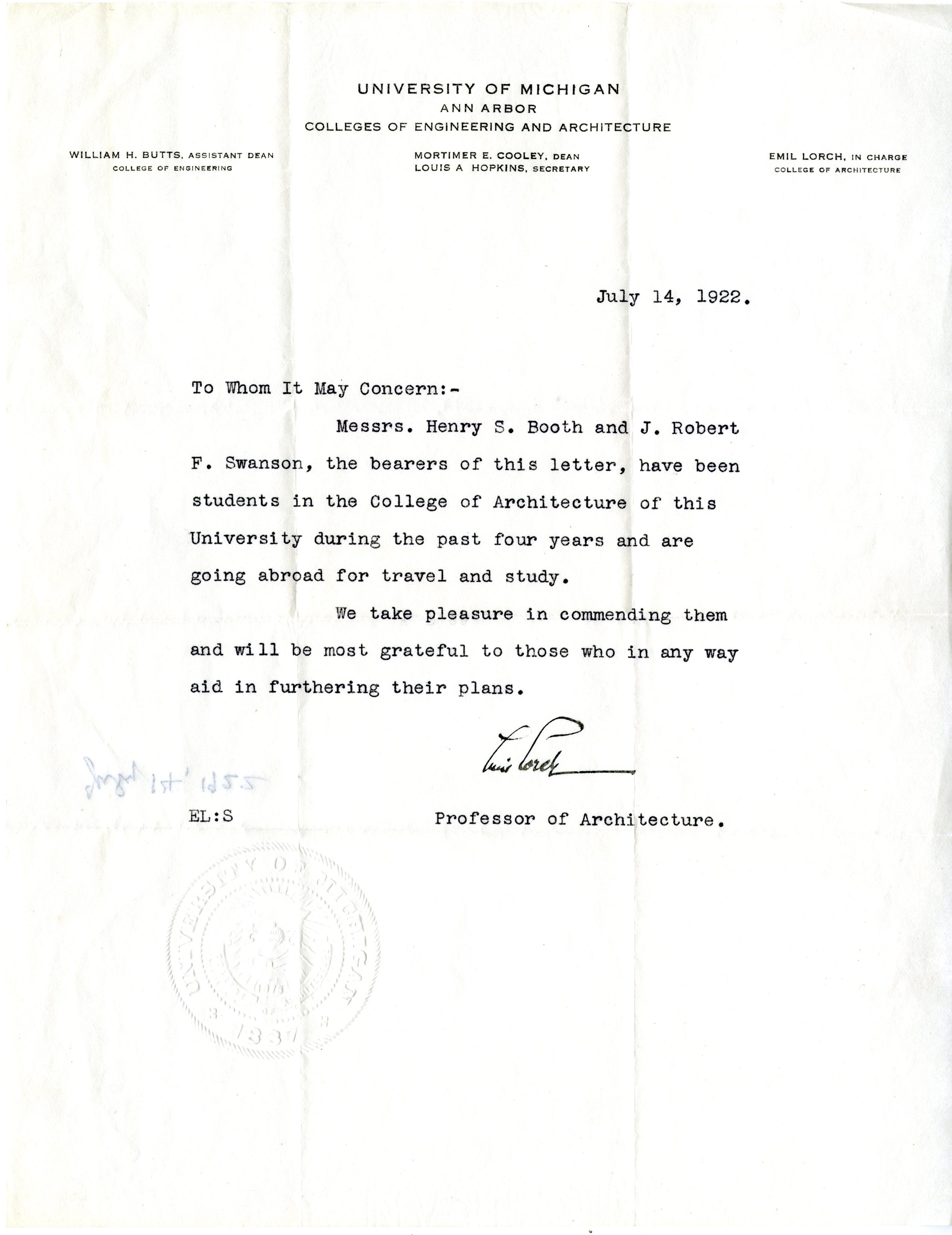
Later that year, in October, George’s son, Henry Scripps Booth began his studies in architecture at the university. It was there that he met J. Robert F. Swanson, with whom he traveled Europe for ten months beginning in June 1922, and later established the architectural practice Swanson and Booth between 1924 and 1926. Henry took with him letters of endorsement to help facilitate access to architectural treasures on their journey, including one from Professor Lorch:

1982-05 5-7 EL

Letter of introduction for Henry Booth from Emil Lorch, July 17, 1922. Courtesy Cranbrook Archives.

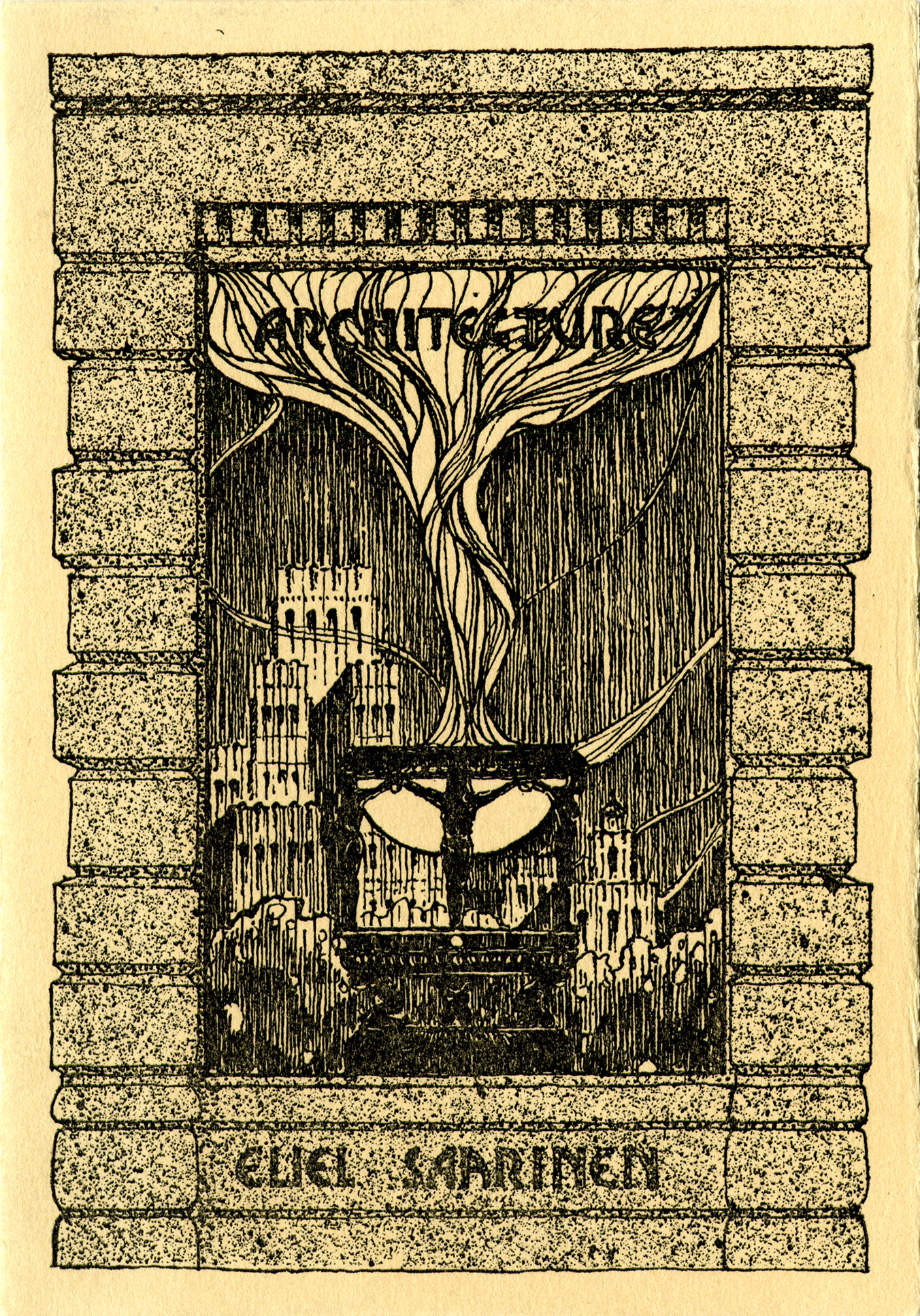
Eliel Saarinen arrived at the University of Michigan as a Visiting Professor at the invitation of Emil Lorch the next year, staying from September 1923 through 1925. To extend a warm welcome, Henry wrote, costumed, and performed in a pageant in honor of Saarinen. Many of Henry’s classmates performed in the pageant, including Ralph Calder and J. Robert F. Swanson, who also designed the program. The event took place on December 8, 1923, in the Michigan Union ballroom. Many of the members of the Michigan Society of Architects and the Michigan branch of the American Institute of Architects were present. During the dinner, George G. Booth made the principal address of welcome to Eliel.

1990-08 1-14 cover

Program for A Pageant of Arts and Crafts, a Reception for Eliel Saarinen, program design by J. Robert F. Swanson, December 1923. Courtesy Cranbrook Archives.

1990-08 1-14 p2

Interior of the program. Courtesy Cranbrook Archives.

Henry and Robert graduated from the University of Michigan in 1924. Graduating with them was Ralph Calder, who was also one of the first two students to win the George G. Booth Traveling Fellowship, with which he traveled to England, France, and Italy. The fellowship continues to this day. Calder was among the original staff of the Cranbrook Architectural Office, working on Cranbrook School and Thornlea House. He later went on to design many buildings for colleges and universities in Michigan, including Michigan State University, Western Michigan University, Wayne State University, Hope College, and Hillsdale College.

1981-01 13-20 p1

Letter concerning the Booth Traveling Fellowship from the first recipient Ralph Calder to George G. Booth, June 12, 1924. Notice the Michigan logo on the letterhead. Courtesy Cranbrook Archives.

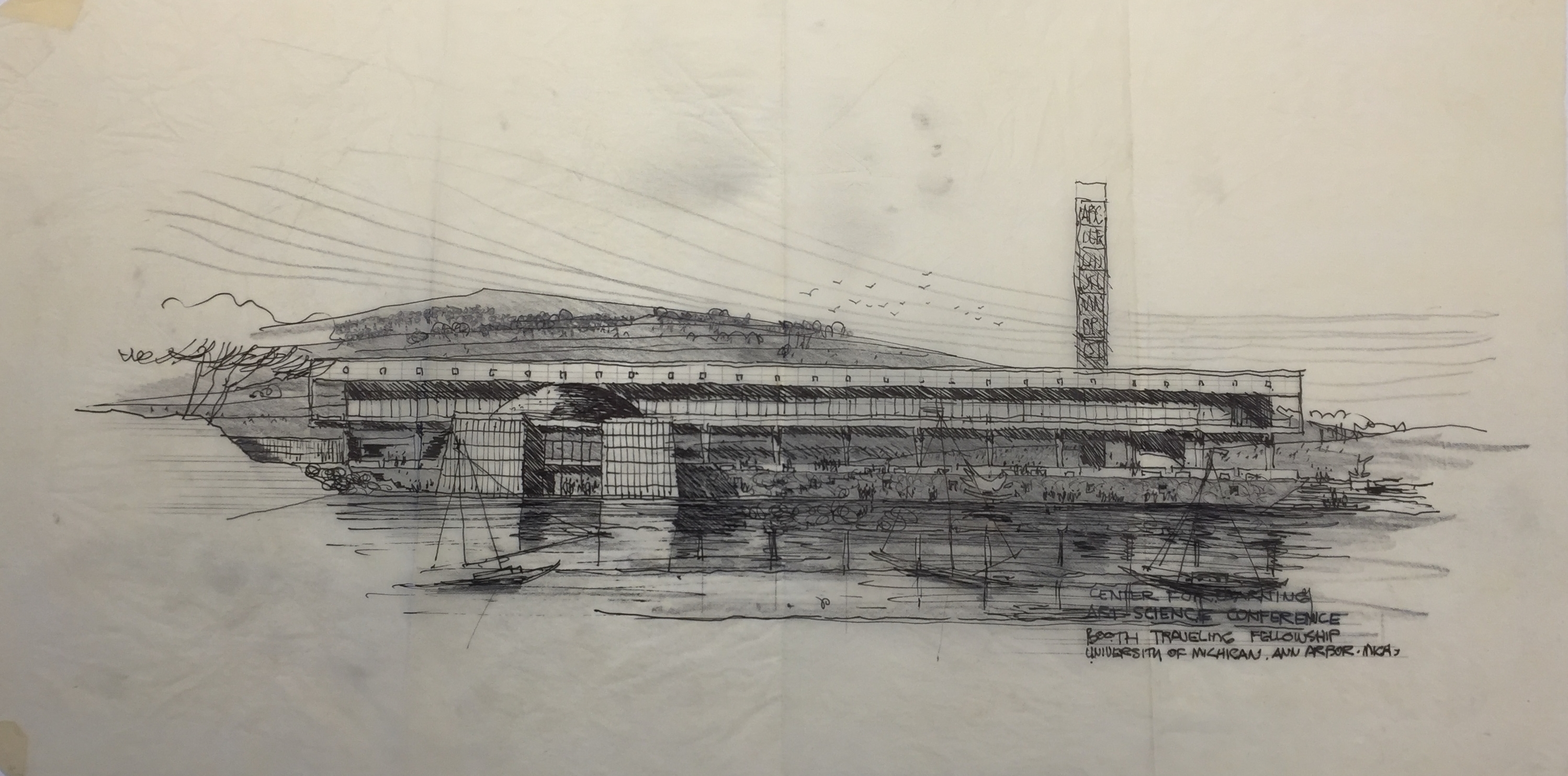
In another Cranbrook connection, Ralph Rapson submitted a Fellowship entry in 1938, and, while he didn’t win, his submission impressed Eliel Saarinen so much that Rapson was given a scholarship to the Art Academy.

AD.26.01.03

Ralph Rapson’s submission to the George G. Booth Traveling Fellowship, AD.26.01.03. Ralph Rapson Architectural Drawing Collection, Cranbrook Archives. Gift of Rip Rapson.

There is much more in our collections about the University of Michigan; this post has selected items covering only the early years. In preparing for the Osher tour, I realized that, while the contents of processed archival collections remain the same, what we find in them depends on the question being asked. The collections of George G. Booth, Henry S. Booth, the Cranbrook Foundation, Swanson Associates, Inc. are among the most highly used and yet there is always something new to learn, something wonderful to discover.

— Laura MacNewman, Associate Archivist

Create a website or blog at WordPress.com