New Center Logo & A Fond Farewell

The Cranbrook Center for Collections and Research has officially launched our new logo! What follows is a description of where each of the letters comes from in the history of Cranbrook or the location on the campus!

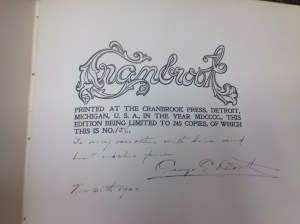
The (first) C in Cranbrook is from the logo George Gough Booth created for the Cranbrook Press in 1901, three years before he and his wife Ellen established their estate in Bloomfield Hills.

IMG_0361

The Cranbrook Press (1900-1902) was founded by George Booth in the attic of the Detroit Evening News Building.  Booth emulated the work of William Morris and his Kelmscott Press, not just in design but also in the level of hand-craftsmanship.

Continue reading

Tapestries – The Fabric of Society

As part of a module assignment for my MA in Archives Administration with Aberystwyth University (Wales), I have been researching a selection of tapestries that George Gough Booth purchased and commissioned from Morris & Co., Herter Looms, and Edgewater Tapestry Looms. I chose the theme of tapestry and time, inspired by Francis Thomson’s idea of tapestry as “mirror of history”. I was particularly interested in the Morris & Co. case study because I much admire William Morris as an artist and social reformer. Although the Morris & Co. tapestries that George Booth purchased were made after Morris’ death in 1896, they were made under the supervision of his former student, J.H. Dearle, who became Art Director in 1905.

Continue reading

Photo Friday: “Things Architectural”

In November 1932, Cranbrook Academy of Art’s Executive Secretary, Richard Raseman, invited architects from the Detroit area to come to Cranbrook for “dinner and discussion of things Architectural.” The following Cranbrook School news article describes the evening.


Architectural

“Architects Gather Here for Forum,” The Crane, 20 Dec 1932

In addition to Raseman, Eliel Saarinen, Albert Kahn, and Emil Lorch, attendees included former Kahn associate Ernest Wilby and Ralph Hammett.

Leslie S. Edwards, Head Archivist


A Treasure Hunt in the Archives

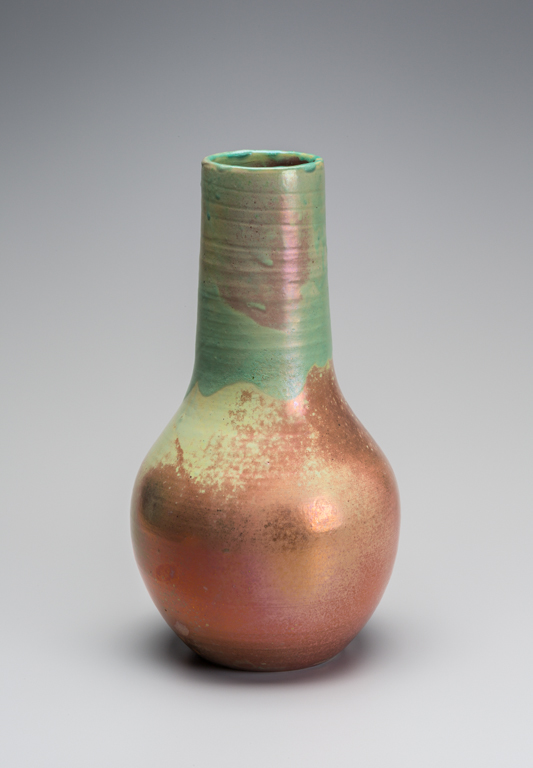
I have had the pleasure of spending much of my time over the last year going through the Cranbrook Archives in search of information about Pewabic Pottery.  This is in preparation for the upcoming exhibition Simple Forms, Stunning Glazes: The Gerald W. McNeely Pewabic Pottery Collection opening December 12. Through the Archives’ amazing resources, including inventories, architectural drawings, correspondence, receipts, historic photographs, and even meeting notes from the founding of Cranbrook School, one of the most awesome discoveries was regarding one of the Pewabic Pottery vases in our collection.

Cranbrook Educational Community Collection, CEC 276 Photographers: Tim Thayer and R. H. Hensleigh

Cranbrook Educational Community Collection, CEC 276
Photographers: Tim Thayer and R. H. Hensleigh

Through inventories we can trace the placement of this vase from during its life in Cranbrook House. It was located in the Living Room in 1921, and by 1933 had been relocated to the Sunset Room. In 1937, George Booth notes the work by its size and a brief description, “14 inch vase- luster- Pewabic.” Cranbrook has 15 Pewabic works purchased during Booth’s lifetime which now reside between the collections of the Art Museum and the Cranbrook Educational Community. While I am still working to place the pieces of the puzzle together to see if we can do this for other work, it may not be possible as some of the receipts and notations are much more cryptic including only “Pewabic Vase” with no dimensions, or description.

It’s treasure hunts like these that make the Archives such a great place to spend my time as you never know what you might find and where it will take you!

Stefanie Dlugosz-Acton, Collections Fellow, Center for Collections and Research

Hugh Ferriss: Visionary Illustrator

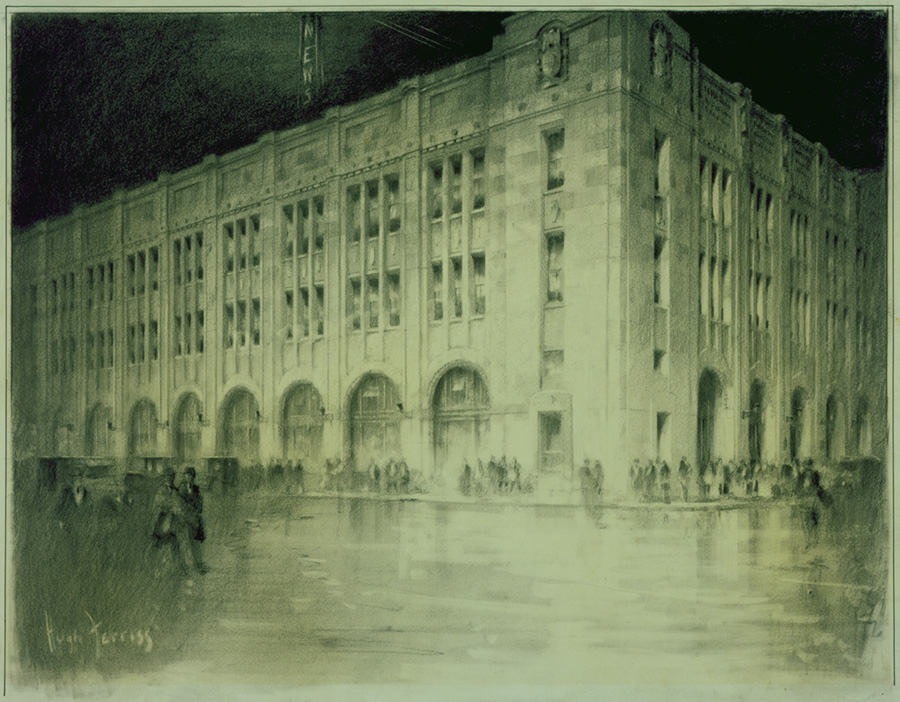
I came across Hugh Ferriss’s book The Metropolis of Tomorrow while assisting Judy Dyki, Director of the Cranbrook Academy of Art Library, in curating an exhibit of some of our rare and special collection books for the Bloomfield Township Public Library.  Ferriss (1889-1962) was a degreed architect, but he was most sought after for his architectural renderings of buildings. He developed an idiosyncratic style, often depicting buildings at night, seemingly enveloped in a kind of mist, with streetlights and the rays of the moon serving as illumination. I find Ferriss’s work intriguing because his drawings were so different from the typical architectural renderings of the 1920s to 1950s. The gothic yet futurist sensibility displayed in his work has influenced contemporary filmmakers like Tim Burton and Christopher Nolan. Ferriss has several connections to Cranbrook, the first being the drawing of the Detroit News Building that is in the collection of the Cranbrook Art Museum.

Hugh Ferriss in his studio, ca ? Photographer Stadler. Courtesy Creative Commons.

Hugh Ferriss in his studio, ca 1925. Photo by Stadler, New York. Courtesy Creative Commons.

The history of the Detroit News Building drawing is an interesting one. The J.L. Hudson Company, in honor of the company’s 46th anniversary and the opening of the new Detroit Institute of Arts building in 1927, commissioned Hugh Ferriss to create a series of architectural renderings of Detroit buildings, both extant and proposed, that contributed to Detroit’s rapidly changing skyline.  Twenty-two of these drawings where exhibited in the windows of Hudson’s downtown store in August 1927. Among these were two renderings of Eliel Saarinen’s proposed plan for a new Detroit Civic Center complex.  Also included was this drawing of the Detroit News Building. The Detroit News building, which opened in 1917, was commissioned by George Gough Booth, and designed by architect Albert Kahn.

Drawing of the Detroit News Building. Courtesy Cranbrook Art Museum (CAM1955.400)

Drawing of the Detroit News Building. Courtesy Cranbrook Art Museum. (CAM1955.400)

Booth, president of the Detroit News (and Cranbrook’s founder) purchased the drawing of the Detroit News Building directly from J.L. Hudson’s in October 1927 for the Academy of Art collections. (Accessions Book No. 1, Cranbrook Academy of Art).  To coinicide with the exhibition, J.L. Hudson Co. published a commemorative booklet entitled For a Greater Detroit, which contained Ferriss’s drawings and included editorials by various community leaders that discussed Detroit’s future. A copy of this booklet can be found in the Edsel Ford Office Papers at the Benson Ford Research Center. Ferriss’s drawing was transferred from the Academy of Art to the Art Museum in 1955, and is considered one of the museum’s “One Hundred Treasures”.

Stay tuned for a forthcoming blog post about Hugh Ferriss’s further connections to Cranbrook

Mary Beth Kreiner, Librarian, Cranbrook Academy of Art Library

Editor’s note: For additional information about the work of Hugh Ferriss, check out the Avery Architectural and Fine Arts Library at Columbia University.

Anne Morrow Lindbergh: The Cranbrook Connection

The Archives has in its collection photographs of a sculpture modeled by Anne Morrow Lindbergh. How did Lindbergh come to study at Cranbrook? In April 1942, Charles Lindbergh, at the invitation of Henry Ford, came to metro-Detroit as a technical consultant to assist with retrofitting the Willow Run plant from auto manufacturing to bomber production. In July, the Lindberghs moved to Bloomfield Hills and signed a one-year lease for a furnished home then owned by Kathleen Belknap. Originally known as “Stonelea,” the home, designed by Albert Kahn in 1923, is located at the corner of Cranbrook Road and Woodward Avenue and is now known as Lyon House. The Lindberghs were quickly welcomed to the neighborhood by Carolyn Farr Booth (wife of Henry Scripps Booth). During the summer of 1943, Anne enrolled at the Cranbrook Academy of Art where she studied modeling and sculpture with sculptor Janet DeCoux, and art history with Ernst Scheyer. Since Charles was away much of the time, Anne asked Janet and her partner, Eliza Miller, to move in with her to help raise her four children. Thus began a friendship among the three women that lasted until the end of Mrs. Lindbergh’s life. (Approximately fifty letters, 1944-1952, from Anne Morrow Lindbergh to DeCoux can be found in the Janet De Coux Papers at the Smithsonian’s Archives of American Art.)
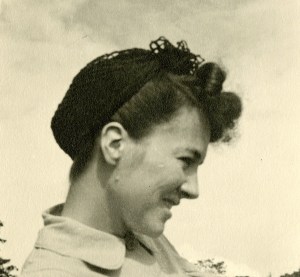
Anne Morrow Lindbergh

Anne Morrow Lindbergh, 1943. Cranbrook Archives.

At the Academy, Anne was treated not as the wife of a celebrity or even as a grieving mother, but as any other student. In her diaries (published in “War Within and Without”) Anne wrote of the freedom she experienced at Cranbrook “where people take me on faith.” Work in the studio, exhibitions at the Art Museum, and parties with music and conversation about art, books, and writing allowed Anne the freedom to “give my true self as I have never done in a group of people before.” She developed social courage and friendships with Janet and Eliza, Carl and Olga Milles, Ernst Scheyer, and neighbors like Kate Thompson Bromley. Her work as a sculptor taught her to see the world through a different lens – she learned how to sketch the human figure and transpose her ideas into her sculpture and it both surprised and excited her that she could actually see beauty in a sculpture, especially one made of her own hands. She was inspired by the natural beauty of Cranbrook, cross-country skiing on the grounds, and writing in her brown trailer in the woods. (Anne wrote her novella “The Steep Ascent” while at Cranbrook.) She relished the time with her children, and often walked them down the hill to Brookside School. Dinners with the Saarinens were exhilarating where they talked of “cities of the future.”

AnneLindbergh021

Anne Morrow Lindbergh picnicking at the Greek Theatre at Cranbrook, Jun 1944. Copyright The Detroit News.

In August 1943, Kathleen Belknap decided to sell the home, then known as Belwood, and the Lindberghs moved into a home at 411 Goodhue Road, behind Christ Church Cranbrook, for the next year. The two years spent at Cranbrook forever changed Anne spiritually. She discovered self-confidence, and that people liked her for who she was. After the Lindberghs returned to the east coast in 1944, Anne missed her Cranbrook friends and the life she had discovered here and wrote that she felt “only half alive since I left Cranbrook.” The Lindbergh family continued to return to the Detroit area to visit Charles’ mother Evangeline at her Grosse Pointe residence until she passed away in 1954. In January 1974, at the request of the Class of 1974, Kingswood School headmaster Wilfred Hemmer invited Anne to be the school’s forty-fourth commencement speaker.

Leslie S. Edwards, Head Archivist

The Case of the Bogdani

The other night I saw the most interesting show on PBS called “Fake or Forgery.” An investigative journalist and two noted art sleuths joined forces with cutting edge scientists to discover the truth behind a painting the owner thought to be a Degas. They thoroughly searched the provenance of the painting, and used scientific methods like X-ray fluorescence (XRF) to determine if the pigments used in the painting were compatible with Degas’ known palette. It made me think of the many works of art across the Cranbrook campus that could benefit from in-depth scientific research like this. And, it prompted me to relay the story of a discovery the archives staff made several years ago.

The painting we fondly refer to as “The Bogdani” was originally purchased by George Booth for Kingswood School for Girls, where it hung in the Domestic Science Dining Room. Purportedly painted by noted Hungarian Jakob Bogdani (1658-1724), the still life was found in a storage room badly in need of cleaning and restoration.

The painting was conserved by Ken Katz of Conservation & Museum Services in Detroit. During the several months of conservation, we were able to visit the studio in order to see the work in process, and the results were amazing.

during

During conservation.

As I looked closely at the work, my heart almost stopped beating. Bogdani’s signature was gone, and in its place was another name! My first thought was how hard I had lobbied to get the painting conserved and now it was a forgery!  However, after doing additional research, I discovered that the artist, Tobias Stranover (1684-1731) was actually Bogdani’s son-in-law and former student. Phew! Although this meant the still life was painted around 1810 instead of 1790, at least we still had an original painted by an artist who, with his father-in-law, provided the finest exotic bird and animal paintings in England. The painting currently hangs in the reading room of Cranbrook Archives.

Before conservation.

Before conservation.

after

After conservation, details in the painting can be seen can be seen more clearly, and the brilliance of the colors pop.


Leslie S. Edwards, Head Archivist


Photo Friday: Spectacular Strikeouts

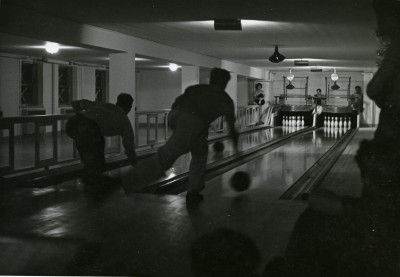
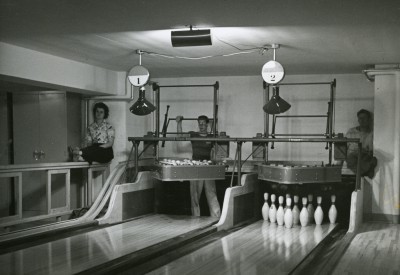
bowling alley_ CAA_1

Academy of Art students bowling. Courtesy Cranbrook Archives.

Academy of Art students waiting to reset pins. Courtesy Cranbrook Archives.

Today’s photos show Academy of Art students having some fun bowling! Bowling was popular on Cranbrook’s campus with alleys in both Cranbrook School for Boys and Kingswood School for Girls.  Kingswood School, which had the earliest alleys on campus, still uses their bowling alleys as part of the physical education curriculum.

The Academy of Art bowling lanes were located in the basement of the Art Museum and were for Academy of Art student and faculty use.  These lanes  did not have  mechanical pinsetters and therefore had to be manually set. In 1944 the lanes were removed from the Art Museum to allow for more storage for artworks, and relocated to the lower level of the Academic Building at Cranbrook School (now called Hoey Hall) under the study hall.

Stefanie Kae Dlugosz, Collections Fellow, Center for Collections and Research

Highlighting Access: The Edward and Ruth Adler Schnee Papers

RuthBiopage

Recently the staff of the Cranbrook Archives announced the online addition of The Edward and Ruth Adler Schnee Papers which was  donated to the Archives in 2010.  While the website is not a biography of Ruth or Eddie’s life, it is a tribute to the work they created as evidenced by the materials in the collection. 

Archives Assistant Justine Tobiasz designed the web pages “drawing from Schnee’s designs and sketches.” She was inspired by, and wanted to pay tribute to, Schnee’s use of color  when creating the site about the collection.  Moving forward I hope that we can find ways to create sites for other collections. I think it’s a good way for us to use the incredible materials we have to convey a ‘whole picture’ view of our mind-blowing collections.” 

Working within the constraints of our web portal was very challenging – it did not allow free reign, and Justine had to find ways to display the content exactly how the staff wanted it to be.  All of the Archives staff worked collaboratively to create the content, digitize the images and post them up on CONTENTdm (our digital asset management system), and find external links to populate the design created by Justine.

Check out this addition and let us know what you think!

Stefanie Dlugosz, Collections Fellow, Center for Collections and Research & Justine Tobiasz, Archives Assistant

Object in Focus: “The Spirit of Nursing” Monument

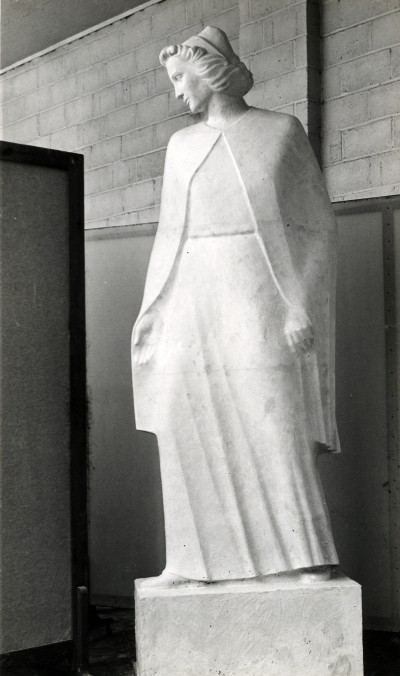
Army-Navy Nurse Memorial

The Army-Navy Nurse Memorial, 1938. Cranbrook Archives.

Although there are many connections to Veteran’s Day within the Cranbrook community, the story I would like to share today is about a woman who left behind a Hollywood movie and stage career to serve her country. Frances Rich (1910-2007)  enlisted in the United States Naval Reserve during World War II and left a lasting legacy for all who visit Arlington National Cemetery.

The daughter of silent film star Irene Rich and the adopted daughter of naval officer Charles Rich, Frances was born in Spokane, WA in 1910. She received her bachelor’s degree in English Literature from Smith College in 1931. Between the years of 1932-1933, Rich appeared in six Hollywood films and one Broadway play. During this time she also became very interested in sculpture and started taking drawing, fresco painting, and clay carving classes in Paris, Rome, and Boston.

While in Paris, Rich met the sculptress Malvina Hoffman (1885-1966) and studied with her for two years. Upon returning to the United States, she continued to hone her craft at the School of the Museum of Fine Arts in Boston. Between 1937-1940 she studied sculpture with Carl Milles at Cranbrook Academy of Art, whom she worked with for 18 years.

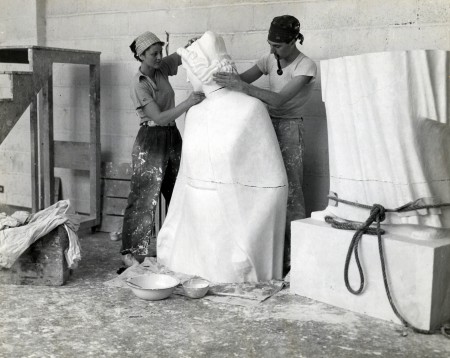
In 1942, Rich enlisted in the U.S. Naval Reserve as a Lieutenant Jr. Grade. She served as the Special Assistant to Mildred McAfee (1900-1994), director of WAVES (Women Accepted for Voluntary Emergency Service). Prior to her enlistment, and while a student at Cranbrook, Rich sculpted the Army-Navy Nurse Memorial (1938). One of her best-known works, the 10-foot high statue was made from Tennessee marble and commemorated nurses who died during military service. The statue resides at Arlington National Cemetery and is often referred to as the “Spirit of Nursing” monument.

Frances Rich working on sculpture

Frances Rich working on the Army-Navy Nurse Memorial at Cranbrook, 1938. Cranbrook Archives.

Today, along with all of the men and women who have bravely served our country, we salute Frances Rich.

Gina Tecos, Archivist

Create a website or blog at WordPress.com