Have you ever wondered what it would be like to cook in a kitchen designed by Frank Lloyd Wright? As the summer intern for the Center, I got a taste of the experience.
Clare in the Smith House workspace, August 2023. Photograph by Nina Blomfield.
My name is Clare Catallo and I am a 2020 graduate of Cranbrook Schools and a rising senior at Kalamazoo College. I am a history major and I am hoping to have a career in museum curation. As a Schools student, I had the opportunity to tour Cranbrook House, Saarinen House, and Smith House and learn about the designers and art movements that are intertwined with the legacy of the campus. It sparked my interest in design history and material culture, and I am very grateful to have spent the past two summers interning with the Center.
Studio glass by Sally Kovach (Cranbrook Academy of Art, Sculpture, 1975) comes alive in front of Clare’s camera. Photograph by Nina Blomfield.
Last year, I helped clean the exterior of the Frank Lloyd Wright-designed Smith House, inventory the books in Melvyn and Sara Smith’s collection, and do genealogical research. This summer, I have been researching the histories of household objects and conducting object photography at Smith House, as well as assisting with the Cranbrook Horizons-Upward Bound Architecture elective course. In August, I assisted the Center team with preparations for “At Home with the Smiths,” an immersive evening program held at the Frank Lloyd Wright-designed Smith House. Preparing for this event has brought my two summers here together as we work to emulate Melvyn and Sara Smith’s 1970s house parties.
Cookbooks from Melvyn and Sara Smith’s collection. Photograph by Nina Blomfield.
The cookbooks found at Smith House provide a glimpse into the family’s lifestyle and the home cooking trends of the 1960s and 1970s. Many of the Smiths’ cookbooks present an image of a modern, working woman who has more to do with her time than spend hours in the kitchen. World War II had made families rearrange their menus and ideas about food, due to rationing and shortages which continued even through to the postwar years. Menus became less formal, and fewer families had maids to cook for them.
These national trends align with Frank Lloyd Wright’s kitchen design, meant to function as a utilitarian, servantless workspace. Combined with the growing numbers of women in the workplace in the 1960s and 1970s, the demand for quick and easy recipes rose. This trend is reflected in the Smiths’ cookbooks like the excellently-titled Dinner Against the Clock (Quick, Sumptuous Meals With the Look and Taste of Infinite Leisure), and The Keep it Short and Simple Cookbook, the latter of which is dedicated to “every homemaker,” whether “housewife, career girl, or bachelor”. These recipes use few ingredients, many of which are ready-made, require a small number of utensils, and demand little time.
The Center has made a new film! As part of our recent gala fundraiser, A House Party at Two Cranbrooks, we worked with Elkhorn Entertainment & Media to produce a short documentary about the Booth family’s connections between England and Michigan. Today, we are excited to share the film with the wider world! Watch the film below, or here.
A Tale of Two Cranbrooks
Now that you’ve seen the new documentary, I thought I’d invite you “behind-the-scenes” into how A Tale of Two Cranbrooks came together.
Cinematographer Josh Samson and producer Vince Chavez film the Booth-made tea kettle in Cranbrook House. April 6, 2023. Photograph by Nina Blomfield.
As with all Center projects, I started work on the film in Cranbrook Archives. The Booth family records are extensive, and with our archivists Deborah Rice and Laura MacNewman, I spent several afternoons consulting documents (letters, photographs, manuscripts, scrapbooks, etc.) assembled by many generations of Booths to learn the family story. Henry Wood Booth’s handwritten The Annals of Cranbrook were especially helpful.
Detail of a postcard of Cranbrook, Kent with handwritten notes by Henry Wood Booth, from The Annals of Cranbrook manuscript, 1914. Cranbrook Archives.
Then, through the support of Bobbi and Stephen Polk and Ryan Polk, I travelled to England! I visited Cranbrook, Kent, spending time at Cranbrook Museum and Archives and at Cranbrook School. (You can watch a walking history tour I did in Cranbrook, Kent, here and learn more about the Booth family and my trip to England in my virtual lecture, Uncovering Cranbrook: Two Pilgrimages to Kentish Cranbrook.)
Each year, the Center staff does spring cleaning around the Cranbrook Community’s campus.
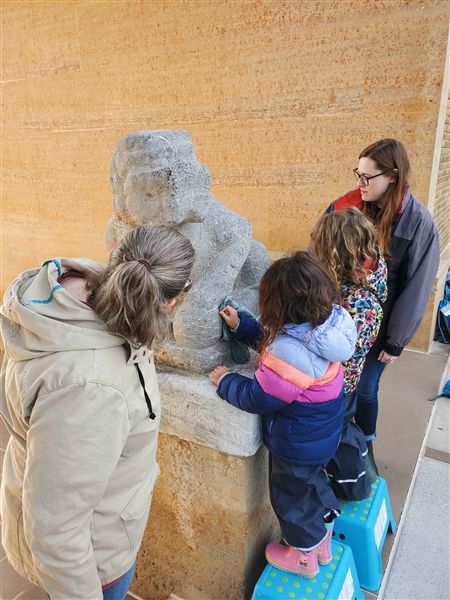
To kick off our spring cleaning this year, in collaboration with Meghan Morrow from Cranbrook Art Museum, Brookside’s Vlasic Early Childhood Center Pre K, JK, and multi-age classes helped us “awaken” the outdoor sculptures, covered for the winter, with a good-morning song. They helped remove the covers, check for any new cracks, and wipe and polish the sculptures.
Friends from the ECC help polish Marshall M. Fredericks’ TheThinker . . .
. . . and the ChineseLion at Cranbrook Art Museum. Both images are courtesy Cranbrook Schools.
We then needed to get the fountains and sculptures ready for our House Party fundraiser on May 20 (sorry, already sold out). Utilizing Graffiti Solutions’ “Elephant Snot,” we worked with Cranbrook House and Gardens Auxiliary volunteers to clean the Fountain on West Terrace and Mario Korbel’s Harmony.
Cranbrook House and Gardens Auxiliary volunteers Helen Maiman, Bruce Kasl, Cheryl Becker, and Joyce Harding assist me in cleaning the Fountain on West Terrace at Cranbrook House. Auxiliary volunteer Nancy Kulish, photographer.
Joyce and I giving Harmony her spring mani-pedi. Nina Blomfield, photographer.
Nina gives Harmony a quick rinse. Leslie Mio, photographer.
Below are the results. This was just one day after the cleaning, and, typically, the sculptures look better and better as the weeks go on.
Look for an upcoming post about our ECC friends working with the Elephant Snot to clean more stonework in the garden!
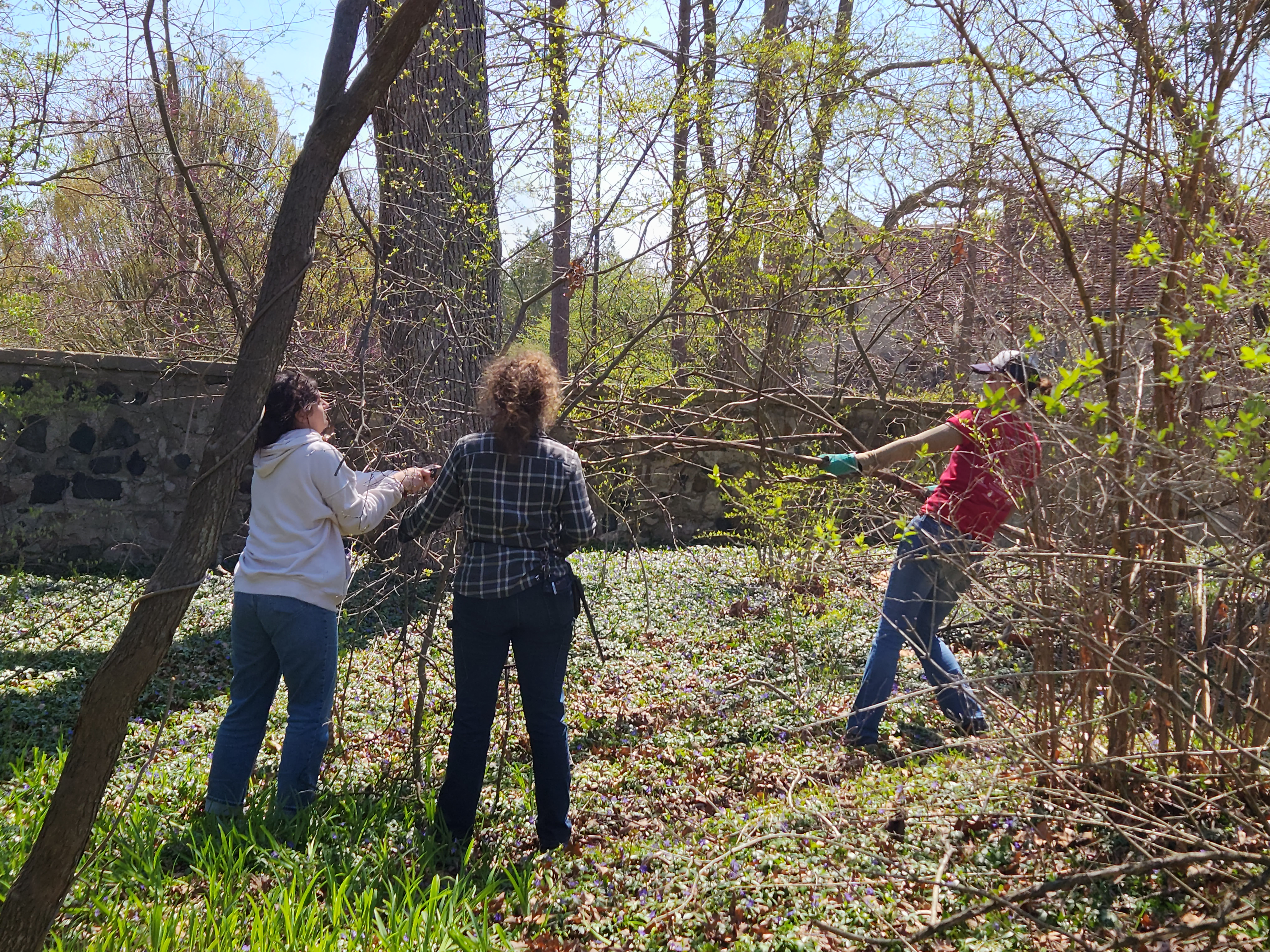
The spring also means a new season of work in the Japanese Garden. Pulling vines, before the poison ivy blooms, was a fun, end-of-the-day task for our volunteers this week.
Volunteers Lindsay Shimon and Melinda Krajniak assist Master Gardener Emily Fronckowiak with invasive vines around the Japanese Garden. Leslie Mio, photographer.
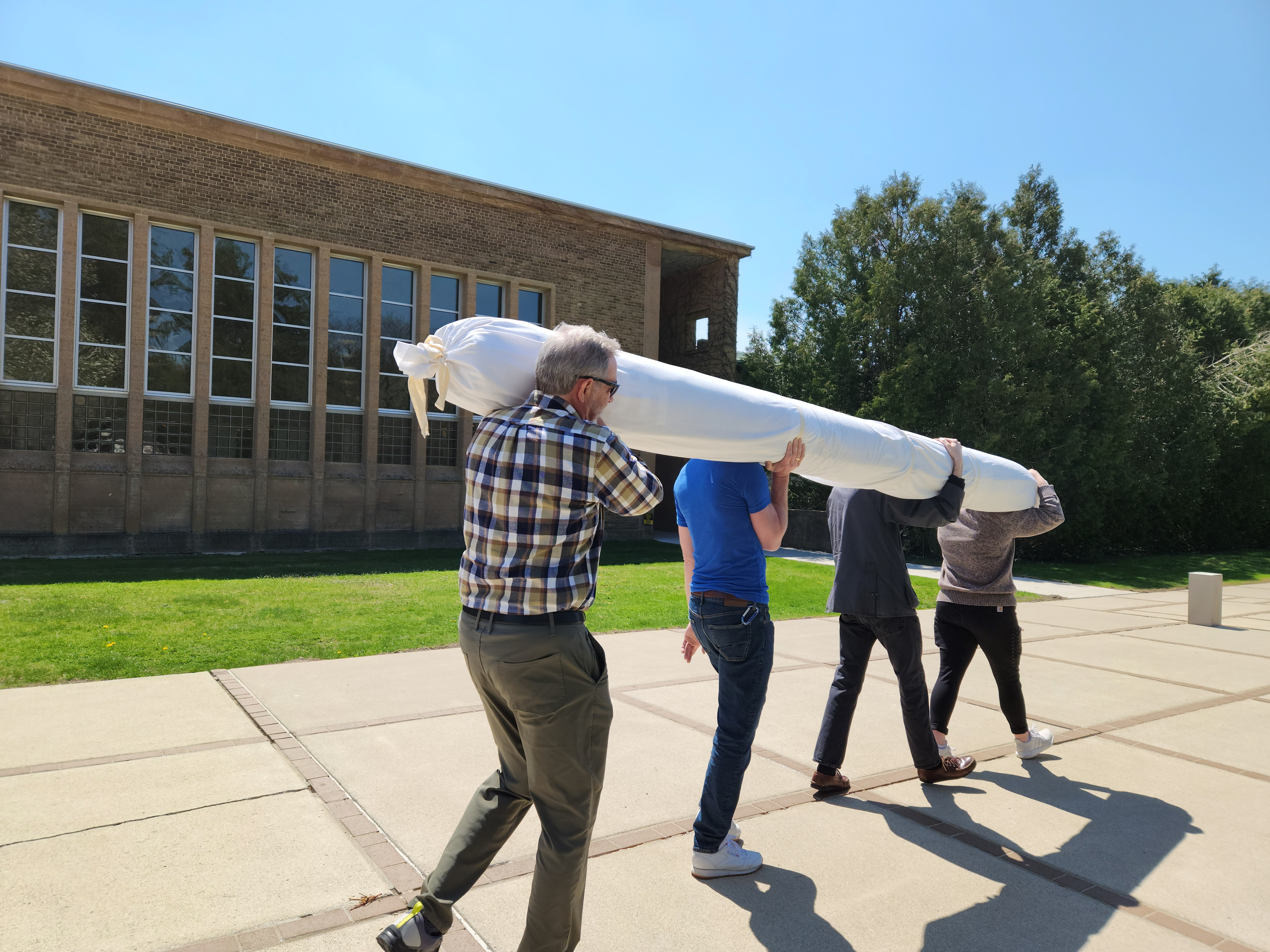
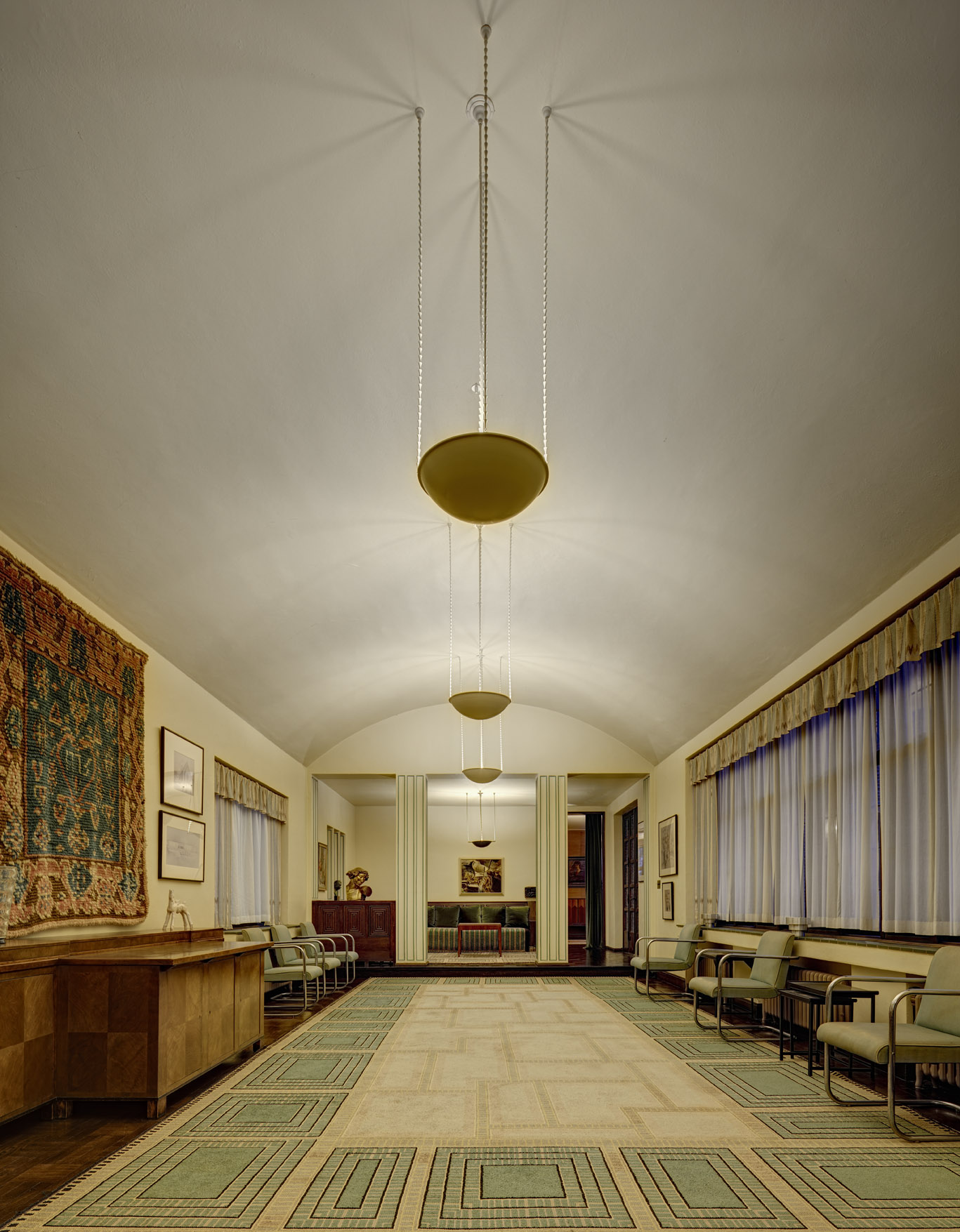
Not to be outdone, Saarinen House wanted to be part of spring cleaning as well. On location in the Art Museum vault for a photoshoot this past winter, the Saarinen House Studio rug was carried back to the house and reinstalled. As Greg Wittkopp, Center Director, said, “The room does look less Gesamtkunstwerk-ish without it.”
“I’m ready for my close-up, Mr. [Haefner].” The Saarinen House Studio rug gets the star treatment from photographer James Haefner as Center volunteer Jessica Majeski looks on. Kevin Adkisson, photographer.
Center staff and volunteers move the Studio rug back to Saarinen House. Leslie Mio, photographer.
Gesamtkunstwerk! James Haefner, photographer.
The best part about our spring cleaning is showing off the results. Come see Harmony in the Cranbrook House gardens on a warm day.
The Center’s 2023 Tour season is also beginning. In addition to our Saarinen House and Smith House tours, new tours have been added:
Japanese Garden Tours – Center staff-guided tours of the Japanese Garden have been added to the public tour calendar on one Sunday a month at 1:30pm, May through October.
Three Visions of Home tours – Join Cranbrook Center for Collections and Research as we take you inside three remarkable homes from across the twentieth century. There’s no tour quite like it, with a look into the distinct visions for American life from three internationally significant architects: Albert Kahn, Eliel Saarinen, and Frank Lloyd Wright. Your expert guide will take you through the architecture and innovations of each home, while also sharing the stories of the families who built and lived in these special places.
We hope to see you on campus this season!
– Leslie Mio, Associate Registrar, Cranbrook Center for Collections and Resarch
When I was asked to gather archival materials related to Cranbrook in Kent, England, a short series of correspondence in the Henry Scripps and Carolyn Farr Booth Papers particularly caught my notice. Written to Henry Scripps Booth, the letters discuss a stone from St. Dunstan’s Church in Cranbrook, Kent, and its overseas delivery to Christ Church Cranbrook. I became quite curious about it.
Carved coign from St. Dunstan’s Church, Cranbrook, Kent, at Christ Church Cranbrook. Laura MacNewman, photographer. Courtesy of Cranbrook Archives.
One handwritten letter in the correspondence was rather difficult to decipher, but once I got the pattern of it, it helped me begin to comprehend the story.
In July 1930, St. Dunstan’s Vicar, Rev. Swingler, acknowledged a request from Booth for a fragment of the church which could be placed in the chapel of the same name at Christ Church Cranbrook.
It was July 1931 before Rev. Swingler wrote again to inform Booth that the stone was ready for dispatch. He explained that the Church Council had welcomed the idea and directed the Fabric Committee to select a stone, which they had, but that the Secretary had forgotten to inform Booth until then, a year later, and it was already on its way!
Letter from Rev. Swingler to Henry Scripps Booth, July 22, 1931. Courtesy of Cranbrook Archives.Letter from Rev. Swingler to Henry Scripps Booth, July 22, 1931. Courtesy of Cranbrook Archives.Letter from Rev. Swingler to Henry Scripps Booth, July 22, 1931. Courtesy of Cranbrook Archives.
The forgetfulness of the Secretary and finding appropriate shipping arrangements for such an unusual commodity had caused quite a delay, to which Rev. Swingler writes,
“I am sorry that the matter has not been dealt with more speedily but old Cranbrook has hardly yet learned modern methods of business, as perhaps you know.”
St. Dunstan’s Church, Cranbrook, Kent. Kevin Adkisson, photographer. Courtesy of the Center for Collections and Research.
He goes on to describe the provenance of the stone, at least as far as he could tell. A fifteenth century carved coign (an architectural term for a “projected corner”), it once formed part of the string course (a projected band of stone) which runs at the base of the battlements of the church nave. The course includes a series of grotesque heads, some of which were pierced for waterspouts. A grotesque, common in medieval church architecture, is a decoratively carved stone used to ward off evil spirits and to signify the sanctuary and safety of the church. On inspecting an historic photograph of the church, I could identify similar stones at the top of the drainpipes and around the tower battlements.
St. Dunstan’s Church, Cranbrook, Kent, July 1901, with grotesques in situ. Courtesy of Cranbrook Archives.
Rev. Swingler had first seen it laying in the churchyard and surmised that it had not been replaced during past repairs. He doesn’t mention why they selected that particular stone, but one could conjecture that it was because it was no longer part of the fabric of the church building and hence was available to be gifted to Christ Church. He notes that it is probably of Hartley stone, which was quarried in the Parish.
Henry Scripps Booth contributed great efforts to building relationships between the old and new Cranbrooks by establishing and maintaining connections between the two churches. The grotesque that arrived at Christ Church more than 90 years ago is an artifact that tells just one story of his efforts. From St. Dunstan’s of old Cranbrook, known as the “Cathedral of the Weald,” to St. Dunstan’s of Christ Church Cranbrook, the carved coign continues to herald sanctuary and give confidence to those who enter.
–Laura MacNewman Associate Archivist, Cranbrook Center for Collections and Research
I have mentioned in the blog before that I am working with Center Director Gregory Wittkopp and Center Curator Kevin Adkisson on reviewing all fourteen of our cultural properties collections (over 9,000 objects), reviewing the data already on file and adding as much additional information about each object as we can.
The most recent collection I have been working on is Cranbrook Kingswood Upper School – Cranbrook Campus (f.k.a. Cranbrook School for Boys). The current campus buildings, classrooms, and staff offices, all had the potential to contain cultural properties (historic objects). And many that we visited did!
When I researched the Cranbrook Kingswood Upper School – Kingswood Campus (f.k.a. Kingswood School for Girls), I was fortunate to have the “Kingswood School Cranbrook Inventory of Equipment and Supplies.” It recorded the purchases and payments made from 1930-1938 for the outfitting of the school. It proved invaluable in locating quantities and makers of objects.
There had to be an equivalent for Cranbrook Campus?! Unfortunately, not that I had yet seen.
I only had a 1952 Inventory which listed fixed items, like light fixtures; and “movable” furniture and fixtures, like chairs, tables, desks, artwork. This was a great resource, but it did not always give me the makers or artists. Undeterred, I started searching in Cranbrook Archives, the “little gem” at Cranbrook, to borrow a phrase from Frank Lloyd Wright.
In Box 43, Folder 11 of the Cranbrook Foundation Office Records were the “Building Costs for Cranbrook School from 1926-1946.” And then, I saw it. A small black book labeled “Cranbrook School Book.” Could it be what I was looking for?
“Cranbrook School Book.” Cranbrook Foundation Office Records, 1981-05. Cranbrook Archives, Cranbrook Center for Collections and Research.
Inside were listed payments made to the builder Wermuth & Son and to the W. J. Sloane Company for furniture. It listed the artists who painted, carved, and outfitted the school, as well as contractors who installed various materials in the buildings.
Pages 20 and 21 “Cranbrook School Book” lists payments to Parducci Studio, J.L. Hudson’s, W.J. Sloane, as well as Pipsan Saarinen Swanson..
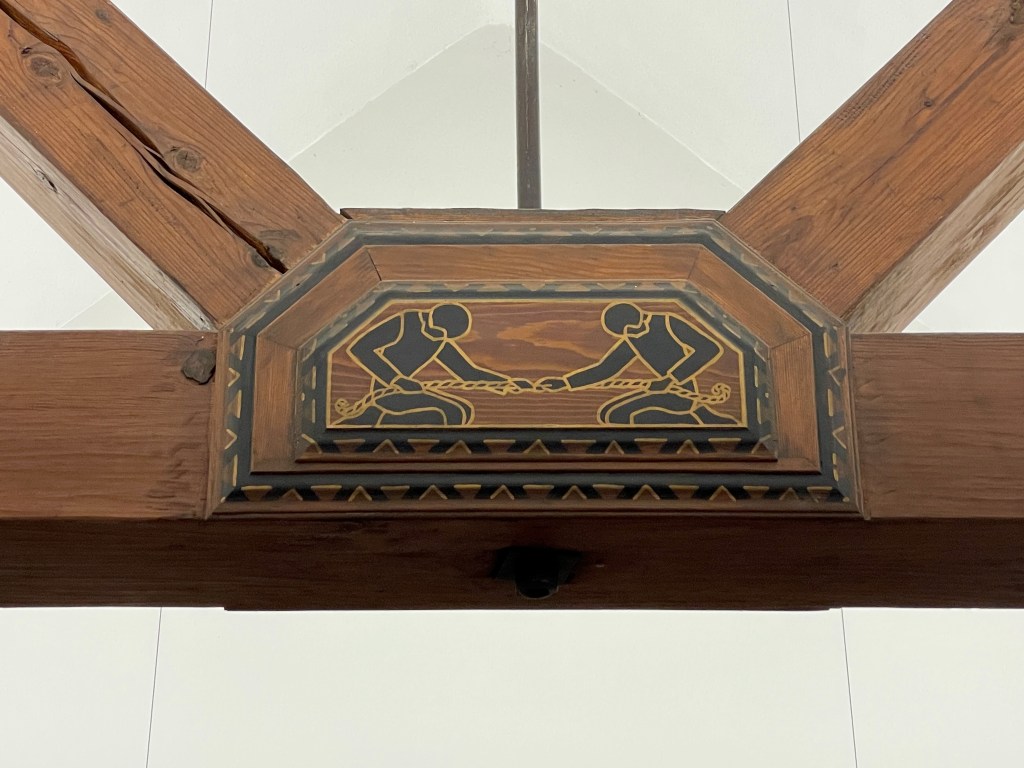
Detail of page 20 of “Cranbrook School Book.” On March 2, 1928, Pipsan was paid for “Decorating truss plaques for Study Hall.”
One of Pipsan’s ten truss plaques in the Cranbrook Campus Library Study Hall, 2022.
These entries were great, but what else would it lead to? The answer: the “Cranbrook Schools” series in the Cranbrook Architectural Office Records.
Many of the folders were labeled “Cranbrook School correspondence, Wermuth & Son” with dates. The “Cranbrook School Book” had given me an idea of what to look for. Who Wermuth and the Cranbrook Architectural office (and sometimes George G. Booth himself) were corresponding with was the key. Inside were letters from vendors of tiles, furniture, stained glass, stonework, mirrors, mattresses, windows, everything needed to build a well-appointed school.
Here are just a few examples:
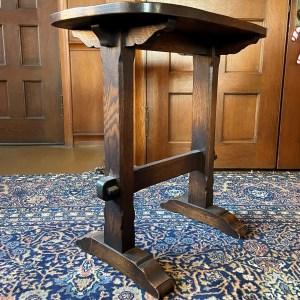
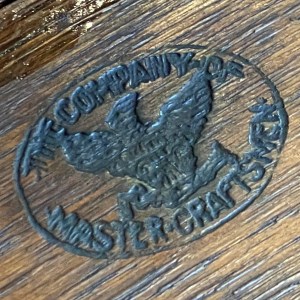
Copies of blueprints for furniture made by W. J. Sloane Company’s “Company of Master Craftsmen,” many of which were selected for Cranbrook.
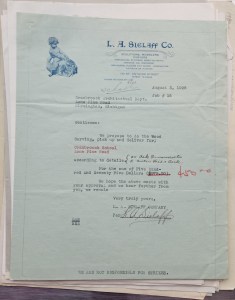
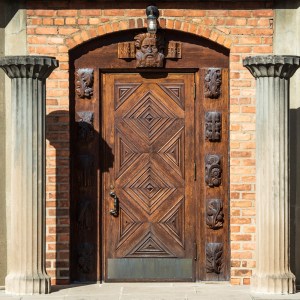
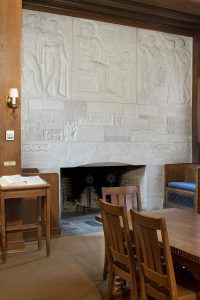
A letter from L.A. Sielaff & Co. indicating it was contracted to carve the wood ornaments on the Geza Maroti-designed doorcases outside the Library
Letter from L. A. Sielaff & Co., dated August 3, 1928.Cranbrook School Study Hall Door, also called the “Door of Knowledge.” Photographer James Haefner.Letter from Cranbrook Architectural Office, dated August 8, 1928.Cranbrook School Library Reading Room “Gift of Knowledge” Overmantel. Photographer P.D. Rearick.Letter from George G. Booth to Swedish Arts & Crafts Company, dated June 4, 1928. Booth’s sketch is at right.Cranbrook School Dining Hall hanging fixtures.Blueprint for table #41919 by W. J. Sloane Company’s “Company of Master Craftsmen.”Table #41919 in use in a Cranbrook Campus office.Maker’s mark for “Company of Master Craftsmen” on the underside of many pieces of furniture on the campus.
Next up, Cranbrook Campus’ custom light fixtures! I can already hear Kevin’s words in my head . . .
. . . Cranbrook light fixtures are all around campus. There are multiple types of the light fixtures. These were designed by architect and former Head of the Architecture Department Dan Hoffman. He was the architect-in-residence who probably did more to revive the tradition at Cranbrook that was so such a passion project of George Booth and Eliel Saarinen . . .
– Leslie S. Mio, Associate Registrar, Cranbrook Center for Collections and Research
p.s. For more on Cranbrook Campus, check out these videos by Center Curator Kevin Adkisson:
Does your family have a certain pose that they always do for a family picture? My cousins and I always had to stand or sit by the same log at our cottage each summer to get a group picture. Even when the log had disintegrated, and we were all adults, we still stood in the same spot to take the picture.
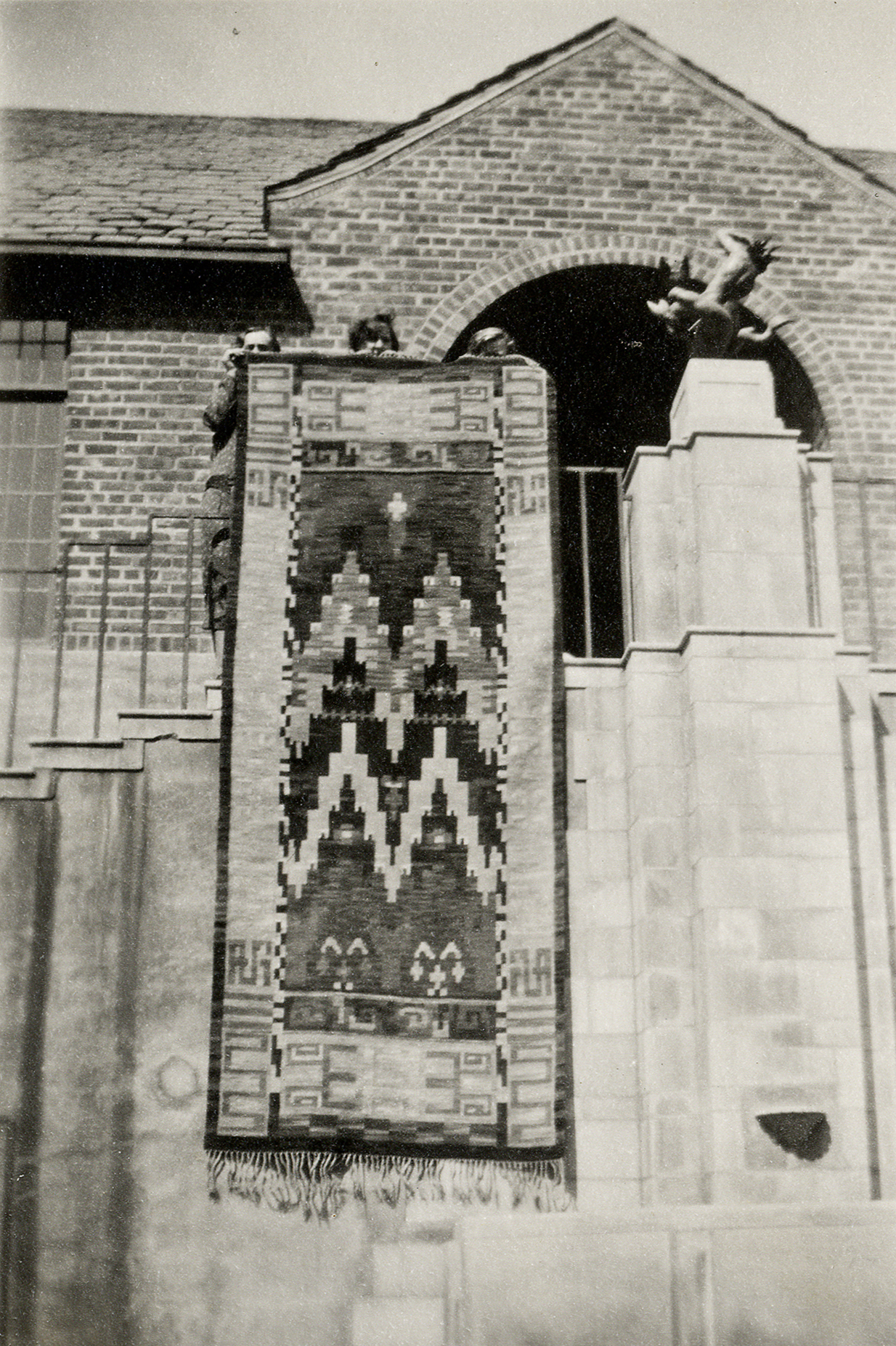
The Swedish weavers of Studio Loja Saarinen were the same way. After every rug was completed, they would unroll it behind the studio, lay it on the lawn, and pose at the end. This not only documented their work, but also served as a record of who worked on each piece. In Cranbrook Archives, we have a few examples of these images.
Cranbrook Academy of Art Rug No. 14
This rug lay in the center of the Studio Loja Saarinen Weaving Room. A flatwoven rug with stylized meanders in the border, and an elegant color scheme of dark browns, blues, and beiges, in form, structure, color, and design it shows the contemporary style of Swedish weaving that would become the foundation of Studio Loja Saarinen’s work.
Cranbrook Academy of Art Rug No. 14, designed by Maja Andersson Wirde and woven by Lillian Holm for Studio Loja Saarinen, 1930. CAM 1955.2. Photographer James Haefner.
This was one of the first rugs executed under the “Design and Supervision” of Maja Andersson Wirde, who was Loja’s right-hand-woman from 1930 to 1933. The rug is actually a variation of a design Wirde made for the 1925 International Exhibition of Modern Decorative and Industrial Arts in Paris (the “Art Deco” World’s Fair).
When Wirde wrote to Cranbrook’s secretary from Sweden before immigrating, she said she would bring along prepared designs and wool and linen yarns to be able to get started right away. She certainly did! Below, you can see Wirde and possibly Lillian Holm and Ruth Ingvarsson holding up the rug behind Studio Loja Saarinen just months after their arrival to Cranbrook.
Studio Loja Saarinen weavers with Rug No. 14 behind the Cranbrook Arts and Crafts Studios, 1930. Courtesy Smålands Museum, Sweden.
Eric Perry photographs work from Megha Gupta (CAA Ceramics 2023) alongside collections from the Frank Lloyd Wright-designed Smith House and eggs from Cranbrook Institute of Science.
If you walked into Cranbrook House, Saarinen House, or Smith House this week, you might have noticed some surprising guests have arrived at the table. Your Center for Collections and Research team have been busy installing Brought to the Table, the fifth intervention of new work by Cranbrook Academy of Art students and Artists-in-Residence in our three historic homes.
This year’s virtual exhibition is a Cranbrook-wide collaboration that brings site-specific work from across the Academy’s eleven departments into conversation with objects from Cranbrook’s Cultural Properties, Art Museum, and Institute of Science collections.
Kiwi Nguyen (CAA Metals 2023), Iris Eichenberg (Metals Artist-in-Residence), and Kevin Adkisson (Center Curator) strategize in the Saarinen House studio.
Brought to the Table engages with the long tradition of functional art at Cranbrook and pairs new works of art with objects from the Cranbrook collections made for dining tables, coffee tables, desks, or side tables. Before the exhibition kicks off at the Virtual Opening and Lecture on March 27th, I’d like to give you a sneak peek at the exhibition process.
This was my first experience curating contemporary art and I was grateful to learn from my capable co-curators, Metalsmithing Artist-in-Residence (AIR) Iris Eichenberg and Center Curator Kevin Adkisson.
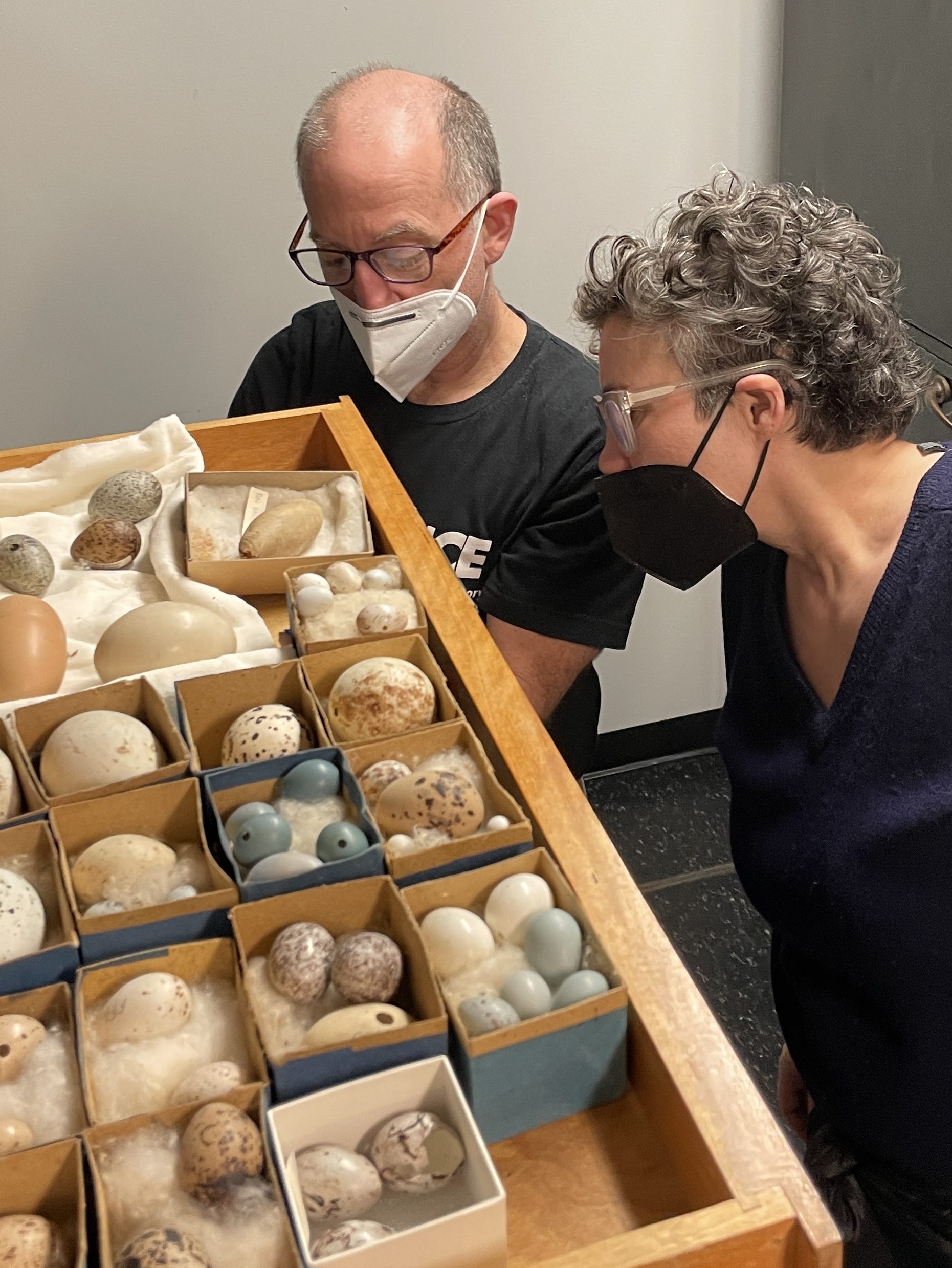
Cameron Wood (Cranbrook Institute of Science Curator for Collections) and Iris Eichenberg (Metalsmithing AIR) examine eggs from the Institute’s oological collection.Kiwi Nguyen (CAA Metalsmithing 2023) on the hunt for objects for our exhibition in the vault of Cranbrook Institute of Science.
From planning with Kevin and Iris; coordinating with our wonderful Academy artists; selecting objects with colleagues at the Institute of Science and Art Museum; installing with the help of students; and assisting with photography, this exhibition took me all over the Cranbrook campus.
In 2021, the home of Loja Saarinen at Cranbrook Academy of Art, which she shared with her husband Eliel, was designated as a site in the Historic Artists’ Homes & Studios program. As the team at the Center were going through the process of researching Loja, the too-often-overlooked designer of textiles, gardens, and clothing, we were constantly reminded that the rugs created by Loja and her professional weaving studio, Studio Loja Saarinen, were poorly documented in our records.
Studio Loja Saarinen made rugs, window treatments, wall hangings, upholstery fabrics, and more at Cranbrook between 1928 and 1942. Many of the Studio’s largest rugs were made for Kingswood School for Girls between 1930 and 1932. Because of the fragility of the rugs, and through natural wear-and-tear, almost all of the original Studio Loja Saarinen rugs were put in storage at Cranbrook Art Museum in the 1970s and 1980s.
Loja Saarinen, circa 1934. Courtesy Cranbrook Archives.
We have excellent archival records about the operation of the studio, including records of yarn orders and charts of the time spent weaving rugs (it was a lot!). But the rugs are very large, and often, we only had black-and-white photographs of the rugs on the floor in the 1930s. Color photographs were limited to poorly distorted slides, or photographs of portions of the rugs taken on early digital cameras while the rugs were half-rolled-up in storage.
We had almost no ‘born digital’ high-resolution photographs of Loja’s work–these are the best kind of photographs for sharing her work in slides, online, or in print. The lack of excellent, high quality images limited not only how we at Cranbrook understood and shared Loja’s legacy, but also made it difficult for students or scholars researching Loja Saarinen to get a complete sense of her artistic output.
This winter, as the Center prepares for our next fundraiser, A House Party at Cranbrook Celebrating Loja Saarinen on May 21, 2022, it has become mission-critical to get better documentation of Studio Loja Saarinen’s rugs.
Enter in our latest project!
Jim Haefner and his assistant set up the camera in Cranbrook Art Museum’s Vault. Photographer Kevin Adkisson, Courtesy of Cranbrook Center for Collections and Research.Jim Haefner checking his image of Kingswood School Rug No. 31, Reception Hall Rug, Auditorium Lobby Rug. Photographer Leslie Mio, Courtesy of Cranbrook Center for Collections and Research.Kingswood School Rug No. 31, Reception Hall Rug, Auditorium Lobby Rug. Photographer Kevin Adkisson, Courtesy of Cranbrook Center for Collections and Research.
On January 7, 2022, photographer James Haefner and his assistant Erik Henderson, with the help of Center Curator Kevin Adkisson, Center Associate Registrar Leslie Mio, Cranbrook Art Museum Registrar Corey Gross, Cranbrook Art Museum Head Preparator Jon Geiger, and Jon’s installation crew embarked on a very ambitious project: documenting all the Studio Loja Saarinen rugs in the Cranbrook collections.
First, we had to take the several-hundred-pound rugs down from racks where they are stored, rolled. Then, we covered the floor in clean plastic drop cloths. With a camera bolted via a vise-grip to the ceiling of the Cranbrook Art Museum Collections Wing, and controlled via computer from a remote workstation, we unrolled, photographed, and rerolled over forty works of Studio Loja Saarinen’s functional art.
Kingswood School Rug No. 3, 1928-1929; Studio Loja Saarinen (maker), Loja Saarinen (designer); Linen warp, wool weft; 66½ x 49 inches (168.9 x 124.5 centimeters); Cultural Properties Collection, Kingswood School for Girls. Photographer James Haefner.Curator Kevin Adkisson and his attention to detail. Photographer Leslie Mio, Courtesy of Cranbrook Center for Collections and Research.Maker’s label on Kingswood School Rug No. 3, 1928-1929; Studio Loja Saarinen (maker), Loja Saarinen (designer); Linen warp, wool weft; 66½ x 49 inches (168.9 x 124.5 centimeters); Cultural Properties Collection, Kingswood School for Girls.
No detail went undocumented, from weaver’s signatures knotted into the face of a rug, to maker’s labels written and sewn on by Loja herself.
Below is just a fraction of the forty-plus pieces photographed:
Kingswood School Rug No. 31, Reception Hall Rug, Auditorium Lobby Rug, 1931; Studio Loja Saarinen (maker), Loja Saarinen (designer); Wool pile, wool weft, linen warp; 312 x 144 inches (792.5 x 365.8 centimeters); Cultural Properties Collection, Kingswood School for Girls. Photographer James Haefner.Detail of Kingswood School Rug Number 28, Library Rug, 1931; Studio Loja Saarinen (maker), Maja Andersson Wirde (designer); Wool pile, wool weft, linen warp; 243½ x 96 inches (618.5 x 243.8 centimeters); Cultural Properties Collection, Kingswood School for Girls. Photographer James Haefner.Detail of Kingswood School Blue Rug for Reception Room I, 1931; Studio Loja Saarinen (maker), Maja Andersson Wirde (designer); Wool pile, wool weft, linen warp; 183 x 142½ inches (464.8 x 362 centimeters); Cultural Properties Collection, Kingswood School for Girls. Photographer James Haefner.Rug with Animal Motif, 1932; Studio Loja Saarinen (maker), Maja Andersson Wirde (designer); Linen warp, wool weft, wool file; plain weave with four picks of weft between each row of knots; 151½ x 108 inches (384.8 x 274.3 centimeters); Collection of Cranbrook Art Museum. Photographer James Haefner.Detail of Kingswood School Rug No 29 – Rooftops, 1931; Studio Loja Saarinen (maker), Maja Andersson Wirde (designer); Wool pile, wool weft, linen warp; 85 x 137½ inches (215.9 x 349.3 centimeters); Cultural Properties Collection, Kingswood School for Girls. Photographer James Haefner.Rug, 1932; Studio Loja Saarinen (maker), Maja Andersson Wirde (designer); Wool and linen; 119 x 98 inches (302.3 x 248.9 centimeters) including fringe; Collection of Cranbrook Art Museum. Photographer James Haefner.Detail of Rug with Tree Motif, 1930; Studio Loja Saarinen (maker), Maja Andersson Wirde (designer), Lillian Holm (weaver), Lilly Bjerken (weaver); Wool and linen; 131 x 54½ inches (332.7 x 138.4 centimeters); Collection of Cranbrook Art Museum. Photographer James Haefner.Detail of Studio Loja Saarinen Rug No. 2, 1929; Studio Loja Saarinen (maker), Loja Saarinen (designer/weaver), Eliel Saarinen (designer), Walborg Nordquist Smalley (weaver); Cotton warp; wool pile; plain weave with ten picks of weft between each row of knots; 110½ x 39 inches (280.7 x 99.1 centimeters); Collection of Cranbrook Art Museum. Photographer James Haefner.Tree of Life Tapestry, circa 1933; Loja Saarinen (designer/weaver); Linen and wool; 60½ x 54 inches (153.7 x 137.2 centimeters); Collection of Cranbrook Art Museum. Photographer James Haefner.
It was a joy to unroll and see these pieces up close after knowing many of them for years through black-and-white images. While even these photographs do not do justice to seeing their beauty in person, having such high-resolution photography of Studio Loja Saarinen’s rugs means that future scholars and fans of Loja Saarinen will be able to have a richer understanding of her, and Cranbrook’s, remarkable legacy.
For even more Loja Saarinen, join the Center in person or online on May 21, 2022 for A House Party at Cranbrook Celebrating Loja Saarinen. We’ll be premiering a new, thirty-minute documentary about Loja, produced by the Center, at the event–you don’t want to miss it!
– Leslie S. Mio, Associate Registrar, and Kevin Adkisson, Curator, Cranbrook Center for Collections and Research
When Frank Lloyd Wright visited Smith House in 1951, he affectionately referred to the home as “my little gem.” Over the years, Melvyn and Sara Smith filled up their “little gem” with many treasures of their own. As I continue my detailed research into the Smith House collection, I am learning that even the smallest of these objects has a rich story to tell.
One such detail is a yellow enamel butterfly. For over 50 years, the butterfly has rested its wings on an artificial ivy vine in a small corner between the Smith House living space and dining room.
Albert Weiss, Butterfly Brooch, 1964. Photograph by Nina Blomfield, Cranbrook Center for Collections and Research.
The butterfly is in fact a brooch, manufactured by costume jeweler Albert Weiss & Co. Albert Weiss began his career as a designer for Coro Jewelry before breaking off to start his own firm in 1942. Better known for elaborate rhinestone creations, Weiss also produced jewelry featuring enameled flowers and animals. My research has revealed that the Smith House brooch was part of a 1964 collection described in the New York Times as “a flock of butterflies that are meant to settle – one at a time – on the neckline of a dress or coat.” An advertisement for the collection shows the brooches pinned, labeled, and framed as if specimens in a natural history display.
“Albert Weiss presents the Butterfly Pin Collection,” New York Times, February 23, 1964.
It is no surprise that the Smiths were drawn to the butterfly form, as these flying jewels have captivated artists as diverse as Vincent van Gogh and Damien Hirst. The Smiths’ collection no longer includes the Knoll BKF ‘butterfly’ chairs seen in family photographs, but there are still other butterflies in the house.
Smith House interior, c.1950. Seen in the foreground, the BKF “Butterfly” chair manufactured by Knoll.
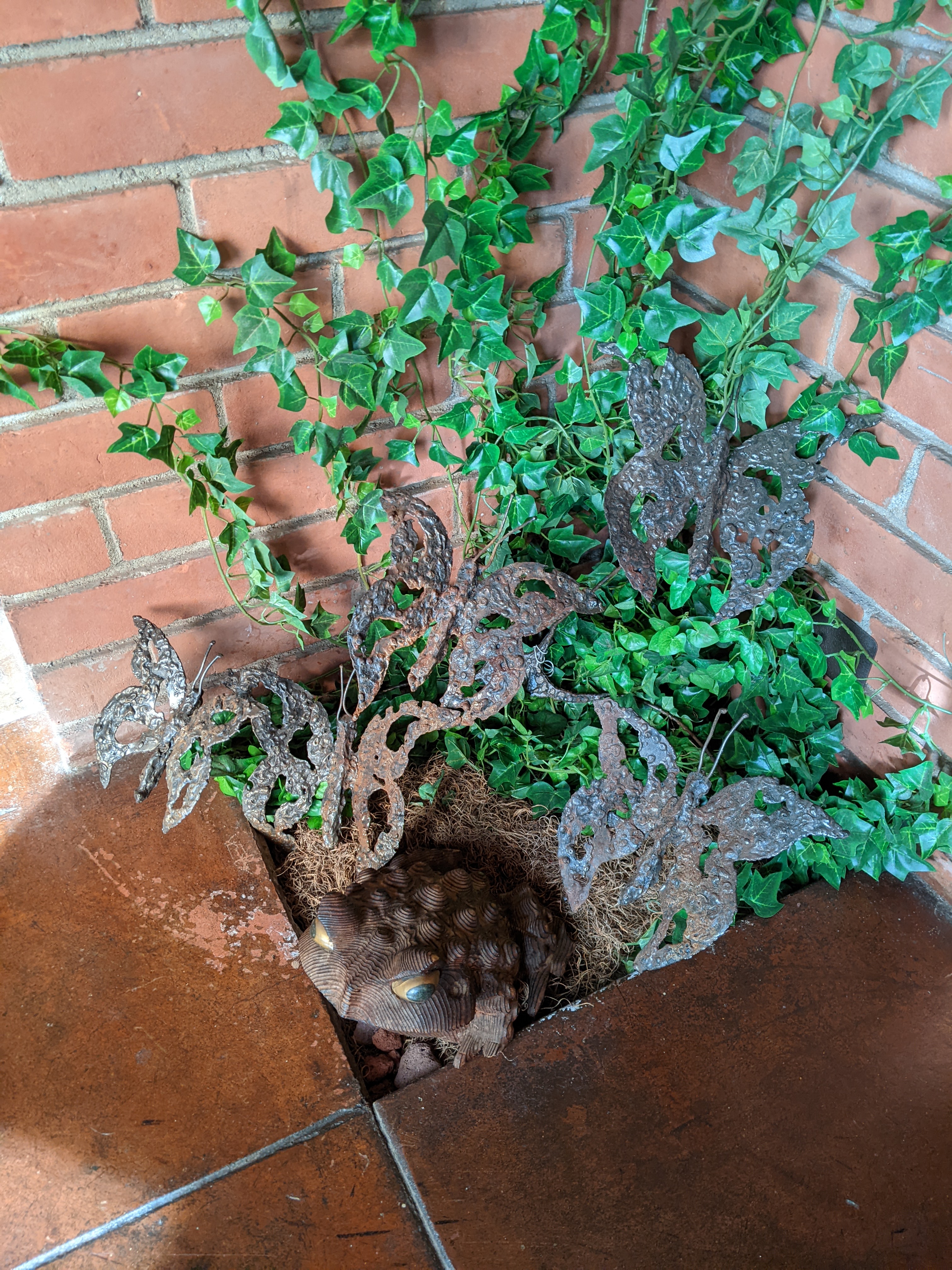
Silas Seandel’s sculptural butterflies were formed form torch-cut metal and their craggy brutalist forms are attached to flexible wire that give them movement and life. On a windowsill in the guest room, real butterfly specimens take flight in a Perspex cube. Given the dynamism of these other butterflies, it makes sense that the Smiths used the enamel pin to adorn their home rather than allowing it to languish in a jewelry box. Instead, this ivy-clad corner created a kind of habitat for the butterflies.
Family was central to the Booths, and Henry Scripps Booth and Carolyn Farr Booth immortalized themselves and their children in portraiture.
Carolyn Farr Booth, 1950, by John Koch. Cultural Properties Collection, Thornlea. Cranbrook Center for Collections and Research. Bequest of Henry Scripps Booth and Carolyn Farr Booth to Cranbrook Educational Community.
Carolyn Farr Booth (1902-1984), who married Henry Scripps Booth (1897-1988) in 1924, was a devoted mother and grandmother who served as a volunteer leader within the metro-Detroit community. Henry Scripps Booth commissioned this portrait in 1950 from artist John Koch .
Henry Scripps Booth, 1961, by John Koch. Cranbrook Center for Collections and Research. Bequest of Henry Scripps Booth and Carolyn Farr Booth to Cranbrook Educational Community.
In 1961, Henry Scripps Booth commissioned this portrait of himself, again from Koch. In addition to these portraits, Koch depicted Henry and Carolyn’s daughters Melinda and Martha.
Artist John Koch (pronounced “coke”) was one of the key painters of the American Realist movement in the mid-20th century. His early art training was minimal. In the summers of 1927 and 1928, he painted and studied in the artists’ colony at Provincetown, Massachusetts, where he was influenced by the work and theory of Charles Hawthorne. Otherwise, Koch was largely a self-taught painter. In 1928, he went to Paris, where he stayed for four years painting on his own, never under a teacher. “The Louvre was my master,” Koch once said. Koch counted among his sitters not only the Booths, but also Princess Margaret, sister of Queen Elizabeth II.
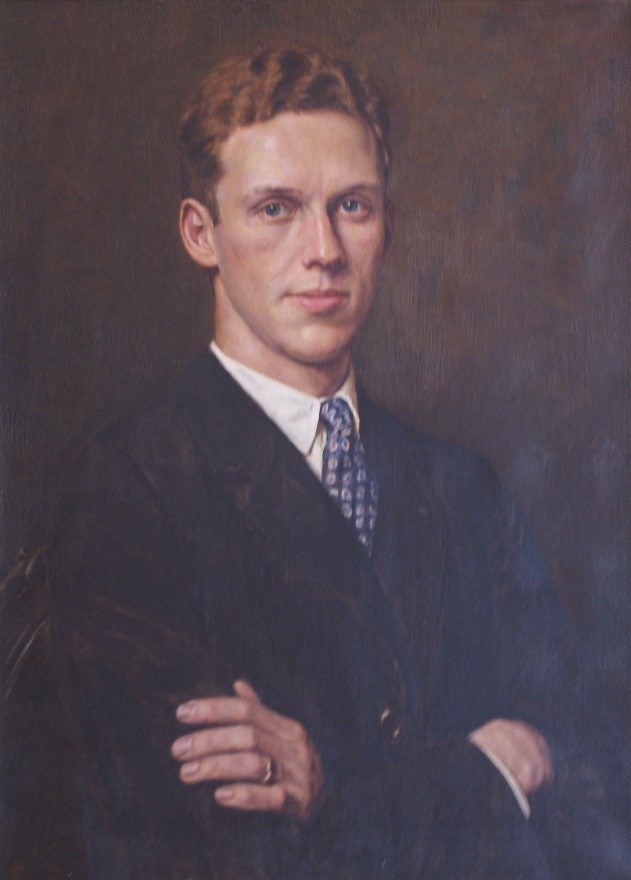
Henry Scripps Booth, 1922, by Ludwig Kühn. Cranbrook Center for Collections and Research. Bequest of Henry Scripps Booth and Carolyn Farr Booth to Cranbrook Educational Community.
Henry Booth’s pose in his Koch portrait mirrors an earlier portrait from 1922 by Professor Ludwig Kühn. Booth had this portrait painted in 1922 while on his 1922-1923 Grand Tour in Europe with University of Michigan classmate J. Robert F. Swanson. The cost was $100. Henry assembled photographs of the portrait being painted in his scrapbook, Pleasures of Life #5, in Cranbrook Archives.
Professor Ludwig Kühn was especially known for his lithographs and etchings. In Germany, the title of professor is awarded as an honorary title to people who do not necessarily hold a teaching professorship; Kühn received the title in 1900.
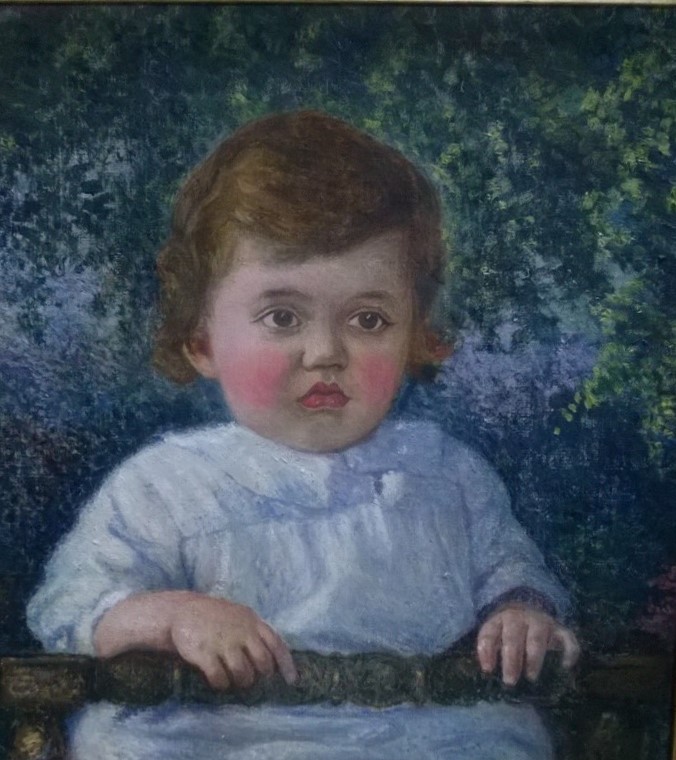
David Gagnier Booth, 1928, by Charles Benell. Cranbrook Center for Collections and Research. Gift of David Gagnier Booth and Frances Poling Booth.
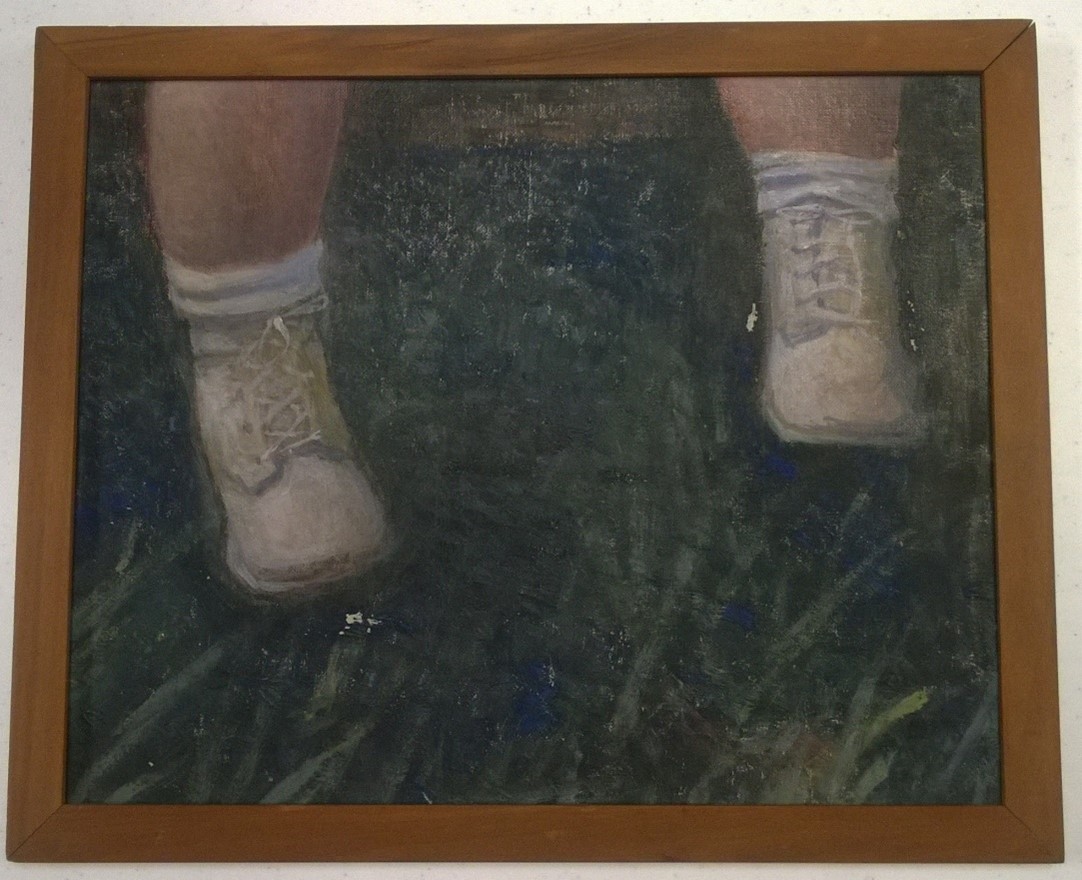
Feet from David Gagnier Booth, 1928, by Charles Benell. Cranbrook Center for Collections and Research. Gift of David Gagnier Booth and Frances Poling Booth.
And, for one more portrait: David Gagnier Booth (1927-2020), one of the sons of Henry and Carolyn. According to David, and corroborated by one of Henry’s photo albums, the family did not like the portrait of young David painted in 1928. The painting was subsequently cut into three pieces: David’s face and upper body, David’s feet, and some irises. Henry displayed David’s feet in Thornlea Studio. We don’t know what happened to the irises (if you know their whereabouts, please reach out!)
Charles Benell, the Russian artist who painted the portrait of David Booth, lived in Detroit in the late 1920s and early 1930s. He was a long-time friend of painter Ossip Perelma, who painted portraits of other Booth family members. Benell attended the École des Beaux-Arts and studied under Fernand Cormon, a French painter and teacher, who was also the teacher of Van Gogh.
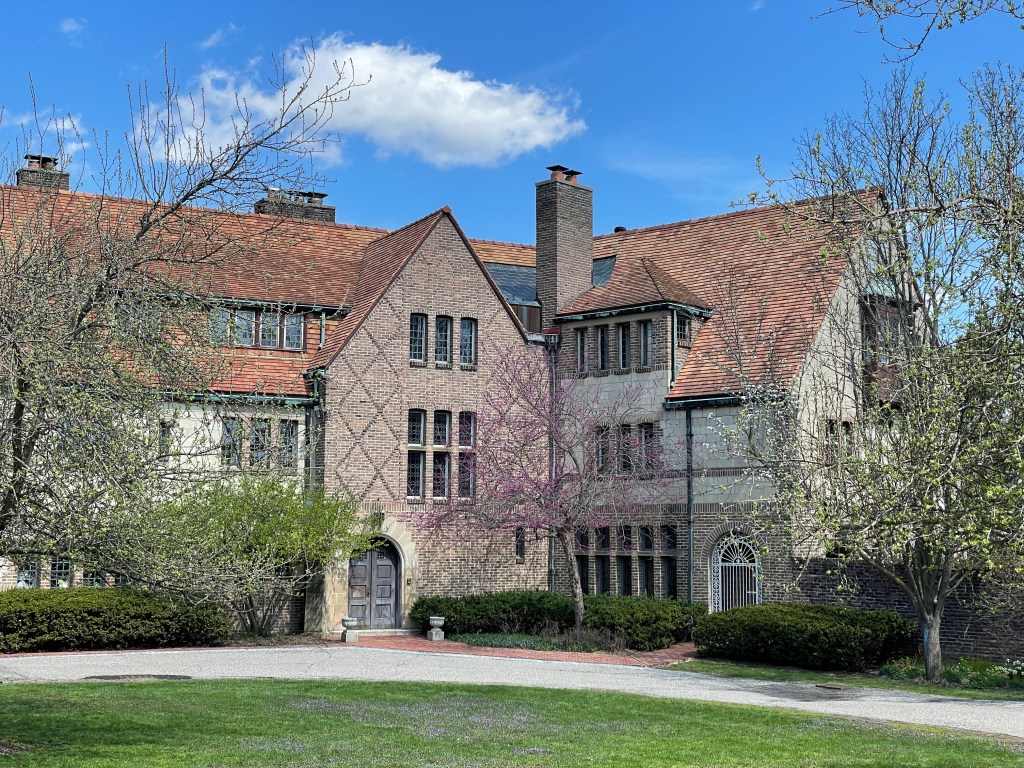
Do you want more great stories about the Booth family portraits, and more? Come along as we open the doors to Thornlea, the home of Henry Scripps Booth and Carolyn Farr Booth for more than sixty years, for rare Behind-the-Scenes tours! Thornlea is full of architectural charm and artistic inspiration.
Led by the Center’s Curator, Kevin Adkisson, and featuring new research Kevin and I did over the past two years, the tour will explore the architecture of the home, examine its collection of fine and decorative arts, and reveal stories and photographs from the Booth family’s long life in the home. Used for a variety of purposes today, and rarely opened for public tours, the house will be specially staged for this event.




















 Cranbrook Kitchen Sink