Discoveries Around Campus

The dormers at Cranbrook House. Cranbrook Archives.

The dormers at Cranbrook House. Cranbrook Archives.

The staff at the Center for Collections and Research work closely with the Capital Projects and Facilities staff on campus restoration and repair projects. The archival staff often provides historical photographs, documentation, and architectural drawings to the project managers. Sometimes the staff makes interesting discoveries during the projects they are working on and share them with us.  The other day Craig Hoernschemeyer (Project Manager for Capital Projects) was in the archives looking for a historic photograph of a dormer window on the east addition (1918-1919) of Cranbrook House.  As luck would have it, he found one.  The following is from Craig:

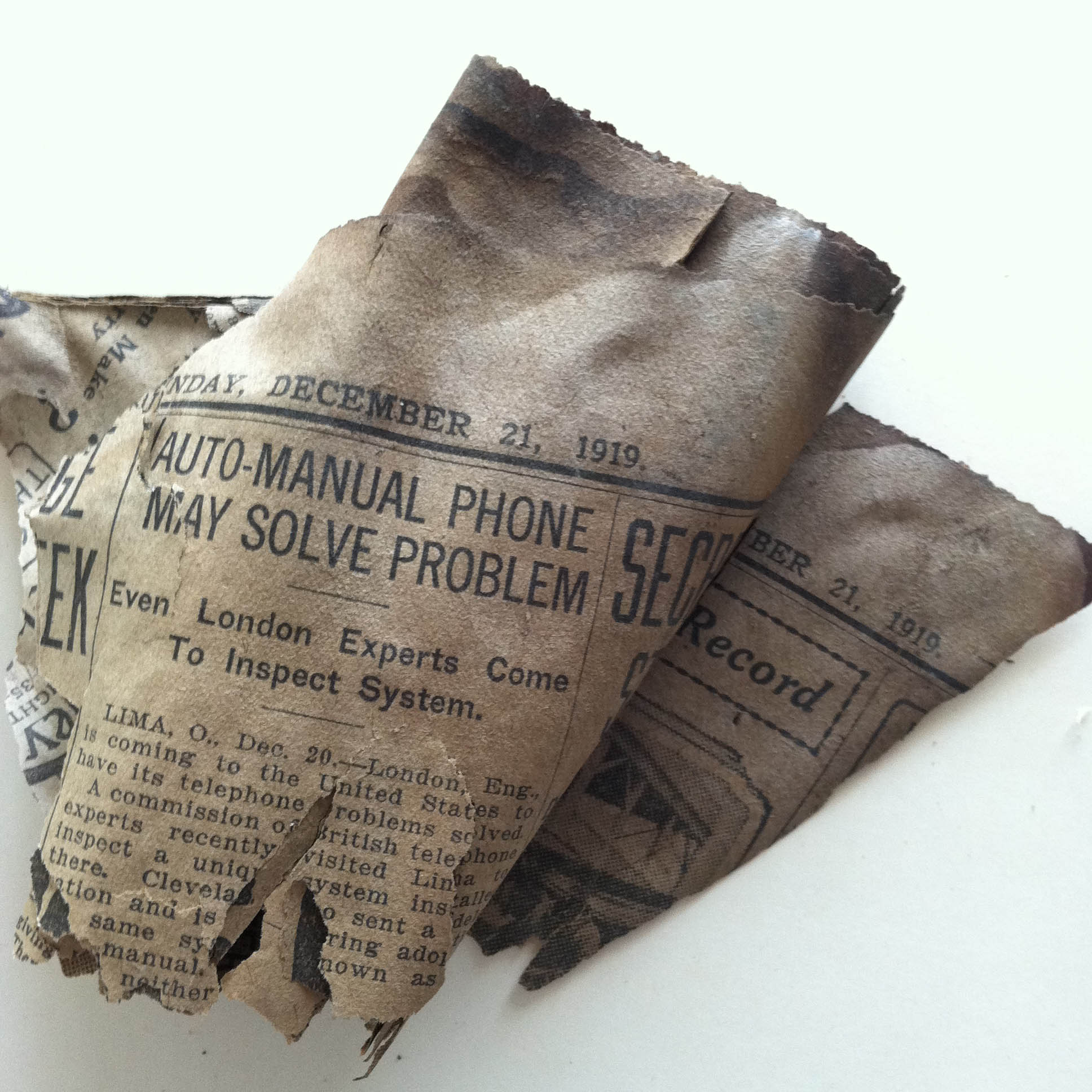
“Today, when the copper roof was opened up on that dormer – center right in the photo [above]- we found a bunch of newspaper mixed in with the insulation. It was no surprise that it was The Detroit News, but it was dated the first day of winter, December 21, 1919. It was there during the original construction of the wing.”

Detroit News, 1919. Photo Craig Hoernschemeyer.

Detroit News, 21 Dec 1919. Photo Craig Hoernschemeyer.

Leslie S. Edwards, Head Archivist

Illumination!

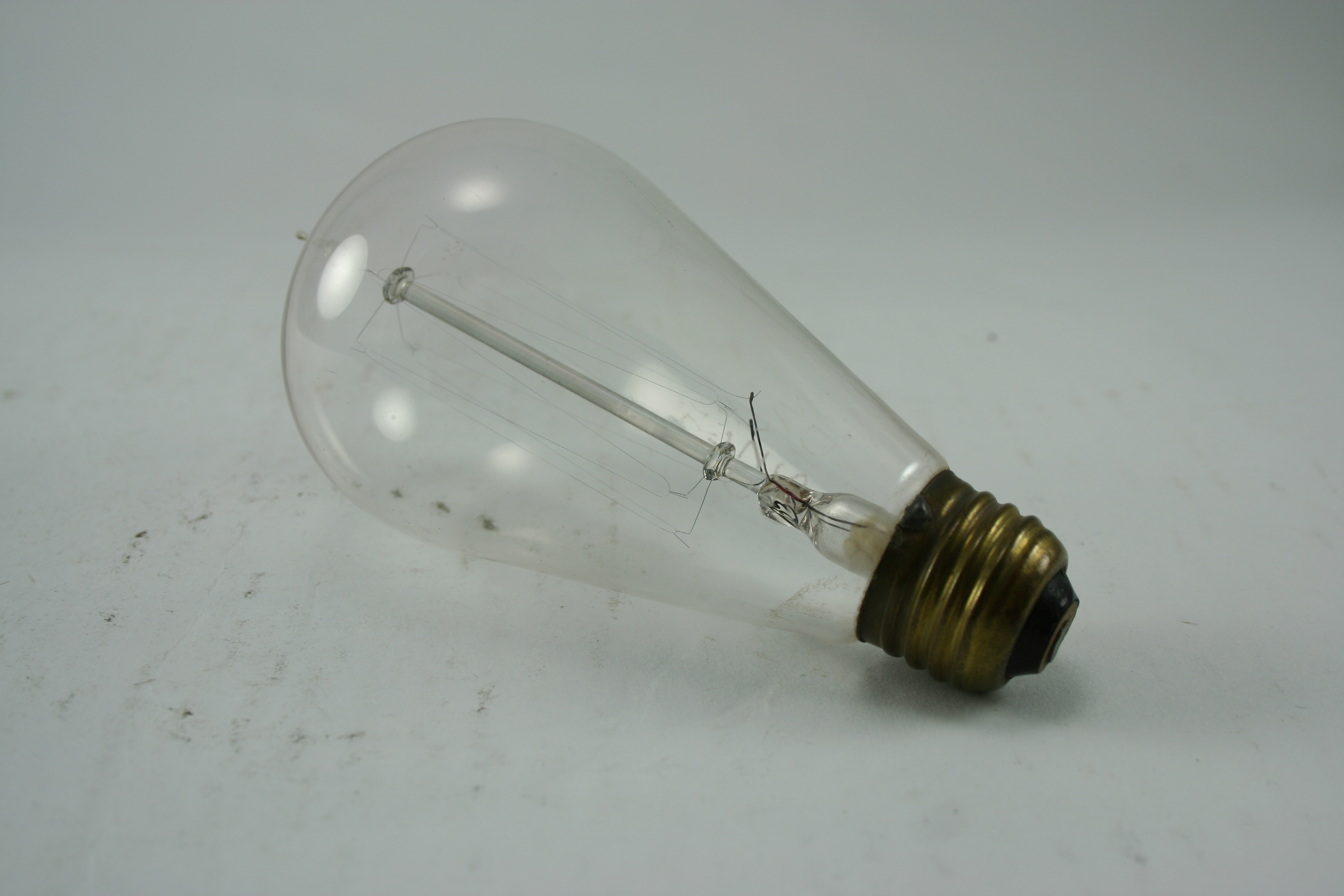
Glass etched Edison bulb from 1920, found in Cranbrook House.

Glass-etched Edison bulb from 1920, Cranbrook Cultural Properties Collection..

While browsing the historical writings of Henry Scripps Booth recently, I came upon the answer to a question that Collections Fellow, Stefanie Dlugosz, had posed late last year. As she prepared the Center for Collections and Research’s Holiday Tables exhibit (“Illuminate the Seasons” was the theme), which highlighted the early use of electricity in Cranbrook House, Stefanie had wondered what the source of electricity was, in 1908, for a relatively isolated place like Cranbrook. Efforts by several people could not turn up an answer. Until now.

“Although Caldwell’s electric fixtures had been installed about December 1, we still had to use candles and oil lamps for light because the private Edison line being installed from Highland Park to Cranbrook House was incomplete.”  This was recorded during the 1980’s in Henry’s unpublished History (which relates the history of Cranbrook Educational Community and the Booth family between 1800 and 1987).

As the bill from Albert Kahn shows, George G. Booth spent $1863.48, around $49,000 in today’s dollars, on lighting fixtures in Cranbrook House. The order is itemized, room by room, on seven pages of legal-sized paper, in Booth’s papers.

Albert Kahn’s bill to George Booth for Cranbrook House lighting fixtures provided by Edward.F. Caldwell Co.  Papers of George and Ellen Booth 14:23

George Gough Booth Papers, courtesy Cranbrook Archives.

Read the original blog for more information on the Caldwell lighting fixtures at Cranbrook House.

— Cheri Gay, Archivist

Meeting House Inaugurated


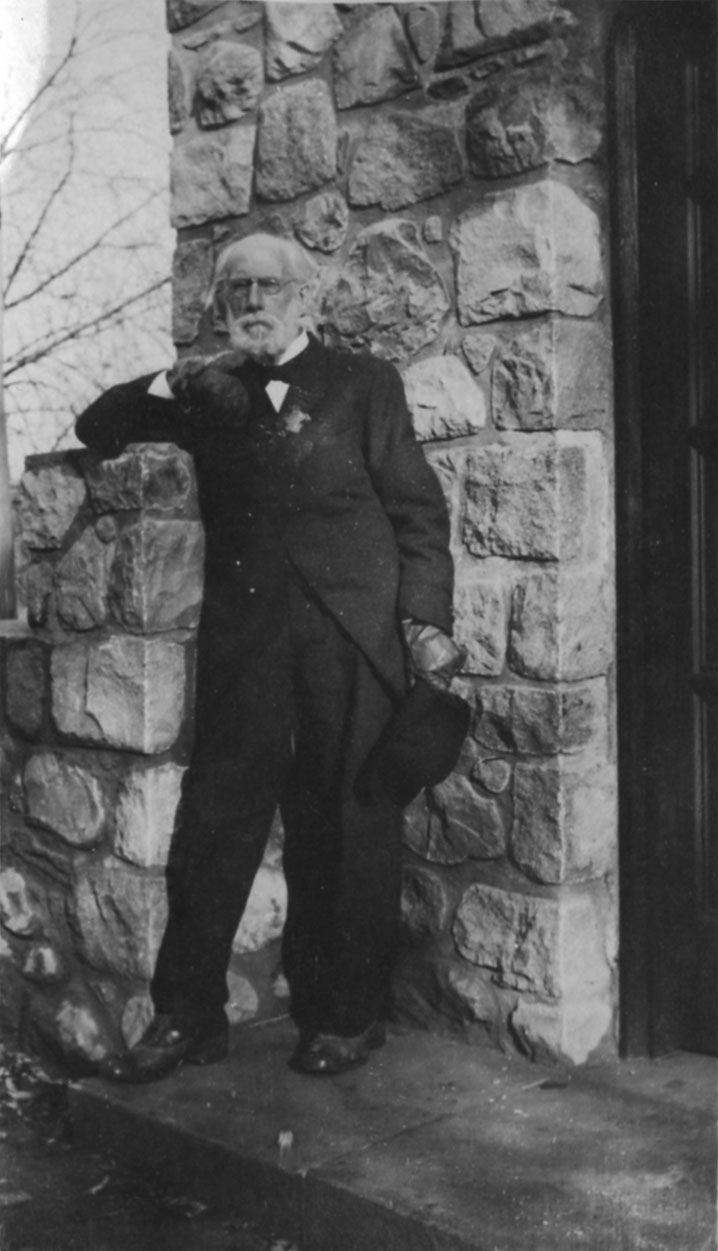
Henry Wood Booth outside the Meeting House (now Brookside School)

Henry Wood Booth outside the Meeting House (now Brookside School).

On January 5, 1919, Henry Wood Booth (HWB), father of George Gough Booth (GGB), “opened the Meeting House for divine worship,” according to the historical notes of Henry Scripps Booth (HSB). HWB, who would turn 82 on January 21st, conducted a vesper service and continued to officiate for six months. The Meeting House, designed by GGB and HSB, was the foundation for what later became Brookside School.

Cheri Gay, Archivist

Lighting Up Cranbrook House: Edward F. Caldwell & Co.

HT_2014_1

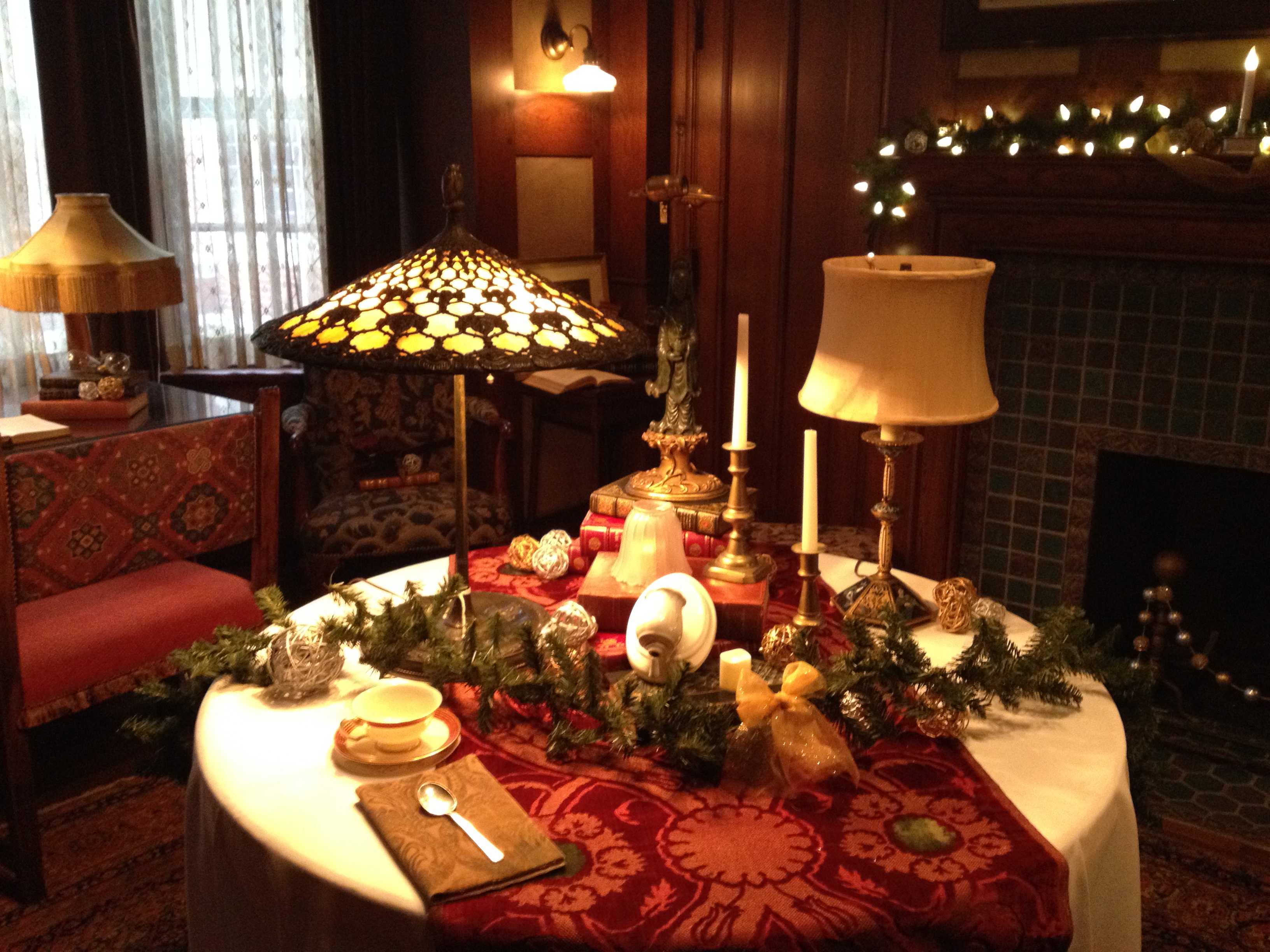
Holiday Tables, 2014. Stefanie Dlugosz, photographer.

This past weekend the Center for Collections and Research put on a display for Holiday Tables at Cranbrook House, organized by the Cranbrook House and Gardens Auxiliary.  Associate Registrar Gretchen Sawatzki and I put together a display highlighting the electric lighting original to the home, focused on lamps and lighting by the Edward F. Caldwell & Company.

Cranbrook House was designed and built in 1908, and George Gough Booth always had the intention of having electric lighting throughout the home. Within the city of Detroit there had been an interest in electricity, and by 1906 there were two power plants on the Detroit River owned and operated by the Detroit Edison Company. However, with Cranbrook House being roughly 20 miles to downtown Detroit, this was an achievement. The Booth’s interest in innovation propelled them to always be ahead of their time by investing in the newly available widespread utility for their home.

HT_2014_2

Holiday Tables, 2014. Stefanie Dlugosz, photographer.

HT_2014_3

Holiday Tables, 2014. Stefanie Dlugosz, photographer.

In the first half of the twentieth century Edward F. Caldwell & Company was America’s premier design and manufacturer for electric light fixtures. The New York firm founded in 1895 created designed and works with several prominent clients at the time including the Frick, Morgan, and Carnegie families. Much of their work was done in tandem with architectural commissions, and therefore clients like Booth were able to provide input and alter details to customize their lighting choices. Booth provided his own ideas about a few pieces for the home, but overall selected most of the pieces directly from their catalogues. During the construction and design of Cranbrook House, George G. Booth was actively involved in conversations with Albert Kahn, the architect, and many of the vendors providing goods and products for the home. Booth was enthusiastically involved in providing input on the design elements of the home, and the lighting was no different. Many of the Edward F. Caldwell & Co. catalogues can be found online through the Cooper-Hewitt Museum Library, Smithsonian Institution Libraries

Stefanie Dlugosz, Collections Fellow, Center for Collections and Research


Photo Friday: Tuning a Concert Grand

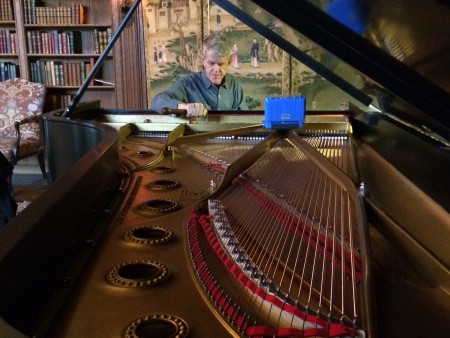
Hugh Gulledge patiently tunes the 1929 Steinway & Sons Model D Concert Grand in the West Wing Library of Cranbrook House. Photographer: Gretchen Sawatzki

Hugh Gulledge patiently tunes the piano in the West Wing Library of Cranbrook House. Photographer: Gretchen Sawatzki.

In 2013, the Cranbrook House and Gardens Auxiliary took action to restore the 1929 Steinway & Sons, Model D Concert Grand Piano currently housed in the West Wing Library of Cranbrook House. After traveling to the Steinway & Sons factory in New York, it underwent a nine-month restoration process which included a new sounding board, bridges, strings, and action components. The piano was returned this past June where it sat acclimating to the environment of the house after taking such an extensive trip and waiting to be played. This past Thursday, Hugh Gulledge, a registered piano technician put the finishing touches on the piano, tuning and voicing it for its official unveiling. On Thursday, November 20, 2014 the Concert Grand will make its public, post-restoration debut at the Cranbrook House and Gardens Auxiliary’s annual fund raising event Holiday Tables 2014

Gretchen Sawatzki, Associate Registrar

Object in Focus: Gone but Not Forgotten

Buddy_blog

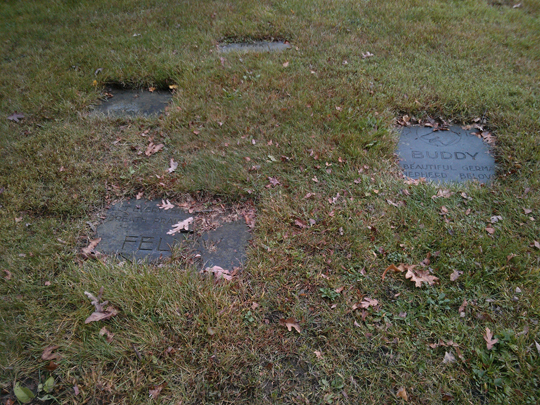
Grave of Buddy. Photo taken by Cheri Gay.

Taking a stroll one day on the grounds of the Thornlea Studio (where Cranbrook Archives was previously housed) I was startled to come across small tombstones, almost buried in the grass. What were these, I wondered? Seeing the names, I immediately understood: Buddy, Homer, Perky, Heinie, Fellow, Ricky, Zorah—a pet cemetery, which had seen better days.

Thornlea Studio was the artistic lair of Henry Scripps Booth, who designed and placed the building across the wide expanse of lawn from his home Thornlea. The family actually lived in the studio in 1949 when “… our daughter Melinda was a student at Kingswood. She was embarrassed by our living in “such a big house” and prevailed on her mother to close the house and move across the lawn to the Studio.”

The Henry Scripps Booth and Carolyn Farr Booth Papers document six dogs, almost all black and tan German shepherds. Receipts from Sheldon Granite Co. in Detroit reveal they made the monuments for Heinie, Perky and the lyrically named, Homer the Wanderer. A 1961 notebook paper receipt identifies Albert Leipold, of Birmingham, as the stone carver for Fellow’s monument for $40.

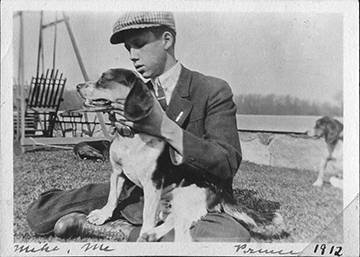
Mike

Henry Scripps Booth with Mike, 1912. Cranbrook Archives.

Buddy 1929

Buddy at Thornlea, 1929. Cranbrook Archives.

When Henry was growing up, the Booth family had beagles, Prince and Mike, and a great Dane, Ginger. Mike, according to Henry, “ … loved having a fuss made over him, one time going so far as being pushed around in a doll carriage while wearing a canvas hat.” Oh to have a photograph of that! When Henry had his own family, black and tan German shepherds predominated.

Henry’s photo albums, called Pleasures of Life, include 17 different dogs, though not all are his. His hand-written captions under the photographs always give the dog’s name followed by (dog) in case there’s any doubt, for example, in a photo of Cynthia and Curlytail, who is who.

Though the grounds and building of the Thornlea Studio are maintained, unfortunately that care doesn’t extend to Henry Booth’s lovingly buried companions. It’s a project waiting to happen.

Dog Graveyard_Blog

Thornlea Studio pet cemetery. Photo by Cheri Gay.

–Cheri Gay, Archivist

Lost and Found in a Sea of Cranbrook History

Ye Triumphe Ship

Ye Triumphe Ship, CEC 1918.1

Every day at the Center for Collections and Research brings new adventures and discoveries. During a visit to one of the storage spaces on Cranbrook’s campus, I stumbled upon a curious object, which inspired me to research it and its past. Like most things around here, the object has a great lineage throughout the campus with connections to George Booth, the Detroit Society of Arts and Crafts, and Cranbrook School.

The Ye Triumphe model ship was crafted by Henry Brundage Culver (1869-1946), and although it is a model, it is a large one: about 40 inches long and 32 inches high. George Gough Booth purchased the Ye Triumphe in September 1918 from the Detroit Society of Arts and Crafts. The model, which was advertised in the Detroit Sunday News, had been on display in the window of the Detroit Society of Arts and Crafts shop during that same year.

Henry Brundage Culver worked as an attorney and also served as secretary for The Ship Model Society in New York. He participated in building ship models, and contributed to scholarship on the art of model-making. He produced several publications including Contemporary Scale Models of Vessels of the Seventeenth Century (1926) and The Book of Old Ships: Something of their Evolution and Romance (1924). In the introduction to Contemporary Scale Models Culver compares the art of ship-model building to that of painting.

The finest examples of these miniature vessels are, in the eyes of those best fitted to judge productions of the highest artistic quality, appealing in general composition, line, mass and technical execution, to the aesthetic susceptibilities of those, who have eyes to see, in a no less degree than do the best examples of pictorial art.”

­—Henry B. Culver, Contemporary Scale Models of Vessels of the Seventeenth Century, New York: Payson and Clarke Ltd.1926, pg.ix.

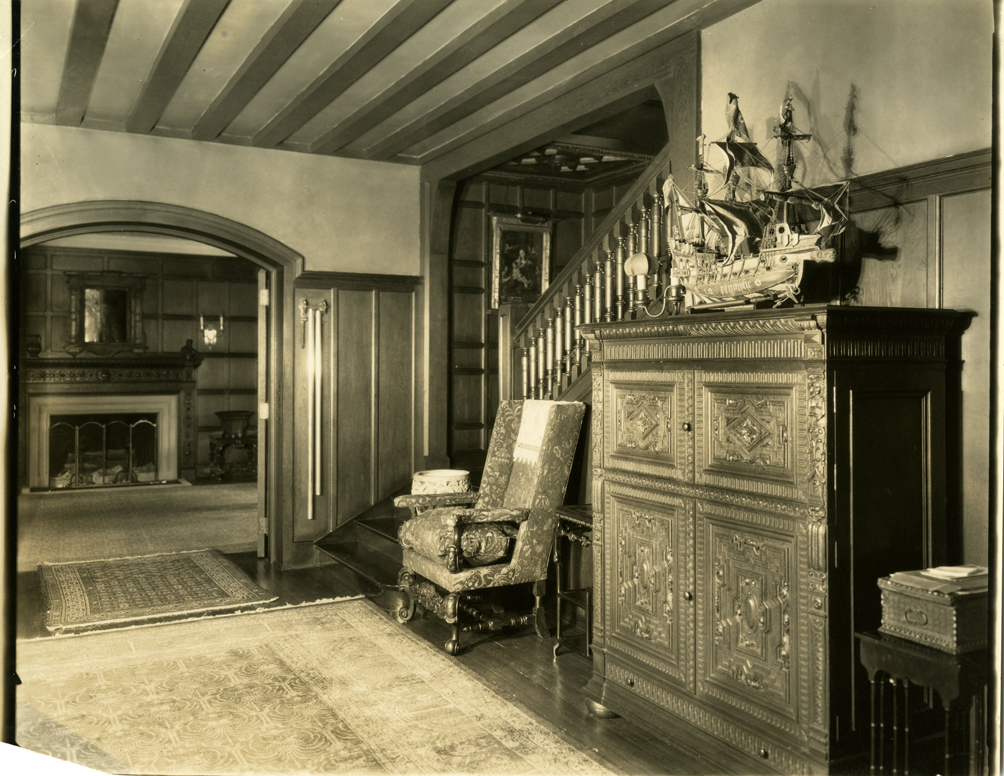
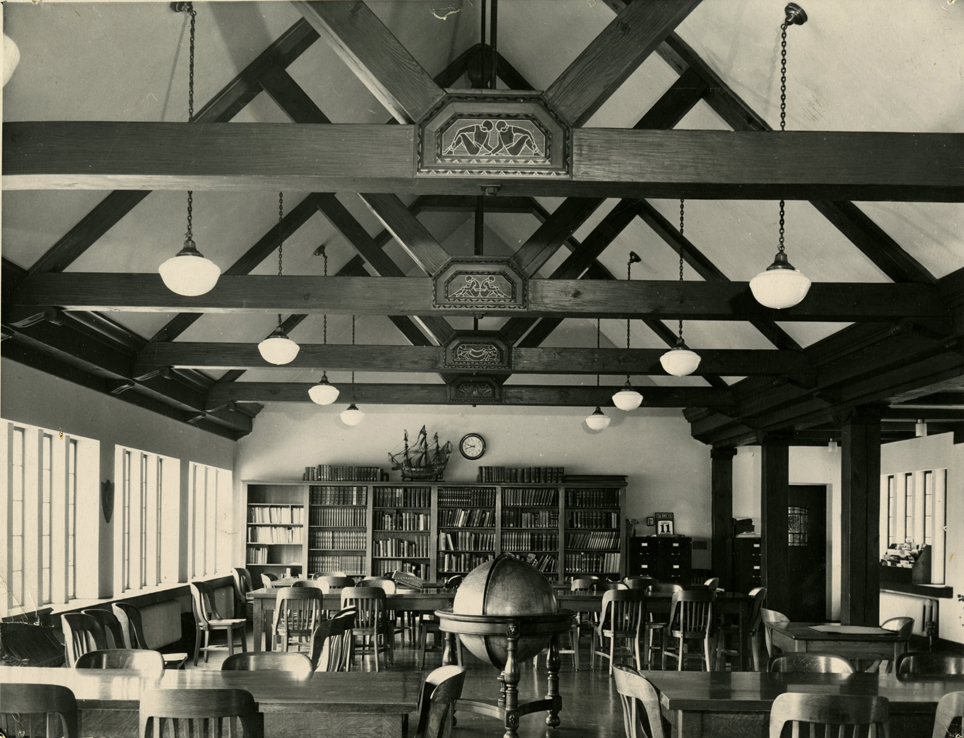
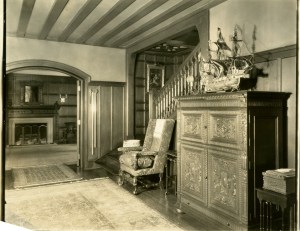
Originally, the ship was placed in the reception hall of Cranbrook House, and was later loaned by Booth for display in the library at Cranbrook School for Boys. Each of the photographs show the ship on display and its presence throughout Cranbrook.
CH_entrance hall_Ship_Blogpost

Cranbrook House reception hall, ca. 1920. Cranbrook Archives

CS_Library_Ship_Blogpost

Cranbrook School for Boys, Library interior, ca. 1945. Cranbrook Archives.

The Ye Triumphe will be returning to view at the Cranbrook Art Museum’s upcoming exhibition The Cranbrook Hall of Wonders: Artworks, Objects, and Natural Curiosities opening November 23rd, 2014. Come and check out the Ye Triumphe and many other fabulous objects from across the Cranbrook campus including works from the Center for Collections and Research, Cranbrook Art Museum, and the Cranbrook Institute of Science!

—Stefanie Kae Dlugosz, Center for Collections and Research, Collections Fellow

Photo Friday: The Fate of the North Gates

Arriving at  Cranbrook House you have probably noticed the large wrought iron entrance gates that welcome guests to the property along Lone Pine Road. A collaborative design by Cranbrook Founder, George Gough Booth (1864 – 1949) and Polish-American blacksmith, Samuel Yellin (1885 – 1940), this pair of gates were completed in 1917and are among the most cherished historic decorative elements at Cranbrook. But did you know that they are not the only gates that were a Booth-Yellin collaboration situated on the property?

North Gates

The North (Woods) Entrance Gates in Yellin’s studio, 1917. Courtesy Cranbrook Archives

Affectionately referred to as the North Gates, the gates seen in this photograph were also a collaborative design by Booth and Yellin. Forged by Yellin in his Philadelphia studio in 1917, the North Gates were installed as a part of a stone entrance wall at the old Cranbrook House entrance drive just north of Kingswood School on Cranbrook Road. When the drive was closed to re-route traffic to the house, the gates were ultimately removed and put into storage where they have remained – until now! Next week the North Gates will be leaving Cranbrook for a short journey to Cleveland for a full restoration. The six month project will include the fabrication of hand-wrought ironwork to replicate missing elements, chiseling to recreate bird faces and leaf veins, sandblasting, and the replication of a historic surface finish. Upon their return next spring the gates will be reinstalled at the new exit drive at Cranbrook House on Lone Pine Road just west of the South Entrance gates. So keep your eyes peeled for the triumphant return of the freshly restored gates!

CECT852det11

The original site of the North Gates as it appears today on Cranbrook Road. Photographer, Gretchen Sawatzki


Gretchen Sawatzki, Associate Registrar


To check out some more gate related information click here and here!

Object in Focus: Travel with Saarinen

Full Trunk

Trunks in storage. Photographer, Gretchen Sawatzki.

While organizing and re-arranging some of the cultural properties late last week, Associate Registrar Gretchen Sawatzki and I came across an exciting surprise. Tucked away in a corner of one of the many storage areas across the Cranbrook Campus, we found a pair of steamer trunks. (Steamer trunks are traveling trunks that were used when steamships and ocean liners were the best way to travel overseas.) Upon further inspection we realized that they had many stickers bearing international hotels and transatlantic ocean liners. Painted on one of the trunks we found the initials ES.

E.S. Initials. Photographer, Gretchen Sawatzki.

E.S. Initials. Photographer, Gretchen Sawatzki.

Trunk interior. Photographer, Gretchen Sawatzki.

With a bit more digging and some research we found that these trunks were purchased by Eliel Saarinen from The J.L. Hudson Company in Detroit shortly after his arrival to Michigan in 1923. These trunks traveled with the Saarinens back to Finland, and to other European and international destinations. Check out the inside of the trunks. This is a wardrobe trunk, which you can see from the drawers and hanging section with hangers still inside! Although I don’t think it is practical for travel today, I imagine all the exciting places it voyaged while accompanying Eliel Saarinen on his journeys.

Stefanie Kae Dlugosz, Collections Fellow, Center for Collections and Research

Photo Friday: A Splash of Color

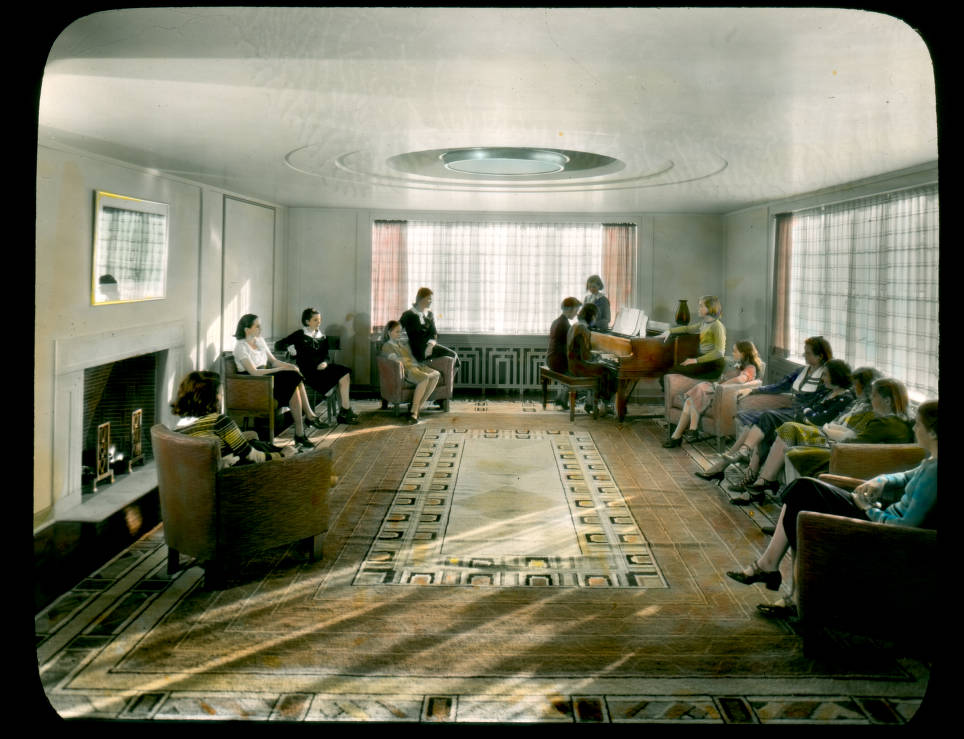
Kingswood School Rose Lounge. Cranbrook Archives

Kingswood School Rose Lounge, The Cranbrook Hand-Colored Lantern Slide Collection. Cranbrook Archives

As the weather here at Cranbrook is more than a little dreary, today’s photo provides a look into a bright and cozy atmosphere perfect for reading, relaxing and being inside. Taken around 1932, it shows a group of students gathered in the lounge of the Kingswood School dormitory (originally known as Reception Room III) listening to two of their peers play the piano. The photograph comes from Cranbrook Archives’ Hand-Colored Lantern Slide Collection. The photographs in this collection were originally black-and-white and were painted with watercolor years later, and not by the original photographer. This jump in time explains the vibrant color choices in the photograph as the painter was not present when the image was originally captured.

The Cranbrook Hand-Colored Lantern Slide Collection contains over 30 images of Cranbrook institutions taken primarily during the 1920s and 1930s. Several of the original black and white images were taken by architectural photographers for inclusion in publications.

Today’s photo was taken by George W. Hance, Cranbrook’s first paid staff photographer (1931-1932). Hance had been commissioned by George Booth as early as 1916 to photograph his art collection and later photographed Cranbrook’s campus and grounds including Kingswood, Cranbrook House (home to George and Ellen Booth) and Thornlea (home to Henry Scripps Booth). Explore more photographs like these on our digital image database or in person at the Archives!

Stefanie Dlugosz, Collections Fellow, Cranbrook Center for Collections and Research


Create a website or blog at WordPress.com