Amelia Earhart at Cranbrook?

Although there is no documentation that Amelia Earhart ever visited Cranbrook, records of one of her visits to Michigan are housed in the Cranbrook Archives. The photographs and telegram illustrated here are from the Gliders, Inc. Records and help tell not only the story of Amelia Earhart, but also that of glider aviation in Oakland County, Michigan.

Telegram

Telegram, 12 Feb 1929. Gliders, Inc. Records, Cranbrook Archives.

The first glider plane was designed in 1852, but it was not until September 1928 that Gliders, Inc. became the first company in the United States that exclusively manufactured motorless aircraft. Gliders, Inc. was founded by William E. Scripps, the younger brother of Cranbrook’s Ellen Scripps Booth. The factory, located in Lake Orion, Michigan, produced first and second class gliders, and the “Detroit Gull” became the glider of choice for many gliding clubs across the country. Gliders, Inc. was also called upon to do much of the early glider pilot training – over 800 men and women in 1929.
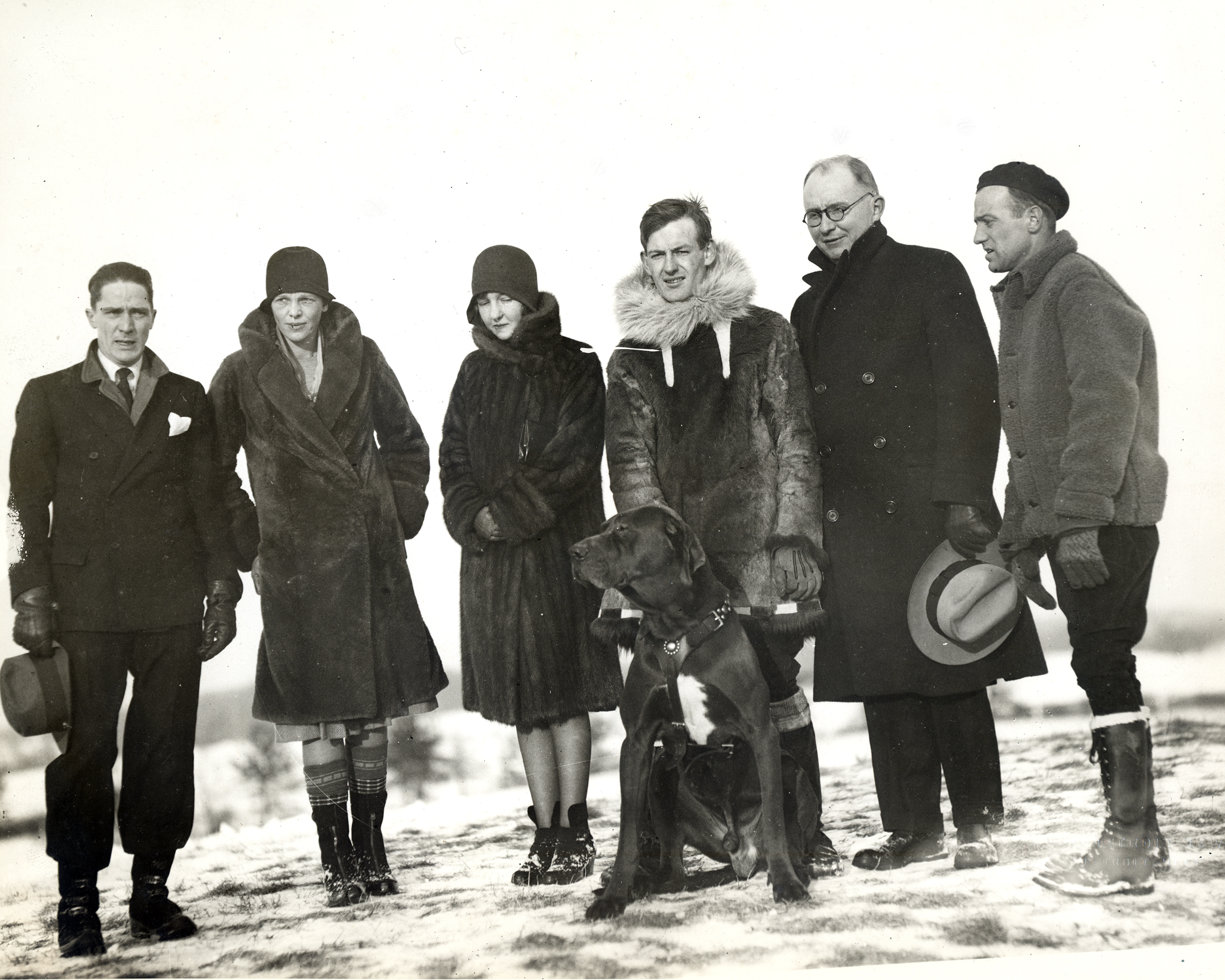
Group at Willow Run

Major Reed Landis, Amelia Earhart, Nina Downing Scripps, William Scripps, Don Walker, and Frank Blunk at Willow Run, Feb 1929. Photo by Detroit News. Cranbrook Archives.

In December 1928, Scripps invited Amelia Earhart to his estate, then known as Wildwoods. Earhart accepted and in February 1929, took her first glider ride at the “Scripps Field” in a Gliders, Inc. Primary Training Glider.
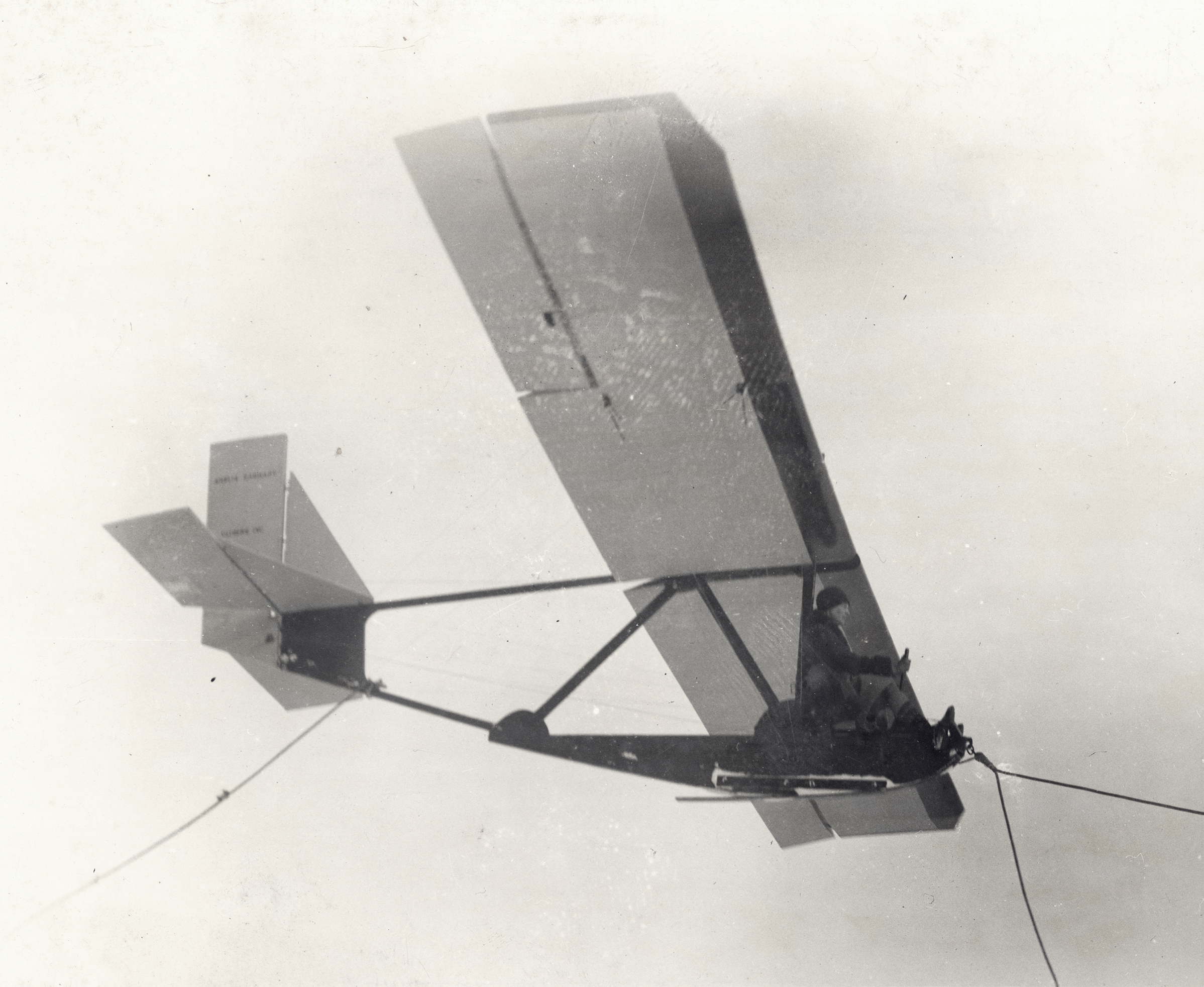
Primary Training Glider

Amelia Earhart flying the primary training glider, Feb 1929. Photo by Detroit News. Cranbrook Archives.

Additional female aviation facts:

In November of 1929, Earhart and 25 other women gathered at Curtiss Airport in New York to establish The Ninety-Nines, Inc. – an aviation organization for any woman who held a pilot’s license. Earhart was the first president.

Maxine Dunlap of San Francisco was the first woman to earn a glider license in 1929. Hers was a third-class glider license. Anne Lindbergh followed in 1930 with a flight that earned her third-class, second-class, and first-class licenses. She was the first woman in the US to earn a first-class glider license. Check back next week for a post about Lindbergh’s connection to Cranbrook, and yes, she DID visit here!

Leslie S. Edwards, Head Archivist
Confessions of a Book Nerd

I have a confession to make. The smell of library books, an afternoon at an independent book store, re-reading a favorite novel – these are my ultimate indulgences. I could spend hours reading book blogs, listening to author interviews, or pouring over book-related tchotchkes on Etsy. I am a book nerd. My (nearly) one year as an Archivist at Cranbrook has been heaven. I discover something new every time I have the opportunity to walk into George Booth’s personal library at Cranbrook House. I find profound satisfaction in creating a catalog record for a new book or discussing MARC records with colleagues.

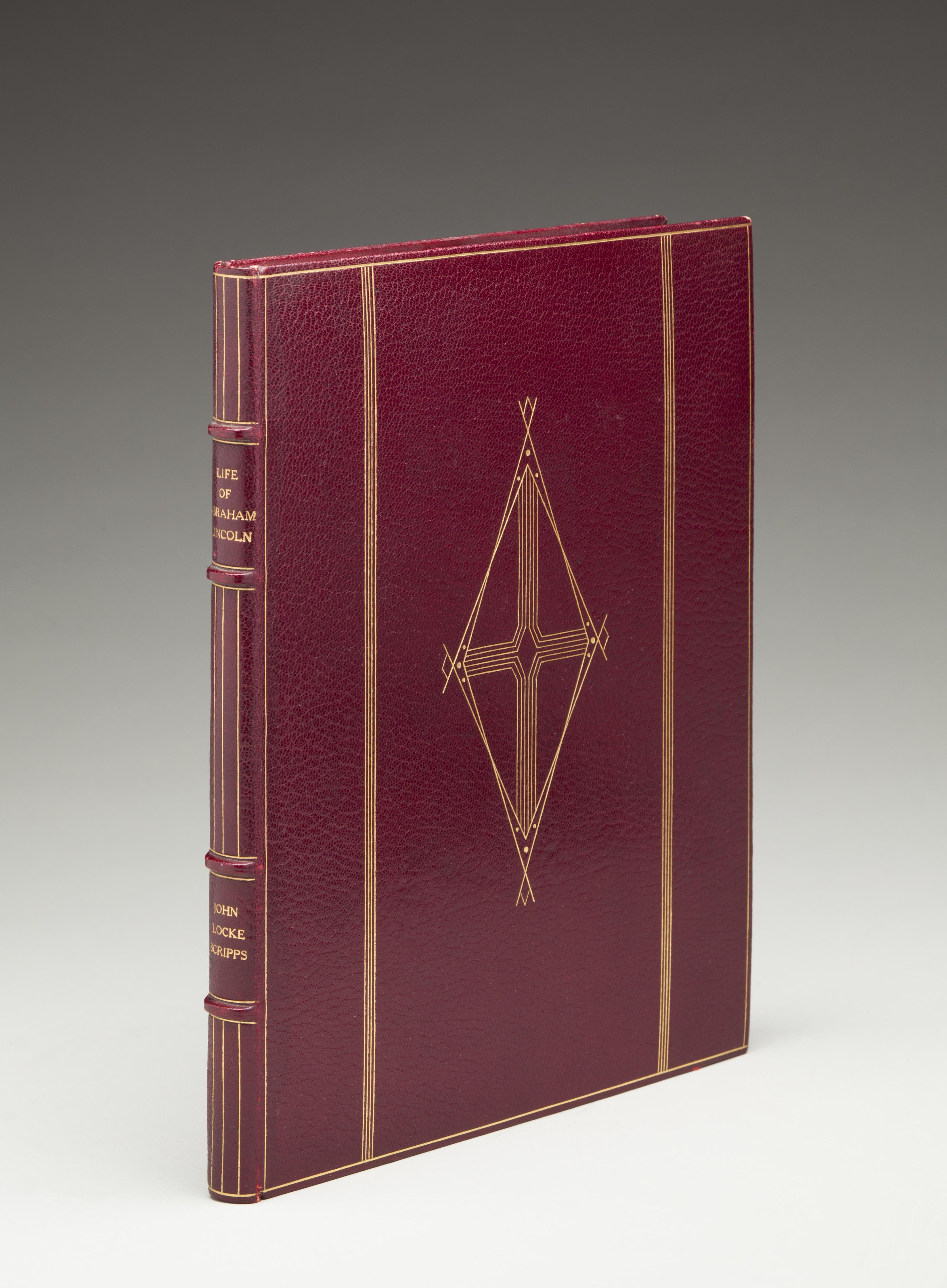
One of my favorite collections at Cranbrook is the Cranbrook Press and Photo Department Records. While working on a Cranbrook Press request recently, I came across the work of the bookbinder, Jean Eschmann (1896-1961), hired by George Booth in 1929. Eschmann was hired to set up the bookbinding workshop in the Arts and Crafts Studios at Cranbrook, where he remained until 1933 when desperate financial times forced the closure of the studio.

Jean Eschmann binding, Cranbrook Archives

English Fairy Tales, tooled leather. ca 1931. Cranbrook Archives.

Educated in Zurich, Eschmann traveled and studied in Austria, France and Switzerland. He came to the United States with his family in 1919. He was a member of the Society of Arts and Crafts in Boston and studied with Mary C. Sears. In 1929 George Booth hired Eschmann to create handmade bindings for the Art library and for his own personal library. Eschmann also taught bookbinding and hand-tooling classes to the community.

211044-145

The First Published Life of Abraham Lincoln, tooled leather. ca 1931. Cranbrook Archives.

Eschmann’s work has been exhibited at various museums in the United States, as well as at the Book Workers Guild in New York. His bindings were included at the World Fair in Paris in 1937 and at the Golden Gate Exposition in San Francisco in 1939. In 1945 Eschmann received the emblem for Meritorious Service from the Civilian Awards Committee of the Surgeon General’s Office for his work in restoring thousands of rare books at the Army Medical Library during World War II.

Evidence of Eschmann’s beautiful leather and tooling work can be seen in several examples in the rare book collections here in the Archives, and also in the Academy of Art library. I hope you enjoy the examples in this post. They definitely make this book nerd swoon!

Gina Tecos, Archivist

Illumination!

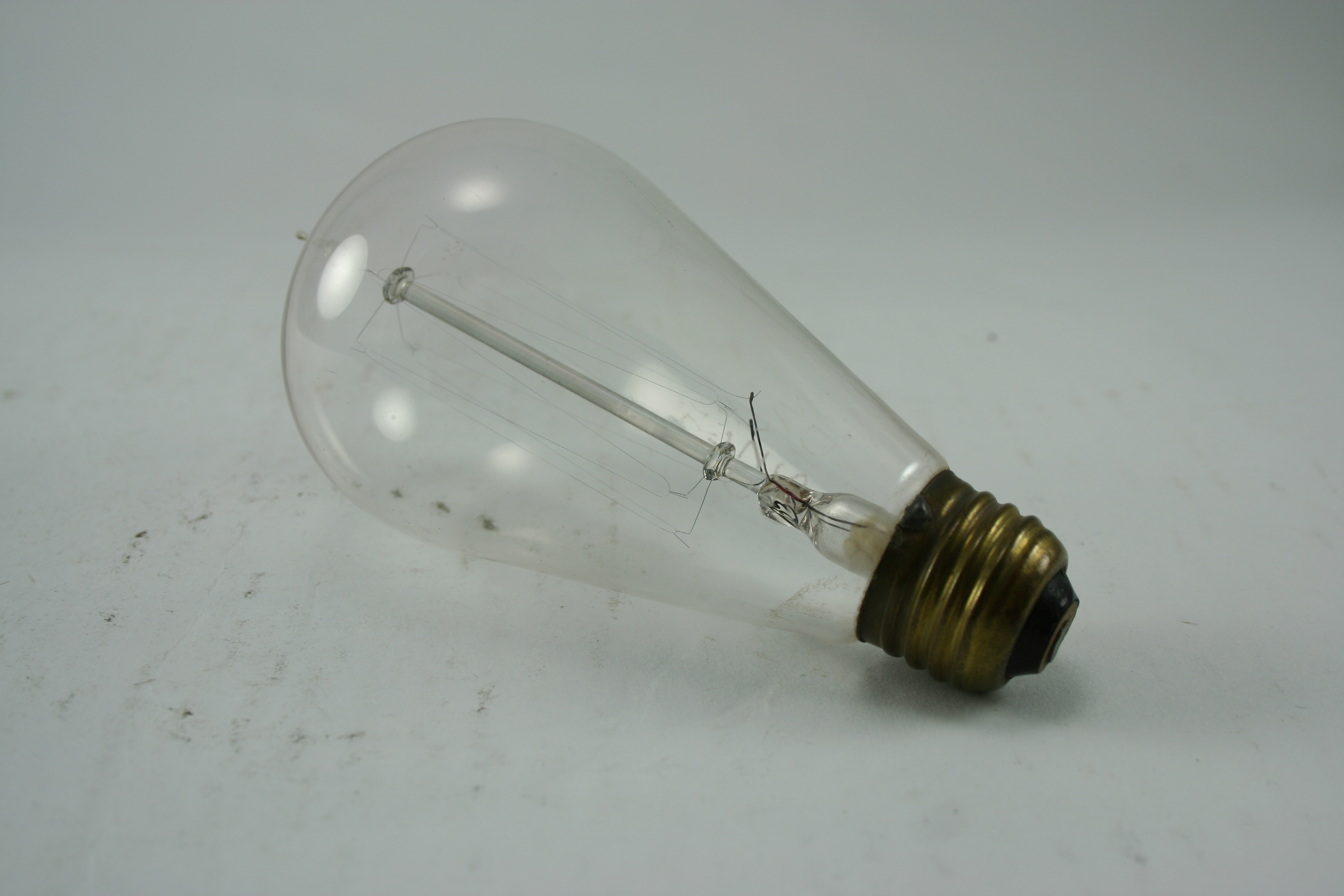
Glass etched Edison bulb from 1920, found in Cranbrook House.

Glass-etched Edison bulb from 1920, Cranbrook Cultural Properties Collection..

While browsing the historical writings of Henry Scripps Booth recently, I came upon the answer to a question that Collections Fellow, Stefanie Dlugosz, had posed late last year. As she prepared the Center for Collections and Research’s Holiday Tables exhibit (“Illuminate the Seasons” was the theme), which highlighted the early use of electricity in Cranbrook House, Stefanie had wondered what the source of electricity was, in 1908, for a relatively isolated place like Cranbrook. Efforts by several people could not turn up an answer. Until now.

“Although Caldwell’s electric fixtures had been installed about December 1, we still had to use candles and oil lamps for light because the private Edison line being installed from Highland Park to Cranbrook House was incomplete.”  This was recorded during the 1980’s in Henry’s unpublished History (which relates the history of Cranbrook Educational Community and the Booth family between 1800 and 1987).

As the bill from Albert Kahn shows, George G. Booth spent $1863.48, around $49,000 in today’s dollars, on lighting fixtures in Cranbrook House. The order is itemized, room by room, on seven pages of legal-sized paper, in Booth’s papers.

Albert Kahn’s bill to George Booth for Cranbrook House lighting fixtures provided by Edward.F. Caldwell Co.  Papers of George and Ellen Booth 14:23

George Gough Booth Papers, courtesy Cranbrook Archives.

Read the original blog for more information on the Caldwell lighting fixtures at Cranbrook House.

— Cheri Gay, Archivist

A Love for Teaching: Cranbrook’s “Bird Man”

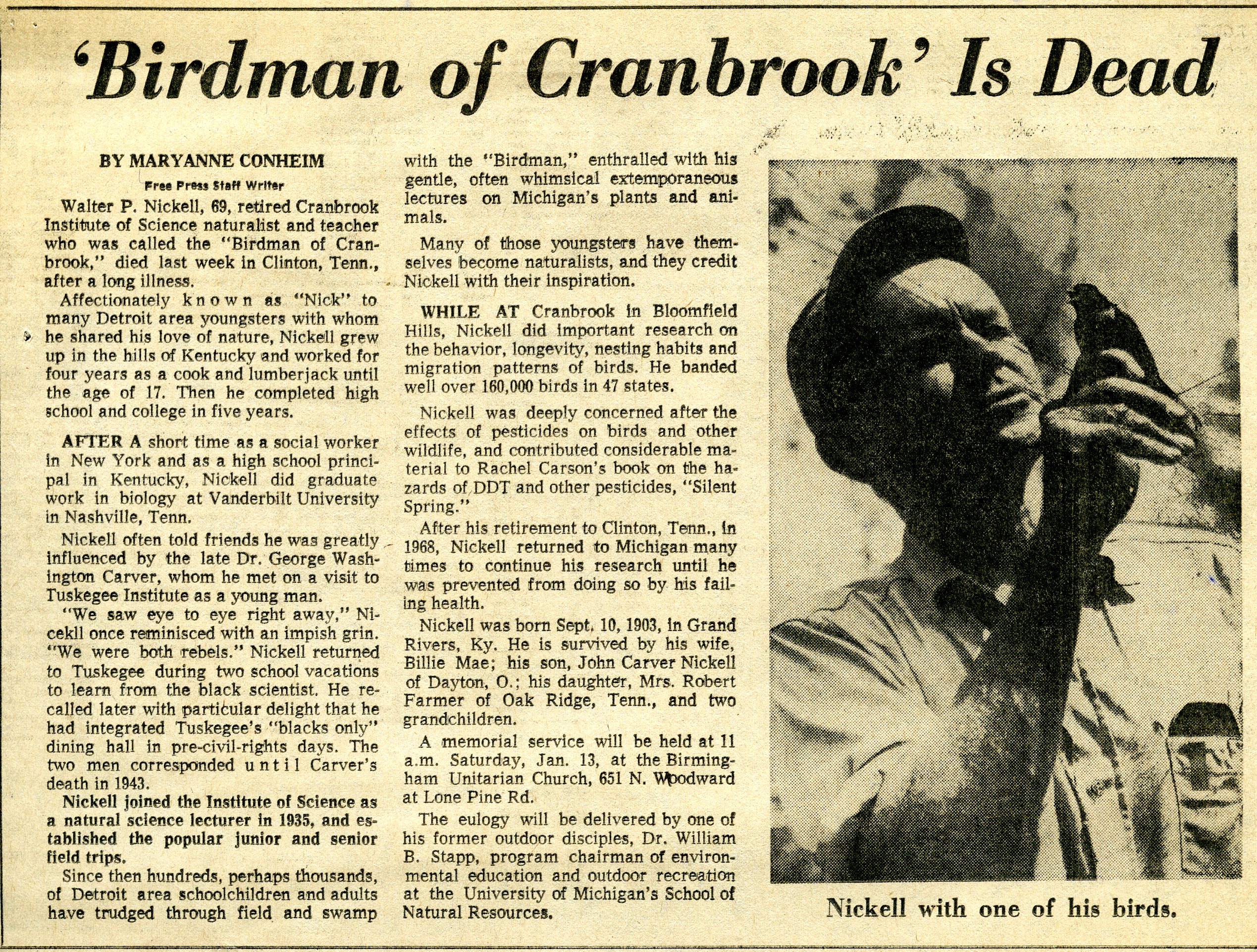
On a cold January day, it’s nice to think about the grandeur of Spring – warmer days, flowers blooming, and birds chirping. There are several places in the Archives we could look for signs of Spring, but today we remember Cranbrook Institute of Science (CIS) naturalist and ornithologist, Walter P. Nickell (1903-1973).

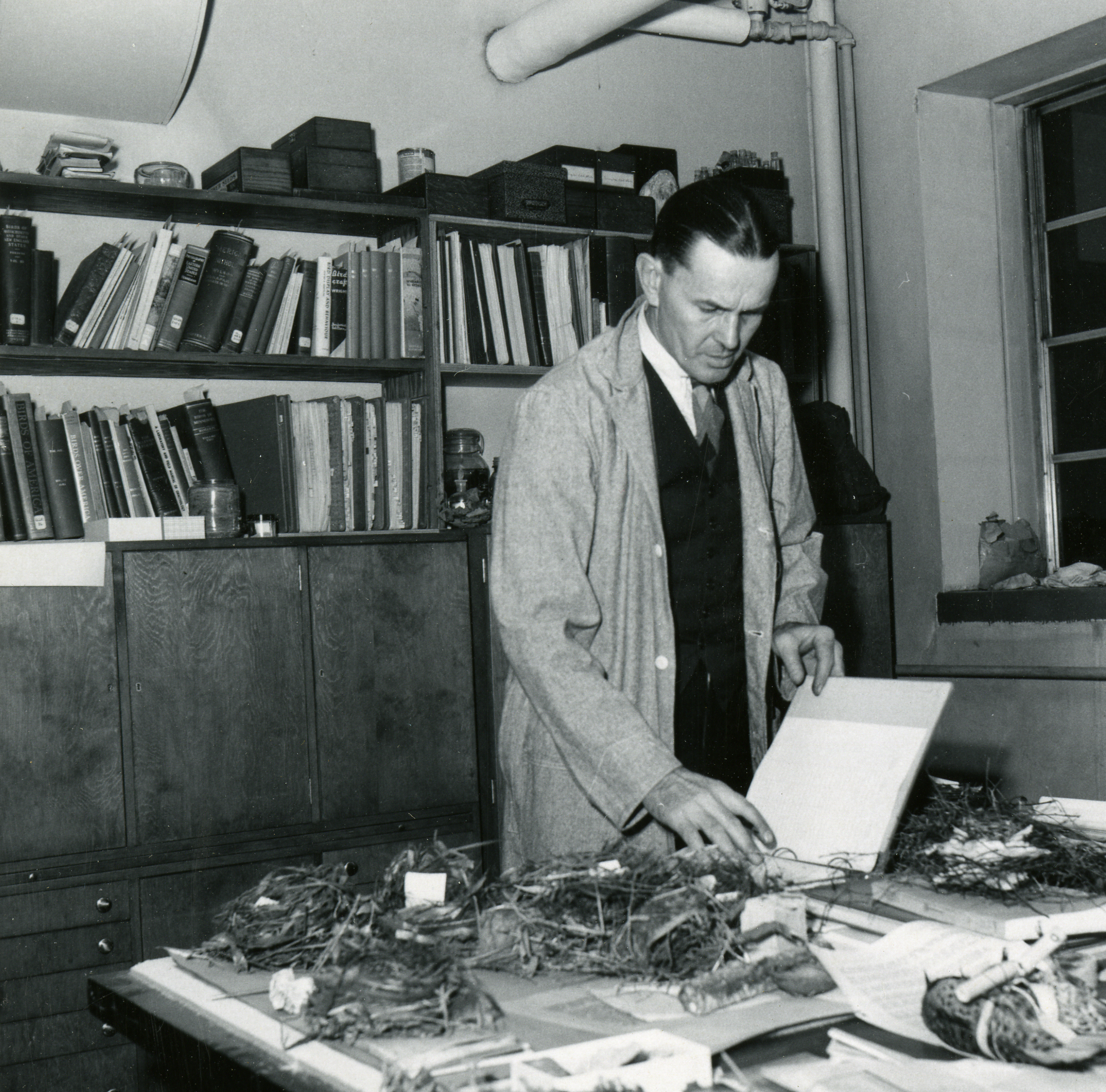
Born in 1903, Nickell worked at CIS for 33 years. During this time he banded over 160,000 birds in the contiguous United States, Mexico, Canada, and British Honduras. He also recorded notes on more than 50,000 nests – primarily in Michigan. In 1964 Central Michigan University awarded Nickell an honorary Doctor of Laws degree and in 1968 Nickell was awarded Cranbrook’s Founders Medal.

Bird Nest Studies, 1951

Bird Nest Studies, 1951.

In addition to developing numerous exhibitions at CIS and publishing more than 130 scientific articles, Nickell is well-known for his enthusiasm for teaching. During his tenure at CIS he lectured on natural science at local schools and colleges, including the University of Michigan. He also led junior and adult groups on numerous natural science expeditions.

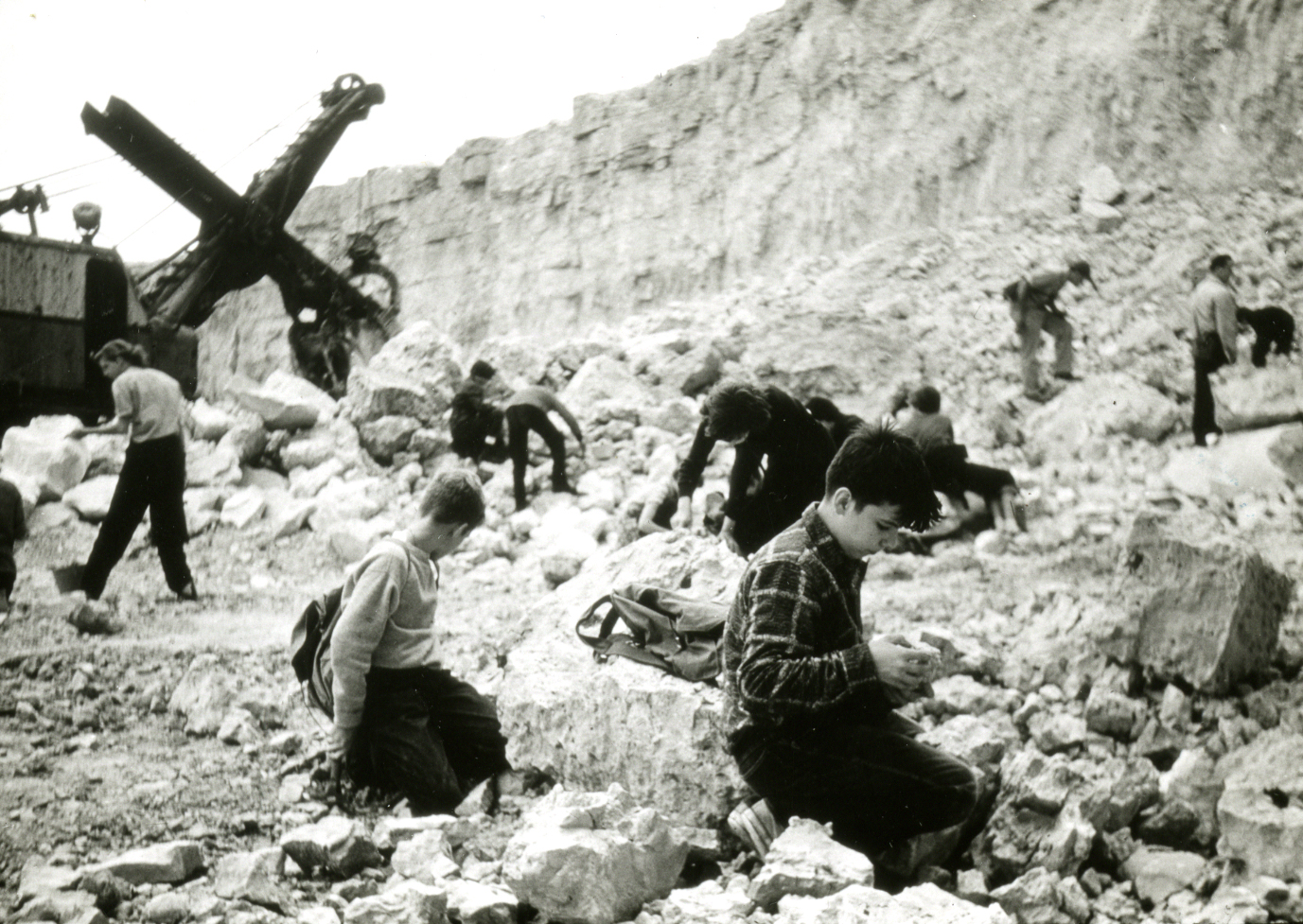
Student fossil exhibition

Students on a fossil exhibition, 1956.

In a 1959 address delivered by Nickell at the Mid-Winter Science Teachers Institute of the Metropolitan Detroit Science Club, he said: “We must seek ways by which education can be made an adventure, a dramatic procedure, a thrilling experience with most of the elements which have always impelled the discoverers, the explorers, the inventors and the researchers.”

Detroit Free Press, 13 Jan 1973

Detroit Free Press, 13 Jan 1973.

Gina Tecos, Archivist

John Cunningham and the Cranbrook School Mosaics

One of Cranbrook School’s earliest art teachers, John Cunningham (1904-2004), was a man of many talents. Born in New Jersey to a literary and artistic family, Cunningham attended a Manhattan prep school but spent summers working on ships that sailed the globe. After receiving both his undergraduate and graduate degrees in art from the University of California,  he studied painting with Hans Hoffman in Munich, and sculpture and painting with André Lhote in Paris.

Cunningham landed back in New York during the depression where he picked up odd jobs painting murals in the Catskills and set design for the Philadelphia Symphony Orchestra before he landed a position as the Head of the Fine Arts Department at Cranbrook School for Boys in 1931. By December, Cunningham had created a large transparency in imitation of a stained glass window. It was placed in the Cranbrook School dining hall during the Christmas pageant and was illuminated from behind with floodlights.

Cranbrook School Art Instructor, John Cunningham

John Cunningham in the Club Room, 1933 Richard G. Askew, photographer.

Wildly popular with the students and the faculty, Cunningham formed an Art Club. One of the major projects of the club students was to transform an unfinished room (now home to the Robotics Club) under the Senior Study Hall into a “very elaborate club room.” The highlight of the room was a series of hand-set glass mosaics by Cunningham that represented great men of antiquity. (Originally, his plan was to have one wall of panels representing ancient figures and a second wall which featured more modern figures including Sun Yat Sen, Ghandi and Lenin. This was never realized.) Additional changes to the room included the addition of a fireplace and ceiling stencils created by the boys that portrayed the history of transportation.

Cunningham was also known for the work of his students – particularly wood sculptures created by the Lower School boys. These were featured in an exhibition at the Kalamazoo Art Institute in 1932, and were so well received that additional museums across the state featured the exhibition as well before being displayed in the 1933 Century of Progress Exposition in Chicago.

Mosaic detail by John Cunningham

Mosaic detail by John Cunningham, 2015. Leslie S. Edwards, photographer.
The mosaic, which features Imhotep, Buddha, Christ, and Francis of Assissi remains today. The door no longer exists and the painted beams have been covered by a drop ceiling.

While it is not clear exactly why Cunningham left Cranbrook, his view of modern art did not mesh with that of headmaster William O. Stevens. The Cranbrook School paper The Crane reported that Cunningham was leaving to pursue work in Czechoslovakia. At the end of the 1932-1933 school year (during the time of the national Bank Holiday), Cunningham resigned. He and his wife ultimately returned to California where they purchased the Carmel Art Institute where Cunningham taught until it closed in 1992.

~ Leslie S. Edwards, Head Archivist
Highlighting Access: The Edward and Ruth Adler Schnee Papers

RuthBiopage

Recently the staff of the Cranbrook Archives announced the online addition of The Edward and Ruth Adler Schnee Papers which was  donated to the Archives in 2010.  While the website is not a biography of Ruth or Eddie’s life, it is a tribute to the work they created as evidenced by the materials in the collection. 

Archives Assistant Justine Tobiasz designed the web pages “drawing from Schnee’s designs and sketches.” She was inspired by, and wanted to pay tribute to, Schnee’s use of color  when creating the site about the collection.  Moving forward I hope that we can find ways to create sites for other collections. I think it’s a good way for us to use the incredible materials we have to convey a ‘whole picture’ view of our mind-blowing collections.” 

Working within the constraints of our web portal was very challenging – it did not allow free reign, and Justine had to find ways to display the content exactly how the staff wanted it to be.  All of the Archives staff worked collaboratively to create the content, digitize the images and post them up on CONTENTdm (our digital asset management system), and find external links to populate the design created by Justine.

Check out this addition and let us know what you think!

Stefanie Dlugosz, Collections Fellow, Center for Collections and Research & Justine Tobiasz, Archives Assistant

Icing on the Cake

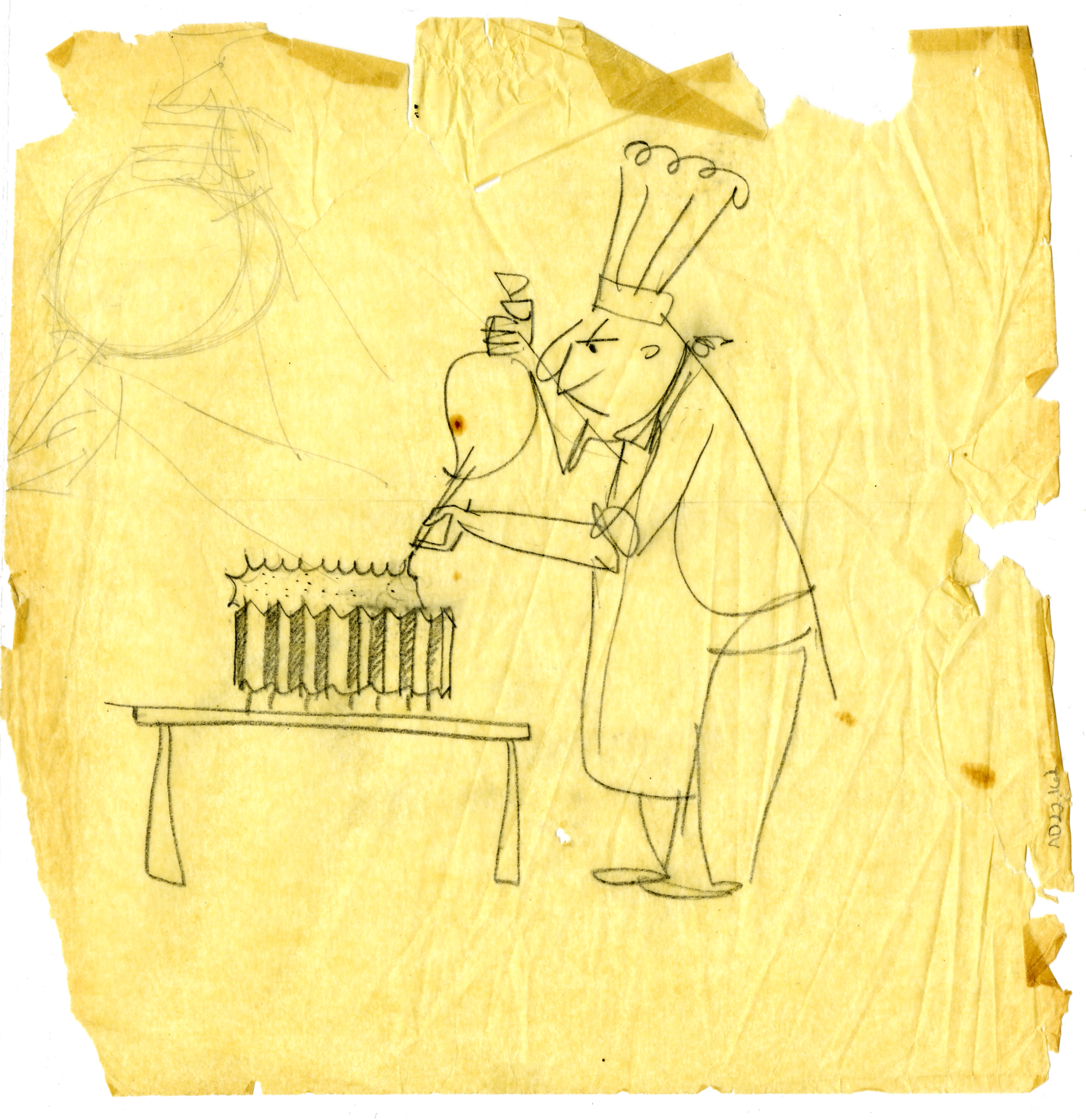
Claude de Forest cartoon

Claude de Forest Collection of Eero Saarinen and Associates Material (1995-68), Courtesy Cranbrook Archives.

It’s the holiday season. And, I don’t know about you, but for me, one of the best aspects of the holidays is the food. I love preparing a big holiday feast and the comforting aromas of spiced cider, or cookies and pies baking in the oven. Perhaps that is why the drawing featured in today’s Kitchen Sink appealed to me. While researching an archival inquiry, I came across this wonderful cartoon of a baker icing a cake by Claude de Forest (1931-2013).

Born in 1931 in Basel, Switzerland, de Forest descended from a long line of architects. This led him to pursue a BA in Architecture from the University of Manitoba and a Masters degree in Architecture from the Massachusetts Institute of Technology. After completing his studies at MIT, de Forest worked as a cartoonist and junior designer for Eero Saarinen and Associates from 1956-1958. Significant projects include the Ingalls Hockey Rink at Yale University, the IBM Research Center, the TWA Terminal at JFK, and the University of Chicago Law School. The “cake” in this photo is actually a model of the Chicago Law School.

In 1960 de Forest began teaching in the Faculty of Architecture at the University of Manitoba. He retired as a full professor in the Department of Environmental Studies in 1994. De Forest’s talents extended beyond design and teaching—he was also an activist and dedicated a significant amount of time and research to disability issues and responsible design. In 2007 he received the Lifetime Achievement Winnipeg Accessibility Award for community leadership in Universal Design.

Additional works in our collection related to Claude de Forest can be viewed here.

Gina Tecos, Archivist

Sailing the High Seas: John Martell and the War of 1812

martell1

Greenwich Hospital Out-Pensioner Application, John Martell, n.d. Henry Wood Booth Papers.

martell2

Petition for Pension, John Martell Jr., 1875. Henry Wood Booth Papers.

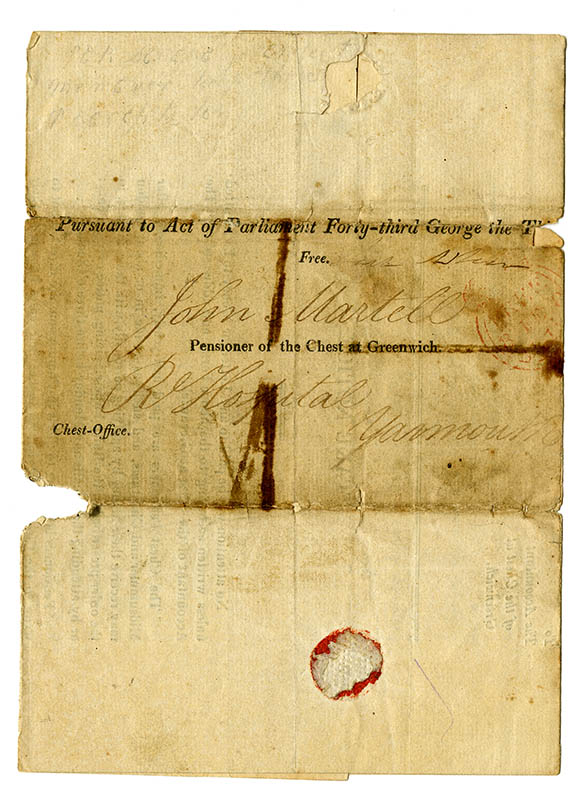
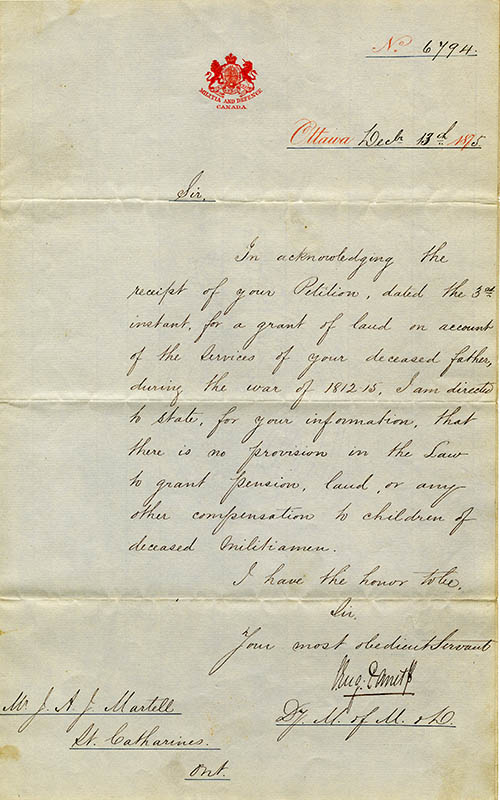
George Gough Booth’s maternal great-grandfather was John Martell  (1791-1836), a purser in the British Royal Navy.  Martell served on the HMS Aeolus, a 32-gun frigate, which was part of a flotilla of five ships charged with patrolling the waters between New York and Halifax, Nova Scotia during the War of 1812.  On July 16, 1812, the Aeolus was part of the squadron that gave chase to the USS Constitution, which finally managed to escape and sail safely to Boston.  After the war, Martell spent several years stationed first at Isle-aux-Noix in Quebec, a key ship-building center for the British at Lake Champlain.  He was a clerk in the dock yards at the Kingston Royal Naval Yard in Ontario, and was a store porter at the Grand River Naval Depot (Port Maitland) on Lake Erie until his discharge in 1832. Martell and his wife Mary (nee O’Keefe) then resided in St. Catherines, Ontario where Martell served as the first Postmaster and the first division court clerk.  John Martell died in 1836.

Leslie E. Edwards, Head Archivist

Form Follows Emotion

View-Master 3D Viewer by Design Logic

View-Master 3D Viewer by Design Logic

This is one of the more successful products created by Design Logic, a product design company whose records I’m currently processing. This View-Master 3D Viewer was a new take on an old, familiar product, and reflected the company’s philosophy that every product has both a technical and emotional element. This new version, created in 1985, featured “push-button technology,” and larger image magnification to make it more technologically competitive with other toys of the era, while maintaining the overall look of its predecessor. Time magazine named it one of the best designs of the year.

Design Logic was founded in 1985 by Cranbrook Art Academy graduate David Gresham, and Martin Thayer, a Royal College of Art graduate; the two worked together at ITT Corporation. Operating out of Chicago, the mission of the company was to “create designs that are functional, beautiful, profitable and based on a distinctively American perspective.” The company is no longer in business.

Once the processing of the Design Logic records is complete, a finding aid will be posted on our web site and more images of their creative, unusual products will be in our digital database, so keep an eye out!

– Cheri Gay, Archivist

Election Day: Mayor Vettraino

Dominick Vettraino at the wheel of Cranbrook's Fire Truck, ca. 1936. Vettraino Family Papers, Cranbrook Archives.

Dominick Vettraino at the wheel of Cranbrook’s Fire Truck, ca. 1936. Vettraino Family Papers, Cranbrook Archives.

In honor of Election Day I wanted to feature Cranbrook and the polls! In 1958, Cranbrook’s Dominick Vettraino was elected as mayor of Bloomfield Hills, the first native born Bloomfield Hills resident to hold the position!

Dominick Vettraino was the eldest son of Michael and Michaela Vettraino.  Mike was grounds superintendent for Cranbrook from 1905-1955 and all of his children except Dominick were born at Cranbrook. Dominick started working with his father on the grounds when he was 16 years old, and after Mike’s retirement, took over the position of superintendent.  In addition, he contributed substantially to the surrounding community.   After studying at the University of Michigan’s Fire School he was named chief of the Cranbrook Fire Department. He and his brother John Vettraino converted a Ford chassis into Cranbrook’s first fire truck, and eventually Dominick served as the head of Cranbrook’s Police Department.

After his many Cranbrook achievements he went on to serve the larger community of Bloomfield Hills.

Stefanie Dlugosz, Collections Fellow, Center for Collections and Research

Create a website or blog at WordPress.com